

创作上传
VIP
收藏下载
登录 | 注册有礼
查看完整案例

收藏

下载

分享

翻译
Architects:Riegler Riewe Architekten
Area:105m²
Year:2023
Photographs:David Schreyer,Paolo Rosselli,Helmut Pierer
Manufacturers:Laufen,Sika,Sto,Bega,PANDOMO,Dana,Funeralia,Funeralia,Funeralia,Funeralia,Funeralia,Funeralia,Knauf,Kvadrat,Lindner,Neudörfler,Neudörfler,Neudörfler,Nora,Saint-Gobain Rigips, +8Saint-Gobain Rigips,Saint-Gobain Rigips,Saint-Gobain Rigips,Salto,Schüco,Waldner,Weitzer Parkett,Zumtobel-8
Lead Architects:Roger Riewe, Christian Story, Michael Münzer, Florian Riegler
Structural Engineering:Graz office
Site supervision:Busz GmbH,Kessler & Partner GmbH,Techn. Büro Ing. Alfred Herbst GmbH,VAMED Standortentwicklung und Engineering GmbH & CoKG,T. Lorenz ZT GmbH
Lighting Design:Day & Light Lichtplanung GbR
Landscape Design:Land in Sicht, Ing. Thomas Proksch
Interior Design:Riegler Riewe Architekten ZT-Ges.m.b.H.
building physics:Rosenfelder & Höfler Consulting Engineering GmbH & Co KG
Geotechnics:GDP ZT GmbH
Traffic Planning:Snizek + Partner Verkehrsplanungs GmbH
Site coordination & construction supervision:Norbert Rabl ZT GmbH
Facade Contractor:STRABAG Metallica
Category:Research Center,University,Sustainability
Design Team:Susanne Mayr, Alice Minghel, Manuela Müller, Thorsten Krachler, Daniel Lausegger, Erich Österbauer, Petra Reiter, Steffen Schössler
Art Works:Matt Mullican, Manfred Erjautz, Esther Stocker, Misha Stroj
Mechanical, Electrical And Plumbing Engineer:ARGE TGA Med Campus Graz - Die Haustechniker, ARGE TGA Med Campus Graz - TB Köstenbauer & Sixl, Vasko + Partner Ingenieure und Verfahrenstechnik GesmbH
Fire Protection Engineering:S + W WÖRLE SPAROWITZ INGENIEURE Ziviltechniker GmbH
Laboratory Planning:Dr. Heinekamp Labor- und Institutsplanung GmbH,Zach und Partner ZT GmbH,Archipol Consulting GmbH
Fire Prevention:SiGe,BaukG
Coordination:Wendl ZT GmbH, Projekt.cc
Drainage:Hydroconsult GmbH / Davitech GmbH
Surveying:Vermessungsbüro Breinl
Contractor Consultant:Steiner Bau GesmbH,Strabag,Bauunternehmung Granit Gesellschaft m.b.H,Arge Med Campus - Porr
City:Graz
Country:Austria

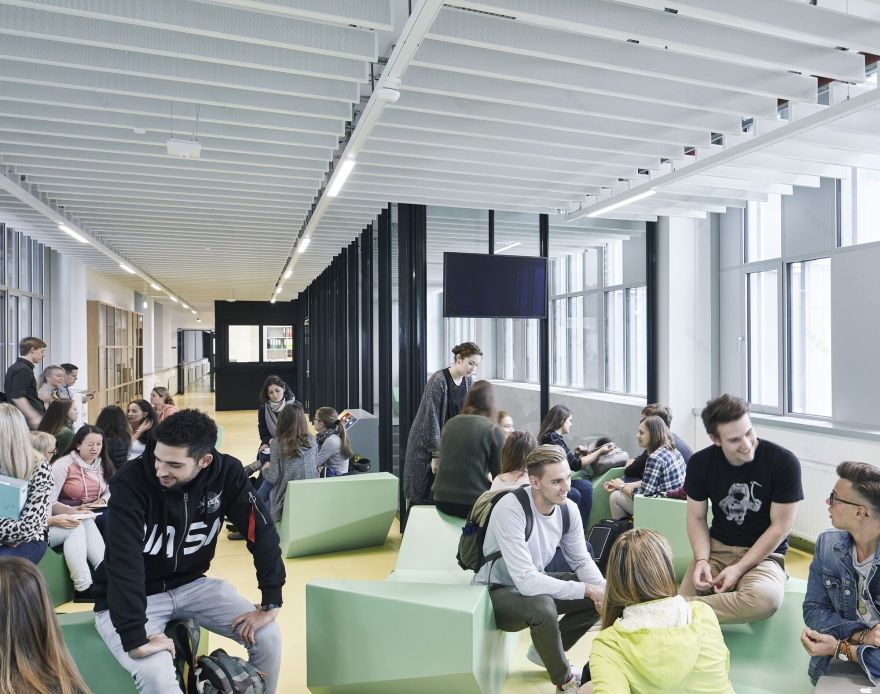
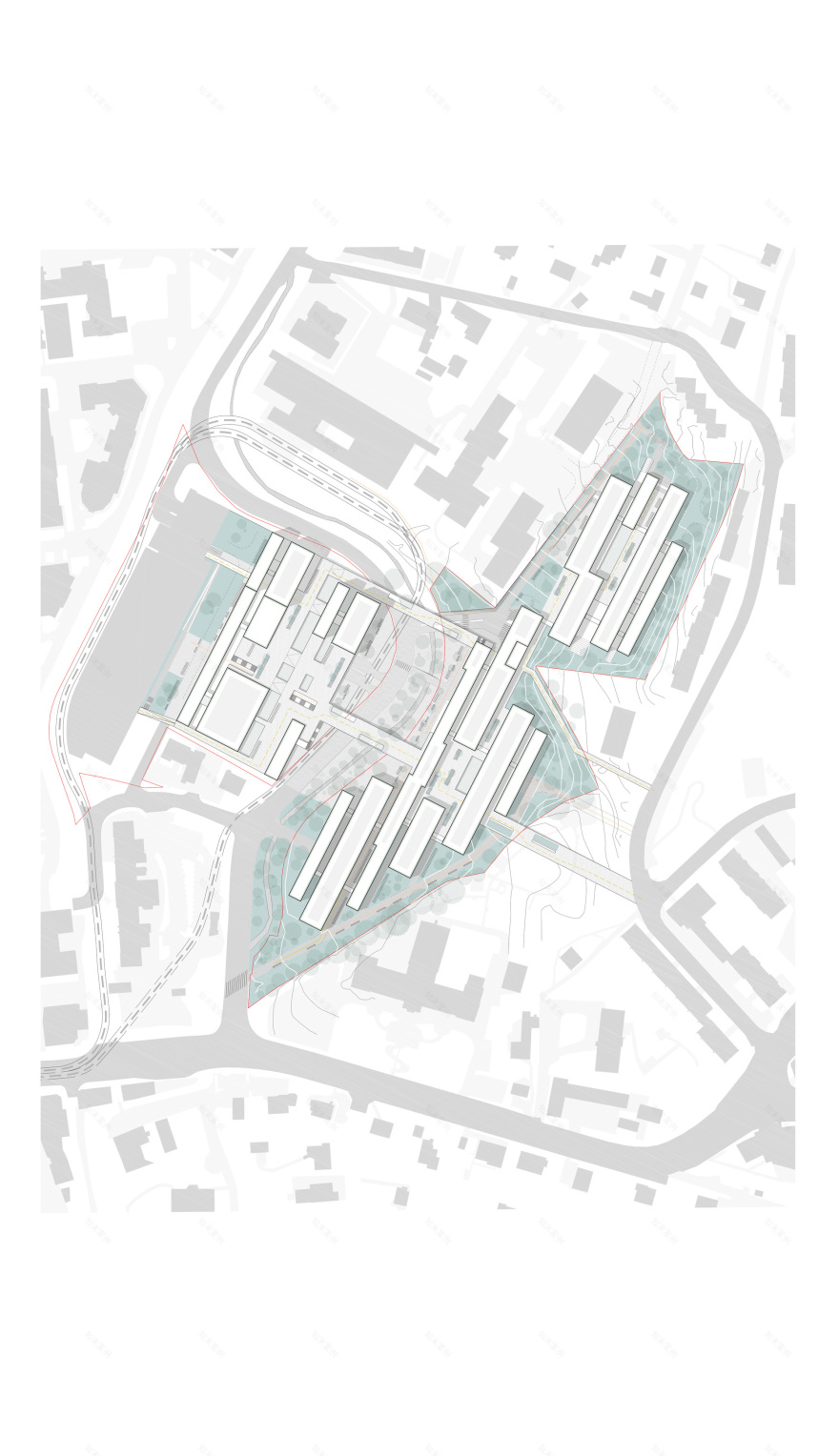
Text description provided by the architects. The concept for the Med Uni Campus Graz is based on the integration of work, teaching, and leisure spaces on a shared inner-city site. The project implements a clearly structured ensemble of coherent yet differentiated buildings, taking various requirements into account as far as possible. Openness, accessibility, and communication play important roles here. The campus is characterized by the clear placement of the volumes, which creates an exciting interplay between buildings and open spaces, between public and non-public uses, and thus a high potential for identification in the urban context.


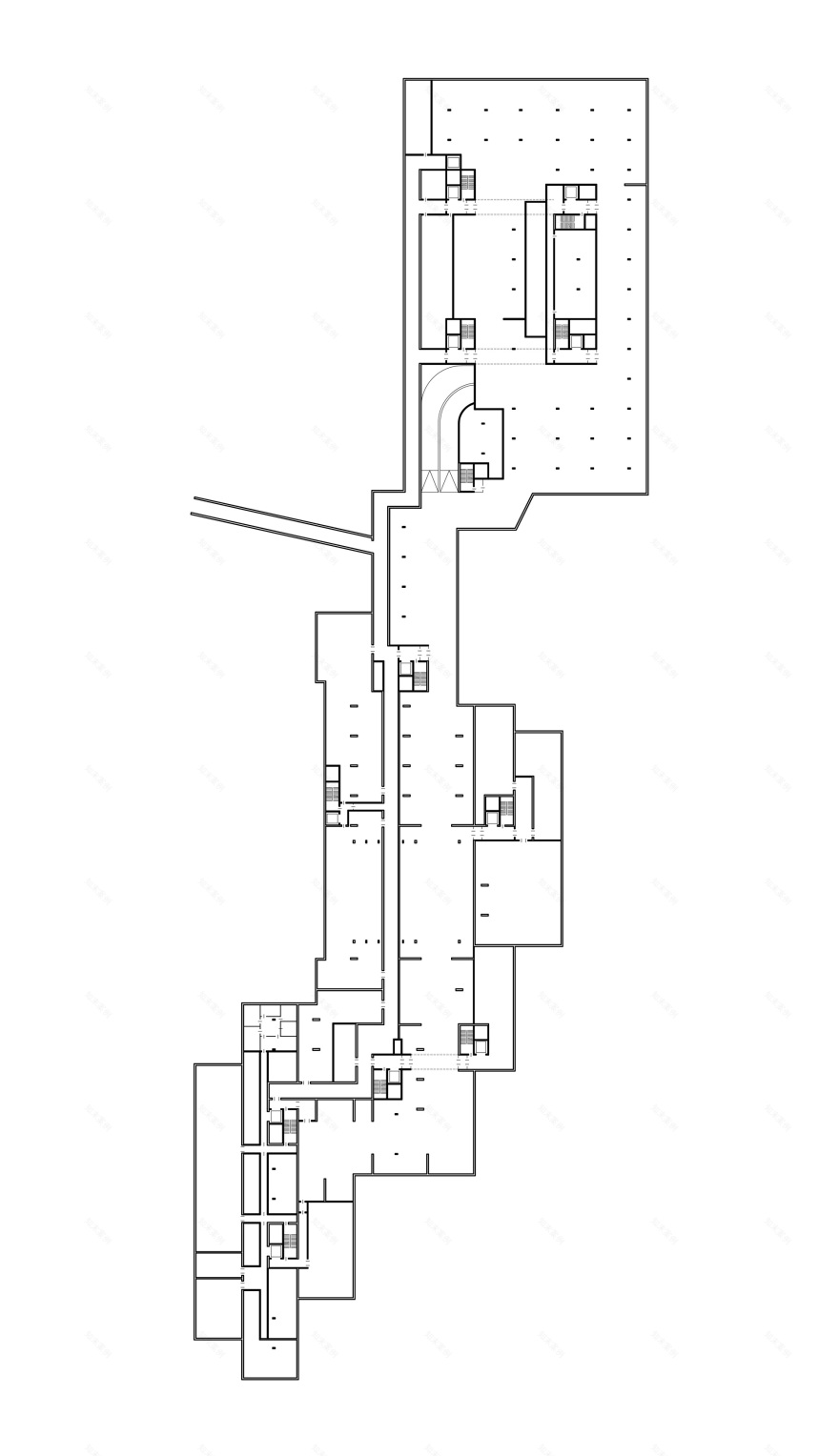
In terms of their content requirements, some of the uses go beyond the classic campus concept—be it in the scientific area due to the requirements of medical research, or due to the lively public traffic. Historically, the university faced significant logistical challenges due to the decentralization of departments across Graz. The primary setback was overcoming this fragmentation. The project responds to these diverse requirements primarily by vertically staggering the utilization areas. As a contemporary response to the local microclimatic parameters, narrow, longitudinally orientated structures were developed to ensure the greatest possible supply of fresh air into the Graz basin.

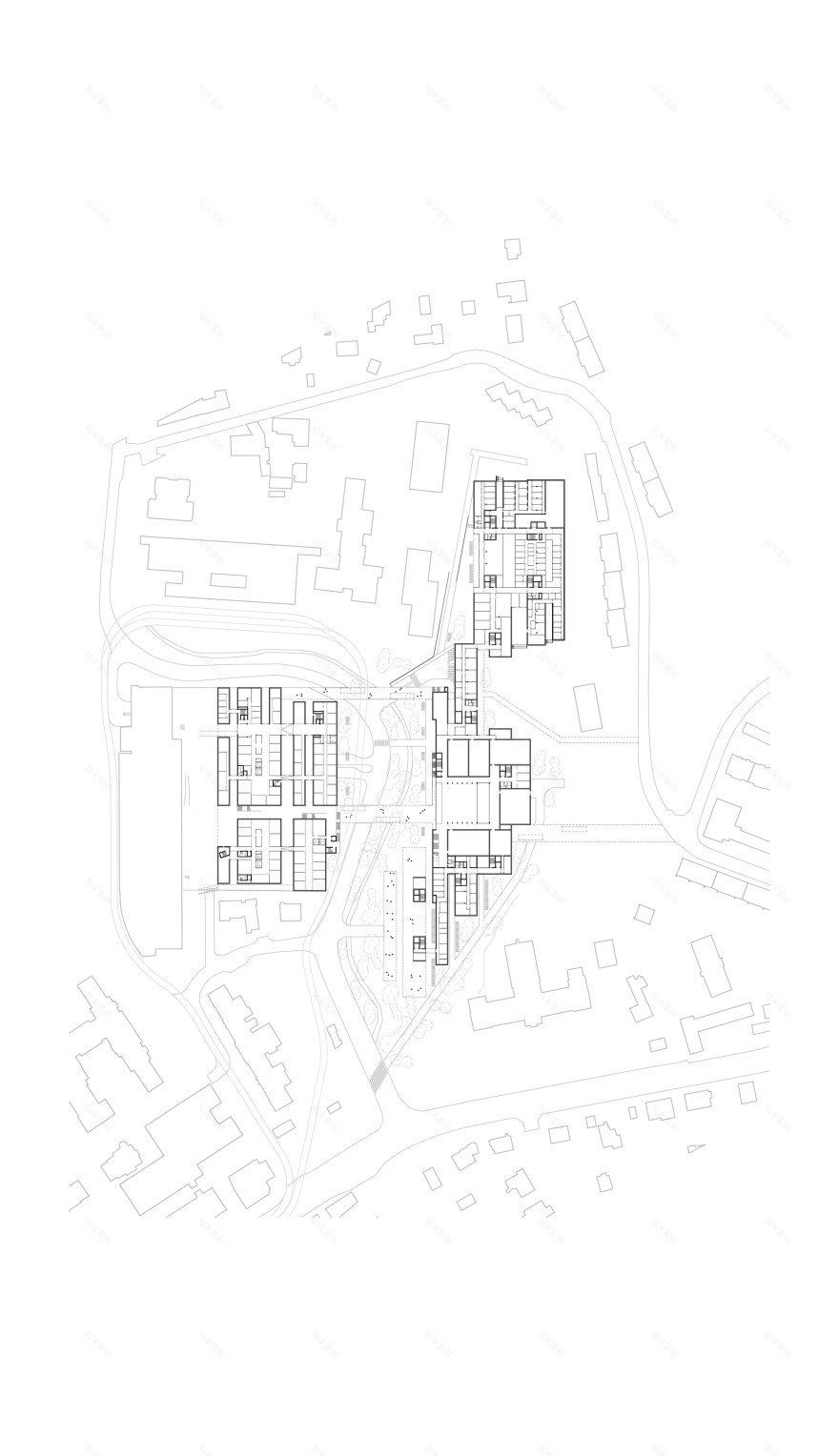

The spatial organization is defined by a clear hierarchy of functions. The central areas for teaching, such as lecture theatres and the auditorium, were built on two storeys, with the so-called campus level above as an important distribution level from which the institutes, laboratories, and research areas are accessed. A pedestrian and cycle bridge on the campus level connects further teaching areas, the canteen, and the administration. This has made it possible to realize a superordinate network of footpaths and cycle paths, to which the University Hospital Graz is also connected, successfully turning the campus into a natural part of the surrounding urban fabric.
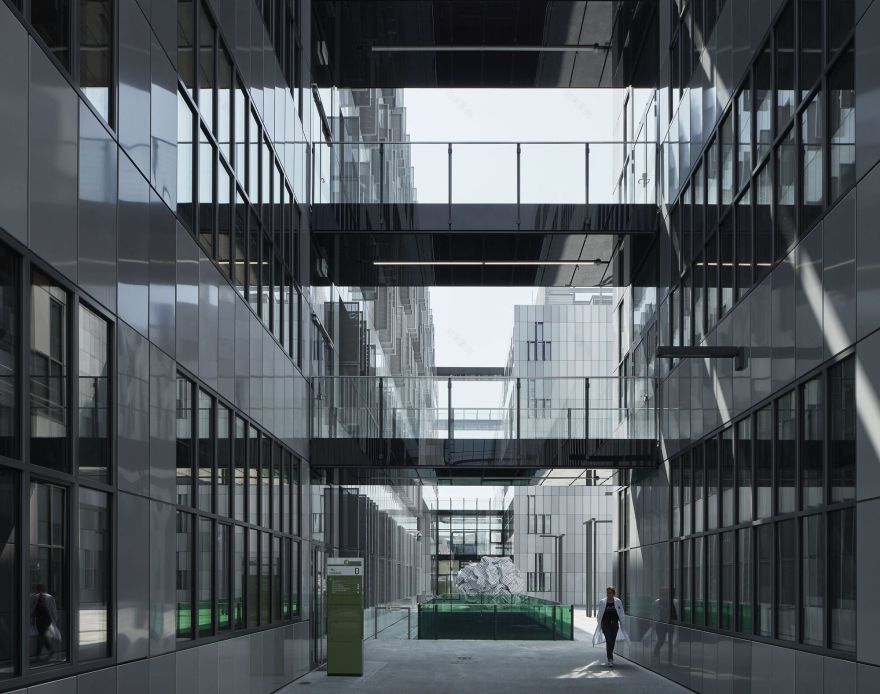
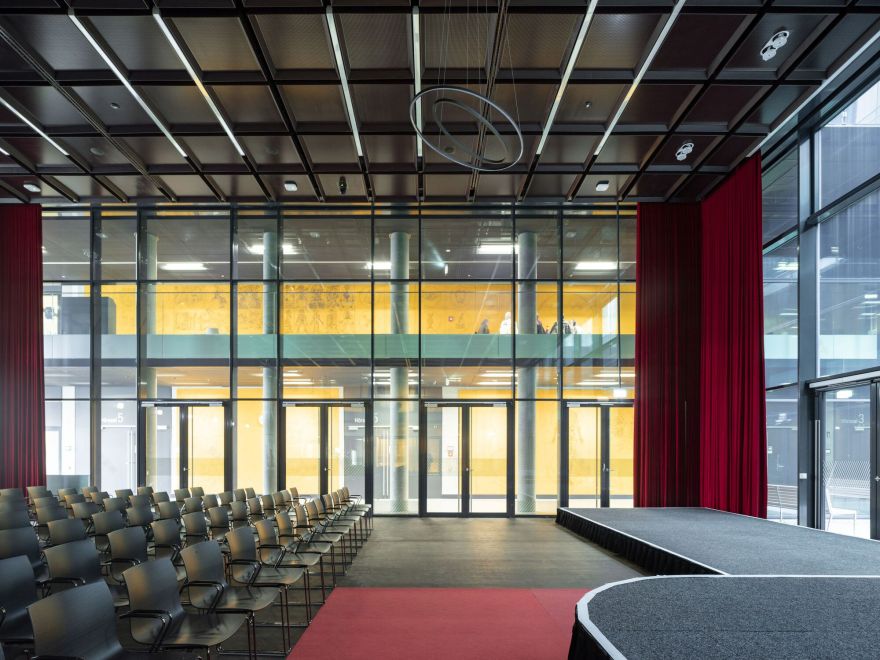
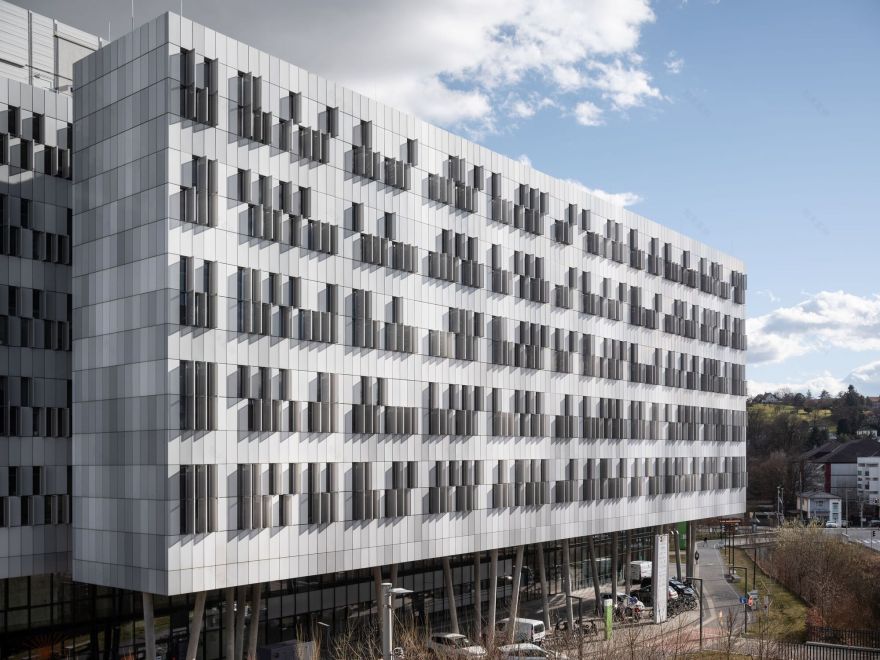
The project's identity is anchored in its technical performance and modularity. The building masses are subtly accented through a uniform facade design featuring elements in eight different shades of grey that form a "pixelated cloud" pattern. Beyond its technical logic, this aesthetic approach serves to dissolve the monumental scale of the institutional volumes, making the high-density campus feel more approachable and human-scaled. By reflecting the changing light and weather conditions of the Graz sky, the moving facade creates a dynamic, visually engaging backdrop for the daily lives of students and researchers. This modular grid ensures long-term flexibility for maintenance and adaptation.

Structurally, the project prioritizes sustainability and resource conservation, evidenced by its ÖGNI (Austrian Sustainable Real Estate Association) and DGNB (German Sustainable Building Council) Platinum certification. The construction utilized low-pollutant materials and advanced technical systems, including a massive geothermal system (221 bored piles and 119 deep probes) and solar thermal systems. This integral energy concept achieved a 36% reduction in Global Warming Potential compared to standard research buildings.

Project gallery








南京喵熊网络科技有限公司 苏ICP备18050492号-4知末 © 2018—2020 . All photos and trademark graphics are copyrighted by their owners.增值电信业务经营许可证(ICP)苏B2-20201444 苏公网安备 32011302321234号
苏公网安备 32011302321234号客服
消息
收藏
下载
最近