

创作上传
VIP
收藏下载
登录 | 注册有礼
查看完整案例

收藏

下载

分享
在一个每一块石头都承载着故事、每一面立面都低语着记忆的国度,Bomboti Casas作为一项重新定义墨西哥遗产修复的倡议应运而生。该项目由跨学科事务所MYTGLVDK发起,由Andrés Mier y Terán与Regina Galvanduque领衔,旨在介入位于墨西哥“魔法小镇”(Pueblos Mágicos)及联合国教科文组织世界遗产城市中的历史建筑,对其进行保护、激活与再想象。每一处被选中的住宅都成为一份建筑与文化宣言,在这里,设计、材料与记忆相互交织,构建出一种既深植于地方身份、又面向未来的沉浸式居住体验。
In a country where every stone holds a story and every façade whispers memories, Bomboti Casas emerges as an initiative that redefines heritage restoration in Mexico. Created by the interdisciplinary studio MYTGLVDK—led by Andrés Mier y Terán and Regina Galvanduque—the project was conceived to intervene in historically significant properties located in Mexico’s “Pueblos Mágicos” and UNESCO World Heritage cities, preserving, revitalizing, and reimagining the act of inhabiting them. Each selected house becomes an architectural and cultural manifesto, where design, materiality, and memory merge to create an immersive experience deeply rooted in local identity while looking toward the future.
▼酒店概览,overall of the project © Leandro Bulzzano

Bomboti Casas提出了一种替代性且高度自觉的方式来介入墨西哥传统建筑,强调每一处房屋的独特性:其建造历史、原有材料,以及在城市肌理中的角色。通过严谨的研究、与工匠的协作以及对地方建造技艺的运用,团队构建出一种空间叙事——既尊重并延续既有结构,又通过新的生活方式对其进行拓展。室内设计、家具选择与装饰细节延续同样的逻辑,在克制与精致、亲密与历史之间取得平衡。
Bomboti Casas proposes an alternative and deeply conscious way of engaging with traditional Mexican architecture, emphasizing the unique character of each property: its construction history, original materials, and its role within the urban fabric. Through rigorous research, collaboration with artisans, and the application of vernacular building techniques, the studio develops a spatial narrative that celebrates the existing structure while amplifying it through new ways of living. Interior design, furniture selection, and decorative accents follow this same sensibility, balancing restraint and sophistication, intimacy and heritage.
▼庭院内的等候区,waiting area in the patio © Leandro Bulzzano

▼细部,details © Leandro Bulzzano

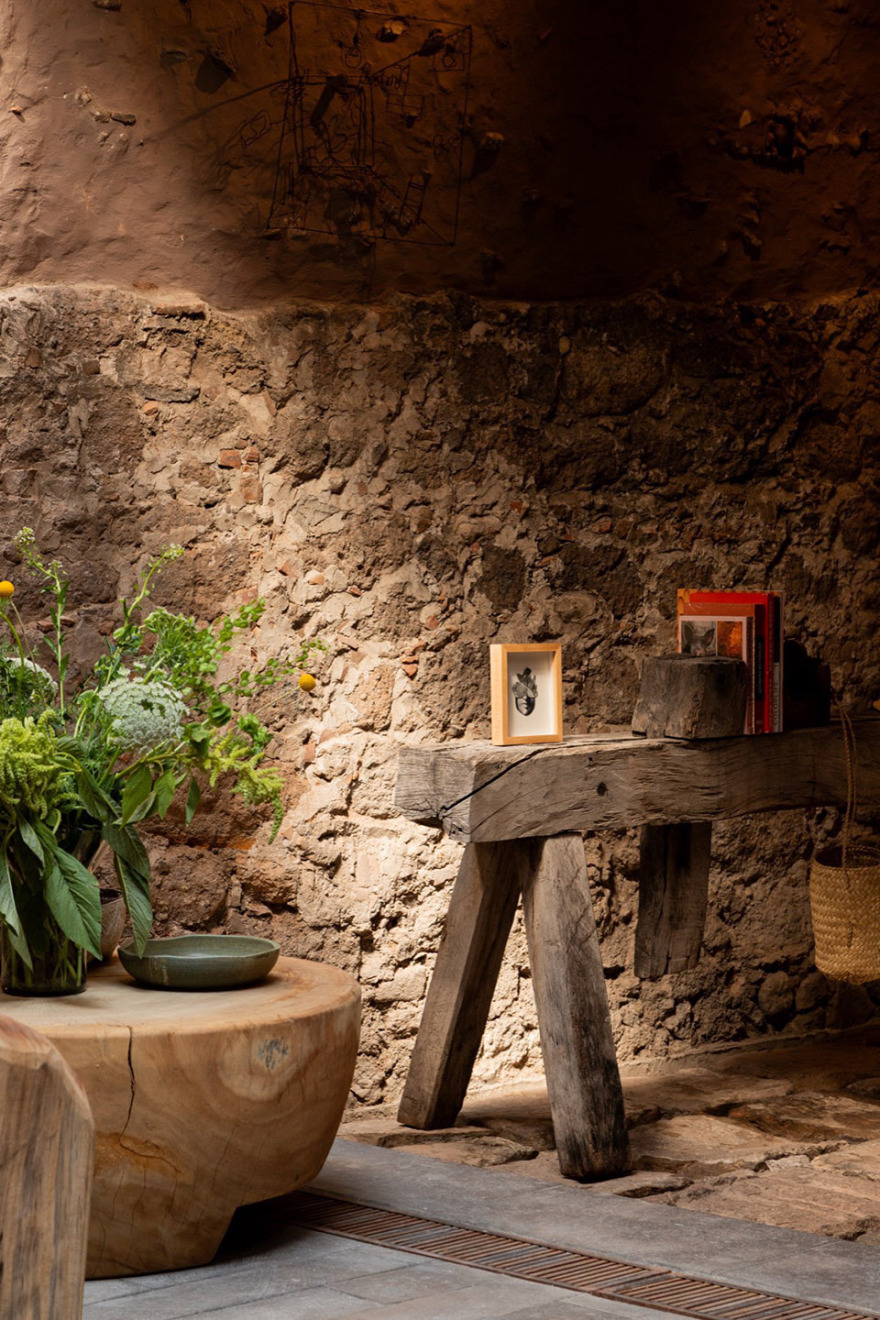
这一愿景的首个篇章将于2026年夏季在圣米格尔·德·阿连德历史中心呈现。该住宅始建于18世纪,通过一种超越形式性保护的建筑策略完成全面修复。它不仅是对既有建筑的保存,更是对居住空间的再诠释,由Pablo Cobo共同参与,其策展视角为项目提供了方法论支撑,同时Luna Kindler的字体设计思维也融入了整体概念语言。项目以殖民时期建筑的几何秩序为起点,引入一种当代建筑语汇——简洁的线条、精准的体量以及沉思性的空间氛围。住宅沿地形展开为多层空间体系,整合了内庭院、观景露台、悬空步道以及屋顶观景平台,提供面向城市景观的180度全景视野。
The first chapter of this vision takes shape in the heart of the historic center of San Miguel de Allende, where it will open in summer 2026. Originally built in the eighteenth century, the residence has been comprehensively restored through an architectural approach that goes beyond formal preservation. Instead, it represents a reinterpretation of domestic space, co-created with Pablo Cobo, whose curatorial perspective informs the project, and Luna Kindler, whose typographic design sensibility contributes to its conceptual language. Taking the geometry of colonial constructions as a starting point, the project introduces a contemporary architectural vocabulary of clean lines, precise volumes, and a contemplative atmosphere. The house unfolds across multiple levels that respond to the topography of the site, integrating interior courtyards, panoramic terraces, suspended walkways, and a rooftop viewpoint offering a 180-degree panorama over the urban landscape.
▼大堂等候区,waiting area in the lobby © Leandro Bulzzano
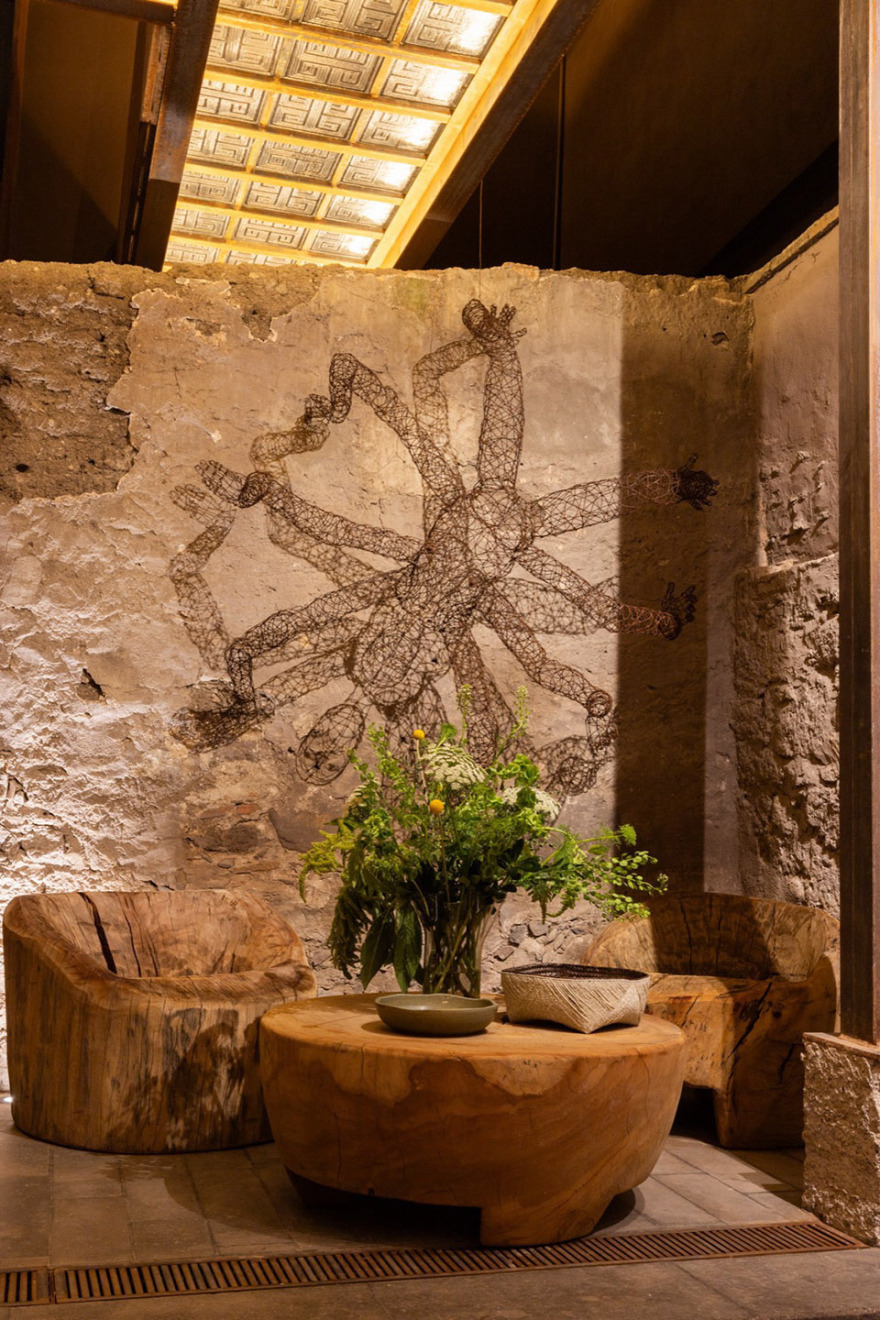
▼走廊,hallway © Leandro Bulzzano

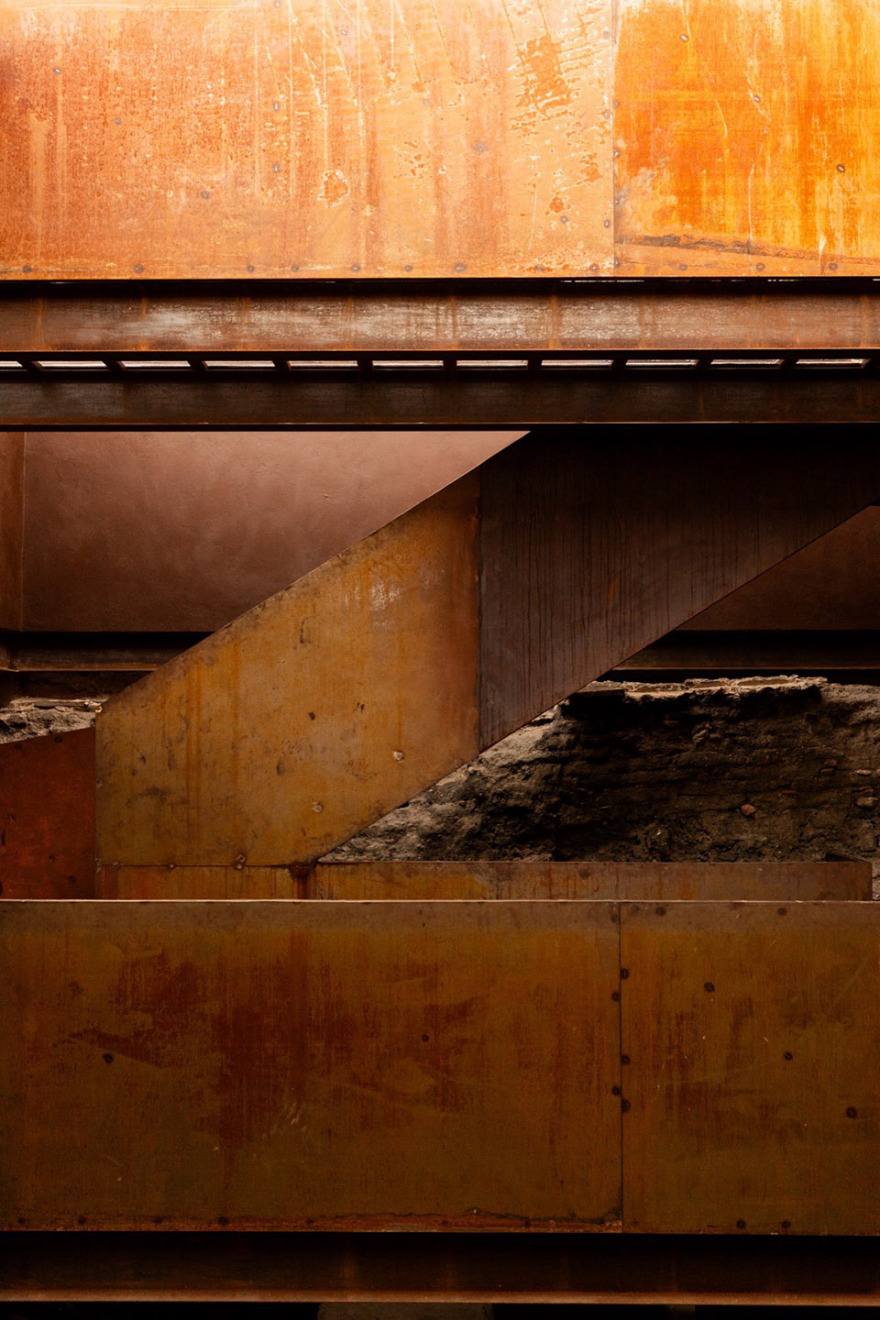
每一项设计决策都回应着“尊重、修复与更新”的原则。立面修复遵循墨西哥国家人类学与历史研究所(INAH)的相关规范,而新的建筑介入则引入外露的天然钢材,使其在环境中自然氧化与老化,成为建筑语言的一部分。修复过程中,团队回收并再利用原有石材与采石材料,同时对入口及承重结构进行修复,使建筑的材料记忆得以延续。室内地面采用本地开采的棕色cantera石材铺设,墙面与表面则使用Comex的黑色Chukret涂层,营造出克制而沉浸的空间氛围。门与木作构件均由再生木材制作,保留时间的痕迹,并强化项目对可持续性的承诺。
Every design decision responds to a principle of respect, restoration, and renewal. The façade was restored according to the guidelines of Mexico’s National Institute of Anthropology and History (INAH), while new architectural interventions incorporate exposed natural steel, allowing the material to react to the environment and age authentically as part of the architectural language. The restoration process included the recovery of original stones and quarry materials, as well as the rehabilitation of the entrance and structural elements that embody the house’s material memory. Inside, flooring is crafted from locally sourced brown cantera stone, while walls and surfaces incorporate Comex’s black Chukret finish, creating a sober and immersive atmosphere. Doors and carpentry elements are made from reclaimed wood, integrating the marks of time and reinforcing the project’s commitment to sustainability.
▼克制而沉浸的空间氛围,
restrained and immersive spatial atmosphere © Leandro Bulzzano


项目干预的核心原则之一,是不改变“遗迹”,而是将其作为见证予以保留。当代建筑以克制而精准的方式介入,既不侵入也不改动原有结构,而是对其进行框定,让时间的痕迹清晰可见。新的部分并不模仿旧有形式,而是通过对比加以凸显,揭示出建筑的“考古性”,使历史在每一面墙体与每一处肌理中持续显现。
A central principle of the intervention was not to alter the ruin but to preserve it as a testimonial. Contemporary architecture is introduced with precision, never invading or altering the original heritage structure but instead framing it and allowing the passage of time to remain visible. The new does not imitate the old; it contrasts with and highlights it, revealing the archaeological dimension of the house and allowing history to remain present in every wall and texture.
▼洗手池,wash sink © Leandro Bulzzano

▼浴池,bath © Leandro Bulzzano

最具表现力的建筑语言之一体现在悬空步道的设计中:由MYTGLVDK与Nouvel Glass Studio合作打造的结构玻璃地面,融入了源自阿兹特克阶梯回纹的图案,在光影之间形成当代性的再诠释,向古老几何致意。照明采用间接方式,强调材质肌理与温润的棕色调,呼应钢材最本质的状态。一层设置的黑色威尼斯砖浅水池,成为一个可触感、可沉思的空间节点;再生家具以及精心策划的艺术与设计作品,则进一步强化了住宅作为一个不断演化的“生活场域”的身份。
One of the most striking architectural gestures appears in the suspended walkways, where structural glass flooring designed by MYTGLVDK in collaboration with Nouvel Glass Studio incorporates a pattern inspired by the Mexican Aztec stepped fret motif, filtering light and shadow as a contemporary homage to ancestral geometry. Lighting is conceived indirectly, emphasizing textures and warm brown tones as a tribute to steel in its most elemental state. On the ground floor, a Venetian-black tiled plunge pool functions as a tactile and contemplative feature, while reclaimed furniture and curated art and design pieces reinforce the house’s identity as a living space in constant transformation.
▼中庭内的艺术雕塑,art work in the patio © Leandro Bulzzano
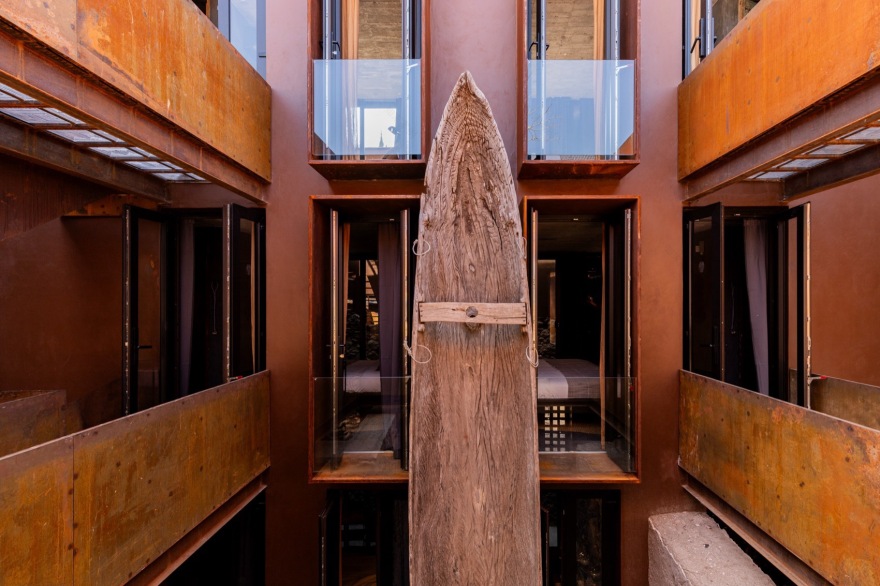
▼庭院立面,facade of the patio © Leandro Bulzzano

▼耐候钢楼梯,Corten steel staircase © Leandro Bulzzano


Casa Bomboti-圣米格尔·德·阿连德设有六间客房,在整体布局上经过精心组织,可作为私人住宅使用,也可转化为精品住宿空间,同时保持高度统一的空间体验。每间客房在一致而精致的美学体系中呈现出各自独特的空间构型,材料以高品质天然材质为主,家具则经过细致甄选——部分由Bomboti修复,部分与本地工匠合作定制完成。所使用的木材均来自认证来源,并采用传统工艺加工;织物(亚麻、棉与龙舌兰纤维)则由Bomboti纺织工坊开发,原材料取自米却肯州乌鲁阿潘的圣佩德罗工厂。照明、艺术品与装饰物均经过精确挑选,突出当代墨西哥设计;与此同时,空间体验还通过由Scape创始人Helle Jepsen专为其美学与健康品牌Mys打造的个护产品得以完善,该品牌同样由MYTGLVDK设计。对于Casa Bomboti而言,其专属气味为“Winter”,以檀香、白麝香与接骨木花为基调,并以木炭为核心元素,呼应品牌标志性的黑色——温暖、深邃且包裹感十足,在黑暗中亦蕴含光。
Casa Bomboti San Miguel de Allende features six rooms, thoughtfully arranged to function either as a private residence or a boutique accommodation, while maintaining a strong sense of spatial cohesion. Each room offers a unique configuration within a refined and consistent aesthetic, defined by noble materials and carefully curated furnishings, including pieces restored by Bomboti alongside others custom-designed in collaboration with local artisans. The woods used are sourced from certified origins and crafted using traditional techniques, while textiles (linen, cotton, and henequen) have been developed by the Bomboti’s textile workshop, drawing from materials sourced from the Fábrica de San Pedro in Uruapan, Michoacán. Lighting, artworks, and decorative objects have been selected with precision, highlighting contemporary Mexican design, while the experience is completed with personal care amenities created exclusively by Helle Jepsen, founder of Scape, for Mys, her beauty and wellness brand designed by MYTGLVDK. For Bomboti Casas, the chosen scent is Winter, whose notes of sandalwood, white musk, and elderflower, with charcoal as a central element, echo the brand’s signature black: warm, deep, and enveloping, holding light even in darkness.
▼客房室内,interior of the guest room © Leandro Bulzzano
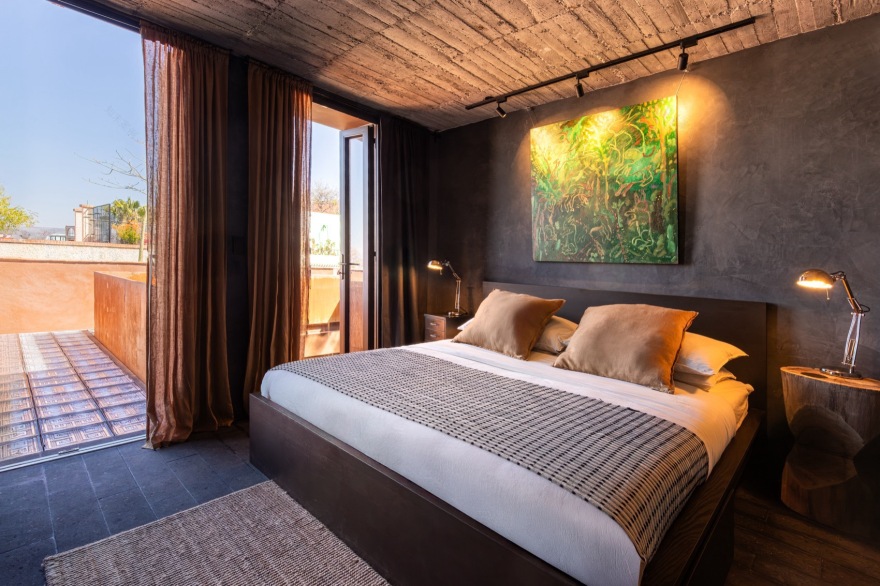

▼客房室内,interior of the guest room © Leandro Bulzzano

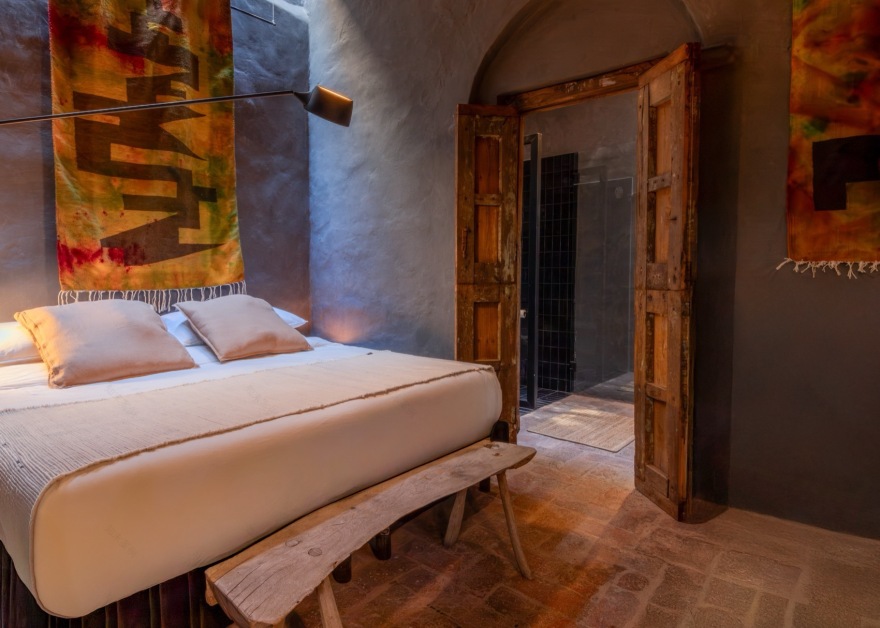
▼浴室,bathroom © Leandro Bulzzano


▼浴室细部,details of the bathroom © Leandro Bulzzano

除了居住功能之外,Casa Bomboti-圣米格尔·德·阿连德还包含一系列共享空间,作为交流与聚集的场所。建筑最高层的屋顶被打造为露台空间,提供俯瞰历史城区的开阔视野。露台采用cuarterón瓷砖铺地,结合火炉与再生家具,成为观赏城市天际线的社交核心。建筑的空间组织围绕一个中央庭院展开,修复后的夯土墙体构成主要流线结构,悬空步道连接不同楼层。每一处细节都旨在营造难忘的体验,将居所的亲密性与精品酒店的标准与服务相结合。
Beyond its residential program, Casa Bomboti San Miguel de Allende comprises a series of shared spaces conceived as gathering places. At the highest level, the rooftop transforms into a roof deck offering extraordinary views of the historic center. Designed with cuarterón tile flooring, fire pits, and reclaimed furniture, the terrace functions as a social nucleus for contemplating the city skyline. The building’s core is organized around a central courtyard with restored adobe walls that structure circulation, while elevated walkways connect the different levels. Every detail is designed to offer a memorable experience, combining the intimacy of a home with the standards and services of a boutique hotel.
▼俯瞰历史城区的开阔视野,
expansive view of the historical district © Leandro Bulzzano

▼露台,terrace © Leandro Bulzzano

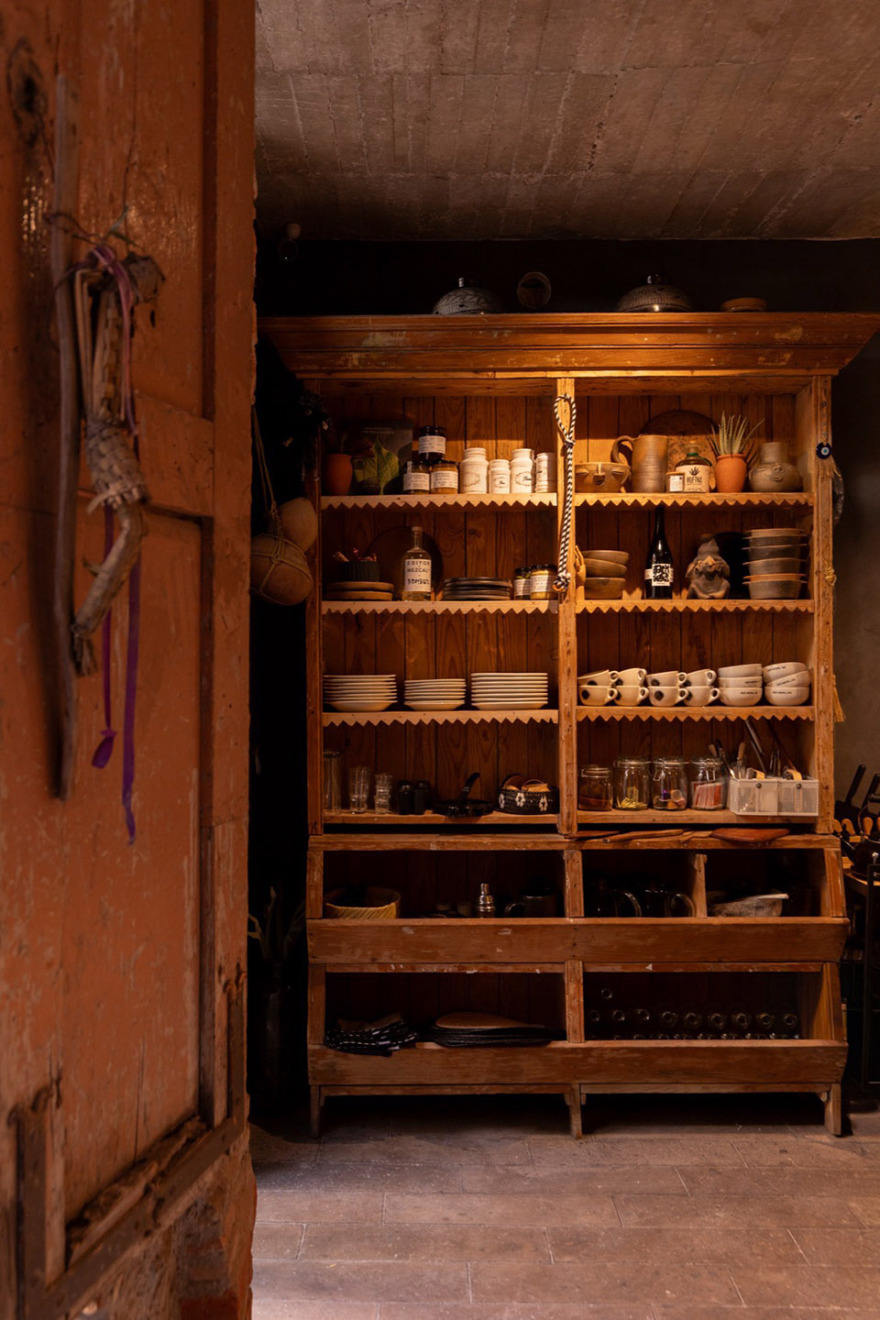
Bomboti Casas不仅是一个建筑与酒店项目,同时也被构想为一个“可居住的画廊”。每一栋住宅都是艺术、设计与策展对象的动态展示空间,其中所有物件均可被购买。这种流动且短暂的特性使空间持续演化:艺术品不断更替,家具轮换更新,织物与配饰也在每次到访中焕新。入口处的柜台既是接待前台,也是一个小型精品店,陈列帽子、包袋、织物及旅行用品;小厨房则提供一系列Bomboti Cocina产品,进一步丰富访客的感官体验。因此,居住在Bomboti的空间中本身成为一种探索行为——在体验中发现,并带走这一创意世界的一部分。
Bomboti Casas is conceived not only as an architectural and hospitality project but also as a habitable gallery. Each house functions as a living showroom of art, design, and carefully curated objects, where every piece can be acquired. This dynamic and ephemeral quality allows the space to evolve continuously: artworks change, furniture rotates, and textiles and accessories are renewed with each visit. At the entrance, a counter acts as both welcome desk and boutique, offering hats, bags, textiles, and travel objects, while the kitchenette features a selection of Bomboti Cocina products enhancing the sensory experience of guests. In this way, inhabiting a Bomboti house becomes an act of discovery: exploring and taking home a fragment of its creative universe.
▼小厨房提供了一系列Bomboti Cocina产品,
the kitchenette features a selection of Bomboti Cocina products © Leandro Bulzzano

Bomboti Casas的美学愿景伴随着鲜明的伦理与地域维度,共同指向对墨西哥有形与无形文化遗产的保护。每一次介入都推动当地社区的参与,支持濒危手工艺,并在设计、艺术与手工建造的基础上构建循环经济体系。对Bomboti而言,这是一项长期实践:修复历史住宅不仅是一种投资,更是一种遗产的延续。设计在此不被视为产品,而是一种承载文化与社会价值的平台,旨在于历史城市之中重拾墨西哥住宅的精神内核。
The aesthetic vision of Bomboti Casas is accompanied by a strong ethical and territorial dimension, contributing to the preservation of Mexico’s tangible and intangible heritage. Each intervention promotes the participation of local communities, supports endangered crafts, and fosters a circular economy rooted in design, art, and artisanal construction. Bomboti’s vision is long-term: restoring heritage houses is not only an investment but also a legacy. Design is conceived not as a product but as a platform for cultural and social values, seeking to recover the soul of Mexican homes within historic cities.
▼手工艺术品,
art and artisanal construction © Leandro Bulzzano

面向未来,Bomboti Casas计划在墨西哥范围内构建一个经过精心策划的项目组合。梅里达与瓦哈卡将成为品牌下一阶段的重要落点,在这些城市中,其修复模式将被延续,但绝不被简单复制。每一次介入都将是独一无二的,因为每一座建筑都需要属于自身的建筑语言。唯一不变的是其核心方法论:对历史的尊重、对建筑品质的严格把控、以叙事为驱动的设计方式,以及对项目所处地域的深度承诺。
Looking ahead, Bomboti Casas plans to develop a carefully curated portfolio of properties across Mexico. Mérida and Oaxaca are among the next destinations where the brand intends to replicate, without repeating, its restoration model. Each intervention will be unique, because every building demands its own architectural language. What will remain constant is the guiding philosophy: respect for history, architectural mastery, narrative-driven design, and a deep commitment to the territory in which each project takes shape.
▼细部,details © Leandro Bulzzano


南京喵熊网络科技有限公司 苏ICP备18050492号-4知末 © 2018—2020 . All photos and trademark graphics are copyrighted by their owners.增值电信业务经营许可证(ICP)苏B2-20201444 苏公网安备 32011302321234号
苏公网安备 32011302321234号客服
消息
收藏
下载
最近