

创作上传
VIP
收藏下载
登录 | 注册有礼
查看完整案例

收藏

下载

分享
出品人:向玲 / Producer: Xiang Ling
编辑:石安、闫帅朗、孙星悦、司源、翁畅妍、张笑然、亓慧、高天旗 / Editor: Shi An, Sun Xingyue, Yan Shuailang, Si Yuan, Weng Changyan, Zhang Xiaoran, Qi Hui, Gao Tianqi
_________________
关于“未见筑”
About “WeLive Architects”
“探索未见的可能性 ,创造真正有生命力的作品。”
“Create works that truly have vitality, rather than merely for the sake of work and livelihood.”
▼未见筑 logo,office logo © 未见筑

李未韬:我的合伙人李博和我同为中央美院的校友,我们曾在伦敦UCL Bartlett建筑学院同班学习,毕业后他去了上海,我则回到了重庆。创业后,我很快邀请李博来到重庆,与我共同创办了公司,他也将家安置在了重庆。至于“未见筑”这个名字,是希望表达我们的态度——探索一些可能大家还未见过、未曾呈现的可能性。我们希望始终保持开放的姿态,对世界保持好奇心,不走循规蹈矩的老路。每个作品我们都力求创造出全新的东西,这正是我们的态度。
此外,我们还给公司取了一个英文名字“WeLive”。我们希望通过英文名字传递出一种思想——建筑师的职业不仅仅是谋生的工具。我们不希望建筑成为生存的手段,而是希望能真正做一个“活着”的建筑师——活在这个世界上,创造真正有生命力的作品,而不是仅仅为了工作和生计。中英文名字都反映了这种理念。
我本人性格相对外向一点,尤其是在重庆这个本地环境中,我会负责更多涉及行业交流、商务拓展、推广和宣传等对外方面的工作。同时,在项目的前期概念方案阶段,我也会参与得比较多。李博则更多地负责后期工作,他是我们坚强的后盾,专注于从方案到扩展图纸、施工图的跟进,以及项目质量的把控等。我们不变的核心是:我们一直在变化,不断追求原创性。每个项目我们都在反复琢磨,考虑如何结合在地性、文化背景、场地关系等因素,或者像商业项目和室内设计,我们还会考虑租户的性格、品牌的IP等。每个项目我们都力求展现它最独特的一面,而不是把我们自己的风格带入其中。我们更倾向于挖掘并探索项目的潜力,找到项目的“灵魂”,找到它与众不同的点在哪里。此外,我们也很关注空间的模式与原型,借助空间模式的探索,我们希望为人们提供一种不同的体验感。最后,形式语言的考量也很重要,我们会兼顾实用性与美观性。我们将这三个方面视为项目的基础,至少要完成这些基本要求。通过这几个维度,我们来审视项目是否达到了我们的期望。
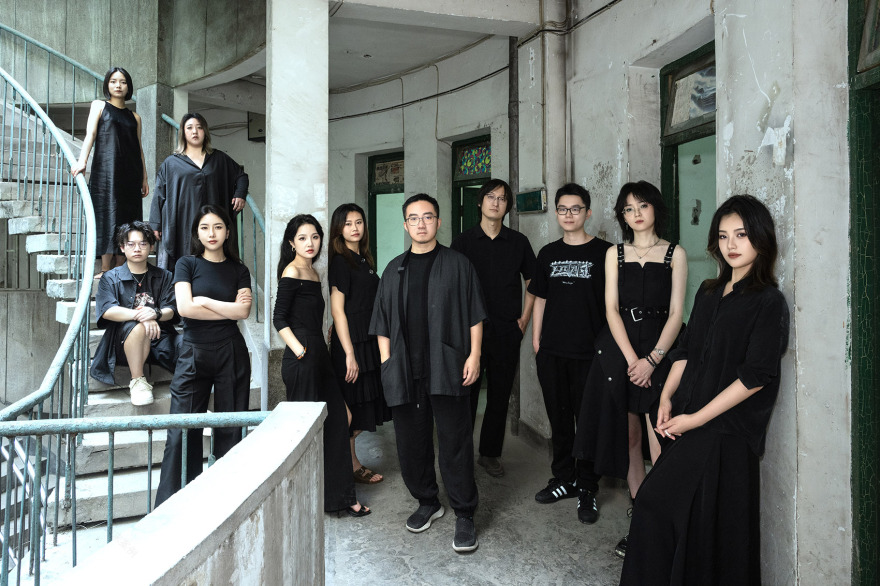
▼两位合作人及团队合影,A photo of the two partners and their team© 未见筑

Li Weitao: My partner Li Bo and I both graduated from CAFA and studied together at UCL Bartlett School of Architecture in London. After graduation, he moved to Shanghai, while I returned to Chongqing. When I started my company, I quickly invited Li Bo to join me in Chongqing, where he also settled his family. The name “未见筑” expresses our attitude—to explore possibilities that are yet to be seen or realized. We aim to remain open, curious about the world, and avoid the conventional path. With every project, we strive to create something entirely new. This is our approach.
In addition, through the English name of studio —— “WeLive”, we want to convey an idea—that being an architect is not just a way to make a living. We don’t want architecture to be merely a means of survival. Instead, we aim to be architects who truly “live”—living in this world and creating work full of life, not just working for the sake of a job or income. Both the Chinese and English names reflect this philosophy.
I am relatively outgoing, especially in our local environment in Chongqing. I take on more external work, such as industry communication, business development, and promotion. I am also heavily involved in the early conceptual stages of projects. Li Bo, on the other hand, focuses more on later stages. He is our strong support, handling everything from developing schemes to detailed and construction drawings, as well as ensuring project quality. Our constant core is that we are always changing and constantly pursuing originality. For each project, we carefully consider how to integrate local context, cultural background, and site relationships. In commercial and interior projects, we also take into account the tenant’s personality and brand identity. We strive to reveal the project’s most unique aspects, rather than imposing our own style. We focus on discovering and exploring the project’s potential—finding its “soul” and what makes it special. We also pay close attention to spatial patterns and prototypes. Through exploring these patterns, we aim to offer people a different experience. Finally, we consider form and aesthetics, balancing practicality with beauty. We see these three aspects as the foundation of each project, the minimum standards we must meet. Through these dimensions, we evaluate whether a project meets our expectations.
▼二次艺术创作的作品,Works of secondary artistic creation© 未见筑

_________________
设计理念
Design Concept
“我们的目标是要做先锋的设计,但我们的路径是通过最质朴的态度和方法去实现,脚踏实地地工作,用最质朴的方式去实现我们的先锋追求。”
We realized that our goal is to make avant-garde design, but the path is through a rustic attitude and method—working steadily and realistically, using simplicity to achieve our avant-garde ambitions.
李未韬:“先锋与质朴”这个概念最早是源自我们在重庆做设计的经验。其实,在这个地方做设计确实存在一定难度,相较于沿海地区,这里在先锋性和开放性上稍显不足。当我们想要创造一些新的东西时,常常会感到一种拉扯。我们希望至少能做一些别人没有见过的东西,或者创造一些新的体验和尝试,但又不得不面对土壤和环境所带来的限制。因此,我们需要找到一个平衡点。最终,我们总结出这样一个感受:我们的目标是要做先锋的设计,但我们的路径是通过最质朴的态度和方法去实现,脚踏实地地工作,用最质朴的方式去实现我们的先锋追求。所以,“先锋与质朴”不仅是我们的追求,也是我们的工作方法和态度。先锋代表了我们对设计的追求,而质朴则是实现这一追求的基础。如果没有质朴的态度和扎实的工作,就无法做到先锋。
李博:确实设计师总是希望对现实环境做出一些改变,但我们认为这种改变仍然应该基于每个人最质朴的情感、情绪或心理状态。也就是说不是为了先锋而离经叛道,而是希望从质朴的本真出发,来参与现实事务。
▼未见筑工作流程图,work process© 未见筑
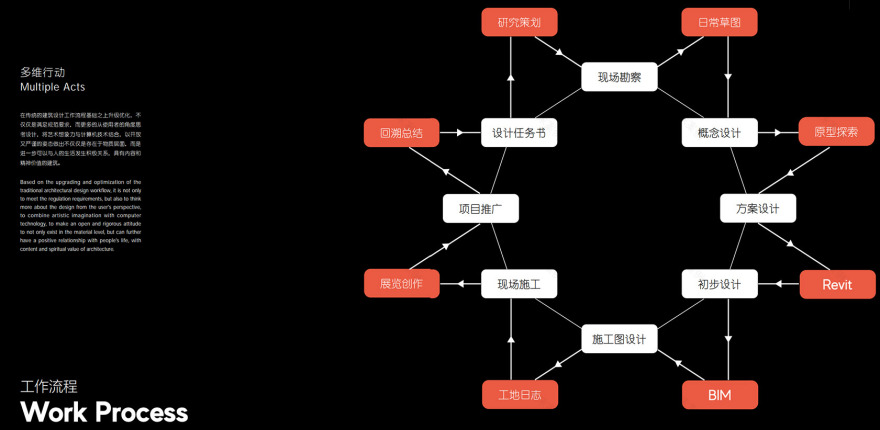
Li Weitao: The concept of “Avent-garde”&“Rustic”comes from our experience designing in Chongqing. Doing design here has its challenges. Compared with coastal cities, this place is less open and less experimental. When we try to create something new, there is often a tension. We want to make things people haven’t seen or create new experiences, but we must also face the limits of the local context and environment. We needed to find a balance. We realized that our goal is to make avant-garde design, but the path is through a rustic attitude and method—working steadily and realistically, using simplicity to achieve our avant-garde ambitions. So, “Avent-garde”&“Rustic”is not only our pursuit but also our approach. Avant-garde represents our design ambition, while rustic is the foundation. Without a rustic attitude and solid work, we cannot be truly avant-garde.
Li Bo: Designers always want to make changes to the real world, but we believe these changes should come from each person’s most rustic emotions, feelings, and mindset. In other words, it’s not about being avant-garde for the sake of breaking rules, but about approaching reality from a genuine, simple foundation.
▼未见筑部分代表作品拼图,Projects collage by WE LIVE Architects© 未见筑

我们追求的是一种非常真实的东西。这种真实的追求让我们有意识地避免去盲目跟随潮流。
What we pursue is something very genuine. This pursuit of authenticity makes us consciously avoid blindly following trends.
李未韬:我们追求的是一种非常真实的东西。这种真实的追求让我们有意识地避免去盲目跟随潮流。设计确实有很多潮流,而我们在追求最真实的东西时,它的出发点本身就是质朴的。比如在江小白农庄中,我们想表达的是一种乡村的质朴气质。我们没有使用木瓦或夯土这些典型的乡村元素,而是通过比较拙朴的手法和敦实的体量来呈现乡村的质朴感觉。最终,呈现出来的结果让很多人质疑,为什么在乡村使用混凝土,特别是清水混凝土,看起来好像不太“乡村”。其实,这与大家的常规认知相反,但这种相反并不是为了背叛或反叛,而是因为我们在追求一种更真诚的表达方式。因此,我们得出了一个不同的结果。
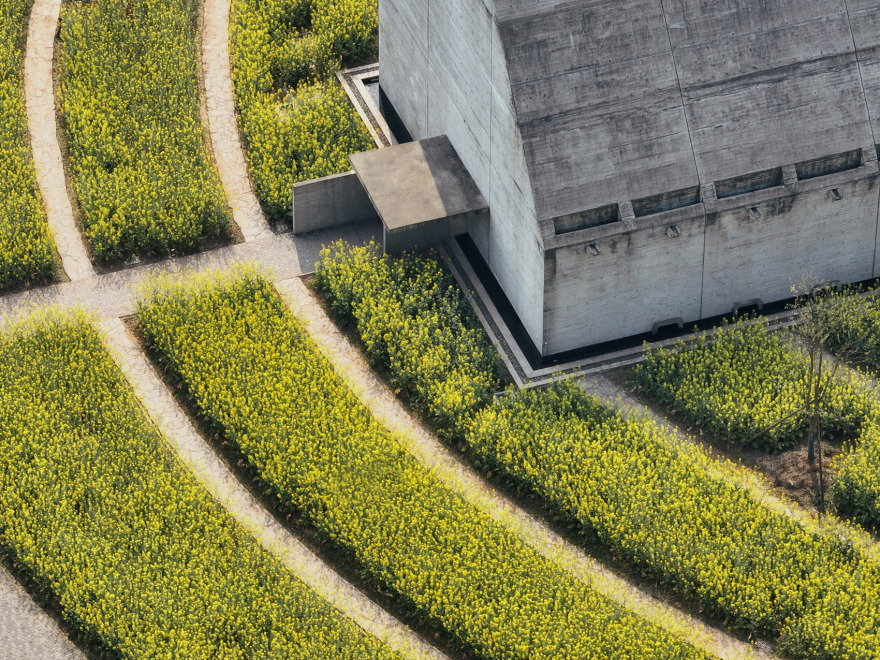
从功能上来看,我们在项目中植入了多个元素。例如,江小白艺术馆(现已更名为梅见艺术馆),将成为媒介的专属博物馆,采用了清水混凝土建筑风格;还有大地石房、蜗牛菜园、小白花房等,每个半岛都有其独特的主题,有的呈现品牌文化和艺术内容,有的作为农业办公空间,还有的提供餐饮、运动设施,甚至结合花卉和菜园元素。我们通过这些设计,结合乡村特色,打造了年轻人可能会喜欢的多样化体验,这一切也来源于我们对市场需求的观察和研究。
从出发点来看,我们并不是从建造的维度出发。我们的真正目标是探索乡村的生活方式和体验,思考江小白这样的品牌进入乡村应该是什么样子。从生活体验的角度来看,江小白品牌一直在努力做一些伟大的事情,比如将白酒带给年轻人,或者让梅见这种国酒发扬光大,成为中国人自己的佐餐酒。那么,我们在乡村做设计时,是否也应该传递一些在精神维度上不一样的东西,而不仅仅是从建造的角度出发?因此,我们选择从文化层面和体验感层面来思考这个问题,回到了我们要挖掘乡村精神的初衷。因此,我们提出了“质朴”这一概念。从那时起,我们希望所做的每一件事都是真诚的,在乡村的设计中避免过于精细和刻意的设计,而是追求乡村本身的质朴本真。
在材料选择上,我们选用了混凝土。首先,混凝土是现在最为人熟悉的建材。其次木纹清水混凝土,它本身就具有质朴的形式语言,搭配木纹能与乡村的气质产生一定的呼应。此外,我们选用横向木纹设计,这种形式语言和高粱地的竖向生长相呼应,体现了自然的力量。
在设计上,我们希望在高粱地中展现出一个水平的建筑,而它的山墙面则采用了坡屋顶的设计。很多人会觉得它像教堂,这也是我们的初衷之一。我们希望传递对农业的敬畏之心,人们来到这里时,能感受到一种崇高的氛围,能感受到天、地和对大地的敬畏。因此,我们选择用清水混凝土来打造这样一座具有强烈精神性的建筑,以表达我们对大地的敬畏之情。
其实我很喜欢去和周围的居民交流,但我并不告诉他们我是谁,只是问他们:“你们觉得这房子怪不怪?喜欢还是讨厌?”他们通常说不太理解,但又挺喜欢的,虽然不知道为什么。我觉得这就足够了。有些开餐厅的居民甚至说生意变好了,他们很开心。我觉得,这就是最重要的。所以对于他们来说,他们并不排斥这个设计。虽然如果仅从图片来看,可能会觉得有些突兀,但实际上,项目放在周围环境中,山坡的屋顶和山的呼应、混凝土与高粱地的联系,其实是非常和谐的。每次有机会,我都会和他们聊聊,得到的反馈也一直都很好。
Li Weitao: What we pursue is something very genuine. This pursuit of authenticity makes us consciously avoid blindly following trends. Design has many trends, but when we aim for the most genuine expression, its starting point is always simplicity. For example, in the Joybo Farm project, we wanted to convey a rustic, rural character. We didn’t use typical rural elements like wooden tiles or rammed earth. Instead, we used simple techniques and solid forms to create a sense of rusticity. In the end, many people questioned why we used concrete, especially exposed concrete, in a rural setting—it seemed “un-rural” to them. But this goes against conventional expectations not out of rebellion, but because we were seeking a more sincere way of expression. That’s why we arrived at a different result.
Functionally, the project incorporates multiple elements. For example, the Joybo Land Museum (now renamed Meijian Art Museum) serves as a dedicated museum for the brand and uses exposed concrete architecture. Other elements include the Land Tavern, the Snail vegetable garden, and the Joybo Flower House. Each peninsula has its own theme—some showcase brand culture and art, some serve as agricultural offices, and others provide dining, sports facilities, or integrate gardens and flower fields. Through these designs, combined with rural characteristics, we created diverse experiences that young people may enjoy, all based on our observation and research of market needs.
From the starting point, we did not approach this project from the perspective of construction. Our real goal was to explore rural lifestyles and experiences, and to consider what it would mean for a brand like Joybo to enter the countryside. From a lifestyle perspective, Joybo has always tried to do meaningful things, such as bringing Baijiu to young people or promoting Meijian as a national liquor to become China’s own tafelwein. So when designing in the countryside, should we also convey something different on a spiritual level, rather than just focusing on building? That’s why we approached the project from the perspectives of culture and experience, returning to our original intention of exploring the spirit of rural life. From this, we developed the concept of “rustic.” From that point on, we wanted everything we did to be sincere, avoiding overly refined or deliberate design in rural projects, and instead pursuing the natural simplicity of the countryside itself. For materials, we chose concrete. First, concrete is the most familiar building material today. Second, wood-textured exposed concrete has a rustic form language that resonates with the character of the countryside. In addition, we used horizontal wood grain patterns, which echo the vertical growth of sorghum fields and reflect the power of nature.
In the design, we wanted to create a horizontal building within the sorghum fields, with gable walls topped by a pitched roof. Many people say it looks like a church, which was partly our intention. We wanted to convey a sense of reverence for agriculture—so that when people come here, they feel a kind of sublime atmosphere and a respect for the sky, the land, and nature itself. That’s why we chose exposed concrete to build this spiritually strong architecture, expressing our reverence for the earth. I personally enjoy talking with the local residents, but I don’t tell them who I am. I just ask, “Do you think this building is strange? Do you like it or dislike it?” They often say they don’t fully understand it, but they quite like it, even without knowing why. I think that is enough. Some residents who run restaurants even said their business improved, and they were happy. To me, that is what matters most. For them, the design is not rejected. While it might look a bit striking in photos, in reality, the project fits harmoniously into its surroundings—the pitched roofs echo the hills, and the concrete connects with the sorghum fields. Whenever I have the chance, I talk with them, and the feedback has always been very positive.
▼江小白的一亩三分地,重庆,Joybo Farm,A country club to release nature at Chongqing© 存在建筑-建筑摄影 点击这里查看更多,Click HERE for details
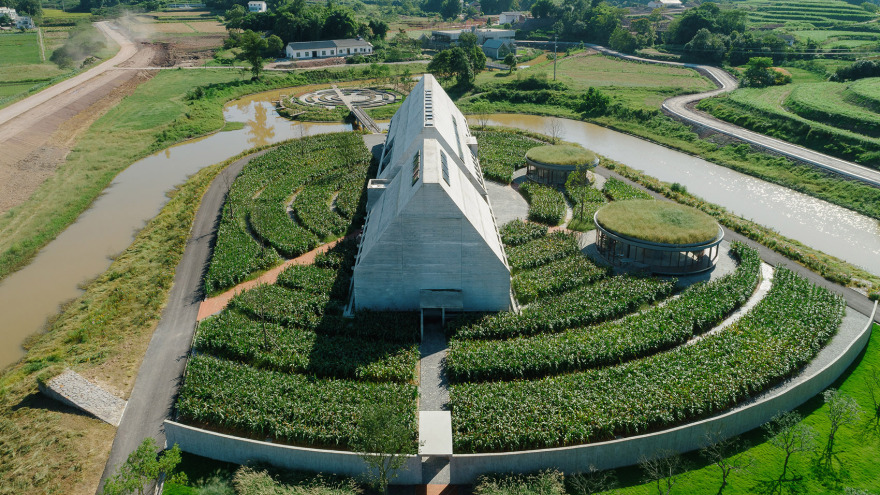


▲江小白的一亩三分地,重庆(点击这里查看更多)结合江小白的品牌特征和年轻人回归自然的情绪,是我们在项目策划和定位阶段提出的重要策略和方向。我们当时提出了一个概念——“释放天性的乡村俱乐部”,这个定位就是希望年轻人在乡村能够真正回归大自然,释放天性。我们希望他们能够在田野中奔跑、淋雨,不怕脚上沾满泥巴,真正与大地亲密接触。这是我们想要传递和提倡的一种生活方式,是我们主动引导的方向,我们认为这是更正向的生活方式,尽管这是一种比较主观的理解。
Joybo Farm,A country club to release nature at Chongqing.(Click HERE for details) Combining Joybo’s brand traits with young people’s desire to return to nature was an important strategy in our project planning and positioning. At that stage, we proposed the concept of “A country club to release nature.” The idea was to let young people truly reconnect with nature, to run in the fields, get wet in the rain, and not worry about muddy shoes—truly interacting with the land. This is the lifestyle we want to convey and promote. It is a direction we actively guide, which we see as a positive way of living, even though it is a rather subjective interpretation.
© 存在建筑-建筑摄影

▲江小白的一亩三分地“跳岛村落”,重庆(点击这里查看更多)在这个设计过程中,我们从体验感出发,从规划阶段开始就考虑了项目的布局。由于项目位于一条河流旁,我们选择了多个半岛的端头,这些土地原本是农民不再使用的闲置地,我们把这些地块利用起来,作为项目的建设用地。这样形成了类似东南亚海岛旅游景点的“跳岛”体验方式——每个半岛上都设置一个或多个建筑,赋予它们不同的功能和体验感。这一设计灵感来源于沿海地区或群岛国家的流行旅游玩法,尽管地形是丘陵地带,但我们通过不同的功能和设计,创造了每个半岛独特的主题。每个半岛都有不同的建筑风格、景观设计和功能配置,增强了整体的体验感。
Joybo Farm,A country club to release nature at Chongqing (Click HERE for details) In this design process, we started from the perspective of experience and considered the project’s layout from the planning stage. Since the site is next to a river, we chose the tips of several peninsulas. These lands were originally unused by local farmers, and we repurposed them as the project’s building sites. This created a “island-hopping” experience similar to popular Southeast Asian or archipelago tourist destinations—each peninsula has one or more buildings, each offering different functions and experiences. The design inspiration comes from coastal or island tourism, and although the terrain is hilly, we created unique themes for each peninsula through different functions and designs. Each peninsula features its own architectural style, landscape design, and functional layout, enhancing the overall experience.
© 未见筑
▼江小白的一亩三分地,重庆,Joybo Farm,A country club to release nature at Chongqing © 存在建筑-建筑摄影
点击这里查看更多,Click HERE for details


▲江小白的一亩三分地,重庆 左图:蜗牛菜园(点击这里查看更多)比如我们在蜗牛菜园的设计。首先,它的平面是蜗牛形状的,目的是让人们在这里慢慢体验。这灵感来源于我们在乡村观察到的一种行为,年轻人到乡村时,常常会问,“这颗菜你认不认识?”这种行为反映了对自然的亲近与探索。当我们发现这种现象时,就决定设计一个菜园,让大家体验这种慢慢认识、慢慢享受蔬菜的过程。这也是现在成都市人相对缺失的一种生活体验。在景观设计上,我们加入了荧光石,晚上形成螺旋状的发光路径,既美丽又浪漫,创造了一种不同寻常的体验感。
右图:篝火晚会 在餐厅设计方面,我们做了一个下沉的篝火区,位于西边的架空层下。这里结合了夕阳下的美景,从下午开始,人们可以在这里喝茶,晚上享受篝火和美食,喝酒聊天。整个设计通过空间来服务于这一系列的体验,旨在创造一种让人们走到户外、与大自然亲密接触的生活方式。
Left:Snail vegetable garden,A country club to release nature at Chongqing (Click HERE for details)For example, in the design of the vegetable garden, the layout is shaped like a snail, encouraging visitors to take their time and explore slowly. This idea came from observing a behavior in the countryside: when young people visit rural areas, they often ask, “Do you know this vegetable?” This reflects a closeness to and curiosity about nature. When we noticed this, we decided to design a garden where people could experience the process of slowly discovering and enjoying vegetables—a type of experience that is now relatively rare for people in Chengdu. In the landscape design, we added glow stones to create a spiral glowing path at night, which is both beautiful and romantic, offering an unusual experience.
Right: Firework night. zhejIn the restaurant, we designed a sunken bonfire area under the western elevated section. Combined with the sunset view, people can enjoy tea in the afternoon, and in the evening, gather around the bonfire for food, drinks, and conversation. The entire design uses space to support these experiences, aiming to create a lifestyle that encourages people to go outdoors and connect closely with nature.
© 存在建筑-建筑摄影
“我们作为深度参与者,对于一些重要的底线或原则性问题,我们必须主动介入,明确表达我们的立场,当搭建好舞台后,我们希望能够适当地后退一步让项目的使用者接手,为他们留下“留白”,让他们、时间和社会环境继续与建筑发生良好的化学反应。”
As deeply involved participants, we must step in on key principles or bottom-line issues and clearly express our position. Once the stage is set, we aim to step back appropriately and leave “concession,” allowing users, time, and the social environment to continue interacting with the architecture in a positive and evolving way.
李博:“边界”和“留白”这两个概念其实是我们在设计过程中逐步提出的。它们更多地涉及建筑师如何与外界互动,如何与他人、项目、周围环境以及社会中的一系列客观事实建立联系。在这个过程中,我们需要明确自己的行动边界,了解在什么情况下该介入,什么情况下又不该介入,这其实是一个非常重要的问题。对于项目而言,我们作为深度参与者,对于一些重要的底线或原则性问题,我们必须主动介入,明确表达我们的立场,这是作为职业要求的责任。当搭建好舞台后,我们希望能够适当地后退一步让项目的使用者接手,为他们留下“留白”,让他们、时间和社会环境继续与建筑发生良好的化学反应。
李未韬:我们曾总结过一个概念叫做“多参与和弱介入”。除了规划、建筑、景观和室内设计外,我们还自己组织了几场活动和展览,并邀请了一些朋友进驻了几个主理商店。因此,在这个项目中,我们的角色不仅仅是设计师,我们还做了很多其他事情。所谓“弱介入”就是,在我们设计的盒子里,有些地方并没有完全装修完,而是将这些区域的正面交给商家自行设计。我们将舞台留给商家,让他们发挥主观能动性,我们的任务只是确保空间节奏和城市关系的控制,其他的交给商家去完成。我们认为,城市发现这种点状介入的模式一定可以成为可复制的城市更新方法。现在,很多类似的项目都在实践这种模式。许多公共空间和街区存在功能缺失,商业属性不足,我们需要通过植入新的空间来弥补这些功能和商业逻辑上的空缺。因此,这种模式我们已经在多个项目中得到了运用。但每个项目的形式语言都会有所不同,我们一定会根据项目的在地性去探索其独特的形式语言。
Li Bo: The concepts of “boundary” & “concession” gradually emerged during our design process. They relate to how architects interact with the outside world—how we connect with others, the project, the surrounding environment, and a range of objective factors in society. In this process, it is important to define our own boundaries: when to intervene and when not to. For a project, as deeply involved participants, we must step in on key principles or bottom-line issues and clearly express our position—that is a professional responsibility. But once the stage is set, we aim to step back appropriately and leave “concession,” allowing users, time, and the social environment to continue interacting with the architecture in a positive and evolving way.
Li Weitao: We once developed a concept called “more participation and light intervention.” Besides planning, architecture, landscape, and interior design, we also organized several events and exhibitions ourselves, and invited some friends to run a few curated shops. So in this project, our role was not only as designers—we also took on many other tasks. “Light intervention” means that within the spaces we designed, some areas were not fully finished. Instead, we left these parts open for the tenants to design themselves. We created the stage and gave it to them, allowing them to take initiative. Our role was to control the spatial rhythm and the relationship with the city, while leaving the rest to the tenants. We believe this model of point-based intervention can become a replicable method for urban renewal. Many similar projects are now exploring this approach. Many public spaces and neighborhoods lack functions and commercial vitality, so we need to introduce new spaces to fill these gaps. We have applied this model in several projects. However, each project has its own form language, and we always explore a unique expression based on its local context.
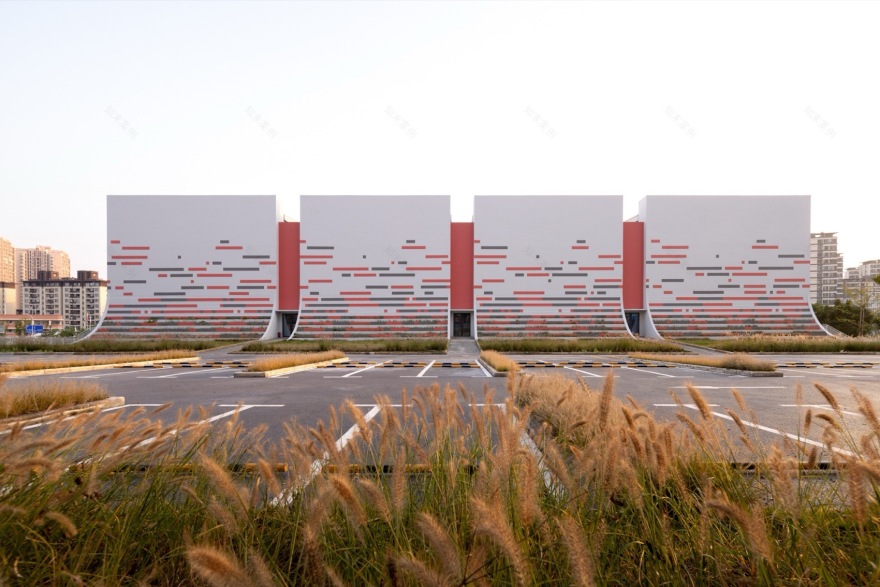
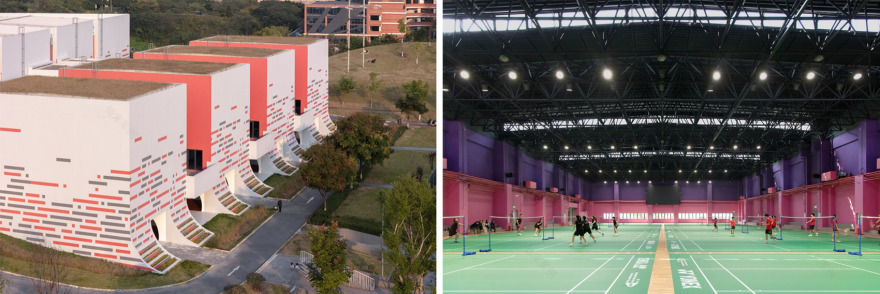
▼李雪芮全民健身中心,重庆,Li Xuerui Public Fitness Center in Chongqing © 存在建筑-建筑摄影 点击这里查看更多,Click HERE for details
我最初受到Archigram的插接城市和新陈代谢派的影响,尝试通过一些可变的小单元来填补城市功能的缺失。
“I was initially influenced by Archigram’s Plug-In City and the Metabolist movement, experimenting with small, flexible units to fill gaps in urban functions ”
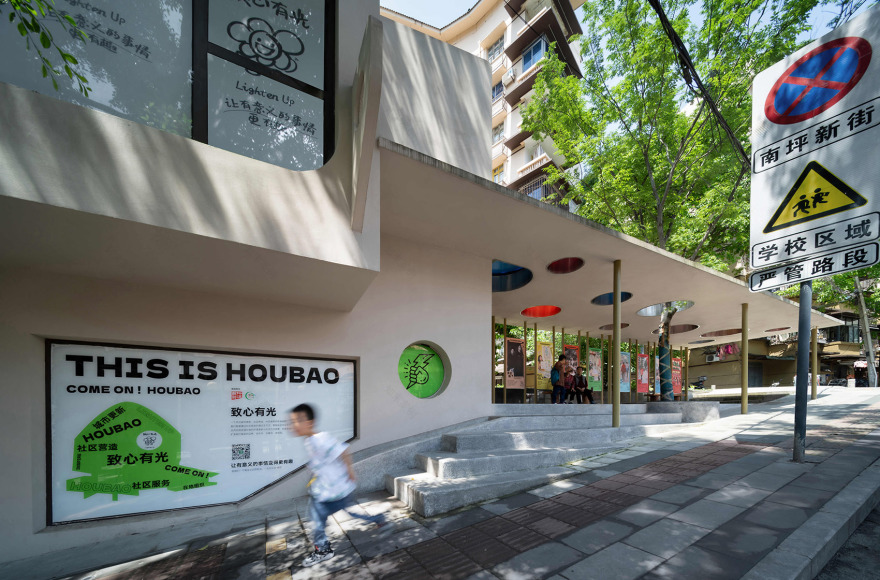
后堡小精灵可以理解为城市中的“插件”,是后堡项目的一个重要组成部分。点状介入的策略,其实就是“插件城市”这一概念。我最初受到Archigram的插接城市和新陈代谢派的影响,尝试通过一些可变的小单元来填补城市功能的缺失,尤其是对于老旧社区。老旧社区往往存在功能上的缺失,社区的维度比较单一,主要体现在人群结构上。
The Houbao Elfin can be understood as “Urban plug-in” and are an important part of the Houbao project. The strategy of point-based interventions actually reflects the concept of a “Urban plug-in.” I was initially influenced by Archigram’s Plug-In City and the Metabolist movement, experimenting with small, flexible units to fill gaps in urban functions, especially in older neighborhoods. Old communities often lack certain functions and have a relatively single dimension, mainly in terms of population structure.

▲”后堡小精灵”, “Urban plug-in” – Houbao Elfin 。后堡是一个端口式的、封闭的社区。它曾经非常繁华,但过去十几二十年里,社区内只剩下原住民和老居民。在这样的社区中,维度相对单一,我们希望通过改变人群结构来激活这个地方。从规划的角度来看,目标和出发点都是在人群结构的变化上。我们不希望引入过多的商业气息,因为这会破坏原住民的生活氛围,同时也不希望社区一成不变。为了实现这一目标,商业模式的引入是必要的。Houbao is a closed, port-style community. It used to be very lively, but over the past ten or twenty years, only the original residents and long-term inhabitants remain. In such a community, the dimension is quite limited, and we hope to activate the area by changing the population structure. From a planning perspective, the goal and starting point are both about this shift in the population. We don’t want to introduce too much commercial activity, as it would disrupt the life of the original residents, but we also don’t want the community to remain static. To achieve this, introducing a commercial model is necessary.© 未见筑


▲”后堡小精灵”, “Urban plug-in” – Houbao Elfin 在项目中,插件的作用可以从四个维度来理解。
第一个维度是美化环境。老旧社区需要引入一些当代审美元素,这是最基础的视觉维度。
第二个维度是公共配套服务。在缺乏照明的地方,增加一些社会服务设施,有助于提升日常公共区域的生活质量。例如,老年人可以在走累时坐一会儿,家长可以在等孩子放学时坐一会儿,太阳大时可以乘凉,下雨时可以躲雨。
第三个维度是商业植入。我们希望通过引入商业,使社区形成一个自我造血的运行机制。单纯依靠政府补贴来运营这些公共空间会加重政府的运营压力,且不可持续。真正的可持续发展必须具备自我造血能力,能够自我循环。因此,商业的植入在当下是必须的,因为只有商业才能带来收入,而赚到的钱才有可能反哺社区运营,用于物管清洁、设施维护和植物养护等。这意味着不再完全依赖政府资金,而是通过商业运营来支持社区服务,这是可持续城市更新的模式。
第四个维度是文化展示。我们认为的文化应该是挖掘每个地方、每个社区居民的真实故事,让这些故事成为这个地方的文化,成为文化交流的桥梁。真正的文化是居民与居民之间的交流,以及居民与社会的互动。我们不认为美术馆和画廊应该局限在室内,它们应该走向街头。因此,我们做了街头画廊的设计。
插件的四个维度中,改变居民社群关系是一个重要方面。我们引入的大多数商家是年轻的先锋租户,他们有很多新颖的想法,并能自然吸引更多年轻消费群体的到来。然而,如果我们把整条长廊都商业化,居民就没有足够的生活空间。因此,在考虑商业与社区生活的平衡时,我们始终强调为居民保留足够的生活空间。点状式设计的好处就在于它的间隔性。我们增加的盒子和插件位置是为年轻人的消费需求服务的,而留白的部分则是为居民的活动提供空间。比如,居民以前在这里打牌,现在仍然可以在这里打牌。这样一来,整条后堡街道就形成了原住民和年轻人交替出现的景象,且互不干扰。原住民看到年轻人觉得充满活力,而年轻人看到原住民则感受到浓厚的烟火气。两者之间保持着友好的距离,又不会相互打扰。所以,整个后堡呈现出一种松弛的氛围,使原本完全不相干的两个群体得以融合。
In projects, the role of the “plug-ins” can be understood across four dimensions.
The first dimension is environmental improvement. Old communities need some contemporary aesthetic elements. This is the most basic visual layer.
The second dimension is public services. In places that lack lighting or facilities, adding social service spaces can improve daily life. For example, elderly people can rest when they feel tired, parents can sit while waiting for their children, people can find shade on hot days, or shelter when it rains.
The third dimension is commercial insertion. We hope to introduce business to create a self-sustaining system for the community. Relying only on government funding increases pressure and is not sustainable. A truly sustainable model needs to generate its own income. Commercial activity can bring revenue, which can then support community operations, such as cleaning, maintenance, and plant care. This reduces dependence on public funding and supports long-term urban renewal.
The fourth dimension is cultural expression. We believe culture comes from the real stories of each place and its residents. These stories become the identity of the community and a bridge for communication. Culture is not only about institutions—it is about interaction between people and society. We don’t think galleries should stay indoors; they should extend into the streets. So we designed a street gallery.
Among the four dimensions of the plug-ins, changing the social structure of the community is a key aspect. Most of the tenants we introduced are young and experimental. They bring fresh ideas and naturally attract more young visitors. However, if the entire corridor were fully commercialized, residents would lose their living space. So we always emphasize keeping enough space for everyday life when balancing business and community needs. The advantage of a point-based strategy lies in its spacing. The added boxes and plug-ins serve the consumption needs of young people, while the “blank” areas are left for residents’ activities. For example, residents used to play cards here, and they can still do so now. In this way, the whole Houbao street becomes a place where original residents and young people appear side by side, without interfering with each other. The residents feel the energy brought by the young people, while the young people experience the everyday warmth of local life. They keep a comfortable distance, without disturbing one another. As a result, Houbao presents a relaxed atmosphere, where two originally unrelated groups can coexist and gradually connect.© 未见筑

▲在后堡小精灵的二楼,我们设有一个公益客厅。这个公益客厅由运营方动员,持续为居民组织活动,包括出版书籍、进行居民采访、组织跳舞和唱歌等,目的是让居民的幸福生活更加充实和有意义。On the second floor of the Houbao Sprites, we also created a public living room. It is run by the operators and hosts ongoing activities for residents, such as publishing books, conducting interviews, and organizing dancing and singing. The goal is to make daily life richer and more meaningful.© 未见筑
“我们最核心的任务,就是帮助他们修复这种联系:修复社区居民彼此之间的联系,也修复他们与外来者之间的联系。”
I was initially influenced by Archigram’s Plug-In City and the Metabolist movement, experimenting with small, flexible units to fill gaps in urban functions
李博:首先,建筑师在城市更新中的任务是什么?很多城市的老旧化不仅仅带来视觉层面的问题,更重要的是,它往往会在时间的消磨中削弱社区内部人与人之间的关系。随着环境的老化,这种社会联系也逐渐被消磨。因此,我们最核心的任务,就是帮助他们修复这种联系:修复社区居民彼此之间的联系,也修复他们与外来者之间的联系。在这个过程中,我们更愿意把设计视为一种“工具”。当我们觉得这件工具被打磨得比较好用时,某种程度上也就算初步完成了我们的任务。但与此同时,我们也更倾向于在之后持续跟踪它在现实中的使用情况,看看这件工具在真实环境中到底是否真的好用。因为现实情况非常复杂,总会遇到计划外的情况。
老旧小区可能是一个更加复杂的场所,它涉及到各种各样的脉络,以及人与人之间多方面的关系。因此,说到“完成任务”,我个人觉得其实并不容易。无论是从项目本身的复杂性,还是从普通人的能力范围来看,这个任务严格意义上都很难被彻底完成。我们能做的,只是尽量去完善它,让老旧小区的改造真正为后续的居民或使用者带来实际的福利。至于“过度设计”,我个人觉得有两个方面是我们需要特别警惕的。第一个是过度装饰。过度装饰往往是一种带有傲慢意味的行为,它强行覆盖掉小区原本最有记忆价值的部分,在某种意义上,我们认为这其实也是对生活的一种冒犯。另外一个点,我把它理解为一种“过度占有”。很多城市更新项目最初的发起往往出于各种商业原因,因此会天然地倾向于把大多数可利用的空间都规划为商业用途。我们刚到后堡的时候,最初的设想其实也是希望把当时居民活动的大面积空间全部规划成商业,但最终我们并没有这么做。我们还是采用了点状植入的方式,尽量保留大量空间给当地居民使用,从而避免出现过度占据的问题。
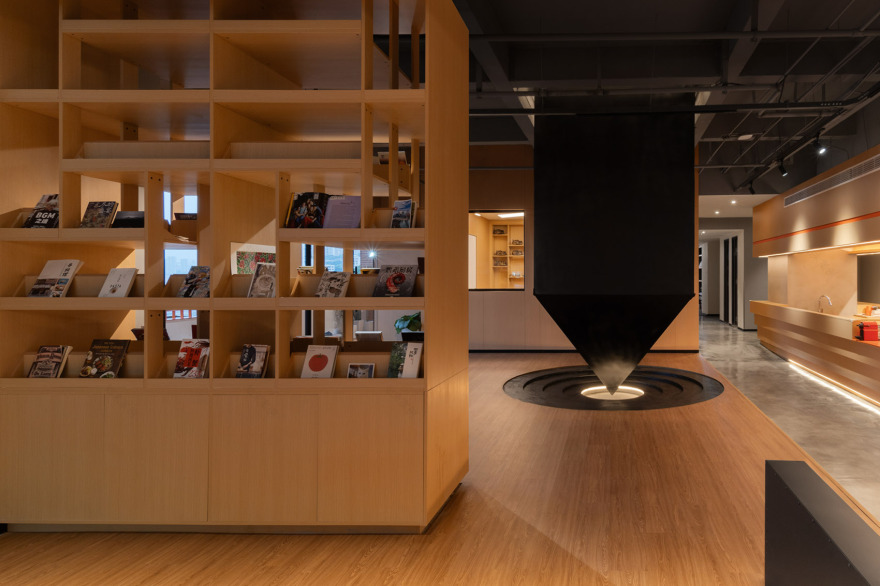
空间情绪本身是非常多元的。很多时候我们会基于业主的需求来思考,同时也会结合我们自己对场所的理解。比如拿江小白的项目来举例,一方面我们需要考虑江小白这个品牌在乡村语境中希望表达什么样的状态,并把这种表达梳理清楚;另一方面,我们自己对于农业、对于乡村中农业应当呈现的状态,也会有一些新的理解和思考。当然,如果换成另外一个项目,空间情绪又会完全不同。实际上,我们在选择材料和色彩时,完全是从希望营造什么样的空间情绪出发的。因此,在不同项目中,材料的倾向也会随之发生变化。
▼Xpark坐标公园,贵阳,Xpark in Guiyang, Guizhou © Archtric_Image
点击这里查看更多,Click HERE for details


▼AZ COFFEE,秦皇岛,AZ COFFEE in Qinhuangdao, Hebei © 看海艺术家 点击这里查看更多,Click HERE for details


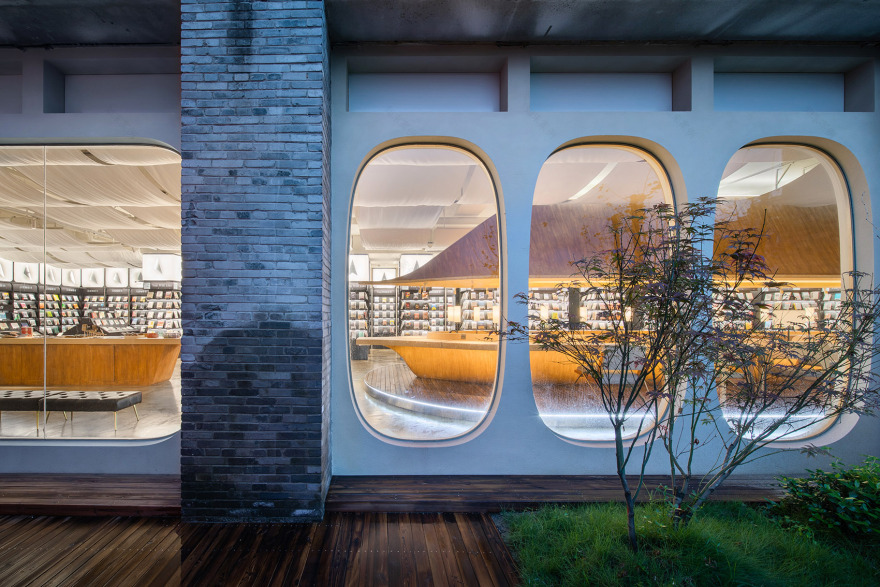
▼南之山 古腾堡星汉书店,GUGA Books© 三棱镜 点击这里查看更多,Click HERE for details

Li Bo: First, what is the role of architects in urban renewal? The aging of old neighborhoods is not only a visual issue. More importantly, over time, it weakens the relationships between people in the community. As the environment deteriorates, these social connections also fade. So our core task is to help restore these connections—both among residents and between residents and outsiders. In this process, we prefer to see design as a “tool.” When this tool becomes useful, we can say our task is partly done. But at the same time, we also prefer to keep observing how it works in real life, to see if it is truly effective. Reality is complex, and unexpected situations always happen.
Old residential areas are especially complex. They involve many layers and many kinds of relationships. So, to say the task is “complete” is not easy. Given the complexity of the project and the limits of what we can do, it is hard to fully achieve this goal. What we can do is improve it as much as possible, so the renewal can bring real benefits to future residents and users. As for “over-design,” there are two things we need to be careful about. The first is over-decoration. It can feel arrogant, as it covers the most valuable memories of the place. In a way, it can be an offense to everyday life. The second is what I call “over-occupation.” Many urban renewal projects are driven by commercial goals, so they tend to turn most spaces into commercial use. When we first came to Houbao, we also thought about turning large shared spaces into commercial areas. But in the end, we did not do that. Instead, we used a point-based strategy and kept large areas for residents. This helps avoid over-occupation.
Spatial atmosphere is very diverse. In many cases, we think based on the client’s needs, while also combining our own understanding of the place. Taking the Joybo project as an example, on one hand, we need to consider what the brand wants to express in a rural context and make that clear. On the other hand, we also bring our own reflections on agriculture and how it should be presented in the countryside. In fact, when we selected materials and colors, we started from the kind of spatial atmosphere we wanted to create. So in different projects, our choice of materials changes according to the atmosphere we want to create.

▲江小白的一亩三分地,重庆(点击这里查看更多)就江小白项目而言,我们其实是希望塑造一种全新的空间情绪。以大地美术馆为例,我们希望把农业从传统那种非常质朴、非常乡土的印象中提升出来,重新塑造一种农业的“神圣性”。在更早期的概念中,我们也提到过“高粱圣殿”的想法,最终建筑也确实被做成了一种类似教堂的形态。从某种程度上来说,这也影响了后来材料的选择,比如木纹清水混凝土的使用。Joybo Farm,A country club to release nature at Chongqing (Click HERE for details) So for Joybo farm, we aimed to create a new kind of spatial atmosphere. For example, in the Earth Art Museum, we wanted to lift agriculture beyond its usual image of being simple and rural, and reshape it with a sense of “sacredness.” In earlier concepts, we even proposed the idea of a “Sorghum Temple,” and the final building indeed took on a church-like form. To some extent, this also influenced our choice of materials, such as wood-textured exposed concrete. ©存在建筑-建筑摄影
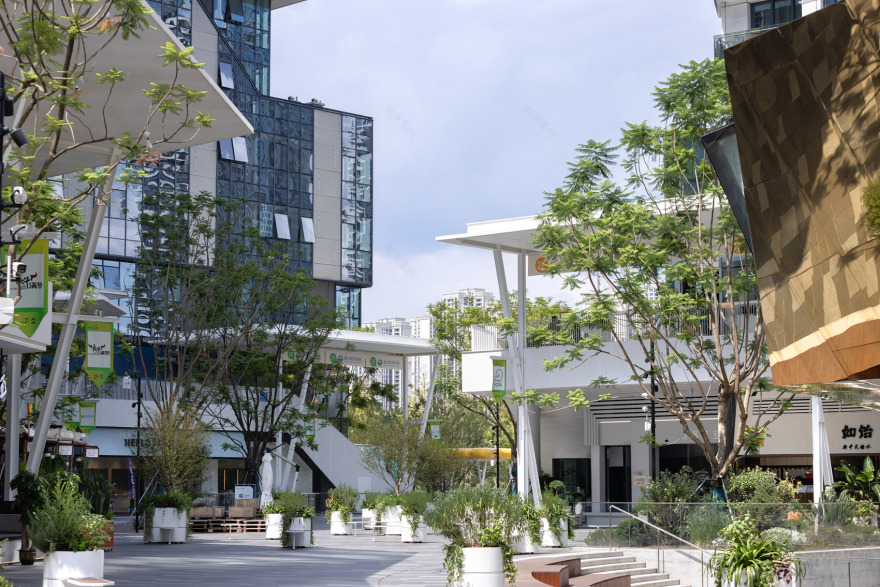

▲麓坊中心 主理人街区,四川成都(点击这里查看更多)我们选择的就是一种非常现代、非常轻巧的材料——白色、无缝的镀锌钢板喷氟碳漆。在这个项目中,我们希望营造的空间气质是松弛的,是有留白的,从而为这些成都的商家提供一个舞台。(Click HERE for details) we chose a very modern and lightweight material—white, seamless galvanized steel panels with a fluorocarbon coating. In this project, we aimed to create a relaxed atmosphere with a sense of openness, providing a stage for local businesses in Chengdu.© 存在建筑-建筑摄影
还有一类材料是我们在城市更新中比较倾向保留的,就是那些能够记录时间、能够反映历史或时间记忆的材料。在这种情况下,从裸露的水泥,到很多人其实并不喜欢的、带有千禧年前后气息的蓝绿色玻璃等,如果条件允许,我们都会尽量把它们保留下来。其实我们这一代人身上有一个比较普遍的倾向——大家往往都希望逐渐挣脱自己小时候生活的环境,也普遍会觉得过去的一些东西是落后的,甚至不太好看。但这种判断是否真的完全正确,其实我们现在也在反思。也许这些老材料在传统审美的视角下是落后的,观感上也未必“好”,但它们确实能够唤起某种记忆。这种与时间相关的空间记忆,会给人带来一种情绪上的安定感。相比单一地追求某种美学标准,这种价值和意义也许更加重要。
There is another type of material that we tend to preserve in urban renewal—materials that record time and reflect history or memory. In such cases, from exposed concrete to blue-green glass from the early 2000s, which many people may not like, we try to keep them whenever possible. Our generation often shares a common tendency—we want to move away from the environments we grew up in, and we tend to see things from the past as outdated or unattractive. But we are now questioning whether this judgment is entirely correct. These old materials may seem outdated in a conventional aesthetic sense, and they may not always look “good,” but they do carry memory. This kind of time-related spatial memory can bring a sense of emotional stability. Compared to simply pursuing a single aesthetic standard, this kind of value may be more important.
▼东村城市天台,重庆,Dongcun city terrace in Chongqing © 言隅建筑空间摄影 点击这里查看更多,Click HERE for details


▲东村(点击这里查看更多)这个项目在材料和色彩上,当时确实进行过一些思考。我们提出了一个“日常与非日常”的概念。这个地方本身对重庆人来说是充满记忆的,很多人看到它的前台空间,以及一些老的墙面时,都会联想到重庆传统而日常的生活场景。因此,在外部空间,尤其是人能够直接感知的尺度上,我们尽量保留了这些材料原有的斑驳感。但在某些区域,我们也会加入一些当代、先锋的元素,也就是我们所说的“非日常”。比如在项目入口处的架空层里,我们植入了一个色彩非常丰富的内置花园:用炫彩不锈钢制作水池,通过水流的声音,以及阳光投射到水面后再反射到墙面的光影,形成一种非常绚丽的空间状态。同时,我们也搭配了一些不那么常规的植物,希望在日常环境中植入一些“非日常”的情绪节点。总体来说,这既可以理解为一种设计上的平衡,也可以看作是我们尝试以适度的方式重新解读重庆日常生活文化,以及其中所蕴含的空间情感。
For the Dongcun project(Click HERE for details) , we did give careful thought to materials and colors. We proposed the idea of “a non-daily place overlooking the daily life.” This place carries strong memories for people in Chongqing. When they see the front space and the old walls, they often recall scenes from traditional daily life. So in the exterior spaces, especially at a human scale, we tried to keep the aged and weathered quality of these materials. At the same time, in some areas, we introduced more contemporary and experimental elements. For example, in the elevated entrance space, we inserted a small garden with rich colors. We used iridescent stainless steel to create a water feature. The sound of water, along with sunlight reflecting off the surface and onto the walls, creates a vivid spatial effect. We also used some unusual plants, hoping to bring moments of “non-daily” emotion into a familiar setting. Overall, this can be seen as a balance in design, or as an attempt to reinterpret the everyday culture of Chongqing in a subtle way, along with the spatial emotions it carries.
© 言隅建筑空间摄影
“新建筑就是新建筑,旧建筑就是旧建筑,我们不去把新建筑做成旧的,也不拆除旧建筑重建新的。”
“New buildings should be new, and old buildings should remain old. We don’t make new buildings look old, and we don’t demolish old ones just to rebuild them.”
李未韬:在设计时我们有一个大原则,这也是我在重新开始时所坚持的原则——“reflection”(反思)。简单来说,就是在一个富有历史感的氛围中享受当下的生活方式。至今我们始终坚持不做假古董,以一种真诚的态度面对老建筑。新建筑就是新建筑,旧建筑就是旧建筑,我们不去把新建筑做成旧的,也不拆除旧建筑重建新的。这是一种非常真诚的设计态度,旨在营造一种复合的生活方式。有些人误以为我们在做新旧对比,但实际上并非为了对比而对比,而是我们尽可能地保留历史的同时,在不得不加入新元素时,便大胆地做出最具当代感的设计,代表当下的时代。这种方式使得过去和现在能进行直接对话。老建筑就应该保留它的样子,包括一些污渍、雨污和杂草,这些都能体现历史的痕迹,不必过度修饰。新的部分则无需过多思考,只需要真实地表现当下的需求和时代特征。年轻人现在追求自我表达、传递观念等,无论是当代艺术的形式,还是年轻人喜爱的风格,都可以在这个背景下自由发挥。因此,保留历史的同时,注入新的元素,实际上形成了当时很多人所忽视的差异化:避免了仿冒、仿古或者大拆大建的做法。10年前的二产项目也是那个年代的老项目,正是这种独特的差异化让它脱颖而出,吸引了大量的年轻人。年轻人带来了巨大的影响力,包括一些电影导演也愿意选择这个地方拍摄。因此,历史与当代的结合,已经成为它独特的魅力所在。
Li Weitao: In our design, we follow a main principle—“reflection.” It is also a principle I have held onto since starting again. It means enjoying a contemporary way of life within a place rich in history. We have always insisted on not creating fake antiques. We approach old buildings with sincerity. New buildings should be new, and old buildings should remain old. We don’t make new buildings look old, and we don’t demolish old ones just to rebuild them. This is a very honest design attitude, aiming to create a layered way of living. Some people think we are creating a contrast between old and new, but that is not the goal. We try to preserve history as much as possible. When new elements are necessary, we make them clearly contemporary, representing the present time. In this way, the past and the present can have a direct dialogue. Old buildings should keep their original state, including stains, weather marks, and even weeds. These are all traces of history and do not need to be overly refined. The new parts don’t require too much reflection—they simply need to honestly express current needs and the characteristics of the times. Young people today pursue self-expression and the communication of ideas, whether through contemporary art forms or styles they enjoy. Within this context, they are free to experiment. By preserving history while introducing new elements, the project created a differentiation that many overlooked at the time: it avoided decorative caps, faux-ancient styles, or large-scale demolition and reconstruction. The TESTBED2 project from ten years ago was an older project of its era, and it was precisely this unique differentiation that made it stand out and attract many young people. These young people brought significant influence; even some film directors chose this location for shooting. So the combination of history and the contemporary has become its distinctive charm.


▲TESTBED2二厂是我在aLL Design时期负责的项目,Testbed代表的是试验床的意思。是Will Alsop取这个名字,期望这个项目和品牌能够成为创作者的试验场。不论是艺术家、设计师、还是研究材料的人,或者各行各业的创作者,都可以在这里试验。我们有一个口号:“失败是被允许的。”无论做什么艺术创作,都可以展现出来,大家可以批判、讨论,不必害怕失败。我们希望为创作提供一个真正纯粹的环境,吸引这座城市中最有想法的人聚集在这里,产生最强大的精神能量。所以,Test这个词代表了对这个园区的定位和愿景。
TESTBED2 was a project I led during my time at aLL Design. “Testbed” means a place for experimentation. The name was given by Will Alsop, who hoped the project and the brand would become a testing ground for creators. Artists, designers, material researchers, and creators from all fields can come here to experiment. We have a slogan: “Failure is allowed.” Any kind of creative work can be presented here. People can discuss and critique it, without fear of failure. We want to provide a truly pure environment for creation, attracting the most creative minds in the city to gather and generate strong creative energy. So the word “Test” defines both the position and the vision of this place.
© 未见筑
未来方向与挑战
Future& Challenge
“我们更感兴趣的是那种能够对社会和文化产生贡献的创作性挑战,是通过二次创作、三次创作,让文化在当代得到实质性的进步。”
We are more interested in creative challenges that can contribute to society and culture. The real goal is to advance culture in a meaningful way through second- or third-level reinterpretation.
李未韬:发展将走向何方,我也不确定。但就我的主观意愿而言,首先我们希望向外呈现更多有意义、有价值的作品,至少能传递一些我们认为正确的价值观。对内而言,我也希望团队和品牌本身在建筑上能有更多研究、思考和进步。包括不一定都要落地建成,但能够激发一些有趣的、突破性的思想。这对团队来说同样重要——生存和发展固然必要,但我们希望内外两条腿同步前进。总体定位仍然是一个“小而精”的设计事务所,而不是走向大型商业化公司。我们更感兴趣的是那种能够对社会和文化产生贡献的创作性挑战,这是我们最喜欢的,也是希望去迎接的。当然,还有一点——虽然我们一直做得不多——就是希望在传统文化的当代演绎上做一些尝试。关于在地性,我觉得在地性并不等同于传统文化。在地性上,我们希望创造一些属于我们自己的文化,而不是简单地复制过去的东西。真正的目标,是通过二次创作、三次创作,让文化在当代得到实质性的进步。这也是我们愿意接受的挑战,也是我个人的思考。
李博:现在环境变化很快,回顾历史,现代主义早期,建筑师更多扮演社会精英,甚至启蒙者的角色;而在商业化浪潮中,建筑师更多变成了商业体系里的“螺丝钉”。如今浪潮平息,建筑师是谁?在社会中应扮演什么样的位置?应该做什么?我个人认为,这是一个非常重要的挑战。而我们在执行建筑工作的过程中遇到的各种矛盾和困境,其实都与此有关——建筑师在社会中到底扮演什么角色。这个问题,需要我们在持续的实践中慢慢思考和探索。
▼未见筑工作环境照片, working environment photo© 未见筑


Li Weitao: I’m not sure where development will lead, but from my personal perspective, we first want to present more meaningful and valuable work externally, at least conveying the values we believe are right. Internally, I hope the team and the brand can continue to explore, reflect, and make progress in architecture. This doesn’t always mean building every idea, but it can inspire interesting and breakthrough thinking. This is equally important for the team—survival and growth are necessary, but we want both internal and external progress to move forward together. Overall, our positioning remains a “small but refined” design studio, rather than moving toward a large commercialized company. We are more interested in creative challenges that can contribute to society and culture—these are what we enjoy most and hope to embrace. There is also one more point—though we haven’t done much so far—we hope to explore contemporary interpretations of traditional culture. Regarding locality, I believe it is not the same as traditional culture. In terms of locality, we want to create something that belongs to our own culture, rather than simply copying the past. The real goal is to advance culture in a meaningful way through second- or third-level reinterpretation. This is a challenge we are willing to take on and also a personal reflection of mine.
Li Bo: The environment is changing very quickly. Looking back at history, in the early days of modernism, architects often played the role of social elites, even as enlighteners. During the wave of commercialization, architects became more like “cogs” within the commercial system. Now that the wave has settled, who is the architect? What role should they play in society? What should they do? I personally think this is a very important challenge. The conflicts and difficulties we encounter while carrying out architectural work are all related to this—what role architects truly play in society. This is a question that requires continuous practice, reflection, and exploration.
▼李未韬 & 李博,Li Weitao & Li Bo© 未见筑












南京喵熊网络科技有限公司 苏ICP备18050492号-4知末 © 2018—2020 . All photos and trademark graphics are copyrighted by their owners.增值电信业务经营许可证(ICP)苏B2-20201444 苏公网安备 32011302321234号
苏公网安备 32011302321234号客服
消息
收藏
下载
最近