

创作上传
VIP
收藏下载
登录 | 注册有礼
查看完整案例

收藏

下载

分享

翻译
Architects:Julia Peres.Co Arquitetura
Area:136m²
Year:2026
Photographs:Estúdio Peixes
Manufacturers:Grani Torre
Lead Architect:Julia Peres
Category:Interior Design,Apartment Interiors
Project Team:João Puntoni
Project Management:Damato Projetos
City:São Paulo
Country:Brazil

Text description provided by the architects. CB Apartment is an exercise in spatial reorganization that transforms construction pathologies into opportunities for conscious design. The intervention investigates the relationship between matter, light, and shadow through the selection of materials and elements—metalwork as planes of interruption and visual continuity; terrazzo as a surface of contrast and continuity between interior and exterior; fabrics, bricks, and glass as mediators of integration with the built environment—through which spatial perception shifts during the day.

Located in a residential building in downtown São Paulo, near Minhocão, the project stems from the client’s desire to enhance the apartment without erasing its original character. The property presented recurring construction pathologies—water infiltration through window frames, inadequate balcony drainage leading to flooding, flooring prone to staining, lack of privacy between spaces, and excessive cross ventilation generating constant drafts. The challenge was to respond technically to these dysfunctions while improving spatial performance without resorting to invasive interventions.

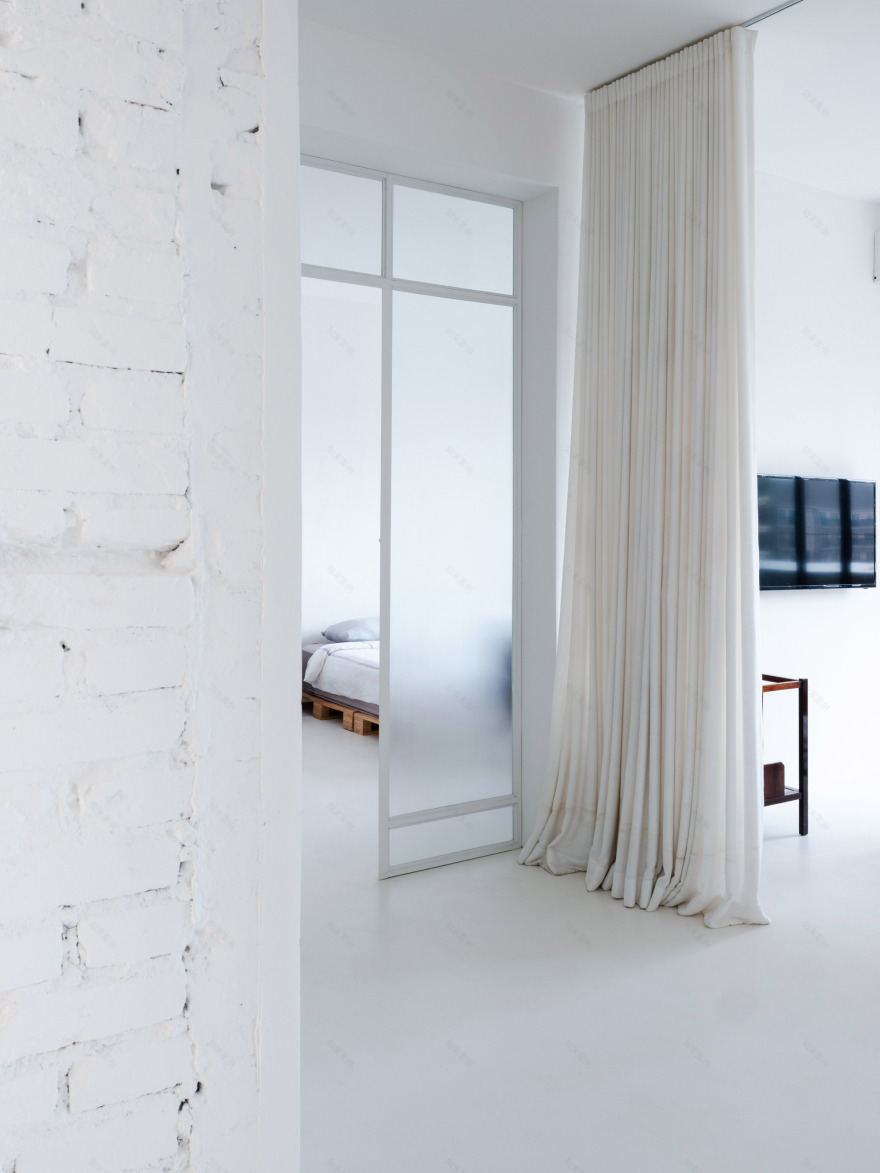
Aligned with the principles that guide the studio’s practice—articulating intelligent design and material responsibility—the proposal engages with the existing architecture through precise and strategic actions.

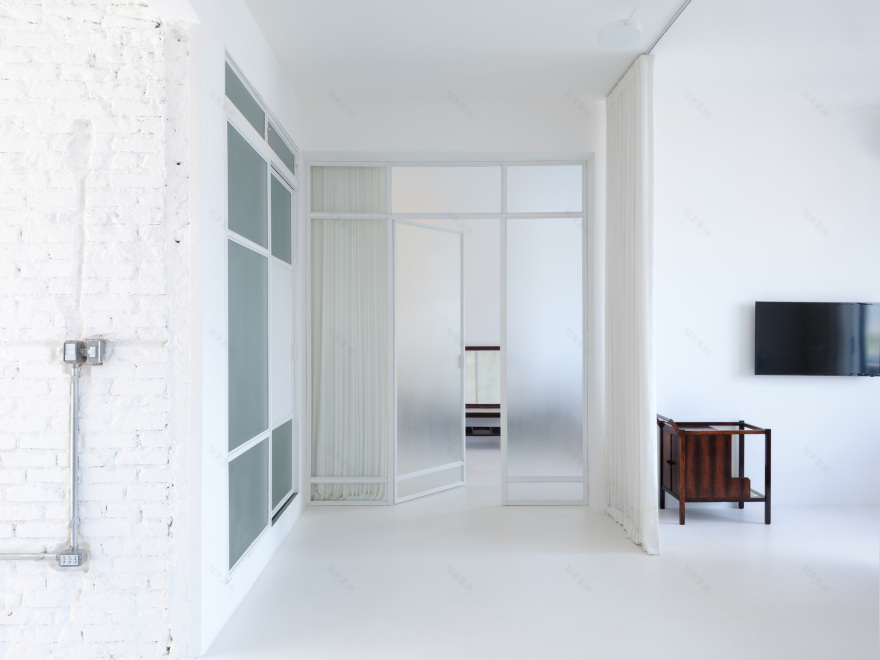
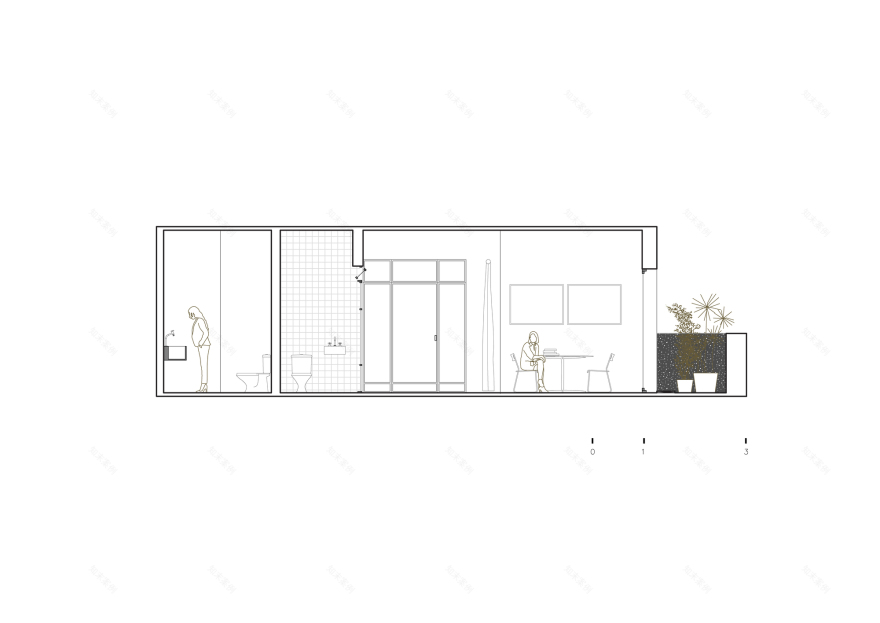
The internal spatial organization was refined through the introduction of lightweight metalwork and translucent, textured glass, establishing subtle boundaries between spaces without interrupting visual continuity. These elements filter natural light, producing gradients of opacity and revelation that shift throughout the day. Lightweight fabric curtains act as atmospheric devices, softening solar incidence and casting diffuse shadows across the continuous flooring, enhancing the perception of spatial depth. Through these strategies, cross ventilation was recalibrated to improve thermal comfort, transforming former wind corridors into balanced and inhabitable spaces.

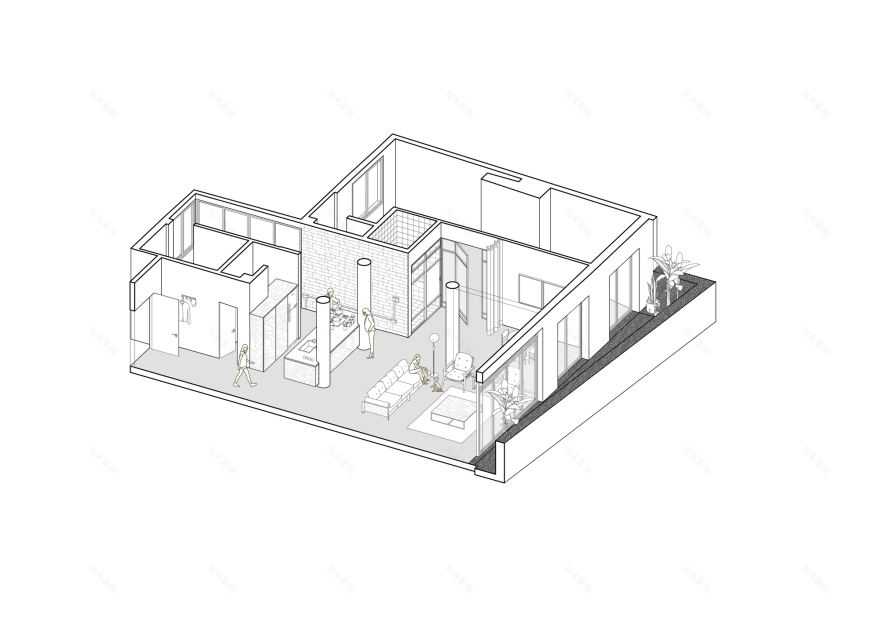
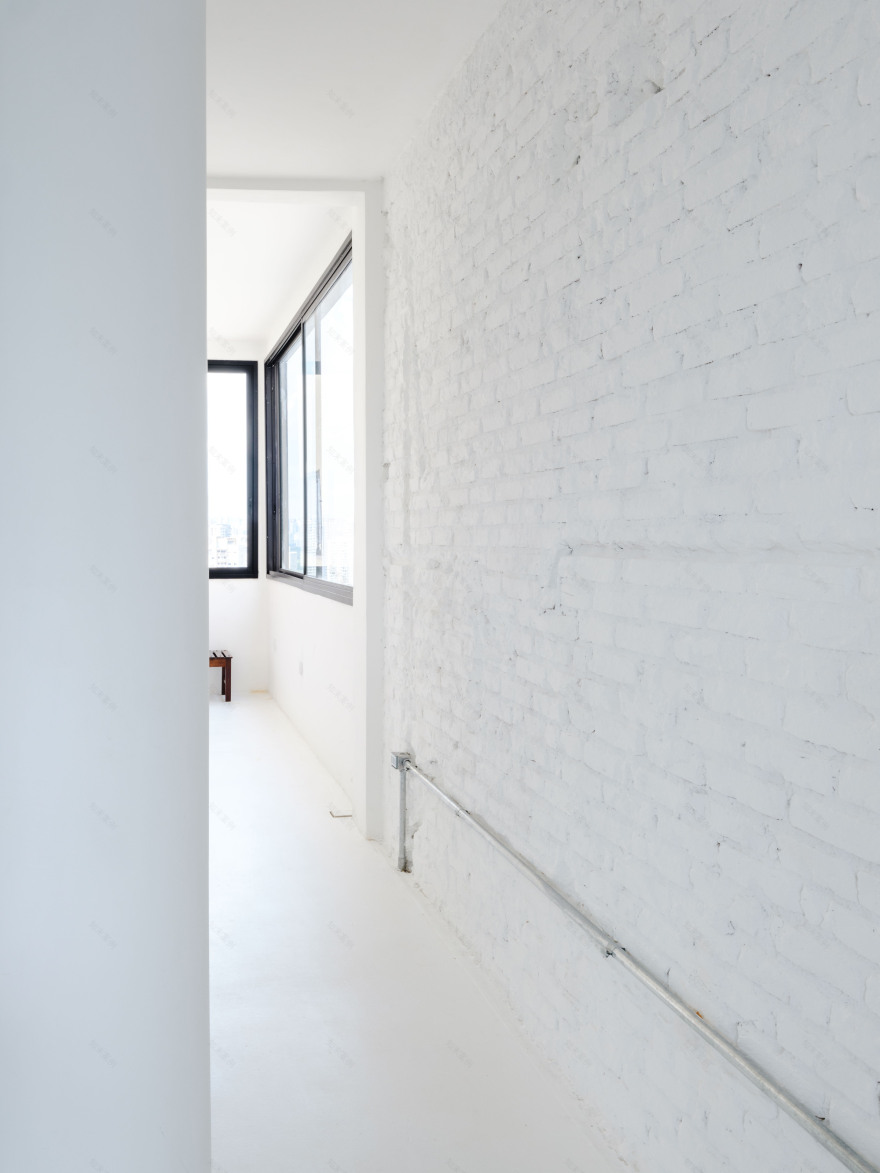
The refurbishment of window frames and the redesign of the balcony drainage system resolved issues of watertightness and water flow, while the careful specification of new finishes—aluminum and terrazzo—ensured greater durability and reduced maintenance over time. The relationship between interior and exterior is also emphasized: the predominantly white interior acts as a neutral field that amplifies the presence of light, while continuous and reflective surfaces capture subtle variations in luminosity throughout the day. In contrast, the black terrazzo applied externally introduces density and mineral texture, marking the transition between spaces. The adopted approach prioritizes circularity within the production chain, reusing existing elements whenever possible to reduce waste and extend the lifecycle of materials.

The renovation demonstrates how precise, surgical interventions can reframe an existing space. By integrating construction performance, material longevity, and atmosphere, the project reaffirms an architectural practice attentive to the built context—where designing means adjusting, revealing, and amplifying the latent qualities of space, transforming constructive limitations into new possibilities for inhabitation.

Project gallery







南京喵熊网络科技有限公司 苏ICP备18050492号-4知末 © 2018—2020 . All photos and trademark graphics are copyrighted by their owners.增值电信业务经营许可证(ICP)苏B2-20201444 苏公网安备 32011302321234号
苏公网安备 32011302321234号客服
消息
收藏
下载
最近