

创作上传
VIP
收藏下载
登录 | 注册有礼
查看完整案例

收藏

下载

分享

翻译
Architects:DATAAE,Javier Gavín,Juan Moreno,Siddartha Rodrigo
Area:1112m²
Year:2025
Photographs:Clara Torres González
Category:Social Housing
Lead Team:Juan Moreno Romero, Siddartha Rodrigo Clúa, Javier Gavín Balda, Claudi Aguiló Aran, Albert Domingo Ollé, Silvia Canals
Engineering & Consulting > Quantity Surveying:Maria Antonia Ribas
Engineering & Consulting > Structural:MVA Despatx d’arquitectura i estructures
Engineering & Consulting > Services:L3J
Engineering & Consulting > Environmental Sustainability:Societat Orgànica
Engineering & Consulting > Acoustic:Àurea acústica
City:Santa Margalida
Country:Spain

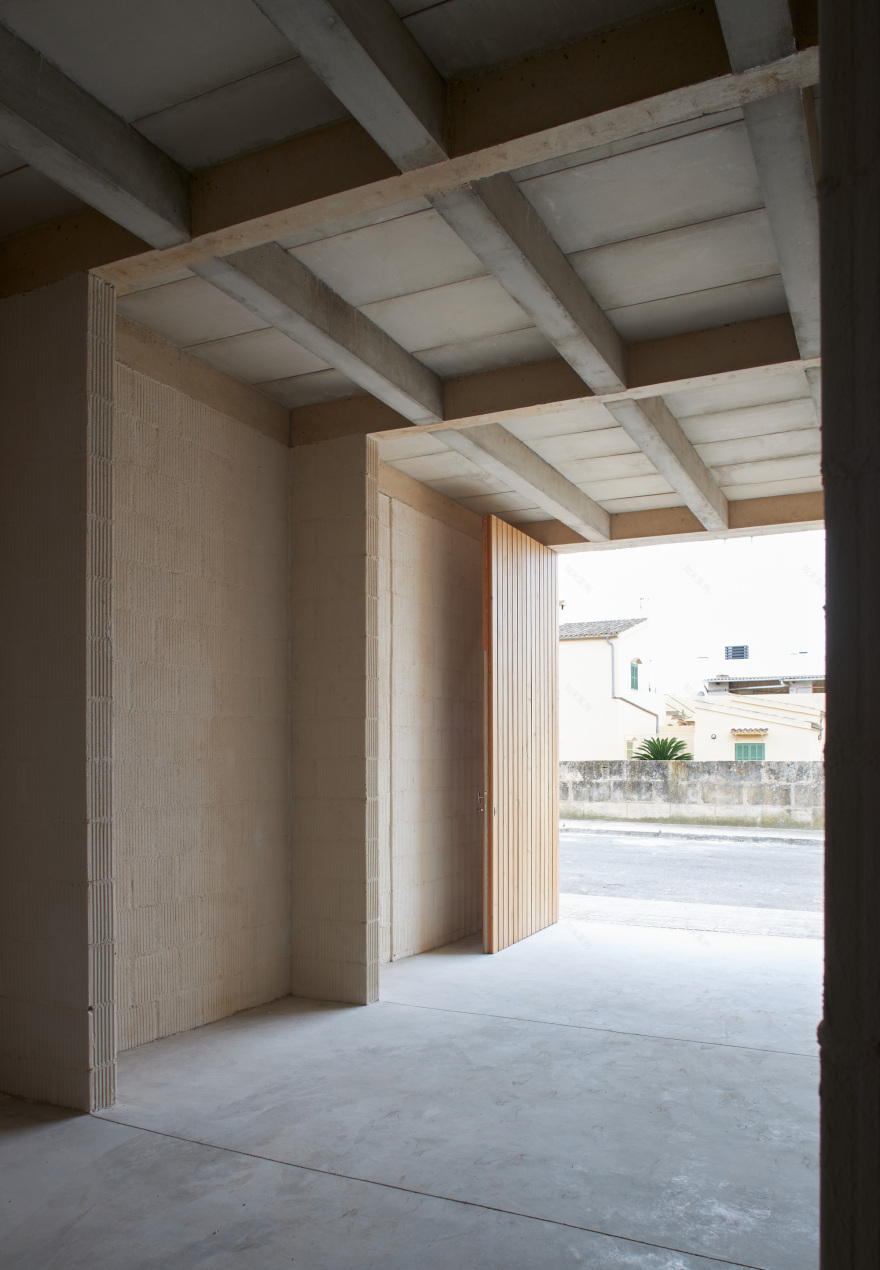
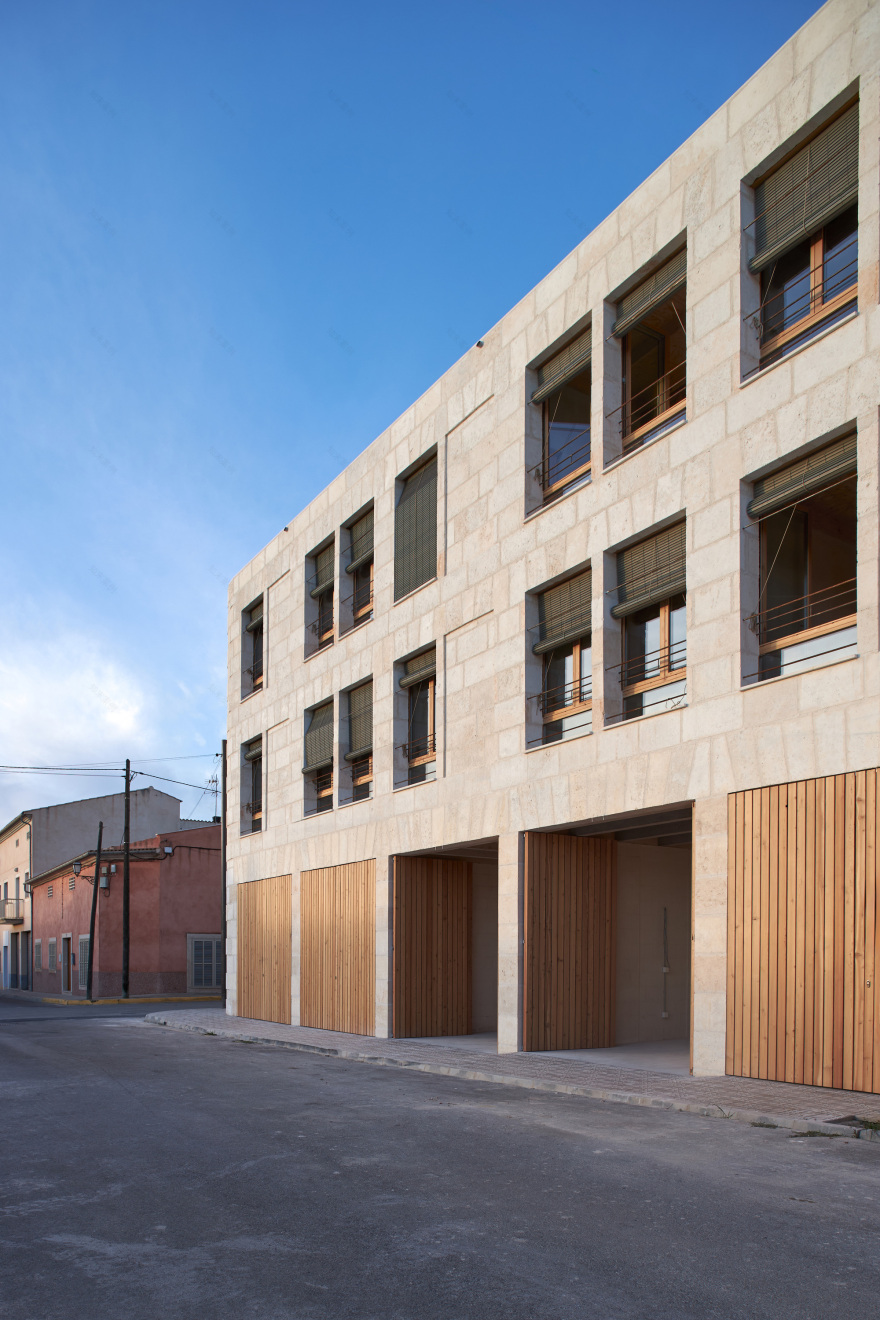
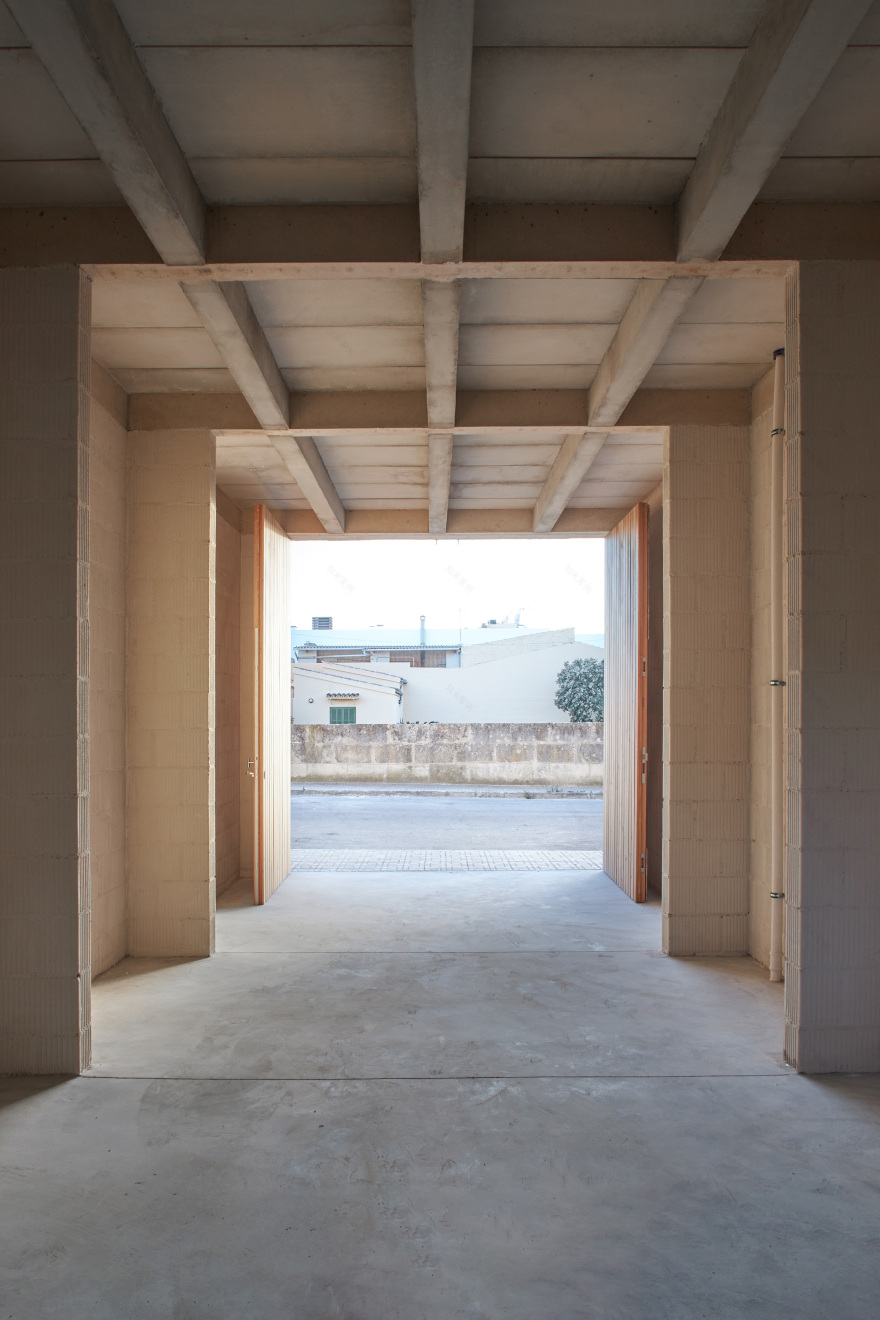
Text description provided by the architects. Located in Santa Margalida, a small town in the north of Mallorca, the project proposes a building with 10 social housing units and 10 multipurpose spaces, constructed using local and/or low environmental impact materials. The exterior structure is built with marés sandstone from local quarries, resulting in a robust and durable construction that ensures the building's integration into its surroundings. The interior is resolved through a horizontal structure of prefabricated timber panels and a vertical structure of load-bearing walls made of locally sourced brick, facilitating the project's economic feasibility.


The project's technological research focuses on optimizing the thickness of these structural elements and minimizing the amount of material used on site. In this regard, the rotation of floor slabs in alternating bays allows loads to be distributed to the greatest extent and ensures the interlocking of the whole, enabling the use of more slender load-bearing walls and reducing construction costs. Likewise, the timber slabs are designed as a prefabricated panel system, facilitating assembly and speeding up on-site execution. The H-section of the panels ensures that, in the event of fire, the horizontal board protects the upper part of the joists, reducing the amount of timber used in the slabs without the need for additives or fire-retardant varnishes—relying solely on the geometry of its components.


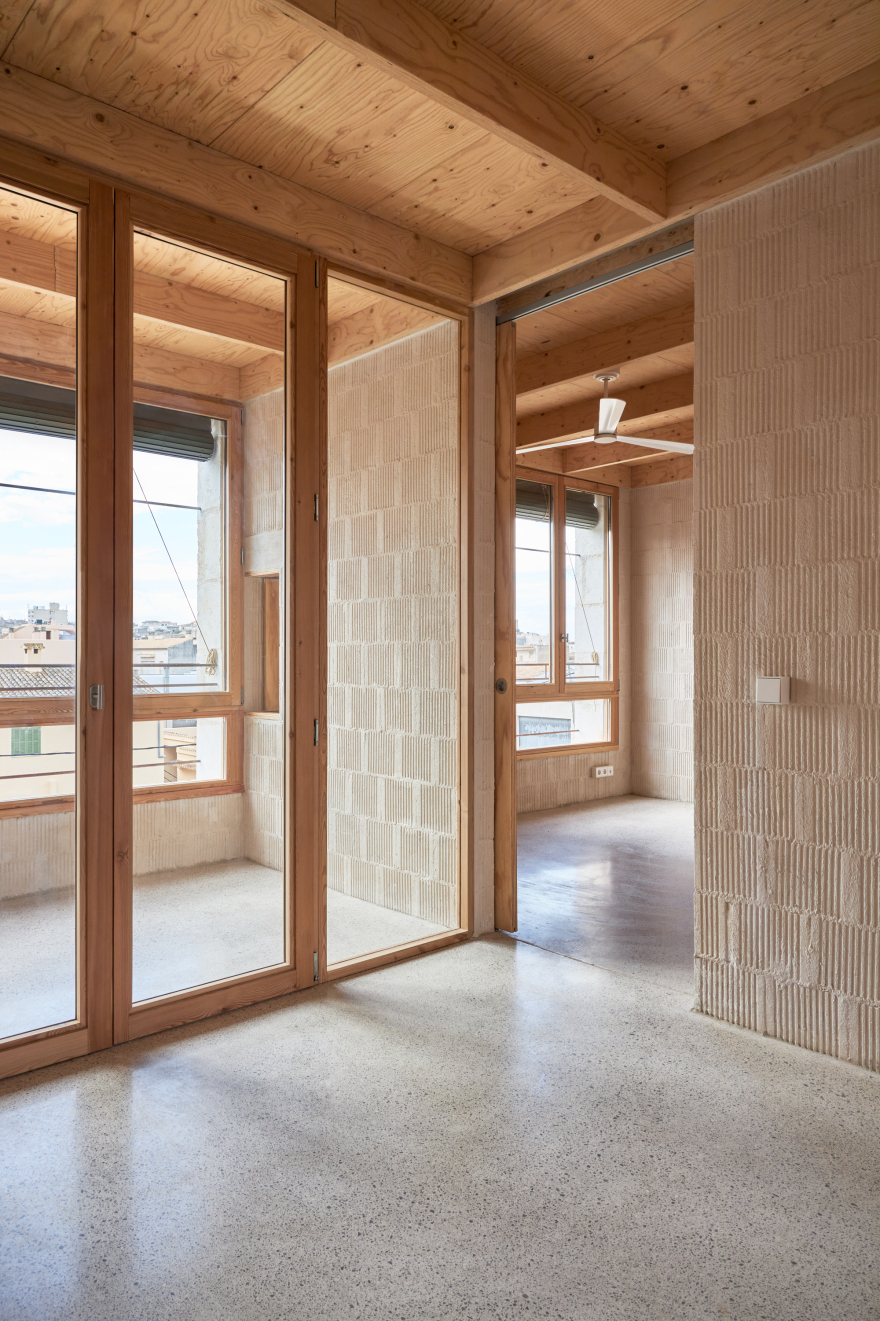
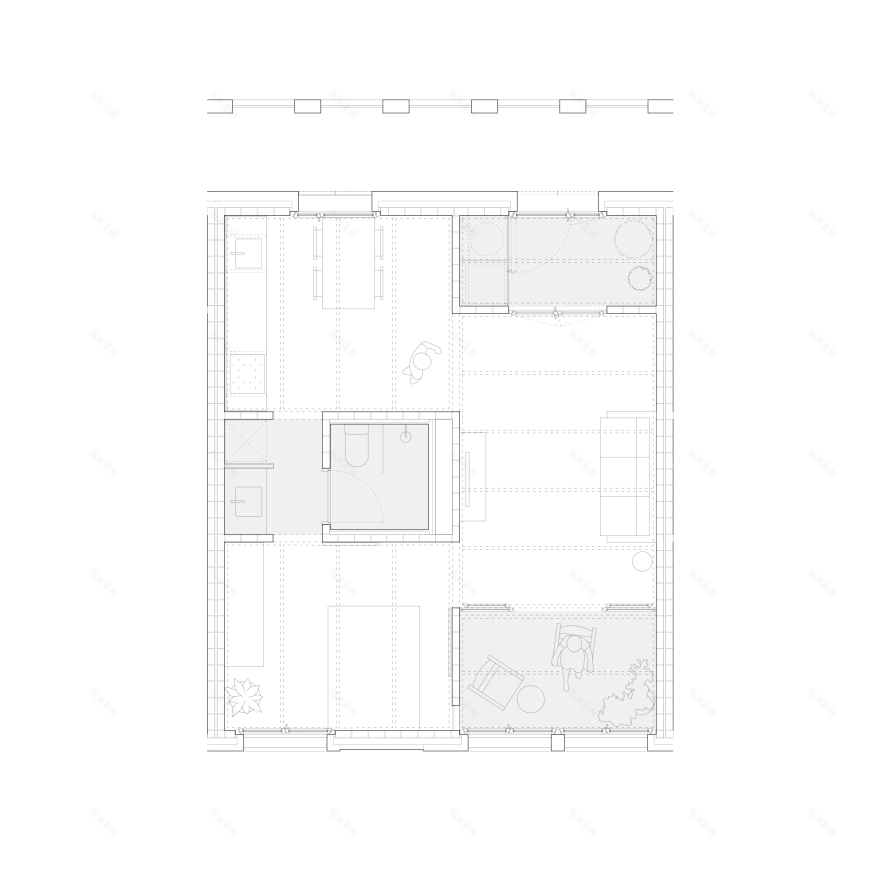
On the upper floors, the building's limited depth is used to create dual-aspect dwellings with cross ventilation, reinforcing the idea of "living between outdoors." The staggered arrangement of rooms structures the internal organization of the homes. The typologies are articulated around a central core, generating circular routes that allow flexible use and long sightlines that expand the perception of interior space. The movement of the sun accompanies the use of the spaces throughout the day.

The project seeks to meet comfort demands through the architectural form itself, achieving—through the use of passive systems (cross ventilation, solar galleries, thermal mass, etc.)—a reduction of non-renewable primary energy consumption to zero.

In this sense, southeast orientation is prioritized in all dwellings, using façade galleries as energy-capturing spaces during colder months. In warmer months, a system of roller blinds shades these spaces, blocking solar radiation. The floor plan organization results in shallow, dual-aspect dwellings, ensuring cross ventilation and taking advantage of prevailing air currents.

Project gallery







南京喵熊网络科技有限公司 苏ICP备18050492号-4知末 © 2018—2020 . All photos and trademark graphics are copyrighted by their owners.增值电信业务经营许可证(ICP)苏B2-20201444 苏公网安备 32011302321234号
苏公网安备 32011302321234号客服
消息
收藏
下载
最近