

创作上传
VIP
收藏下载
登录 | 注册有礼
查看完整案例

收藏

下载

分享
前瞻性的酒店品牌NOT A HOTEL在日本佐木岛山坡上推出了由BIG设计的三座别墅。被濑户内海环绕,这一全新度假项目——NOT A HOTEL Setouchi——坐落于偏远的佐木岛之上。三座各具特色的别墅采用传统夯土工艺建造,材料直接取自场地本身,并嵌入岛屿起伏的山地地形之中。© BIG
VISIONARY HOSPITALITY COMPANY ‘NOT A HOTEL’ OPENS THREE VILLAS DESIGNED BY BIG ON SAGISHIMA ISLAND’S HILLSIDE IN JAPAN Surrounded by the Seto Inland Sea, NOT A HOTEL’s newest resort – NOT A HOTEL Setouchi – is now open on the remote island of Sagishima. The three distinct villas are made of soil directly from the site using the traditional rammed earth technique, carved into the island’s mountainous terrain.
▼场地整体鸟瞰,aerial view of the site© Kenta Hasegawa

项目占地约30,000平方米,位于佐木岛西南端,由三栋别墅、一座海滨餐厅及一片私人海滩构成。从设计到建成历时不到两年,并通过NOT A HOTEL的共享产权模式进行销售,延续品牌在日本范围内构建高端度假住宅网络的策略。
▼分析图,analysis diagram © BIG
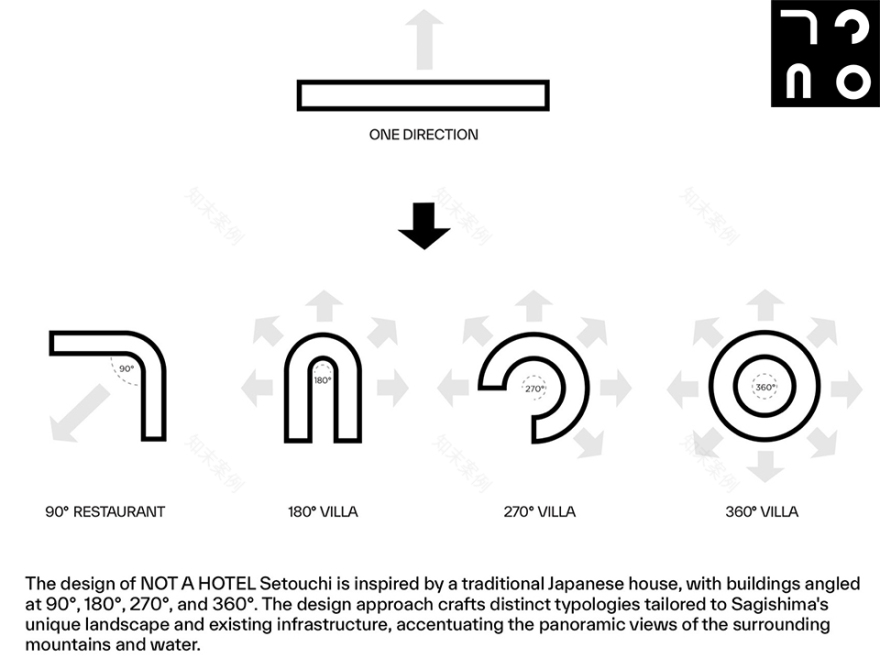
Made up of three villas, a beachfront restaurant, and private beach, NOT A HOTEL Setouchi is set on a 30,000-m2 site on the southwestern cape of Sagishima. Designed by BIG with construction taking less than two years, fractional ownership was offered through NOT A HOTEL’s shared ownership model, building upon the brand’s network of luxury vacation homes across Japan.
▼道路一侧视角,street side view© Kenta Hasegawa
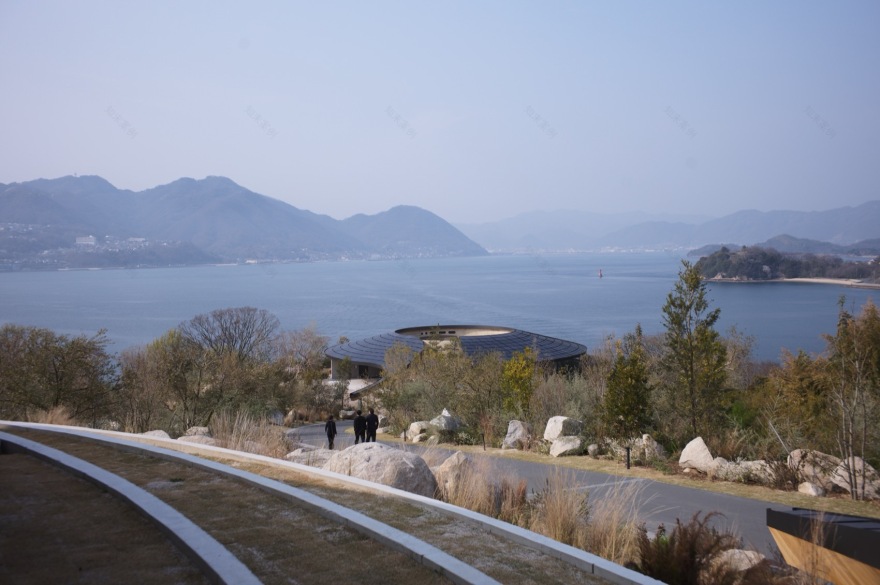
▼远观建筑与景观,viewing the architecture and landscape at distance© Kenta Hasegawa

▼建筑外观,exterior view of the building© Kenta Hasegawa

“我们非常荣幸能与BIG合作,实现其在日本的首个建筑项目。这是NOT A HOTEL实现其愿景的重要里程碑——让日本变得更加有价值。我们相信,这三座SETOUCHI别墅将在未来多年为业主带来前所未有的体验。”——NOT A HOTEL创始人、联席CEO及首席愿景官Shinji Hamauzu
“We are beyond honoured to have partnered with BIG in realising the company’s first buildings in Japan. This is a landmark moment for NOT A HOTEL’s mission to make Japan even more valuable, and we are sure that BIG’s three SETOUCHI villas will provide their owners with unprecedented experiences for years to come.” – Shinji Hamauzu, Founder, Co-CEO, Chief Visionary, NOT A HOTEL
▼顶视图,top view© Kenta Hasegawa


在斯堪的纳维亚与日本设计对话的引导下,NOT A HOTEL Setouchi顺应佐木岛的自然地形展开设计。总体规划的核心在于修复起伏的地貌:在施工前收集草本植被,并重新引入橄榄树、柠檬树以及本土植物,使场地的自然生态得以重生。四卧室别墅根据其位置与视野分别命名为“180”“270”与“360”,嵌入不同高程之中,与既有道路与基础设施对齐,如同一条缎带般沿山坡缓缓展开。▼模型,model © BIG
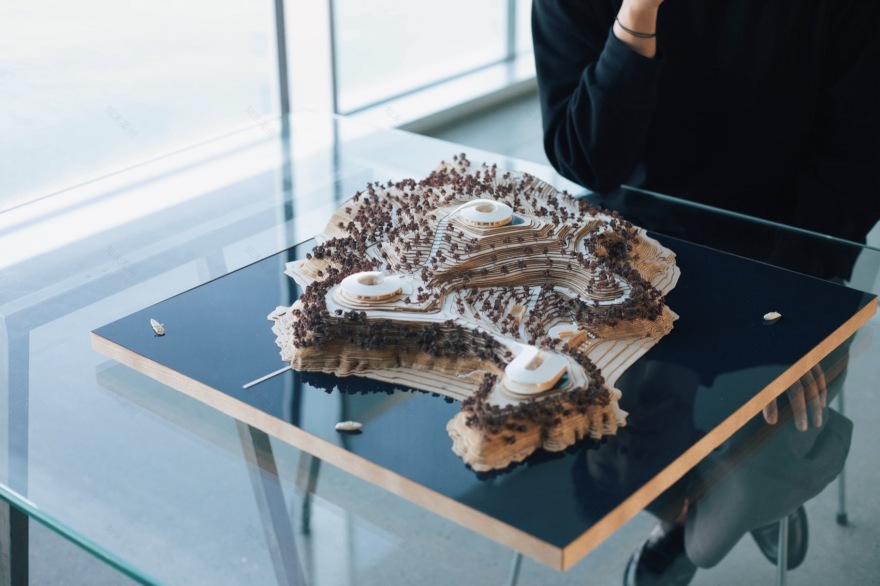
Guided by the dialogue between Scandinavian and Japanese design, NOT A HOTEL Setouchi is designed to work with the natural contours of Sagishima’s landscape. Central to the masterplan was the restoration of the undulating terrain: grasses harvested ahead of construction, with olive trees, lemon trees, and native vegetation reintroduced to bring the site’s natural beauty back to life. The four-bedroom villas – named ‘180’, ‘270,’ and ‘360’ depending on location and corresponding views – are built into the site’s various elevations, aligning with existing roads and infrastructure – unfolding like a ribbon winding up the hillside.
▼海滨餐厅外观,exterior view of thebeachfront restaurant© Kenta Hasegawa

▼出挑的屋檐,the overhanging eaves© Kenta Hasegawa

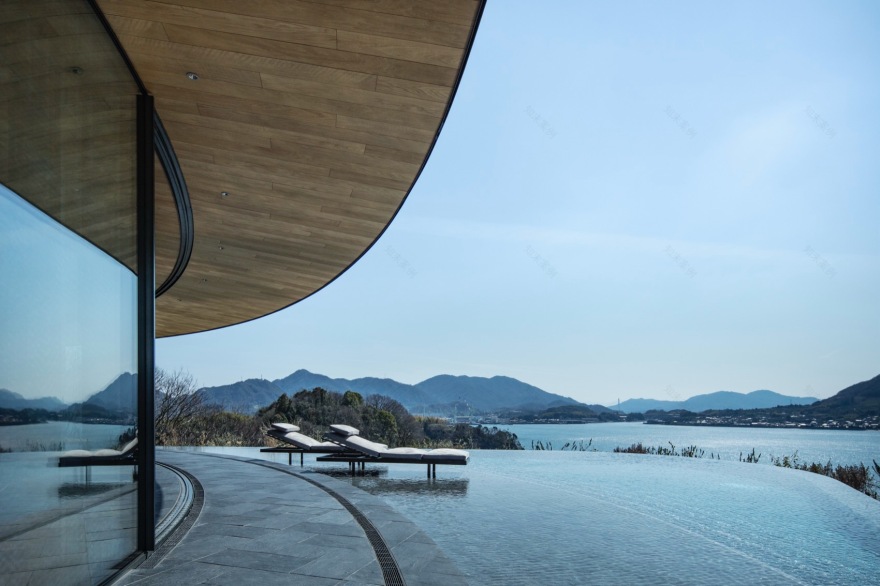
▼餐厅内部,interior of the restaurant© Kenta Hasegawa

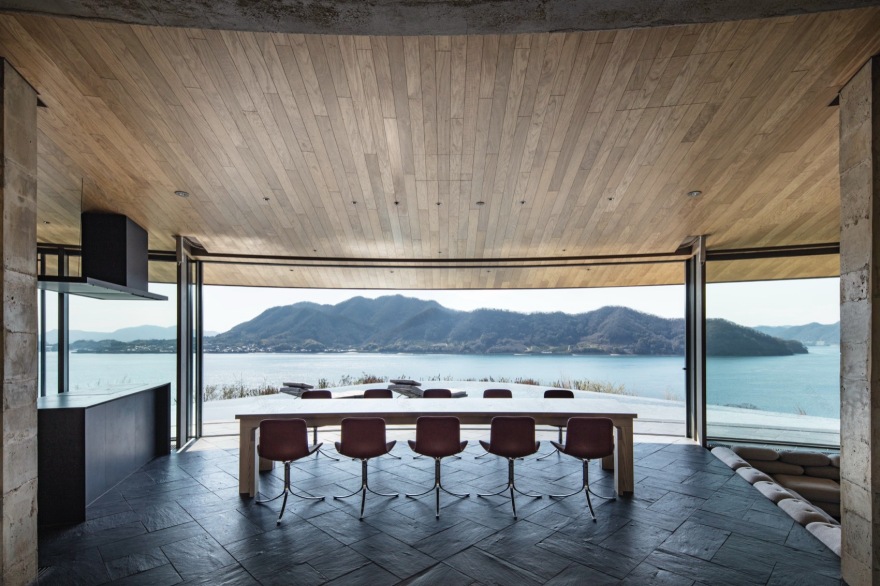
▼细部,details© Kenta Hasegawa

“NOT A HOTEL Setouchi是我们在日本建成的首批作品。这个国家的文化对我本人以及我对建筑的理解产生了深远影响——在这里,无畏的未来主义与深厚的传统根基以对比的方式和谐共存。与NOT A HOTEL合作将这一愿景转化为现实,是一次真正的建筑冒险。佐木岛周边的群岛如同一幅日本山水画:被葱郁植被覆盖的陡峭山丘,从宁静的濑户内海中跃然而出。四个亭式体量被构想为地形的延伸:山顶、半岛、岩突与峡谷通过夯土墙与太阳能屋顶被勾勒出来,为建筑提供360°、270°、180°与90°的全景视野。一方面,每一座住宅都像是被“居住”的风景,开放而外向;另一方面,其脊状墙体又界定出一个私密且受保护的空间——只向天空敞开。宏观与微观相遇,传统与现代交织;斯堪的纳维亚与日本相融合,这些别墅如同建筑中的悖论体,将看似矛盾的元素整合为一个完整而宜居的整体。”——BIG创始人兼创意总监比亚克·英格尔斯(Bjarke Ingels)
“NOT A HOTEL Setouchi are our first completed buildings in Japan, a culture that has had a profound impact on myself and my understanding of architecture; a place where fearless Futurism and deep traditional roots coexist in contrasting harmony. It has been an absolute architectural adventure to work with NOT A HOTEL to make this vision come to life. The archipelago around Sagishima is like a Japanese landscape painting. Steep rolling hills covered in lush green vegetation erupt from the tranquillity of the Seto Inland Sea. The four pavilions are conceived as extensions of the dramatic topography. Hilltops and peninsulas, outcroppings and canyons are outlined by rammed earth walls and solar roofs to provide pavilions with 360-, 270-, 180-, and 90-degree views of the surrounding scenery. On one hand, each home is like an inhabited view, open and extroverted. On the other, their spinal walls outline a private and protected space – open only to the sky. Macrocosmos meets microcosmos, traditional meets modern; Scandinavian and Japanese, the villas are architectural oxymorons embodying seemingly contradictory elements into a holistic hospitable whole.” – Bjarke Ingels, Founder and Creative Director, BIG
▼通透的玻璃立面消解了室内外的界限,the transparent glass facade blurs the boundaries between indoors and outdoors© Kenta Hasegawa


作为对日本地域性设计的回应,别墅采用本地材料,并致敬传统建筑元素。通透的玻璃立面消解了室内外的界限,对障子(shoji)进行了当代表达;黑色板岩地面的铺装图案则借鉴了榻榻米的布局逻辑。承重墙体以取自场地的土壤,通过传统夯土工艺构建,其表面呈现出如地质层理般的色彩与纹理。
As a nod to Japanese vernacular design, the villas incorporate local materials and honour traditional Japanese architectural elements. The glass facades that dissolve the boundary between inside and out reinterpret shoji screens, while the pattern of the black slate floors takes cues from the layout of Japanese tatami mats. Incorporating soil directly from the site, the load-bearing clay walls are made using the traditional rammed earth technique, revealing colours and textures like geological strata.
▼承重墙体以取自场地的土壤,通过传统夯土工艺构建,the load-bearing clay walls are made using the traditional rammed earth technique© Kenta Hasegawa
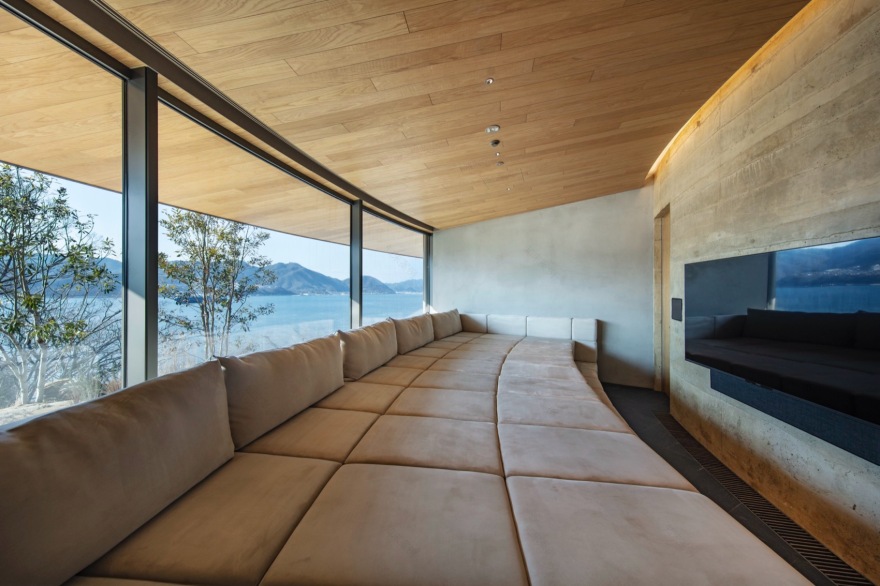
每一座别墅均根据其在场地中的独特位置进行设计与回应。位于最高点的环形“360”,在中心设有私密庭院,可360度俯瞰濑户内海层叠的山海景观;“270”则框取270度的群岛全景,围绕水池布置桑拿与户外休憩空间,如同漂浮的岛屿,并设有火炉;位于半岛尽端、最接近海岸线的“180”,其形态取自海岸曲线,以弧形回应地形。内部庭院以柔和的坡地展开,苔藓小径与随四季变化的树木,共同营造出细腻而富有时间感的空间体验。
Each villa has been designed to reflect and respond to its unique position on the property. Sitting at the highest point of the site, the ring-shaped ‘360’ offers unobstructed views across Setouchi’s layered land and seascape in every direction, with a private courtyard in the middle. ‘270’ frames an expansive 270-degree panorama of the surrounding archipelago, featuring a sauna and outdoor relaxation areas arranged like floating islands around a pool alongside a firepit. At the peninsula’s tip, closest to the water’s edge, ‘180’ takes its shape from the coastline itself, with a curved form that echoes the shore. An inner courtyard unfolds with gentle slopes, mossy pathways, and trees that change colour with the seasons.
▼庭院,courtyard© Kenta Hasegawa

▼围绕水池布置桑拿与户外休憩空间,如同漂浮的岛屿,the transparent glass facade blurs the boundary between indoors and outdoors. The sauna and outdoor relaxation areas are arranged around the pool, resembling floating islands© Kenta Hasegawa

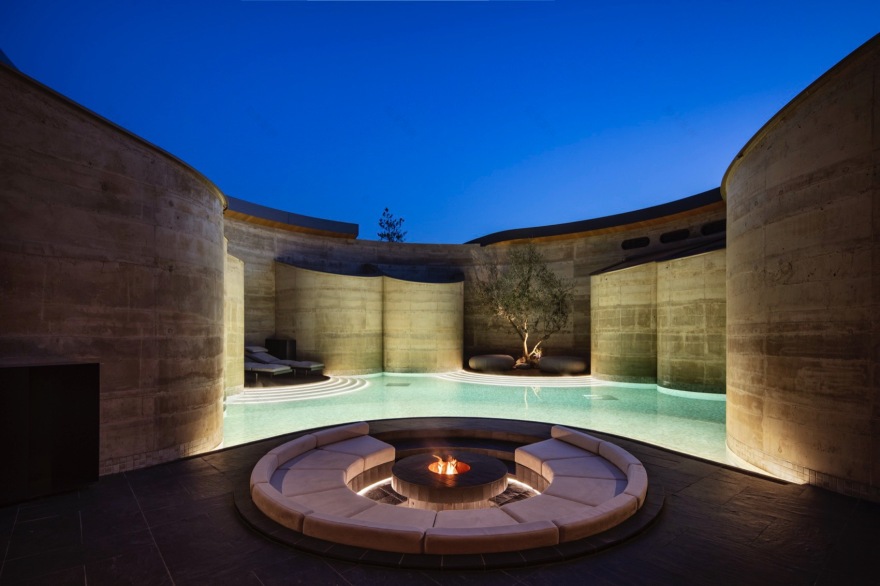
▼下沉式户外休憩空间与火堂,sunkenoutdoor relaxation area and fireplace© Kenta Hasegawa

NOT A HOTEL濑户内的住宅被设计为一个整体统一的大空间,浴室与储藏空间被整合进独立的功能体块之中。每个体块顶部均设有天窗,无论身处何处都可仰望天空,在开放性与私密性之间取得平衡。传统的日式浴池、宁静的色彩体系、户外火坑以及加热无边际泳池,共同营造出从居所到自然的无缝过渡。
The homes each flow as one large, unified space, with bathrooms and storage contained within separate pods. Skylights crown each pod, ensuring views of the sky no matter the room – balancing openness and solitude. Traditional Japanese baths, calming colour palettes, outdoor firepits, and heated infinity pools create a seamless transition from home to nature.
▼无论身处何处都可仰望天空,views of the sky no matter the room© Kenta Hasegawa

▼天井中的书房,study room in the patio© Kenta Hasegawa

▼日式浴室,Japanese-style bathroom© Kenta Hasegawa

“当我们第一次踏上佐木岛时,不自觉地沿着场地的梯田式地形行走,总是被地平线所吸引。这段行走本身塑造了建筑——山坡上的每一步,都转化为别墅的曲线形态,其延展的立面朝向大海,捕捉全景视野。”——BIG合伙人 Leon Rost
“When we first visited Sagishima, we found ourselves tracing the terraced contours of the site, always drawn toward the horizon. That walk wrote the architecture – each step along the hillside became the curving forms of the villas, their long facades opening to capture the panoramic sea.” – Leon Rost, Partner, BIG
▼客房,guestrooms© Kenta Hasegawa
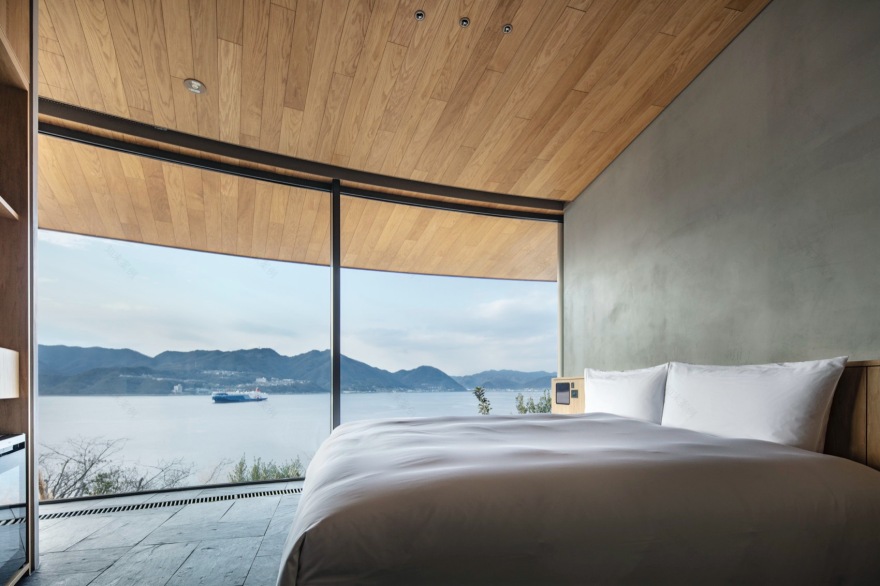
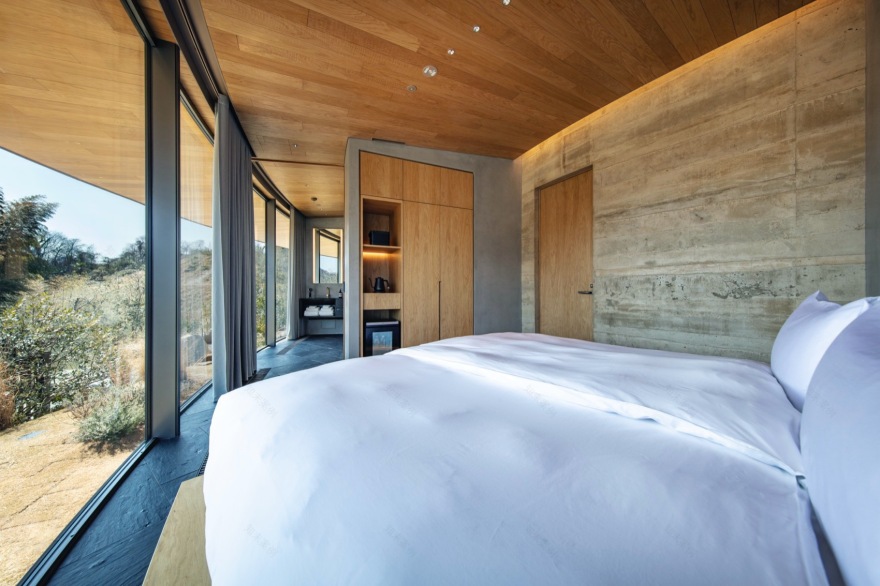
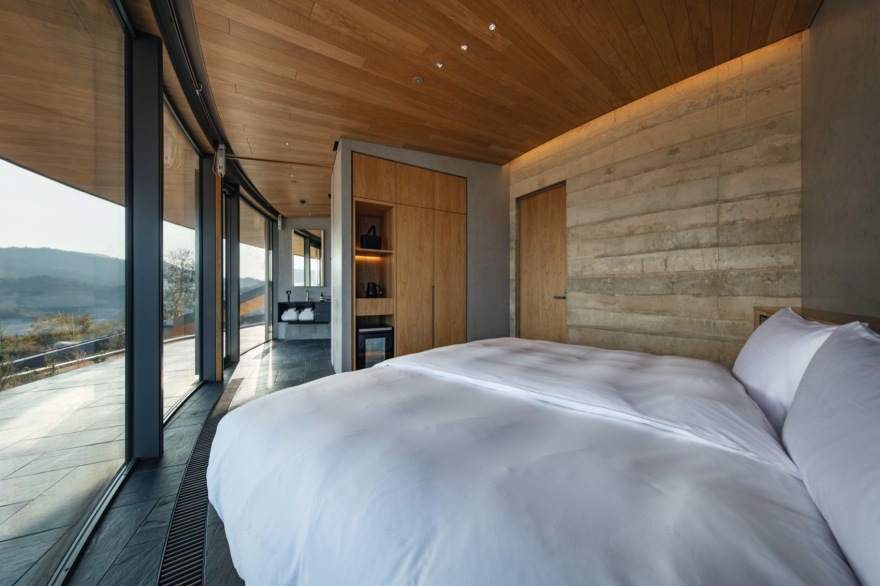
▼客房细部,details of the guest rooms© Kenta Hasegawa

屋顶覆盖低反射的太阳能瓦片,这既是对传统日式屋顶的技术化与当代表达。可开启的立面与深远檐口在春夏季节促进被动降温,同时场地内设置雨水收集系统,用于景观灌溉。
Covered in low-reflective solar tiles, the roofs are a technological and modern interpretation of a traditional Japanese roof. Operable façades and overhangs promote passive cooling in spring and summer, while rainwater is collected onsite to irrigate the landscaping.
▼客房享有绝佳的景观视野,the guest rooms offer an excellent view of the scenery© Kenta Hasegawa


“最初,BIG希望创造一个能够馈赠濑户内壮丽景观的项目;而NOT A HOTEL则致力于提升日本的价值,以及延续全国范围内依然存在的精湛工艺、建造者与工匠的技艺、在地社区的支持,以及所有参与者的投入——这些共同将最初如梦似幻的构想转化为现实。该项目体现了丹麦设计与理念、传统日本建筑,以及当代日本在技术与建造精度上的高度融合。NOT A HOTEL濑户内只能诞生于此时此地,由这一团队完成,这正是其独特之处。”——BIG助理建筑师 Ryohei Koike
“What began as BIG’s ambition to create something that could serve as a gift to the majestic landscape of Setouchi was realized with NOT A HOTEL’s mission to elevate the value of Japan as well as the enduring craftsmanship that still exists across the country, the skill of its builders and artisans, the support of the local community, and the dedication of everyone involved – turning what first felt like a dreamlike fiction into a reality. The project stands as a remarkable convergence of Danish design and philosophy, traditional Japanese architecture, and the technical sophistication and construction precision of contemporary Japan. NOT A HOTEL Setouchi could have only been made in this place, at this moment, and by this team, and that is what makes it truly special.” – Ryohei Koike, Associate, BIG
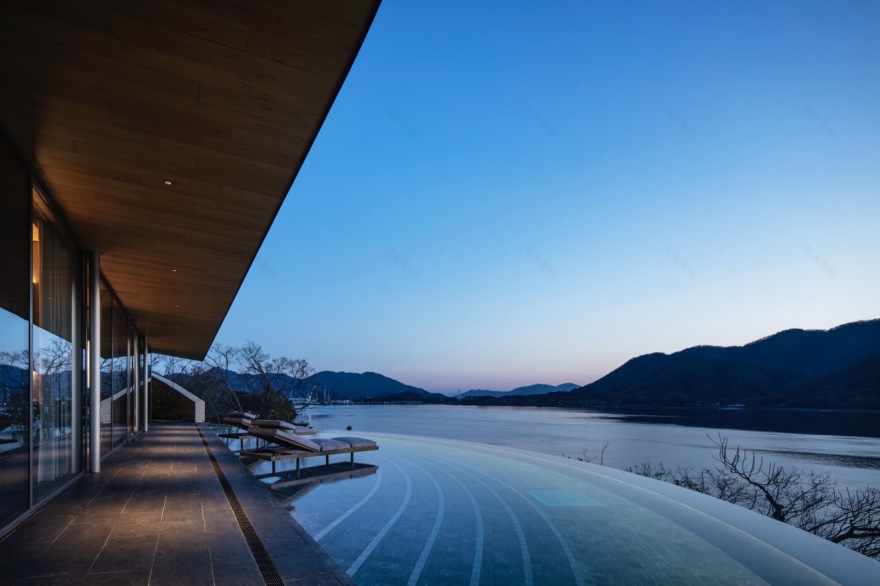
▼泳池平台夜景,night view of the pool© Kenta Hasegawa
NOT A HOTEL濑户内也加入了BIG不断扩展的酒店项目序列,其中包括瑞士山地的爱彼制表博物馆酒店、瑞典拉普兰的Treehotel生物圈,以及位于美国德州、正在建设中的El Cosmico项目。
NOT A HOTEL Setouchi joins BIG’s growing portfolio of hospitality projects including Audemars Piguet’s Hôtel des Horlogers in the Swiss mountains; The Biosphere at Treehotel in Swedish Lapland; and the upcoming El Cosmico in Texas.
▼庭院夜景,night views of the courtyards© Kenta Hasegawa

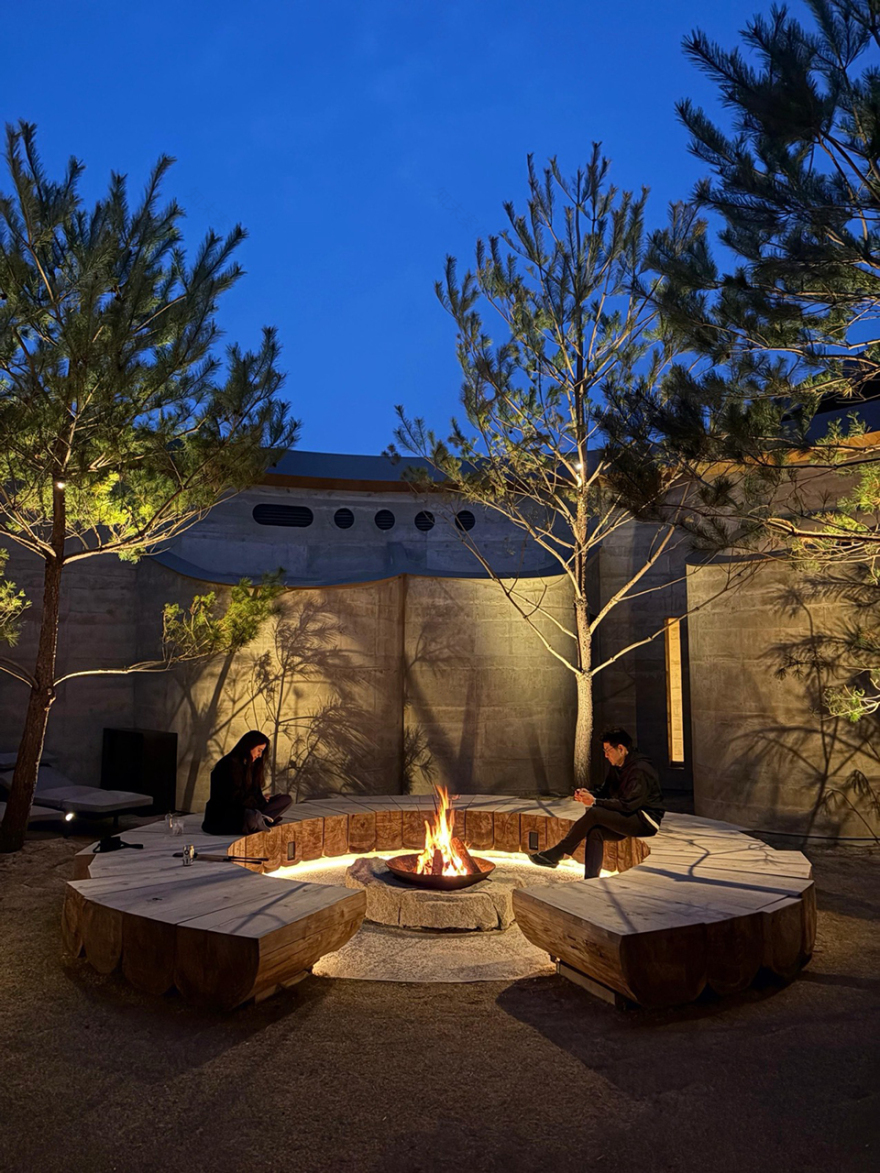
▼篝火夜景,night view of the fireplace© Kenta Hasegawa
Photos by Kenta Hasegawa
PROJECT FACTS
Size: 2,350 m2
Location: Sagishima, Setouchi, Japan
Client: NOT A HOTEL
Collaborators: Maeda Corporation, ARUP Japan, 1moku, NOSIGHT, BOCS, Mir, LIT design
TEAM Partners-in-Charge: Bjarke Ingels, Leon Rost
Project Manager: Yu Inamoto Design Lead: Ryohei Koike
Project Architect: Mamoru Hoshi
Project Team: Ahmad Tabbakh, Andrea Megan Hektor, Casey Tucker, Christina Papadopoulou, Cullen Yoshihiko Fu, Don Chen, Jan Leenknegt, Konstantinos Koutsoupakis, Margaret Tyrpa, Matthew Lau, Naysan John Foroudi, Oskar Alfred Maly, Paul Heberle, Pavel Tomek, and Sang Ha Jung
南京喵熊网络科技有限公司 苏ICP备18050492号-4知末 © 2018—2020 . All photos and trademark graphics are copyrighted by their owners.增值电信业务经营许可证(ICP)苏B2-20201444 苏公网安备 32011302321234号
苏公网安备 32011302321234号客服
消息
收藏
下载
最近