

创作上传
VIP
收藏下载
登录 | 注册有礼
查看完整案例

收藏

下载

分享

翻译
Architects:Carr Cotter & Naessens
Area:3500m²
Year:2025
Photographs:Ste Muray
Category:Educational Architecture,University
Design Team:Cotter & Naessens
Country:Ireland

Text description provided by the architects. The new Student Center for the University of Limerick, which is located in a significant site at the gateway to the campus, was generated by a vision for a place that is at the very heart of university life, transforming the social experience of the growing student population by providing social spaces, places for encounter and exchange of information, a center to support both students and alumni-a home from home, a place on campus that students can call their own. The project was first envisaged in 2015, when a student referendum was held following extensive consultation, to agree a levy that would effectively fund the development of the building.


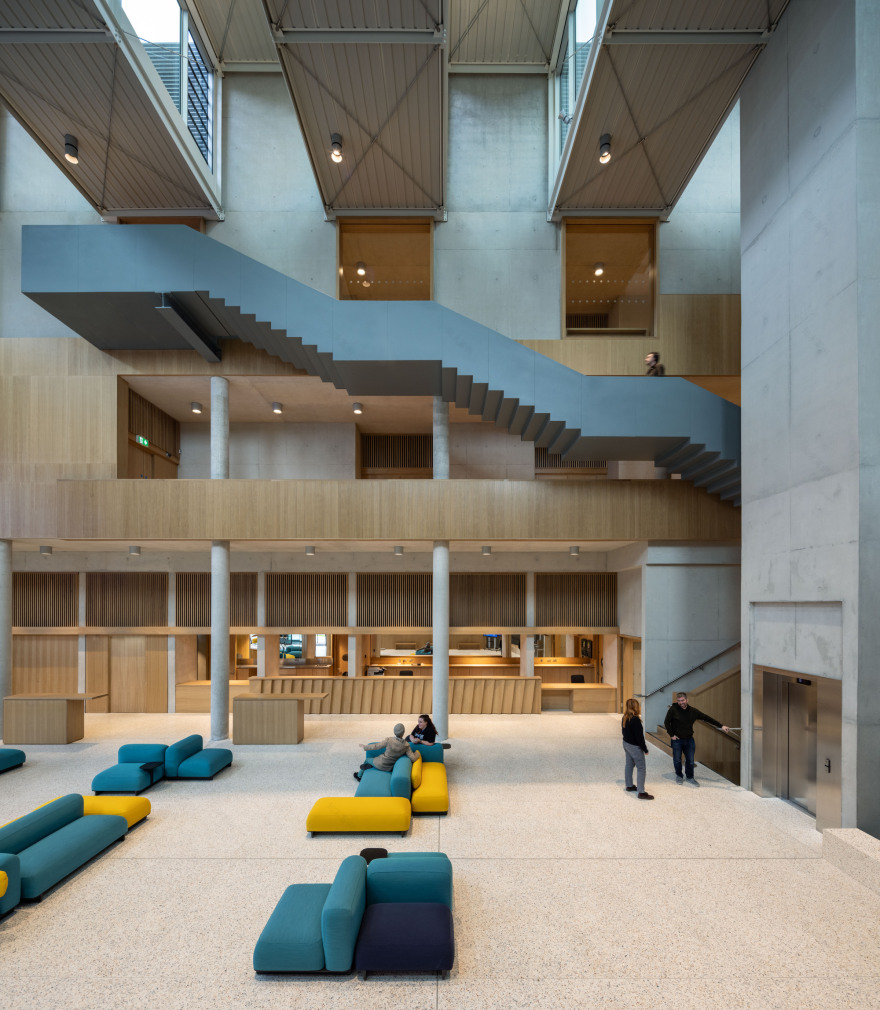
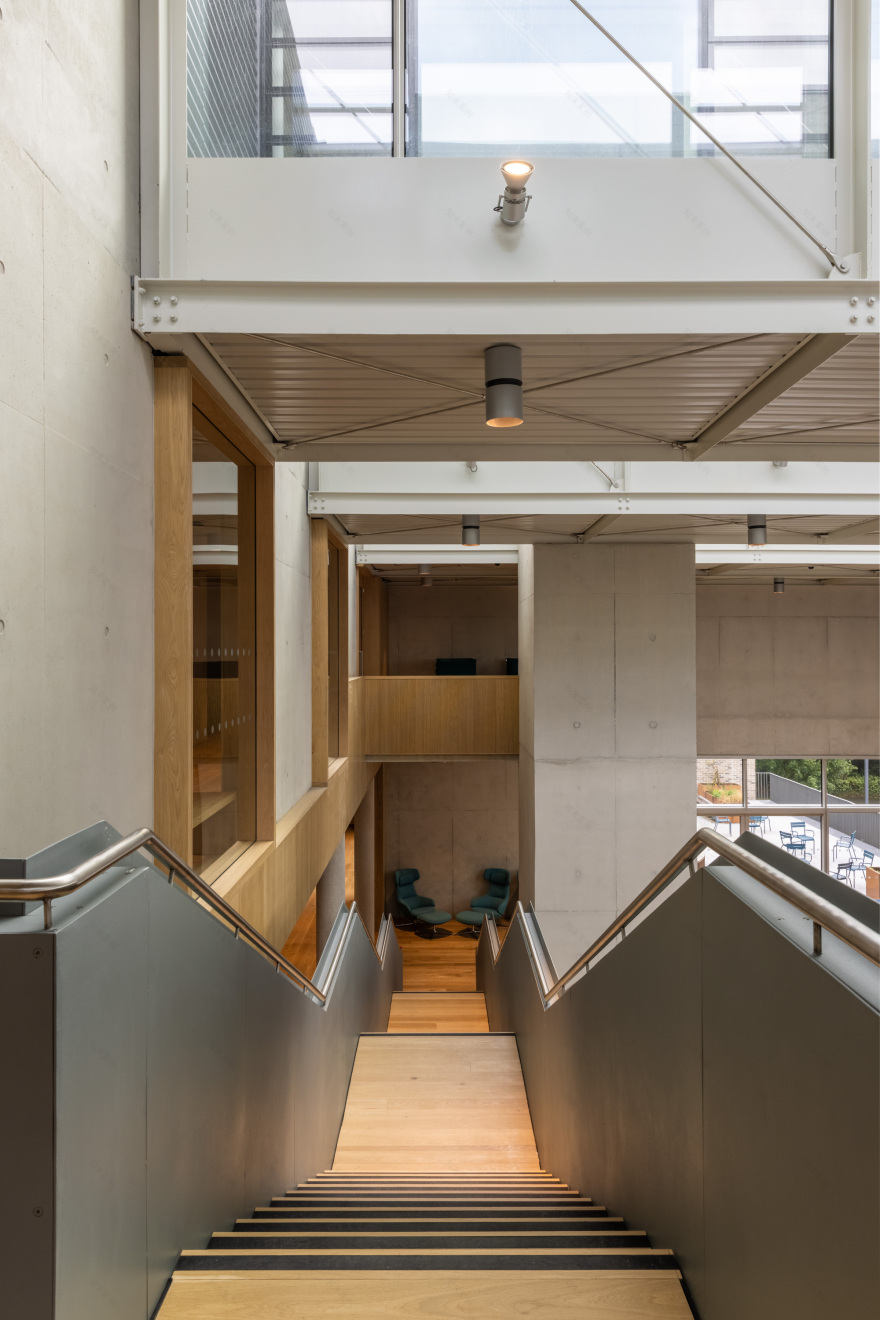
The building includes a series of large public volumes, the foyer, theater, courtyard garden, and flexible meeting rooms, all placed on the west side of the building. Smaller meeting rooms and workspaces are placed along the east and south elevations. The quality and organization of the circulation spaces and how people move through the building are fundamental to encouraging people to find their place, engage, and encounter. The stairs are designed for people to linger and to encourage chance conversations and meet-ups. The building functions might evolve and change over time-the disposition of the rooms, generous proportions, and volumes ensure that the spaces may be adapted for many uses as needs change.

The rectangular building form is considered a block out of which are carved rooms and spaces that are enclosed or open to the sky as gardens. The section too can be divided into large volume spaces-the foyer, auditorium, and a rooftop garden with rooflights bringing light and air into the plan, and smaller rooms providing workspaces, clubs, and meeting rooms. This sectional logic is carried through in the organization of the plan- large volumes to the west, cellular spaces to the east.

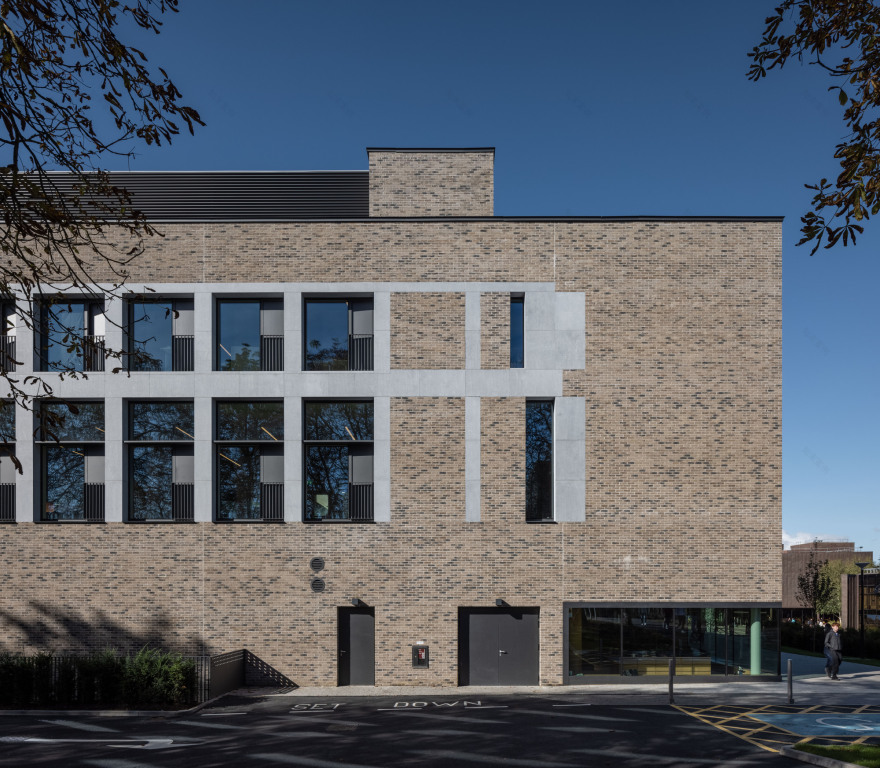
The structure is comprised of a reinforced concrete shell, which is left exposed or overclad in oak linings for acoustic modulation. A series of steel-framed trusses form clerestory glazing, which includes automated glass louvres for natural and smoke ventilation. The robust brick skin of the building envelope is in line with the brick materiality of the campus; the brick is modulated with limestone slabs that define the openings.

A simple material palette provides a calm visual environment. The character of visual, spatial, and acoustic experience is controlled. The building becomes progressively more tranquil as one moves around and up the building. The Students' Union was very keen on supporting neurodiverse students and creating calm spaces for them. There are many small booths and intimately scaled spaces, as well as the voluminous and busy foyer.


The building brief prioritized the value of a healthy building that supports a sense of well-being. This was achieved through ample daylight, access to green and biodiverse spaces, fresh air, and natural materials like timber with no VOCs. The sustainable strategy for the project was in two parts: to optimize the passive performance of the building by means of materials, volumes, and a highly insulated building envelope, and secondly, by means of services design and technology to fine-tune energy use. A cascade arrangement of air-to-water heat pumps supplies the building's heating and hot water. An array of solar PV panels on the roof generates up to 18KW of electrical power. The building achieved a BER of A3 with a primary energy consumption of 111.5 kWh/m2/annum.
Project gallery





南京喵熊网络科技有限公司 苏ICP备18050492号-4知末 © 2018—2020 . All photos and trademark graphics are copyrighted by their owners.增值电信业务经营许可证(ICP)苏B2-20201444 苏公网安备 32011302321234号
苏公网安备 32011302321234号客服
消息
收藏
下载
最近