

创作上传
VIP
收藏下载
登录 | 注册有礼
查看完整案例

收藏

下载

分享

翻译
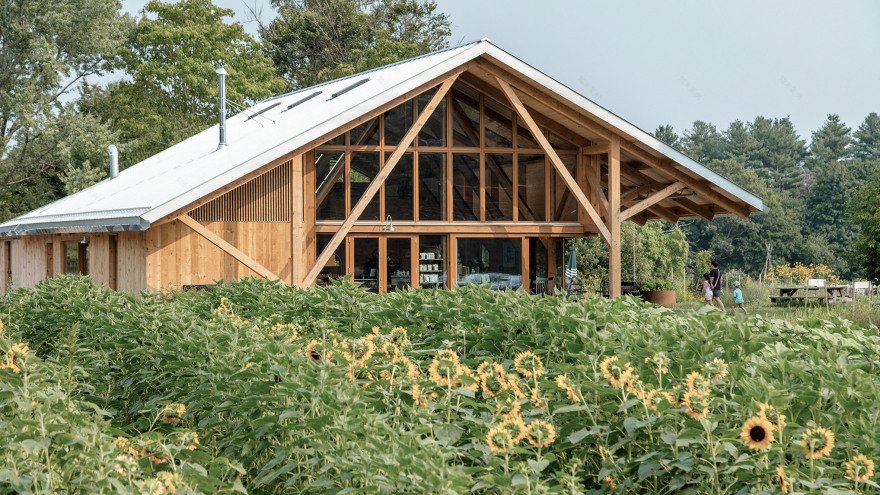
US studio Payette has completed a pro-bono project called Land's Sake Farmstand in Massachusetts, USA, designed as a "functional and poetic" timber pavilion that emulates early agrarian buildings.
Located just outside of Boston, the building is part of a community farm in Weston, Massachusetts.
Payette has designed a farm stand in Massachusetts
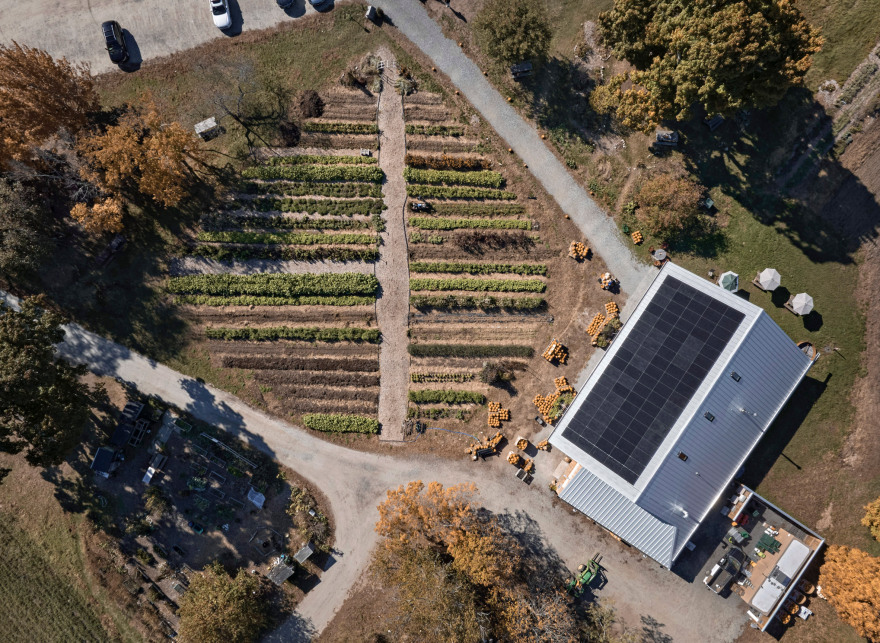
The site is owned by Land's Sake, a nonprofit focused on environmental education, land management and food donation programmes. The site includes growing areas for a wide range of produce and a pick-your-own flower garden.
Working on a pro bono basis, Boston-based Payette designed a master plan for the organisation's 40-acre (16-hectare) site starting in 2018, calling for the construction of several new buildings.
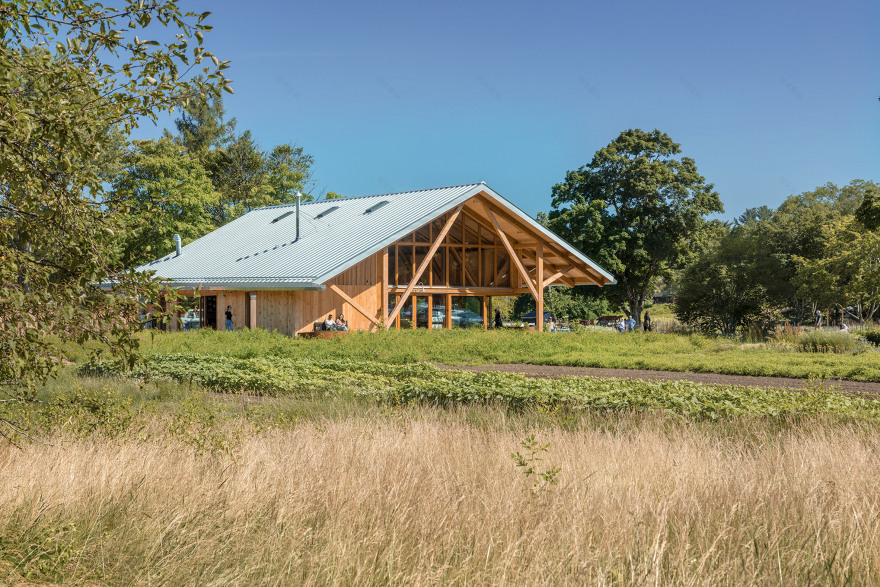
The structure serves as a gathering place and shop
The farm stand is the fourth building to be completed (the others include greenhouses and a barn). Positioned along the site's central axis, the building was conceived as "a heavy timber pavilion set within the landscape".
"The design deliberately preserves uninterrupted views across the agricultural landscape while drawing on the vernacular logic of early agrarian buildings," the team said.
"The new farmstand exemplifies an architecture that is both functional and poetic, rooted in the rhythms of New England farming while aspiring to a regenerative future."
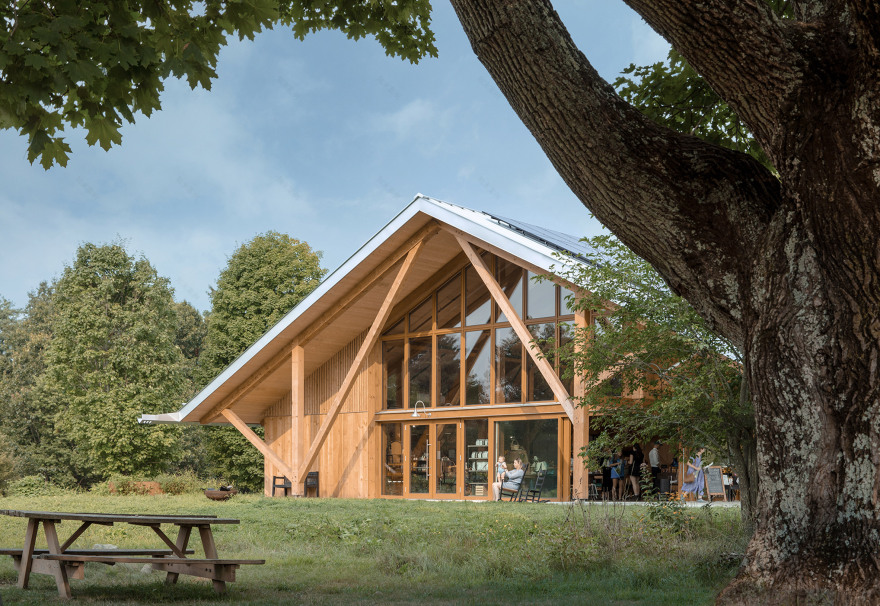
Payette's farm stand was conceived as a "heavy timber pavilion" in the landscape
Rectangular in plan, the building is topped with a gabled roof, sized to accommodate a large photovoltaic array. The metal-clad roof extends outward to provide shade.
Along the south and west elevations, the eaves cover areas for produce displays and casual seating.
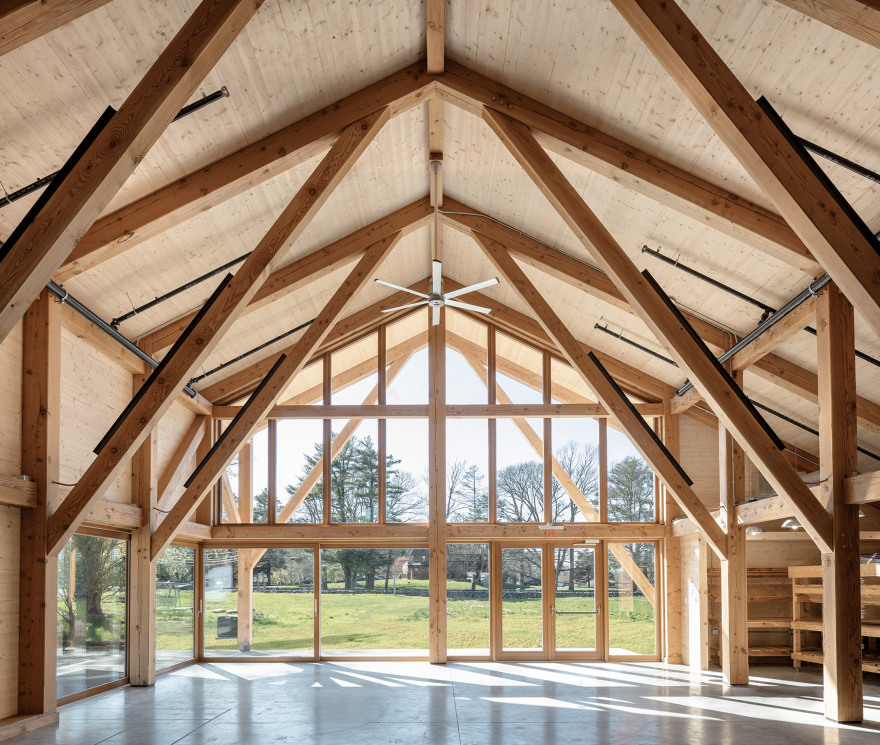
It has a hybrid structure that utilises standard timber and mass-timber elements
The building features a hybrid structural system. A traditional frame is made of Douglas fir columns and beams, while cross-laminated-timber (CLT) panels provide lateral support for the frame.
Exterior walls are a mix of rough-sawn pine siding and glazing, including retractable panels that enable the building to be opened up to the outdoors.
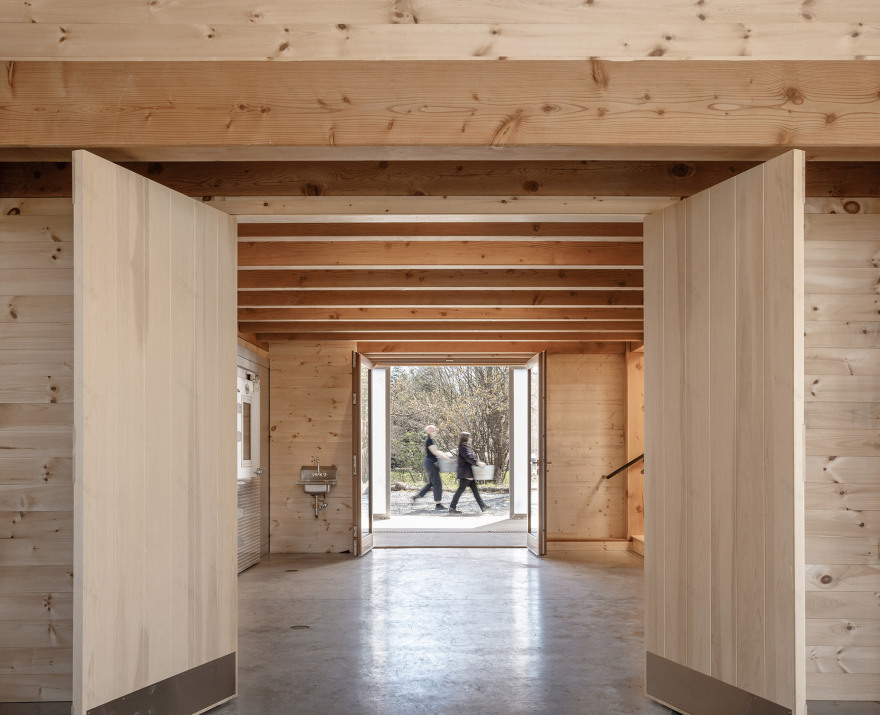
Pine wood clads the interiors
Inside the farm stand, there is a mix of public and support spaces.
The front portion, which faces the fields, contains a commercial market and a demonstration kitchen, which are meant to act "as a social hub for growers and visitors".
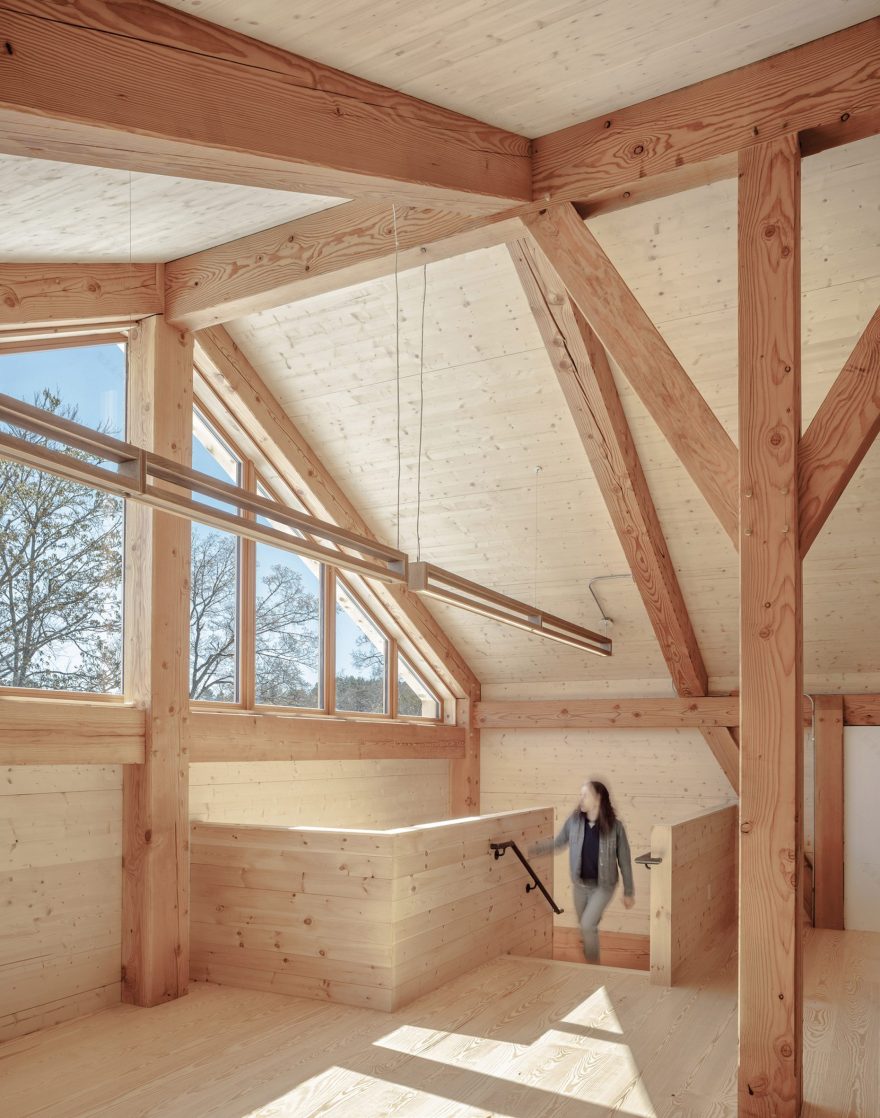
A loft was designed to be a workspace
The rear area contains storage, a staff office, a walk-in cooler and a vegetable-washing area. Sliding doors lined with polycarbonate panels draw in filtered daylight.
A loft is located above the support areas and is used as a workspace and as a small venue for educational programming.
The building was designed to achieve net-zero energy performance. Solar panels generate power for the building, while passive design strategies help reduce energy consumption.
The team was also mindful of water conservation, leading to the inclusion of a system for collecting and reusing rainwater.
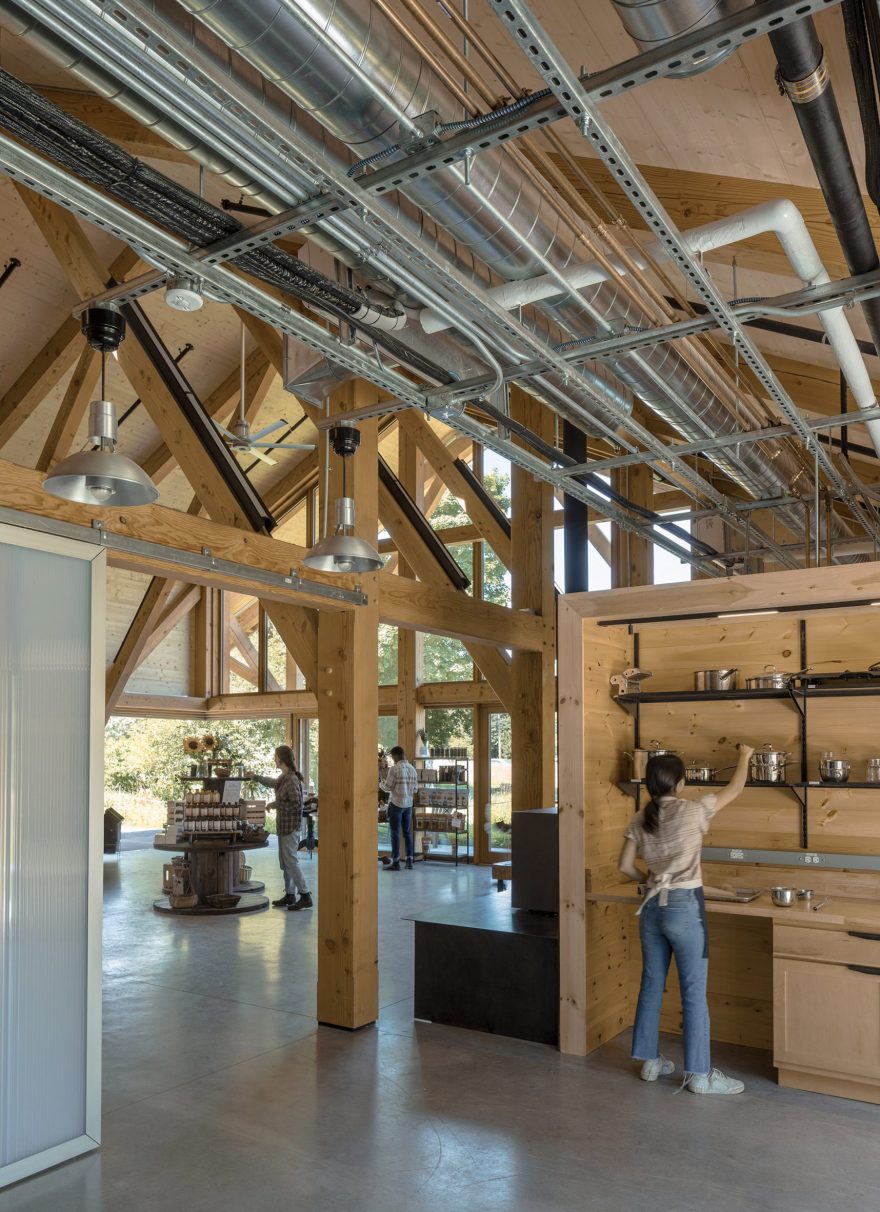
The building was designed for net-zero energy performance
The landscape was only lightly altered during the project.
"Landscape interventions prioritise existing paths and protect mature trees and cultivated fields, reinforcing the agricultural landscape as the project's defining framework," the team said.
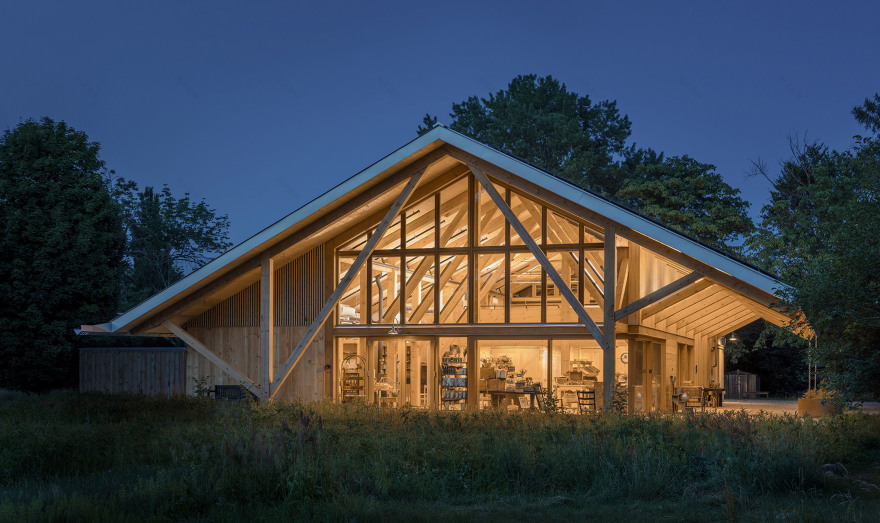
The building's deep eaves cover the large spans of glass
Payette is known for designing large, complex buildings, such as research buildings and healthcare facilities.
Recent projects by the studio include an engineering building with a "folded form" at Penn State University and a research facility in Cambridge, Massachusetts, that features a doughnut-shaped terrace and green roofs.
The photography is by Warren Jagger.
南京喵熊网络科技有限公司 苏ICP备18050492号-4知末 © 2018—2020 . All photos and trademark graphics are copyrighted by their owners.增值电信业务经营许可证(ICP)苏B2-20201444 苏公网安备 32011302321234号
苏公网安备 32011302321234号客服
消息
收藏
下载
最近