

创作上传
VIP
收藏下载
登录 | 注册有礼
查看完整案例

收藏

下载

分享
古建新生 古典与现代交织
Heritage Reborn
广州沙面,珠江畔的欧陆风情岛屿,百年建筑群见证着时光流转。由立品设计全新打造的喜茶广州沙面DP店便选址于此。这栋新古典主义风格的大楼始建于20世纪初,曾为英国渣打银行在广州的据点,1996年列入全国重点文物保护单位。面对这座承载百年东西交汇的历史建筑,我们的设计命题也随之浮现:如何在保留原始建筑形态与底蕴气度的同时,不动声色地注入在地人文灵感与品牌独特质感。
On Shamian Island—a historic enclave of European elegance along the Pearl River—century-old architecture stands as a silent witness to the ebb and flow of time. Within this context, Leaping Creative has unveiled the latest HEYTEA DP (Day Dreamer Project) store. Occupying a Neoclassical landmark from the early 20th century—formerly a branch of the Standard Chartered Bank and a National Key Cultural Relics Protection Unit since 1996—the project presents a unique design inquiry: how to honor the building’s historic gravitas while subtly injecting local vernacular inspiration and the brand’s modern tactile identity.
▼项目概览,overview of the project © 喜茶

竹荫消夏 记忆中的场景
A Summer Retreat in Bamboo Shadows
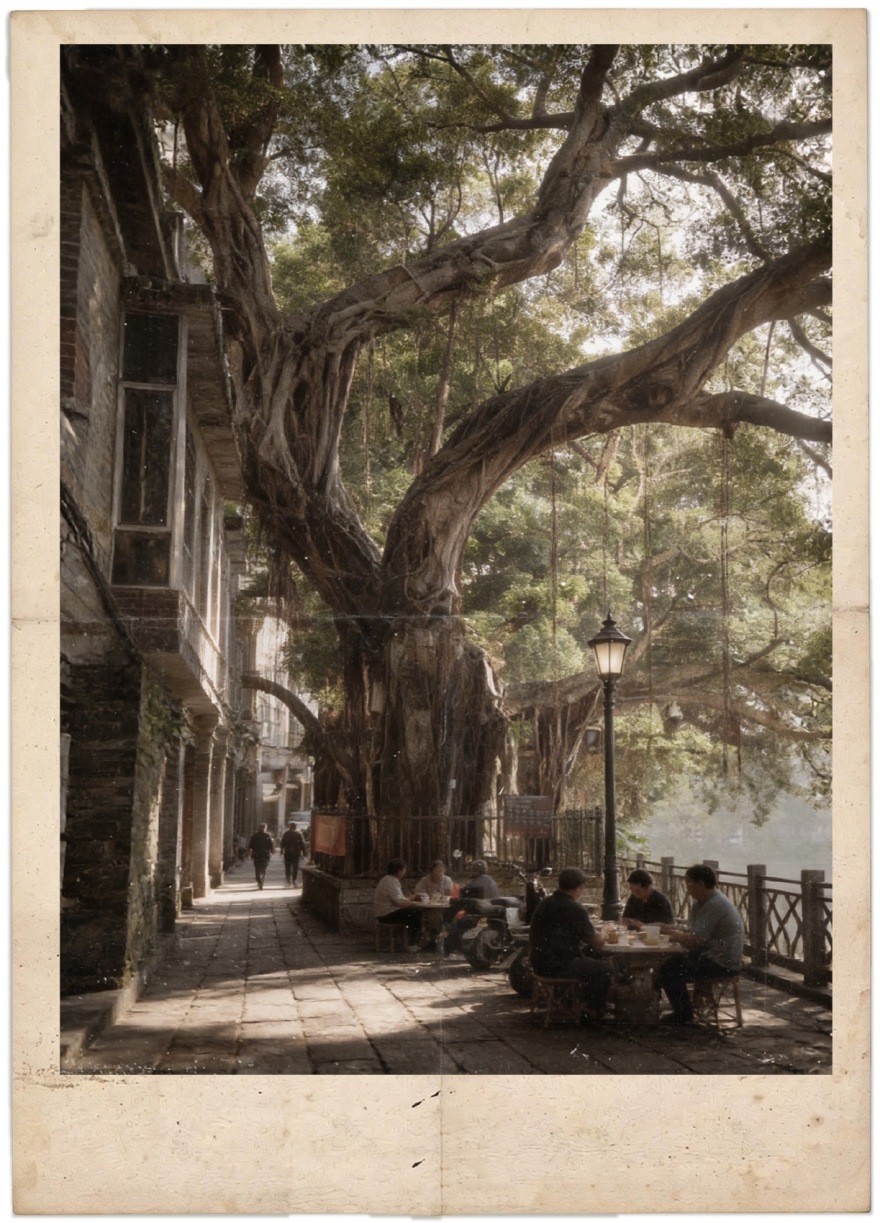
相比鳞次栉比的繁华都市,广州以其厚重的市井文化与闲适的生活底色,包容着往来于此的每一个人。对老广而言,“茶”远不只是一杯饮品,它早已融入日常场景:村口榕树下的闲话叹茶、茶楼里氤氲的早茶、药铺中的消暑凉茶,老巷里街坊围坐的功夫茶,公园晨练后歇脚的一壶清茶,处处体现这座城市松弛务实的生活哲学。
▼历史背景,historical background© 立品设计

In contrast to the relentless pace of the modern metropolis, Guangzhou is defined by a soulful, laid-back pragmatism rooted in its vibrant street life. For the Lao Guang (local residents), tea is more than a beverage; it is a ritual woven into the everyday—from idle chatter under banyan trees to the steam-filled dim sum halls and the cooling herbal brews of local apothecaries.
▼概念生成,concept generation © 喜茶

立品设计以此为叙事起点,并与喜茶共同提炼广府文化特色元素 “竹”——如喝早茶的蒸笼、祛暑的凉席、蒲扇等——转译为空间语言,以竹编为媒介,塑造贯穿空间的核心印记。在喜茶广州沙面DP店中,借由这一在地性的设计表达,演绎竹荫下的茶事场景。▼手绘,sketch © 立品设计

Leaping Creative takes this narrative as a starting point, collaborating with HEYTEA to distill “bamboo”—a quintessential element of Cantonese life found in steaming baskets and summer mats—into a spatial language. By using bamboo weaving as a medium, the designers have created a core spatial signature that reinterprets the timeless scene of enjoying tea under a cool canopy.
▼入口,entrance © 喜茶

建筑外立面完整保留沿用原外立建筑,鹅黄色外墙与古建原柱在阳光下交织出浓郁的复古质感,沉稳而庄重。未入其室,竹的意象便已在建筑外侧悄然显露。立品保留了原建筑的装饰细节,将喜茶标志性的LOGO置于藤编包裹的正方体灯箱之中,温暖的灯光与老建筑的年代感彼此呼应,相得益彰。
The original facade remains meticulously preserved, its pale ochre walls and classical columns casting a rich, vintage texture under the sunlight. Before even entering, the presence of bamboo quietly emerges. Leaping Creative has integrated the iconic HEYTEA logo into a cubic lantern of woven rattan, nestled within the original architectural details. The warm glow creates a harmonious dialogue between the weathered masonry of the past and a curated, modern aesthetic.
▼室内概览,overview of the interior © 喜茶
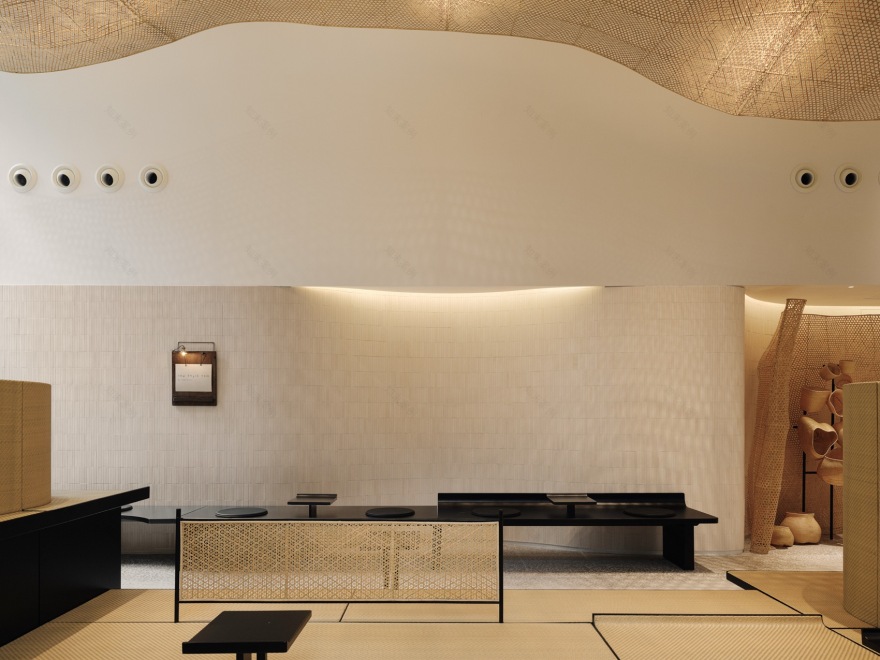

西形东韵 岭南文化新语
Western Form, Eastern Soul
西式建筑外壳之下,蕴藏着东方的茶禅内核,立品以日常生活的场景为切入点,还原材料的质感,以悉心呈现当地风物人文,重构兼具在地性与现代感的品牌空间。松弛务实的“老广生活哲学”贯穿于此,感官体验被悄然重塑,仿佛瞬间置身于榕树头下闲暇、放松、有质感的慢时光。
Beneath the Western architectural shell lies an Eastern core of “Tea-Zen.” Leaping Creative uses vignettes of daily life to reconnect with the raw materiality of the region, reconstructing a brand space that is both grounded in local context and sharply modern. The relaxed pragmatism of Cantonese life permeates the interior, recalibrating the senses and transporting visitors to a “slow time” reminiscent of afternoons spent lingering beneath a village banyan tree.
▼门店中心的客座区,seating area at the heart of the store © 喜茶

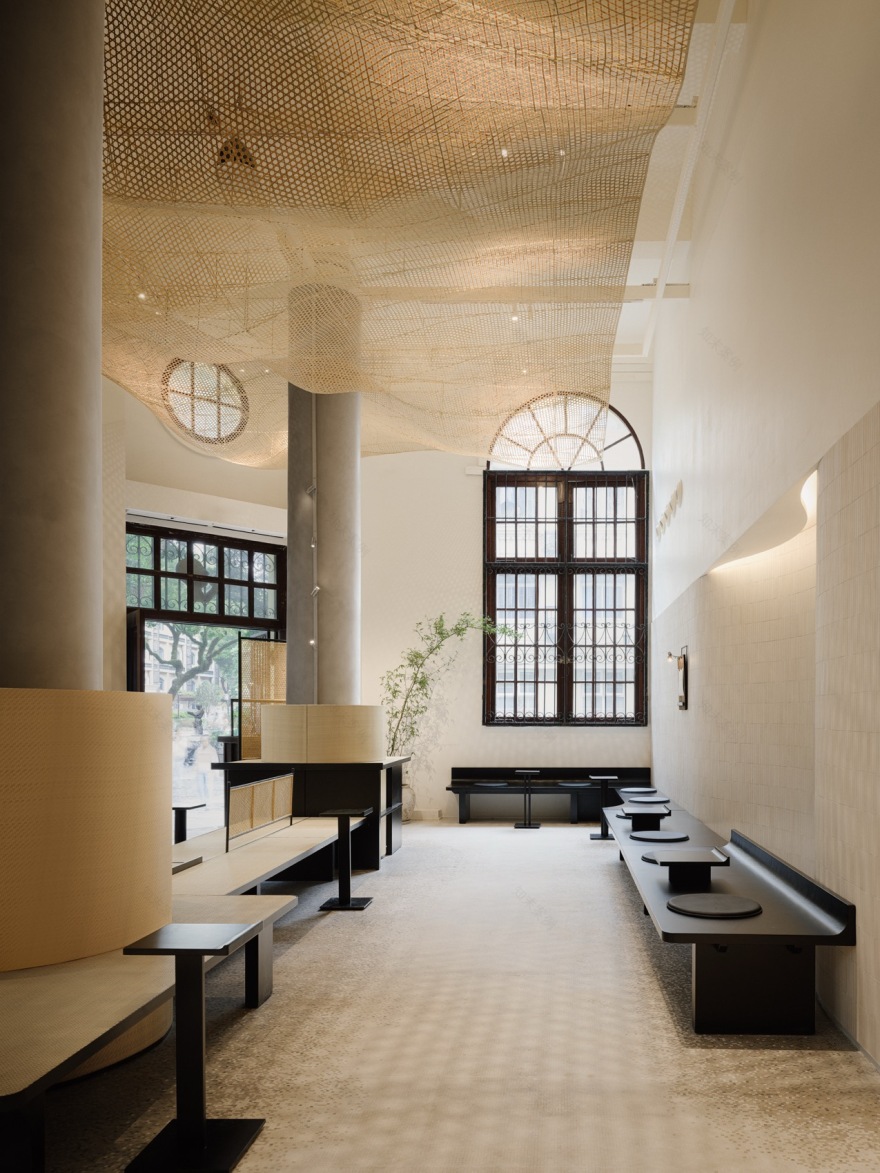

240小时手工编织 造一片榕树下的光影
240 Hours of Hand-Weaving
步入店内,视觉焦点瞬间被顶部的巨型装置所吸引——这是立品向“非遗传统工艺”的一次致敬。从广府饮茶场景中最寻常的“竹编”元素出发,将其作为空间表达的核心载体,在当代语境中演绎这一古老手工艺的别样生机。
The visual centerpiece is a massive, handcrafted installation—a tribute to Intangible Cultural Heritage. By elevating the humble bamboo weave into a contemporary spatial vessel, the studio breathes new life into this ancient craft.
▼客座区,seating area© 喜茶
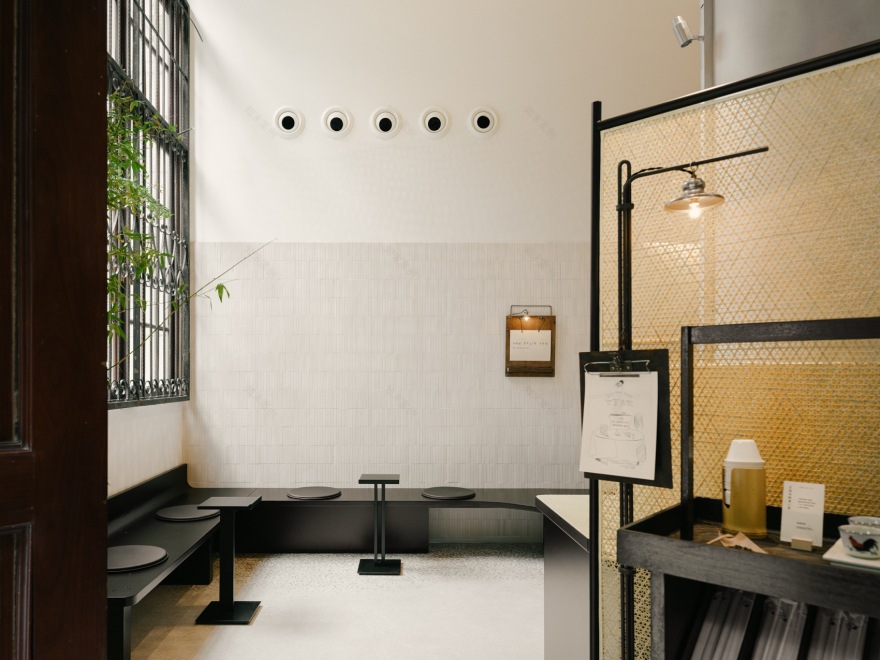
▼客座区细部,seating area details© 喜茶
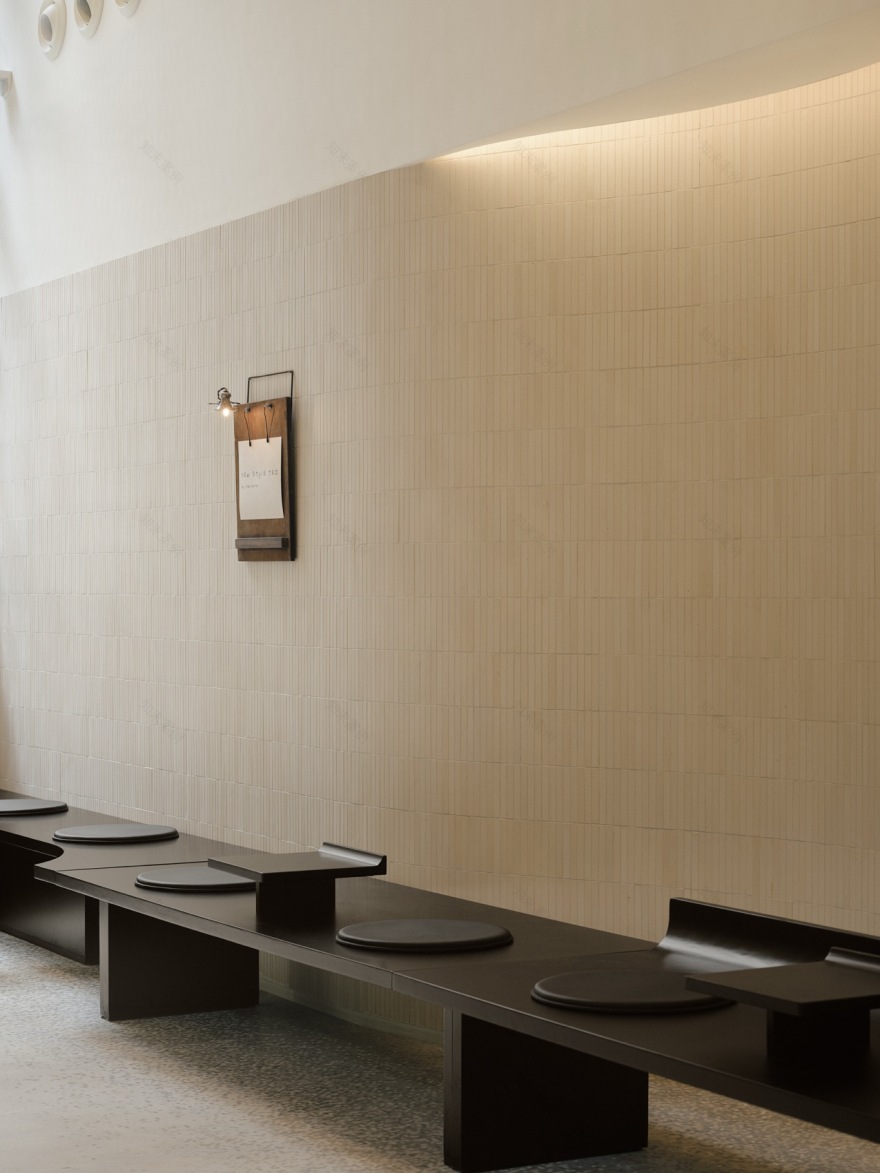
▼手艺人们在现场竹编,Artisans are weaving bamboo on the spot© 喜茶

为最大程度保护原历史建筑的完整性,立品团队采用立面包墙的做法,在新增墙体内置入天花支撑钢架结构,以空间内的两根大立柱为主要受力点,完成竹编天花的吊挂与灯具的安装。门店中心的客座区,以传统的“竹榻”为灵感原型,与顶上的竹编元素遥相呼应,纳凉弈棋趣,聊闲话家常,营造“大树底下好乘凉”的快活闲适。当灯光透过疏密有致的竹编纹理倾泻而下,光影被切割成斑驳的碎片,仿佛将整间门店搬到了榕树荫下。光影流转之间,与地面细密渐变的手工马赛克交织出丰富的空间层次,置身其中,仿佛能感受到那种“无事闲坐,饮茶听风”的自在意境。
▼结构图,structure© 立品设计

To ensure the structural integrity of the historic site, the team engineered an internal wall system to house a hidden steel frame, using the two existing columns as primary load-bearing points for the suspended ceiling. At the heart of the store, the seating area—inspired by traditional bamboo daybeds—mirrors the textures above, evoking the breezy ease of “good shade beneath a generous tree.” As light filters through the rhythmic weave, it fractures into dappled shadows, as if the entire store were tucked under a sprawling banyan grove, creating a rich, layered atmosphere of “sitting in stillness, drinking tea, and listening to the wind.”
▼竹编天花的吊挂与灯具,The hanging of the bamboo-woven ceiling and the lamps© 喜茶


▼马赛克地砖细节图,Mosaic floor tile detail drawing© 喜茶

新旧相融 找寻平衡的支点
A Fulcrum Between Eras: Finding Balance in the Details
在动线布局与场景设计上,立品同样在寻找传统与现代的平衡点。入门处半米高的木柜,装着一盅两件的温热与街坊温情。斜阳映入,空间徜徉在竹编屏风泻下的闲逸中,仿佛让人回到那个记忆中的年代。
In both spatial flow and scenic design, Leaping Creative sought a delicate equilibrium between the traditional and the contemporary. At the entrance, a waist-high wooden cabinet evokes the “Yat-bou-leung-gin” (One pot, two pieces) warmth of neighborhood teahouses. As the afternoon sun slants in, the space basks in the leisurely shadows cast by bamboo screens, a scene that feels like a deliberate pull on the heartstrings of memory.
▼木柜,wooden cabinet © 喜茶

▼竹编屏风,bamboo screens © 喜茶


茶叶闻香装置和茶具有序陈列在旧家具改装过的柜台中,新旧交融之间,既保留了岁月的痕迹,也赋予了空间新的使用可能。吧台打造成草本茶铺的模样,结合广式凉茶的养生特色,营造独特的茶文化氛围。后方竹编百子柜则选用可回收的旧柜拉环进行组合,细节之处,再次强化空间记忆。
A collection of tea-scent diffusers and artisanal ware is arranged across counters repurposed from vintage furniture. This fusion preserves the “patina of years” while granting the space a new functional life. The service bar is modeled after a traditional herbal apothecary, leaning into the wellness-focused heritage of Cantonese cooling teas to create a singular cultural atmosphere. Behind it, a “hundred-drawer” cabinet—the iconic chest of the Chinese pharmacist—is detailed with recycled vintage pulls, a quiet reinforcement of the site’s historical layering.
▼百子柜,”hundred-drawer” cabinet © 喜茶

▼吧台,service bar © 喜茶

▼吧台细部,service bar details© 喜茶

墙砖模拟竹席的纹理,纵横交织,触手生凉。角落堆叠的竹编篓子装置,仿佛刚从茶山采茶归来,带着悠然的香气重现朴素温暖的制茶场景。
Even the walls participate in the narrative: tiles mimic the interlocking weave of a bamboo mat, cool to the touch. In the corner, a stack of woven baskets looks as if it were just brought in from a hillside harvest, a rustic installation that recreates the simple, fragrant warmth of a traditional tea-making workshop.
▼竹编篓子装置,a stack of woven baskets © 喜茶

▼一角,a corner© 喜茶

写在最后
Conclusion
在地的表达,从不是简单复刻或挪用传统,而是在品牌的语境里,用当下的语言重新读懂一座城。从榕树浓荫下的悠然闲适,到老茶楼竹器间的温润日常,以当代设计回应着这座城市最朴素也最动人的生活哲学 —— 大树底下好乘凉。用我们的心意,与喜茶一同献给老广。
Local expression is never about simply replicating or appropriating tradition, but about reinterpreting a city through a contemporary language within the brand’s context. From the leisurely ease beneath the dense shade of banyan trees to the gentle everyday life among bamboo furnishings in old teahouses, the design responds through a contemporary lens to the city’s most simple yet moving life philosophy — “it is good to rest in the shade of a big tree.” With our sincerity, we present this together with HEYTEA to the people of Guangzhou.
▼总平面,master plan © 立品设计

项目信息
项目名称:HEYTEA喜茶广州沙面DP店空间设计
项目地点:中国 广州
项目面积:125㎡
空间设计:立品设计、上海室内装饰(集团)有限公司
设计总监:郑铮Zen
设计策划:陈常CC
空间设计:周琼玮Zoe、彭健、陈嘉睿
项目管理及后期:容海琪、黄嘉明、罗叶荣、赵文锴、余柏泉
推文视觉:纪喆铭、姚诗媛
推文编辑:马君琳
Project Information
Project name: HEYTEA Shamian DP Store Spatial Design in Guangzhou
Project Location: Guangzhou, China
Project Area: 125㎡
Design: Leaping Creative、Shanghai Interior Decoration (Group) Co., Ltd.



南京喵熊网络科技有限公司 苏ICP备18050492号-4知末 © 2018—2020 . All photos and trademark graphics are copyrighted by their owners.增值电信业务经营许可证(ICP)苏B2-20201444 苏公网安备 32011302321234号
苏公网安备 32011302321234号客服
消息
收藏
下载
最近