

创作上传
VIP
收藏下载
登录 | 注册有礼
查看完整案例

收藏

下载

分享

翻译

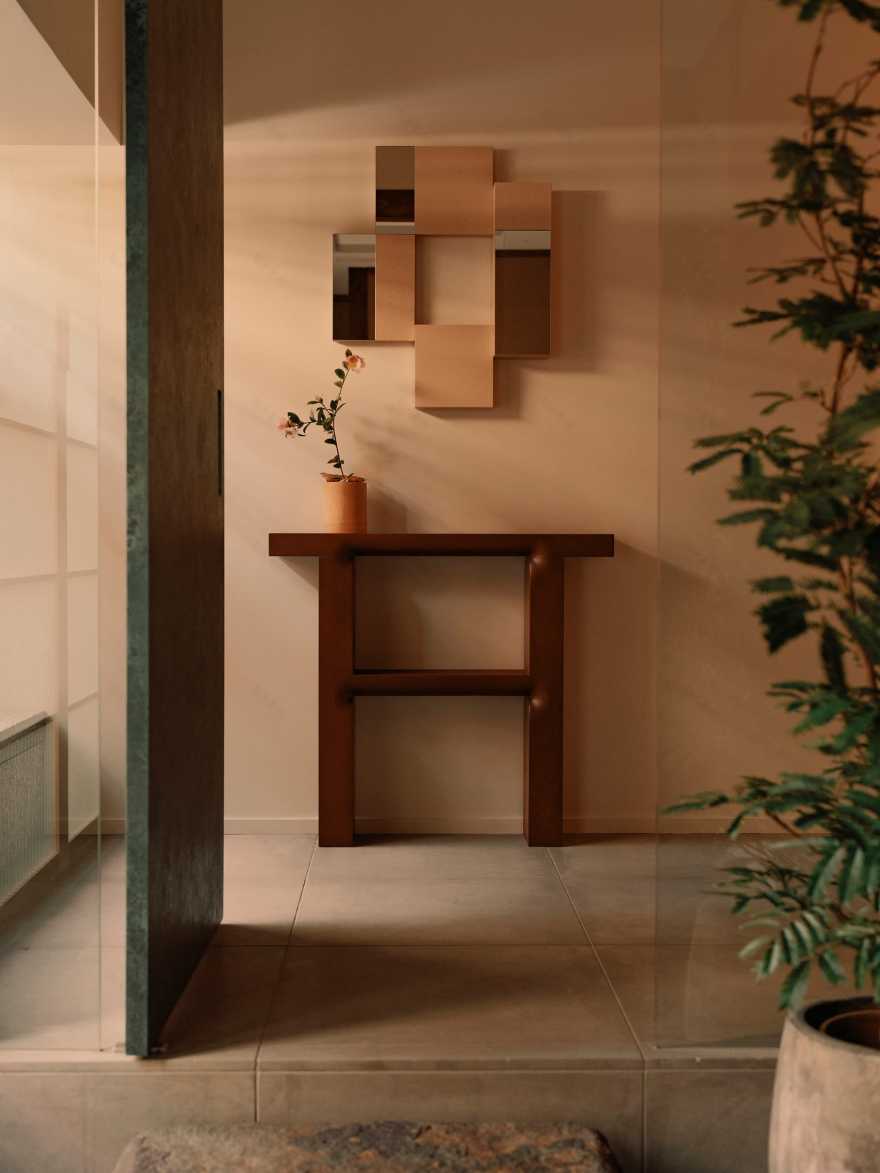




Nice Projects feel like a permanent fixture on our pages, and for good reason—their work is brilliant. Always sharp, poignant, singular, but never overdone. For the Artificial Life (ALife) Institute in Kyoto, the London and Sydney-based studio has delivered their first project in Japan, and it’s a beauty. Housed within a renovated teahouse in the historic Gojo district, this 145-square-metre research lab for scientists exploring artificial life is simultaneously radical and respectful of its context.
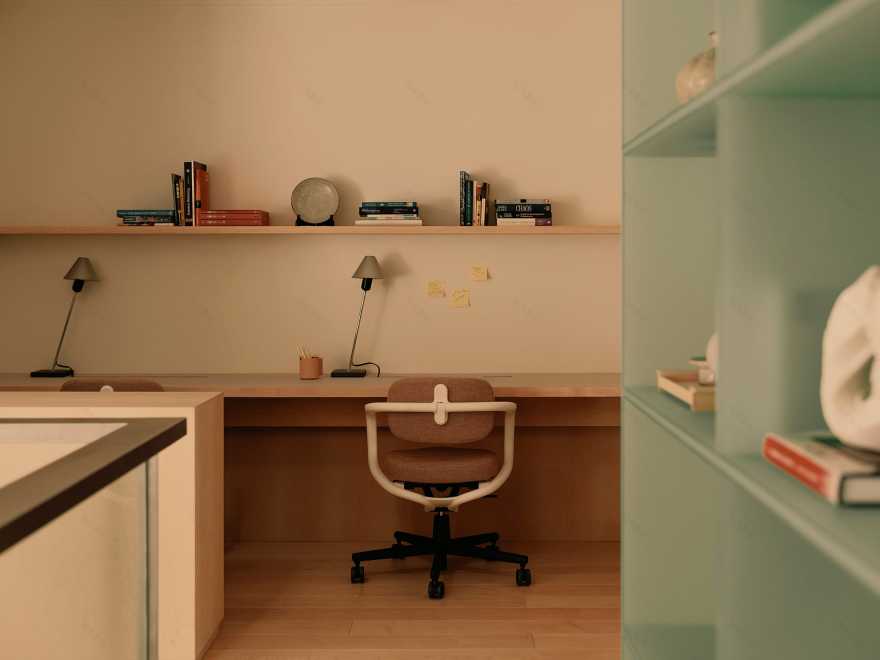
The brief was far from straightforward. The ALife Institute—commissioned by the Yamauchi Foundation—brings together researchers working at the intersection of science and art, seeking to translate biological processes into mathematical principles of intelligence. They needed a workspace that could host everything from focused individual work to team conferences, and critically, one that inspired new ways of thinking.
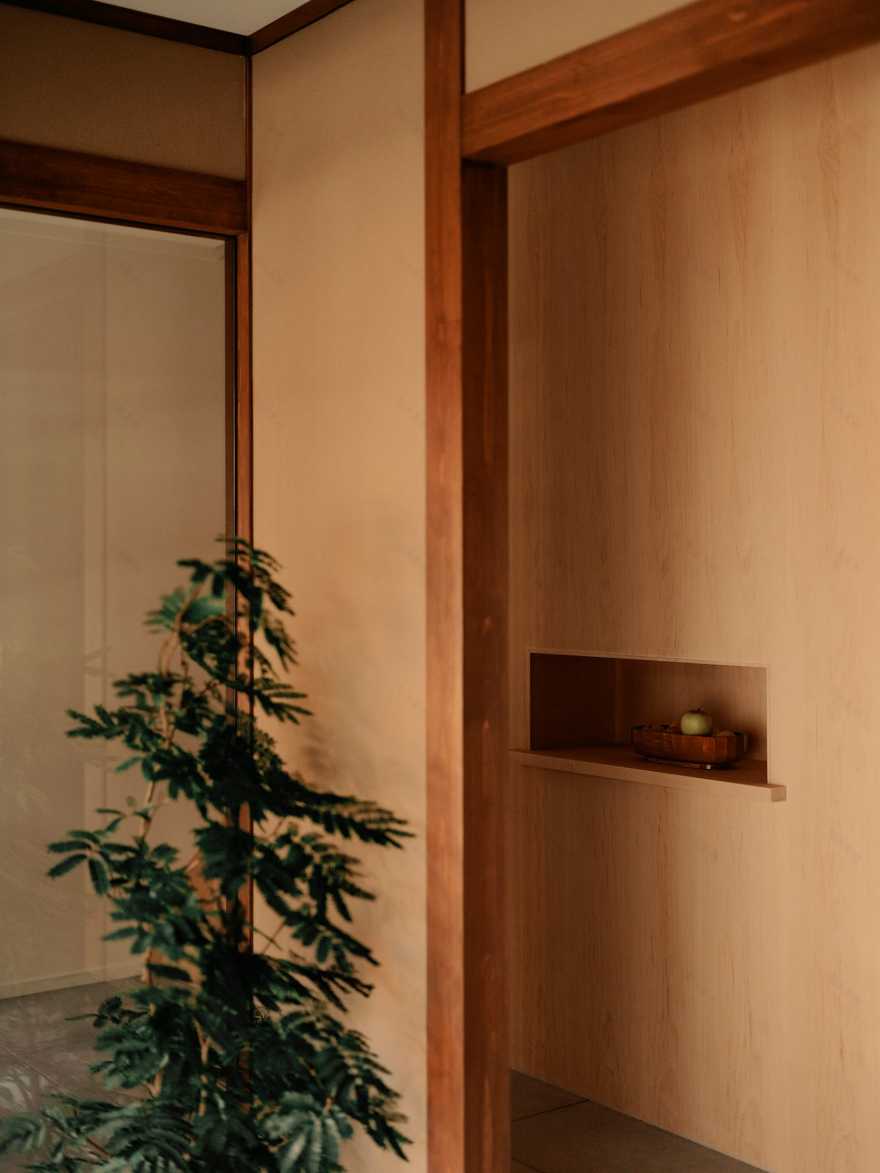
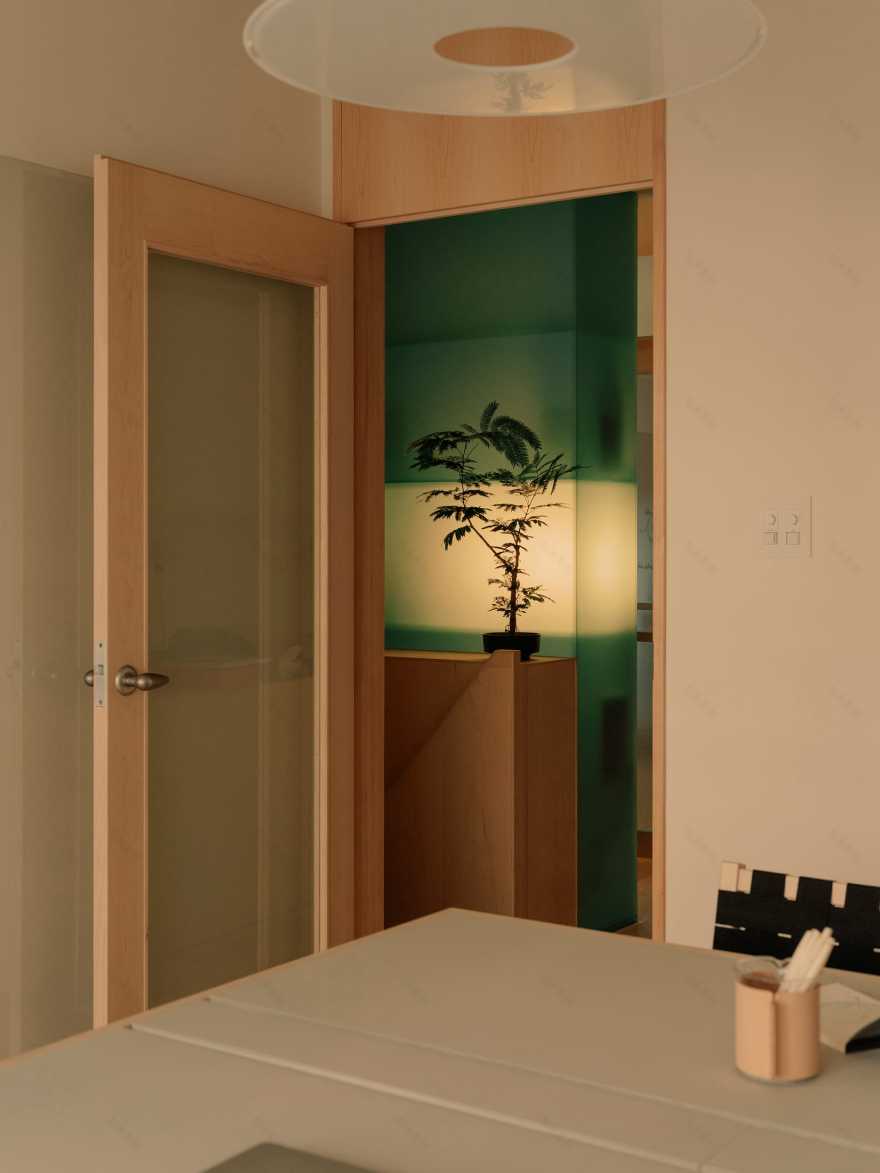
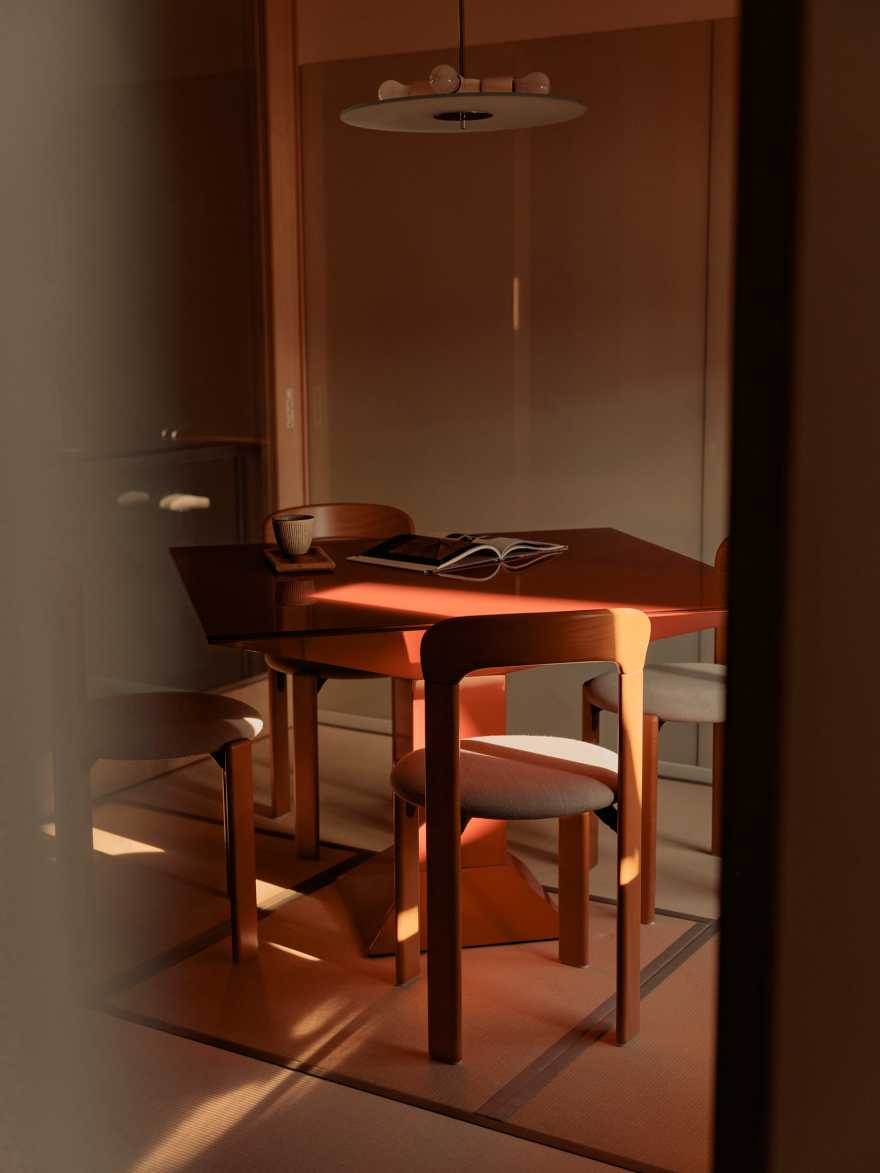
“This is an intriguing and flexible space that offers a home for research and for new ways of thinking,” says co-founder Sacha Leong. It’s an understatement. Nice Projects devised a strong material palette that offsets contemporary materials with traditional Japanese teahouse vernacular—tatami mats and granite sitting alongside translucent polycarbonate panels and oxidised copper. The design contrasts a typically neutral Japanese colour scheme with bold moments of red and green, grounding the space in tradition while giving it a distinctly contemporary energy.
The building’s historic facade has been carefully preserved to blend with the neighbourhood, with only a narrow window hinting at what lies beyond. Sliding hinoki cedar screens reveal the entrance lobby, where a sculptural stone and bamboo chōzu-ya creates a moment of pause—visitors are invited to remove their shoes, as in a traditional Japanese home. “We tried to make the research lab feel more like a home than an office,” adds Leong.
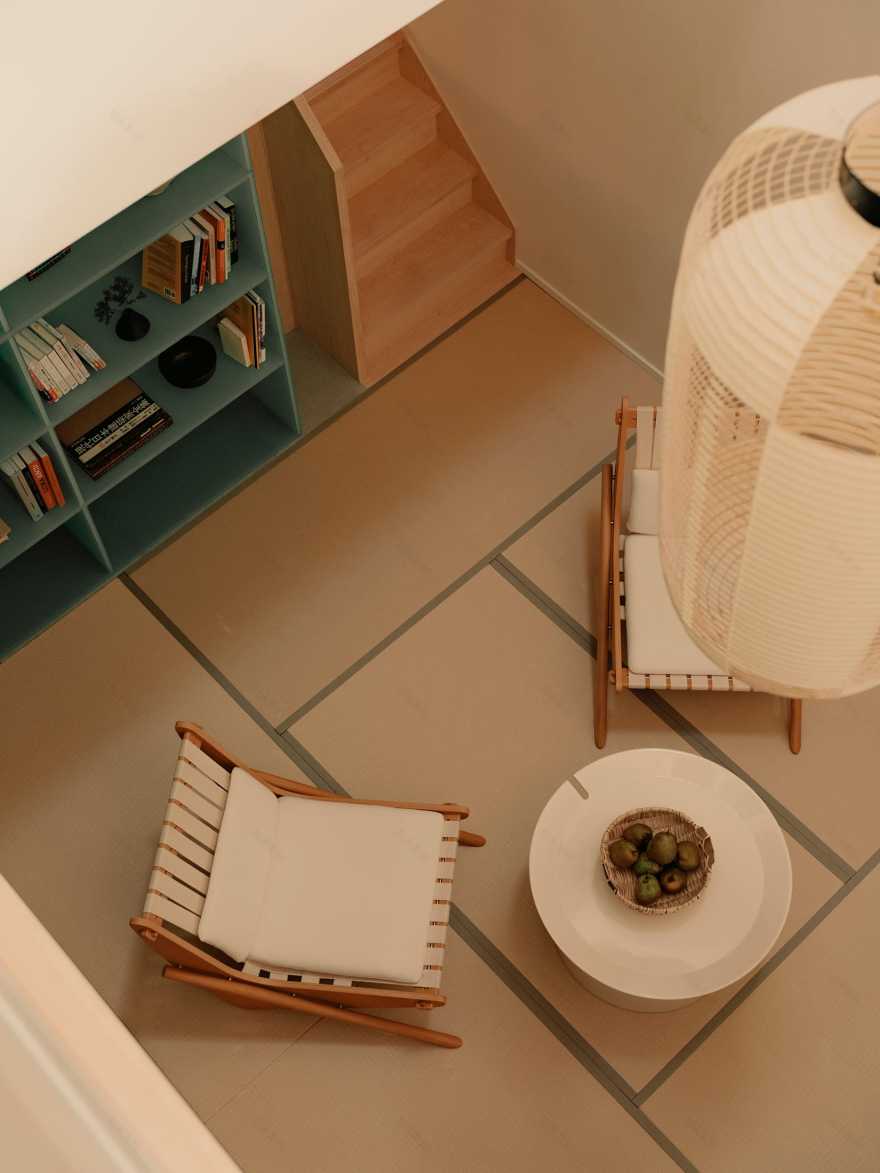
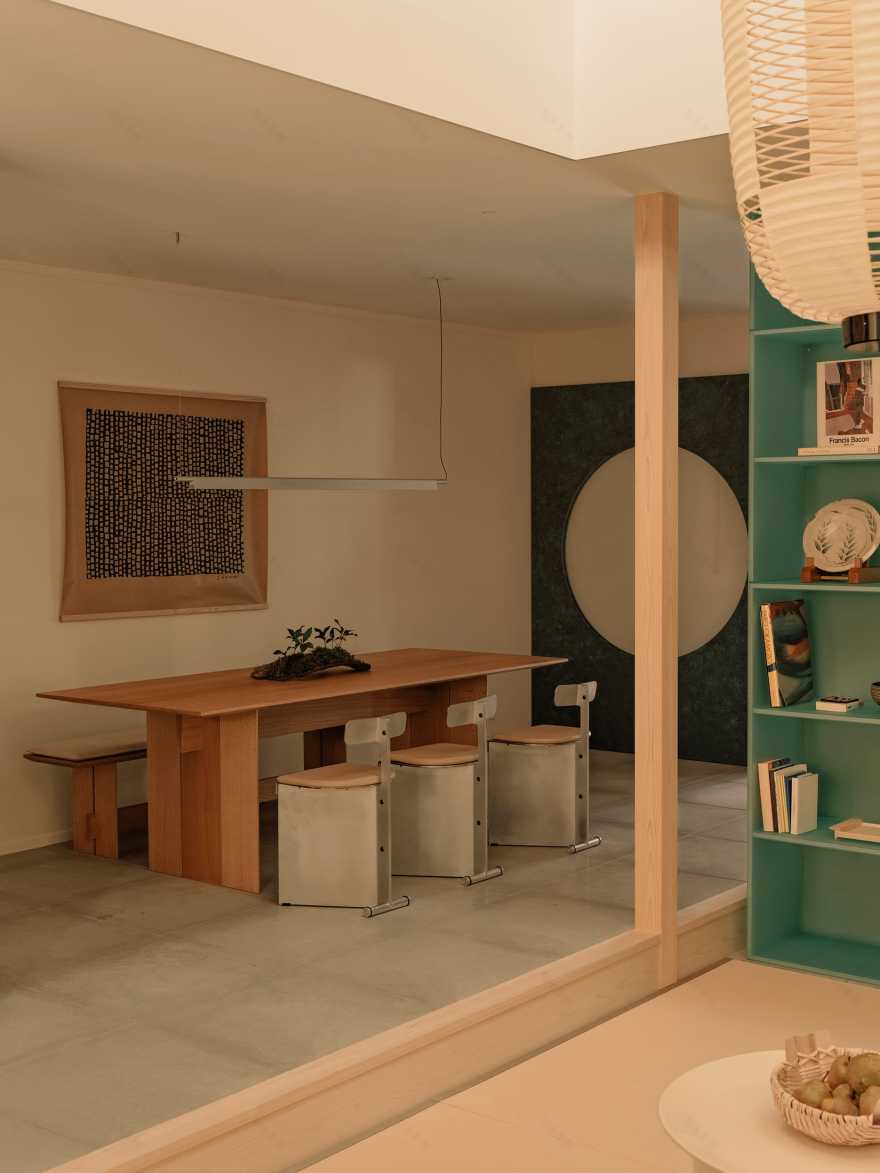
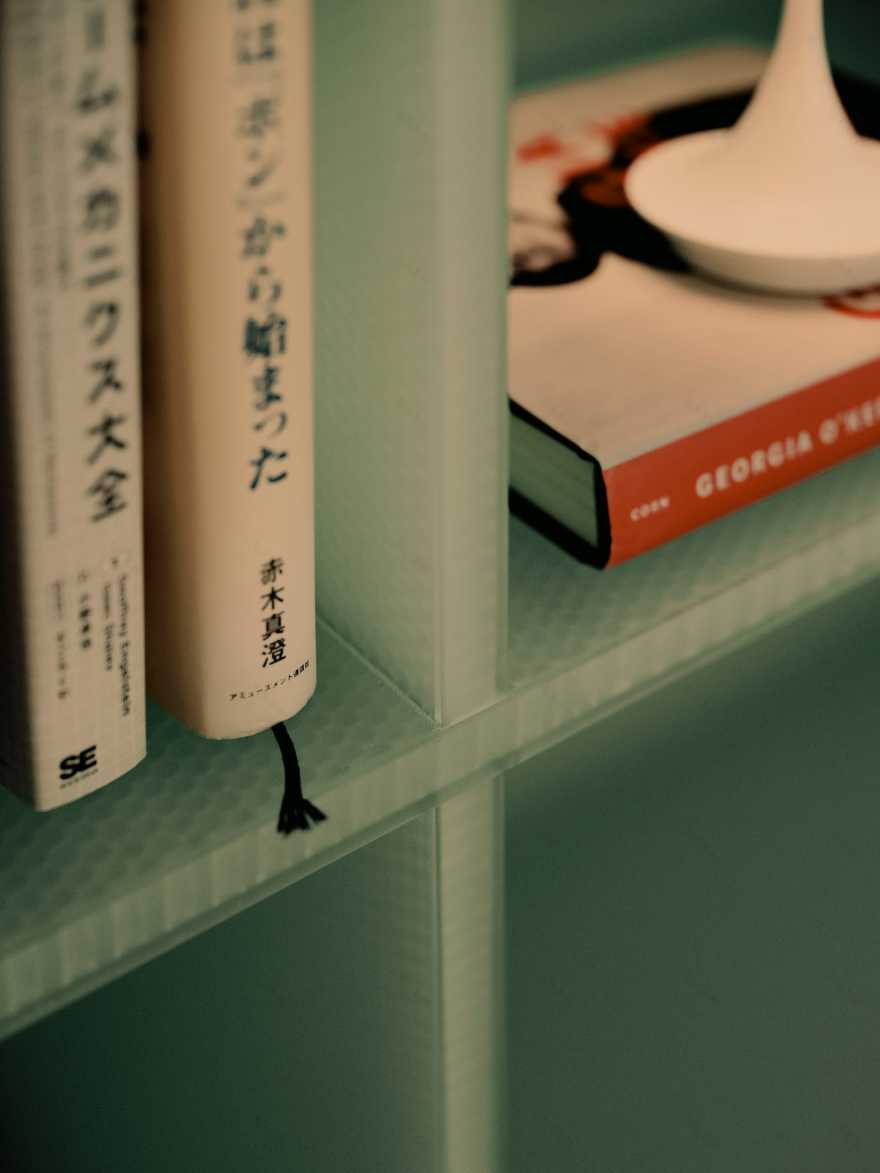
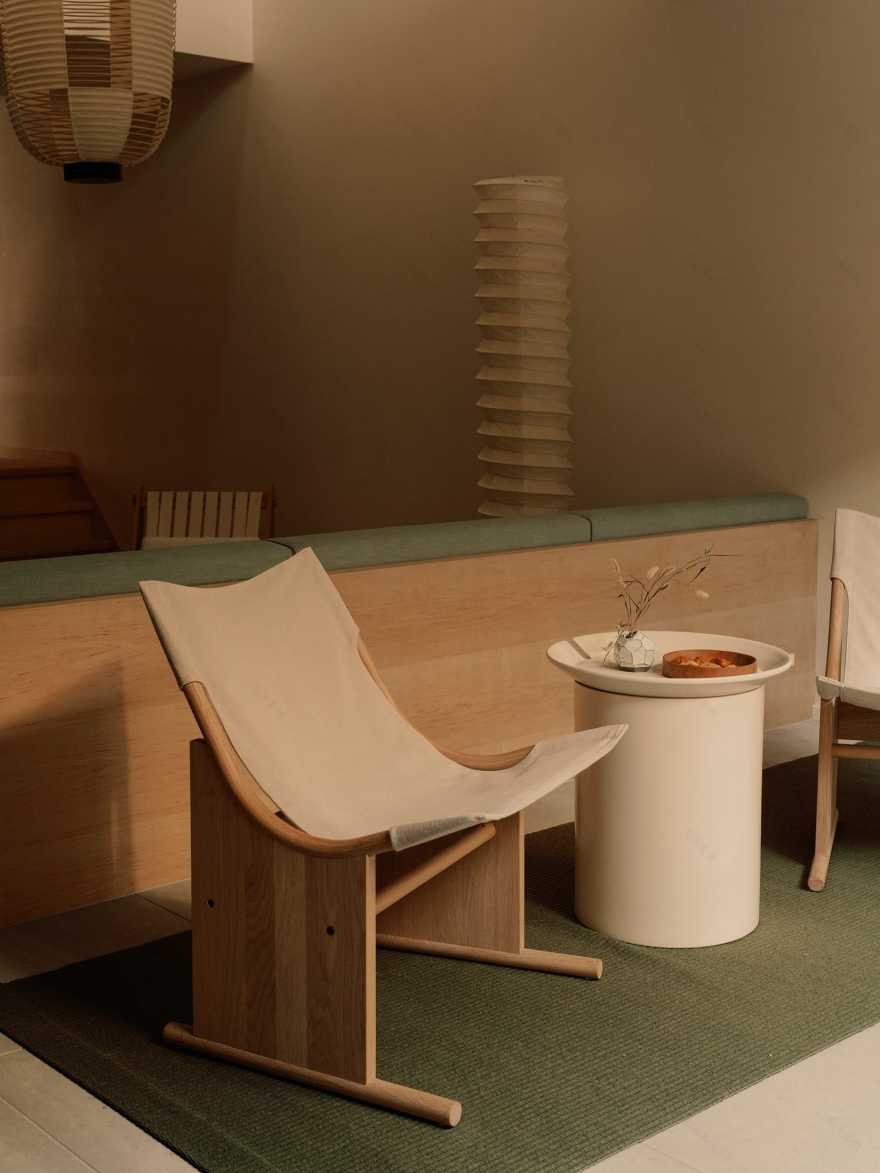
At the heart of the ground floor, a double-height atrium houses a striking 5.4 metre bookcase made from translucent Bencore polycarbonate panels, wrapped by a maple staircase. Suspended within the atrium is a custom paper lantern crafted by 11th-generation artisans at Kyoto’s Kojima-Shoten. The communal dining space features a backdrop print by Japanese artist Samiro Yunoki, while a sunken seating area pairs two Boomerang armchairs by Richard Neutra with an Akari floor lamp by Isamu Noguchi.
“Kyoto has some amazing craftspeople,” says co-founder Simone McEwan, “and this project gave us a great opportunity to work with them and to showcase traditional Japanese skills.” That celebration of local craft runs through every detail—from crystalline glazed tiles by A.a. Danto in the bathrooms (their patterns mimicking biological forms found in nature) to Osis boards by Llot Llov with handmade salt-and-dye finishes creating subtle organic patterns in the presentation room.
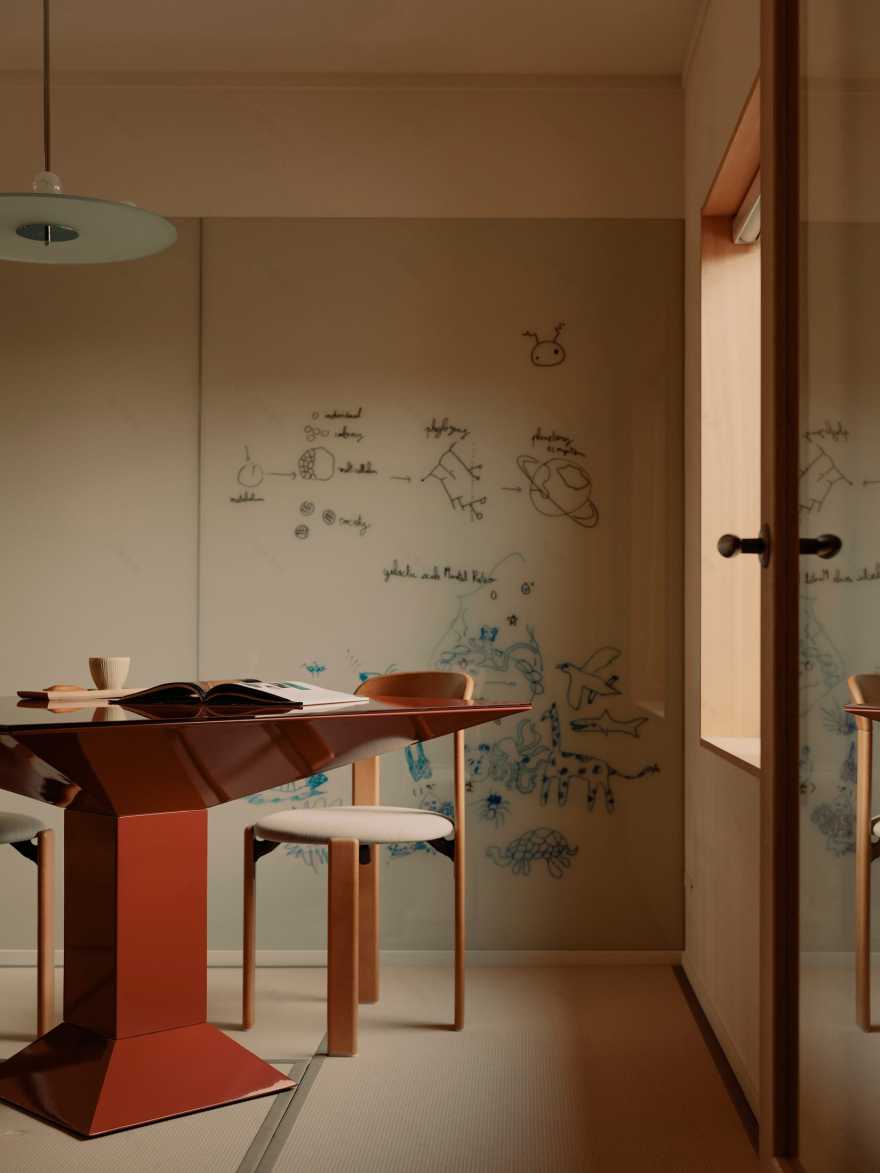
The second floor accommodates a variety of work spaces, including a meeting room featuring a table by Sottsass for BD Barcelona that opens to the atrium, and a meditation room clad in Hosoo fabric from Kyoto.
“The key for us was to create a warm, bright, exciting, inviting space that encouraged dialogue and exchange,” says Leong, ”and was conducive to collaboration and collective learning.” On every level, they’ve achieved exactly that.



[Images courtesy of Nice Projects. Photography by Edvinas Bruzas.]










南京喵熊网络科技有限公司 苏ICP备18050492号-4知末 © 2018—2020 . All photos and trademark graphics are copyrighted by their owners.增值电信业务经营许可证(ICP)苏B2-20201444 苏公网安备 32011302321234号
苏公网安备 32011302321234号客服
消息
收藏
下载
最近