

创作上传
VIP
收藏下载
登录 | 注册有礼
查看完整案例

收藏

下载

分享

翻译
Architects:Filip Karl Edward Arkitektur
Area:95m²
Year:2025
Photographs:Ditte Auguste Mørkholt
Category:Houses
Design Team:Filip Karl Edward Arkitektur
City:Sjællands Odde
Country:Denmark
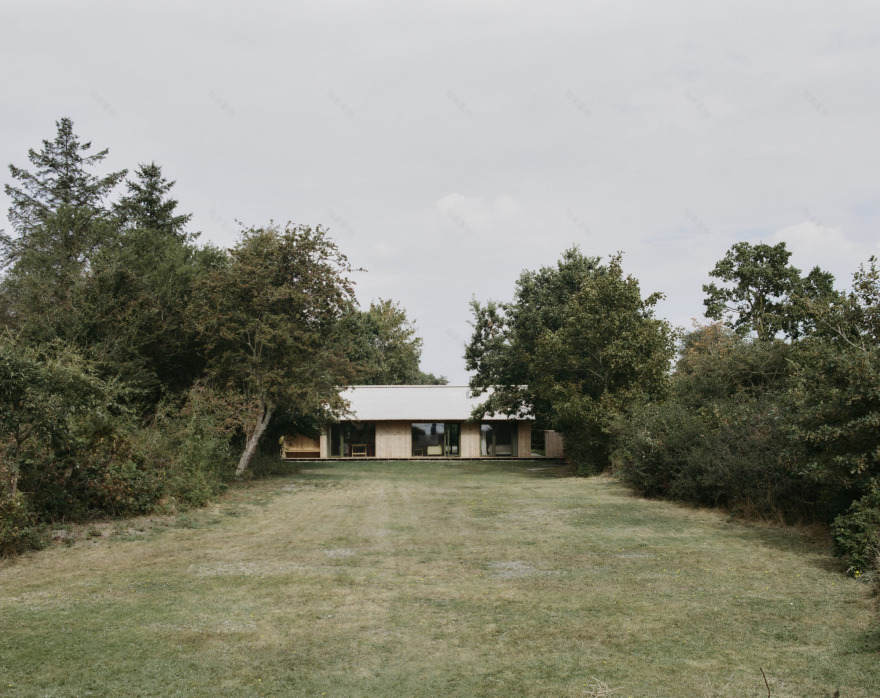
Text description provided by the architects. This vacation house is a "Less is Enough" project. The client's starting point was the need to build a new summer house that could accommodate the entire family, allowing them to spend the whole summer together in one place. Instead of prioritizing large spaces and maximum comfort, this compact house embraces the idea that it is only a summer house. The everyday standards of permanent living are intentionally left behind. Rather than spending the budget on maximizing square meters, the project focuses on investing in durable, sustainable materials and a thoughtful spatial concept.

The house is designed as a simple rectangular volume containing four bedrooms under one roof. Each room is oriented toward its own private corner of the surrounding landscape, giving every family member a sense of intimacy and retreat while still sharing the same structure. The compact plan encourages closeness and interaction while maintaining small pockets of privacy.

In architectural discussions today, there is often a strong emphasis on the use of sustainable materials. However, an equally important aspect should be the willingness to imagine living with less space. This project explores that idea. In Denmark, a summer residence that accommodates this number of sleeping places would usually consist of a main house and a separate guest house, typically totaling between 150 and 200 square meters. By contrast, this project gathers everything within a smaller footprint and a single structure.


Because the house is intended as a seasonal retreat, a place that offers a change from everyday life filled with comfort and convenience, it can be argued that it does not require very much. Summer living naturally moves outdoors, and daily routines become simpler. The architecture, therefore, supports a more modest way of inhabiting space. The budget is not spent on expanding the building but on ensuring that the materials are long-lasting, natural, and environmentally responsible.

The house is constructed from locally sourced wood and insulated with wood fibre. The exterior facade is clad in Thermowood. Inside, the surfaces are finished with clay plaster and painted with lime paint, creating a breathable interior environment and a soft, natural aesthetic. In this way, the project suggests that sustainability is not only about the materials we build with, but also about how much we choose to build.

Project gallery


南京喵熊网络科技有限公司 苏ICP备18050492号-4知末 © 2018—2020 . All photos and trademark graphics are copyrighted by their owners.增值电信业务经营许可证(ICP)苏B2-20201444 苏公网安备 32011302321234号
苏公网安备 32011302321234号客服
消息
收藏
下载
最近