

创作上传
VIP
收藏下载
登录 | 注册有礼
查看完整案例

收藏

下载

分享

翻译
Architects:FANAF,Tens Atelier
Area:420m²
Year:2025
Photographs:half.half.photography,Ingallery
Category:Restaurant
Interior Design Team:Guo Ankey, Jiao Huimin
Architectural Design Team:Zhong Shaoqiu, Lu Yue, Wu Jiayu, Wu Jingyao
Clients:Cycle&Cycle
Consultants:Li Liang
City:Shaoxing
Country:China

Text description provided by the architects. The project site is located in the western mountainous area of Shangwang Village, Shaoxing, Zhejiang Province, hidden among bamboo groves and farmlands. The building was originally constructed in the 1970s as a rural auditorium supporting Nixon's visit to China, carrying a distinct historical background. In 2022, Cycle&Cycle acquired the usage rights to the building and commissioned FANAF to carry out renovation and reconstruction. After completing the initial updates to the building and landscape, the project was temporarily put on hold due to overall environmental changes. It was not until 2025, when the brand decided to transform it into a rural stone‑kiln workshop, that the project was restarted, with the interior redesign entrusted to Tens Atelier.
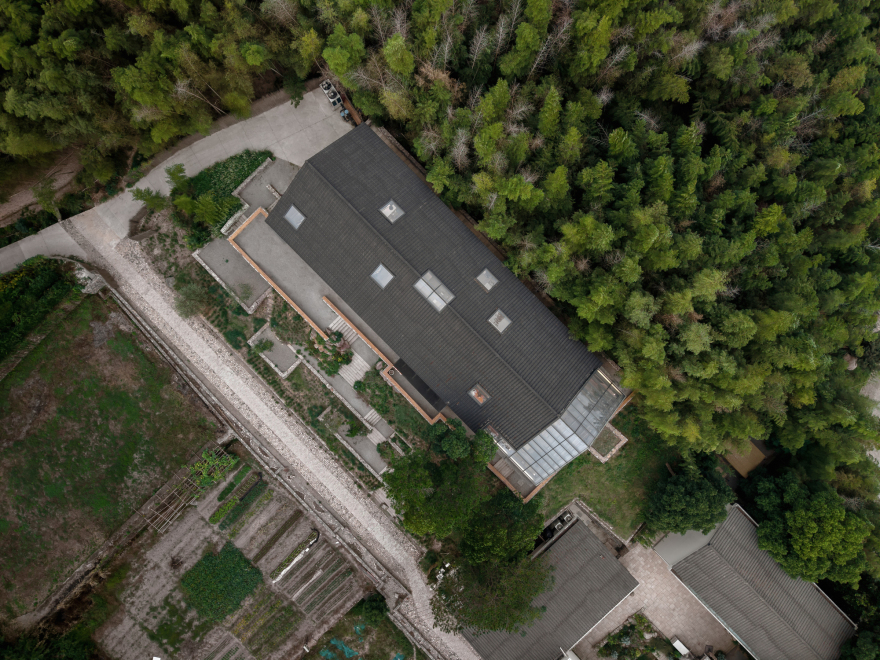

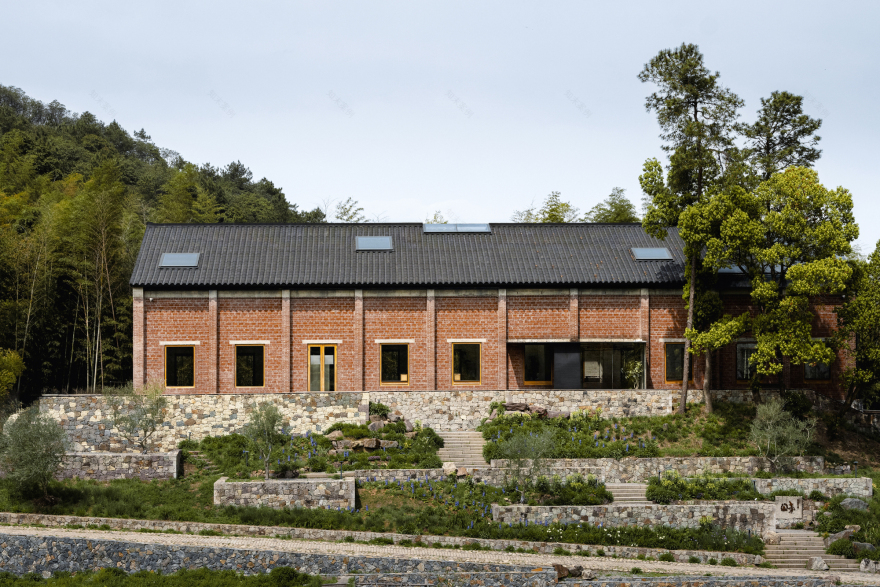
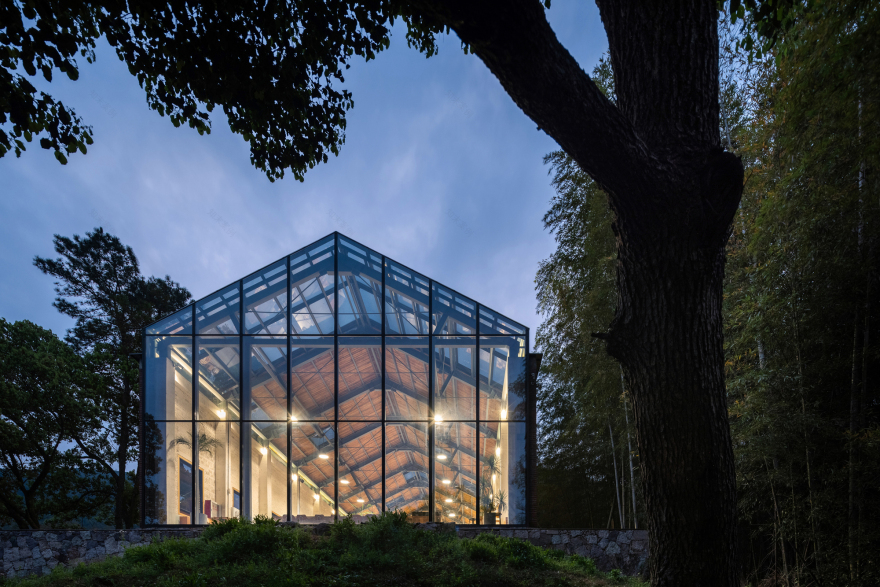
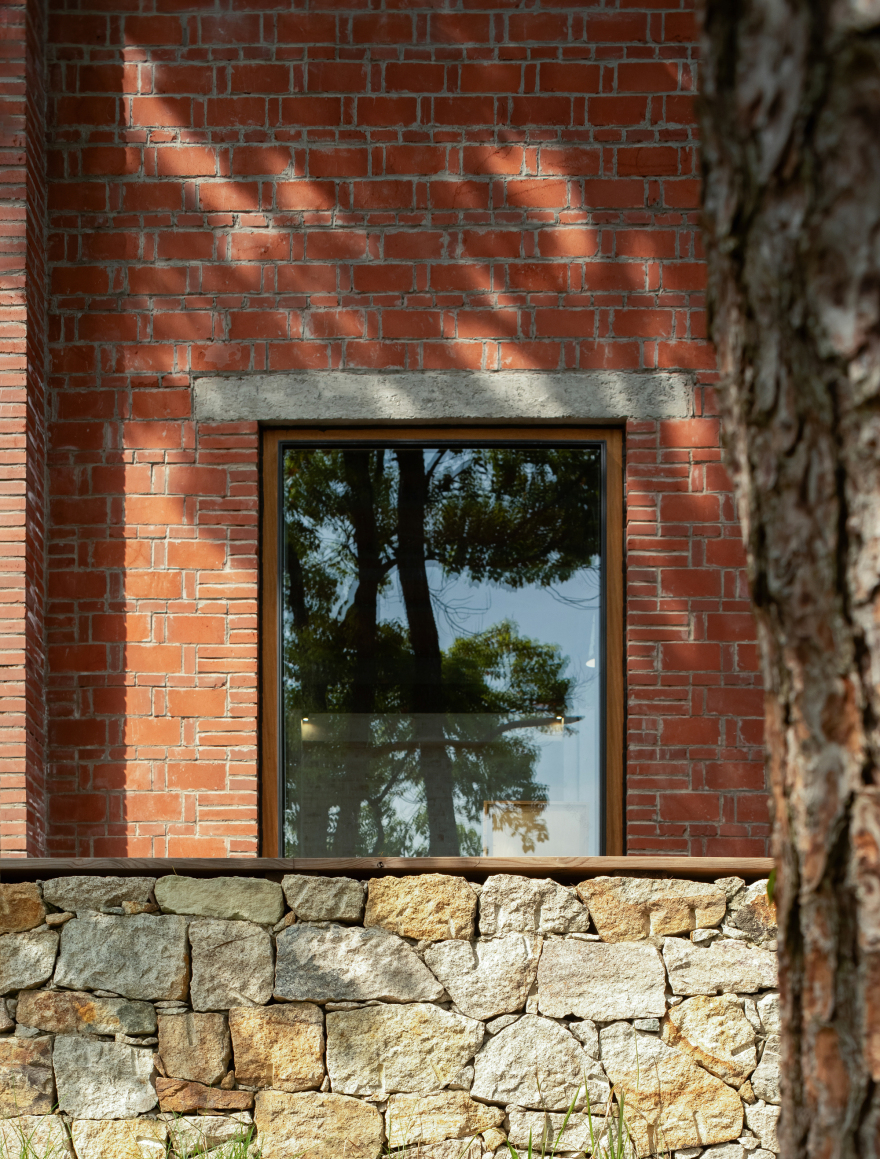
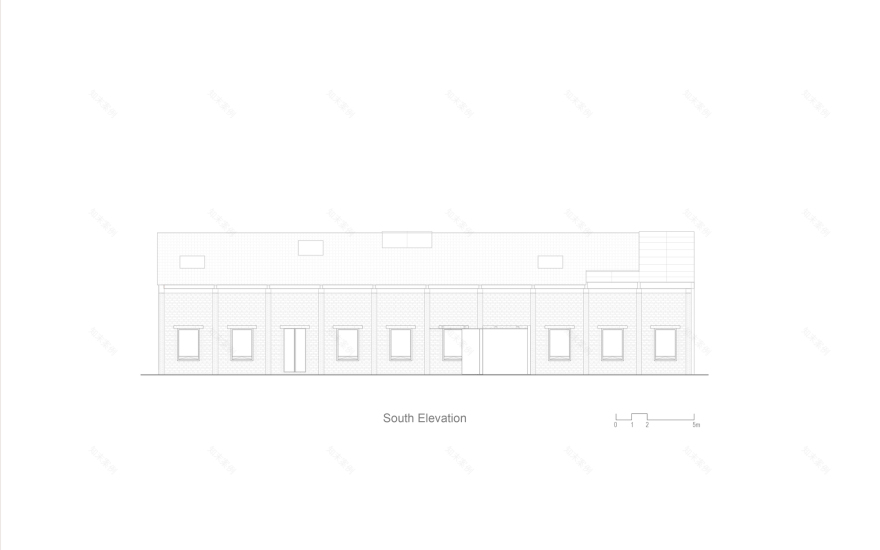
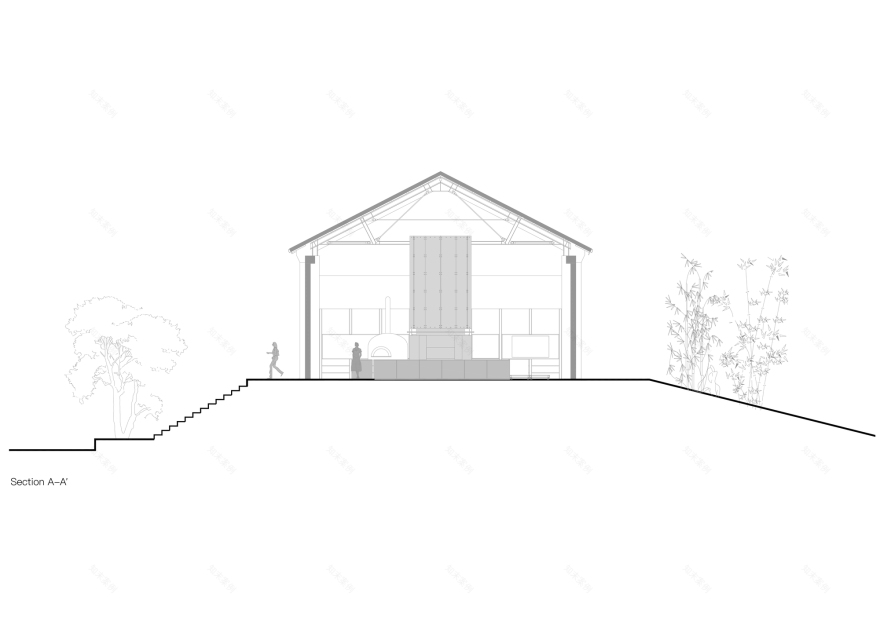
The building volume references the original auditorium. A combination of concrete frames and steel roof trusses is adopted to support the long‑span auditorium space. The walls are built with bricks using the local "rat‑trap bond" (hollow brick wall) technique, recreating the look and feel of the original auditorium. The arrangement of the steel truss members has been carefully considered, reflecting and interpreting the form of the original roof trusses. Skylights are installed on the roof to let sunlight pour into the hall, preserving the spatial memory of the old auditorium.

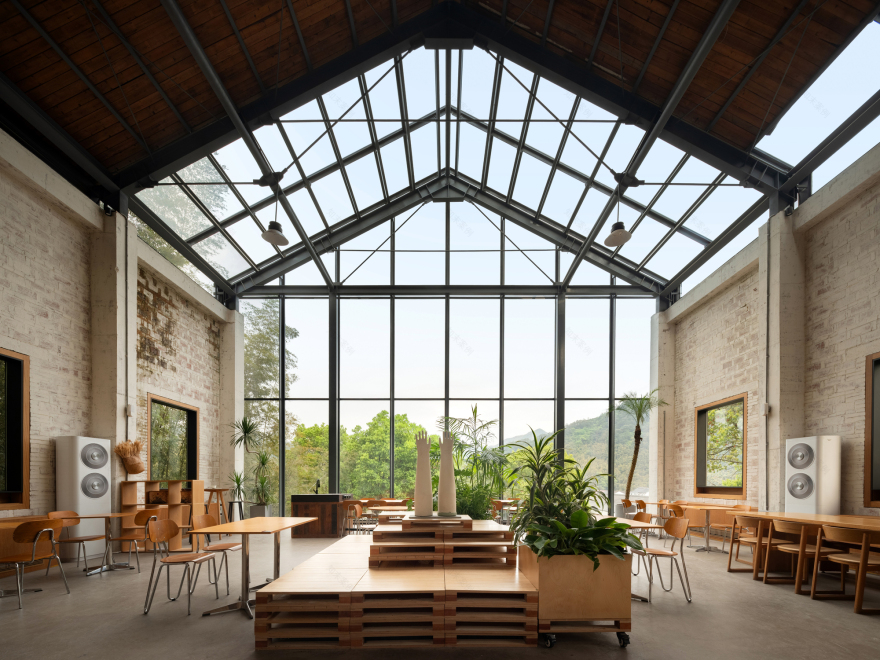
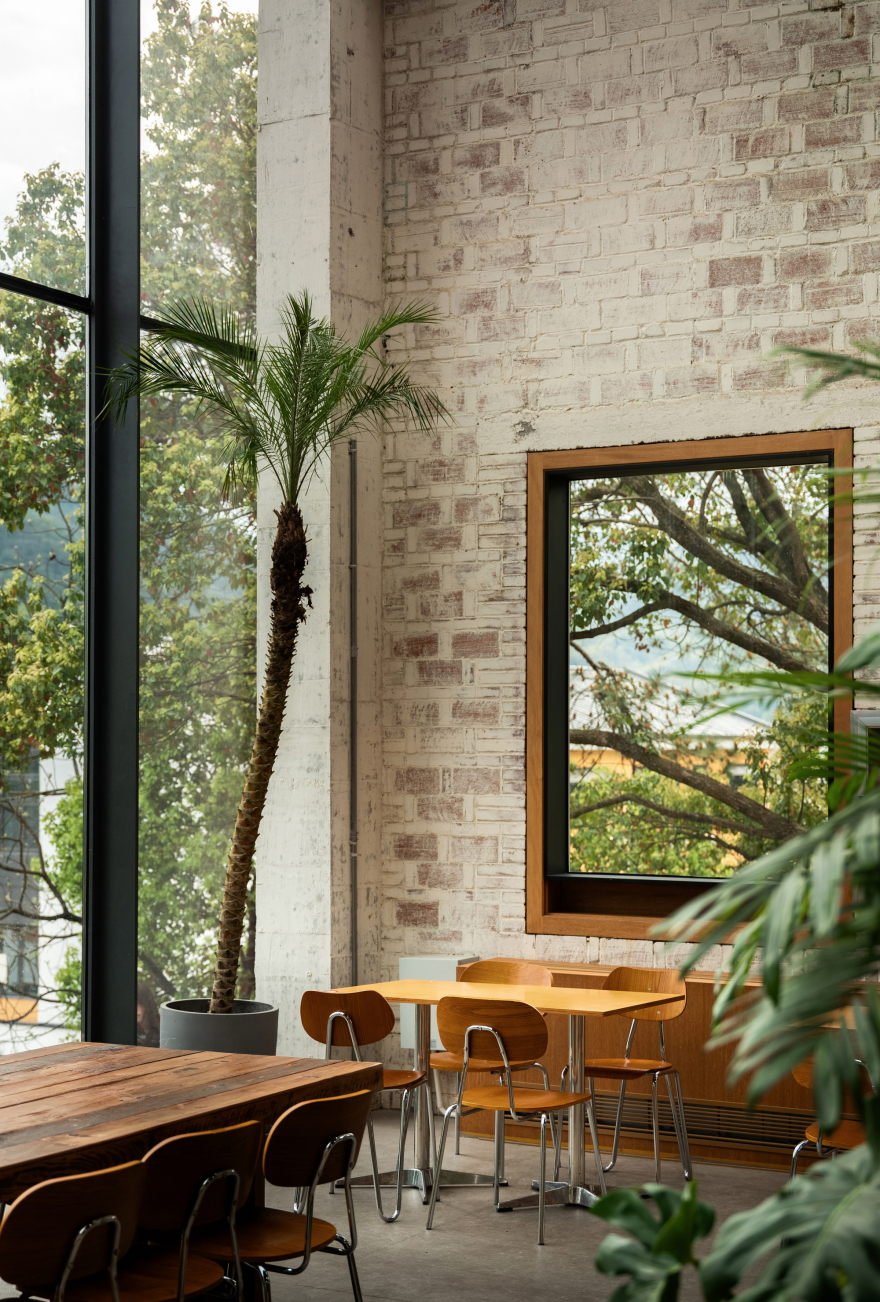
The design fully respects the surrounding environment and responds to it positively. The east side of the site offers an expansive view of the village and the beautiful mountain scenery. Therefore, a full glass curtain wall is adopted on the east facade, forming an interface open to the village. The other three facades face the bamboo forest and internal landscape; window openings in the brick walls balance spatial privacy with a sense of integration into nature, bringing the natural and rustic qualities of the countryside into the interior space.

The interior space is a large, partition‑free open area that was not originally designed for dining. The Client's original intention was to return bread to its rural roots and create a truly world‑class stone‑kiln bread house. Thus, the stone kiln became an indispensable piece of equipment. While preserving its essential meaning, the design reconfigures the scale by raising the oven to approximately six meters high, allowing it to extend through to the ceiling and transform into a spatial installation—shifting from mere "equipment" to a "visual focal point," making it the core highlight alongside the outdoor landscape.

In terms of the interior material strategy, the initial plan attempted to recycle old furniture and waste wood, combined with bamboo for on‑site construction. However, due to high costs and implementation difficulties, the approach eventually shifted to using standardized materials processed on site. Some furniture and installations are developed from wooden pallet modules and combined with cork yoga blocks to form movable stools, which meet functional needs while allowing for reuse, thereby extending the material lifecycle as much as possible.
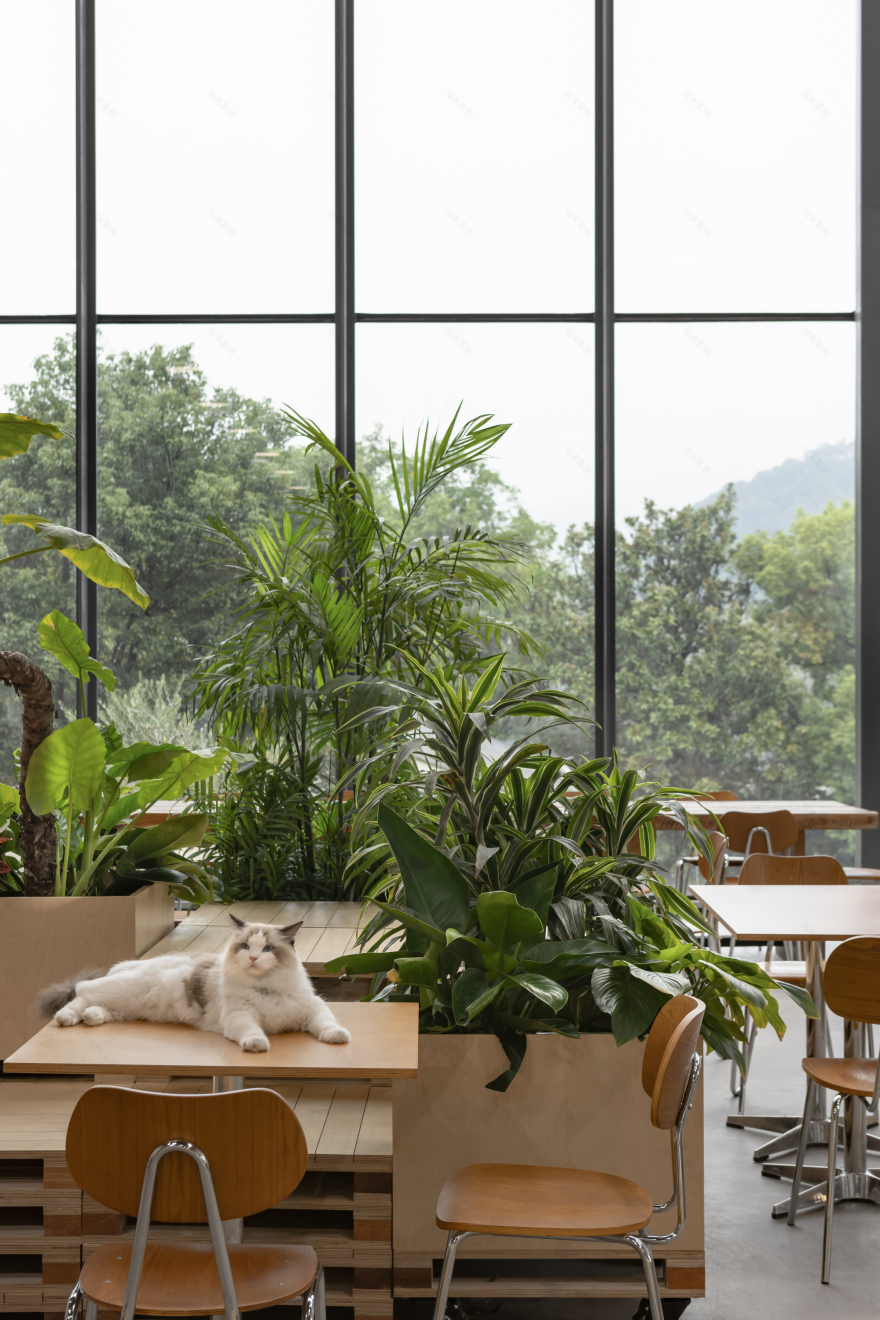


The design re‑presents the memory of the original auditorium and returns the lost community public space to the villagers in a new way, allowing them to experience the beauty of history and nature while visiting, gathering, and relaxing.
Project gallery






南京喵熊网络科技有限公司 苏ICP备18050492号-4知末 © 2018—2020 . All photos and trademark graphics are copyrighted by their owners.增值电信业务经营许可证(ICP)苏B2-20201444 苏公网安备 32011302321234号
苏公网安备 32011302321234号客服
消息
收藏
下载
最近