

创作上传
VIP
收藏下载
登录 | 注册有礼
查看完整案例

收藏

下载

分享

翻译
Architects:Biselli Katchborian Arquitetos
Area:24492m²
Year:2025
Photographs:Studio Gui Uemura
Lead Architects:Mario Biselli, Artur Katchborian
Category:Research Center,Educational Architecture
Project Team:João José Malucelli, Maria Fernanda Vita, André Biselli Sauaia, Paulo Malucelli
Technical Team:Tatiane Orsi, Caroline Bavaresco, Priscila Imperatriz, Maria Cecília Mazza
Complementary Projects:PJJ Malucelli
City:Ribeirão Preto
Country:Brazil

Text description provided by the architects. Developed for the University of São Paulo, the Biomedical Sciences Research Center of the Ribeirão Preto Medical School arises from the revision of an existing preliminary project that did not meet the demands of scientific research. Based on a new feasibility study, carried out in direct dialogue with the users, the Biselli Katchborian office structured a program aimed at laboratories, study areas, support spaces, and a bioterium with specific operational and control requirements.

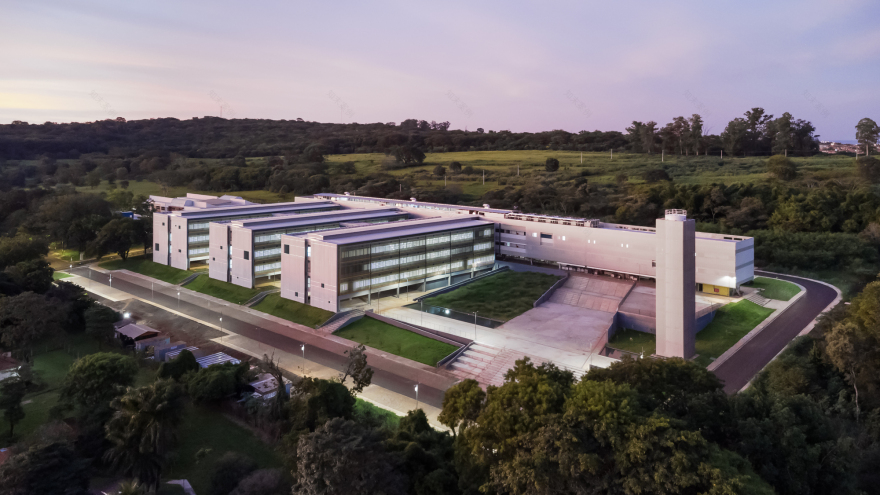
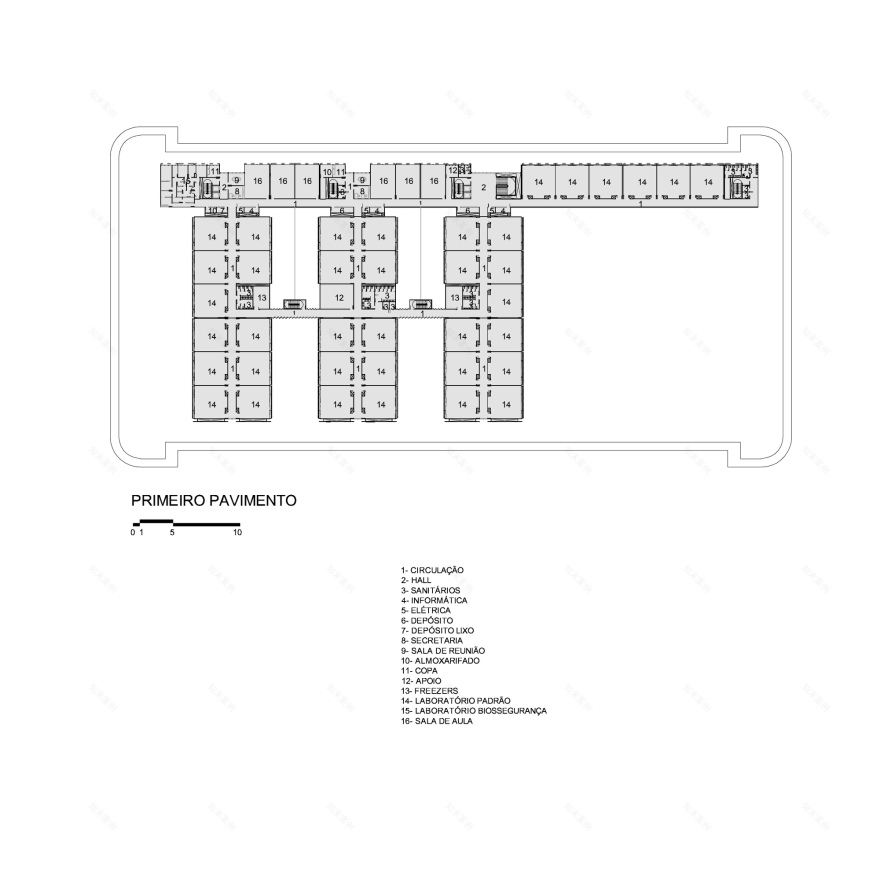
The design is based on an interpretation of the campus, situated on the territory of an old farm, and references religious cloisters, reinterpreted as communal courtyards. The building is organized into three main slabs, arranged on platforms that follow the existing topography and reduce earth movement. Between the volumes, the courtyards structure circulation and enhance everyday use, creating spaces for permanence along the pathway.
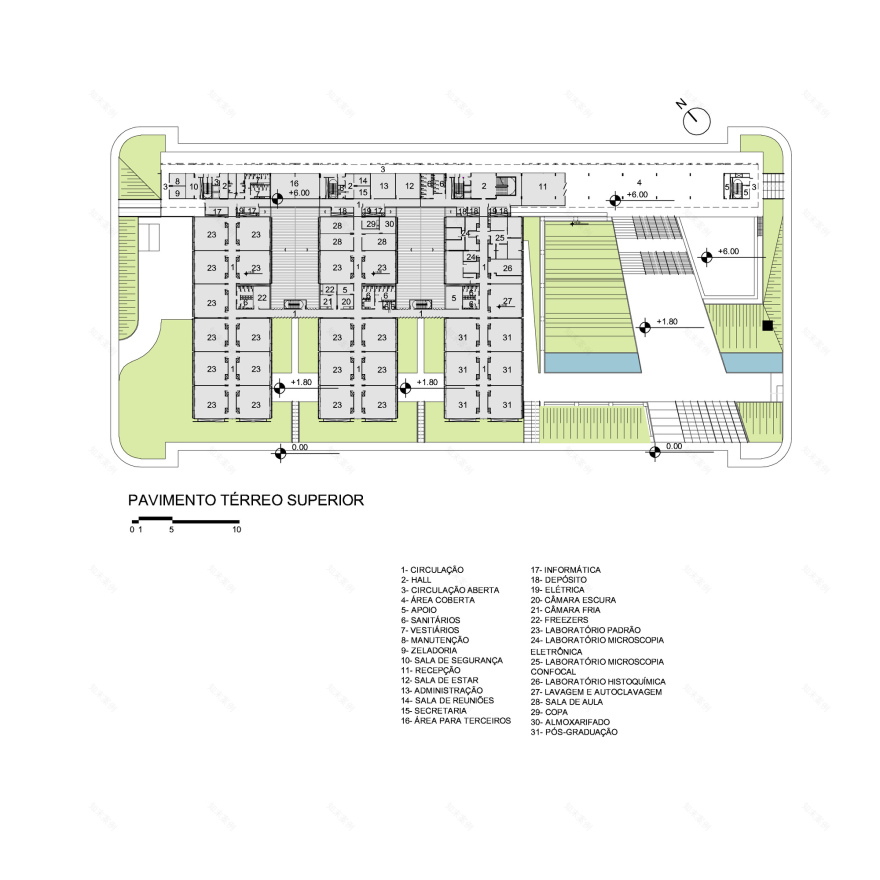
The central axis, configured as a longitudinal covered space under pilotis, functions as a connecting element for the whole. Circulations and areas for permanence are distributed along this path, linking the different sectors. The spatial organization is based on a modular grid that allows for adaptations over time, while establishing independent circulations to ensure the separation of technical, academic, and operational flows.

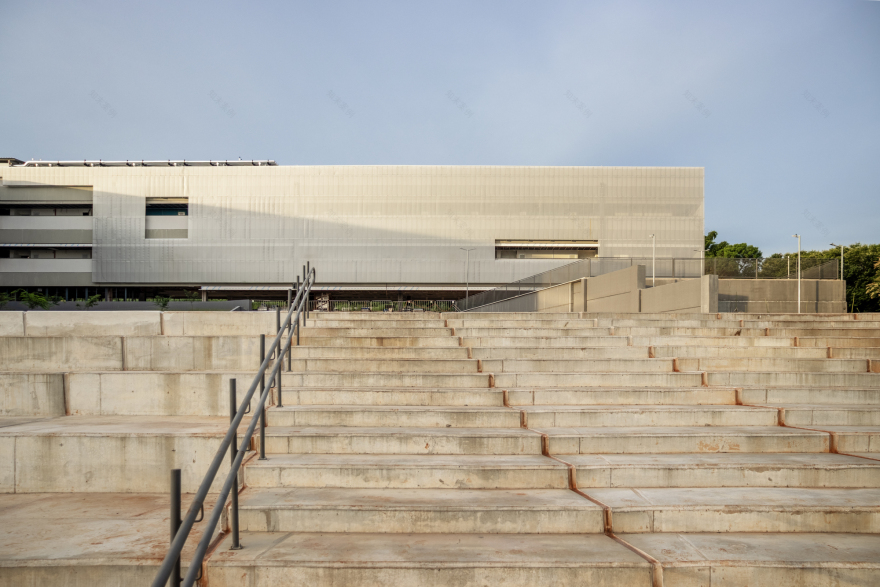
The materiality is defined by the use of concrete and aluminum, with emphasis on the metallic brise-soleils that envelop the facades. In addition to providing unity to the ensemble, these elements control the incidence of natural light, responding to the climatic conditions of Ribeirão Preto. This solution contributes to the building's environmental performance and defines its architectural expression.

The technical requirements of the program demanded specific infrastructure solutions. The project incorporates redundancy in the systems of energy, gases, and air conditioning, ensuring continuity of operation in case of failure. To enable maintenance without interruptions, elevated floors and modular ceilings were adopted, allowing continuous access to the installations.

In non-laboratory areas, passive strategies complement the building's performance, such as cross ventilation and direct relationships with the courtyards. The landscaping integrates with these spaces, creating transitions between open, covered, and closed areas, in a system that articulates architecture and environment.

Developed since 2011 and updated over the years, the project has incorporated contributions from different groups of researchers, expanding the initial program. The building operates as a network of circulations that combines autonomy and integration, reflecting the dynamics of scientific production.
Project gallery



南京喵熊网络科技有限公司 苏ICP备18050492号-4知末 © 2018—2020 . All photos and trademark graphics are copyrighted by their owners.增值电信业务经营许可证(ICP)苏B2-20201444 苏公网安备 32011302321234号
苏公网安备 32011302321234号客服
消息
收藏
下载
最近