

创作上传
VIP
收藏下载
登录 | 注册有礼
查看完整案例

收藏

下载

分享
加泰罗尼亚最具代表性的历史花园之一中的全新文化空间
A new cultural space in one of Catalonia’s most emblematic historic gardens
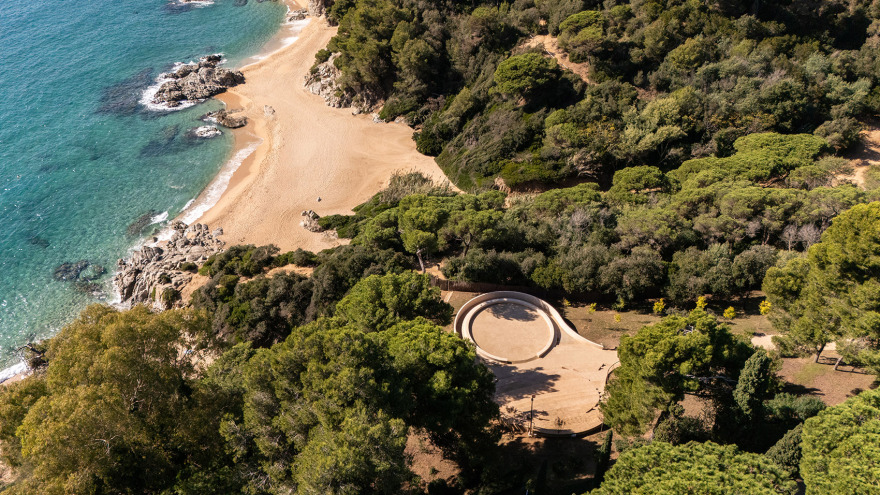
在圣克洛蒂尔德花园(Santa Clotilde Gardens)的介入项目中,引入了一座小型露天剧场,其延续了新古典主义(noucentista)花园所特有的秩序、清晰性以及与景观之间的关系原则。该项目依托既有地形,构建出面向博阿德利亚湾(Cala Boadella)的看台与路径系统,同时采用sablón作为统一材料,使新建部分在铺地与墙体上与历史构筑保持连续性。该介入嵌入林间空地之中,不影响既有植被,塑造出一个与原有花园几何与景观逻辑完全契合的全新文化空间。
The intervention in the Santa Clotilde Gardens introduces a small open-air theatre that extends the principles of order, clarity and relationship with the landscape characteristic of the noucentista garden. The project relies on the existing topography to define a system of seating tiers and pathways oriented towards Cala Boadella, while the use of sablón as a unifying material ensures continuity with the historic pavements and walls. The intervention is inserted into forest clearings without affecting the vegetation, consolidating a new cultural space fully coherent with the geometric and landscape logic of the original garden.
▼项目鸟瞰,aerial view of the project© Judith Casas
地中海新古典主义:秩序、清晰与景观
Mediterranean Noucentisme. Order, clarity and landscape
圣克洛蒂尔德花园遵循新古典主义(Noucentisme)理念而建,该运动提倡简洁、比例与回归地中海根源,以回应现代主义的过度装饰。鲁比奥·伊·图杜里(Rubió i Tudurí)将花园构想为一个人与自然和解的空间,在这里,地形、天际线与大海成为不可分割的整体体验。原始布局通过路径、阶梯与小型圆形广场的网络展开,并辅以典型的地中海植物:柏树、松树、常春藤、桃金娘、百子莲与夹竹桃。此次介入以这些价值为出发点,将其投射至一个与历史整体完全融合的全新文化空间之中。
The Santa Clotilde Gardens were conceived under the principles of Noucentisme, a movement that advocated simplicity, proportion and a return to Mediterranean roots as a response to the excesses of Modernism. Rubió i Tudurí envisioned the garden as a space of reconciliation between human beings and nature, where topography, horizon and sea are inseparable parts of the experience. The original layout is articulated through a network of paths, stairways and small circular plazas, accompanied by distinctly Mediterranean vegetation: cypresses, pines, ivy, myrtles, agapanthus and oleanders. The current intervention takes these values as its starting point and projects them into a new cultural space fully integrated into the historic ensemble.
▼与历史整体完全融合的全新文化空间,a new cultural space fully integrated into the historic ensemble© Judith Casas

面向大海的剧场:一个新的聚集点
A theatre facing the sea
圣克洛蒂尔德花园每年接待超过13万名游客,是加泰罗尼亚访问量最高的遗产地之一。为巩固并拓展其文化活动,略雷特德马尔市政府(Lloret de Mar City Council)在花园西侧一处可俯瞰博阿德利亚湾的自然空地上,推动建设了一座小型露天剧场。
A new meeting point With more than 130,000 visitors per year, the Santa Clotilde Gardens are one of the most visited heritage sites in Catalonia. To consolidate and diversify its cultural activity, the Lloret de Mar City Council has promoted the construction of a small open-air theatre at the western end of the garden, in a natural clearing with exceptional views over Cala Boadella.
▼面向大海的剧场,a theatre facing the sea© Judith Casas

项目功能包括:
• 一个圆形舞台。
• 可容纳约300人的阶梯式看台,顺应自然坡地布置。
• 更衣室及一座小型服务建筑。
The programme includes:
• A circular stage.
• Tiered seating for approximately 300 people, adapted to the natural slope of the terrain.
• Dressing rooms and a small service building.
▼圆形舞台鸟瞰,aerial view of the circular stage© Judith Casas
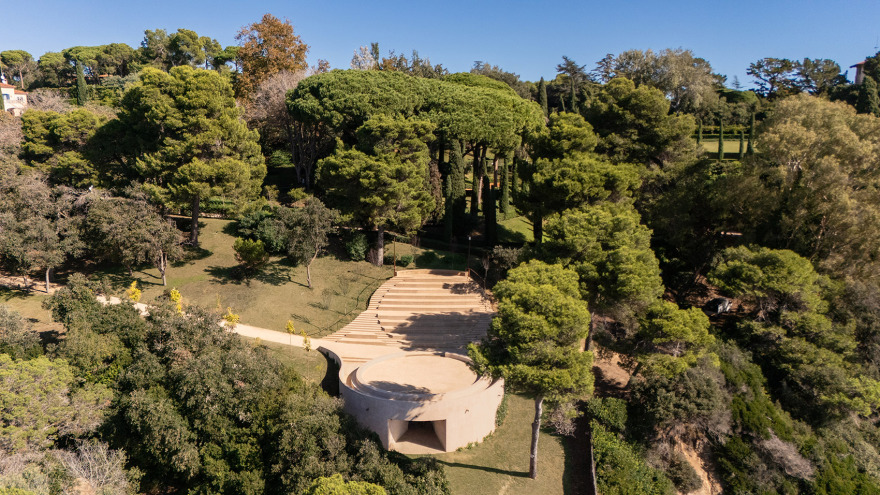
整体朝向景观展开,将大海与山体转化为永久的背景。嵌入坡地的看台将观众视线引向地平线,在那里,光线与地形交融,形成科斯塔布拉瓦(Costa Brava)独特的自然舞台。
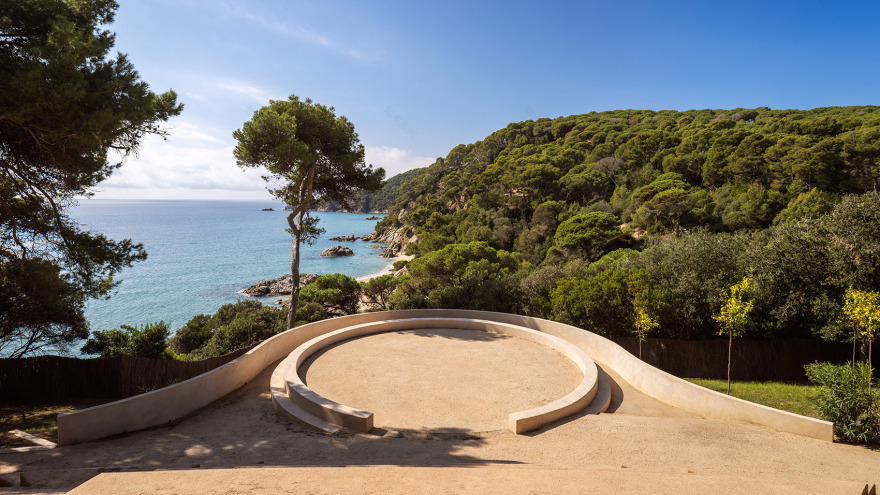
The ensemble is oriented towards the landscape, turning the sea and the mountains into a permanent backdrop. The seating, integrated into the slope, directs the spectator’s gaze towards the horizon, where light and relief merge into a unique natural stage on the Costa Brava.
▼将大海与山体转化为永久的背景,turning the sea and the mountains into a permanent backdrop© Judith Casas
地中海材料性:从场地出发的建造
Mediterranean materiality. Building from the place
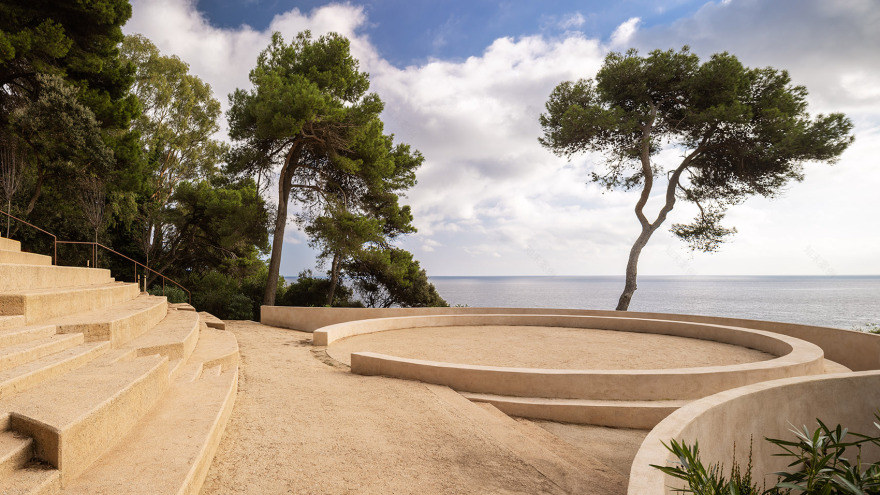
该方案延续历史花园所体现的简洁、秩序与清晰原则,采用以sablón为核心的材料体系——一种由花岗岩风化形成的土质材料,在当地广泛使用,并存在于花园本身之中——作为铺地、看台、墙体及石灰抹面的统一元素。
The proposal adopts the principles of simplicity, order and clarity characteristic of the historic garden.It focuses on a material palette based on sablón—a soil derived from decomposed granite, widely used locally and present in the gardens themselves—as an omnipresent element in pavements, seating tiers, walls and lime renders.
▼由花岗岩风化形成的土质材料,focuses on a material palette based on sablón—a soil derived from decomposed granite© Judith Casas
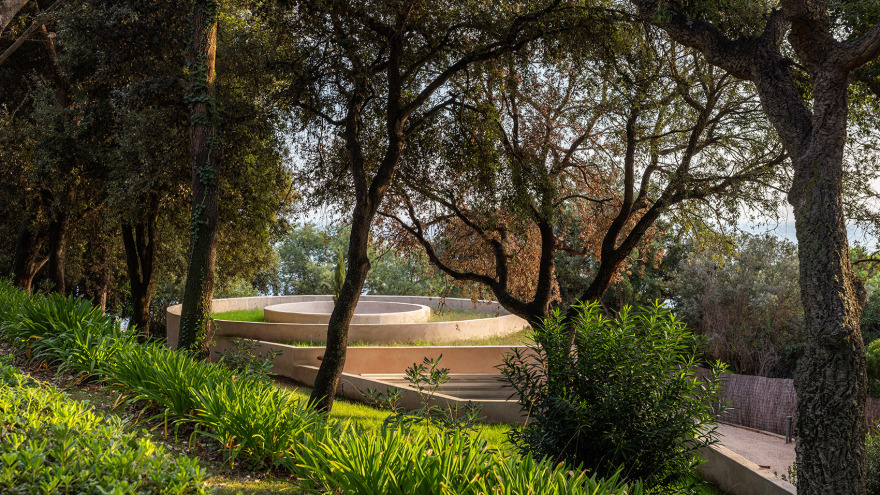
两座小型建筑体量——服务用房与更衣室——被安置在既有林间空地中,未对任何树木造成影响。其形式、比例与几何语言与新古典主义花园中的圆形元素相呼应,强化了历史与当代之间的连续性。
The two small architectural volumes—the service building and the volume housing the dressing rooms—are located in existing clearings, without affecting any trees. Their forms, proportions and geometries dialogue with the circular elements of the noucentista garden, reinforcing continuity between the historic and the contemporary.
▼强化了历史与当代之间的连续性,reinforcing continuity between the historic and the contemporary© Judith Casas

服务建筑采用圆形平面,并围绕中央庭院组织,同时设置绿色屋顶、轴线上的柏树以及攀援植物逐渐覆盖立面,呼应造型修剪(topiary)传统与原始花园中持续存在的植物性。
The service building, circular in plan and organised around a central courtyard, incorporates a green roof, an axial cypress and climbing plants that partially colonise the façade, evoking the tradition of arstopiaria and the constant presence of vegetation in the original garden.
▼绿色屋顶,a green roof© Judith Casas
通往景观的路径
A path towards the landscape
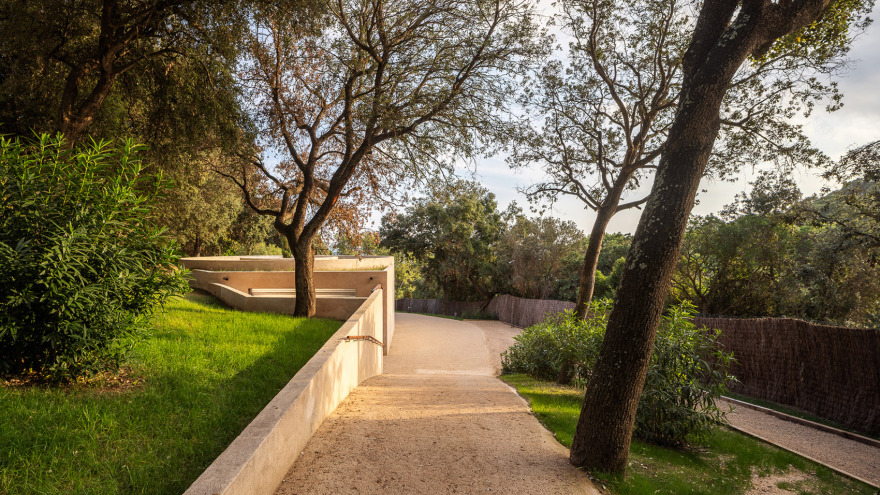
连接两个体量的路径顺应最小坡度缓缓下降,指向大海。这一与花园地形逻辑一致的策略,使新剧场可以在开放时间之外独立运作,提升整体灵活性,并促进其文化与教育功能的拓展。舞台由连续座椅与环形ha-ha界定,被设想为一个灵活空间,可承载从音乐演出到工作坊、讲座以及与遗产相关的教育活动等多种小型活动。
The path connecting both volumes gently descends following the line of minimal slope towards the sea. This gesture, consistent with the garden’s topographic logic, allows the new theatre to operate independently from visiting hours, expanding the versatility of the ensemble and facilitating its cultural and educational use. The stage, defined by a continuous bench and a perimeter ha-ha, is conceived as a flexible space for small-scale activities, from musical performances to workshops, lectures or educational initiatives linked to heritage.
▼路径顺应最小坡度缓缓下降,the path connecting both volumes gently descends following the line of minimal slope© Judith Casas
对环境、美与社区的承诺
Commitment to the environment, beauty and community
除景观融合与材料连续性之外,该介入还引入了一系列旨在优化资源与尊重环境的策略:
• 提高资源效率与施工过程优化。
• 使用本地材料与工艺,重点采用sablón与石灰抹面。
• 顺应既有地形,避免大规模土方工程,保护全部现存植被。
• 通过被动策略与耐久材料降低能耗与后期维护。
• 在不改变花园及周边森林生态动态的前提下实现景观整合。
In addition to landscape integration and material continuity with the historic garden, the intervention incorporates criteria aimed at optimising resources and respecting the environment:
• Resource efficiency and optimisation of construction processes.
• Use of local materials and techniques, with particular emphasis on sablón and lime renders.
• Respectful implementation within the existing topography, avoiding earthworks and preserving all surrounding vegetation.
• Reduction of energy consumption and minimisation of future maintenance through passive solutions and durable materials.
• Landscape integration without altering the environmental dynamics of the garden or the surrounding forest strip.
▼实现景观与建筑的整合,Landscape integration with building© Judith Casas

该项目将“美”理解为一种社会价值,在延续历史花园艺术对话的同时,拓展了场地的文化与教育功能。其与当地社区的联系推动了以可达性、多样性与包容性为基础的城市更新,并与建筑与景观遗产的保护相兼容。自启用以来,这座新剧场已成为一个交流、文化与共存的场所,略雷特德马尔也由此持续推动对地域历史与自然价值的尊重与传播。
The project understands beauty as a social value, reinforcing the artistic dialogue with the historic gardens and expanding the cultural and educational offer of the site. Its relationship with the local community contributes to urban regeneration based on accessibility, diversity and inclusion, compatible with the preservation of architectural and landscape heritage. Since its inauguration, the new theatre has established itself as a space for encounter, culture and coexistence, from which Lloret de Mar continues to promote respect for and dissemination of the territory’s historical and natural values.
▼平面图,plan©scob

Typology: Public space | Cultural facility
Location: Lloret de Mar, Girona
Authors: scob | Sergi Carulla + Oscar Blasco
scob Team: Jordi Llort, Carla Torras
Client: Lloret de Mar City Council
Contractor: Noguera Dissenys | Engineering: Debid | Technical architecture: Pere Cortés
Capacity: 300 seats
Surface area: 5,500 m²
Materials: Sablón, lime, Mediterranean vegetation
Context: Noucentista garden by Rubió i Tudurí
Photography: Judith Casas
南京喵熊网络科技有限公司 苏ICP备18050492号-4知末 © 2018—2020 . All photos and trademark graphics are copyrighted by their owners.增值电信业务经营许可证(ICP)苏B2-20201444 苏公网安备 32011302321234号
苏公网安备 32011302321234号客服
消息
收藏
下载
最近