

创作上传
VIP
收藏下载
登录 | 注册有礼
查看完整案例

收藏

下载

分享

翻译
Architects:Superestudio
Area:400m²
Year:2019
Photographs:David Frutos
Lead Architect:Nacho Marí
Category:Houses
Project Team:Nacho López, Rubén Jiménez
City:Sagunt
Country:Spain

Text description provided by the architects. The emptiness most filled in this house is a window: a dense threshold where light, movement, and daily life become architecture.

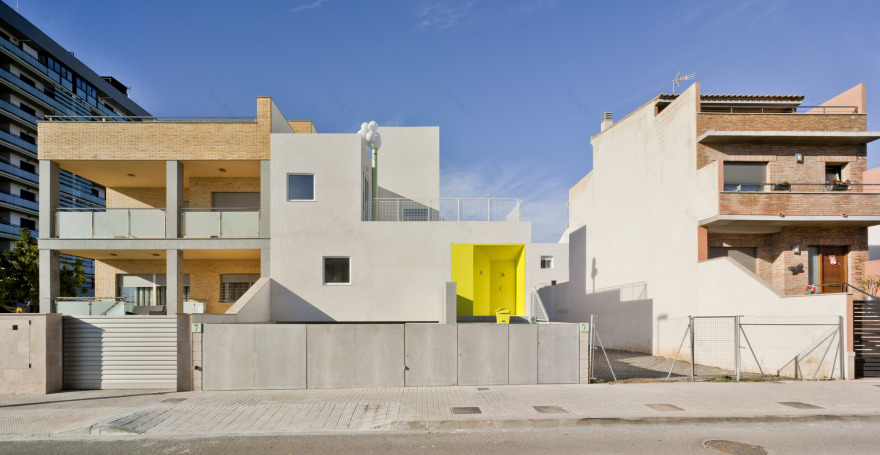
The Hermi residence is located in Sagunto, in a neighborhood characterized by the repeated scheme of a house with a central courtyard and two facades. The commission started from a clear condition: it was going to be inhabited by a single person, unmarried, with a flexible and changing lifestyle. The challenge was to transform that archetypical and rigid domestic model into a more open one, capable of adapting to different uses without losing its identity. This was further complicated by the limitations of the established urban environment and the shared desire between the client and the studio to work from sustainability and circular economy criteria.

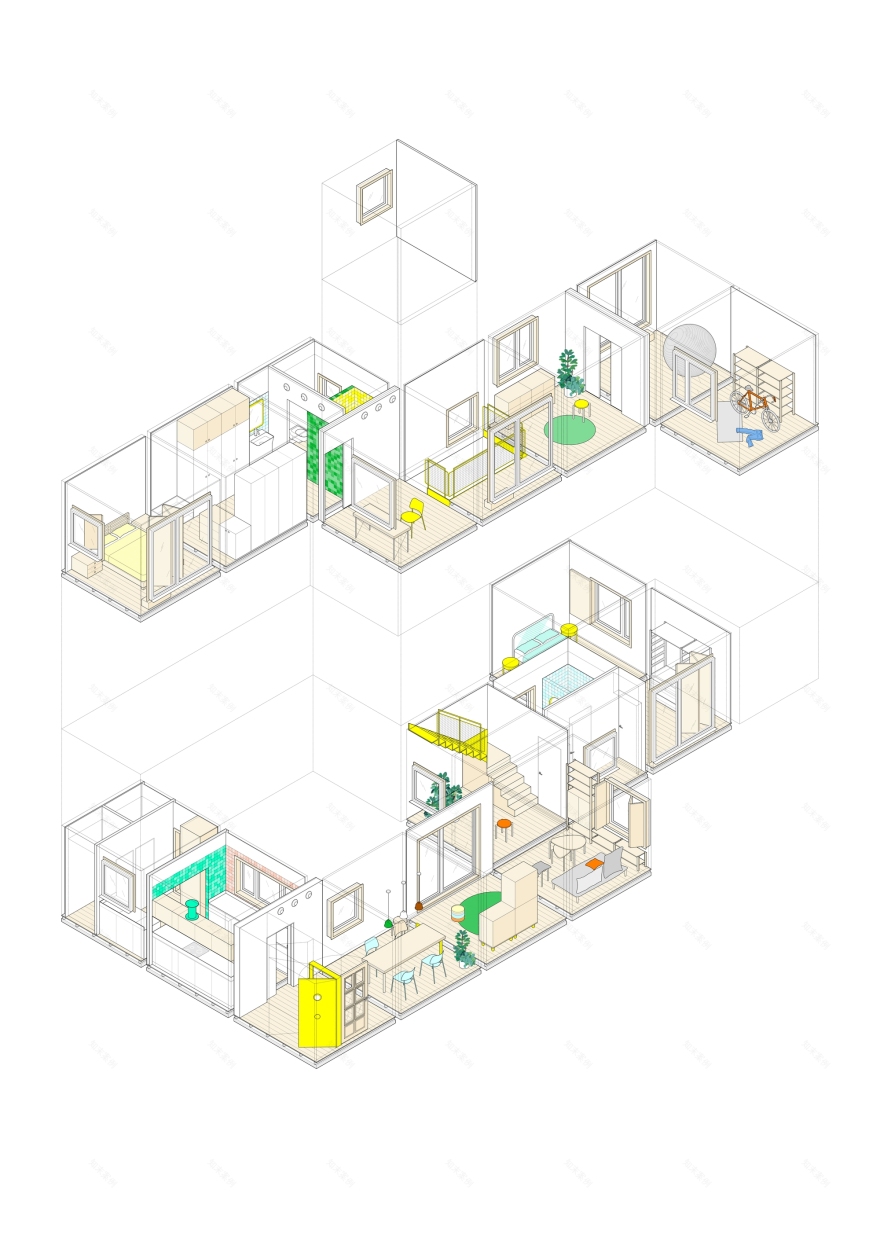
The proposal responds with a system based on the succession of spaces qualified by light and movement. The house is constructed from nineteen spatial units of identical geometry, three by three by three meters of free interior space. Each module incorporates its own program, lighting, and furniture, functioning independently or in association with others. Additionally, these modules generate spaces of variable dimensions but with controlled sections, resulting in mutable domestic situations according to needs.


Like in a game of chess —in the words of Herman Hertzberger— there are clear rules, but an almost infinite freedom of movement. The modules group and mix, blurring the repetitive sequence under the logic of "equality and diversity" described by Tuñón and Mansilla. The house zigzags, hides, and reveals, creating shadowy yet well-lit spaces. Everything revolves around a large central courtyard for the main rooms and two smaller patios for the secondary ones. The result is a spongy structure where only fifty percent is constructed interior surface; the rest consists of patios, terraces, and interstitial spaces through which the house "breathes."


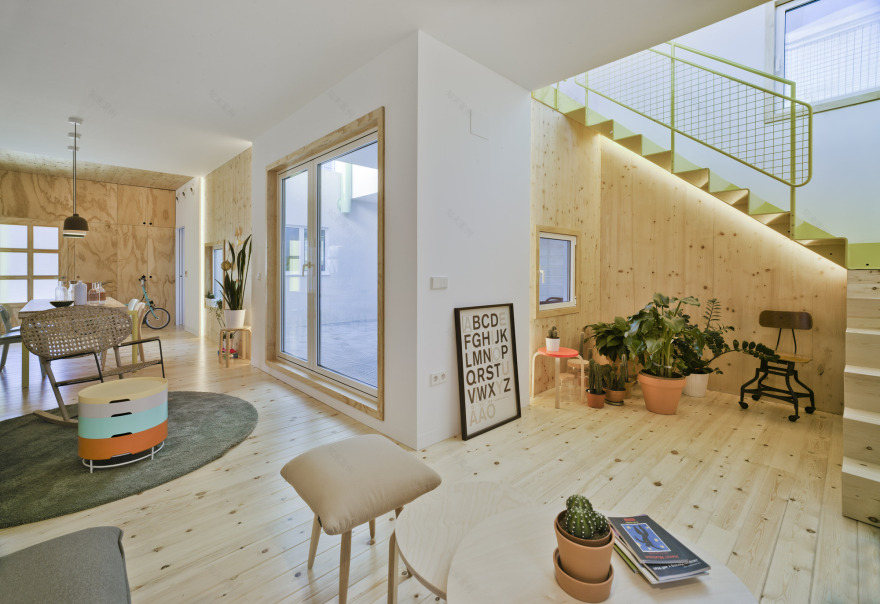
The residence proposes a continuous journey where space replaces the hallway. There is no residual transit: each step is already a room. The house is experienced as a chained sequence, a continuous plane where dwelling and moving are the same action, always accompanied by light and the close presence of the patios.

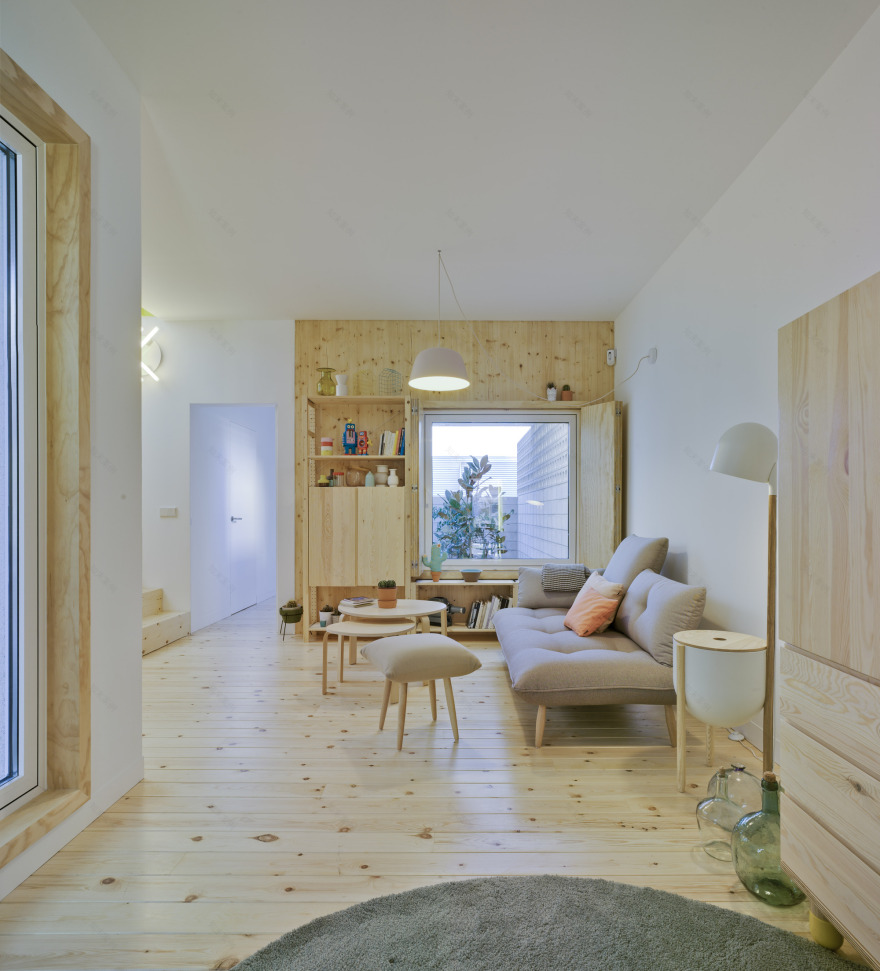
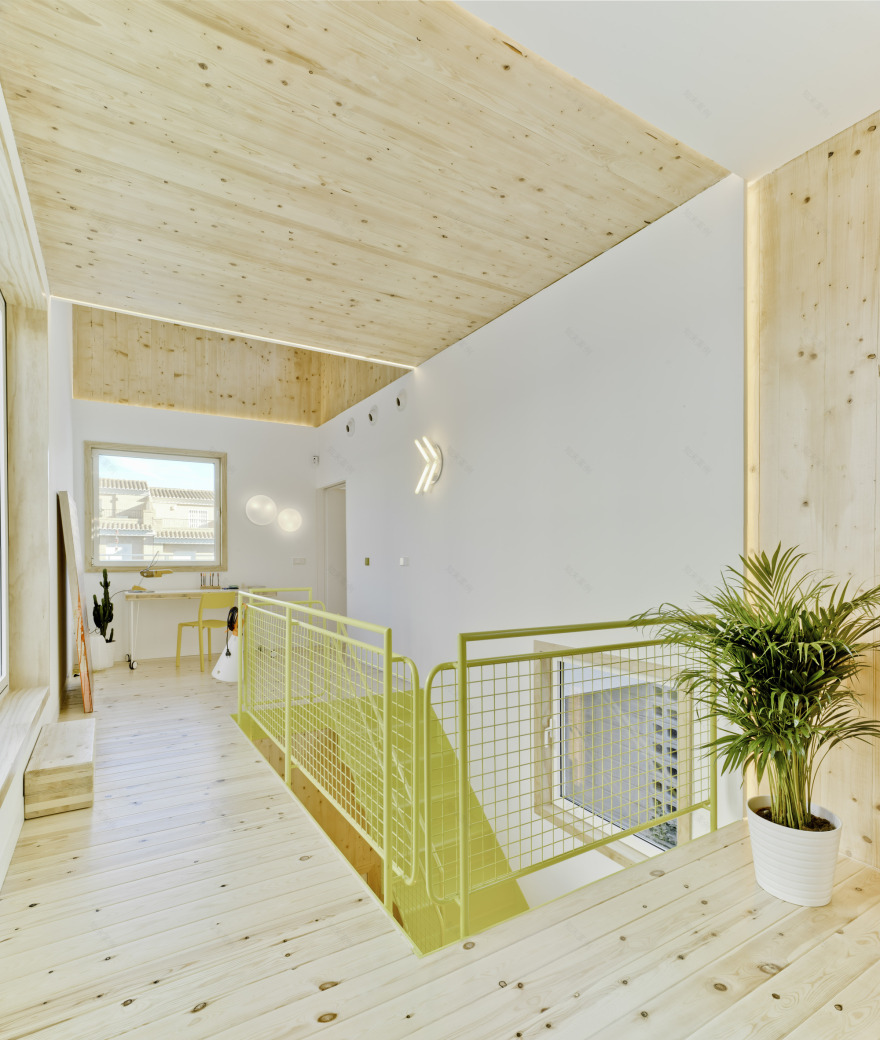
The entire residence is built in CLT, reflecting the commitment to sustainability. The recycling of leftover material from the facades is transformed into part of the furniture, combined with intentionally "customized" IKEA pieces, seeking coherence between space and object.

The use of color reinforces the hyper-optimistic character of the house: sometimes it highlights singular elements in yellows and greens; at other times, it qualifies entire spaces, especially the wet ones, inspired by palettes close to the universe of Wes Anderson.
"Architecture is not just a container, it is a tool to change the mood and life," summarizes the philosophy of the project. The Hermi house not only builds city from its context but also proposes a new way of inhabiting: more open, more flexible, and more aware of the transformative power of domestic space.

Project gallery






南京喵熊网络科技有限公司 苏ICP备18050492号-4知末 © 2018—2020 . All photos and trademark graphics are copyrighted by their owners.增值电信业务经营许可证(ICP)苏B2-20201444 苏公网安备 32011302321234号
苏公网安备 32011302321234号客服
消息
收藏
下载
最近