

创作上传
VIP
收藏下载
登录 | 注册有礼
查看完整案例

收藏

下载

分享

翻译
Edge of the World
Ysobelle Lane
Landscape Architecture Design Thesis, Semester 01 2025
Master of Landscape Architecture
The University of Melbourne
“ I cast my pebble onto the shore of Eternity.To be washed by the Ocean of time.It has shape, form, and substance.It is me.One day I will be no more.But my pebble will remain here.On the shore of eternity.Mute witness from the aeons.That today I came and stoodAt the edge of the world. ” - Brain Inder
Thesis Statement
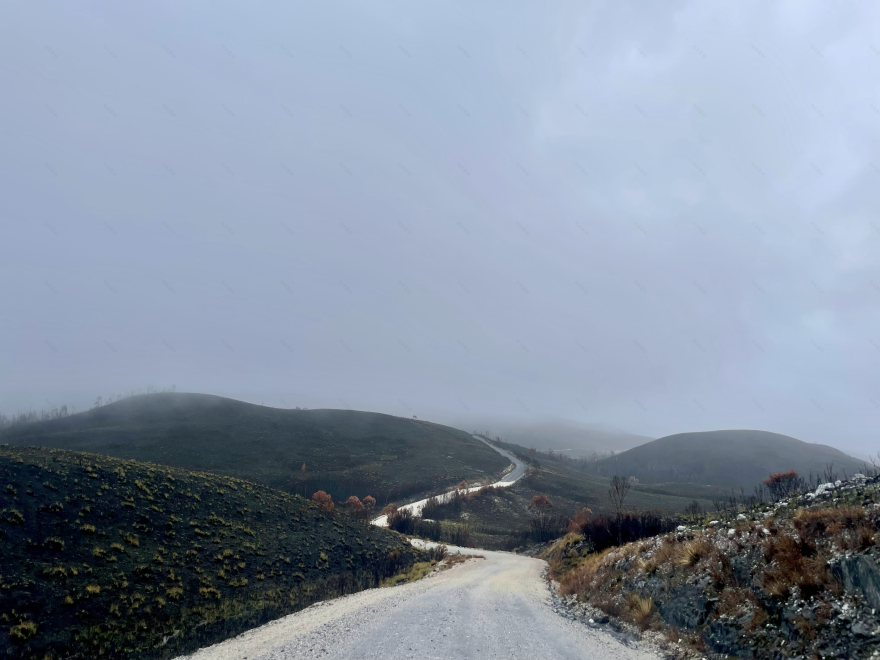
Nestled amongst Gondwanan landscapes, the north west coast of Tasmania is an ecological haven; remote, raw and untamed, buried with stories of boom and bust. This design thesis will investigate the tensions between economic decline and wilderness driven tourism, where the notion of ruin, remoteness, and cultural memory are pivotal to the landscape character. In light of increasing political friction, sparked by controversial infrastructure proposals and neglect of Indigenous heritage, this thesis examines how abandonment and ecological richness intersect in a place defined by cycles of instability and resilience. Through an interdisciplinary approach, drawing on film, literature, environmental history, and targeted mapping investigations, the thesis will scrutinise the experiential, ecological, economical, and geomorphic interrelationships through the critical lens of isolation. The wilderness experiences located at Dismal Swamp and Corinna will be used as key drivers, forming the basis for a speculative design future grounded in conservation, community agency, and cultural growth.
The thesis is grounded in the West Coast Council branding, introduced by For The People in 2018. Utilising this existing marketing strategy as framework for the design, the thesis aims to explore potential futures in placemaking for the north west, intertwining politics, world heritage wilderness, and the region’s layered history. By analysing the context of the Tarkine region, the thesis seeks to promote these fringe communities while expanding on the brand’s slogan, “just outside your comfort zone.” The thesis will imagine a future for north west Tasmania that reconciles its layered past with a bold, regenerative vision, one that repositions post-industrial towns as dynamic frontiers of ecological stewardship, Indigenous recognition, and sustainable tourism.
How can design interventions transform north west Tasmania’s post-industrial landscapes in response to ecological fragility, political conflict, and the need for place-based tourism?


Local Tensions
Political tensions in Tasmania are escalating as inappropriate infrastructure proposals continue to surface across the state. Following years of debate over the Mt Wellington Cable Car, attention has shifted to the costly and controversial Mac Point Stadium. Similar frustrations are growing in the north west, where tourism driven projects, like the revitalization of Dismal Swamp and the proposed ‘wave-breaker cave’ at Arthur River, are being pushed despite past failures, seen at the now-abandoned 110m slide at Dismal Swamp.These developments, often designed by mainland consultants, ignore the real value of the region: its untouched landscapes and deep cultural significance. The north west coast is home to ancient shell middens, some of the most important and oldest in Australia, yet these sites are actively being dismissed. Imposing out-of-touch schemes on culturally sensitive areas is completely inappropriate; where are the tourism schemes to engage with the shell middens and educate visitors?These developments reflect a broader systemic issue; the imposition of outsider visions onto communities that neither want nor benefit from them. Instead of promoting the natural and cultural landscapes, the government continues to push schemes that risk degrading the very assets they claim to promote. If Tasmania is to build a resilient and authentic tourism economy, it must start by listening to local voices, integrating with Indigenous heritage, and protecting the landscape, something that cannot be achieved through concrete and a PR spin.


The North West
Addressing the tensions present in the north-west requires a fundamental shift in how development decisions are approached across Tasmania. Central to this change is the need for genuine, ongoing community consultation, ensuring that local voices are not only heard but are actively shaping the region’s future. A key step toward resolving these tensions is the proposal to designate the north west as a protected National Park and World Heritage Wilderness area. This would involve working in partnership with the Aboriginal Land Council of Tasmania under a joint management model with Parks Tasmania, creating a framework that acknowledges and respects Aboriginal land rights, heritage, and stewardship.
This reorientation marks a decisive move away from intrusive, infrastructure driven tourism towards a model of eco-tourism that celebrates and protects the natural and cultural values of the region. The Tarkine would be at the heart of this renewed vision. With the development of the North West Coast Track and revitalization of key sites such as Dismal Swamp and Corinna, the region would become a global leader for sustainable wilderness management and immersive, educational experiences.
Importantly, this transformation would not erase the tensions and injustices of the past, but rather bring them to the surface in a way that fosters understanding and reflection. As people move through the landscape, they would be encouraged to engage with its complex history, one shaped by colonisation, political conflict, and environmental struggle. In doing so, the experience of the north west becomes more than just a journey through nature, rather a journey through the intertwined narratives of shame, pride, resistance, and renewal.


Marketing
The marketing strategy for Tasmania’s north west is a cohesive blend of local and state-wide promotional efforts, drawing on the strengths of the West Coast Council’s regional branding and Tourism Tasmania’s “Off Season” campaign. The West Coast Council continues to highlight the area’s rugged beauty, rich history, and sense of remoteness, appealing to tourists seeking authenticity and adventure. With the borders of the council updated to more accurately reflect the region, the branding will be expanded to cover the north west. Complementing this, the "Off Season" campaign repositions winter months as a time for introspective, atmospheric travel experiences, perfectly suited to the dramatic landscapes of the Tarkine, Corinna, and surrounding wilderness areas. By aligning with this broader narrative, the north west positions itself not only as a summer destination but as a year-round retreat for eco-tourists, hikers, and cultural travelers. This dual strategy supports increased visitation across all seasons while reinforcing the region’s unique identity within the Tasmanian tourism landscape.


Dismal Swamp
Interpretation CentreThe existing building at Dismal Swamp will be revitalised as the North West Interpretation Centre, repurposed to include a reception area, small shop, and museum space. With the closure of the Strahan Visitor Centre, its information panels, particularly those covering the Tarkine and environmental protests, will be relocated here. A dedicated Indigenous interpretation section will share local cultural and conservation perspectives, and the centre will also serve as a meeting point for tour groups. Educational screenings on topics like off-road driving and fishing will be offered to enhance the visitor experience. Backed by federal funding, the centre aims to re-establish Dismal Swamp as a hub for environmental education and as a gateway to the Tarkine region.
Green’s StoryThe Franklin Dam protests of the late 1970s and early 1980s were a pivotal moment in Australian environmental activism. Led by Bob Brown and the Tasmanian Wilderness Society, the campaign aimed to stop a dam that would flood Tasmania's Franklin River. Through widespread media coverage, dramatic protests, and a major blockade in 1982, the movement gained national attention. A High Court ruling later that year halted the dam, marking a major victory for conservation and launching Brown’s political career, eventually leading to the formation of the Australian Greens. The Tarkine protests, also led by the Bob Brown Foundation, began in the early 2000s to oppose mining and logging in Tasmania’s Tarkine wilderness. A key tactic has been tree-sit camps; platforms high in the forest canopy used to block logging. Dismal Swamp will feature The Green’s Story, highlighting key moments in Tasmania’s conservation history. The interpretation centre will house panels from Strahan Visitor Centre, detailing the Franklin Dam protests and the founding of the Australian Greens. An immersive soundscape on the boardwalk will bring to life the Franklin River blockades and the Tarkine tree-sit protests. These exhibits aim to deepen public understanding of Tasmania’s legacy of environmental activism and inspire reflection on the ongoing efforts to protect its wilderness.


Corinna
Existing FunctionsMost of Corinna’s current functions will remain unchanged, preserving its charm and appeal as a heritage wilderness village. The central reception building continues to serve as a remote hub, housing a restaurant and bar, general store, and visitor information desk for guests. The village’s iconic miners’ cottages will maintain their role as guest accommodations, while existing tent platforms, river cruises on the Pieman River, and the Fatman Barge crossing will remain key features that draw visitors to the area.
Seasonal CampingCorinna Wilderness Village will be expanded to support a growing number of seasonal visitors, with a focus on low-impact, tent-based accommodation. These additions aim to enhance the camping experience by promoting greater independence from the main lodge infrastructure while still ensuring access to essential amenities. This will couple with a key focus to support hikers on the North West Coast Track, as the tent facilities will be positioned to serve as a comfortable end or starting point. Additionally, the hike will join up with the Savage River Walk, offering alternative walking options for visitors not embarking on the full track.
Pining/Mining HistoryAll future developments will take into consideration Corinna’s rich cultural heritage, particularly its connection to Tasmania’s historic pining and mining industries. The use of local, sustainable timbers such as Huon Pine and Tasmanian Oak in the construction of new structures will reflect and honour the area’s legacy with traditional timber harvesting. The historic mining cottages, still in use today, serve as a living reminder of the region’s past, helping to maintain the character of Corinna as a place seemingly frozen in time.


The North West Coast Track
A new walking track, named the North West Coast Track, will be introduced through the Tarkine with start/end points at Dismal Swamp and Corinna. The track itself is approximately 80km with expected time frame of completion to be 6-8 days due to elevation changes. The path will take hikers through the Dismal Swamp boardwalk and Greens Story to begin, before descending through newly national park land to meet up with the existing Balfour Track. The hike continues south adjacent to the West Coast Explorer Rd, through both the Arthur-Pieman Conservation Area and proposed Tasmanian Wilderness World Heritage Area. The landscapes will change dramatically on this hike, from wet rainforests and buttongrass moorlands to coastal scrub and heathlands. Whilst there will be a lack of prepared accommodation through the duration of the hike, the accessibility of Dismal Swamp and amenities at Corinna allow for a comfortable start and end to the journey. Similarly to the Overland Track, bookings are essential and the hike will be conducted in small groups with an optional guide. The hike is designed to be a mediator between the Overland and South Coast Tracks, where the hiking conditions will be challenging, without the extreme isolation, for those wanting to push themselves outside their comfort zone. Under new joint management of Parks Tasmania and Aboriginal Land Council Tasmania, the hike will be proposed as a new addition under the National Park Management Plan 2025-2050. As such, the hike will be driven as a palawa owned and operated experience, growing indigenous engagement in the Tarkine region.


南京喵熊网络科技有限公司 苏ICP备18050492号-4知末 © 2018—2020 . All photos and trademark graphics are copyrighted by their owners.增值电信业务经营许可证(ICP)苏B2-20201444 苏公网安备 32011302321234号
苏公网安备 32011302321234号客服
消息
收藏
下载
最近