

创作上传
VIP
收藏下载
登录 | 注册有礼
查看完整案例

收藏

下载

分享

翻译
A dialogue with climate, history and tradition
Rooted sustainability
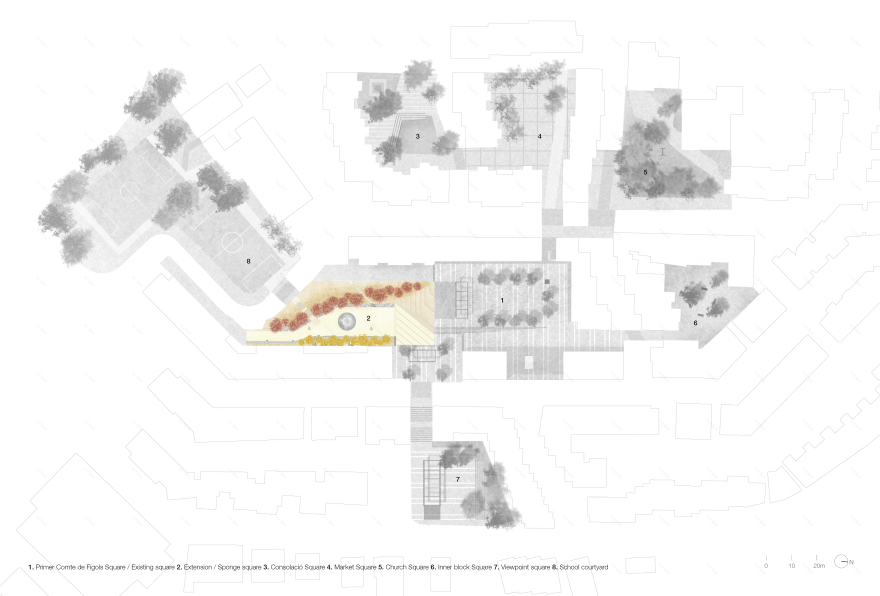
In 1976, the construction of the La Baells reservoir submerged the old town of Sant Salvador de la Vedella under its waters, and its population was relocated in Sant Jordi de Cercs, a newly built village. Forty years later, the extension and refurbishment of its main square is representative of a new paradigm of public space, resilient to climate change through the ecological management of rainwater while also rooted in local traditions and history.
Sponge, a dialogue with climate
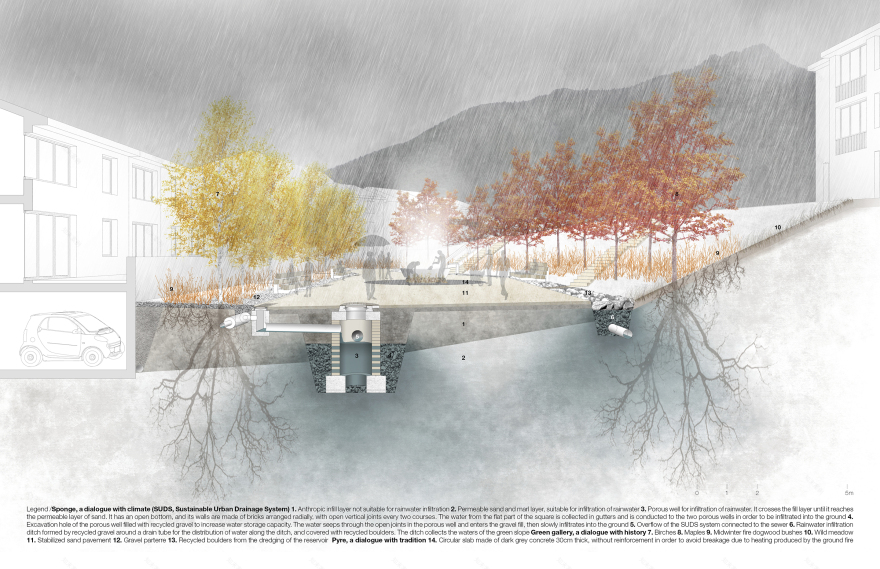
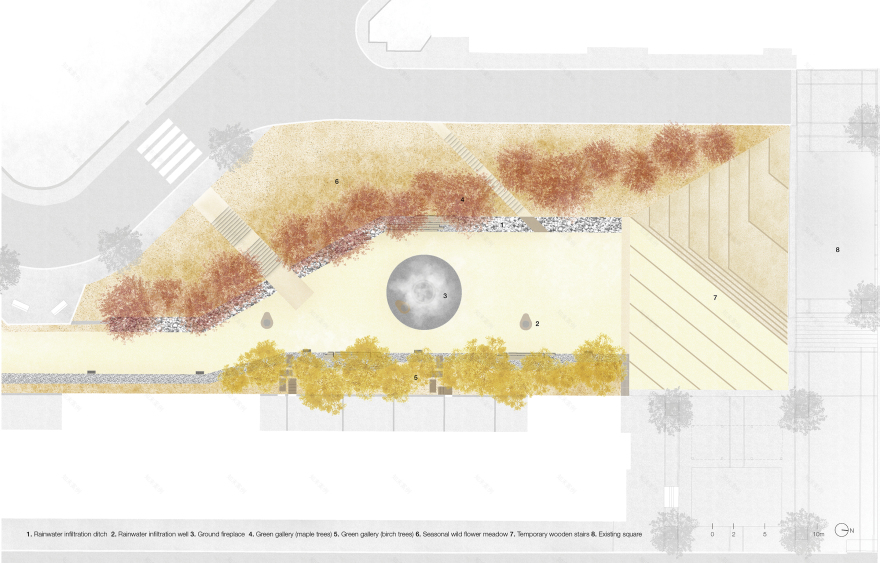
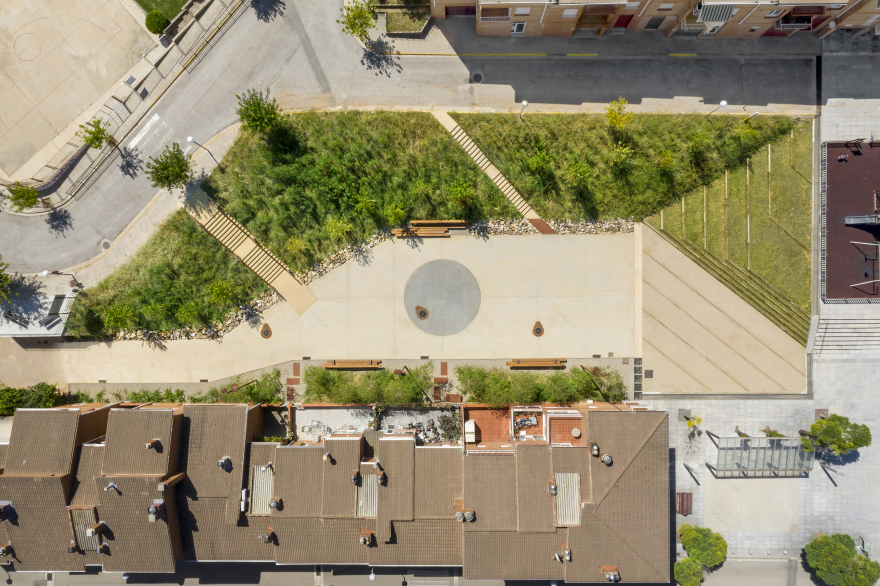
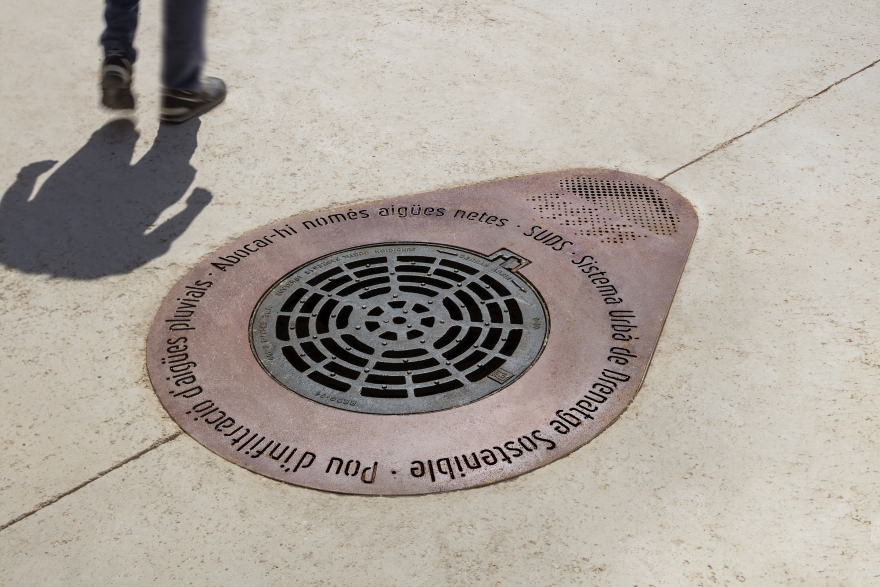
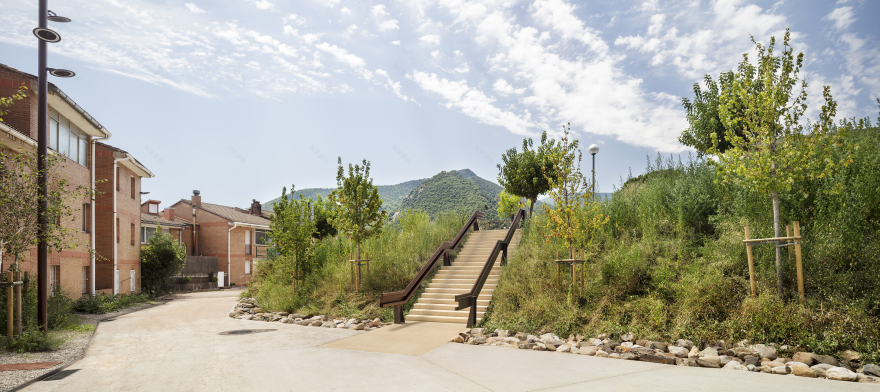
The ecological management of rainwater is achieved through a Sustainable Urban Drainage System (SUDS) designed according to the geology of the site and formed by an infiltration ditch at the bottom of the slope and two innovative porous wells, pioneers in Spain. Thus, the entire square acts as a large "sponge" that absorbs rainwater and infiltrates it into the ground, achieving a garden without irrigation, mitigating episodes of drought, controlling sewage overflows and enabling the natural cycle of water.
Green gallery, a dialogue with history
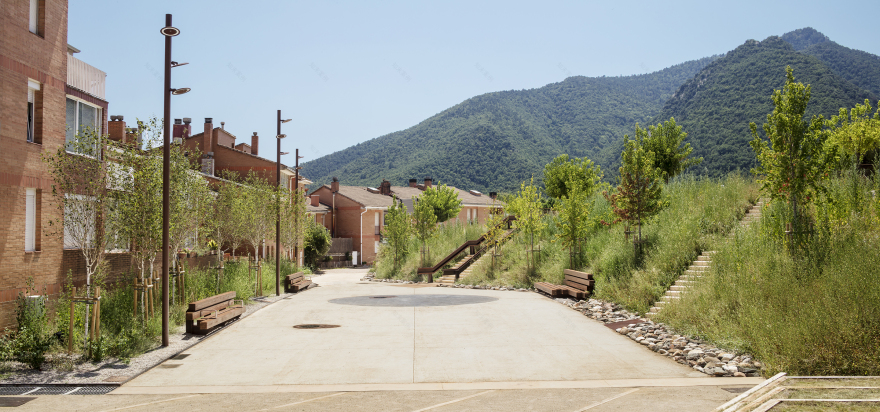
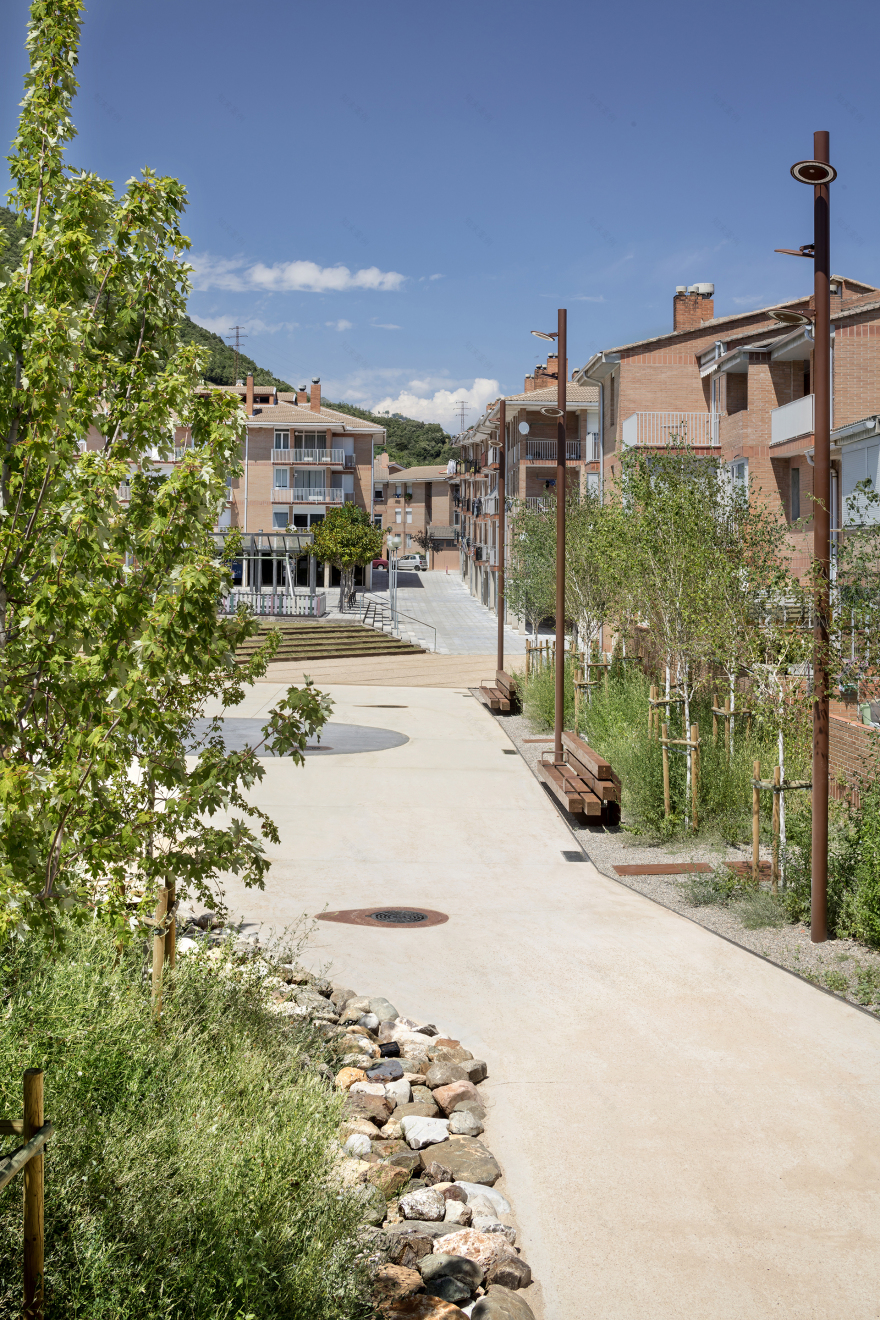
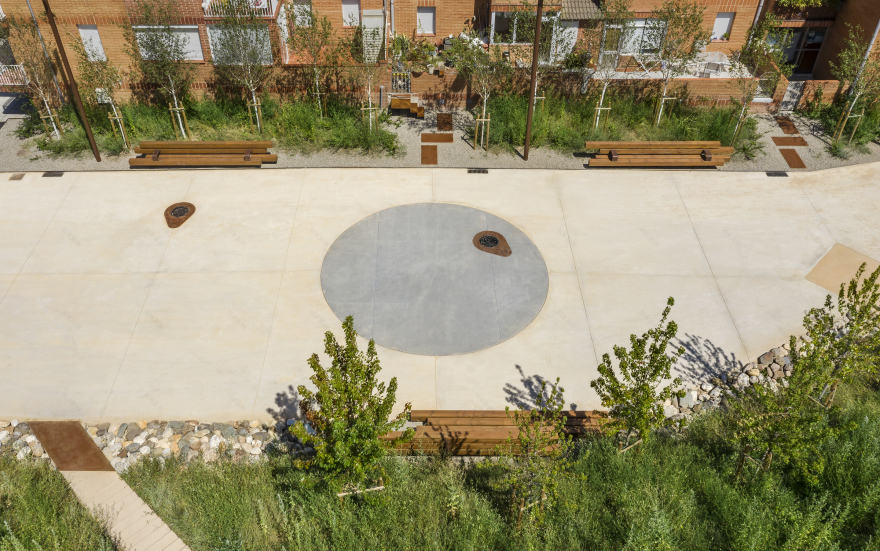
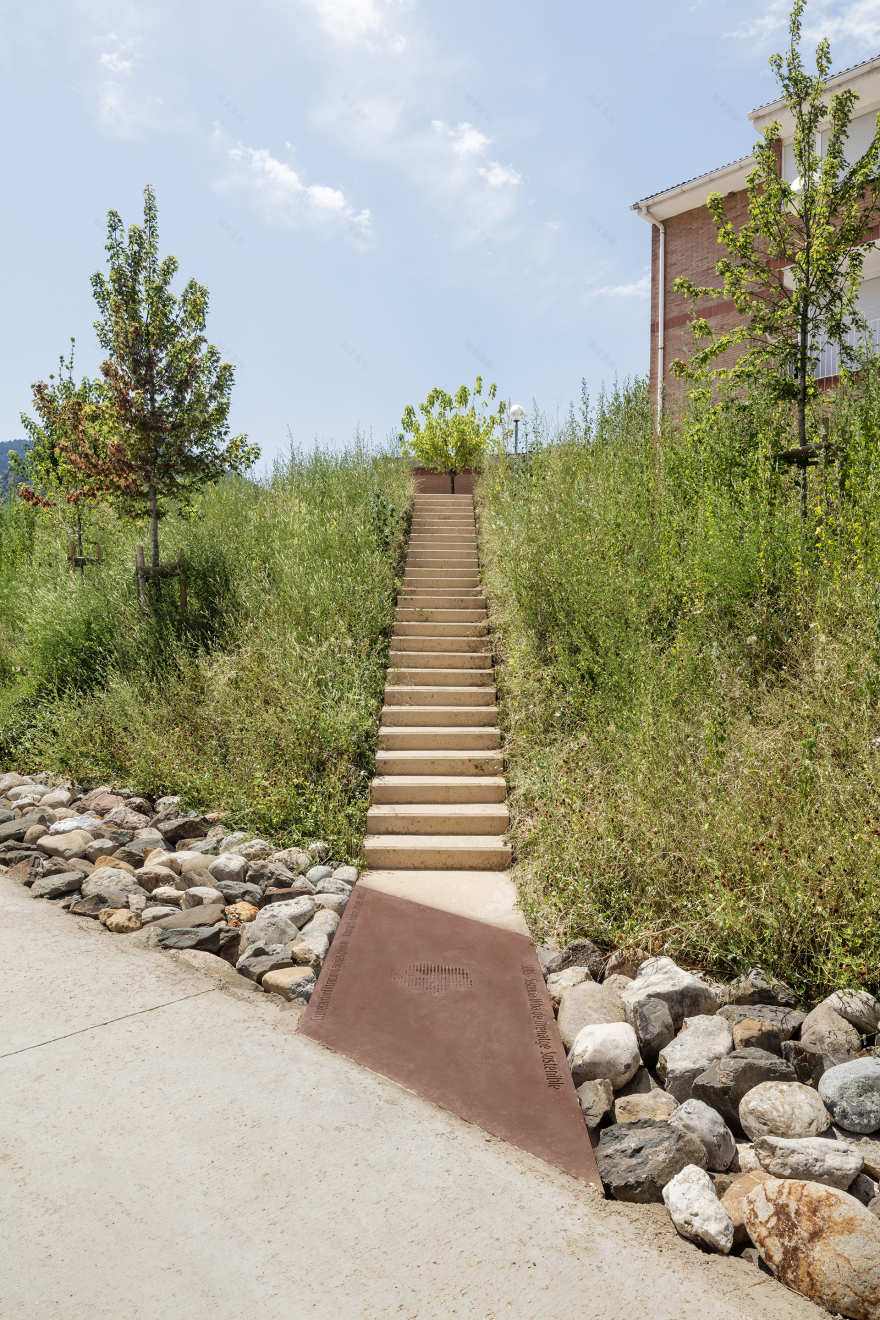
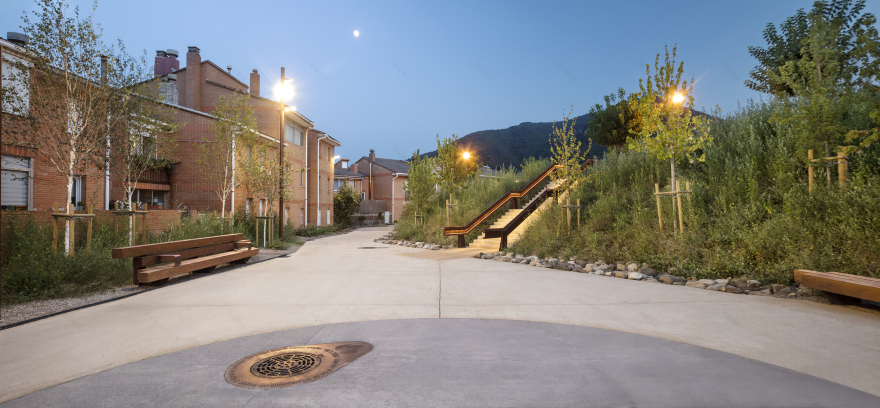
The space of the square evokes the landscape -now disappeared under the reservoir’s waters- of the Llobregat riverbanks, where the old town was founded. Two rows of native trees form a green gallery; a linear and bounded space like the gallery forests which grow along the river. The materials and vegetation also refer to the riverscape: stabilized sand pavement, gravel, recycled boulders from the dredging of the reservoir, maples, birches, midwinter fire dogwood bushes, and a low-maintenance wild meadow on the slope.
Pyre, a dialogue with tradition
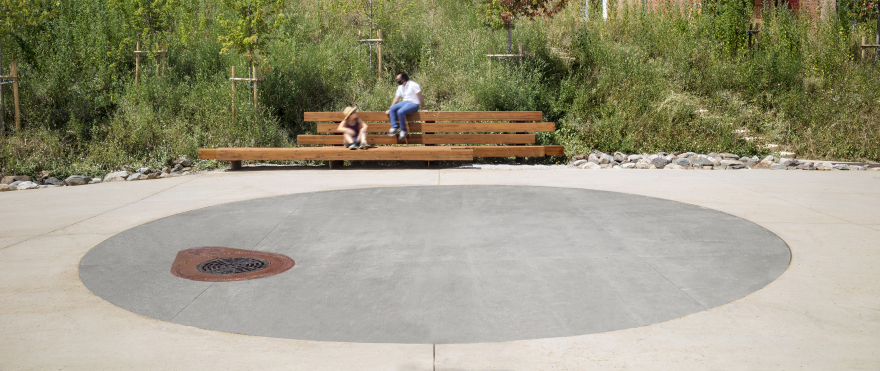
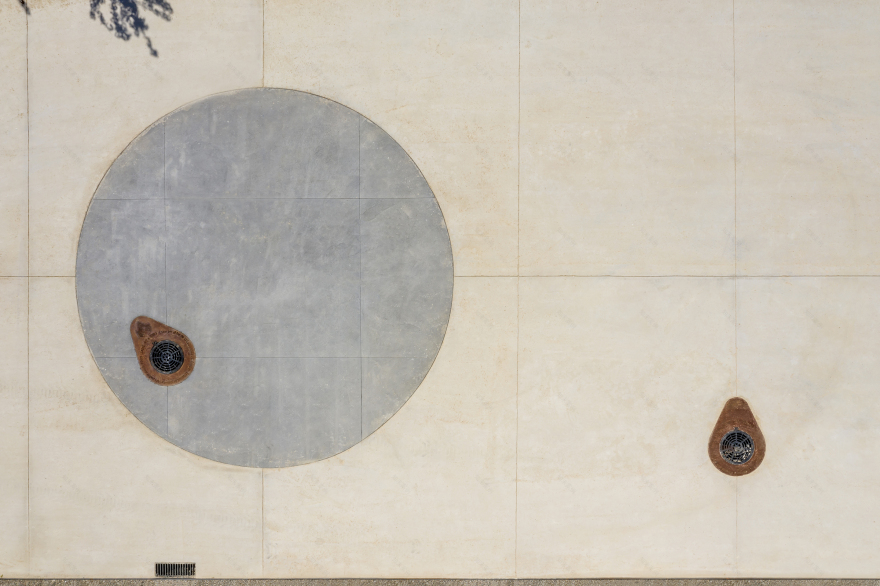
The two main traditions of the town -the popular escargot cooking during the village’s festival and the Saint John’s night bonfire- revolve around fire. The space where these events have traditionally taken place is consolidated by the construction of the pyre, a large dark-grey concrete circle for the ground fire, which also becomes the focal element of the square.
Optimized budget, qualitative details
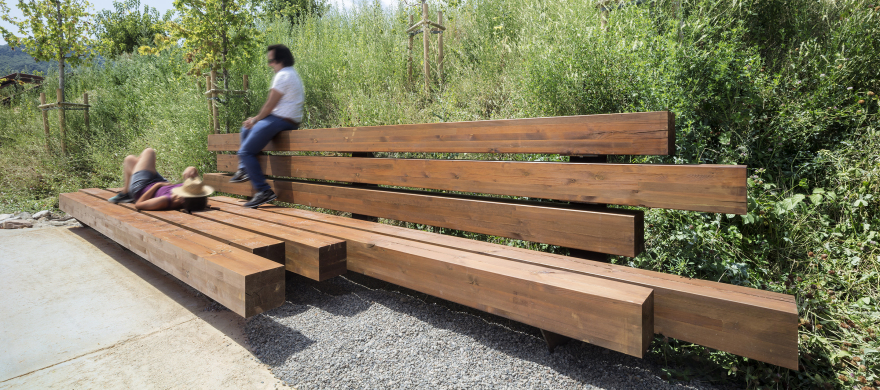
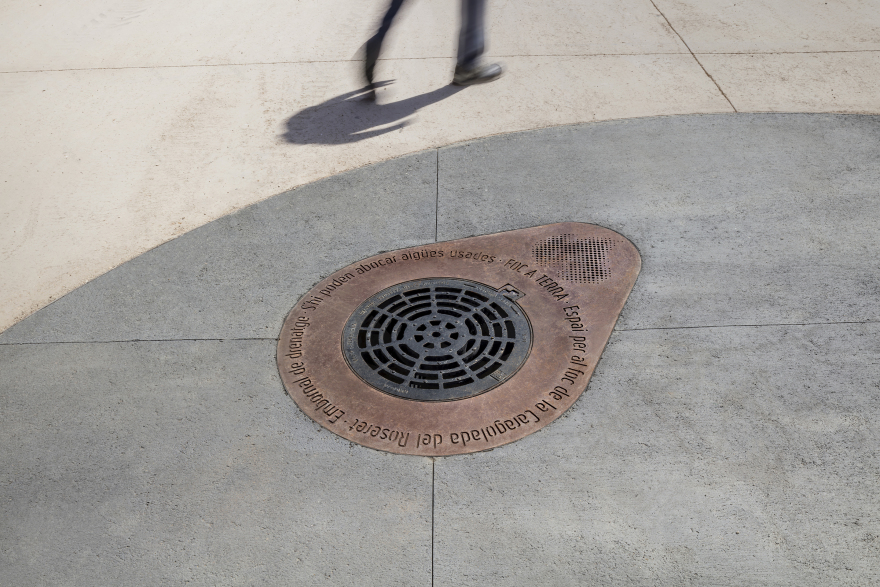
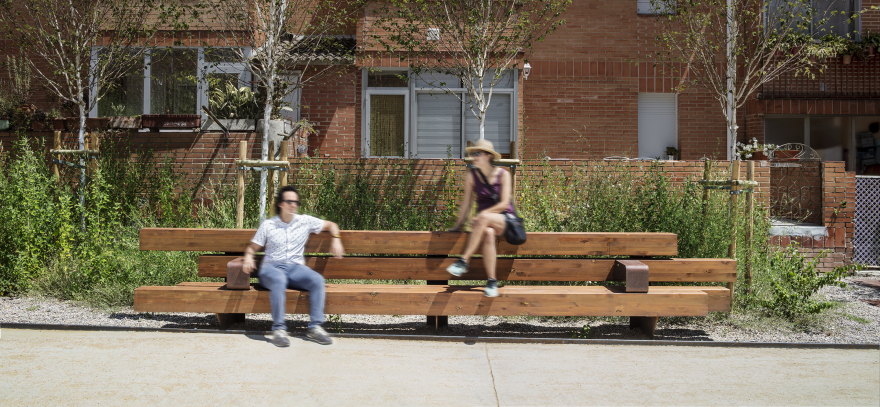
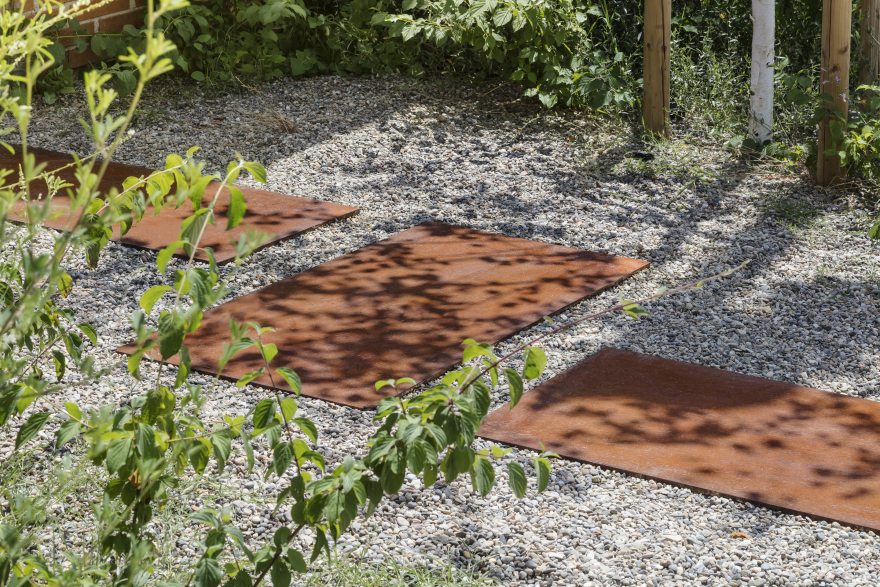
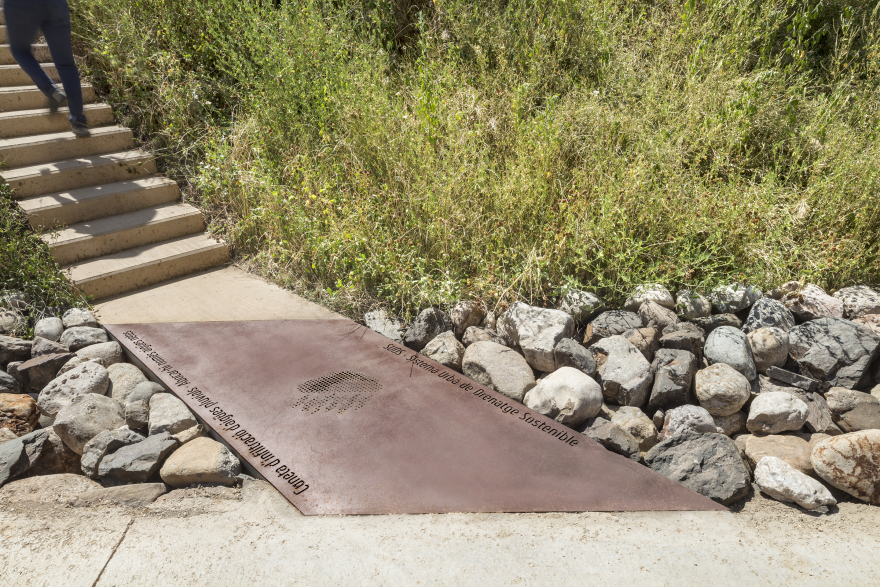
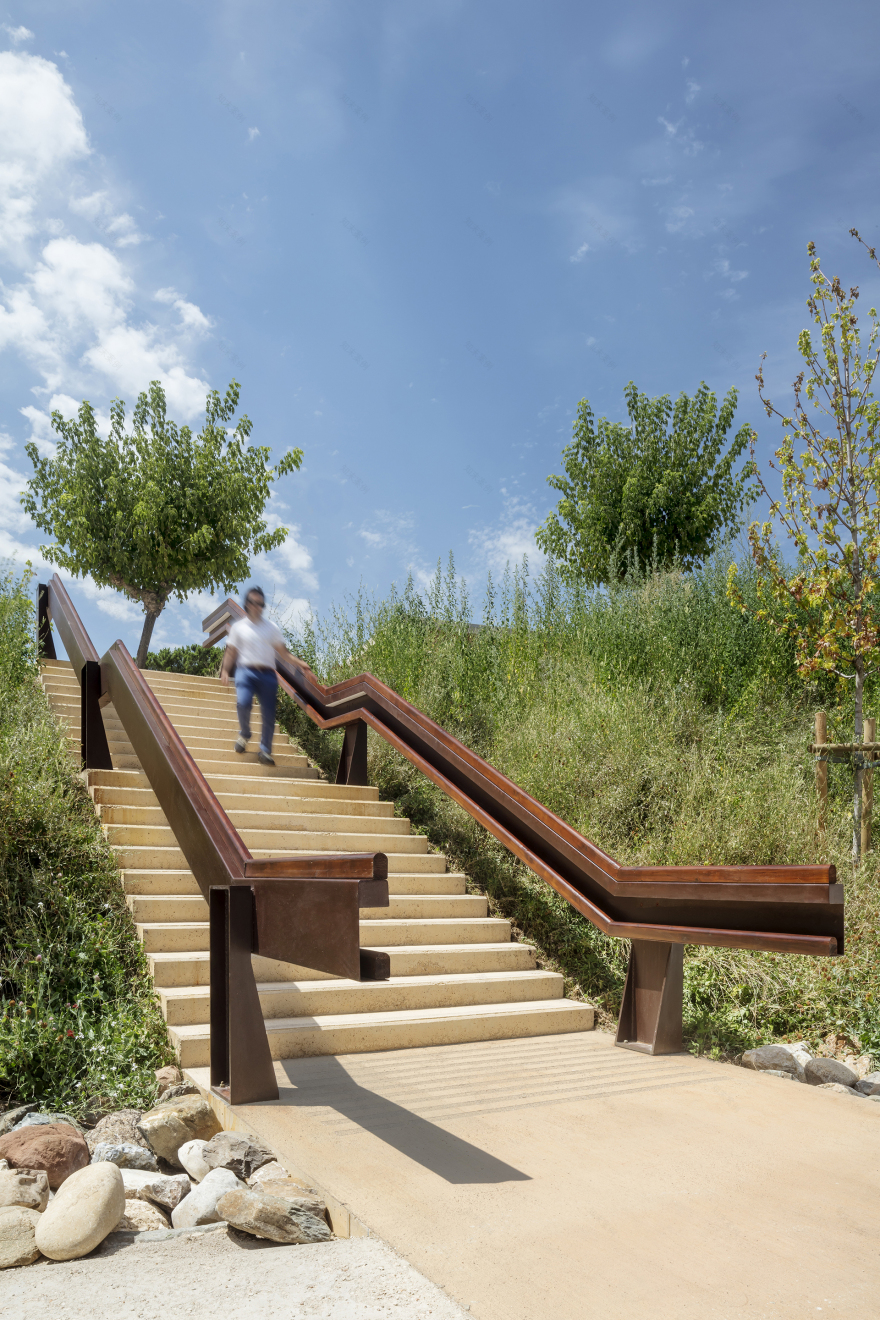
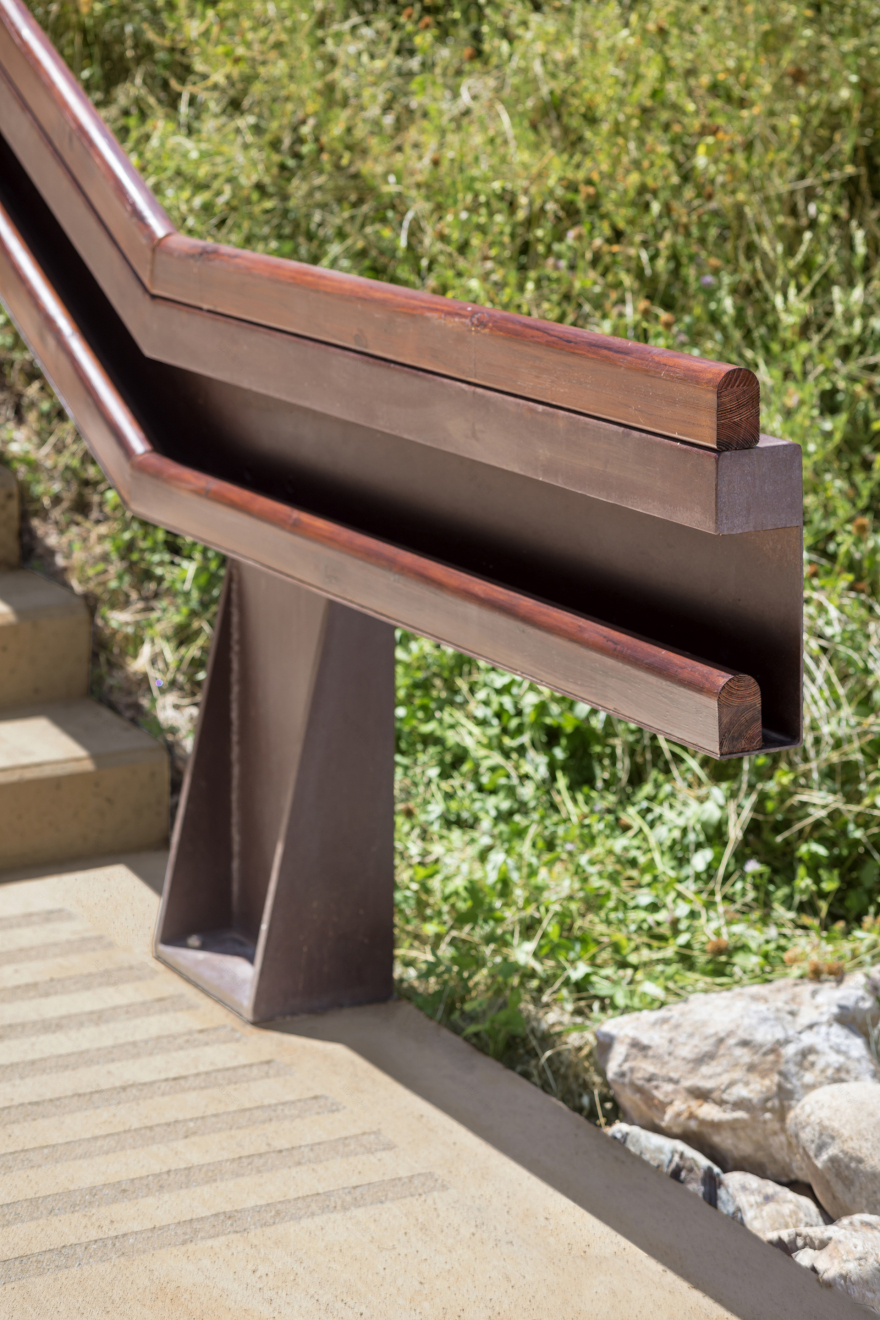
The work has been carried out within the tight budget of 104 Euros per square meter, half the usual in urban public spaces, thanks to leaving the maximum amount of green surface -unpaved and pervious- and to the usage of continuous pavements. The remaining budget has then been concentrated in some qualitative details, like the corten steel plates integrated in the pavement -tear-shaped around the gutters of the porous wells, and forming a stepping stone over the infiltration ditch-, with laser-cut explanatory inscriptions and graphics that reveal the SUDS system. Other details are the accessible double handrails of the main stair with built-in LED lighting, the zigzagging pavement of steel plates on gravel to access the rear terraces of the neighbouring houses, and the benches formed by wooden beams, which are placed in a seemingly random way, as if a virtual current had dragged them there.







南京喵熊网络科技有限公司 苏ICP备18050492号-4知末 © 2018—2020 . All photos and trademark graphics are copyrighted by their owners.增值电信业务经营许可证(ICP)苏B2-20201444 苏公网安备 32011302321234号
苏公网安备 32011302321234号客服
消息
收藏
下载
最近