

创作上传
VIP
收藏下载
登录 | 注册有礼
查看完整案例

收藏

下载

分享

翻译
Architects:Atelier cnS
Area:24410m²
Year:2025
Photographs:Siming Wu
Category:Renovation,Commercial Architecture
Design Direction:Zhu Zhiyuan, Song Gang, Zhong Guanqiu
Project Director:Hairui Lin, Huang Wenxuan
Design Team:uan Xuqian, Li Peijia, Zhu Kaiyao, Zhao Hang, Lin Dongyan, Cai Yaqian, Frank Ouyang (Intern)
Construction Drawings:Atelier cnS-S&C design, Shengyi Architecture Design Studio, Tianyuanji Design Studio (Landscape)
Construction Contractor:Foshan Urban Construction Engineering Co., Ltd. (Grain Processing Plant); Guangdong Yangyi Construction Co., Ltd. (Distillery)
City:Foshan
Country:China

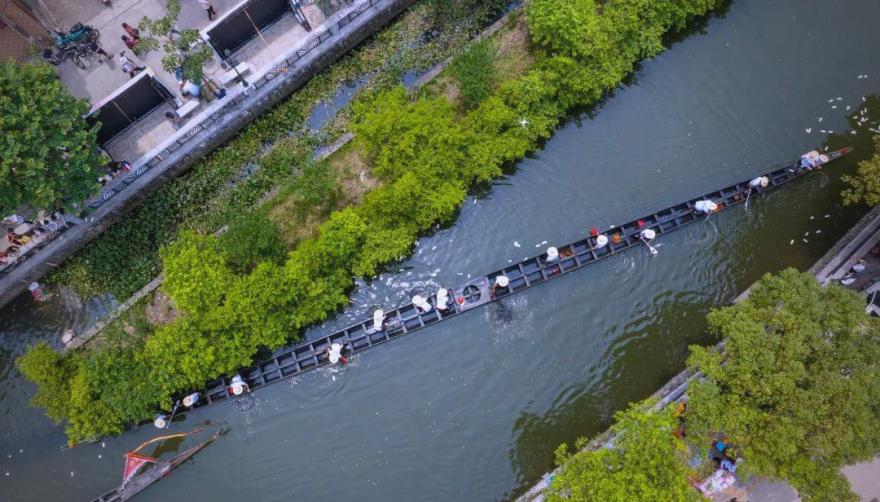
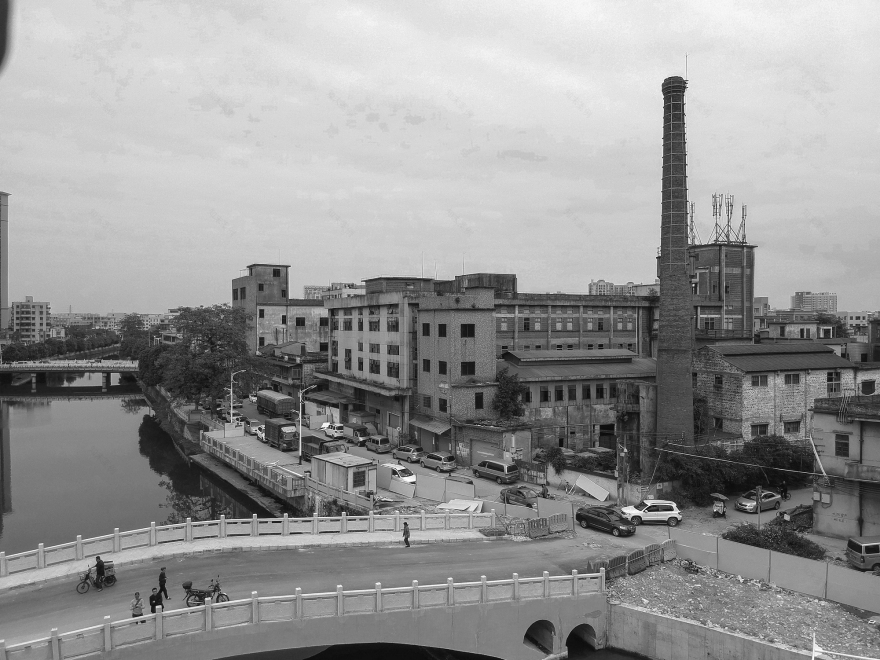
Text description provided by the architects. Once a typical Pearl River Delta industrial town, Dali (Nanhai District) neglected human-centered public life amid rapid development. With the Qiandeng Lake axis extension, it transforms into a livable city, unlocking public space in dense fabric. The Yongping Warehouses project, in Yanbu Old Dragon 1432 Zone along Huadi River, revives obsolete riverside warehouses—once part of the Guangzhou-Foshan thoroughfare's trade heritage—into a vital waterfront public space.

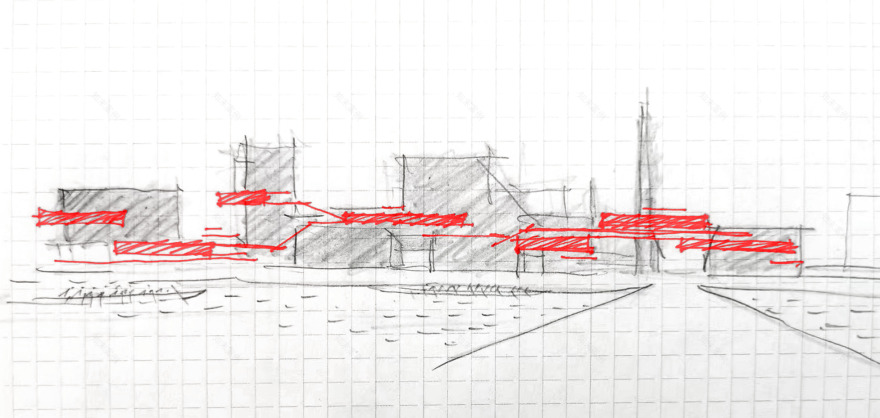

01.A Wisp of Cloud — An Urban Public Beacon - As Dali's first waterfront urban renewal project, it features an iconic public art installation inspired by a white cloud rising from old warehouse roofs. Blending landscape and public art, it serves as a daily leisure space, a carrier of urban shared spirit, and a beacon for Dali's comprehensive public space system.


02 Vertical Stacking of Spaces - Constrained by a narrow site and flood control paths, the design adopts vertical stacking: the rooftop is elevated into a park extending along the river, while the full warehouse volume below is dedicated to commerce. This balances commercial self-sufficiency with waterfront public space, rethinking the traditional "park-commerce" binary opposition.


03 Trade-offs in Renovation - The old warehouses, though architecturally unremarkable, embody the era's utilitarian construction as historical fragments. Renovation trade-offs include replacing wooden roof trusses/tiled roofs with a rooftop park and higher interior ceilings, while preserving historic facade traces over transparent commercial facades. Old and new converge at warehouse eaves, with climbing trellises that will evolve with plant growth to continue the site's architectural history.
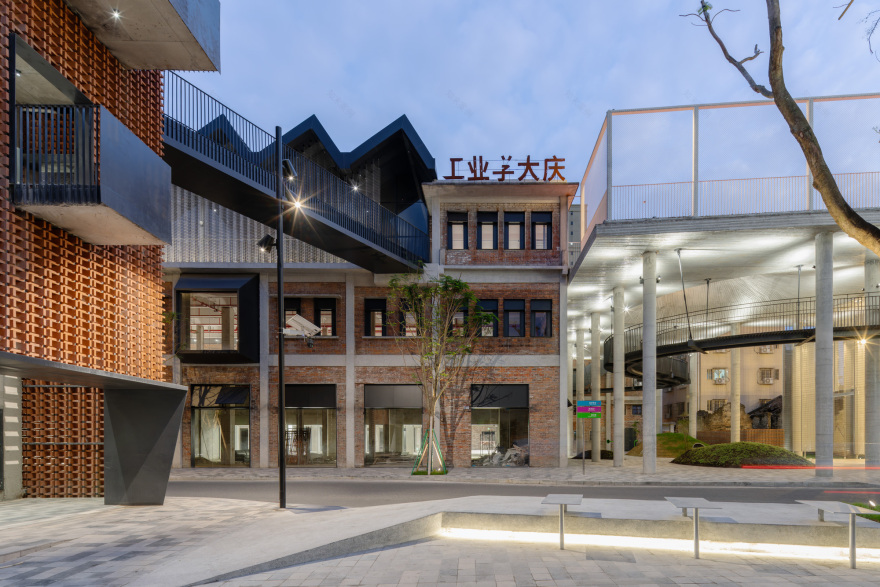


04 Uneven Ground - Removing old tiles unlocked sloped roof potential: abstract "uneven" surfaces are transformed into grassy slopes, steps, slides, and gardens, letting people engage intimately with roofs once only admired from afar. Waste materials are repurposed—reclaimed stone for railings/paving, old wood for displays—preserving site memory. Original warehouse passages are retained as "blood vessels," transformed into an elevated circulation system connecting rooftops, commerce, and waterfront, enabling cross-ventilation and shifting scenery. A mechanical floor beneath the roof houses equipment, unifying function and aesthetics.


05 Conclusion - "Yat Gau Wan" (a wisp of cloud) is both installation and urban manifesto. As Dali's first waterfront adaptive reuse project, it serves as a leisure space and civic spirit carrier. Today, it is a Guangzhou-Foshan border landmark: residents enjoy the riverfront, children play on sloped roofs, and young people gather against the industrial backdrop, blending the renovated warehouses into new urban fabric and public life.


Project gallery






南京喵熊网络科技有限公司 苏ICP备18050492号-4知末 © 2018—2020 . All photos and trademark graphics are copyrighted by their owners.增值电信业务经营许可证(ICP)苏B2-20201444 苏公网安备 32011302321234号
苏公网安备 32011302321234号客服
消息
收藏
下载
最近