

创作上传
VIP
收藏下载
登录 | 注册有礼
查看完整案例

收藏

下载

分享

翻译
Architects:siarchitecture
Area:720m²
Year:2025
Photographs:Yumeng Zhu,Zhechen Yu,siarchitecture
Engineering:LI Fengbo
Landscape:siarchitecture
Category:Hotels
Lead Architects::DONG Xiaoxiao, LUO Siwei
Design Team:DONG Xiaoxiao, LUO Siwei, CHANG Ruibo (Intern), SHI Xinran (Intern)
Clients:Fuliang Wuxi Hotel Management Co., Ltd.
City:Jingdezhen
Country:China
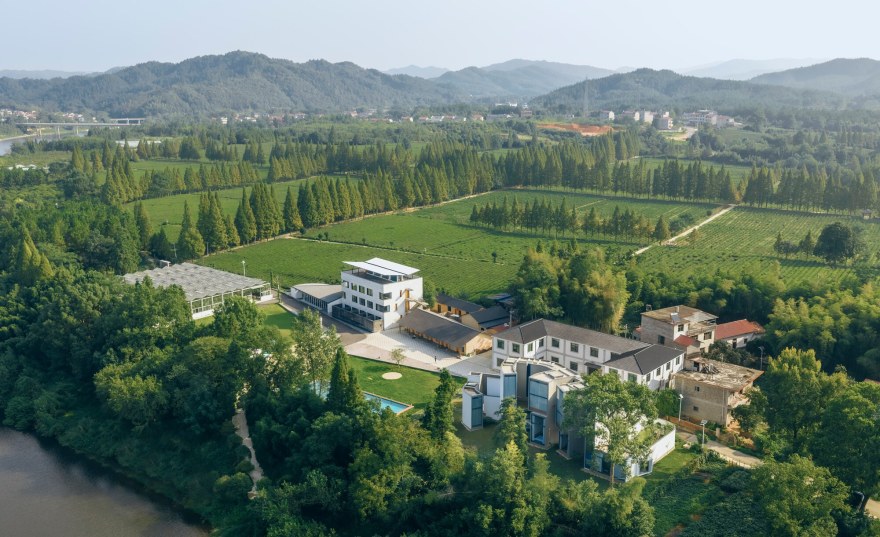
Text description provided by the architects. In architectural discourse, the notion of the "local" is often associated with regionally rooted building knowledge—materials, structures, and craftsmanship shaped by long-term interaction between human practices and the environment. In contemporary China, however, the idea of local construction is frequently reduced to two recognizable paradigms: rural architecture employing traditional materials and techniques, and hybrid practices that juxtapose local materials with industrial systems. Such interpretations overlook a broader and more pervasive reality.
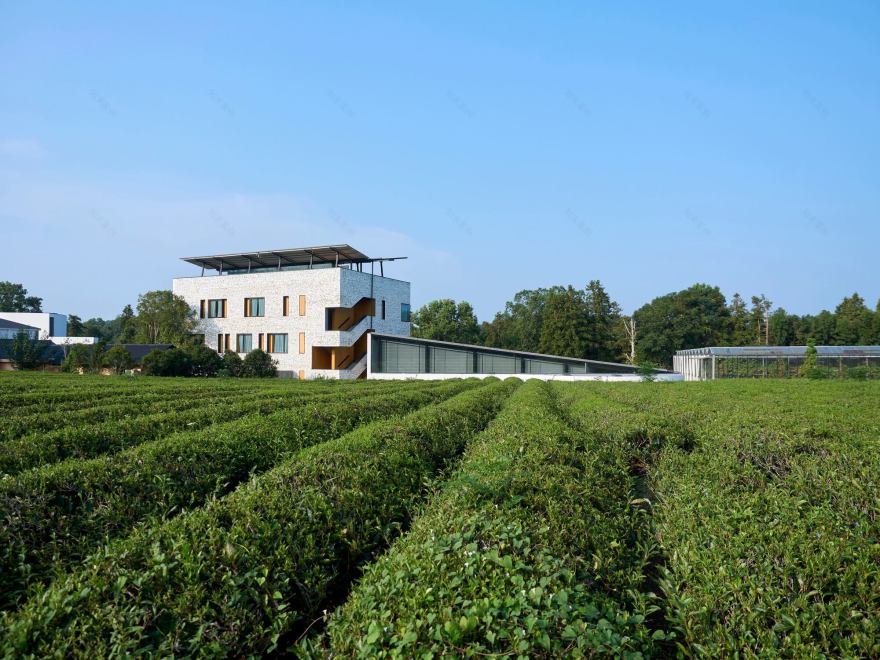
Across counties and townships, a mature system of reinforced concrete and steel construction has emerged through decades of development. Supported by skilled local builders, efficient logistics, and accessible technical knowledge, this system constitutes the everyday foundation of construction in much of contemporary China. It is within this expanded understanding of locality that the project Mine Resort · Hill is situated.
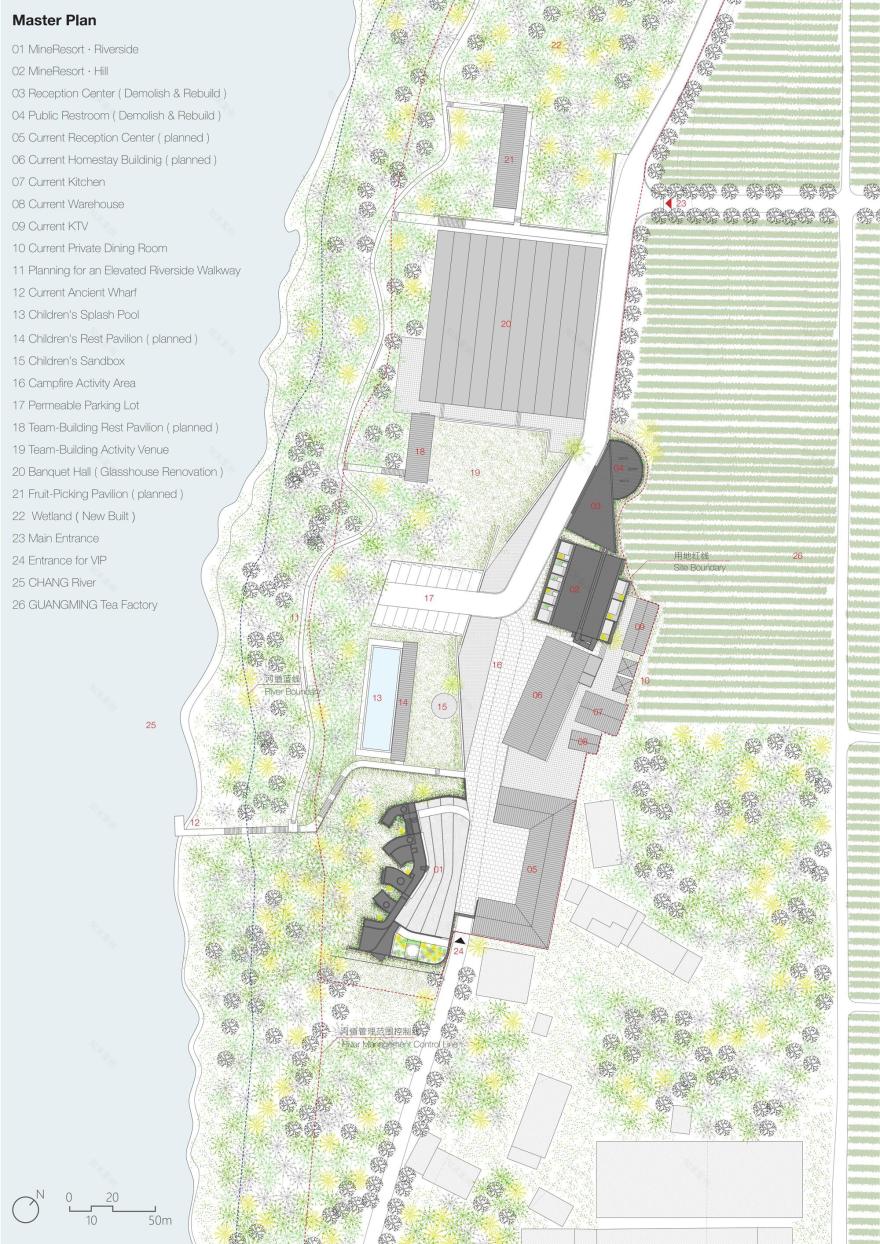
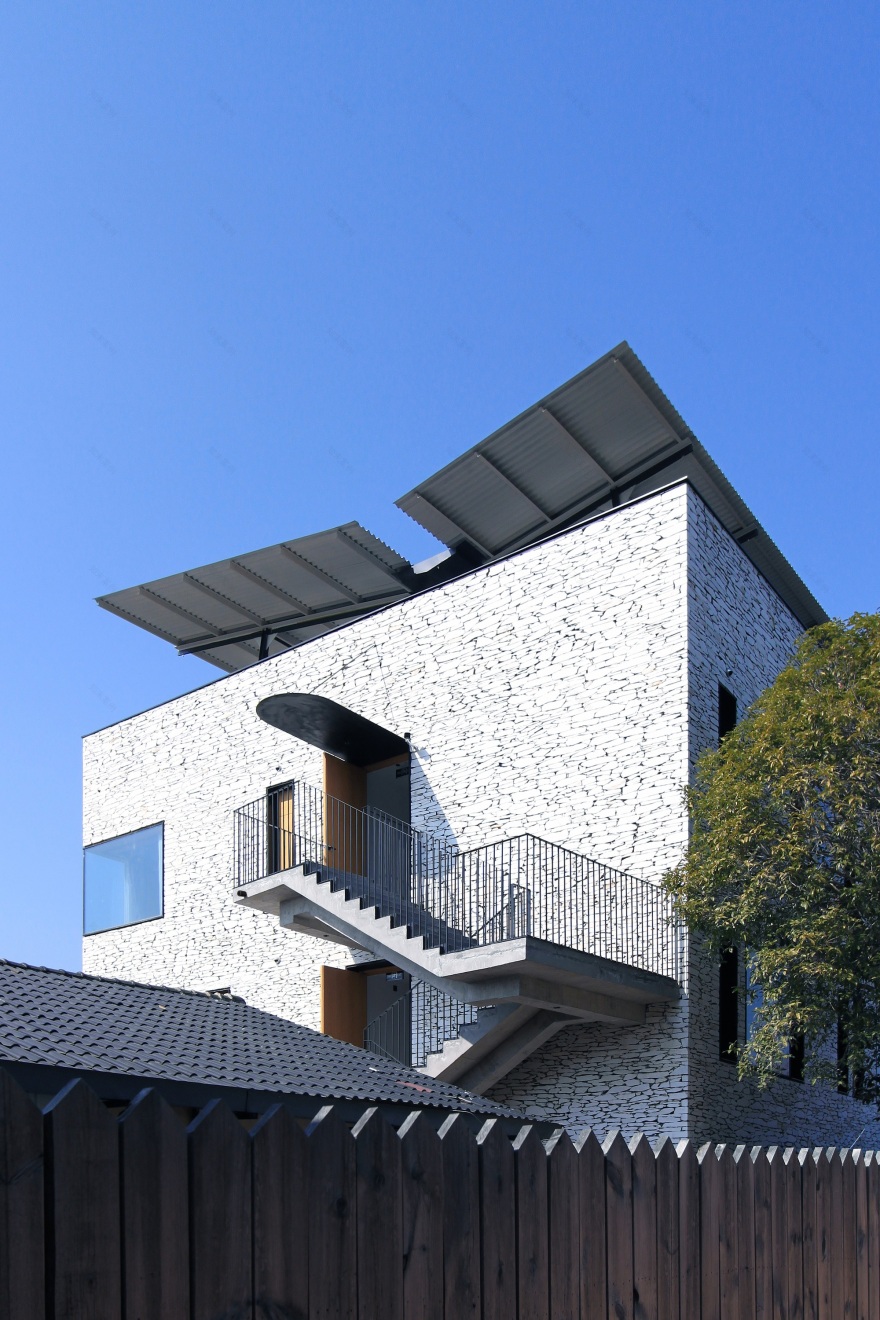
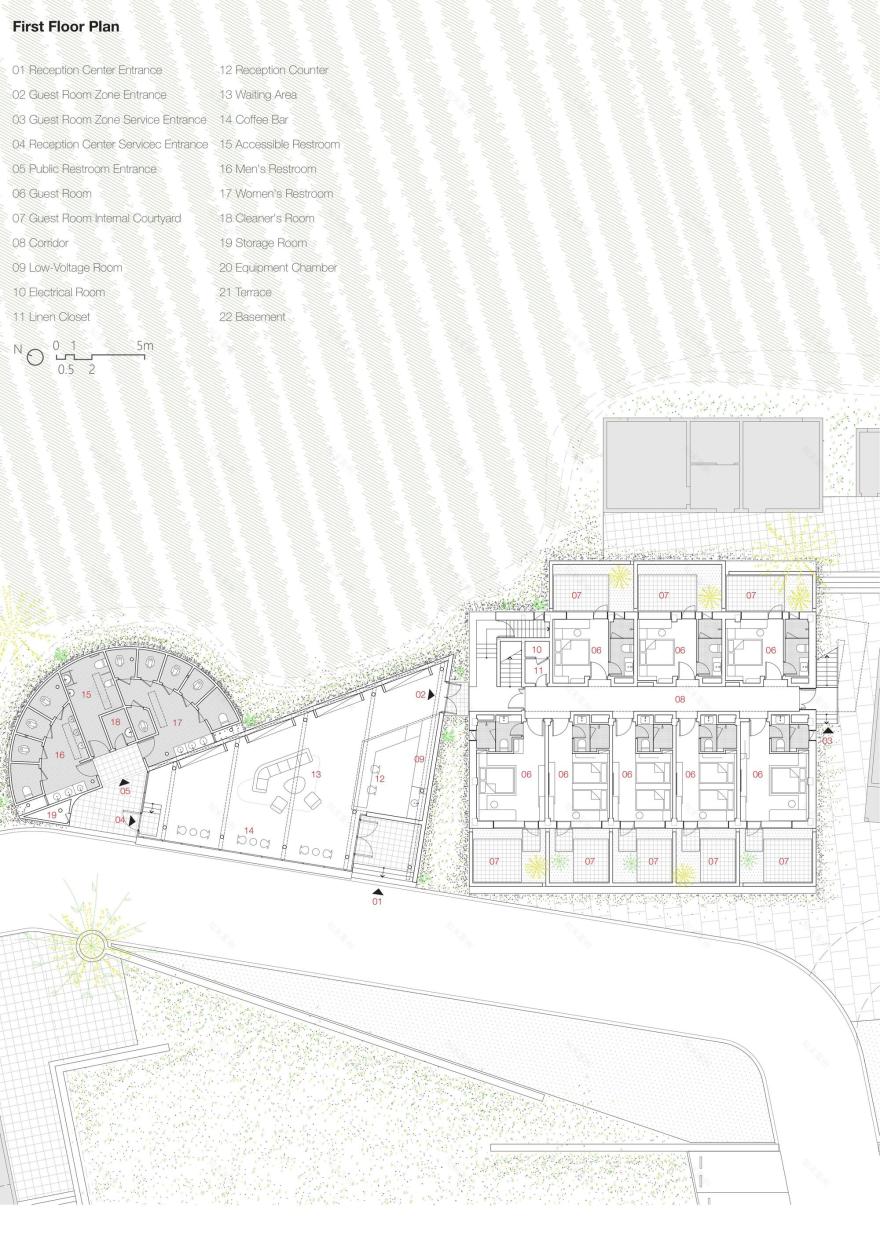
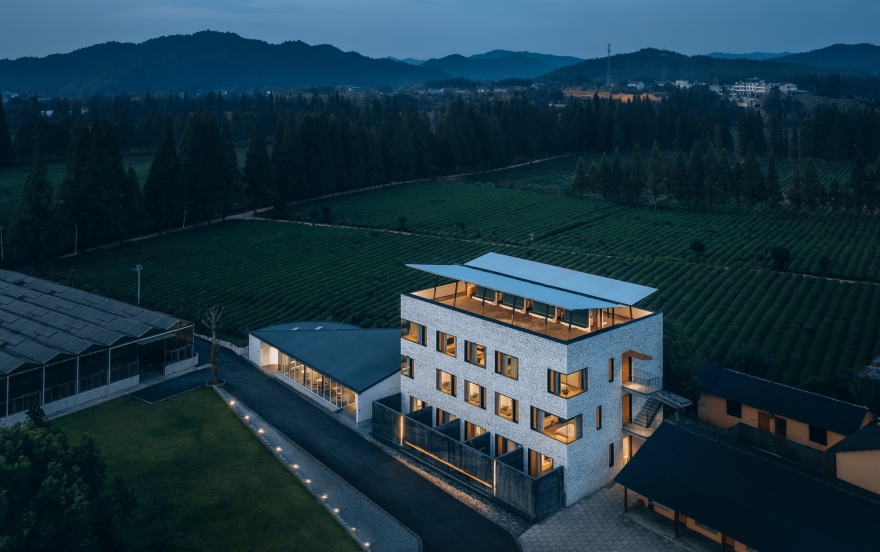
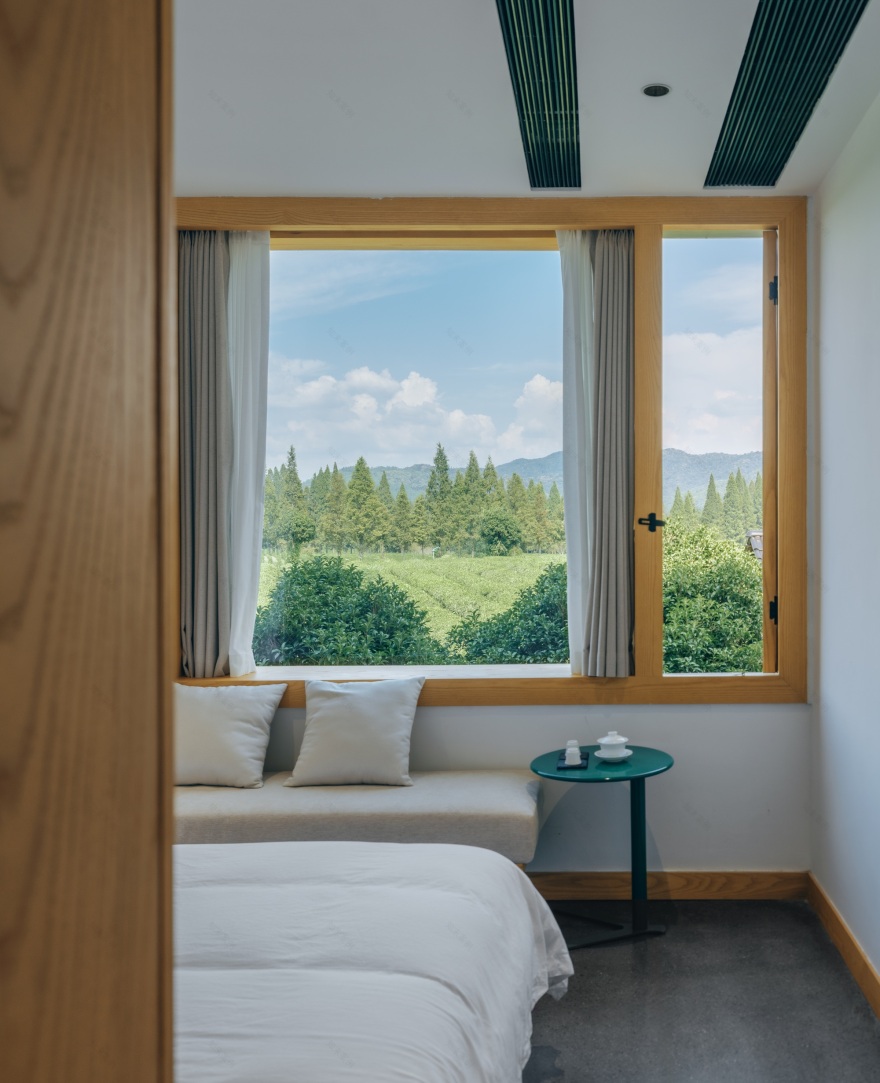
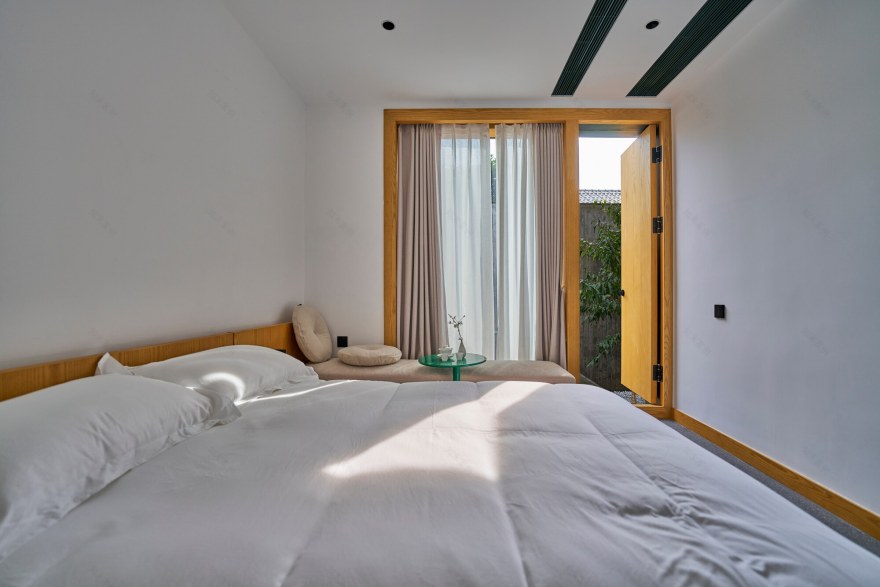
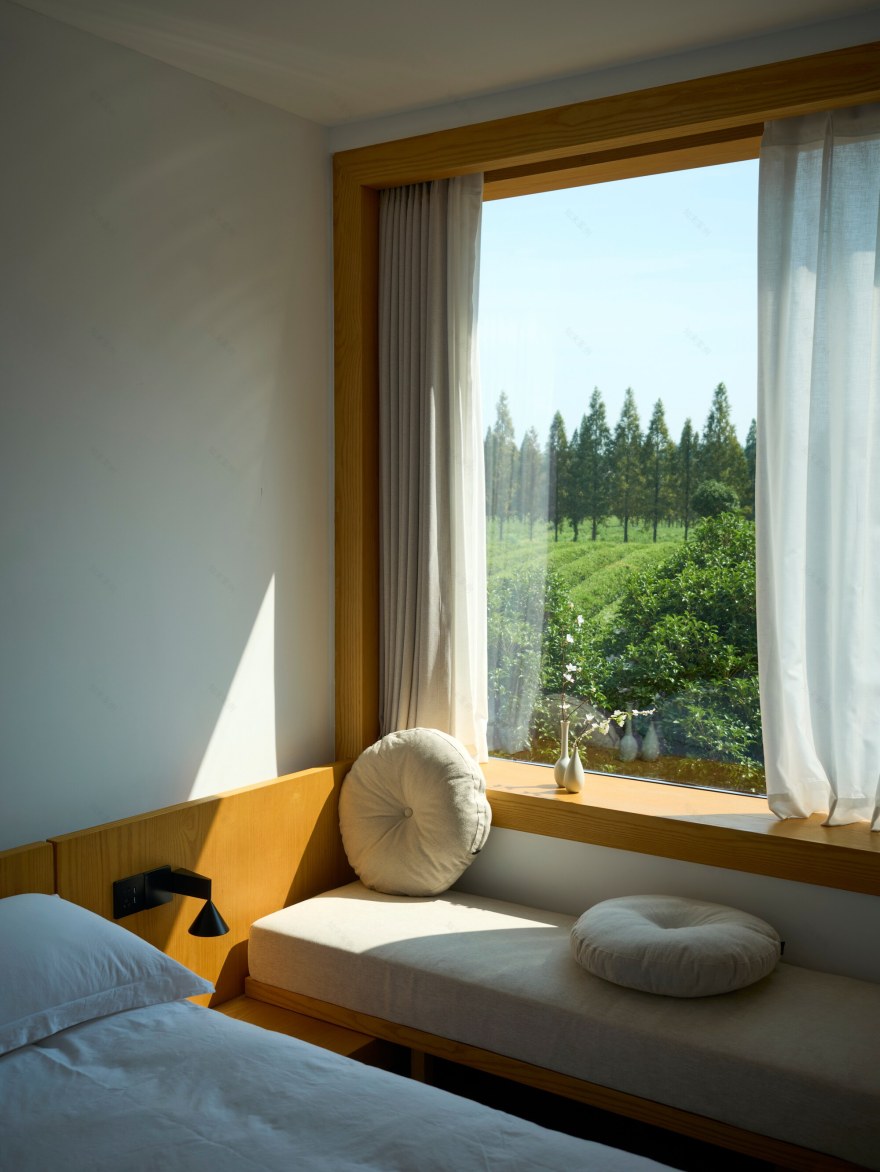
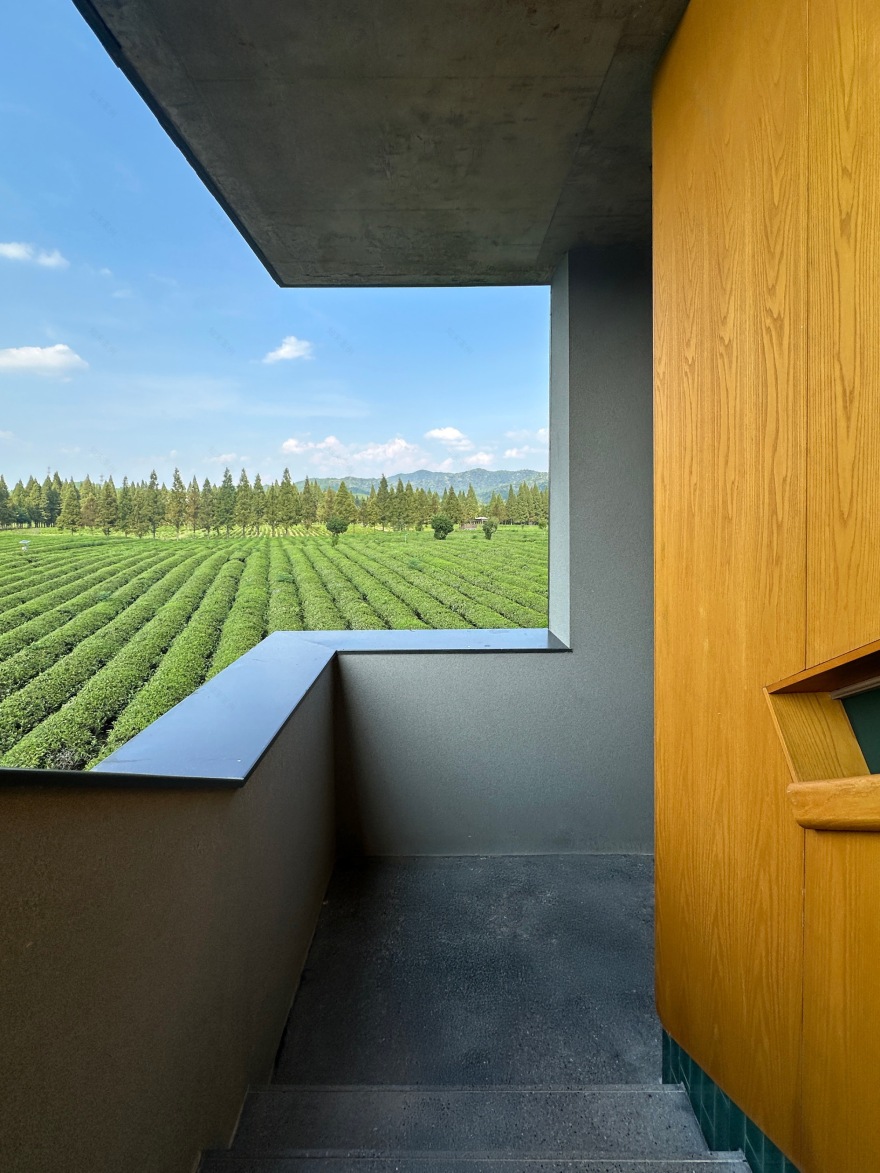
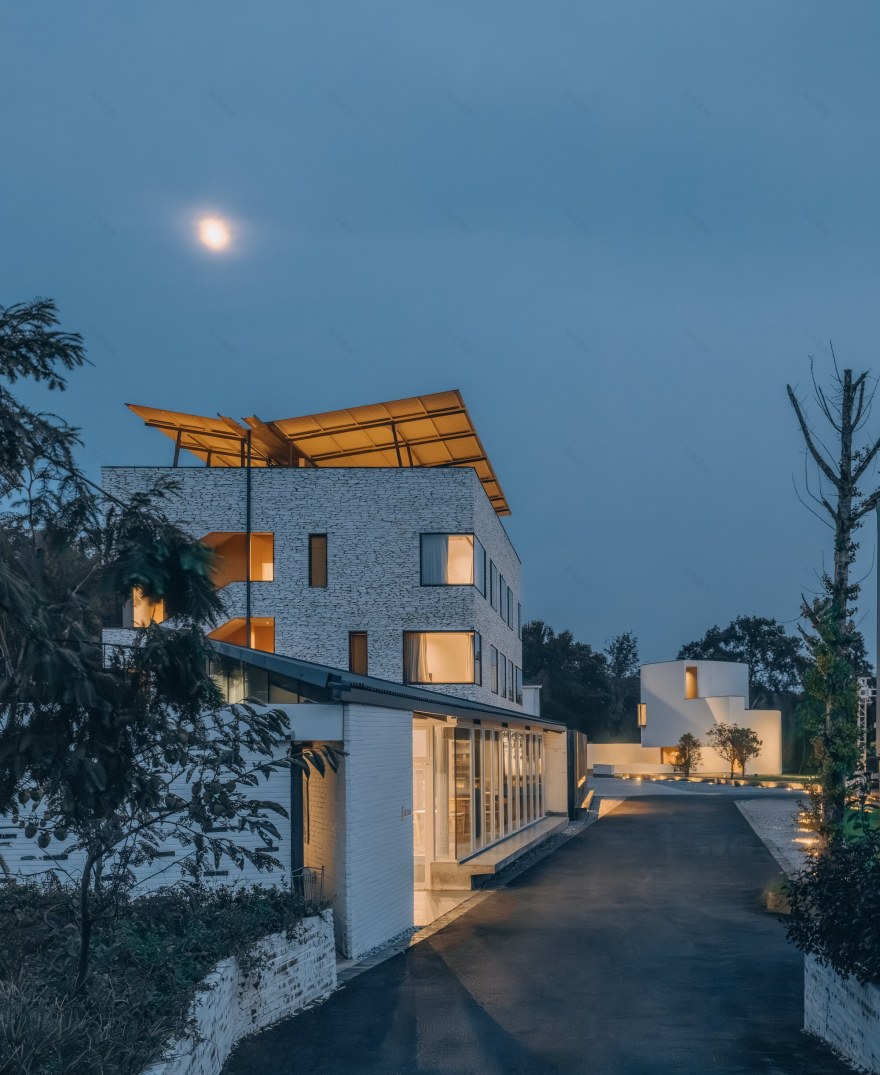
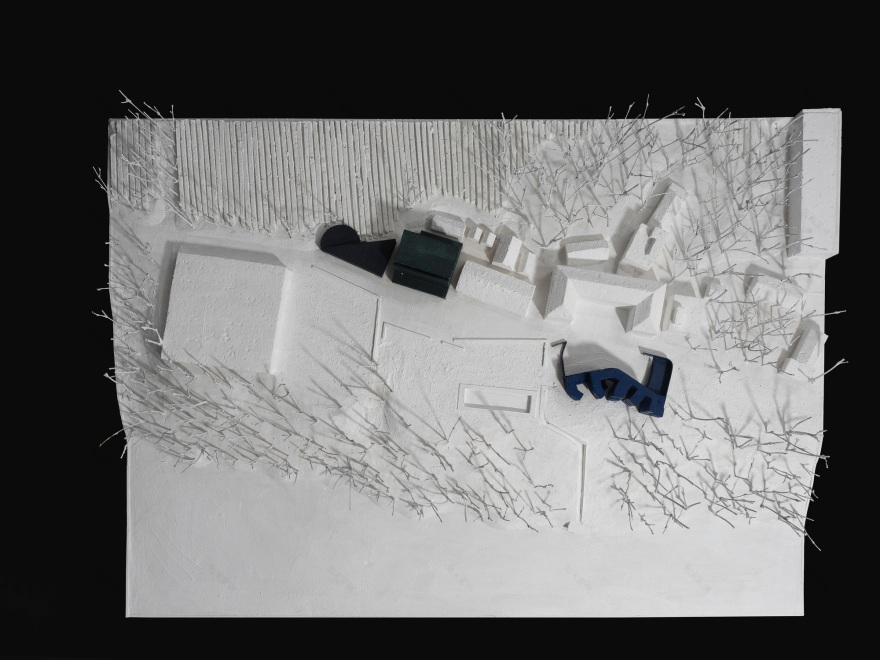
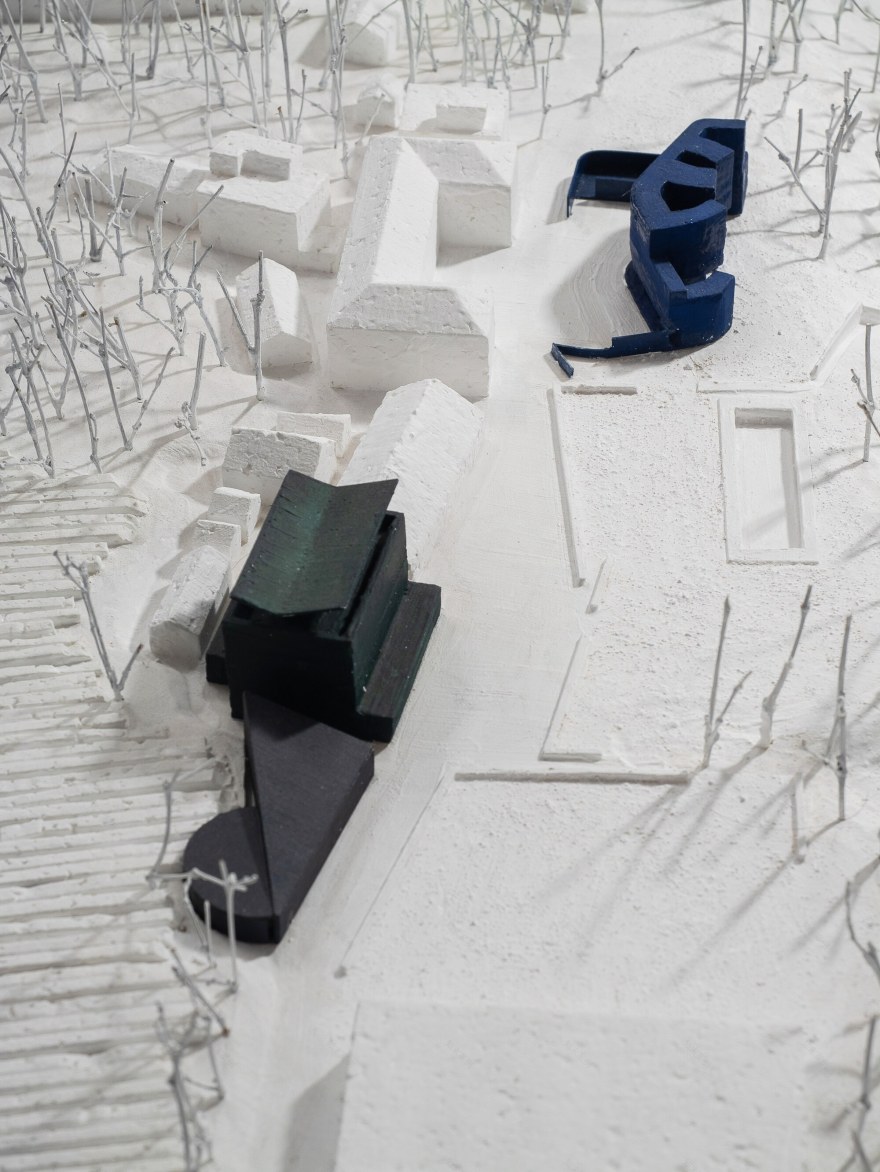
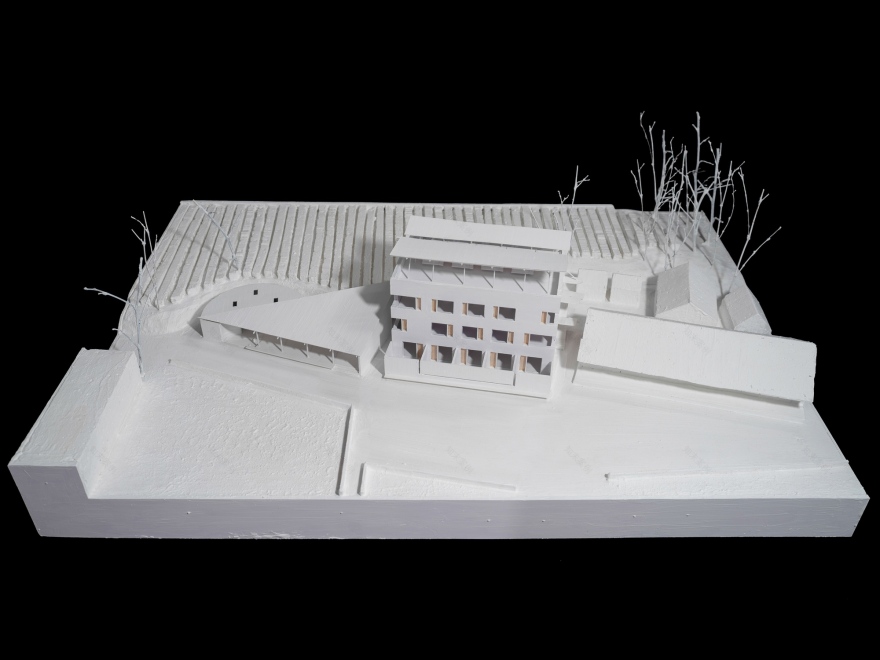
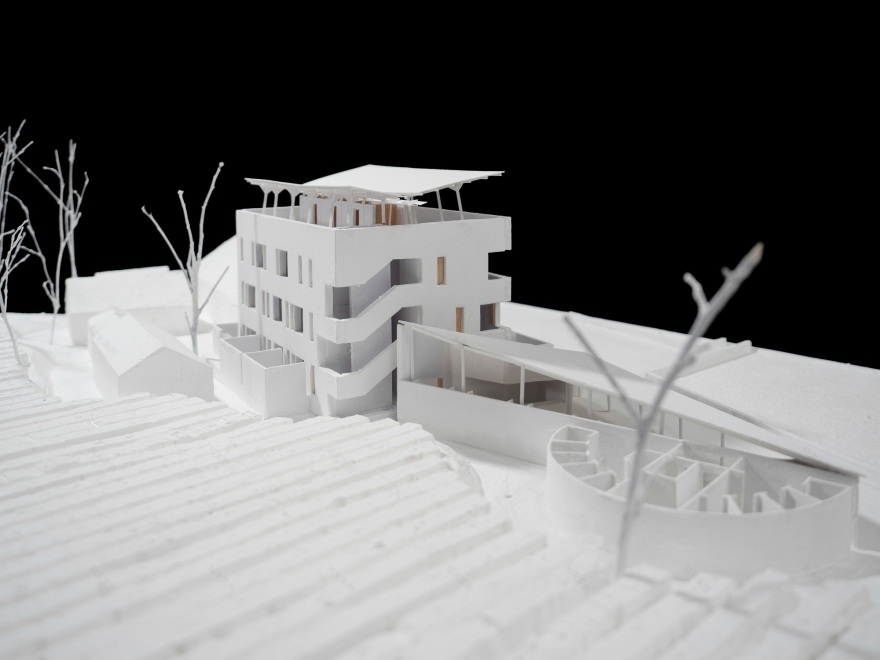
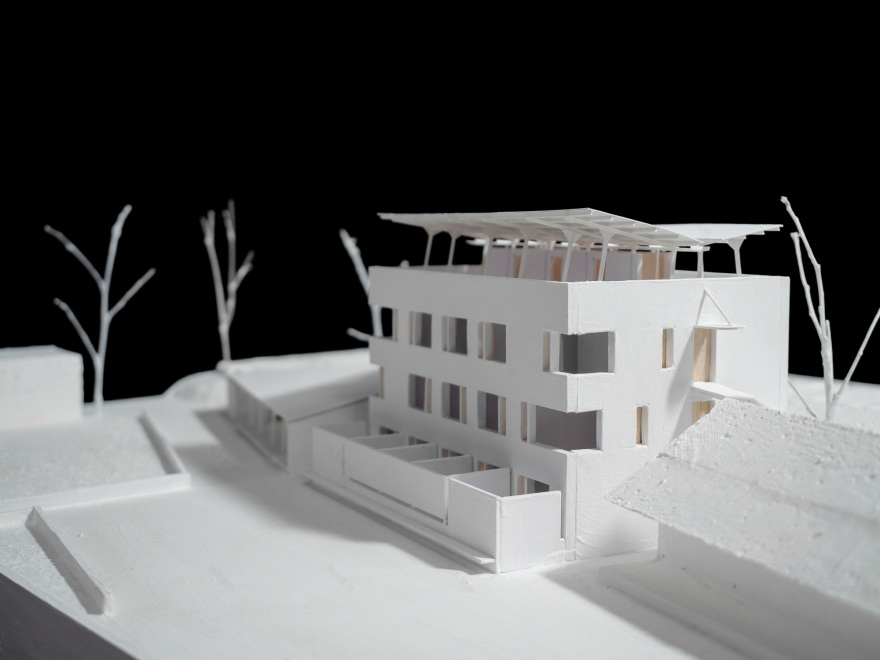
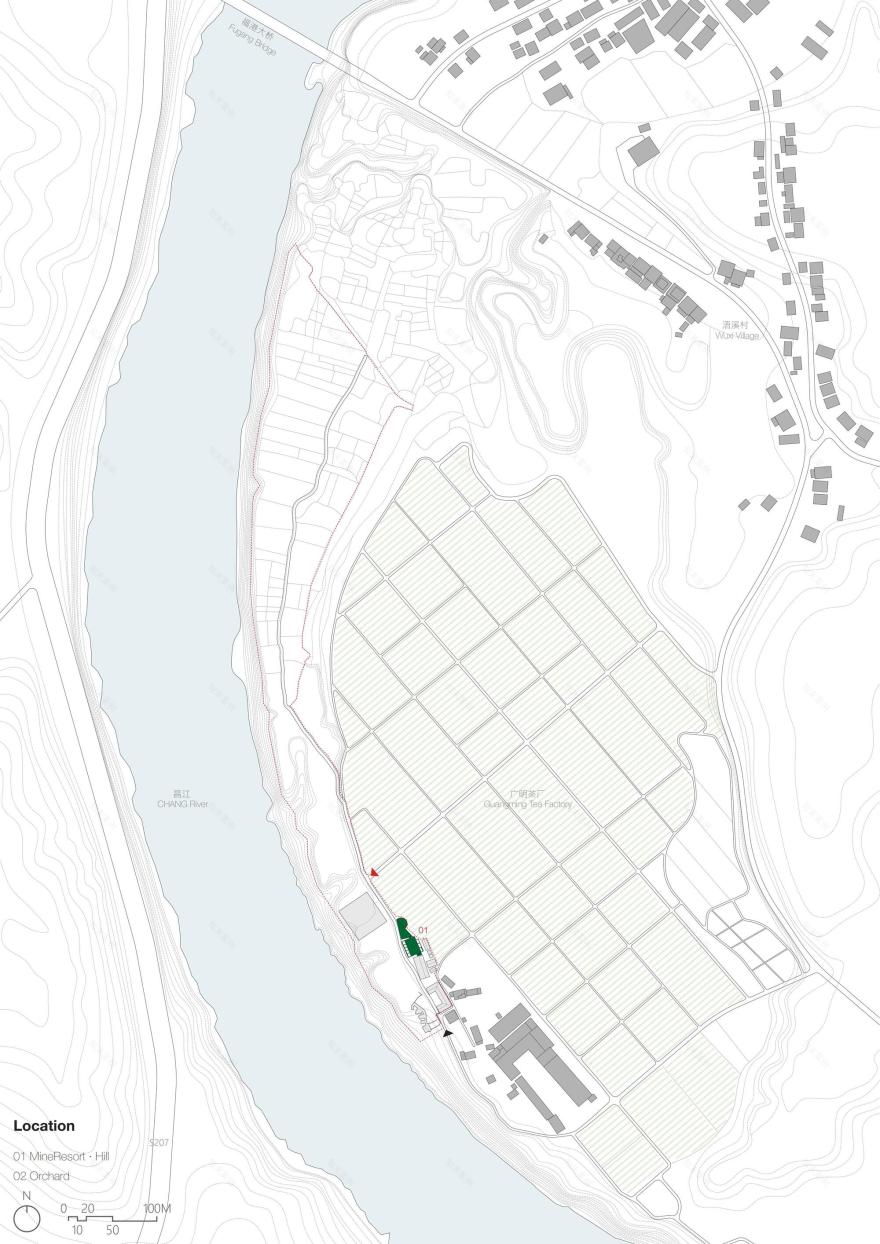
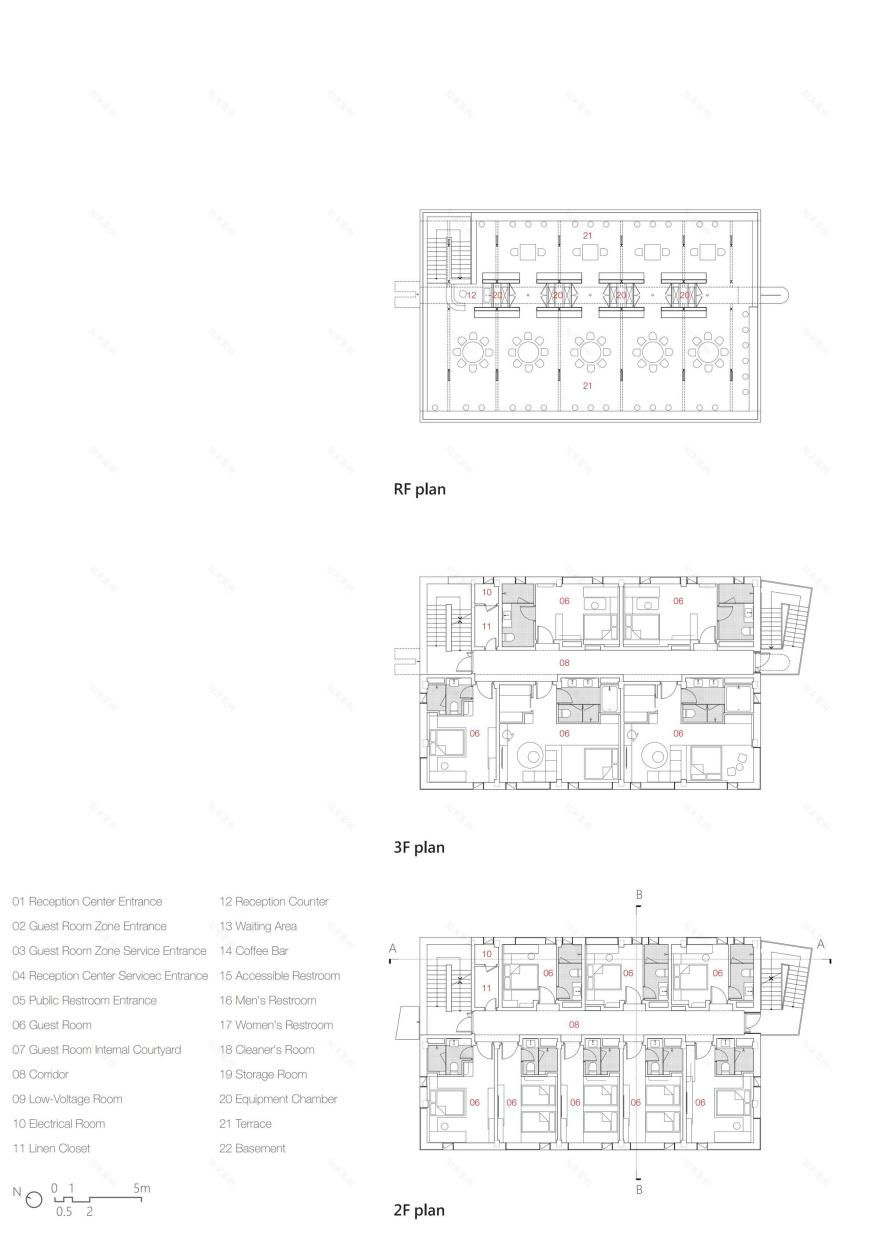
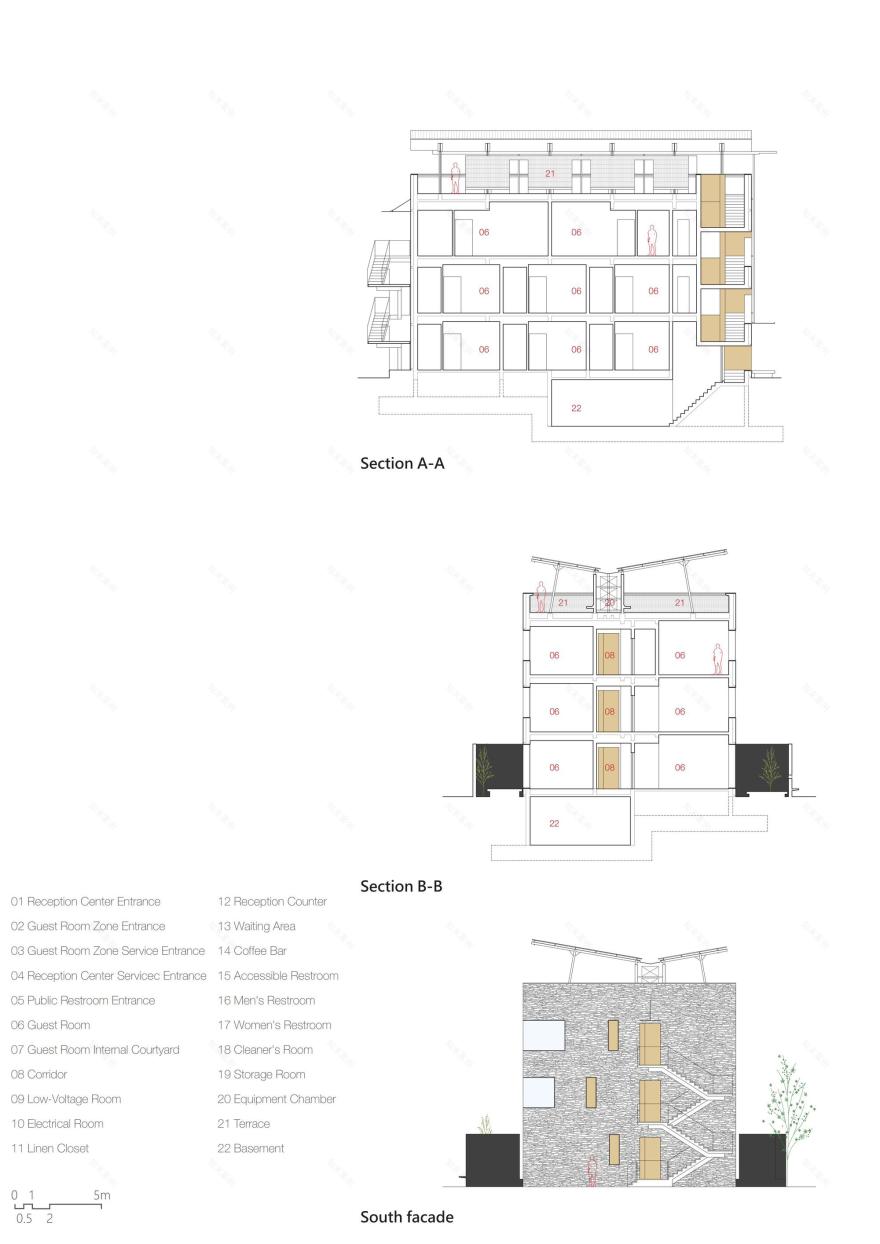
Located in Fuliang County, Jingdezhen, the project occupies a central position within a privately owned agricultural estate. The program consists of a three-story accommodation building of approximately 720 m² and a single-story reception center. Driven by operational demands, the main building accommodates 21 guest rooms organized along a compact internal corridor. Meanwhile, the site presents contrasting landscape conditions: distant views toward the Chang River to the west and immediate proximity to tea plantations to the east. The building thus mediates between density requirements and differentiated environmental responses.
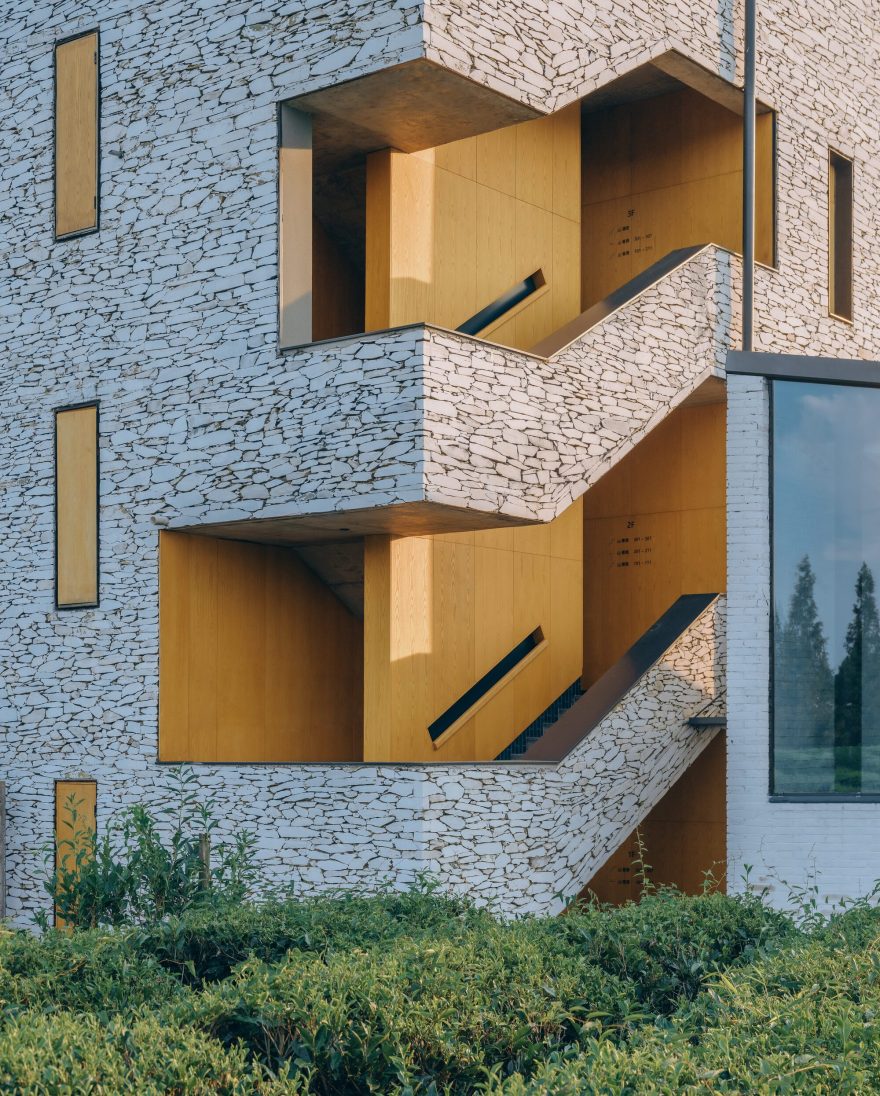
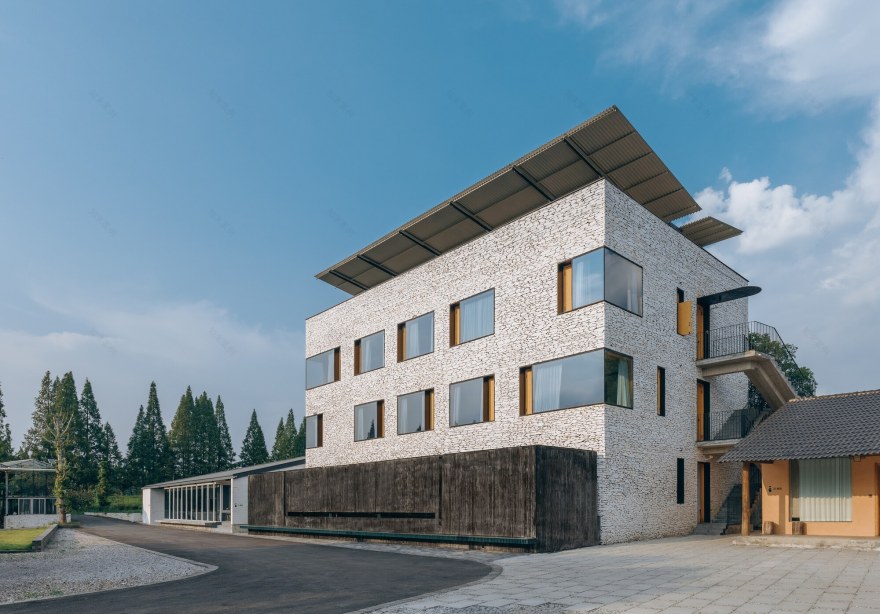
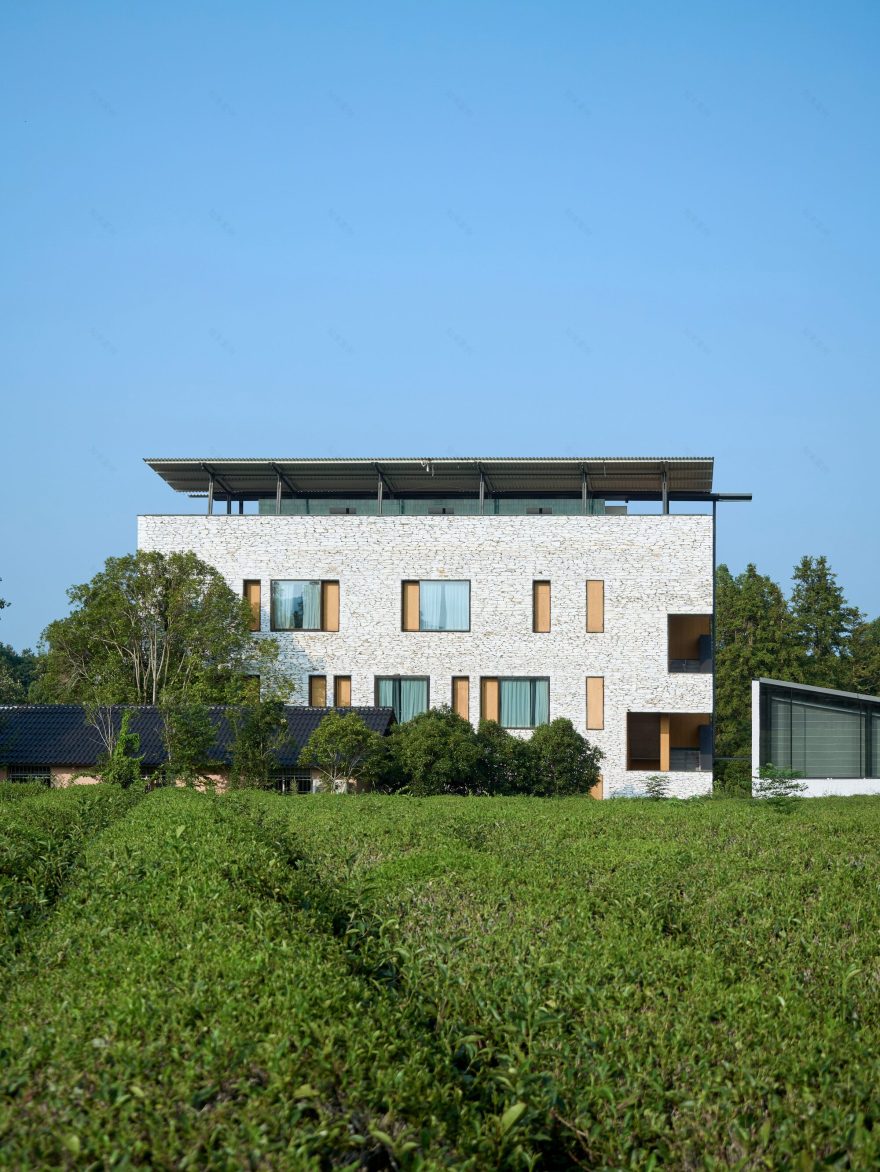
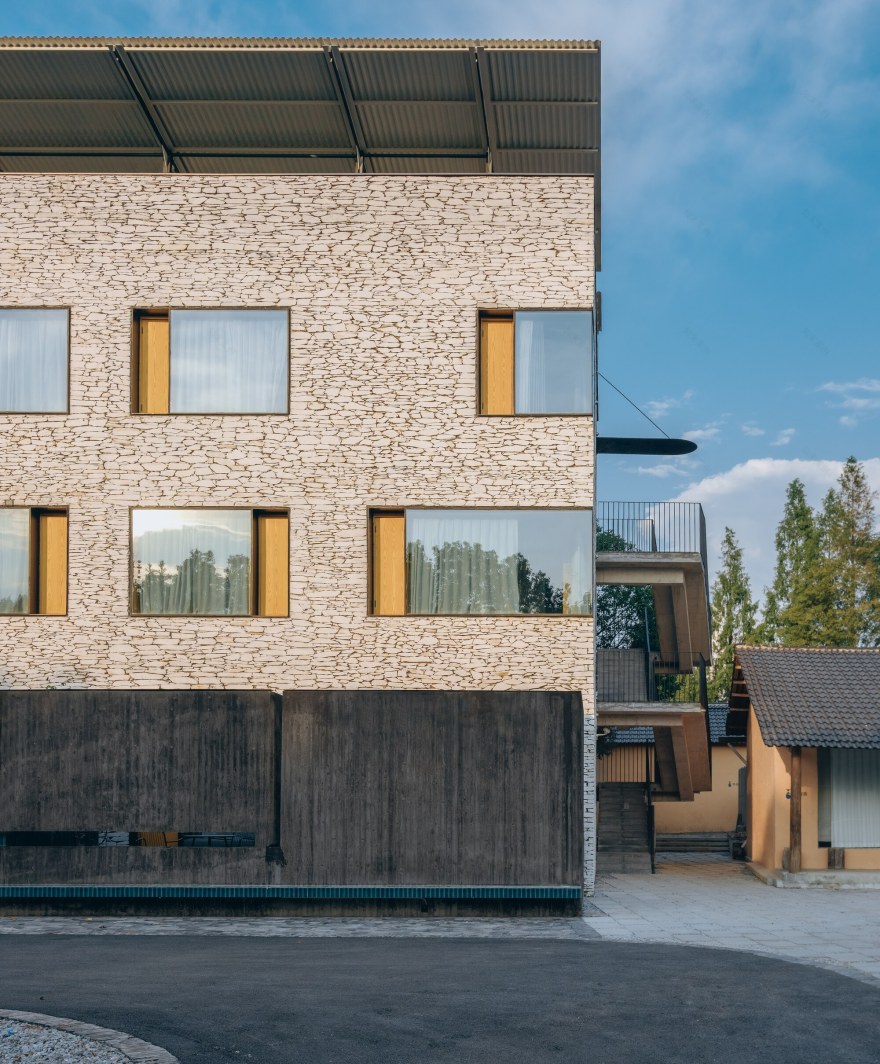
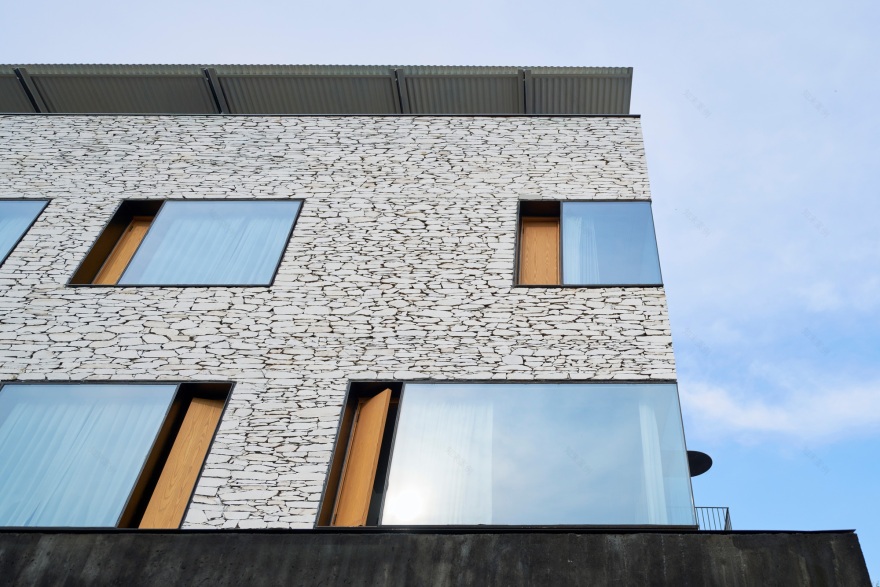
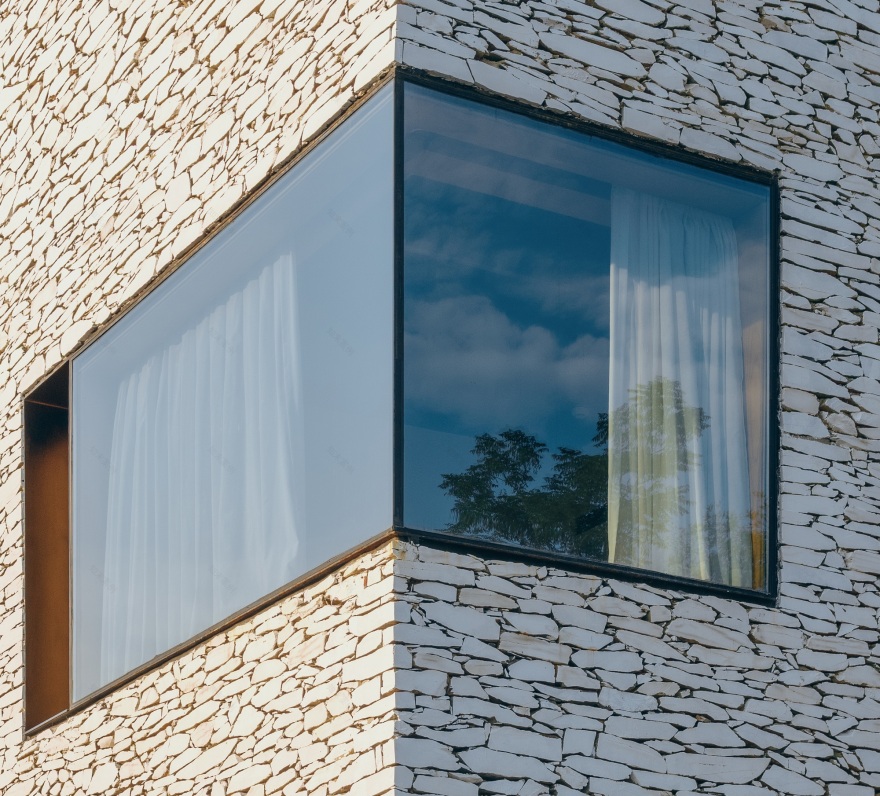
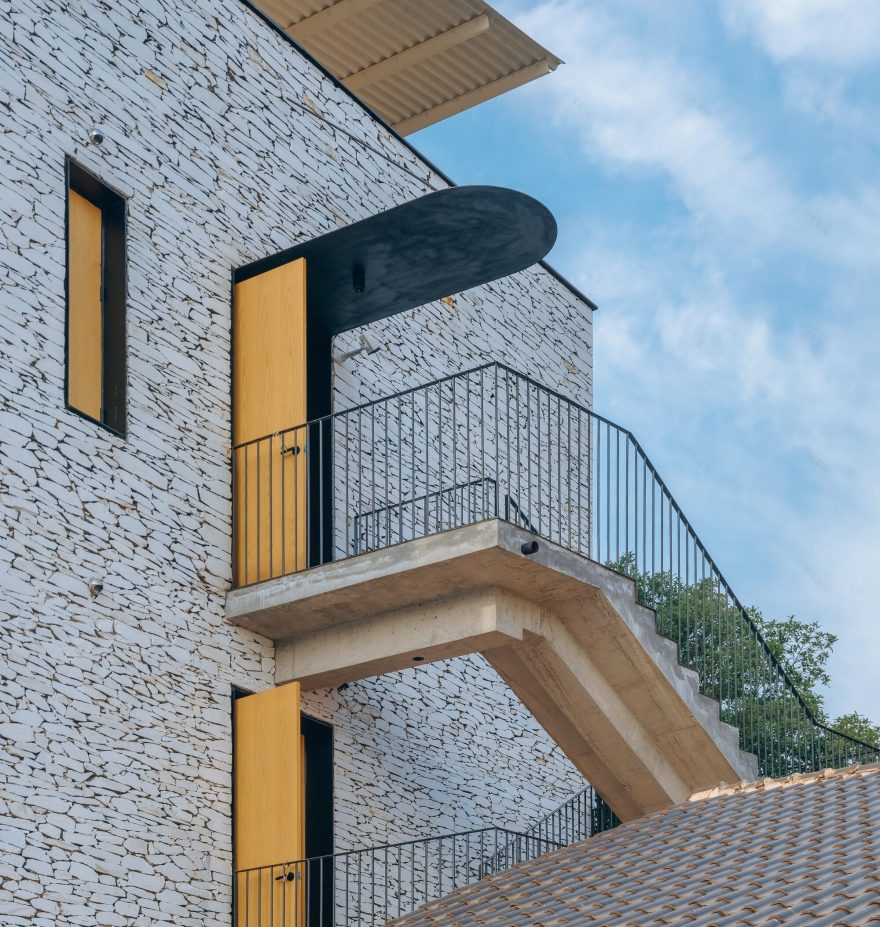
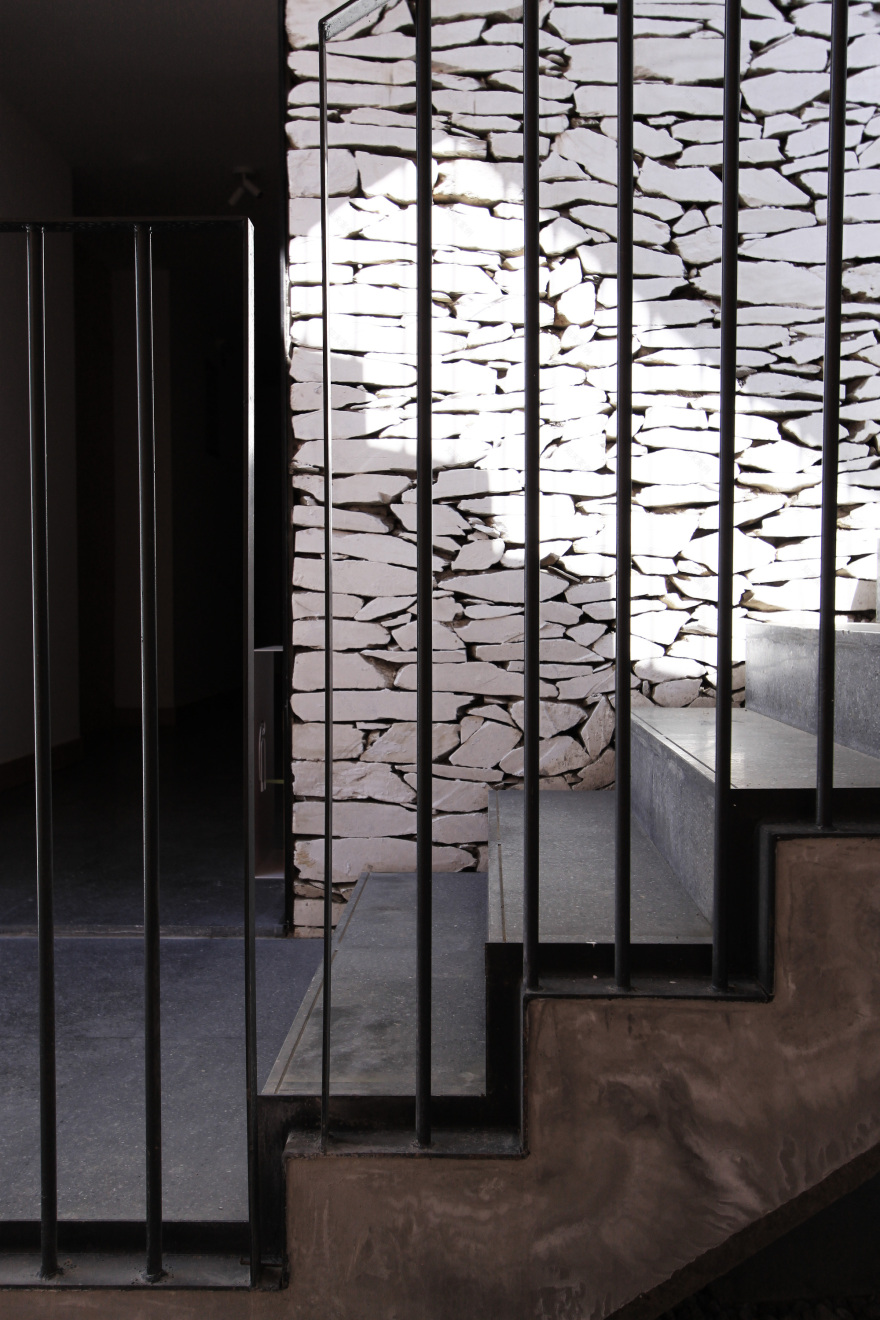
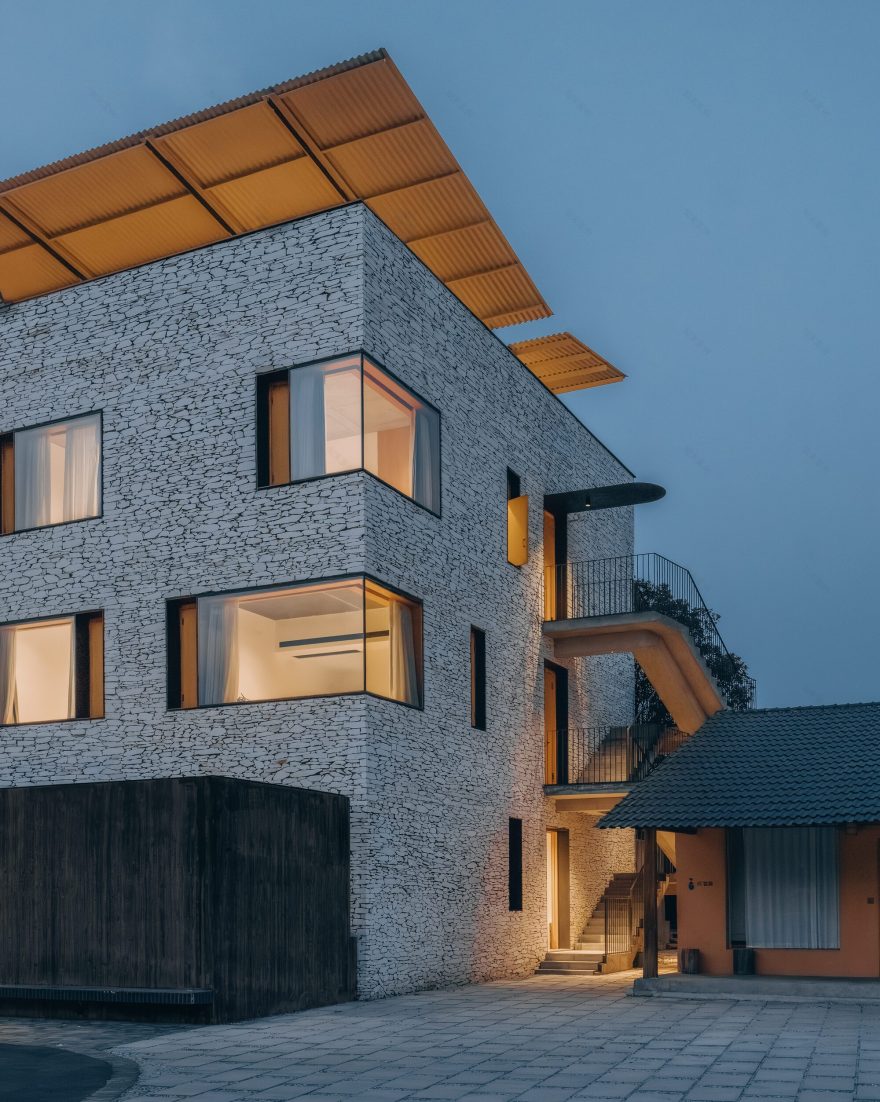
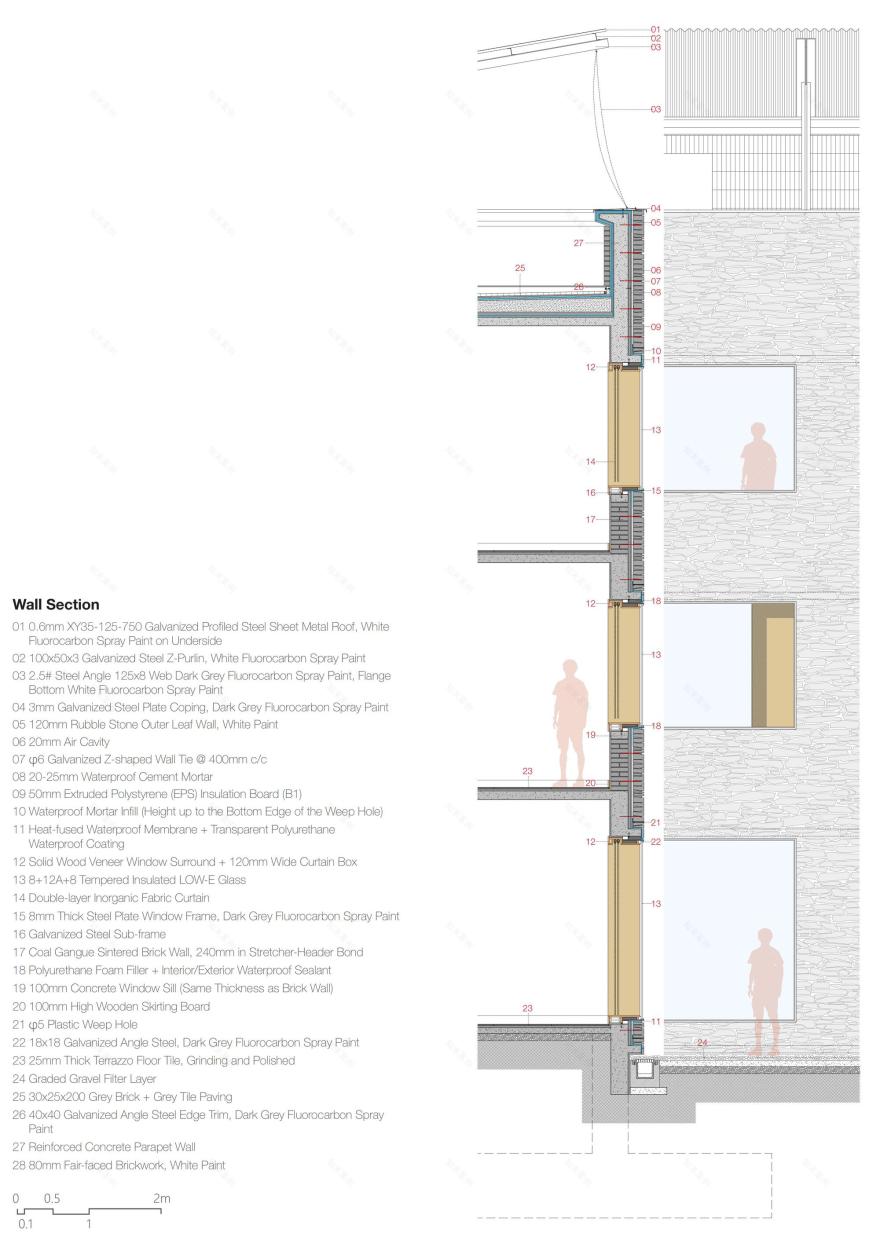
Starting from a compact rectangular volume, the design evolved through three interrelated themes. The first, "black concrete," addresses structure and privacy. Reinforced concrete frame construction was adopted as the most feasible system, while inward-facing courtyards were introduced to ensure privacy for ground-floor rooms. Cast-in-place colored concrete walls define these courtyards, establishing a clear material distinction within a simplified construction logic. The second theme, "stone," concerns the articulation of mass and perception. Flush window detailing reinforces the solidity of the volume, while the outer leaf wall was reimagined using reclaimed stone from nearby road construction. Through adaptive construction techniques and a final application of white coating to moderate visual complexity, the building reads as a coherent mass rather than a collage of textures, evoking a "mountain-like" presence.
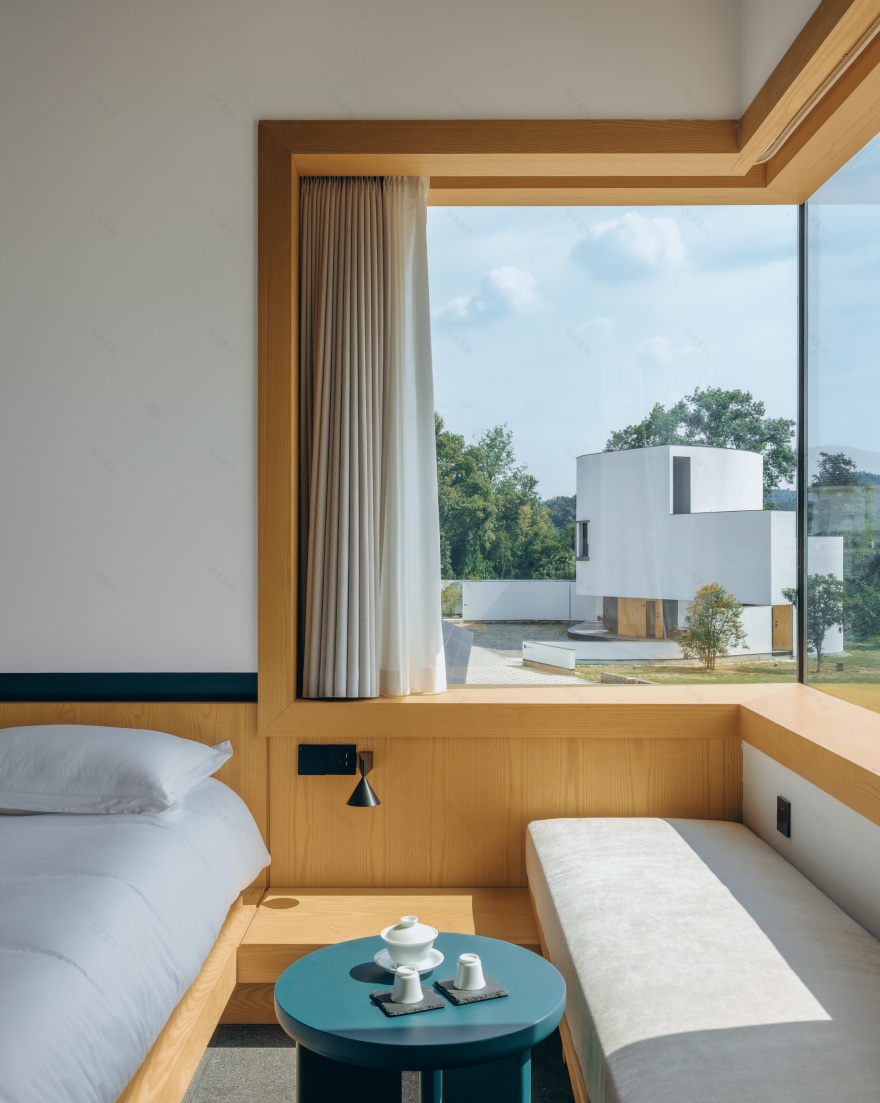
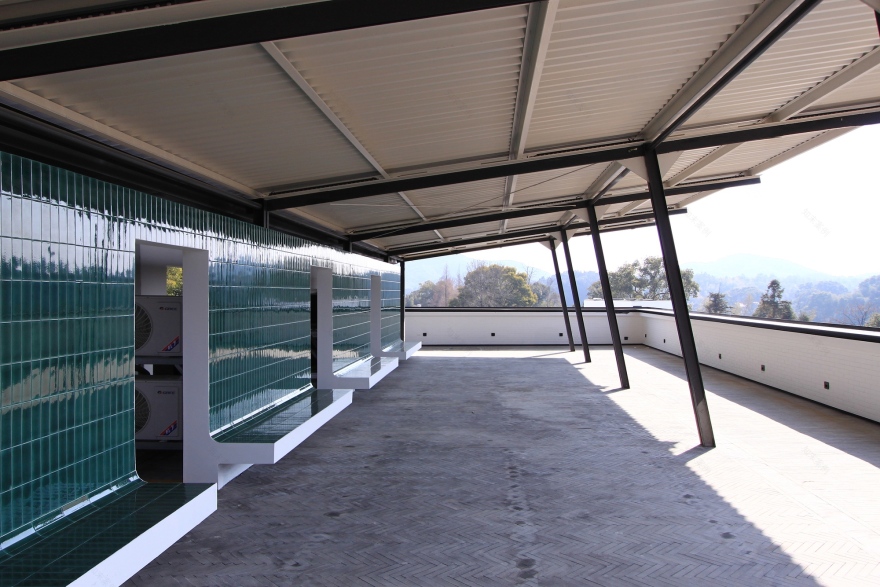
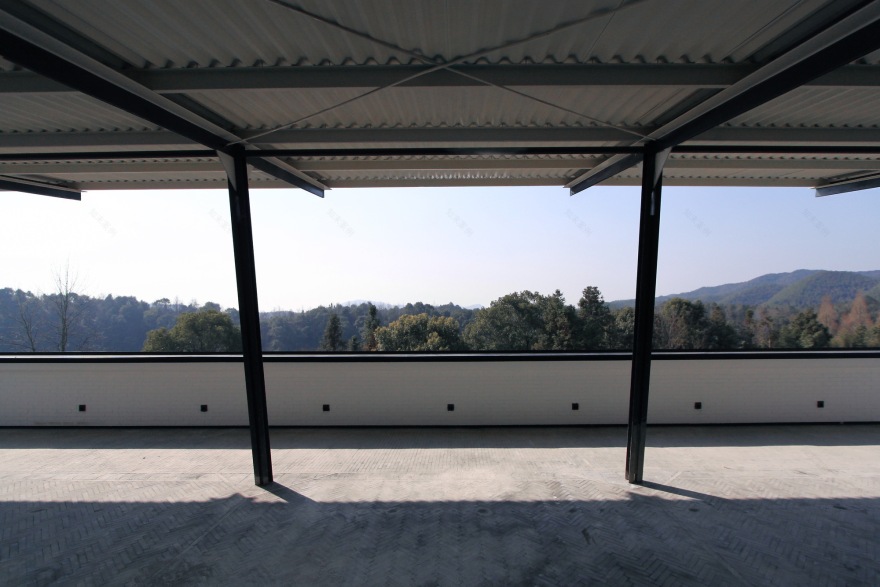
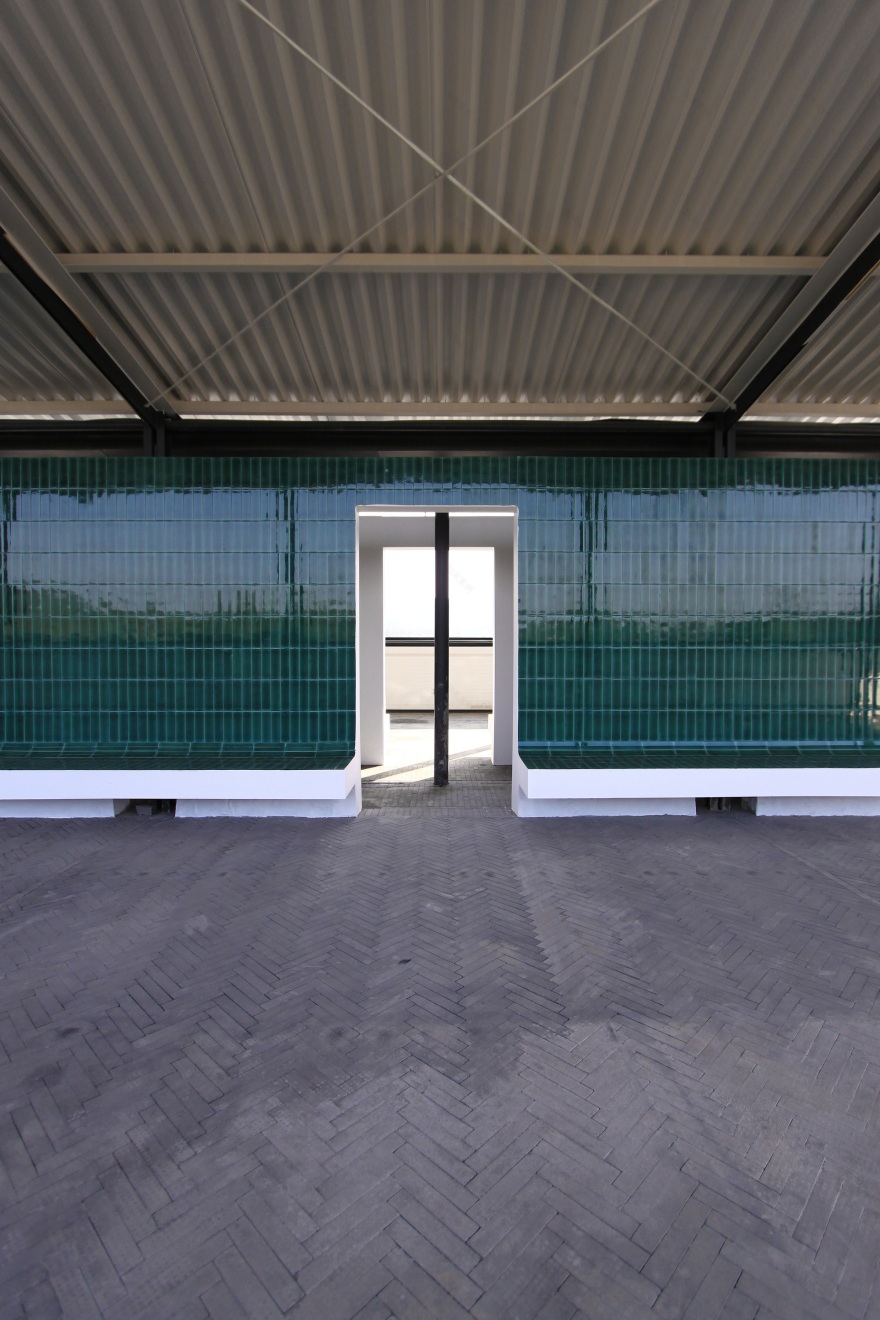
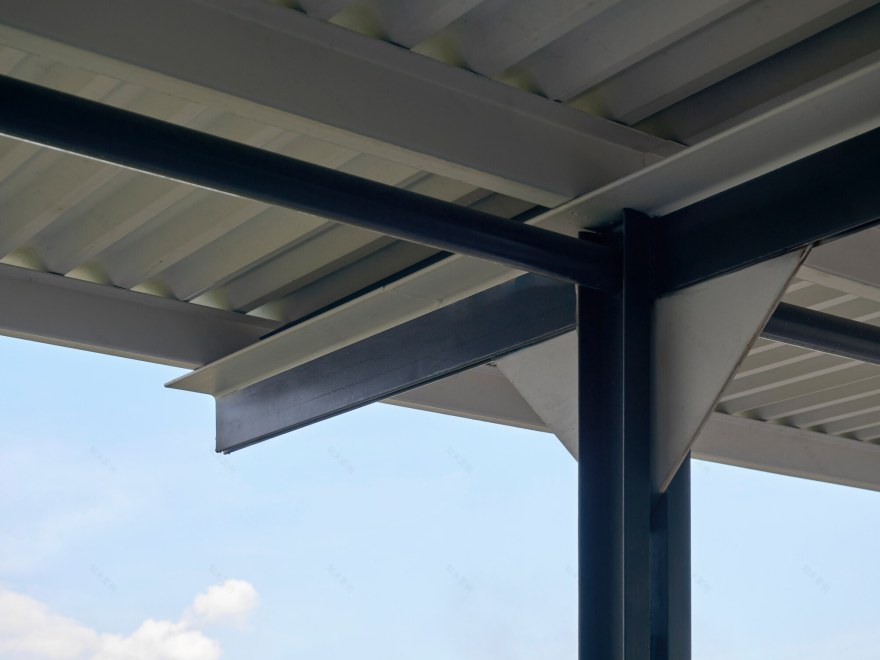
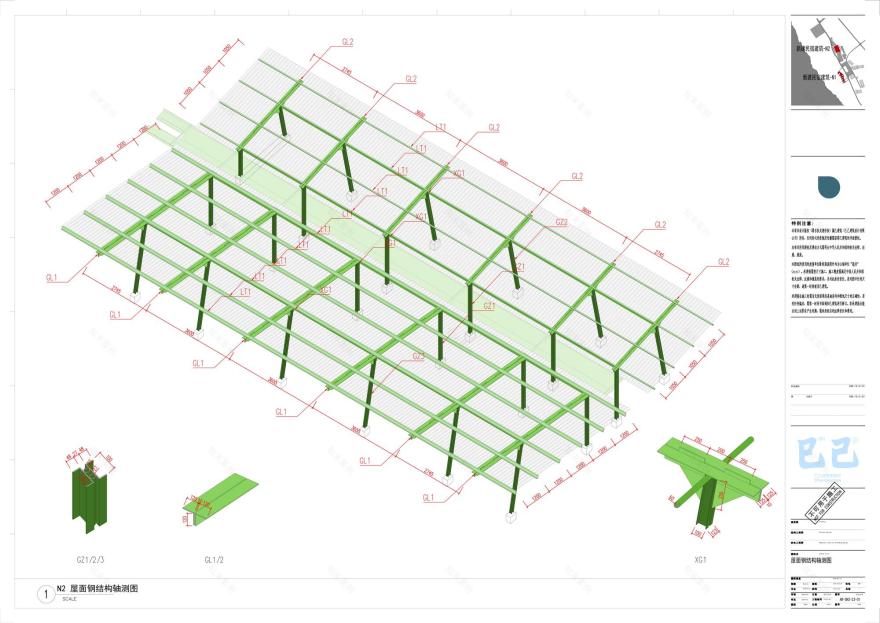
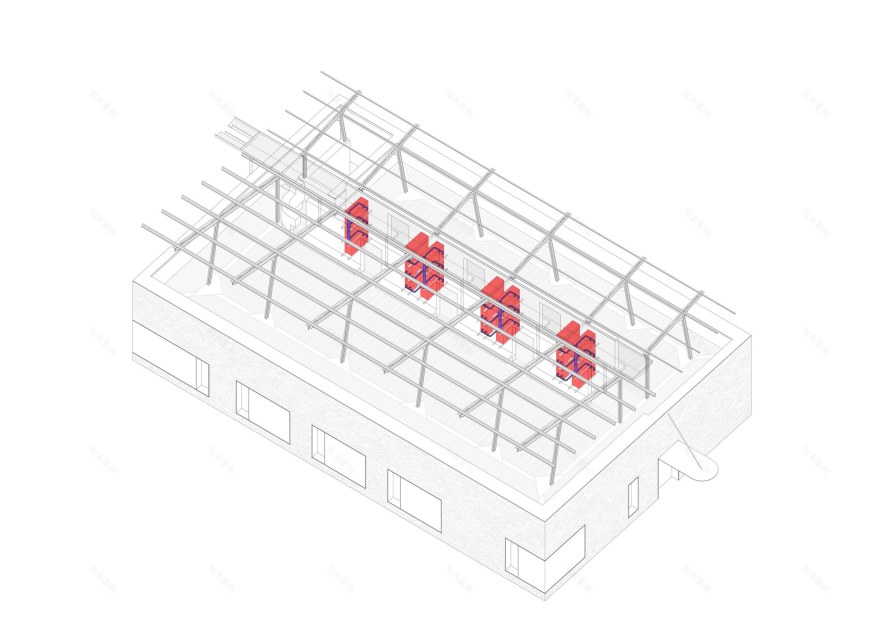
The third theme, "canopy," responds to both landscape differentiation and technical constraints. Inspired by lightweight steel canopies commonly found on rural self-built houses, two roof structures with distinct slopes and depths were introduced to address the differing conditions of the east and west façades. Beneath these canopies, a concealed cavity accommodates the outdoor HVAC units required for each guest room, resolving functional demands while maintaining the integrity of the building's form.
Rather than relying on stylistic references or material contrasts as ends in themselves, the project engages directly with ordinary construction systems and site realities. Through incremental adjustments, the building establishes relationships with privacy, mass, and landscape, allowing a form of locality to emerge from within contemporary conditions.
Project gallery
南京喵熊网络科技有限公司 苏ICP备18050492号-4知末 © 2018—2020 . All photos and trademark graphics are copyrighted by their owners.增值电信业务经营许可证(ICP)苏B2-20201444 苏公网安备 32011302321234号
苏公网安备 32011302321234号客服
消息
收藏
下载
最近