

创作上传
VIP
收藏下载
登录 | 注册有礼
查看完整案例

收藏

下载

分享

翻译
Architects:Compartment S4
Area:250m²
Year:2025
Category:Community,Market
Principal Designer:Monik Shah, Aman Amin, Kishan Shah, Krishna Parikh, Prashik Chaudhari, Manuni Patel, Nishita Parmar, Vedanti Agarwal
Execution Team:Mr.Kundan ji and team, Sanjay joshi
Client:Kumaon mandal Vikas Nigam and District tourism office, Champawat
City:Champawat
Country:India
Text description provided by the architects. Can local crafts move beyond being exhibited within architecture to instead shape architecture itself so that the building becomes a living craft, setting a visible and replicable model for cultural and economic revival within the rural ecosystem?
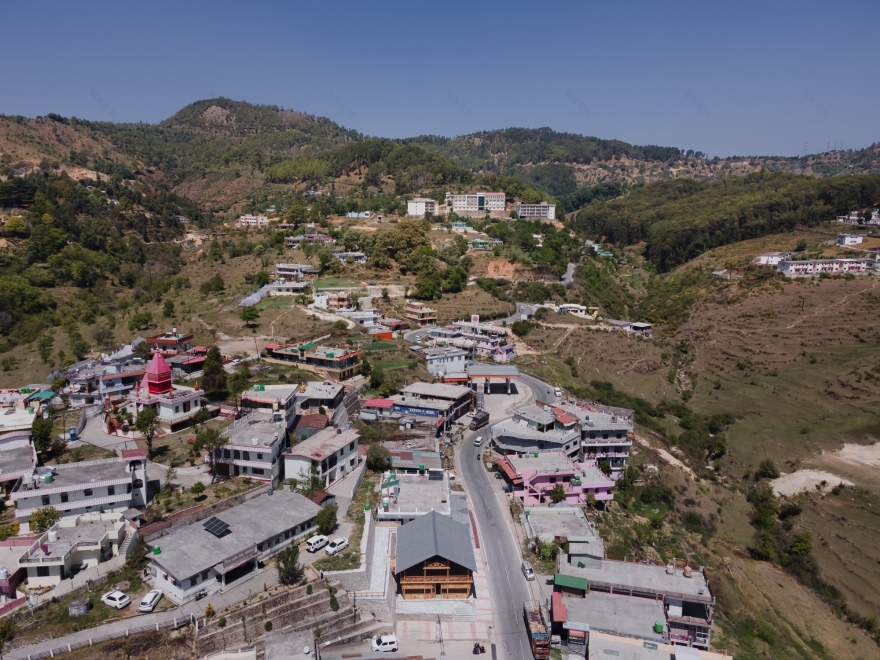
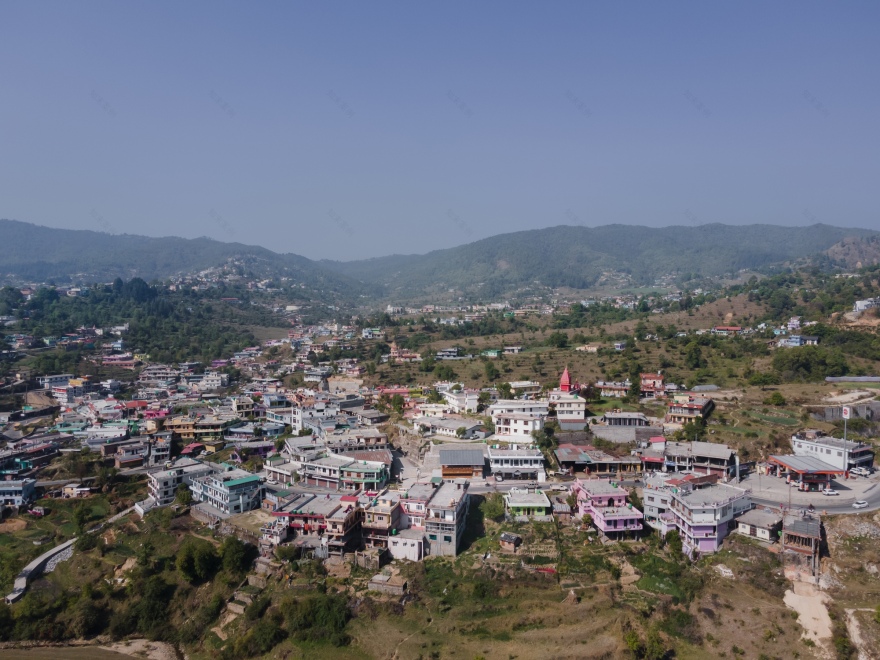
In many Himalayan towns today, craft survives only as memory—displaced from daily life, reduced to objects of nostalgia or seasonal display. Champawat, a small district town in Uttarakhand, reflects this condition acutely. While the region possesses a deep lineage of material knowledge of stone masonry, Likhai woodwork, bamboo work, weaving, steel utensil making, Aipan art, etc., its recent growth has been marked by generic concrete construction, disregard for terrain, and a steady erosion of local building cultures. Within this context, Compartment S4 highlights the question that framed this project; it was not merely how to house crafts, but whether architecture itself could operate as a craft that is capable of reviving the practices, economies, and social relationships from which it emerges.
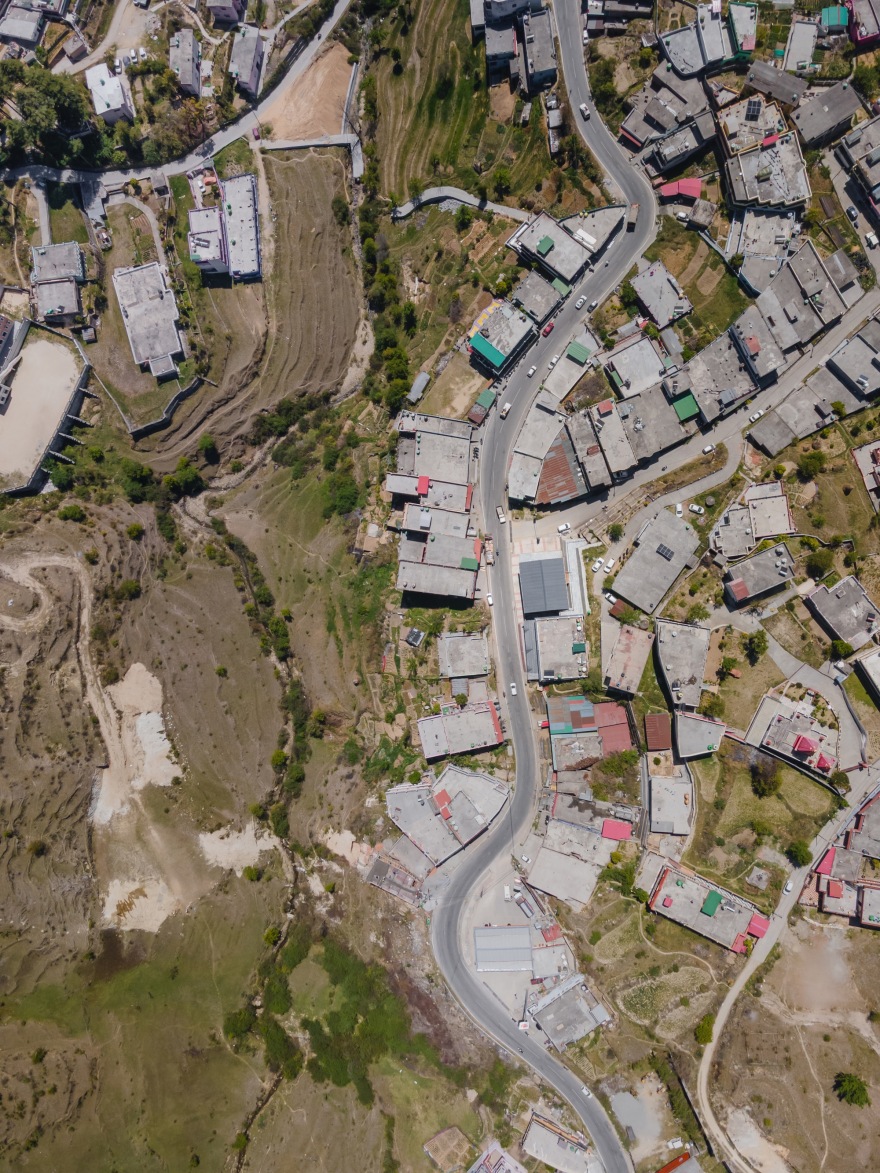
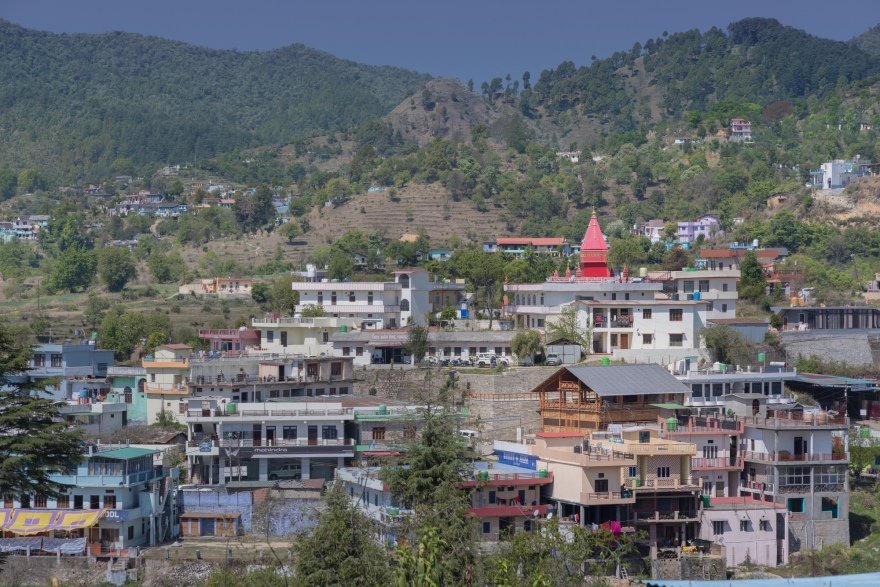
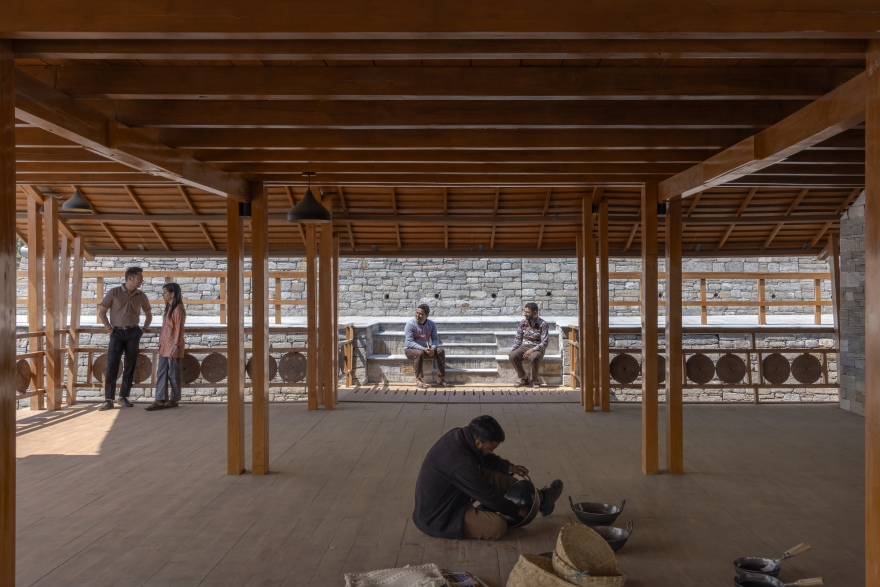
Situated along the Champawat–Pithoragarh highway, overlooking a deodar forest, the site lies on a busy transit and tourist route. Designed by Compartment S4 and commissioned by the Tourism and Small-Scale Industry Department of Uttarakhand, the project is conceived as a handicraft centre and multipurpose plaza, providing a permanent platform for registered Self-Help Groups (SHGs) engaged in local crafts. However, the ambition extended beyond creating a marketplace. The project sought to embed the idea of 'making' into public life so that production, exchange, learning, and leisure could coexist within a shared civic framework. The absence of inclusive public spaces and youth-oriented infrastructure in Champawat became a critical programmatic driver. Migration in Champawat reflected more than economic loss; it exposed the erosion of everyday spaces for youth to gather and linger. In response, the programme expands beyond craft and commerce, integrating a WiFi-enabled cafeteria, reading areas, informal discussion zones, and seasonally adaptable terraces. These spaces sustain daily use and economic self-sufficiency, positioning the building as civic infrastructure rather than a mono-functional market.
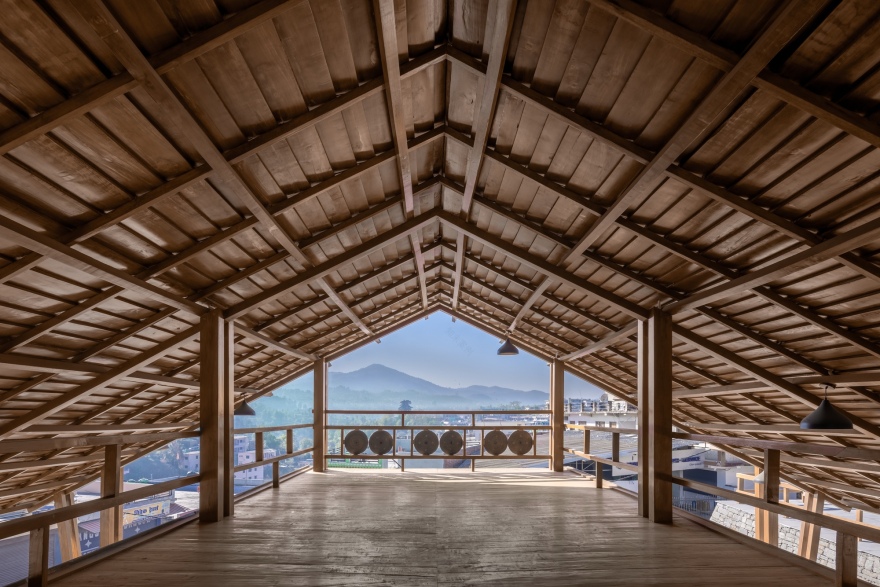
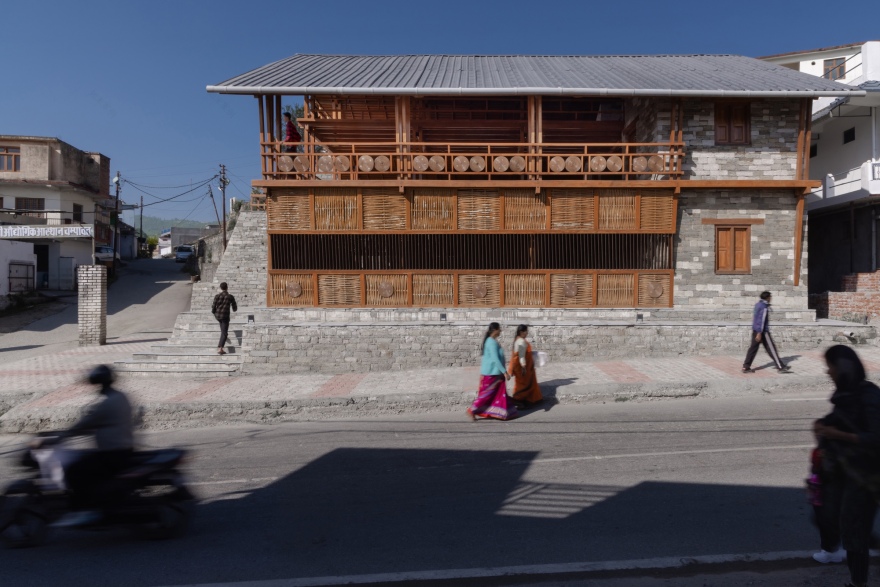
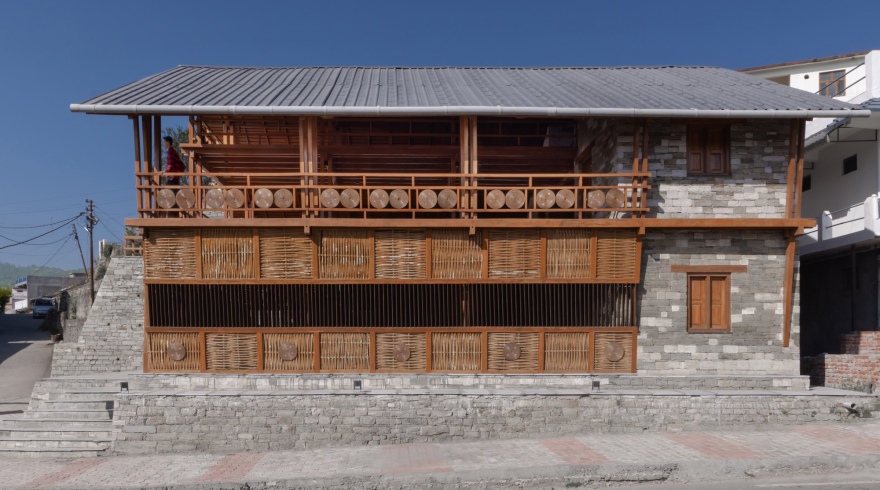
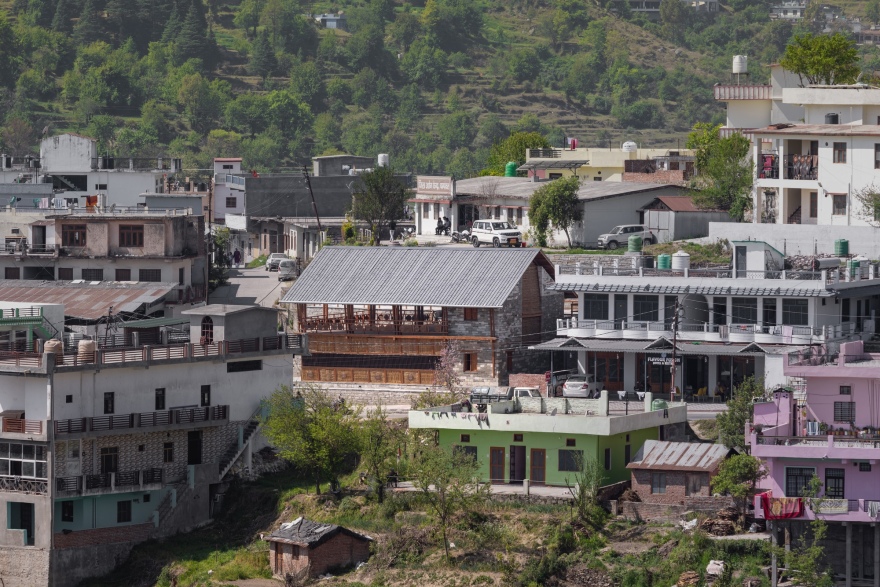
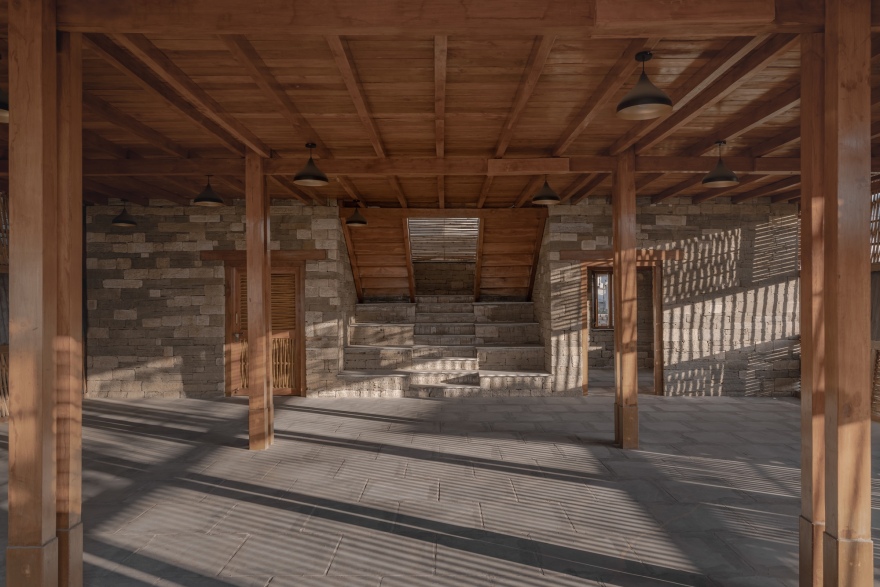
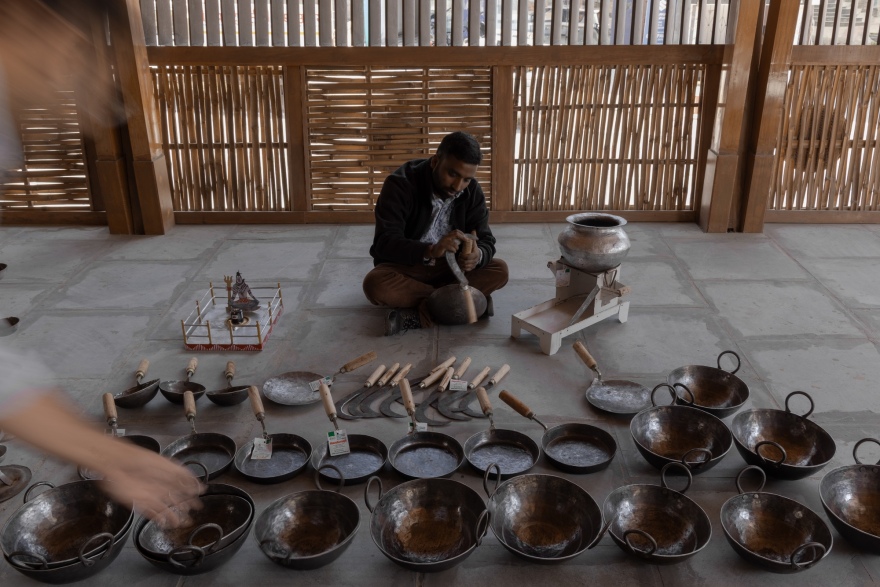
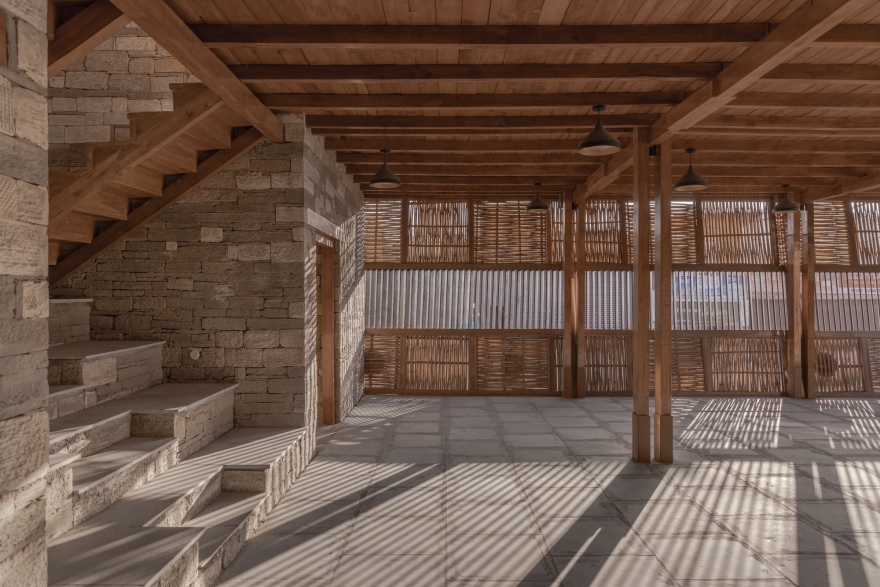
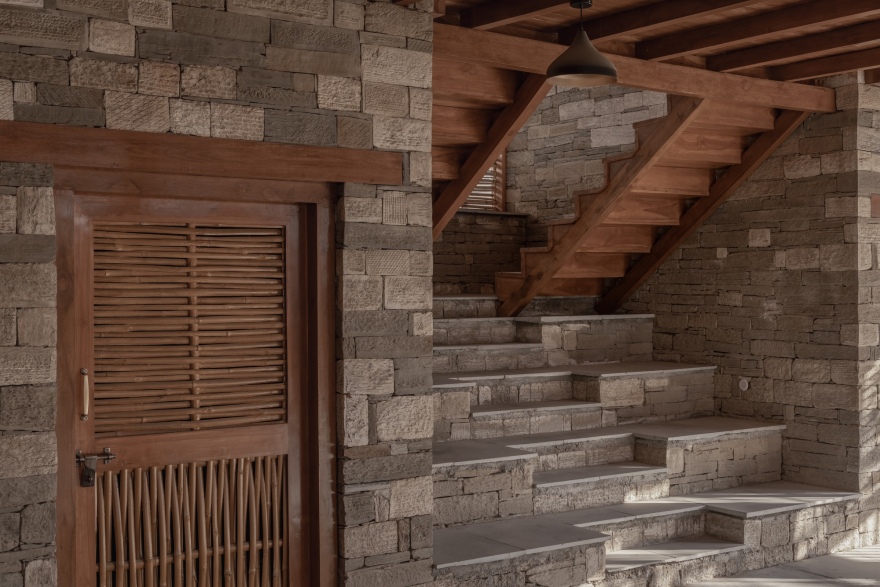
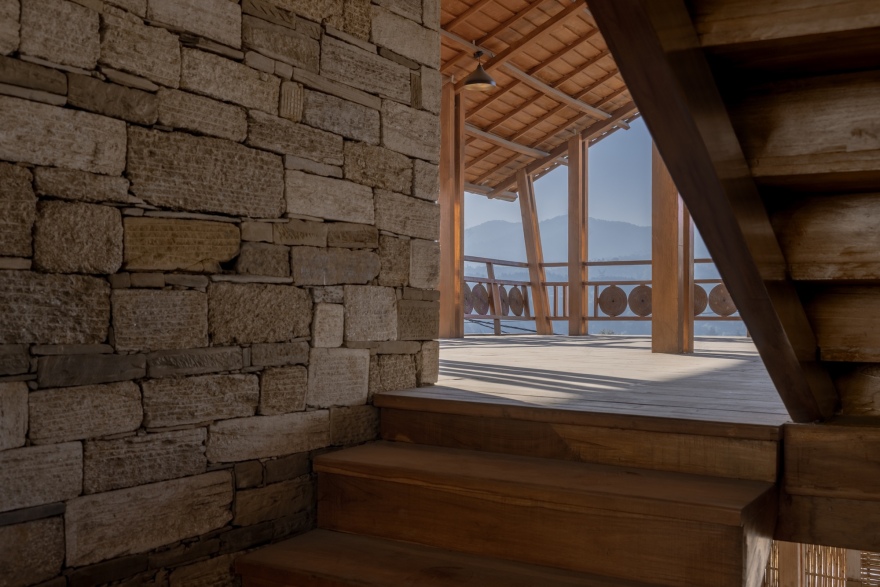
The site itself offered a clear lesson. Embedded within a steep Himalayan terrain, the surrounding settlement has evolved by negotiating the slope rather than flattening it. Buildings rest on stone plinths, circulation unfolds through steps, and terraces, and open spaces emerge at points of pause rather than formal planning. This reading informed a design approach that follows the land's contours, minimizes excavation, and treats level changes as spatial opportunities. Movement across the site is conceived as a gradual journey through stepped walkways, widened landings, and semi-open thresholds, encouraging pause, interaction, and visual engagement with craft-making. Circulation is not only neutral but visual, allowing visitors to observe processes, materials, and people at work.
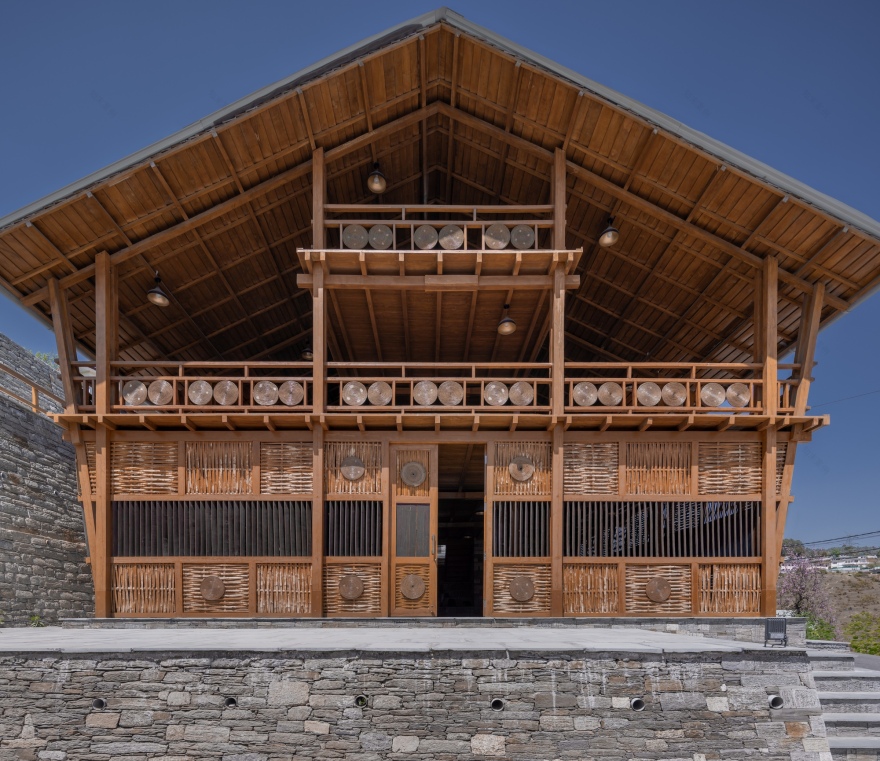
Community conversations played a decisive role in shaping the architecture. SHGs conveyed the need for flexible stall sizes, shaded workspaces, and spatial overlap between making and selling. Crafts were not static displays but evolving processes requiring light, ventilation, storage, and adaptability. These insights resisted the conventional separation of production and exhibition, leading instead to spatial arrangements where craft became visible, audible, and present within everyday movement. The inclusion of reading zones and non-commercial spaces emerged directly from youth engagement, reinforcing the project's role as civic infrastructure rather than a tourism-only destination. Material choice became the primary medium through which architecture operated as spatial craft.
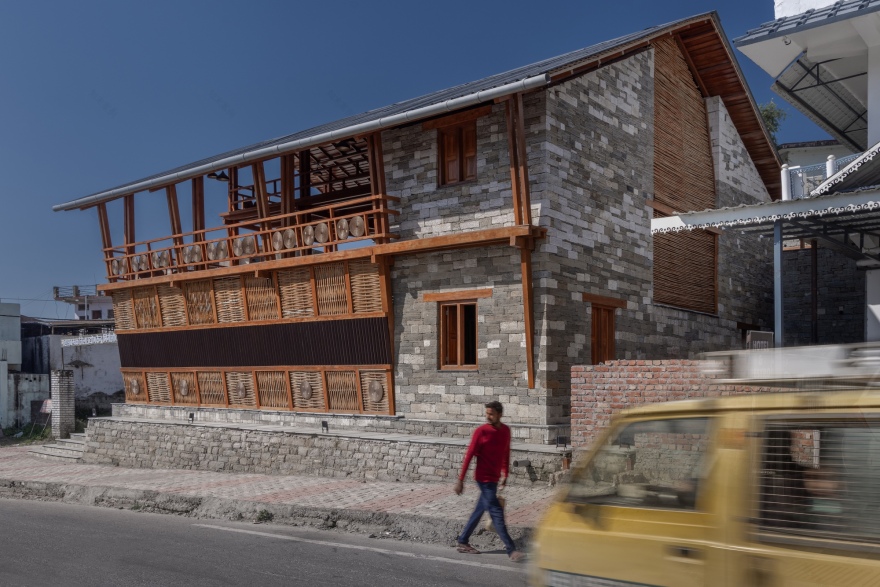
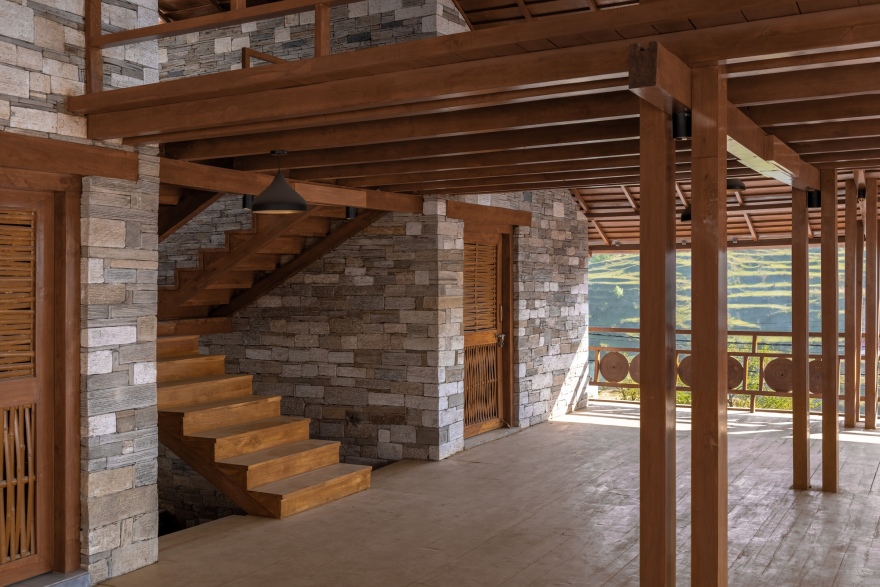
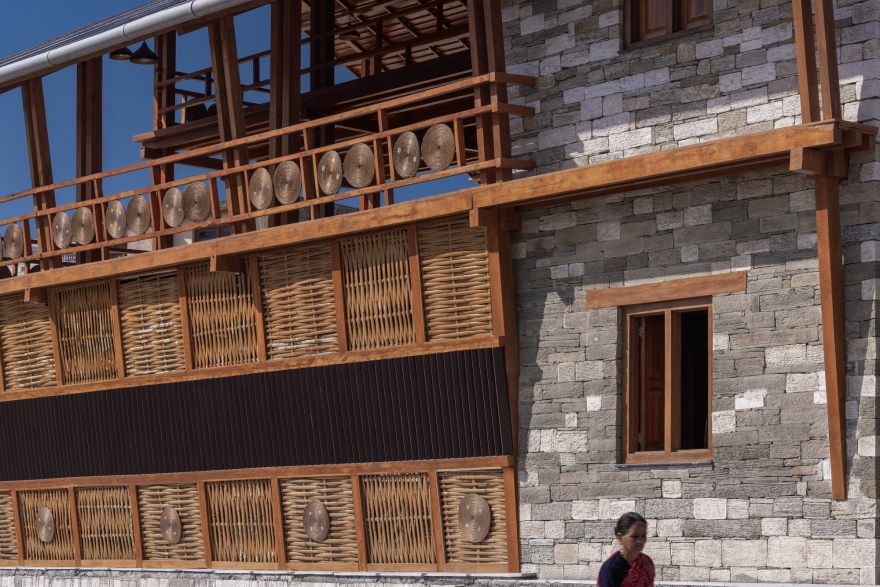
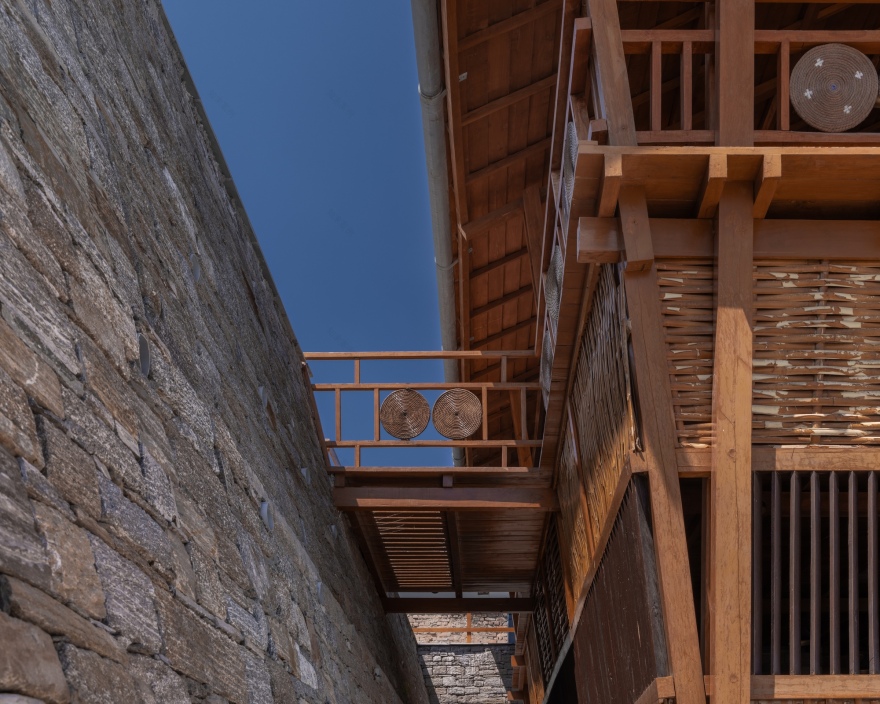
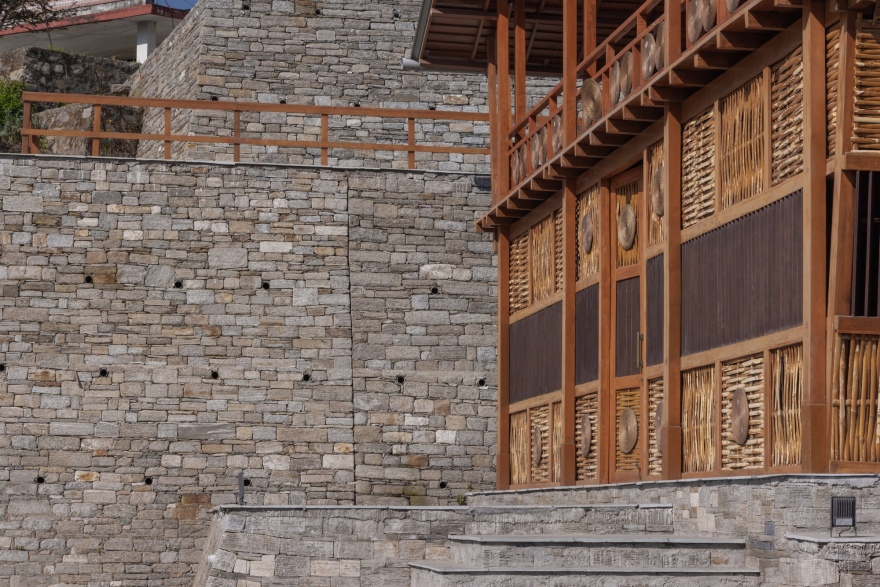
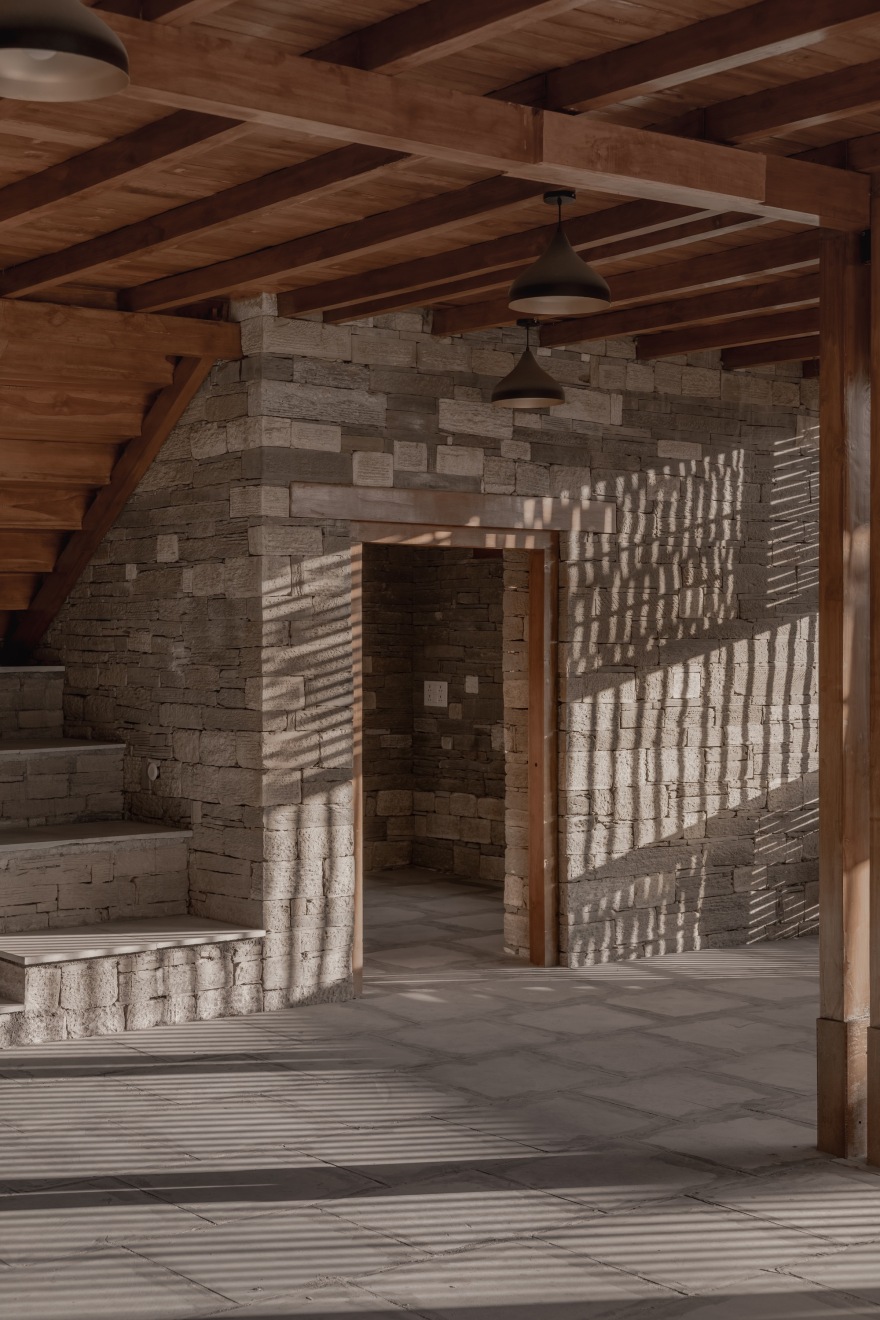
The building is organized into four structural bays, distinguishing between heavier service zones and lighter craft-related spaces. Locally sourced stone is used for coursed rubble masonry in walls and retaining structures, grounding the building visually and making it thermally comfortable.
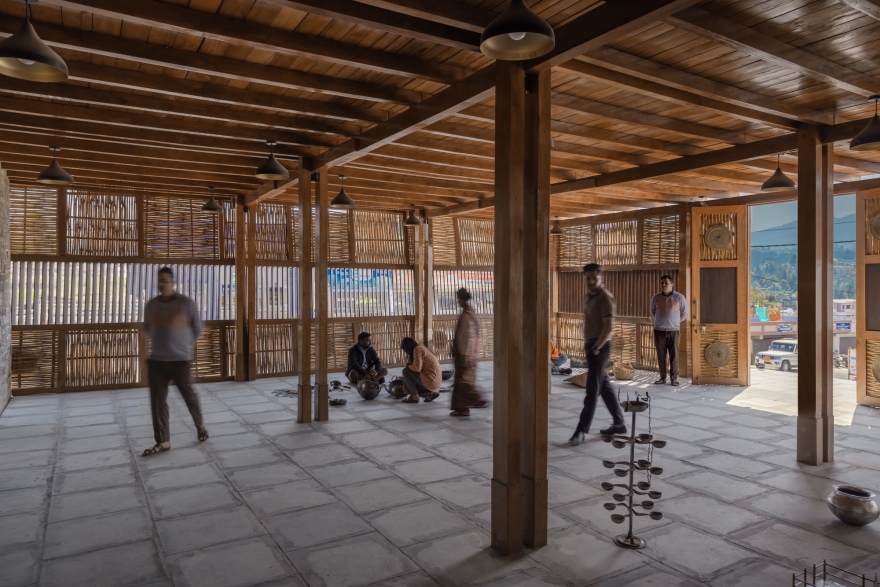
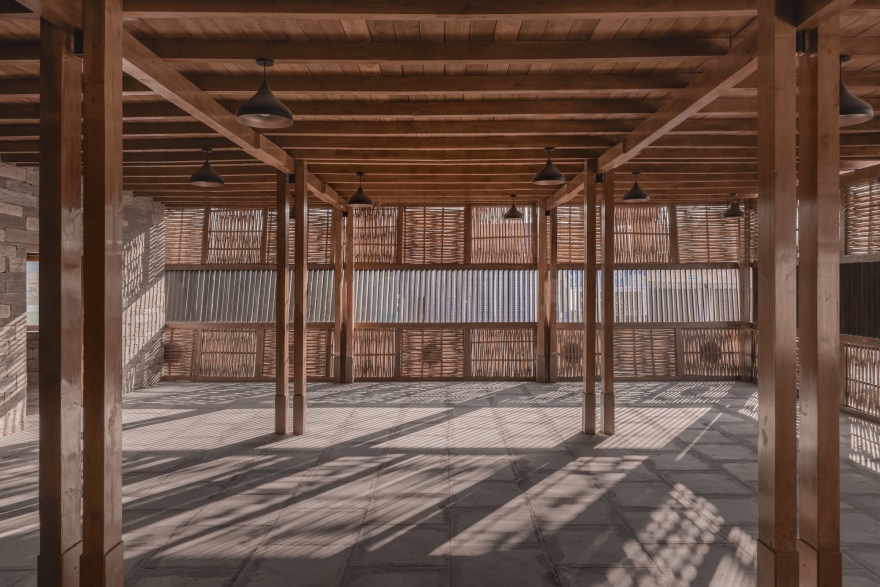
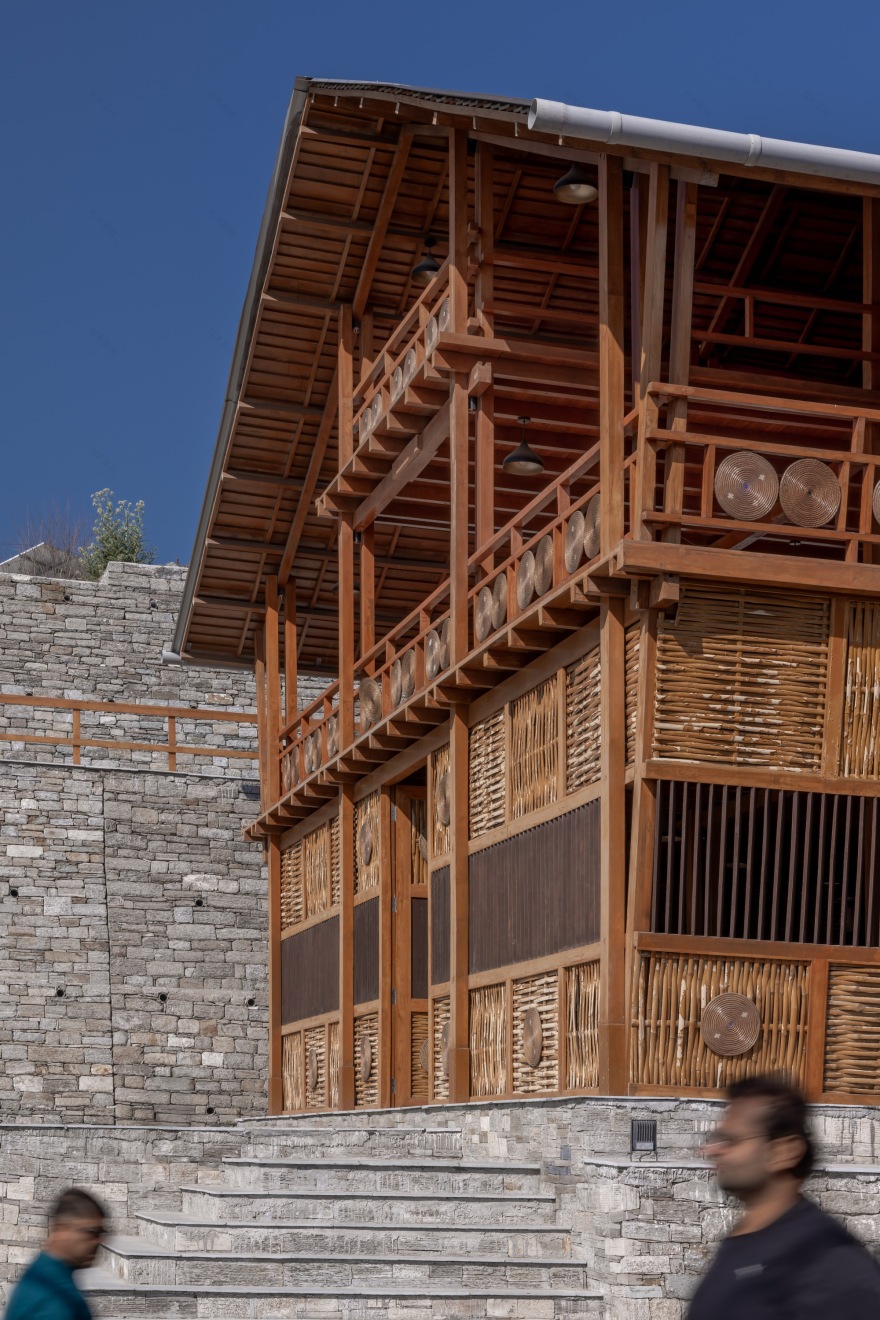
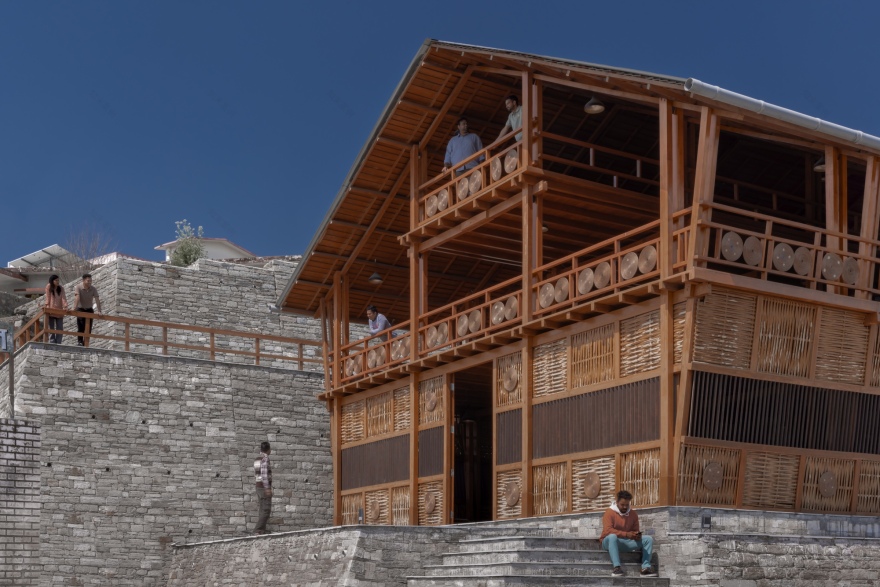
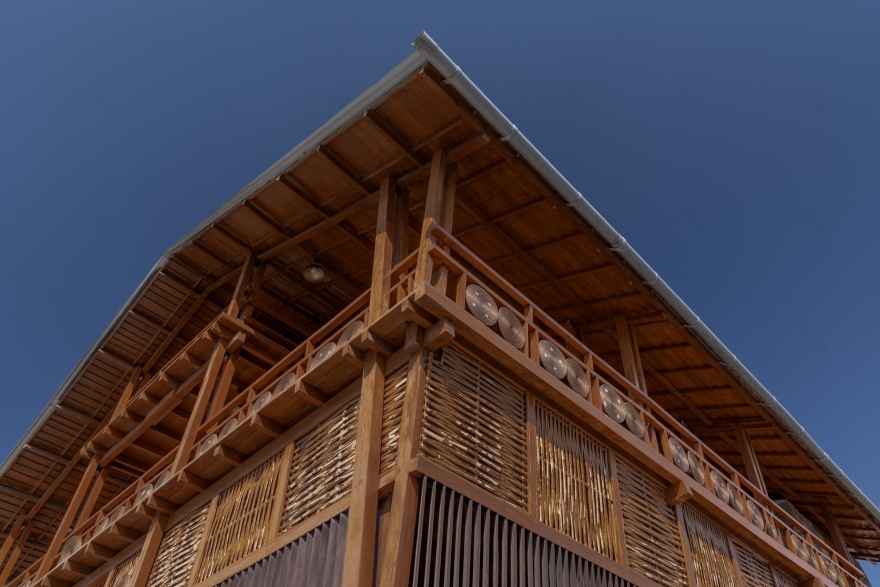
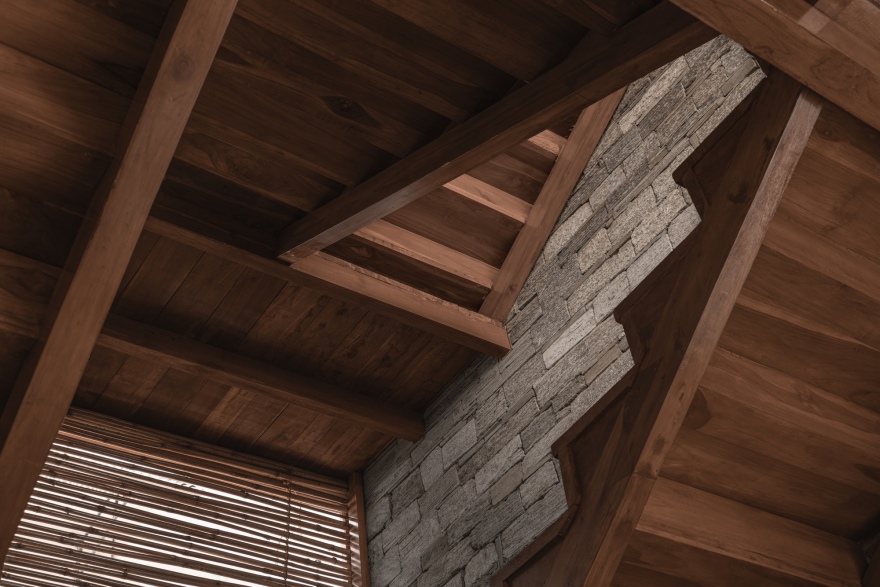
The building system prioritises clarity over intricacy, allowing local craftsmen to execute the work confidently without reliance on rare or highly specialised skills. All joinery is bolted rather than nailed, enhancing structural integrity and seismic resilience while ensuring ease of assembly and maintenance. In a region prone to earthquakes and facing a gradual loss of highly skilled traditional carpenters, the construction deliberately avoids complex joineries that demand specialised craftsmanship no longer widely available. Instead, vernacular principles are simplified and contemporised. Connections are resolved through pin joints, railing brackets, and extension joints that remain legible and efficient. Columns are crafted in saag (teak wood) for strength and durability, while beams and roof members use pine wood for lighter spans and efficient material use. This calibrated material strategy ensures structural performance while remaining economical and locally workable.
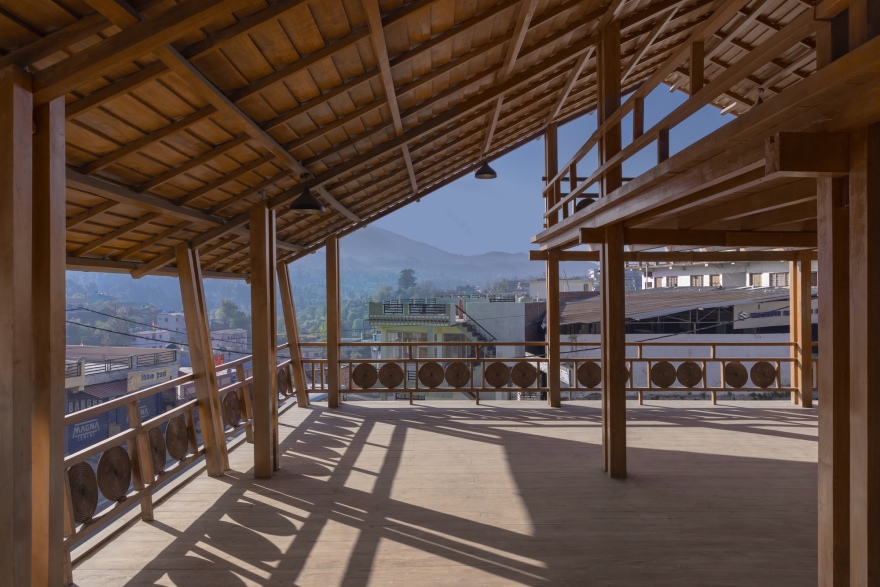
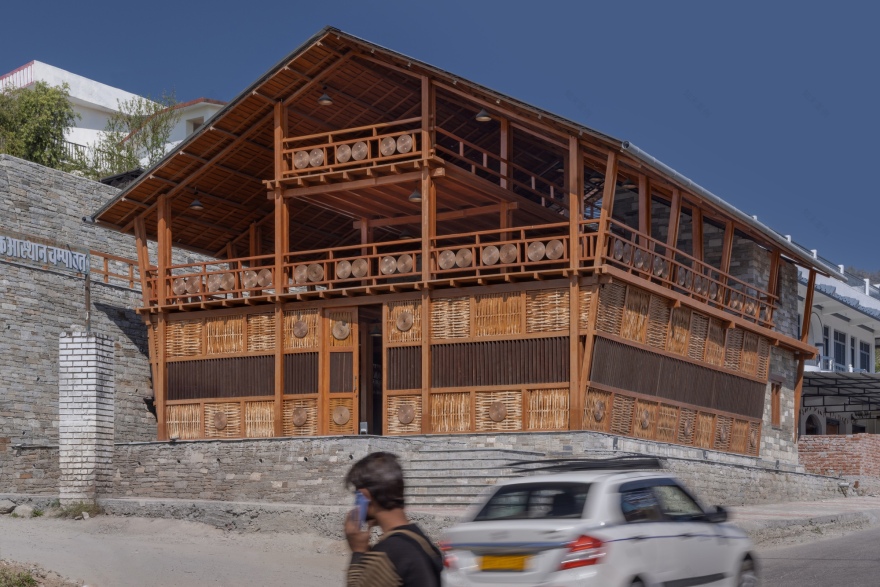
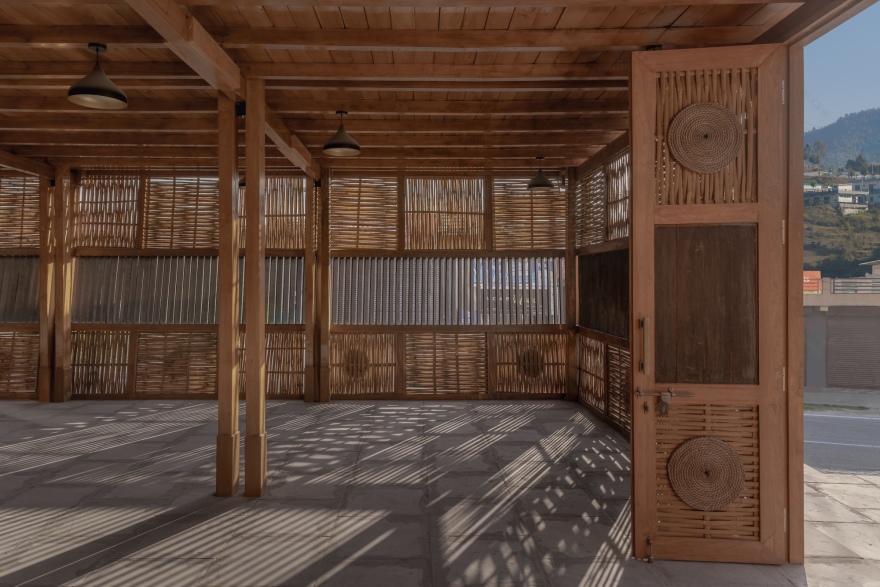
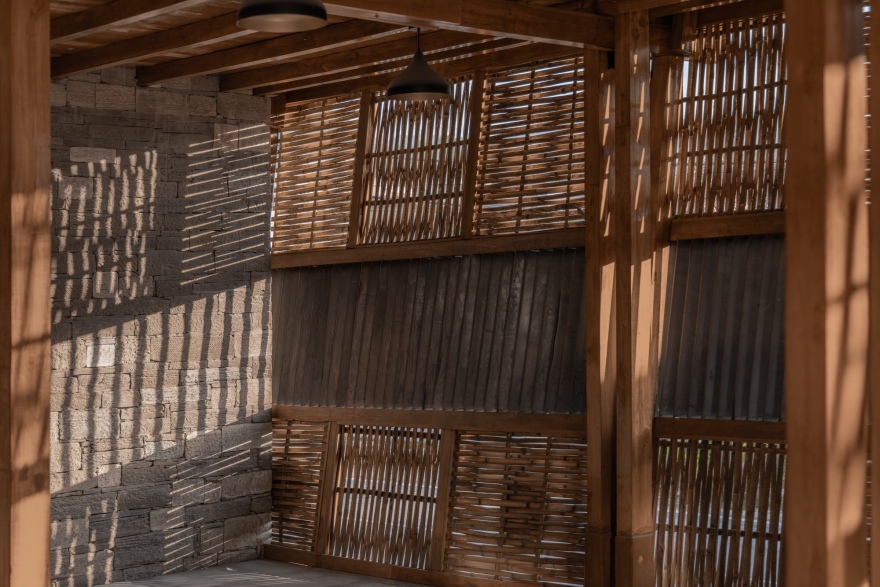
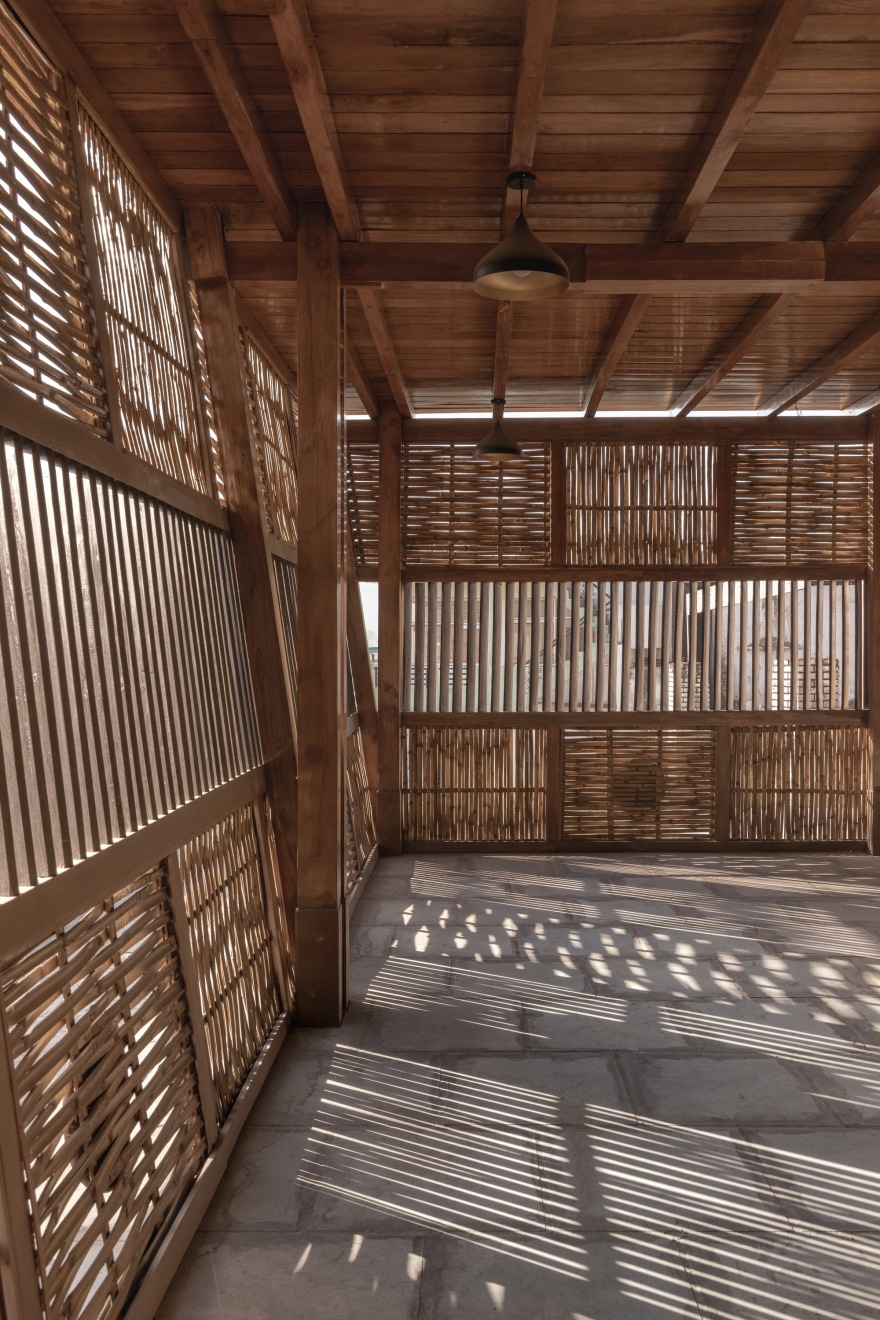
What we get is a timber building that does not romanticise complexity but rethinks vernacularity through present-day constraints like retaining seismic responsiveness, material efficiency, and craft legibility while adapting to contemporary realities of labour and construction. Wooden plank flooring, bamboo split weaves for enclosures, and moonj grass panels are custom-developed with SHGs that extend craft from object to enclosure, from product to spatial boundary.
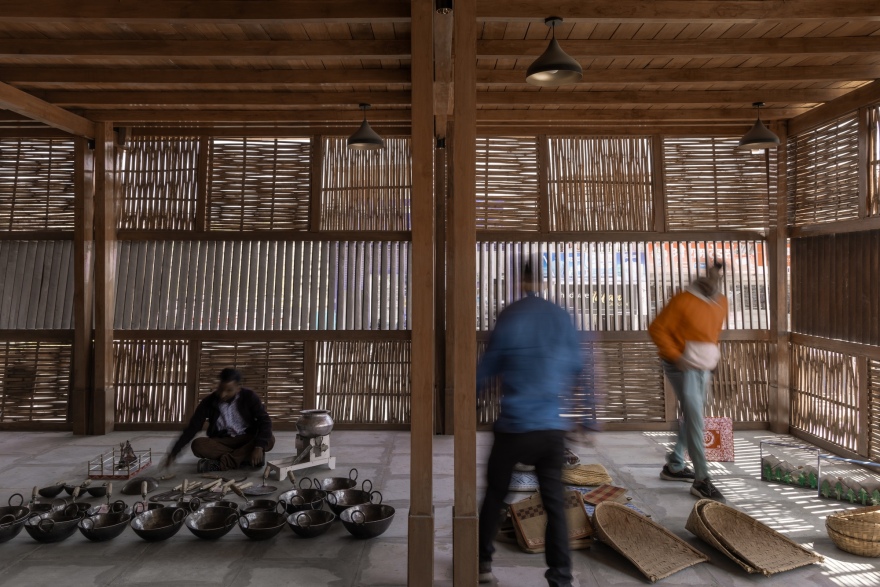
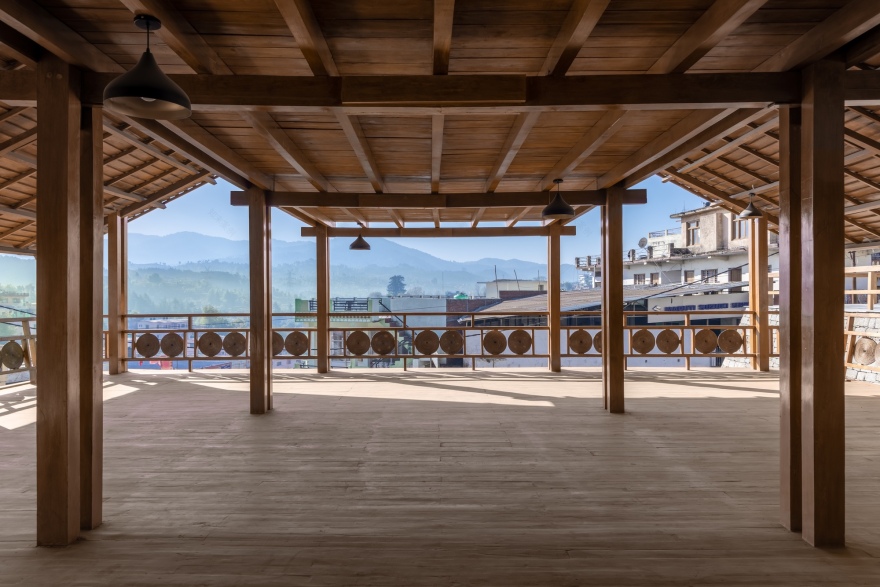
The façade, in particular, becomes an instrument rather than an image. Bamboo and wicker weaving techniques were adapted into modular panels that filter light, enable cross-ventilation, and allow visual permeability to bring controlled daylight deep into the building. These elements perform climatically, but more importantly, they scale up craft knowledge into architectural language. The building is crafted, making labour, skill, and technical acumen legible at an urban scale. Thermal comfort is achieved through material logic and spatial sequencing, reaffirming the intelligence of local practices within contemporary use. Vernacular memory is not reproduced but reworked through proportion, material assembly, and adaptability. Sloped roofs, masonry walls, and craft-based details function as working elements rather than ornamental references. The architecture remains deliberately open-ended, inviting occupation and transformation over time. Modular stalls, open floor plates, and multi-use terraces support weekly haats or local markets, seasonal exhibitions, festivals, and informal gatherings—acknowledging that markets, like crafts, are shaped by use and change.
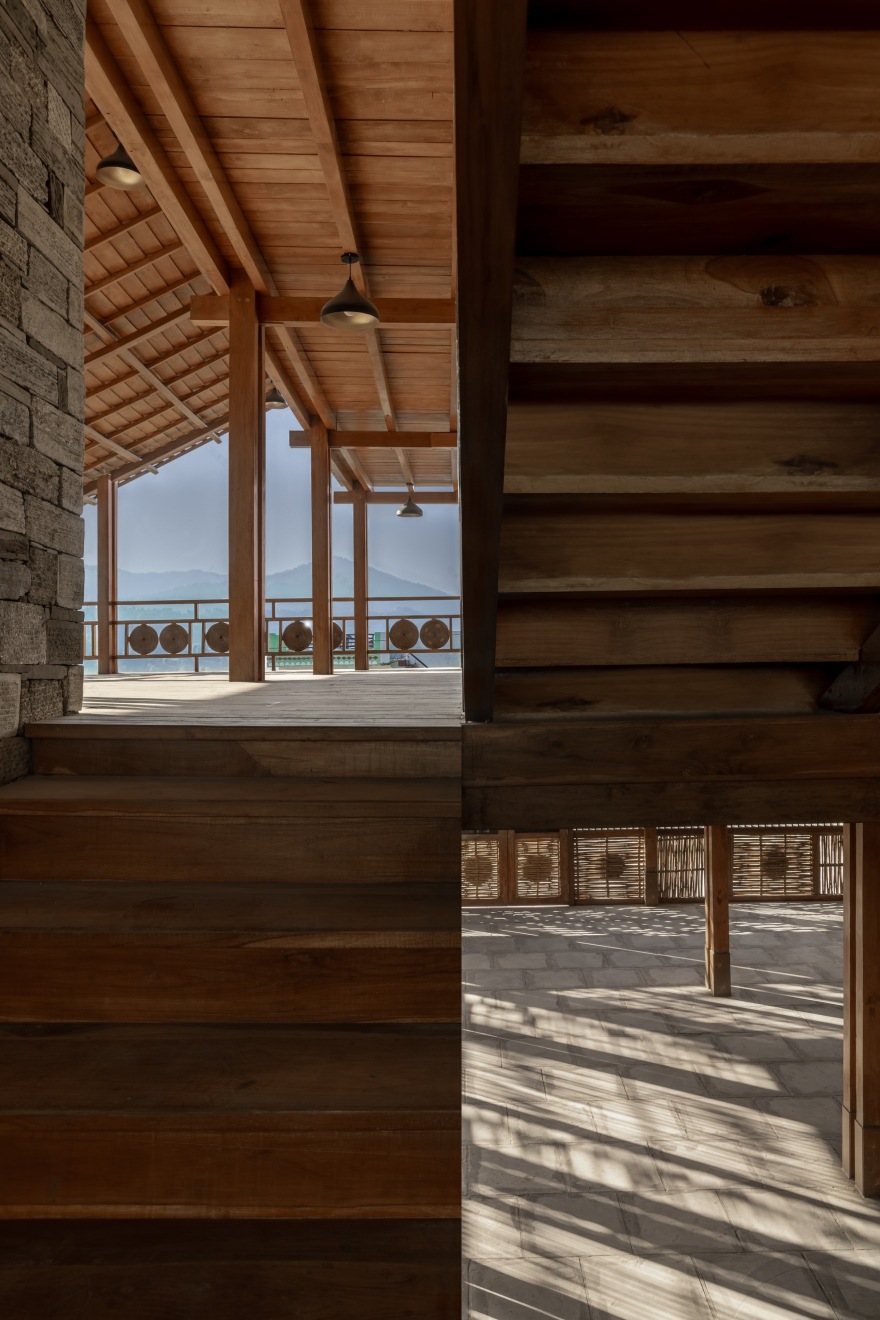
The upper terrace functions as a civic overlook, framing views of the surrounding hills. It is not a residual space but a place of pause—where visitors sit, eat, read, and observe artisans at work. This visual and social connection reinforces the building's role as a mediator between landscape, labour, and public life. Managed by the Uttarakhand Tourism Development Board in collaboration with the Happy Face Foundation, the project extends beyond architecture into training, product development, and entrepreneurship. Yet its most enduring contribution lies in its architectural stance: positioning craft not as a curated artifact, but as a living system capable of shaping space, economy, and identity. In a town increasingly defined by generic growth, the project proposes an alternative model—one where architecture becomes a continuation of local craft traditions, and where crafted spaces act as instruments for cultural and economic resilience. By allowing craft to inform structure, material, and spatial experience, the building sets a visible and replicable benchmark—one that Champawat can recognise as its own, and potentially carry forward into its future growth.
Project gallery
南京喵熊网络科技有限公司 苏ICP备18050492号-4知末 © 2018—2020 . All photos and trademark graphics are copyrighted by their owners.增值电信业务经营许可证(ICP)苏B2-20201444 苏公网安备 32011302321234号
苏公网安备 32011302321234号客服
消息
收藏
下载
最近