

创作上传
VIP
收藏下载
登录 | 注册有礼
查看完整案例

收藏

下载

分享

翻译
Architects:LUO studio
Area:43m²
Year:2026
Photographs:Yumeng Zhu
Category:Pavilion,Retail
Team Members:Luo Yujie, Hong Lun, Cao Yutao
Client:COFCO Xiangyun Town
City:Beijing
Country:China
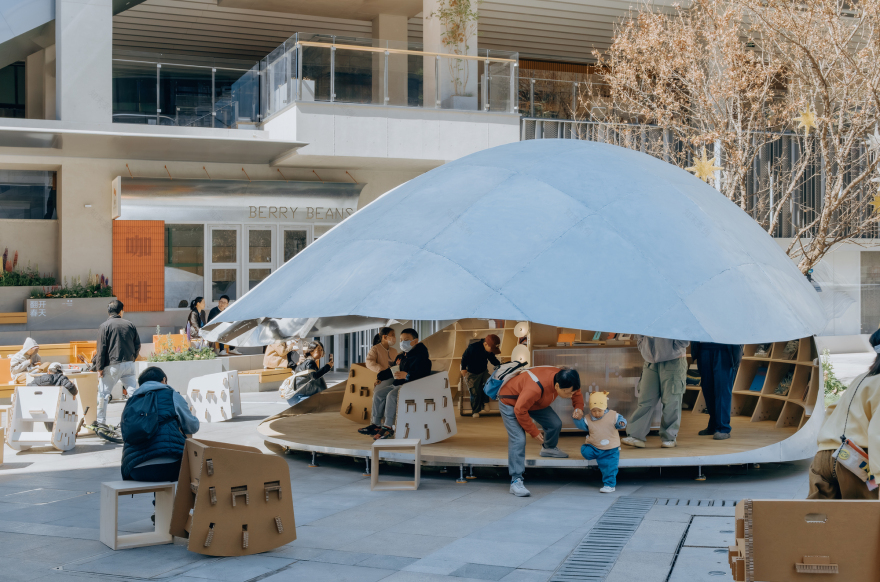
Origin: A Response to a Familiar Place — Xiangyun Town is not an unfamiliar place. Since it is close by, there were many occasions in the past to come here with my child. The earliest impressions of the place were, on the one hand, the many art installations in its public plaza areas, and on the other hand, its friendliness toward children and the community, with spaces for play and pause. Therefore, being invited this time to design and build a community book pavilion in the plaza felt more like returning to a place once encountered in everyday life and responding once again to the question of what kind of public space is truly needed here.
The intention was not simply to place a small building in the plaza, but rather to find a more natural connection between daily life in a community-oriented commercial district, reading and lingering, and public exchange.
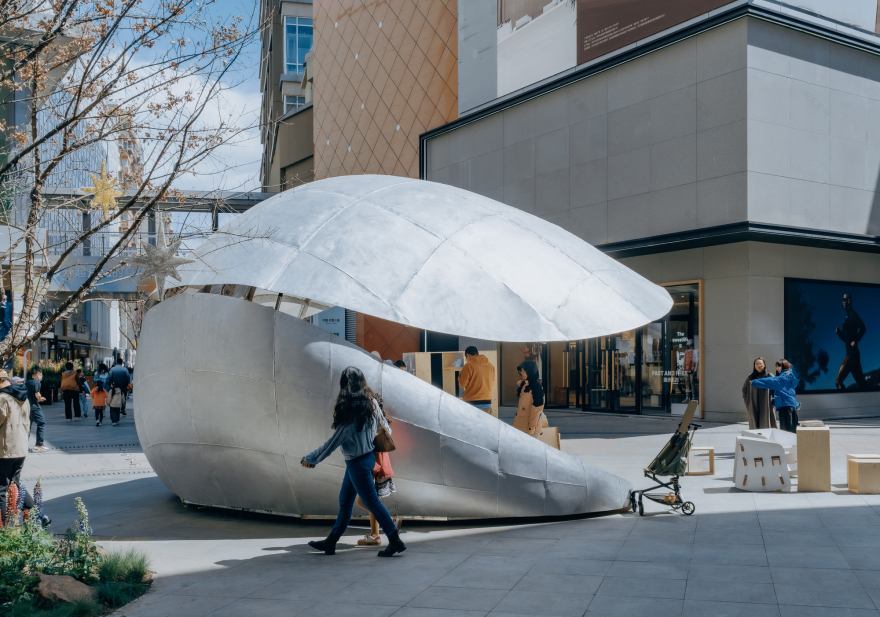
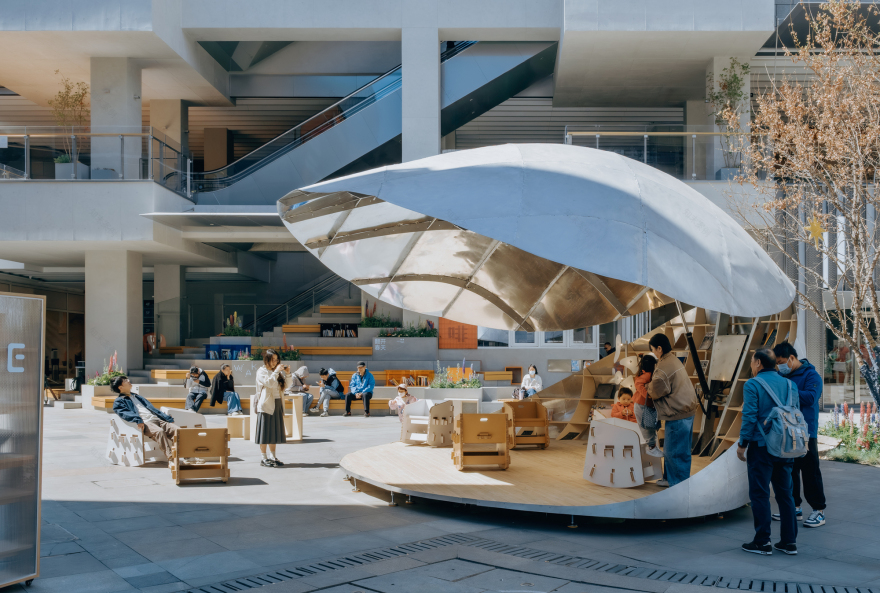
Three Basic Ideas: Interest, Centrality, and Openness — With these basic concerns in mind, the site was repeatedly observed and reconsidered, leading to three fundamental premises. First, it had to be interesting. Because it is located at the center of the plaza, it needed to be engaging enough to attract people, encouraging them to approach and stay, rather than becoming something to avoid or something that would only get in the way.
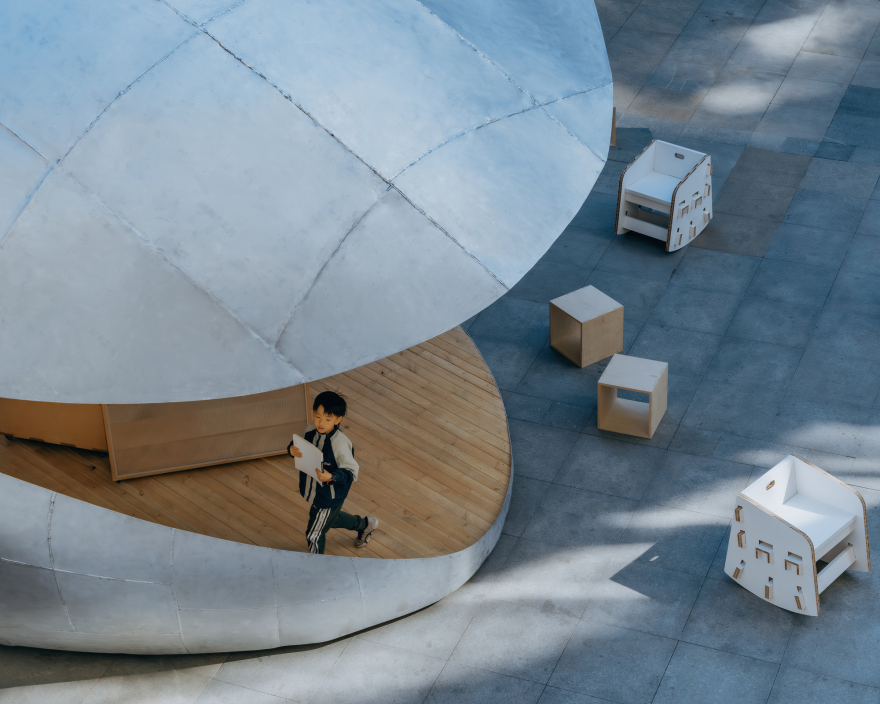
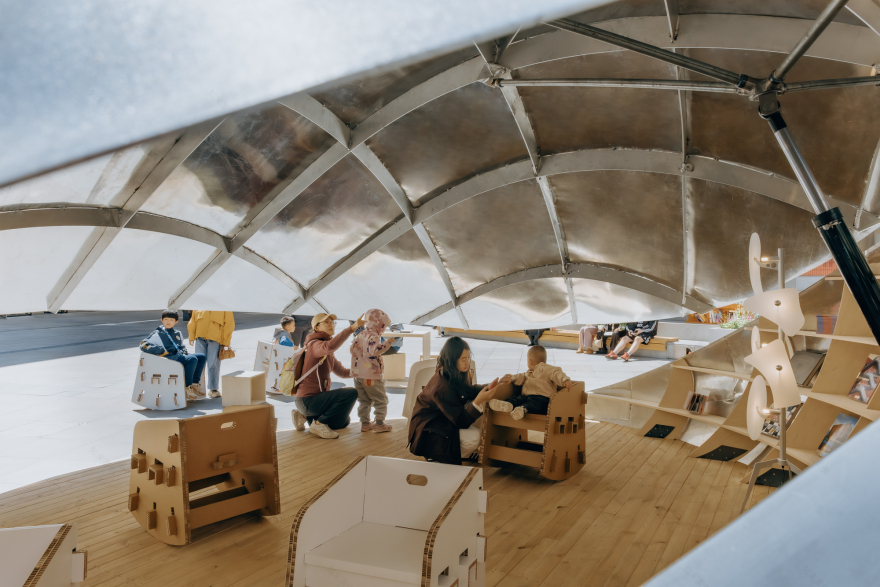
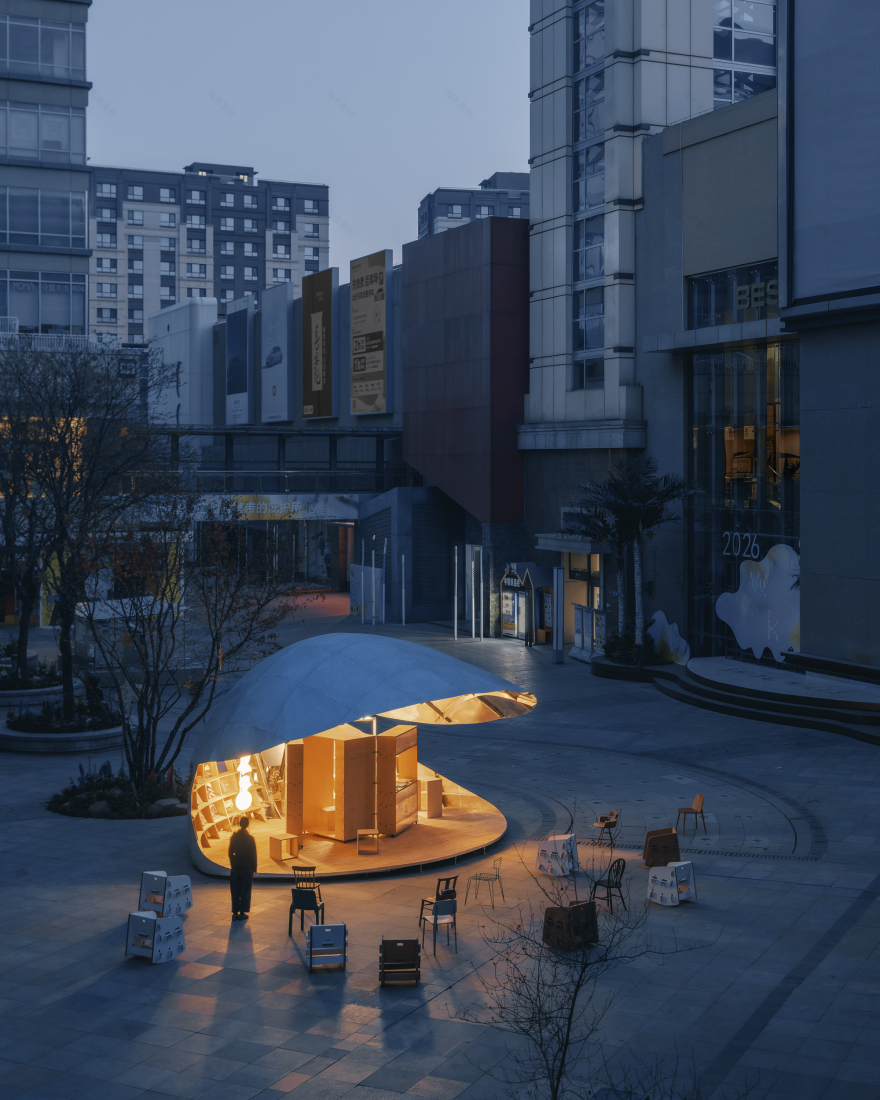
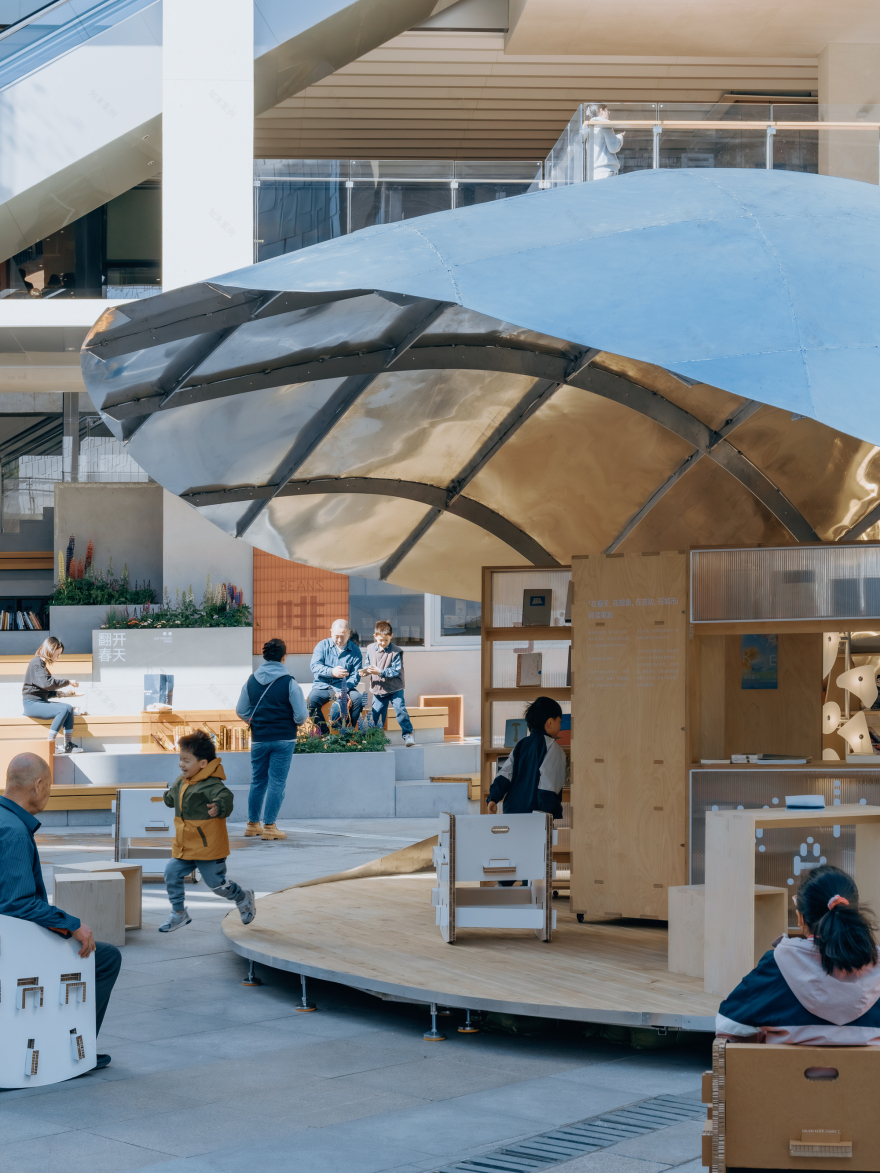
Second, it had to possess a 360-degree omnidirectional character. Since it sits in the middle of a plaza with heavy pedestrian flow from all sides, it could not be like an ordinary house with an obvious back side. It needed, as much as possible, to remain interesting from every direction, with no inactive or neglected face. It is a public presence to be viewed from all sides and approached from all sides. Therefore, it could not be a conventional box-like building. Third, it had to remain open. Because it occupies a highly public position, it should not become a closed little hut; instead, it needed to establish a strong relationship with surrounding people, air, activities, and the many circulation lines of the plaza as a whole.
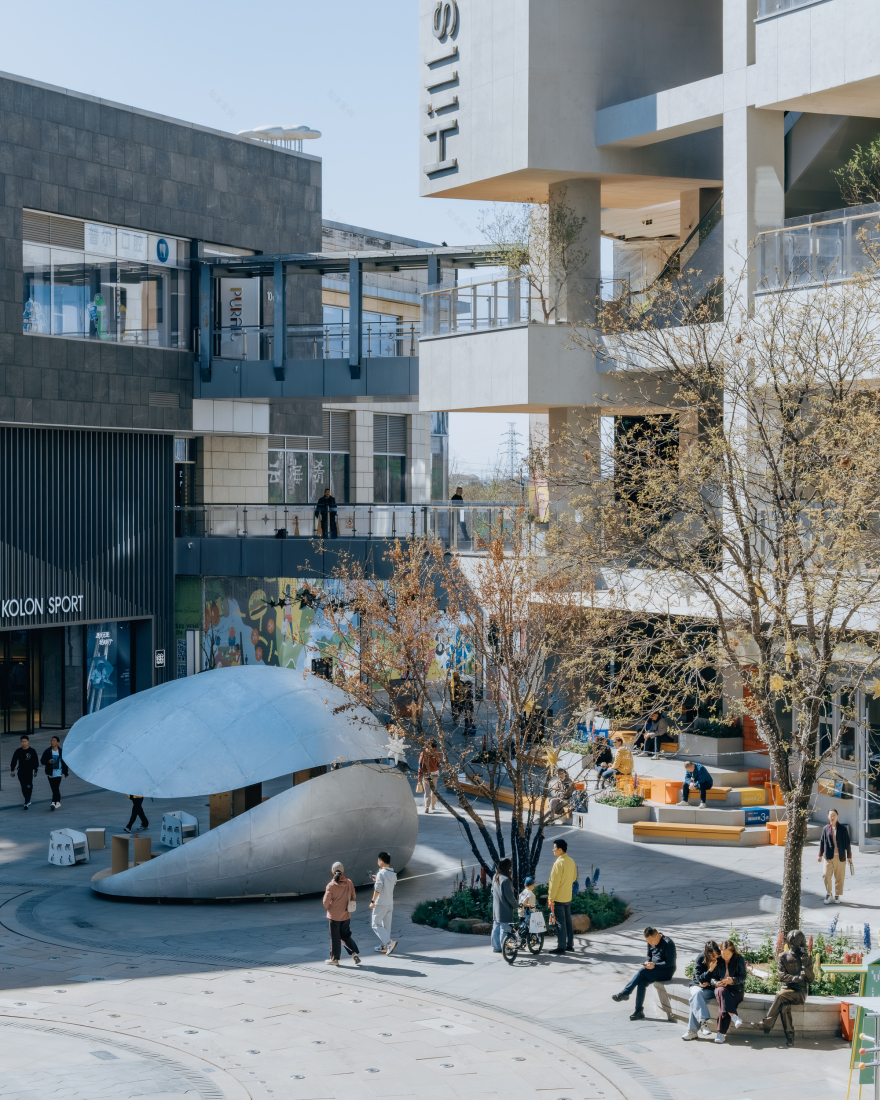
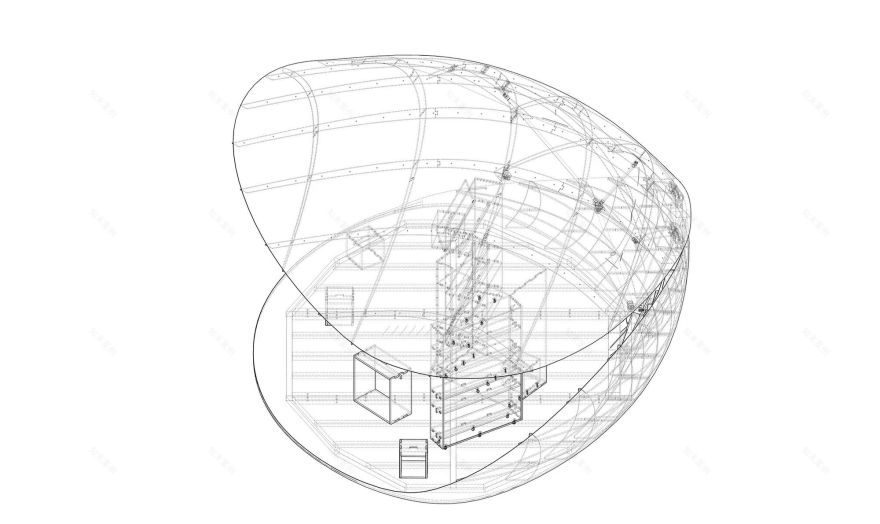
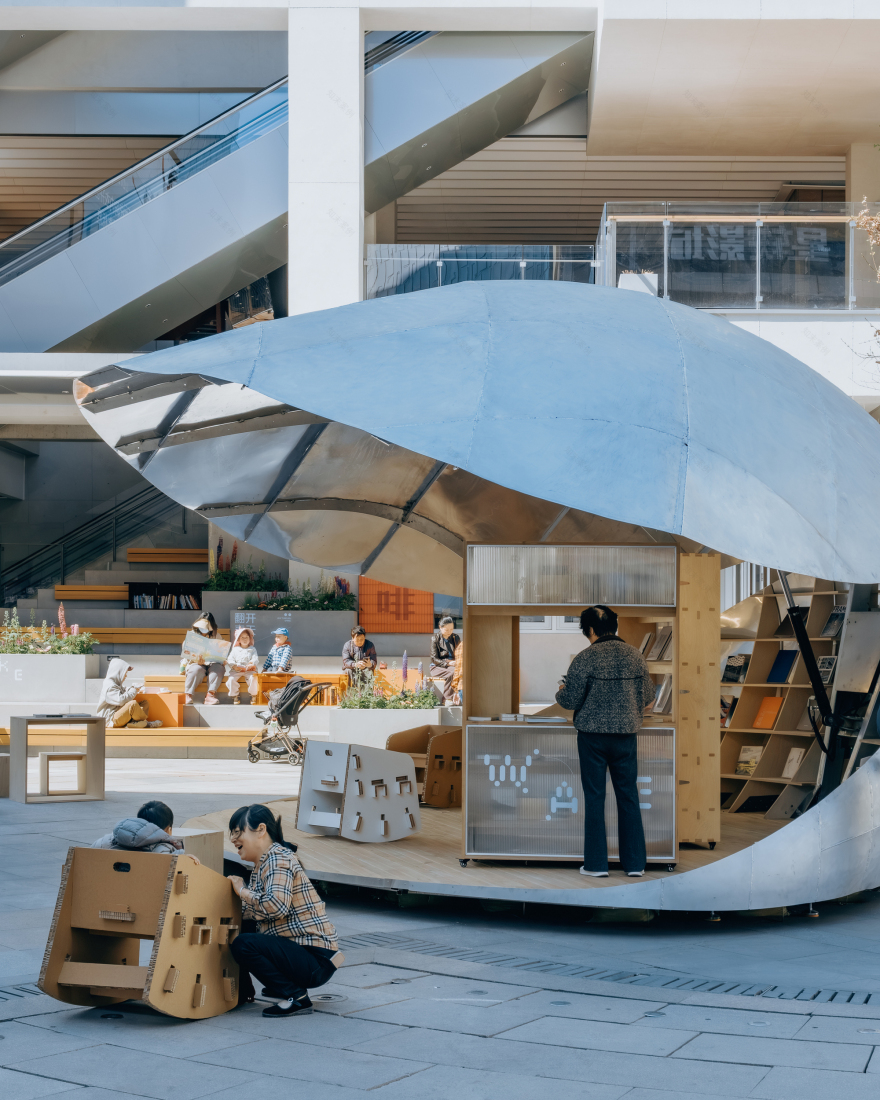
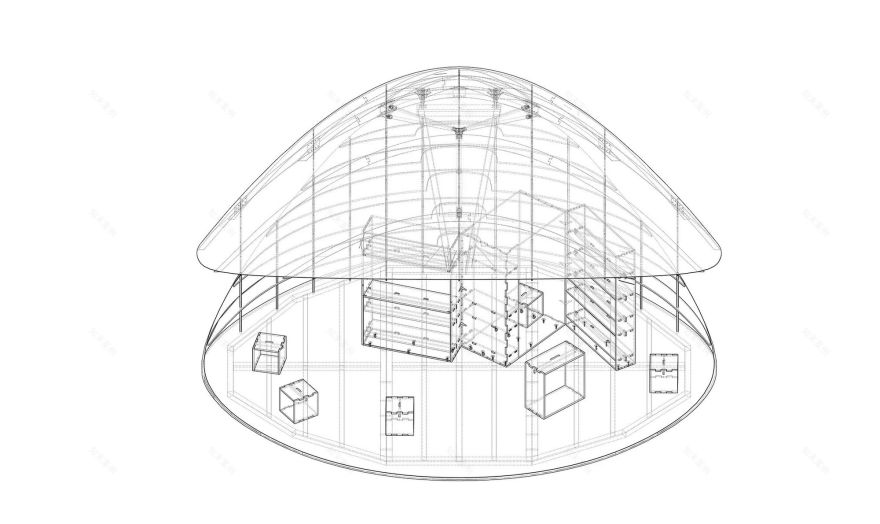
A Continuously Changing Space — It was precisely under these premises that the pavilion was gradually defined as a transformable space rather than a fixed object. At first, the idea was to enlarge the rear half of an earlier studio project, the Shared Ladybug Micro Book House. However, a left-right opening system would inevitably bring problems with rainwater, so the final solution adopted an up-and-down opening mechanism, which eventually developed into the present Shell Book Pavilion.
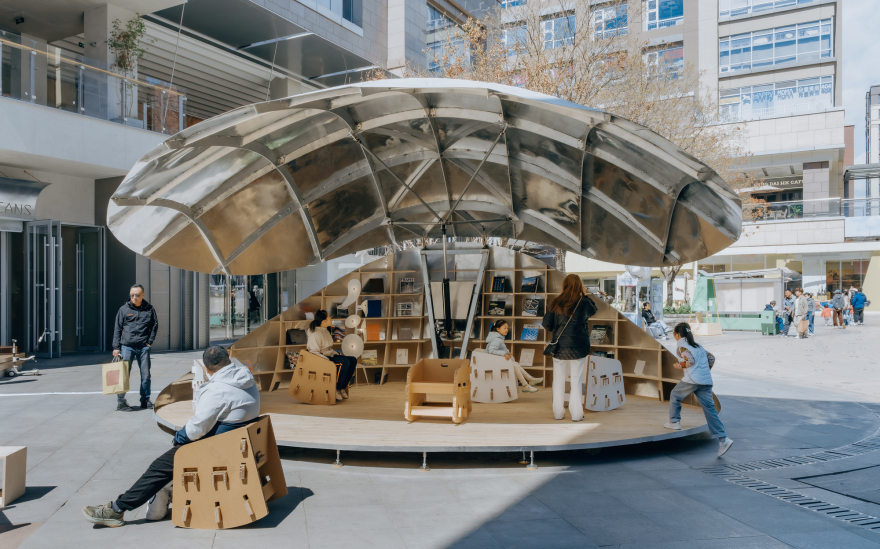
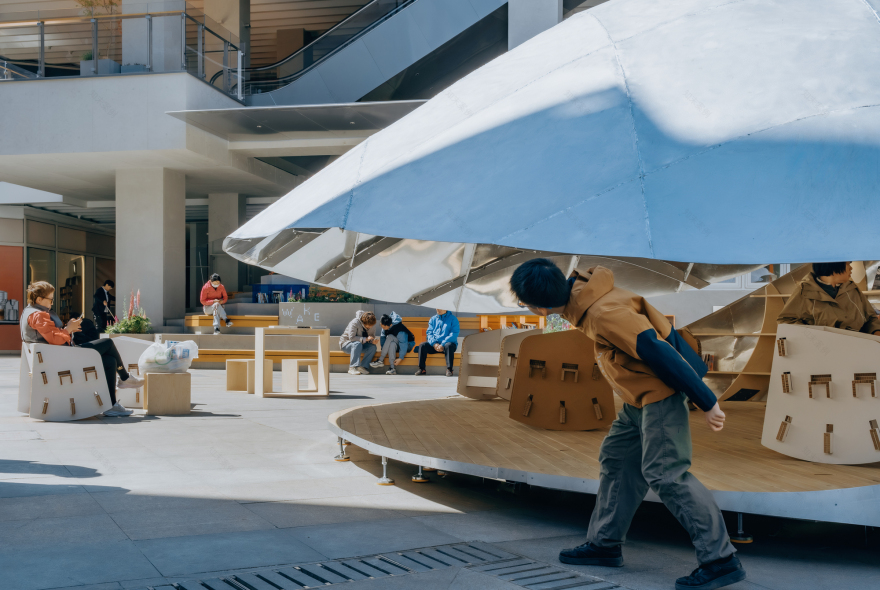
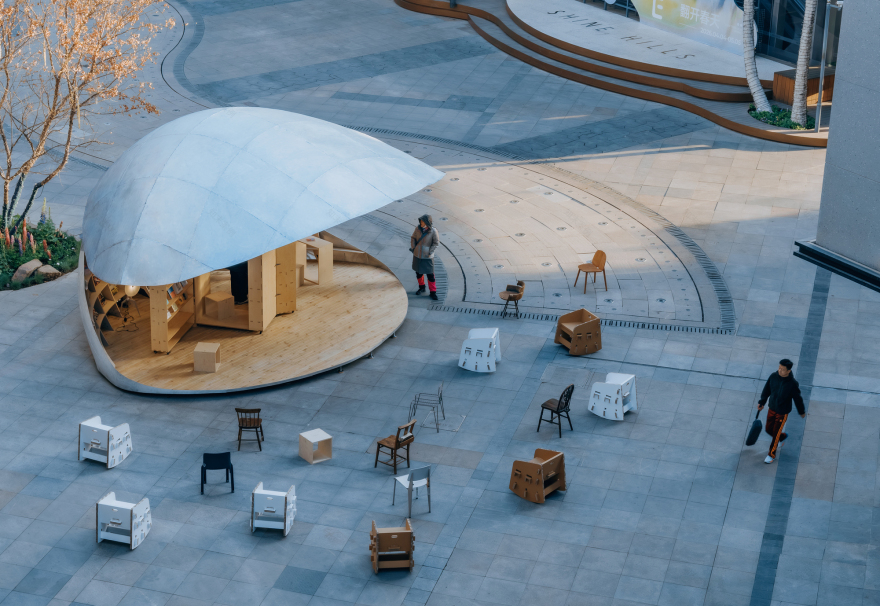
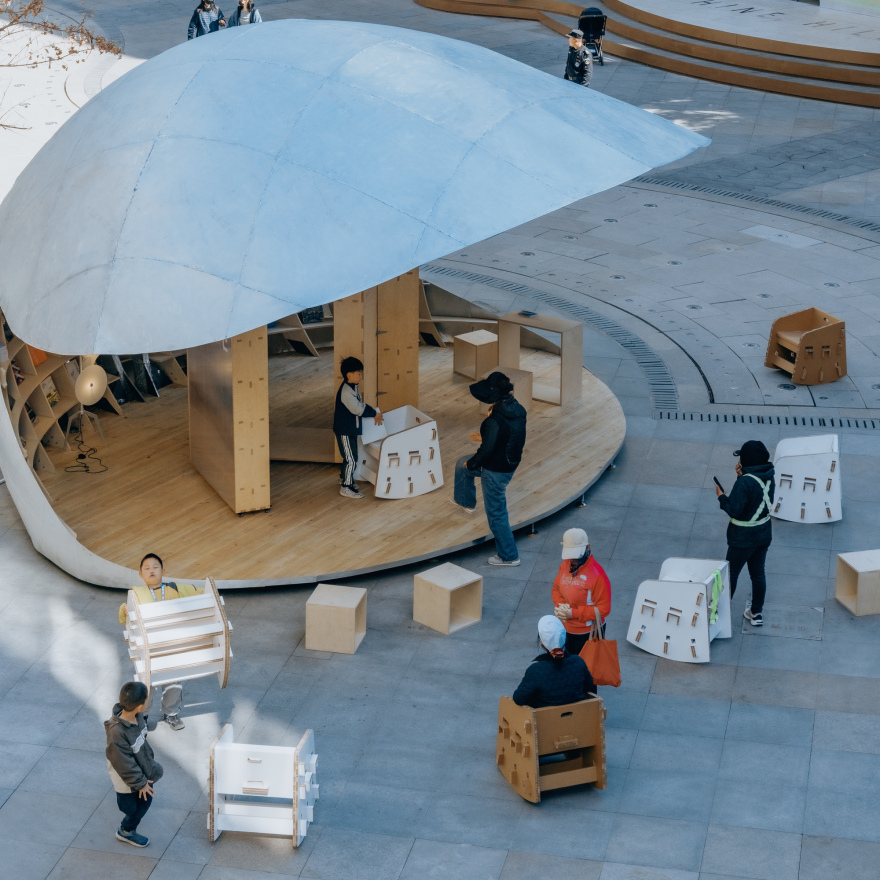
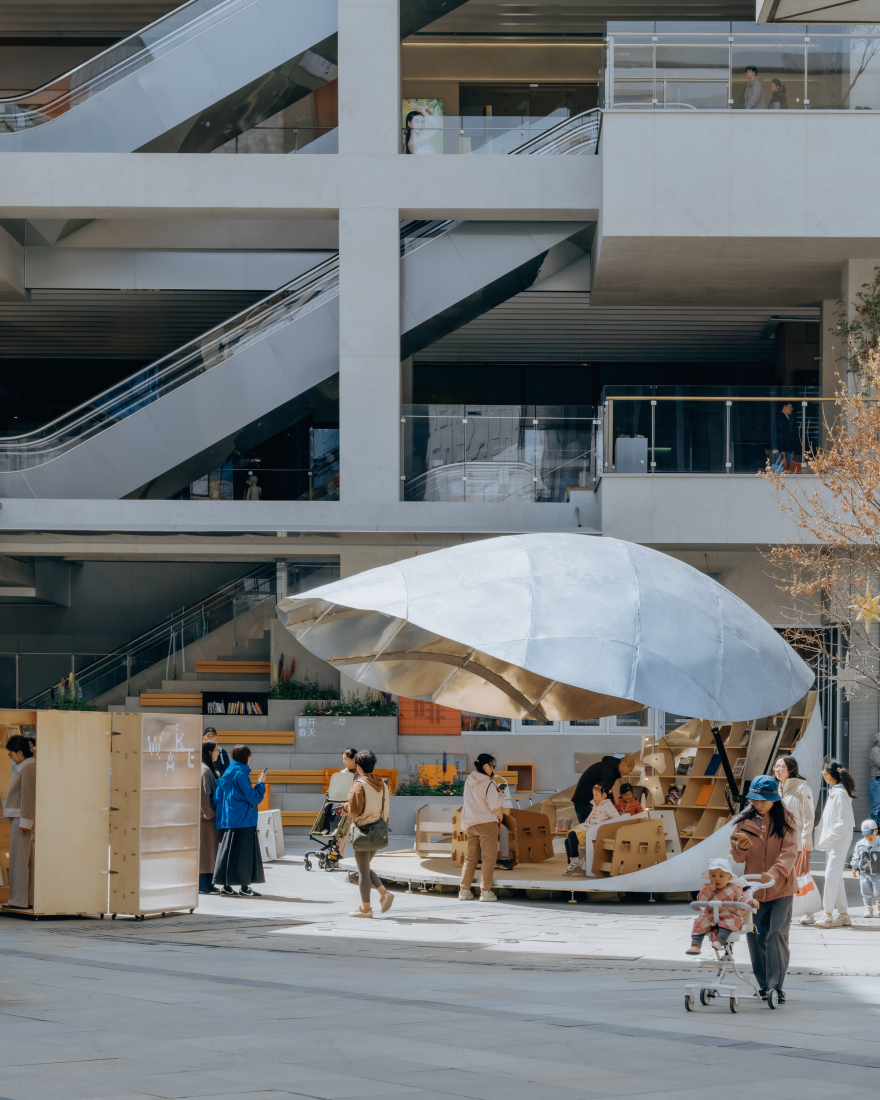
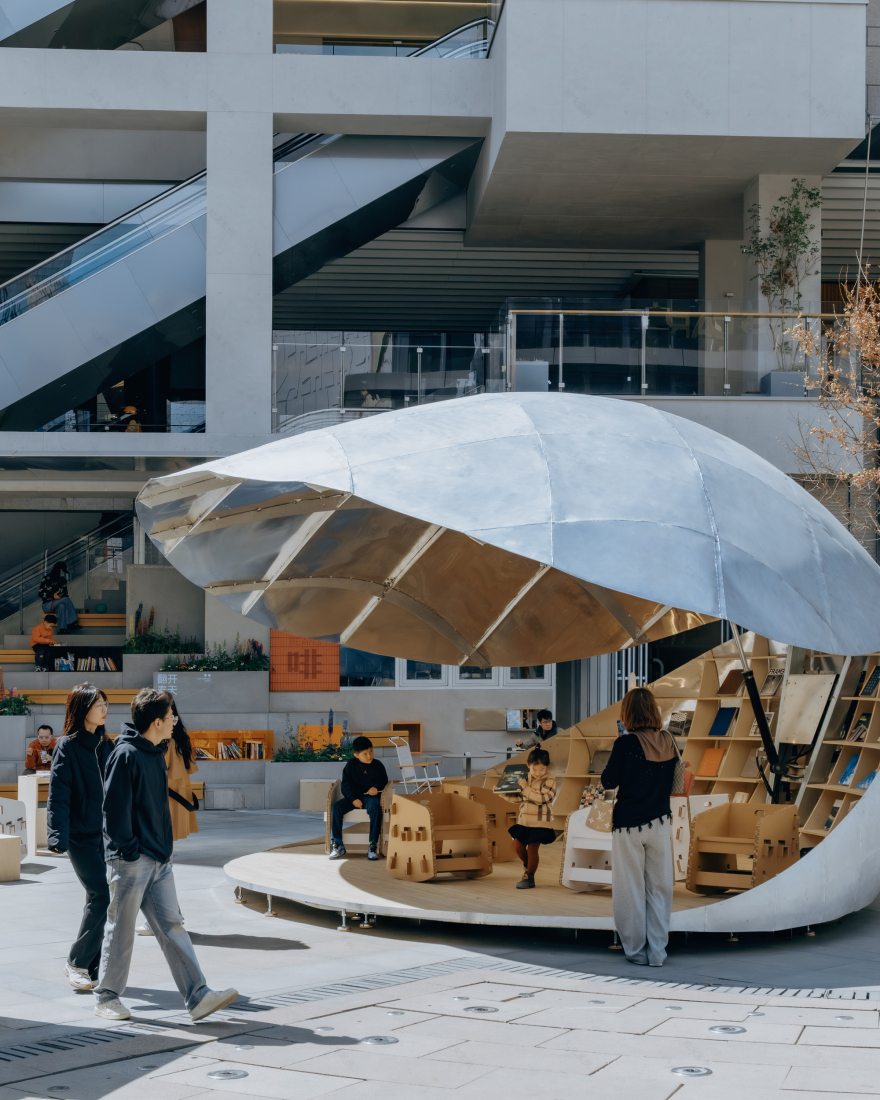
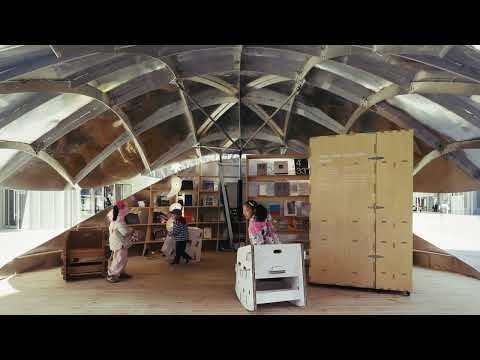
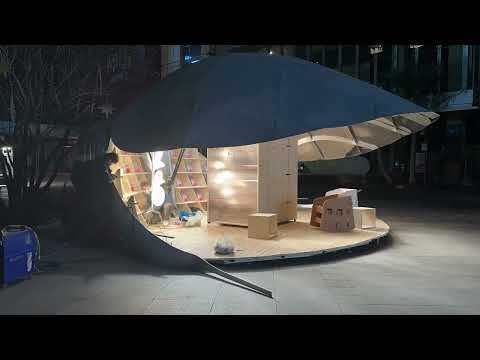
It is not simply a matter of being open or closed. Between these two states lies a whole range of continuous transformations. It can be fully opened, partially opened, half-closed, nearly closed, and finally fully folded in. In each state, its image, spatial atmosphere, and relationship with people are different. When fully open, it is more like a public platform unfolding outward; when half-open, it maintains communication with the outside while also creating a strong sense of shelter; when half-closed or nearly closed, it becomes quieter and more introverted, like a shell temporarily drawing itself inward.
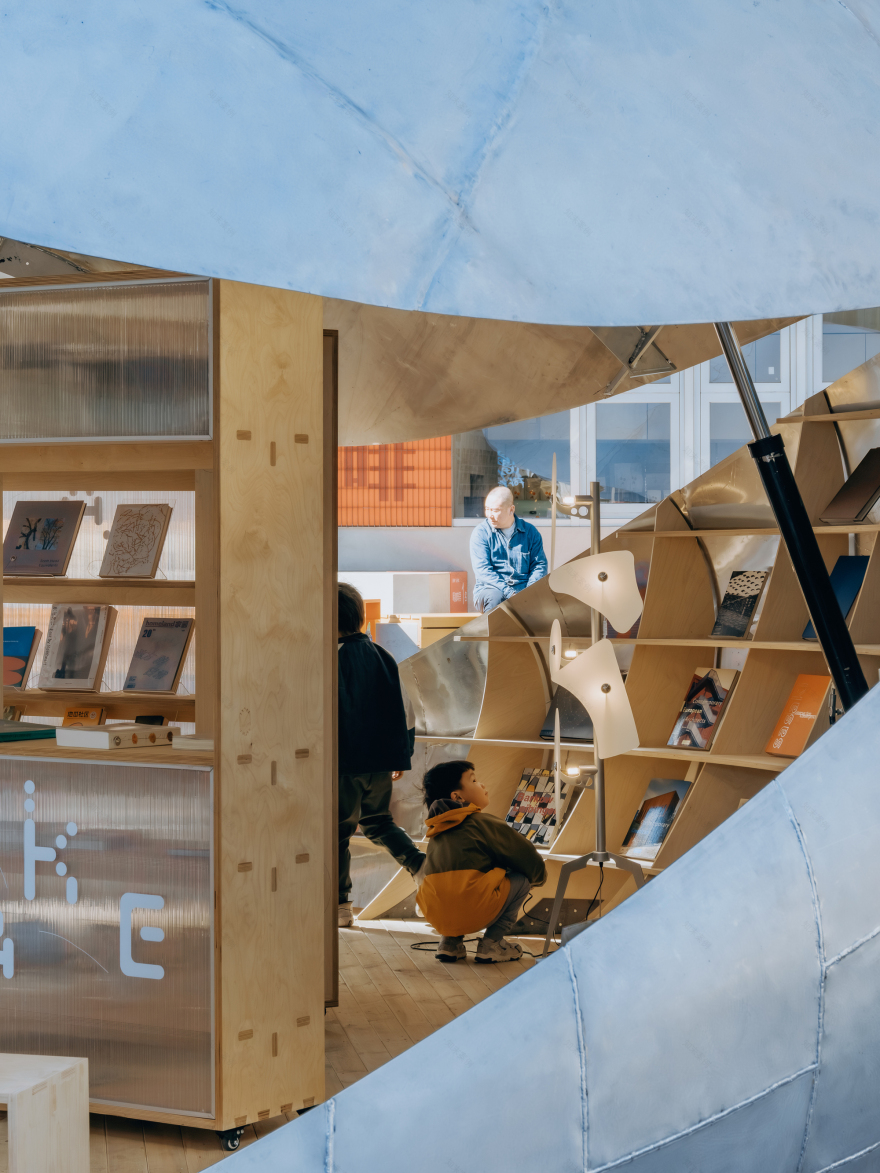
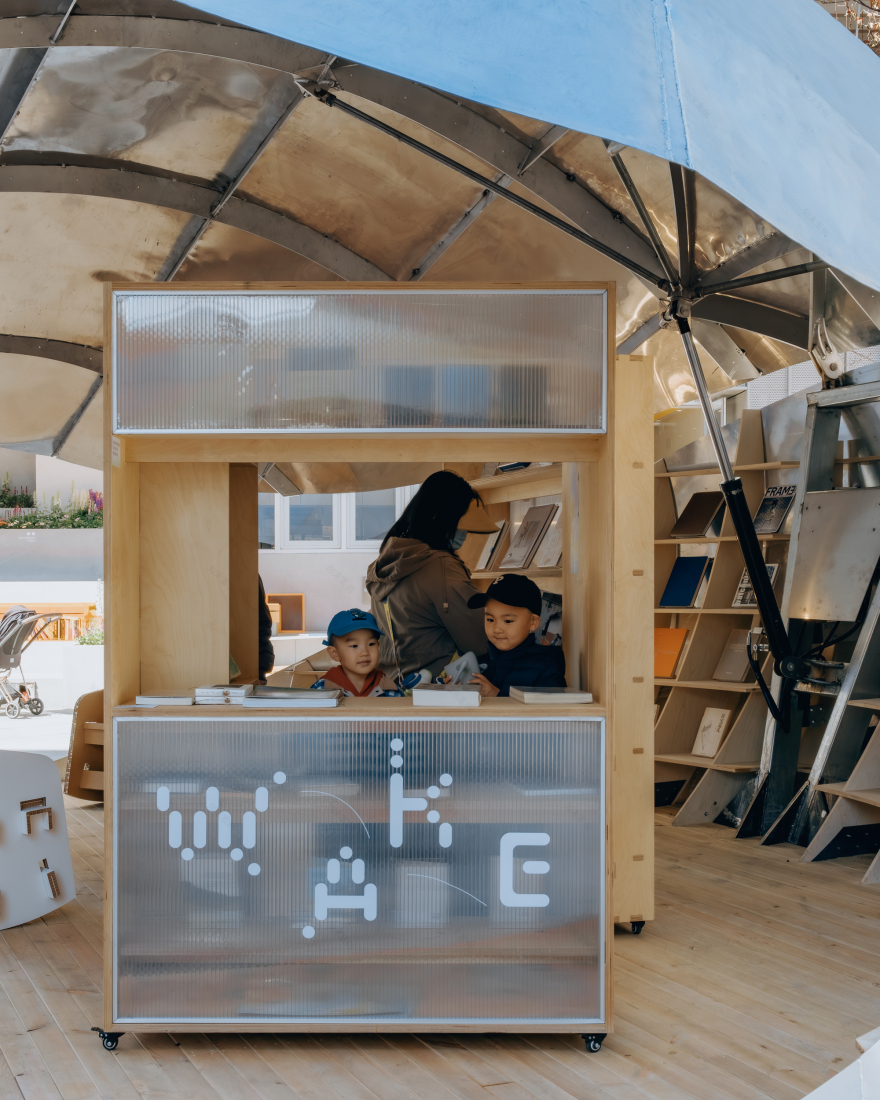
This continuity of transformation is also important in actual use. During reading sessions and related events, for example, a speaker may remain inside the closed shell at first, then gradually appear as the shell slowly opens and meets the audience outside. In this way, the space itself becomes part of the event. It is not merely a passive background; rather, through the slow unfolding, both people and content are revealed together. This gives the space a theatrical sense of ritual.
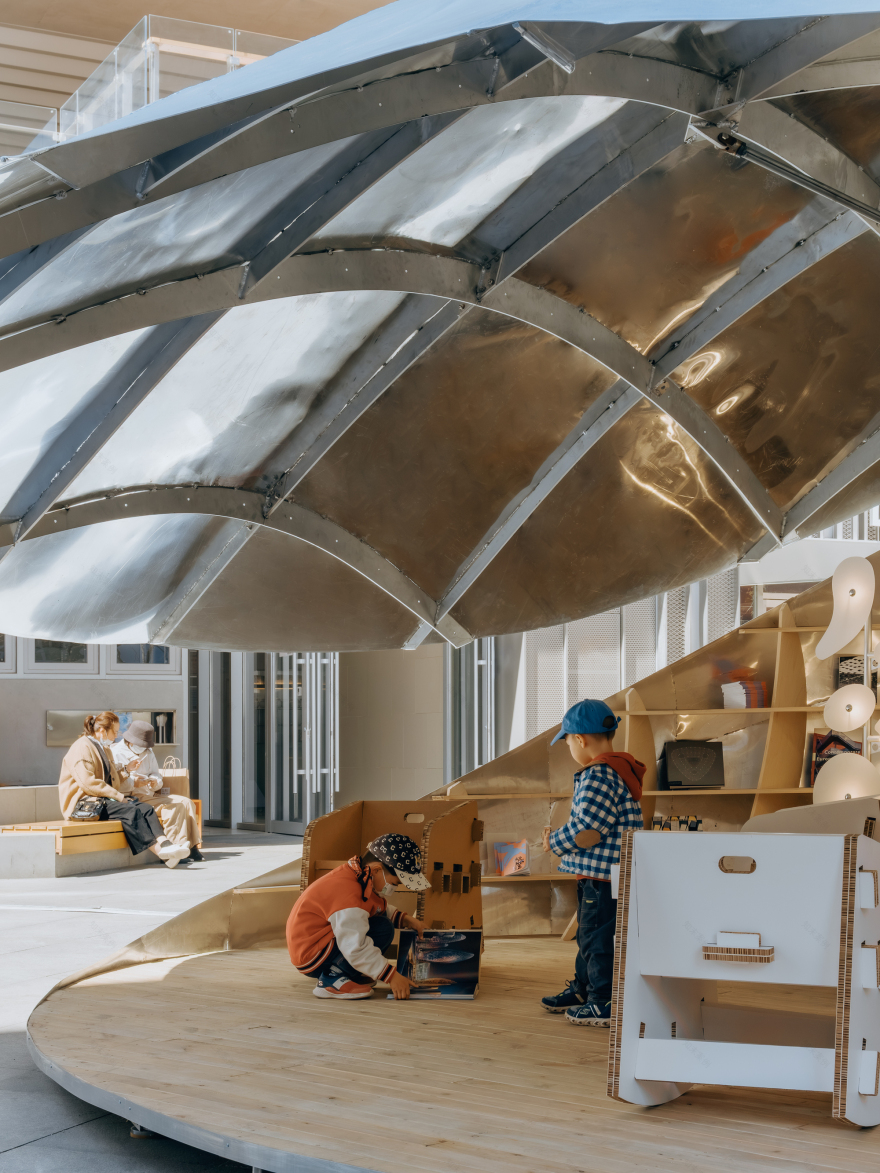
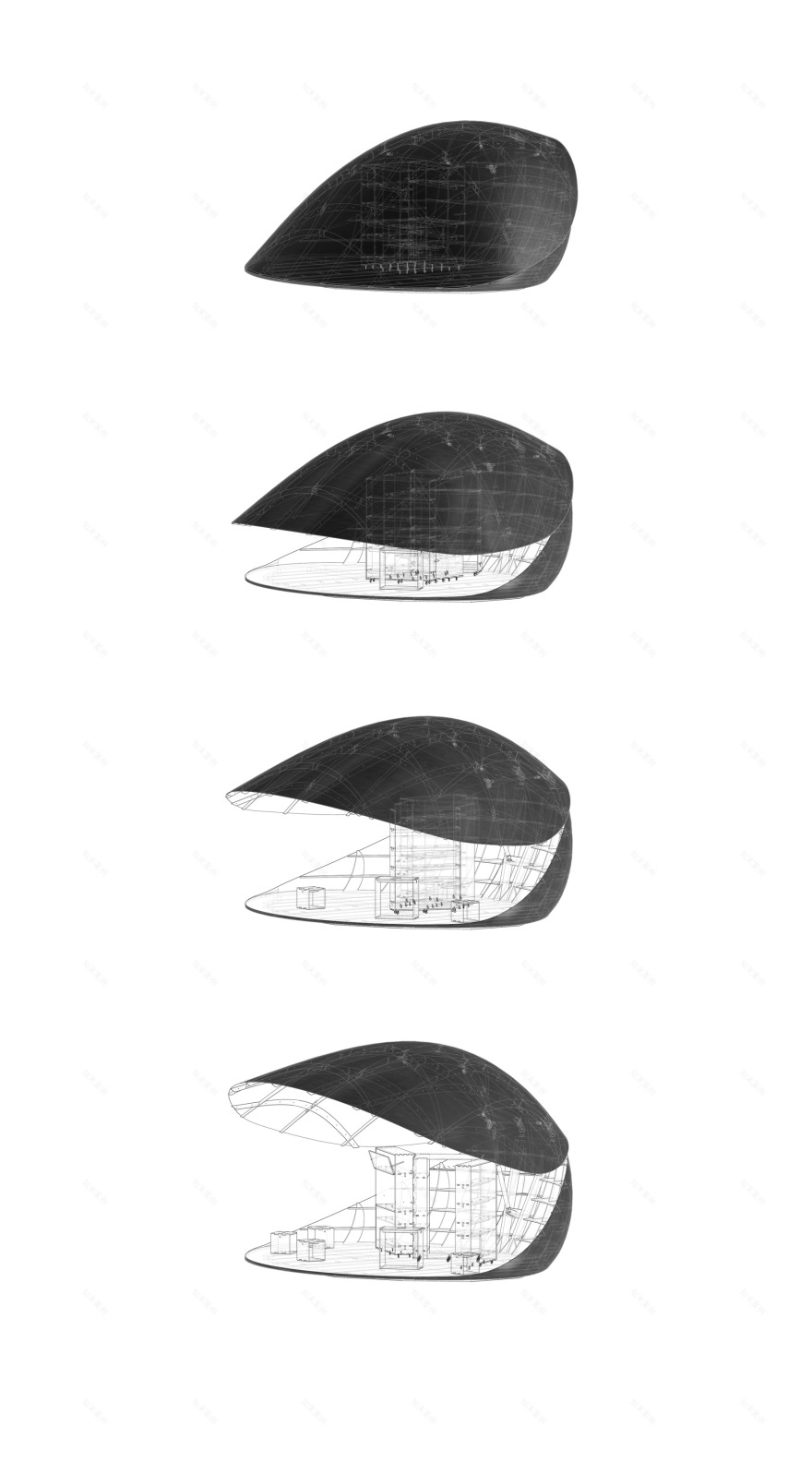
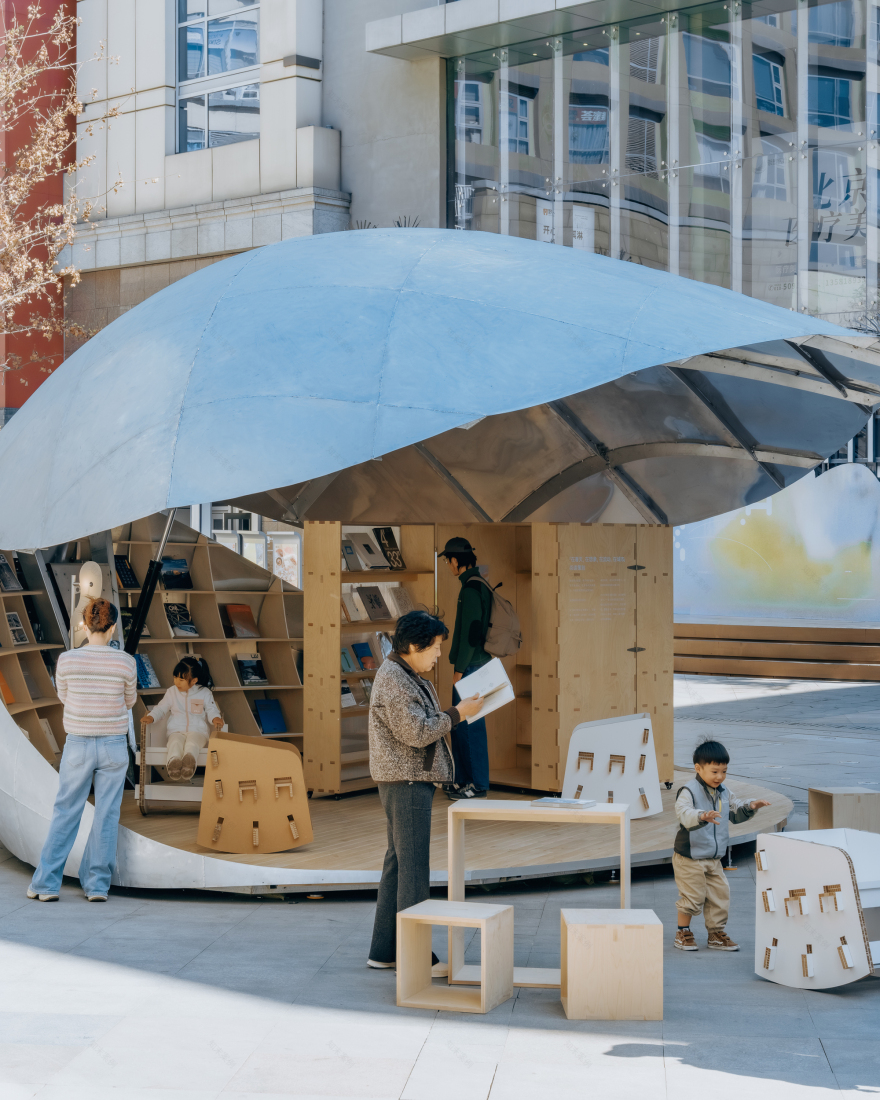
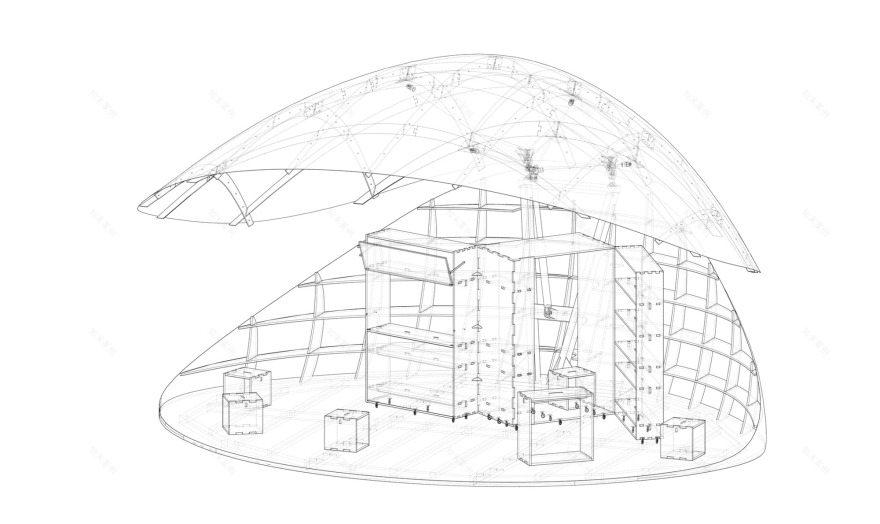
Scale, Structure, and Craft: A Space Truly Meant to Be Entered and Occupied — Although in image it is closer to a light shell-like form, in actual scale the Shell Book Pavilion is far from a small installation. With an unfolded roof area of more than 40 square meters, a long axis of nearly 8 meters, and a short axis of approximately 6 meters, it is a public space with a clear capacity for lingering and shelter. When fully open, the interior has a minimum clear height of about 2.5 meters and a maximum height of about 4.2 meters, ensuring comfort for reading, gathering, conversation, and activities.
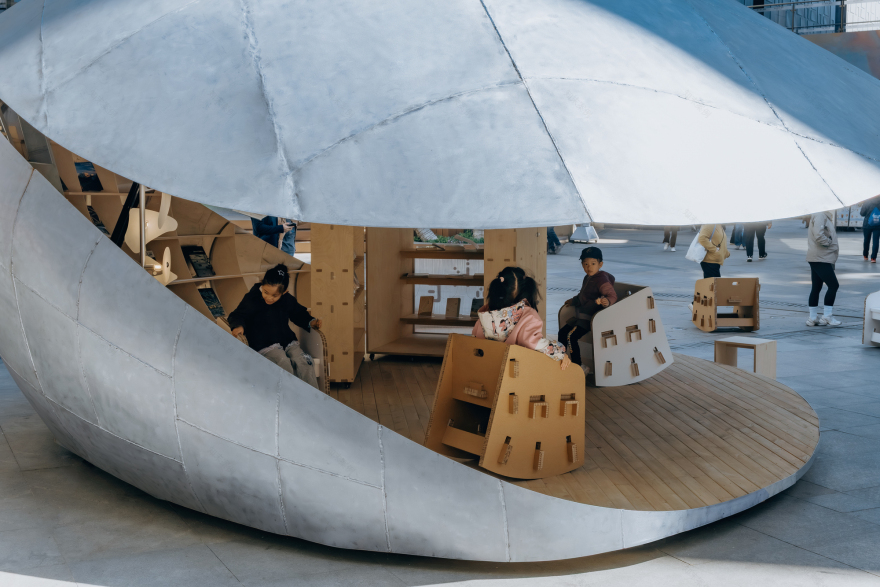
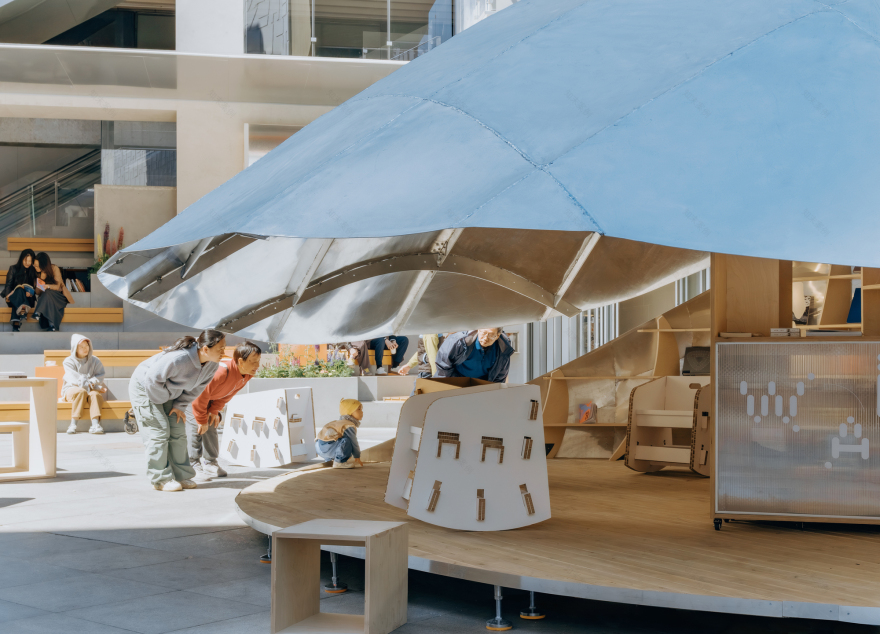
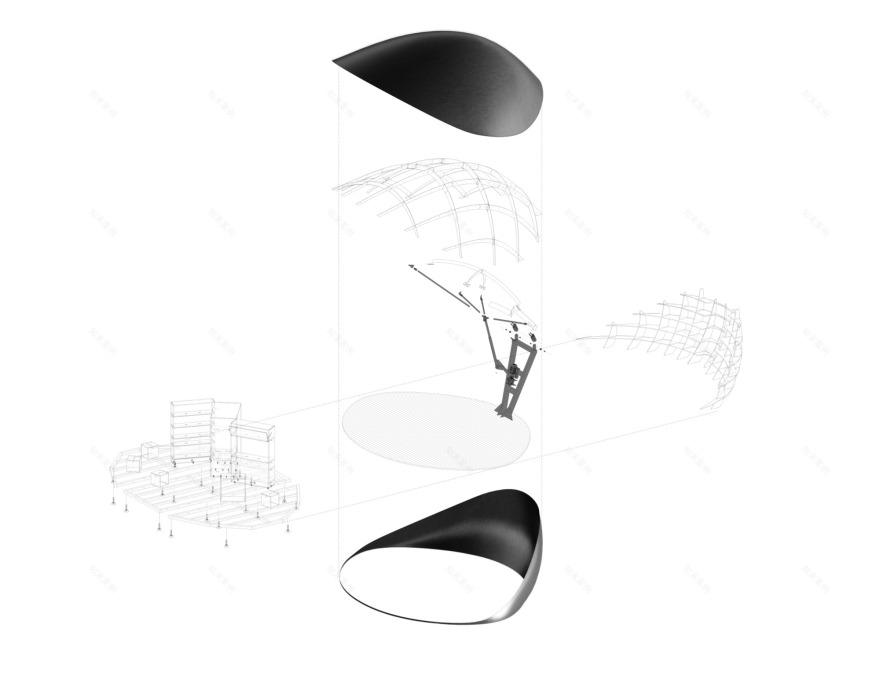
For that reason, the project could not simply satisfy the visual novelty of being openable and closable; it also had to achieve architectural scale, stability, and safety. The project involved not only the spatial design itself, but also the coordination of the drive system, bearing and opening mechanisms, and multiple metalworking techniques including forging, CNC machining, lathe processing, and welding. To ensure the strength of the overall frame in both moving states and long-term use, the primary metal structural skeleton was made of aerospace-grade aluminum alloy. At the same time, the interior also involved timber fabrication, meaning the project had to balance the precision of the metal system, structural reliability, and the tactile quality of a wooden spatial environment.
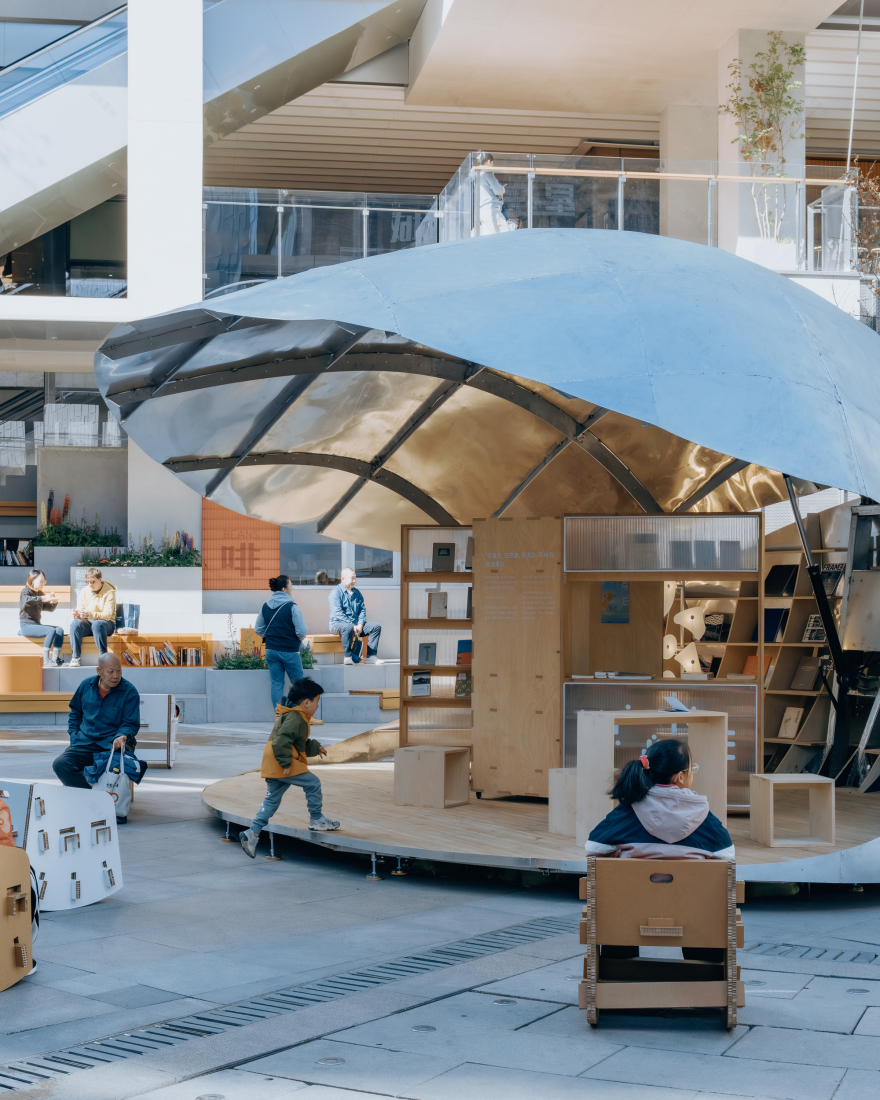
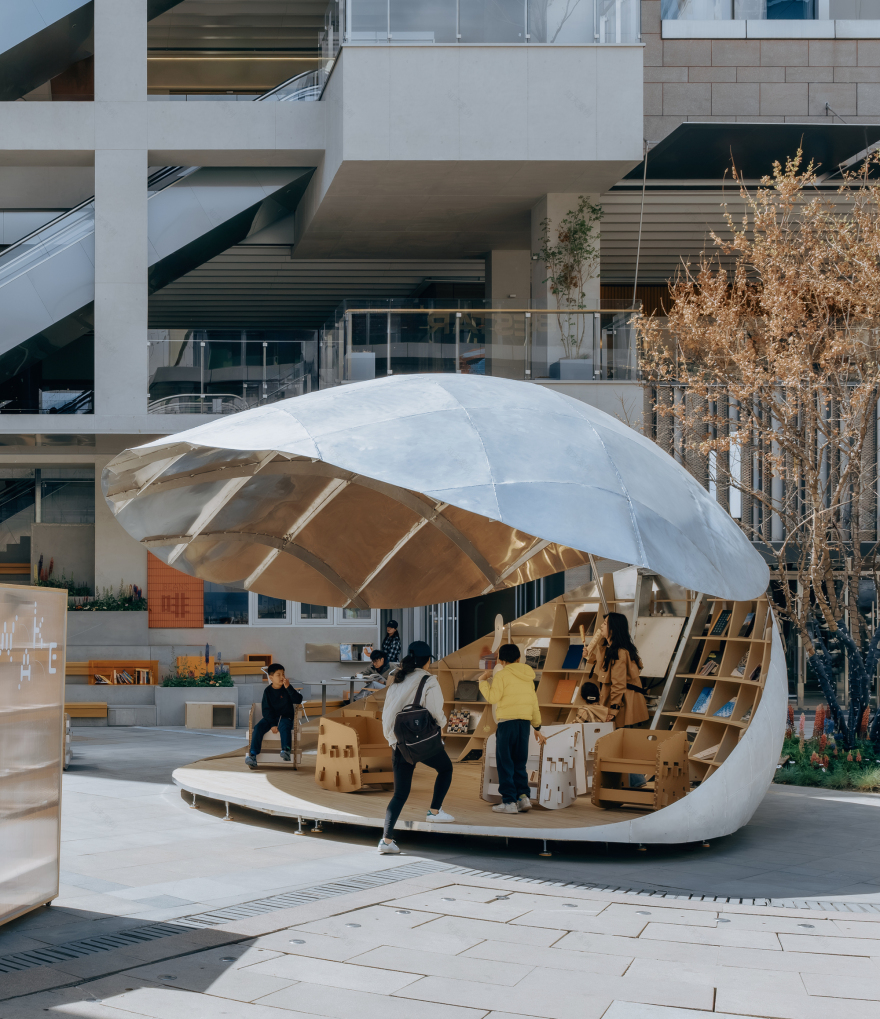
Challenges and Meaning: Generating Public Relationships Under Complex Conditions — The entire process of designing, fabricating, and installing the pavilion had to be completed within 20 days, which could almost be described as an impossible task. And when materials from different factories actually arrived on site, the challenges became even more specific. The plaza ground on which the pavilion was placed was not completely level, with a maximum height difference of nearly 18 centimeters. For a movable structure that requires precise opening, accurate axial relationships, and overall stability, this posed a major challenge. Base leveling, installation precision, structural positioning, and the load behavior after opening all had to be repeatedly adjusted under these conditions.
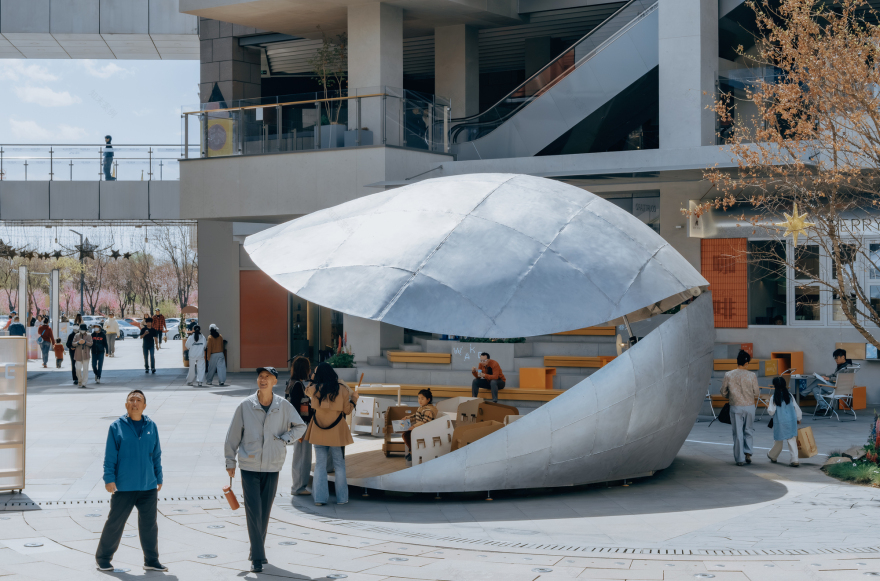
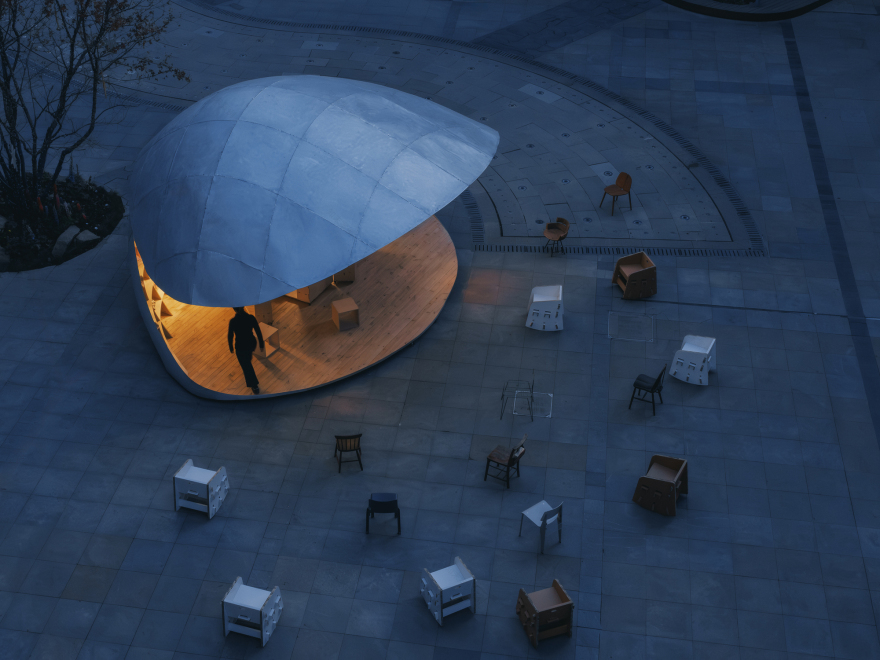
At the same time, because the project is located in a commercial public plaza, construction time on site was restricted and could only take place at night. This meant that hoisting, welding, installation, testing, and on-site coordination all had to be compressed into limited nighttime windows, making both construction organization and field coordination especially difficult.
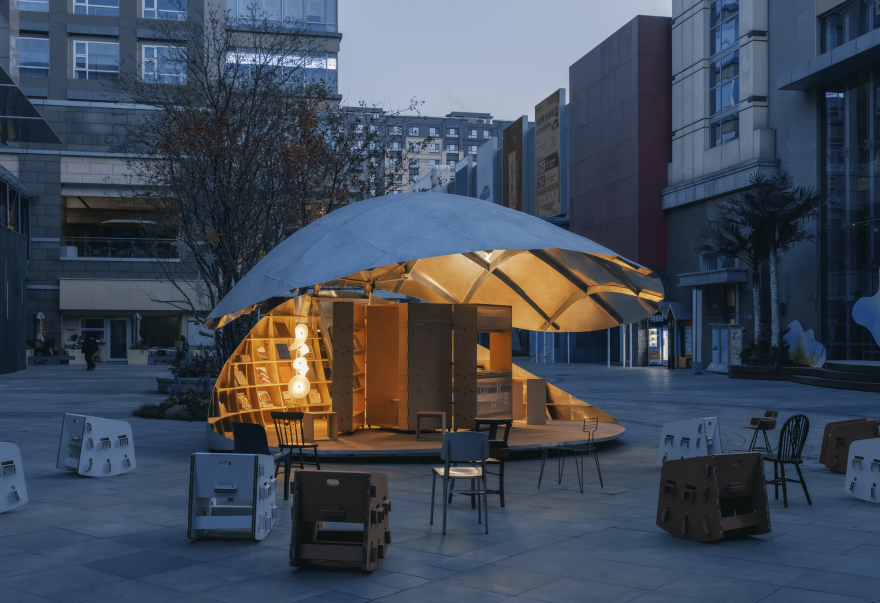
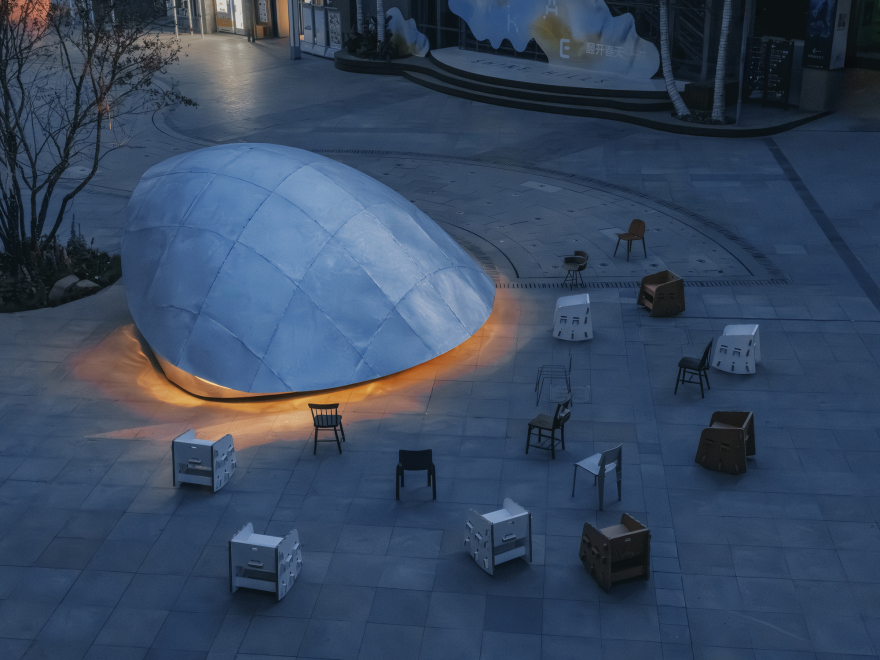
The lightness and naturalness that the Shell Book Pavilion finally presents are in fact backed by high-intensity technical coordination, craft collaboration, and on-site problem solving. It is not merely a small book pavilion, nor merely an installation, but a small public space that continues to change with opening and closing, with time, weather, and modes of use. People can approach it, move around it, enter it, and also watch it slowly unfold and slowly fold back in. For this project, what matters is not a fixed image, but the way it continuously generates new public relationships in the center of the community plaza through ongoing transformation.
Project gallery
南京喵熊网络科技有限公司 苏ICP备18050492号-4知末 © 2018—2020 . All photos and trademark graphics are copyrighted by their owners.增值电信业务经营许可证(ICP)苏B2-20201444 苏公网安备 32011302321234号
苏公网安备 32011302321234号客服
消息
收藏
下载
最近