

创作上传
VIP
收藏下载
登录 | 注册有礼
查看完整案例

收藏

下载

分享

翻译
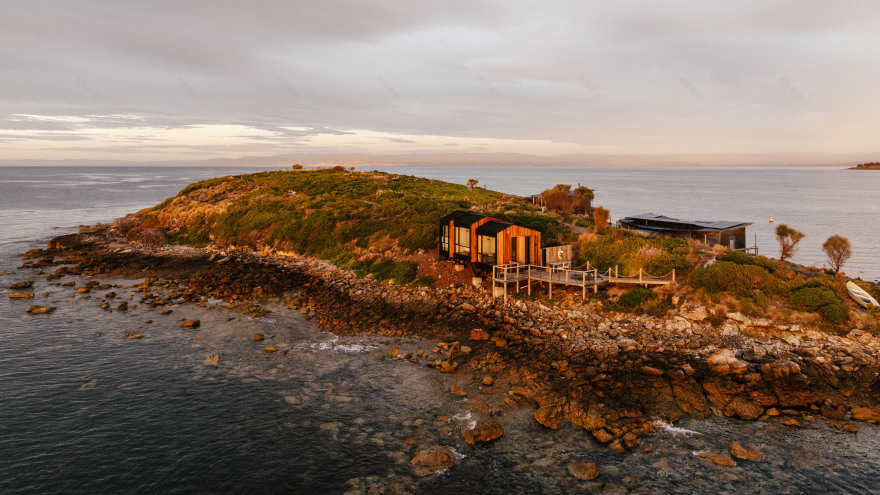
Australian studio Align has completed Picnic Island Cabin, a holiday retreat on the edge of a tiny island in Tasmania, clad in a palette of spotted gum timber and steel.
The cabin sits on the privately owned Picnic Island on Tasmania's Freycinet Peninsula, which has an area of just one hectare and operates as both an off-grid eco-resort and a protected sanctuary for seabirds and penguins.
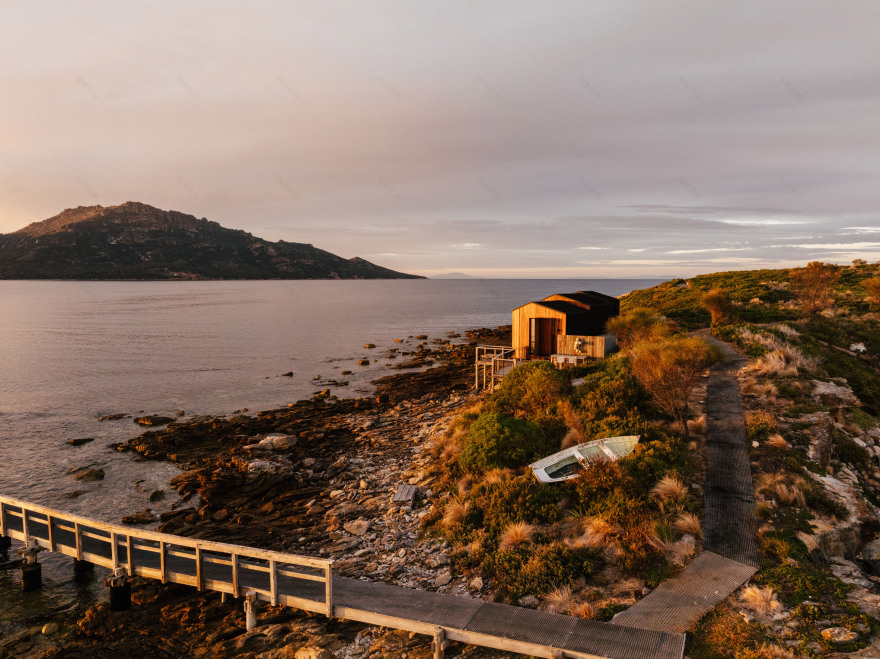
Align has completed a holiday retreat on Picnic Island in Tasmania
Align was tasked with expanding the island's existing accommodation by adding a 40-square-metre, one-bedroom cabin, which is perched on the southern coast on concrete and steel feet.
Given the site's sensitivity, the cabin was entirely prefabricated before being helicoptered onto the site, and designed to Passivhaus principles using materials with low volatile organic compounds (VOCs).
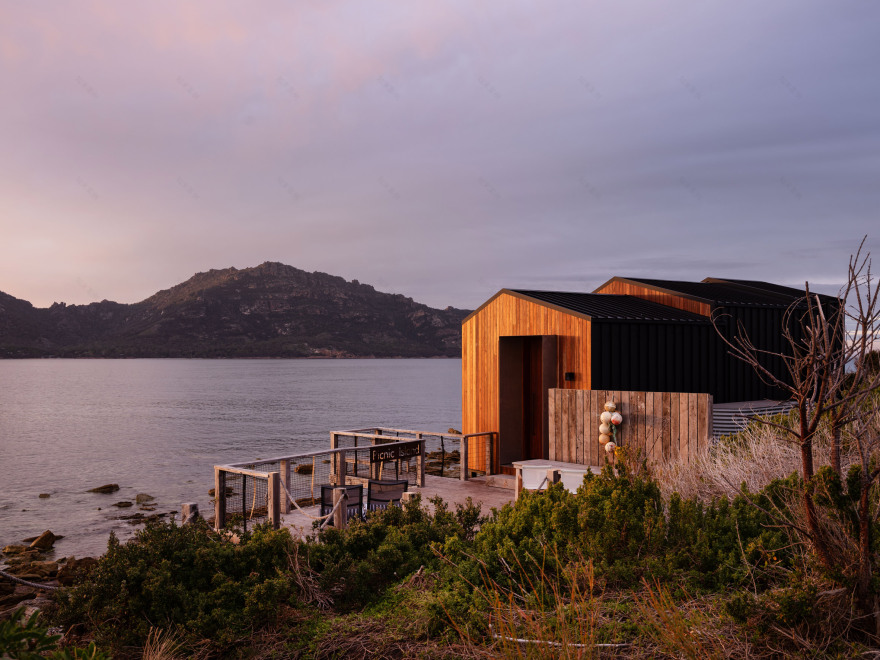
Its 40-square-metre structure contains one bedroom
"The core concept for the cabin is grounded in a philosophy of rigorous ecological stewardship that embodies a 'tread lightly' principle," principal architect Saxon Hall told Dezeen.
"The design's core ideas include achieving 100 per cent off-grid self-sufficiency, implementing high-performance building science, and eliminating construction waste," he added.
"A rigorous 'Little Penguin Management Plan' involved meticulously mapping seabird runways to ensure infrastructure remained invisible to fauna, while existing rocks and vegetation were surgically preserved and reinstated."
The exterior is clad with spotted gum timber and steel
The cabin is divided into three gabled volumes that step down its rocky site.
They contain a living and dining area with a small kitchenette, a suspended fireplace and a workout space, as well as an ensuite bedroom and a service area.
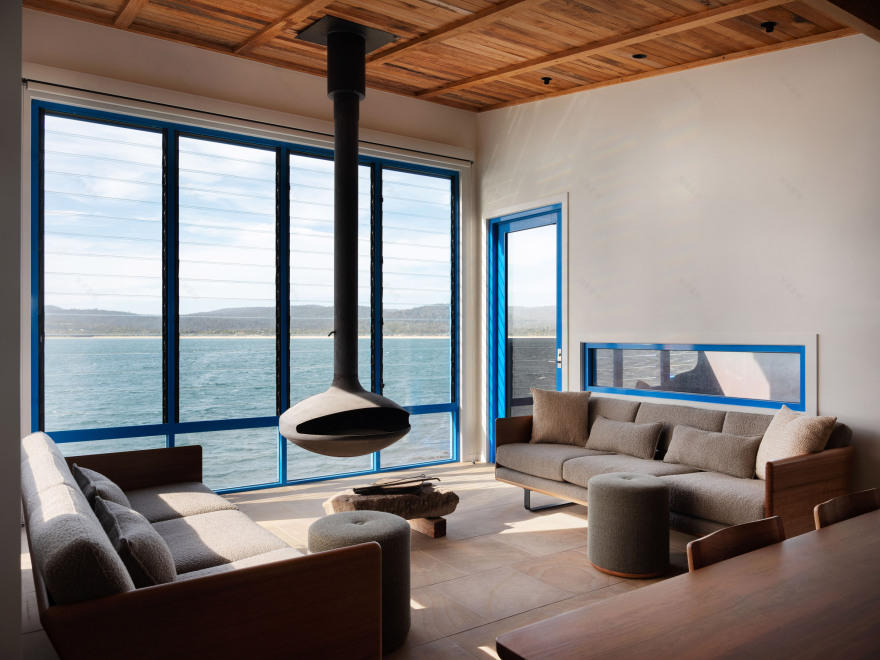
A suspended fireplace features in the living area
This stepped form was intended as a reference to the distant Hazard Mountain Range to the south, views of which are framed by full-height windows and a built-in window seat in the bedroom.
A preexisting deck structure was repurposed as an outdoor seating area for the home, linking with a pathway that loops the island and connecting to the additional accommodation, communal building and jetty on the opposite side.
"The cabin's precise built form – achieved through the stepping, slicing, and dissecting of the volume – is a direct representation of the mountain range," Hall explained.
"To enhance the spatial feel of the small footprint, an offset gable raked ceiling provides a unique perspective on the vertical volumes of each section, creating differentiation between the dissected spaces," he added.
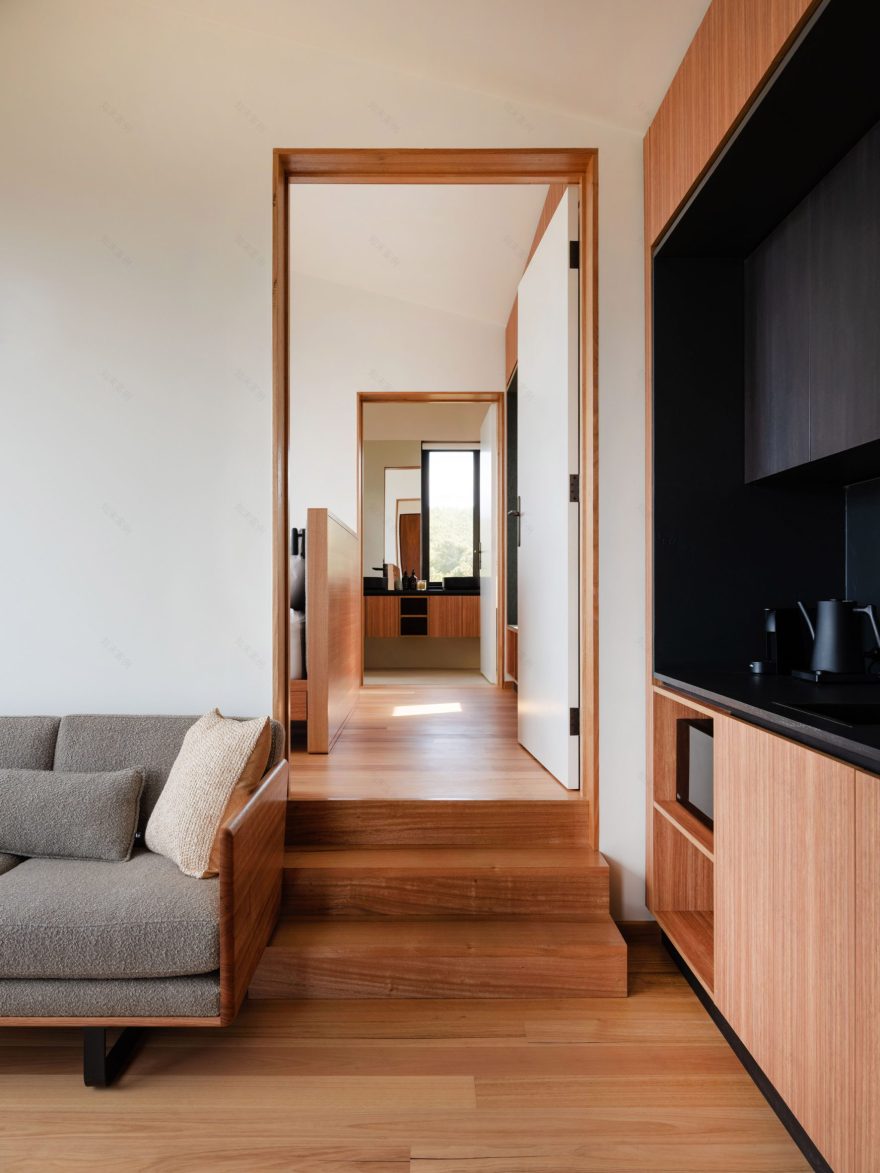
White-painted walls are paired with timber surfaces
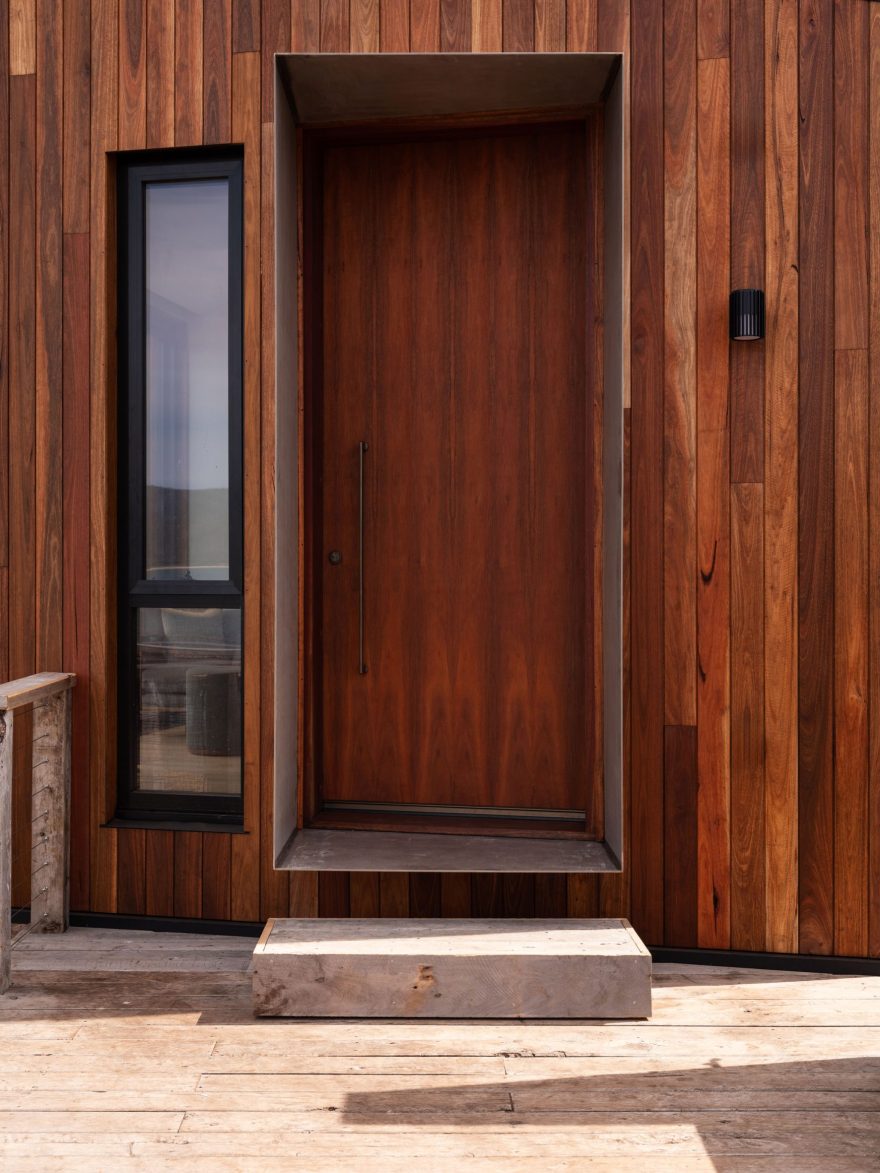
Picnic Island Cabin's exposure to salty coastal winds informed its external cladding of spotted gum timber, which is often used for building boats. Alongside this timber cladding are panels of recyclable steel finished in black and a deep stainless steel reveal that shelters the cabin's entrance.
Inside, white-painted walls sit alongside exposed timber ceilings and carpentry, while blue-painted window and door frames nod to finishes on the island's existing buildings.
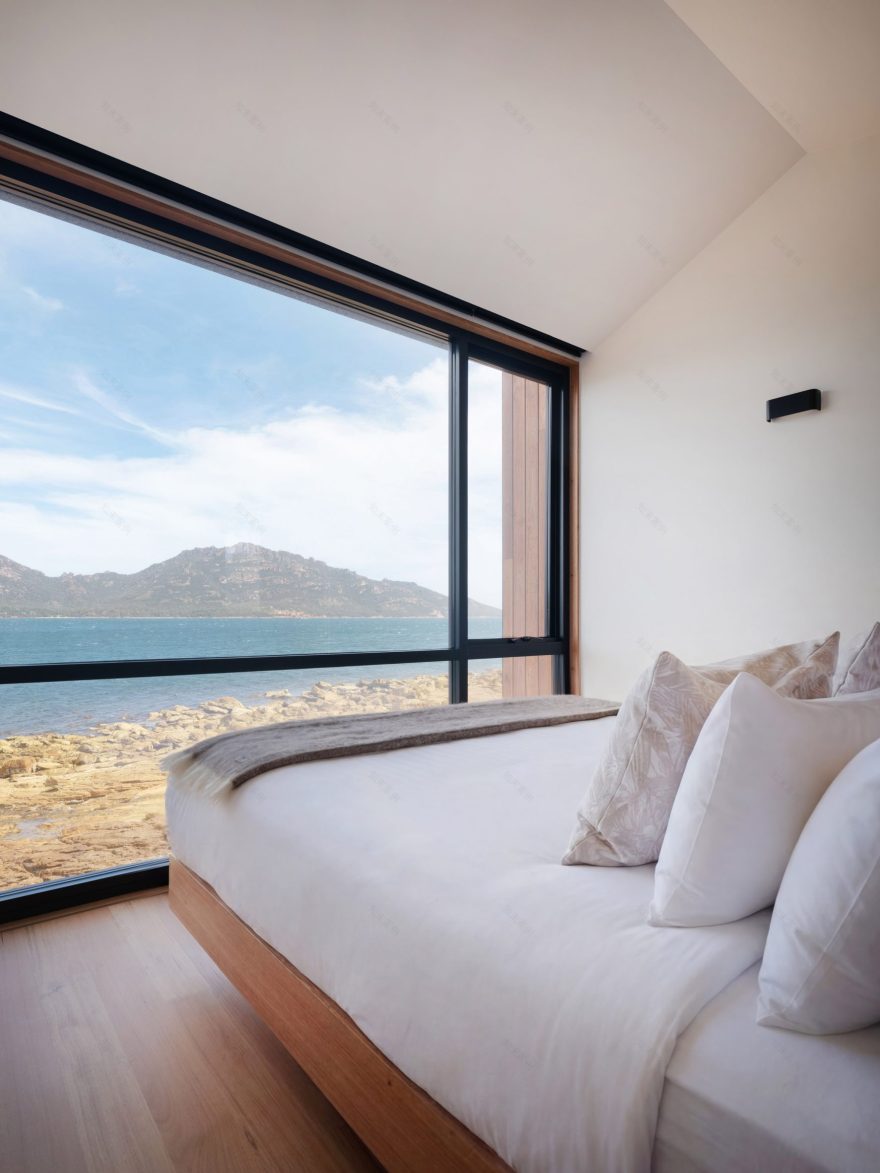
Full-height windows frame views of a nearby mountain range
The cabin is fully electric and functions off-grid like the rest of the island, utilising solar photovoltaic arrays and a rainwater harvesting system. It also incorporates its own heat-recovery ventilation system and is finished with high levels of insulation and air tightness to meet rigorous Passivhaus standards.
Elsewhere in Tasmania, local practice Room11 recently completed a concrete guesthouse overlooking the coast of Bruny Island, which cantilevers out from an area of dense bushland, and So Architecture completed Harriet's House – a textured "sanctuary" added to a cottage.
The photography is by Adam Gibson.
南京喵熊网络科技有限公司 苏ICP备18050492号-4知末 © 2018—2020 . All photos and trademark graphics are copyrighted by their owners.增值电信业务经营许可证(ICP)苏B2-20201444 苏公网安备 32011302321234号
苏公网安备 32011302321234号客服
消息
收藏
下载
最近