

创作上传
VIP
收藏下载
登录 | 注册有礼
查看完整案例

收藏

下载

分享

翻译
Rafa Villa stands in Riyadh, Saudi Arabia, where Bandar Almansoour Architects rework the Saudi house as a contemporary residence rooted in Diriyah. Conceived in 2026, the house draws on courtyards, shifting levels, and semi-open thresholds to balance privacy, daylight, and a strong connection to its setting. The result is compact in footprint but deliberately expansive in sequence and spatial effect.
About Rafa Villa
Rafa Villa takes shape at the edge of Wadi Hanifah in Diriyah, within a residential development of 20 private villas arranged across two architectural typologies. The project sits in a setting marked by both landscape and history, and its design works from that condition without resorting to direct imitation.
Bandar Almansoour Architects treat the house as a contemporary reading of the traditional Saudi dwelling. Climatic extremes, privacy, and the need for natural light and ventilation all inform the plan. Rather than relying on a single gesture, the design builds its character through courtyards, layered outdoor rooms, and thresholds that move between enclosed and open space.
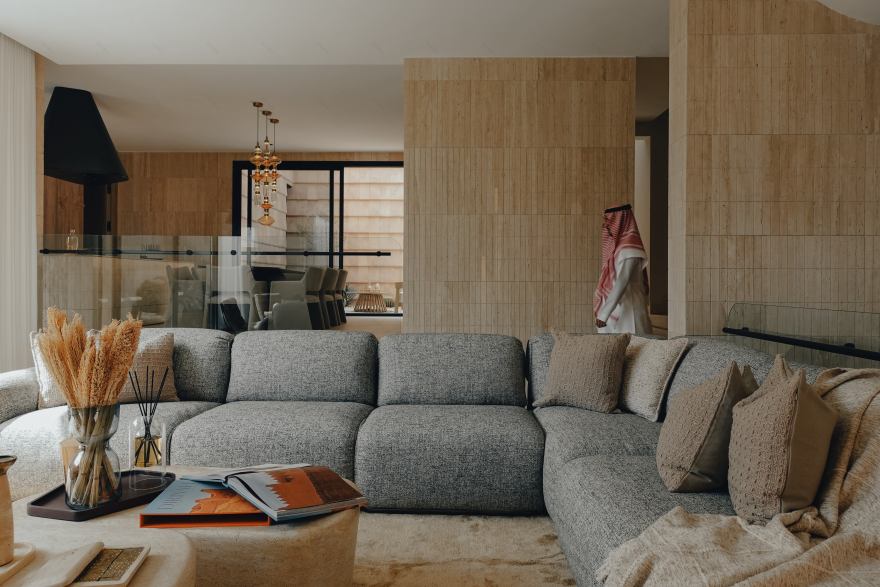
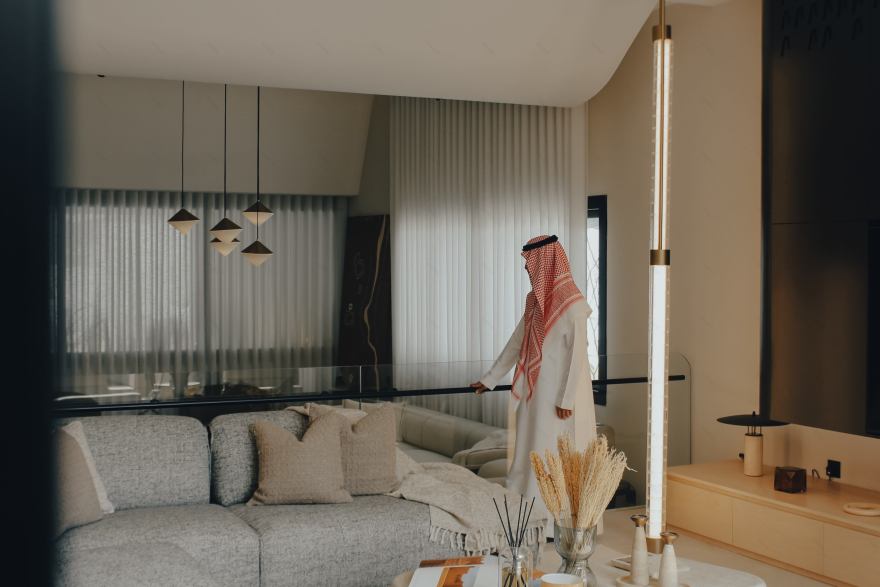
A central challenge is scale. The house seeks a sense of breadth within a compact footprint of about 300 sqm, and it does so by breaking away from rigid floor-by-floor separation. Split mezzanine levels allow rooms to cascade visually into one another, extending sightlines and giving the interior a more open reading while still preserving distinct zones of use.
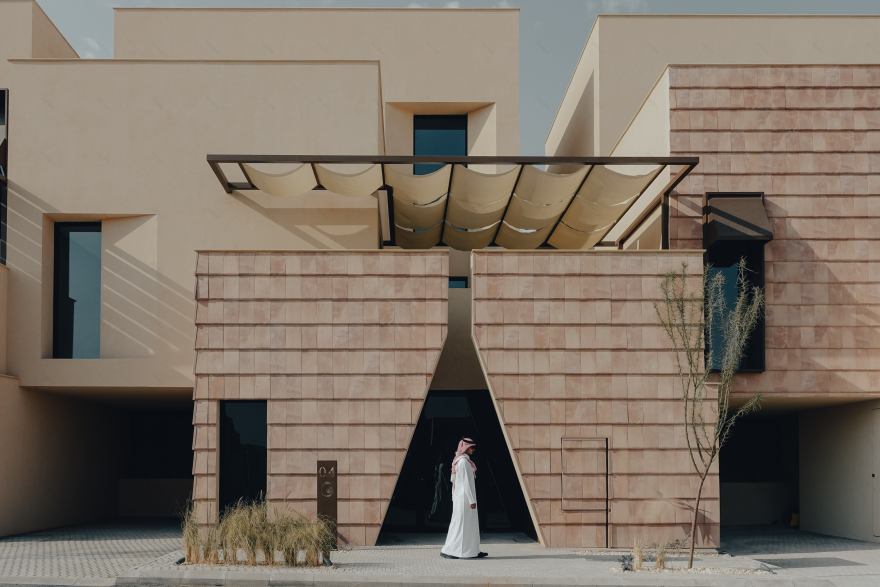
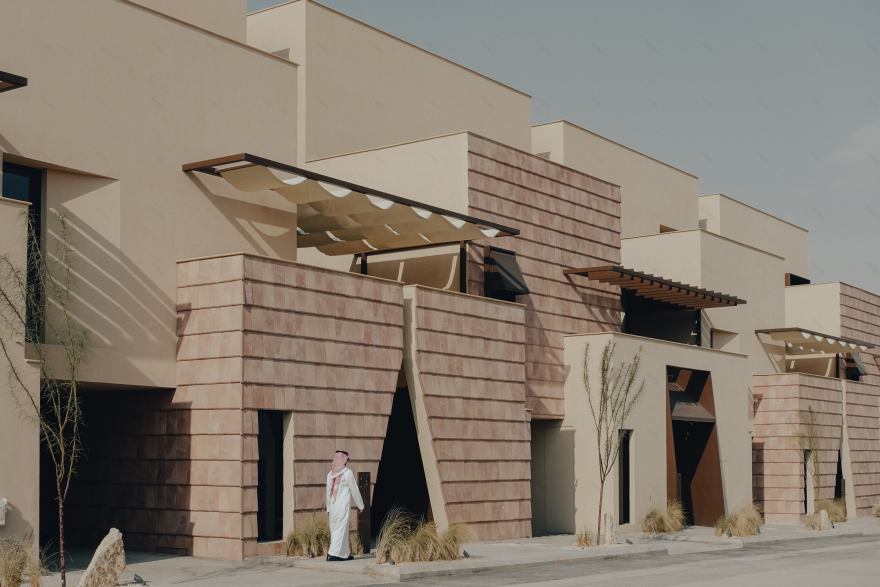
The arrival sequence is handled as a progression rather than a direct entry. Visitors pass through a shaded threshold that compresses the approach before opening the house more fully. An external staircase clad in Diriyah Tan links lower and upper levels through an open terrace and recalls elements of traditional Diriyah architecture. The route reinforces one of the project’s clearest concerns: the constant exchange between shadow and light.
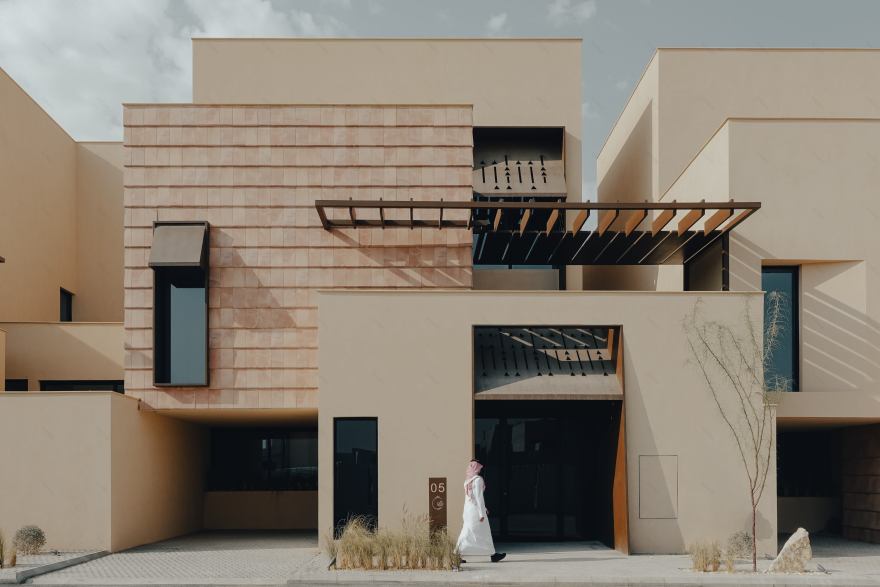
That exchange continues across the exterior. The villas are composed through a careful balance of solid and void, using mass and openings to control privacy, daylight, and rhythm. Exterior walls are clad in contemporary heritage brick, folded to produce depth and changing shadow through the day. At the entrance facades, a reinterpreted triangular geometry gives the development a recognizable identity while staying tied to local proportion and form.
Openings are positioned to frame views and temper daylight, strengthening the relationship between interior and exterior space. Entrance gates subtly revisit the proportions of traditional Diriyah architecture, and each villa receives its own entrance expression. Even so, the project maintains a consistent cadence across the wider development.
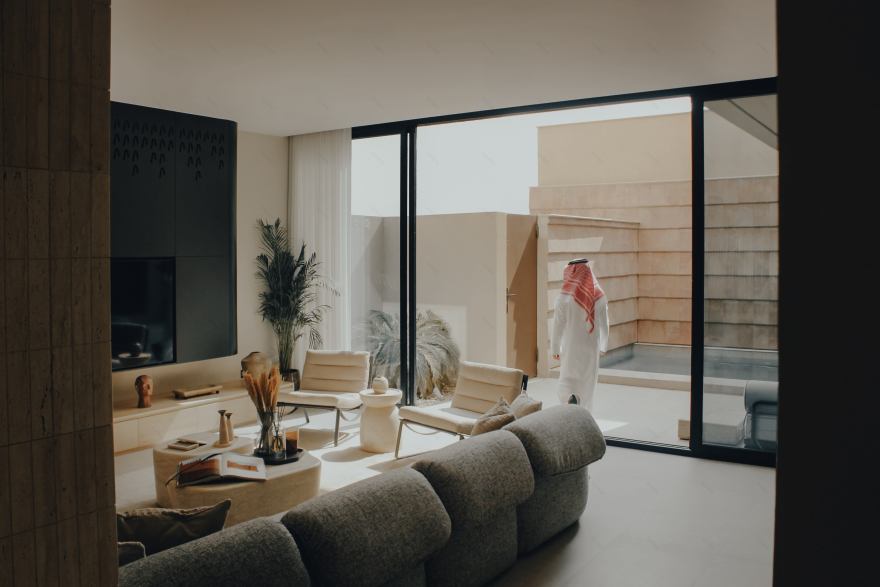
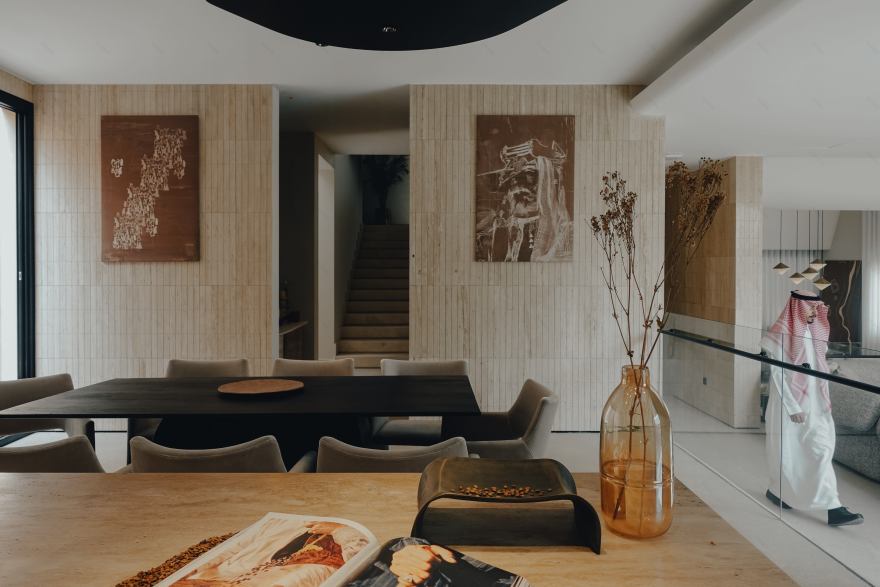
Inside, the house uses level changes to define hierarchy. The majlis is gently recessed, giving it a more grounded and formal presence, while the family living area and kitchen are lifted slightly above. This simple shift in section distinguishes public and private modes of inhabitation without relying on hard boundaries.
Two courtyards anchor the ground floor and bring light from opposing directions. Their presence helps animate the rooms around them, while red-toned brick surfaces reflect warmth deeper into the interior. Skylights add another layer of illumination, carrying natural light further inside and supporting the project’s aim of openness within a relatively compact plan.
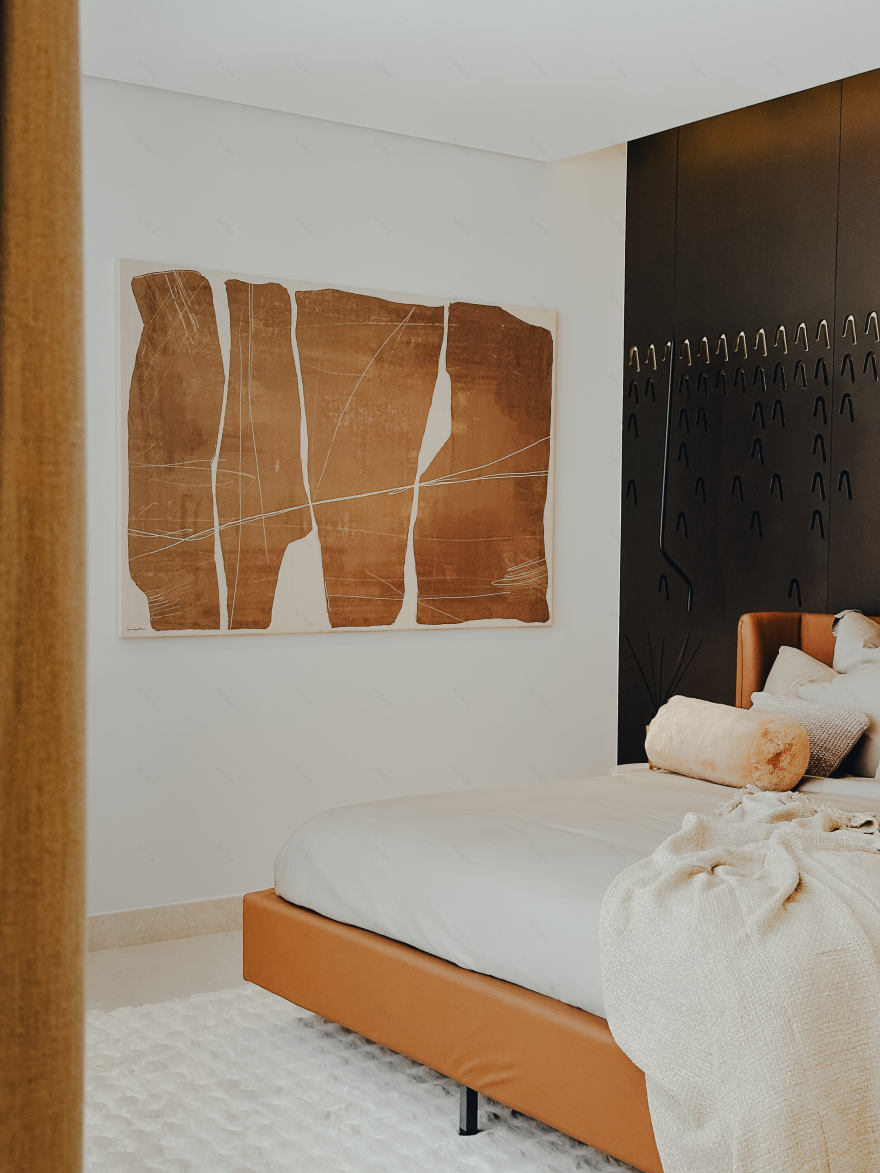
Material choices remain restrained. Diriyah Tan surfaces, red brick textures, and metal-clad feature elements give the house depth without excessive contrast. Custom patterns sharpen that effect, adding texture and detail while keeping the overall language cohesive. In Rafa Villa, spaciousness comes less from size than from sequence, light, and the careful spacing of solid form against open air.
南京喵熊网络科技有限公司 苏ICP备18050492号-4知末 © 2018—2020 . All photos and trademark graphics are copyrighted by their owners.增值电信业务经营许可证(ICP)苏B2-20201444 苏公网安备 32011302321234号
苏公网安备 32011302321234号客服
消息
收藏
下载
最近