

创作上传
VIP
收藏下载
登录 | 注册有礼
查看完整案例

收藏

下载

分享
缘起:对熟悉场地的一次回应
Origin: A Response to a Familiar Place
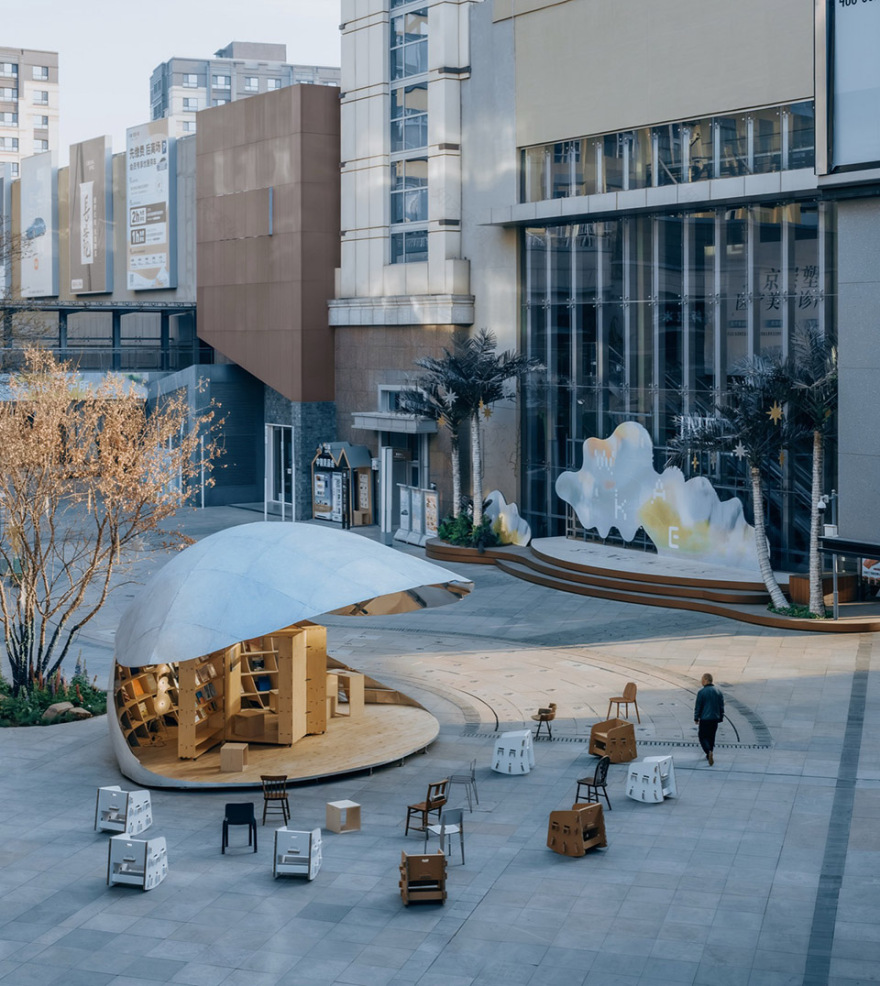
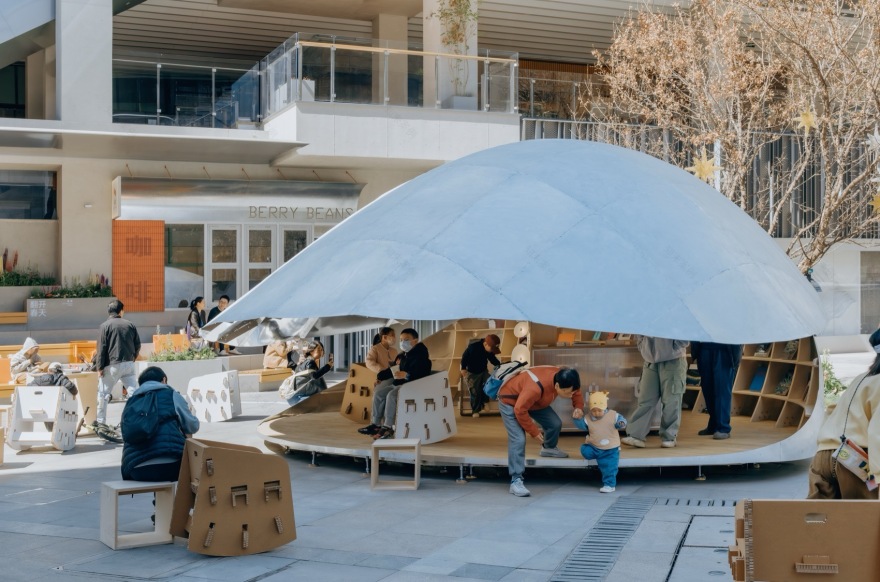
对祥云小镇并不陌生,由于离得近,以前常常陪孩子来这里,对这里最早的印象是广场公共区域中有不少艺术装置,另一方面它对儿童和社群友好,有可以玩耍、停留的空间。因此,这次受邀在广场上设计和建造一座社区书屋,更像是在曾经日常接触过的场所里,再认真回应一次这里真正需要怎样的公共空间。并不是要在广场上简单放置一个小建筑,而是希望在一个社区性商业区的日常生活、阅读停留和公共交流之间,找到一种更自然的连接方式。
© 朱雨蒙
Shine Hills is not an unfamiliar place to me. Since it is close by, I used to visit it often with my child. My earliest impression was not only the many art installations scattered across the plaza, but also its openness to children and community life—a place where people could play and linger. When I was invited to design a small community book pavilion here, it felt like returning to a familiar place woven into everyday life—an opportunity to reconsider what kind of public space this site truly calls for. The intention was not simply to insert a small structure into the plaza, but to connect daily life in a community-oriented commercial setting with reading, lingering, and encounters.
▼项目概览,overall of the project© 朱雨蒙
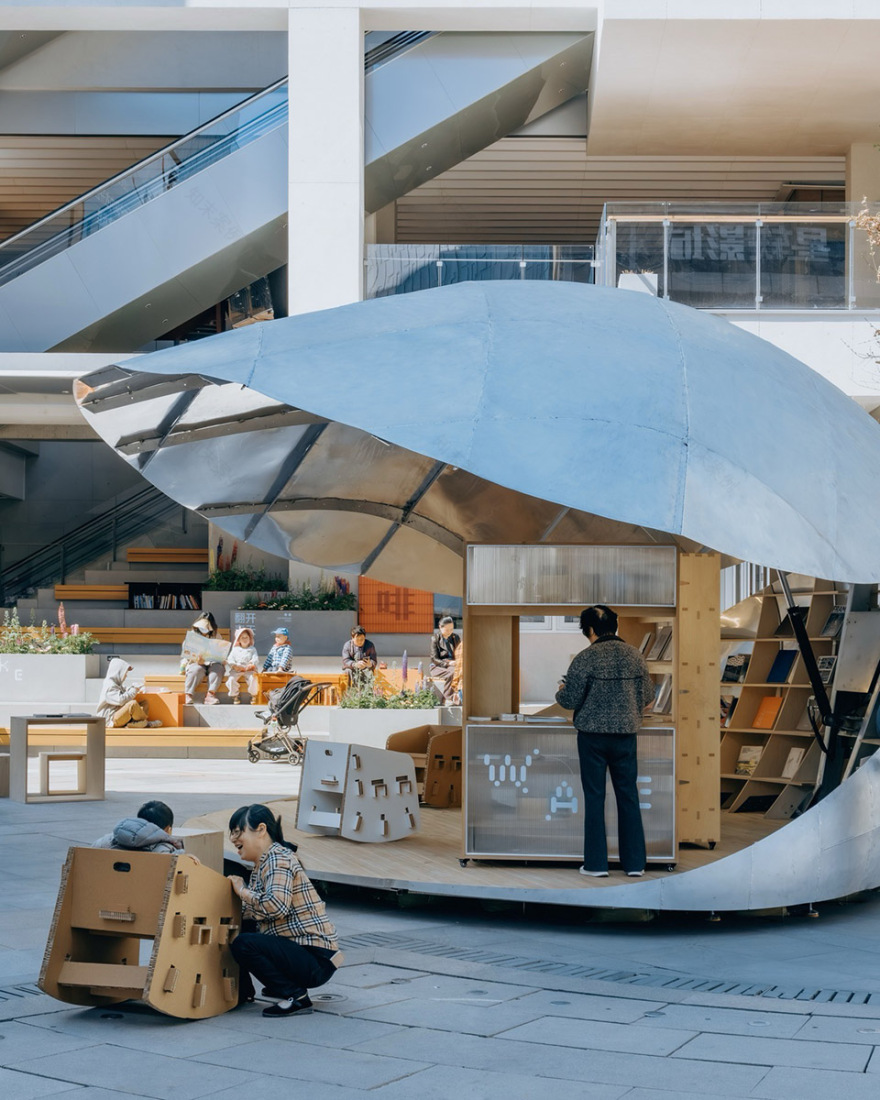
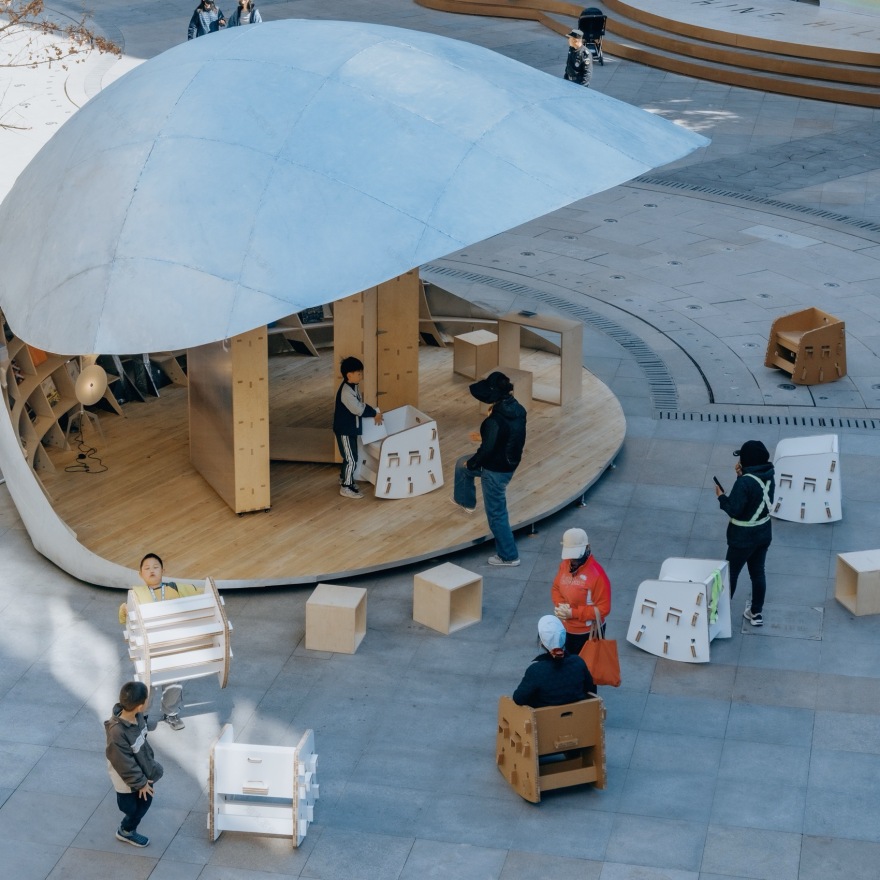
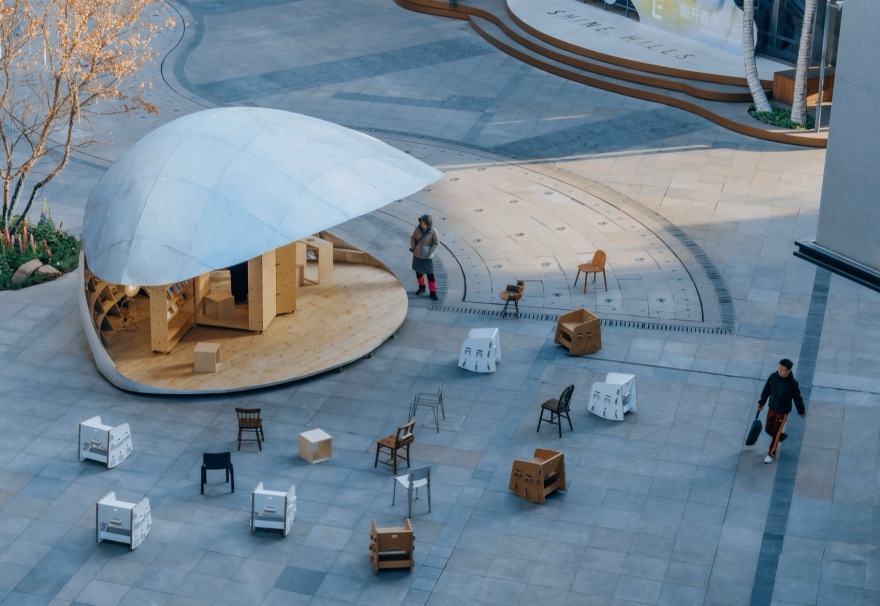
▼半鸟瞰,half-aerial view© 朱雨蒙
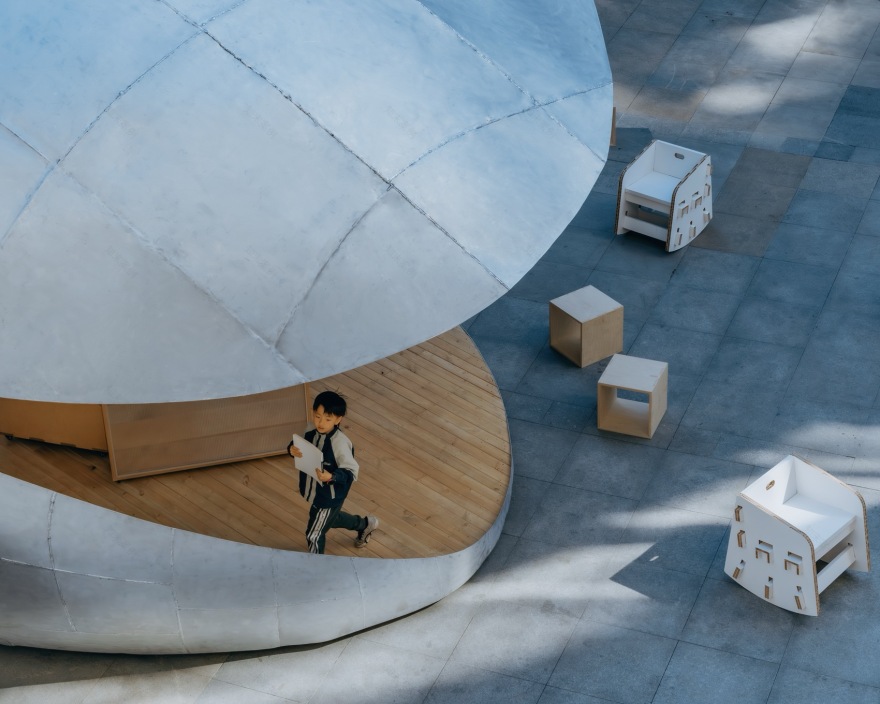
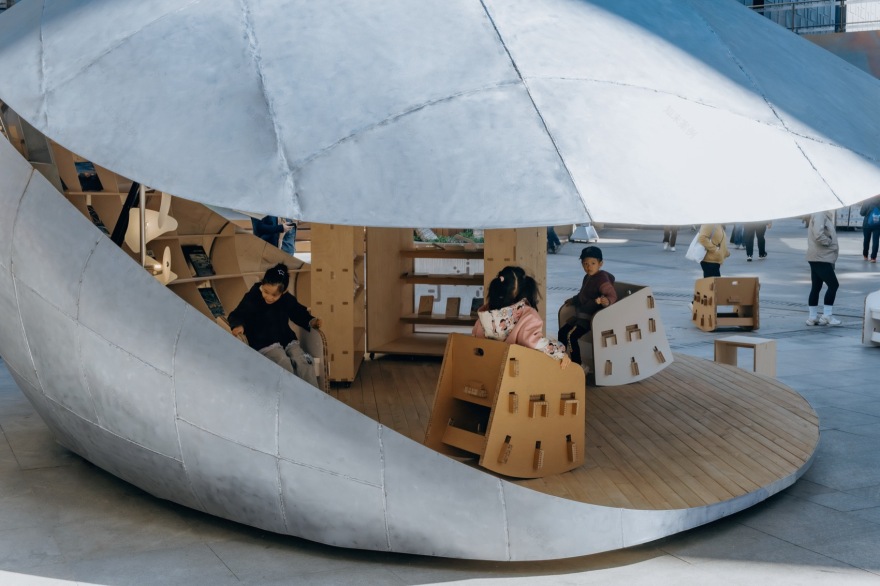
▼近景,closer views© 朱雨蒙
三个基本观念:有趣、中心感、开放性
Three Core Ideas: Playfulness, Centrality, and Openness
带着基本诉求再对这个场地反复阅读,获得了以下三个基本设定。
第一,它必须有趣,因为它位于广场中央,得表现得很有意思,才会让人愿意靠近并停留,而不是成为一个让人想要绕开的东西,给大家添堵。
Based on these aspirations and in-depth analysis of the site, three core ideas gradually emerged.
First, it needed to be playful. Situated at the center of the plaza, it had to be engaging enough to draw people in—inviting them to approach and linger, rather than simply walk past or avoid it.
▼夜景鸟瞰,aerial view at night© 朱雨蒙

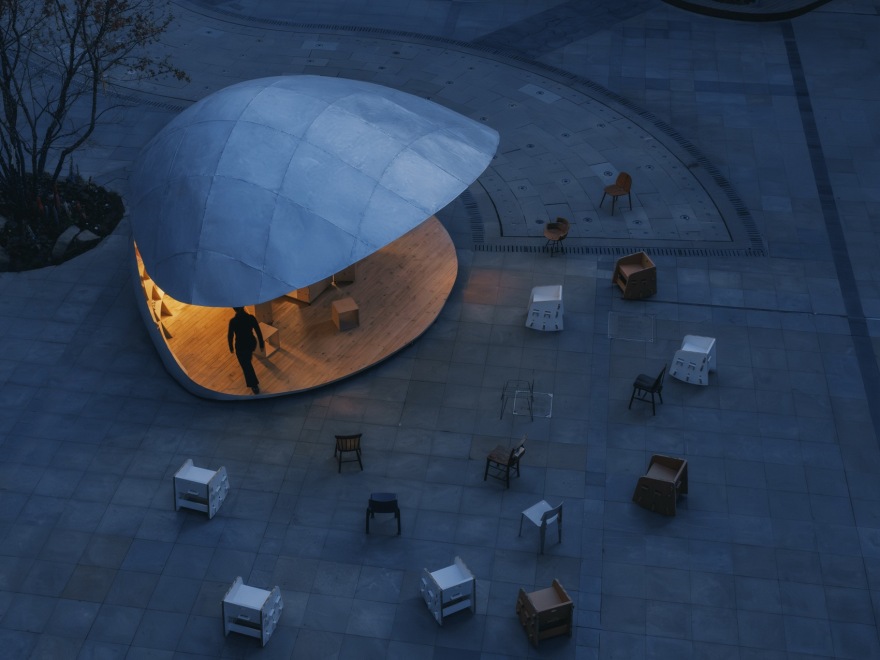
▼项目位于位于广场中央,the project locatedat the center of the plaza© 朱雨蒙
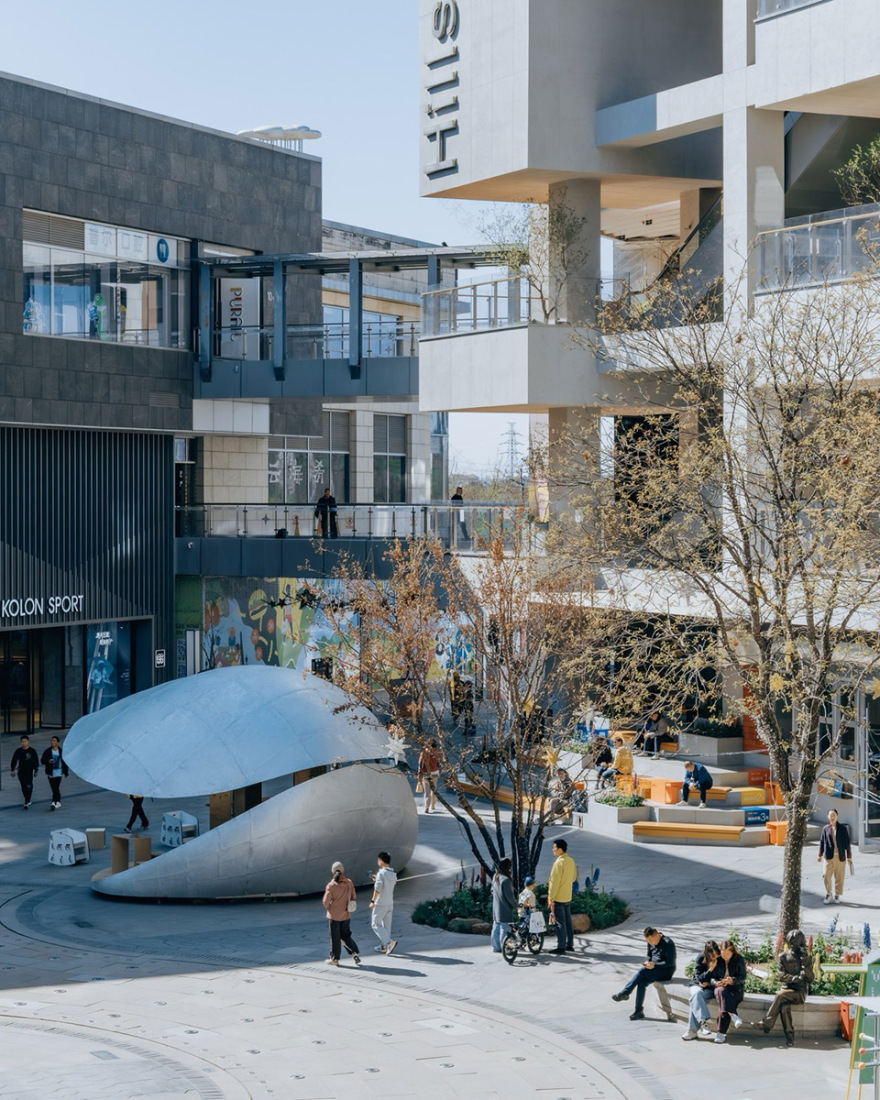
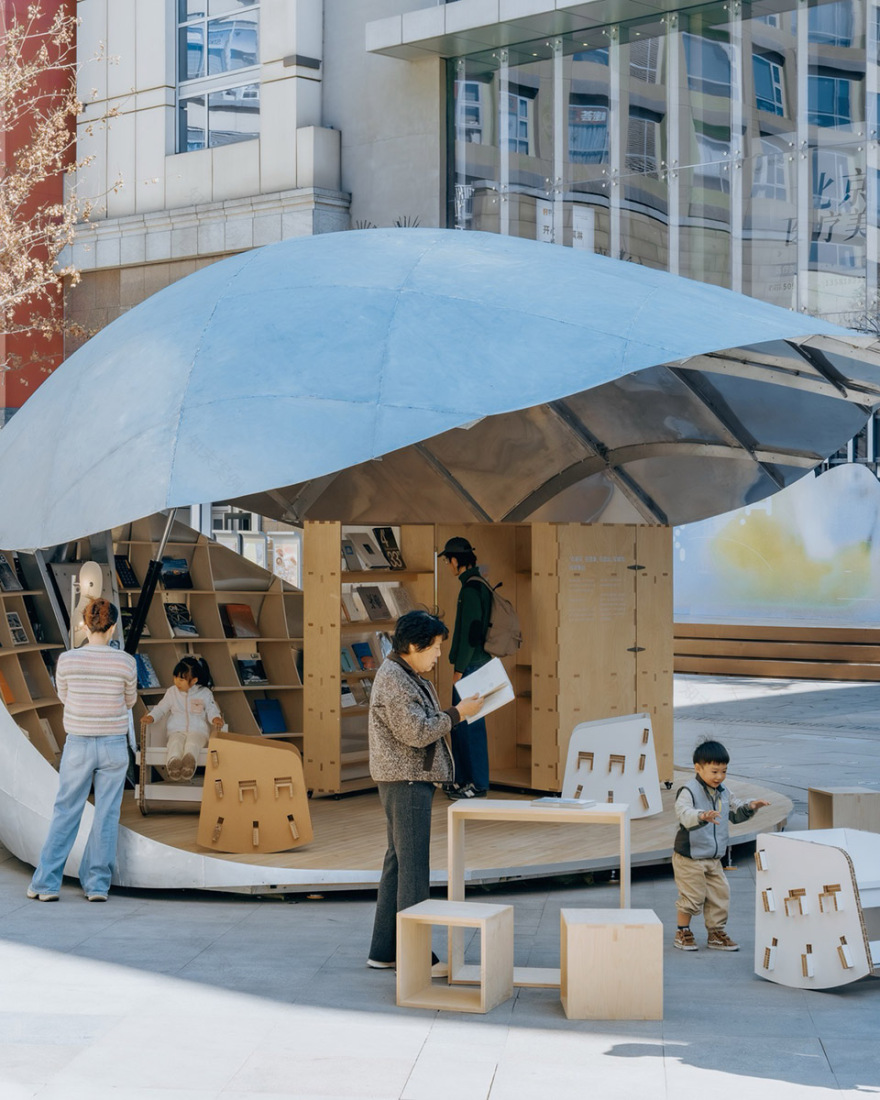
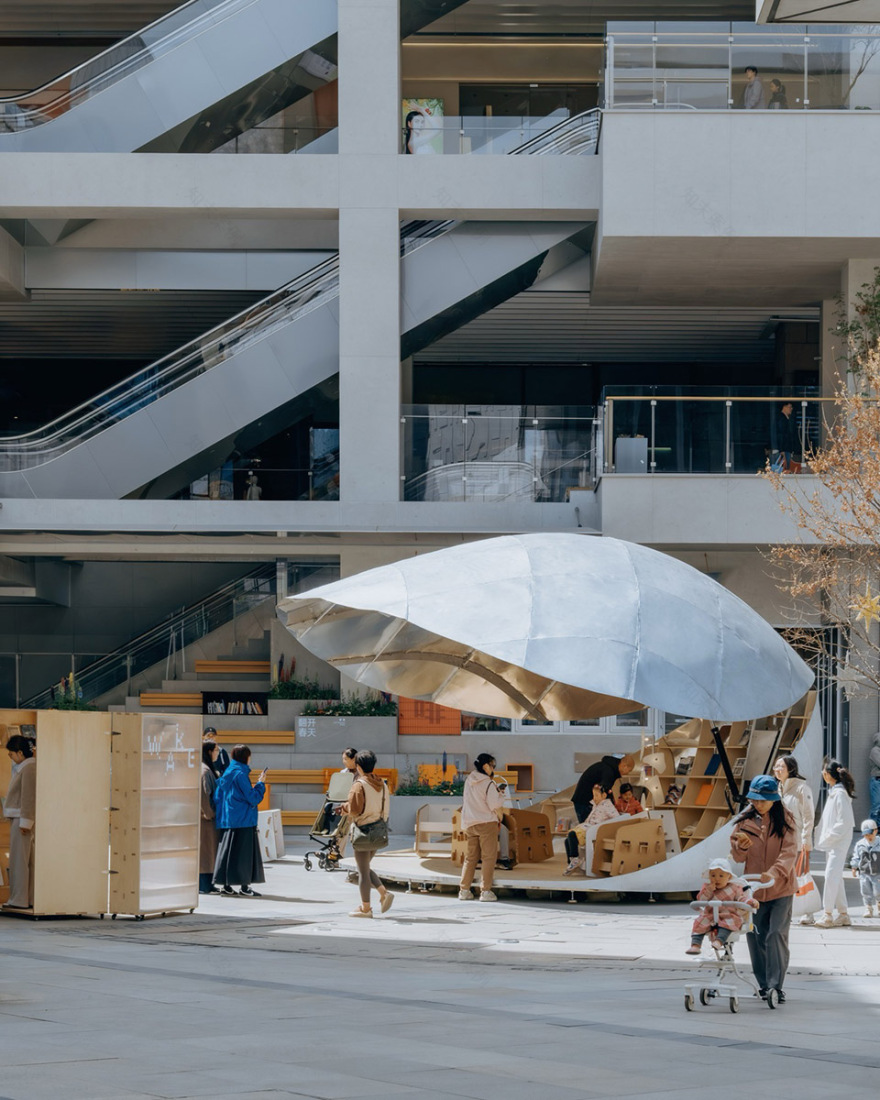

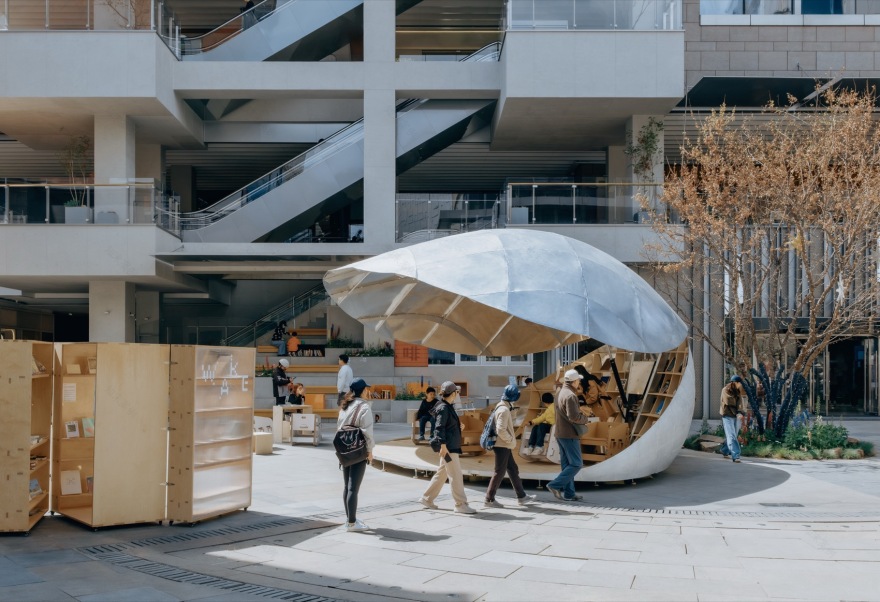
第二,它得具有 360 度全向性,由于它处在四周都有大量人流来往的广场中央,不能像一个普通房子那样,有一个明显的背面,它必须尽可能满足从四面看过去都有趣,没有哪一面是消极的。它是一个被四周共同观看、共同接近的公共存在。所以,它不能是一个常规意义上的“box”建筑。
Second, it needed a 360-degree presence. Positioned at the center of a plaza with pedestrian flows from all directions, it couldn’t be conceived as a conventional building with a defined back side. Every side needed to be equally active and engaging—visible and accessible from all directions. A conventional box was therefore never an option.
▼一个被四周共同观看、共同接近的公共存在,every side needed to be equally active and engaging—visible and accessible from all directions © 朱雨蒙

▼细部,details© 朱雨蒙
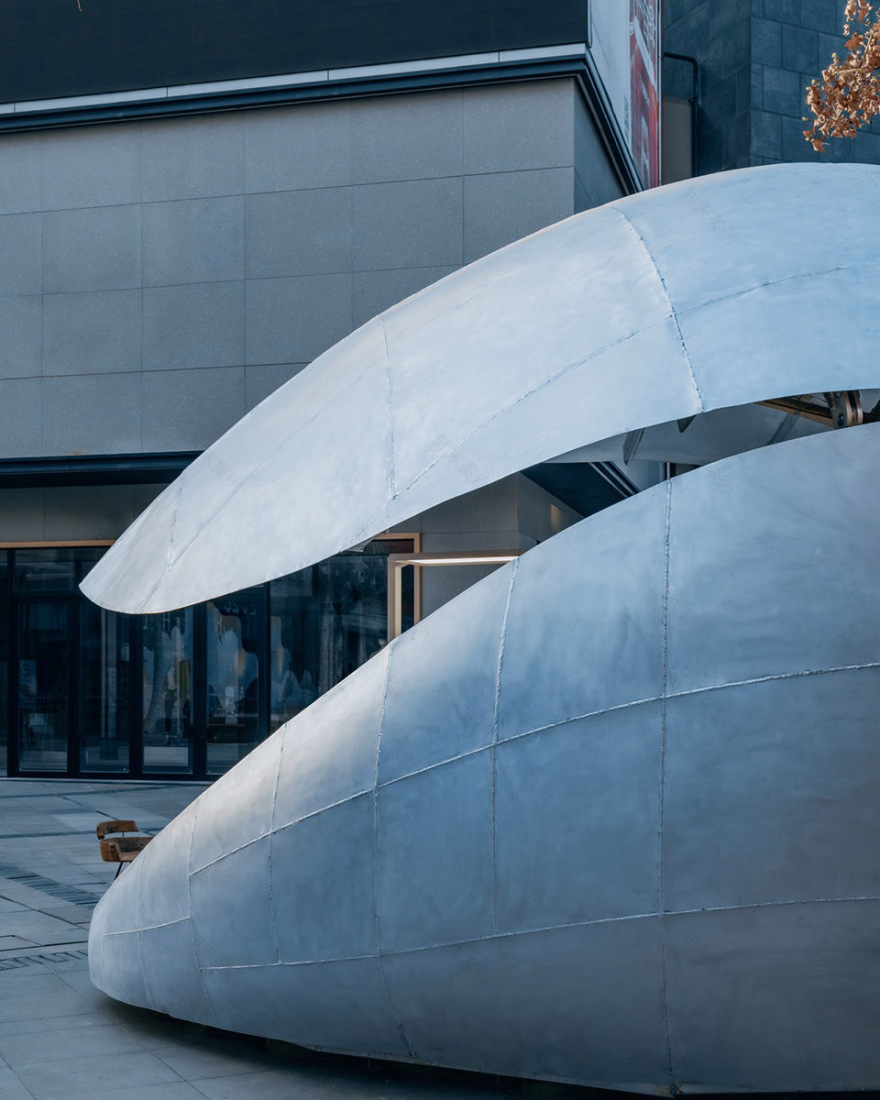
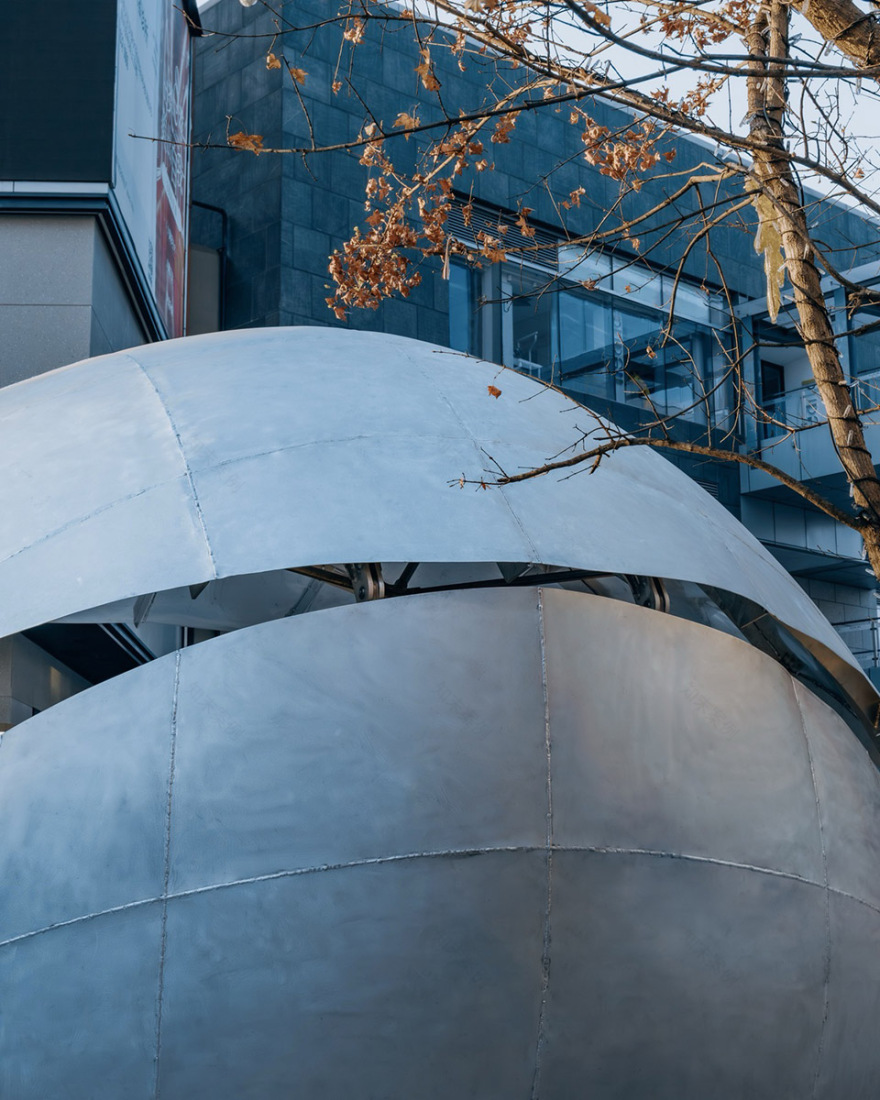
第三,它必须保持开放。因为它处于一个高度公共的位置,不应该做成一个封闭的小屋,而应该与周围的人、空气、活动,以及广场整体的各种流线发生强联系。
Third, it had to remain open. In such a highly public setting, a closed, introverted structure would be out of place. Instead, it should maintain strong connections with its surroundings—passersby, airflow, activities, and the circulation of the plaza.
▼开放的贝壳小屋,open shell cottage© 朱雨蒙
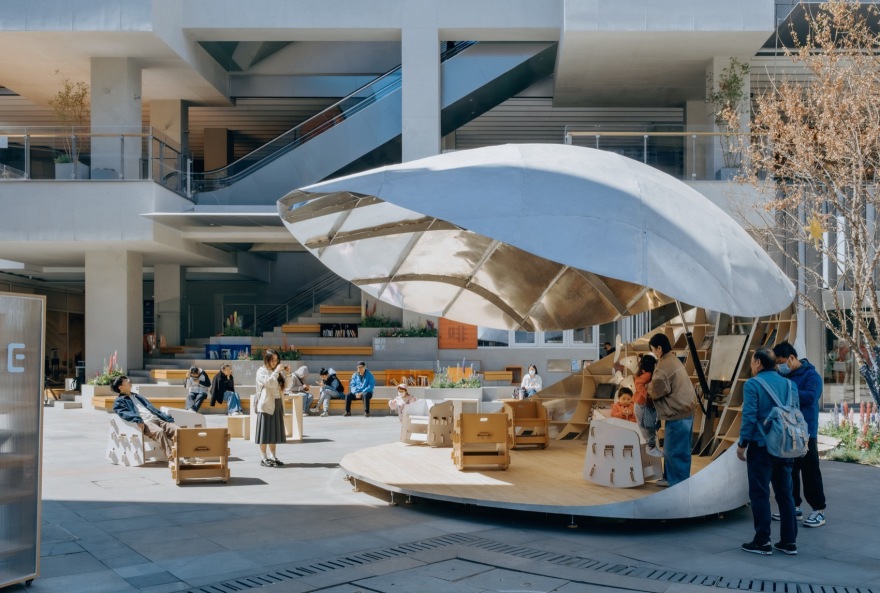
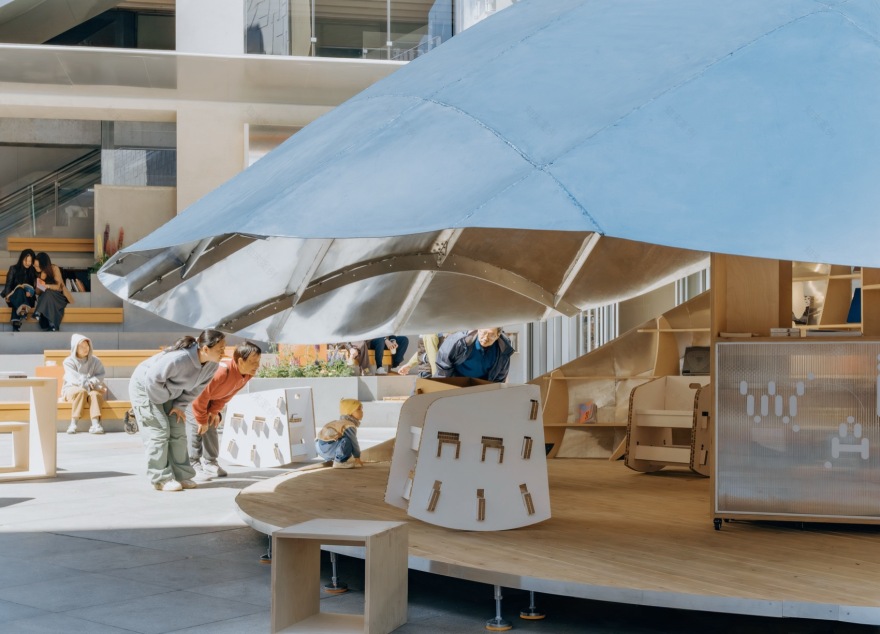
▼外观,exterior view© 朱雨蒙
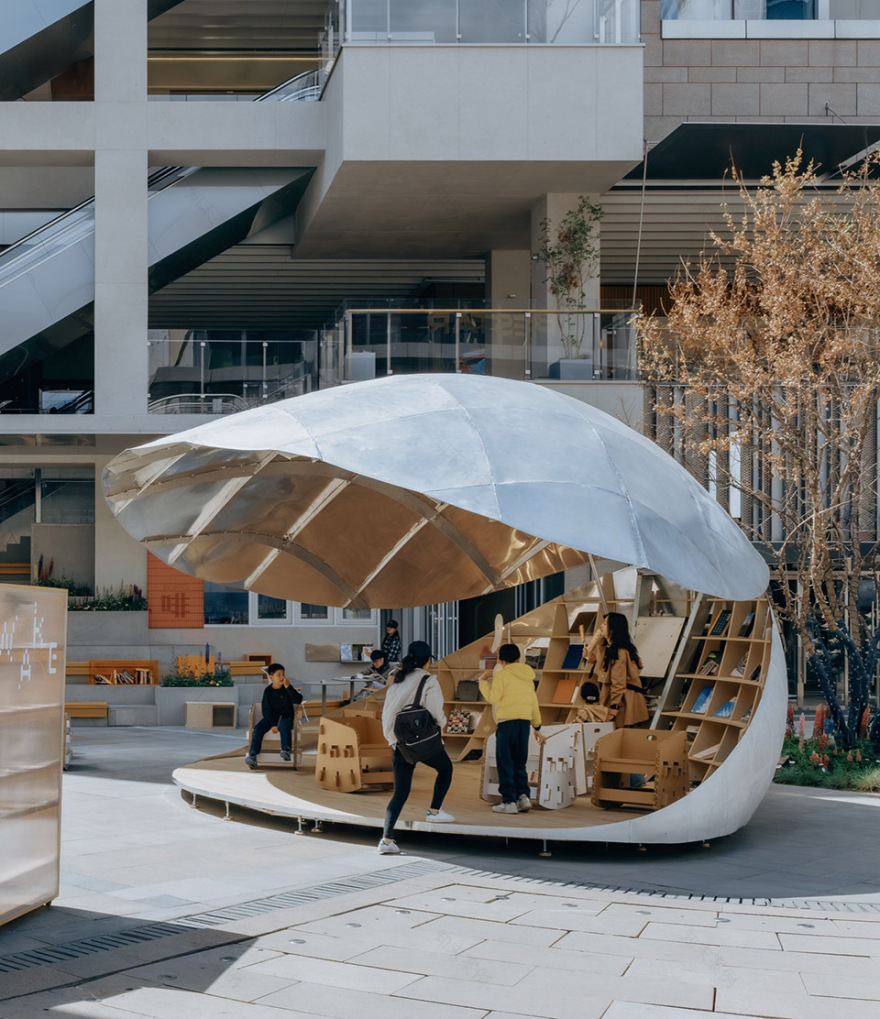
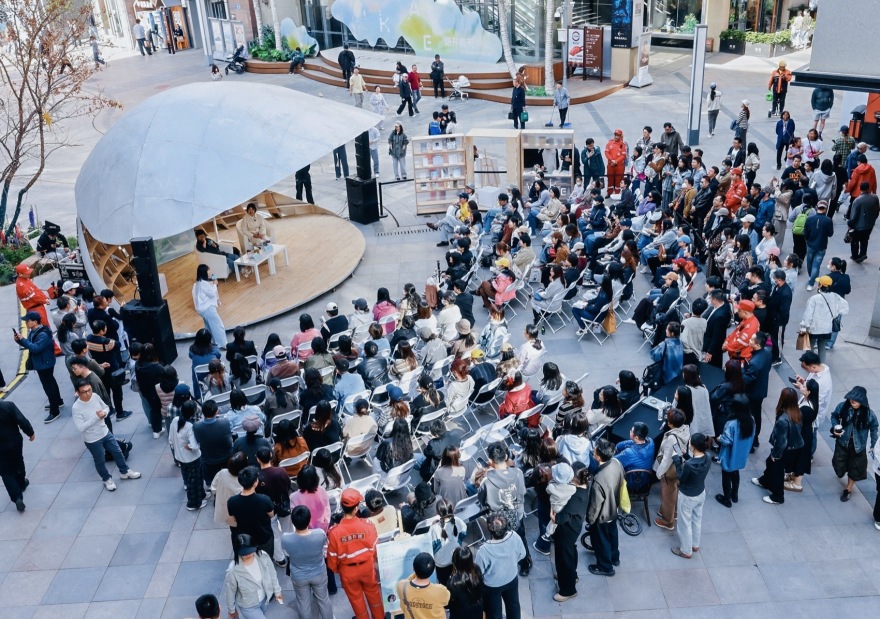
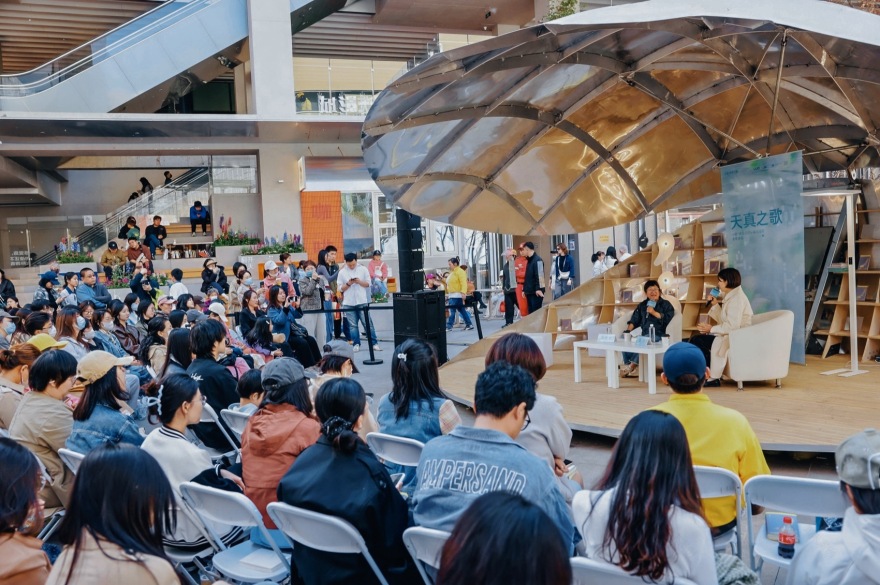
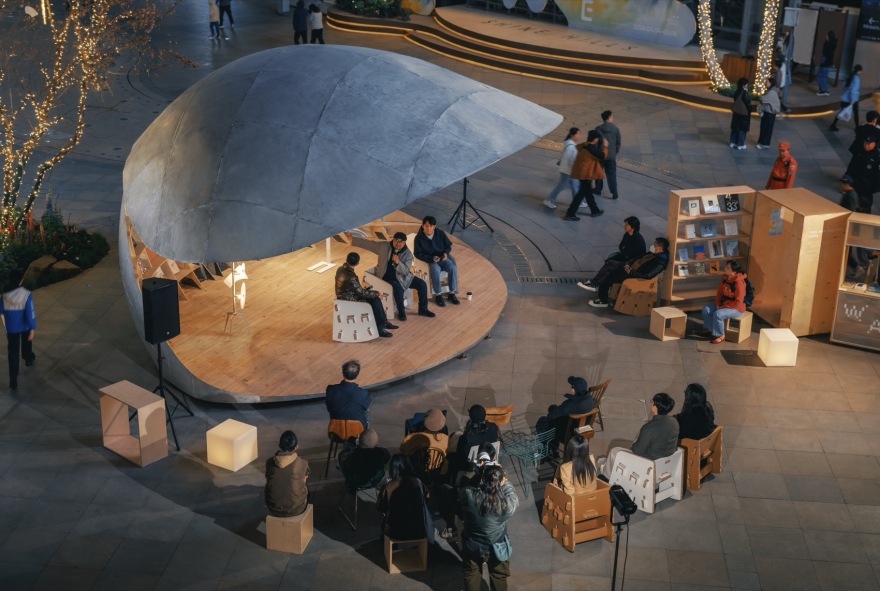
▼读书会活动,Reading session©祥云小镇
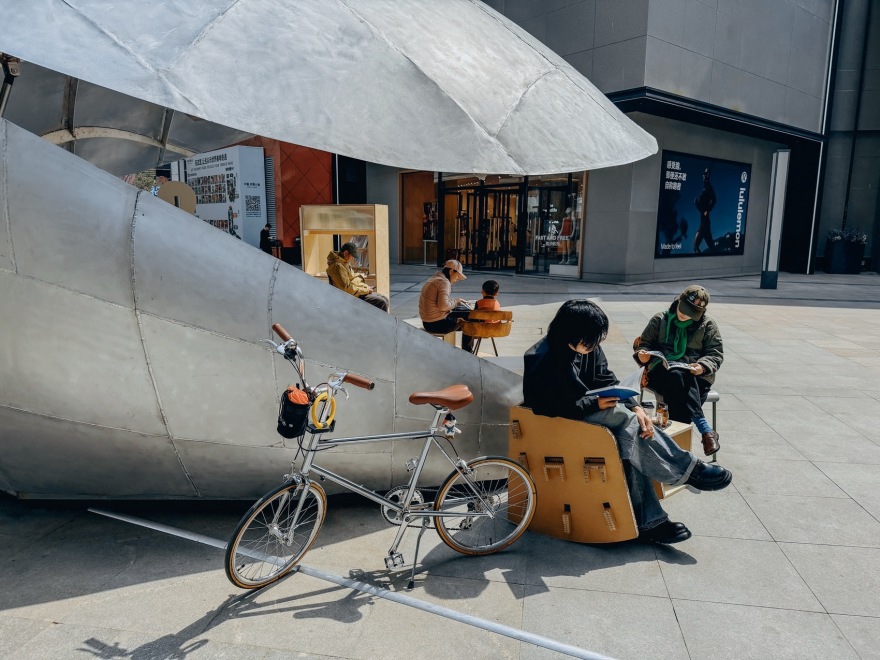
一个不断变化的空间
A Space in Constant Transformation
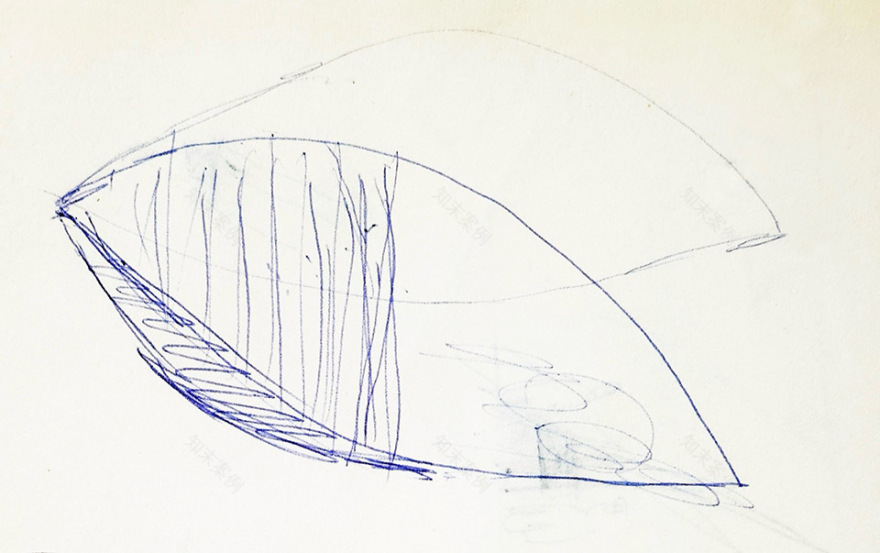
正是在这几个前提之下,书屋逐渐被确定为一个可以变动的空间,而不是一个固定不变的物体。最初打算用工作室以前的作品“共享瓢虫微型书屋”后半段进行放大,但左右开合势必会带来雨水的麻烦,最终采取了上下开合方式,也发展出了这次最终的“贝壳书屋”。
From the initial ideas, the book pavilion gradually took shape—not as a fixed, static presence, but as a space meant to shift and evolve. We initially considered enlarging the latter half of our earlier project, a movable ladybug-shaped micro-library for kids, but its side-opening mechanism would inevitably cause rainwater issues. This led us to shift toward a vertical opening system, which eventually gave rise to the “Shell Book Pavilion.”
▼草图 ,Sketches ©罗宇杰工作室

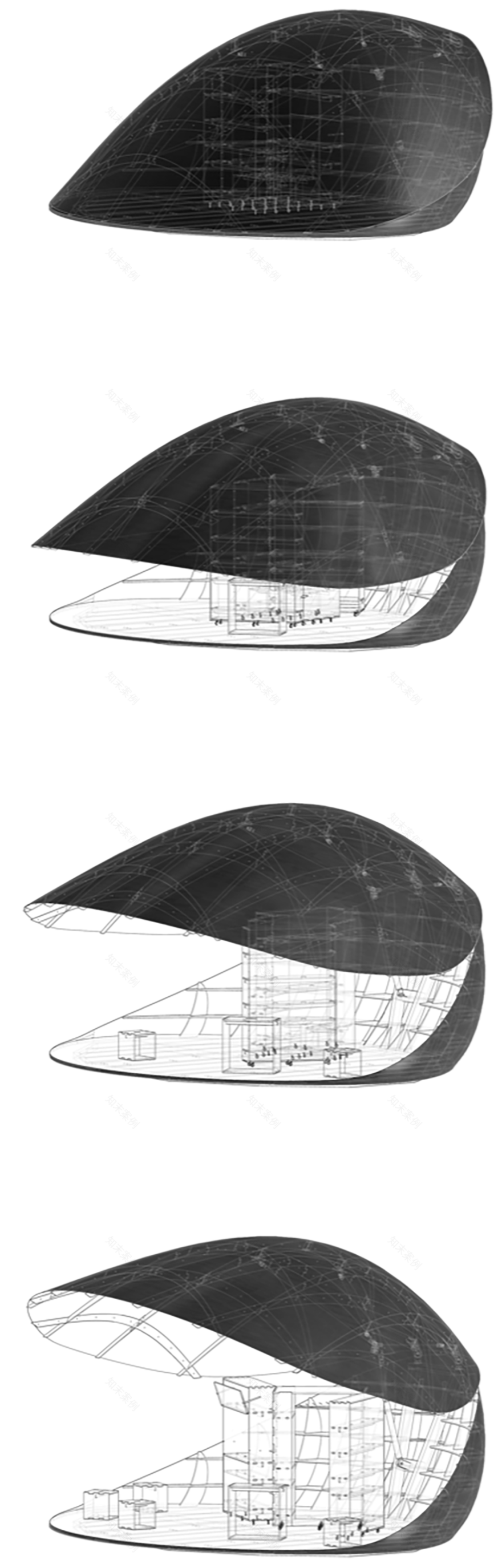
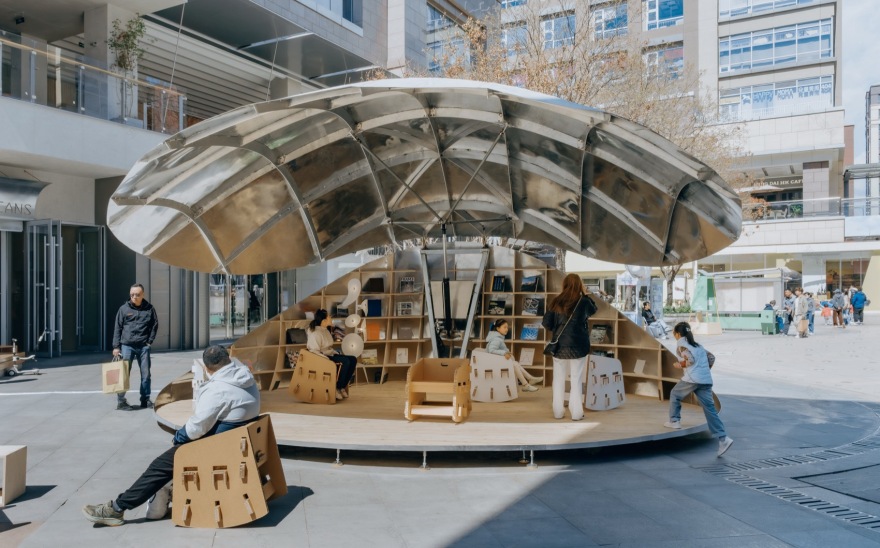
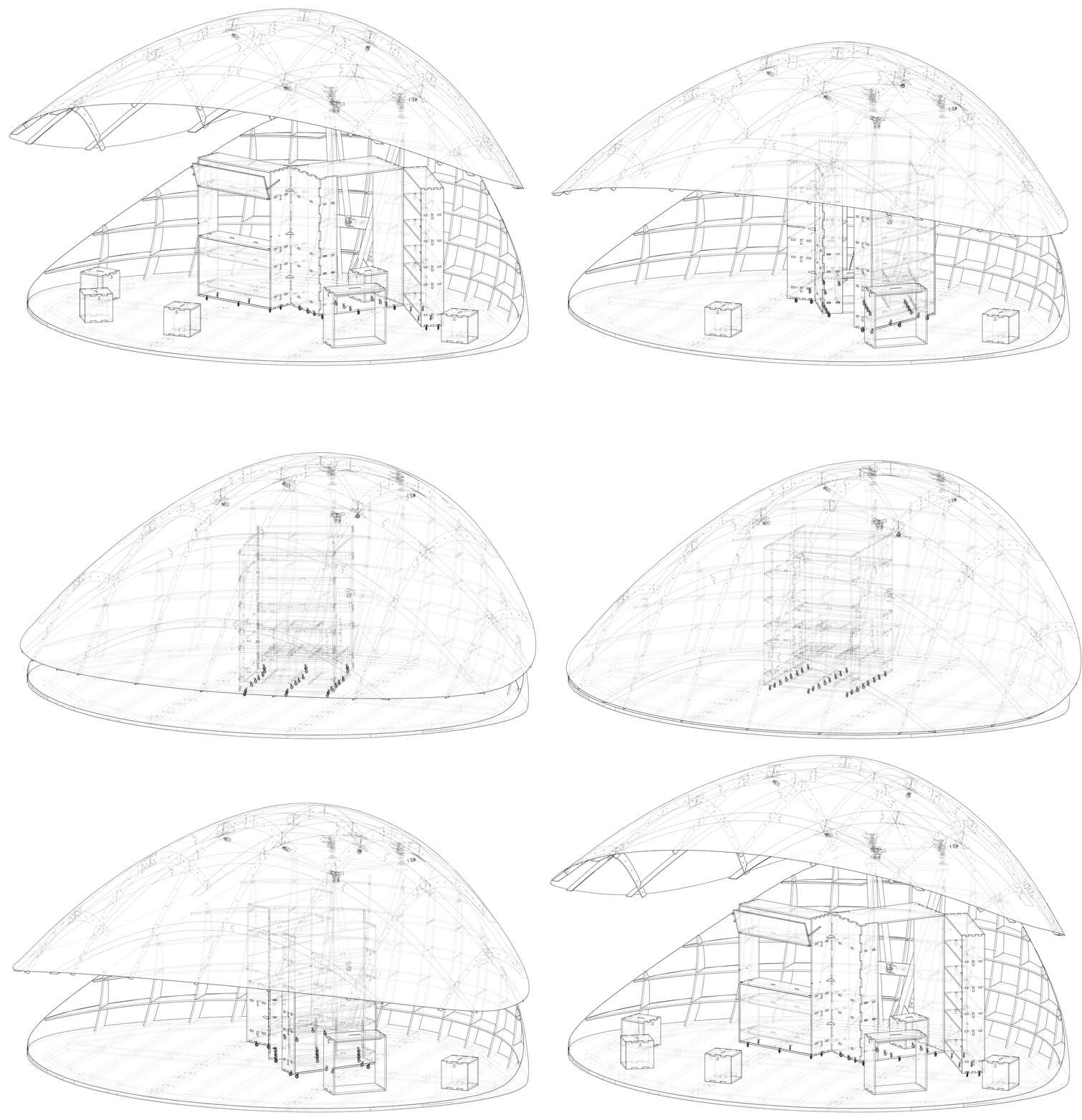
它并不是简单地打开和闭合,而是在开合之间依然存在很多连续状态。它可以全打开,可以半开,也可以半闭合、接近闭合,最后完全收拢。不同状态下,它的形象、空间感受以及与人的关系都不一样。打开的时候,它更像一个向外打开的公共展台;半开的时候,既保持与外部的交流,又形成较强的庇护感;而在半闭合或接近闭合的时候,它又会显得更安静、更内向,像一个暂时收拢起来的壳体。
The structure does not simply open and close. Between these two states lies a continuous spectrum of possibilities. It can be fully open, half open, partially closed, nearly closed, and fully shut. Each state creates a different form, spatial atmosphere, and relationship with people. Fully open, it feels like a public stage unfolding outward. Half open, it stays connected to the outside while offering a strong sense of shelter. Partially or nearly closed, it becomes quieter and more introverted, like a shell gently drawn inward.
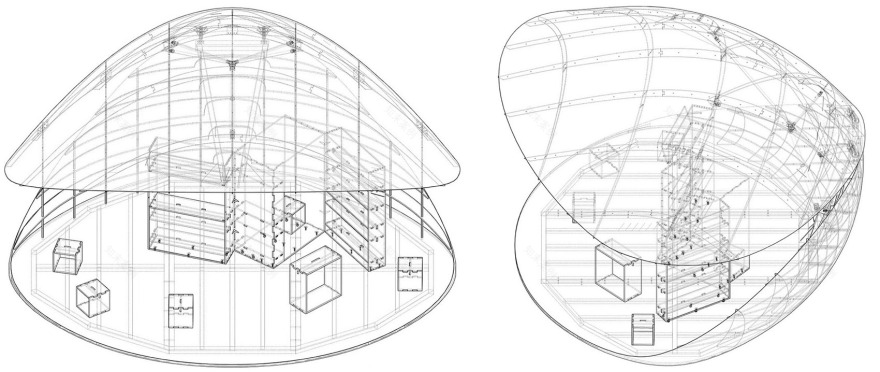
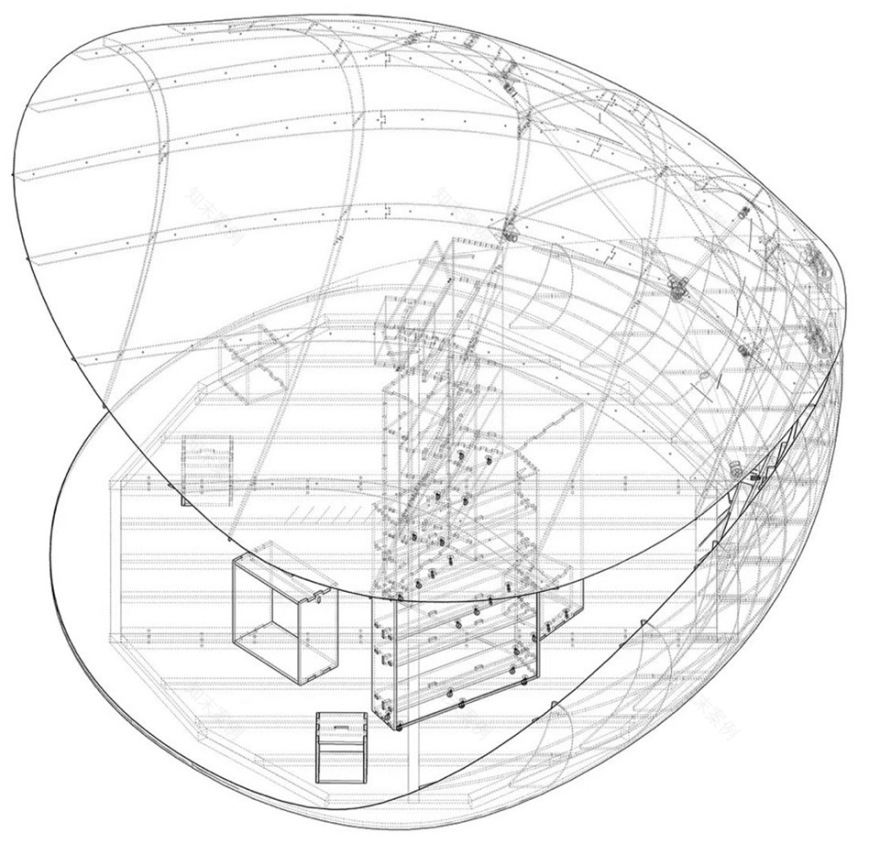
▼轴测分解图,Exploded axonometric diagram ©罗宇杰工作室
▼轻盈的壳体,Light and delicate shell © 朱雨蒙
▼细部,details© 朱雨蒙
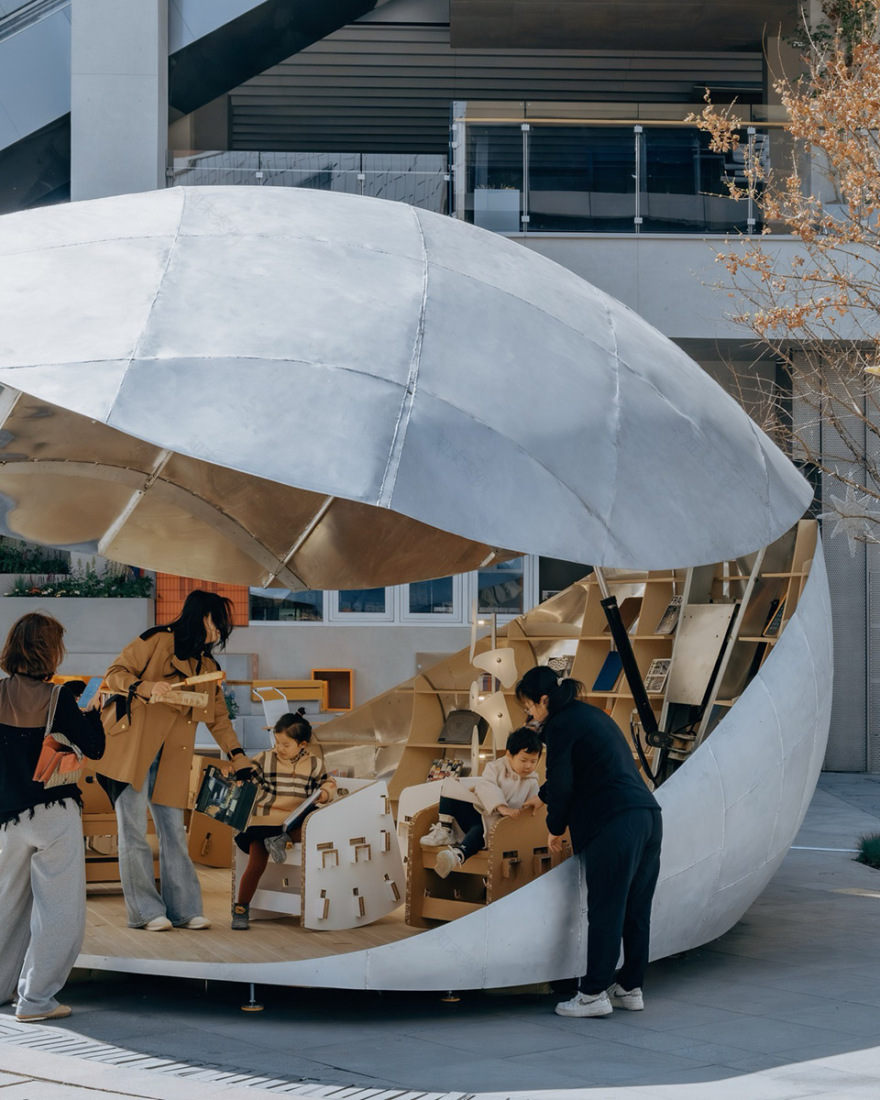
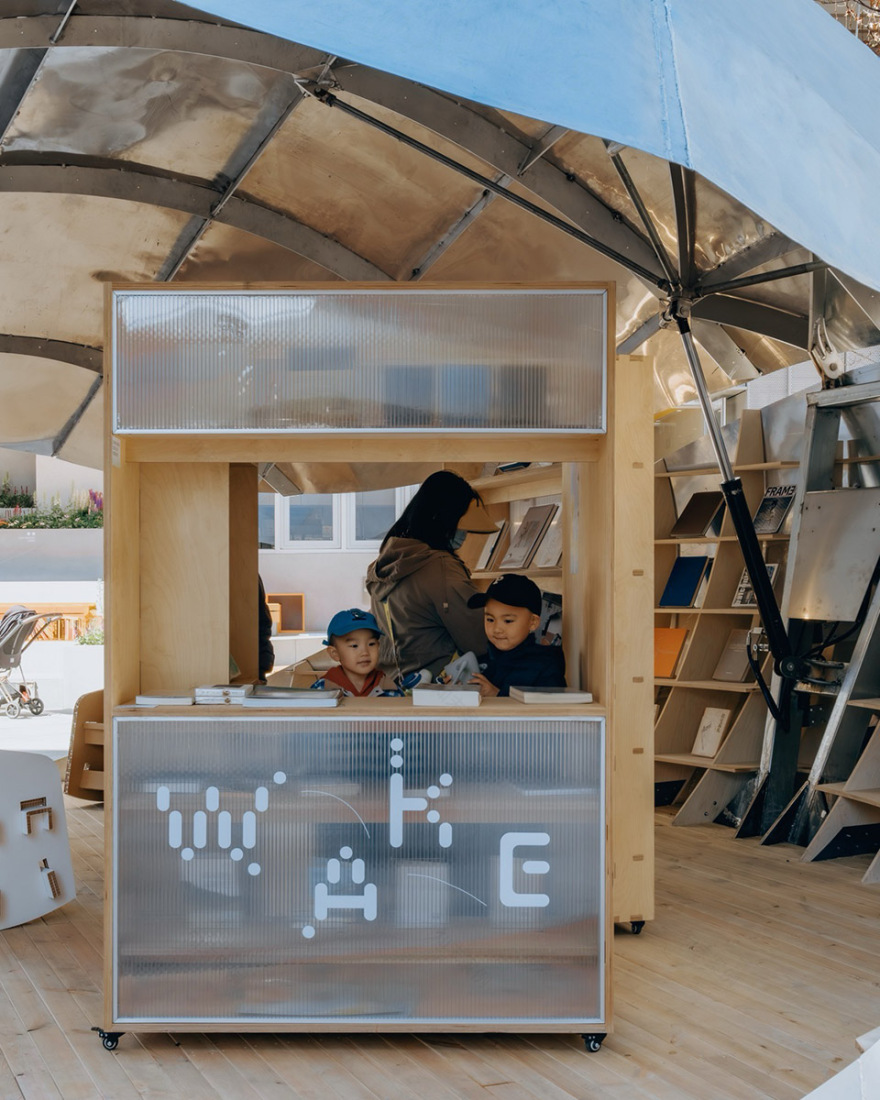
这种连续变化在实际使用中也很重要。比如在做读书会及相关活动的时候,分享者可以先处在闭合的贝壳里,随着外壳缓缓打开,与外面观众相见。这样一来,空间本身就参与了活动的发生过程。它不是一个被动的背景,而是在慢慢展开的过程中,让人和内容一起被显露出来,这也让整个空间带有一种戏剧的仪式感。
This gradual transformation also plays an important role in actual use. During reading sessions, for instance, the speaker is initially within the closed shell, then gradually revealed to the audience as it opens. In this way, the space becomes part of the event—not as a static backdrop, but as an active presence that unfolds with it, lending the entire experience a subtle sense of ceremony.
▼读书会活动,Reading session©祥云小镇


▼向外打开的公共展台,an outward-opening public exhibition stand © 朱雨蒙


▼细部,details© 朱雨蒙

尺度、结构与工艺:一个真正可以进入和停留的空间
Scale, Structure, and Craft: A Space to Enter and Linger
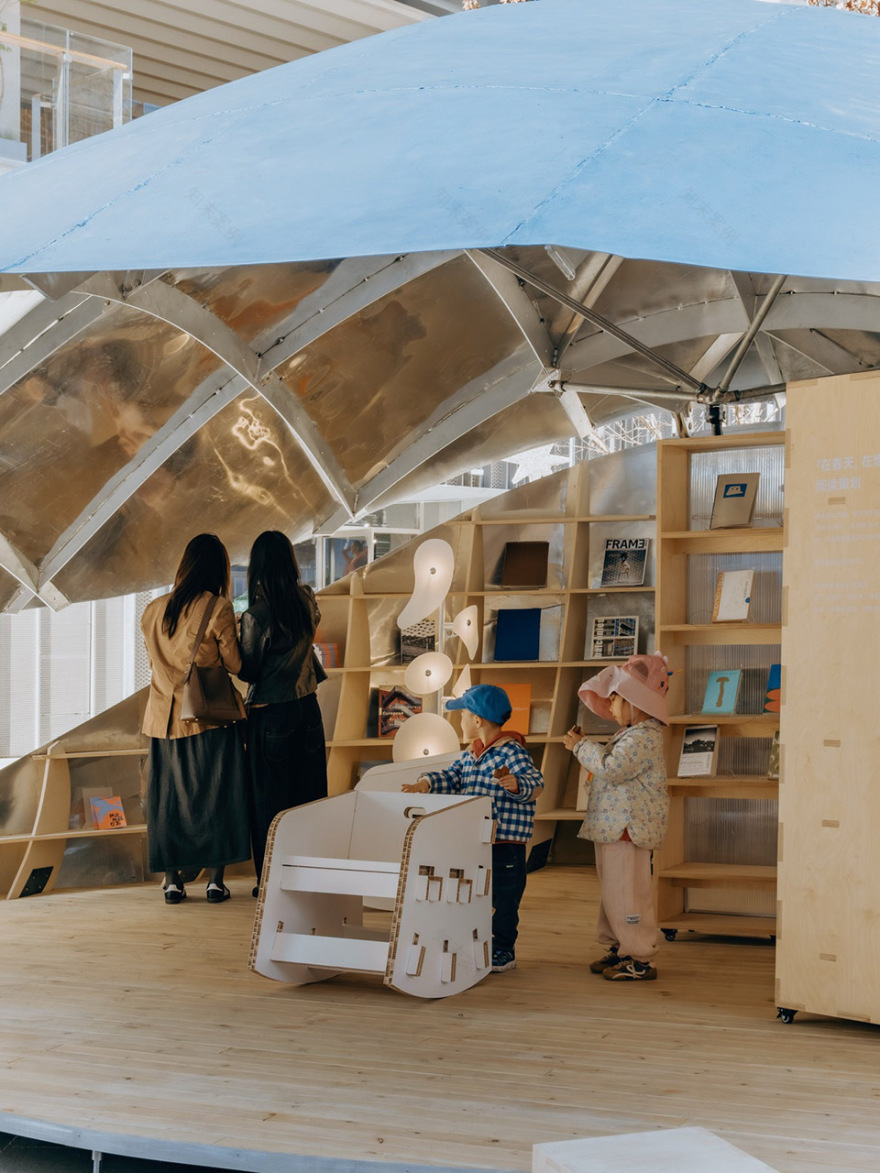
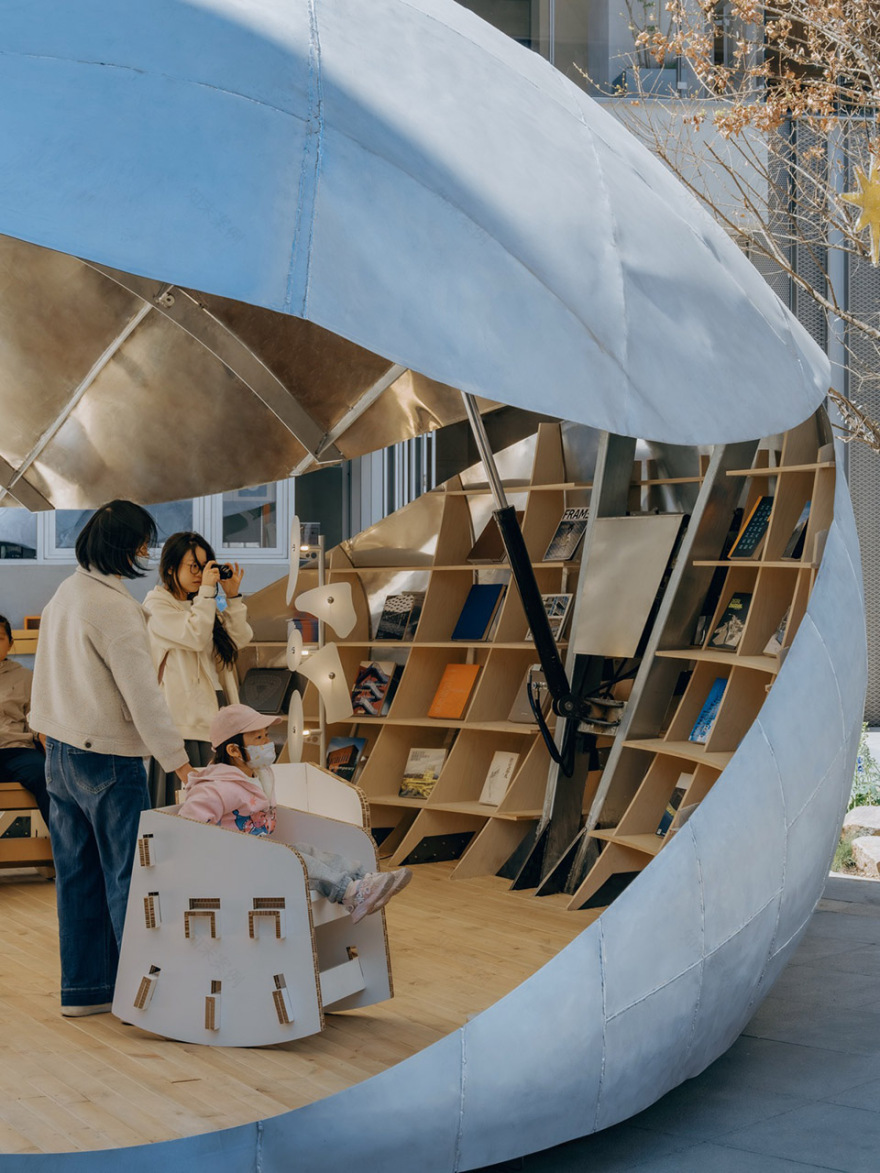
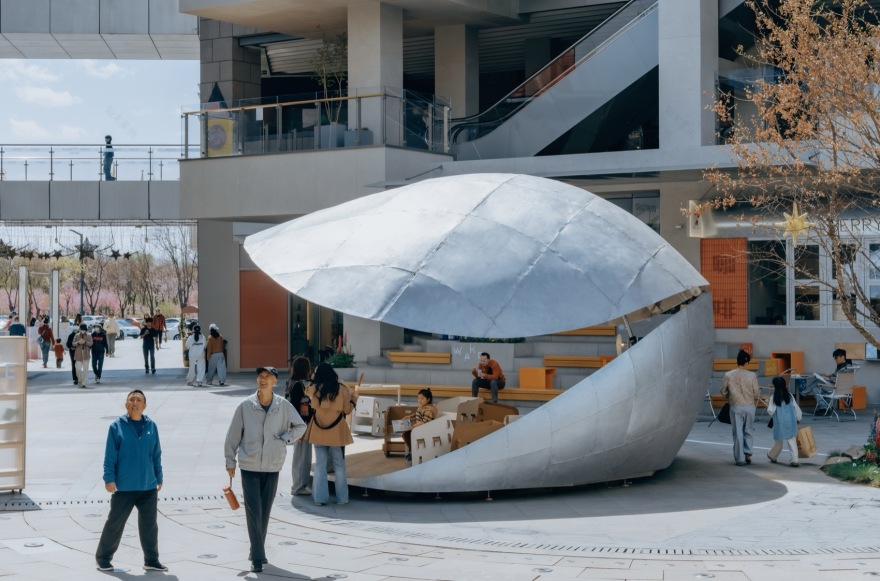
虽然它在形象上更接近一个轻盈的壳体,但从实际尺度看,贝壳书屋并不是一个很小的装置。屋顶展开面积四十余平方米,长轴近 8 米、短轴约 6 米,是一个具有明确停留能力和庇护尺度的公共空间。完全打开时,内部最低点净高约 2.5 米、最高处约 4.2 米,以保证人在其中停留、阅读、交流和活动时的舒适度。
Despite its light, shell-like appearance, the project is conceived at an architectural scale rather than as a small installation. When fully opened, the roof spans over 40 square meters, measuring approximately 8 meters by 6 meters—defining a public space for lingering and sheltering. The interior height ranges from 2.5 meters to 4.2 meters, ensuring comfort for reading, gathering, and activities.
▼金属主结构部分采用了航空级铝合金,the main metal structure part is made of aerospace-grade aluminum alloy© 朱雨蒙
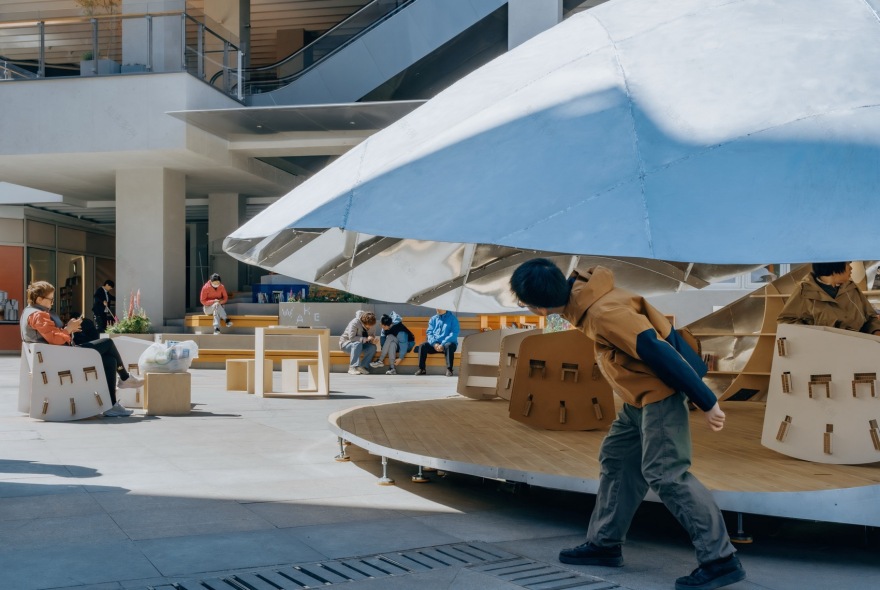
▼近景,closer view© 朱雨蒙
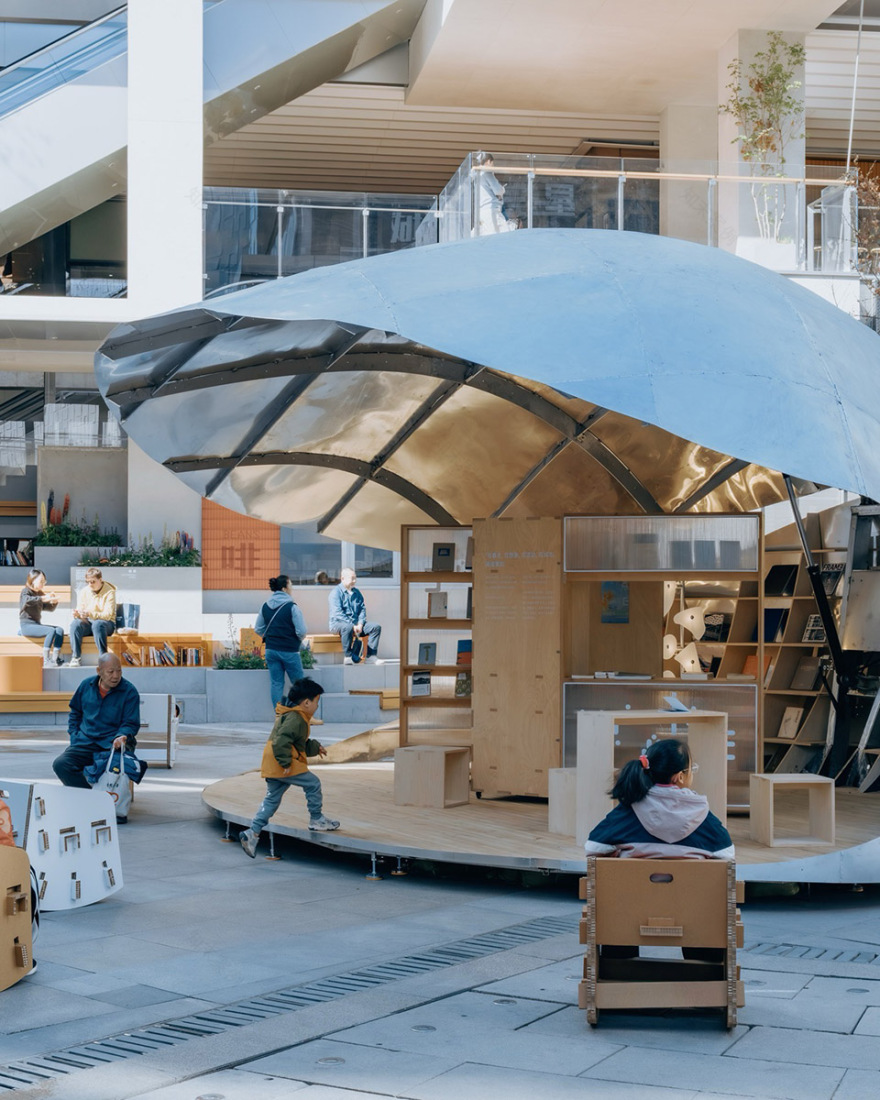
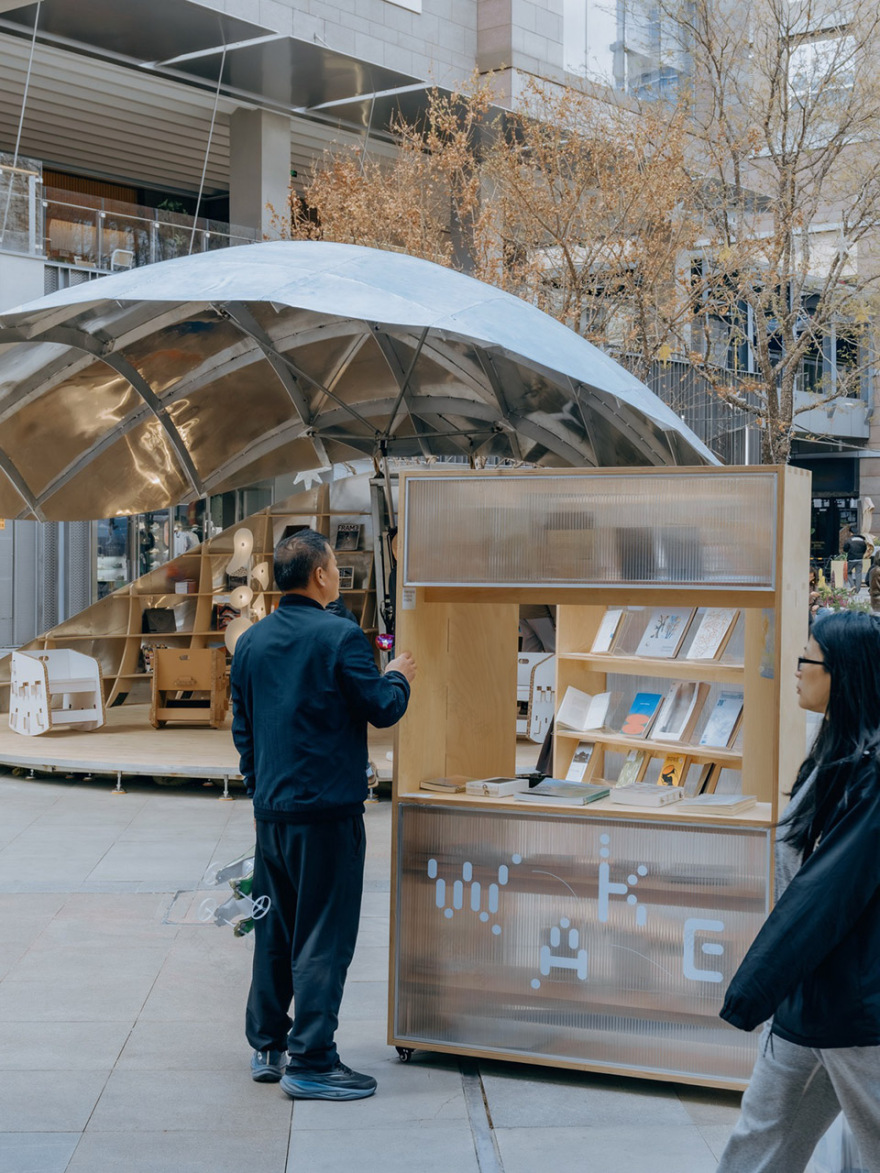
也正因为如此,这个项目不能只满足“可开合”的视觉趣味,而必须真正具备建筑性的尺度、稳定与安全。项目不仅涉及空间本身,还需要同时协调动力机械、轴承开合,以及锻造、CNC、车床、焊接等多种金属工艺。为了保证整体骨架在开合状态和长期使用中的坚固性,金属主结构部分采用了航空级铝合金。同时,内部也包含木作加工,使整个项目同时面对金属系统的精密度、结构可靠性以及木质空间触感之间的协调问题。▼分析图,analysis diagram©罗宇杰工作室
For this reason, the project transcends the visual interest of opening and closing, operating as architecture in terms of scale, stability, and safety. Beyond spatial design, it integrated mechanical systems, including a bearing-supported opening mechanism, and multiple metalworking processes such as forging, CNC machining, lathe work, and welding. To ensure long-term durability under repeated opening cycles, the structural frame was built from aerospace-grade aluminum. Timber elements were introduced into the interior, requiring a careful balance between engineered precision, structural reliability, and tactile warmth.
▼建筑性的尺度、稳定与安全,architecture in terms of scale, stability, and safety© 朱雨蒙
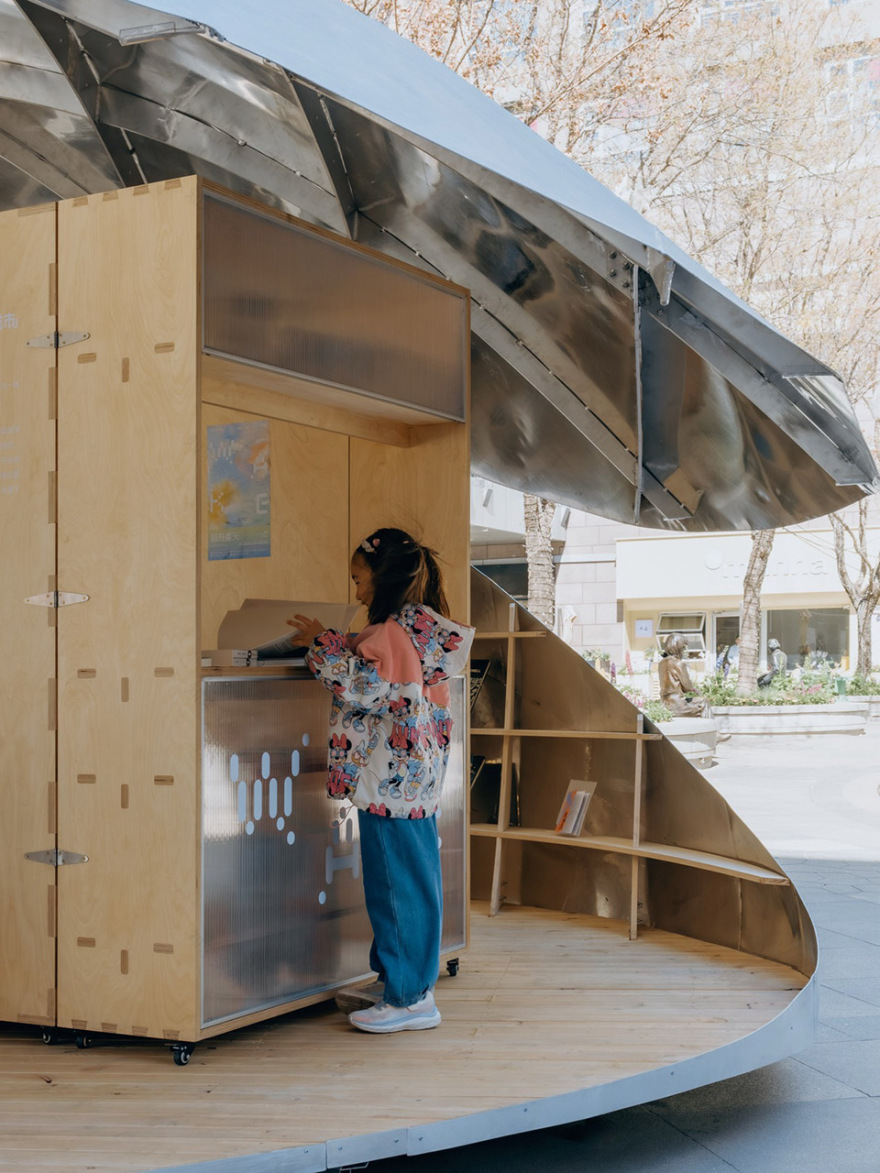


▼细部,details© 朱雨蒙
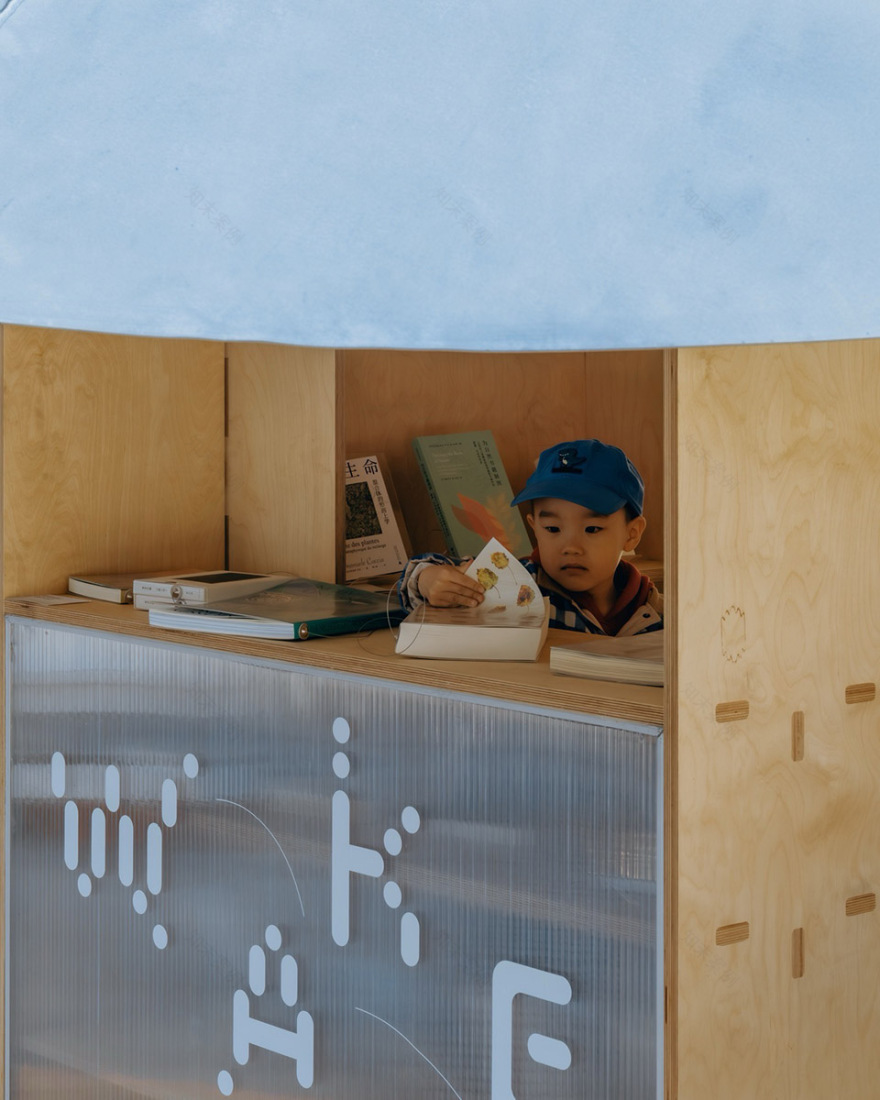
困难与意义:在复杂条件中生成公共关系
Challenges and Significance: Fostering Public Relationships Under Complex Conditions
整个书屋的设计与制作及搭建须在20天完成,可以说已经是一个不可能完成的任务。而当不同工厂的物料真正落到现场时,困难变得更加具体。书屋所放置的广场地面并不是完全水平的,最大高差接近 18 厘米,这对于一个需要精准开合、保证轴线关系和整体稳定性的可动结构来说,是很大的挑战。基础找平、安装精度、结构定位以及开合后的受力状态,都必须在这样的条件下反复校正。
The entire process—from design to fabrication to installation—had to be completed in just 20 days, a near-impossible task. When materials from different factories arrived on site, the challenges became more tangible. The plaza’s ground was uneven, with an elevation variation of nearly 18 centimeters, posing a significant challenge for an operable structure that required precise opening, accurate alignment, and overall stability. Foundation leveling, installation accuracy, structural positioning, and load performance all required repeated on-site calibration.
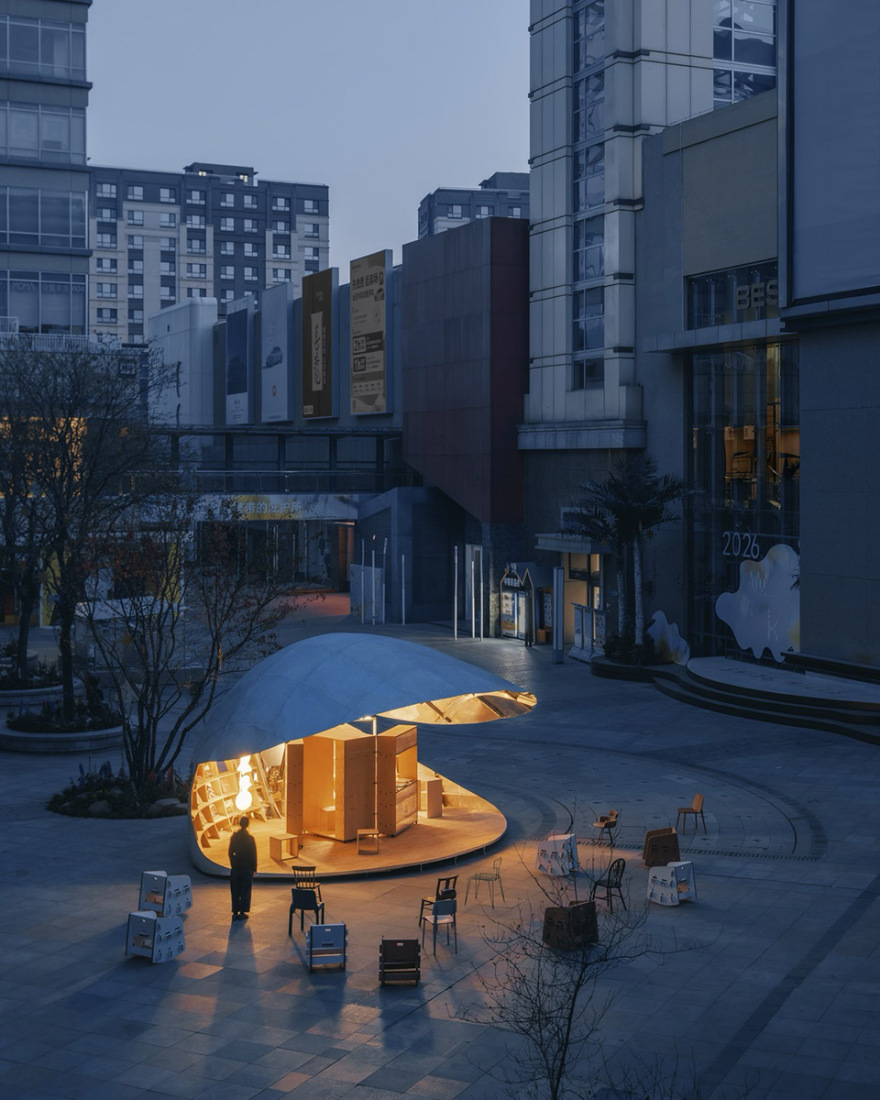
▼夜景,night view© 朱雨蒙
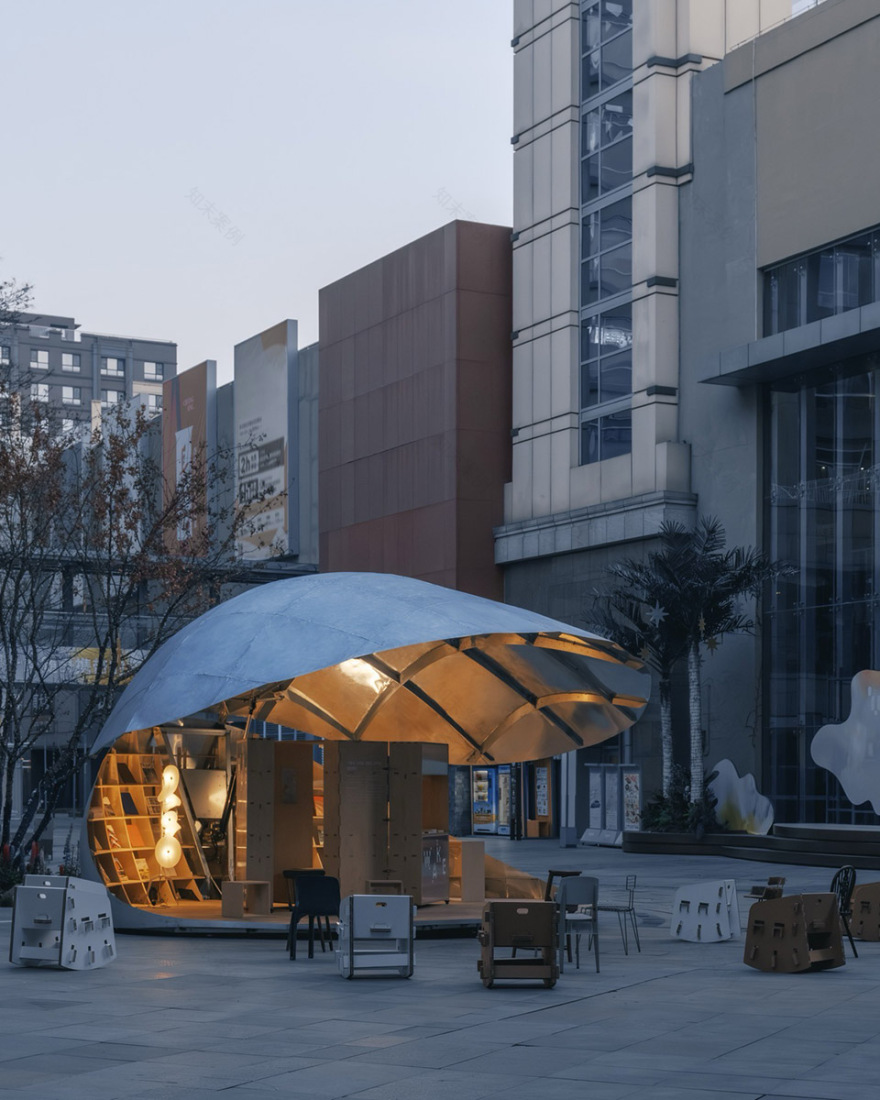
▼夜景细部,details of the night view© 朱雨蒙
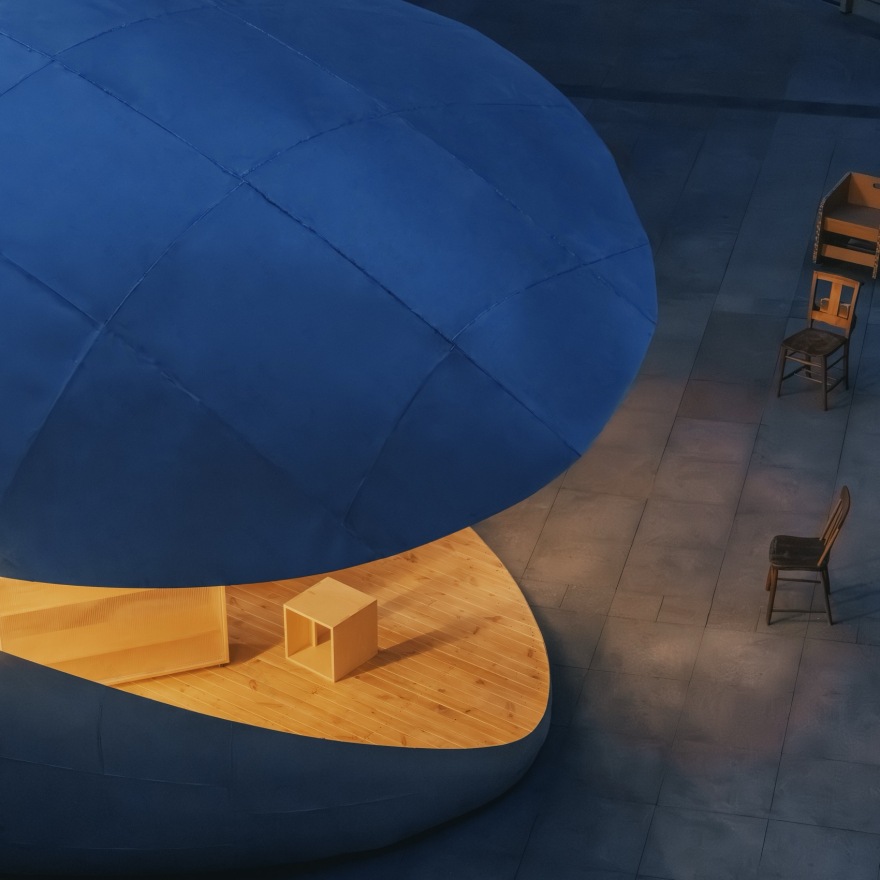
与此同时,由于项目位于商业公共广场,现场施工时间受到限制,只能在夜间进行。这意味着吊装、焊接、安装、调试以及现场协调,都必须压缩在有限的夜间窗口内完成,施工组织和现场配合的难度都很高。
At the same time, construction was restricted to nighttime due to the project’s location within a commercial public plaza. Lifting, welding, assembly, testing, and on-site coordination all had to be carried out during limited nighttime hours, making the construction process highly demanding.
▼夜景,night view© 朱雨蒙
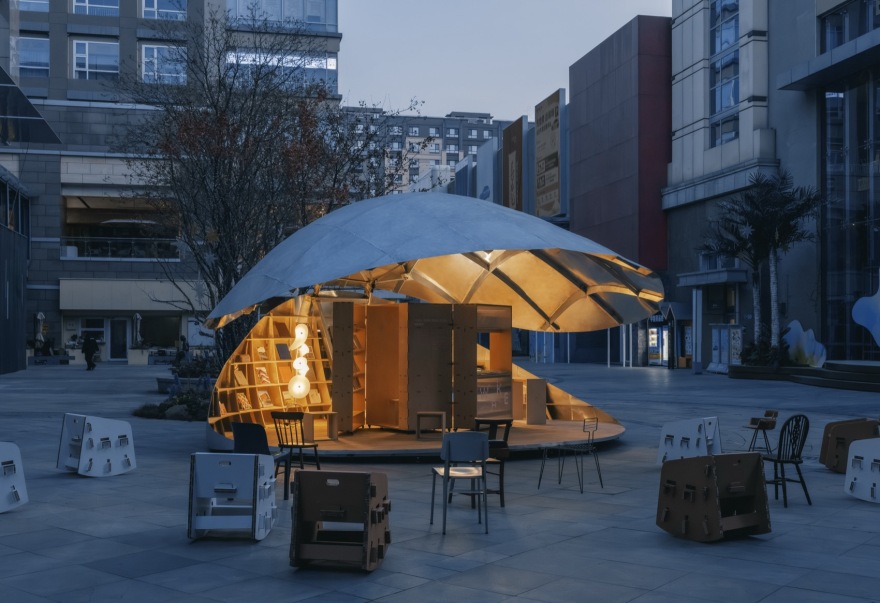
贝壳书屋最后呈现出来的轻盈和自然,背后其实对应着高强度的技术统筹、工艺协作和现场克服过程。它不只是一个小书屋,也不只是一个装置,而是一个会随着开合、时间、天气和使用方式不断变化的小型公共空间。人们可以接近它、围绕它、进入它,也可以看着它慢慢展开、再慢慢收拢。对这个项目而言,重要的并不是一个固定的形象,而是在社区广场中央,通过这种持续变化,不断生成新的公共关系。
© 朱雨蒙
The structure’s sense of lightness—its quiet unfolding and gentle presence—is the result of intensive coordination, technical precision, and on-site problem-solving. It is not merely a small book pavilion, nor simply an installation, but a small public space that evolves with its different states—and with time, weather, and patterns of use. People can approach it, gather around it, step inside, or simply watch it slowly unfold and close. What matters here is not a fixed form, but how it continues to foster public relationships at the heart of the community plaza.
▼夜景,night views© 朱雨蒙


▼轴测分析图,axonometric analysis diagram© 罗宇杰工作室

▼轴测图,axonometric diagram© 罗宇杰工作室
项目信息:
项目名称:贝壳书屋
设计团队(设计及建造):LUO studio │罗宇杰工作室
团队成员:罗宇杰 洪轮 曹玉涛
业主:中粮·祥云小镇
项目地址:北京市顺义区祥云小镇北区喷泉广场
屋顶展开面积: 43 ㎡
建筑摄影师:朱雨蒙
建成时间:2026 年 4 月
Project Information
Project Name: Shell Book Pavilion
Design & Construction: LUO studio
Design Team: Luo Yujie, Hong Lun, Cao Yutao
Client: Shine Hills
Location: Fountain Plaza, North Zone, Shine Hills, Shunyi District, Beijing
Roof Area (Fully Open): 43 m²
Photography: Zhu Yumeng
Completion: April 2026

南京喵熊网络科技有限公司 苏ICP备18050492号-4知末 © 2018—2020 . All photos and trademark graphics are copyrighted by their owners.增值电信业务经营许可证(ICP)苏B2-20201444 苏公网安备 32011302321234号
苏公网安备 32011302321234号客服
消息
收藏
下载
最近