

创作上传
VIP
收藏下载
登录 | 注册有礼
查看完整案例

收藏

下载

分享
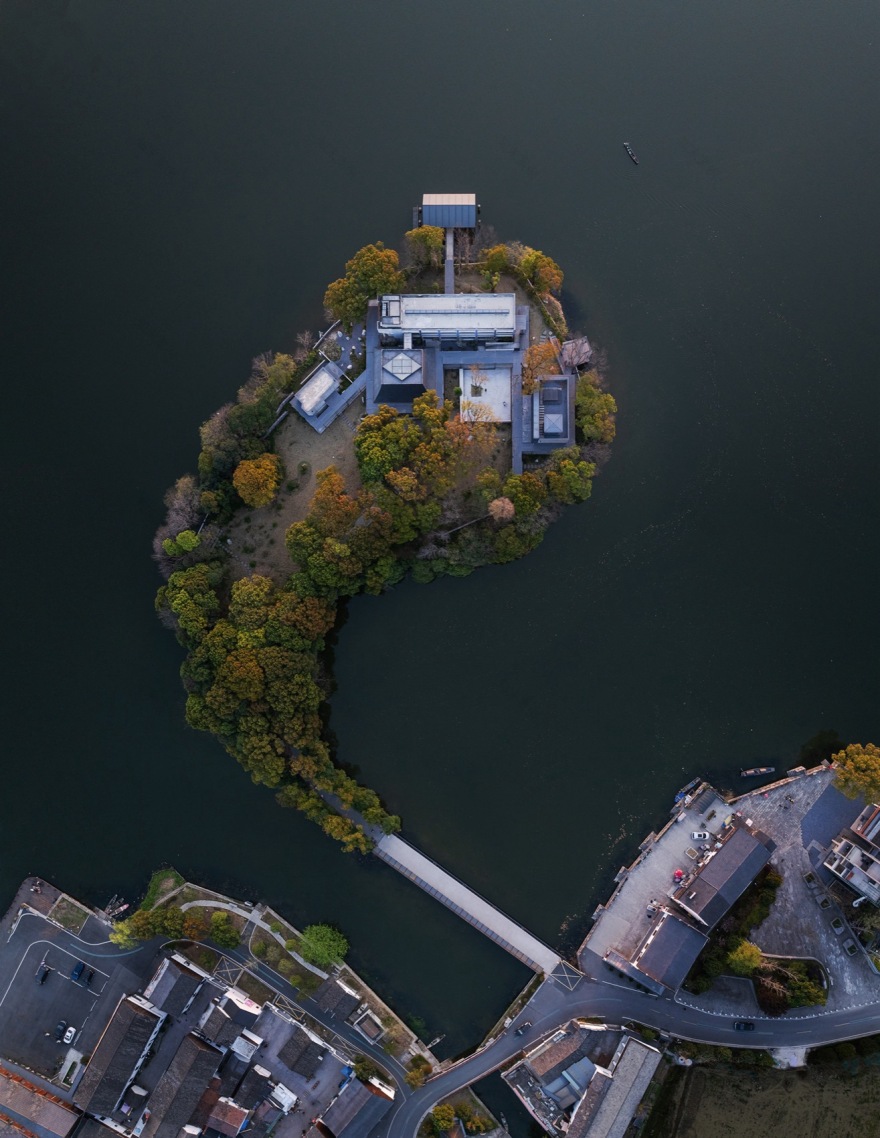
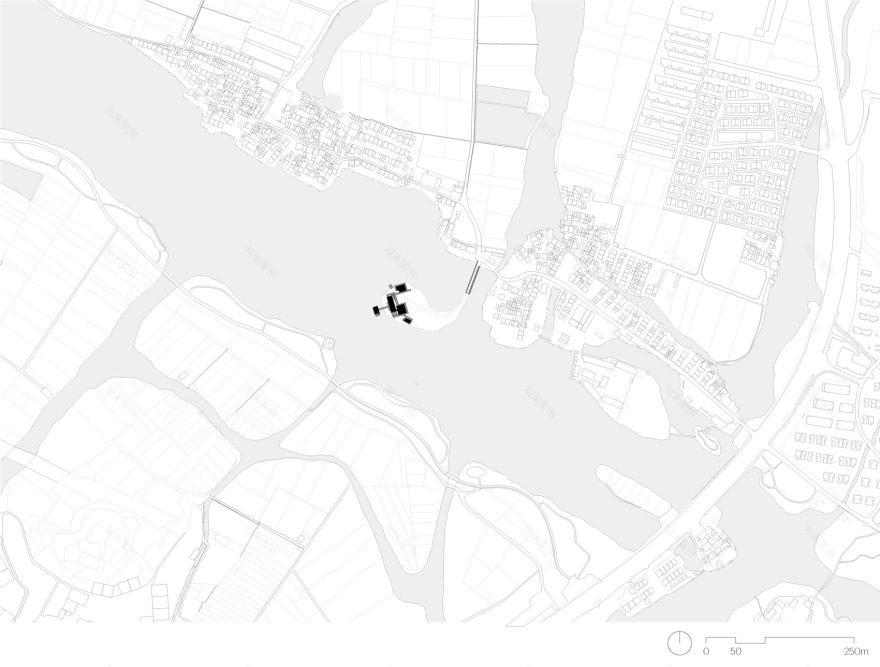
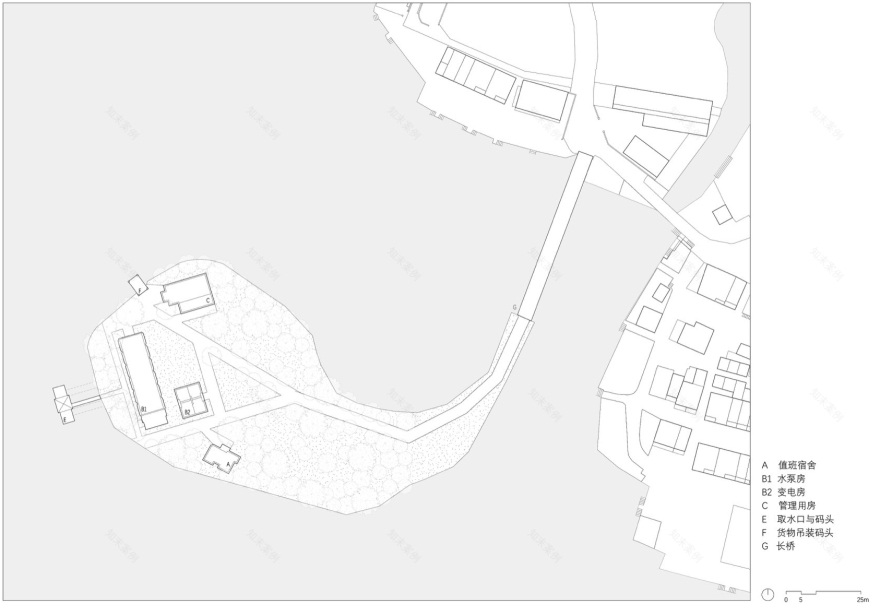
项目位于绍兴柯桥鉴湖中的一处小岛,原为当地自来水厂取水设施。岛上的取水设施建于1992年,原有6处构筑物,分别为水泵房、变电房、管理用房、值班宿舍、取水口码头和货物吊装码头。2001年,因更大规模的区域自来水厂建成,这里逐渐废弃,直至2022年在地方乡村振兴与文旅发展背景下重新启动更新。改造完成后,原有建筑分别被转化为书店、咖啡馆、展厅、观景亭和游船码头,并通过一套由细钢柱支撑的平屋顶连廊系统加以串联,形成新的整体使用关系。原本主要服务于市政维护和技术管理的封闭岛屿,也因此转变为向公众开放的活动场所。
The project is located on a small island in Jianhu Lake, Keqiao, Shaoxing, and was originally built as a water intake facility for the local municipal waterworks. Constructed in 1992, the site originally contained six structures: a pump house, a substation, an administrative building, a staff dormitory, a water intake pier, and a cargo hoisting dock. In 2001, after a larger regional waterworks was completed, the site gradually fell into disuse. It remained abandoned until 2022, when it was reactivated within the context of local rural revitalization and cultural tourism development. After renovation, the original buildings were converted respectively into a bookstore, café, exhibition space, viewing pavilion, and boat dock, and were linked by a flat-roofed corridor system supported by slender steel columns, forming a new overall pattern of use. The once enclosed island, formerly dedicated to municipal maintenance and technical management, was thus transformed into a public place open to visitors.
▼西侧鸟瞰,Aerial view from the west side © 苏圣亮

▼东侧鸟瞰,Aerial view from the east side © 苏圣亮
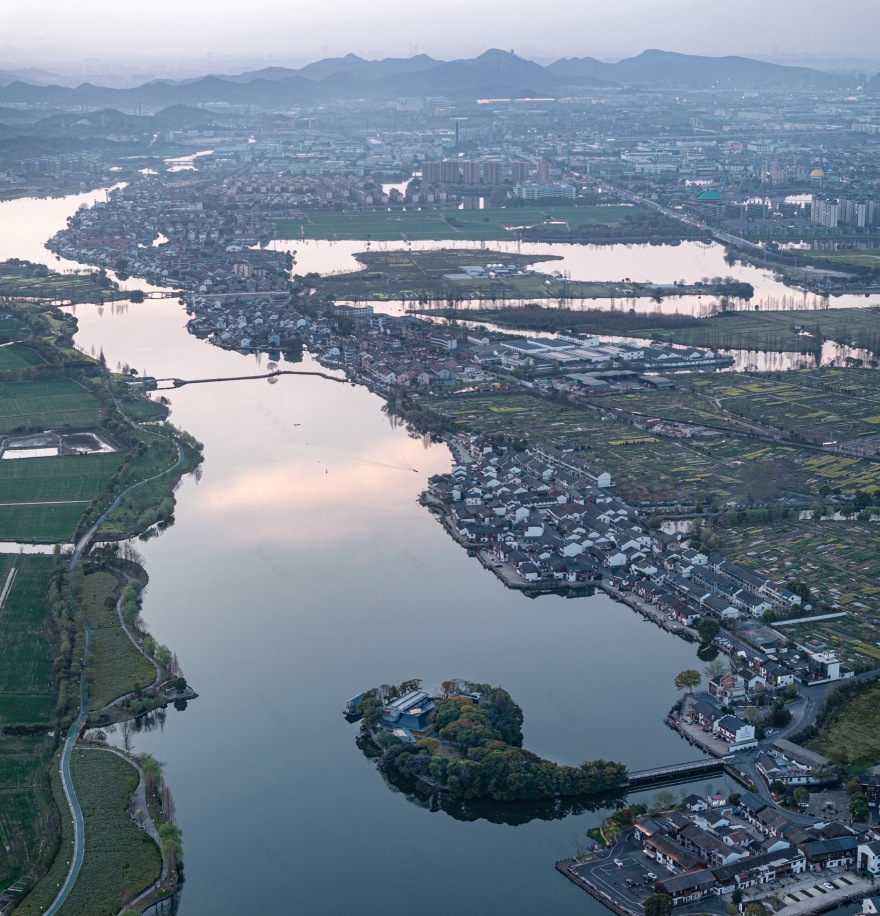
▼整体鸟瞰,Overall aerial view © 苏圣亮
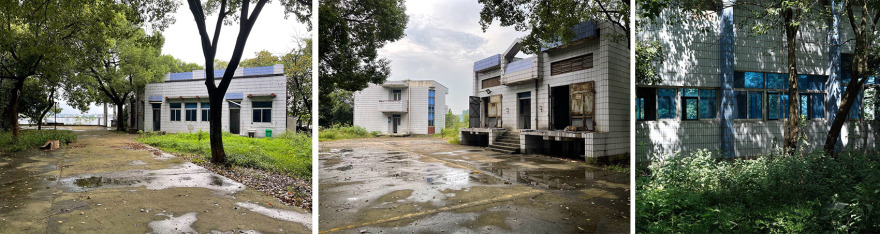
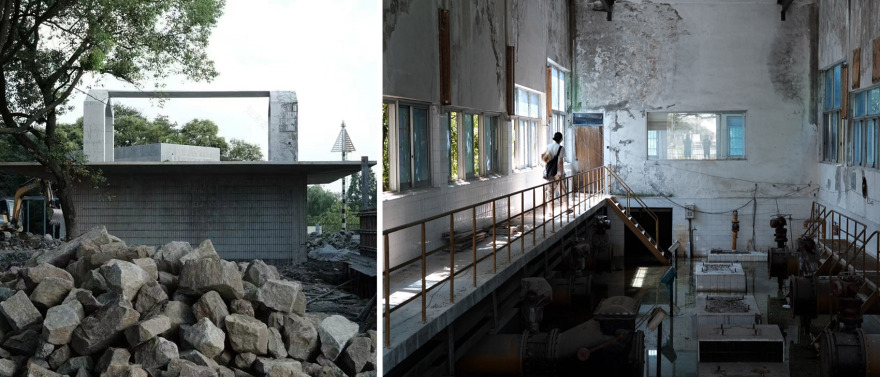
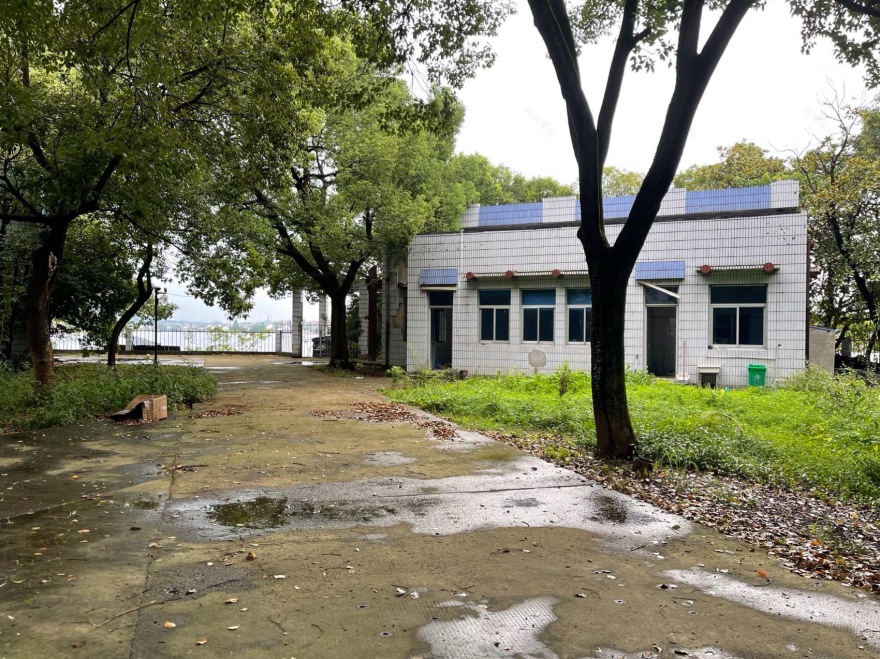
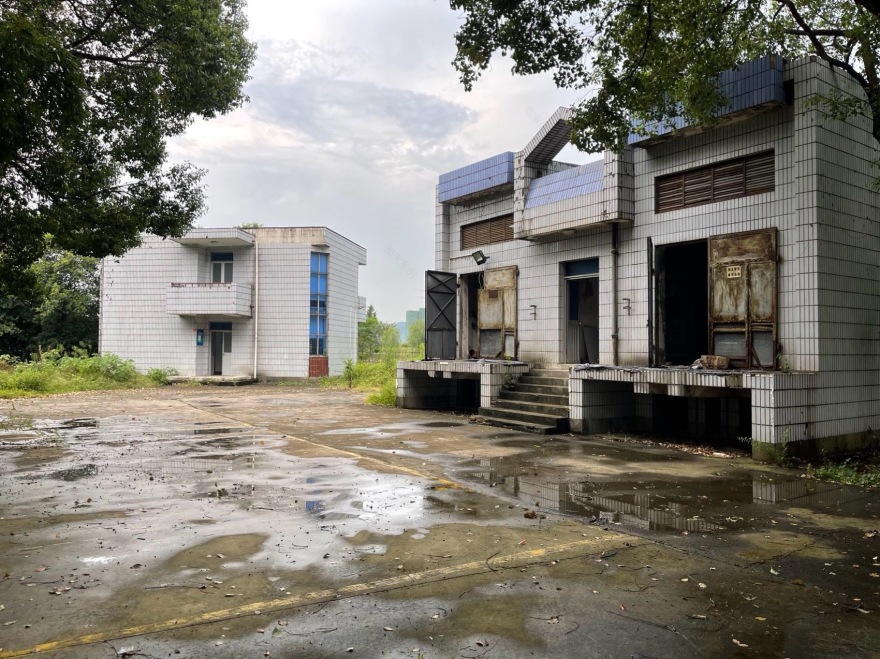
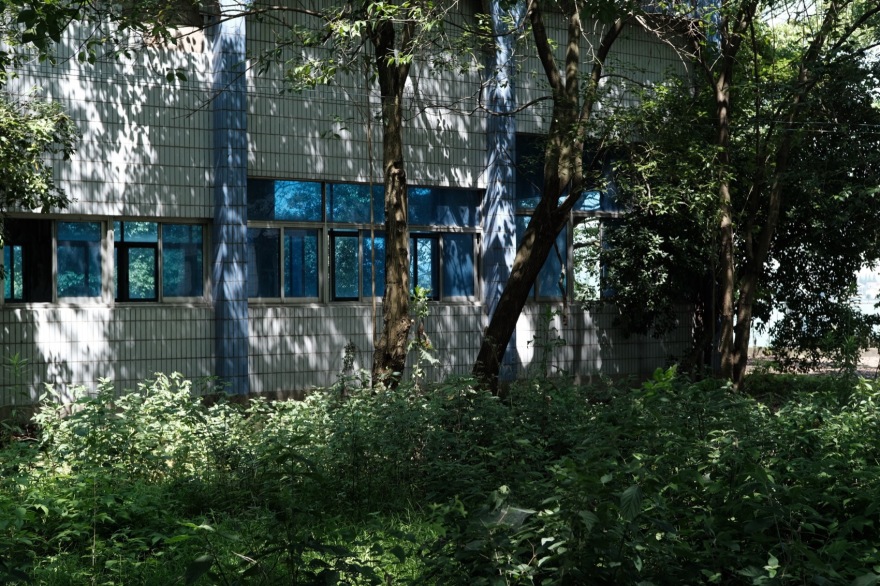
既有建筑是一套围绕取水、输送、维护和管理形成的普通市政基础设施。这组建筑的特征也恰恰在于其普通性:长条陶瓷面砖覆盖的外墙、带有一定装饰意味的山墙构架及檐口。这种在功能主义框架下借助有限立面修饰以获得基本建筑形象的做法,构成了20世纪80、90年代中国大量市政与工业建筑共有的面貌。作为主要外墙表面材料的面砖,在当时既是耐久、易维护的选择,也是一种能够较快形成统一表面质量的建造方式。随着建筑废弃和年久失修,部分瓷砖出现缝隙偏移、局部开裂和附着面剥落,这些变化也使建筑表面呈现出不同时间层次并置的状态。更新中,一部分原有面砖被保留,局部缺损处进行修补,另一部分区域则适度剥离,使墙体基底和原有构造关系重新显现出来。
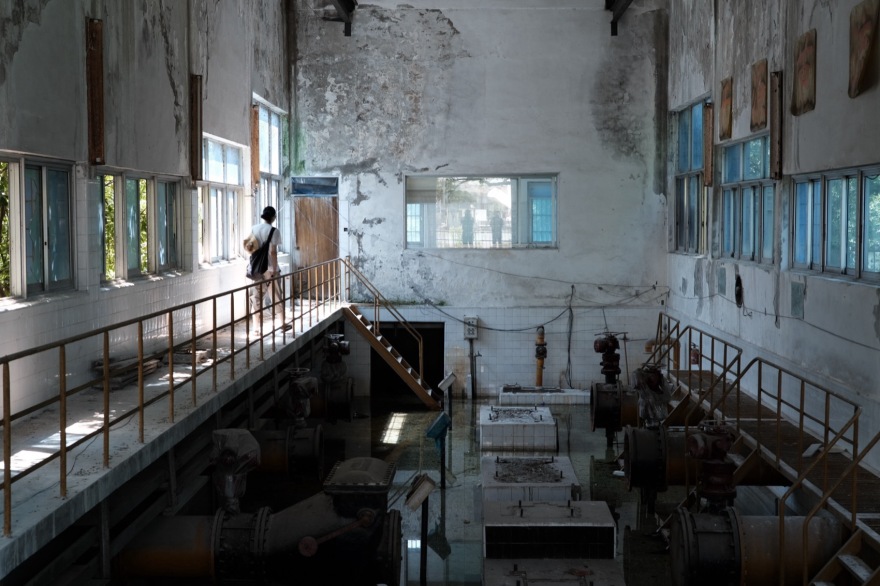
▼改造前,the original state of the site © 大舍建筑
▼分析图,analysis diagram © 大舍建筑

The existing buildings were part of an ordinary set of municipal infrastructures organized around water intake, delivery, maintenance, and management. Their character lies precisely in their ordinariness: exterior walls clad in narrow ceramic tiles, with gable-like frames and eaves carrying a modest decorative intention. This kind of architecture, shaped within a functionalist framework yet given a basic architectural image through limited façade treatment, was common among many municipal and industrial buildings in China during the 1980s and 1990s. As the principal exterior finish, ceramic tiles were at the time both a durable and easy-to-maintain material and an efficient means of producing a unified building surface. With the abandonment and aging of the buildings, some tiles became misaligned, cracked, or detached from their backing, allowing the surfaces to register the coexistence of different layers of time. In the renovation, part of the original tile surface was retained, damaged areas were repaired, and other portions were selectively stripped away so that the underlying wall base and original construction logic could re-emerge.
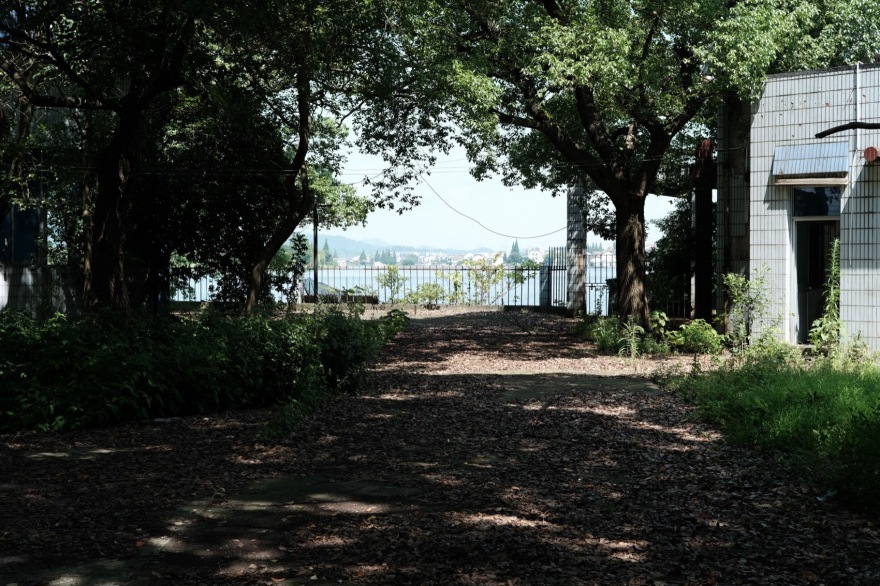
▼从小岛入口望向建筑群,View from the island entrance towards the building cluster © 苏圣亮

▼连廊作为重要的空间媒介,Corridor as an important spatial medium © 苏圣亮
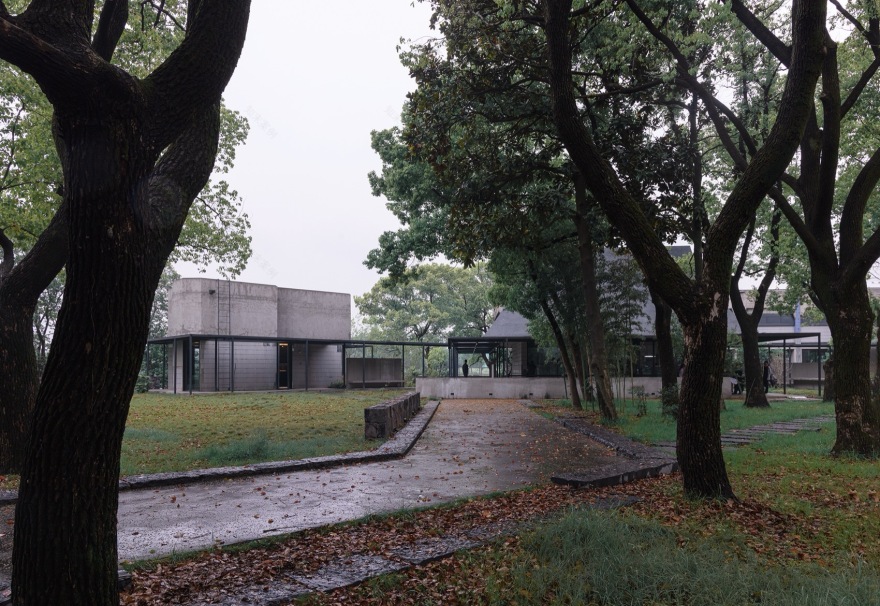
▼从场地东侧望向文创商店与书店,View from the east side of the site towards the cultural and creative store and the bookstore © 苏圣亮
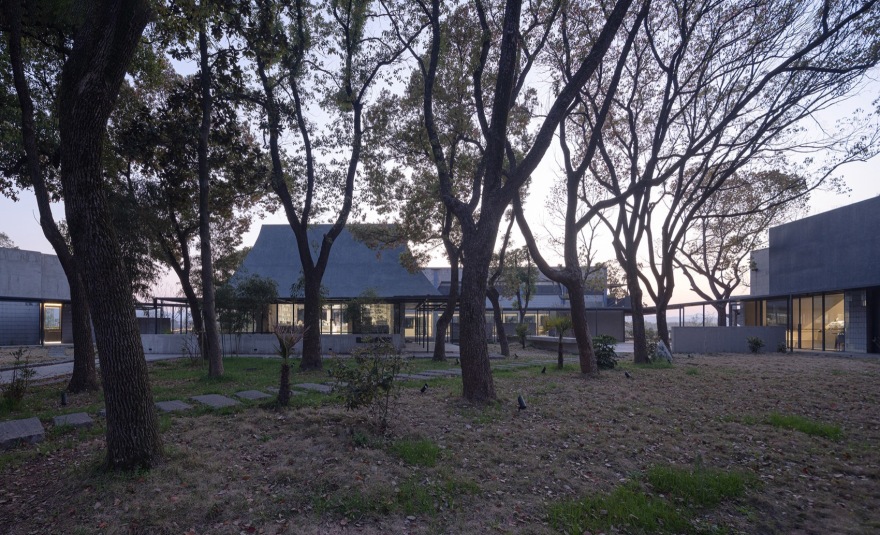
▼从书店望向文创商店的曲面屋顶,View from the bookstore towards the curved roof of the cultural and creative store © 苏圣亮
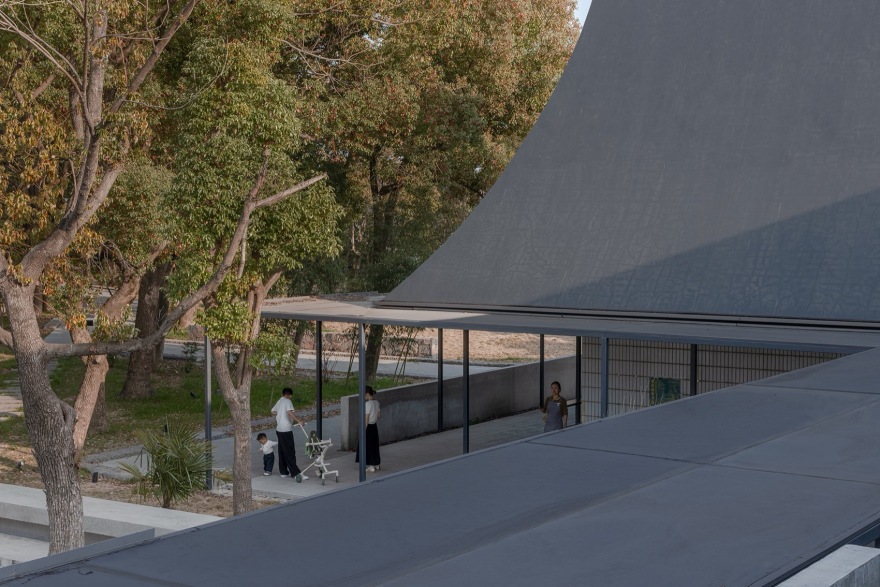
▼细钢柱支撑的柱廊系统,Colonnade system supported by slender steel columns © 苏圣亮
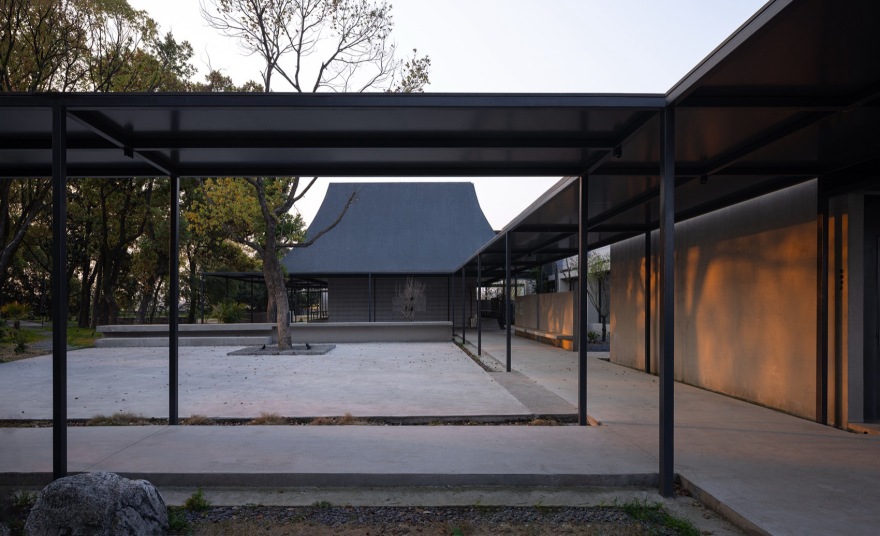
▼取水钢管被转化为新的支撑构件,Water intake steel pipe transformed into new supporting element © 苏圣亮
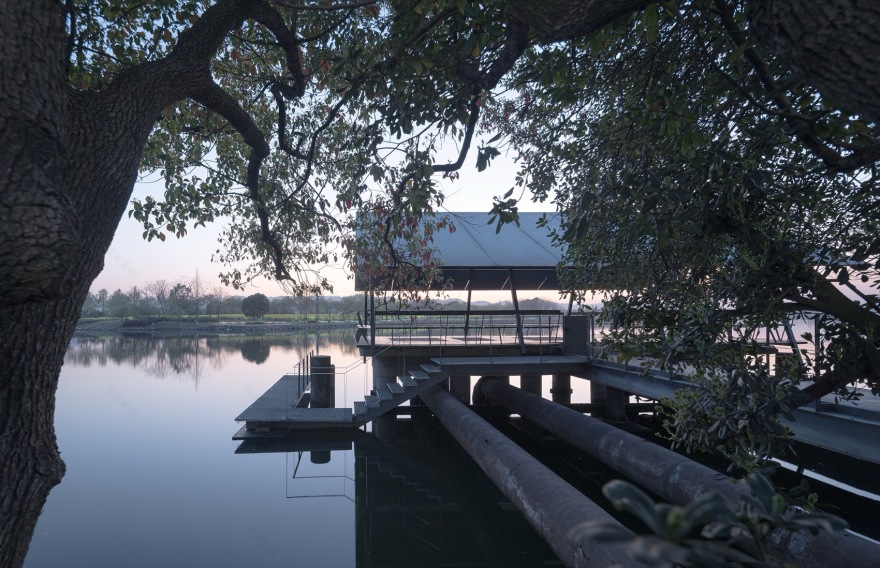
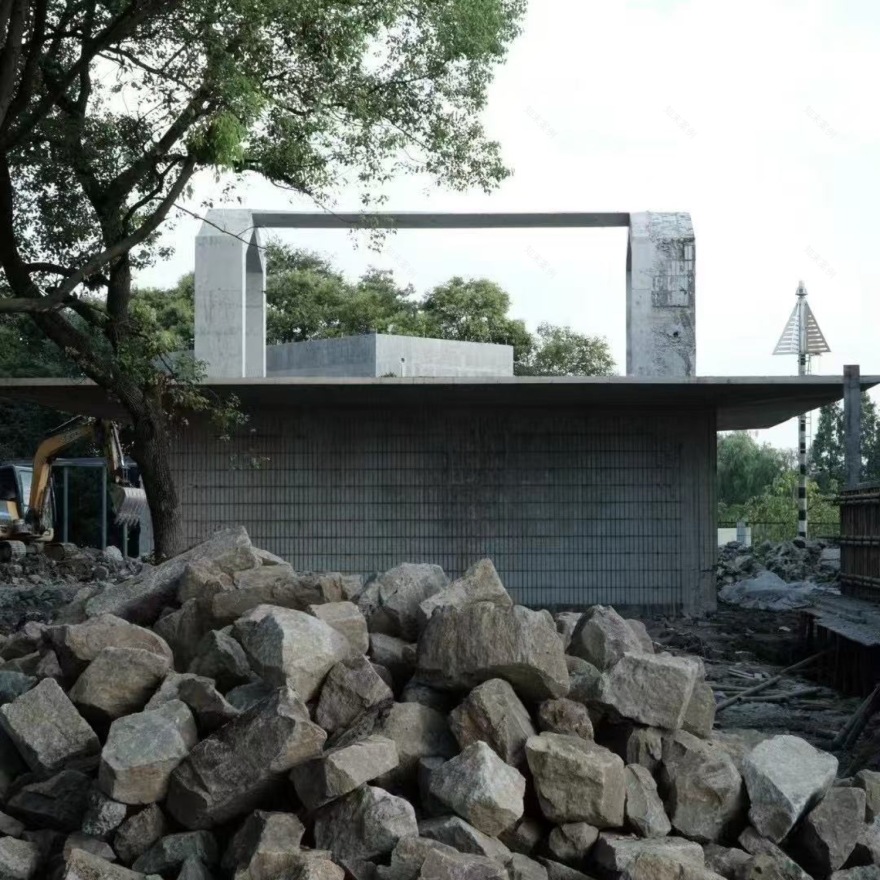
▼观景亭,Viewing pavilion © 苏圣亮
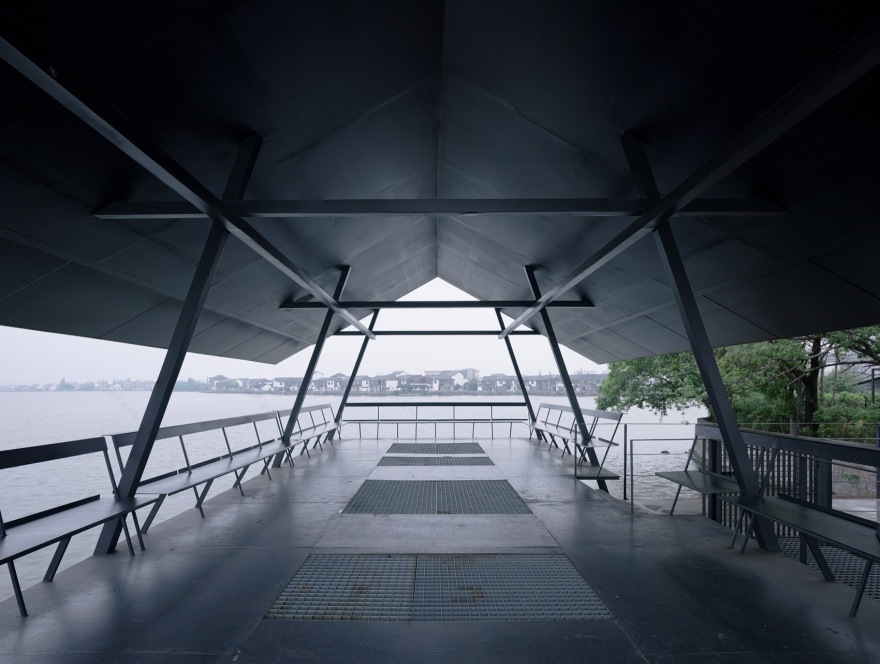
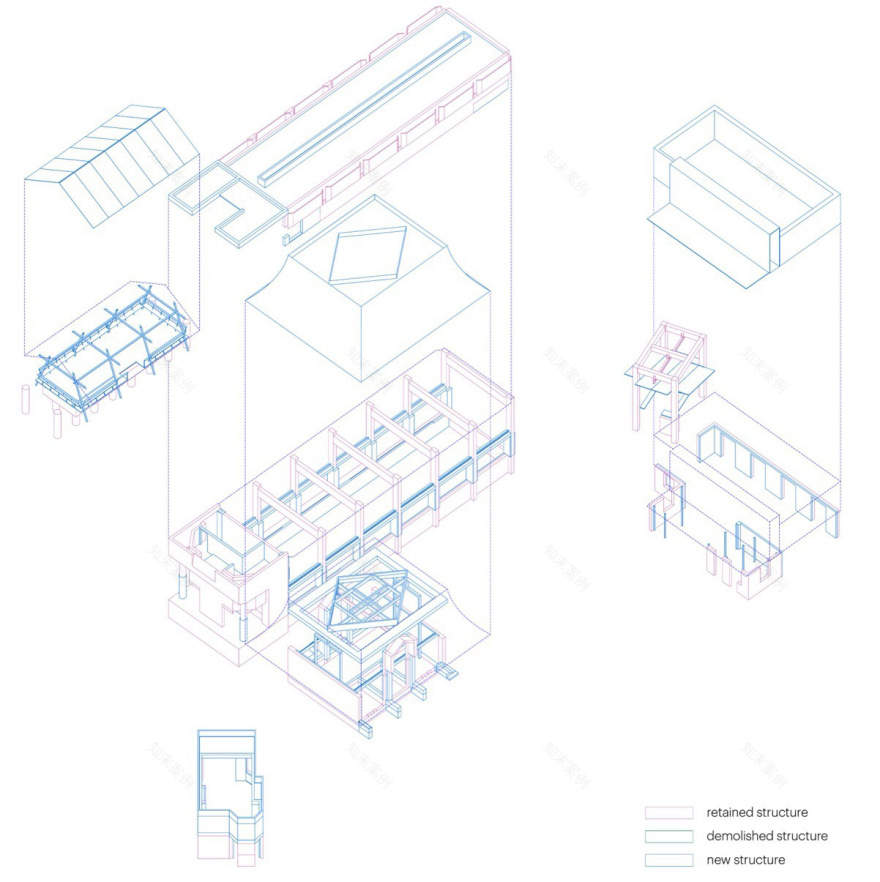
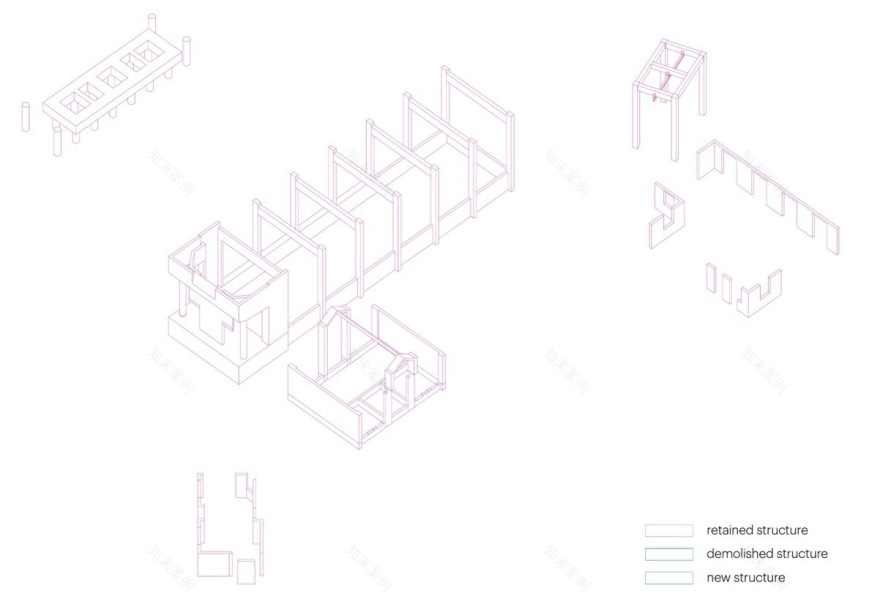
在空间与结构处理上,项目主要通过“选择性拆除”与“嫁接式建造”展开改造。部分原有墙体与屋顶被拆除,以打开原本较为封闭的空间关系,并增强建筑之间的联系;新的钢屋顶、走廊与柱廊系统附着于保留结构之上,在满足新功能需求的同时,也保持了新旧部分之间较为清晰的关系。由细钢柱支撑的连廊不仅连接了多座旧建筑,也重新组织了岛上的步行路径、停留空间与观景界面,使整个场地从原先以技术功能为主的设施岛,转变为一处可供阅读、休憩与游览的公共空间。
▼分析图,analysis diagram © 大舍建筑
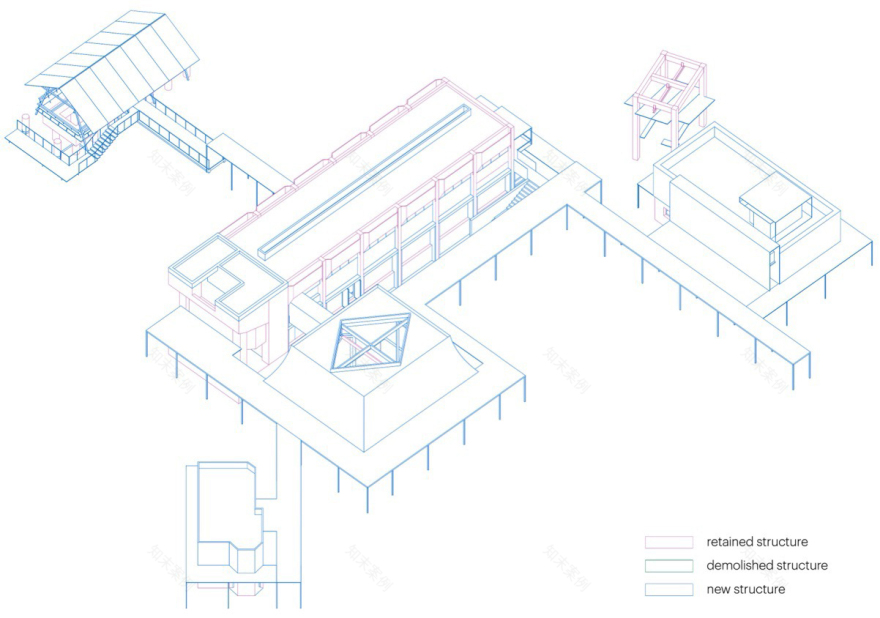
In terms of spatial and structural intervention, the project was mainly carried out through a strategy of selective demolition and grafted construction. Parts of the original walls and roofs were removed in order to open up previously enclosed spatial relations and strengthen connections among the buildings. New steel roofs, corridors, and colonnade systems were then attached to the retained structures, accommodating new functional requirements while maintaining a relatively clear relationship between old and new. The corridor system, supported by slender steel columns, not only links the former buildings but also reorganizes pedestrian movement, places to stop, and points of view across the island, transforming the site from a facility island defined by technical use into a public space for reading, resting, and strolling.
▼从柱廊檐下望向亲水咖啡亭,View from under the colonnade eaves towards the waterside coffee pavilion © 苏圣亮
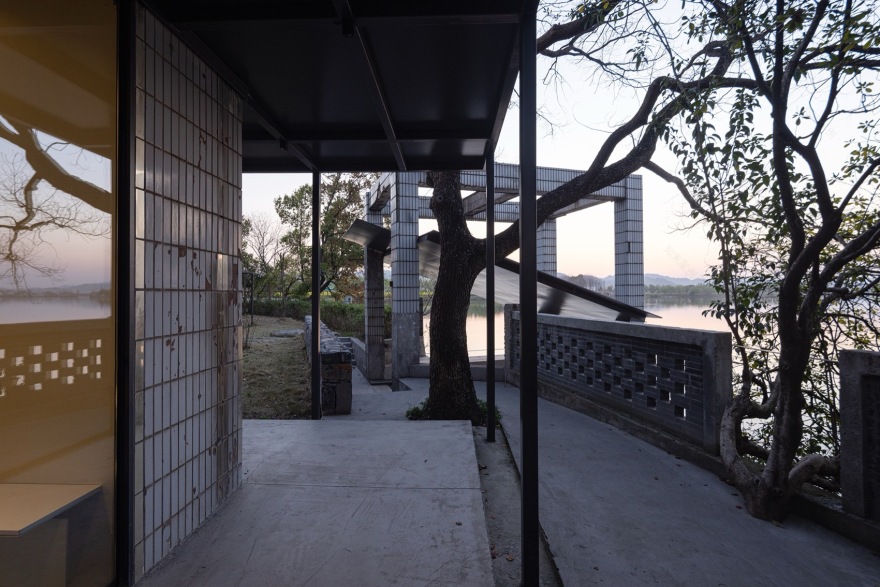
▼亲水咖啡亭,Waterside coffee pavilion © 苏圣亮
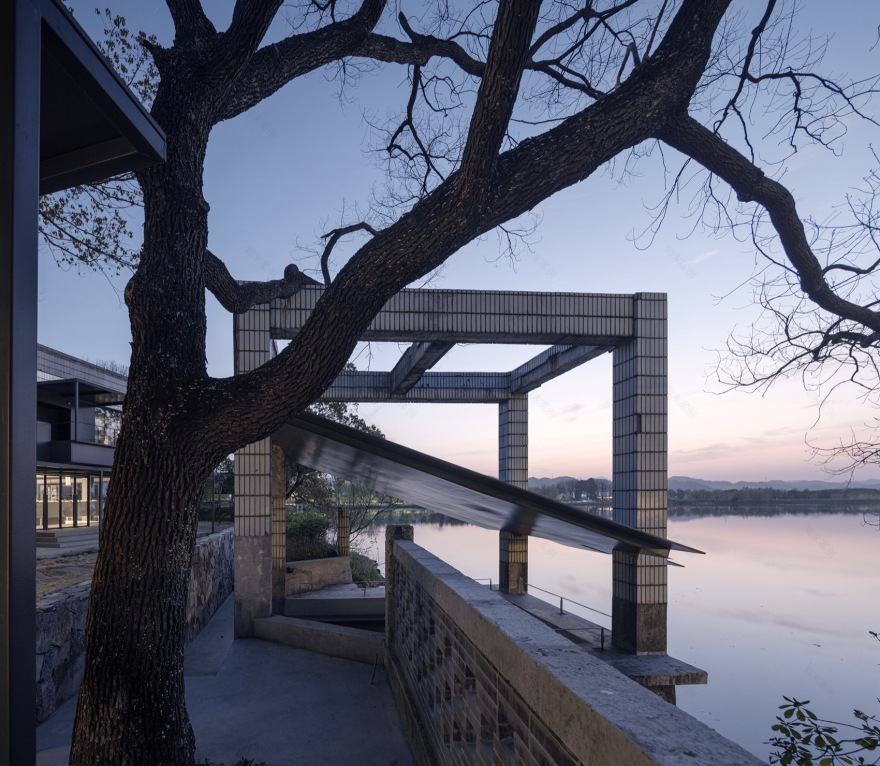
▼亲水咖啡亭,Waterside coffee pavilion 2 © 苏圣亮
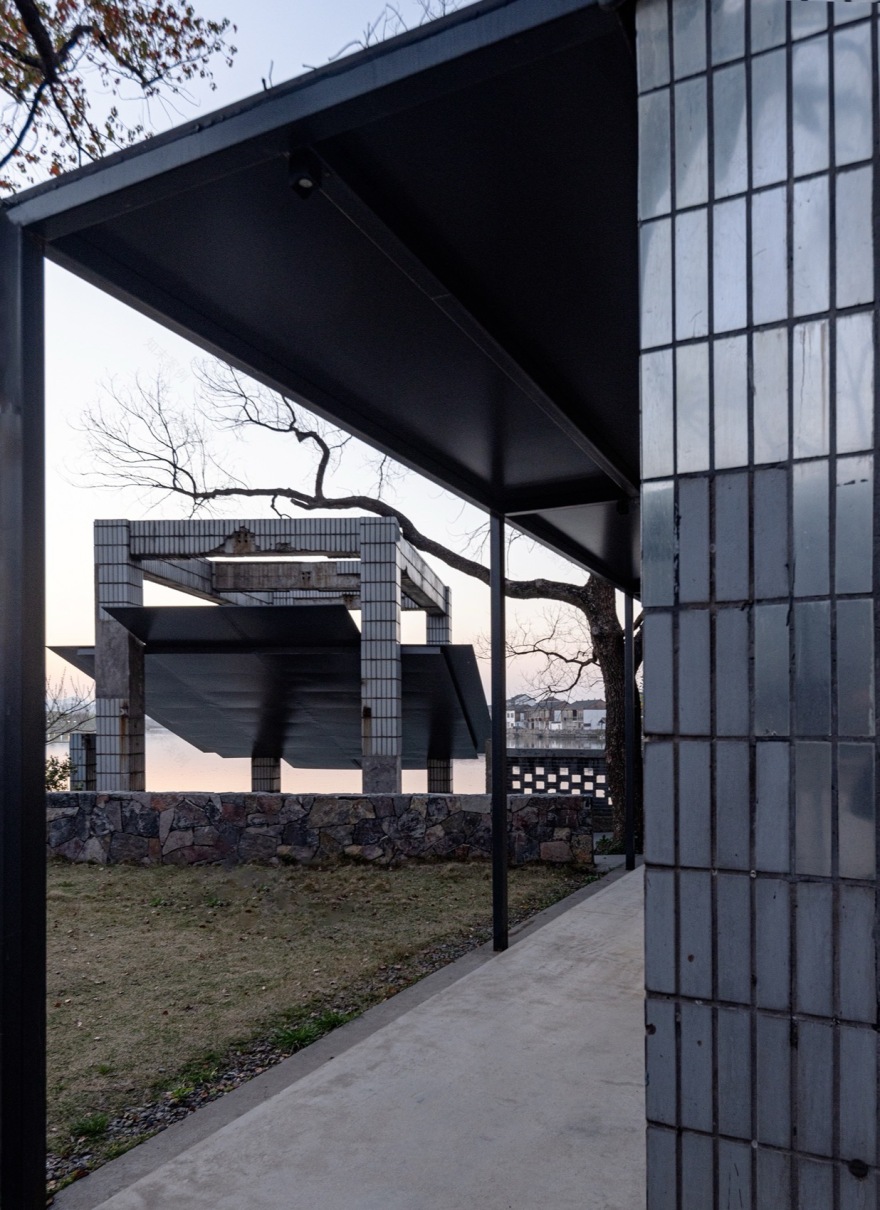
▼新与旧的并置,Juxtaposition of new and old © 苏圣亮

▼被保留的坡屋顶檐口与新的钢板屋面,Preserved pitched roof eaves and new steel sheet roofing © 苏圣亮
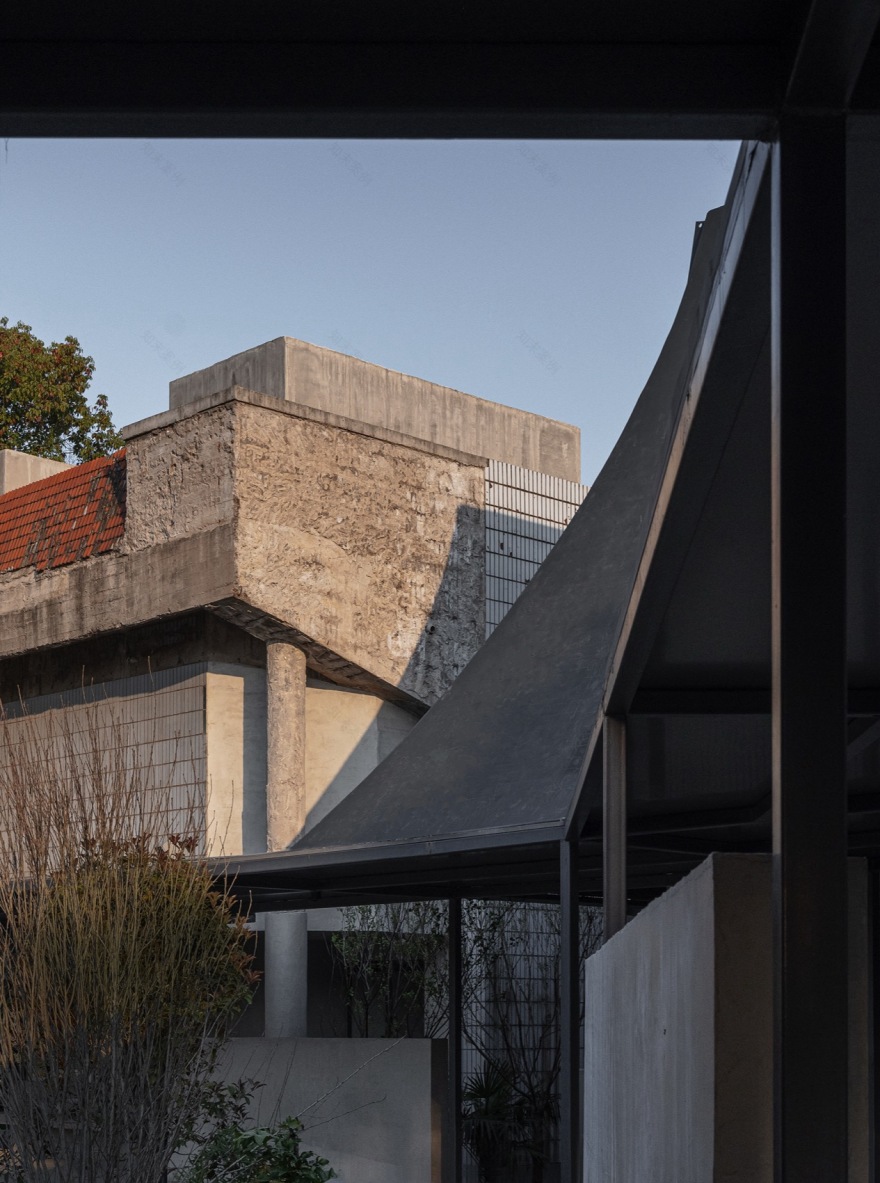
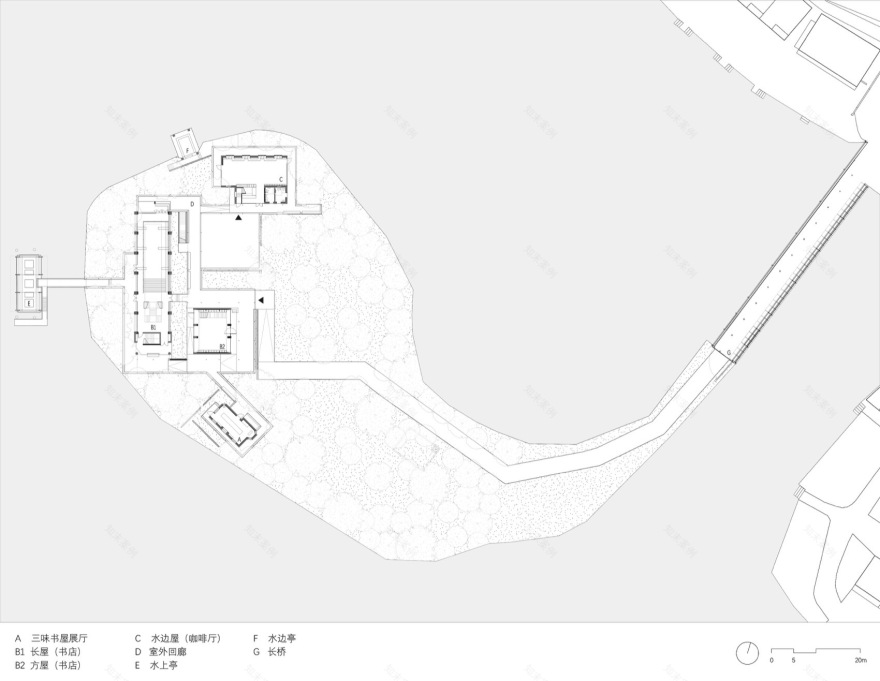
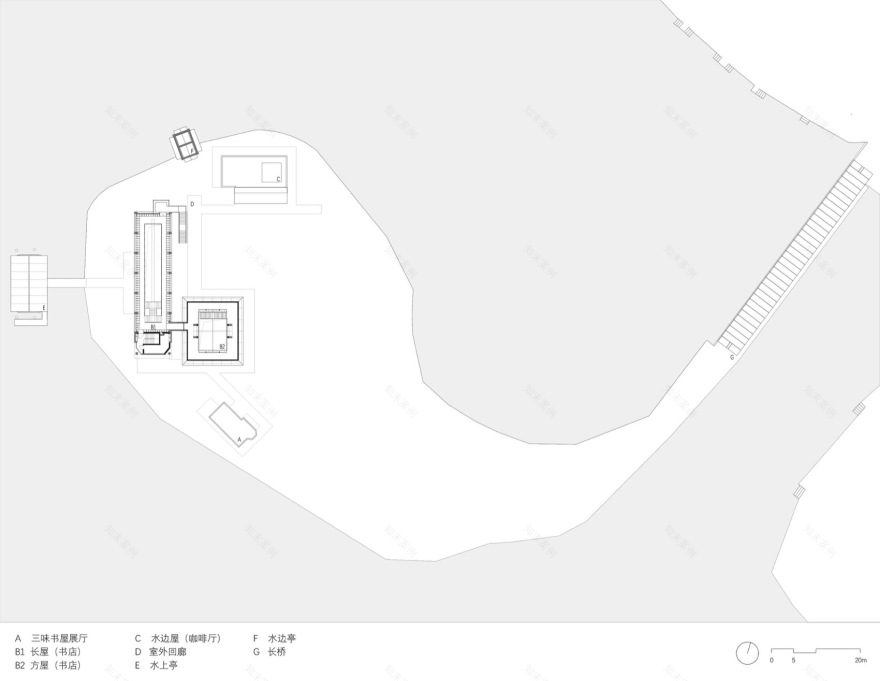
在具体功能布置上,水泵房被改造为主要的书店空间,原有设备在局部得以保留,并与新增书架和阅读区域共同构成内部场景;变电所则利用原有山花构架造型的对称性,在上方覆盖帐篷状的钢板与聚合物砂浆屋顶,形成一处带有二层回廊的文创商店;原有水边起重构筑被转化为咖啡亭与观景设施;取水口管道构架在保留原有基础设施特征的同时,被重新组织为游船停靠点和水上游览入口。进入小岛的输水管桥也在更新中被重新利用。设计借助其原有支撑钢结构,附加了一侧遮荫并可供停坐的廊桥空间,使其不仅作为进入场地的通道,也可承载市集等临时公共活动,吸引游人进入小岛。通过这些介入,原本彼此分散、功能单一的设施被重新纳入一个连续的公共使用系统之中,也使场地原有的水利、市政和运输痕迹在新的日常活动中得到延续和转化。
▼改造前,the original state of the building © 大舍建筑
▼分析图,analysis diagram © 大舍建筑
In terms of program, the pump house was converted into the main bookstore space, where portions of the original equipment were retained and integrated with new bookshelves and reading areas. The substation, making use of the symmetry of its existing gable frame, was covered with a tent-like roof of steel plate and polymer mortar, forming a cultural retail space with a second-floor gallery. The former waterside lifting structure was transformed into a café pavilion and viewing point. The pipe structure at the water intake, while preserving its infrastructural character, was reorganized as a docking point for boats and as an entrance for water-based visits. The bridge carrying the water pipes onto the island was also reused in the renovation. By taking advantage of its existing steel support structure, a shaded side corridor with seating was added, allowing it to function not only as an access route but also as a place for temporary public activities such as small markets, drawing visitors onto the island. Through these interventions, facilities that were once separated and functionally singular were brought into a continuous public system, allowing the site’s original traces of water management, municipal service, and transport to be extended and transformed within new forms of everyday use.
▼从文创商店入口檐下北望,Looking north from under the eaves at the entrance of the cultural and creative store © 苏圣亮
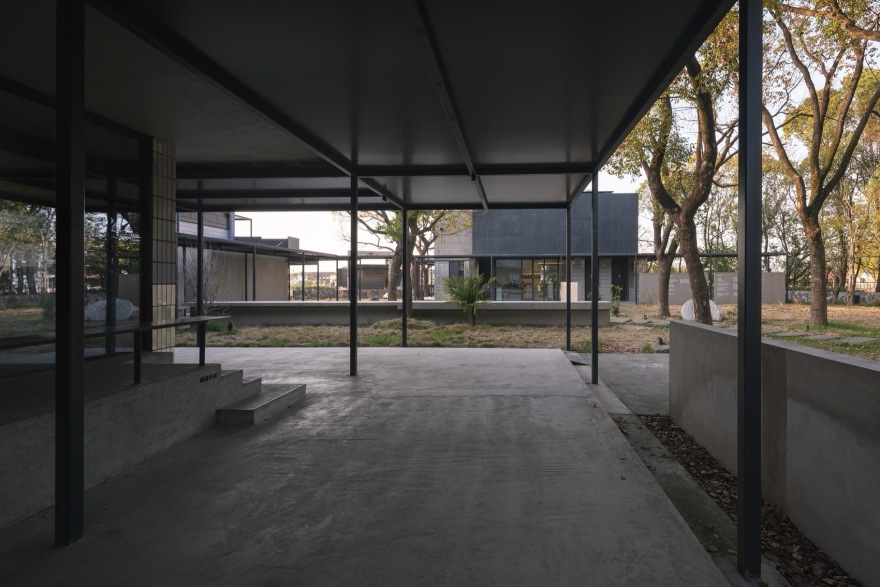
▼从文创商店檐下北望,Looking north from under the eaves of the cultural and creative store © 苏圣亮
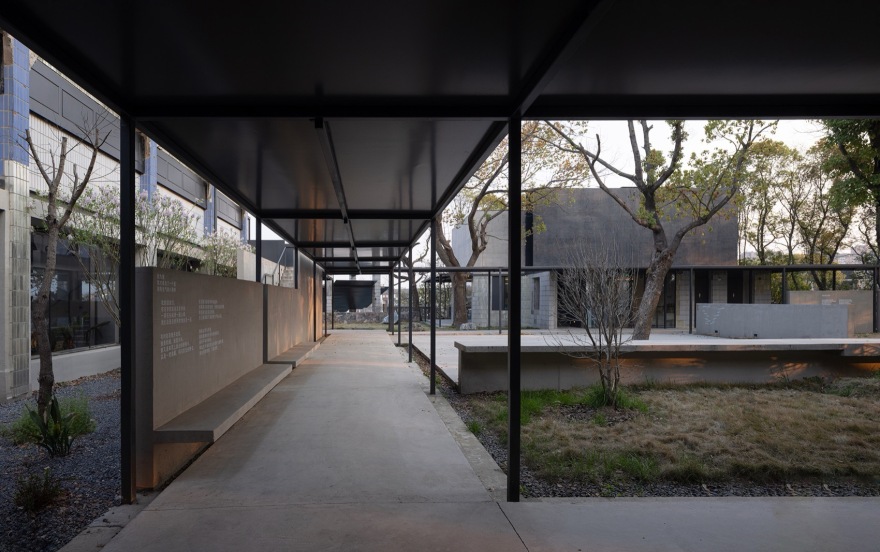
▼回廊作为书店空间的外扩,Cloister as an extension of the bookstore space © 苏圣亮
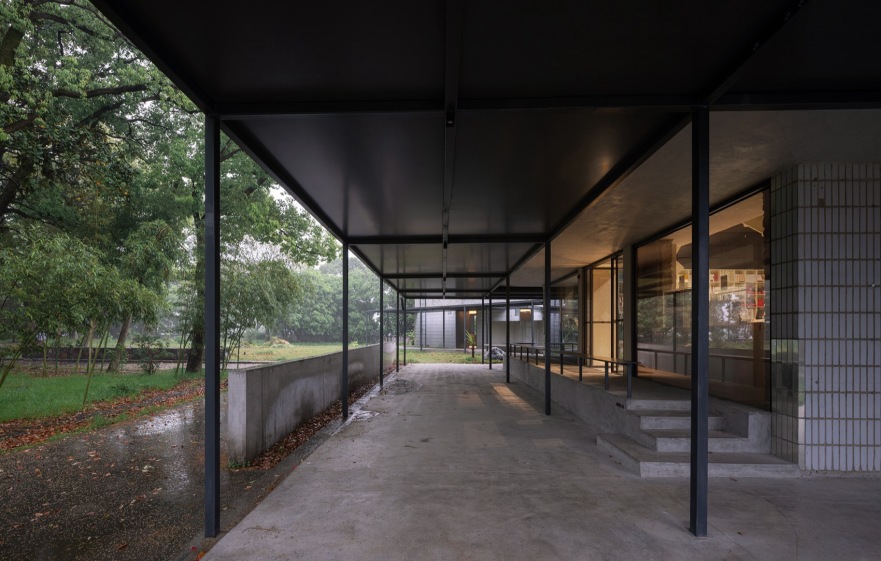
▼局部,Partial view © 苏圣亮
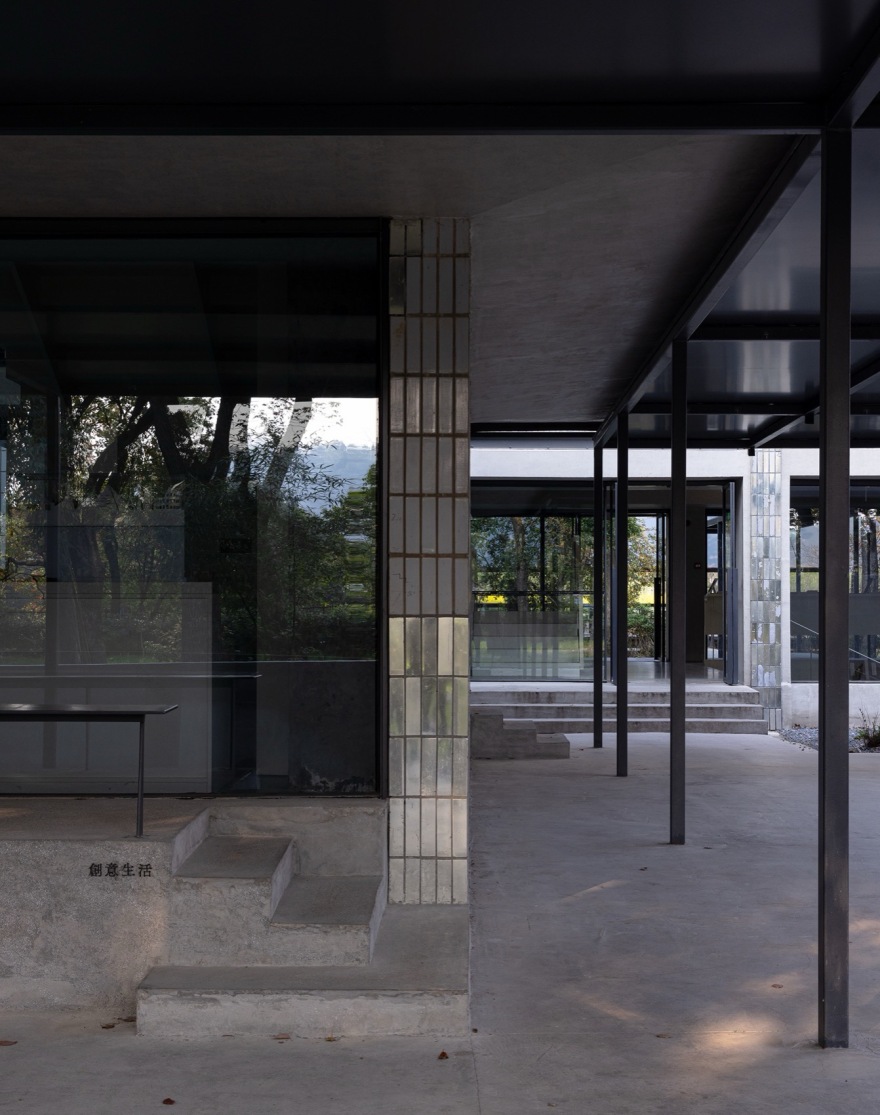
▼改造后的水泵房作为书店空间,Transformed pump house as bookstore space © 苏圣亮

▼文创商店的二层回廊,Second-floor corridor of the cultural and creative store © 苏圣亮

▼区位图,location plan © 大舍建筑
▼改造前总平面图,master plan before renovation © 大舍建筑
▼改造后总平面图,master plan after renovation © 大舍建筑
▼一层平面图,first floor plan © 大舍建筑
▼二层平面图,second floor plan © 大舍建筑
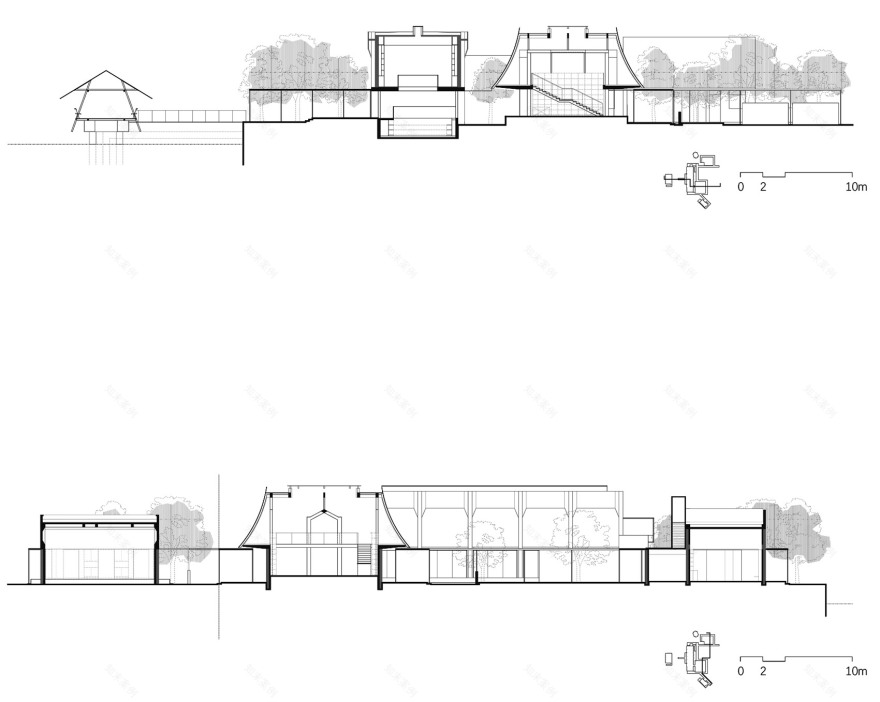
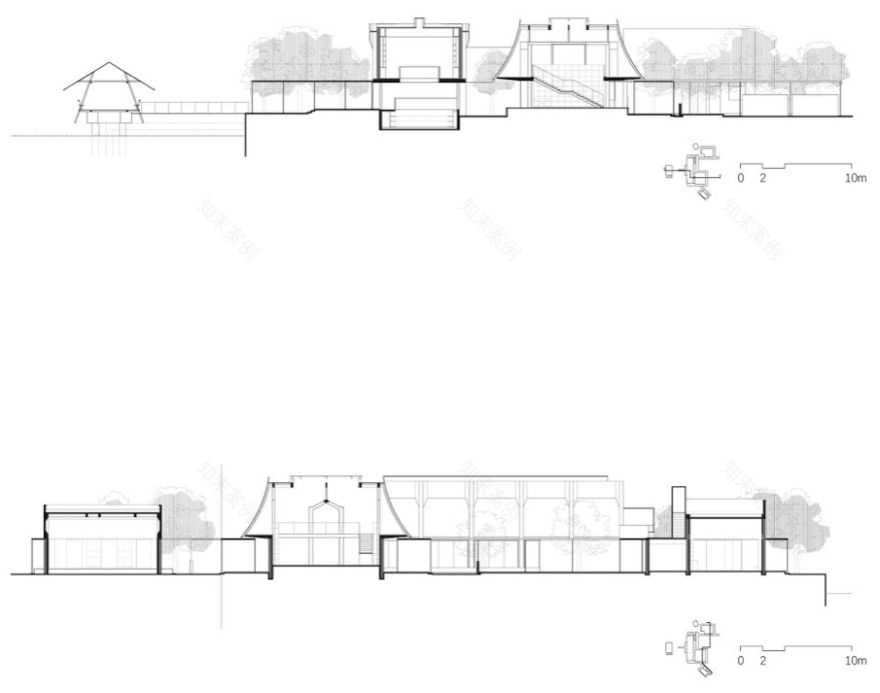
▼剖面图,sections © 大舍建筑
项目名称:先锋鉴湖书店(鉴湖取水岛市政设施更新项目)
项目地点:绍兴柯桥叶家堰
设计团队:柳亦春、陈晓艺、王卓浩、张晓琪、陶光平、陈旭、孙慧中
合作设计:同济大学建筑设计研究院(集团)有限公司、和作结构建筑研究所
委托机构:南京先锋图书文化传播有限责任公司
设计时间:2021.12 – 2023.01
建成时间:2024.04
建筑面积:830.33 sqm
南京喵熊网络科技有限公司 苏ICP备18050492号-4知末 © 2018—2020 . All photos and trademark graphics are copyrighted by their owners.增值电信业务经营许可证(ICP)苏B2-20201444 苏公网安备 32011302321234号
苏公网安备 32011302321234号客服
消息
收藏
下载
最近