

创作上传
VIP
收藏下载
登录 | 注册有礼
查看完整案例

收藏

下载

分享

翻译
Architects:pk_iNCEPTiON
Area:1050m²
Year:2025
Photographs:pranitborastudio
Lead Architects:Ar. Pooja Khairnar
Category:Schools
Design Development:Pooja Khairnar, Swasti Rangani, Shantanu Tribhuvan, Swaroop Sope
Working Drawing:Swasti Rangani, Tejaswini Kawale
Models:Shantanu Tribhuvan, Swaroop Sope
Graphics And Presentation Drawings:Shantanu Tribhuvan, Gayatri Kale
Project Management Consultant:Prashant Sakhala
Structural Consultant:Sanjay Ratnaparkhi
Initiated By:Mungi Engineers Pvt. Ltd
Funded By:Mungi Engineers Pvt. Ltd
City:Nashik
Country:India
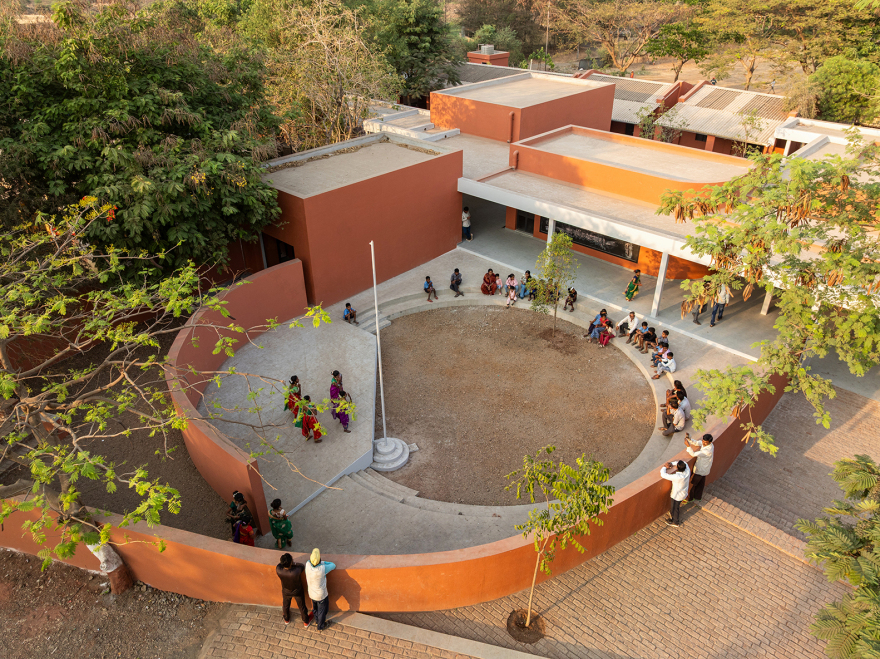
Text description provided by the architects. School at Belgaon Dhaga begins by moving beyond the rigid functions of the original building, using the new addition to foster spontaneous activity and unscripted interaction. The intent is to create informal learning environments that offer freedom and encourage a better exchange of knowledge between everyone inhabiting the space. Through this approach, the extension becomes a tool to bridge the gap between formal use and informal discovery, turning the in between zones into meaningful places of engagement.
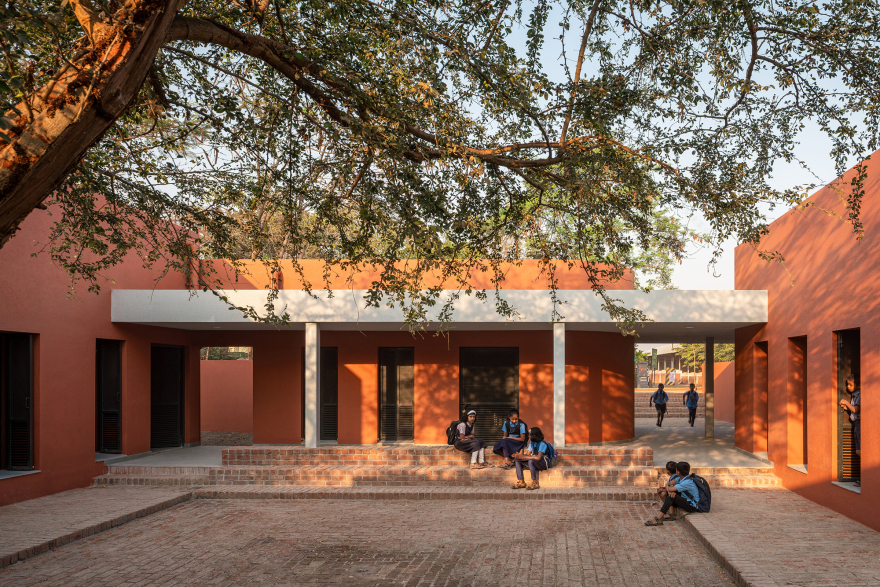
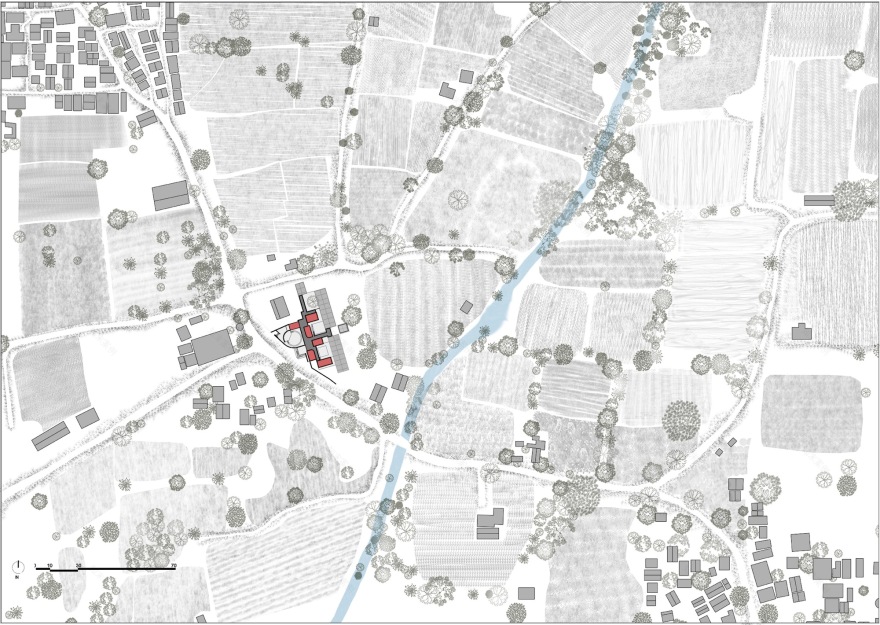
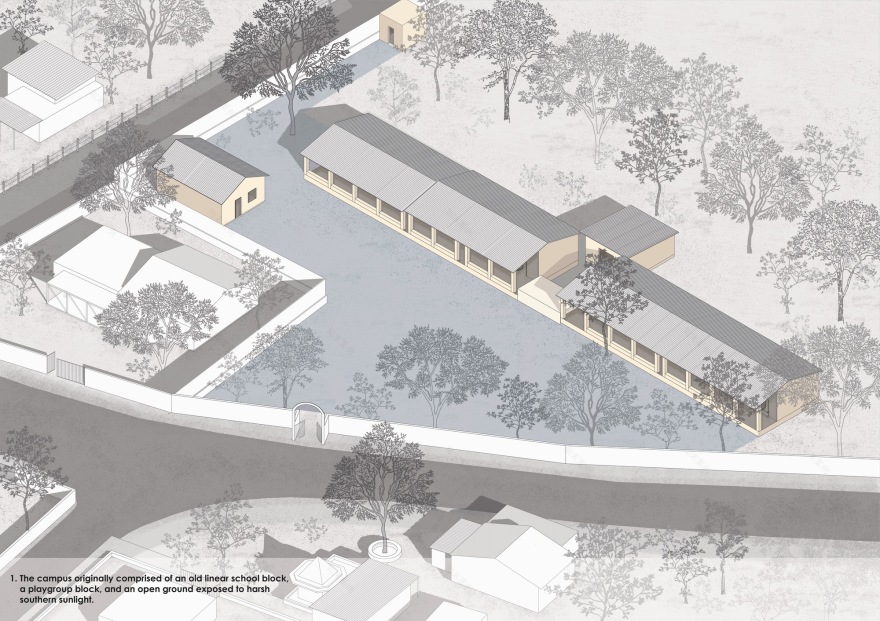
Belgaon Dhaga is a village 15 km from Nashik city. The site opens into a central square that houses the Gram Panchayat office, healthcare center, multifunctional hall, and ZP primary school. The existing school consists of eight classrooms arranged in a linear block facing a large southwest oriented ground
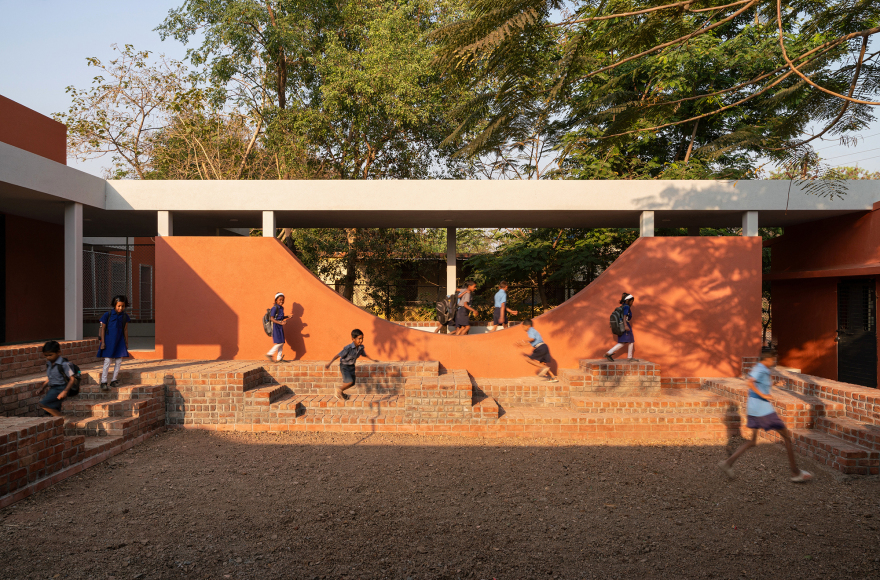
Mungi Engineers Pvt. Ltd envisioned an inclusive and transformative campus that promotes self-directed learning, experiential skill development, and co-curricular activities. The proposal includes workshops, labs, a library, sports facilities, an amphitheater, and refurbishment of the existing block to support practical skill building and holistic growth.
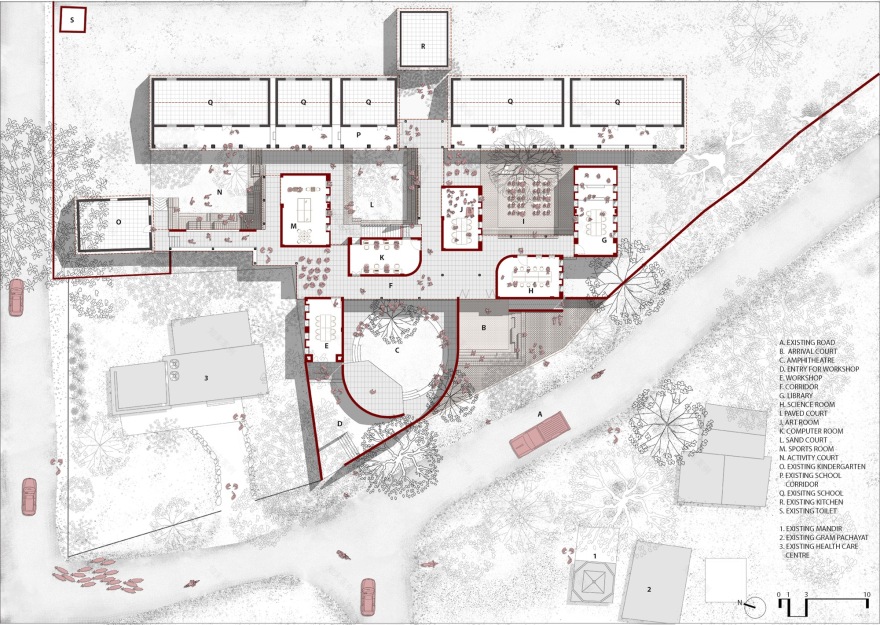

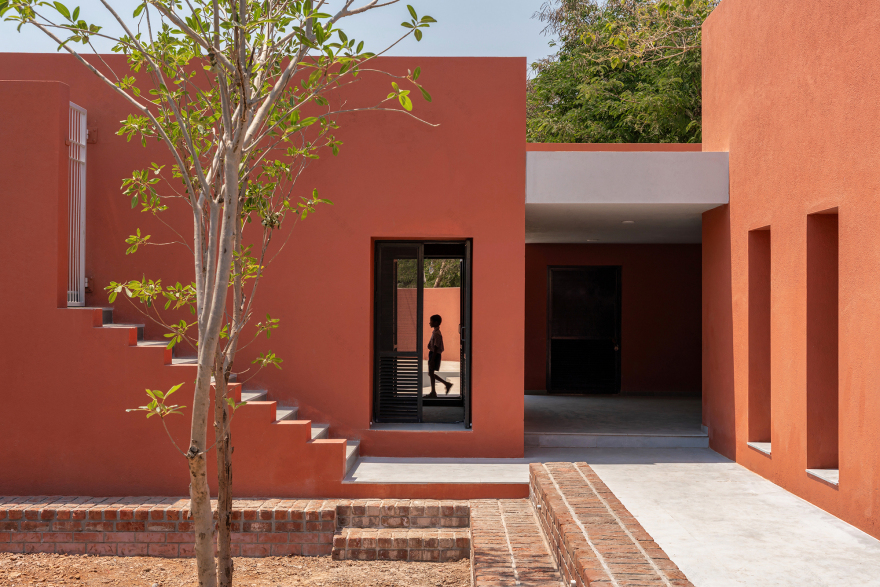
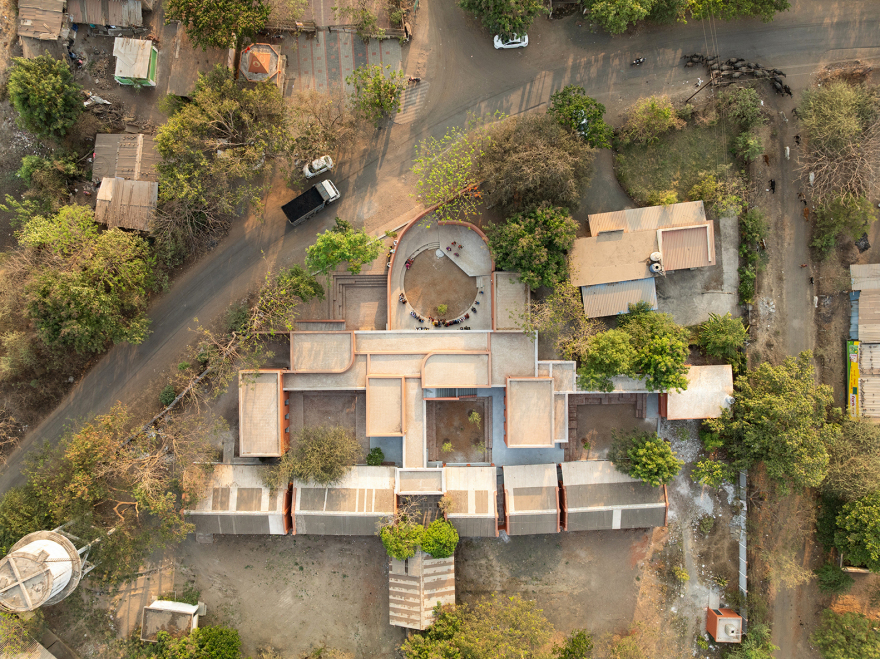
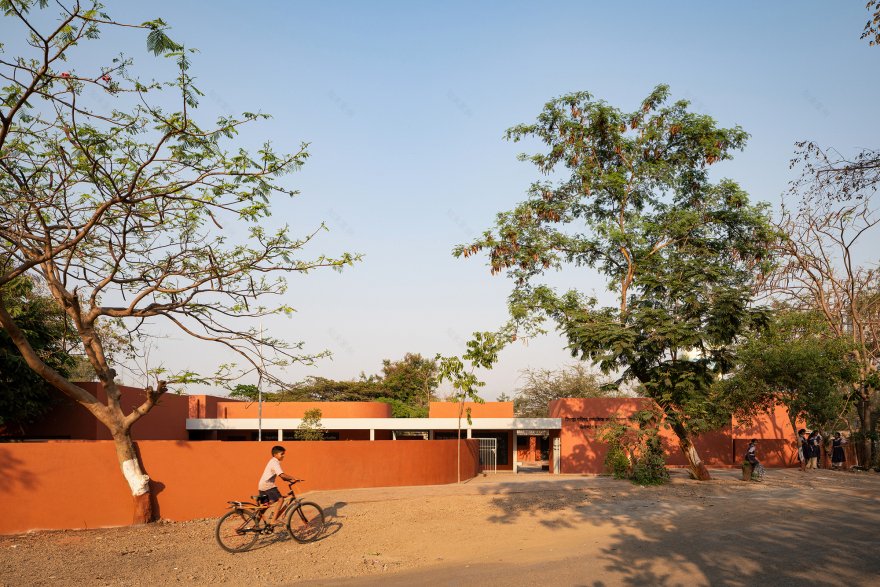
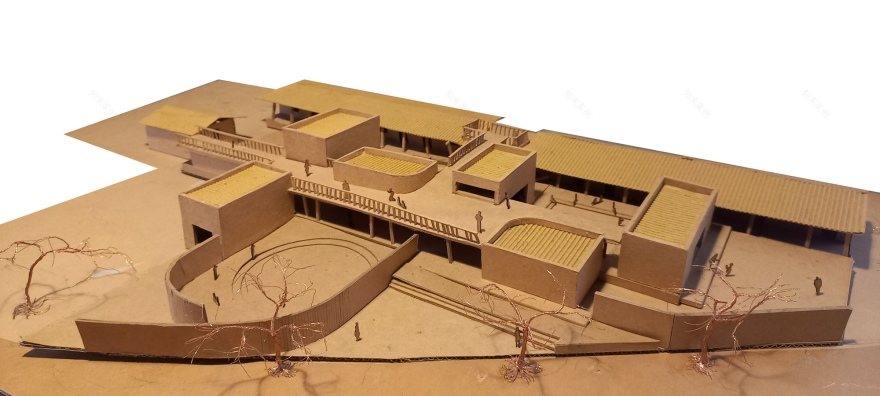
The design responds to the linear orientation of the current school and its expansive foreground. The intent is to create a child scaled, flexible, and engaging spatial environment. The campus is reimagined as a micro settlement inspired by traditional village spatial patterns, where functions are organized as fragmented blocks placed perpendicular to the existing structure. This generates a sequence of courtyards and covered corridors that offer multiple pathways and a sense of spatial freedom.
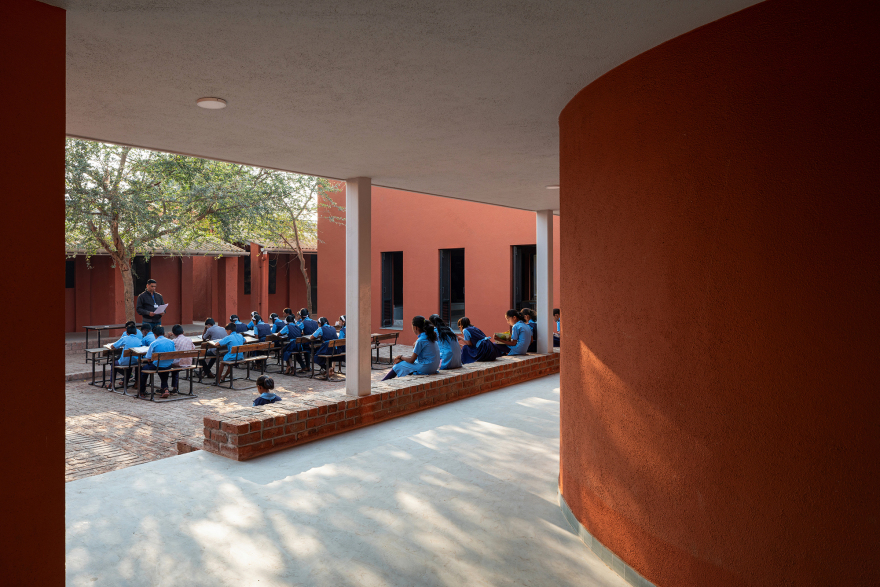
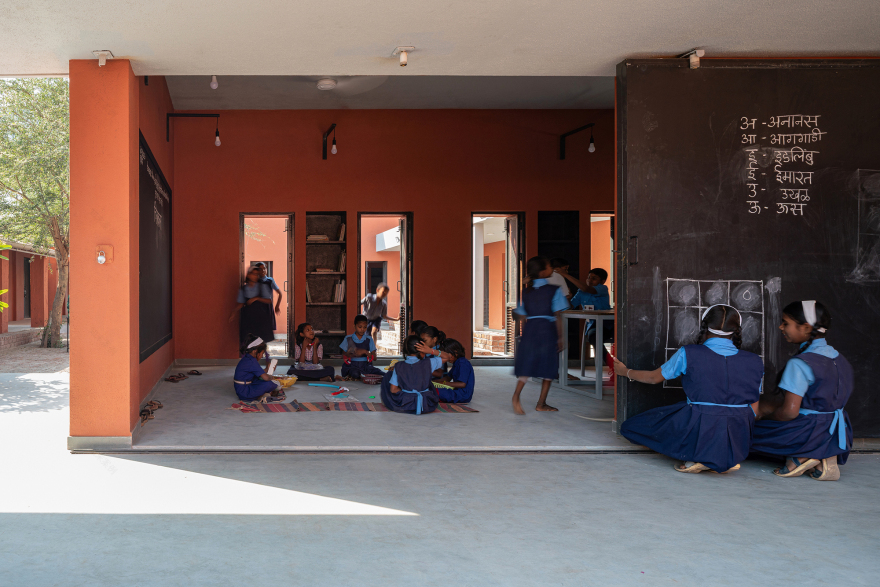
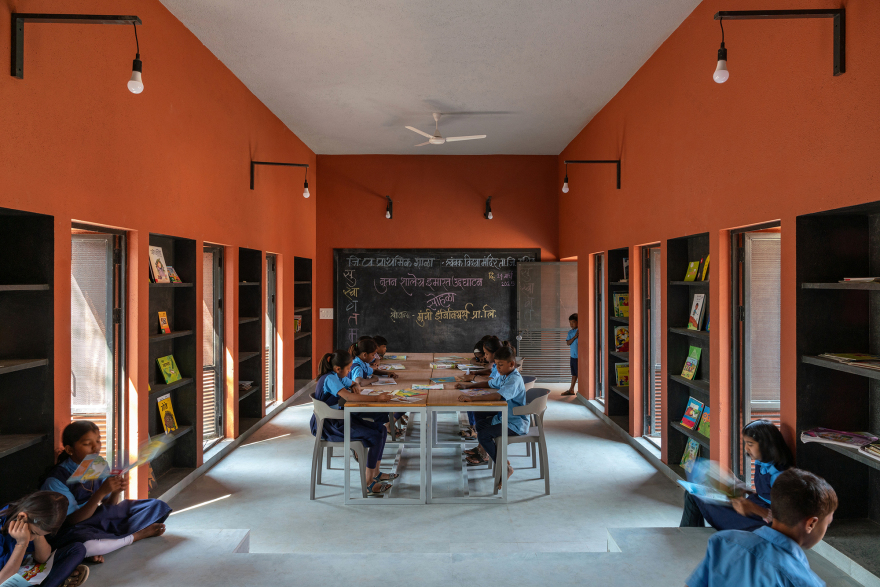
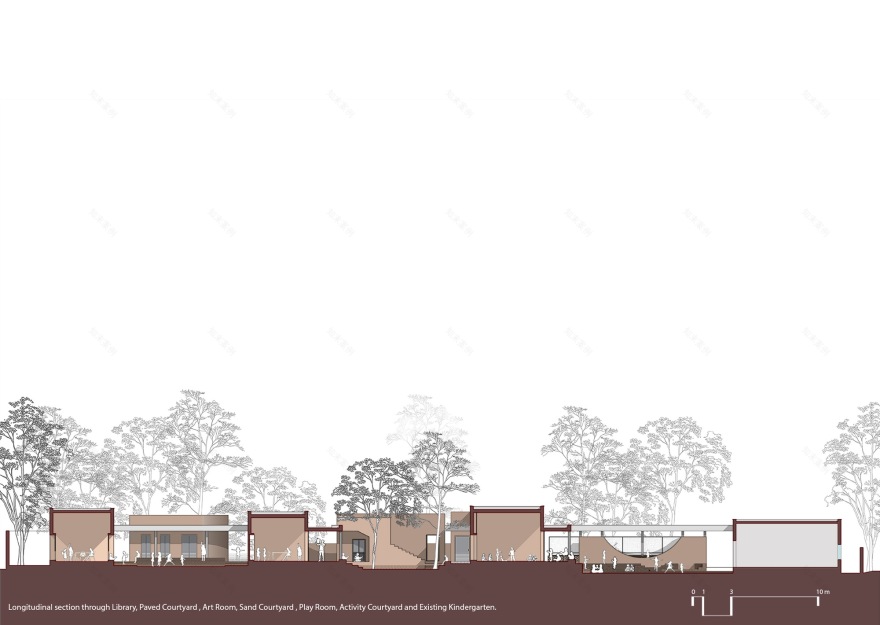
The scale and placement of each block are guided by the sun path and program requirements. The library block, with its stepped floor and slightly larger volume for varied reading zones, is positioned on the far west. The remaining blocks are arranged to create shade across the courtyards for most of the day, ensuring comfortable outdoor spaces for students.
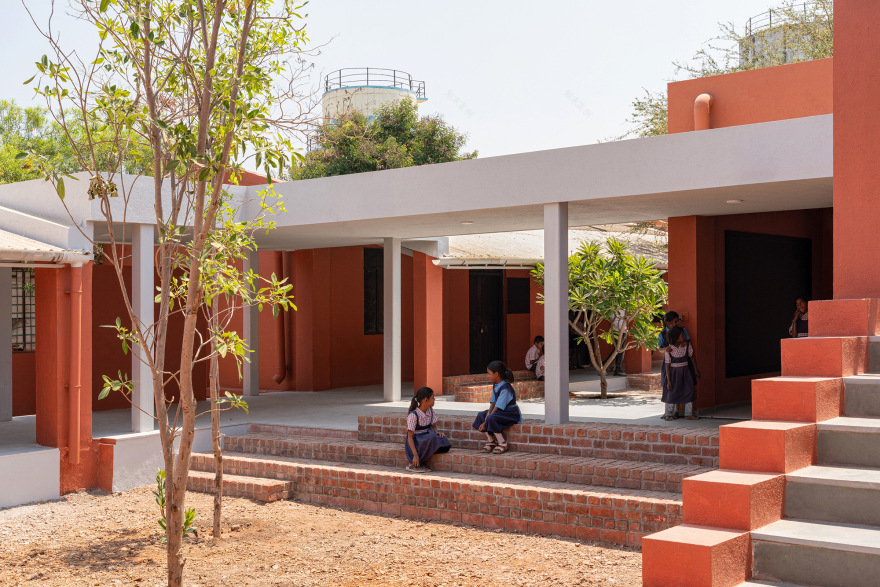
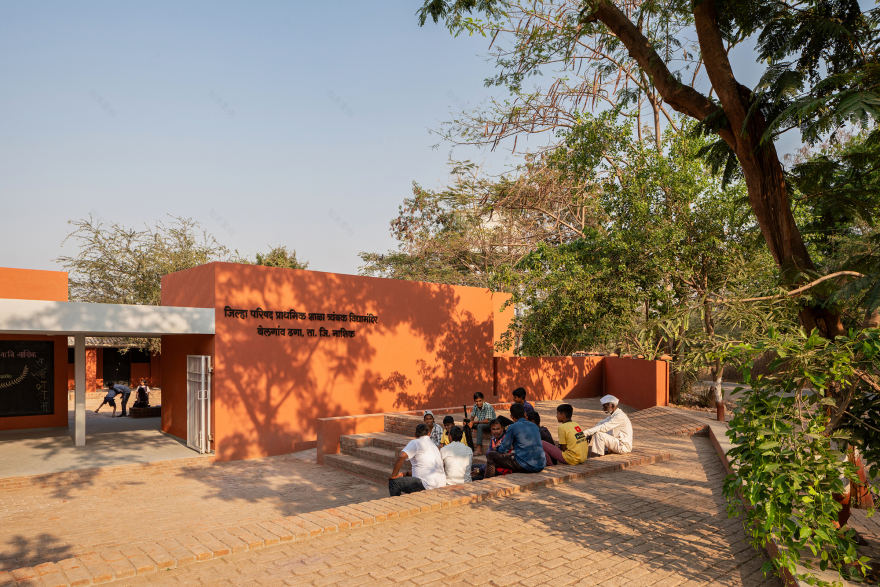
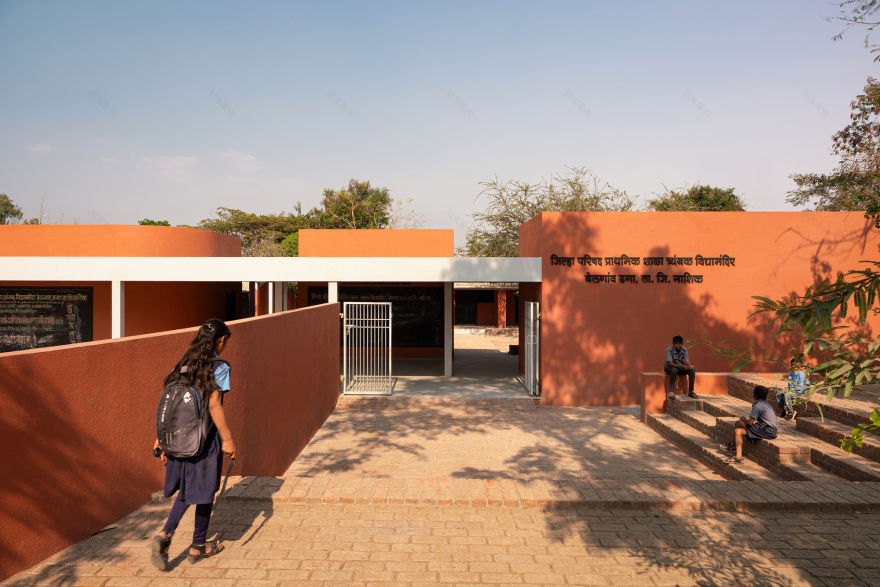
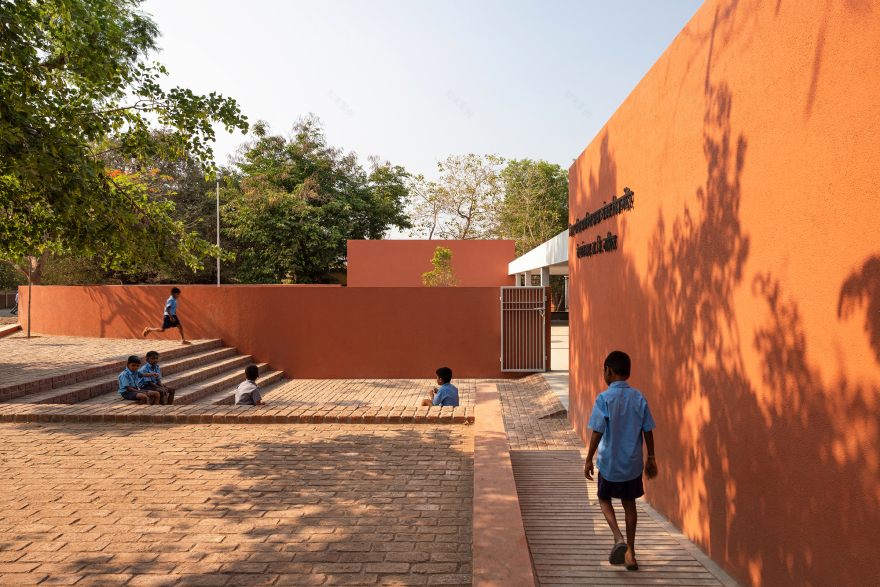
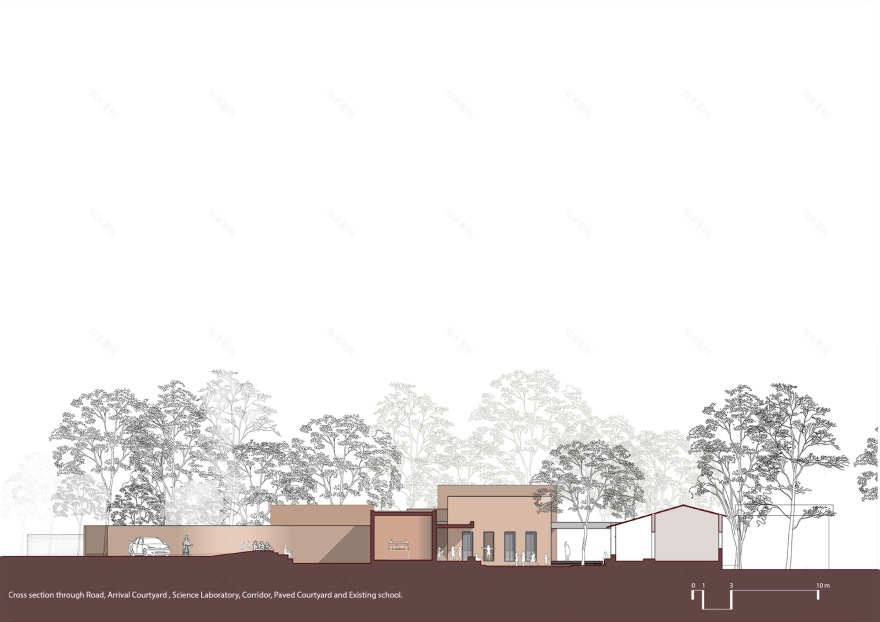
The first spatial layer is dedicated to versatile public zones. It begins with the arrival court, where steps descend from the road to a lower gathering area. This open plaza acts as an inviting threshold and community interface for meetings and village events. Adjacent to it is an open amphitheater for school assemblies and cultural programs for both students and local residents. Next to it, the workshop block functions as a skill development center, with access from both the street and the campus, allowing use beyond school hours.
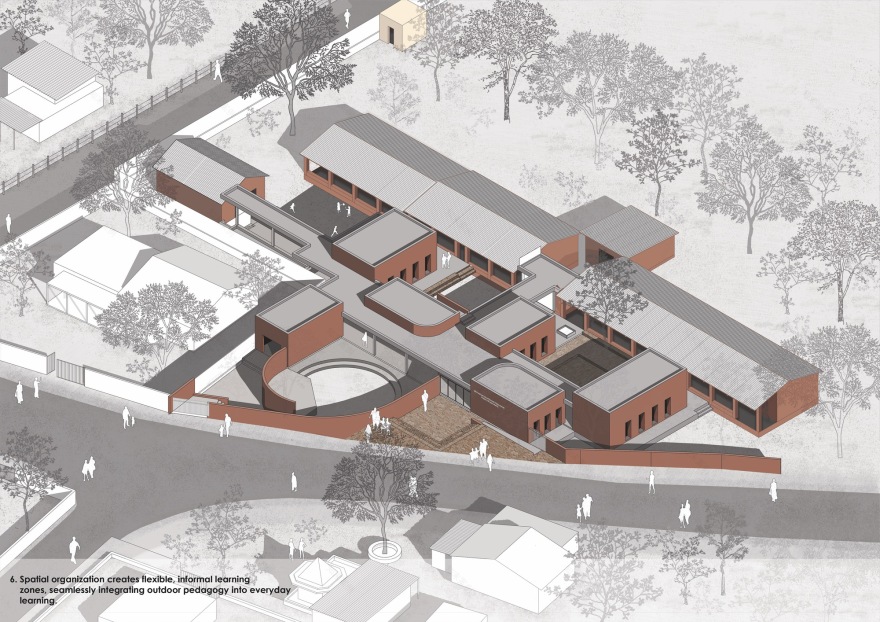
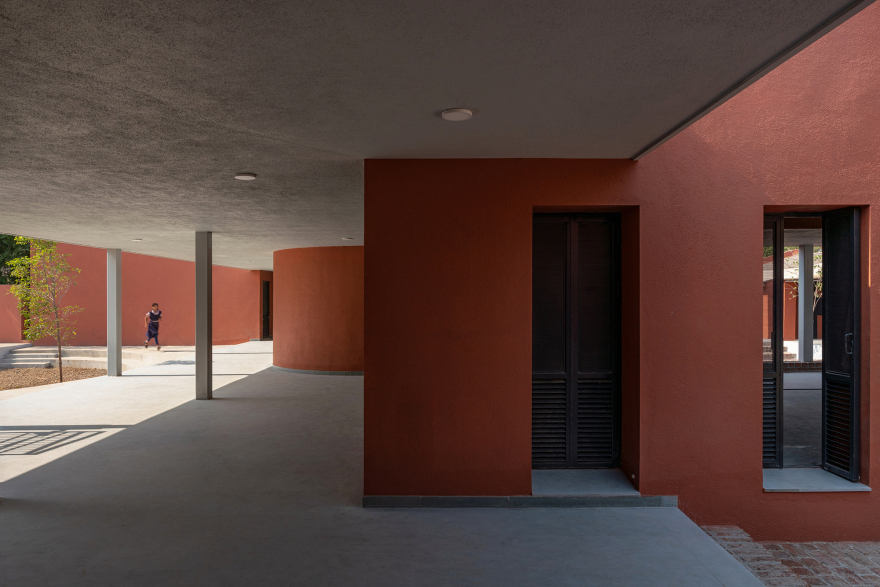
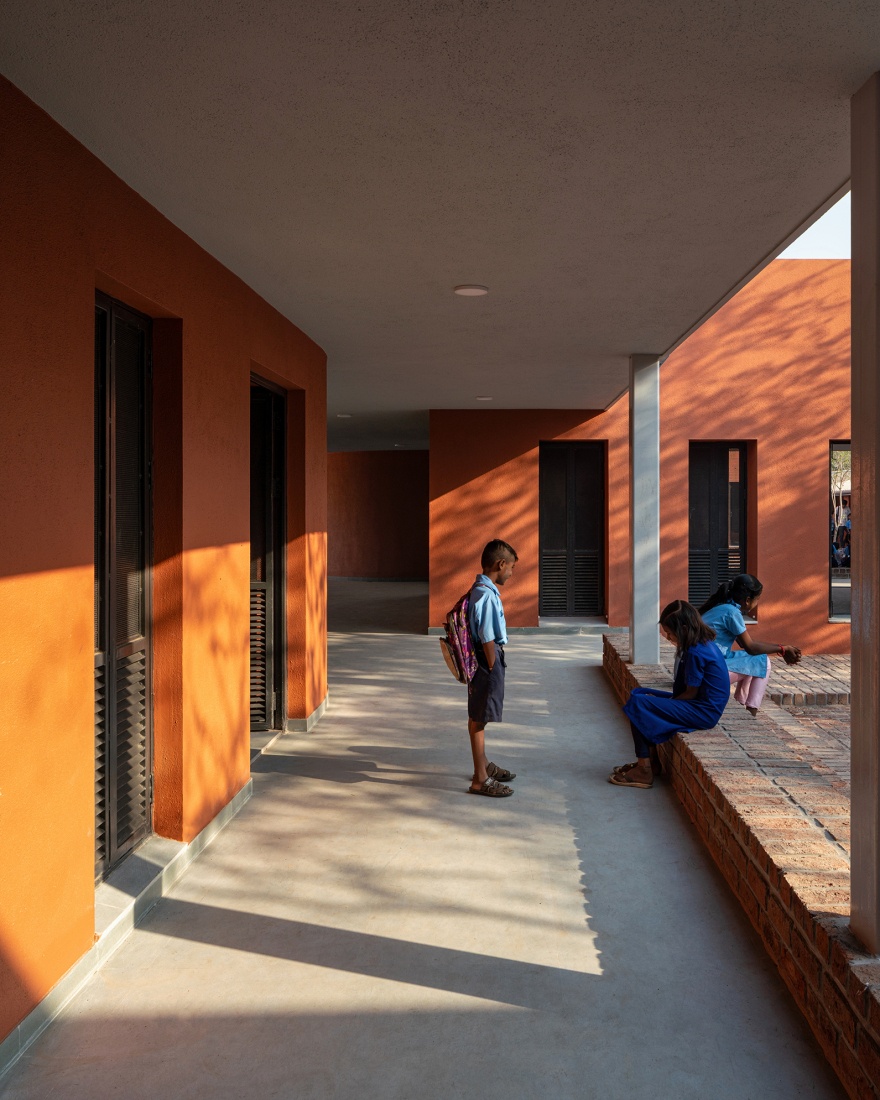
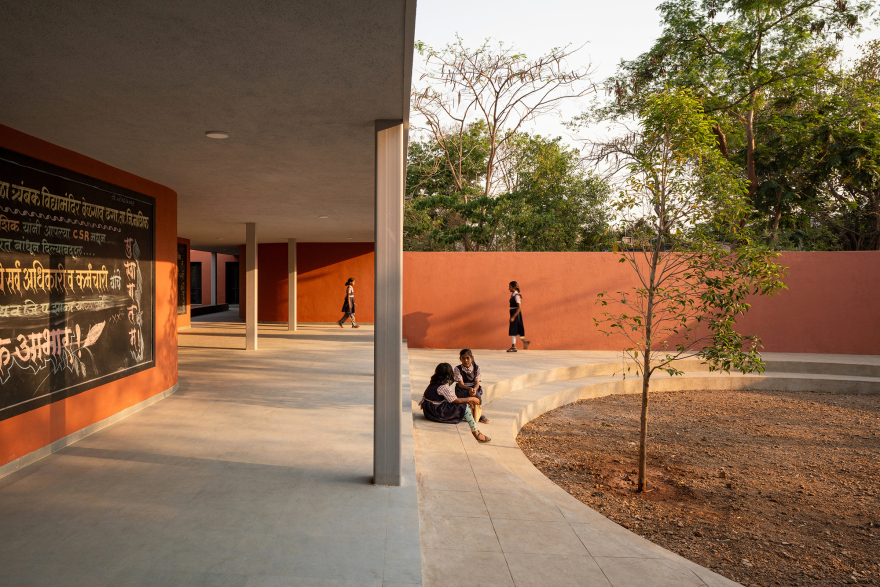
Beyond the public areas, a deep covered corridor leads toward the educational core, where the remaining blocks and three courtyards are organized. These corridors provide multiple access points, giving students freedom and flexibility in movement. The new blocks are oriented toward both the courtyards and the existing structure, ensuring that even if the old building is redeveloped, the new spaces remain functional and connected.
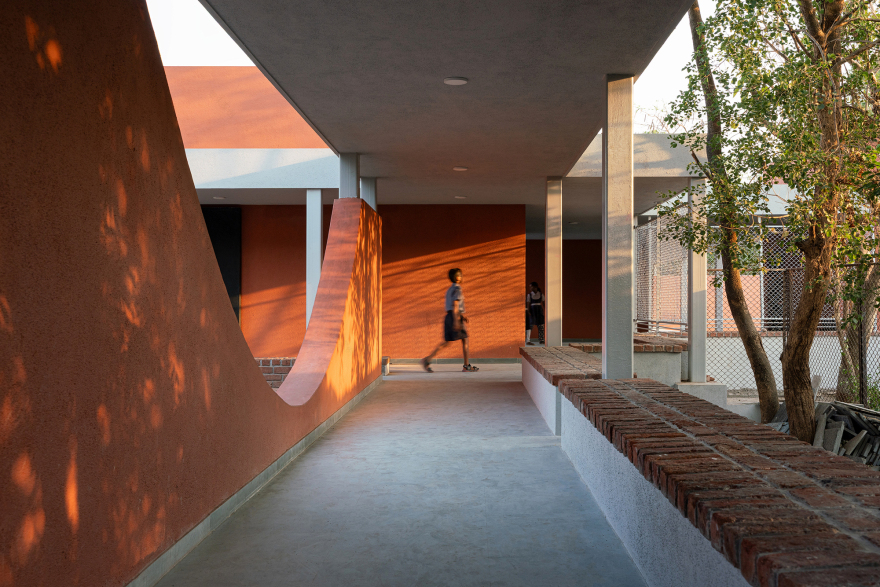
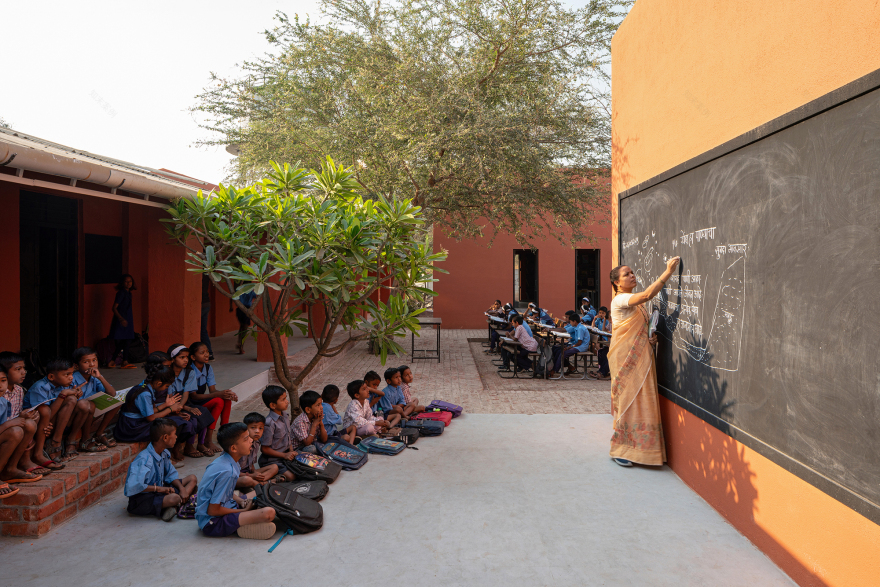
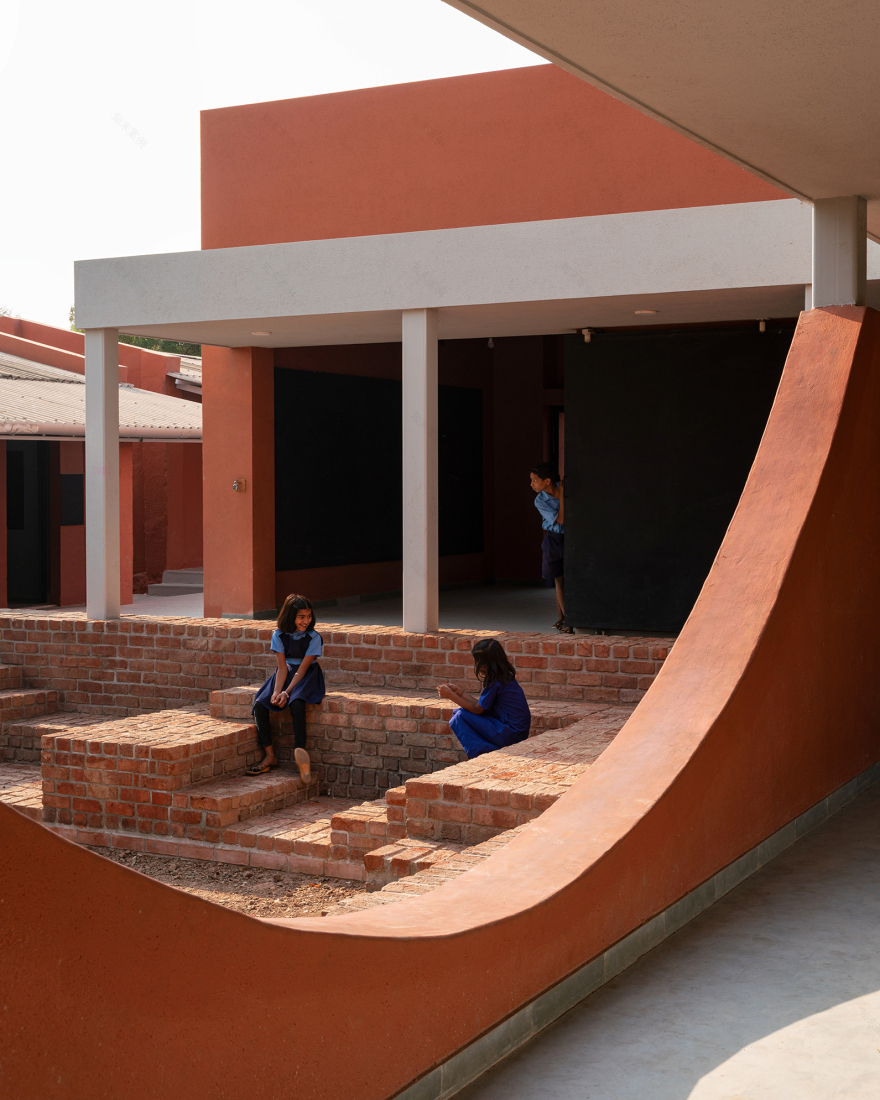
Each courtyard responds to the functions around it. The paved courtyard supports outdoor learning and quiet reading, while a sand court with trees allows informal gatherings and group activities. A third courtyard near the sports and preprimary spaces functions as a play zone, with an elevated plinth that also works as an amphitheater. The corridor leading to the preprimary block forms a playful threshold with inverted arches and built in seating.

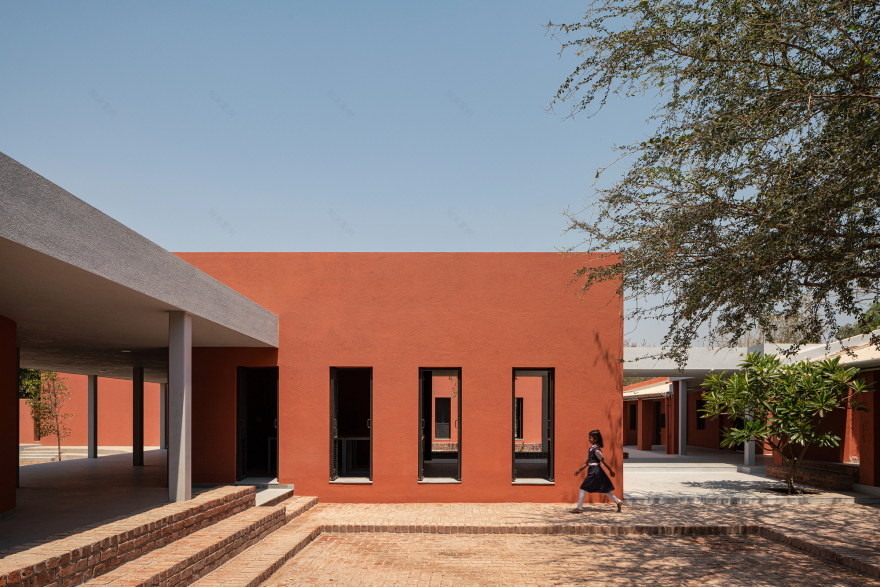
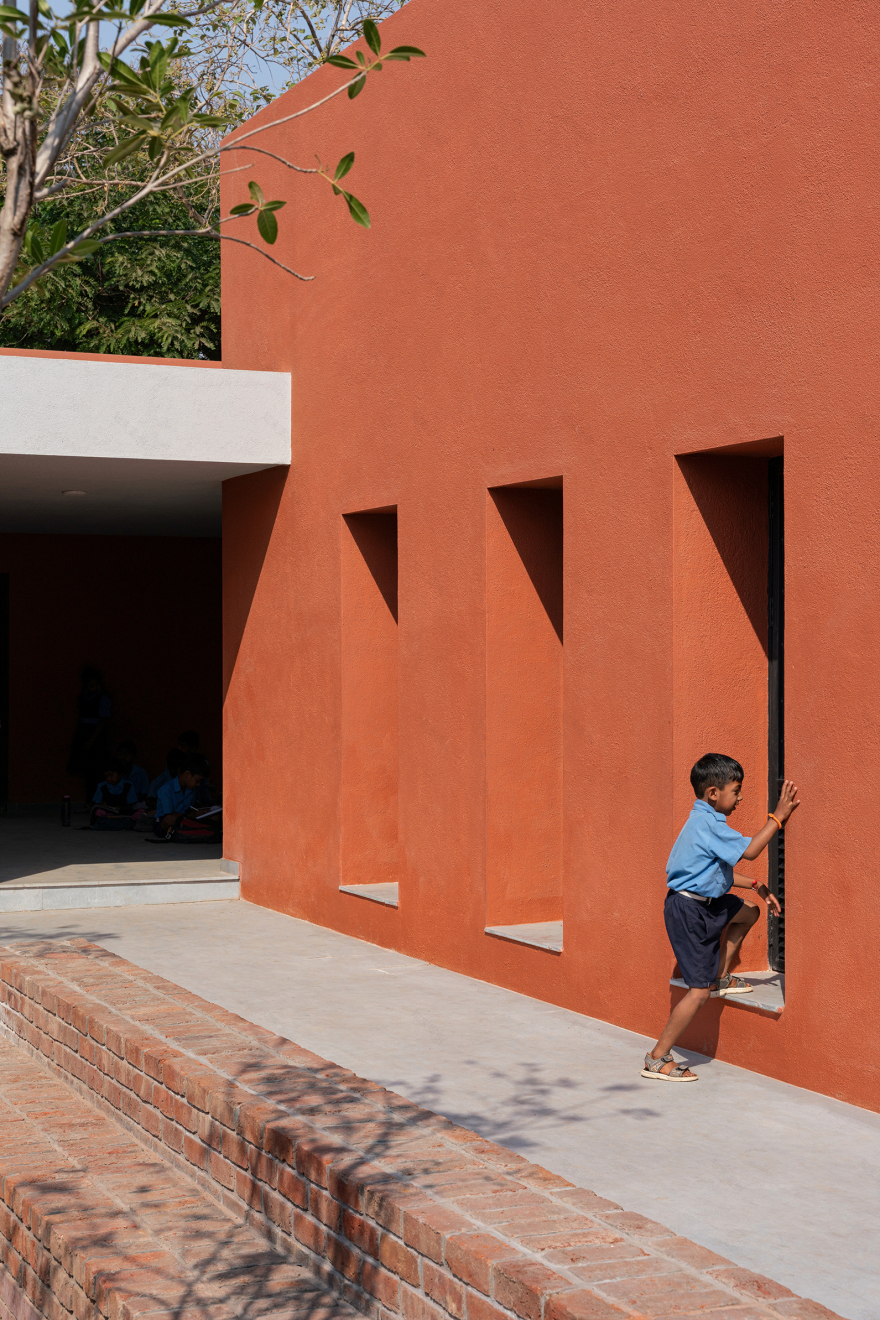
Each block is defined by its volume, with greater heights for the library, sports areas, and art room. Alternating vertical openings with built in storage provide weather protection and ventilation, using perforated upper panels and louvered lower panels to draw in cool air. Sliding doors with blackboard finishes extend learning into the courtyards, while shaded corridors and interconnected open spaces ensure comfort throughout the year.
This design follows required norms but softens their rigidity through carefully designed thresholds and openings. The carefully crafted vertical openings create openness and movement, forming visual and physical connections that encourage interaction and curiosity. Movement is no longer linear or prescribed, allowing children to choose their own paths and engage with the space freely. The architecture supports a fluid and open-ended learning environment where structure exists but allows room for exploration, independence, and everyday discovery.
Project gallery
南京喵熊网络科技有限公司 苏ICP备18050492号-4知末 © 2018—2020 . All photos and trademark graphics are copyrighted by their owners.增值电信业务经营许可证(ICP)苏B2-20201444 苏公网安备 32011302321234号
苏公网安备 32011302321234号客服
消息
收藏
下载
最近