

创作上传
VIP
收藏下载
登录 | 注册有礼
查看完整案例

收藏

下载

分享

翻译
Architects:ma+rs
Area:13725m²
Year:2025
Photographs:studio f8
Lead Architects:Anisha Menon, Sabyasachi Routray
Structural Consultant:Radins Engineers
MEP Consultant:Yash consultants
Lighting Designer:Studio Abelha
Contractor:SK Structures
Category:Lodging
Project Architect:Indulekha Paul
Graphics:Zeel Rupareliya
Project Direction:Regenspace
Material Consultant:Wabi plus
Furniture Designer:Studio Abelha
City:Pollachi
Country:India
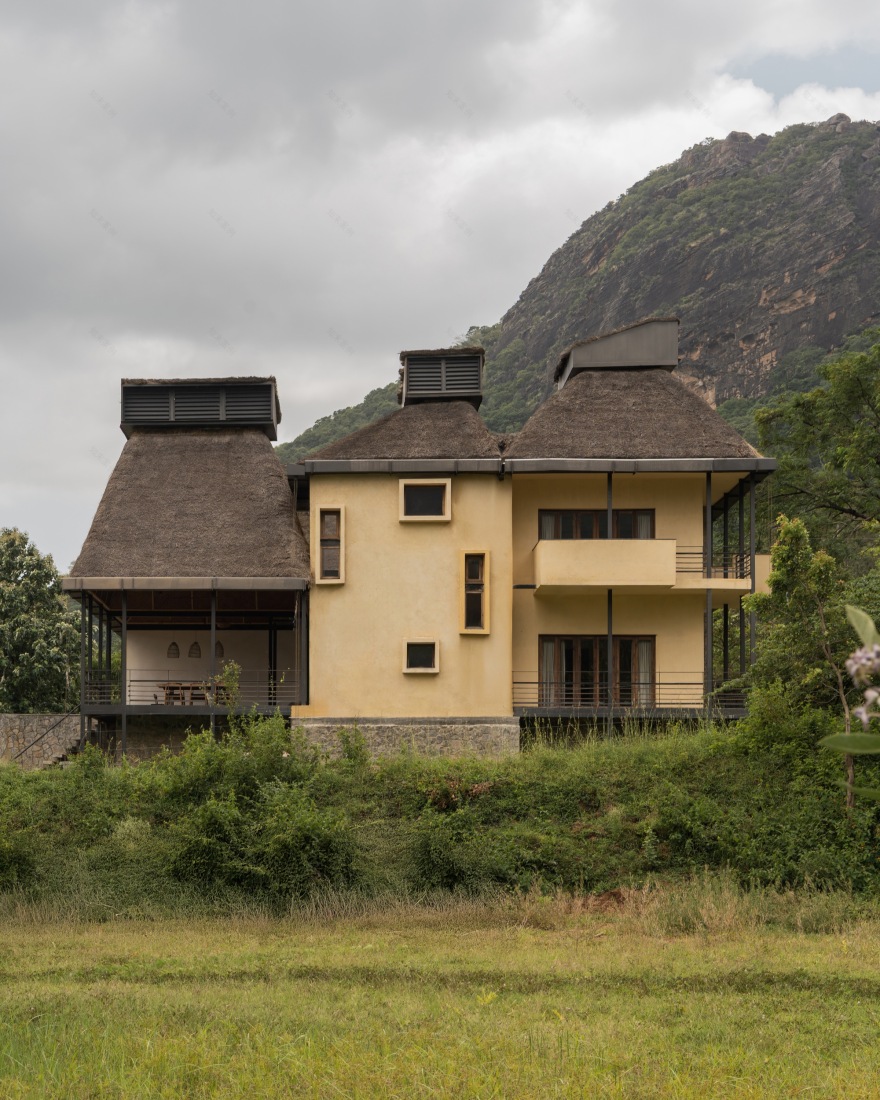
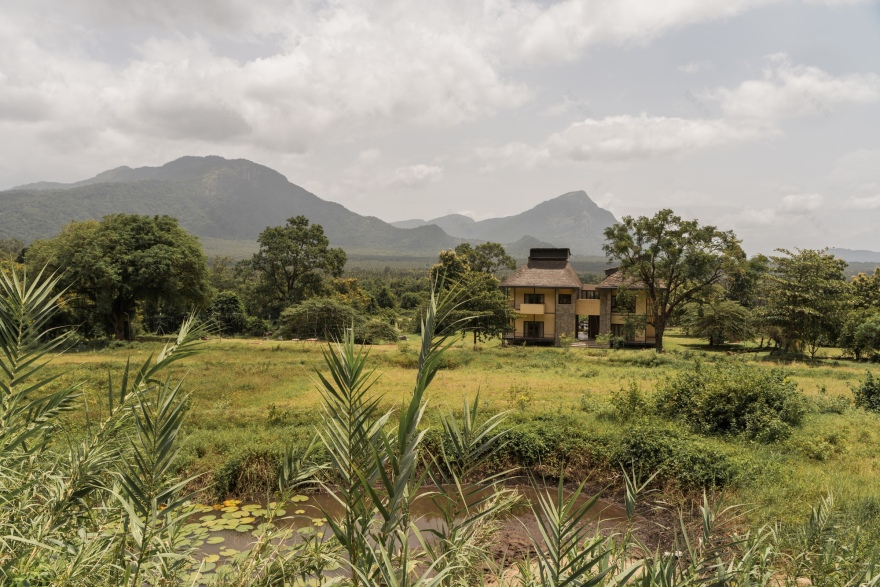
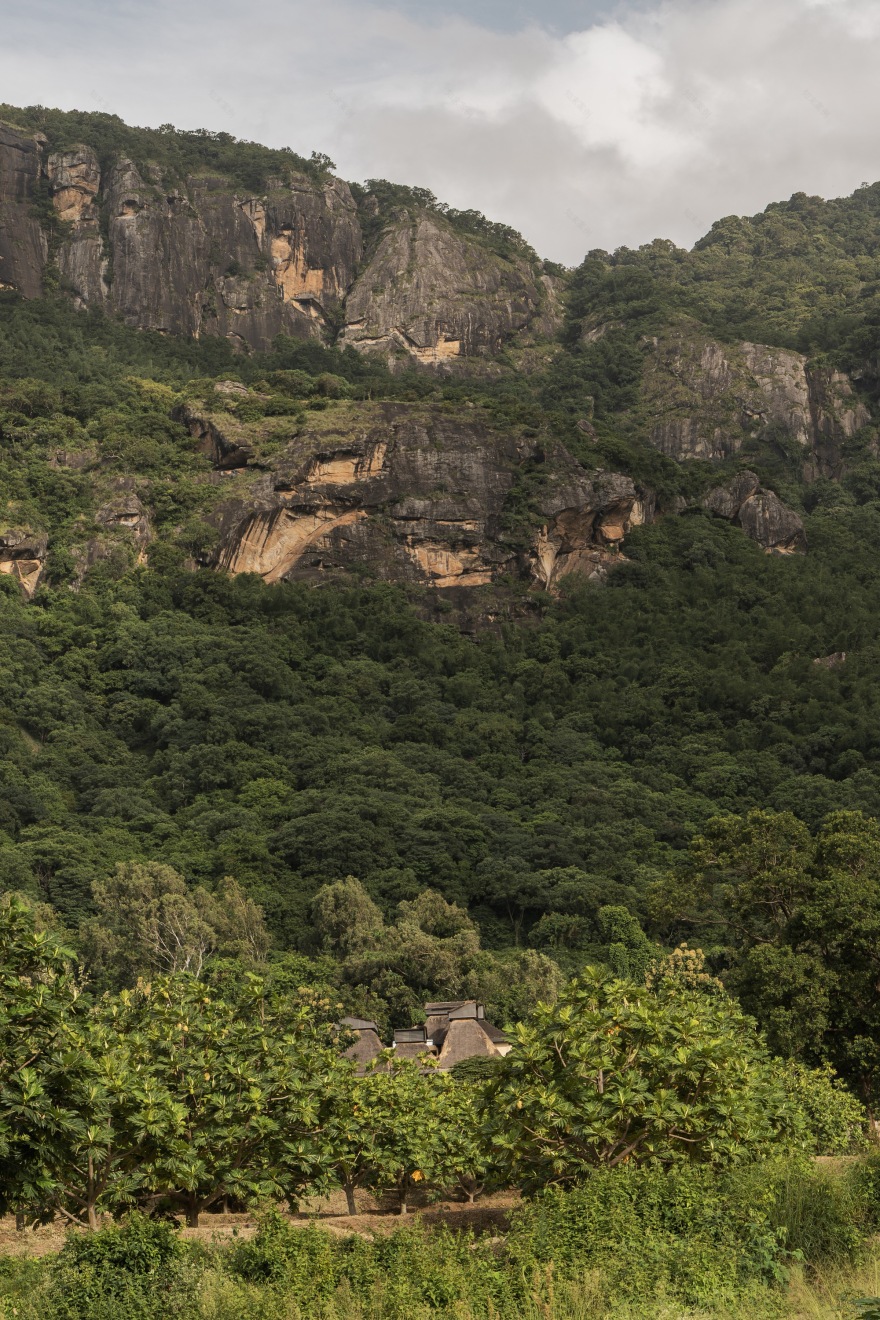
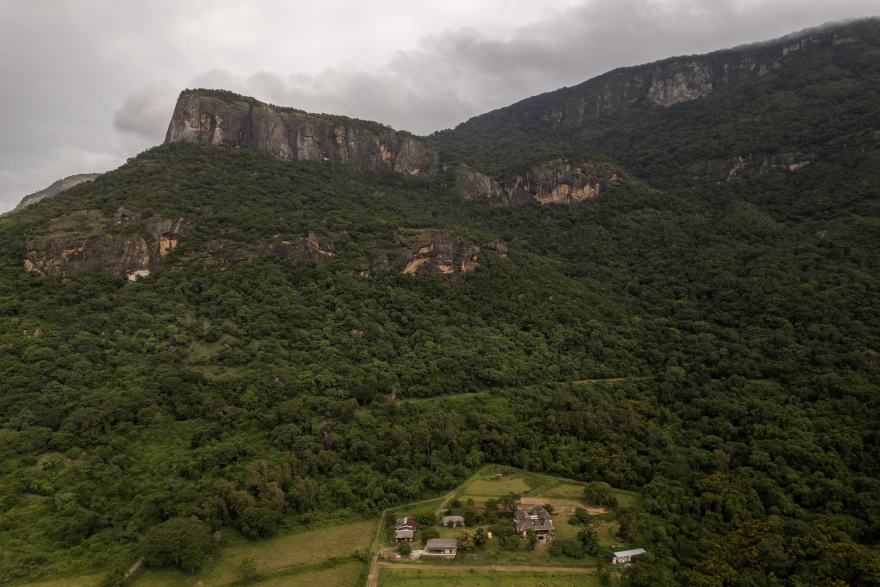
Text description provided by the architects. Nestled in the serene landscape of Sethumadai, Tamil Nadu on a four-acre plot, this architectural project responds directly to its unique context, bordered by the Anamalai range to the south & east and vast peanut fields to the north. The primary objective was to transform a 4-acre site in a sensitive wildlife corridor into a Wildlife Viewing Retreat designed to facilitate the quiet act of creation while honouring the ancient, rhythmic movements of the forest's inhabitants.
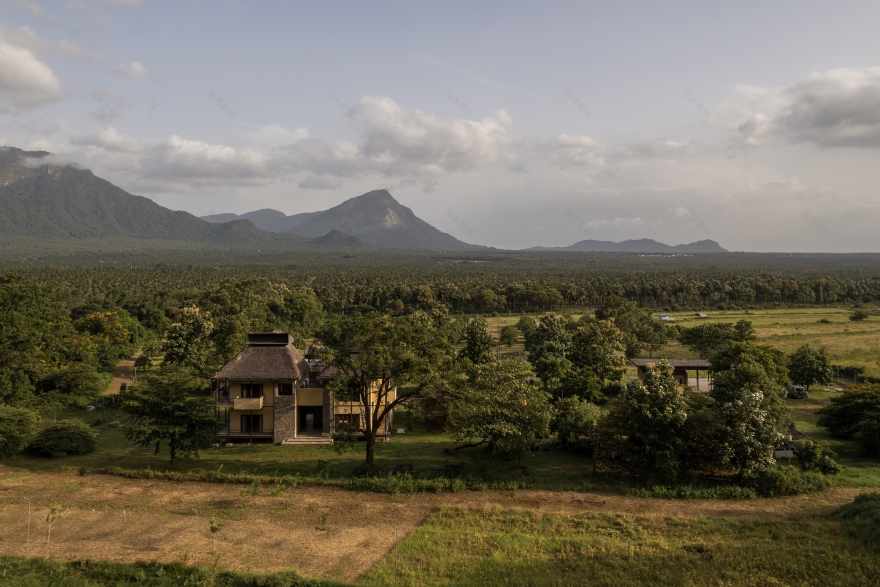
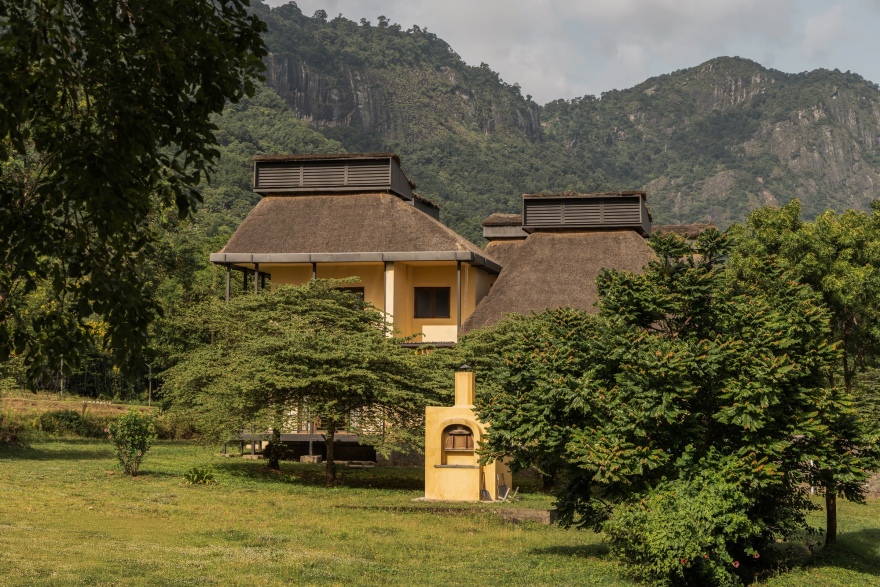
A primary driver of the project was the ecological remediation of the site. In collaboration with Oikos Ecological Solutions, the project implemented a strategic bifurcation of the land, leaving 2 acres to merge with the forest as a natural crossing. This allowed people to move freely, while leaving the rest of the land completely open—a corridor for elephants, leopards, Bisons and other animals that roam from the nearby forest. We were able to create a secure environment for guests without disrupting the existing migratory paths of wildlife. This invisible boundary ensures that while the artist creates, the forest continues its pilgrimage undisturbed.
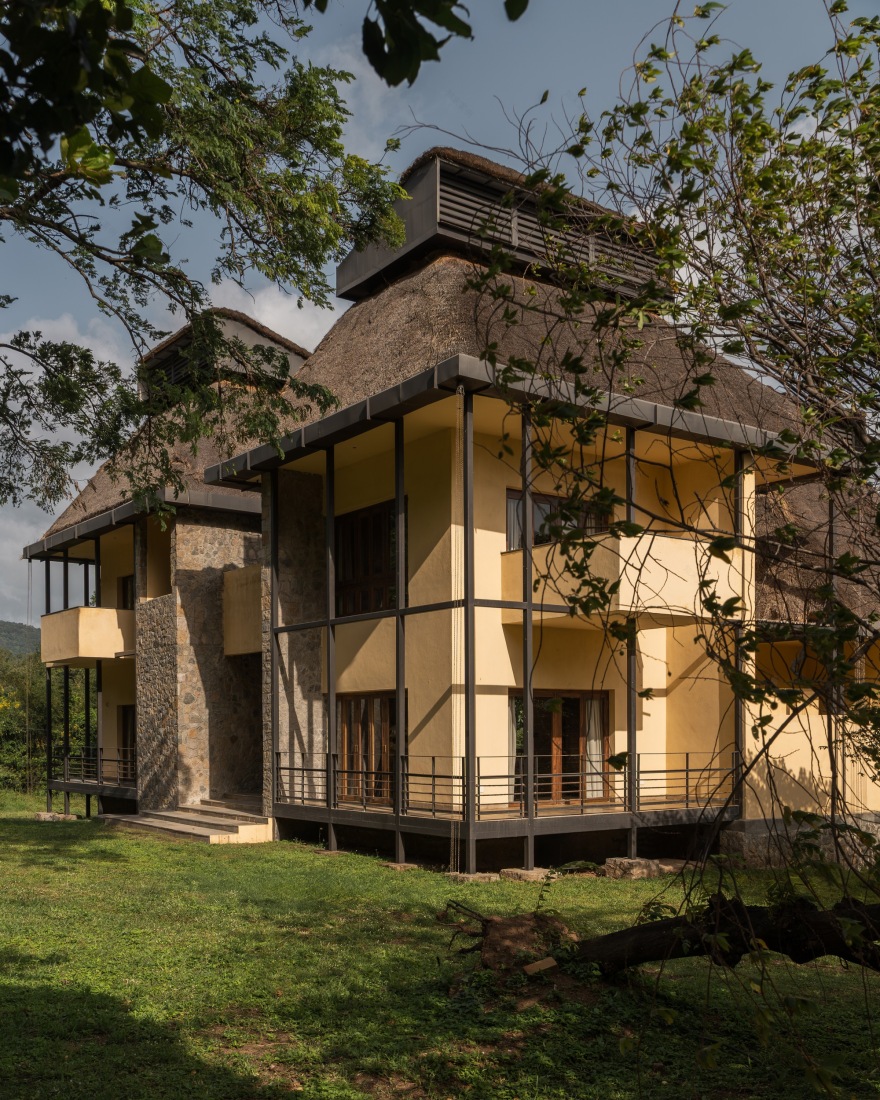


The Oikos team corrected the site's topography to harvest rainwater from the hills, creating two natural ponds that serve as vital watering holes for the elephants. The process began with a topographic study identifying the site's natural slope which caused erratic runoff. We corrected the grading to direct water toward the site's lowest point, creating two natural ponds. This immediately established the wildlife zone of the project, turning a site challenge into an ecological asset.
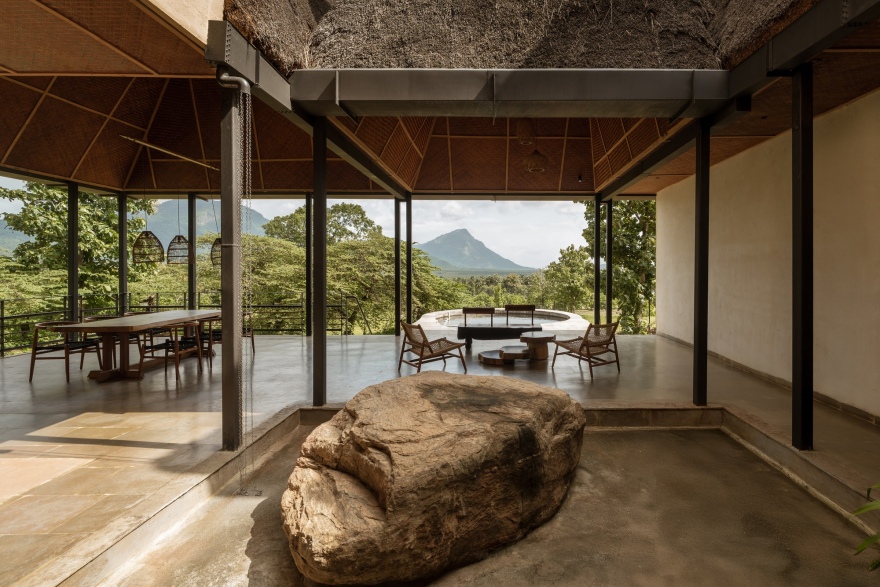
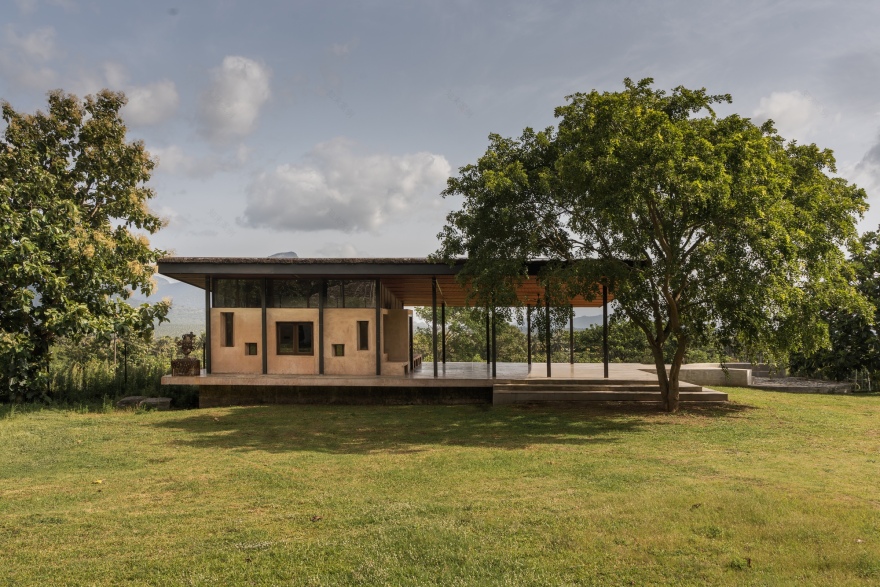
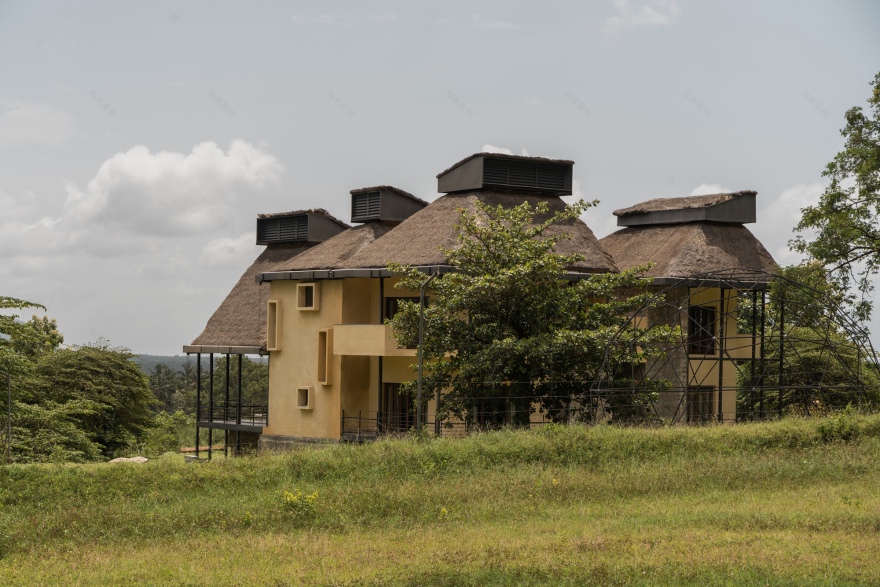
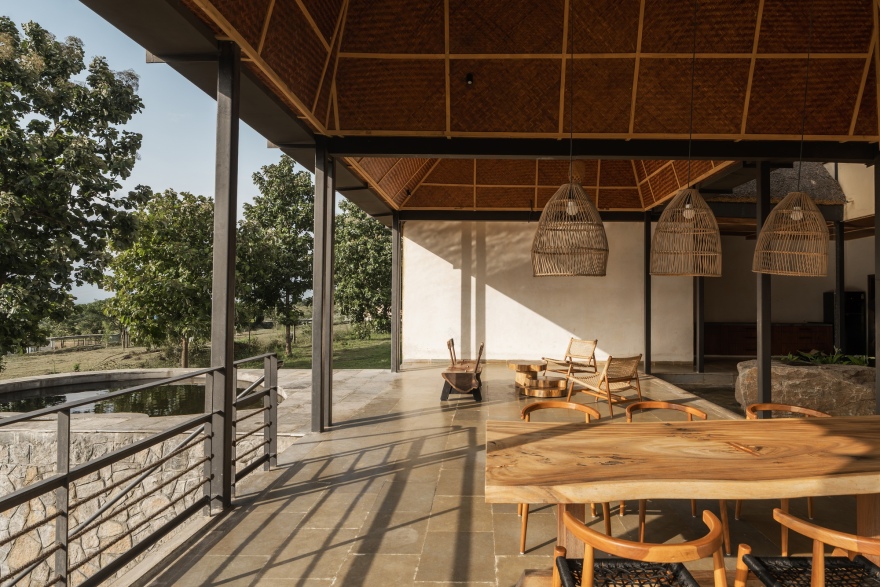
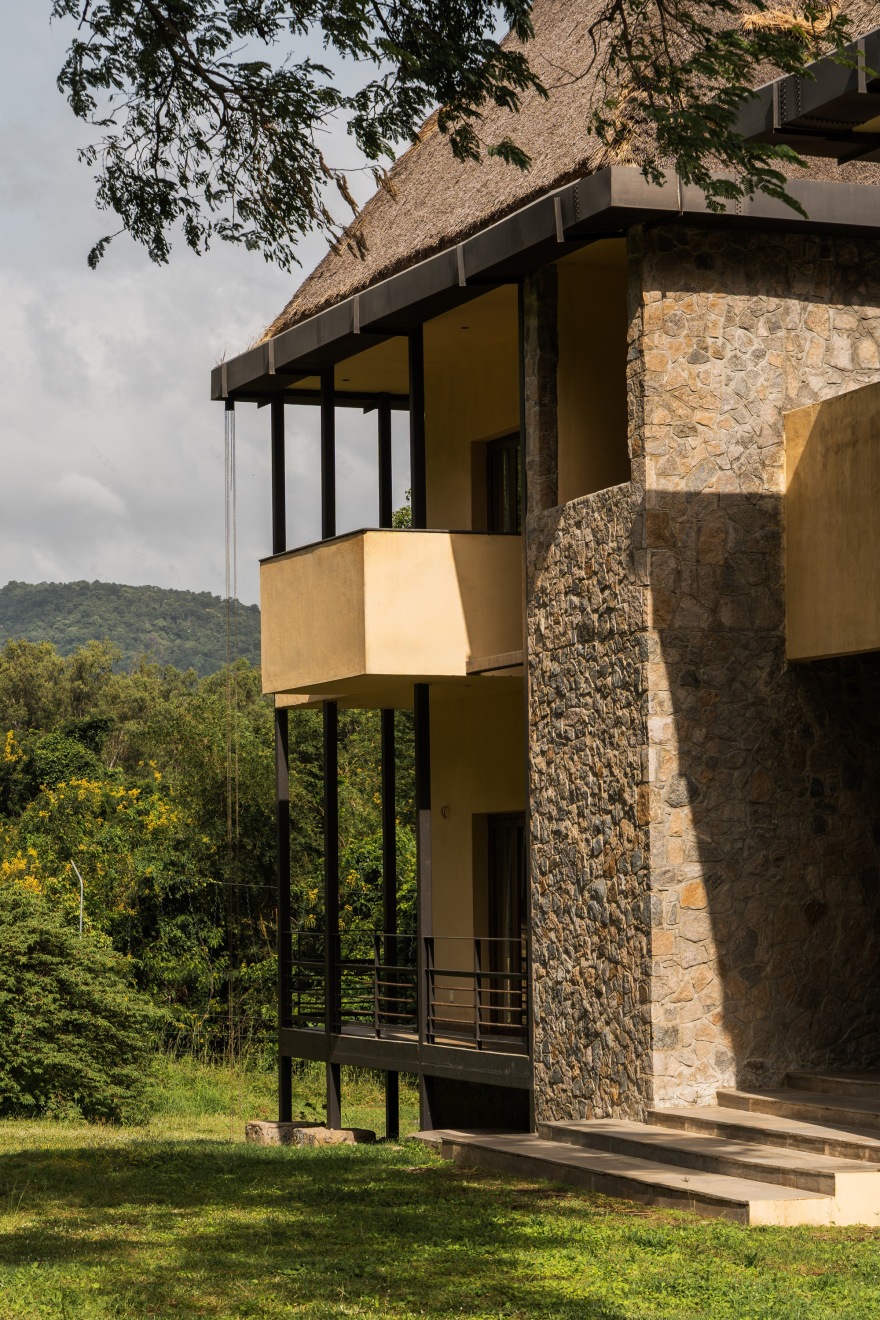
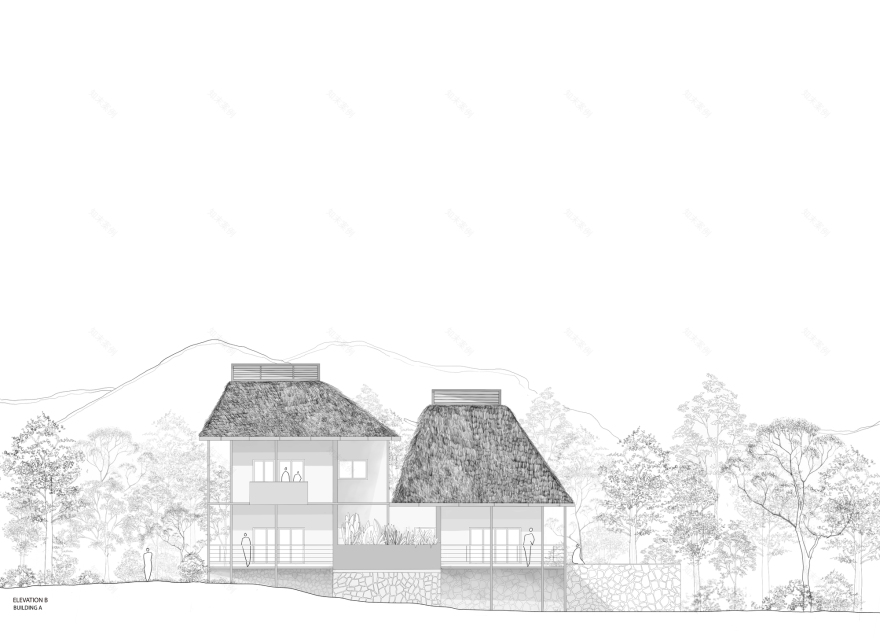
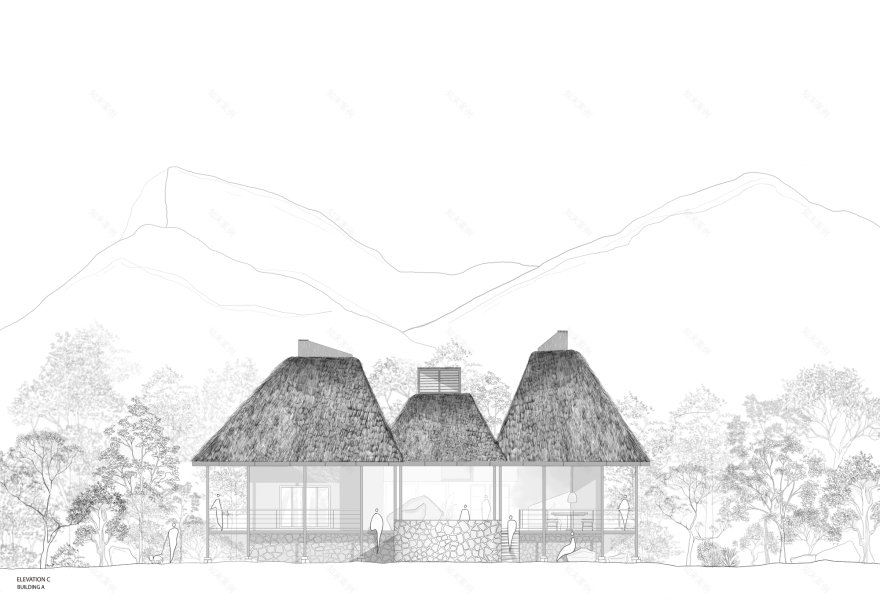
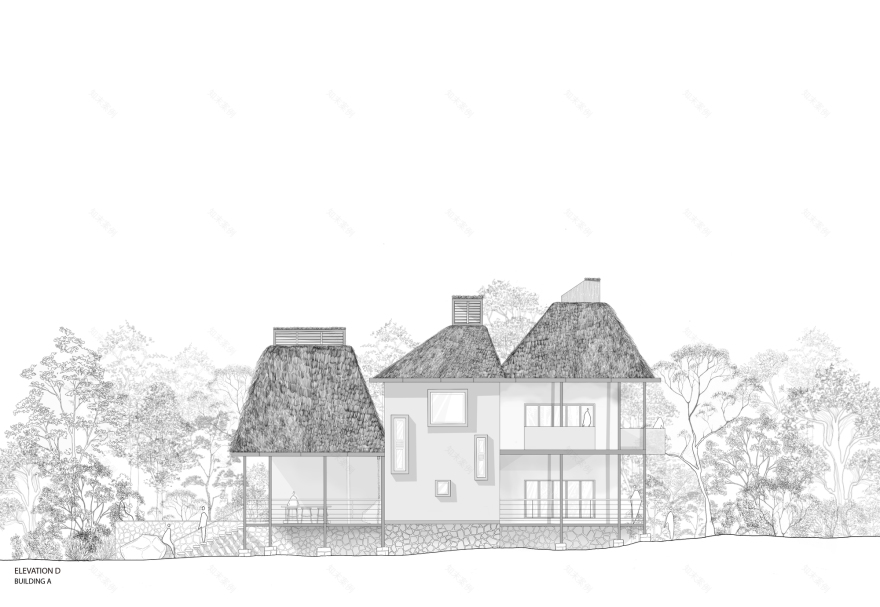
Instead of a fresh clearing, we stripped the old guest house to its plinth. We grafted a new skeleton onto an existing foundation, preserving the original stone foundation using it as the base for a new, contemporary structure built entirely of steel. Extending the footprint outward by 1200mm to create deep terraces on all sides, creating a dynamic cantilever that visually separates the new from the old. This allowed us to increase the living area while maintaining a small site footprint. This cantilevered expansion creates deep, sheltered terraces that act as a thermal buffer. These overhangs are the building's primary defense, casting deep shadows against the searing summer heat and standing as a steadfast shield against the lashing monsoon winds.
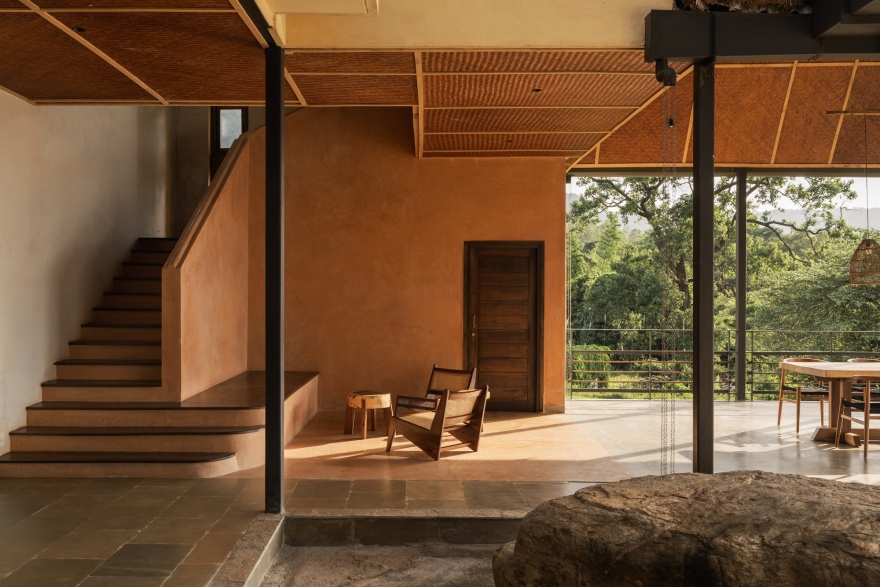
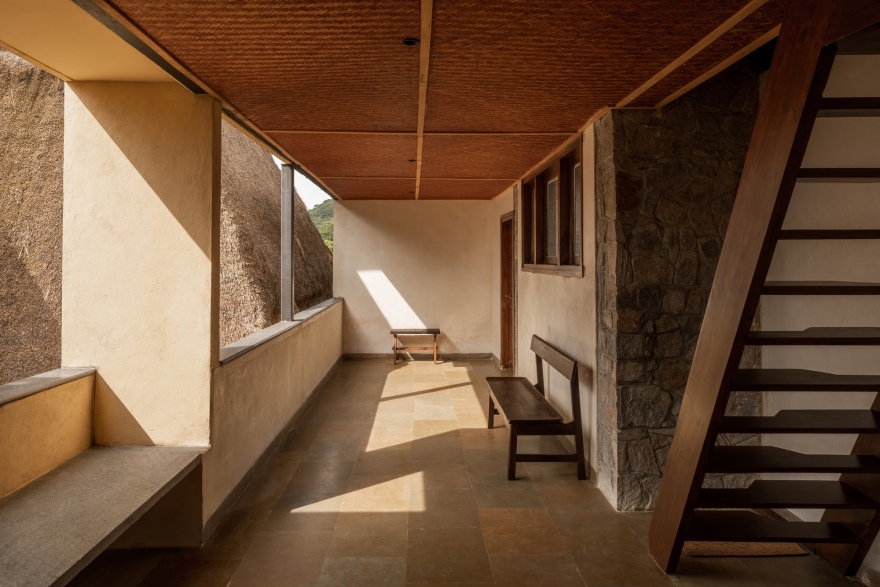
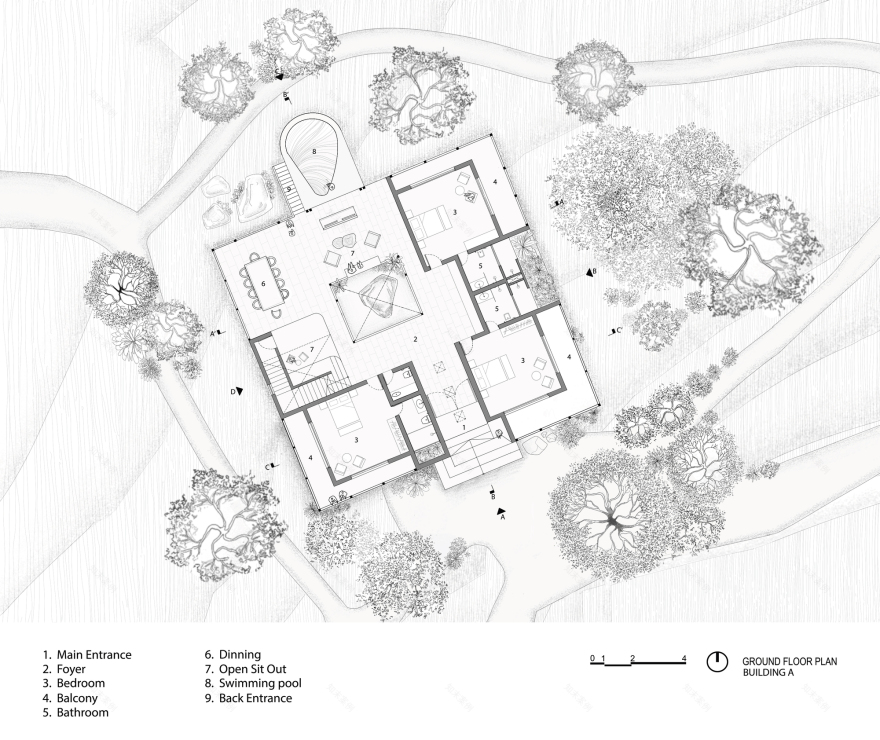
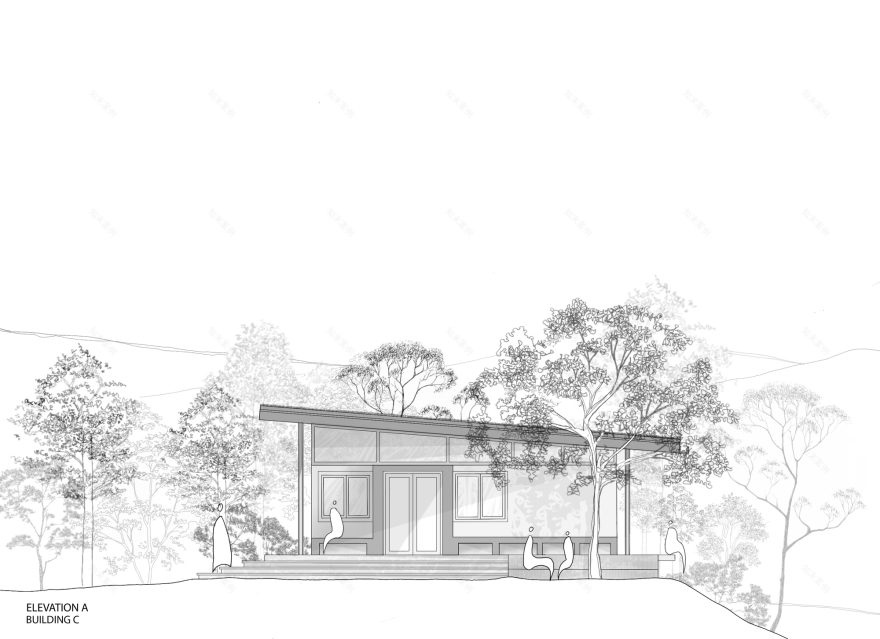
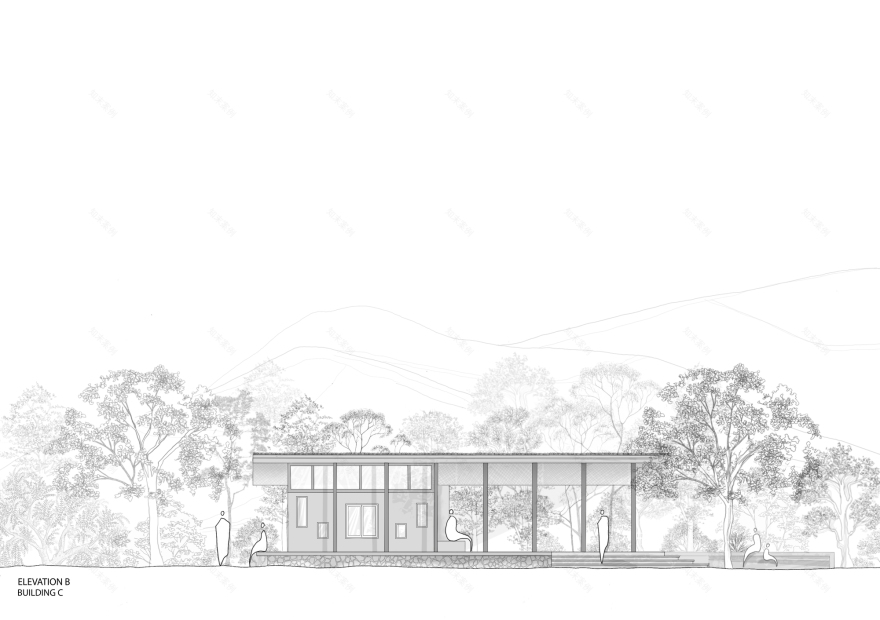
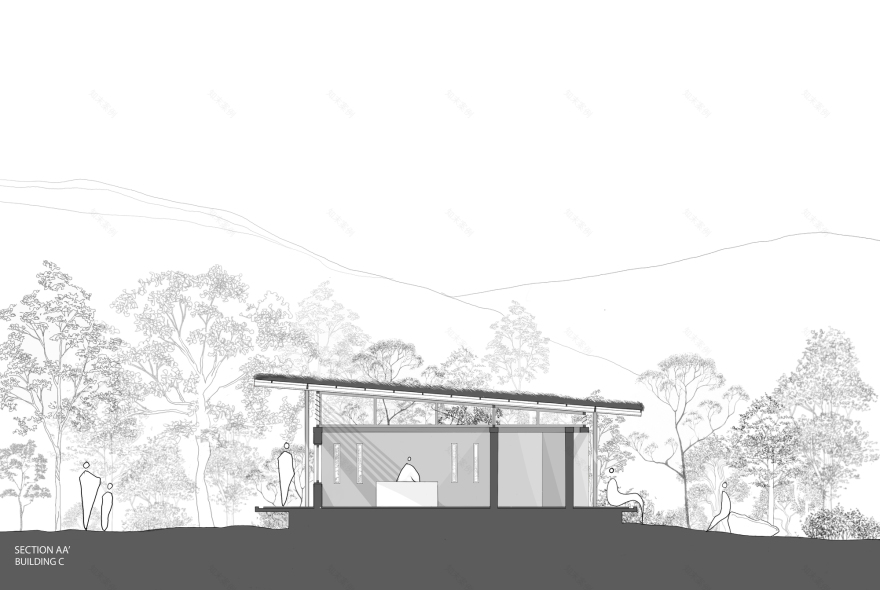
The ground floor features three bedrooms, a central courtyard, pantry, and dining area. A swimming pool on the northern side extends the living space, opening directly onto the expansive peanut fields. The upper floor houses an additional bedroom and a dedicated wildlife viewing machan. Strategically positioned on the southwest corner, this viewing platform offers a direct line of sight to the forest opening, a key corridor for local wildlife. The site also includes a new welcome pavilion, a simple, elegant structure with a single-sloping roof and a floating steel frame. This building primarily functions as an open-air veranda, providing a welcoming entrance while maintaining a light touch on the landscape.
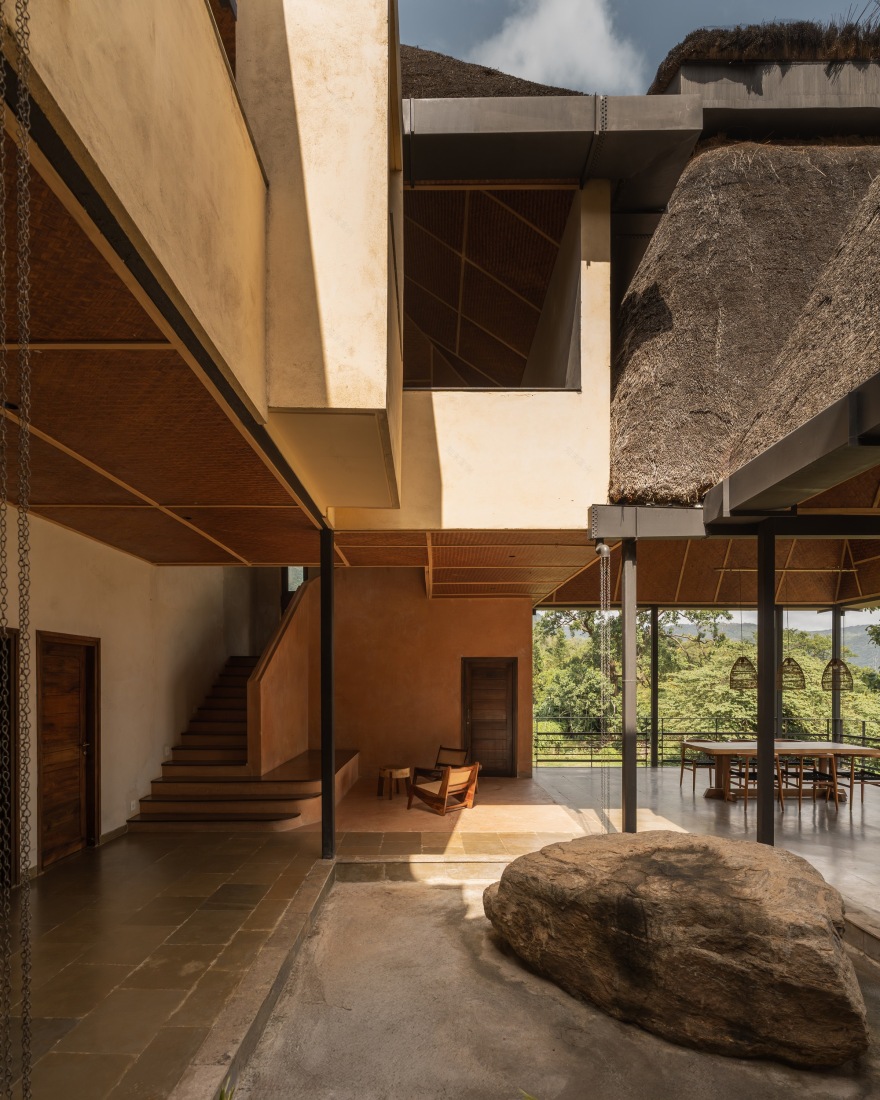
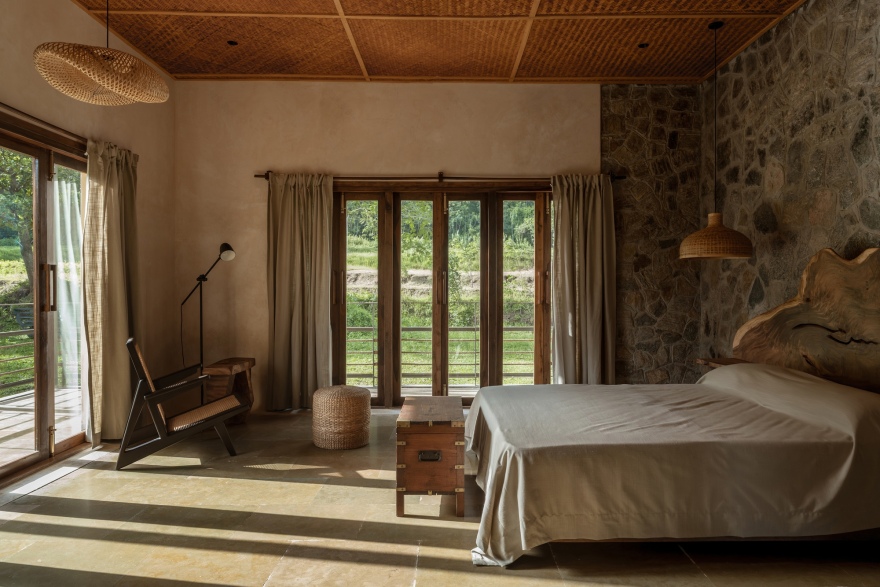
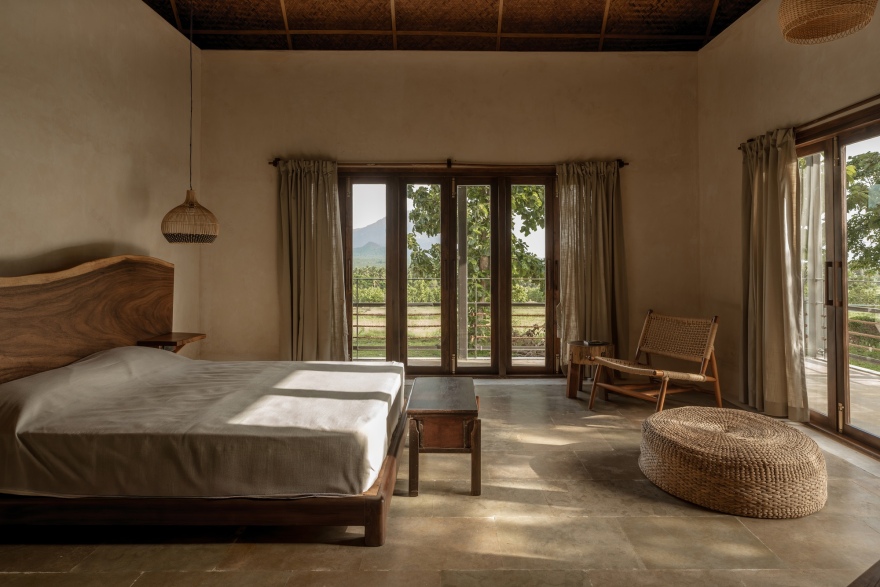
The materials that are layered onto the steel structure are all locally sourced and done using local labour. The MS columns and deck slabs ensured structural precision and speed; the masonry was done in locally available table mould brick finished in Vellakoil lime plaster which is a breathable local technique. The plaster is a mix of lime, jaggery, Kaddukai (Terminalia chebula – a medicinal plant well known in the region), egg whites & water. It is then polished using a river washed pebble & soap until it achieves a soft luminous sheen. The external facade features a lime render developed with technical expertise from Wabi+. Internally, the walls are finished with traditional Vellakoil lime plaster, providing natural breathability and thermal comfort.
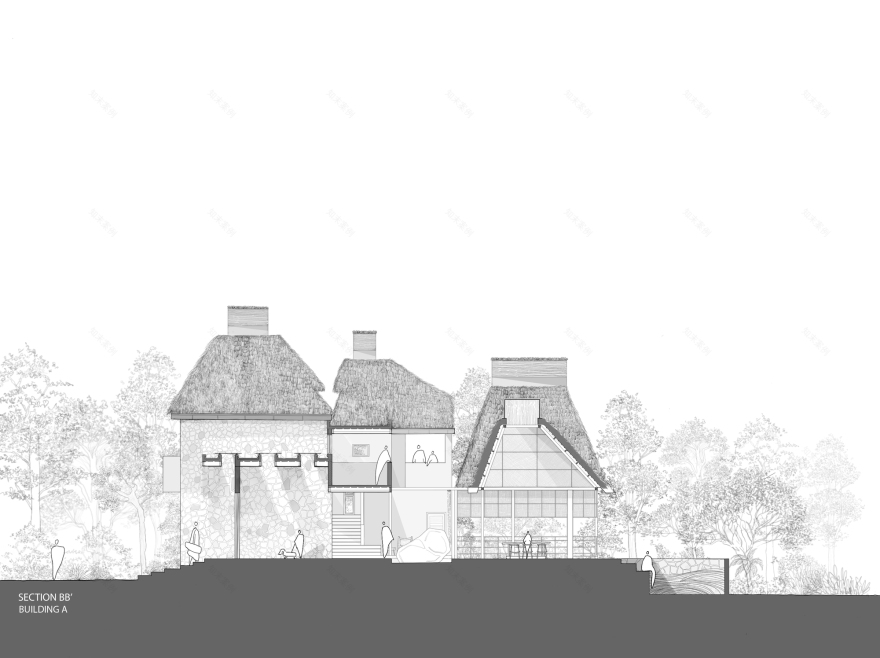
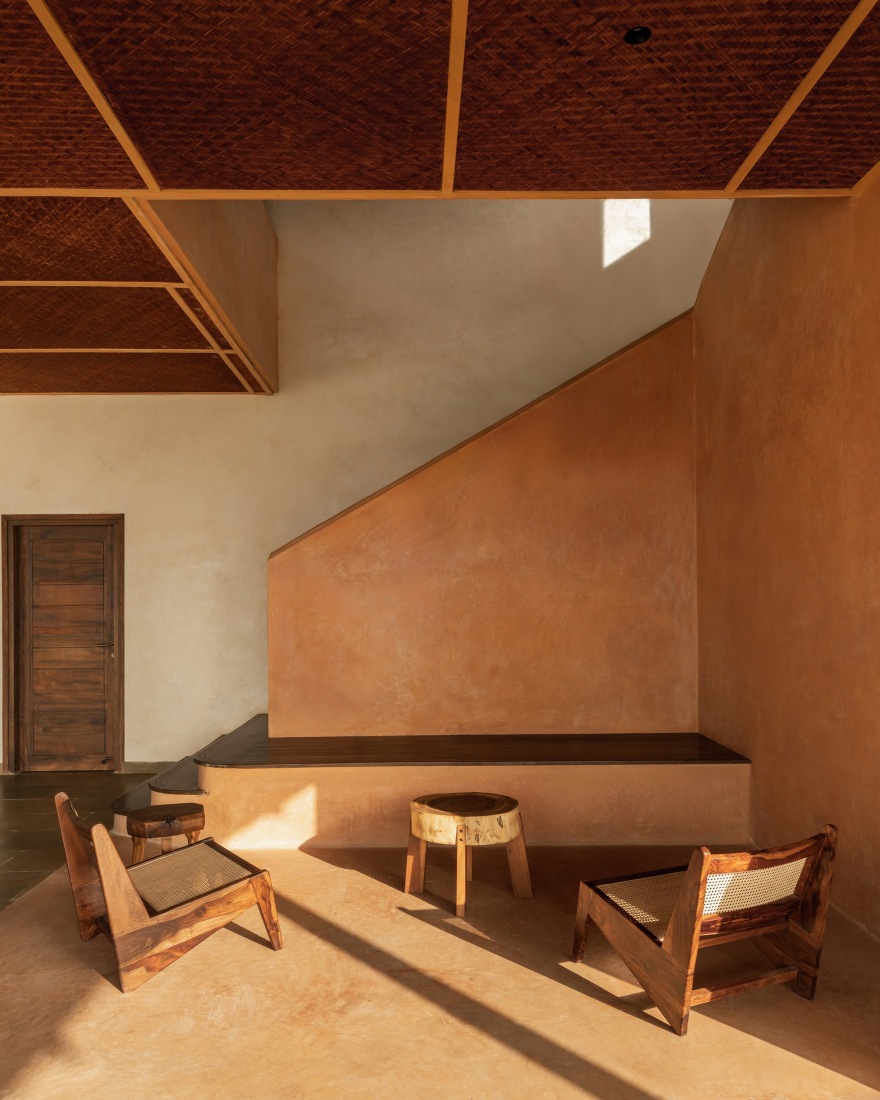
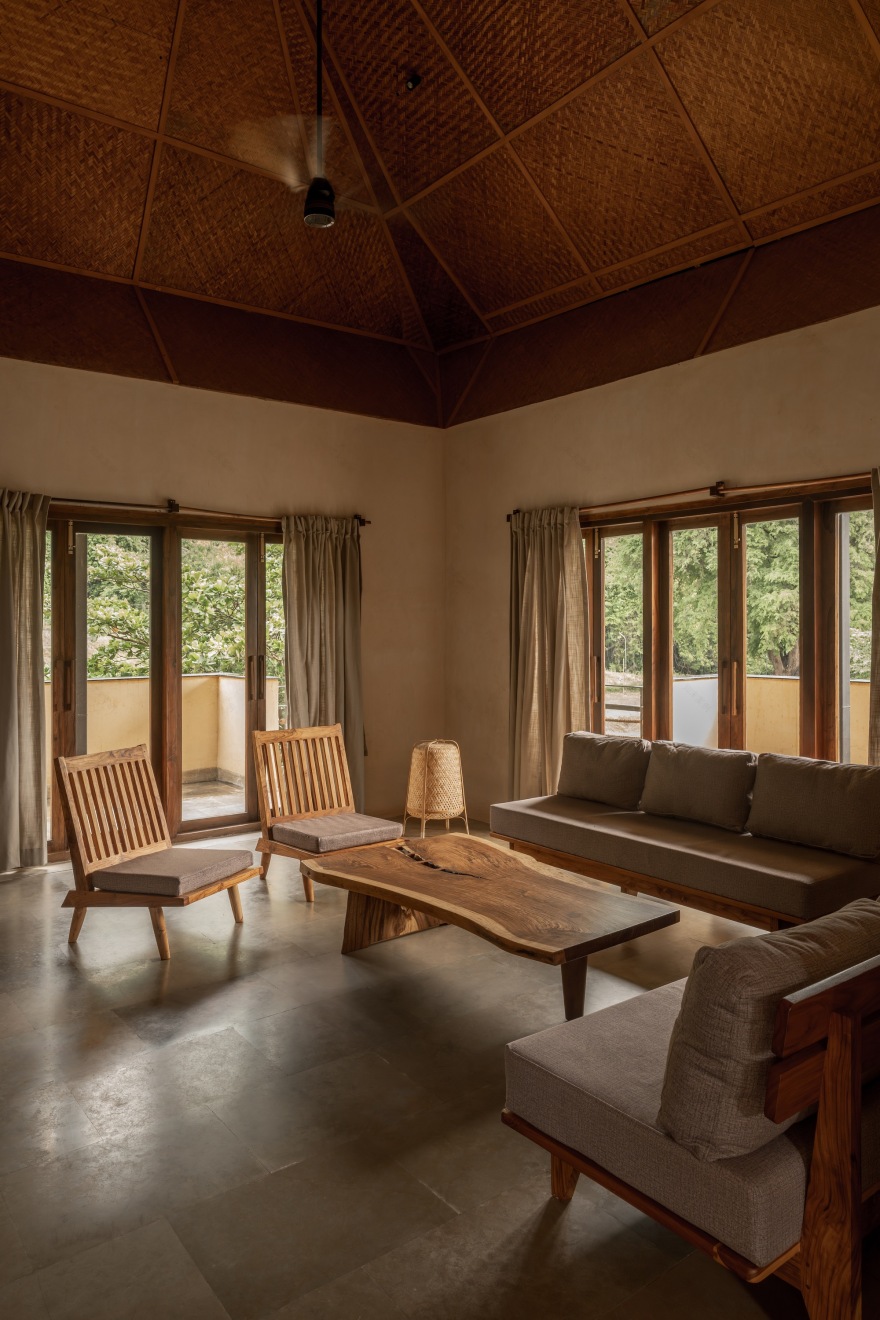
The roof layers include a base structure of MS rafters & purlins with a GI sheet. Above this is a layer of aluminium fire-resistant sheet and 10" of thatch sourced from Villipuram. The underside of the roof has a false ceiling done in plywood made from heat pressing bamboo sheets which creates a textured canopy for the living spaces. The flooring is done in yellow & grey limestone and marble which was available from quarries nearby. The interiors are grounded by customized furniture designed and manufactured by Studio Abelha. Each piece is crafted from locally sourced and reclaimed wood, echoing the project's commitment to sustainable material cycles.
Through the process we have constantly gone back to the Machan which is in the southwest corner. This is where the structure and process culminate. This traditional Indian elevated viewing platform is the building's true purpose realized: a quiet vantage point positioned perfectly toward the forest opening. It is here, in the height of the steel and the scent of the thatch, that the retreat fulfils its promise—not as a building imposing itself on the foothills, but as a quiet observer of the wild.
Project gallery



南京喵熊网络科技有限公司 苏ICP备18050492号-4知末 © 2018—2020 . All photos and trademark graphics are copyrighted by their owners.增值电信业务经营许可证(ICP)苏B2-20201444 苏公网安备 32011302321234号
苏公网安备 32011302321234号客服
消息
收藏
下载
最近