

创作上传
VIP
收藏下载
登录 | 注册有礼
查看完整案例

收藏

下载

分享

翻译
Firm: Bonsar Architects
Type: Cultural › Cultural Center Transport + Infrastructure › Bridge
STATUS: Concept
SIZE: 10,000 sqft - 25,000 sqft
BUDGET: $5M - 10M
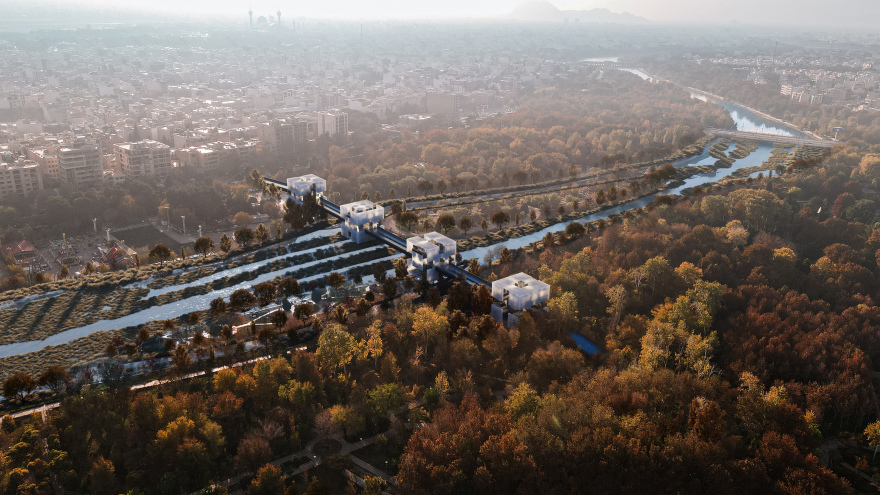
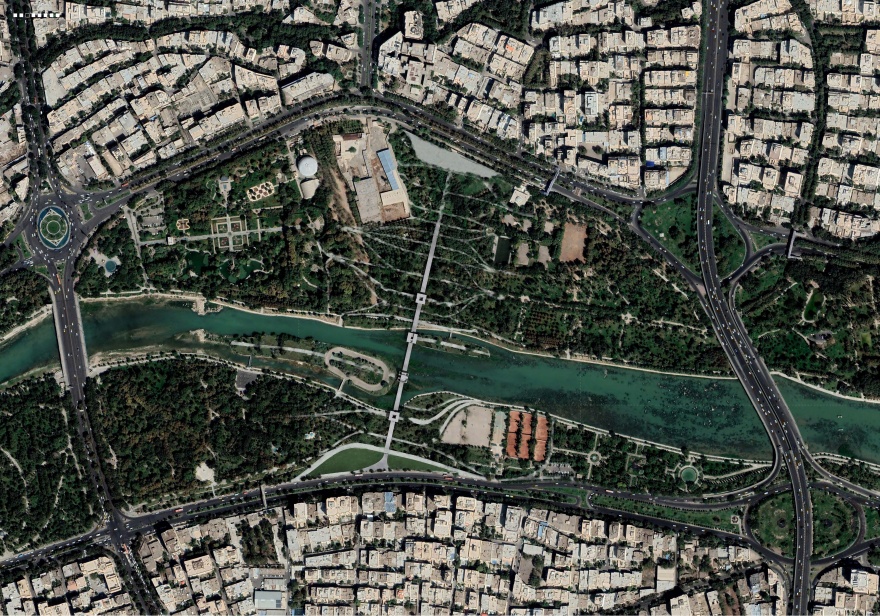
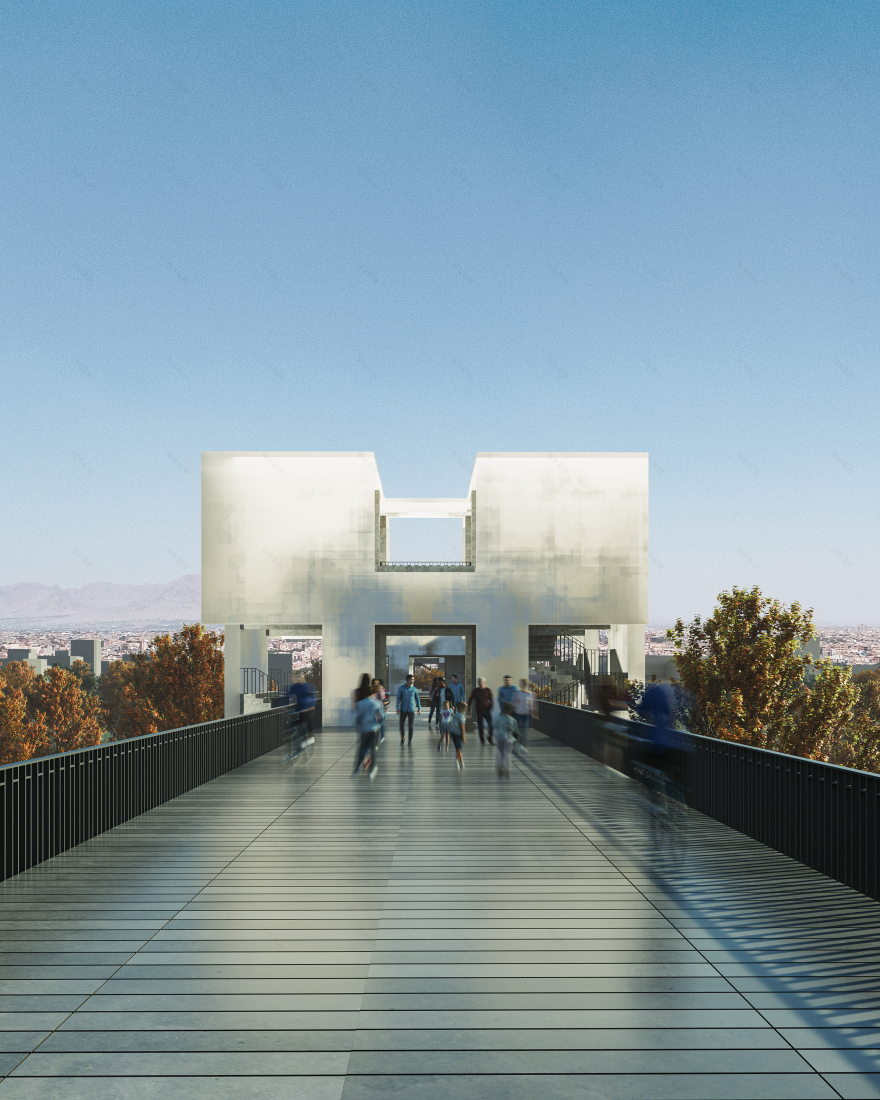
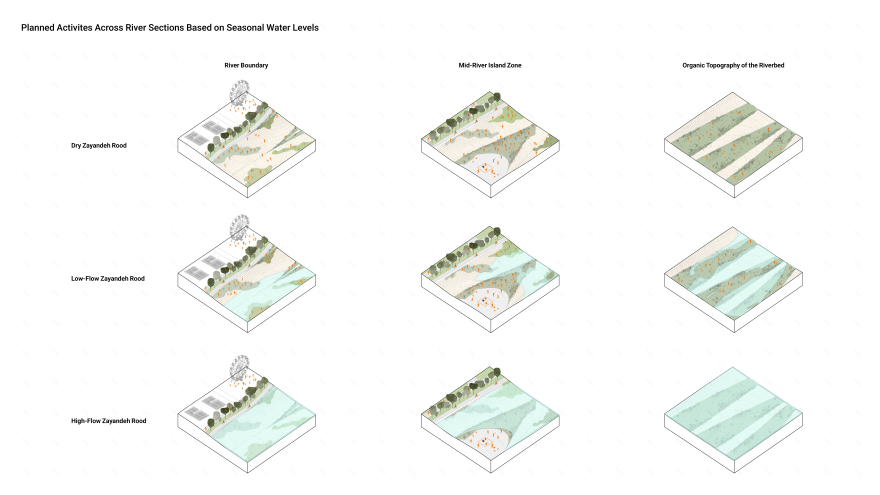
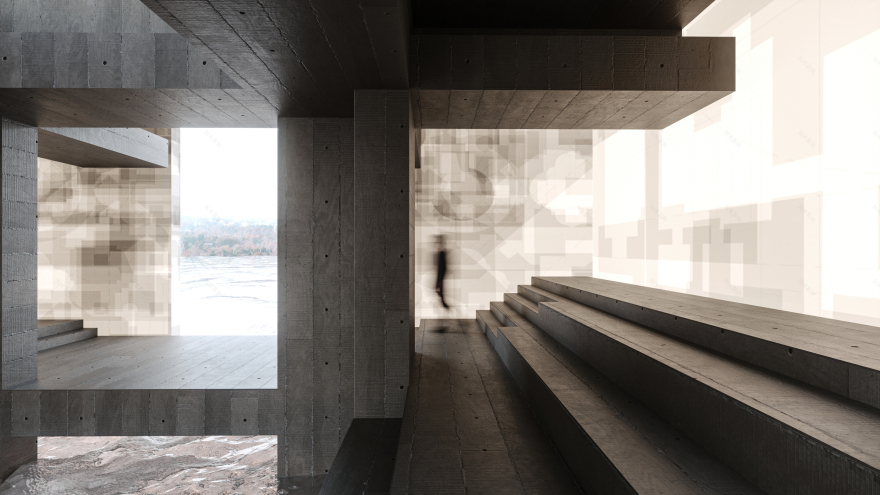
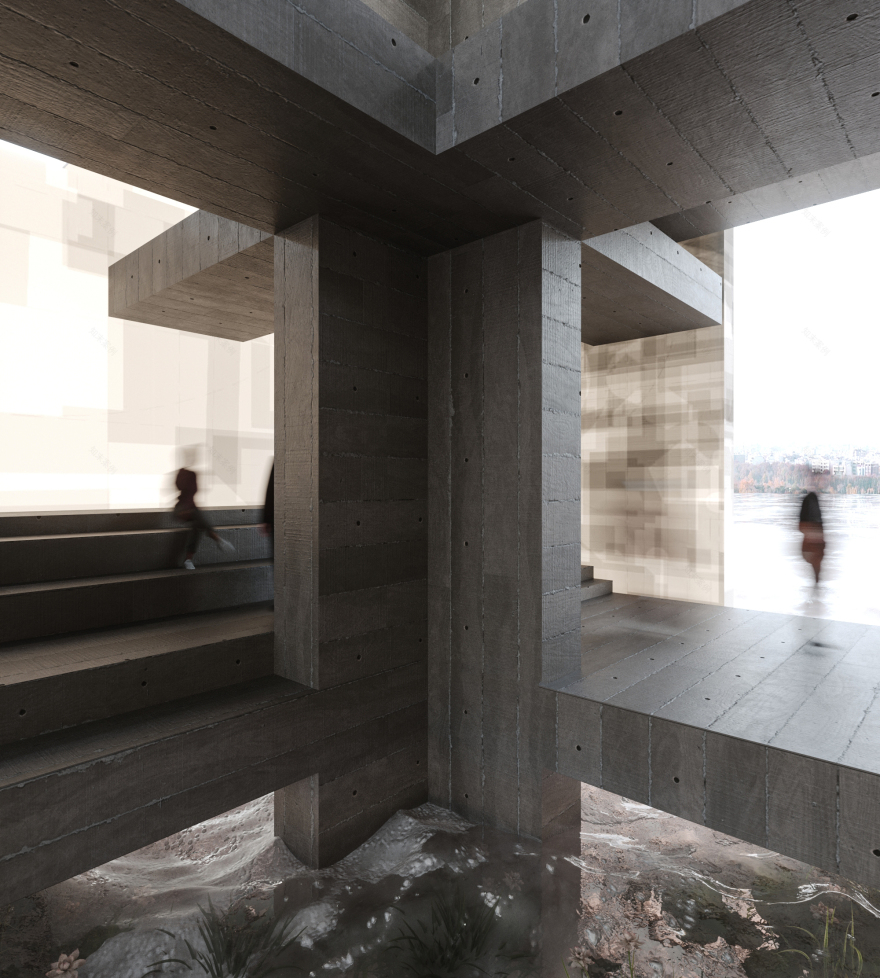
The bridges of Isfahan have historically functioned as more than passages of transit. They have served as spaces of pause, presence, and collective experience, bringing the city, its inhabitants, and water into a shared spatial framework. Today, however, the Zayandehroud River remains dry for much of the year due to prolonged water mismanagement, fundamentally challenging the bridge’s role as an active urban element. The Charkhan Bridge project emerges from this condition, rethinking the bridge as an urban space capable of operating in the absence of water.
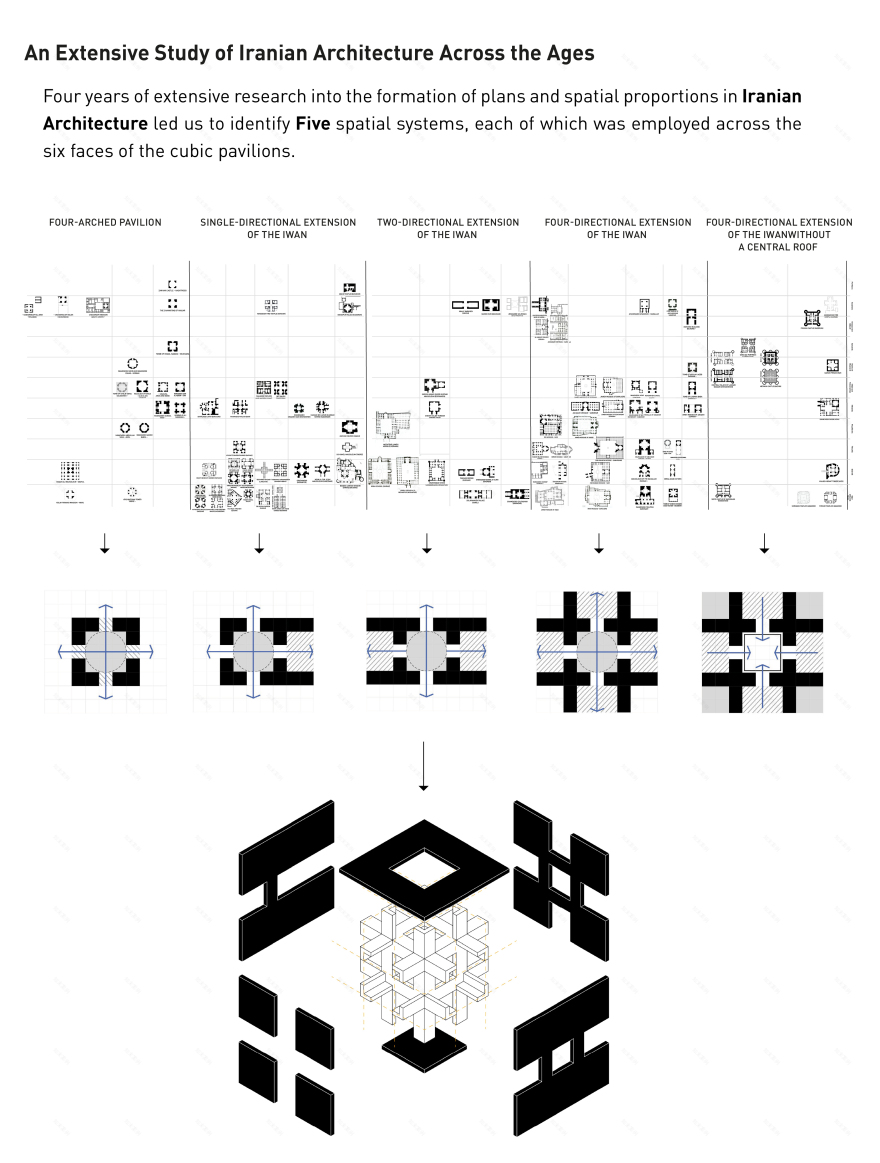
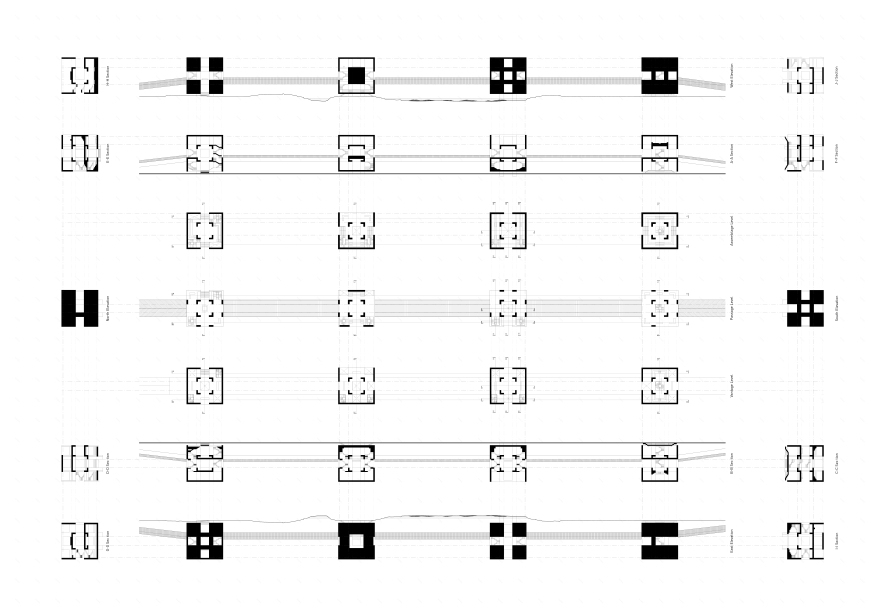
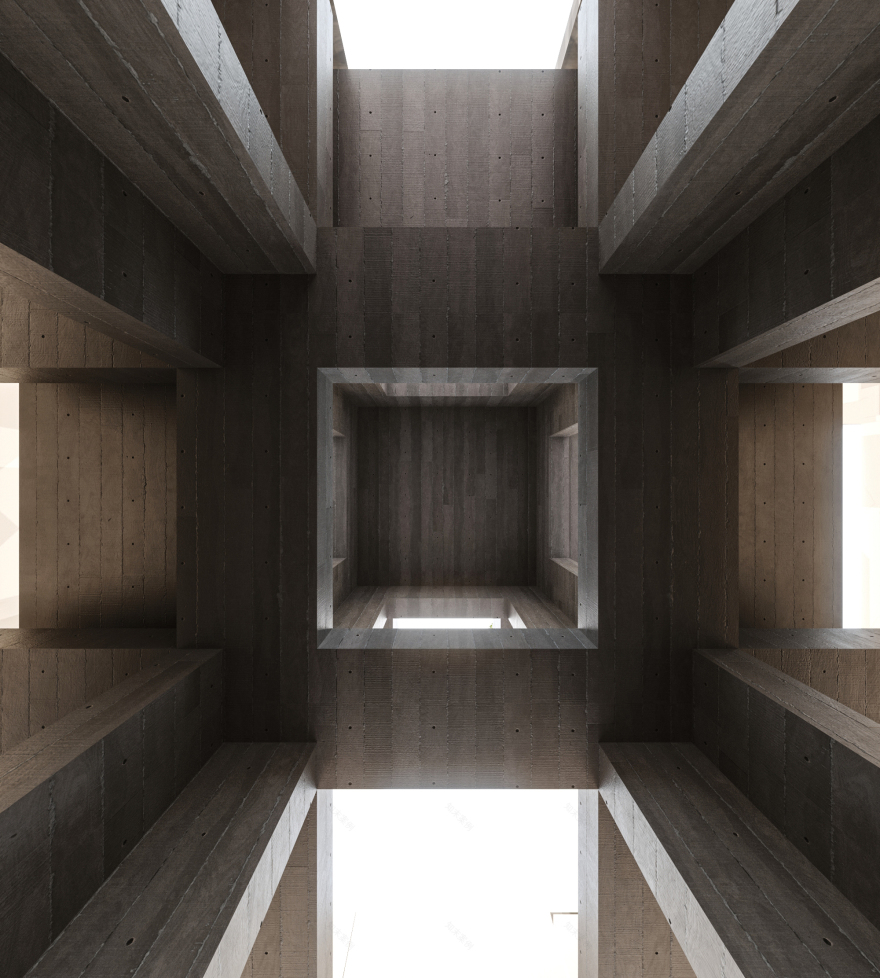
The project’s conceptual foundation is rooted in the sectional logics of Iranian architecture, particularly in Isfahan, where intersecting axes have historically organized space, movement, and event. Spatial systems such as the Persian garden, the nine-square grid, and the chahartaq structure inform this approach. Rather than treating the chahartaq as a fixed typology, the project reinterprets it as an expandable spatial system that can develop along intersecting axes in multiple directions.
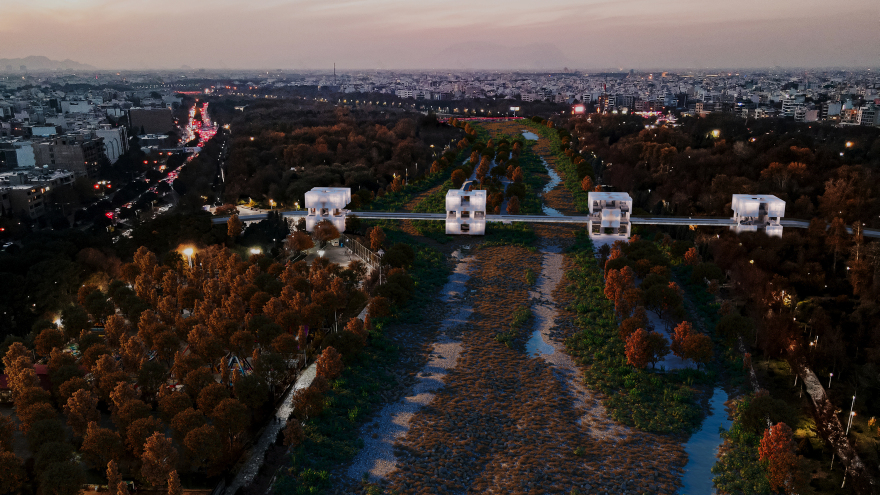
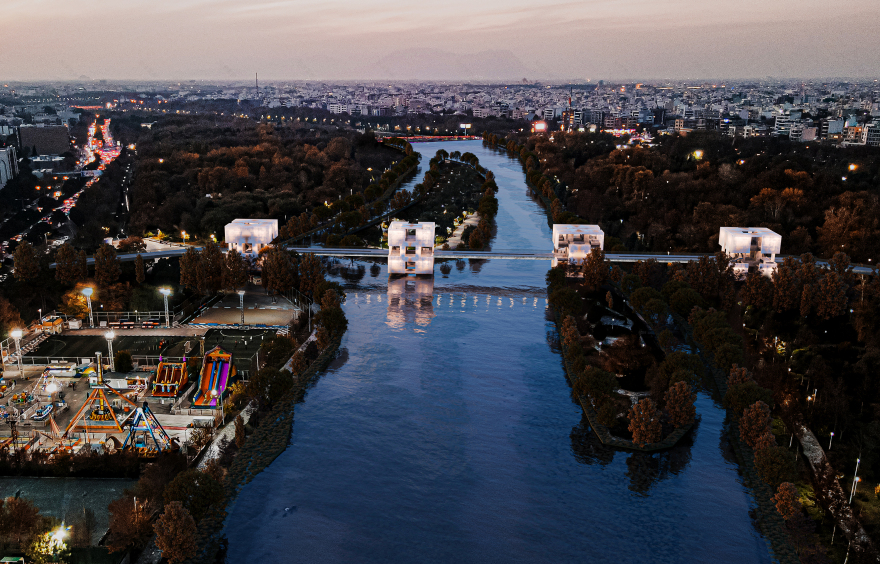
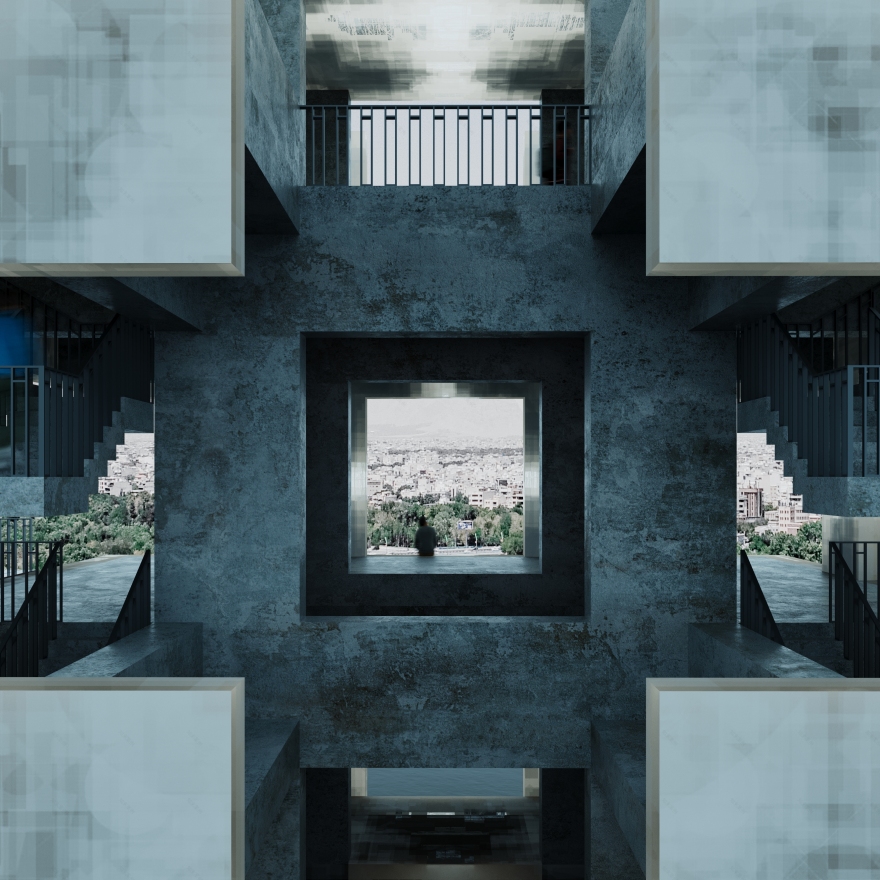
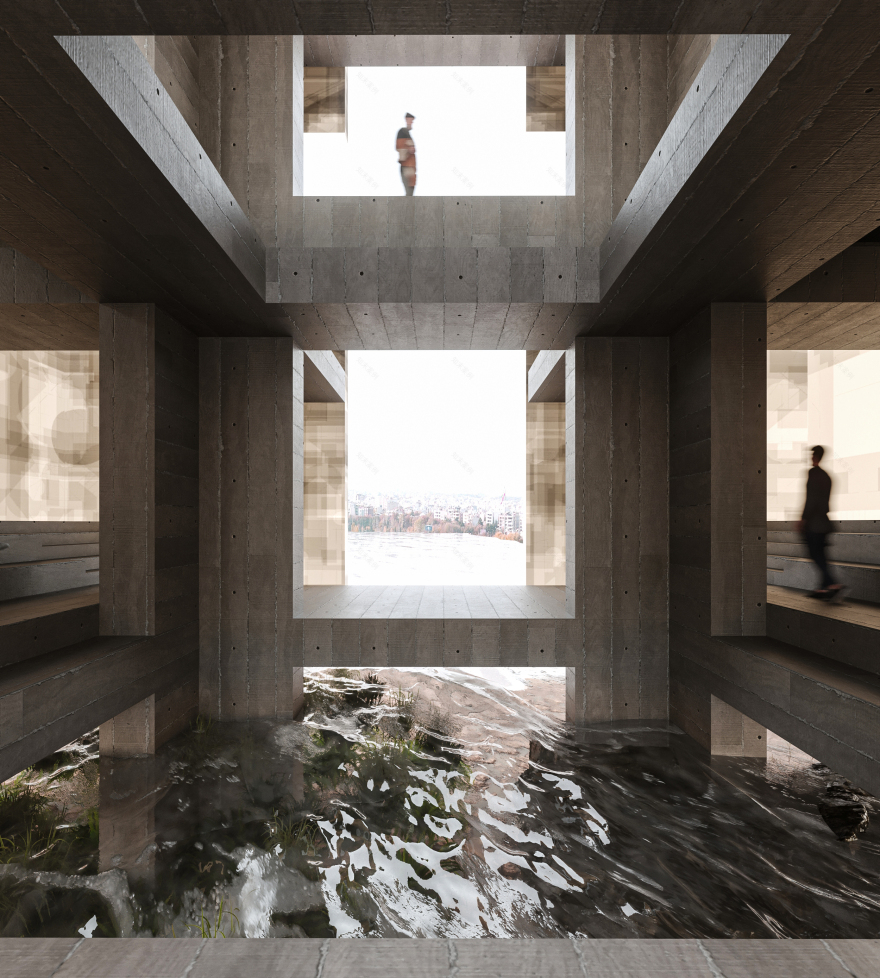
This logic is translated into a contemporary structure through a series of hexagonal pavilions, compressing multiple historical geometries into a single three-dimensional framework. The chahartaq thus evolves from a planar order into a sectional spatial system, where structure, form, and inhabitable space are integrated through a shared tectonic network.
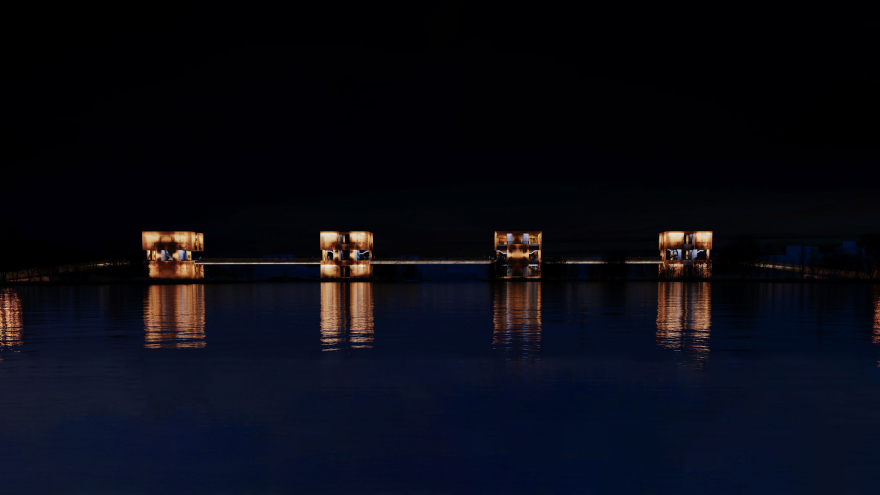
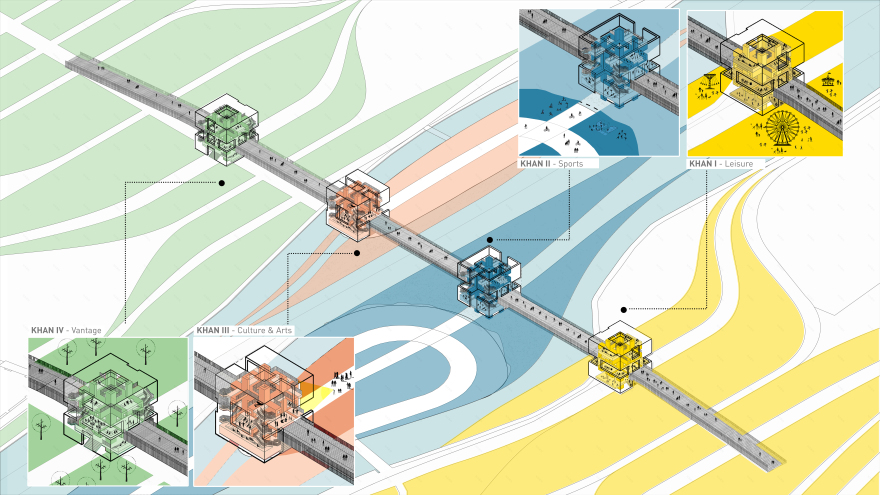
The bridge becomes a connective sequence linking four pavilions: a northern riverside garden, two island-like pavilions within the riverbed, and a southern garden. Together, they form an interactive urban infrastructure that responds to seasonal water fluctuations, climatic conditions, and diverse patterns of human presence.
Charkhan Bridge ultimately functions as a compact museum of Iranian structural logic embedded within a living urban landscape, redefining the relationship between people, the city, and the river.




南京喵熊网络科技有限公司 苏ICP备18050492号-4知末 © 2018—2020 . All photos and trademark graphics are copyrighted by their owners.增值电信业务经营许可证(ICP)苏B2-20201444 苏公网安备 32011302321234号
苏公网安备 32011302321234号客服
消息
收藏
下载
最近