

创作上传
VIP
收藏下载
登录 | 注册有礼
查看完整案例

收藏

下载

分享

翻译
Firm: Urban Ecology and Design Lab, University of Melbourne
Type: Landscape + Planning › Waterway/Wetland
STATUS: Built
YEAR: 2025
SIZE: 25,000 sqft - 100,000 sqft
BUDGET: $100K - 500K
Video Link: https://youtu.be/lQc3iIzitd8
Song of the Cricket is a built landscape exhibition and living lab that reintroduces an endangered insect to the Venice Lagoon, using design as a tool to reconstruct ecological relationships in public.
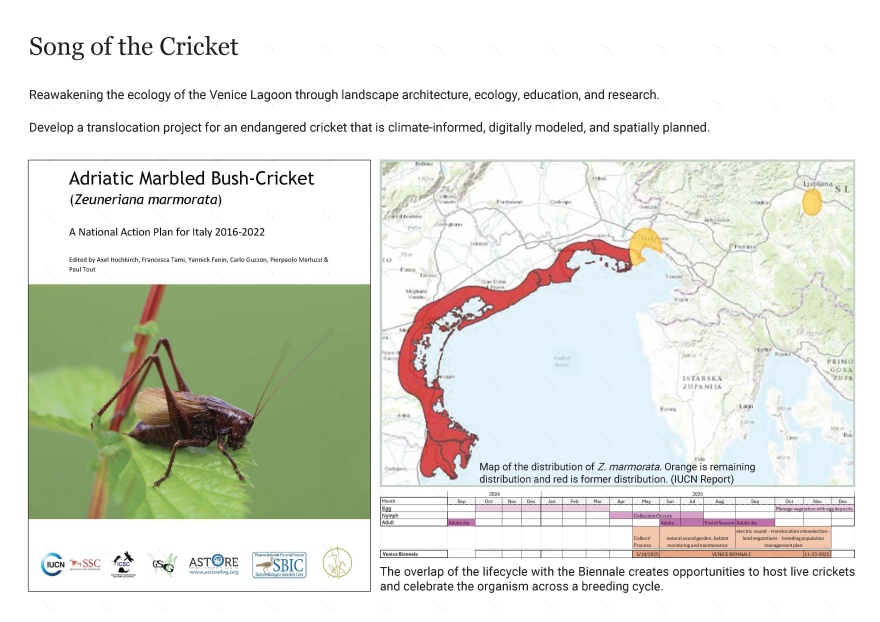
Developed for the 19th International Exhibition of La Biennale di Venezia (2025), curated by Carlo Ratti, the project transforms a cultural platform into a functioning field laboratory. At its core is the Adriatic Marbled Bush-Cricket (Zeuneriana marmorata), a species once common to the lagoon’s wetlands but lost through decades of habitat degradation, altered hydrology, and mosquito-control practices.
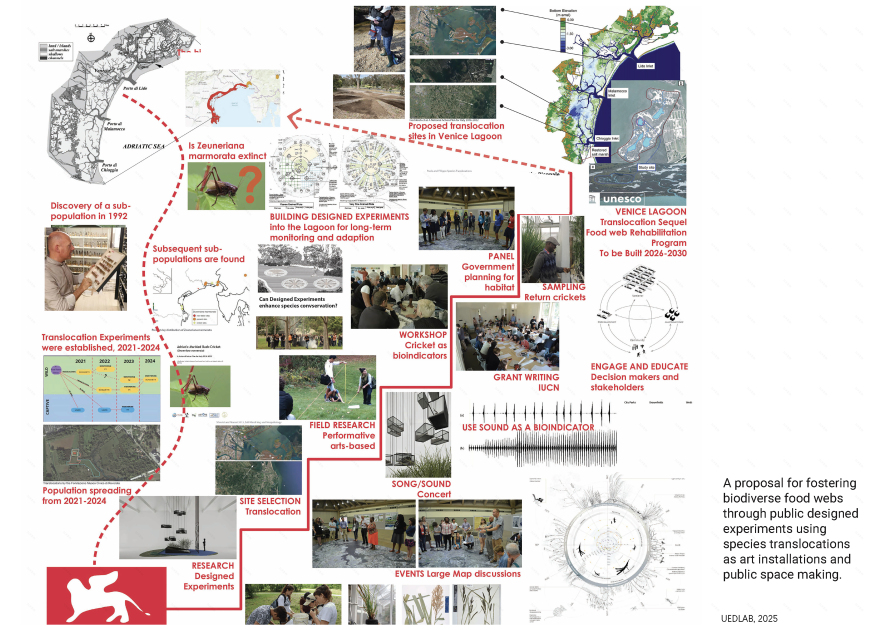
The project operates across sites and scales—from the Biennale, where crickets were bred and their song made audible through sound art and music, to field deployments within the lagoon, where a new population is now being established. Rather than focusing on a single site, it uses species reintroduction as a catalyst for reconstructing food webs and evaluating how lagoon ecosystems respond to flood defence infrastructure.
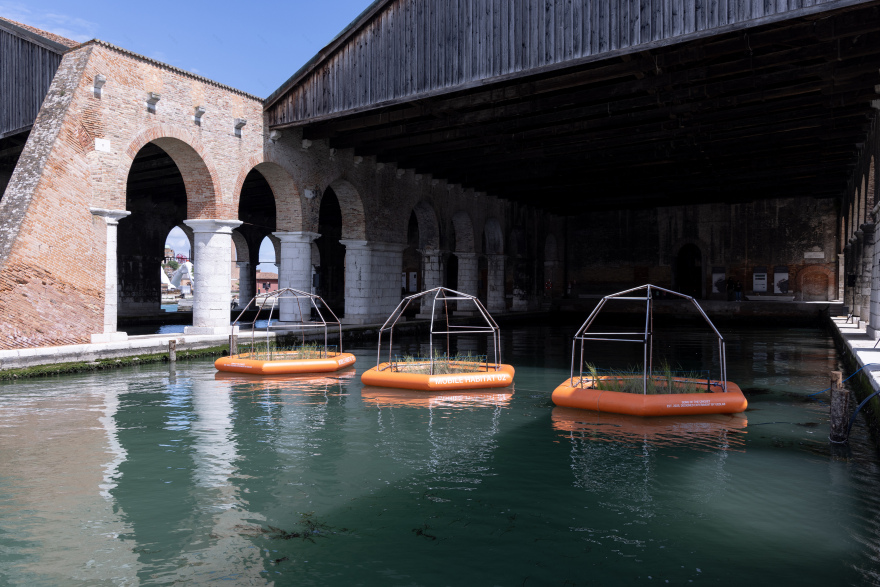
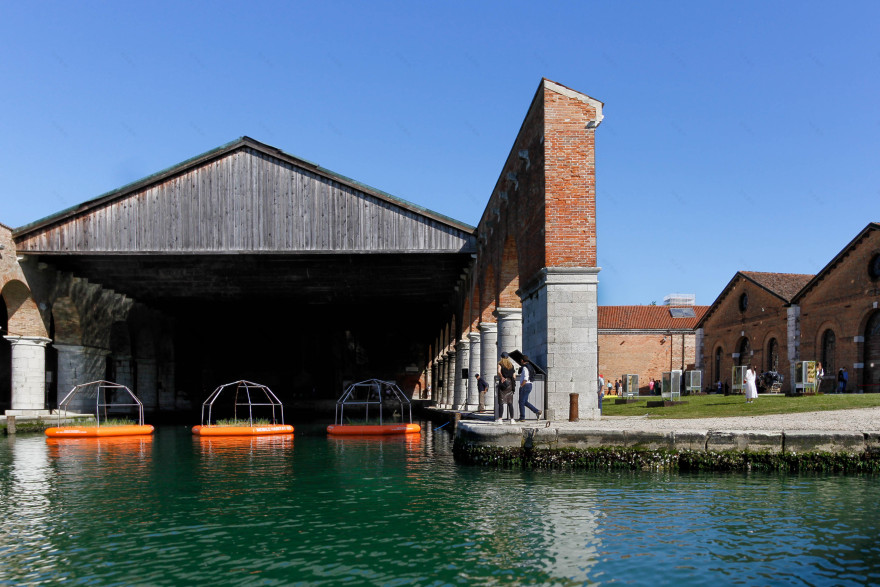
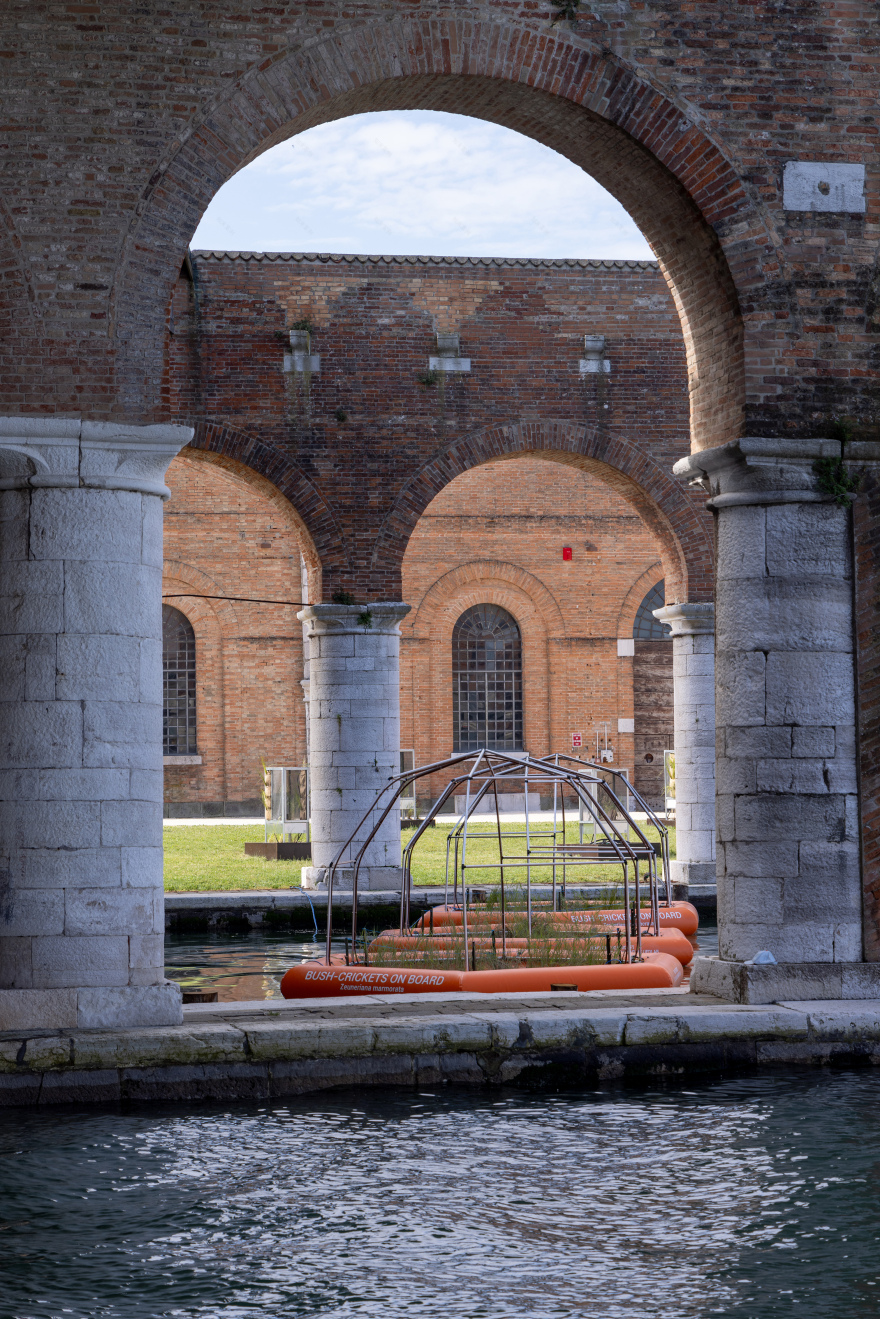
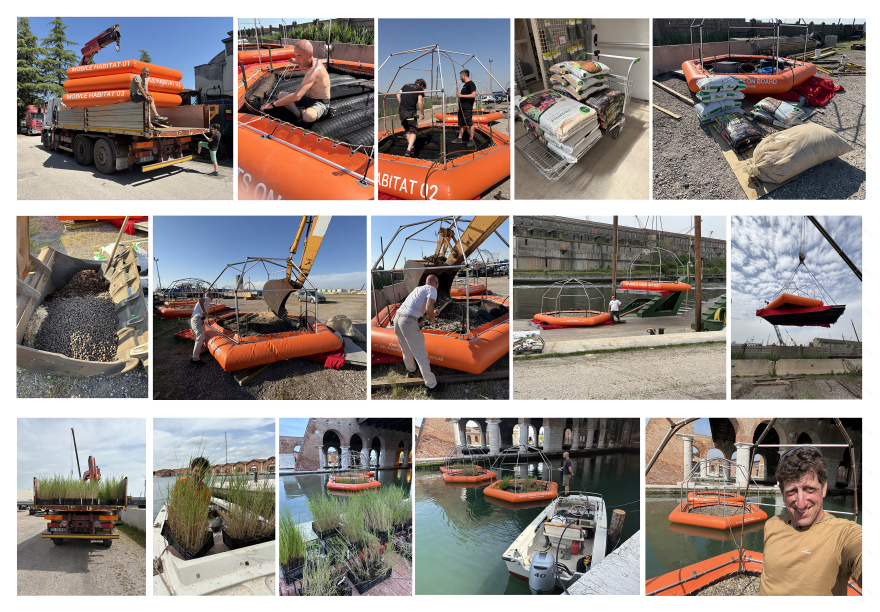
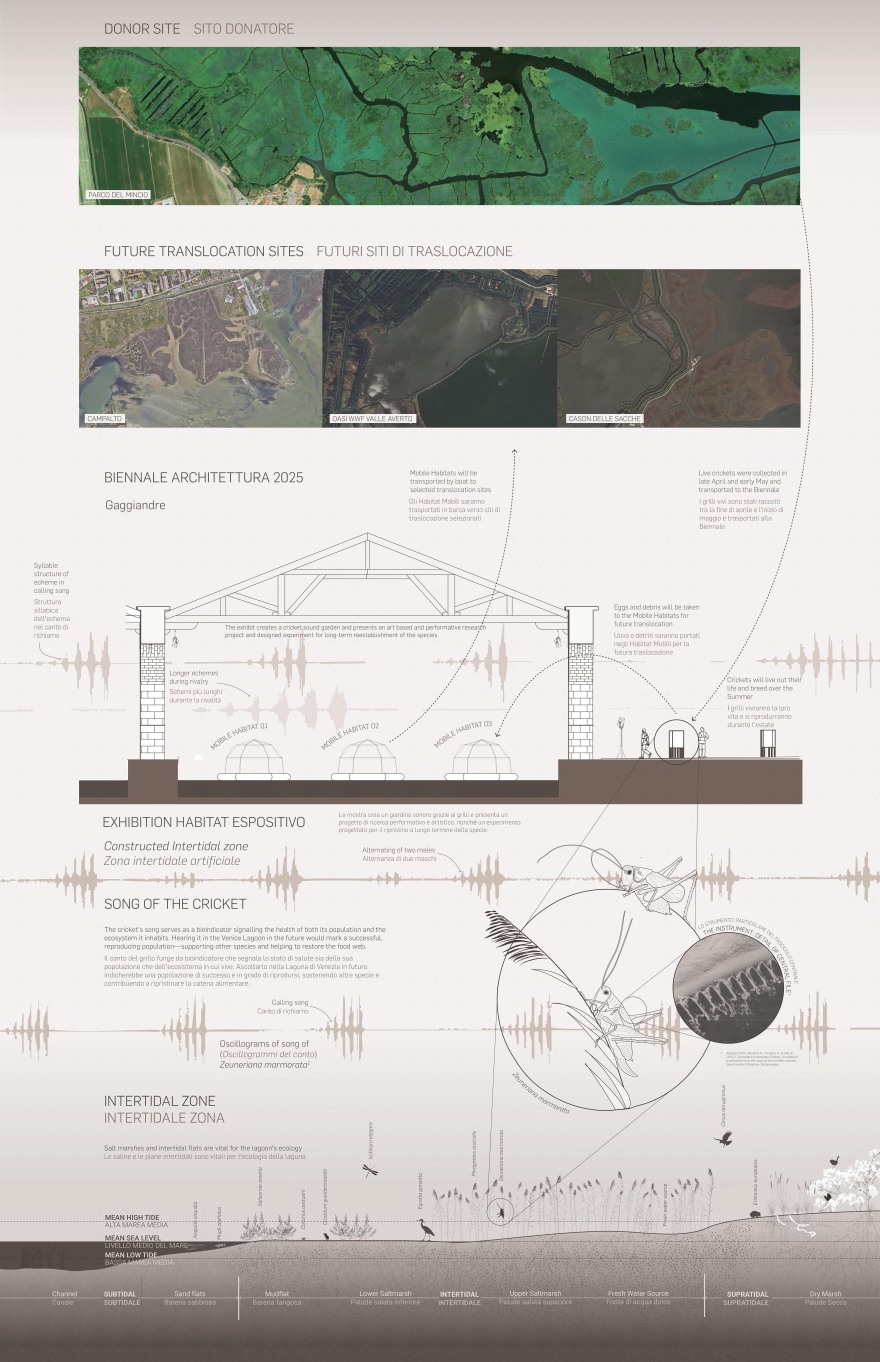
Central to the project are Mobile Habitats—modular floating and submersible systems that construct a new land–water interface. These vegetated platforms and enclosures support breeding, egg deposition, and staged translocation while operating as both infrastructure and experiment. Designed to move across the lagoon, they establish provisional wetland conditions in degraded areas, acting as starter ecosystems that can be deployed, tested, and adapted over time.
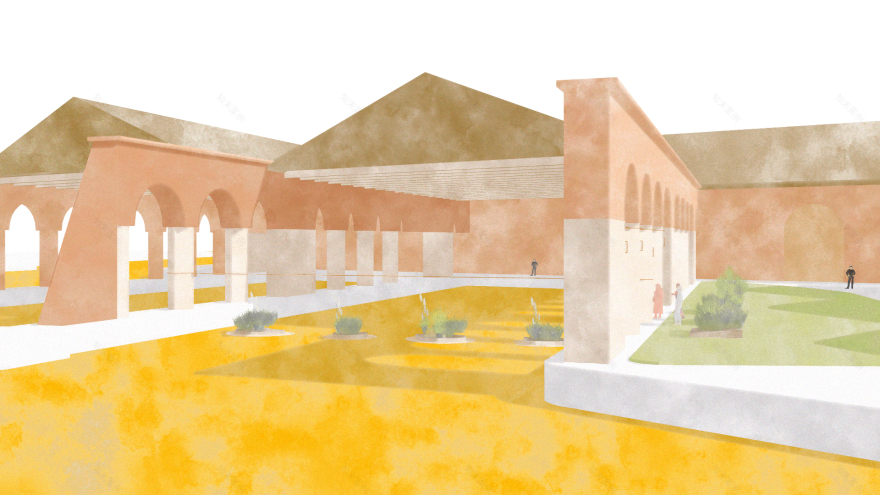
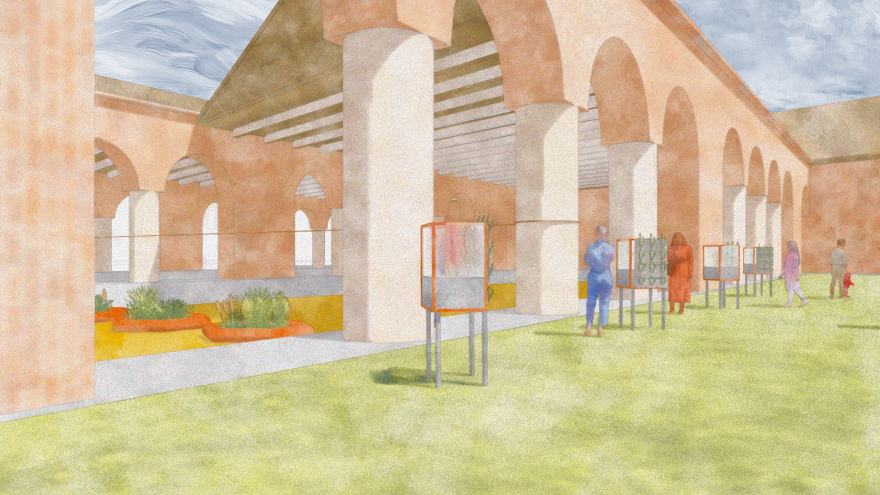
During the Biennale, a series of designed habitats—including breeding enclosures, submersible cages, and Mobile Habitats—formed constructed wetland environments within the Gaggiandre shipyard. Live crickets reproduced within these systems, while an immersive soundscape amplified their presence, transforming the space into a living, audible ecosystem.
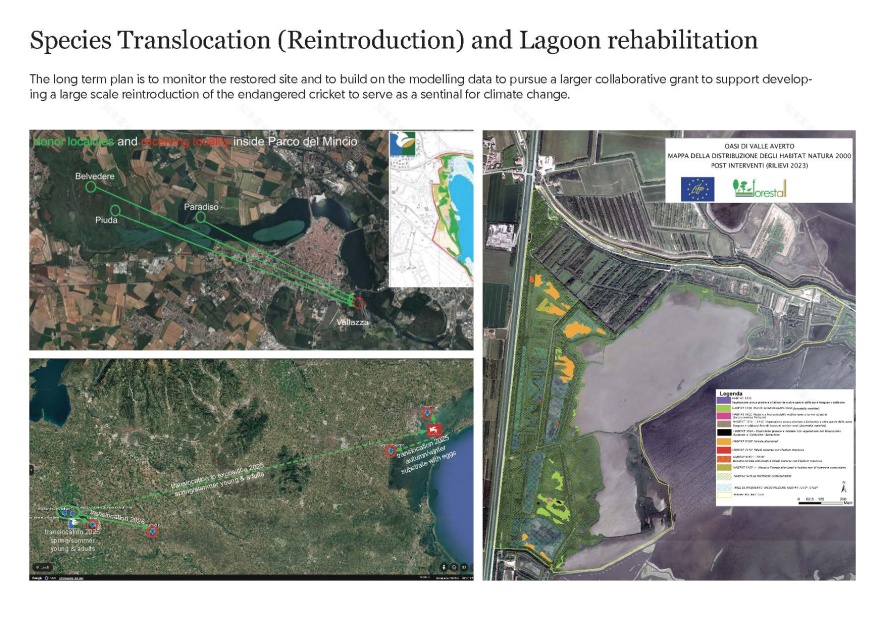
Following the exhibition, eggs produced on site have been translocated into the Venice Lagoon. The crickets function as bioacoustic sentinels: their presence, reproduction, and sound provide measurable signals of ecosystem health. Over time, they will be deployed across hydrological gradients—from managed wetlands at WWF Oasi di Valle Averto to sites directly influenced by tidal exchange—establishing a distributed living laboratory.
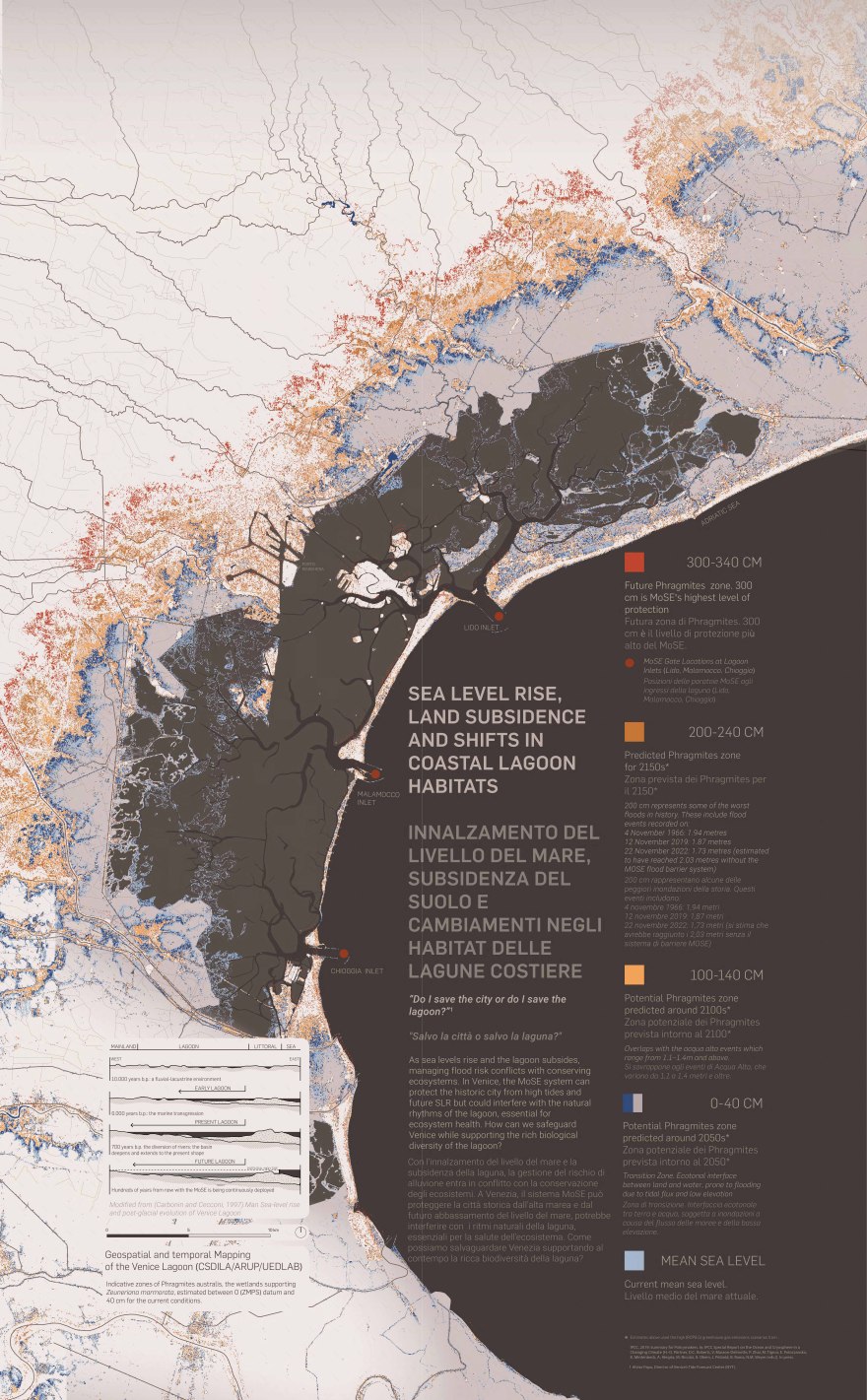
This work unfolds within a rapidly changing landscape. Venice’s MoSE flood defence system, designed to protect the city from sea-level rise, is reshaping tidal patterns and the acqua alta floods that historically sustained the lagoon’s marsh ecologies. Song of the Cricket engages these shifting conditions directly, using species reintroduction and mobile habitat systems to test how restored sites respond to altered ecological processes and engineered environments.
The project introduces a methodology known as Designed Experiments, where landscape architecture structures ecological research in real time. Instead of fixed solutions, it establishes an adaptive framework in which design, monitoring, and management evolve together.
Developed through collaboration between the Urban Ecology and Design Lab (UEDLAB) at the University of Melbourne, Fondazione Museo Civico di Rovereto, Esapolis Museum, WWF Italy, CSDILA (Centre for Spatial Data Infrastructures and Land Administration), ARUP, and the Melbourne Conservatorium of Music, the project integrates ecology, engineering, geospatial modelling, and sound.
At once installation, infrastructure, and research platform, Song of the Cricket proposes a new model for climate adaptation—one where design does not simply represent ecological futures, but actively constructs them.




南京喵熊网络科技有限公司 苏ICP备18050492号-4知末 © 2018—2020 . All photos and trademark graphics are copyrighted by their owners.增值电信业务经营许可证(ICP)苏B2-20201444 苏公网安备 32011302321234号
苏公网安备 32011302321234号客服
消息
收藏
下载
最近