

创作上传
VIP
收藏下载
登录 | 注册有礼
查看完整案例

收藏

下载

分享

翻译
Architects:HabitArt Architecture Studio
Area:2600ft²
Year:2025
Photographs:Gobinath Dinakaran
Manufacturers:Deccano Casements Pvt. Ltd,Hindware,Kota Flooring,Rave Global Tiles,WinDoors Tech LLP,jaquar sanitary
Lead Architects:Aditya Venkat
Contractor:Arjun Constructions - Ramana Reddy Contractor
electrical:Arjun Constructions - Ramana Reddy Contractor
Electrical Consultant:Skyline Electro
Landscape:HabitArt Architecture Studio
structural:Anvika Structures
Category:Houses,Sustainability
Design, Drawings And Project Management:Rochana R- Associate
Design And Drawings:Thejas KS
Project Coordination And Engineering:Aditya Venkat
City:Shoolagiri
Country:India
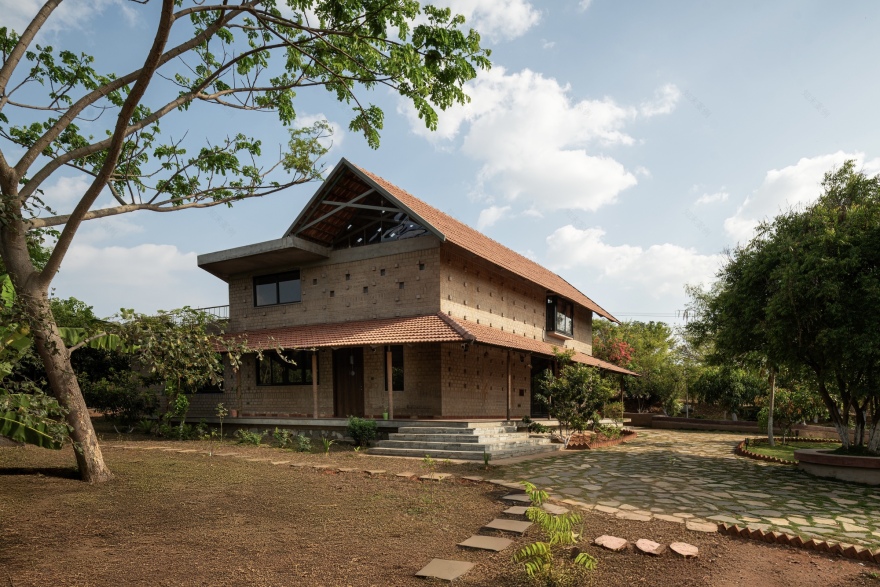
Text description provided by the architects. Located within the farm community of Sanctity Ferme in Shoolagiri, Kṛpānilaya is set amidst a terrain of rolling hills, where the land undulates gently, and vegetation settles in pockets across the contours. The region is defined by a hot, dry climate, with temperatures soaring up to 45°C during peak summers—demanding an architecture that is not applied onto the site, but one that emerges from an understanding of heat, light, and air as primary design determinants.
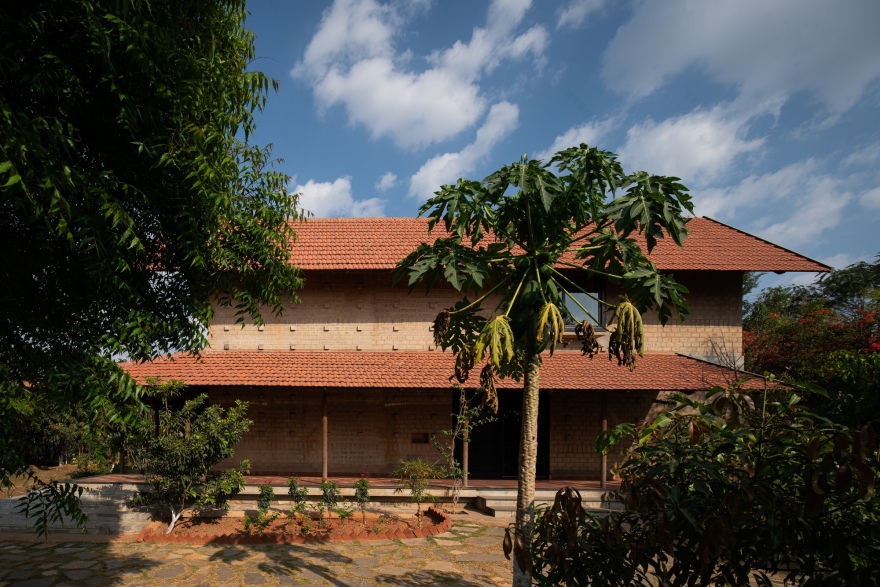
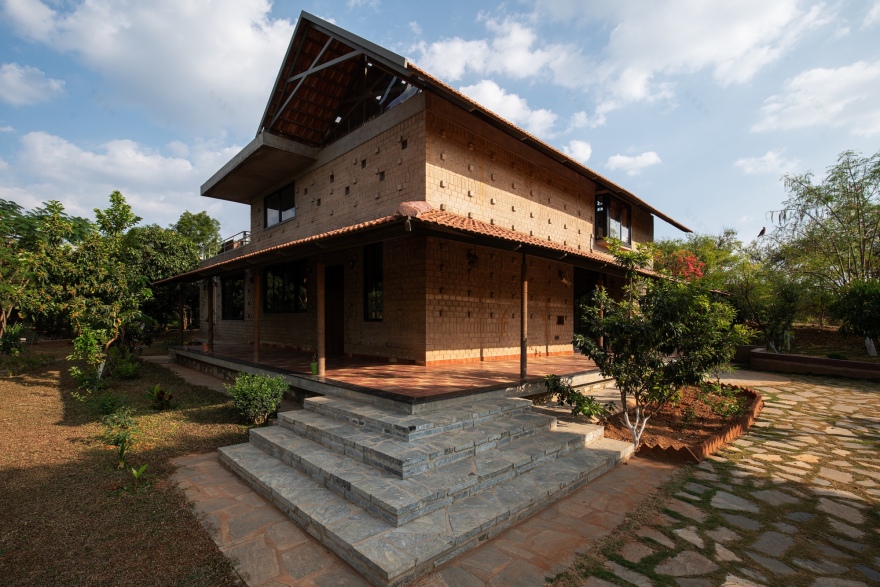
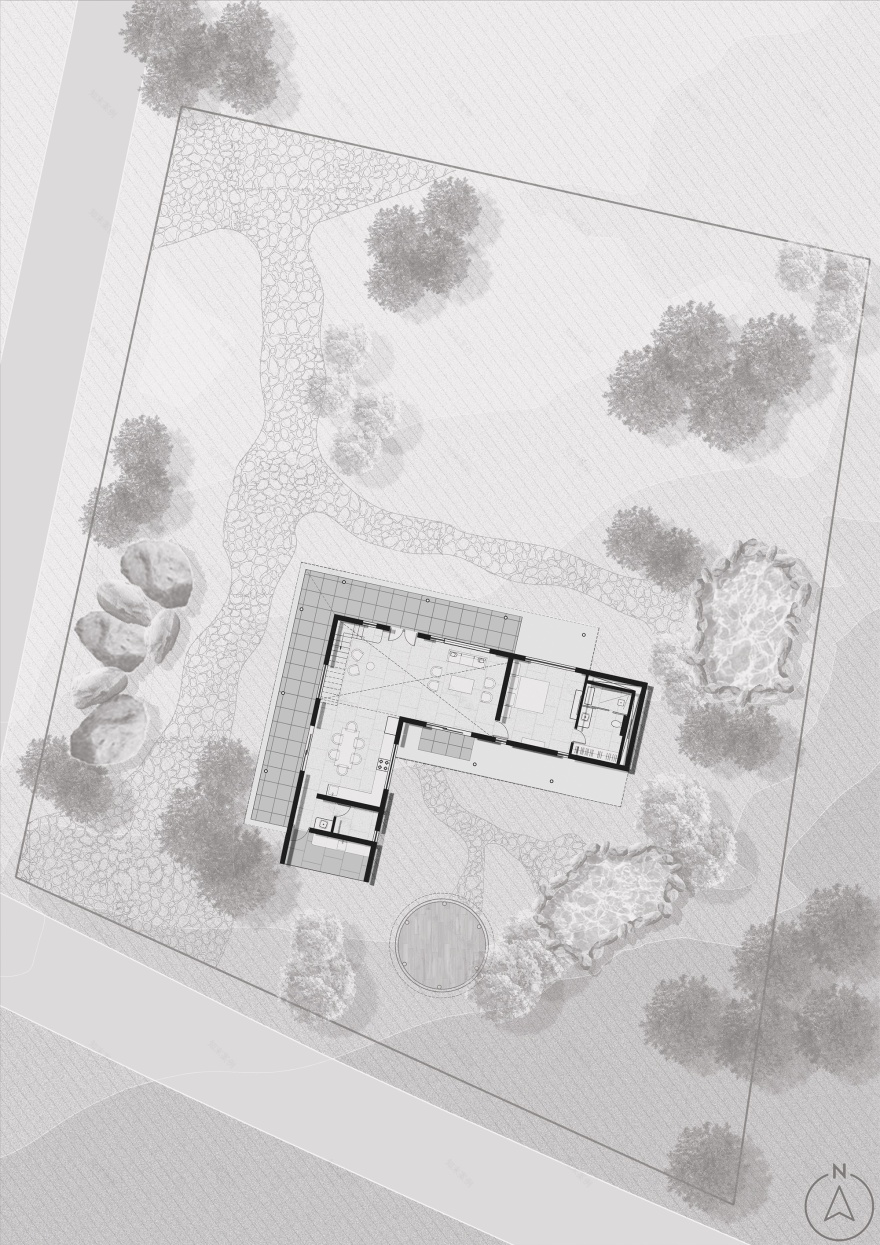
Kṛpānilaya is conceived as a house that does not arrive abruptly on its site, but settles into it. The built form traces the lay of the land rather than correcting it—allowing contours, existing vegetation, and movement patterns to inform its placement. What emerges is not a singular object, but a low, spread-out presence that aligns itself with the rhythms of its context.
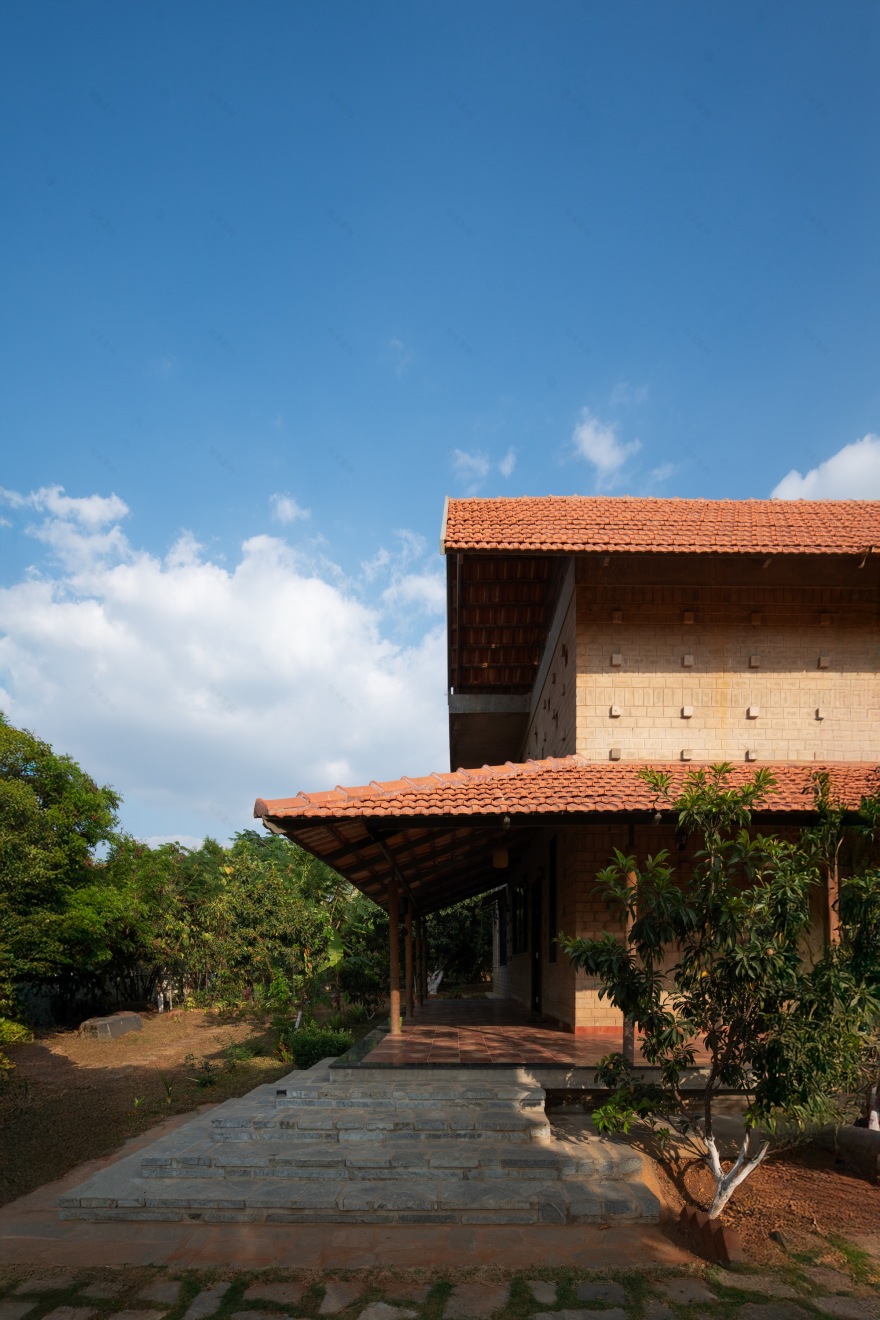
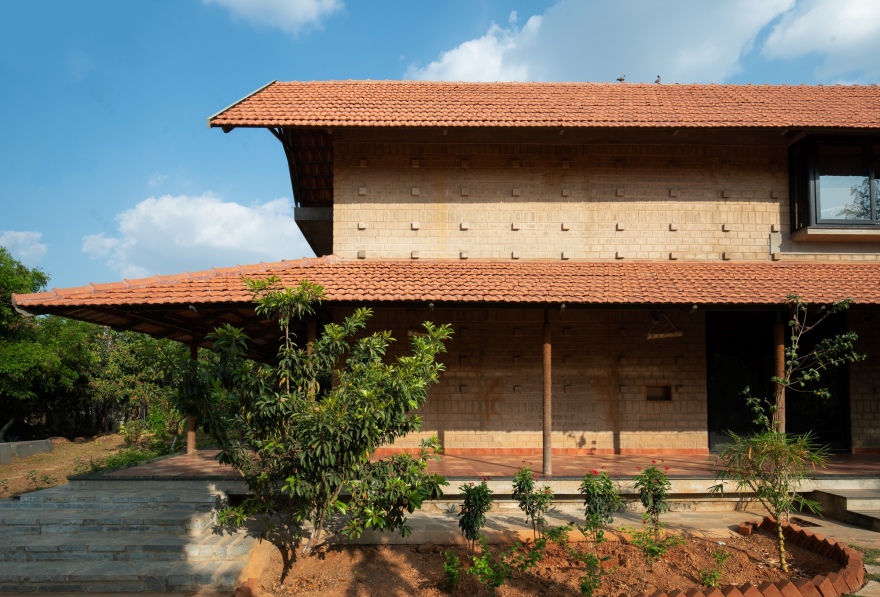
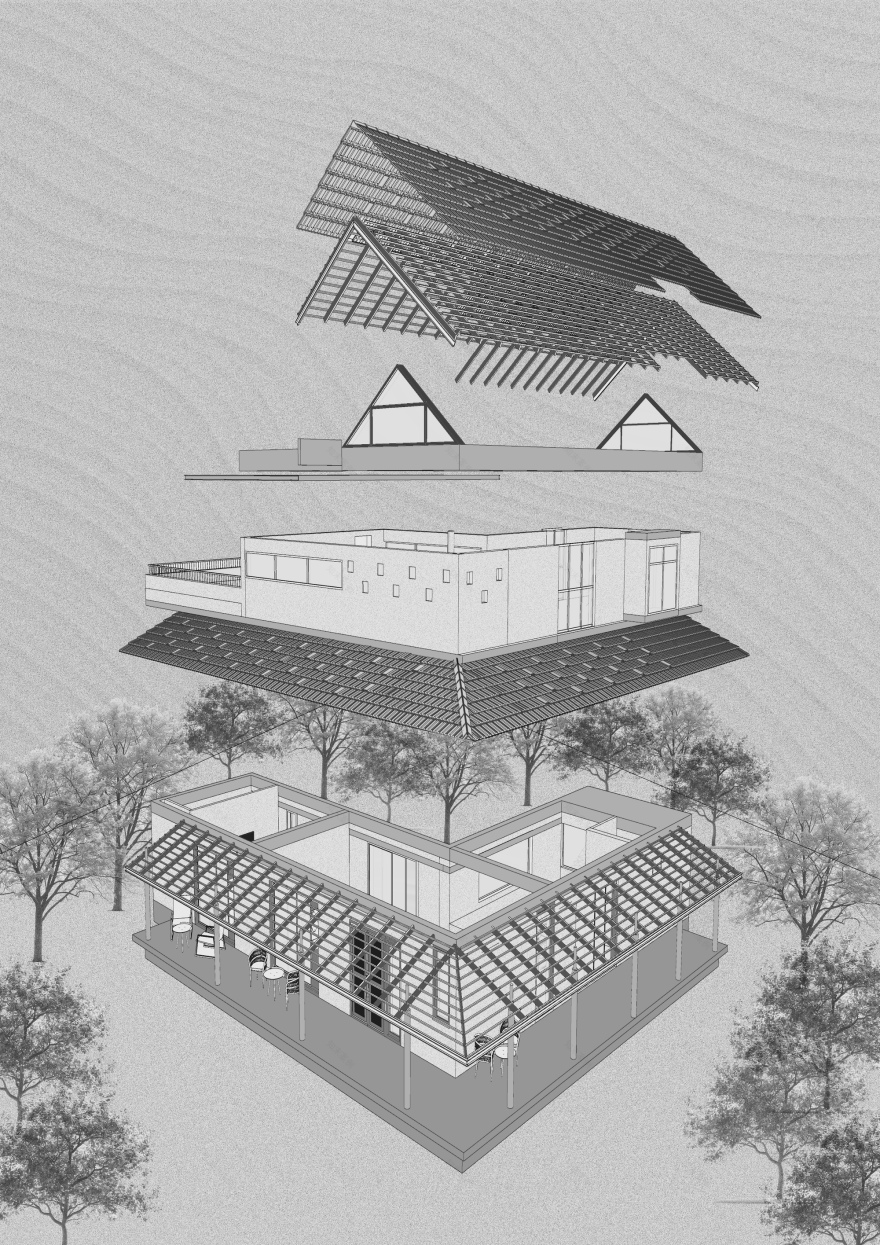
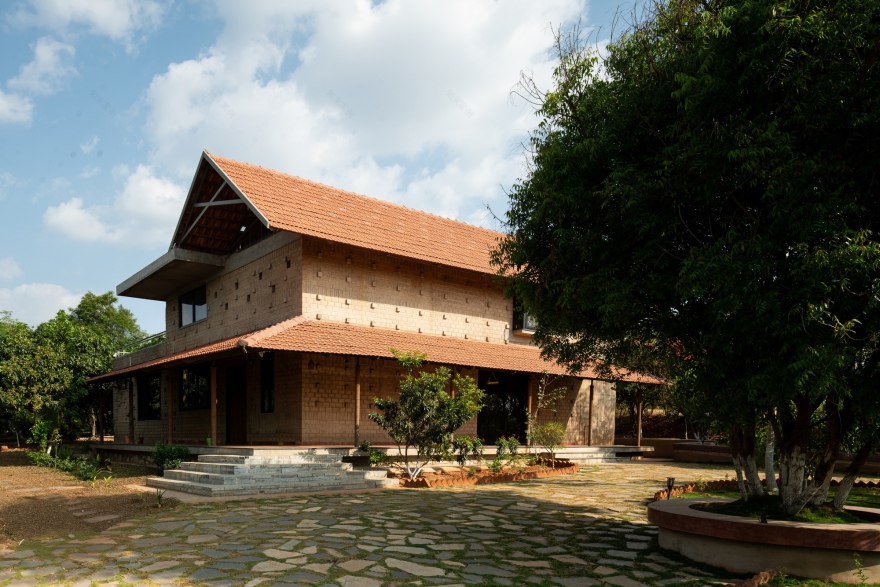
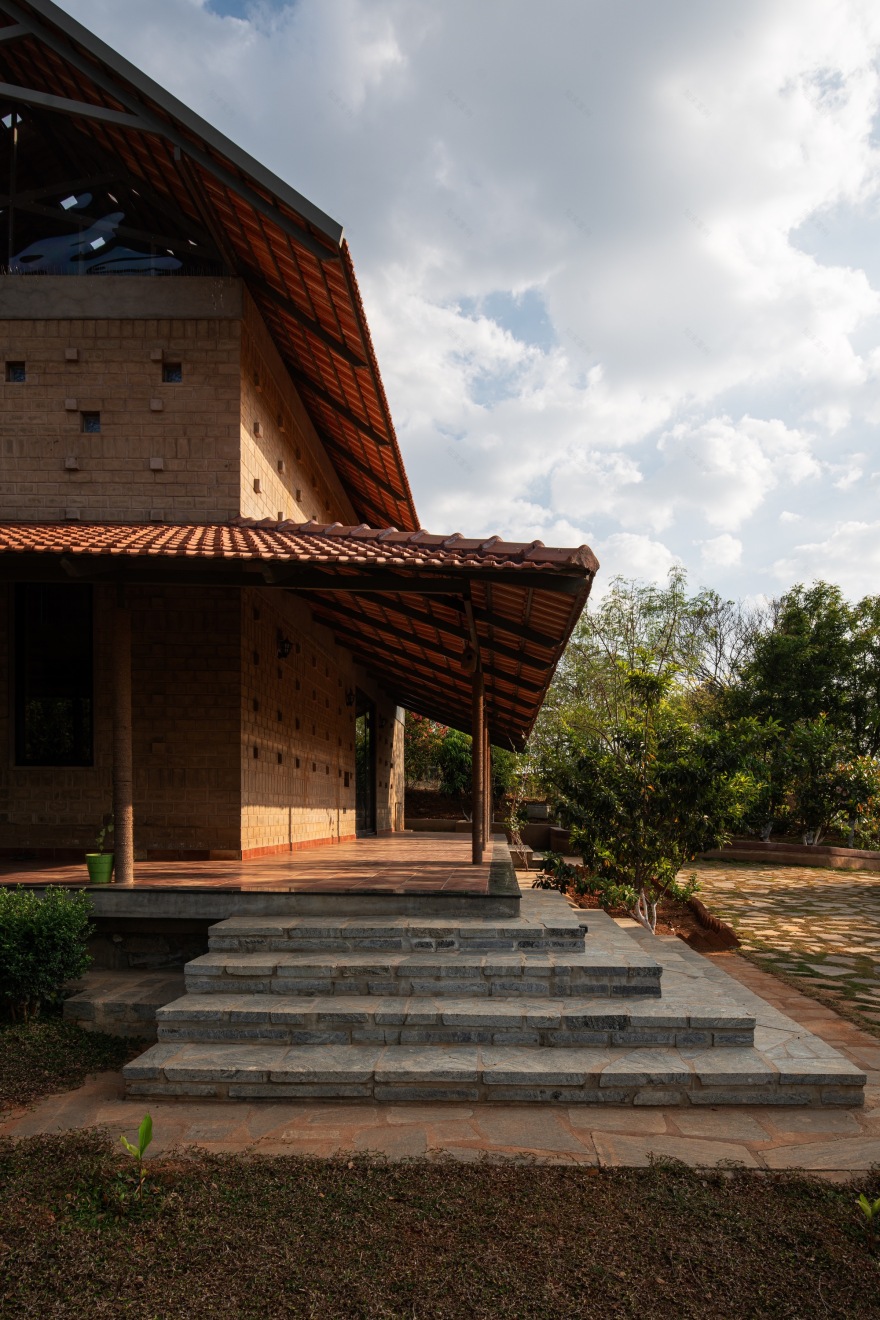
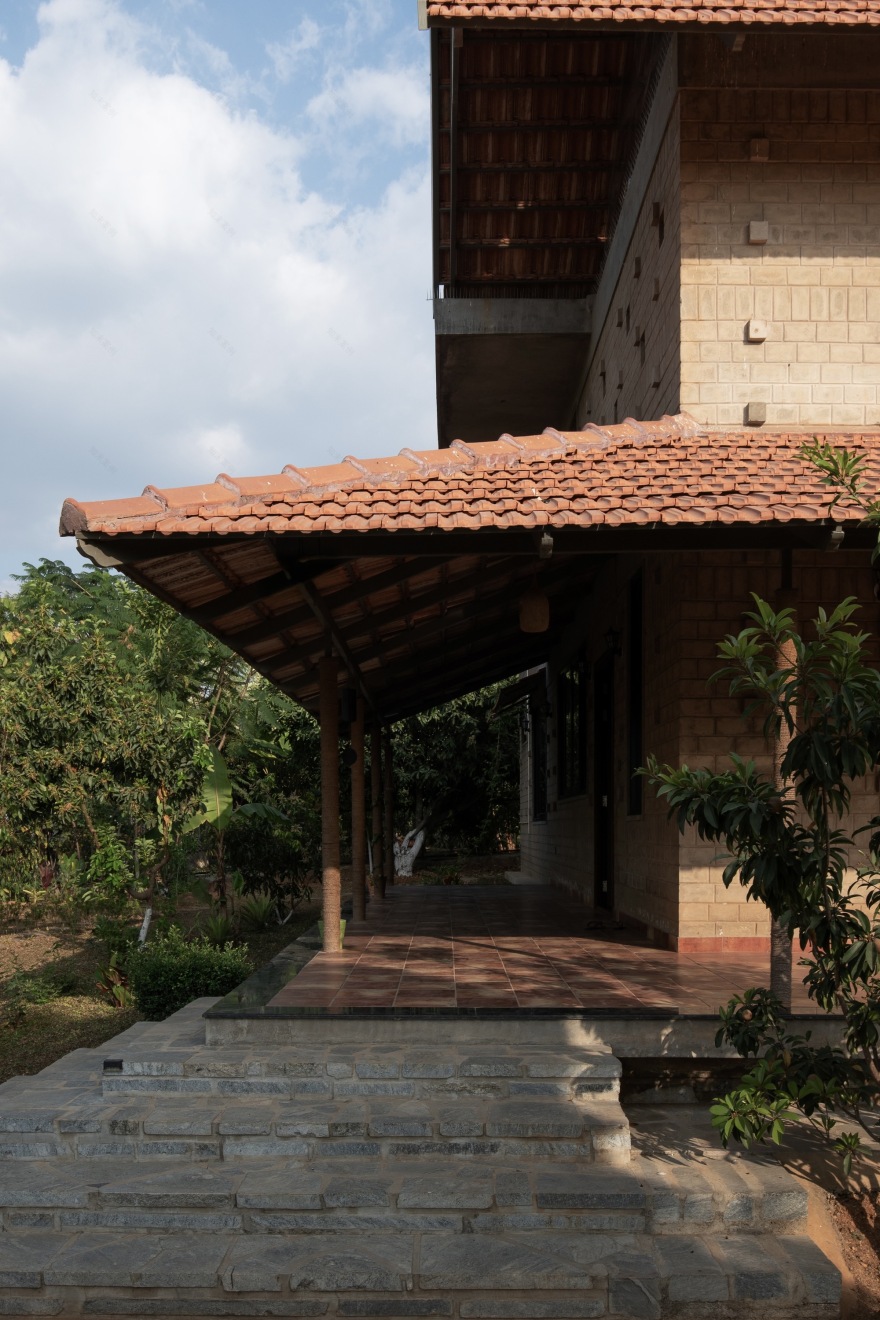
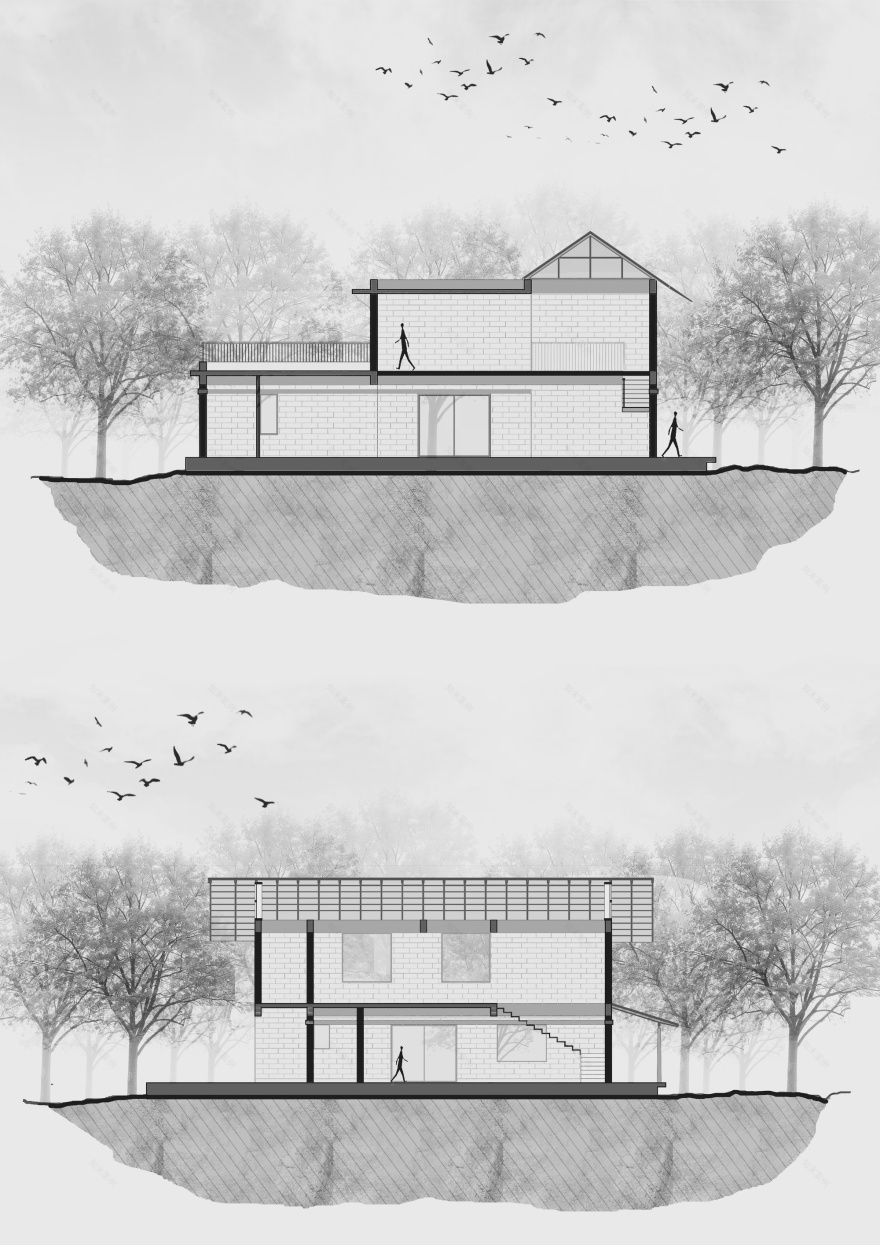
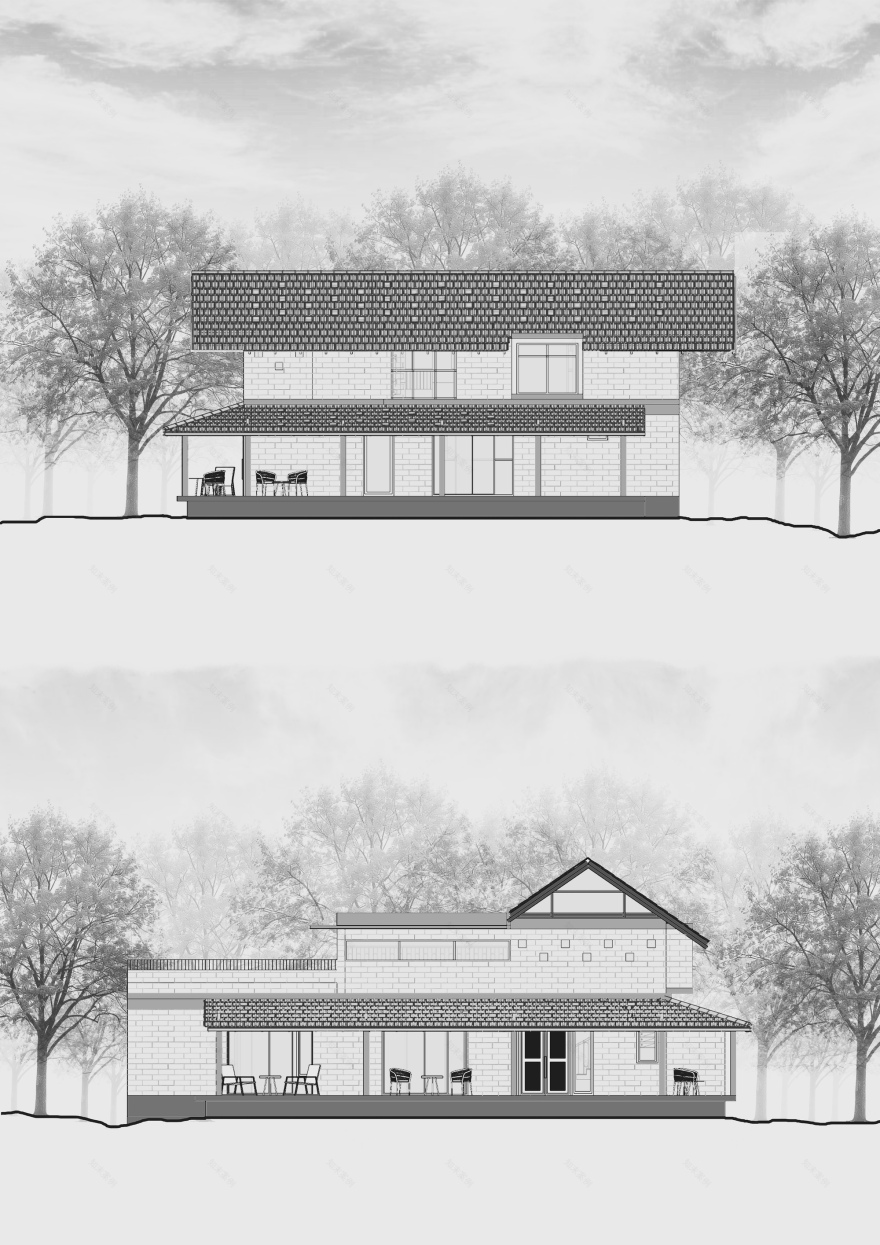
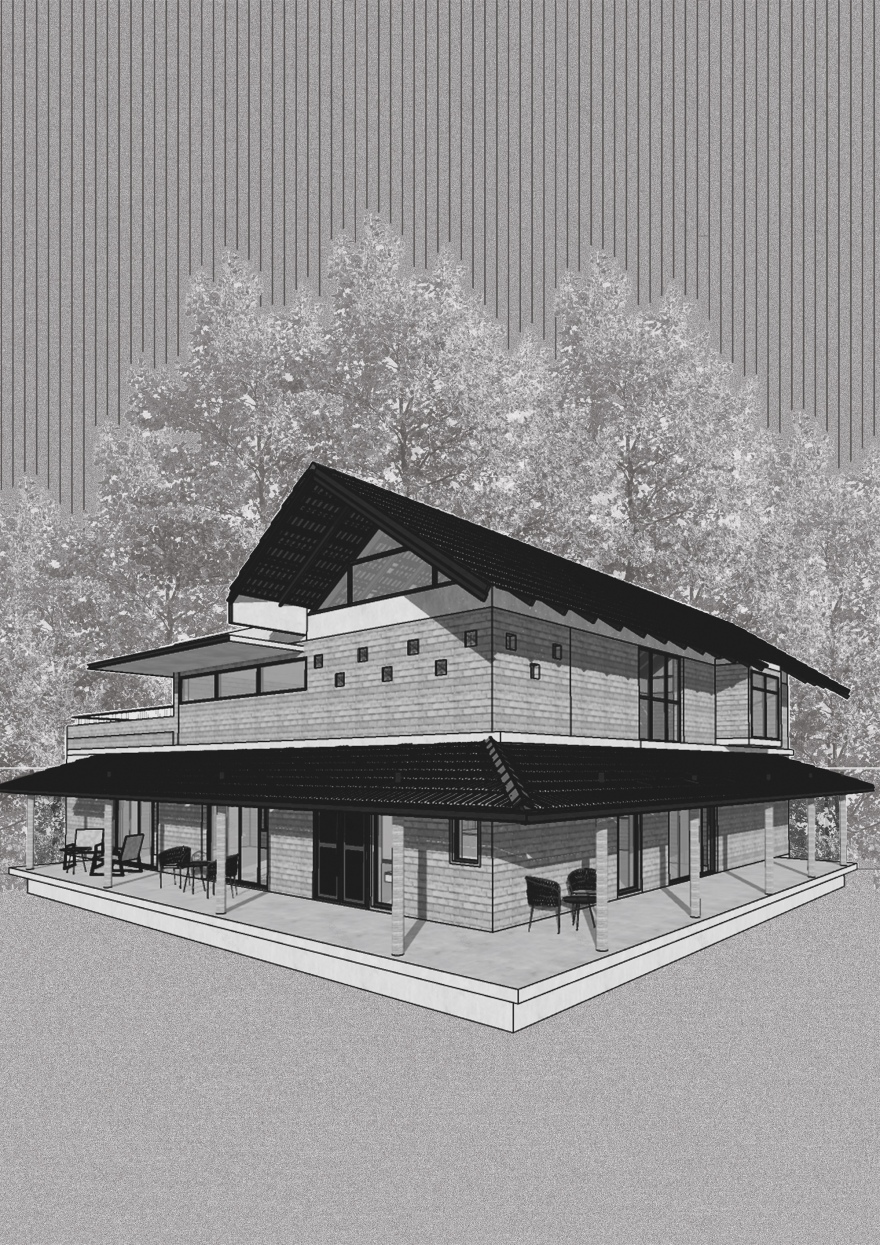
The first reading of the house is through its roofscape. Deep, sloping tiled roofs extend well beyond the enclosing walls, establishing a dominant horizontal plane that anchors the building to the ground. These overhangs operate as a brise-soleil at an architectural scale—mitigating direct solar gain, shading the earthen envelope, and tempering the microclimate along the building edge. Beneath this protective layer, verandahs wrap the house, becoming transitional thresholds where the landscape is continuously negotiated rather than abruptly framed.
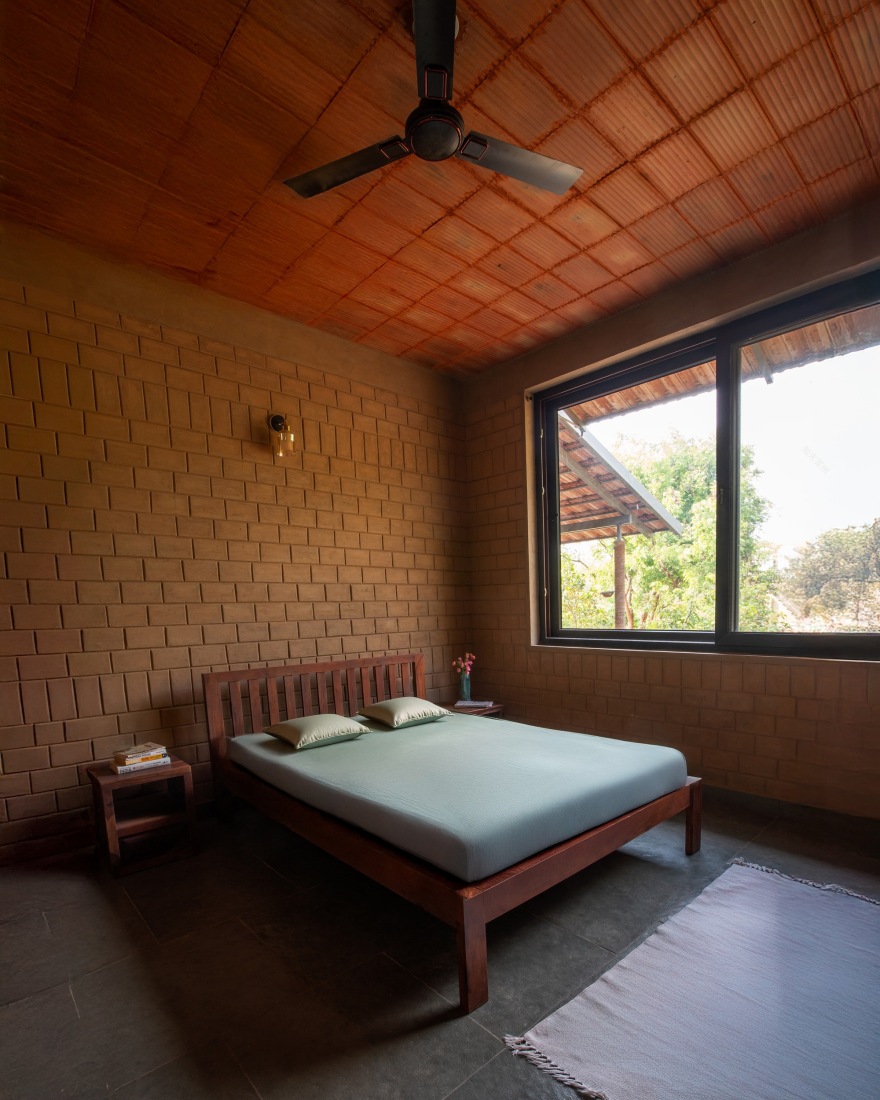
The material language is intentionally restrained. Constructed in CSEB (Compressed Stabilized Earth Blocks), the walls are left exposed, carrying the tonal variations and granular texture of the soil they originate from. The masonry is not treated as a finish, but as a substance—its thickness and mass contributing directly to thermal performance. Heat gain is delayed, internal temperatures are moderated, and the building remains largely insulated from external extremes. Over time, the material is allowed to weather and deepen, reinforcing the house's affiliation with the ground.
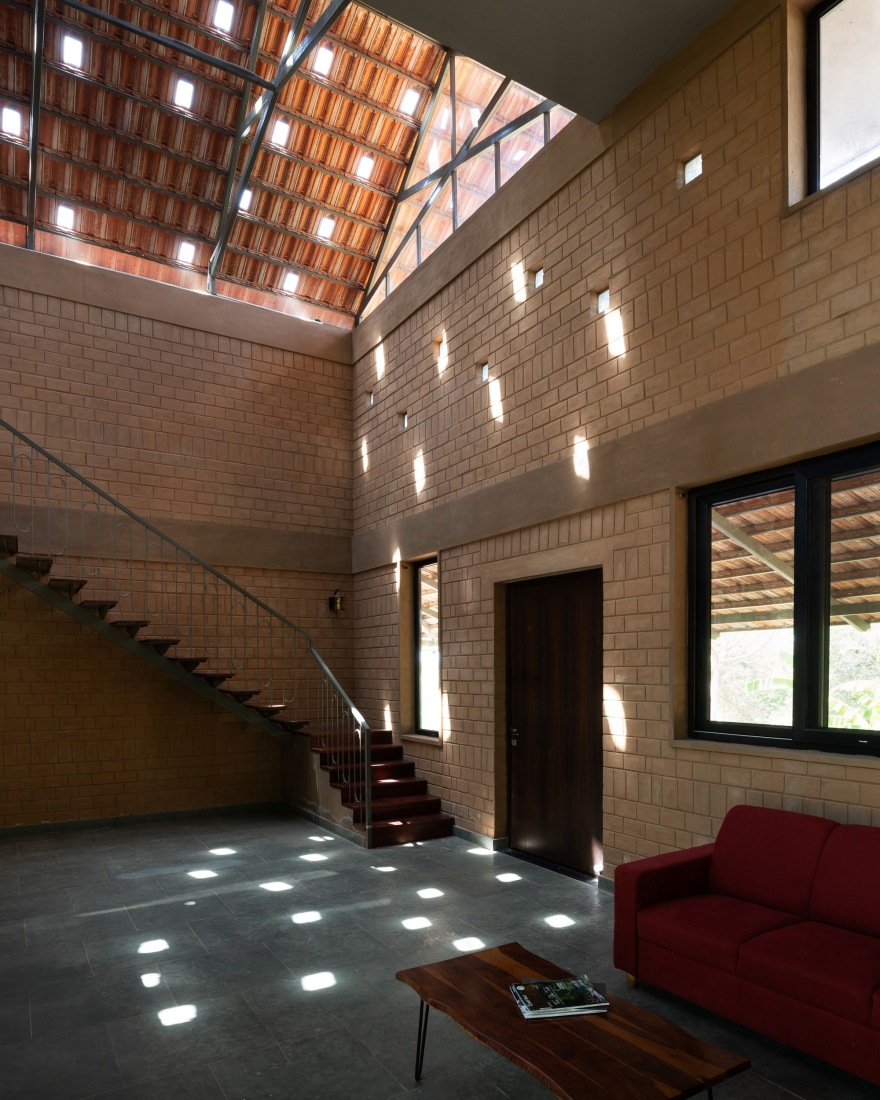
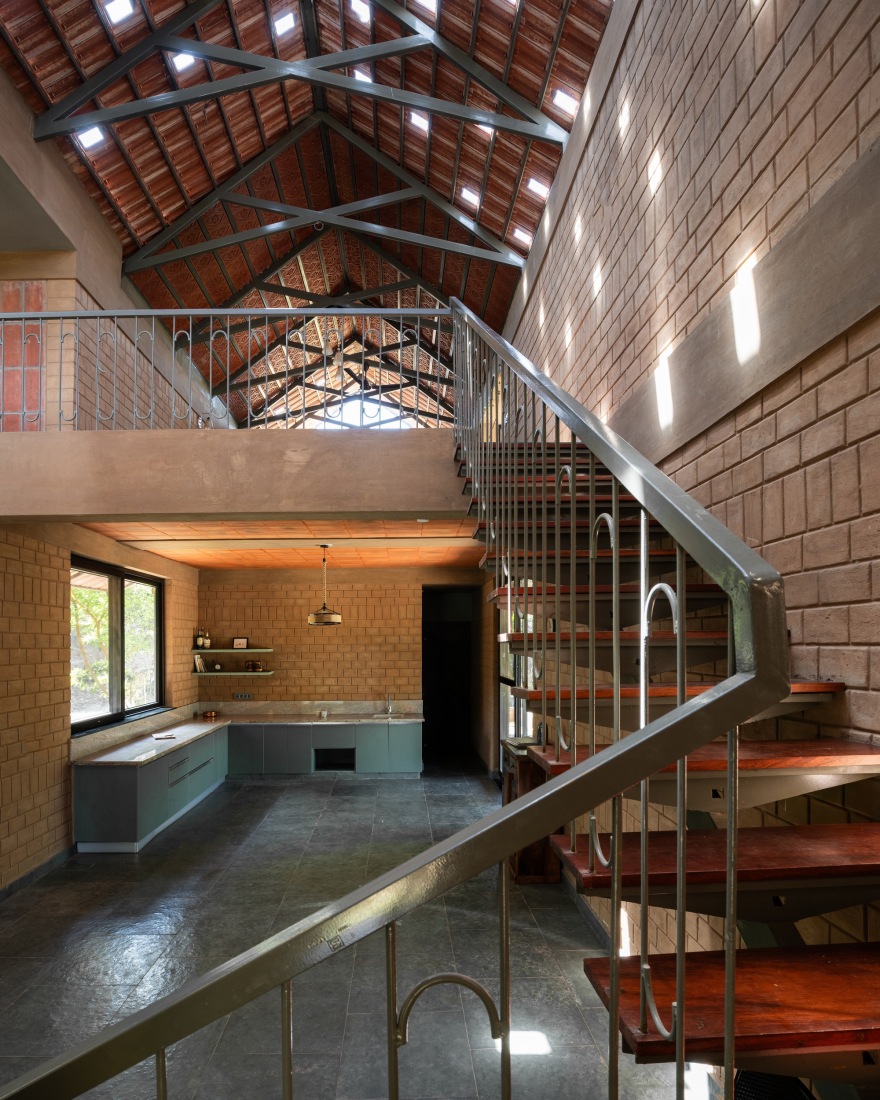
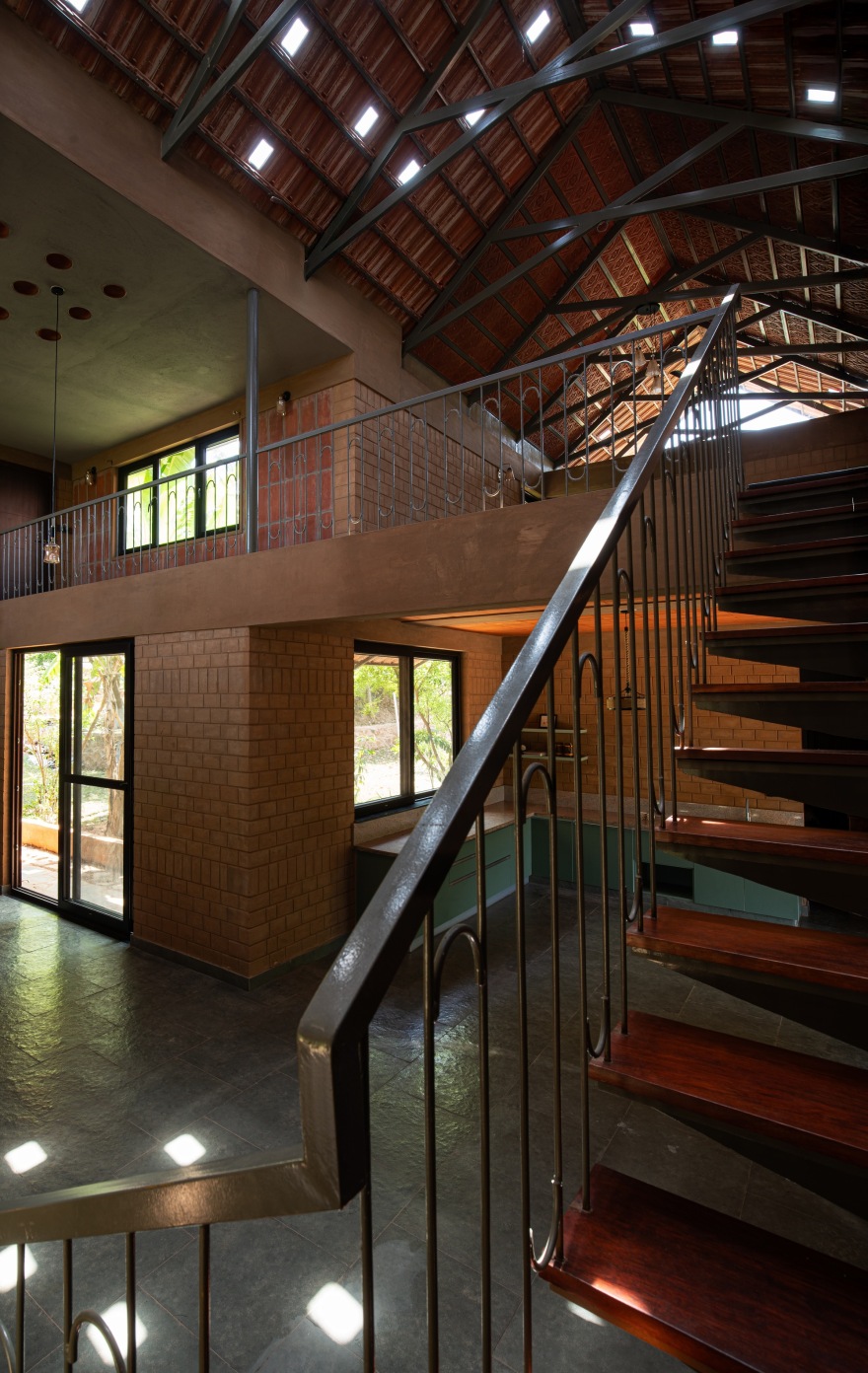
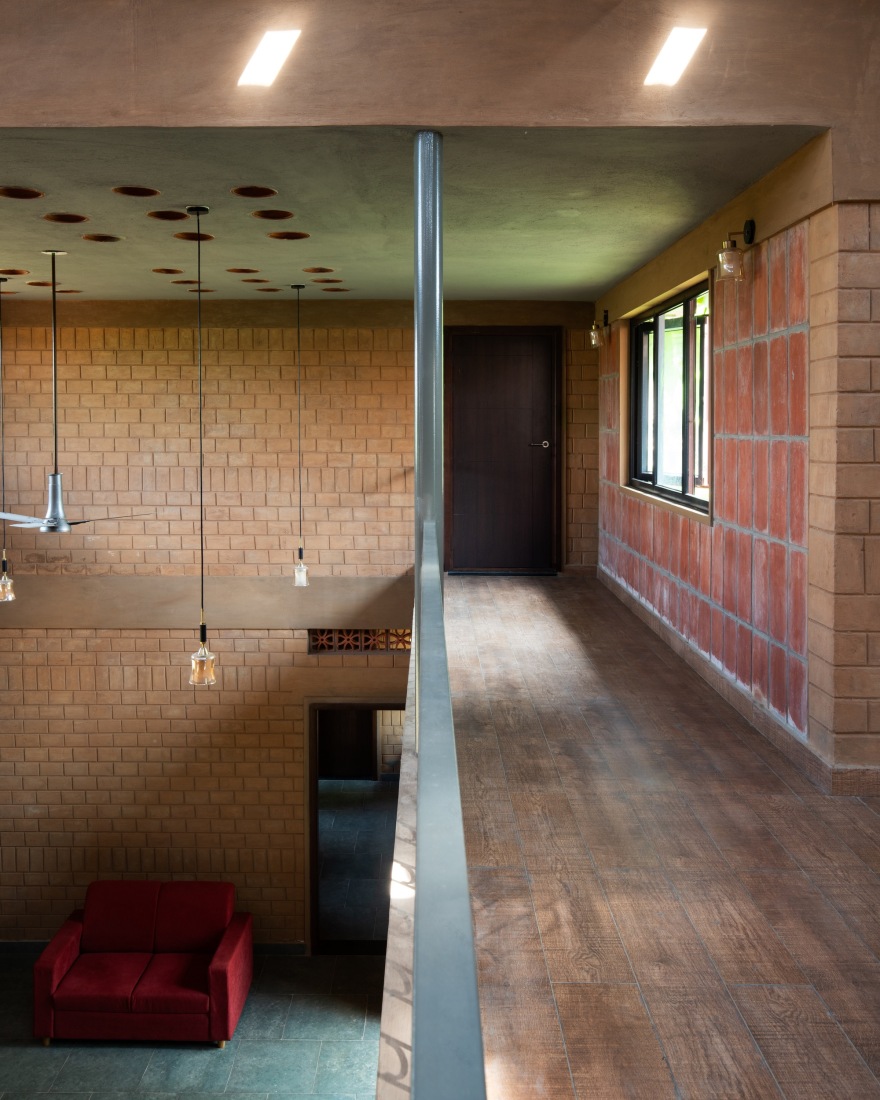
Internally, the house shifts from compression to release. A relatively contained footprint opens into double-height volumes that act as both spatial and environmental cores. These vertical voids are calibrated to induce a stack effect, where warm air rises and escapes through high-level ventilators integrated within the roof profile. This upward movement draws in cooler air from shaded lower openings, establishing a continuous cycle of cross ventilation. The architecture, in this sense, is less a static enclosure and more a breathable system—responsive to diurnal shifts without mechanical dependence.
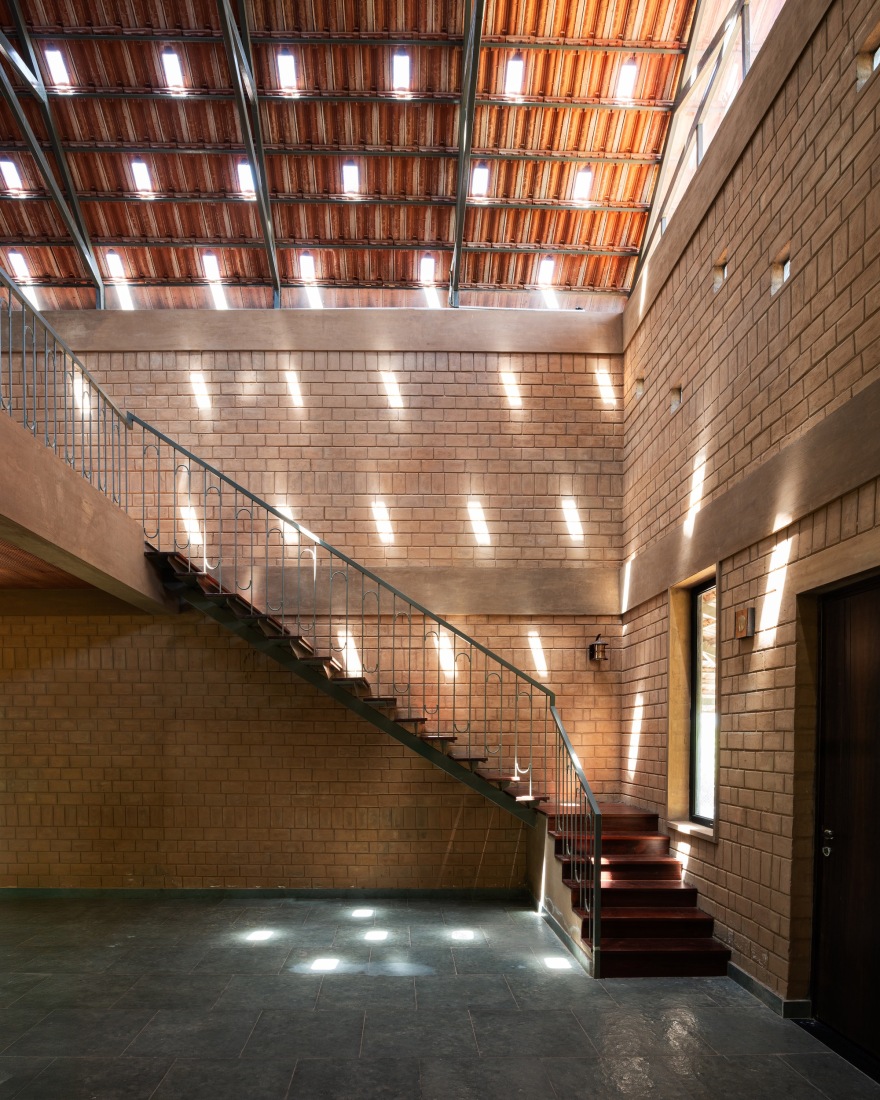
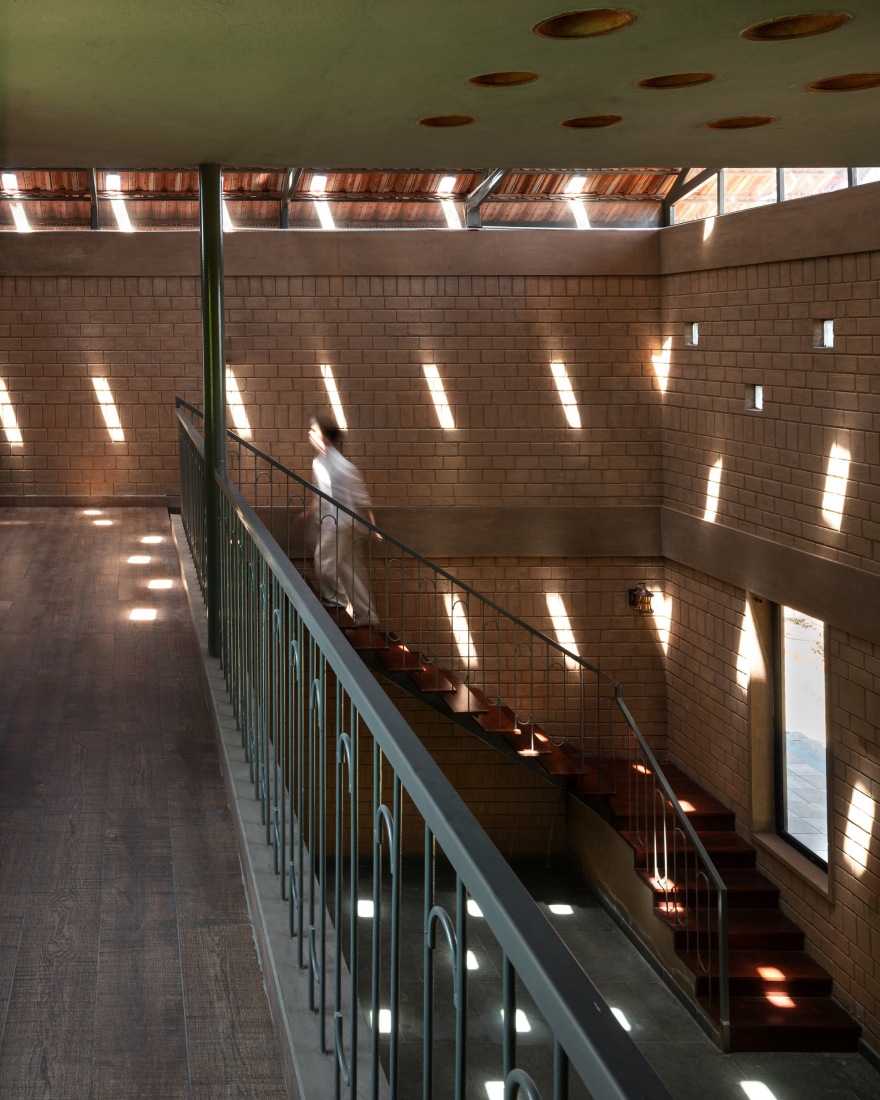
Light is introduced with equal precision. Instead of large, indiscriminate apertures, the envelope is punctured selectively—through recessed openings, slit windows, and calibrated voids within the masonry. These incisions admit controlled shafts of light that register across the textured surfaces, producing a shifting gradient rather than uniform illumination. Above the staircase, this interplay becomes more pronounced—light filters in and traces the movement of the sun's path through the day, casting a series of evolving patterns onto the textured Kota floor below. The shadows lengthen, contract, and shift in orientation, almost as a quiet, musical composition of light and time, marking the passage of the day within the volume. The upper levels, articulated within the trussed roof, receive diffused daylight through skylight insertions, ensuring that the larger spatial volumes remain evenly lit yet subdued.
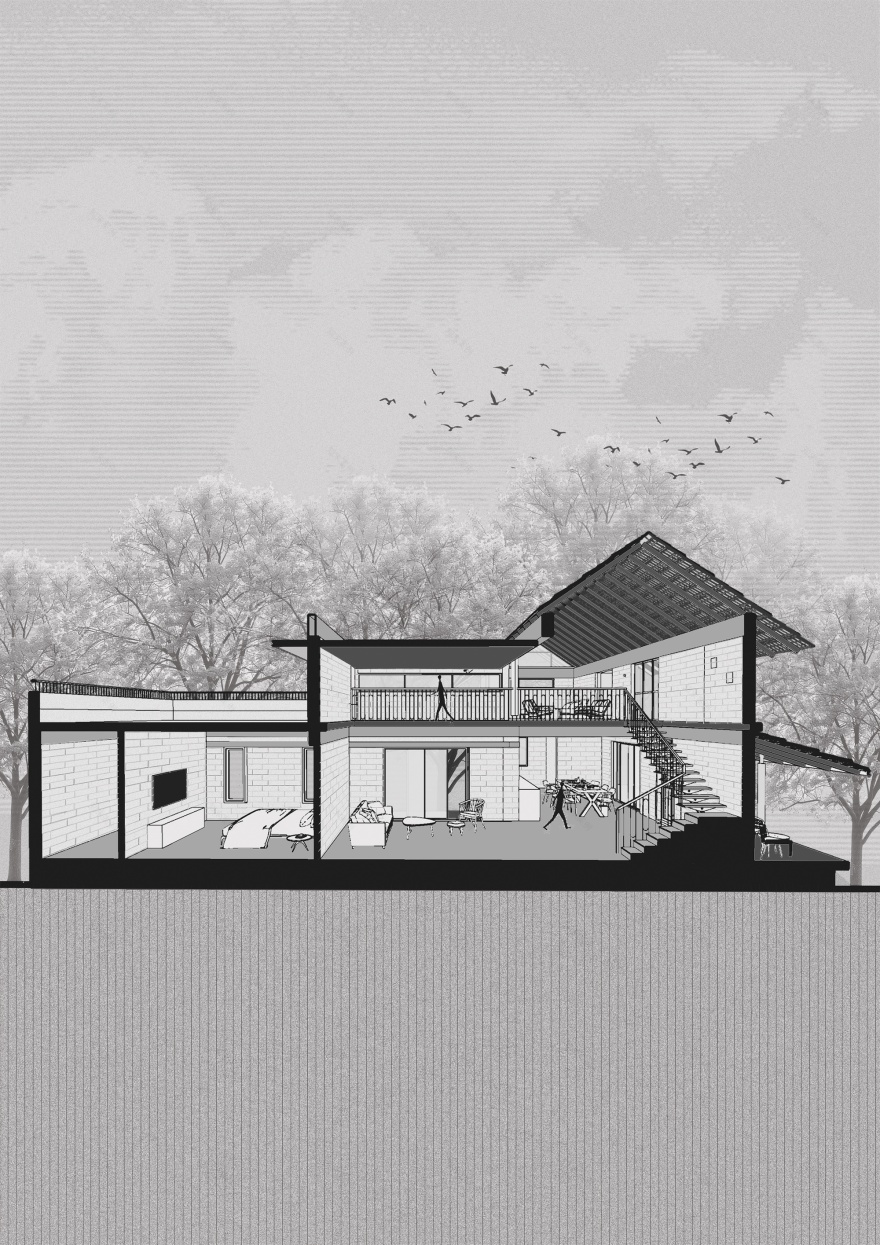
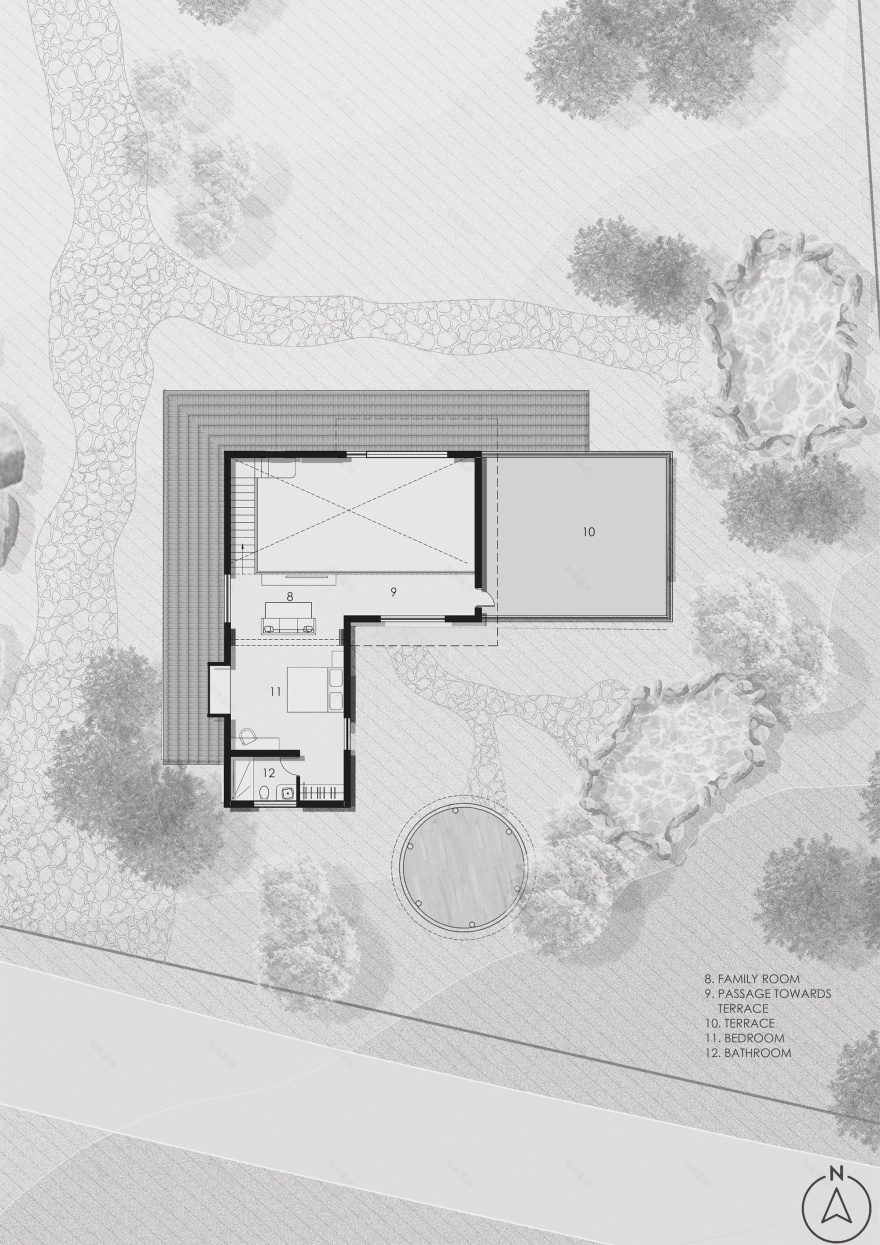
Movement through the house is orchestrated as a sequence of layered perceptions. The staircase, composed of a light steel framework with timber treads, rises along the edge of the double-height space—its visual permeability allowing the volume to remain uninterrupted. As one ascends, the experience is less about reaching a destination and more about inhabiting the section—engaging with height, light, and cross-views. The upper walkway extends this experience, bridging across volumes while maintaining a constant visual dialogue with the spaces below and the landscape beyond.
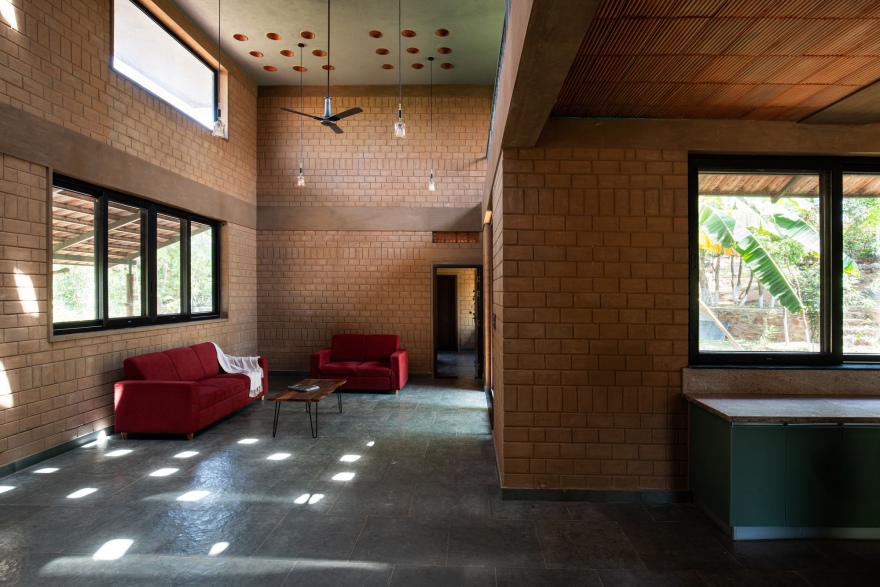
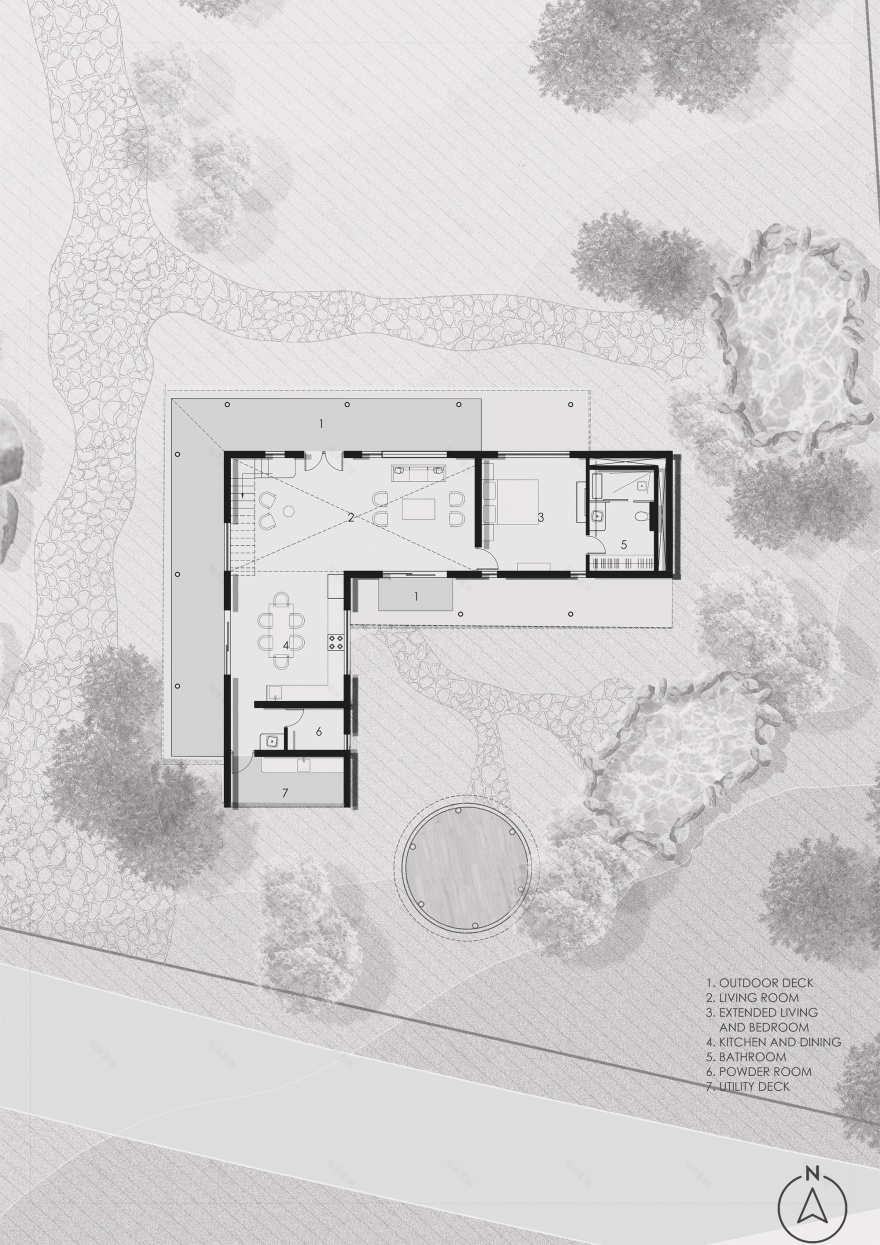
Despite its modest footprint, the house achieves a sense of spatial expansiveness through continuity rather than scale. Living spaces flow into one another, anchored by the central volume, while the verandahs dissolve the boundary between inside and outside. The plinth extends outward into the site, merging with stone-paved pathways and shaded greens, allowing occupation to spill beyond the built edge.
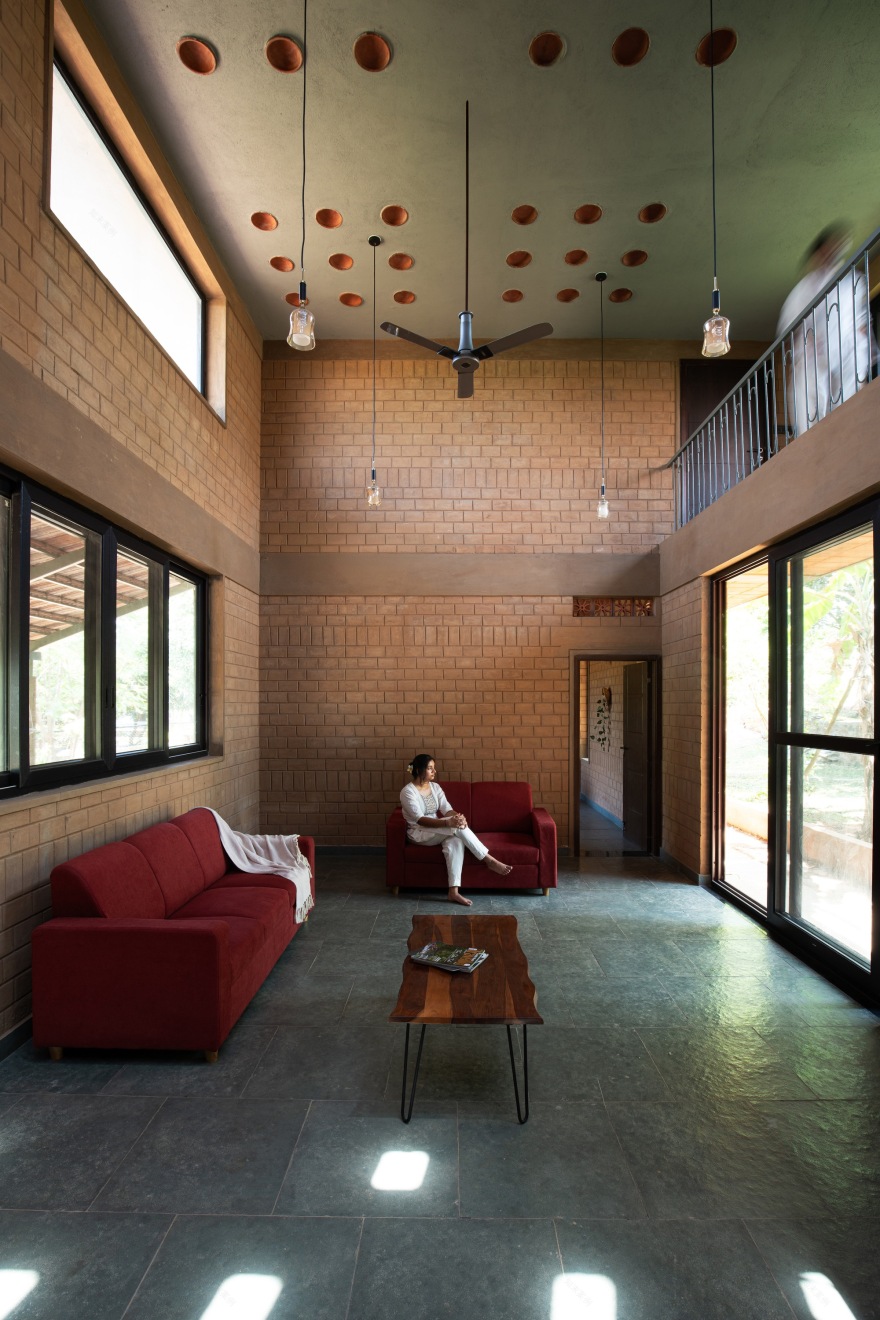
Kṛpānilaya ultimately resists excess. Its strength lies in calibration—of light, air, material, and proportion. The deep roofs shade, the walls insulate, the voids ventilate, and the openings frame without overwhelming. Each element performs with clarity, contributing to an architecture that is both grounded and responsive.
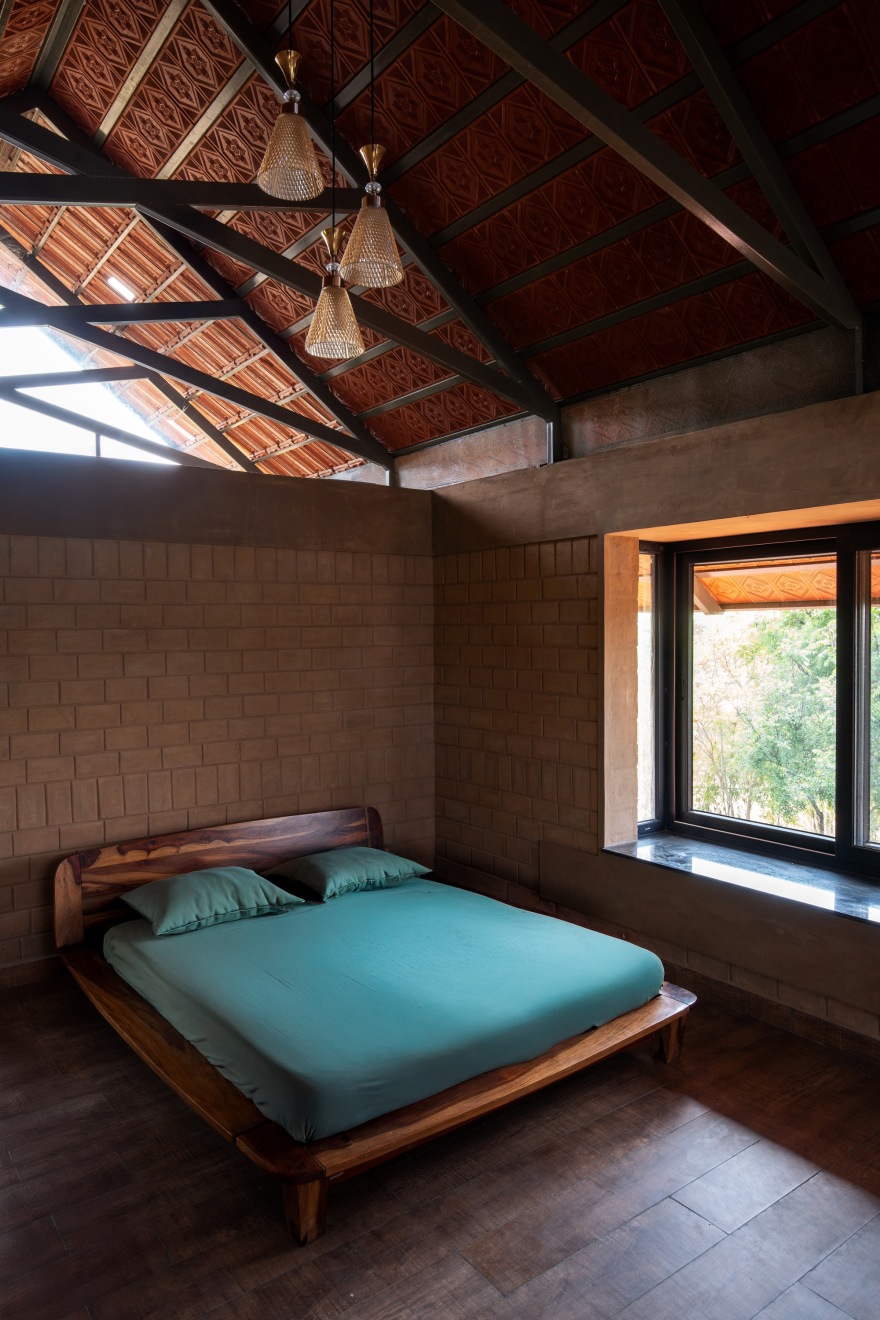
In inhabitation, the house reveals its true character—not as a composed image, but as a lived environment. It cools without intervention, lights itself without glare, and opens to its surroundings without exposure. It is in this quiet performance that Kṛpānilaya finds its essence: not as an assertion on the landscape, but as a condition within it—measured, porous, and enduring.
Project gallery
南京喵熊网络科技有限公司 苏ICP备18050492号-4知末 © 2018—2020 . All photos and trademark graphics are copyrighted by their owners.增值电信业务经营许可证(ICP)苏B2-20201444 苏公网安备 32011302321234号
苏公网安备 32011302321234号客服
消息
收藏
下载
最近