

创作上传
VIP
收藏下载
登录 | 注册有礼
查看完整案例

收藏

下载

分享

翻译
Architects:Studio Hashimura,nao architects office
Area:135m²
Year:2025
Photographs:Ken’ichi Suzuki,Masafumi Tsuji
Lead Architects:Nao Uchida, Yuichi Hashimura
Structure:Kenichi Inoue Structural Engineers, Kenichi Inoue
M&E:MACHITEC, Maki Shimizu
Construction:Maruyama Komuten
Category:Houses
Design Team:Yuta Tosaya
Landscape:Kosuke Katano, Yosuke Nishio
City:Karuizawa
Country:Japan
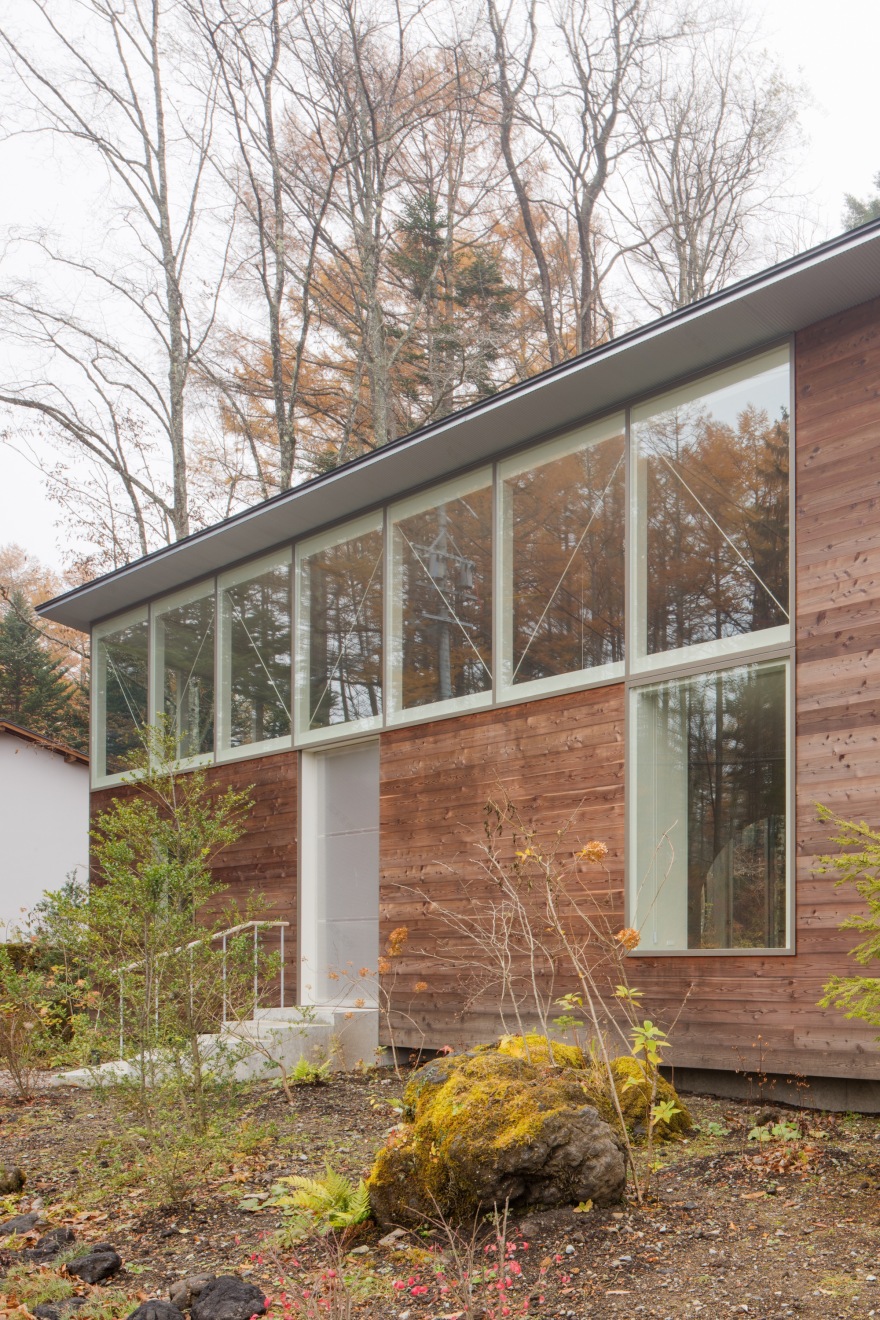
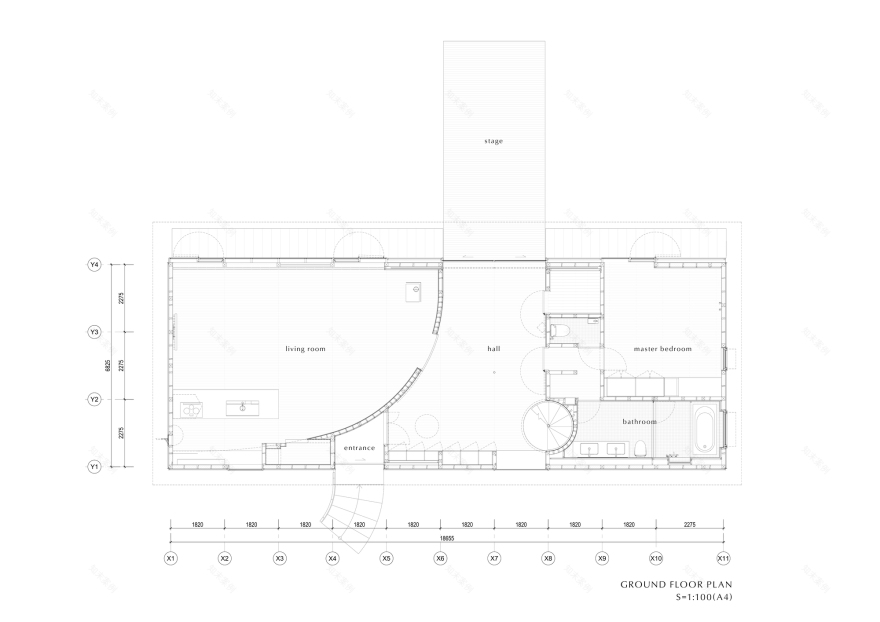
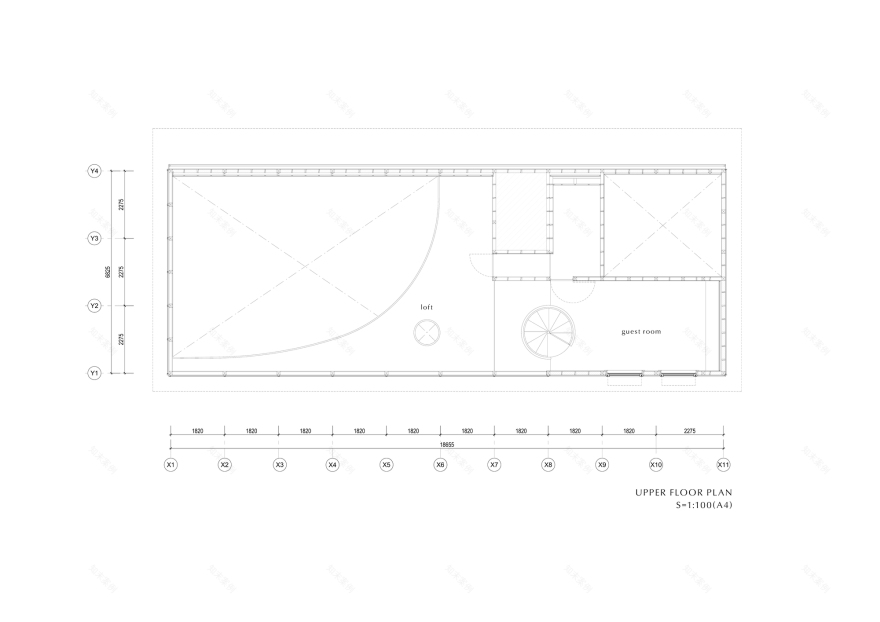
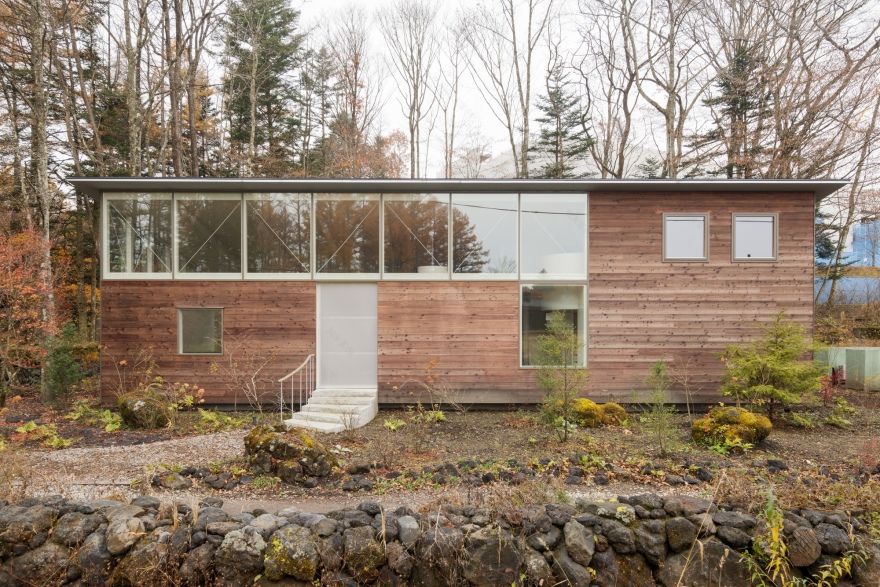
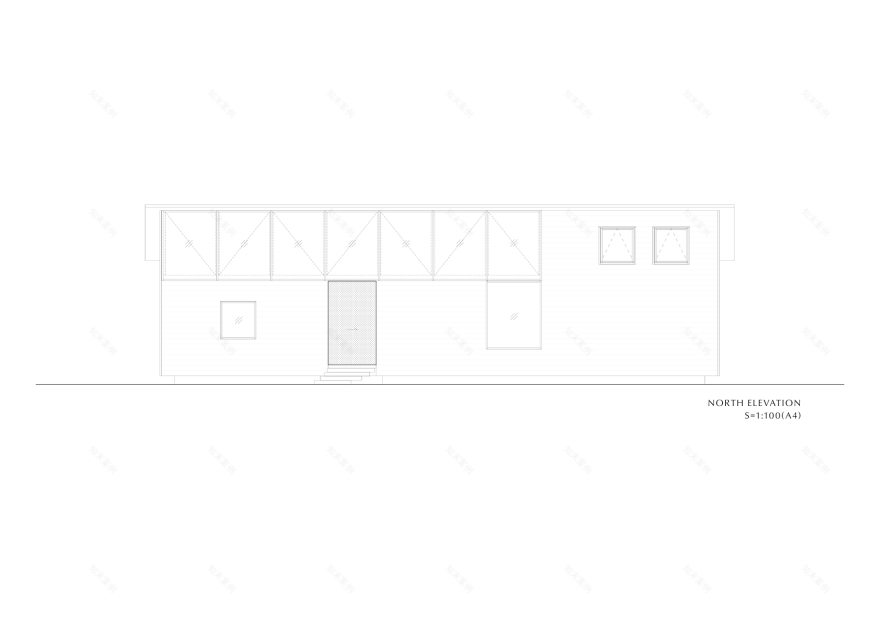
Text description provided by the architects. This villa in Karuizawa, Nagano Prefecture, was designed for a retired couple to spend their holidays. The rectangular volume, measuring 18.6 meters in width and 6.8 meters in depth, is placed along the front of a broad 990 m² site.
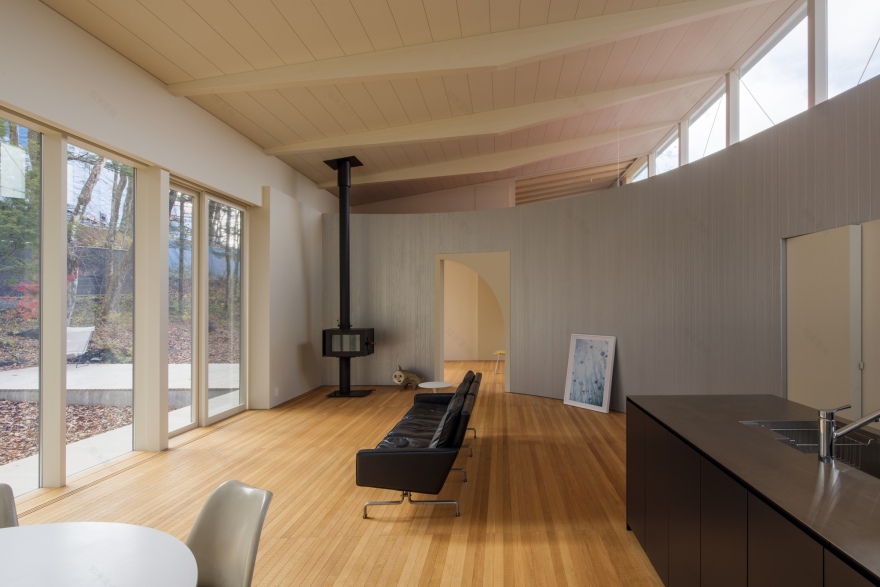
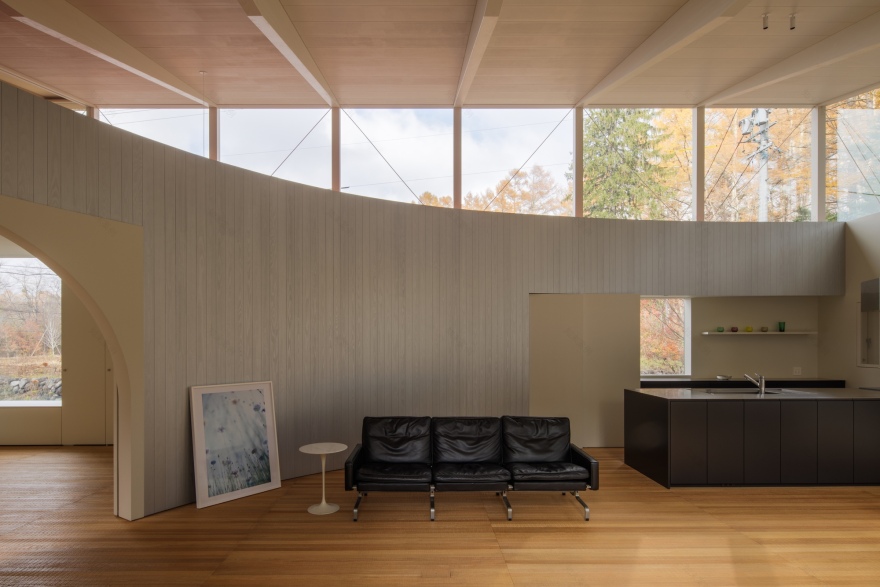
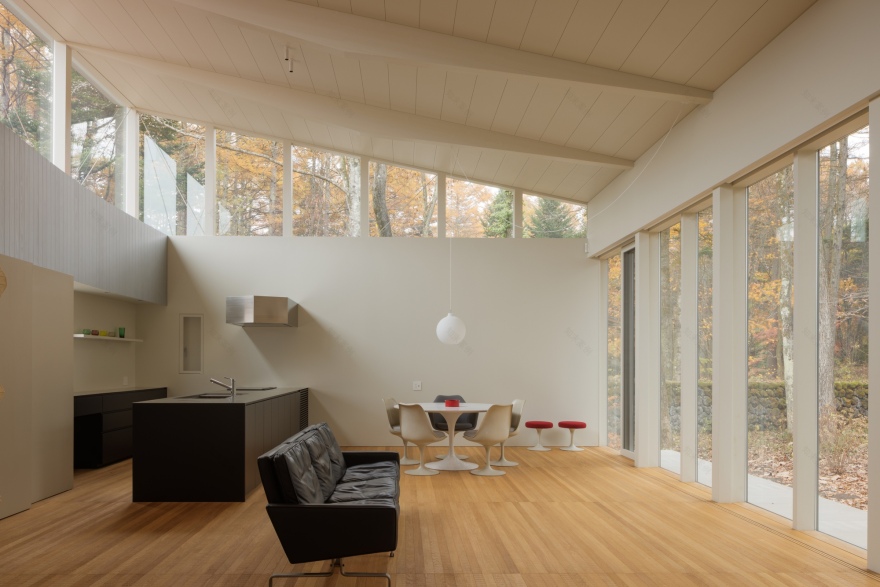
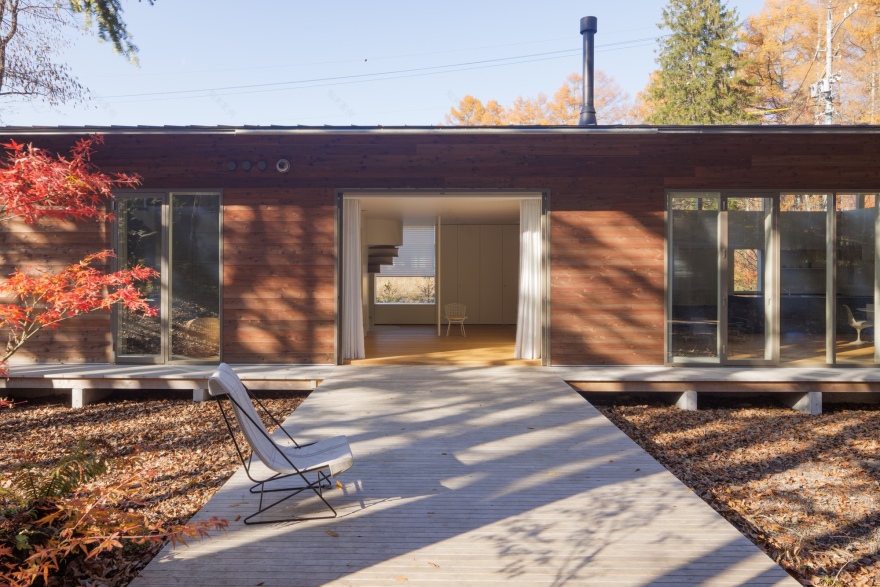
For the client, who spent much of their childhood in this area, Karuizawa is a place to spend time with family and friends. Therefore, the house was to have an approachable presence, where a friend could casually drop by the garden and say hi. The client also requested a house capable of accommodating a large group of people and having a stage for music and dance performances.
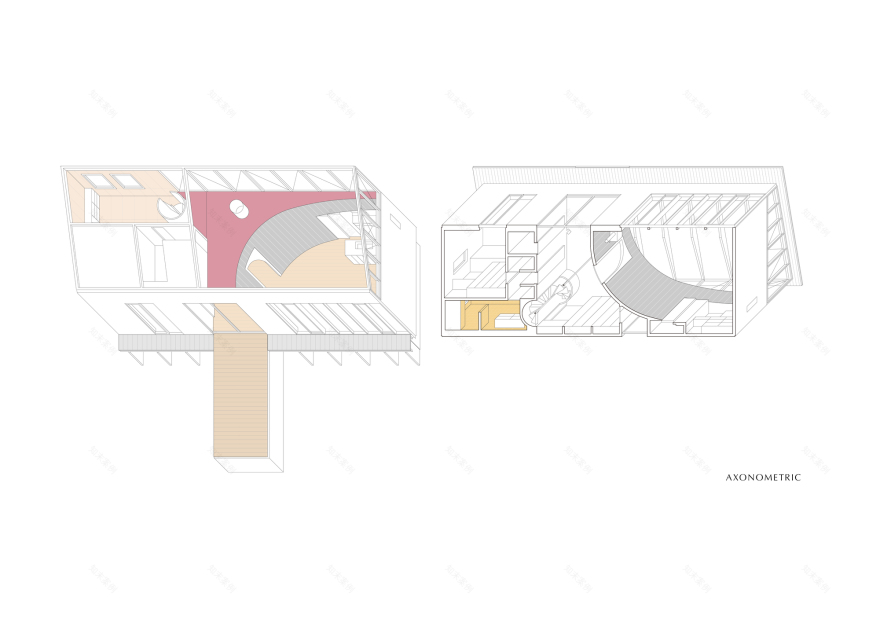
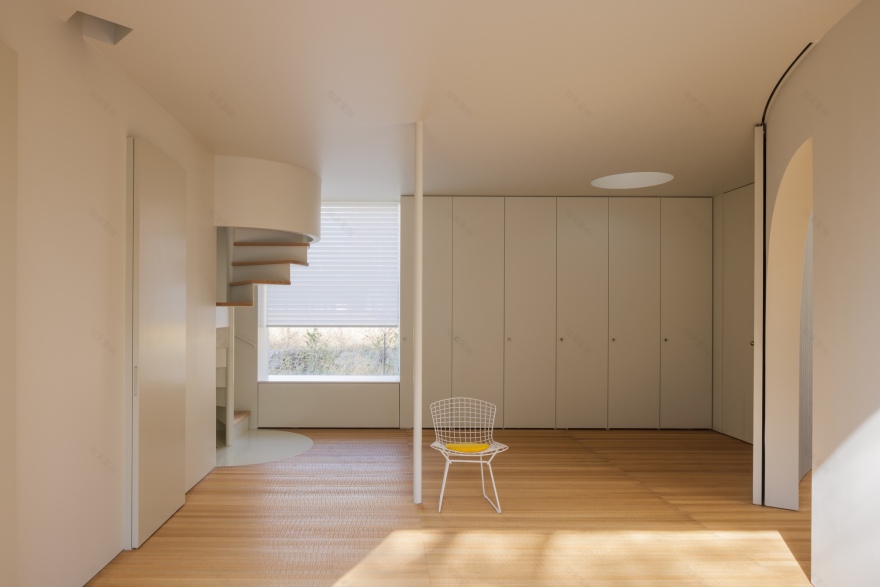
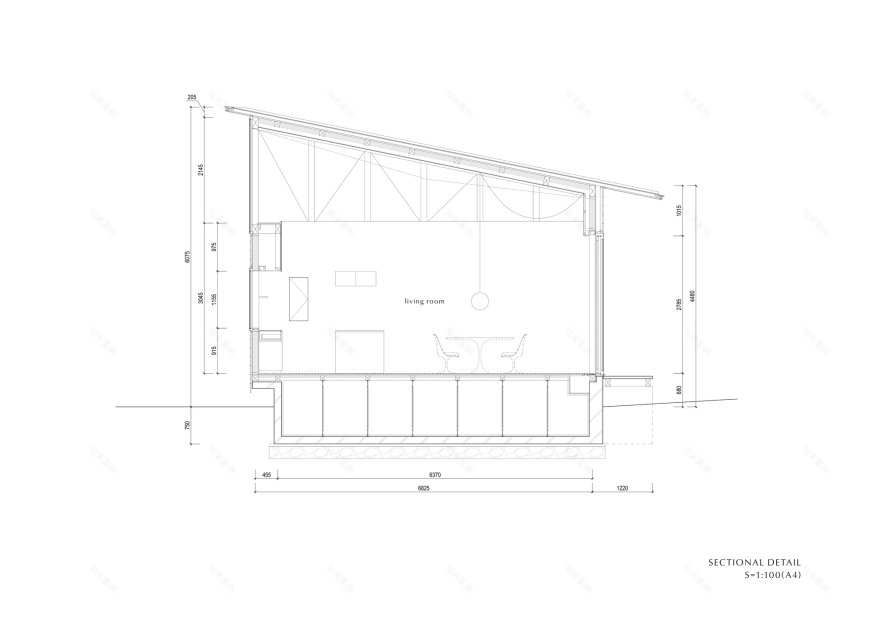
To realize a house that embodies openness rather than intimacy, the living room was designed as a spacious volume with large glulam beams, while other private areas were organized with economical spans, using conventional timber framing. These two structural systems transition at the central steel column located in the "hall."
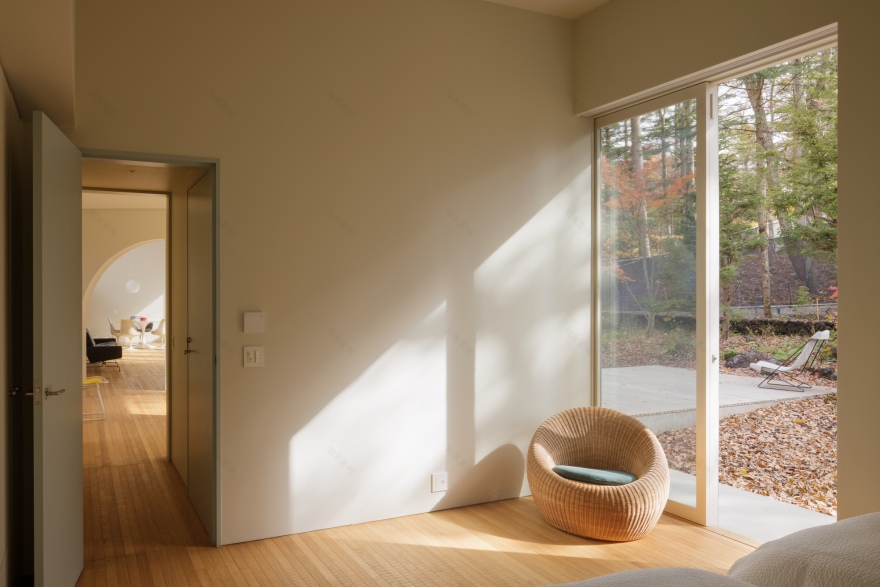
This "hall" serves both as a space for receiving many guests and as a circulation zone connecting the various rooms. However, we designed this functionally ambiguous area as a kind of backstage wing - a place of reserve in relation to the garden stage and the living room. Elements such as doors, the spiral staircase, lighting fixtures, and columns are treated as stage devices — abstracted from their original functions and names, and arranged within a white environment of minimal lines. Placed at the heart of the house, this backstage space connects the living room, the private rooms, and the garden beyond, serving both as a circulation hub and as the nucleus that integrates the various spaces within the house.
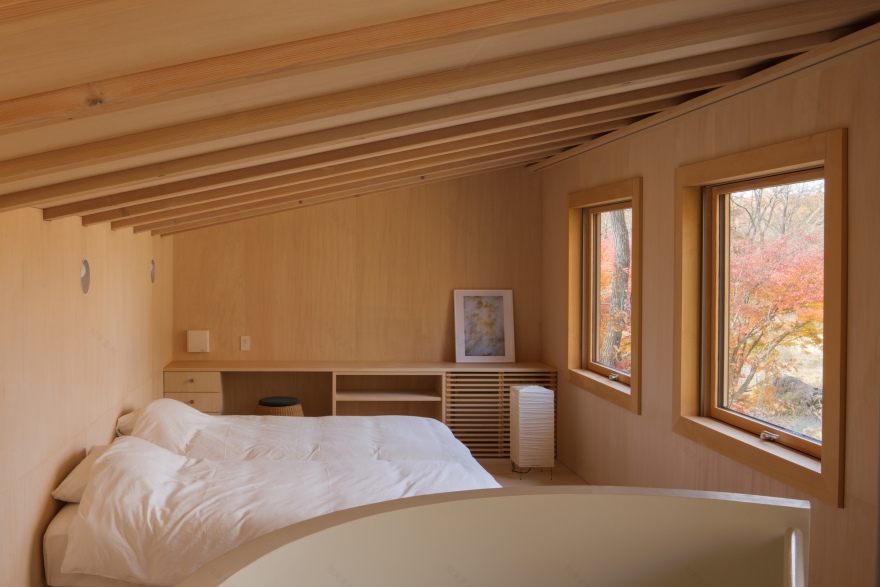
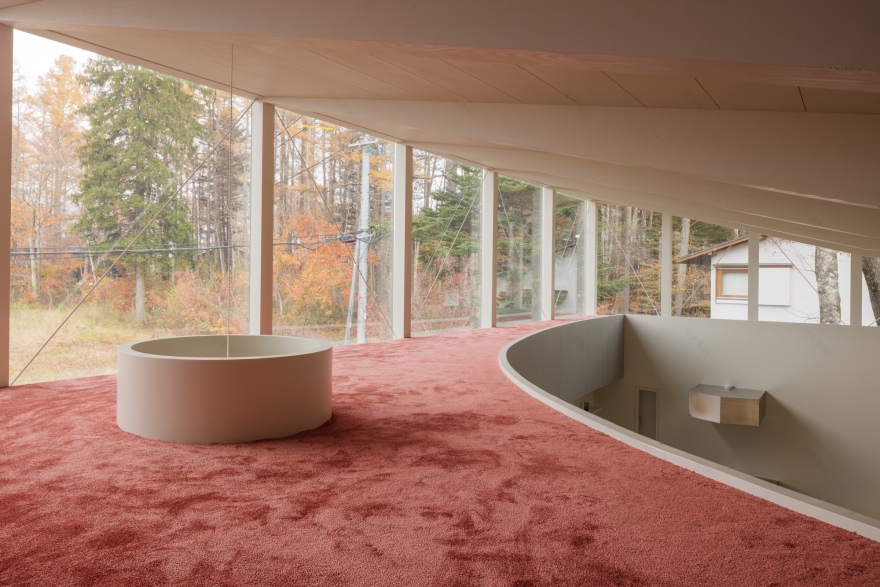
Above the hall, a surplus space was created not intended for occupation, but for presence. This space, which is visually continuous with the guest room through glass, is referred to as a "loft" and is finished with a red carpet floor. From the living room, it appears as a void formed between a curved wall and an inclined ceiling, becoming a kind of brackish zone - a buffer where light and atmosphere from both sides mingle and dissolve. We believed that such a space would lend direction and depth to the entire room, imparting a sense of generosity to the architecture. This loft, too, can serve as another backstage wing—a space of reserve.
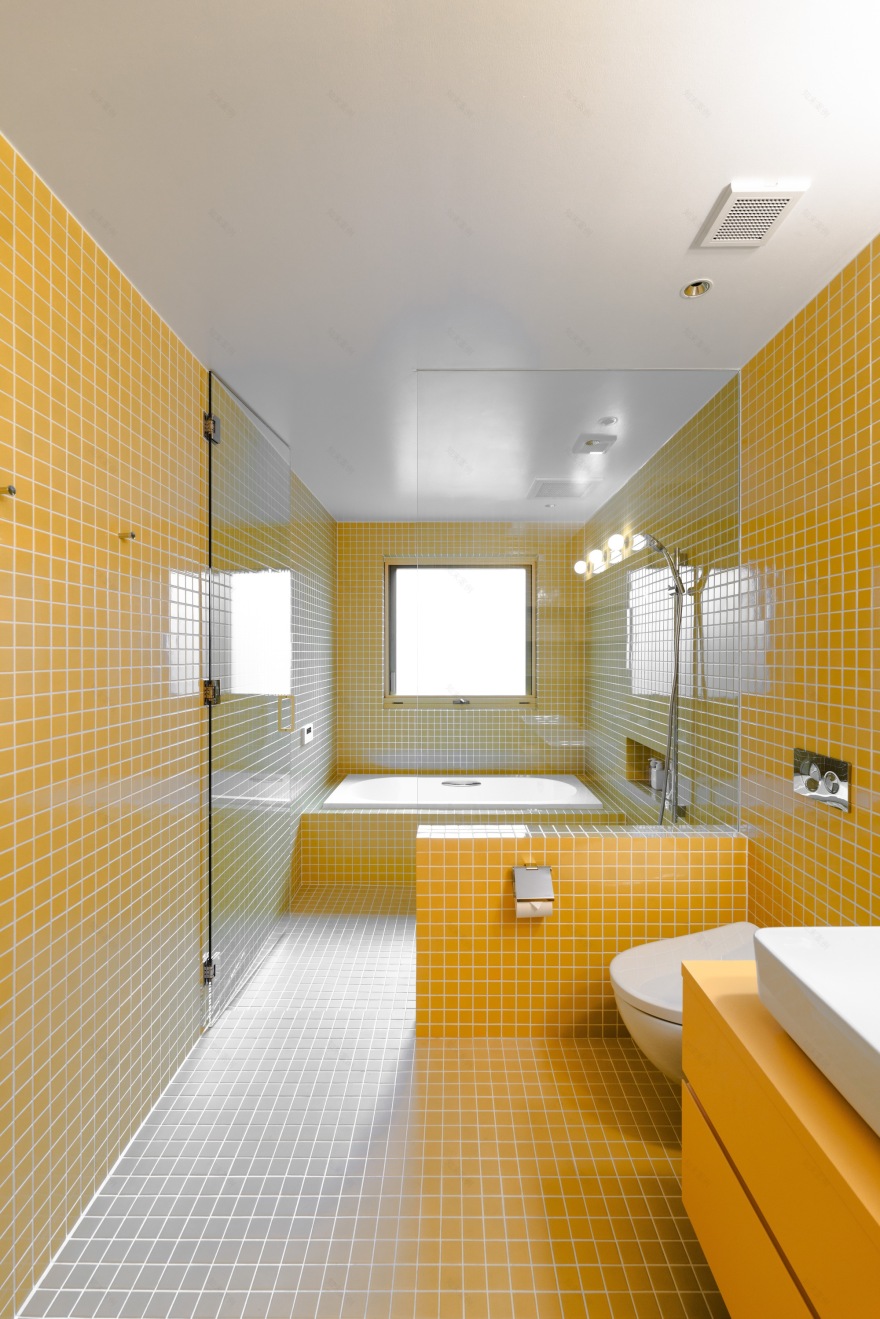
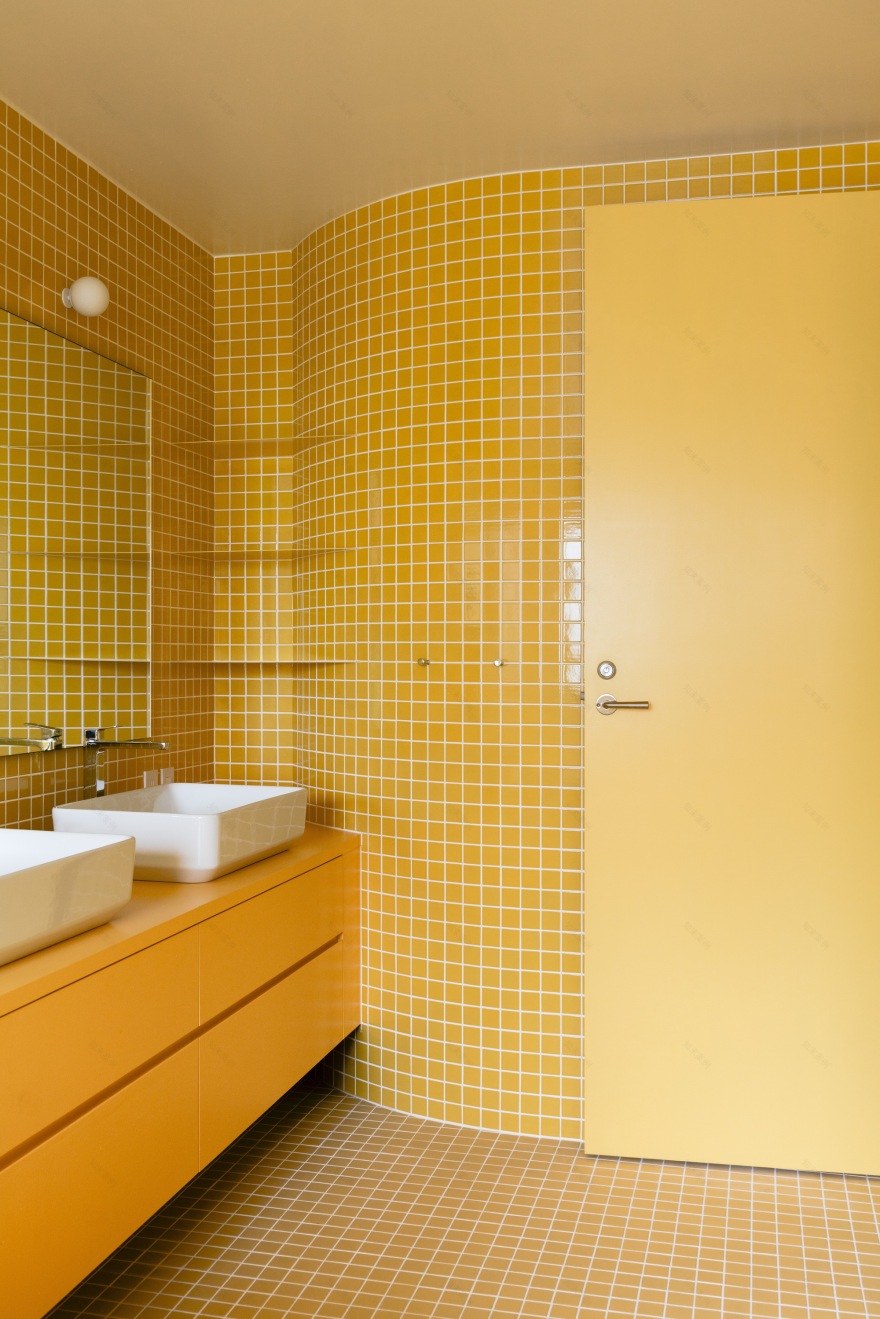
Beginning with the idea of creating a literal stage, we explored the spatial relationships between the stage and its adjoining areas, and in the process discovered the significance of backstage or offstage spaces — those places of reserve like the "wings." By inserting two such spaces — the "hall" and the "loft" — this project seeks to rediscover a sense of openness and generosity that has gradually been disappearing from contemporary residential architecture.
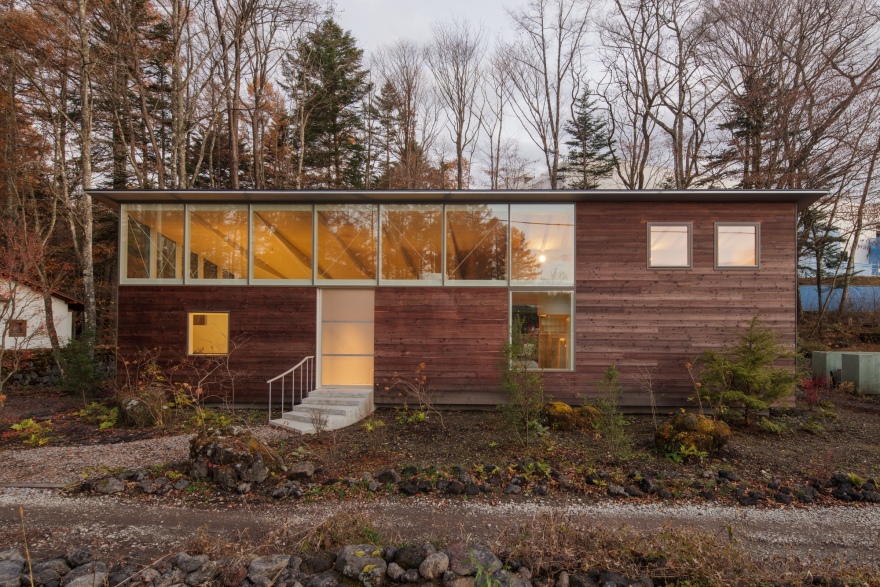
Project gallery
南京喵熊网络科技有限公司 苏ICP备18050492号-4知末 © 2018—2020 . All photos and trademark graphics are copyrighted by their owners.增值电信业务经营许可证(ICP)苏B2-20201444 苏公网安备 32011302321234号
苏公网安备 32011302321234号客服
消息
收藏
下载
最近