

创作上传
VIP
收藏下载
登录 | 注册有礼
查看完整案例

收藏

下载

分享

翻译
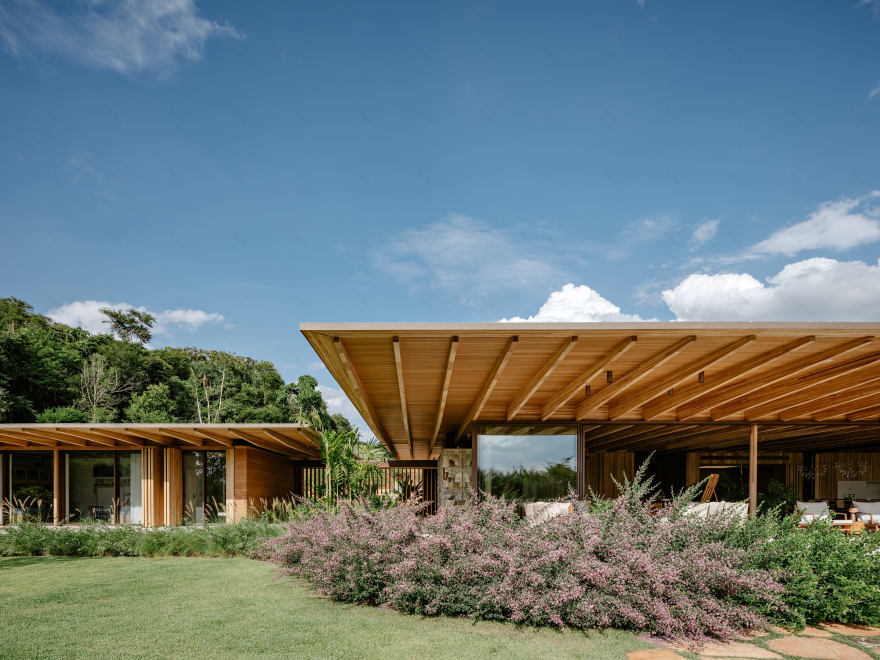
AMS House sits on the highest point of a sloping site in Porto Feliz, Brazil, where Jacobsen Studio arranges the residence as three connected volumes. Designed in 2024, the house uses that fragmented layout to work with the land rather than flatten it, while a taller central block gathers the main living spaces under one roof and opens them outward through large glass panels.
About AMS House
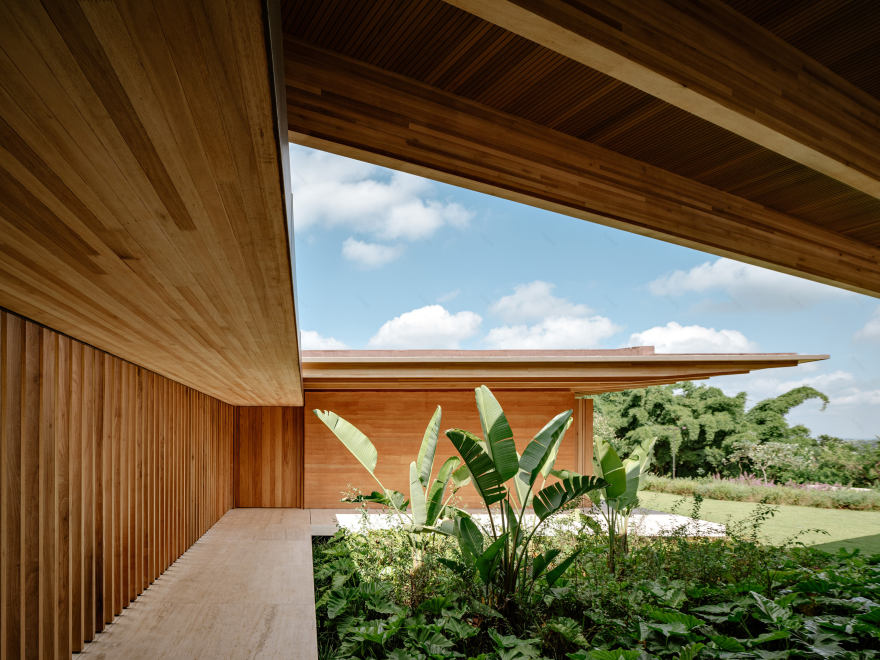
AMS House takes its position from the site. Set at the highest point of a sloping lot in Porto Feliz, the house faces a backdrop of native forest and breaks its program into three blocks linked by covered walkways. That fragmented arrangement answers the uneven ground directly, but it also gives the house a measured footprint across the land rather than concentrating everything in a single mass.
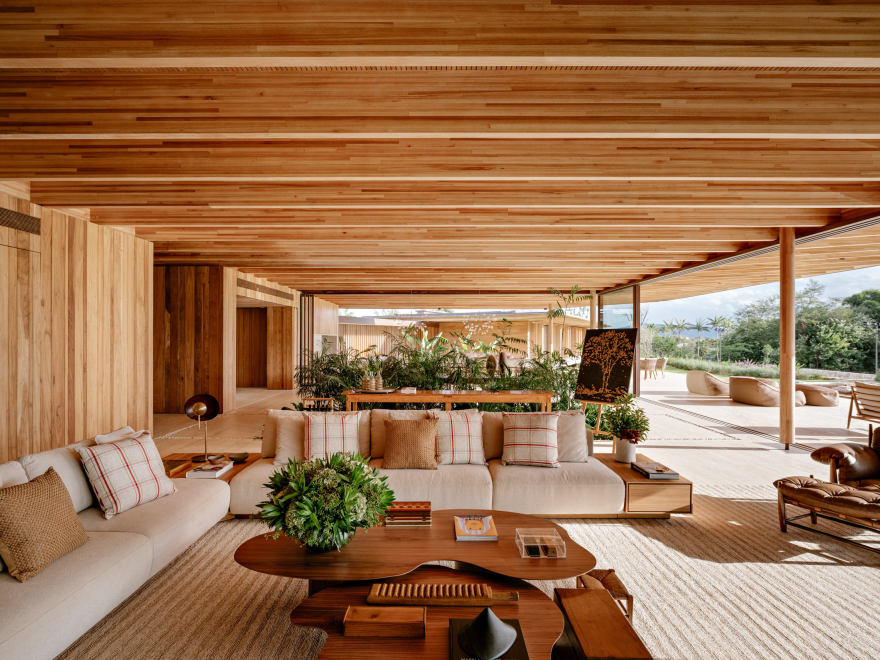
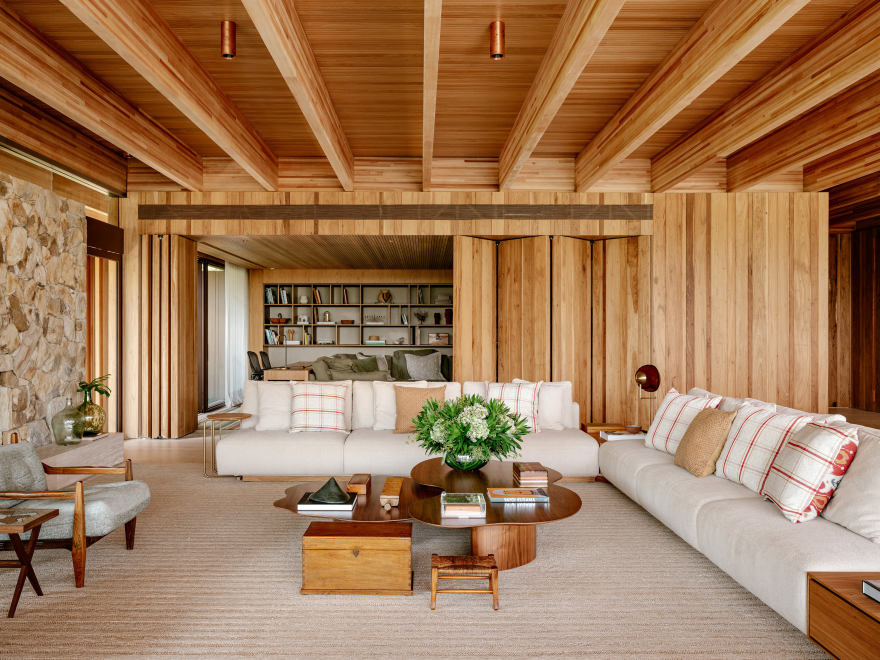
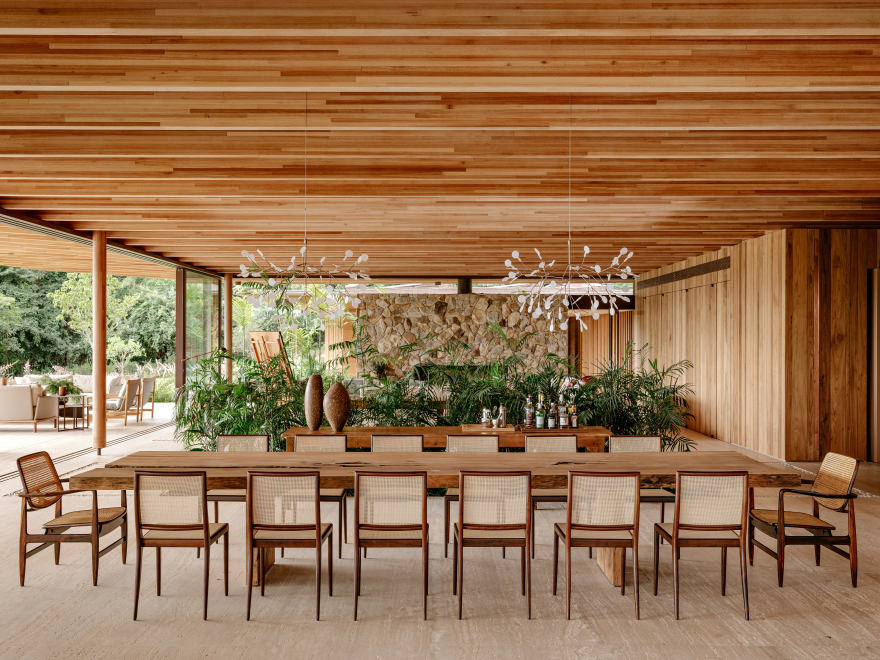
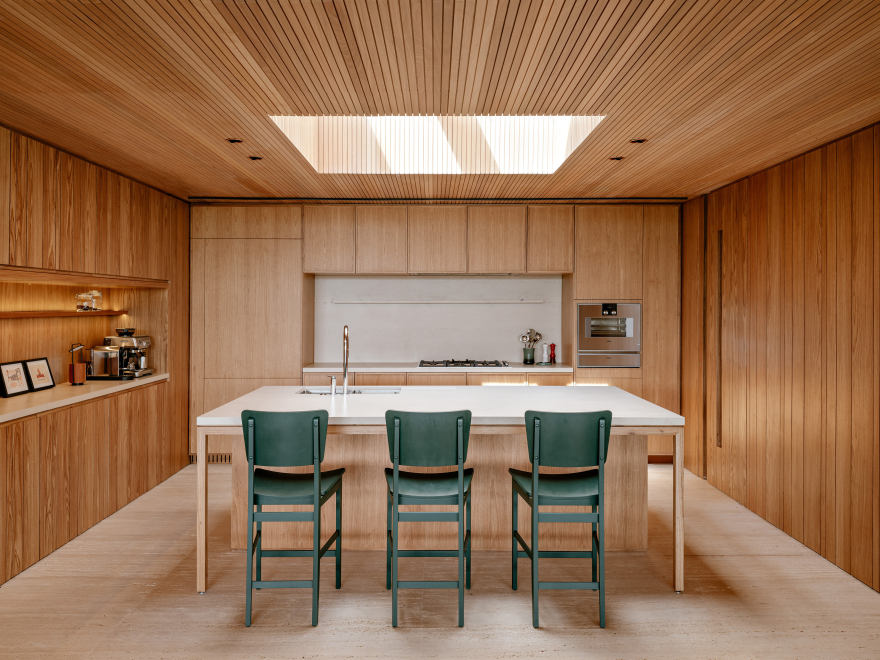
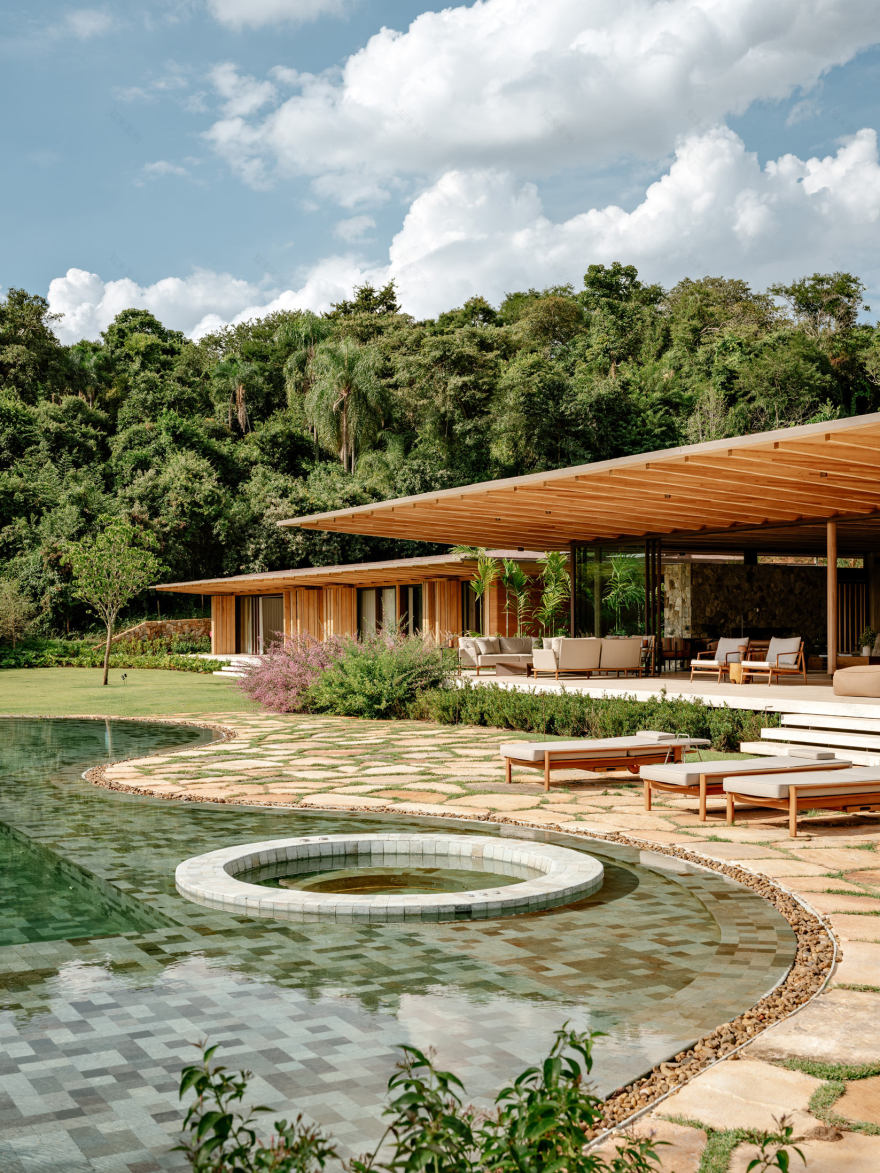
At the center, Jacobsen Studio places the social volume and gives it the strongest architectural presence. Its roof rises higher than the others and projects generous eaves, establishing a clear hierarchy among the three parts of the house. Inside, the living room, dining room, and open kitchen sit together in one continuous space that opens to the outdoors through large glass panels.
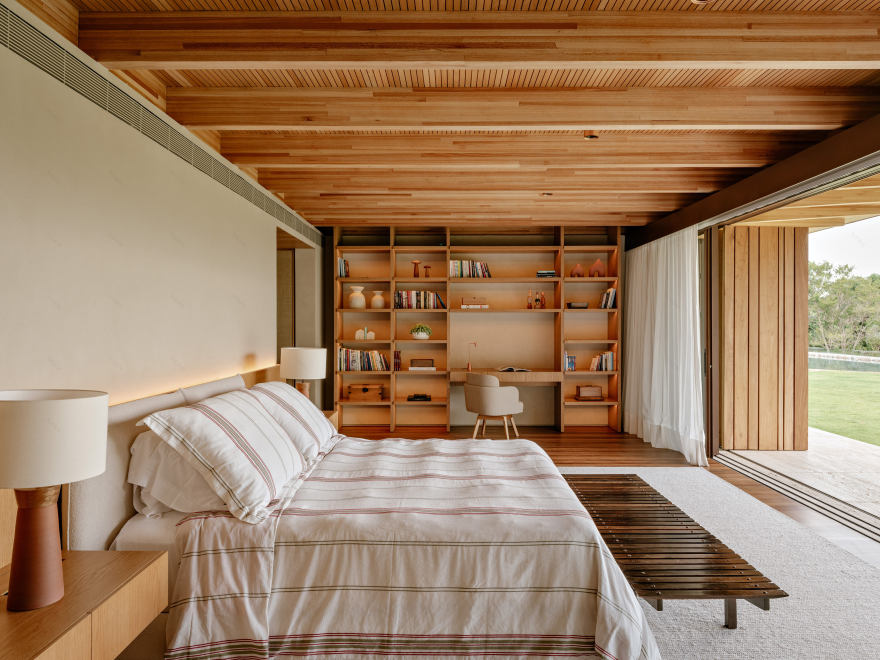
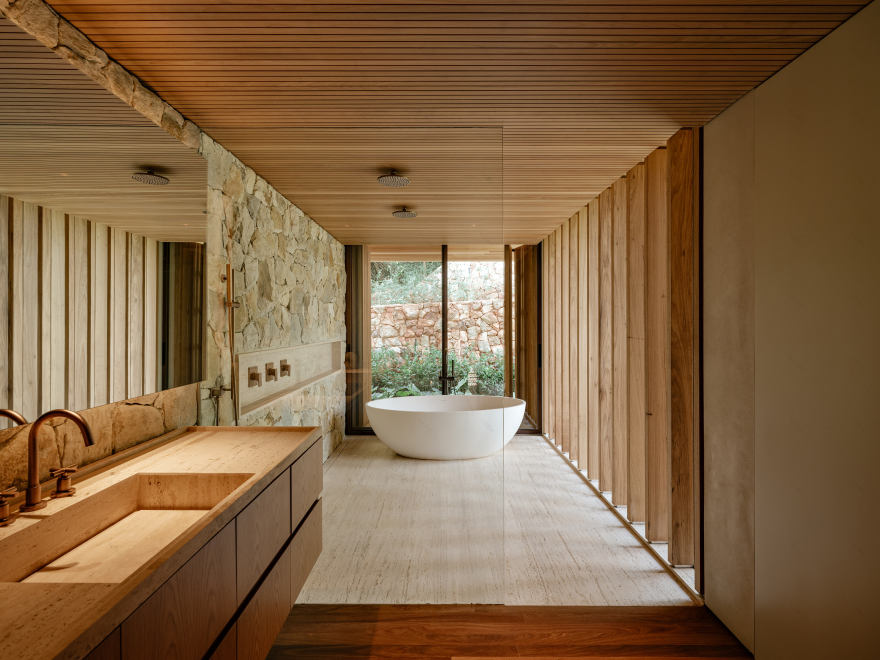
The central block also carries the clearest structural expression. Laminated wood beams run the full length of the roof, defining the ceiling and drawing the eye outward. Travertine floors and copper light fixtures tighten the material palette without competing with the broader architectural moves. The effect is not decorative excess but continuity, with structure, finish, and opening all working in the same direction.
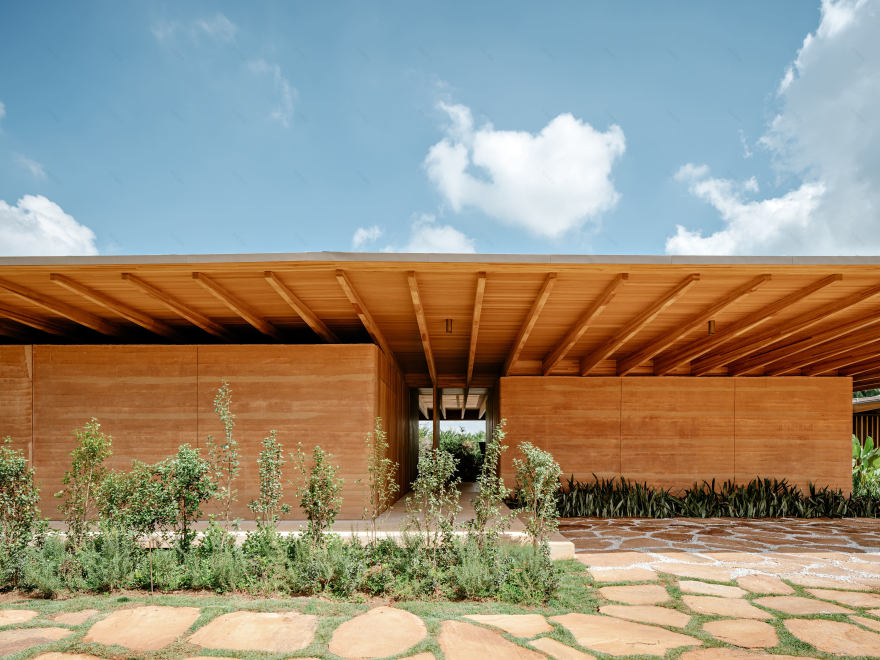
The clients’ request for a sustainable home shapes the project’s material choices. Laminated wood appears in pillars and ceilings, always in light tones and natural finishes. Rammed earth forms the large walls facing the street, where it provides privacy and thermal stability while giving the house a heavier, more grounded edge. The color of that earth was tested carefully so that it would sit in close chromatic relation to the timber.
Those rammed earth walls carry both technical and cultural weight. The project notes the long history of taipa de pilão in Brazil and elsewhere, and here the technique is used for more than atmosphere. Moist earth compacted in formwork produces monolithic walls with strong thermal inertia and a marked tectonic presence. Skylights are positioned along the sides where rammed earth predominates, washing the surfaces with daylight and bringing out shifts in tone and texture over the course of the day.
The plan separates private and shared spaces with similar clarity. Bedrooms are placed at the ends of the house, where natural wood enclosures open toward the landscape while maintaining privacy and thermal comfort. Below, the lower level absorbs the spa, children’s area, and service zones, using the slope to expand the program without overturning the overall reading of the house as a single-story residence.
The garden extends that calibrated approach to the outdoors. An organically shaped pool runs through the landscape like a small lake, edged with irregular stone rather than a hard geometric border. Because it sits below the house, it creates a gentle threshold between the social rooms and the leisure area while keeping visual continuity across the site.
Inside, the decorative scheme begins with a green sofa in the family room and builds outward from that note. Striped Ralph Lauren fabric on the game-table chairs, along with rugs, upholstery, and kitchen stools, develops the palette across the house. Brazilian furniture by Sergio Rodrigues, Jacqueline Terpins, and Claudia Moreira Salles completes the rooms with the same restraint found in the architecture: individual pieces remain distinct, but none insists on being the whole story.
南京喵熊网络科技有限公司 苏ICP备18050492号-4知末 © 2018—2020 . All photos and trademark graphics are copyrighted by their owners.增值电信业务经营许可证(ICP)苏B2-20201444 苏公网安备 32011302321234号
苏公网安备 32011302321234号客服
消息
收藏
下载
最近