

创作上传
VIP
收藏下载
登录 | 注册有礼
查看完整案例

收藏

下载

分享
房地产投资与开发公司Nextensa已获得由MVRDV设计的Tour & Taxis Towers建设许可。该项目位于比利时Brussels,属于同样由MVRDV设计的Lake Side总体规划的一部分。双塔方案最高点达126米,将成为Tour & Taxis场地中最高的建筑,构成新的地标。项目总建筑面积58,000平方米,为一座复合功能建筑,通过采用混合结构与轻量化立面系统,尽可能减少建筑的隐含碳排放,从而降低结构与基础所需的混凝土用量。
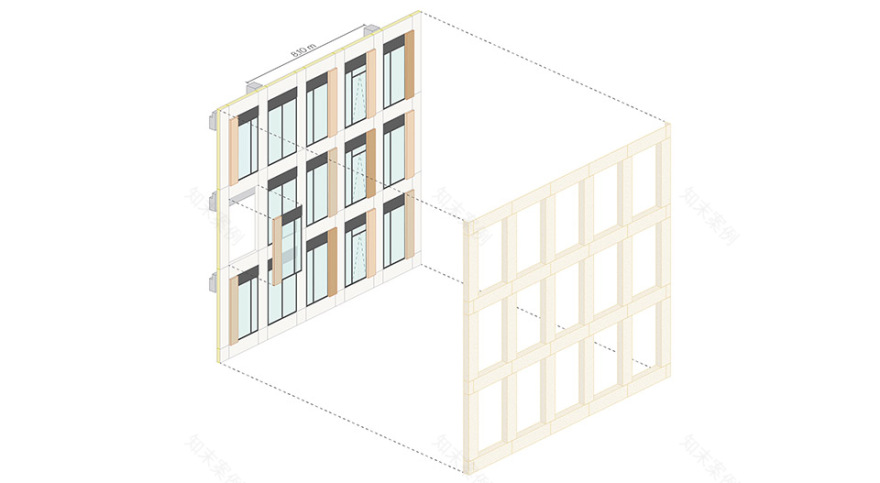
Real estate investor and developer Nextensa has received construction permission for the MVRDV-designed Tour & Taxis Towers, part of the – also MVRDV-designed – Lake Side masterplan in Brussels. The dual-tower design, with its highest point at 126 metres, will form a landmark as the tallest building on the site of Tour & Taxis. The 58,000-square-metre mixed-use building is designed to reduce the embodied carbon of the construction as much as possible, using a hybrid structure and lightweight façade elements to reduce the concrete required for the structure and foundations.
▼塔楼鸟瞰效果图,Aerial view of the tower rendering©Reverso Studio
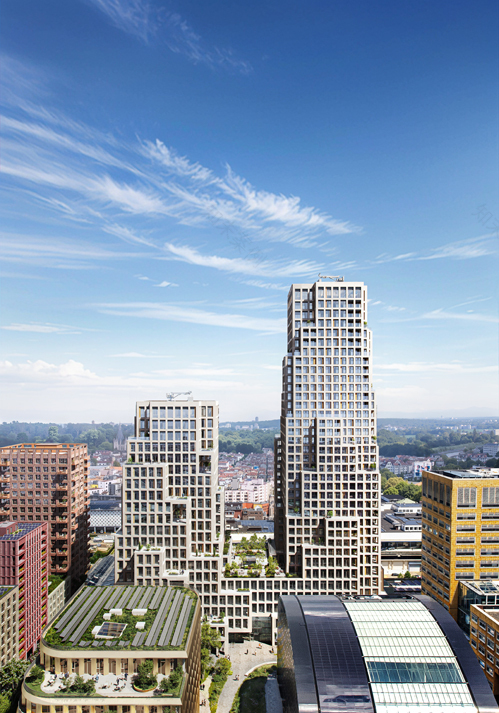
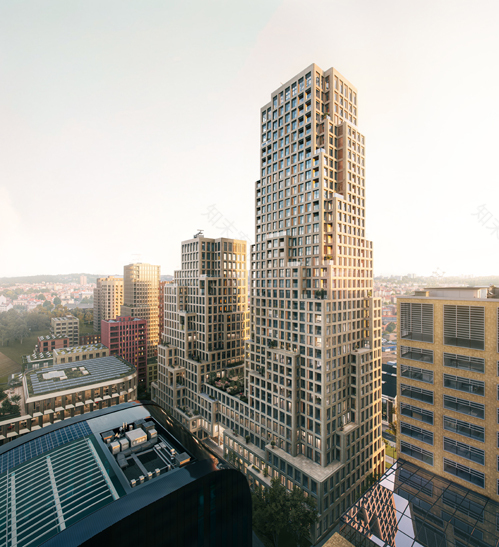
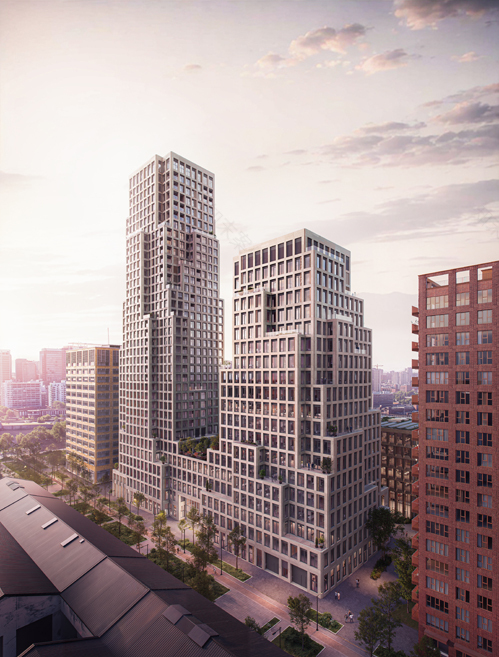
Tour & Taxis Towers由两座塔楼组成,并通过一个五层基座连接。西侧为一栋20层办公塔楼,将作为Proximus的新总部;东侧为35层住宅塔楼,包含199套公寓,户型从单间到三居不等。连接两塔的基座内设有办公与公共功能,并在顶部设置露台空间。▼体块生成,step story©MVRDV
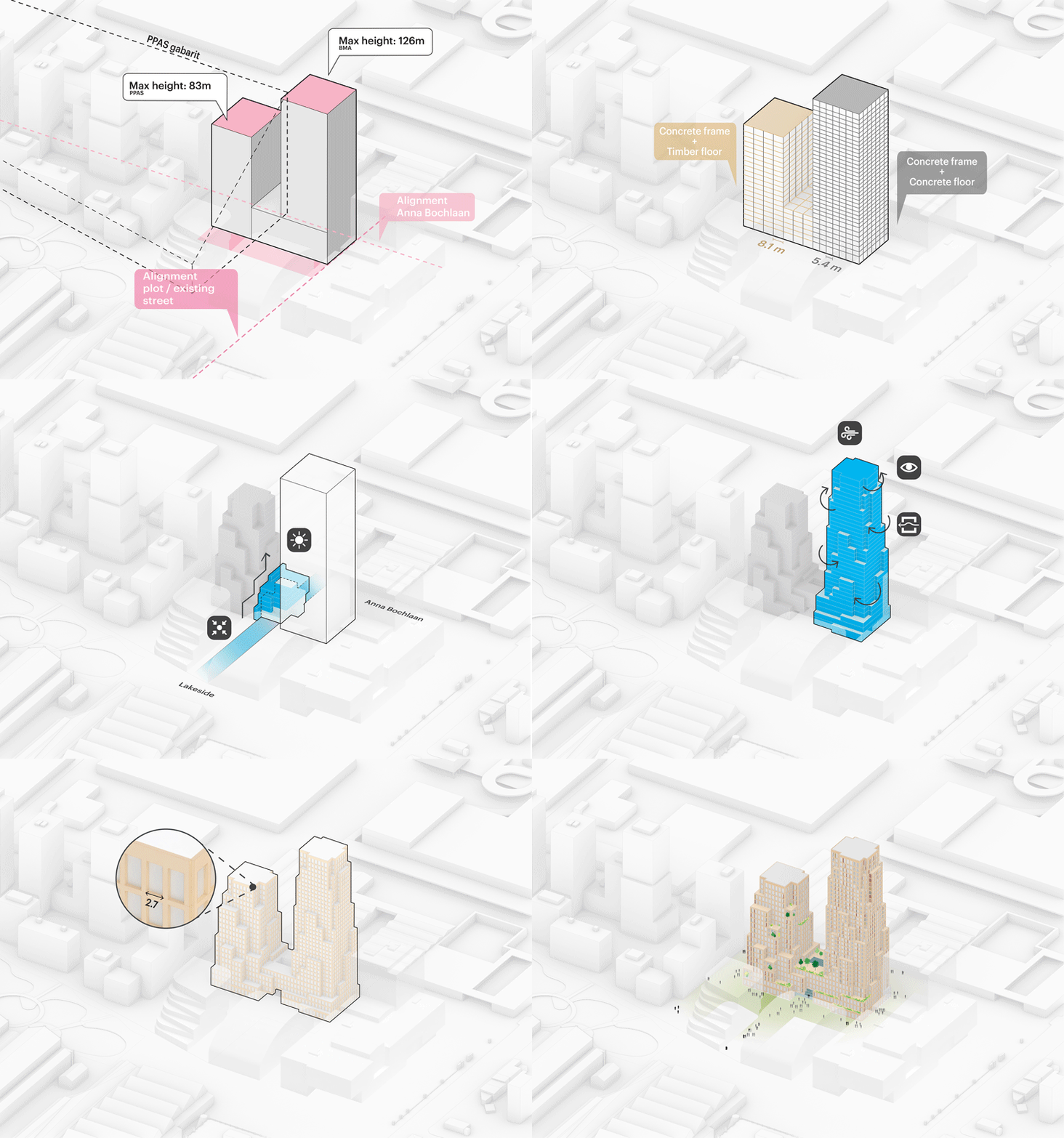
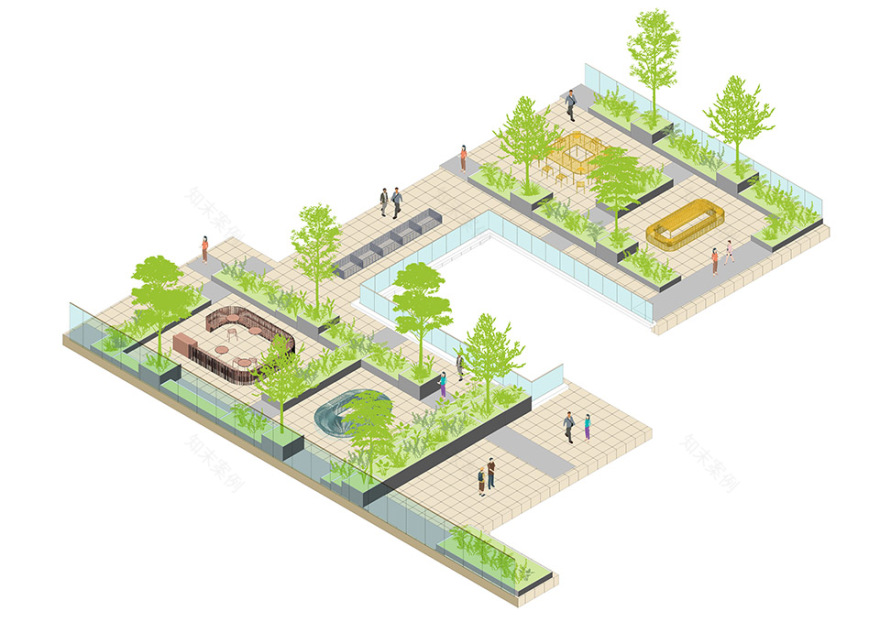
The Tour & Taxis Towers are formed of two towers connected at the base by a five-storey plinth. The western tower is a 20-storey office tower that will form the new headquarters of Proximus, while the 35-storey eastern tower features 199 apartments ranging in size from studios to three bedrooms. The connecting plinth contains offices and public programme, and is topped with a terrace.
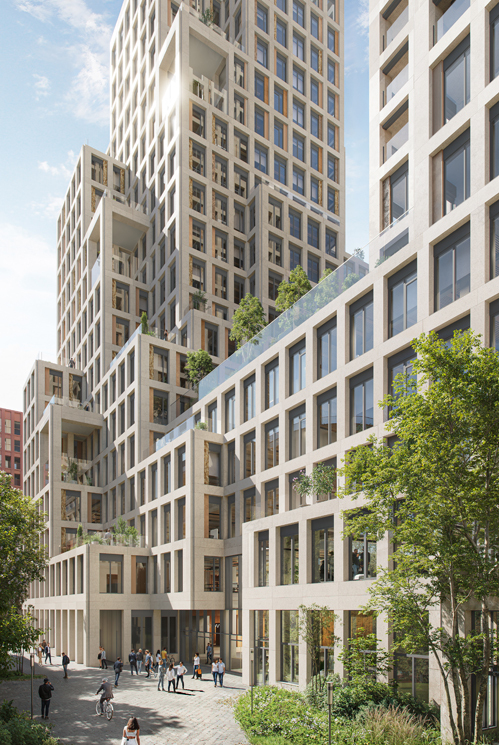
▼不规则退台形成丰富的露台空间,
a series of irregular setbacks, allowing for many terraces©Reverso Studio
▼额外的转角窗则为更多住户提供开阔视野,
the extra corner windows provide impressive views to more of the building’s residents©Reverso Studio
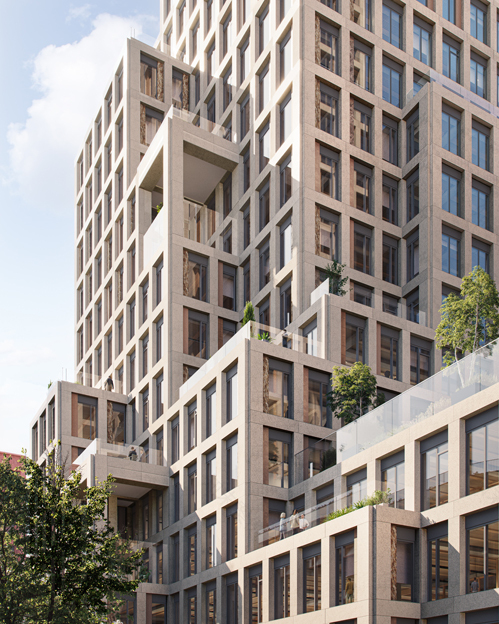
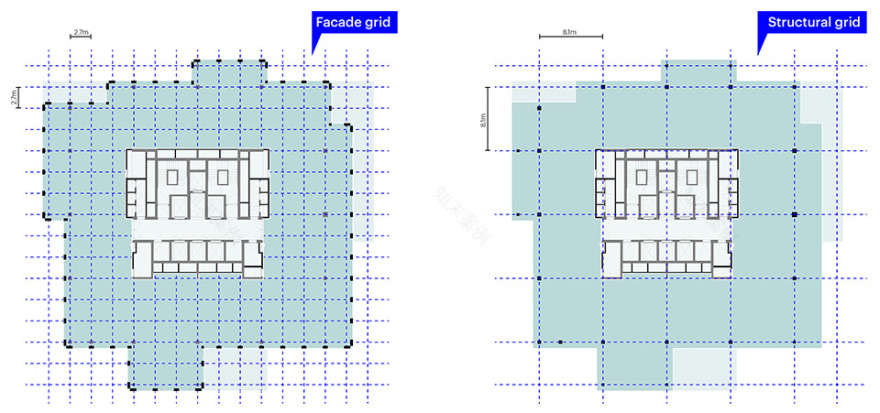
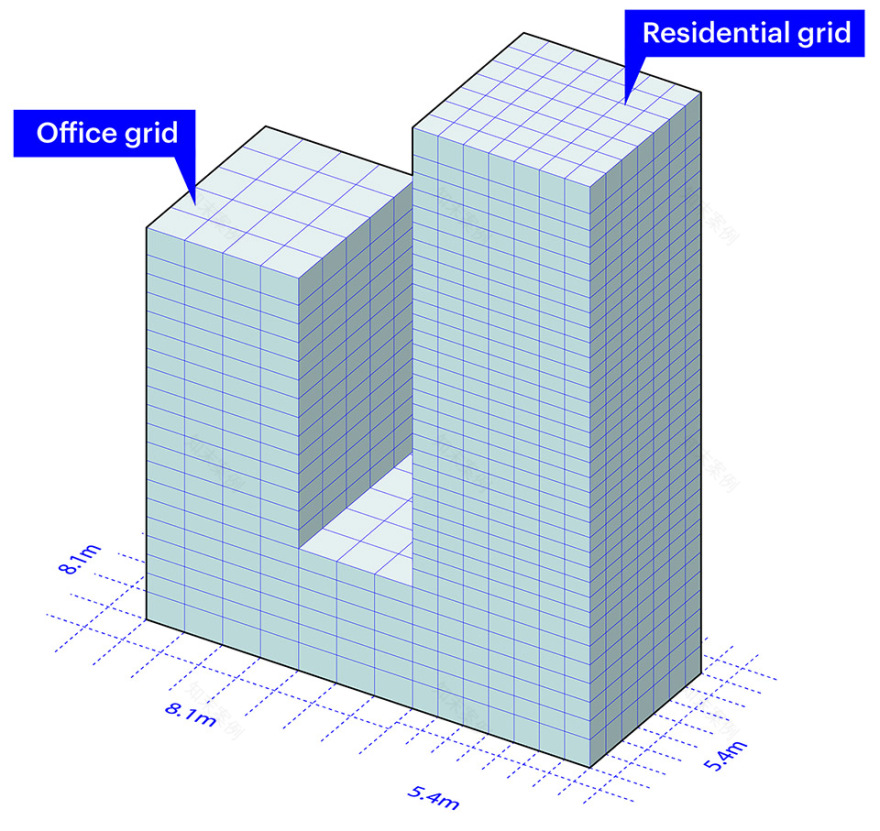
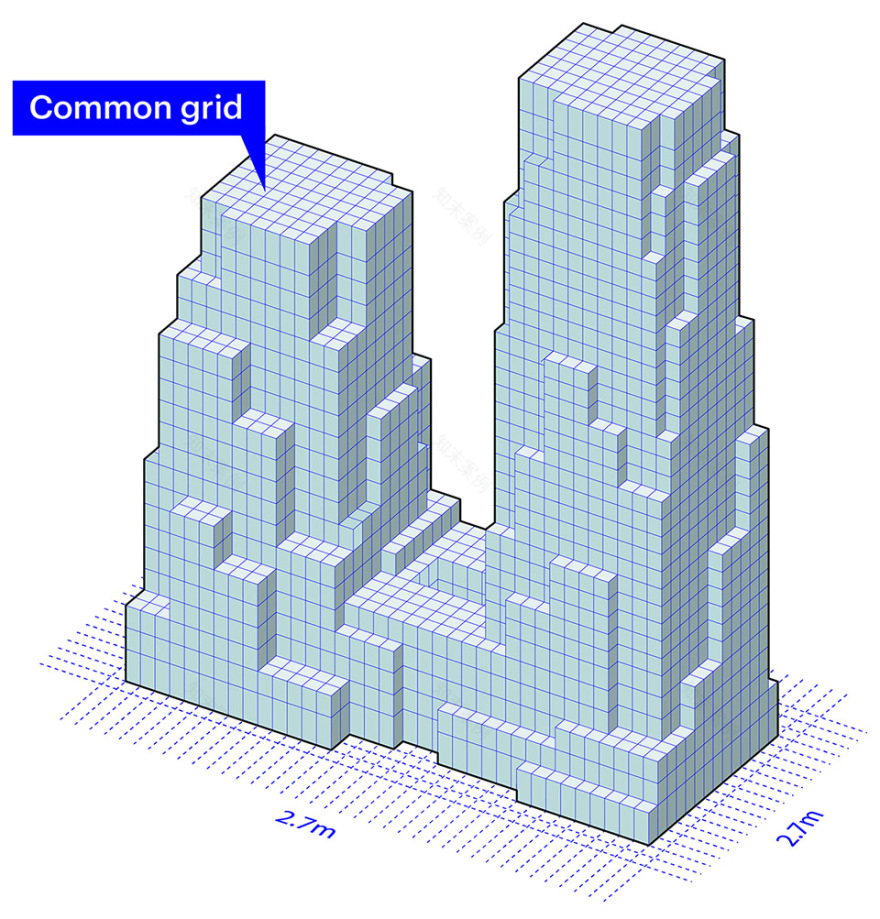
建筑结构设计基于2.7米的立面模数,同时结合整体体量形态,使建筑能够随着社区需求变化而具备灵活适应性。两座塔楼均通过不规则退台形成丰富的露台空间,包括公共与私密露台;额外的转角窗则为更多住户提供开阔视野。这些退台的位置由日照与风环境分析确定,同时也对建筑所处的城市语境作出回应——作为Lake Side区域中庭住宅区与包括弗拉芒政府行政办公在内的办公区之间的过渡节点。
The design of the structure, which is based on multiples of the 2.7-metre façade modules, along with the building’s shape, allow the building to be adaptable in its use as the needs of the neighbourhood change over time. Each of the towers incorporates a series of irregular setbacks, allowing for many terraces, both collective and private, while the extra corner windows provide impressive views to more of the building’s residents. The positioning of these setbacks is informed by light and wind studies. They also respond carefully to the building’s context, as it serves as a transitional point between the mostly residential buildings of Lake Side’s Courtyard and the office buildings of, among others, the administration of the Flemish Government.
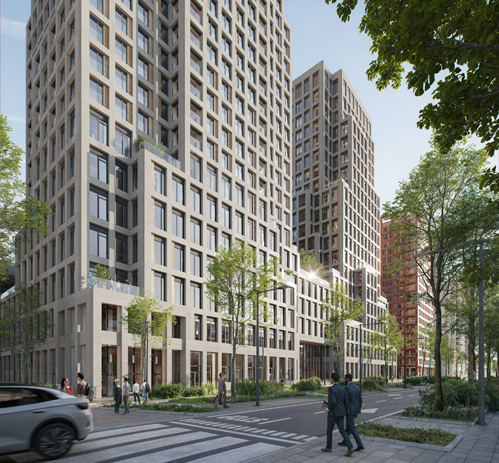
▼与周边环境的融合,the towers’ integration into the surroundings©Reverso Studio
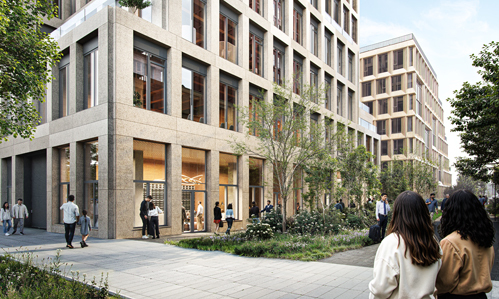
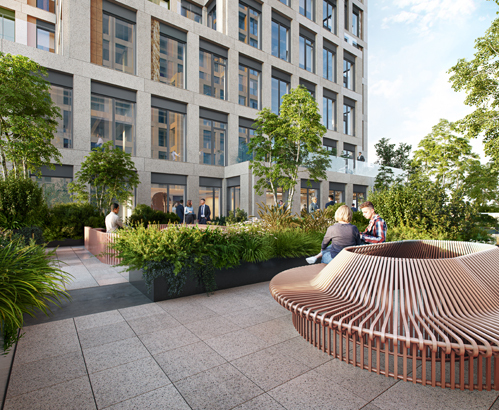
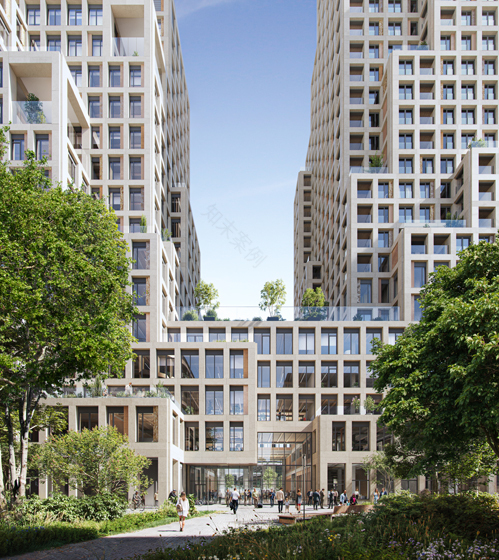
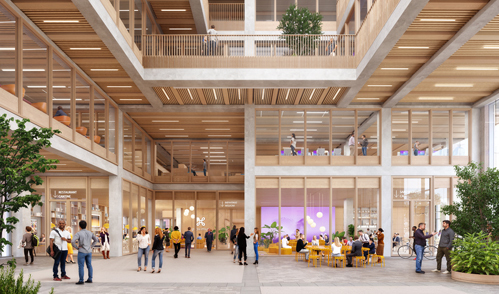
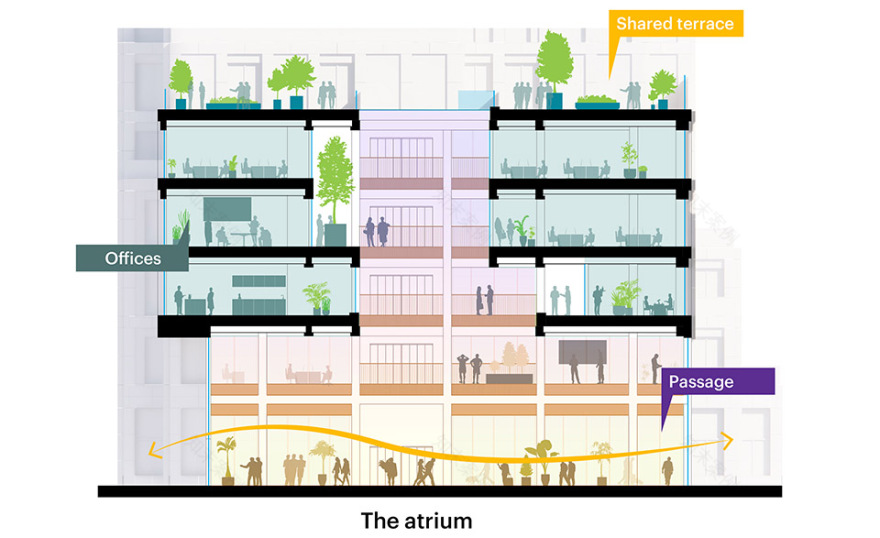
项目特别强调与周边环境的融合。基座中央设置了一条通廊,将Lake Side区域与另一侧的Anna Bochlaan连接起来;通廊内部为一处贯通至基座顶部的中庭空间,使人们可以窥见上方办公空间的活动。住宅塔楼底层设置公共服务空间,以确保建筑底部在全天候都保持活跃与使用状态。
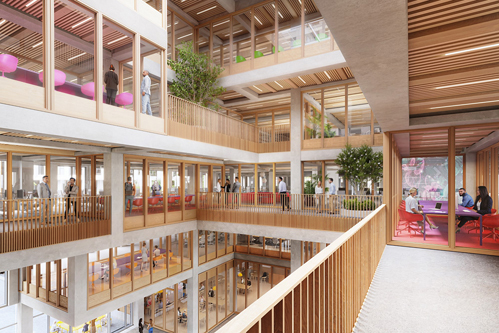
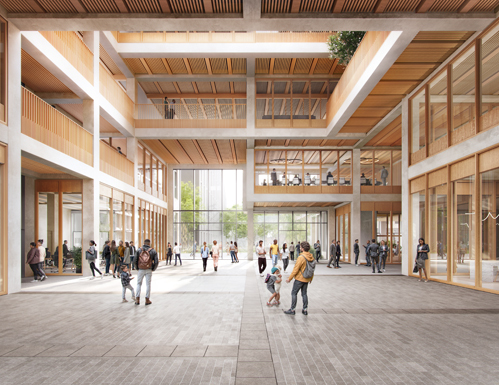
Particular attention is given to the towers’ integration into the surroundings. In the centre of the plinth is a passage that crosses from the Lake Side area on one side of the building to Anna Bochlaan on the other, with an atrium that extends to the top of the plinth and gives a glimpse into the activity in the offices above. The base of the residential tower includes spaces for public services, which will help to ensure that the lower levels of the building are lively and occupied at all times of the day.
▼贯通至基座顶部的中庭空间,
an atrium that extends to the top of the plinth©Reverso Studio
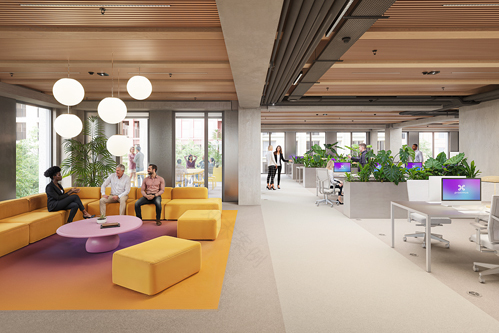
▼上方办公空间,the upper level office space©Reverso Studio
“MVRDV通过Tour & Taxis Towers以及整体规划,持续推进其一系列目标:打造高品质、高密度、复合功能的城市社区,并具备面向未来的灵活性。”MVRDV创始合伙人Nathalie de Vries表示,“通过这种方式,我们使城市能够在不蔓延扩张的前提下充分发展潜力。更重要的是,我们始终在探索‘负责任密度’的定义,而这一概念也在不断拓展,如今已涵盖新建高层建筑的碳排放问题。”
“With the Tour & Taxis Towers, as well as the masterplan itself, we continue to pursue a variety of MVRDV’s goals: high-value, dense, mixed-use neighbourhoods that allow for future flexibility”, says MVRDV founding partner Nathalie de Vries. “In this way, we allow cities to develop to their full potential without sprawl. Crucially, we have always investigated the requirements of responsible density, and the way we define that is continuously expanding. Nowadays, that includes the carbon emissions of new tall buildings.”
▼中庭空间,the atrium©Reverso Studio
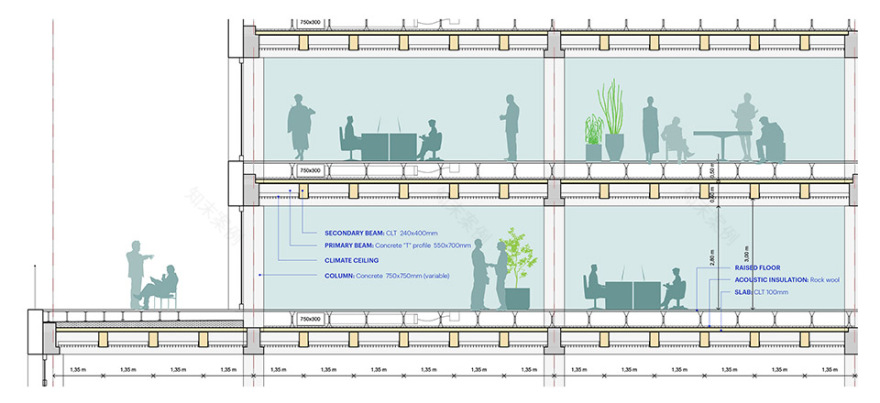
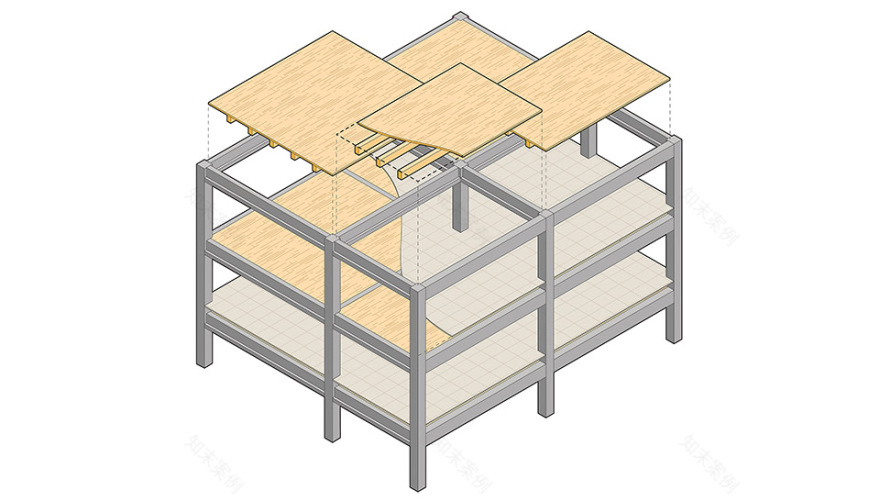
考虑到高层建筑通常在建造阶段具有较高碳排放,本项目以低碳设计为核心原则。从早期阶段开始,设计团队便使用MVRDV自主开发的软件CarbonSpace进行设计,以便在尚未确定最终方案时即可估算项目的隐含碳排放。这一对碳排放的关注促成了一系列设计决策,例如办公塔楼采用混合结构体系——混凝土框架结合交叉层压木(CLT)楼板。该策略以及其他措施显著降低了建筑自重,并减少结构与基础中混凝土的使用量。▼减碳策略,Carbon reduction approach©MVRDV
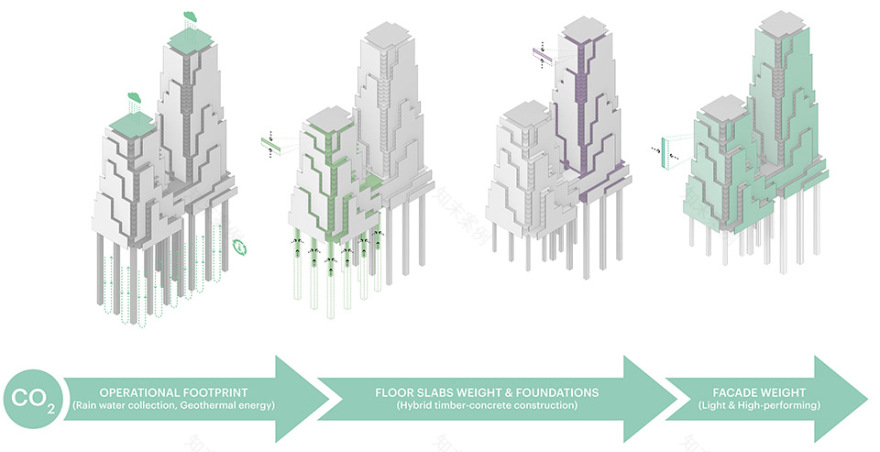
Knowing that tall buildings typically have especially high emissions related to their construction, a low-carbon design approach was a driving principle for the project. From the early stages, it was designed using MVRDV’s proprietary software CarbonSpace, which is used to estimate the embodied carbon of a project even before definitive design decisions are made. This focus on carbon emissions led to decisions such as a hybrid structure for the office tower, where a concrete frame supports cross-laminated timber floor slabs. This decision, along with many others, enabled the design team to reduce the weight of the building considerably, and to minimise the amount of concrete in the structure and foundations.
▼立面仰视,look up to the facade©Reverso Studio
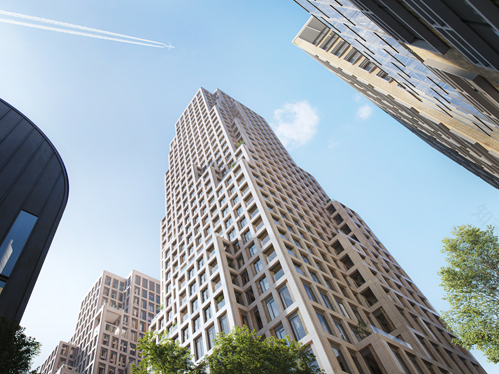
通过上述措施,项目的碳足迹预计将显著低于同等规模的常规建筑。项目目标是符合欧盟可持续活动分类标准(EU taxonomy)。此外,办公部分将力争获得BREEAM Outstanding与DGNB Gold可持续认证,以及WELL Core & Shell Platinum健康建筑认证。
As a result of these measures the building’s carbon footprint is projected to be significantly below that of a typical building this size. The goal of the project is to align with the criteria of the EU taxonomy for sustainable activities. In addition, for the office spaces, BREEAM-Outstanding and DGNB Gold sustainability certification, as well as Platinum WELL Core & Shell certification for healthy buildings are targeted.
▼傍晚景象,building at dusk©Reverso Studio
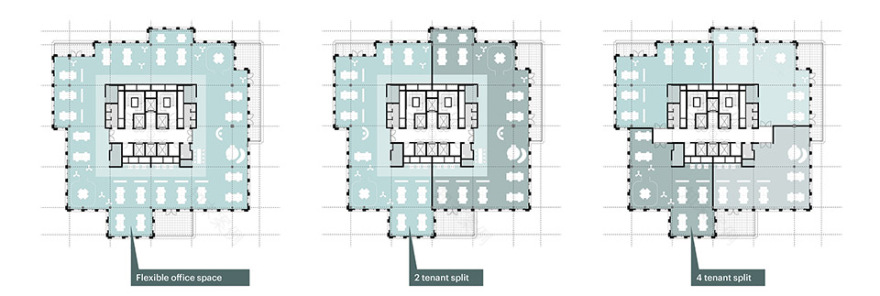
▼租住灵活性,Tenant flexibility©MVRDV
▼设计网格,Design grids©MVRDV
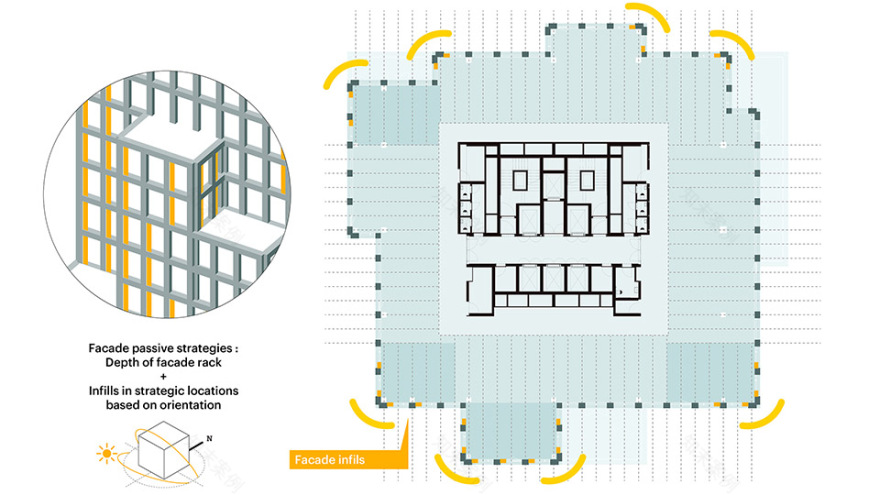
▼被动式外立面填充物分布,Passive facade infill distribution©MVRDV
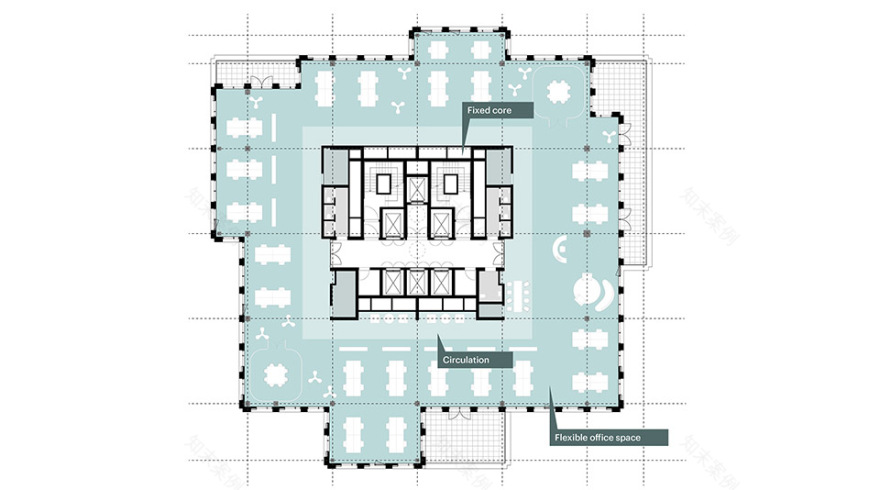
▼平面布局概念,Floorplan concept©MVRDV
▼中庭剖面,Atrium section©MVRDV
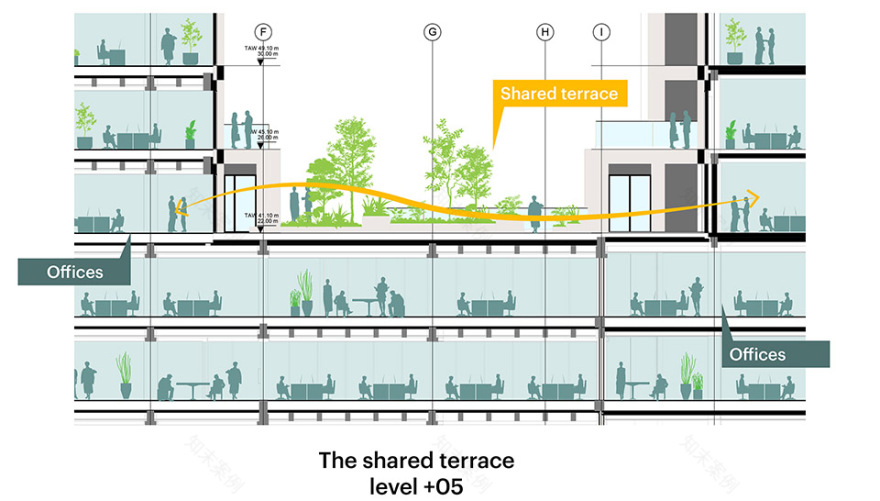
▼共享露台剖面,Shared terrace section©MVRDV
▼混合结构剖面,Hybrid structure section©MVRDV
Project Name: Tour & Taxis Towers
Location: Brussels, Belgium
Year: 2021–
Client: Nextensa
Size and Programme: 58,000 m2 | Offices, housing, public amenities
Credits
Architect: MVRDV
MVRDV Founding Partner: Nathalie de Vries
MVRDV Partner: Bertrand Schippan
Competition phase Nathalie de Vries, Bertrand Schippan, Michael Labory, Ana MelgarejoLópez, Yayun Liu, Andrea Battistoni, Robinson Lodé
Schematic design: Nathalie de Vries, Bertrand Schippan, Catherine Drieux, Ana MelgarejoLópez, Fredy Fortich, I-Chen Lee, Quentin Aubry, Yayun Liu, Federico Fiorino, WinonaGolenja Hoic, Alicia van der Stighelen, Hildegarde Allain, Zala Kanc
Design development: Nathalie de Vries, Bertrand Schippan, Catherine Drieux, AnaMelgarejo López, Fredy Fortich, I-Chen Lee, Federico Fiorino, Tommaso Di Castri, DimitrijeMilic, Basak Günalp, Winona Golenja Hoic, Irene Guerra, Maria Antonietta Balestrieri,Teodora Cecilia Buccilli, Agnieszka Thiel
Copyright: MVRDV Winy Maas, Jacob van Rijs, Nathalie de Vries
Partners:
Co-architect: Bureau Bouwtechniek (Brussels, Belgium)
Contractor: MMBG + CIT Blaton
Project coordination: Bureau Bouwtechniek
Structural engineer: Ney & Partners WOW
MEP: CES
Building Physics: CES
Environmental advisor: Encon
Acoustical engineering: Bureau De Fonseca
Safety coordinator: Bopro
Visualisations: Reverso Studio
南京喵熊网络科技有限公司 苏ICP备18050492号-4知末 © 2018—2020 . All photos and trademark graphics are copyrighted by their owners.增值电信业务经营许可证(ICP)苏B2-20201444 苏公网安备 32011302321234号
苏公网安备 32011302321234号客服
消息
收藏
下载
最近