

创作上传
VIP
收藏下载
登录 | 注册有礼
查看完整案例

收藏

下载

分享

翻译
Architects:Mesnil Architectures
Area:150m²
Year:2025
Photographs:Mesnil Studio
Structures:Guicheteau Ossature
Masonry:SP Maçonnerie
Carpentry:Nicolas Iladoy
Finishing Works:Maçonnerie Queffelec
Category:Houses,Renovation
Metalwork:David Gabard Ferronnerie
City:Laruns
Country:France
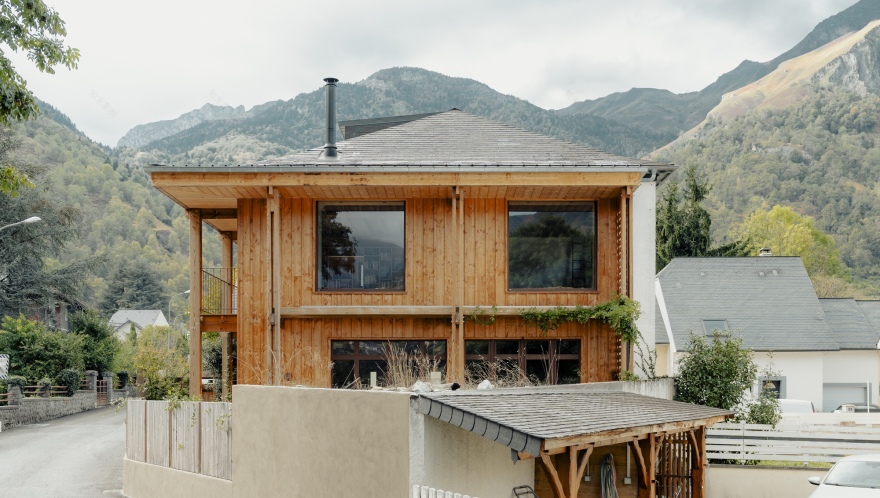
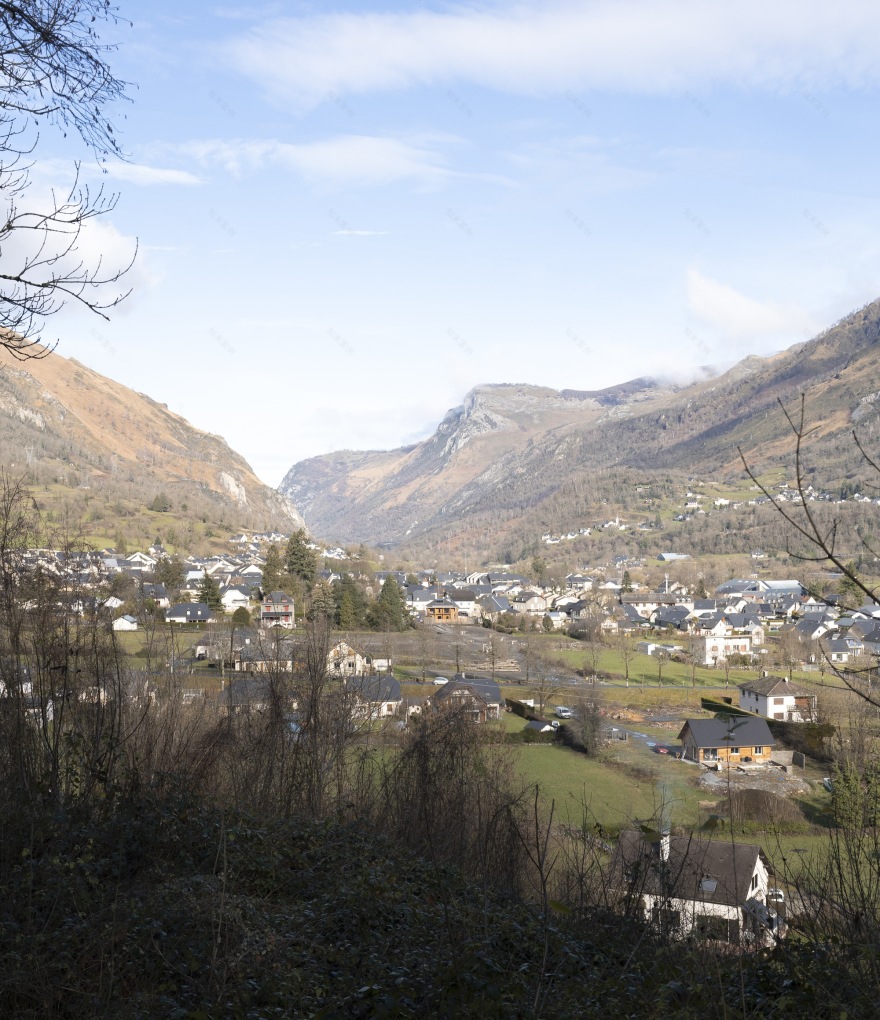
Text description provided by the architects. At the end of the Ossau Valley, where the terrain opens toward the Pyrenees Mountains, a modest building composed of two stacked apartments seemed to hold little promise. From the street, it was indistinguishable from the surrounding residential fabric, apart from its disparate façades and an immediate relationship to the landscape. Yet behind successive layers of wall finishings and suspended ceilings, the architectural integrity of the building remained intact.
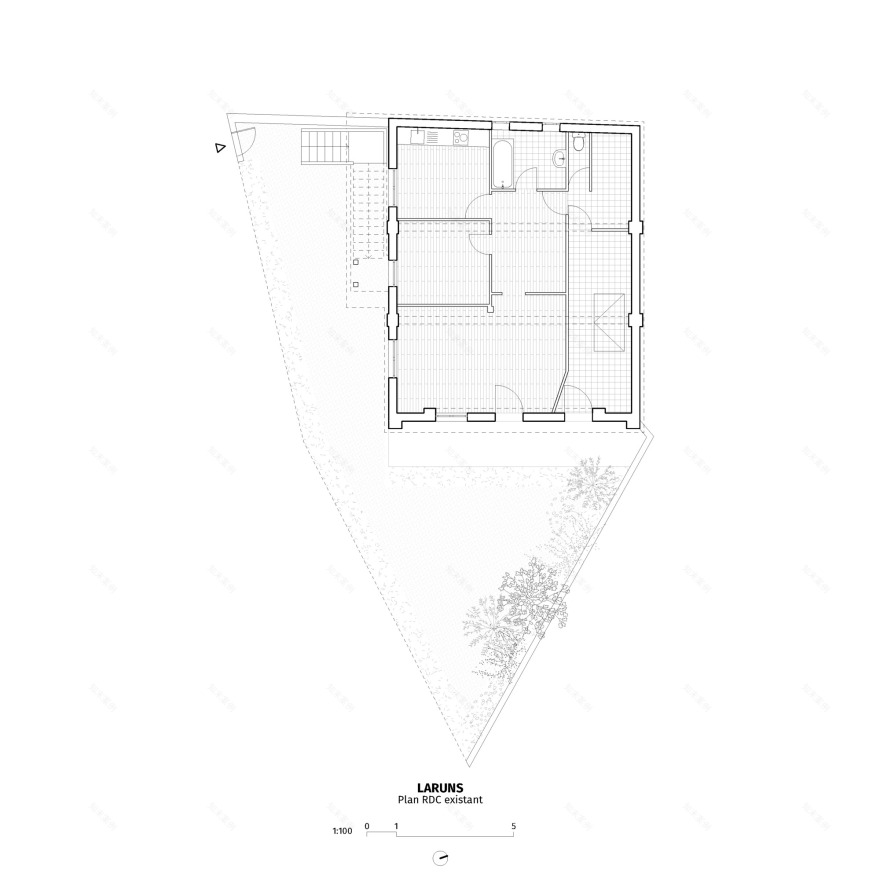
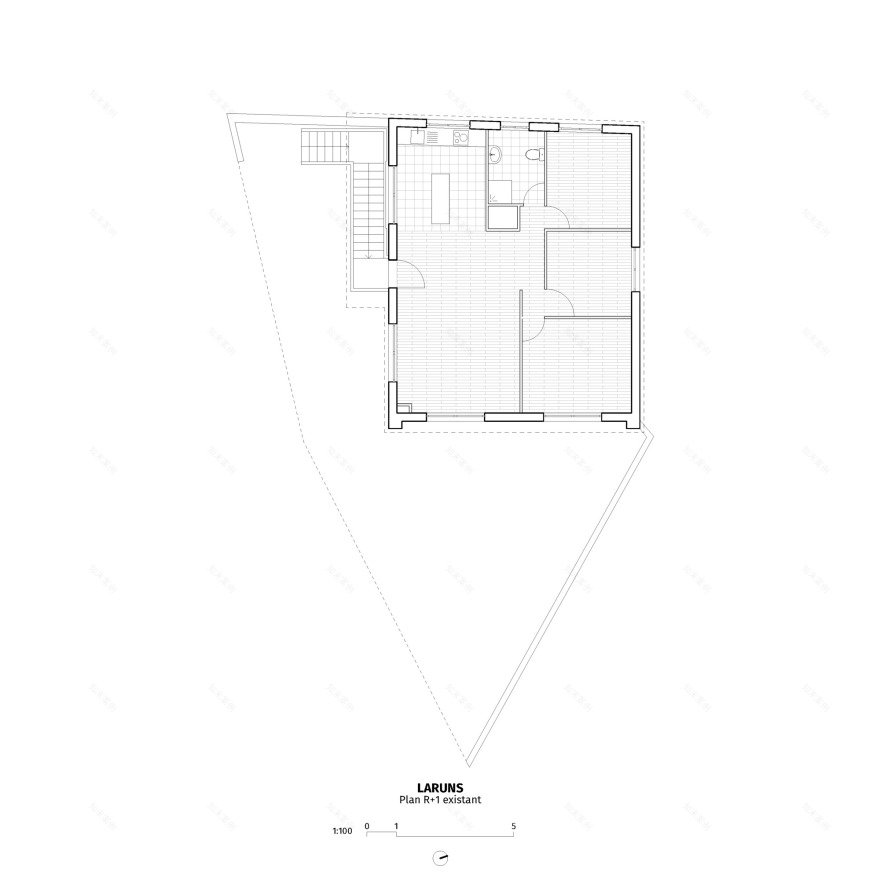
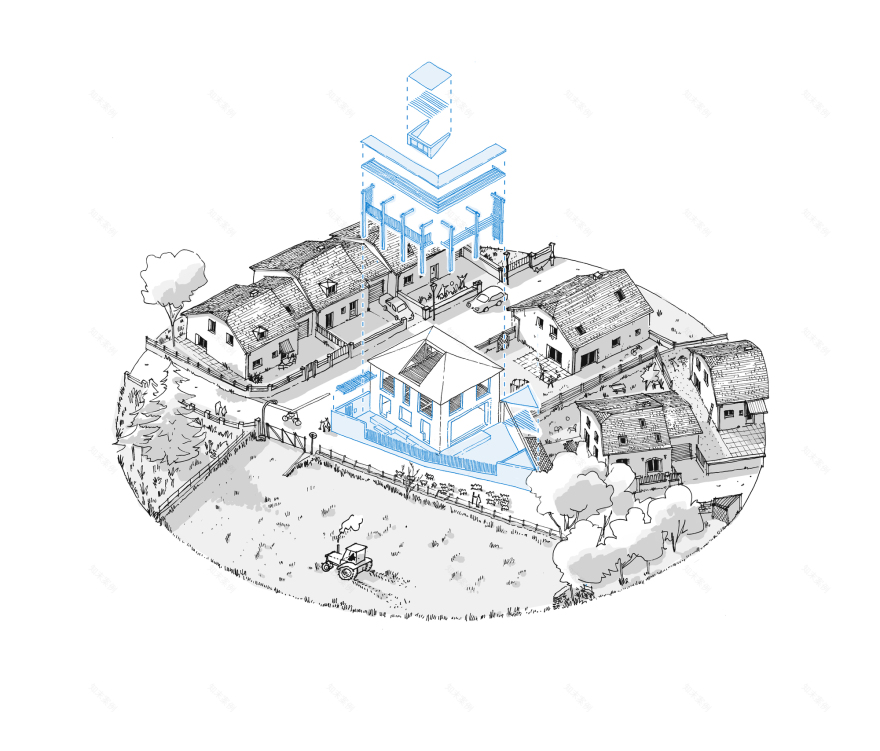
Renovation Project: Re-use and Renewal — The renovation project begins in this precise interval between what is apparent and what lies dormant. As these veneers were stripped away, generous volumes re-emerged, along with an expressive timber frame and traces of a previous use. Local records and neighbors' accounts revealed the site's former life as a vehicle repair workshop, explaining the unusual ground-floor height, while the upper level once housed offices.
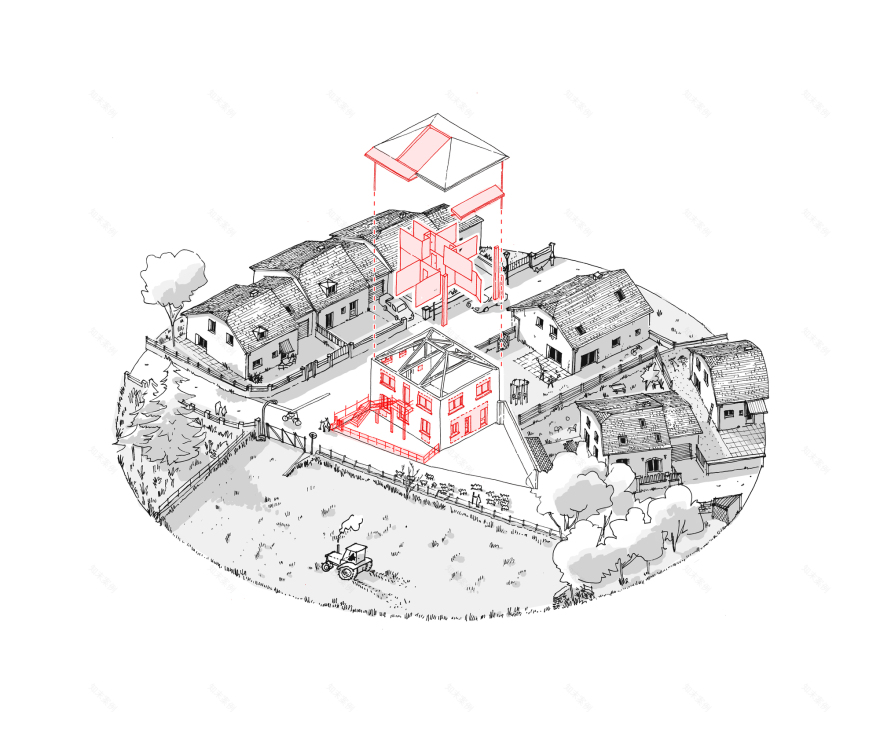
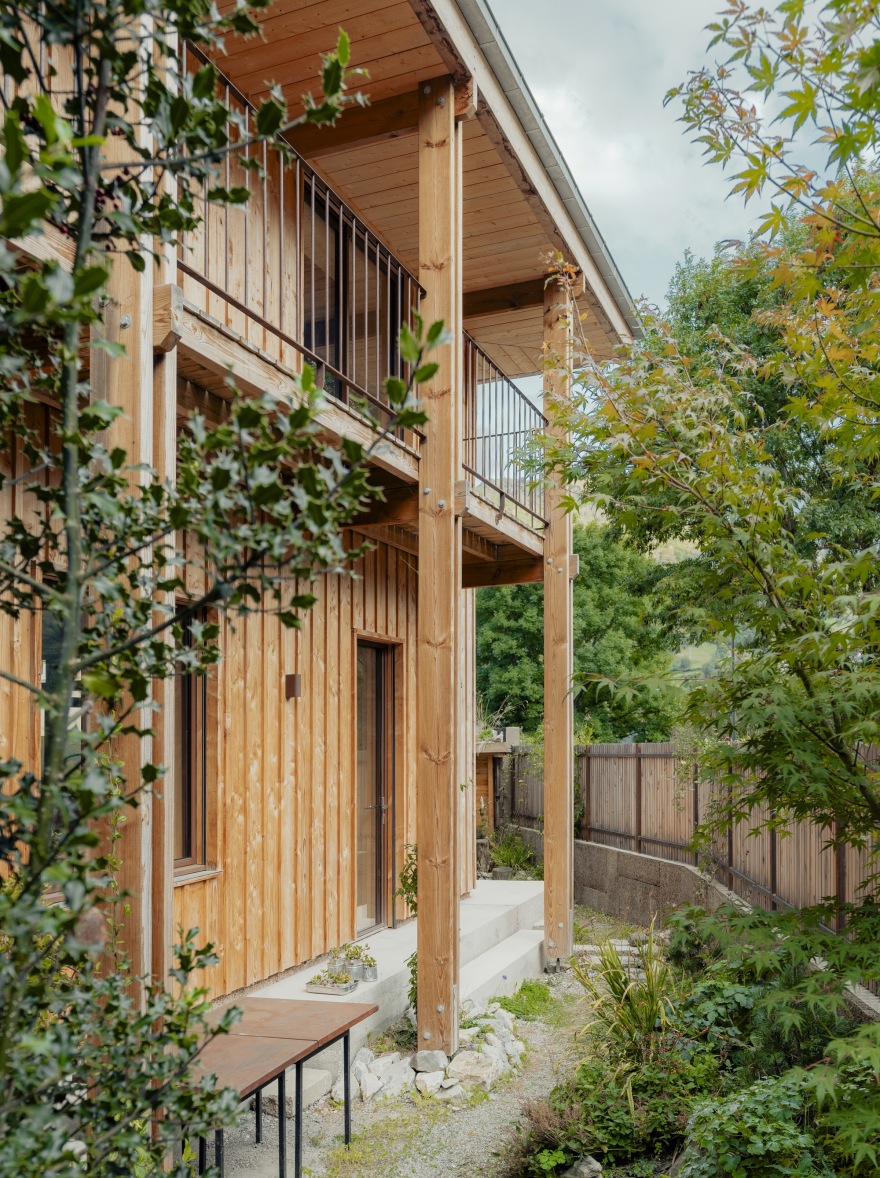
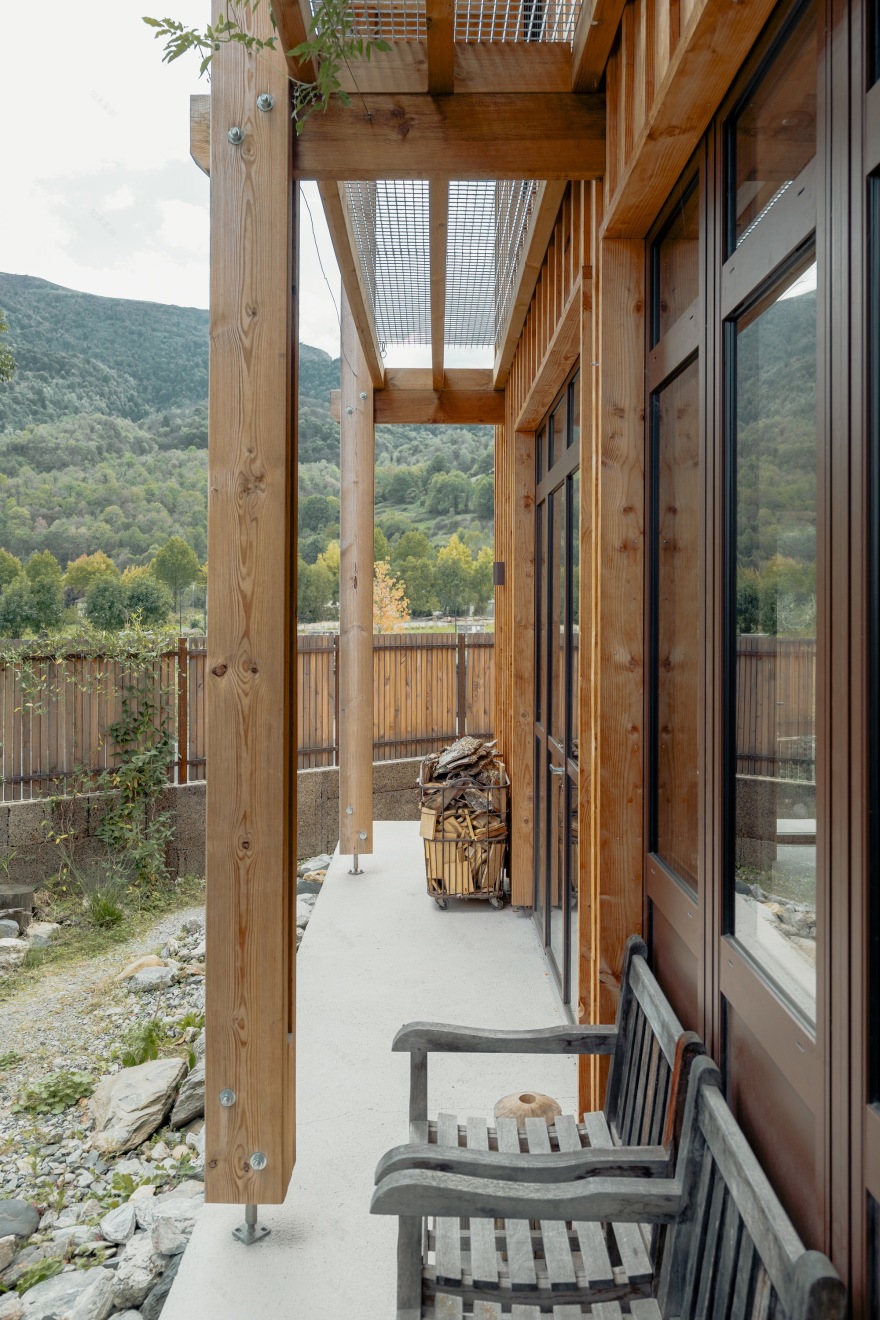
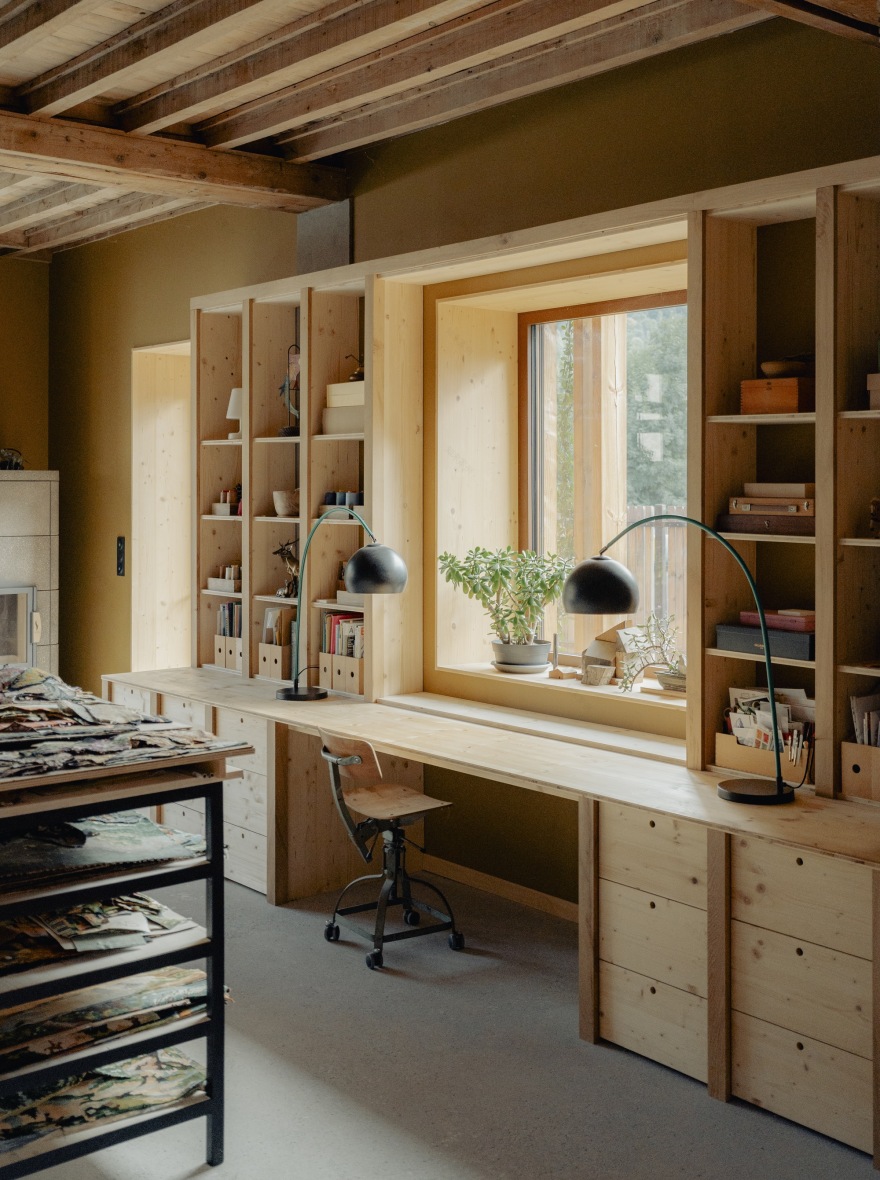
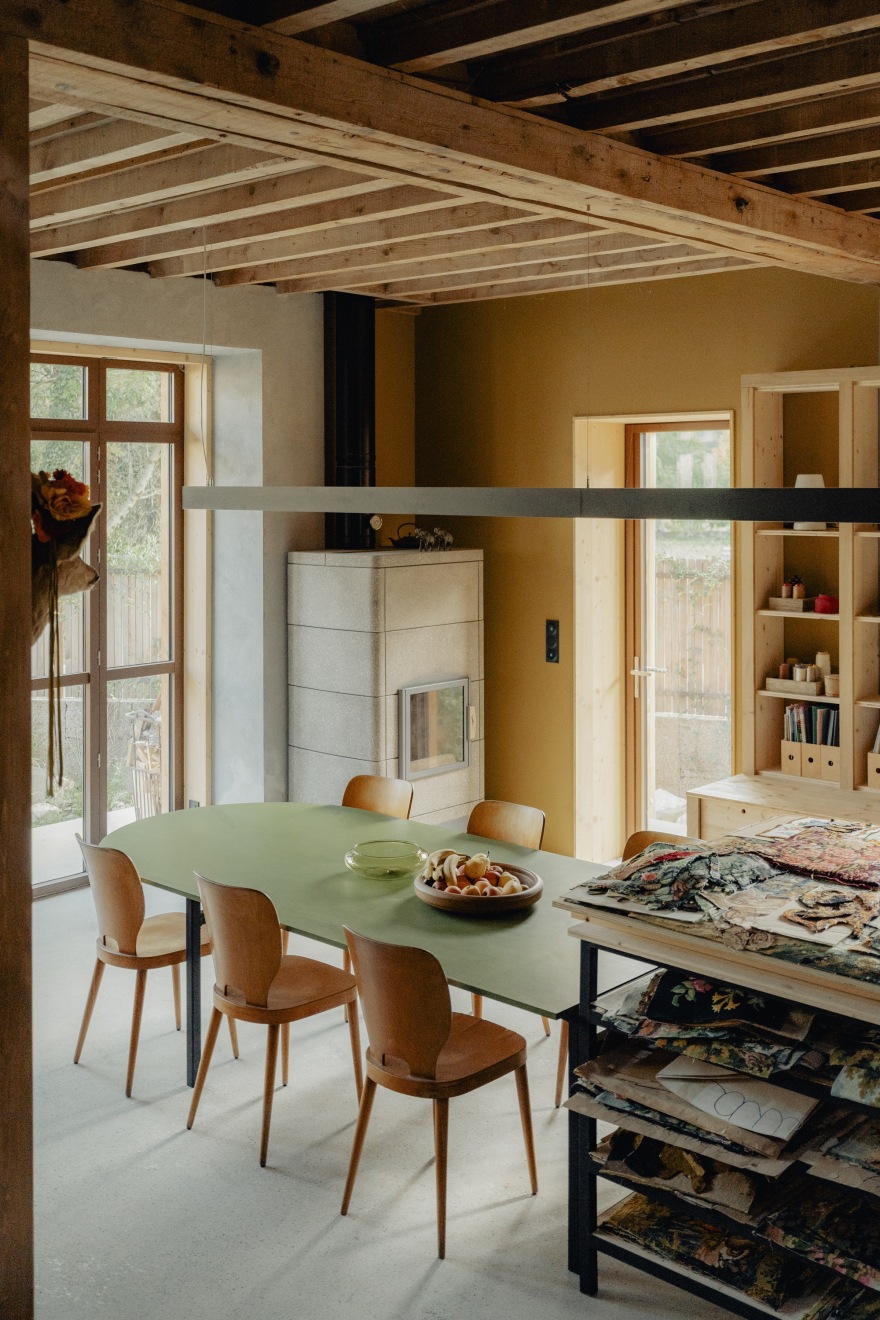
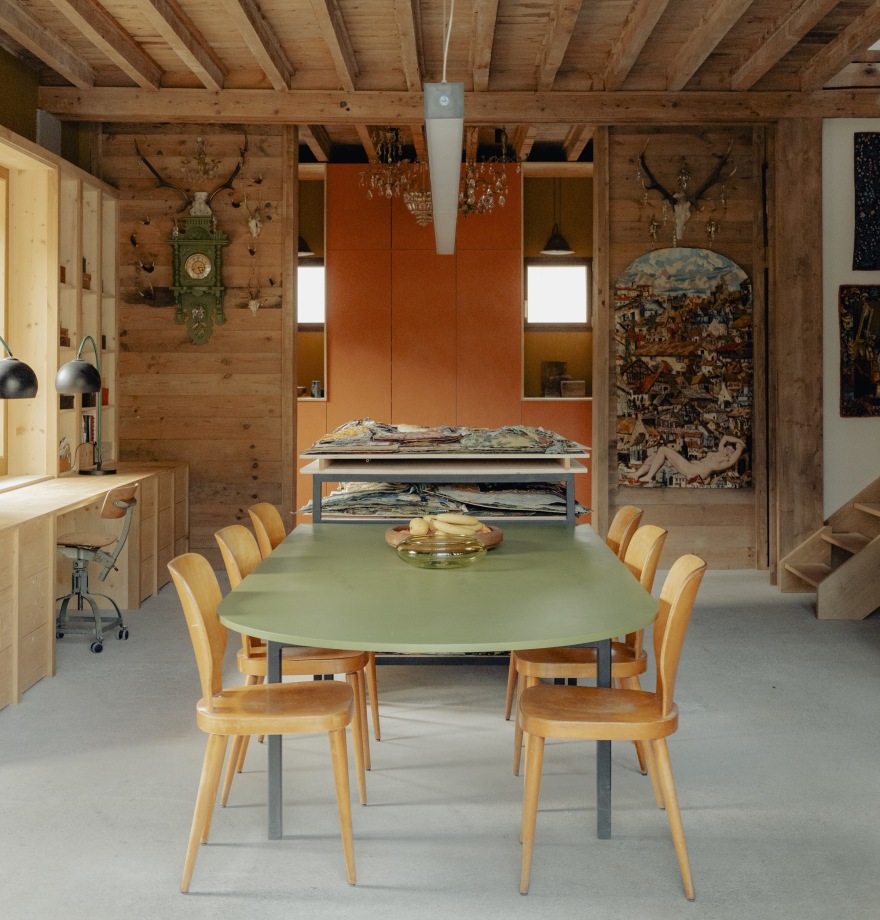
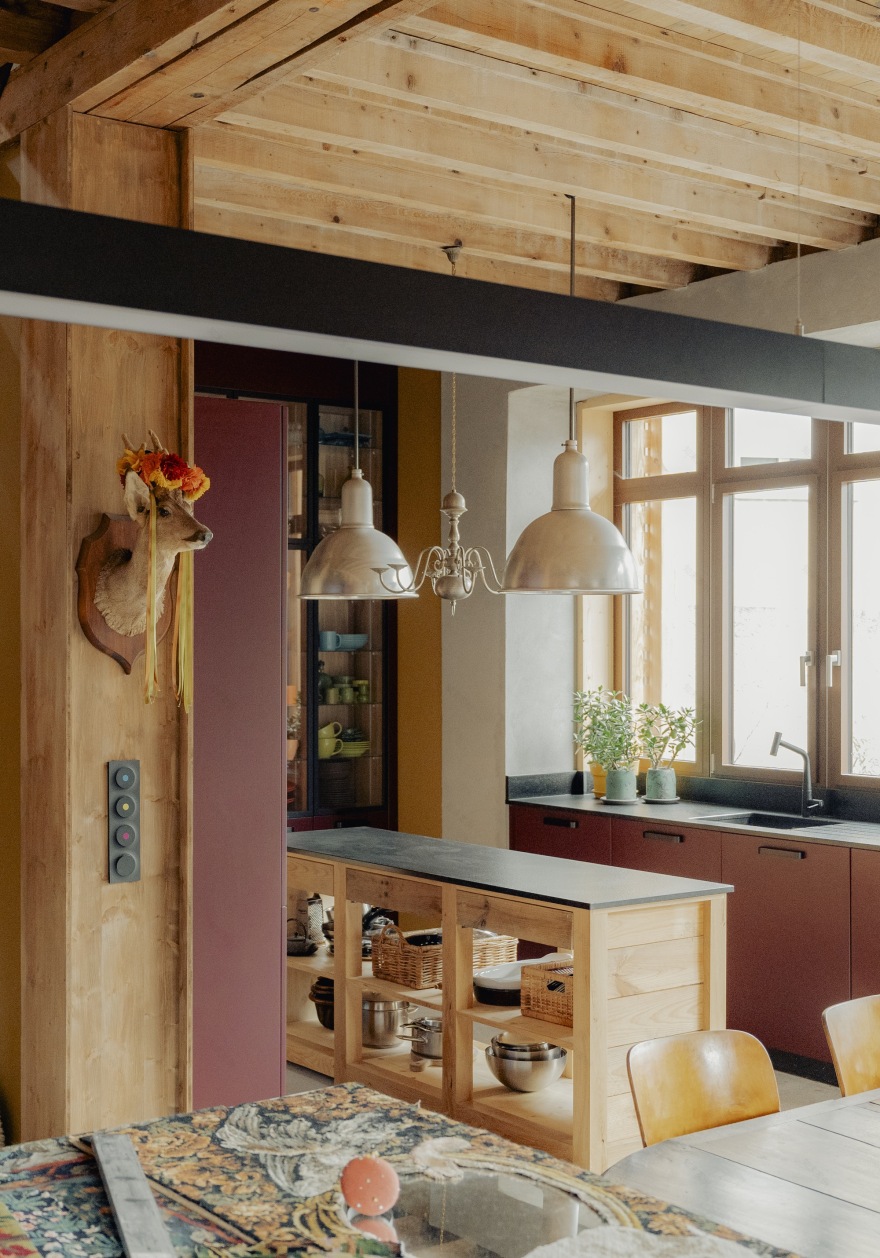
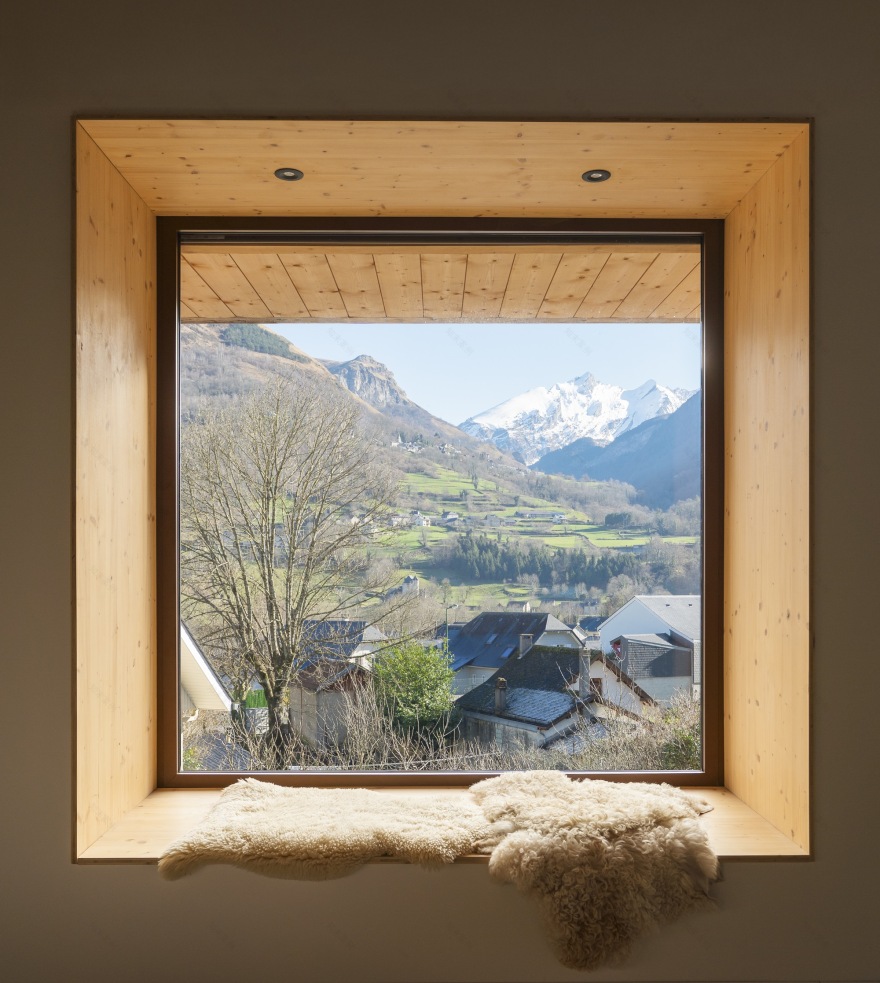
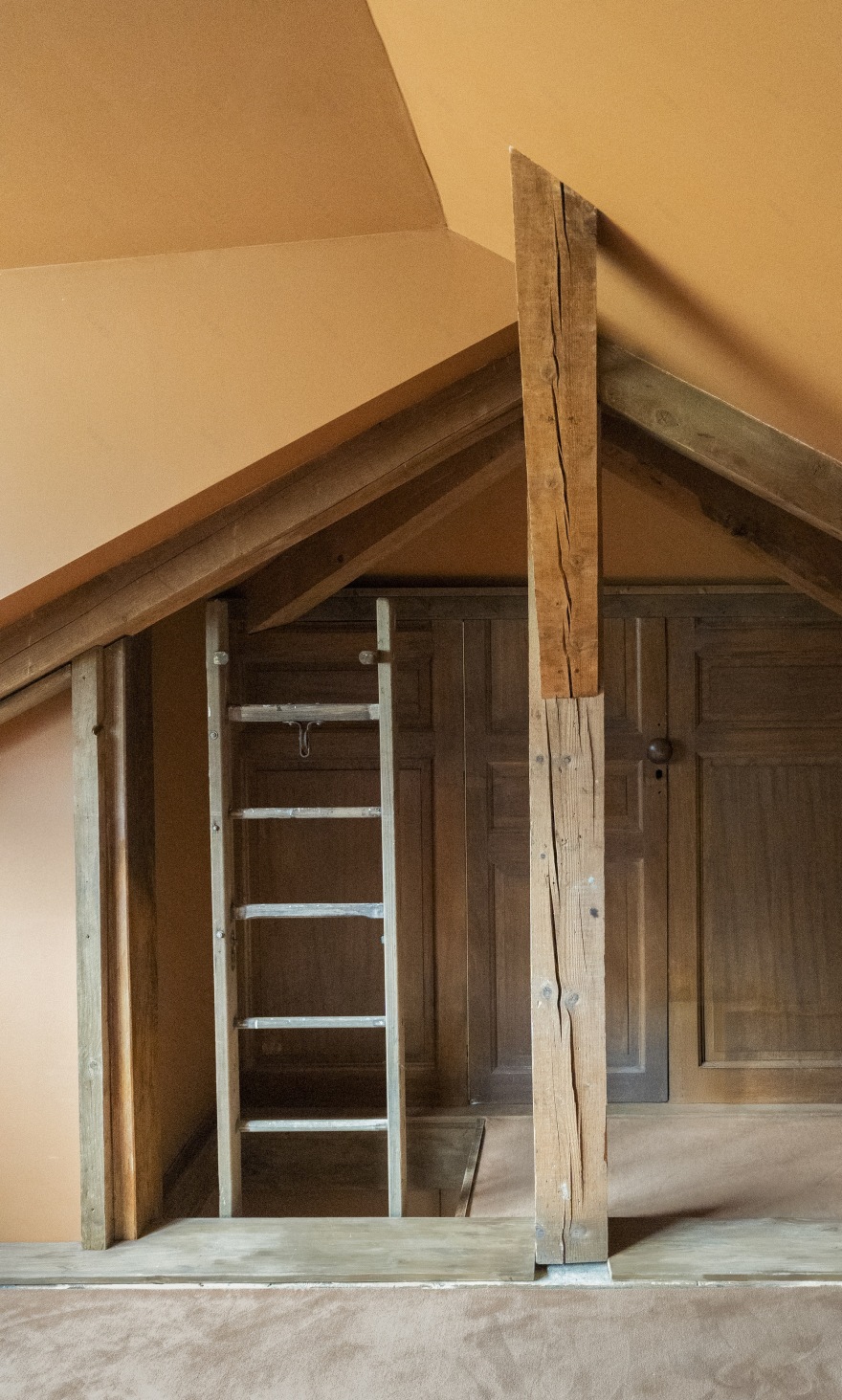
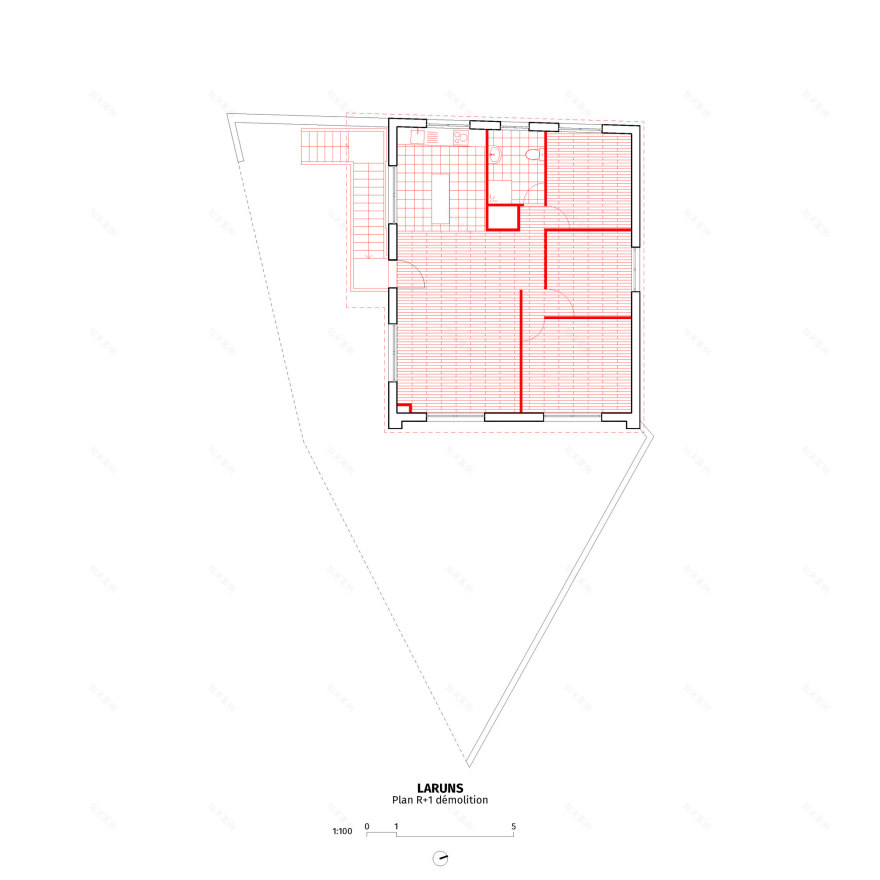
For the artist couple who now inhabit the house, the transformation needed to accommodate domestic life, textile production, and a way of living in harmony with the mountainous surroundings. Reuniting the two levels, opening the plan, and re-establishing views onto nature quickly became central intentions. The approach was also economic, material, and ethical. Nothing was removed without consideration. Each dismantled element was sorted, cleaned, stored, and reused. This process resonated with the clients' artistic practice of collecting and cataloguing old canvases to later repurpose them into new works. The house, therefore, becomes a reorganized assembly of elements. A former floor is repurposed as a ceiling finish, partitions, and drawers. Joists become a woodshed and outdoor furniture. Doors, stones, and a miller's ladder are given new uses.
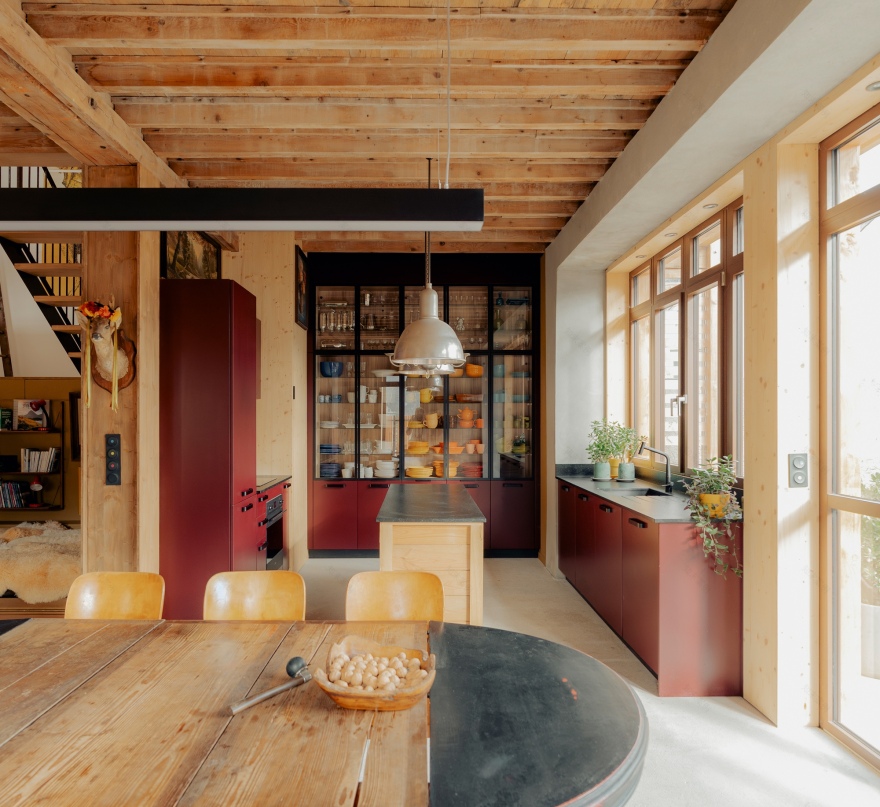
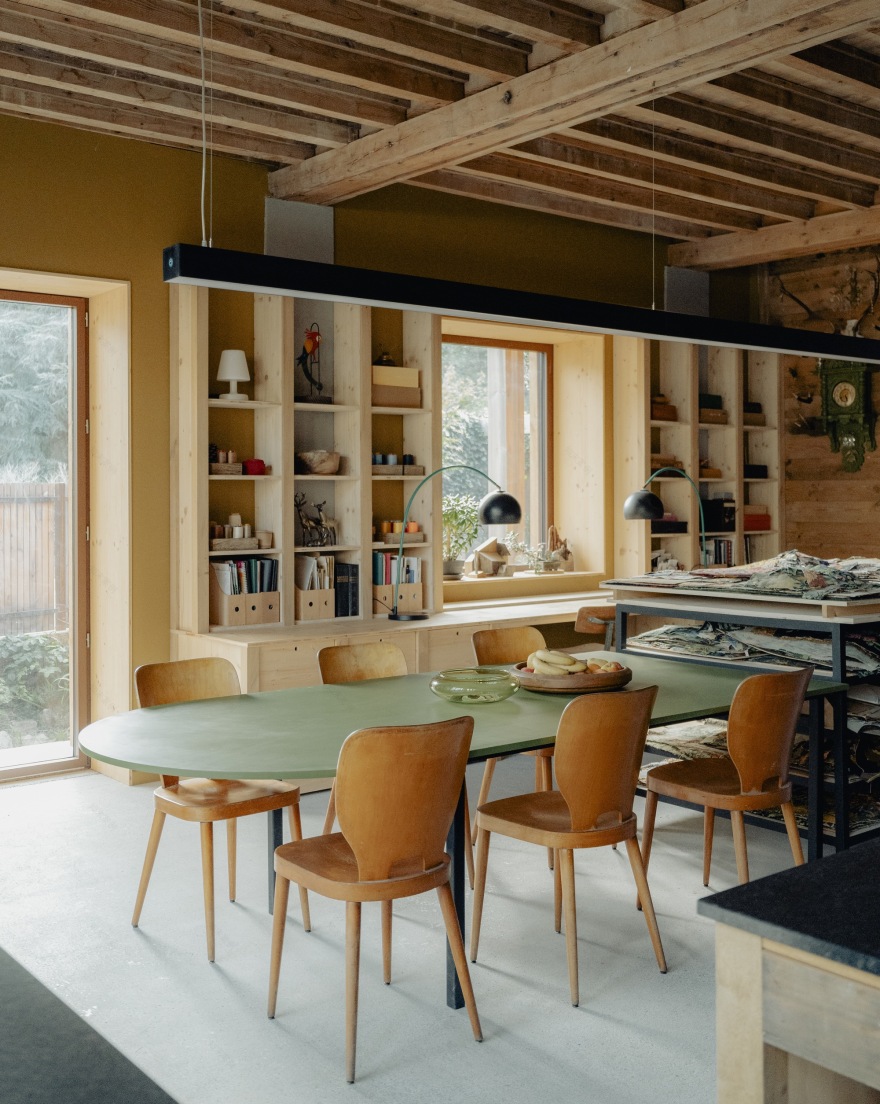
The construction process was collaborative. Structural and primary works were undertaken by local trades, while much of the fit-out involved client participation. Reuse and auto-construction advanced simultaneously to align design and fabrication decisions. Building became less about addition and more about editing and re-composition—almost a form of stitching, where material is continuously reconfigured. The renovation project avoids spectacle or rupture. It proceeds through revelation, displacement, and reassembly—a contemporary approach to inhabiting vernacular architecture that is attentive to local context, existing materials, and durability.
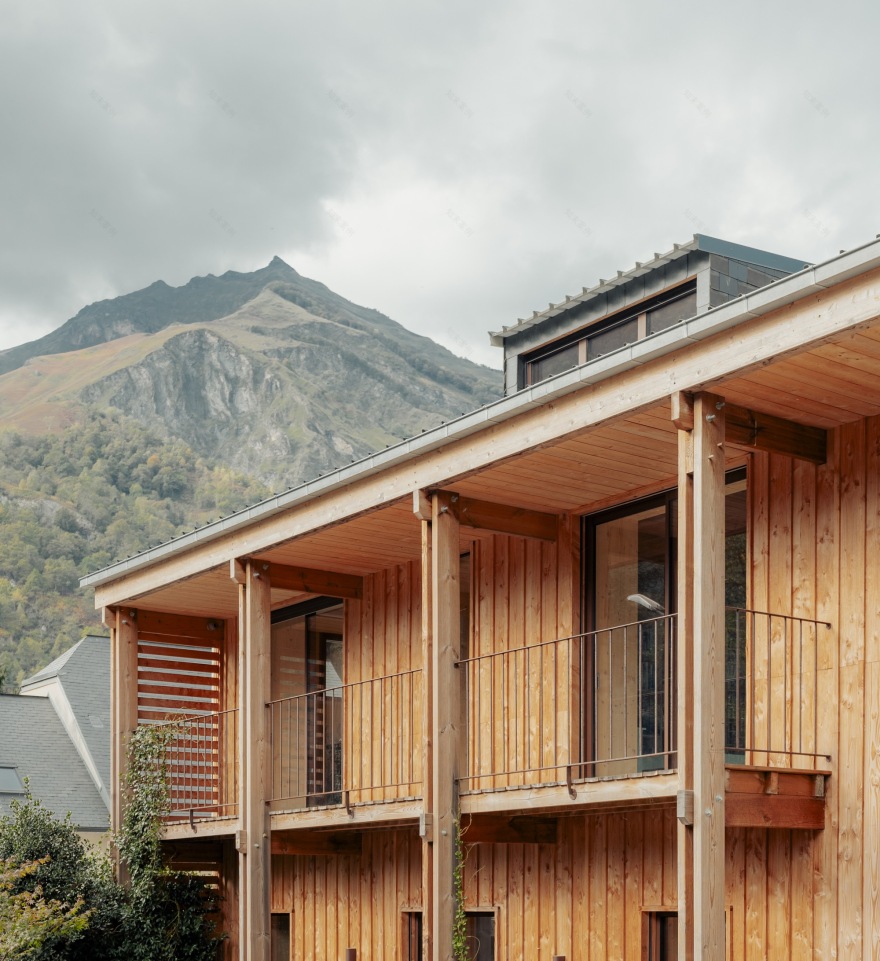
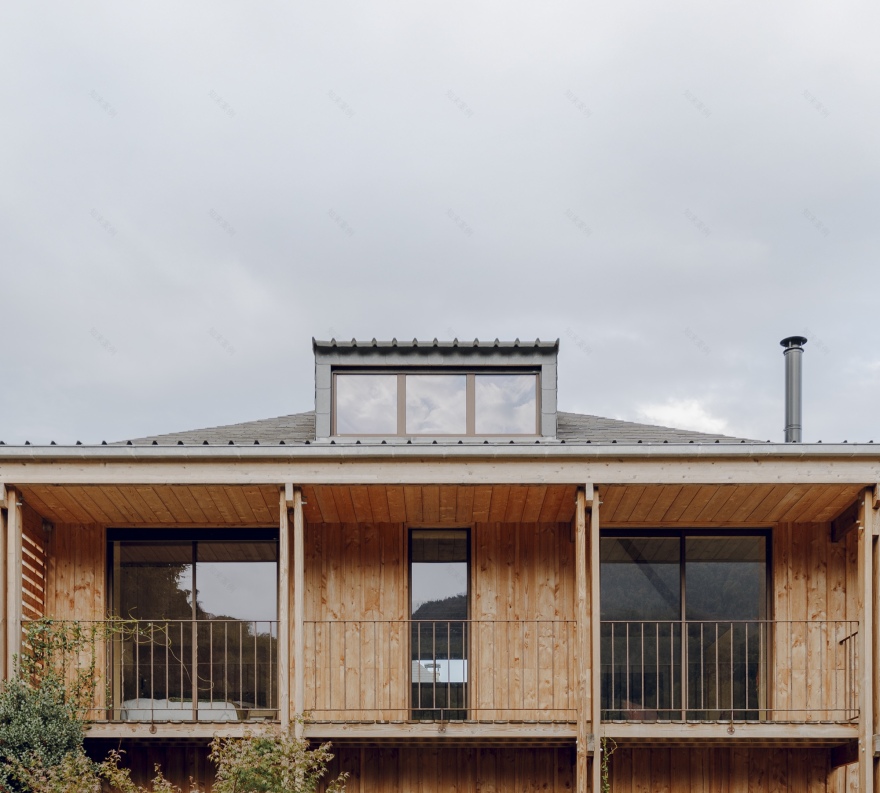
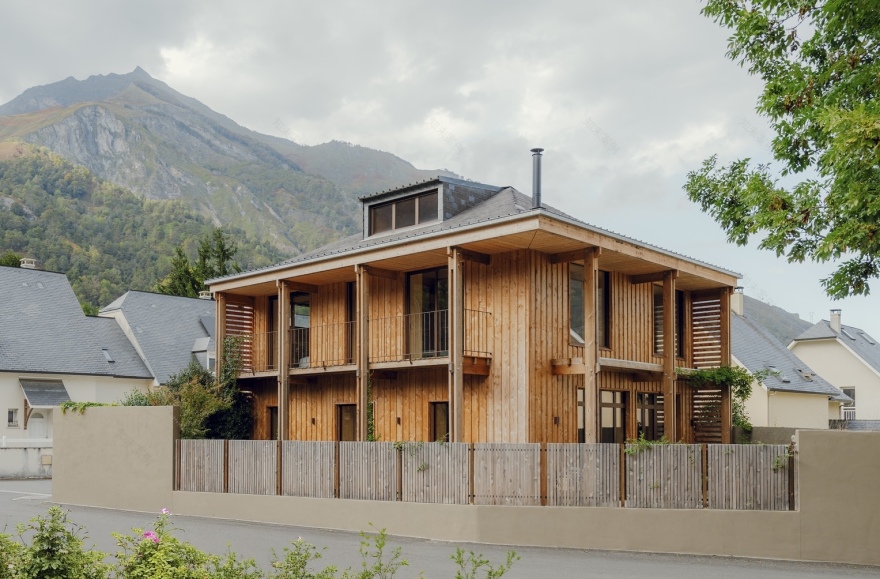
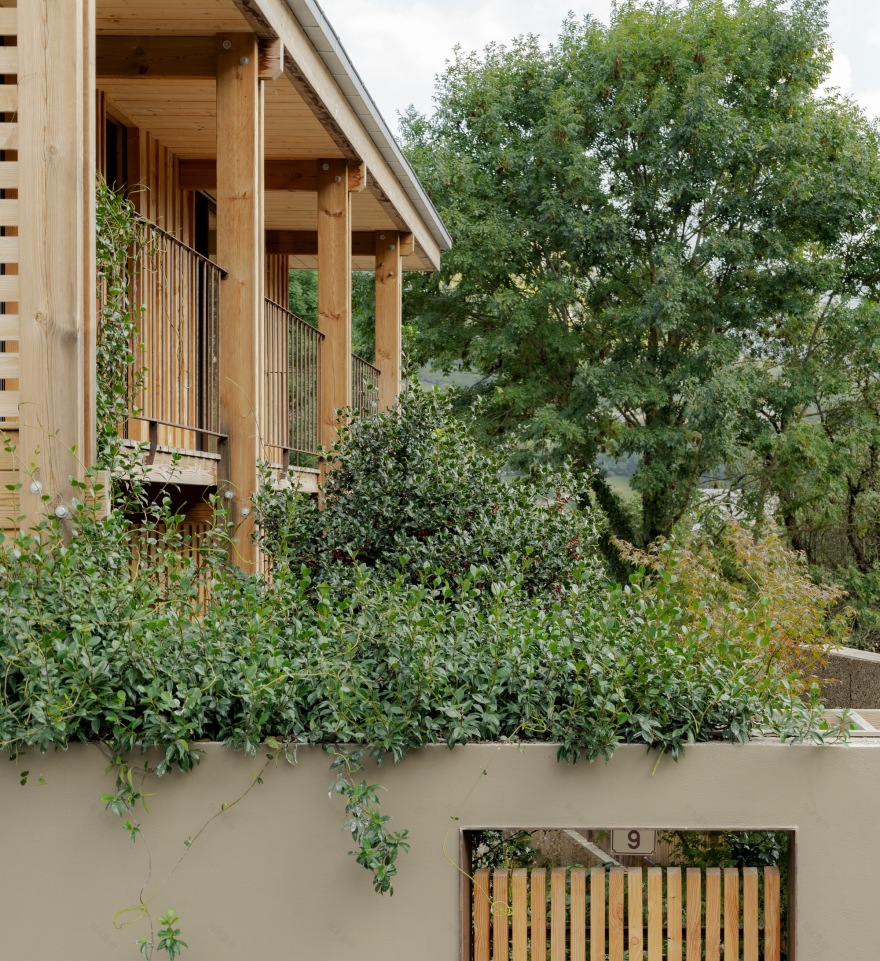
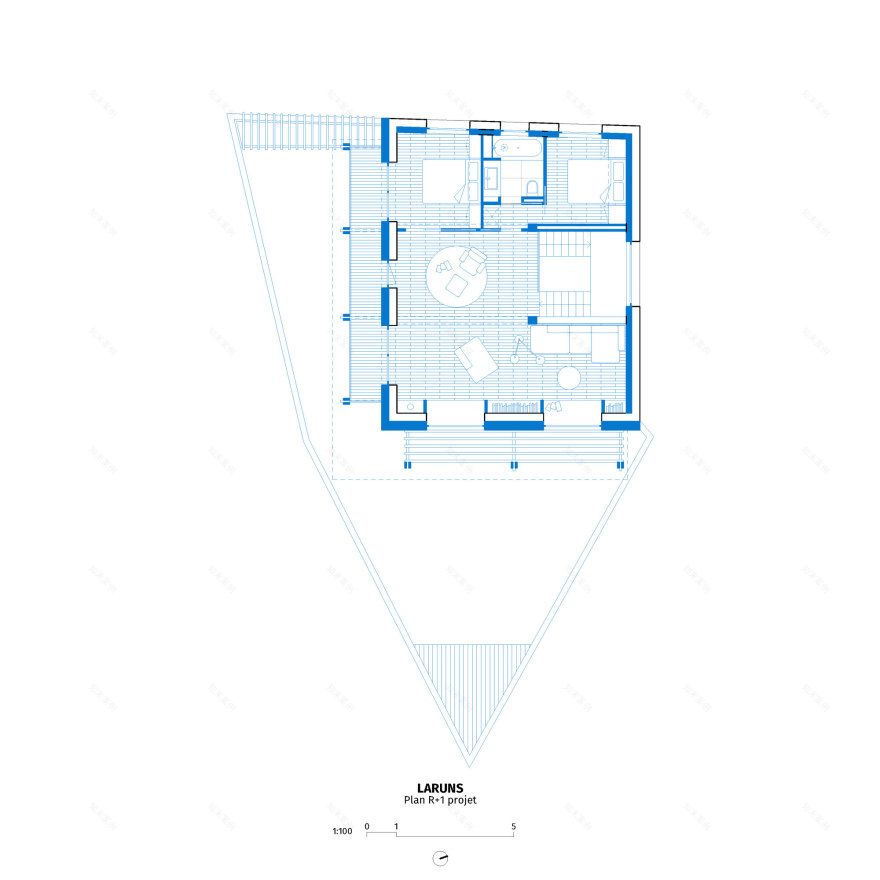
Exterior — The discovery of a concrete portal frame, a leftover from the former workshop's vehicle entrance, informed a decisive architectural move. The façade opening was generously widened and carefully reinforced, allowing natural light deeper into the interior. Alongside the garden, a timber structure and a wide metal-clad overhang extend the domestic space outward. At roof level, a mansard volume inspired by Béarn vernacular architectural forms creates an additional room—like a small cabin pointing to the mountains—resting on the main rafters of the existing structure. To the south, a terrace reinterprets traditional Ossau galleries, once used for drying and storage, now conceived as a sheltered year-round outdoor space.
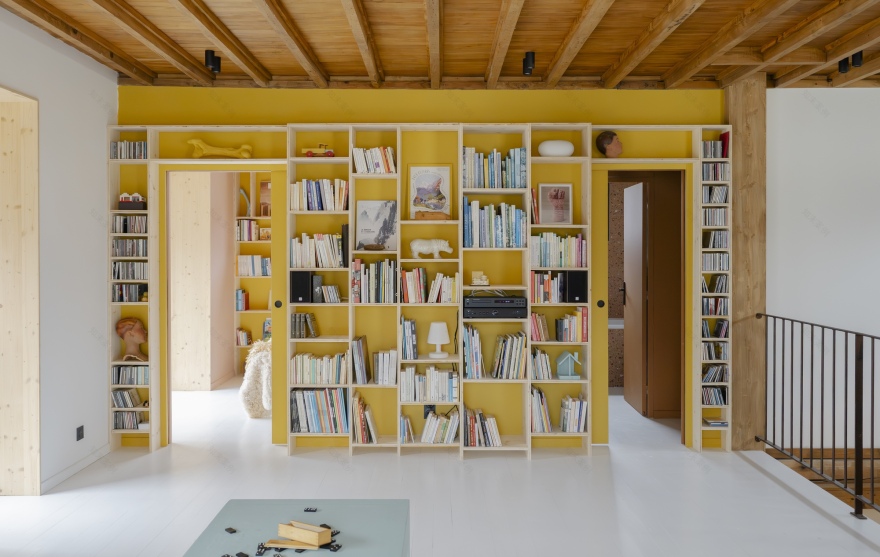
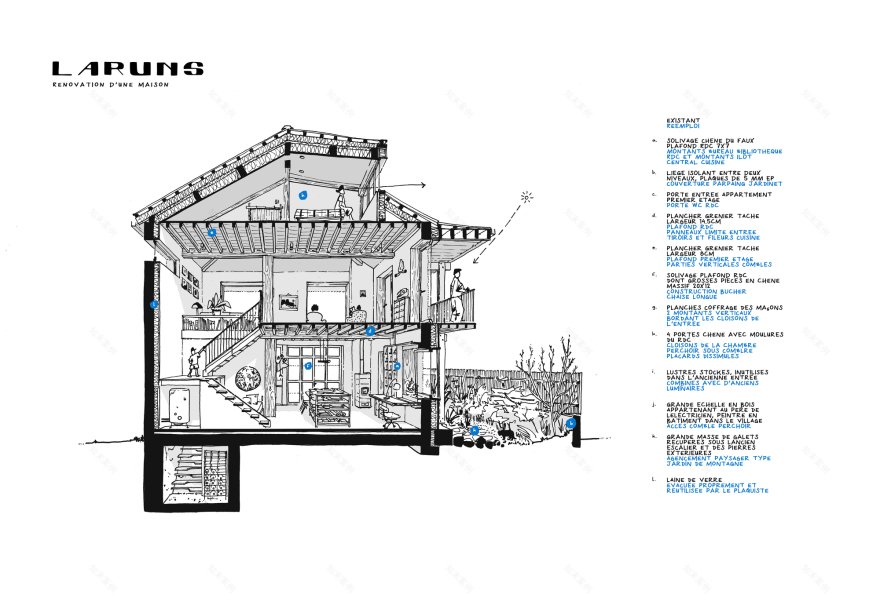
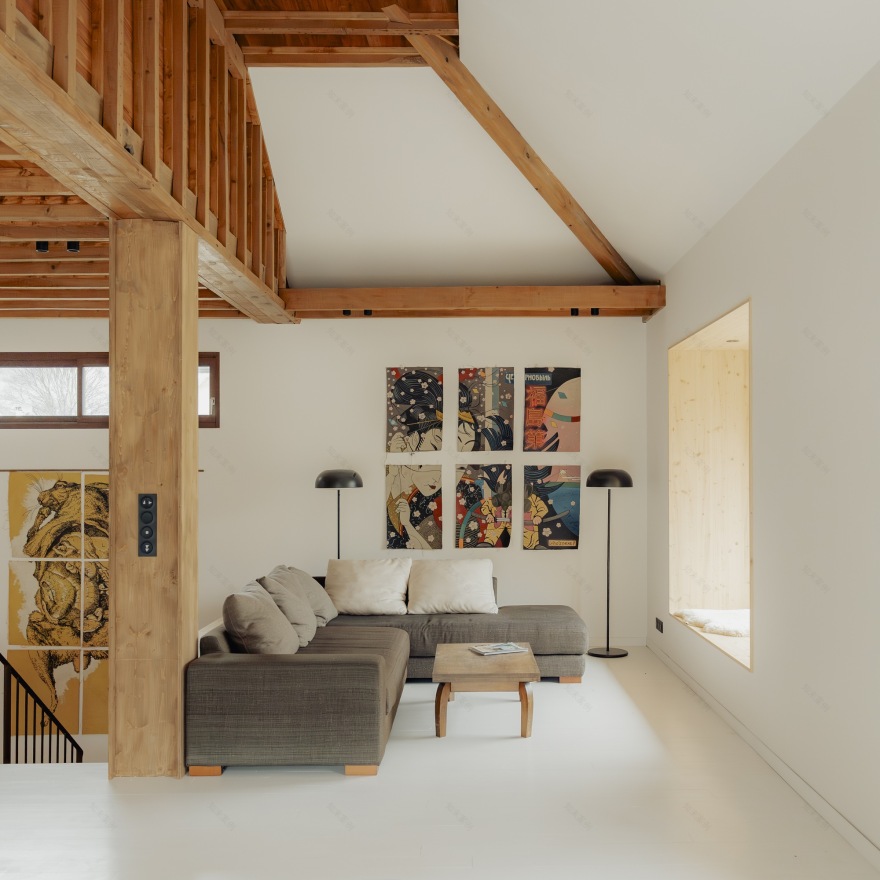
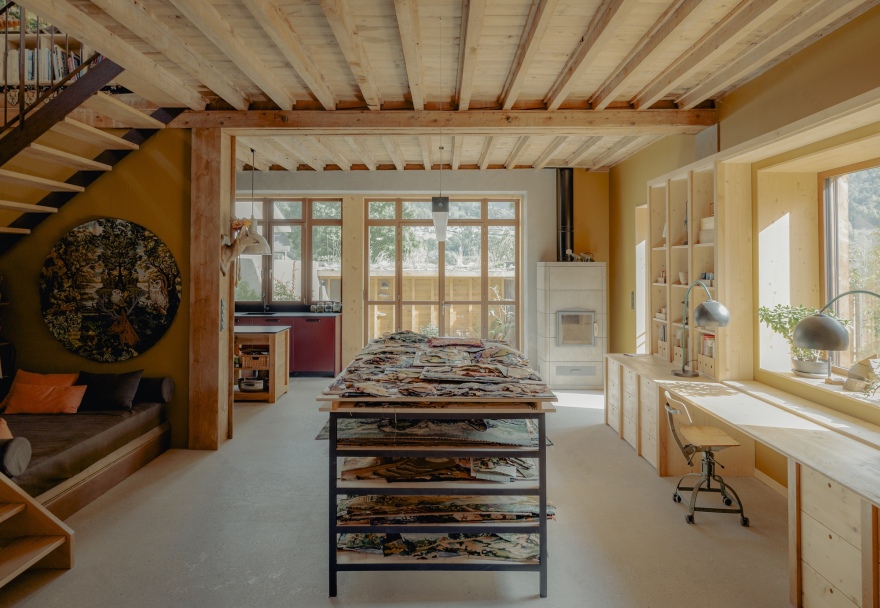
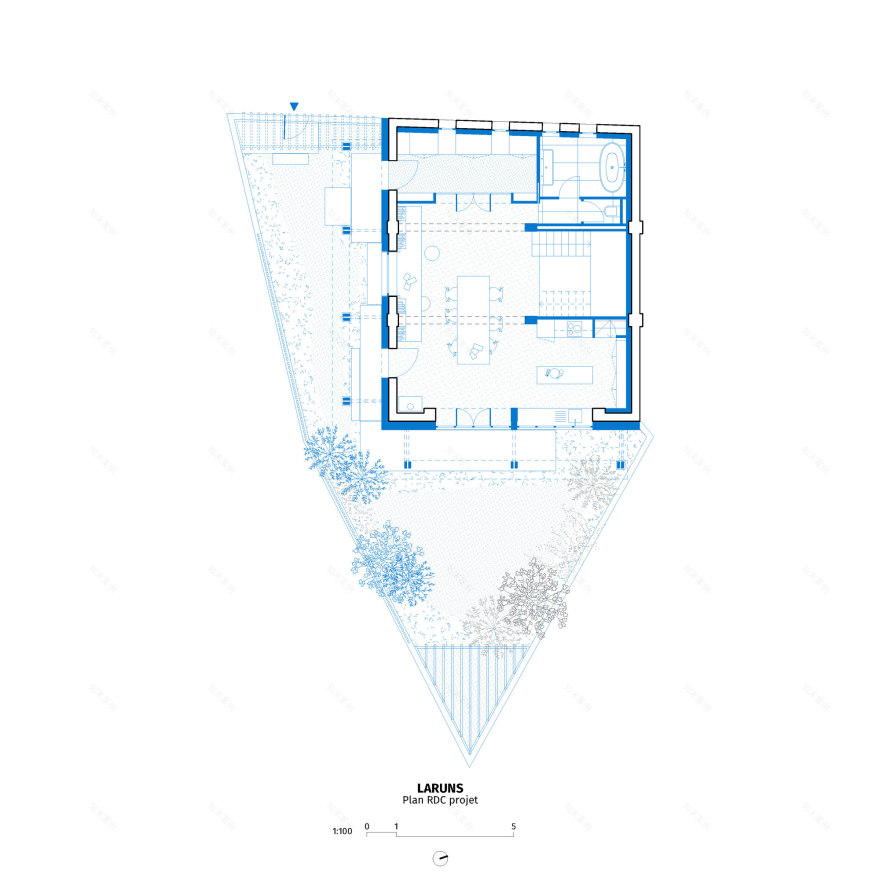
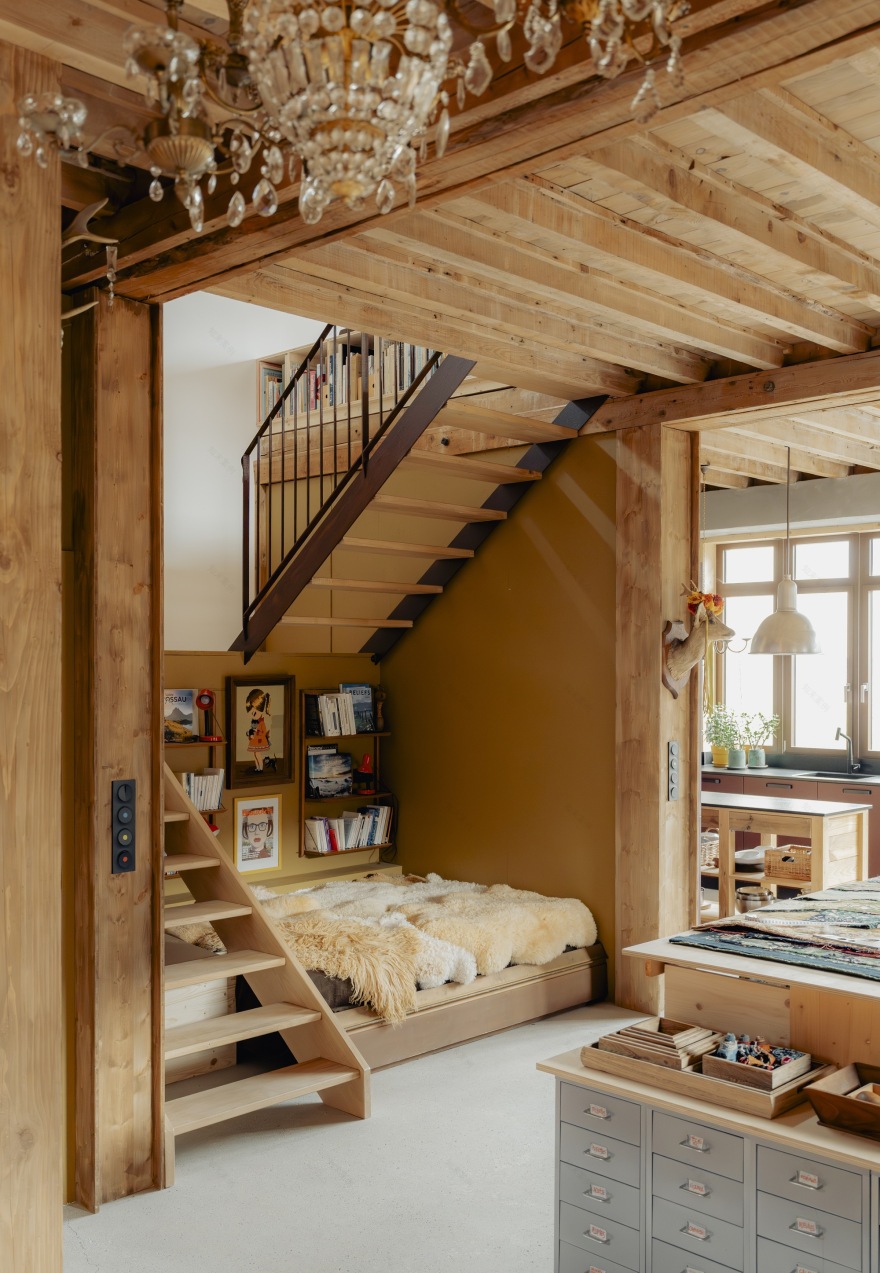
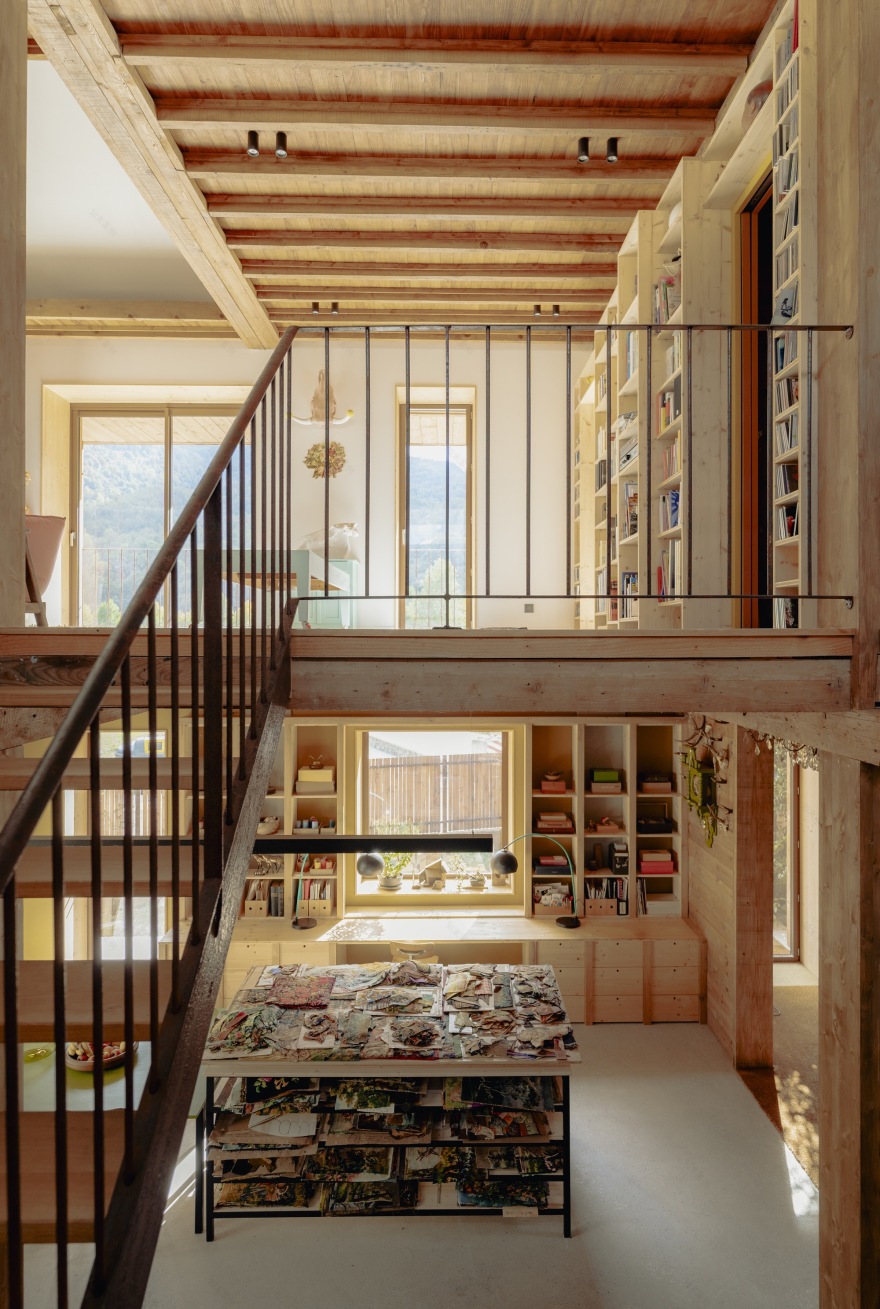
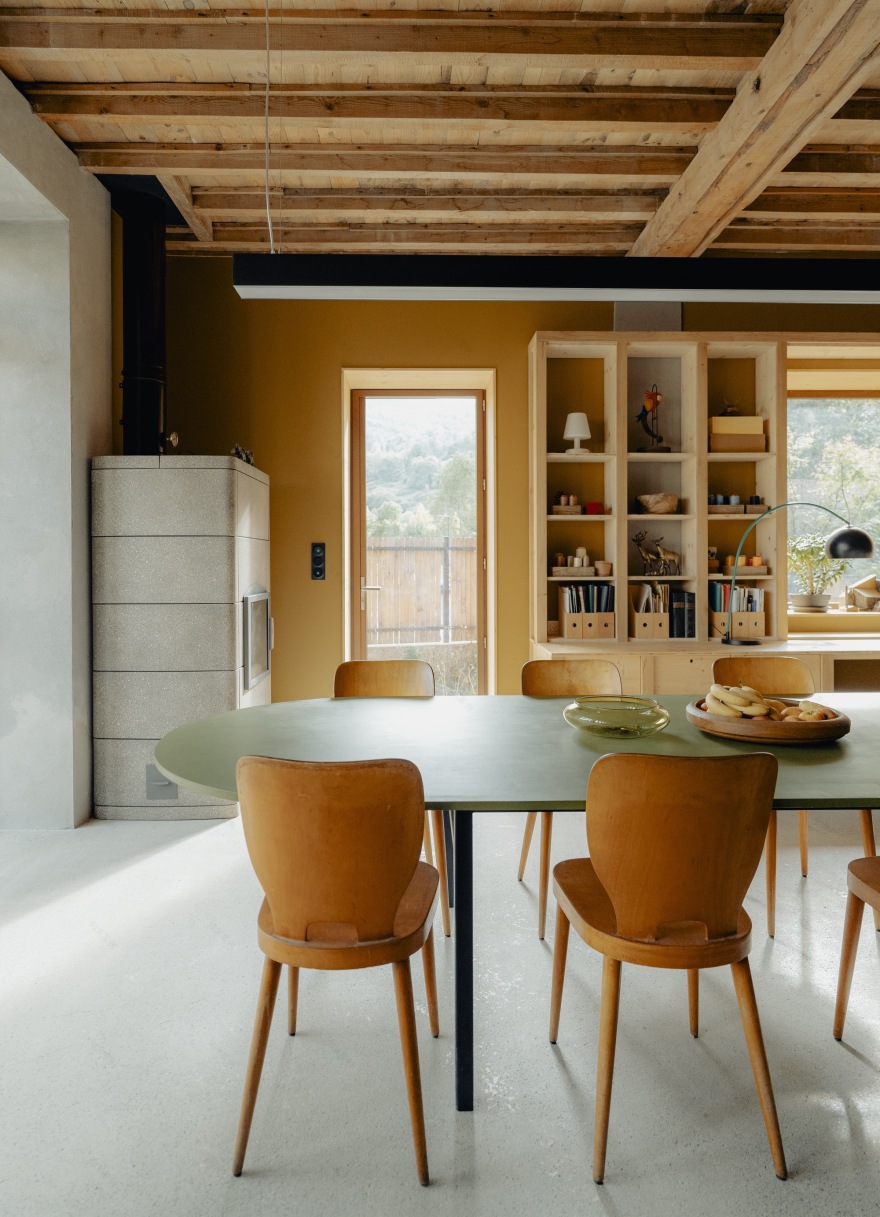
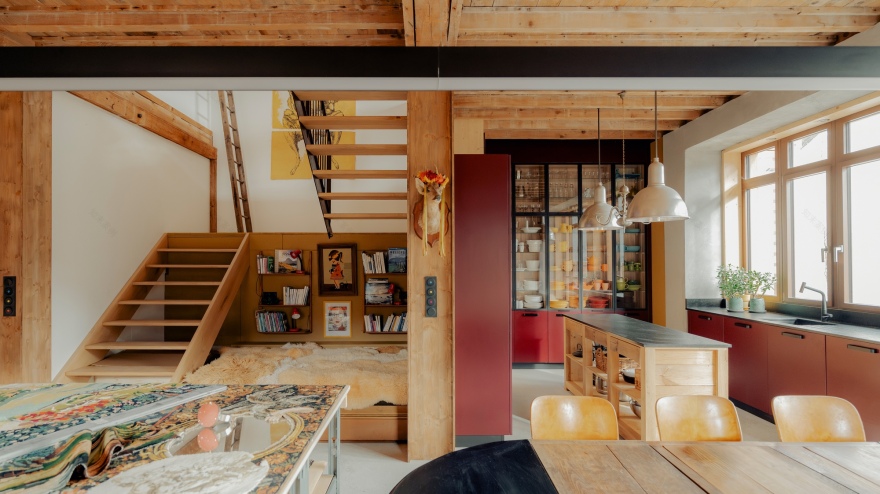
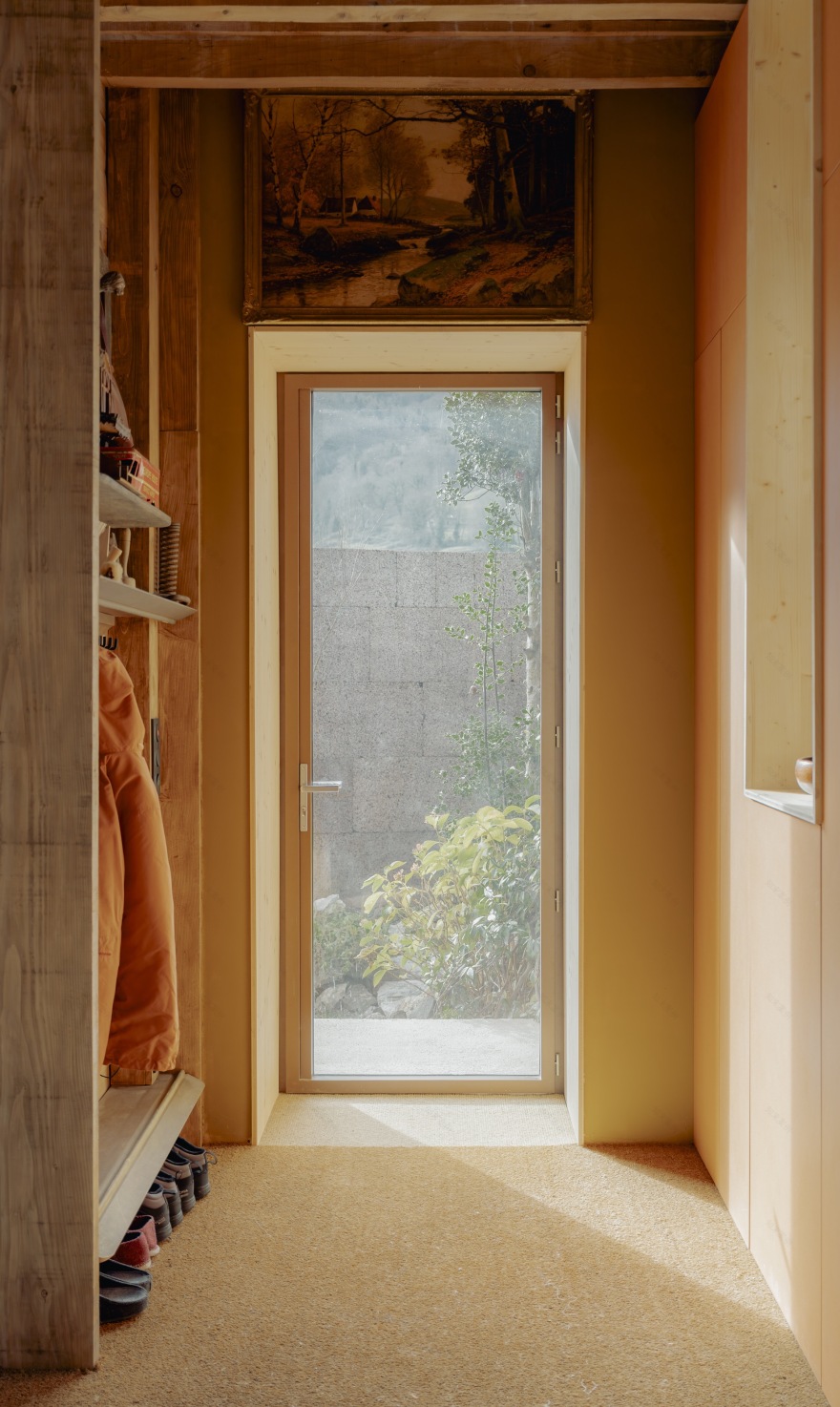
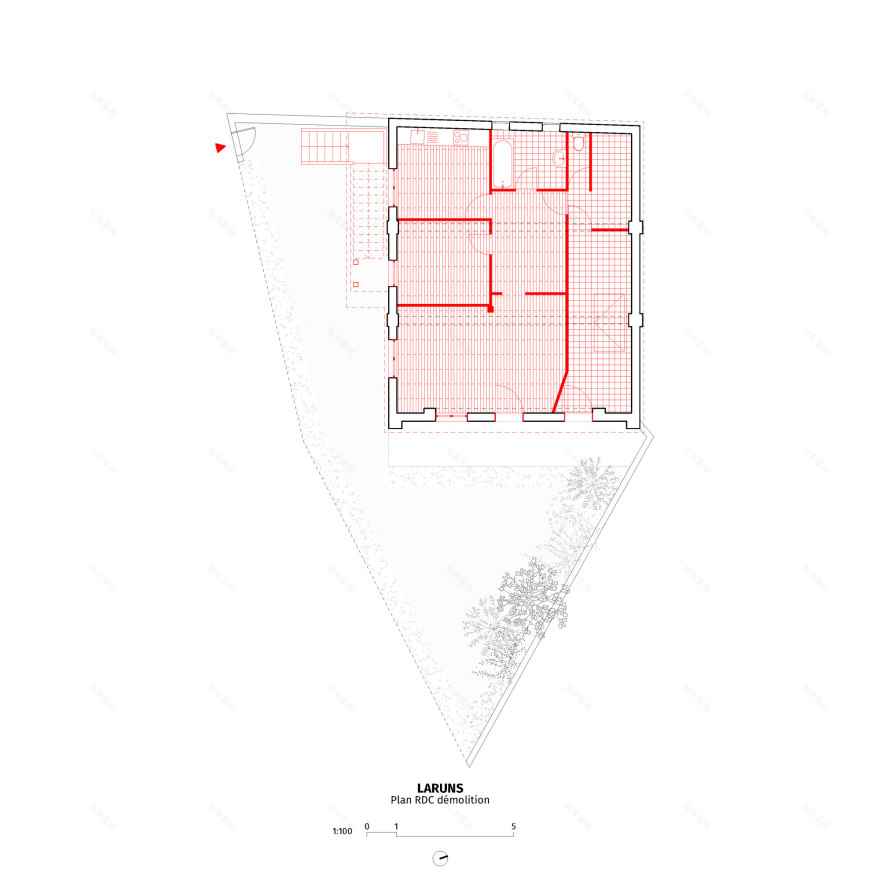
Interior — The renovation clarifies the functional layout. A new staircase positioned along the north elevation frees the main living spaces toward the south and views to the outside. Beneath it, a compact alternating-tread stair leads to the existing cellar, naturally ventilated and repurposed as a pantry. The ground floor unfolds as a continuous volume from the entrance vestibule to the garden, uniting the kitchen, workspace, and living area within a single through-space.
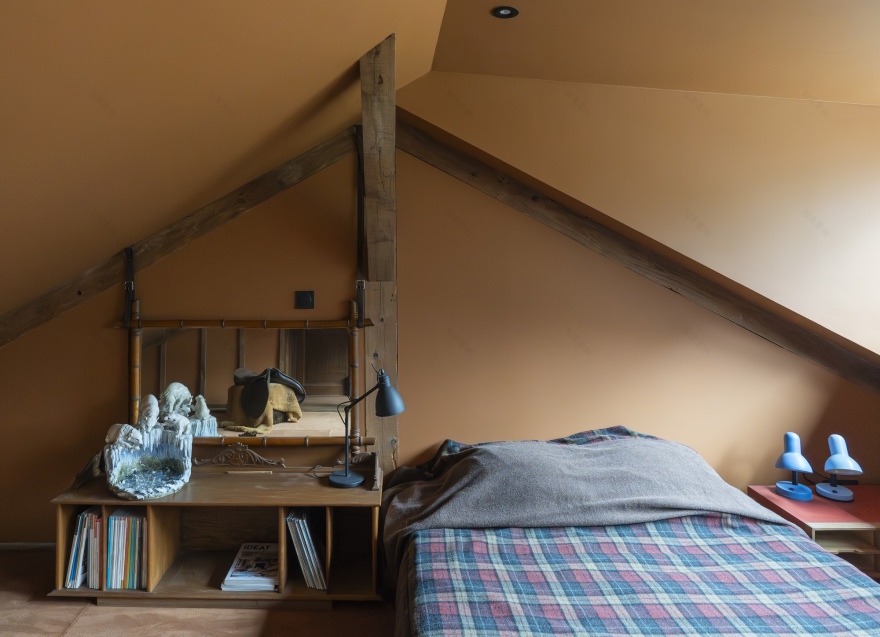
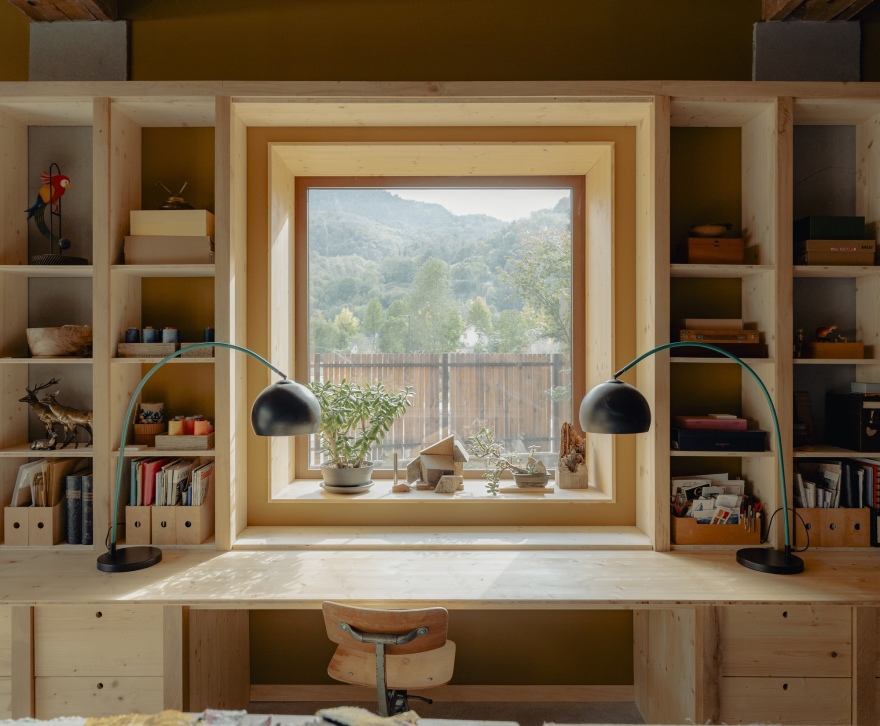
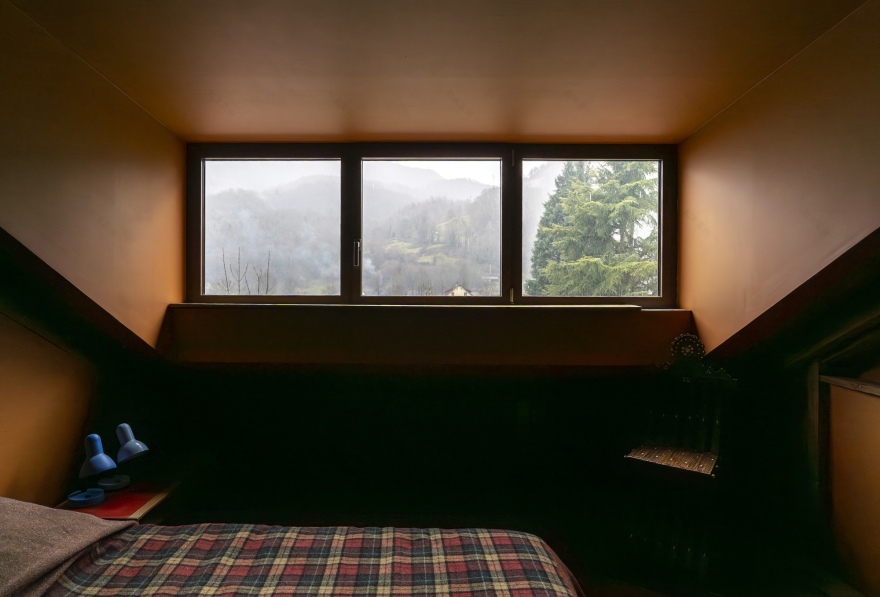
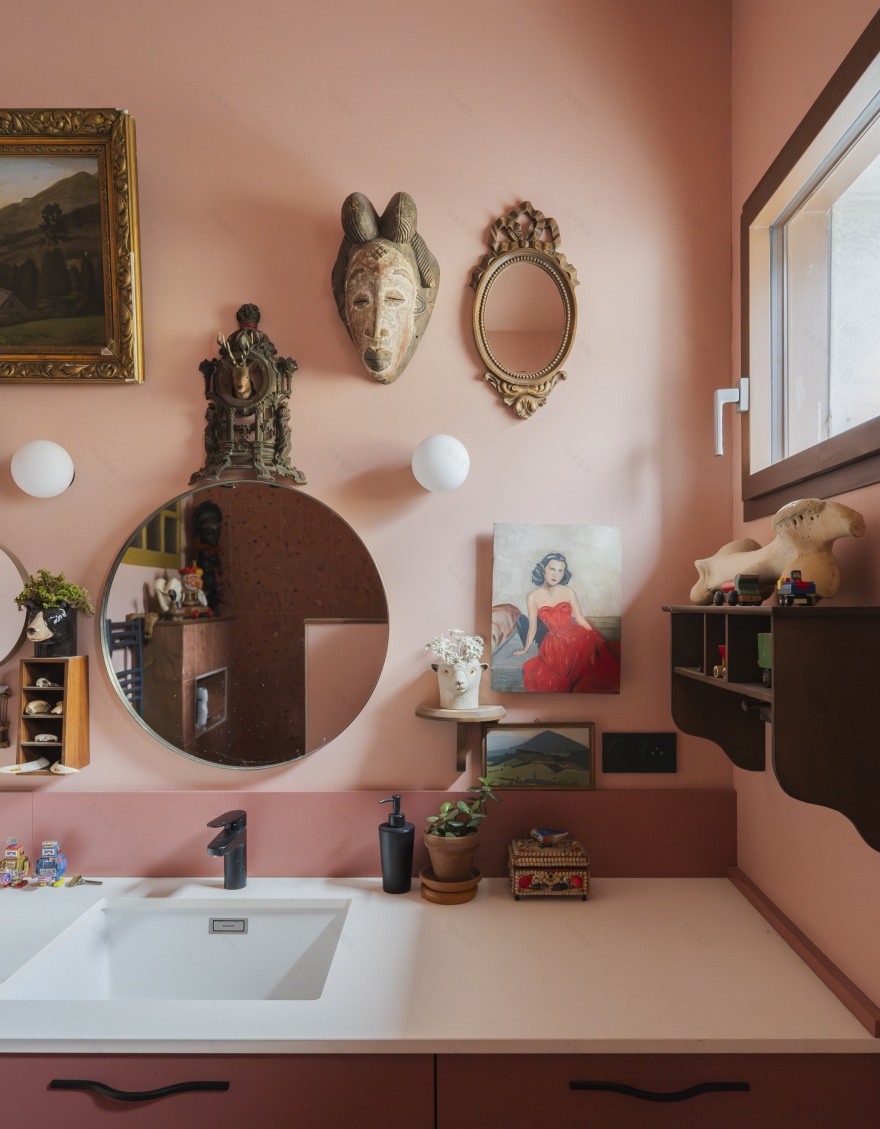
Upstairs, the bedrooms and a bathroom are consolidated into a row, allowing a corner living room to open onto a continuous balcony. Under the roof, a centrally placed room set within the timber frame establishes double-height relationships and is accessed via the reused miller's ladder. The interior fit-out remains deliberately open and adaptable, defined by a small number of built-in elements such as large worktables and storage, alcoves oriented toward the landscape, and a raised bed facing the mountains.
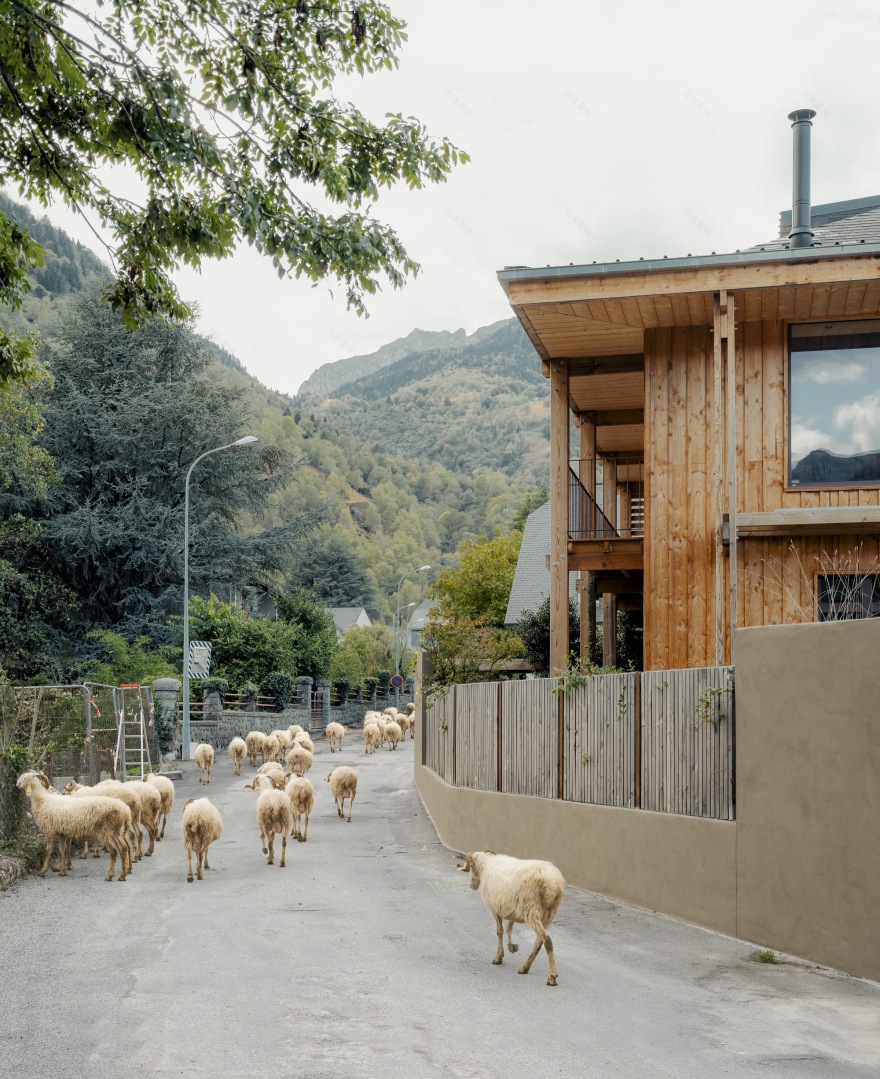
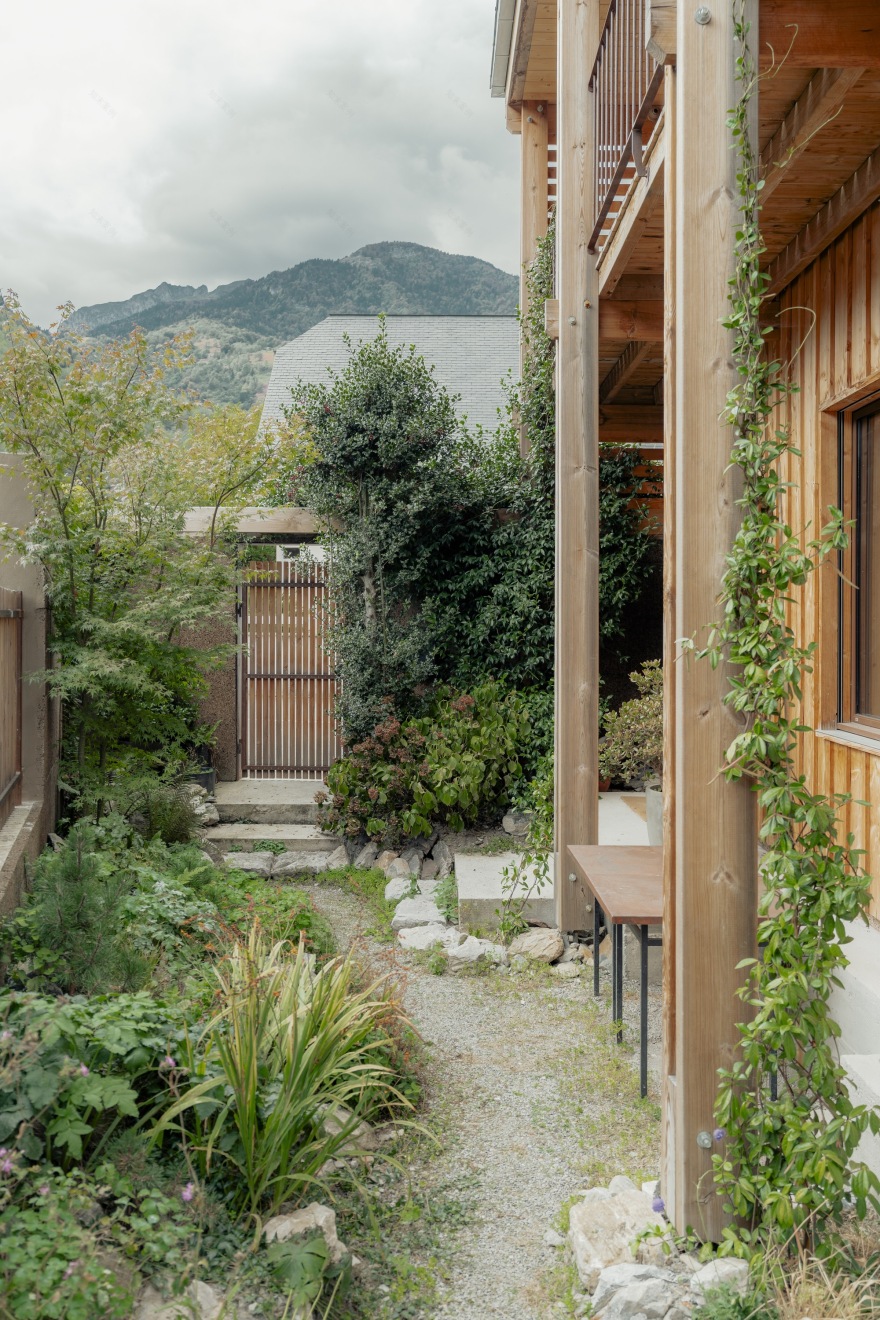
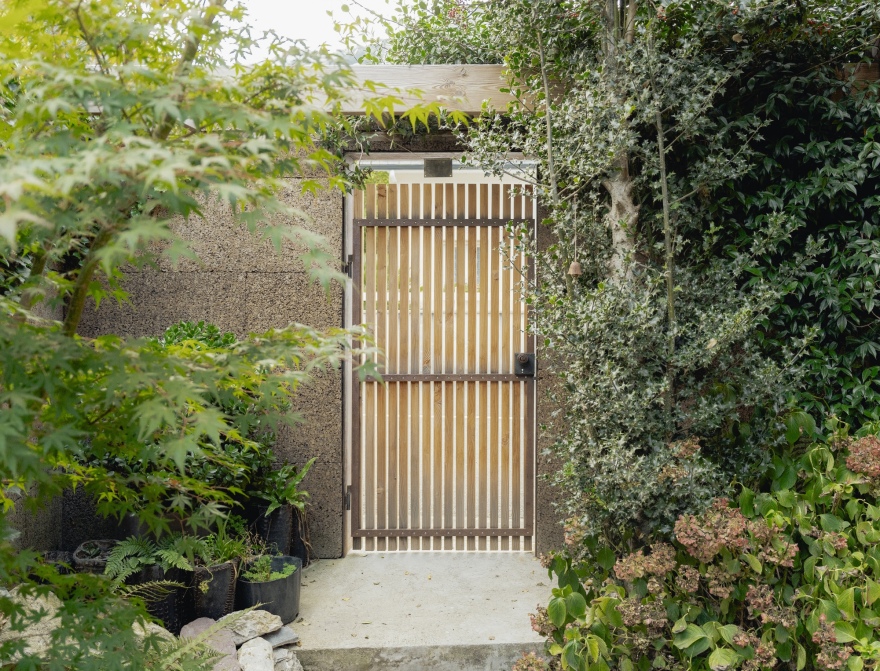
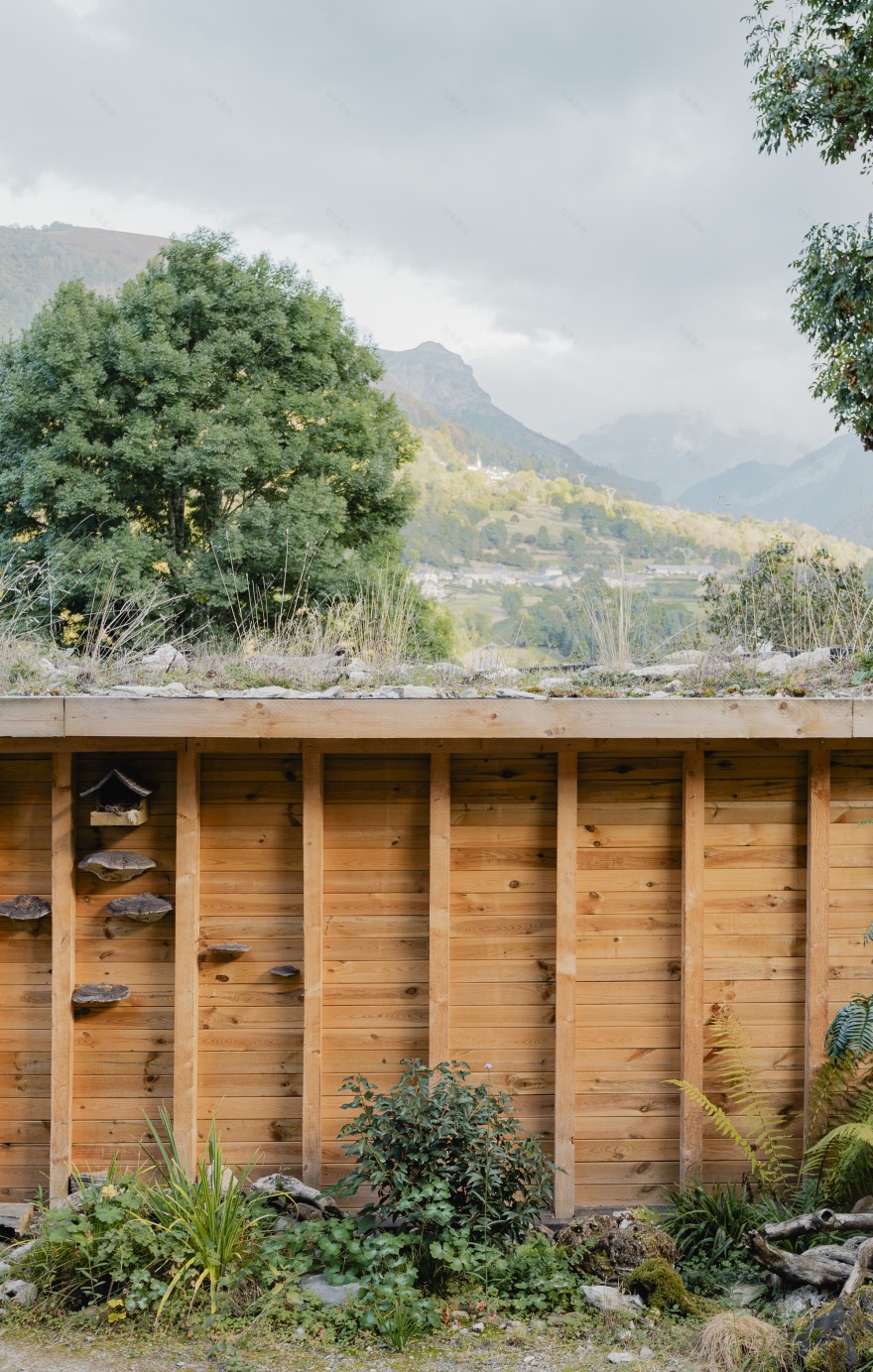
Gardens — Outside, the garden extends the project's economic approach. Stones and pebbles salvaged from demolition, combined with local plant species, form a mineral landscape inspired by dry riverbeds and snowmelt debris. A woodshed encloses the triangular extremity of the plot and extends the perspective, as its green roof merges visually with the mountains in the distance.
Project gallery
南京喵熊网络科技有限公司 苏ICP备18050492号-4知末 © 2018—2020 . All photos and trademark graphics are copyrighted by their owners.增值电信业务经营许可证(ICP)苏B2-20201444 苏公网安备 32011302321234号
苏公网安备 32011302321234号客服
消息
收藏
下载
最近