

创作上传
VIP
收藏下载
登录 | 注册有礼
查看完整案例

收藏

下载

分享
东方快车停靠在Podgórna
The Orient Express stops at Podgórna
Biuro Kreacja与M19 Architekci接到的任务,是在Podgórna街11/13号这栋历史公寓的厚重历史与赋予其全新、充满活力的城市功能之间找到平衡。由此诞生了“美食公寓”——一个开放的当代空间,以餐饮市集为原型,汇集多元风味、原创餐饮概念与亲民菜单。在这里,十种不同料理与三家风格各异的酒吧,共同构成一场丰富的味觉体验。
The task given to Biuro Kreacja and M19 Architekci was to find a balance between the weight of the history of the tenement at Podgórna Street 11/13 and the need to give it a new, lively urban function. Thus Kulinarna Kamienica was born – an open, contemporary space inspired by the food hall / restaurant market format, combining diverse flavours, original culinary concepts, and accessible menus. A place offering ten different cuisines and three bars, each with its own distinct style.
▼室内概览,overview of the interior space©Alka Murat
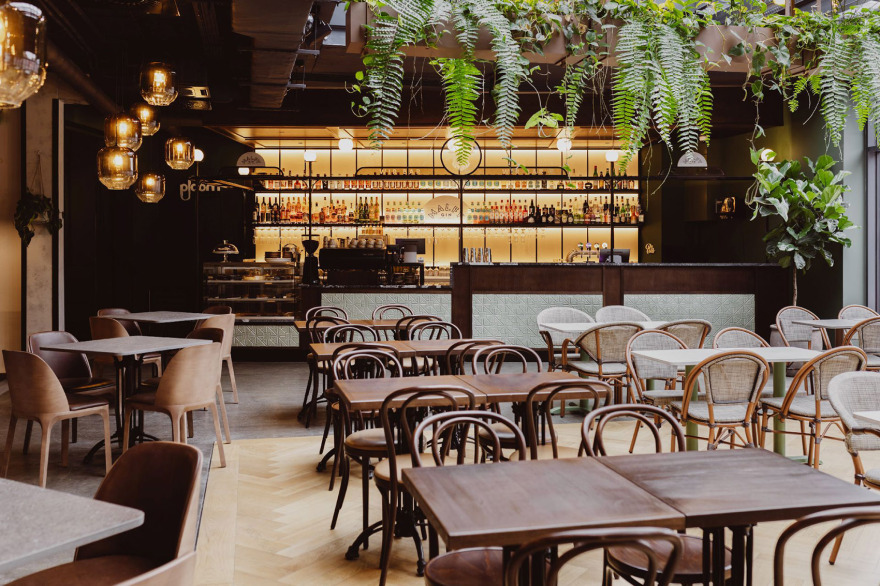
“在为一栋历史公寓设计室内空间时,我们希望延续在地身份与城市记忆,同时也必须回应多元餐饮与复杂功能的需求,”Dorota Terleck在谈及设计挑战时表示。
“When designing the interiors of a historic tenement, we wanted to build on local identity and the city’s history, but at the same time we had to tackle the diversity of flavours and the planned function of the space,” Dorota Terlecka explains, describing the challenges of developing the interior concept.
▼室内概览,overview of the interior space©Alka Murat
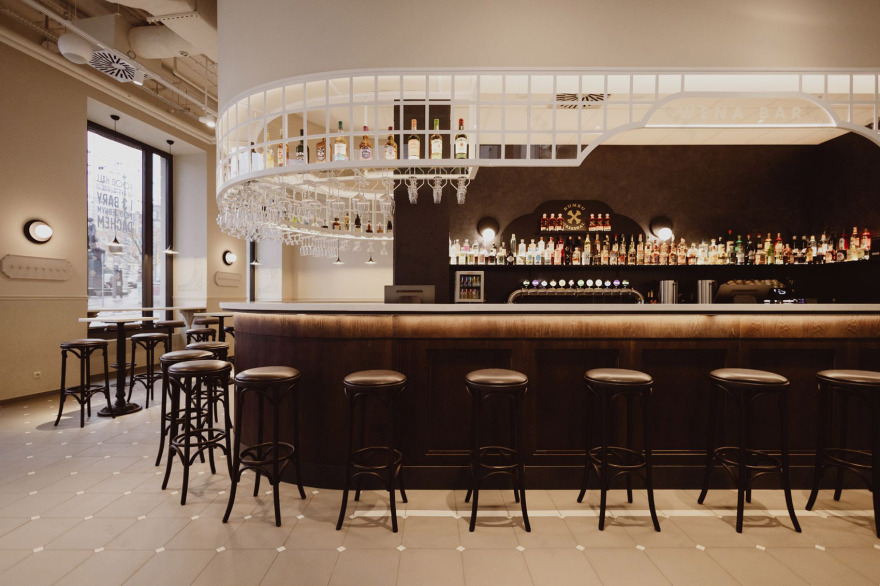
“我们不断寻找可以支撑设计叙事的主题,其中之一便是新艺术风格——对新艺术时期火车站的隐喻。于是,‘味觉之旅’的概念也随之浮现,”Biuro Kreacja创始人补充道。
“We explored themes and narratives that could support us, and one of them was Art Nouveau – a reference to Art Nouveau railway stations. Naturally, the idea of a journey of flavours also emerged,” explains the owner of Biuro Kreacja.
▼室内概览,overview of the interior space©Alka Murat
“东方快车”的隐喻,使设计团队得以在同一栋建筑中引导人们穿越不同年代、文化与美学。从维也纳风格的新艺术装饰与彩色玻璃,到呼应Hipolit Cegielski工业遗产的工业元素,再到亚洲极简语汇与东方浓烈色彩——每一段空间都成为这场味觉与视觉旅程中的一个“停靠站”。
The metaphor of a journey on the Orient Express allowed the designers to guide guests through different eras, cultures, and aesthetics within a single tenement. From the elegant Art Nouveau and stained glass of the Wiedeńska Town House, through industrial accents referencing the legacy of Hipolit Cegielski, to minimalist inspirations from Asia and the intense colours of the East – each fragment of the interior became a separate “stop” on this culinary and visual journey.
▼室内概览,overview of the interior space©Alka Murat
从候车厅到远东 From a station waiting room to the Far East
步入Kulinarna Kamienica,访客首先进入一个呼应建筑新艺术起源的空间。
Upon entering Kulinarna Kamienica, visitors immediately find themselves in a space that naturally refers to the Art Nouveau origins of the building.
▼呼应建筑新艺术起源的空间,a space that naturally refers to the Art Nouveau origins©Alka Murat
“这里原本是服务性商业空间,是一座具有维也纳风格的商业公寓。战后这一部分并未重建,直到这次改造才得以恢复其原有功能。入口处的新艺术风格,是对这些历史空间的致敬,”Dorota Terlecka 解释道。
“Originally, there were service premises here. It was a commercial tenement in the style of Viennese buildings. After the war, this was never rebuilt. Only this revitalisation made it possible to restore the original functions. The Art Nouveau references that welcome guests at the entrance are a tribute to those former interiors,” explains Dorota Terlecka.
▼入口处的新艺术风格,the Art Nouveau references©Alka Murat
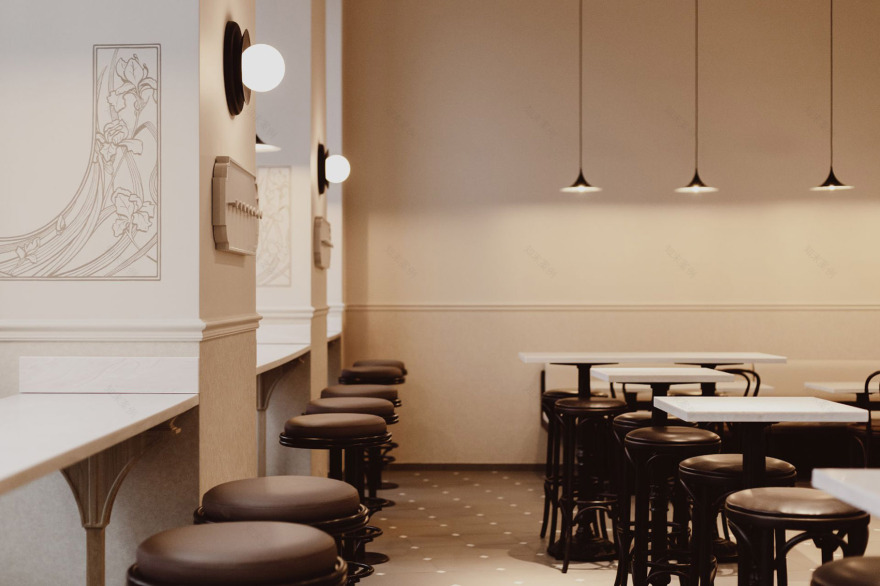
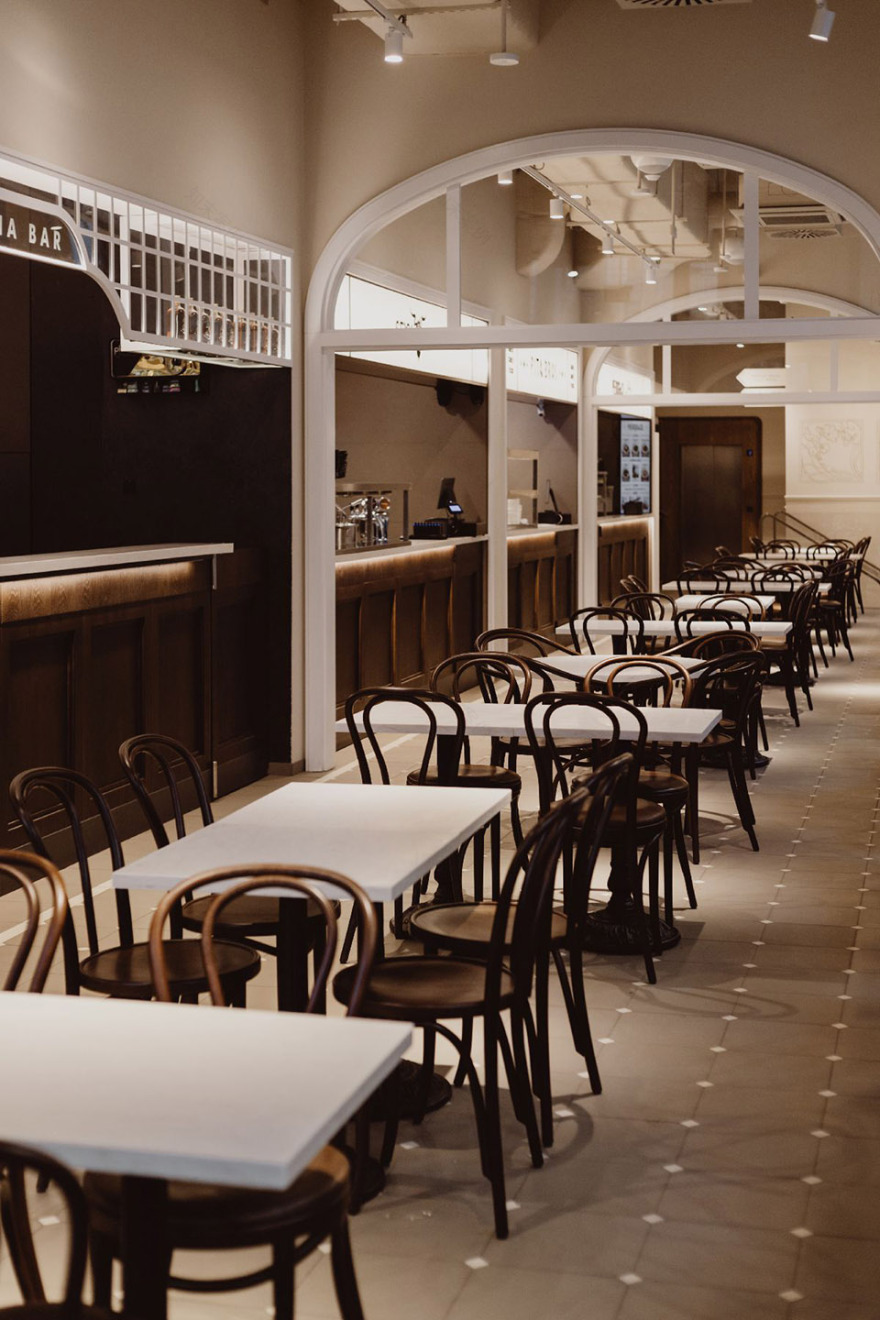
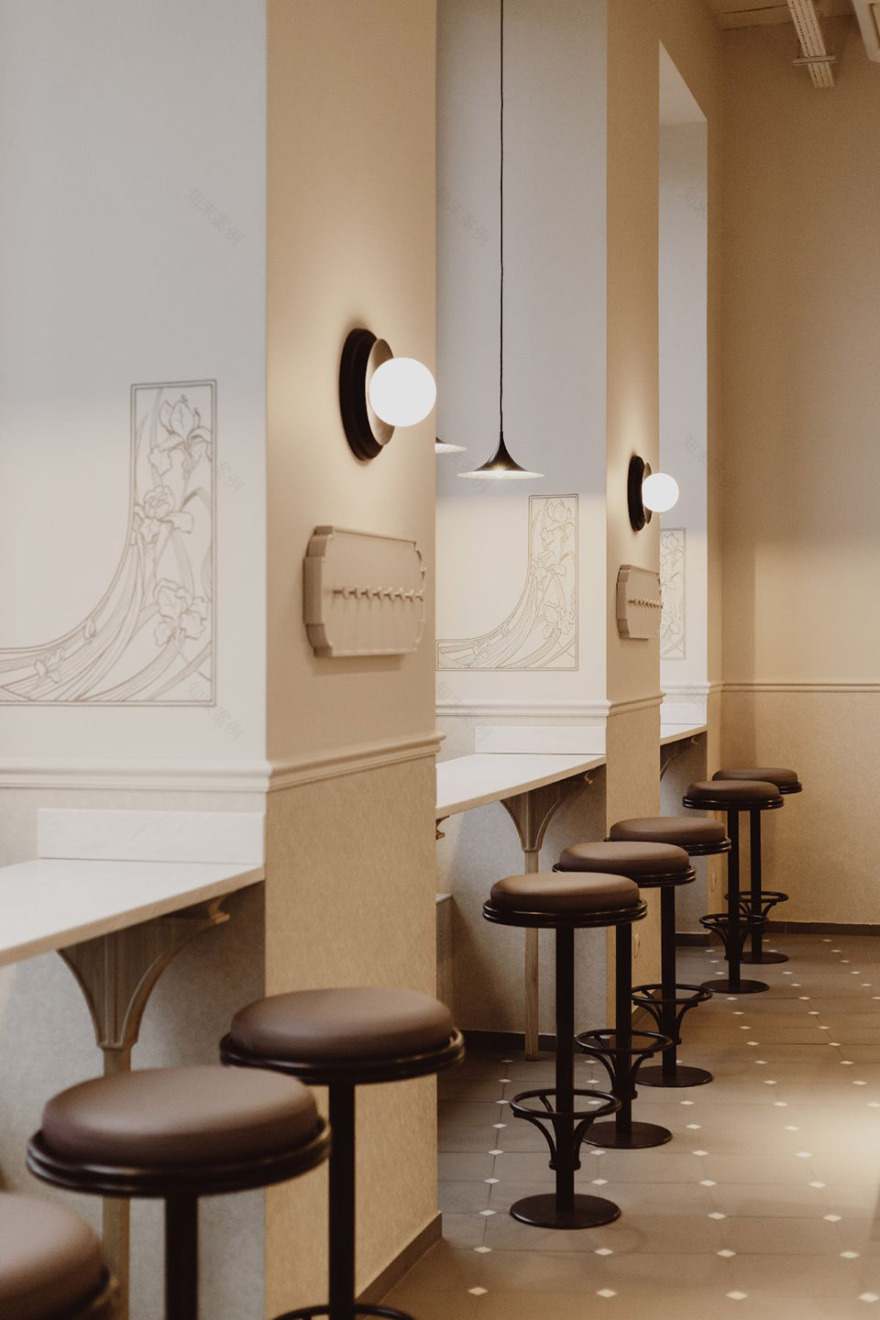
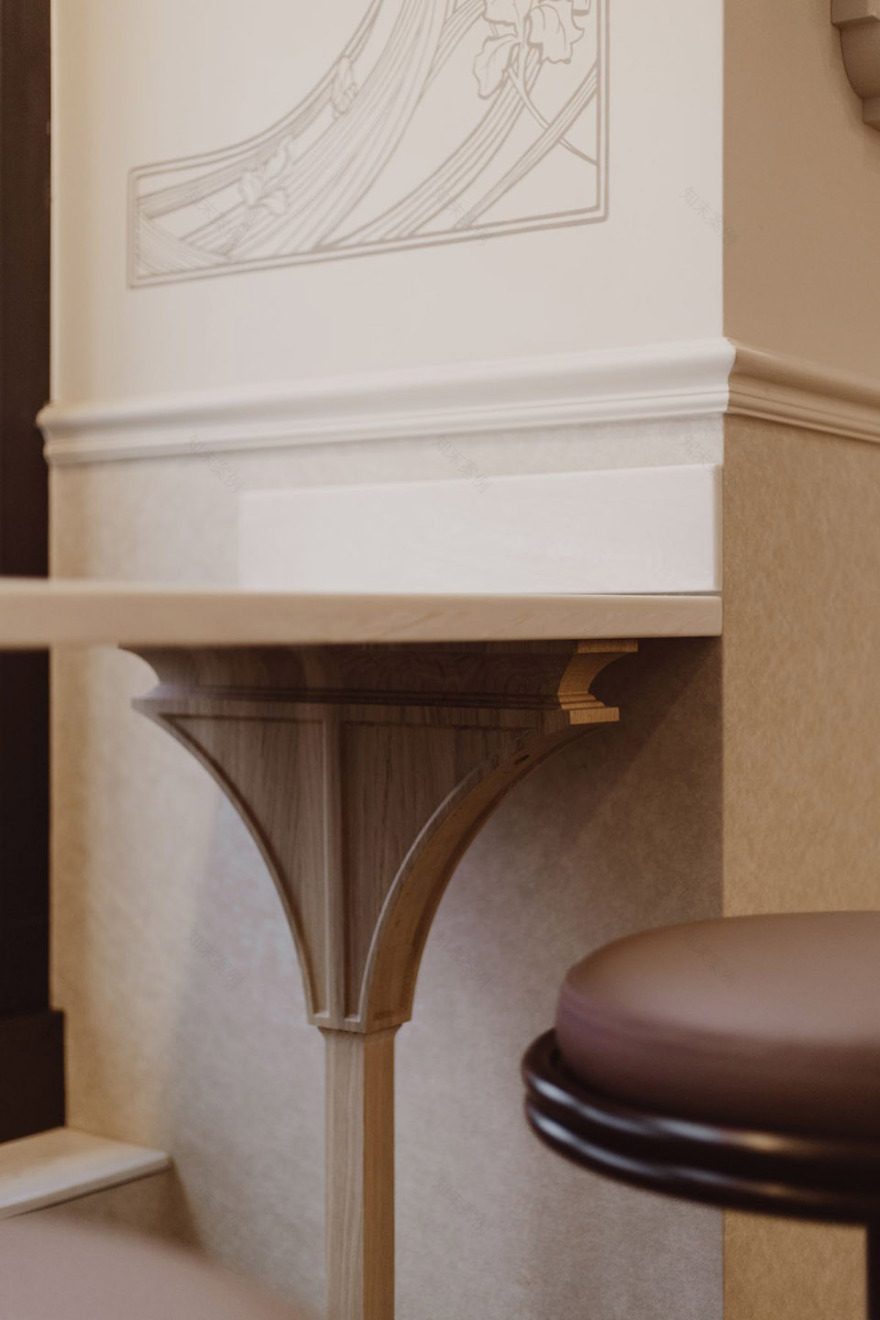
高挑的拱顶、连续的店铺界面以及新艺术细节,共同唤起历史火车站候车空间的优雅氛围——一个等待与相遇的场所。地面、拱券与手绘装饰营造出20世纪初的时代气息,而位于中央、以胡桃木饰面的弧形吧台,则在空间中建立秩序与仪式感。软包座椅与对车厢内部的细微暗示,引入“旅行”的主题,并成为整个空间叙事的起点。
The high vault, the rhythm of shopfronts, and Art Nouveau details evoke the elegance of historic railway galleries – places of meeting and waiting along the way. Floors, arches, and hand-painted ornaments create the atmosphere of the early 20th century, while a centrally located bar with a curved form, finished in walnut veneer, organises the space and gives it a representative character. Upholstered seating and subtle references to railway carriage interiors introduce the motif of travel, which becomes the axis of the entire project and a natural starting point for the further narrative.
▼共同唤起历史火车站候车空间的优雅氛围,evoke the elegance of historic railway galleries©Alka Murat
▼高挑的拱顶,the high vault©Alka Murat
▼引入“旅行”的主题,introduce the motif of travel©Alka Murat
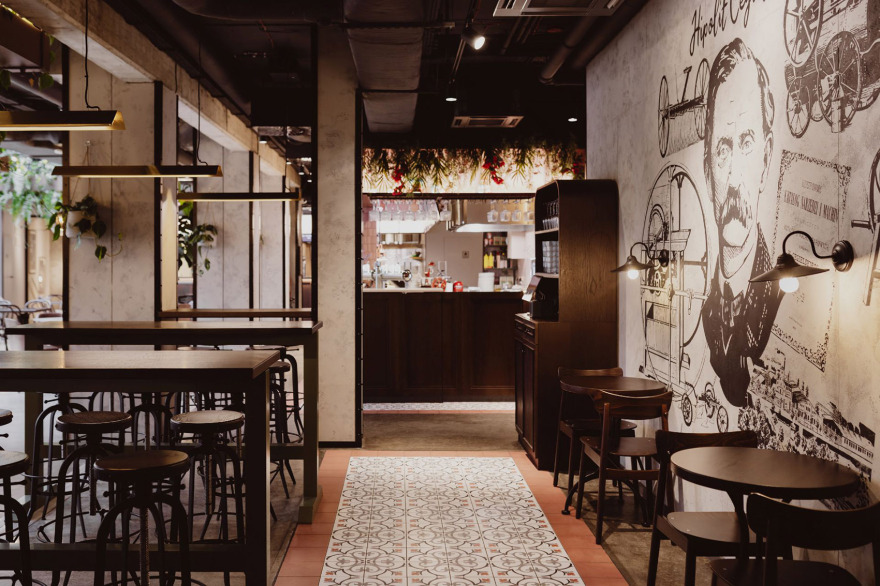
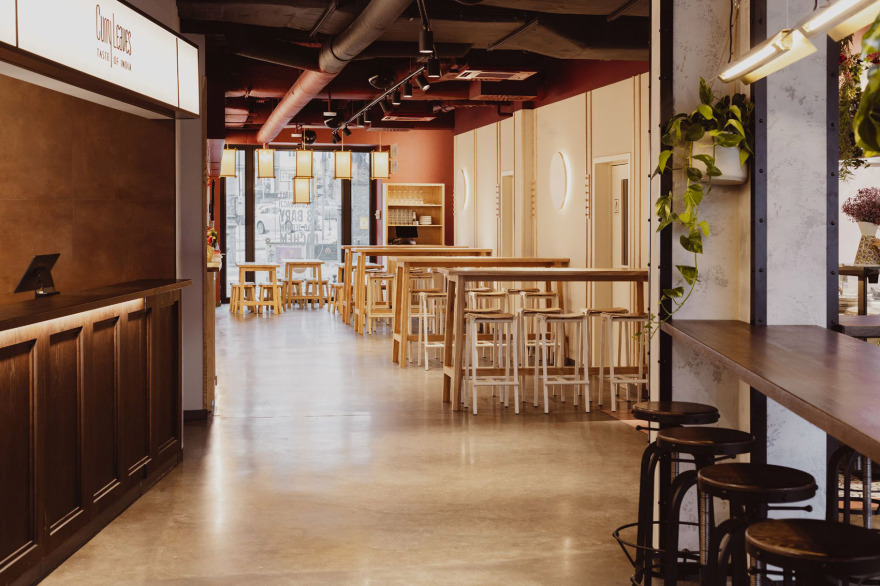
从庭院一侧进入,空间气质发生明显转变,从新艺术的优雅过渡到波兹南旧工业遗产的表达。这一部分呼应波兹南H. Cegielski 工厂的历史——20世纪初,这里曾是全国最大的蒸汽机车制造中心,而Cegielski的私人别墅正位于项目邻近的庭院中。钢构细节、工业灯具与家具构建出技术化的节奏,描绘蒸汽机械的壁画则成为对城市工业历史的视觉回应。
From the courtyard side, the architecture clearly changes its character, moving from Art Nouveau elegance towards the industrial traces of old Poznań. This part of the space refers to the history of the H. Cegielski factory in Poznań, which at the beginning of the 20th century was the country’s largest centre of steam locomotive production – all the more significant given that Cegielski’s own villa was once located in the courtyard adjacent to the investment. Steel fittings, industrial lamps, and furniture establish a technical rhythm, while murals depicting historic steam machines become a visual commentary on the city’s industrial heritage.
▼从新艺术的优雅过渡到波兹南旧工业遗产的表达,moving from Art Nouveau elegance towards the industrial traces of old Poznań©Alka Murat
▼一个等待与相遇的场所,places of meeting and waiting©Alka Murat
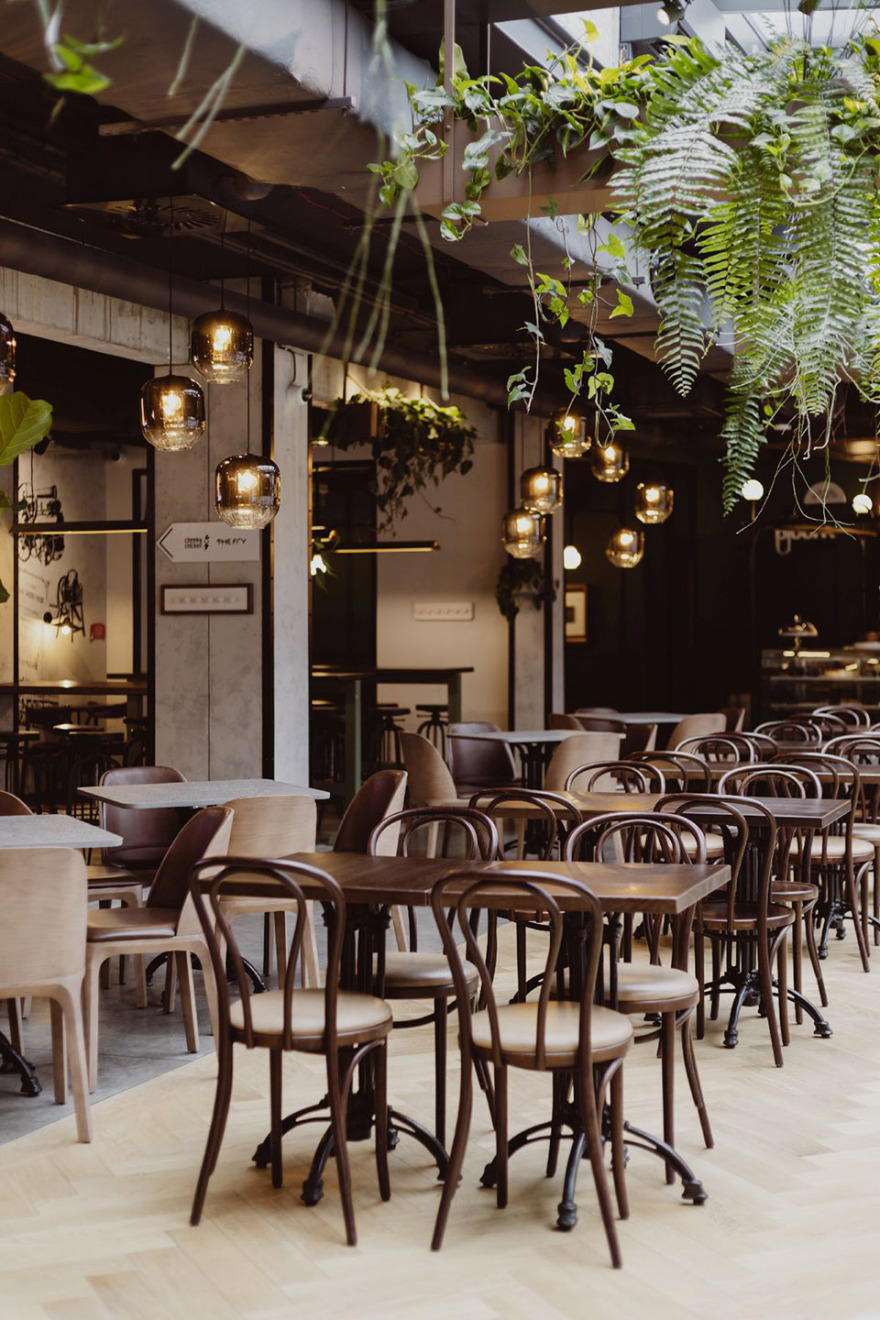
这一空间的核心是一处覆盖式露台——有趣的是,它并不在最初的设计中。
The heart of this area is a covered terrace, which, interestingly, was not even part of the original design.
▼融合亚洲风味,infusion of asian flavor©Alka Murat
“最初这里只是一处室外露台,但在过程中当地规划发生变化,我们获得了将其转变为室内露台的机会。更有意思的是,这里原本位置较偏,不太受餐饮业主青睐,但最终却成为空间的核心,所有人都想坐在这里,”设计师说道。
“Initially, there was supposed to be an outdoor terrace, but during the process the local development plan changed and we were given the opportunity to create a covered terrace. The most interesting thing is that this place is slightly removed from the entrance and initially wasn’t particularly attractive to restaurateurs. And suddenly it turned out that this terrace is the heart of the interior, and everyone wants to sit there,” the designer explains.
▼融合亚洲风味,infusion of asian flavor©Alka Murat
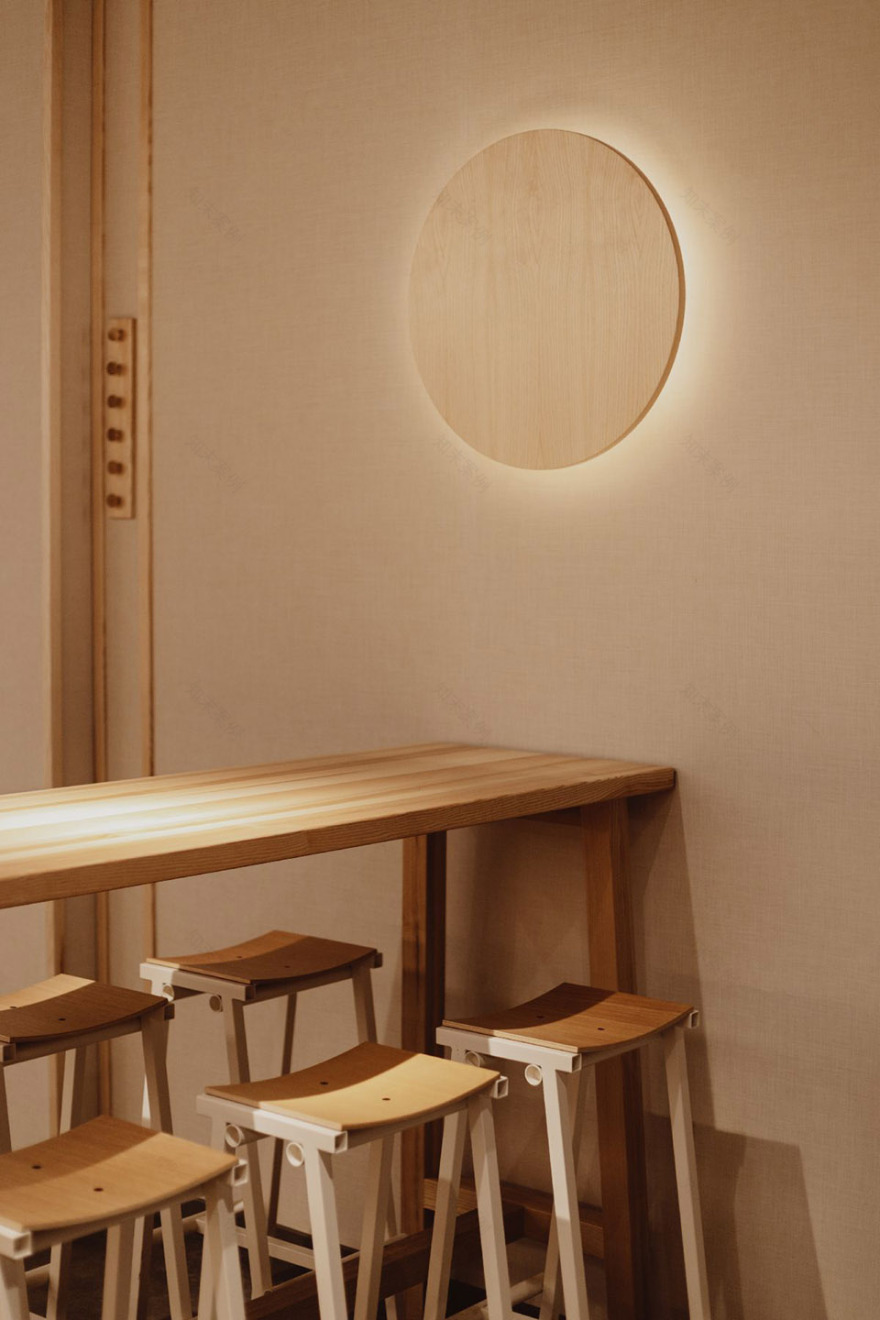
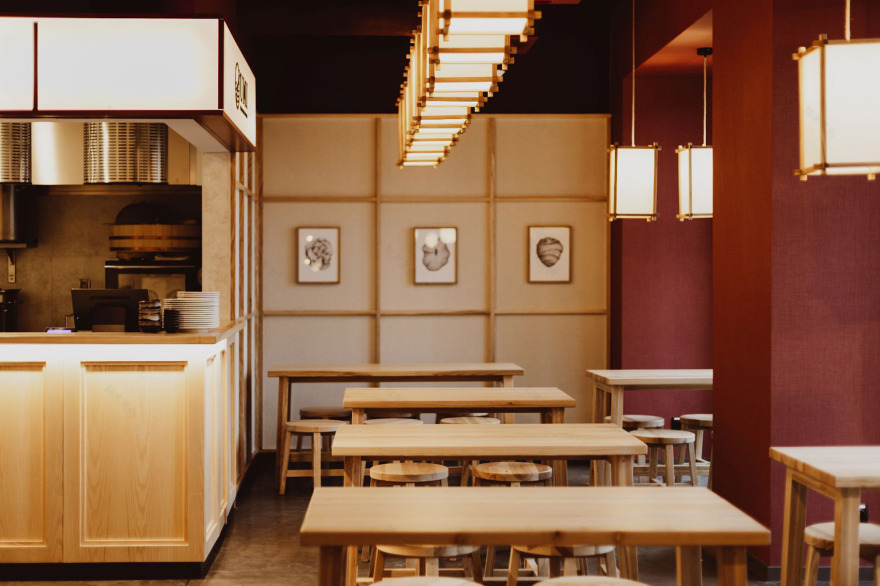
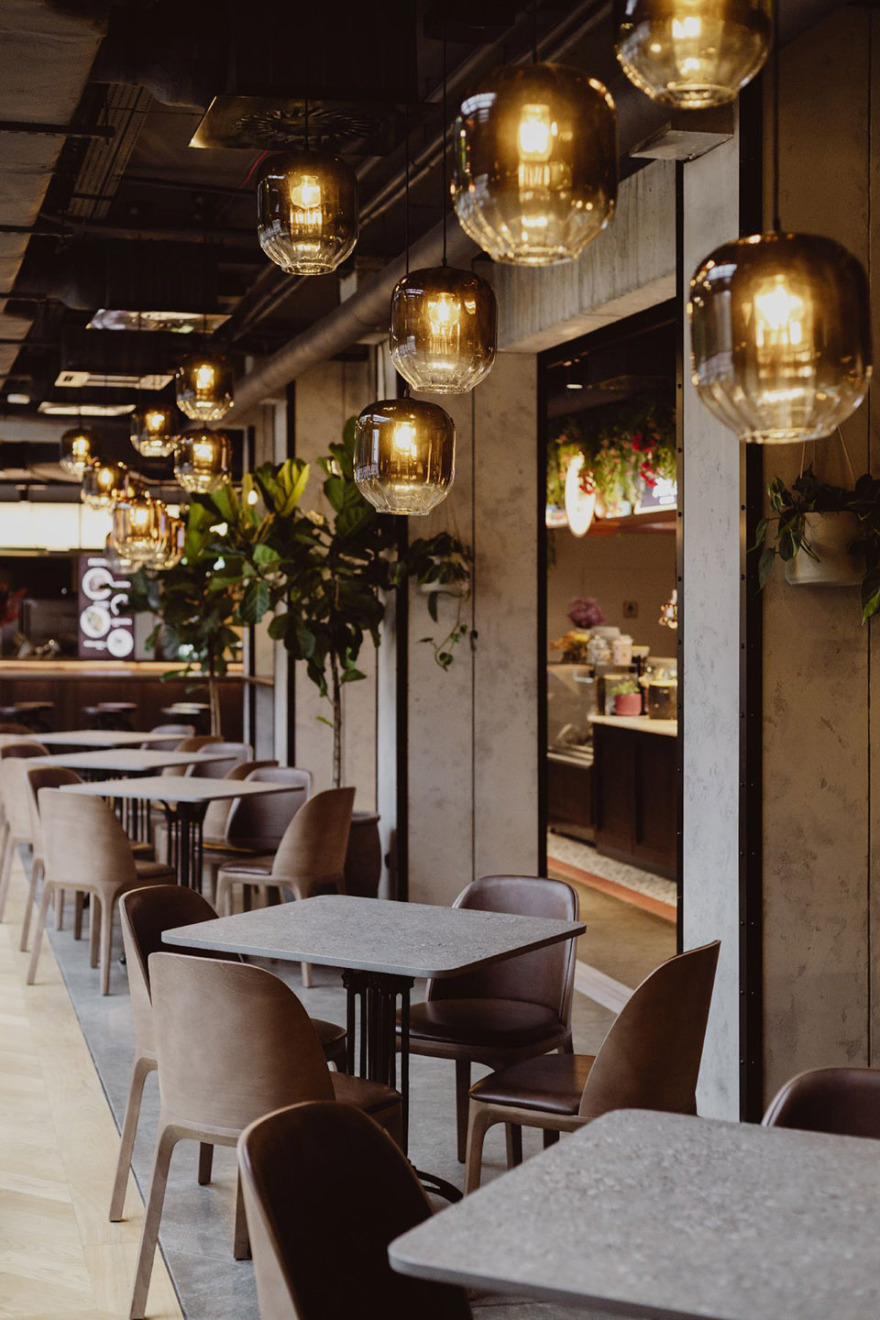
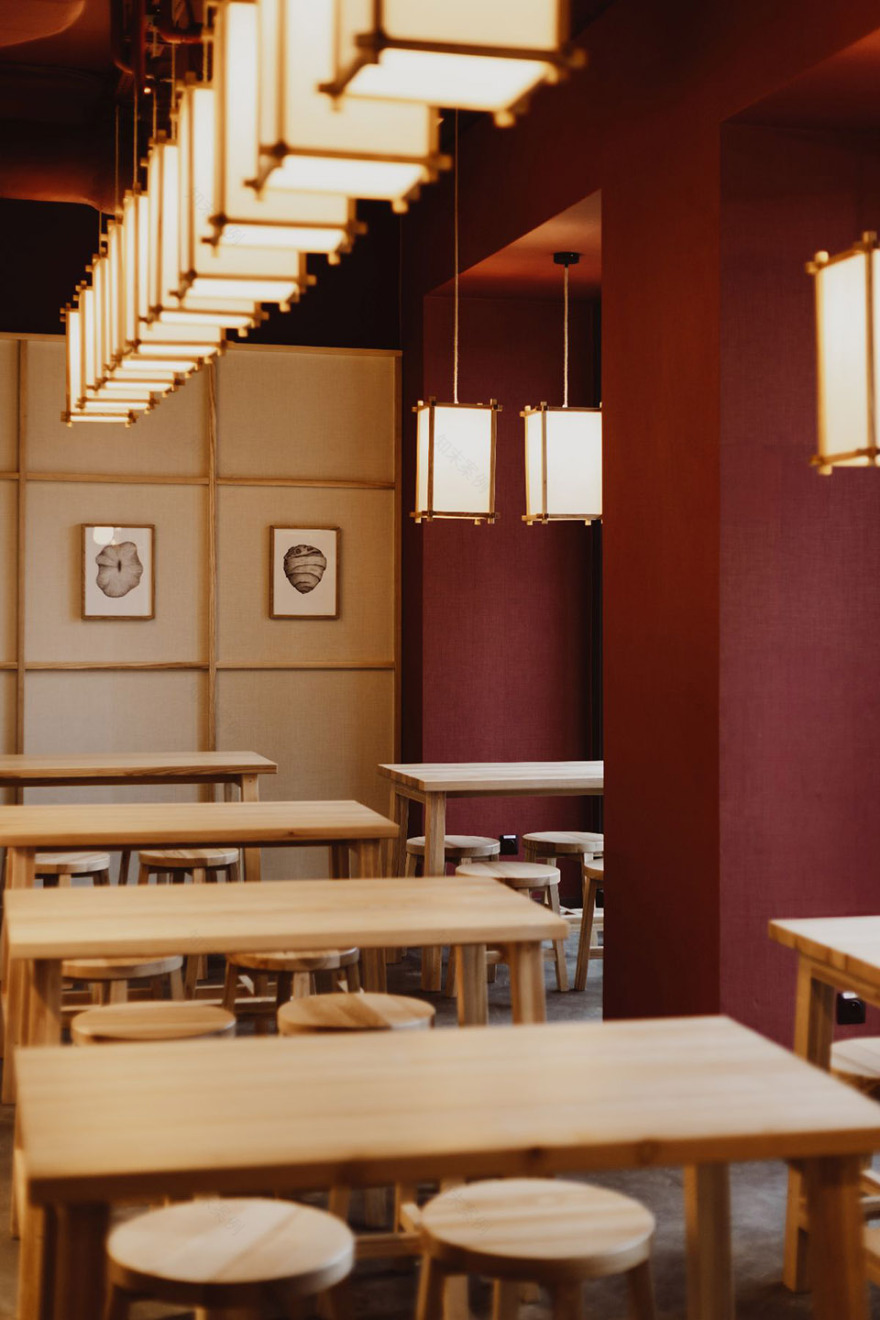
正如她所强调,这一工业区并非对历史的直接复刻,而是对波兹南历史的一种提炼式表达,在为现代餐饮空间提供语境的同时,也赋予其秩序与层次。继续向前,空间逐渐趋于克制与宁静。受亚洲启发的区域引入“Japandi”美学——轻盈、有序、形式节制。极简的桌椅呼应日本的简洁精神,浅色木材与织物墙面组织空间,同时带来放松与沉静。纸灯笼散发柔和光线,营造出专注与内敛的氛围。
As she emphasises, the industrial zone is not a literal reconstruction of the past, but a refined visual variation on the history of Poznań, which organises the space and gives it context, while fitting into the modern Restaurant Market format. Moving further, the interiors of Kulinarna Kamienica gradually become calmer and more restrained. The Asia-inspired zone introduces a japandi aesthetic – light, orderly, and economical in form. Minimalist tables referencing Japanese simplicity, natural materials such as light wood, and wall-covering textiles organise the space and offer a sense of relief. The whole is complemented by simple, soft light from paper lanterns, creating an atmosphere of calm and focus.
▼酒红与橙色等饱和色彩出现,rich colours appear – burgundy and orange©Alka Murat
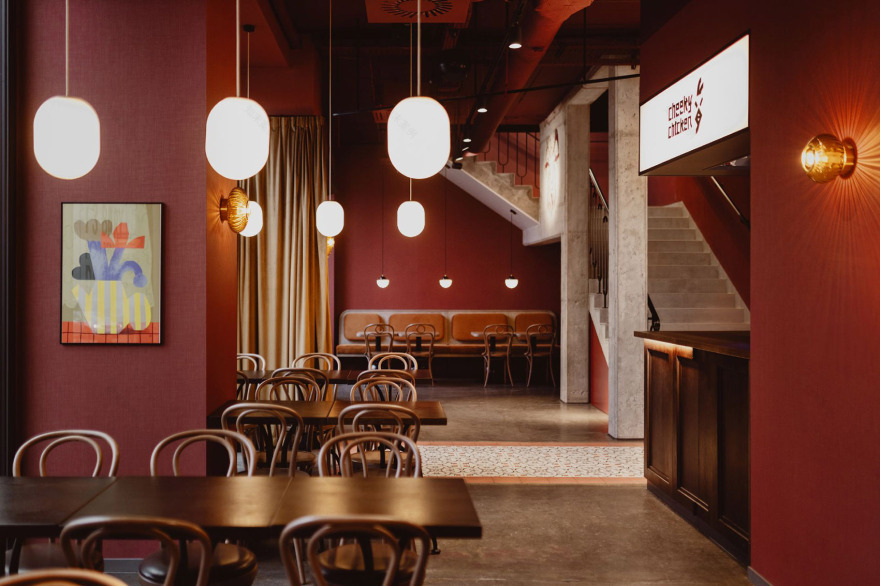
这一节奏随后被更为浓烈的感官体验打破。在“东方”区域中,酒红与橙色等饱和色彩出现,深色木材与印度织物灯笼共同构建出富有层次与温度的空间。浓郁的视觉语言呼应食物的香气与味道,以强烈的感官体验结束空间叙事,在极简与感性之间形成对比。
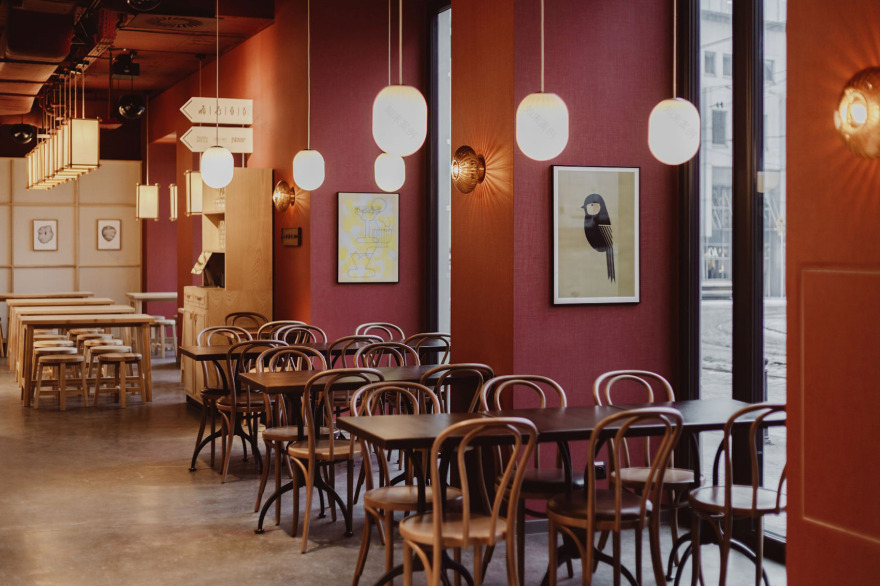
This subdued rhythm gradually gives way to more intense sensations. In the Eastern zone, rich colours appear – burgundy and orange – along with dark wood and colourful lanterns made from Indian fabrics. The space gains depth and warmth, referencing the strong aromas and flavours of the cuisines present here, and closing the interior narrative with a contrast between minimalism and sensual intensity.
▼浓烈的感官体验打破,more intense sensations©Alka Murat
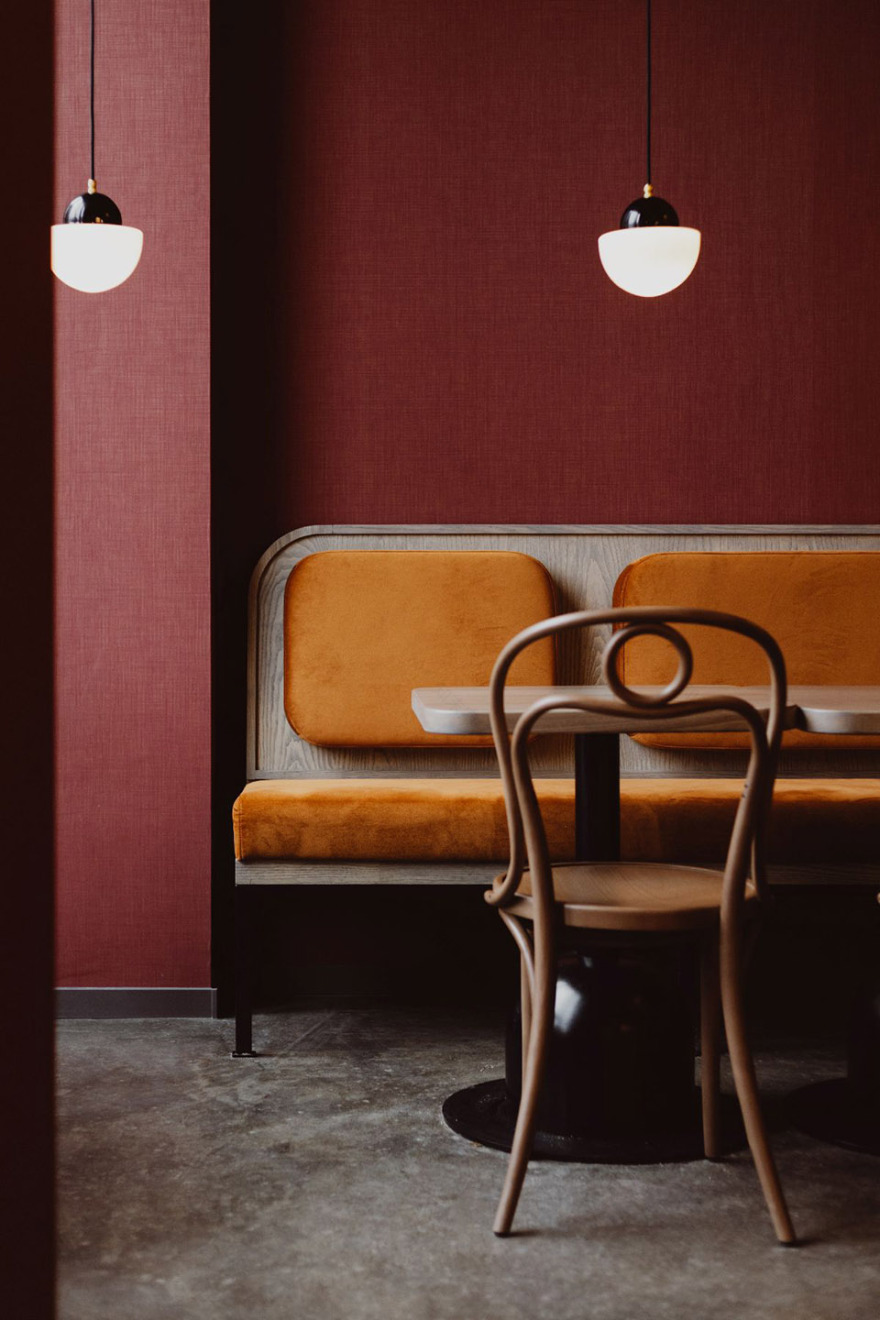
“将这些风格整合在一起并不容易,”Biuro Kreacja创始人坦言。“我们最终选择了一套统一的色彩、材料与质感体系,并在不同风格中持续运用。酒红、绿色与米色构成贯穿整栋建筑的综合色谱。”
“It was complicated to tie all these styles together,” reveals the owner of Biuro Kreacja. “However, we chose a specific palette of colours, materials, and textures that we consistently used regardless of style. Burgundy, green, and beige form a coherent colour set applied in different ways throughout the entire tenement.”
▼统一的色彩、材料与质感体系,
a specific palette of colours, materials, and textures©Alka Murat
最后的停靠
The final stop
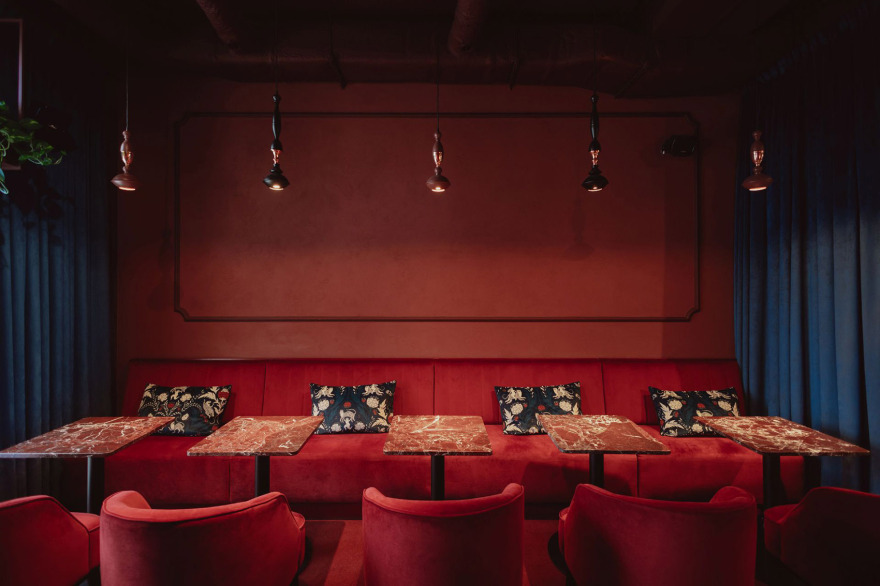
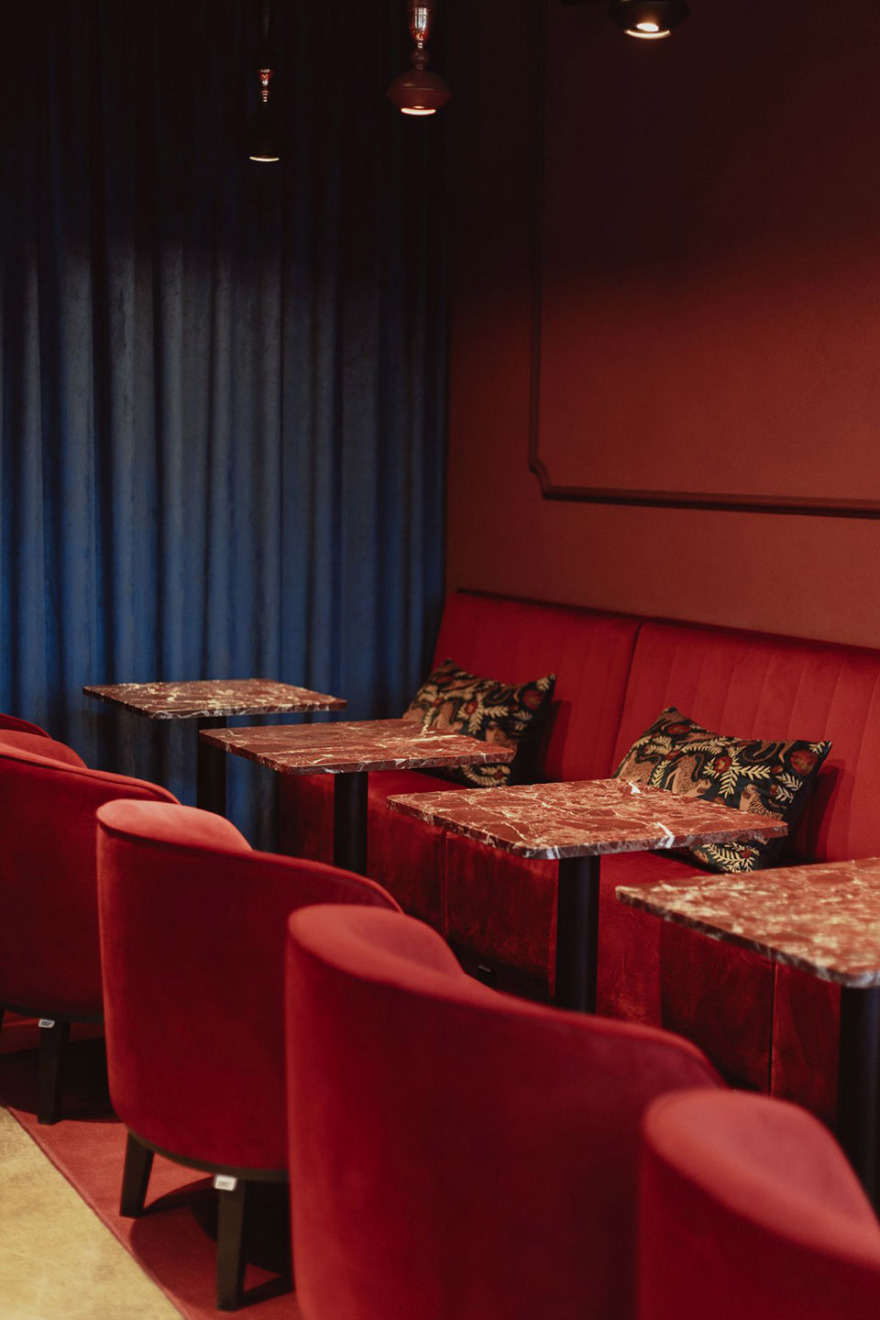
这场味觉之旅在楼上结束——一个更为私密、同时通过历史橱窗与城市相连的空间。在这里,日常与夜晚交替发生:白天的咖啡与夜晚的长谈在同一场所展开。柔软舒适的沙发与克制的酒红与深蓝色调营造出宁静氛围,温暖的灯光在织物与以“侘寂”手法处理的抹灰表面上轻柔流动。
This journey of flavours ends upstairs – in a more intimate space, open to the city thanks to historic shopfront windows. It is a place of everyday rituals: coffee during the day and longer evening conversations over cocktails. Soft, comfortable sofas and a restrained palette of burgundy and navy blue create a mood of calm, while warm, atmospheric light subtly plays across fabrics and deliberately imperfect plasters executed using the wabi-sabi technique.
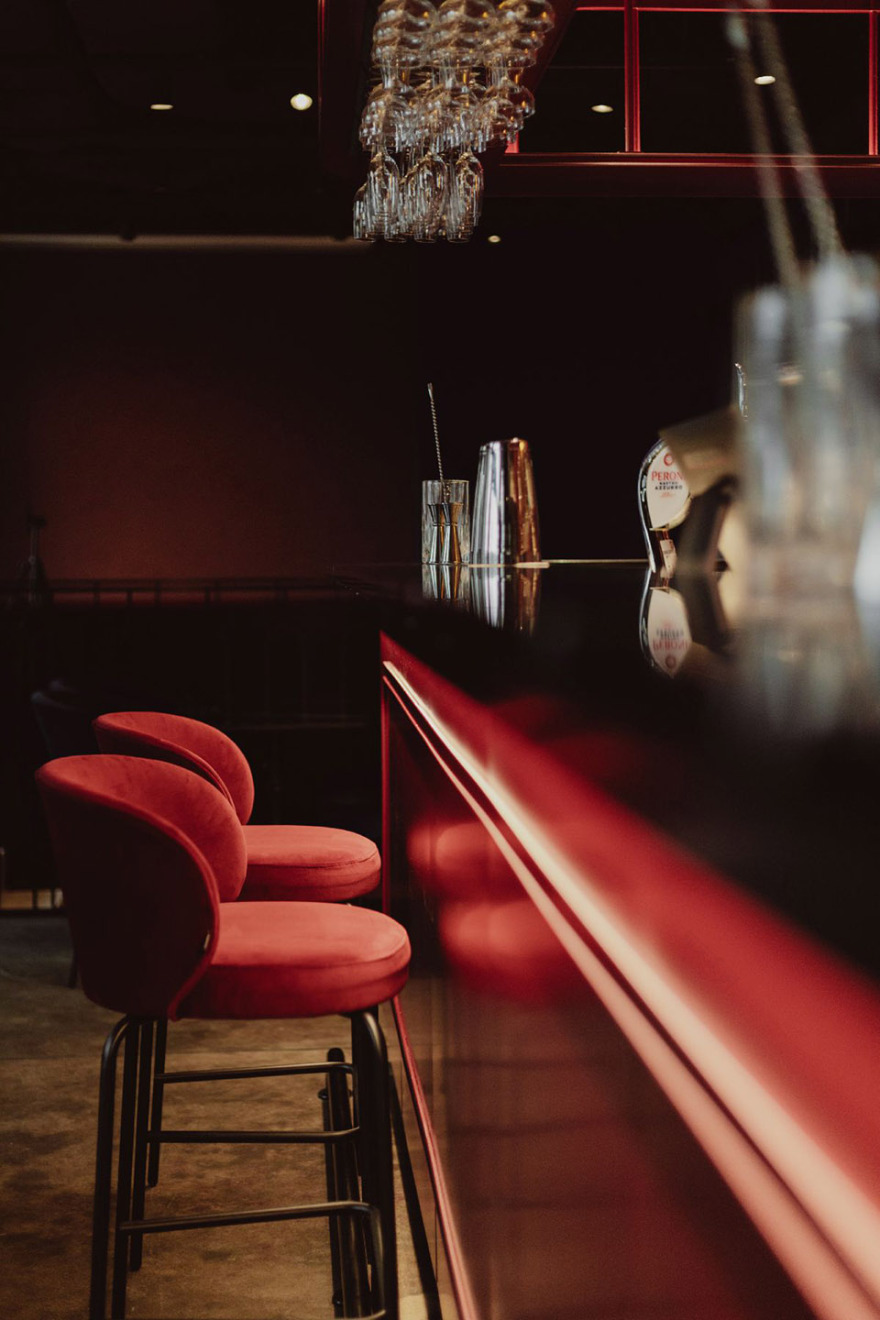
▼一座微微雕塑化的吧台,a subtly sculpted bar©Alka Murat
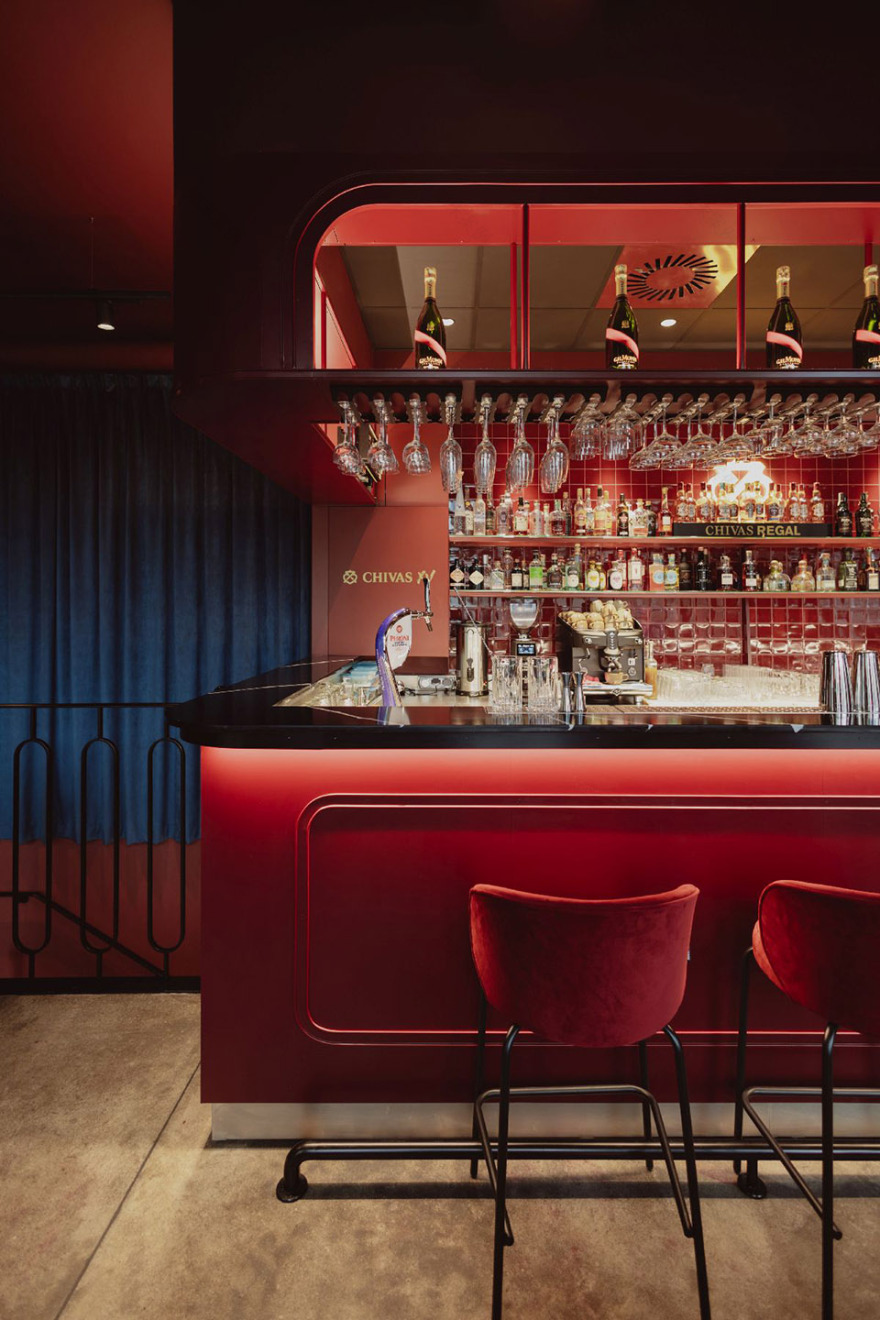
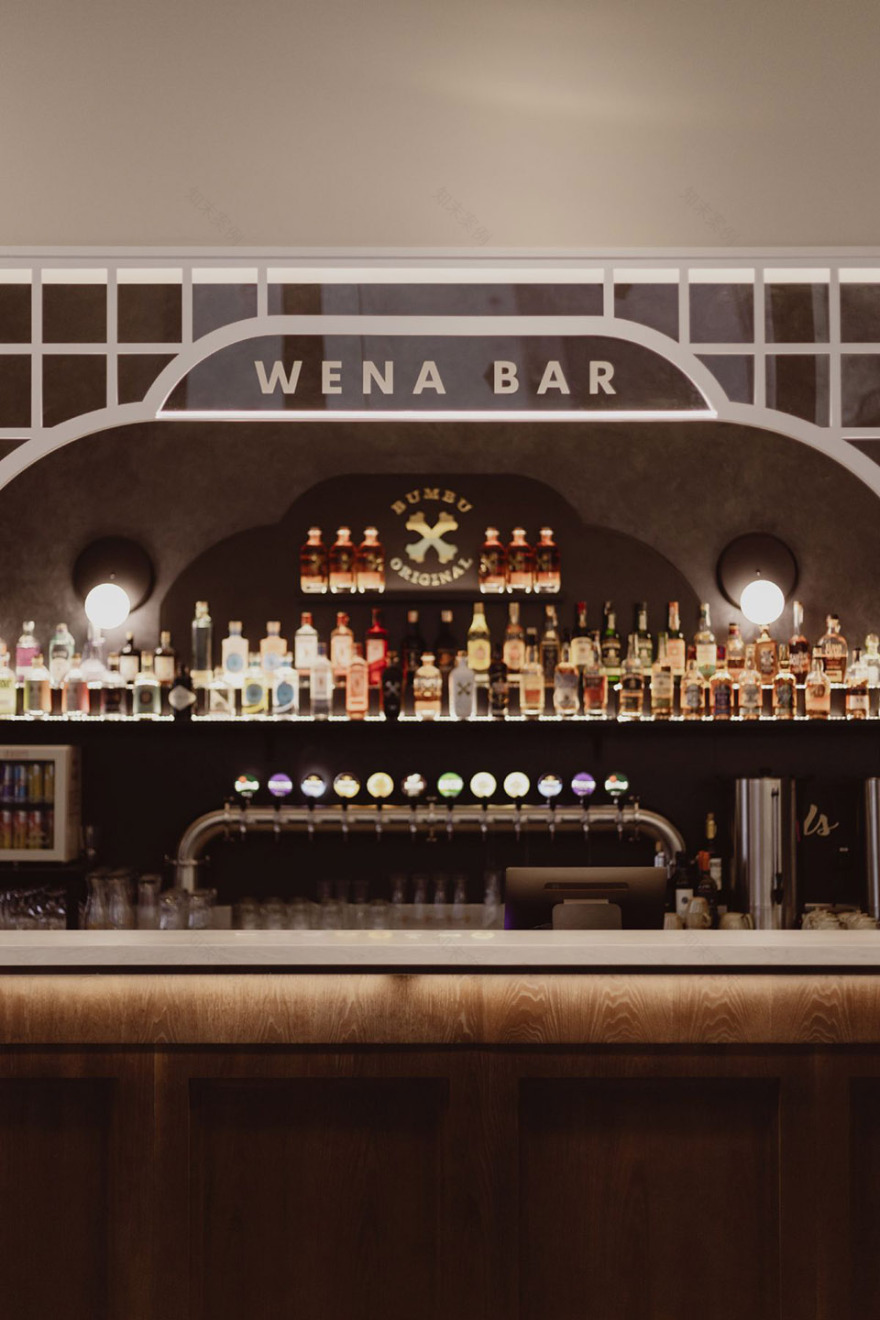
“这个空间的灵魂,是一座微微雕塑化的吧台,其表面采用酒红色钢材,既为室内注入当代气质,也以克制方式反射光线。柔软织物与新艺术石膏装饰及高品质材料共存,并辅以Bart Sucharski的艺术作品,”M19 Architekci的Maja Skołysz表示。
“The soul of this space is a subtly sculpted bar, finished in burgundy-toned steel, which gives the interior a contemporary accent and discreetly reflects light. Soft textiles coexist here with Art Nouveau stucco and noble materials, and the whole is complemented by artwork by Bart Sucharski,” comments Maja Skołysz of M19 Architekci.
▼吧台其表面采用酒红色钢材,
a subtly sculpted bar finished in burgundy-toned steel ©Alka Murat
▼大理石桌面,table made with marble©Alka Murat
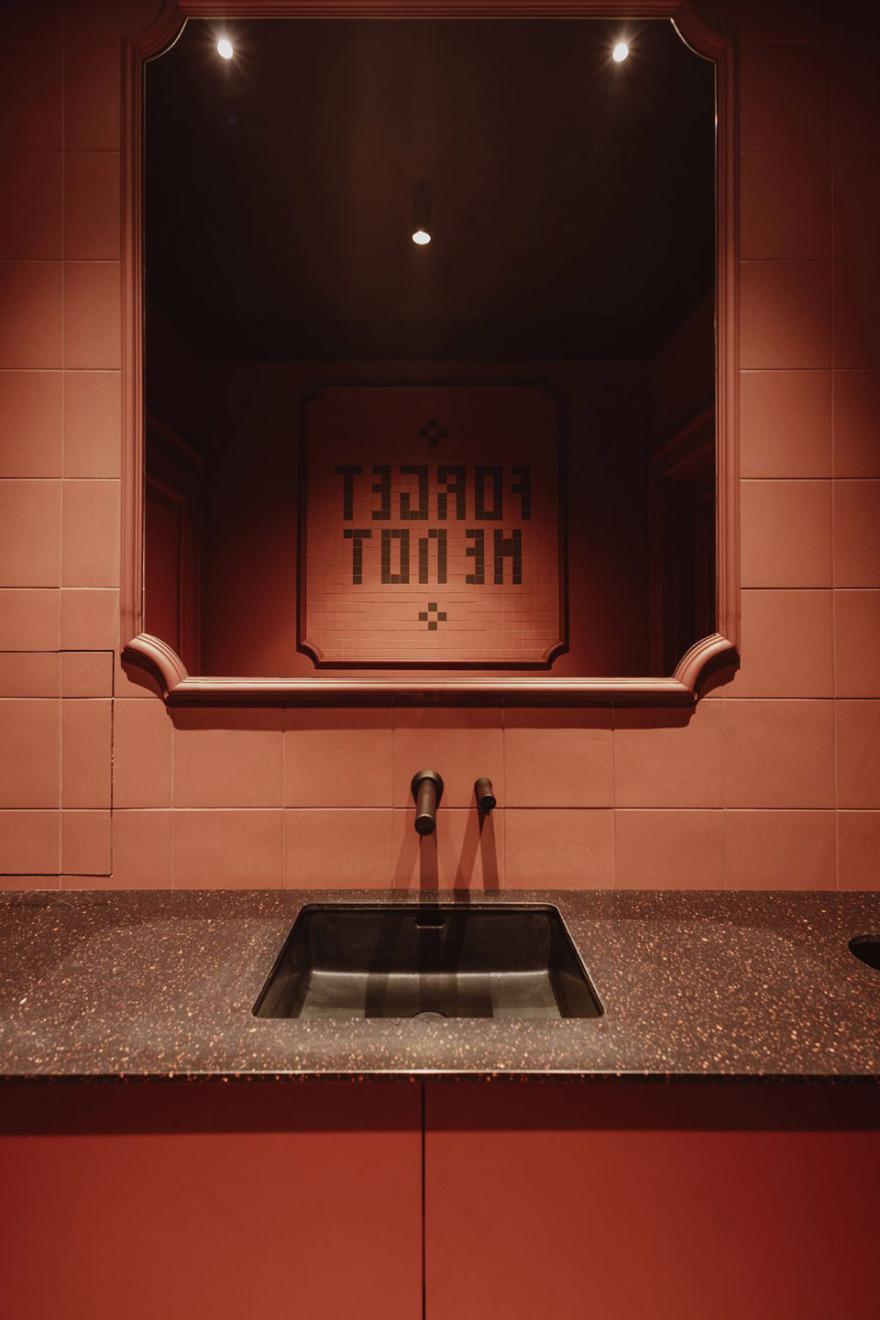
“甚至连洗手间,也成为这段叙事中的一个独立章节,”她补充道。“统一的色彩体系、大胆的细节与富有戏剧性的光影,使这个小空间同样成为完整且令人难忘的体验。”
“Even the restroom becomes a separate, intimate episode in this story,” the architect emphasises. “Consistent colour schemes, bold details, and a theatrical play of light introduce an element of surprise, turning this small space into a fully-fledged, memorable part of the interior.”
▼卫生间局部,toilet detail©Alka Murat
Project authors: Biuro Kreacja: Dorota Terlecka, Karolina Polińska, Denis Durtsev M19
Architekci: Maja Skołysz, Ewa Michałowska
Artists: Natalia Krata, Bart Sucharski, Maria Broniewska Interior
photography: Alka Murat
南京喵熊网络科技有限公司 苏ICP备18050492号-4知末 © 2018—2020 . All photos and trademark graphics are copyrighted by their owners.增值电信业务经营许可证(ICP)苏B2-20201444 苏公网安备 32011302321234号
苏公网安备 32011302321234号客服
消息
收藏
下载
最近