

创作上传
VIP
收藏下载
登录 | 注册有礼
查看完整案例

收藏

下载

分享

翻译
Architects:RY+P architects
Area:120m²
Year:2025
Photographs:Hongming Liu
Lead Architects:Yang Ren
Category:Pavilion
Design Team:Wei Liu, Zheng Tan, Sen Tong
City:Chongqing
Country:China
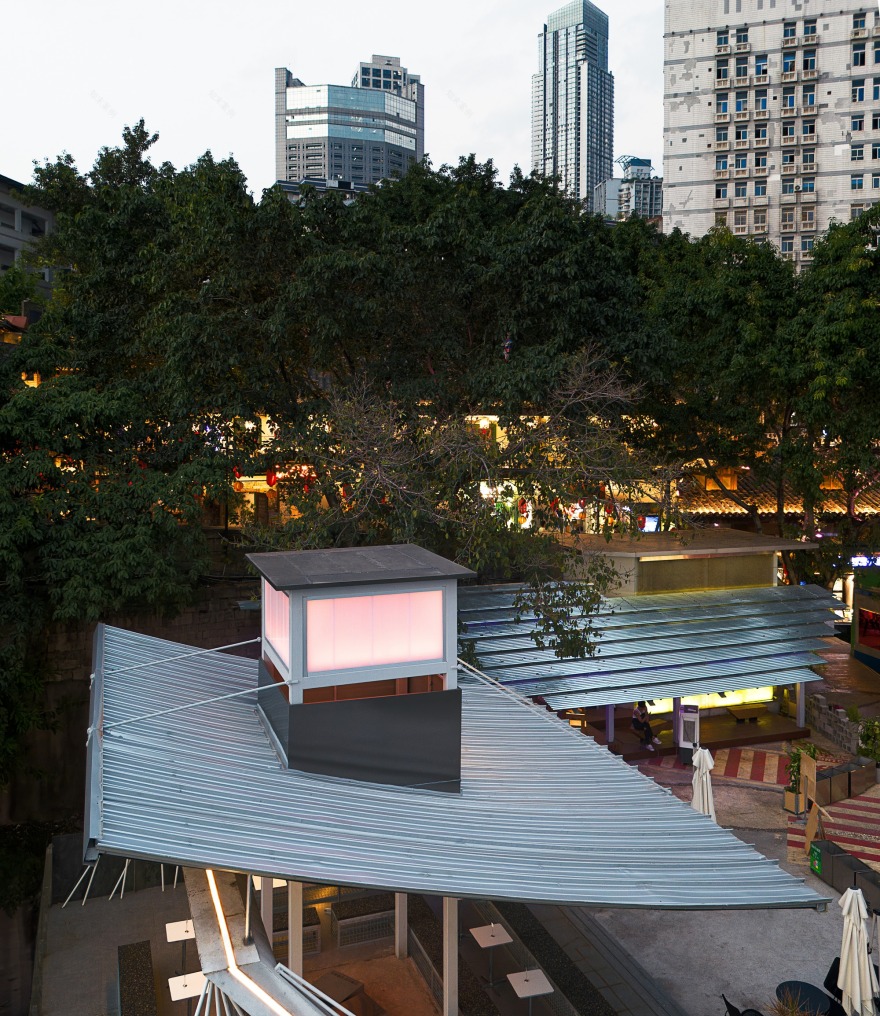
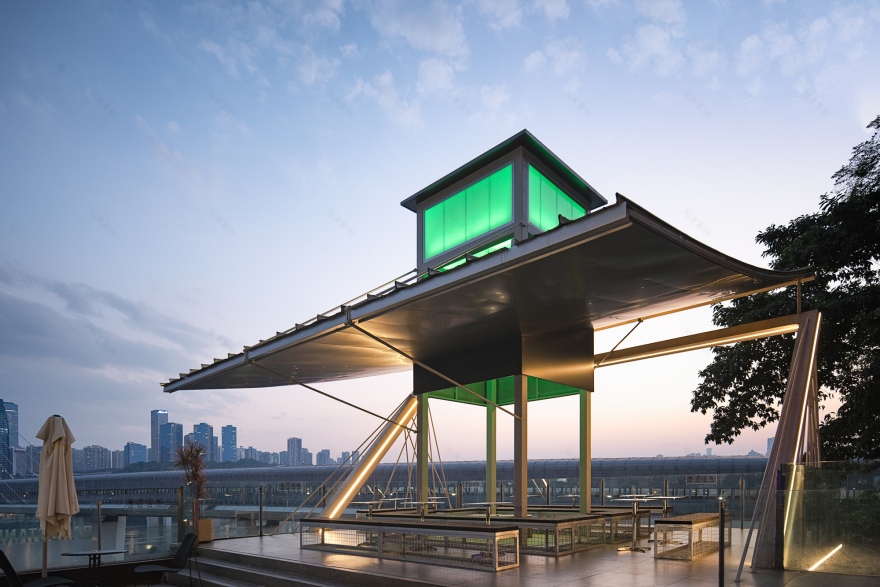
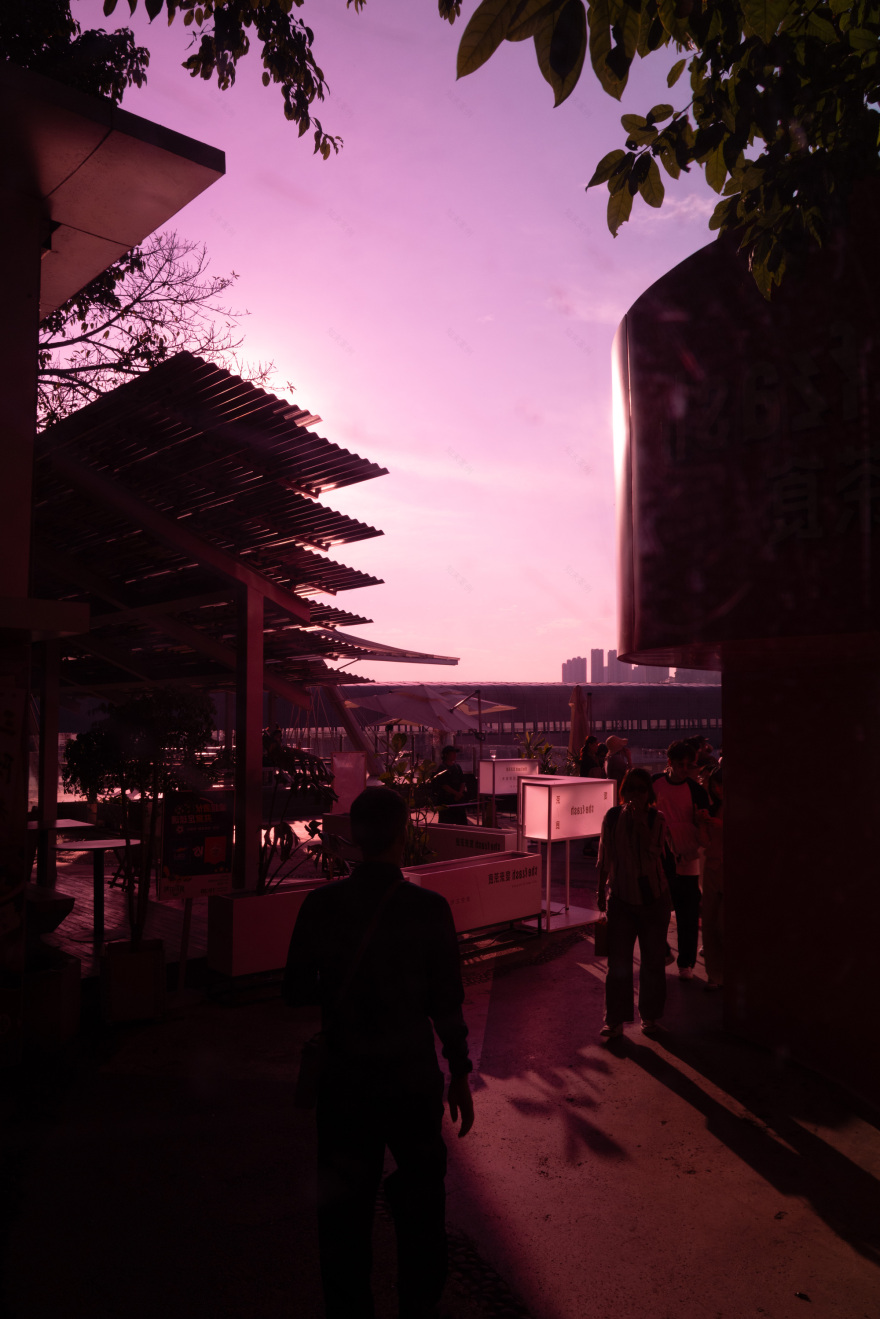
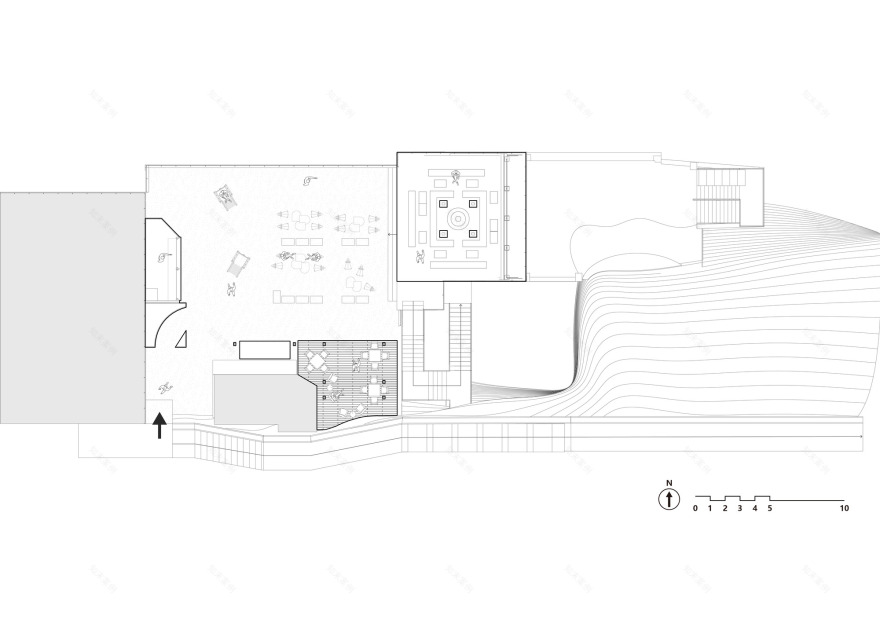
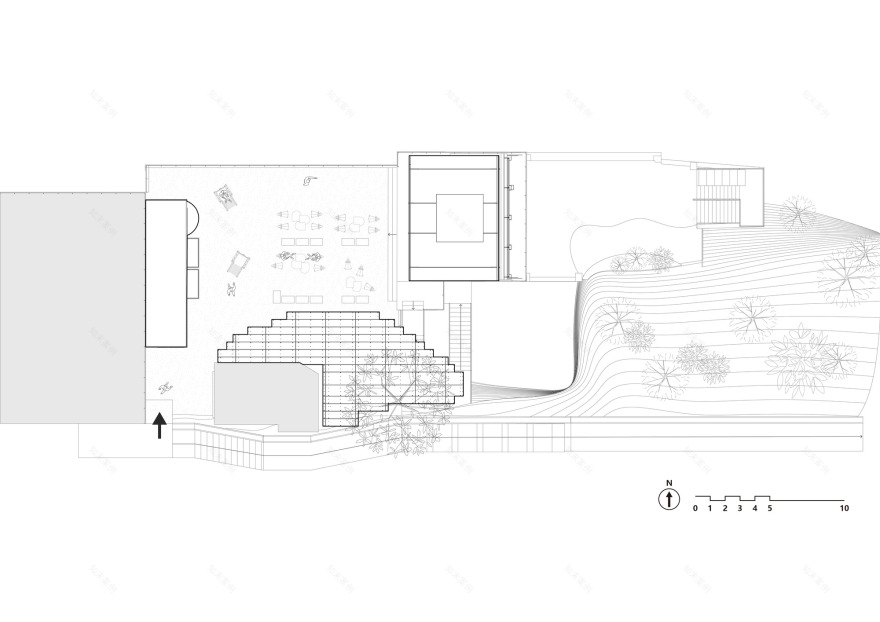
Text description provided by the architects. Located within the historic Mountain Alley in Chongqing, this project transforms a small rooftop space along the steep stone steps of the old city into a new public gathering place. Through the insertion of two lightweight pavilions and a pink bar installation, the design introduces a subtle contemporary layer while preserving the atmosphere of the historic alley. Instead of leaving the rooftop completely open as before, these volumes are arranged to create a gentle sense of enclosure. Through their positioning, the structures frame views toward the surrounding city while shaping different zones for sitting, resting, and wandering. The rooftop becomes a place where visitors can pause, move slowly, and experience the city from above—almost like strolling through a small garden in the air.
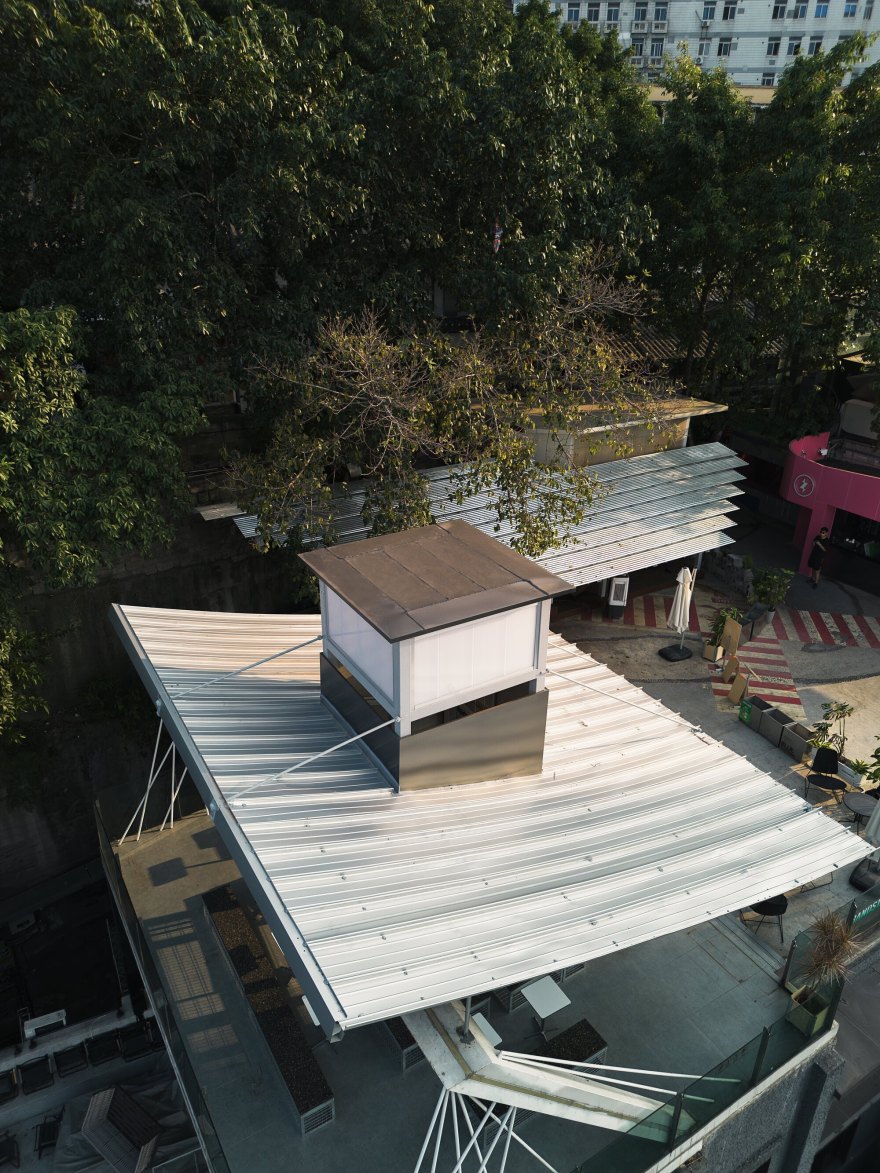
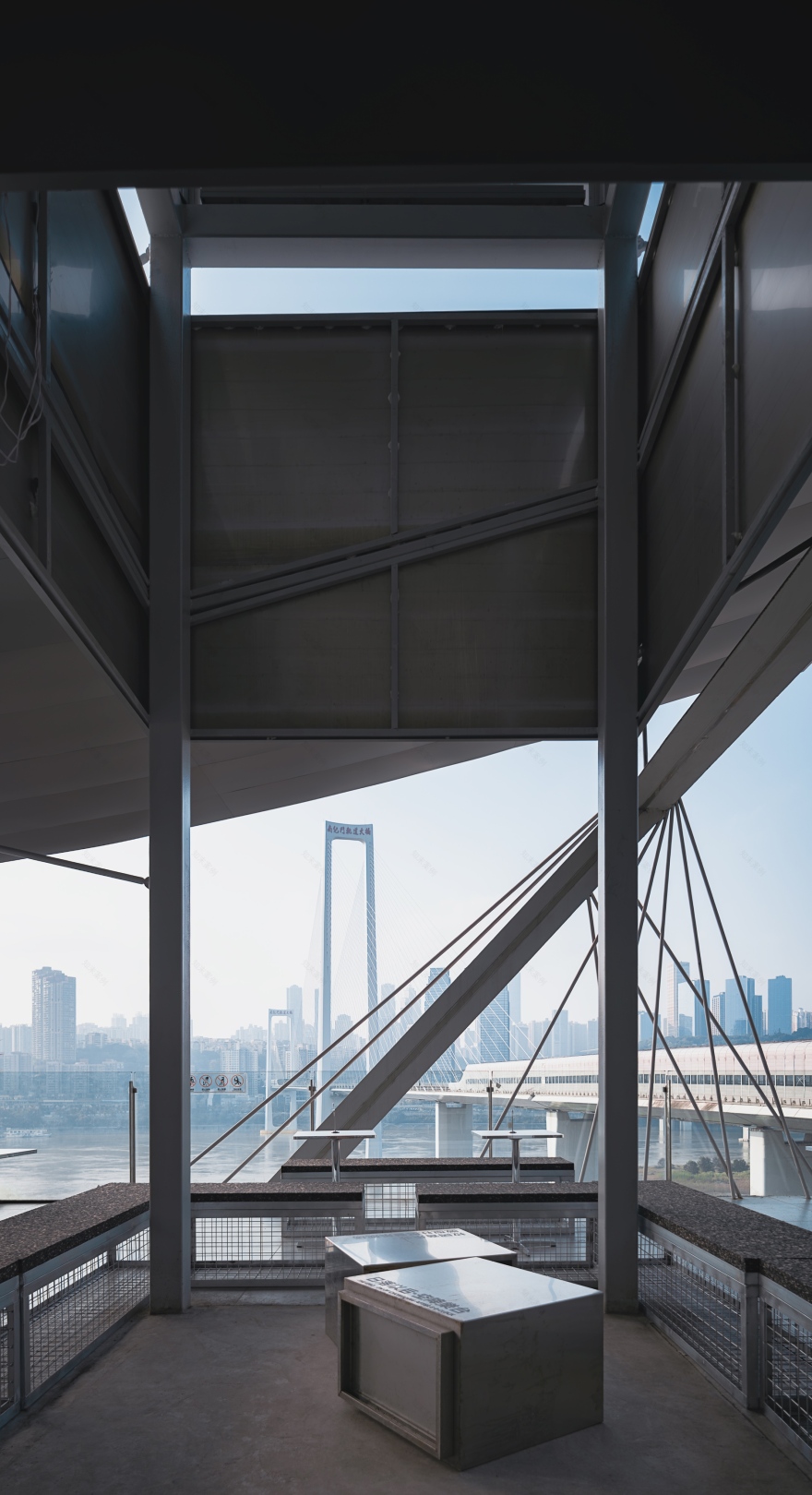
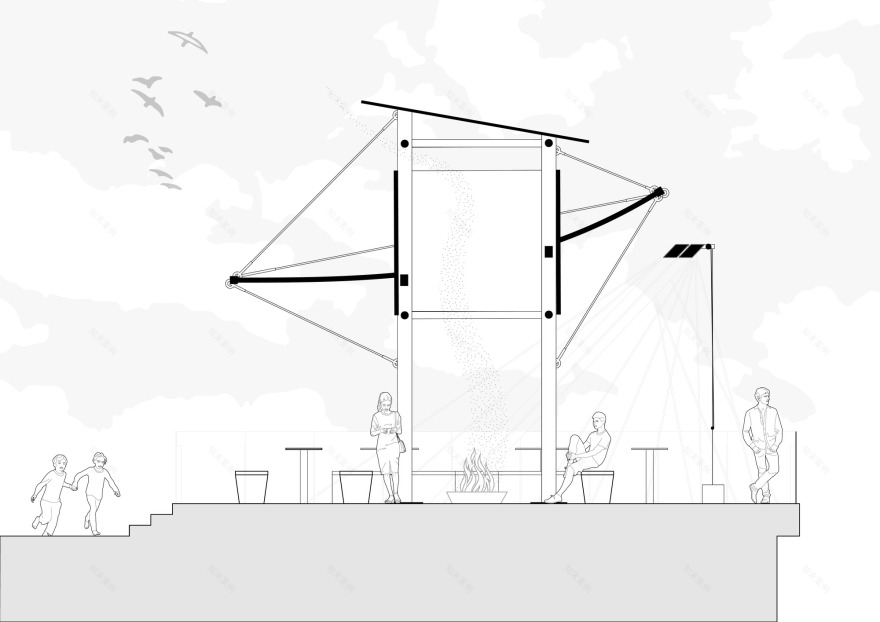
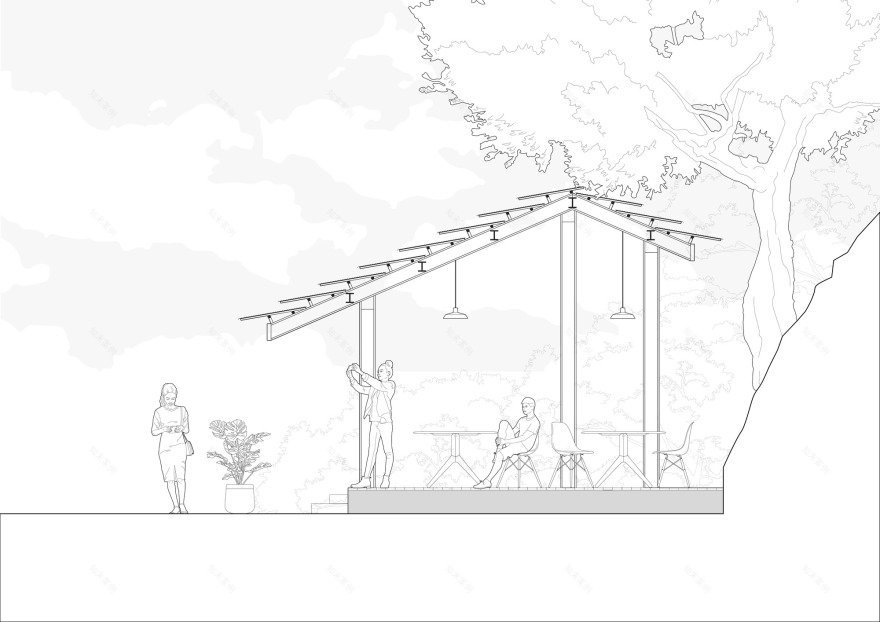
One pavilion features a curved roof that echoes the existing steel structure of the building. Inside, seating is arranged in a square configuration inspired by the Chinese character "回". Visitors can face outward to enjoy the view or turn inward for conversation and social interaction. The second pavilion, located on the opposite side, offers a looser spatial layout. Seating is arranged in a more relaxed manner, allowing visitors to occupy the space freely. Large tree roots extend into the pavilion, creating a quiet and intimate atmosphere. The pavilion stretches outward with a wing-like profile, providing shade and spatial continuity. At the center of the rooftop stands a pink bar installation. With its pure pink surface and gently curved entrance, the structure acts as a visual marker that attracts visitors from the alley below. Serving drinks and light food, the bar functions as a social hub for the rooftop.
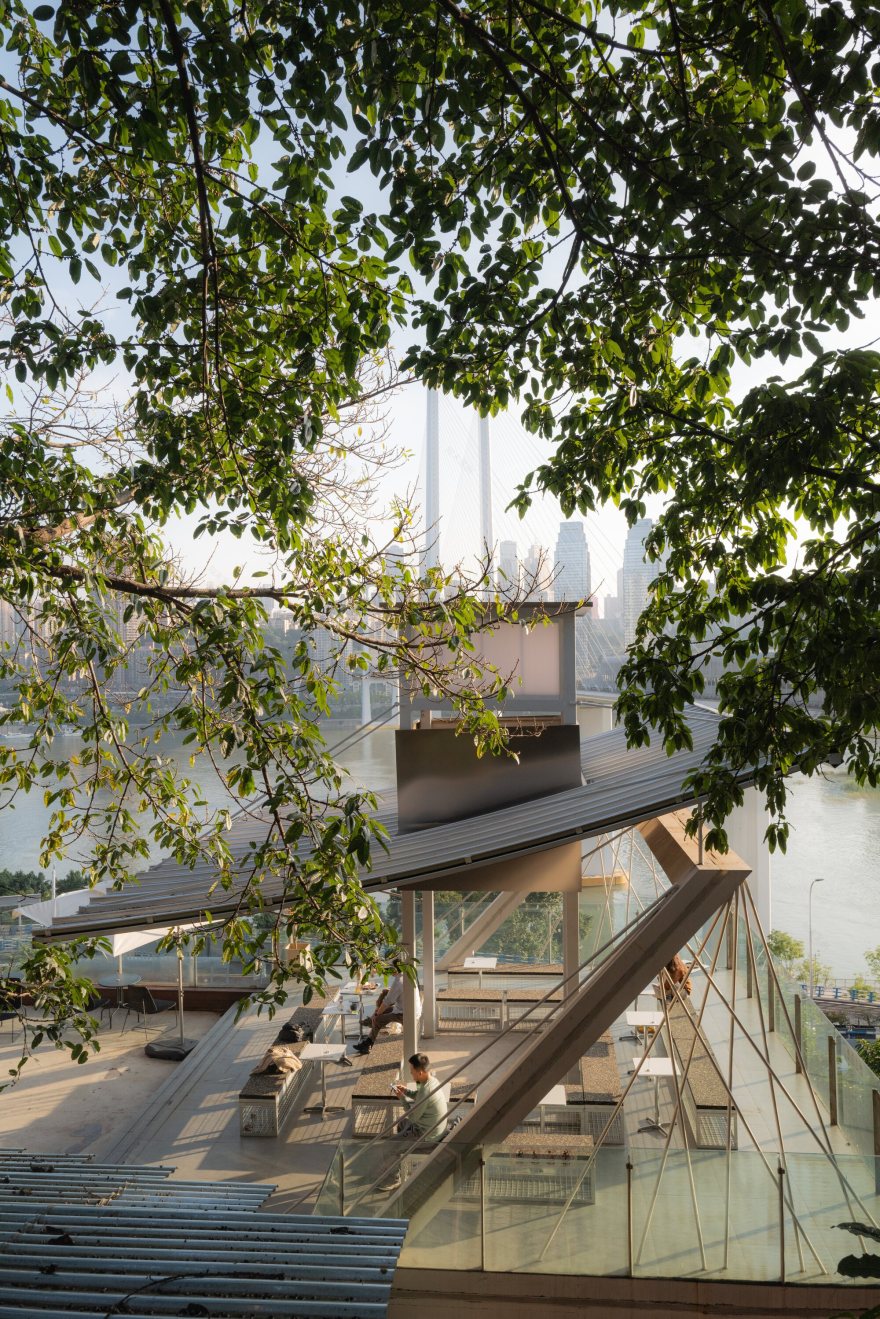
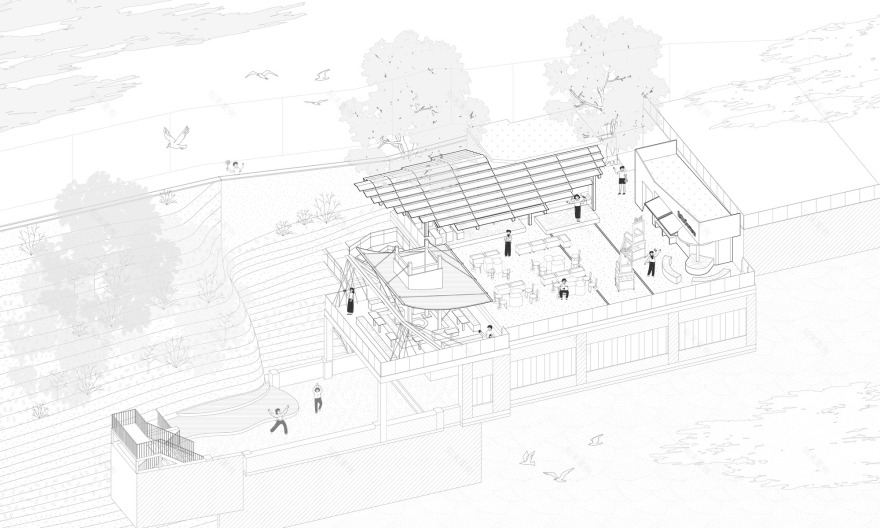
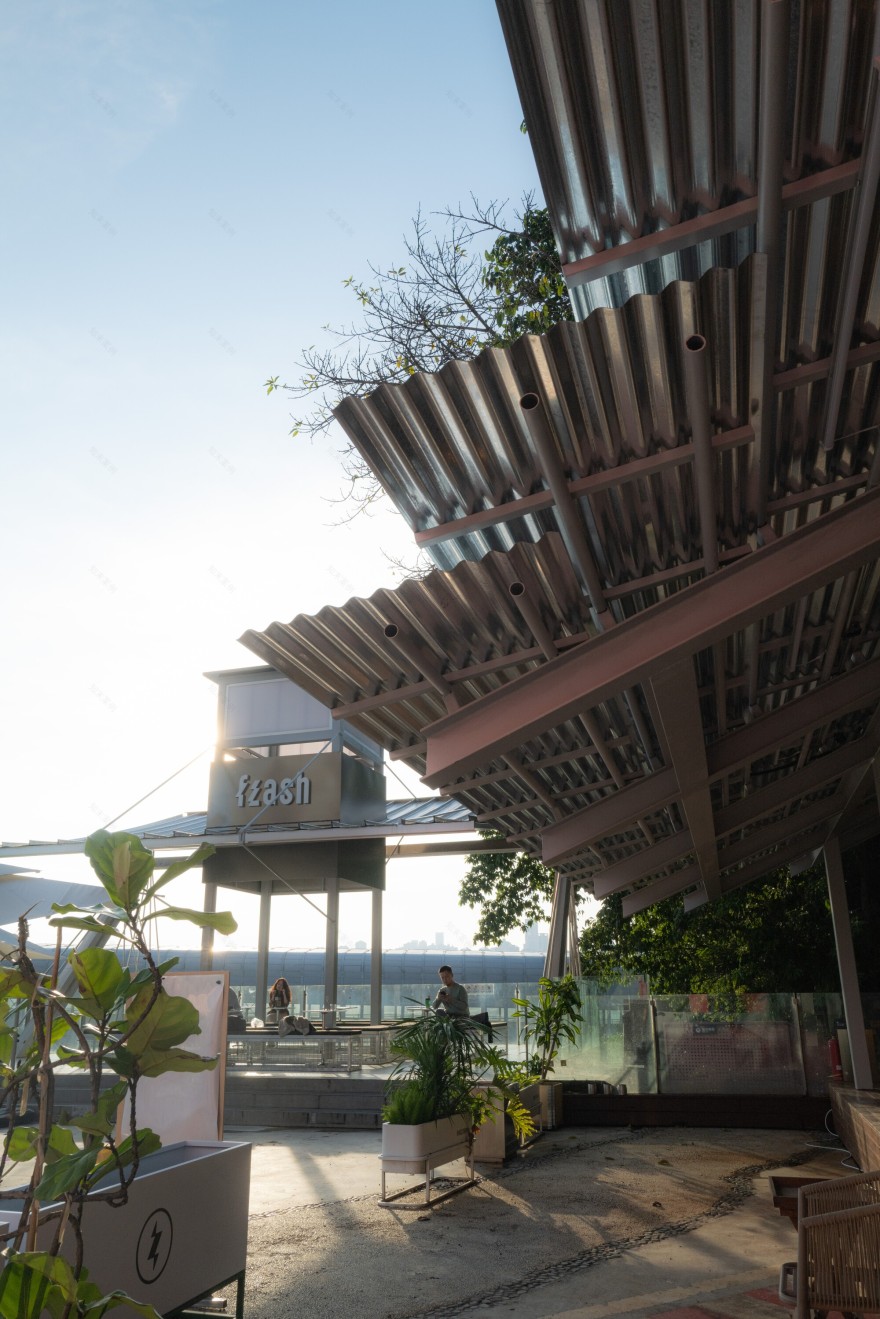
Public Use - Originally, the rooftop functioned as an open viewing platform along the climbing route of Mountain Alley. Visitors reaching the top of the stone steps would encounter a wide open space overlooking the city. The introduction of three small volumes activates this previously blank platform, transforming it into a lively space that accommodates both public gathering and commercial use. Balancing public accessibility with commercial operation became a key consideration of the project.
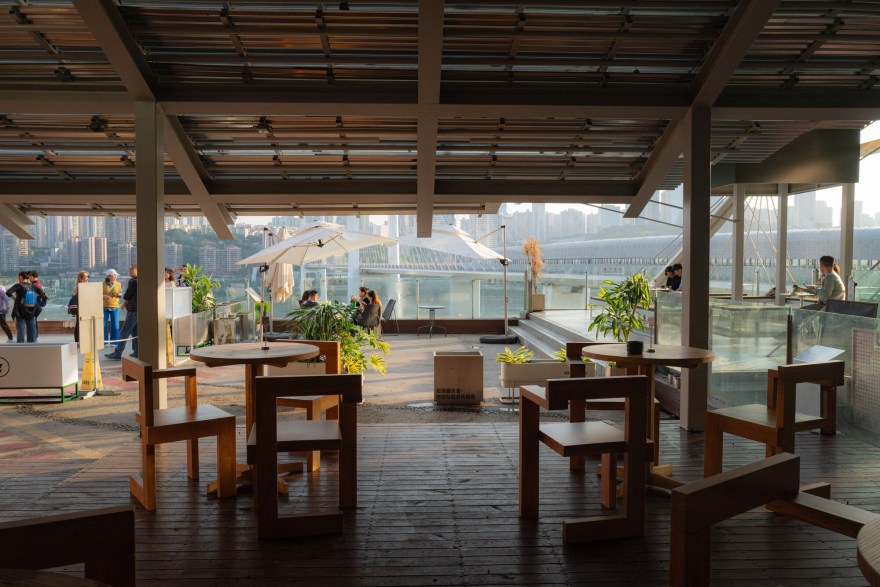
The pavilions remain largely open and accessible, offering comfortable places to sit, rest, and enjoy views of the bridges and the Yangtze River. The pavilion beside the tree roots creates a more inward spatial atmosphere, encouraging conversation rather than outward viewing. Seating is arranged in a scattered configuration, carefully oriented toward different directions and views. Through these strategies, the project gently blurs the boundary between public space and commercial activity.
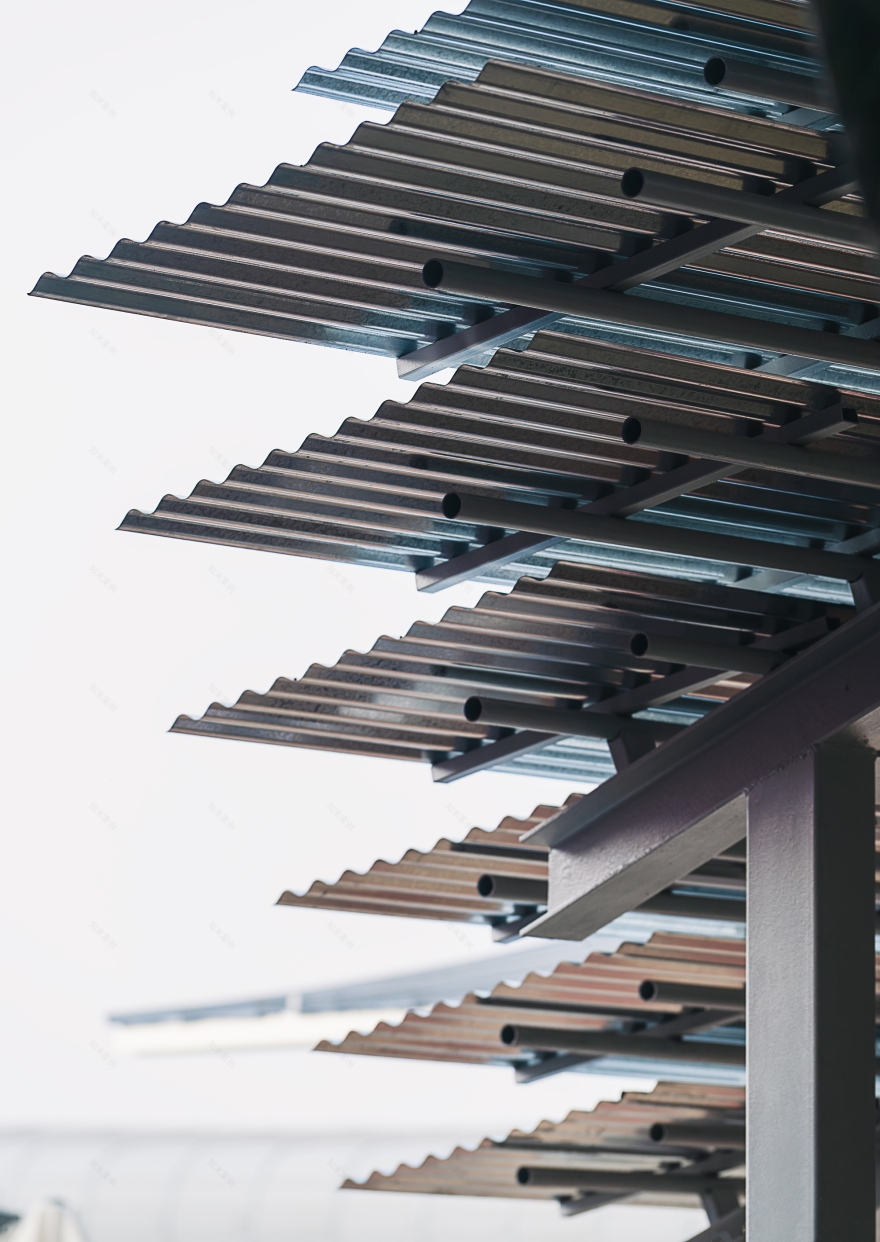
Materiality - Corrugated aluminum panels were selected as the primary material for the pavilions, combined with exposed painted steel structures. The two pavilions share a restrained grey tone, allowing them to blend quietly into the surrounding urban environment. The surface of the aluminum panels reflects light with a subtle metallic sheen, responding softly to changing daylight conditions.
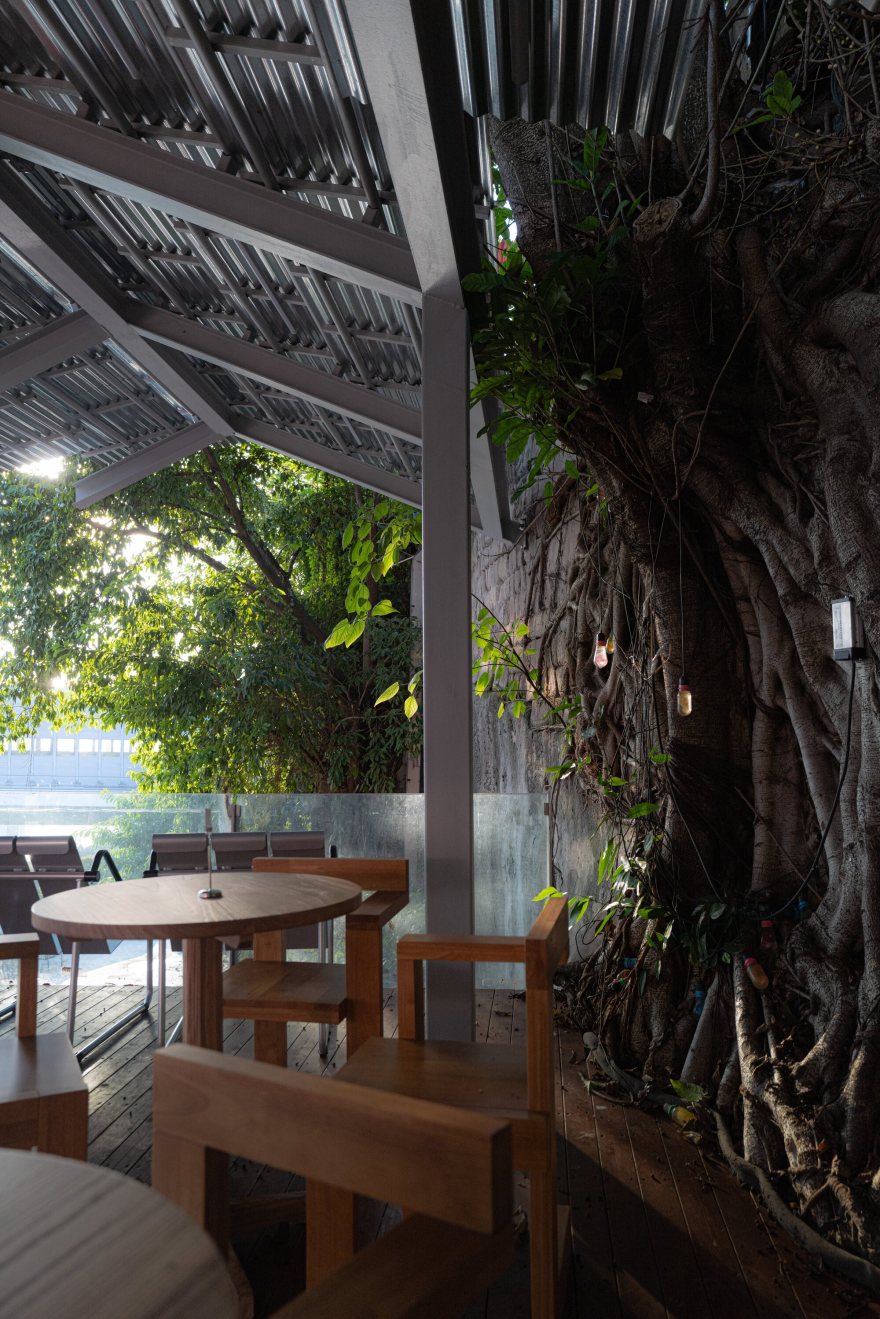
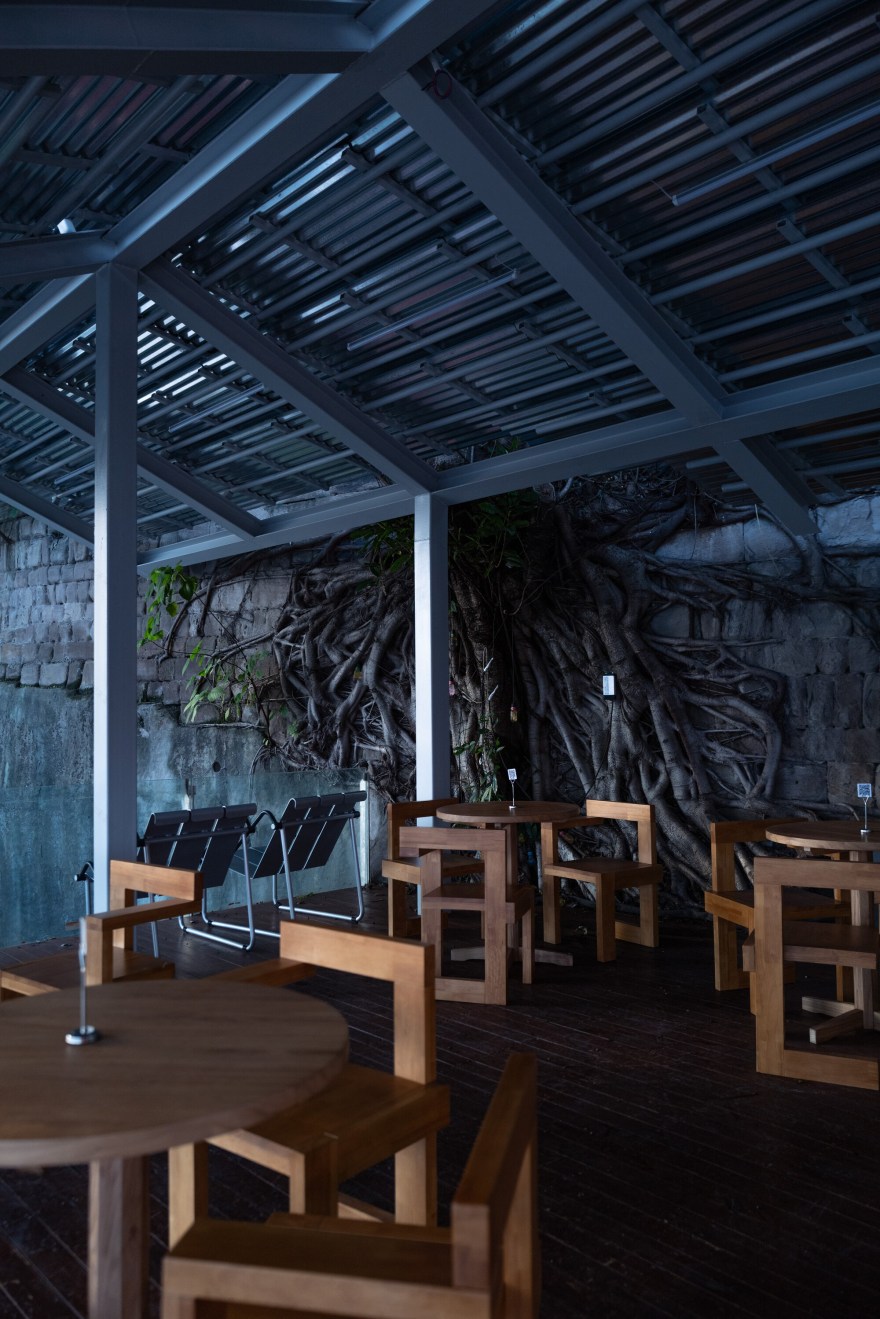
As a widely used industrial material, corrugated aluminum panels are employed here through a clear and rational construction logic. By reinterpreting this familiar material, the project explores new possibilities for its texture and spatial expression.
Project gallery
南京喵熊网络科技有限公司 苏ICP备18050492号-4知末 © 2018—2020 . All photos and trademark graphics are copyrighted by their owners.增值电信业务经营许可证(ICP)苏B2-20201444 苏公网安备 32011302321234号
苏公网安备 32011302321234号客服
消息
收藏
下载
最近