

创作上传
VIP
收藏下载
登录 | 注册有礼
查看完整案例

收藏

下载

分享

翻译

ARCHITECTURE_______________________________________________________PROJECT
CI HOUSE
______________________________________________________________________AUTHORS
OYBEK MADULLAEVNIKITA ABANINULAD TARANAU
AREA__________________________________________________________________750 sq.m
STUDIO__________________________________________________ZROBIMARCHITECTS
YEAR______________________________________________________________________2025


This project is an example of contemporary architecture where the priority is not size, but the quality of space and its adaptation to the owners’ lifestyle. Compactness here does not mean limitation; on the contrary, it is achieved through careful planning of functional zones and their interconnections.
The key idea is site zoning. Dividing the plot into several courtyards solves multiple tasks at once:
creates private spaces for family relaxation,
provides a safe and comfortable environment for the dogs,
allows flexible use of the territory depending on different life scenarios.


The approach to accommodating the dogs is particularly noteworthy. Taking breed characteristics into account (for example, huskies’ preference for cooler conditions) demonstrates how architecture can be oriented not only toward humans but also toward animals. This makes the space more thoughtful and humane.
The site’s topography and existing trees are treated not as constraints, but as advantages. Instead of leveling the land, the architects use natural conditions as the basis for the composition. The house “grows into” the landscape rather than dominating it. This aligns with the principles of sustainable architecture and reduces impact on the ecosystem.


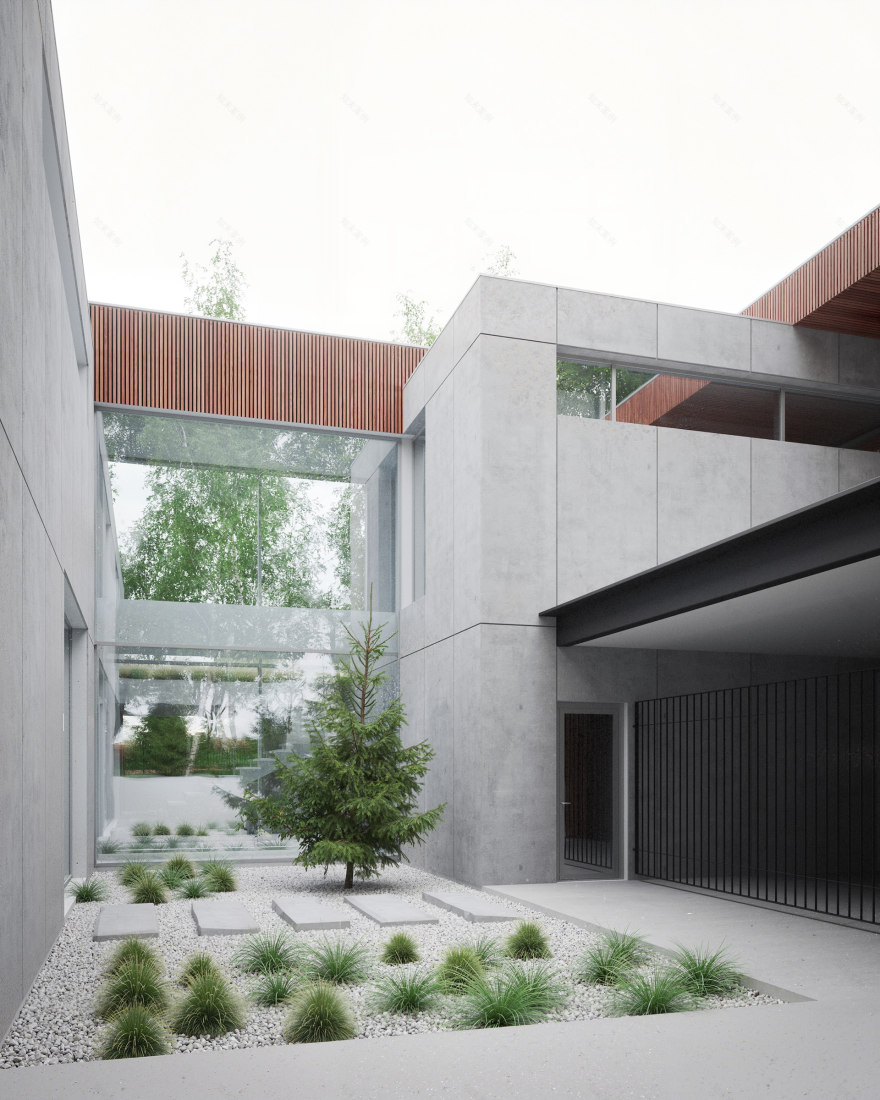
The site’s topography and existing trees are treated not as constraints, but as advantages. Instead of leveling the land, the architects use natural conditions as the basis for the composition. The house “grows into” the landscape rather than dominating it. This aligns with the principles of sustainable architecture and reduces impact on the ecosystem.
Green roofs serve several purposes:
visually reduce the building’s volume,
improve thermal insulation,
help retain moisture and create a microclimate,
enhance the sense of unity with nature.

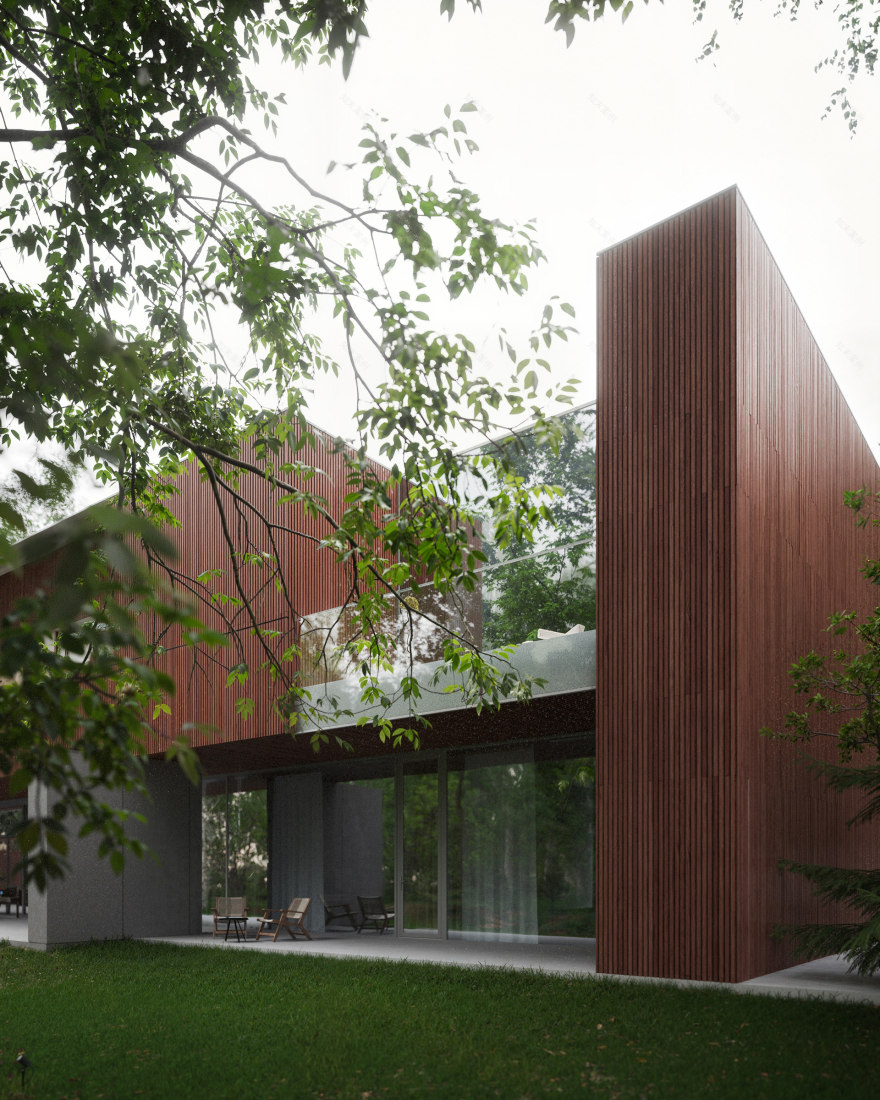
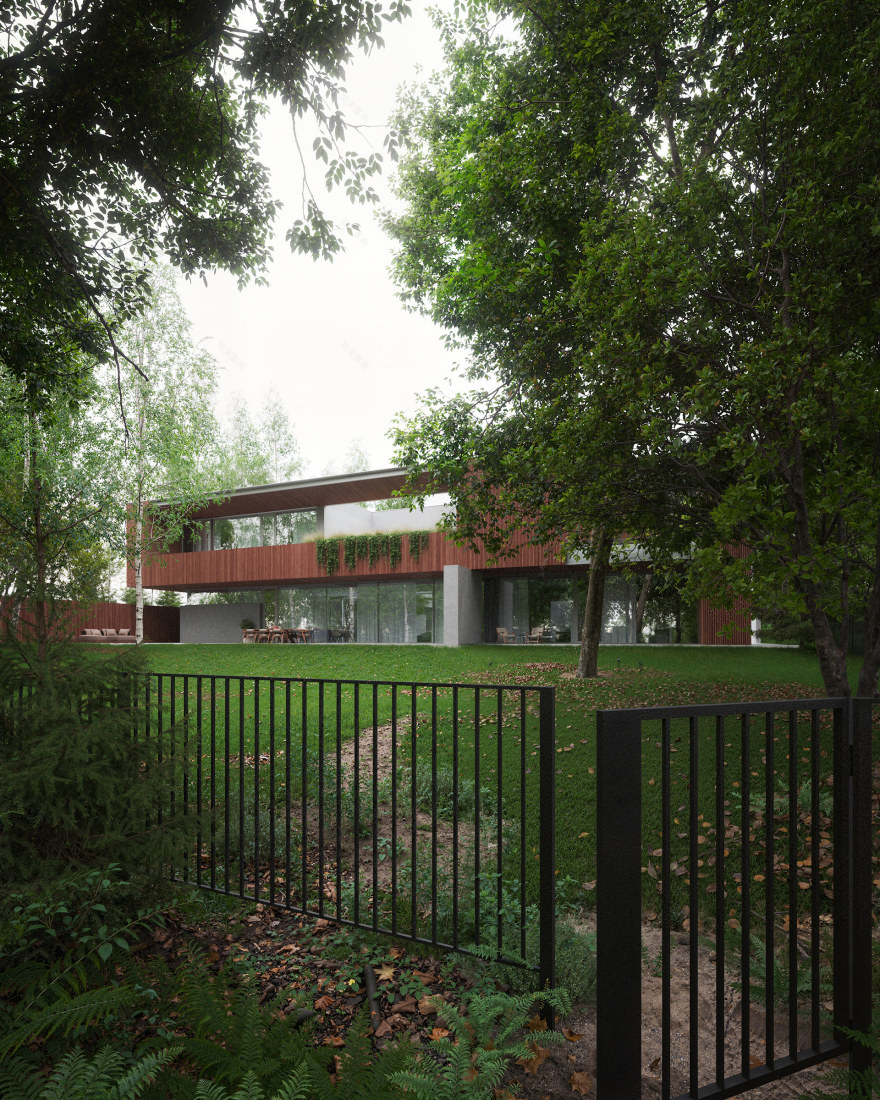
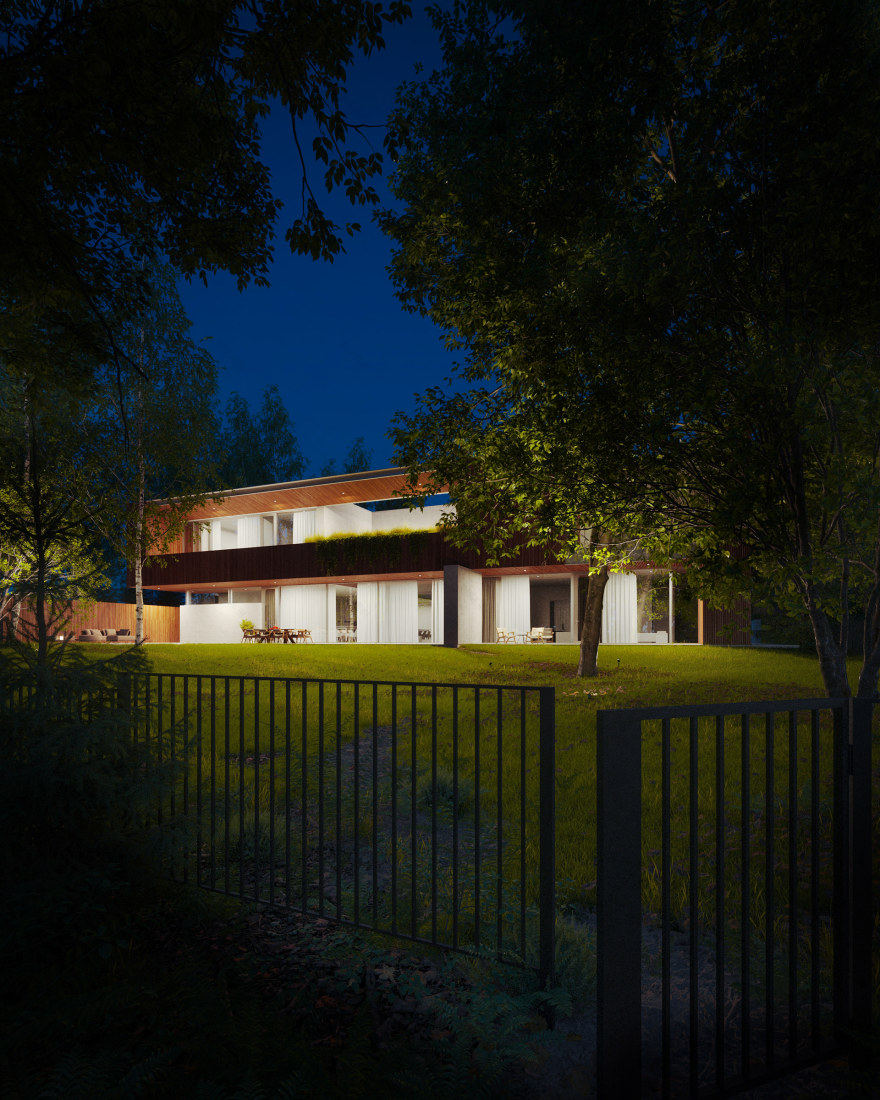
As a result, the architecture does not strive to stand out but rather to “disappear” into its surroundings. This approach is especially relevant in natural or suburban contexts, where maintaining harmony with the landscape is essential.


南京喵熊网络科技有限公司 苏ICP备18050492号-4知末 © 2018—2020 . All photos and trademark graphics are copyrighted by their owners.增值电信业务经营许可证(ICP)苏B2-20201444 苏公网安备 32011302321234号
苏公网安备 32011302321234号客服
消息
收藏
下载
最近