

创作上传
VIP
收藏下载
登录 | 注册有礼
查看完整案例

收藏

下载

分享

翻译
Architects:BRBB Architects,sukchulmok
Area:195m²
Year:2026
Photographs:Hong Seokgyu
Manufacturers:Unknown (Removed),Unknown (Removed),Unknown (Removed)
Lead Architects:sukchulmok
Category:Houses,Renovation
Lead Team:BRBB Archtects
City:Seoul
Country:South Korea

Text description provided by the architects. Located in Myeongnyun-dong, Jongno-gu, an area densely lined with red brick buildings, this structure was originally built in 1974. On this site, where layers of time have accumulated, we mark a new beginning through renovation. While respecting the existing traces as much as possible, we sought to boldly express a spirit of curiosity and experimentation. The building serves as a hybrid ground, functioning as both a studio and a residence for sukchulmok and BRBB.

The exterior is largely preserved, with restrained contemporary interventions that allow the internal perspective toward the outside, structural imperfections, and the building's volumetric presence to harmonize with the surrounding context. In this process, clay bricks echoing the original brick pattern and zinc-coated steel panels were introduced to articulate a new layer of intervention.


The interior is composed of circular masses derived from multiples and iterative values. These volumes, formed through the combination of stone, wood, and steel, each with distinct textures at times enclose structural reinforcements, at times become spatial enclosures, and at times function as furniture. Each diameter is determined through clear reasoning. For example, the ground-floor entrance, facing the street, was designed with a diameter that pulls the space inward to form a natural canopy, given the constraints on installing one externally.

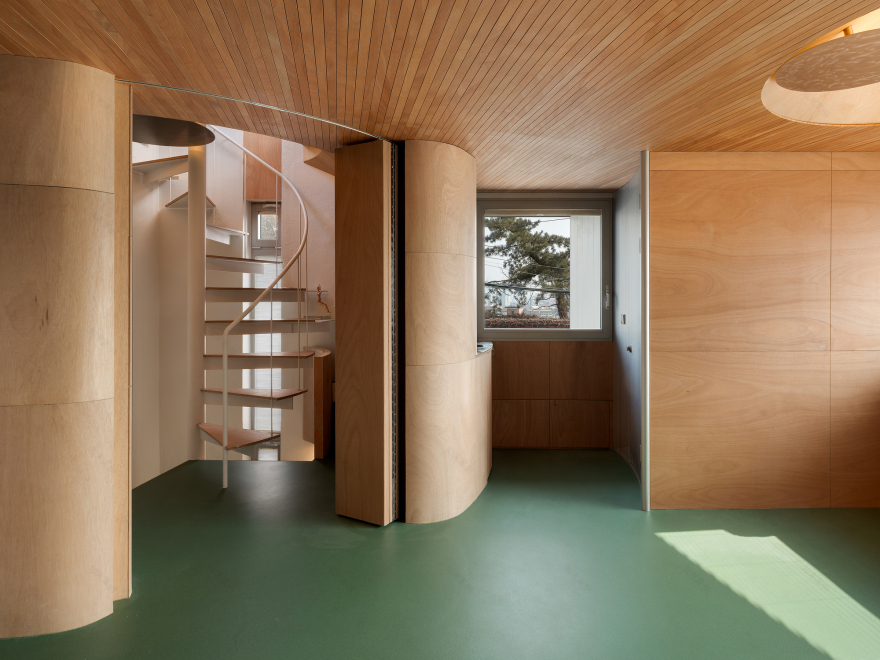
The second-floor stair hall maintains a circulation radius while accommodating sufficient book storage. Under these principles, the circular gestures either form wave-like patterns or proliferate, expanding the space while functioning as furniture, walls, doors, and lighting. The layering of this consistent formal language generates a deeper and more expansive spatial experience.
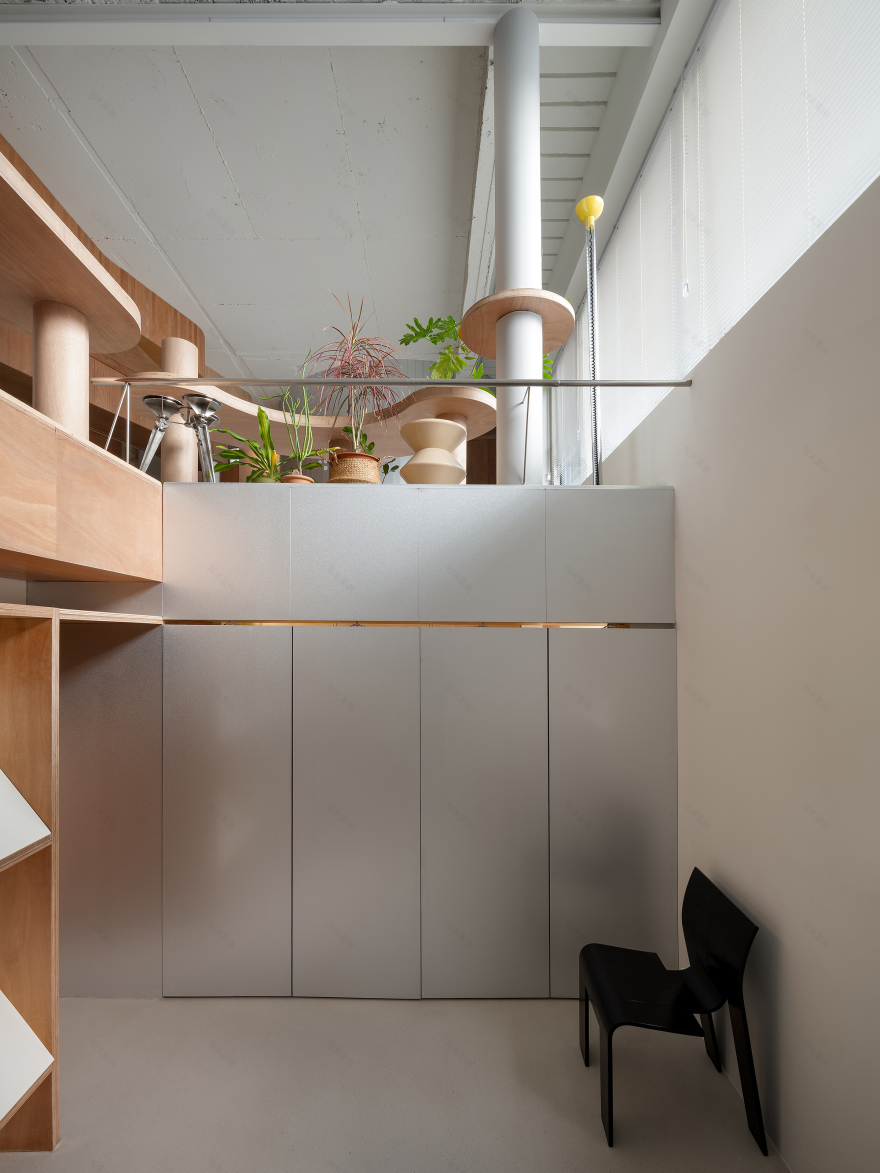


The elements composing the space retain their raw surfaces while allowing for variability and transformation. Devices for concealment are embedded throughout to organize the layered aspects of daily life, while the materiality itself remains exposed. On the ground floor, the circular volume encloses structural reinforcements while functioning as upper and lower storage, a built-in element concealing HVAC systems, and a housing for lighting and speakers.

Additionally, a 3m × 2.5m void carved into the floor near the front window creates the highest ceiling height when viewed from the basement, offering a strong spatial presence. This space is conceived as an open platform capable of accommodating future installations, exhibitions, and various events.

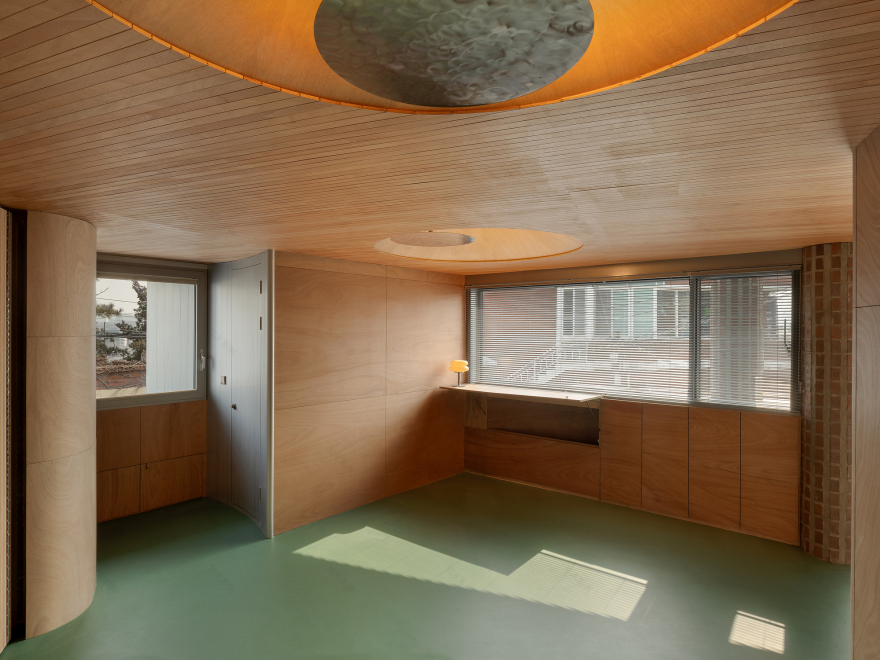
The second floor is designed as a living space. Okoume plywood with a pronounced grain was used to create a warm atmosphere, while the floor is finished with a green-toned liquid material mixed with cork, allowing it to blend naturally with the wood. The wave-like gesture extending from the stair hall wraps around structural steel, transforming into bookshelves, a sink, and eventually expanding into the bathroom. Slightly rotated windows, adjusted to avoid direct views from adjacent buildings, secure a broader field of vision.
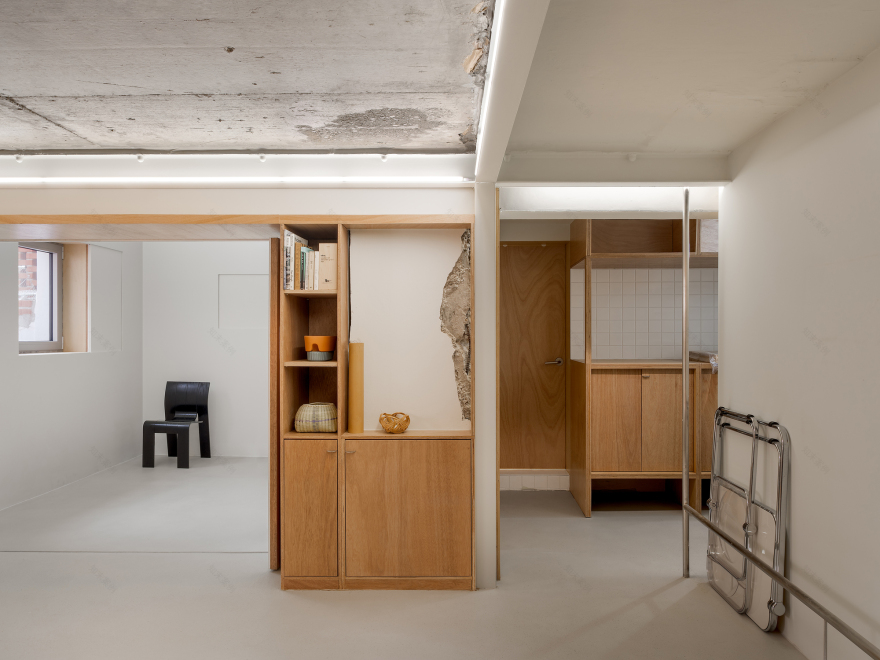
Rather than settling into a fixed identity, this space is intended to remain in a state of challenge and fluidity. Anticipating the many creative outcomes that will unfold here, we aim to accumulate experiences within this place over time.

Project gallery




南京喵熊网络科技有限公司 苏ICP备18050492号-4知末 © 2018—2020 . All photos and trademark graphics are copyrighted by their owners.增值电信业务经营许可证(ICP)苏B2-20201444 苏公网安备 32011302321234号
苏公网安备 32011302321234号客服
消息
收藏
下载
最近