

创作上传
VIP
收藏下载
登录 | 注册有礼
查看完整案例

收藏

下载

分享

翻译
Architects:ENDO SHOJIRO DESIGN,td-Atelier
Area:127m²
Year:2025
Photographs:Kohei Matsumura
Manufacturers:HARMAN,Miratap,NORITZ,Nasta,Panasonic,Rinnai,Shigeru,TOYOURA,Toto,toolbox
Lead Architects:Masaharu Tada, Endo Shojiro
Category:Houses,Renovation,House Interiors
Technical Team:Mondo Yoshiki
Landscape Architecture:Michikusa,co.Ltd.
City:Kyoto
Country:Japan
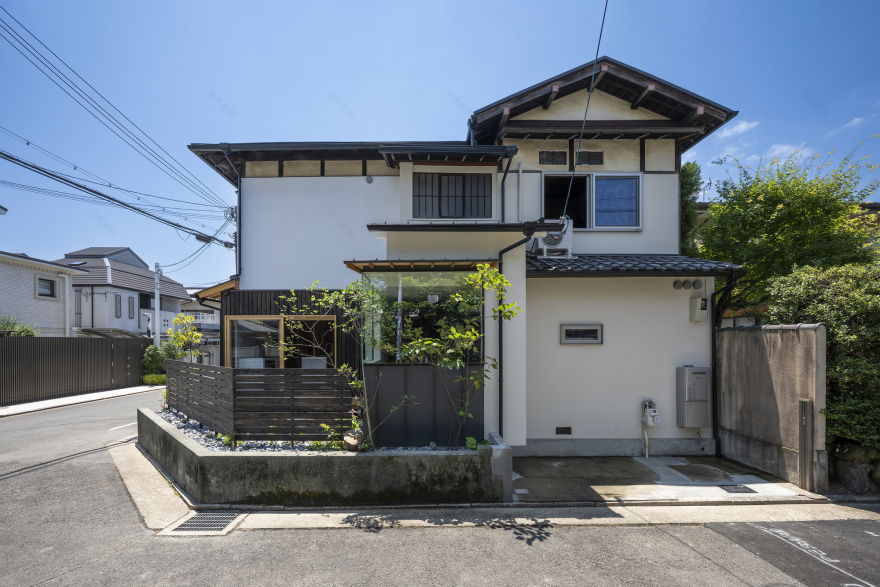
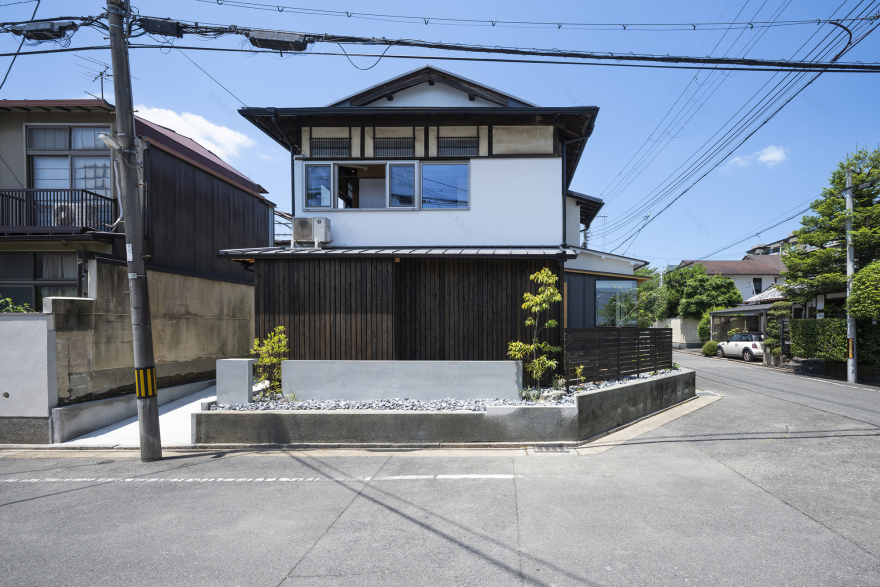
Text description provided by the architects. This project is the renovation of a wooden residence approaching its centennial anniversary. The house was originally built in 1931, on a plot developed through the Rakuhoku First District Land Readjustment Project, an early urban planning scheme in northern Kyoto. Several houses from that period still remain in the neighborhood, evoking the refined residential character of the time. The current owners, a couple in their seventies, have inherited the house through three generations since it was first purchased by the husband's grandfather.
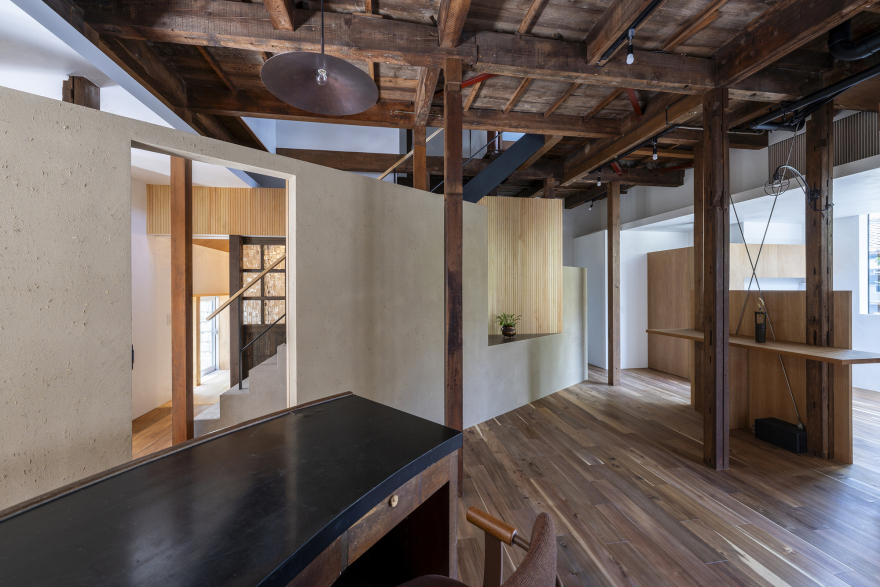
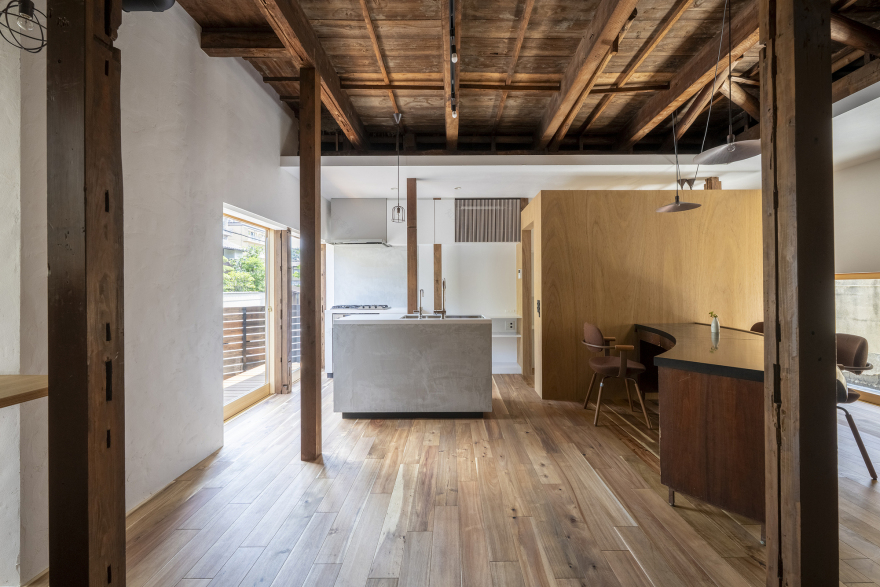
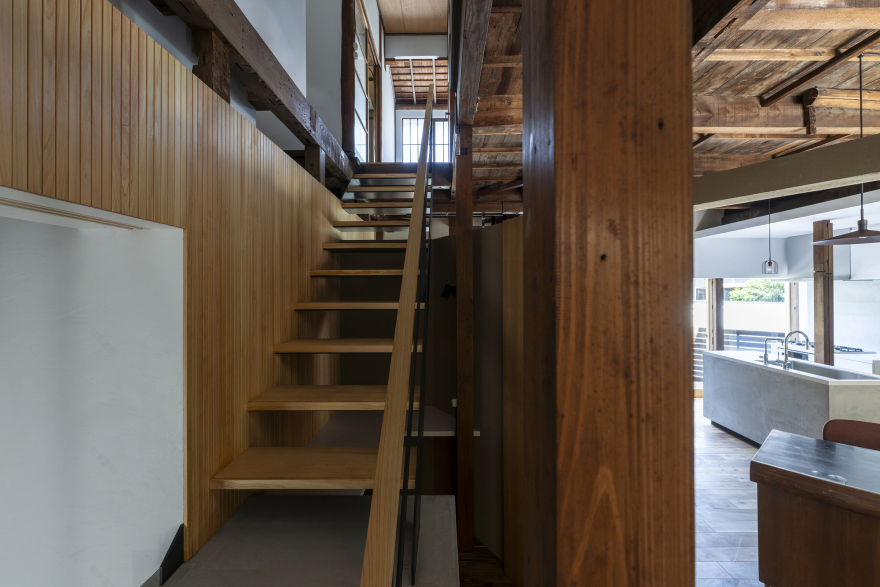
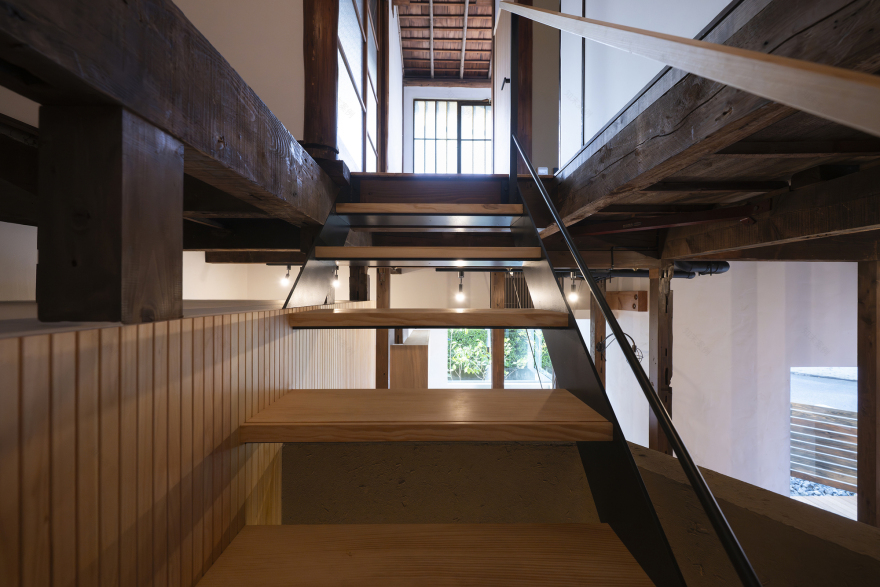
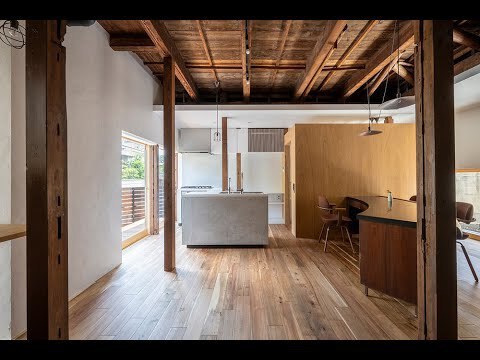
Before the design began, the architect conducted extensive interviews with the owners, tracing the sequence of past extensions through their childhood memories. Selective removal of ceilings and floors revealed the original timber structure, allowing a clear distinction between the initial construction and later additions. The subsequent extensions―especially those that had been built tightly against the neighboring house―were carefully dismantled, reducing the total floor area by more than 30%. The renovation began by restoring the house's original form and atmosphere.
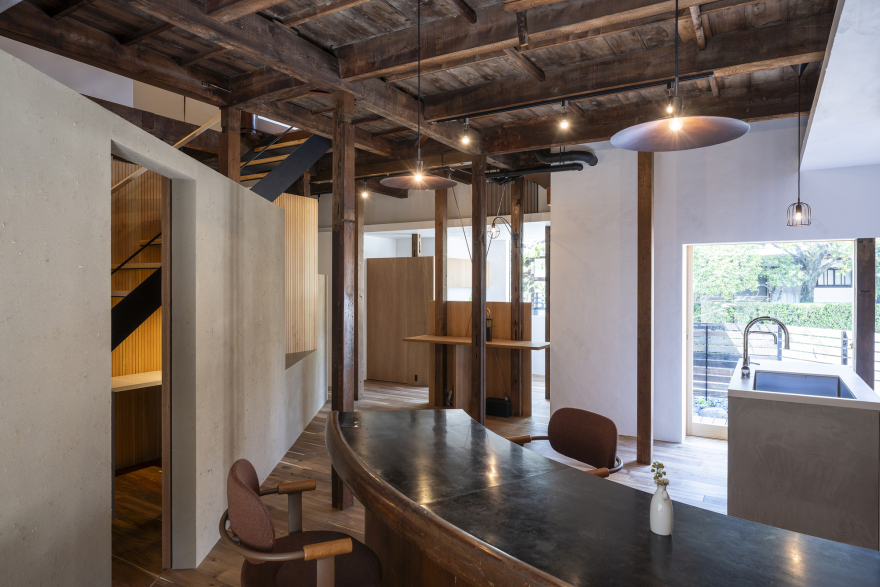
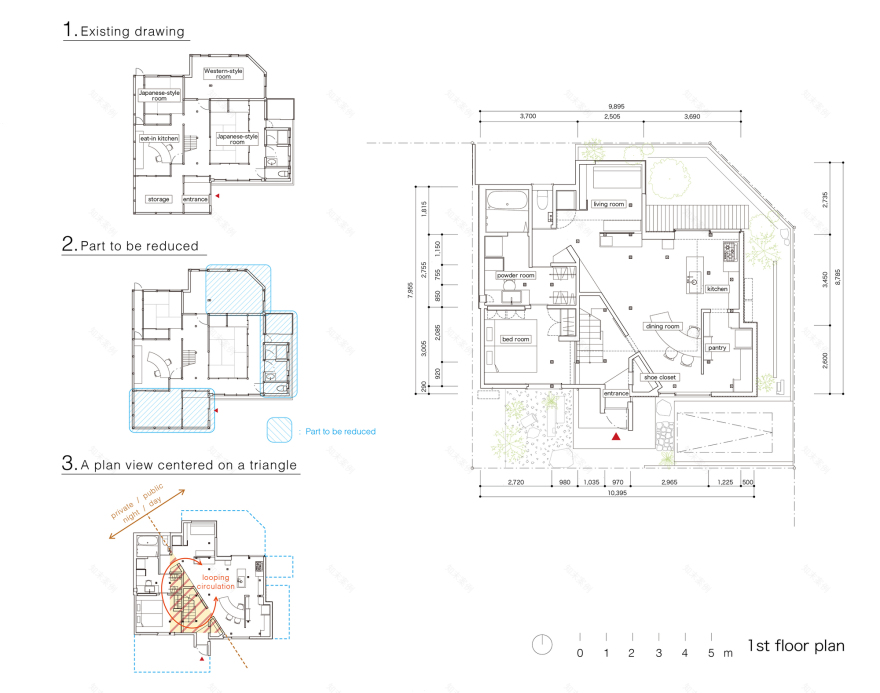
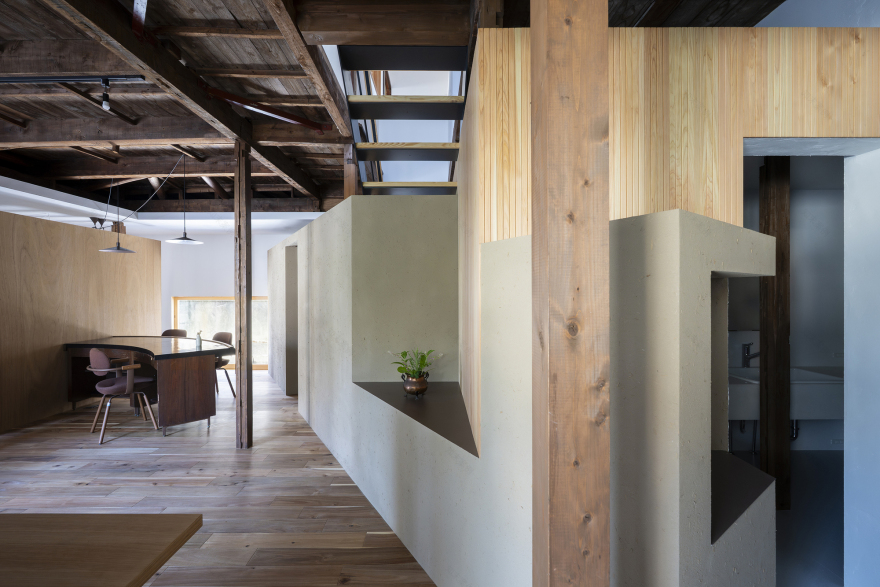
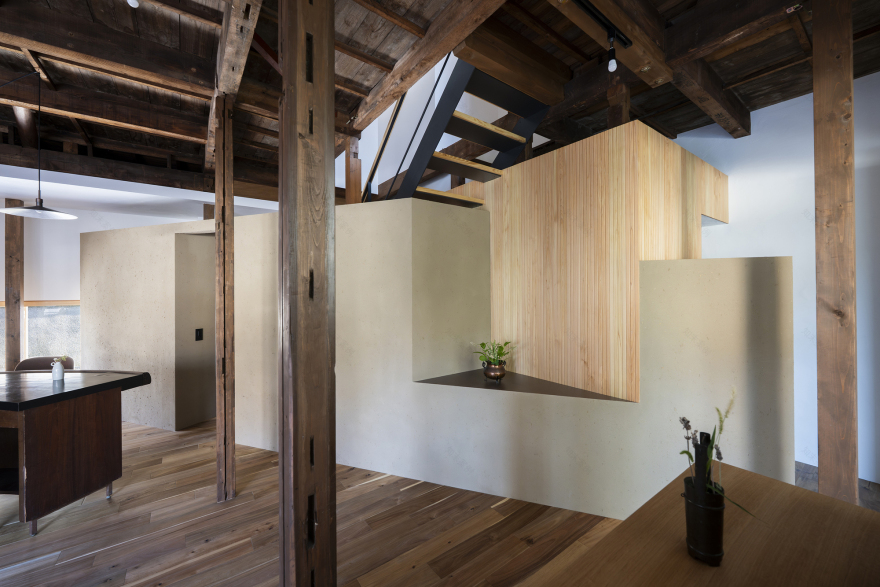
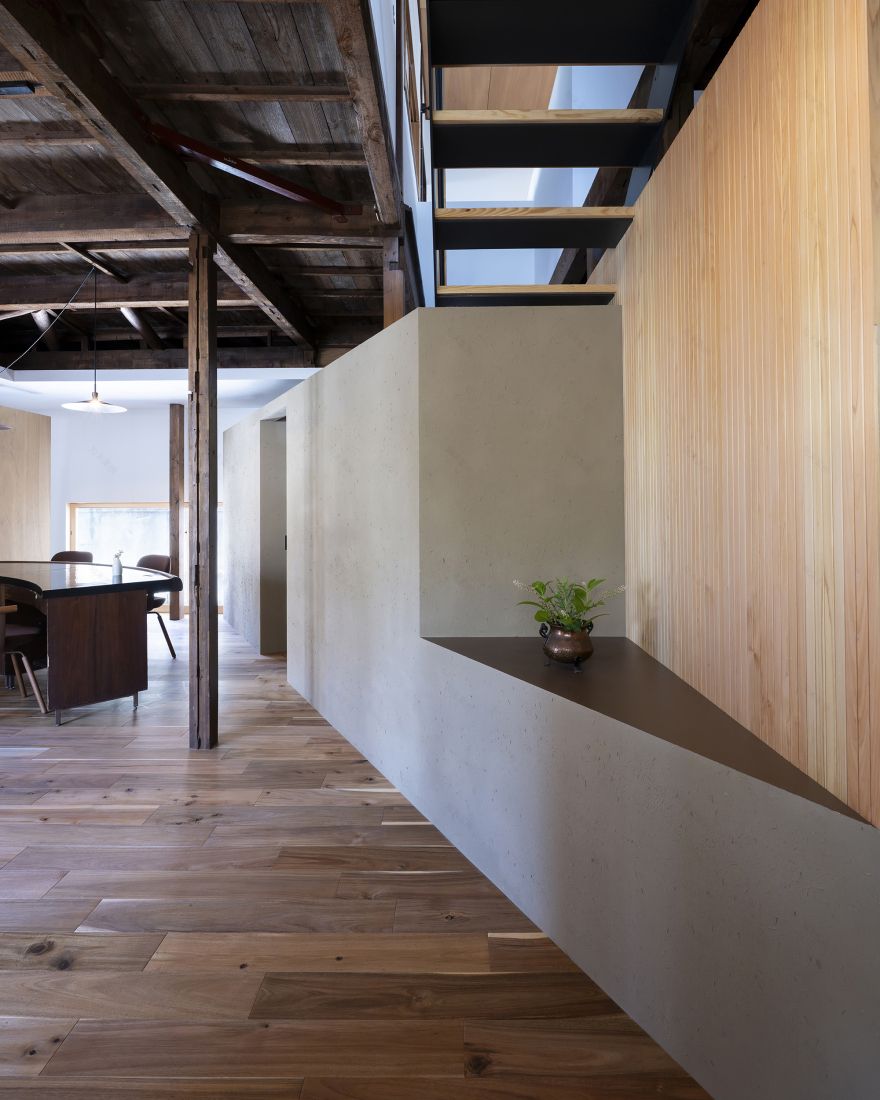
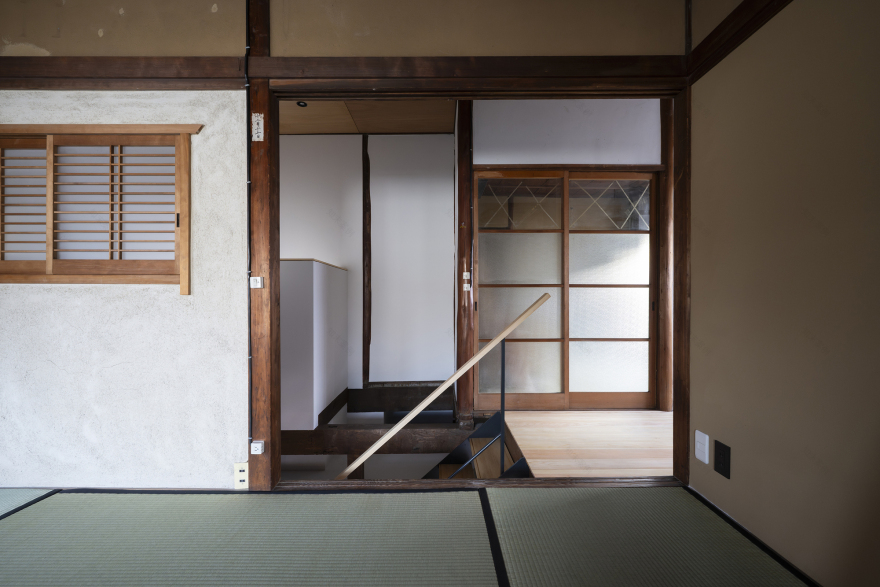
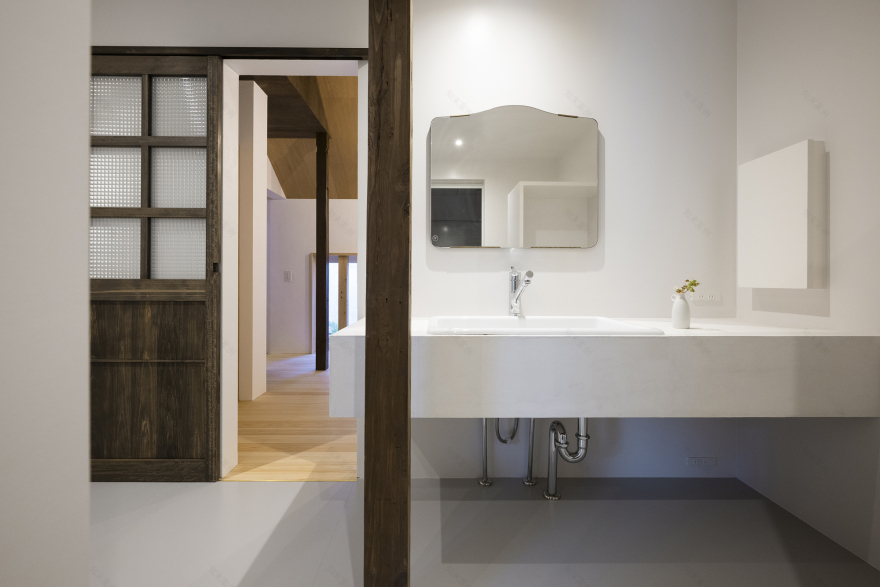
The first floor was completely reconfigured for the couple's present-day life, while the second floor received only minimal updates, serving as a guest and work space for their daughter when she visits. The existing exterior had a stepped, meandering outline typical of traditional Japanese houses. Rather than following this irregular shape inside, the new plan introduces a single diagonal wall that divides the house into two zones―private functions such as the bedroom and bathroom on the northwest side, and public spaces such as the living and dining area on the southeast. This diagonal wall maintains spatial flow and connection while softly defining distinct living areas. It is kept lower than the existing beams, leaving a continuous gap above to preserve openness and visual unity.
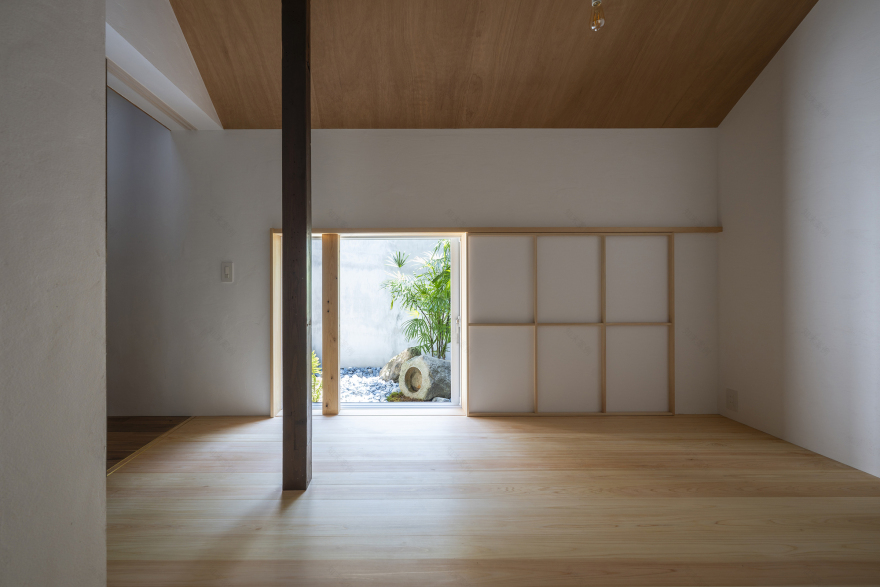
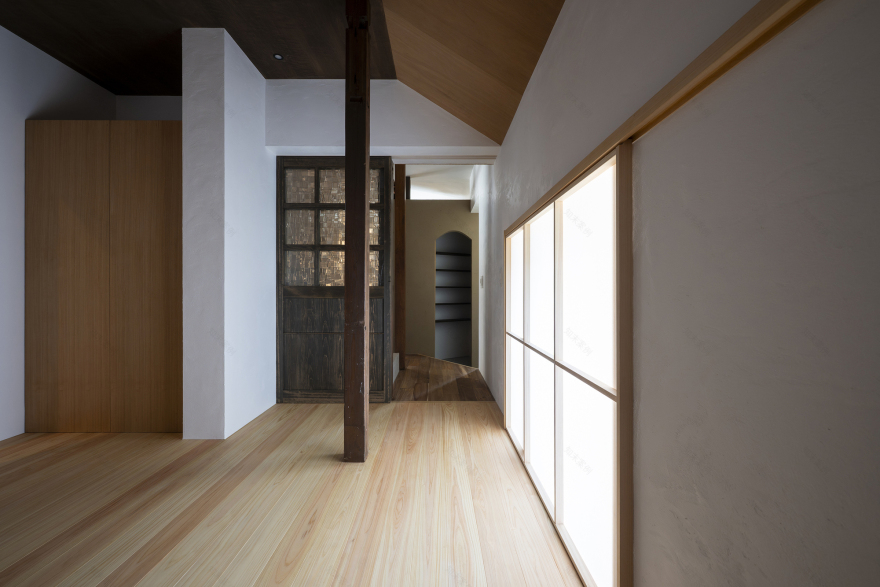
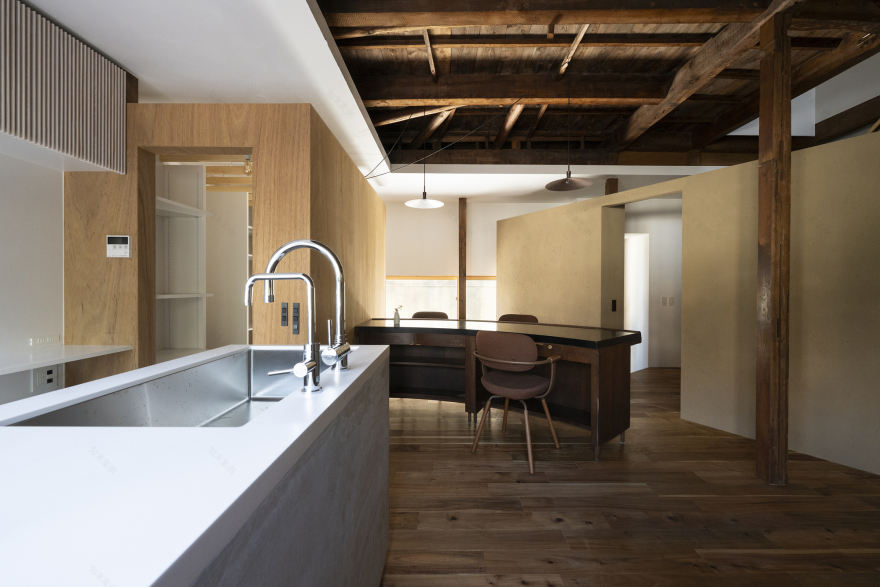
The original house once featured a mawarien―a surrounding veranda supported by kigumi (bracket-like struts)―that created an elegant but overly open structure. In this renovation, such openness was moderated to enhance privacy and structural stability, giving the house a more enclosed and calm expression. Several cherished items, including a large dining table once used as a bank counter, vintage light fixtures, and old fittings and glass, were integrated into the new space, allowing the tactile memory of the house to continue.
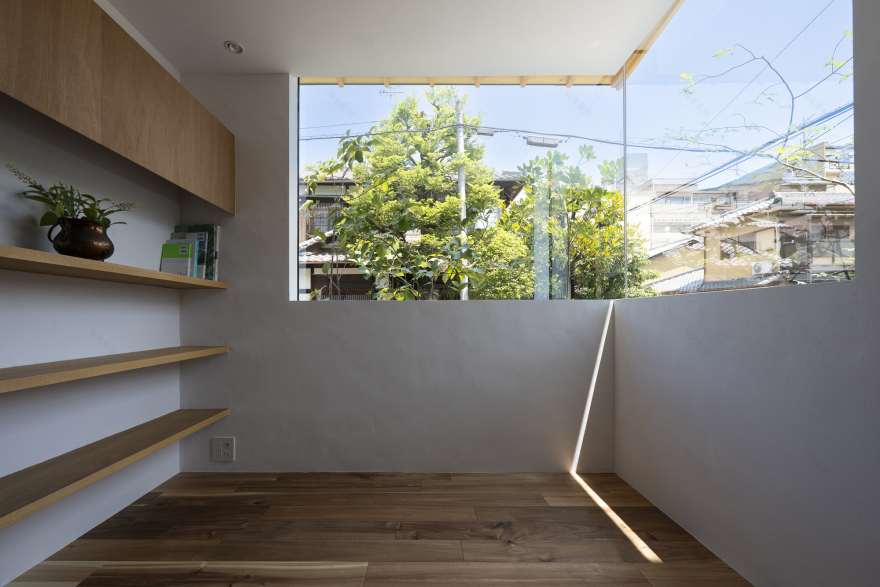
Rather than simply preserving the structure as a relic, the design carefully distinguished what to keep, repair, or renew―assigning each new element a role in tuning and complementing the old. Through this process, the house has been quietly transformed into a home that weaves together the family's memory and the history of the neighborhood, while adapting gracefully to contemporary living.
Project gallery
南京喵熊网络科技有限公司 苏ICP备18050492号-4知末 © 2018—2020 . All photos and trademark graphics are copyrighted by their owners.增值电信业务经营许可证(ICP)苏B2-20201444 苏公网安备 32011302321234号
苏公网安备 32011302321234号客服
消息
收藏
下载
最近