

创作上传
VIP
收藏下载
登录 | 注册有礼
查看完整案例

收藏

下载

分享

翻译
Architects:Trahan Architects
Area:5200ft²
Year:2024
Photographs:Tim Hursley
Lead Architects:Victor F. "Trey" Trahan III, Robbie Eleazer
Landscape Architecture:Spackman Mossop Michaels
Structural Engineering:Spectrum Design Consultants, Nous Engineering
Acoustics:Threshold Acoustics, LLC
Lighting Design:Schuler Shook
Category:Cultural Architecture,Pavilion
Design Team:Jonathan Fidalgo, Jarri Hasnain, Sarah Cancienne, Ryan Barnette, Leigh Breslau
Technical Team:Kevin Thomas, Brian Richter
General Contractor:Milestone Construction Company
Consultant:CIG Architecture
MEP:Olsson
City:Springdale
Country:United States
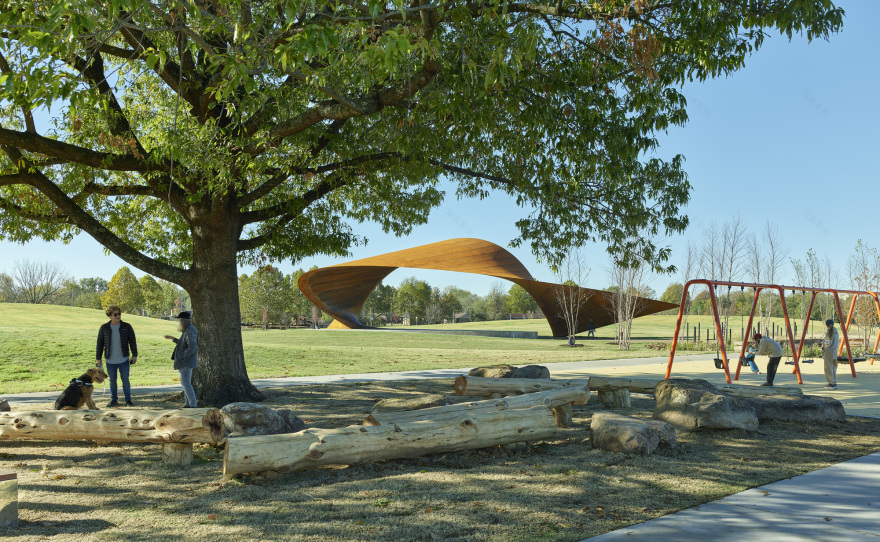
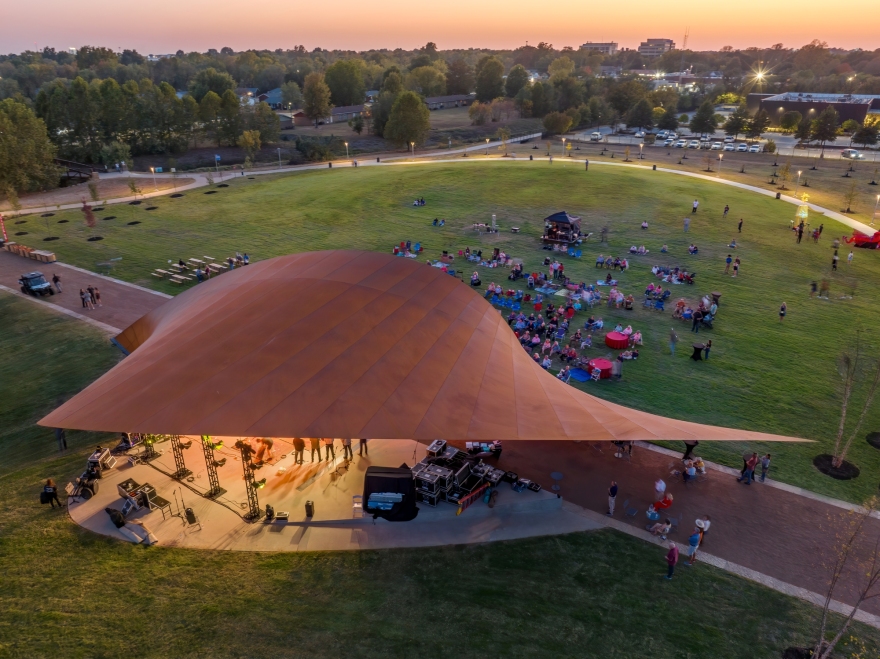
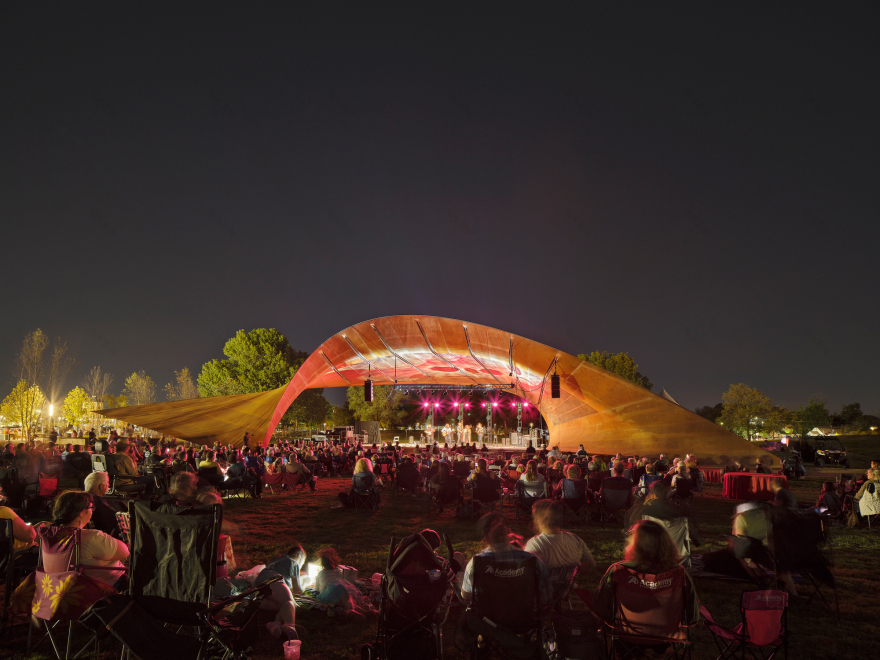
Text description provided by the architects. Luther George Park Performance Pavilion is a weathering steel canopy that defines a civic stage within the landscape, framing gathering, movement, and performance as a continuous spatial experience.
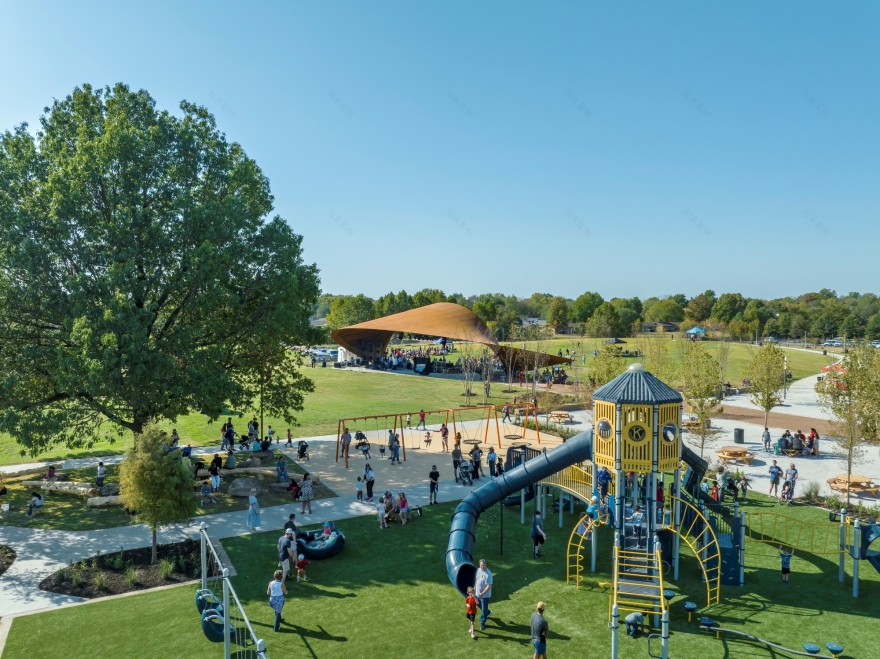
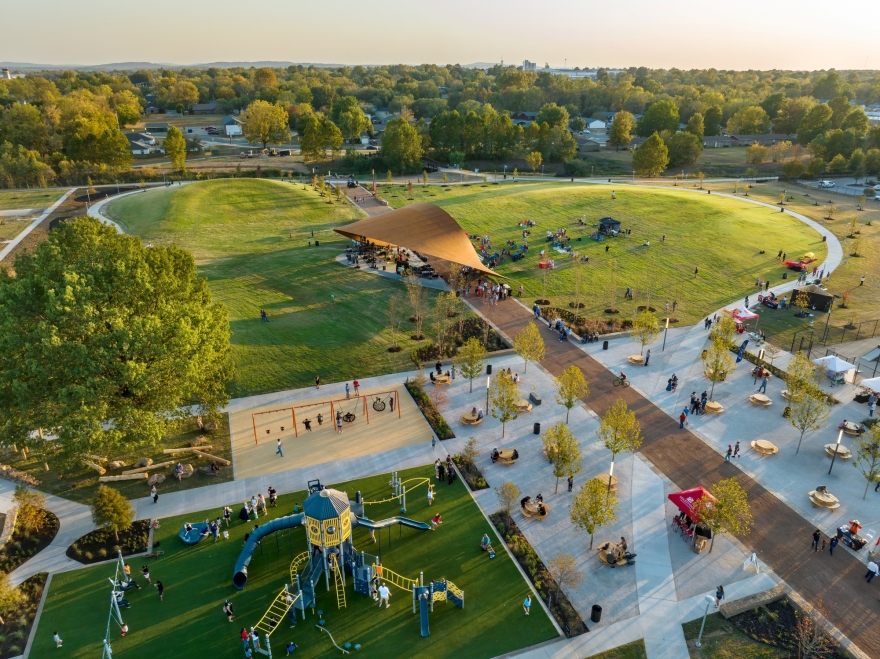
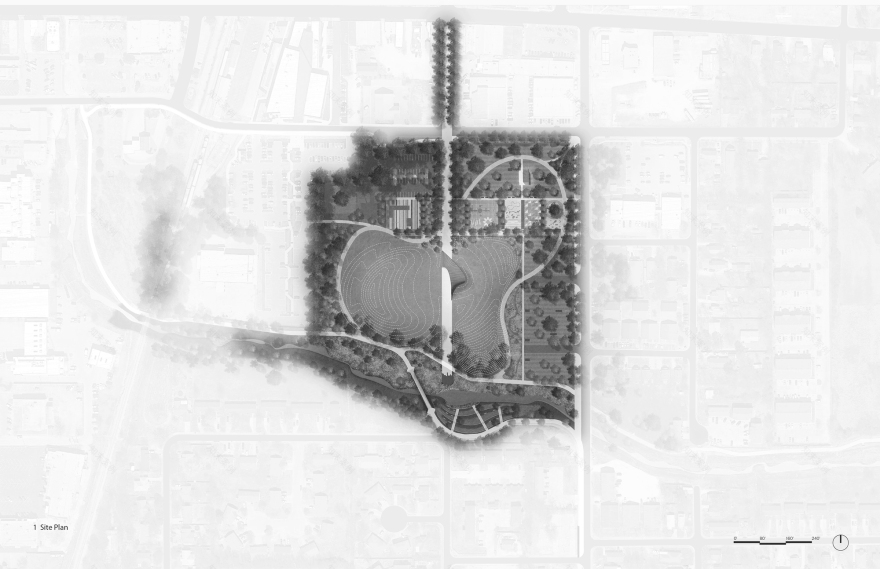
Located in Springdale, Arkansas, the pavilion is part of the transformation of a 14-acre park that reconnects downtown to the Razorback Greenway. As an early project within the Downtown Springdale Alliance's vision, it establishes a new public anchor for a growing community. The brief called for a flexible performance venue capable of accommodating events of varying scale while remaining open, accessible, and embedded within the character of the Ozark landscape. The challenge was to meet technical performance demands without compromising the openness of the park.
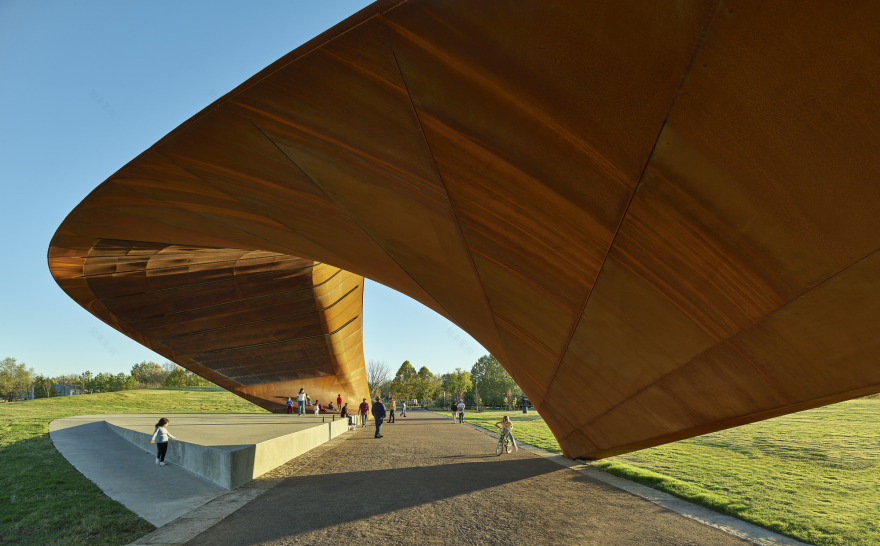
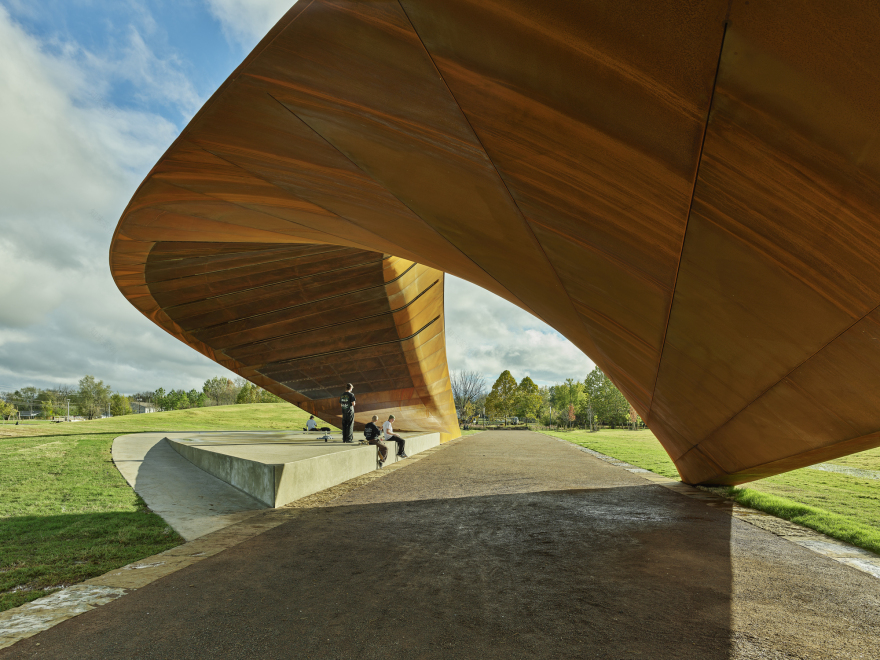
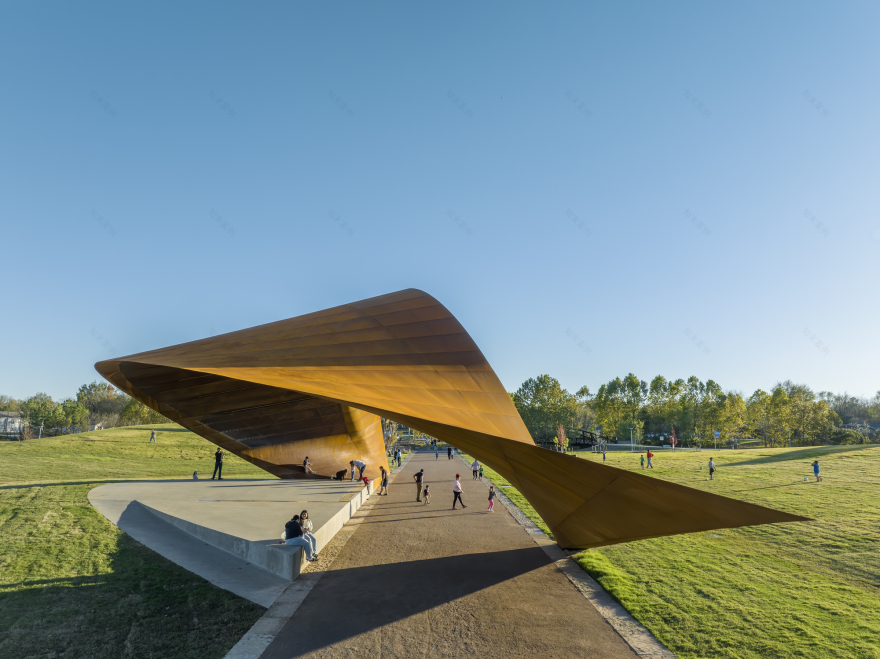
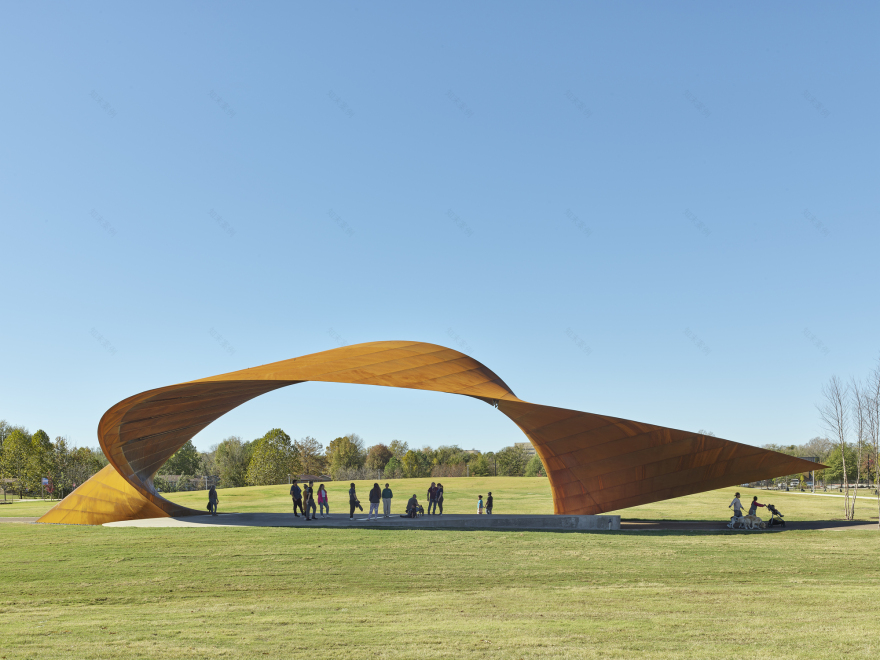
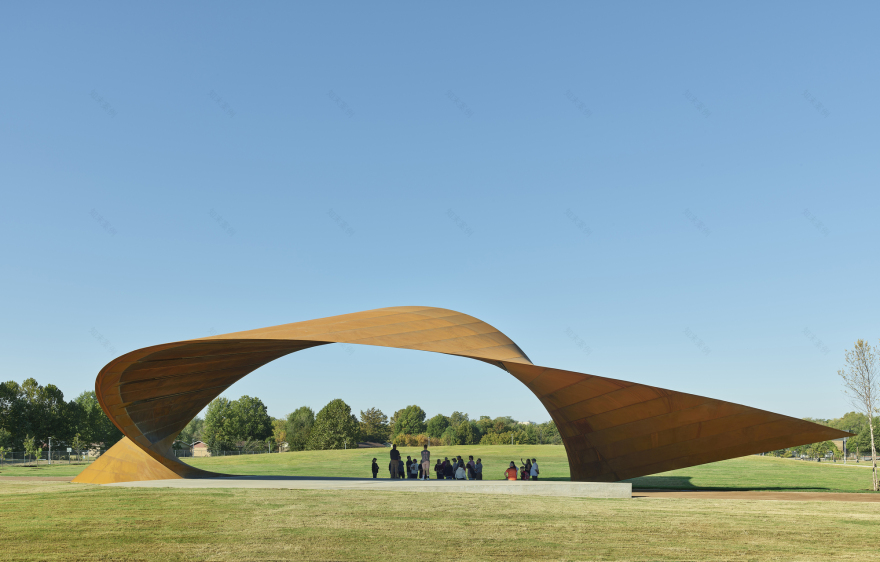
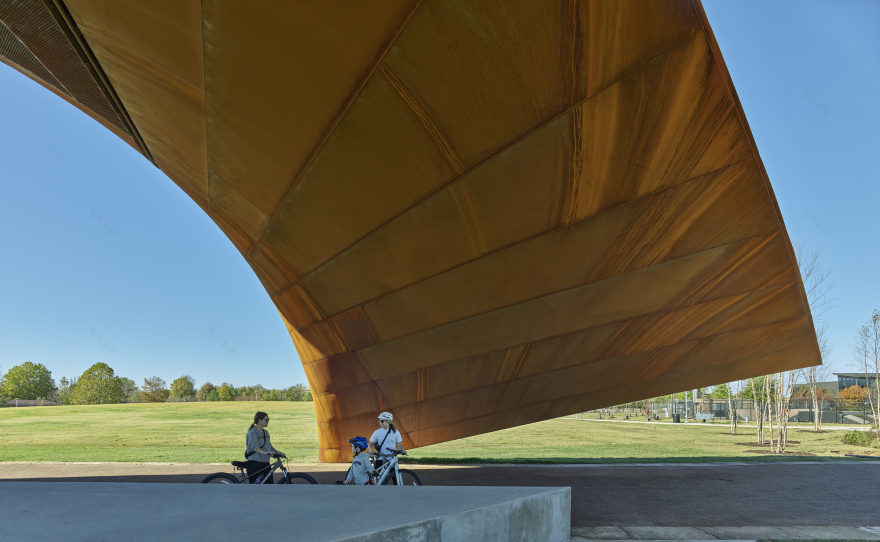
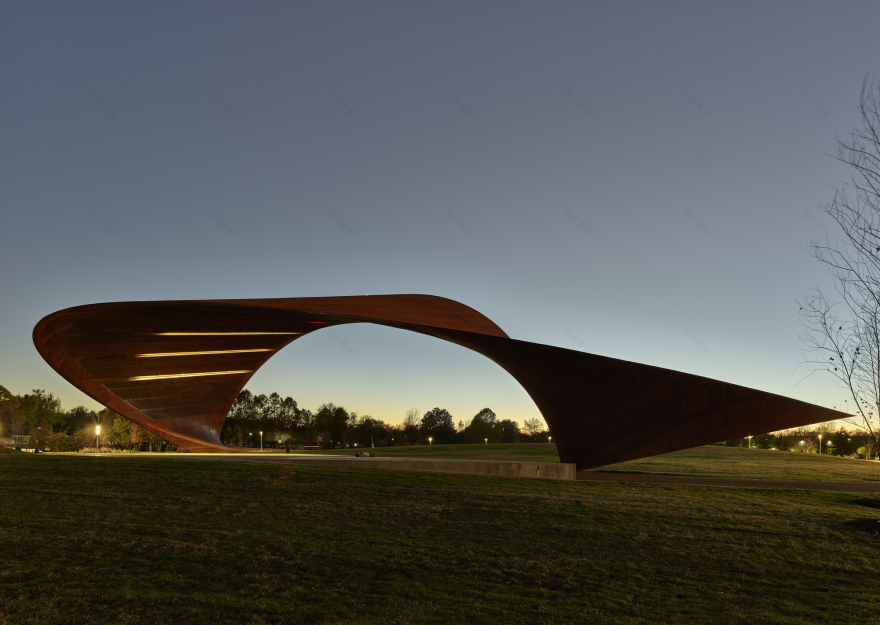
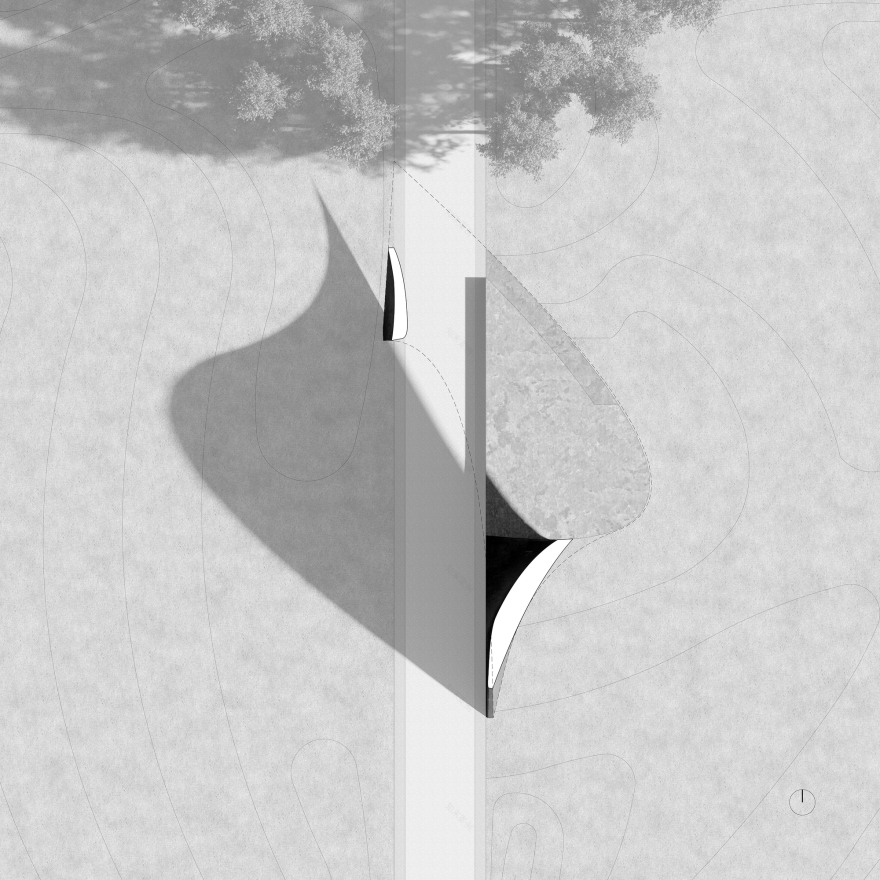
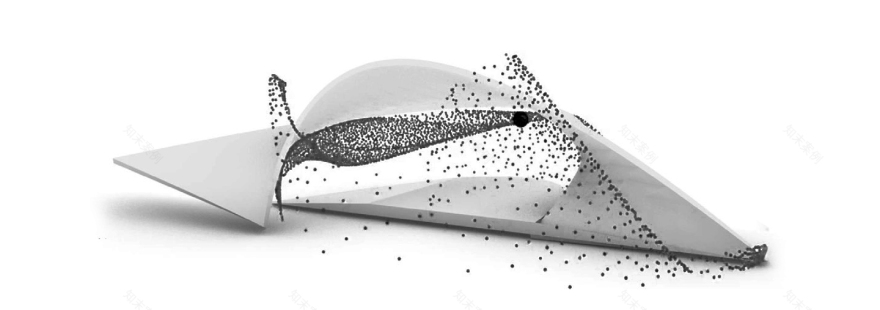
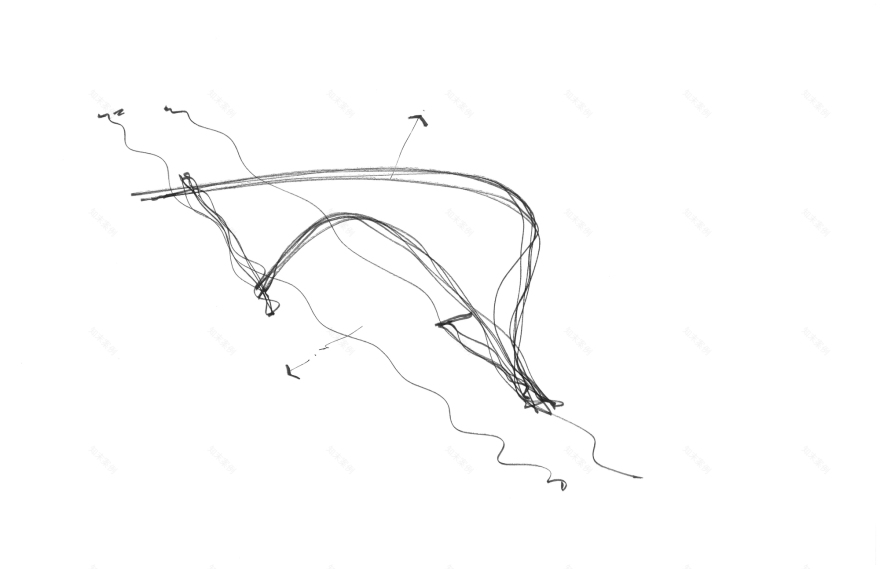
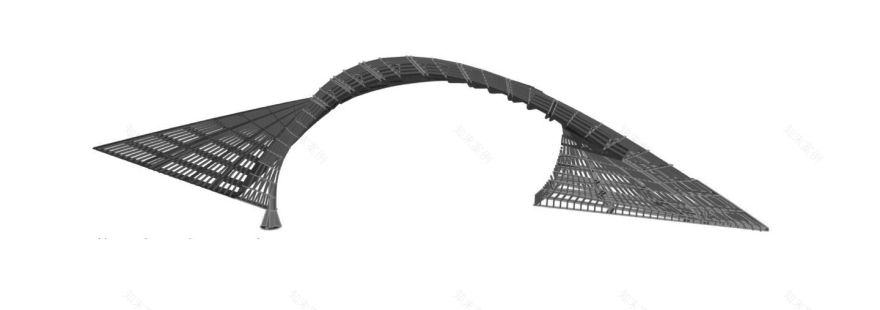
The pavilion is conceived as an extension of the terrain rather than an object placed within it. Its form draws from the rolling hills of the Ozarks and is shaped through studies of wind, solar exposure, rainfall, acoustic performance, and structural capacity, resulting in a single performance-driven formal gesture. This gesture takes the form of a continuous shell spanning 150 feet and touching the ground at only two points. The canopy operates simultaneously as structure and enclosure, consolidating environmental response, performance, and construction into a single, legible system.
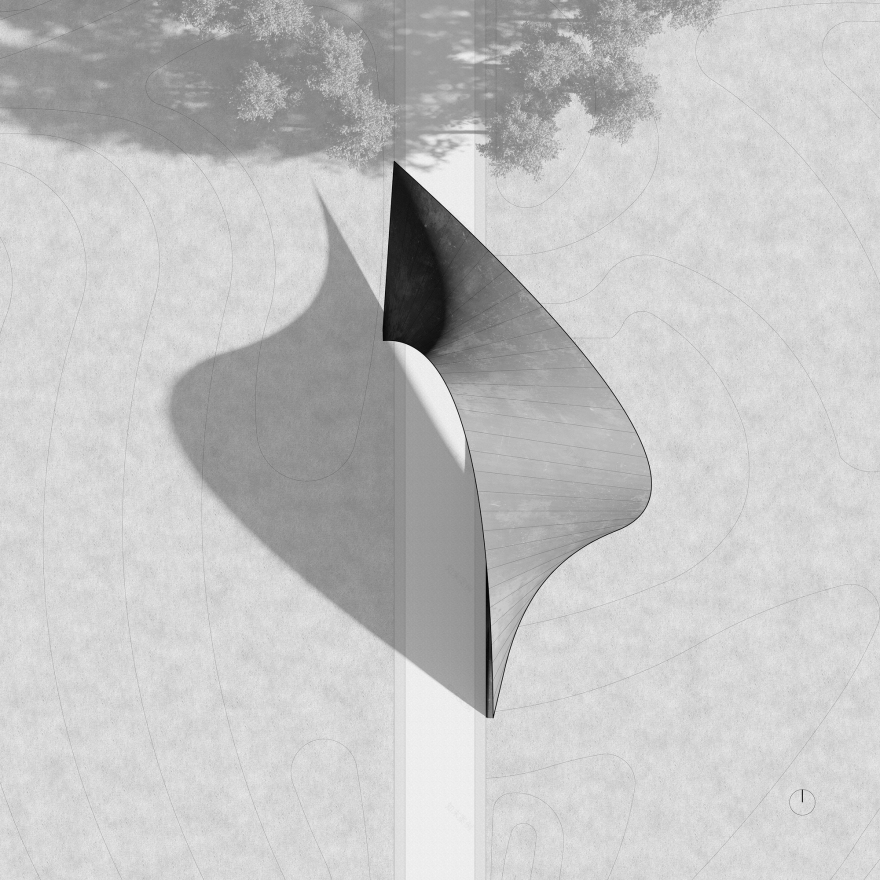
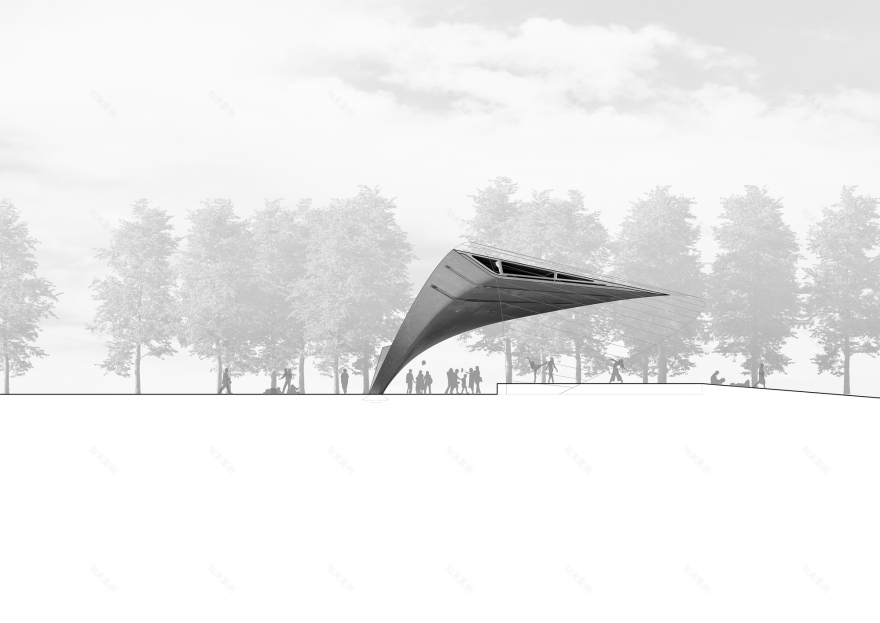
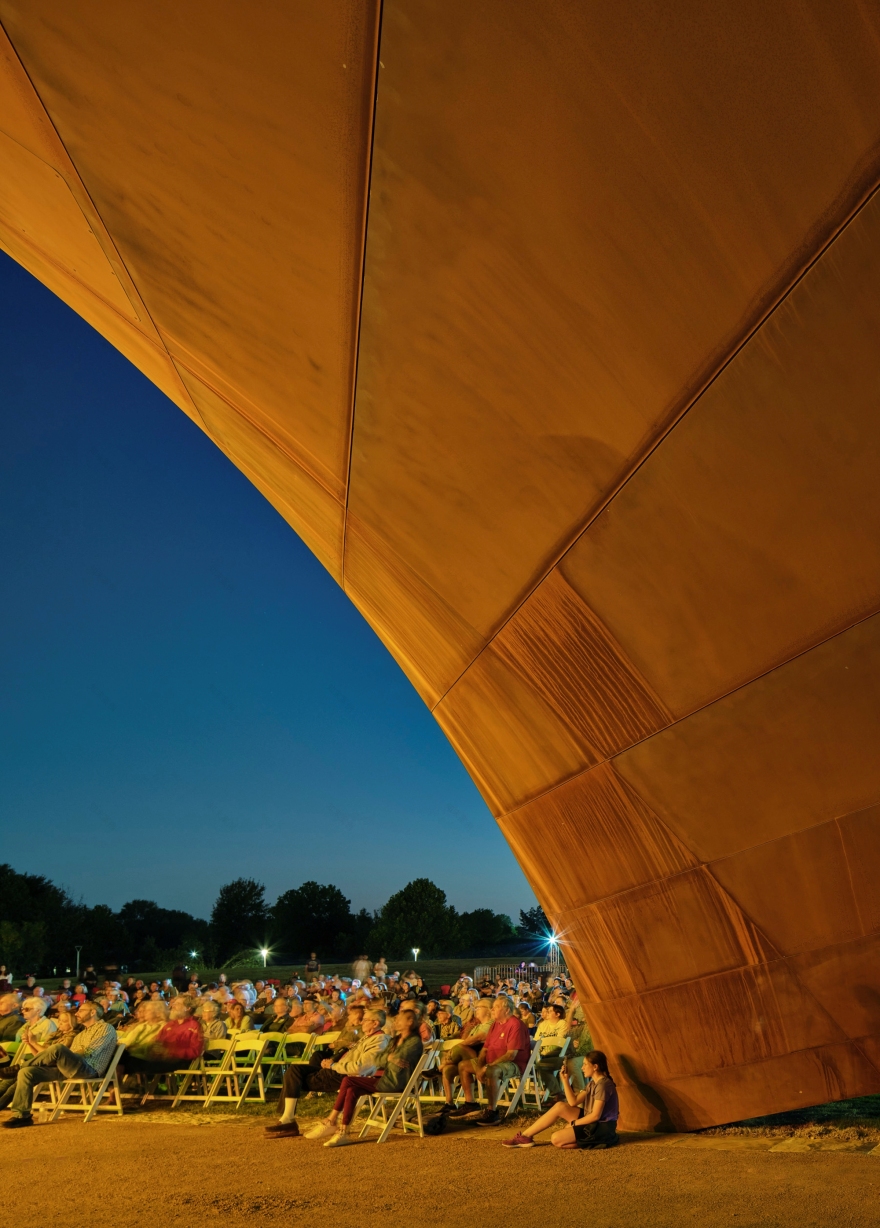
The pavilion has no front or back. It engages both the Great Lawn and the Small Lawn, allowing performances to unfold in multiple directions and supporting a wide range of uses. The stage is set into the ground, forming a continuous slope that integrates access, seating, and performance into a unified surface. When not in use for events, the pavilion serves as an open, shaded space for daily occupation.
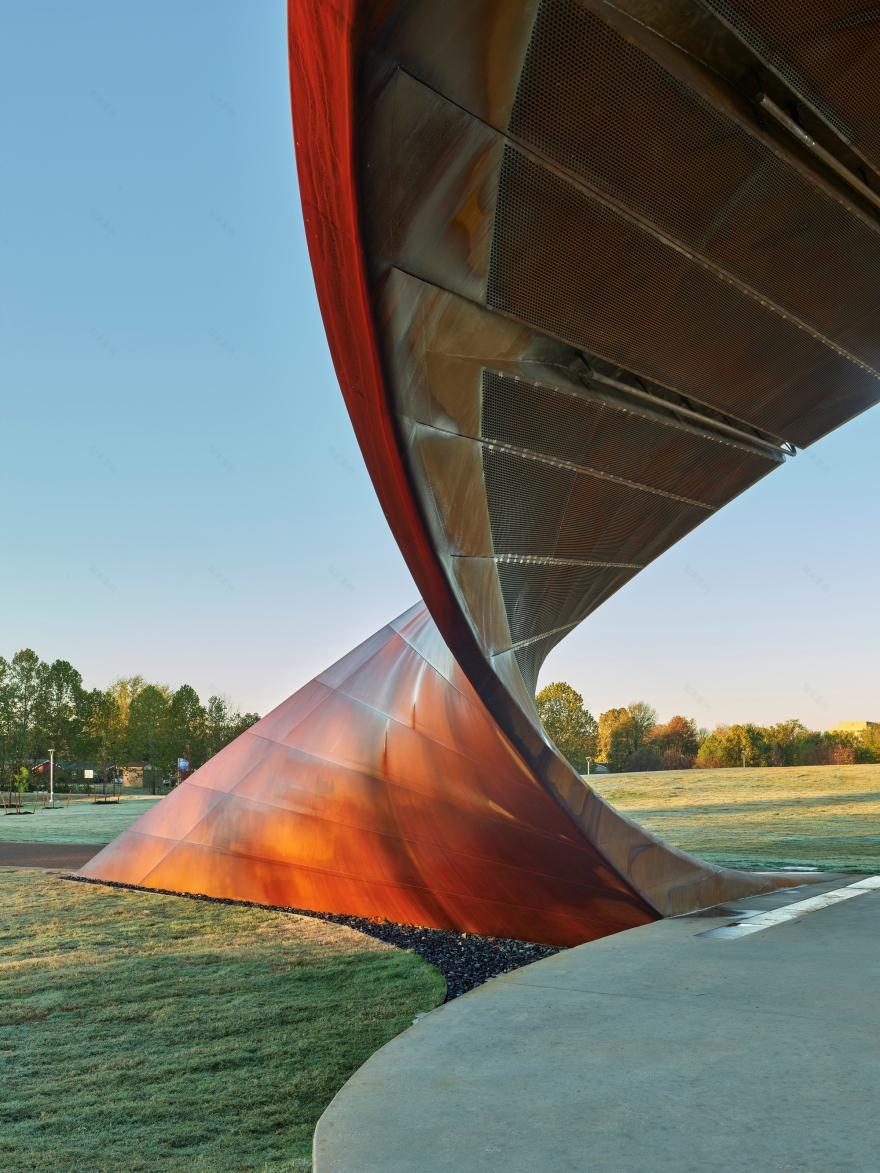
Material and construction reinforce this approach. The shell is composed of weathering steel, selected for its durability and its resonance with the red-orange soils of the region. Over time, the surface develops a layered patina, turning the material into a quiet register of the site's changing conditions. Its ruled geometry enabled prefabrication into large segments, fabricated by CIG in the Netherlands, shipped overseas, and assembled on site in collaboration with local contractors. Integrated acoustic perforations, rigging systems, and infrastructure are embedded within the shell, allowing the pavilion to perform technically while maintaining formal clarity.
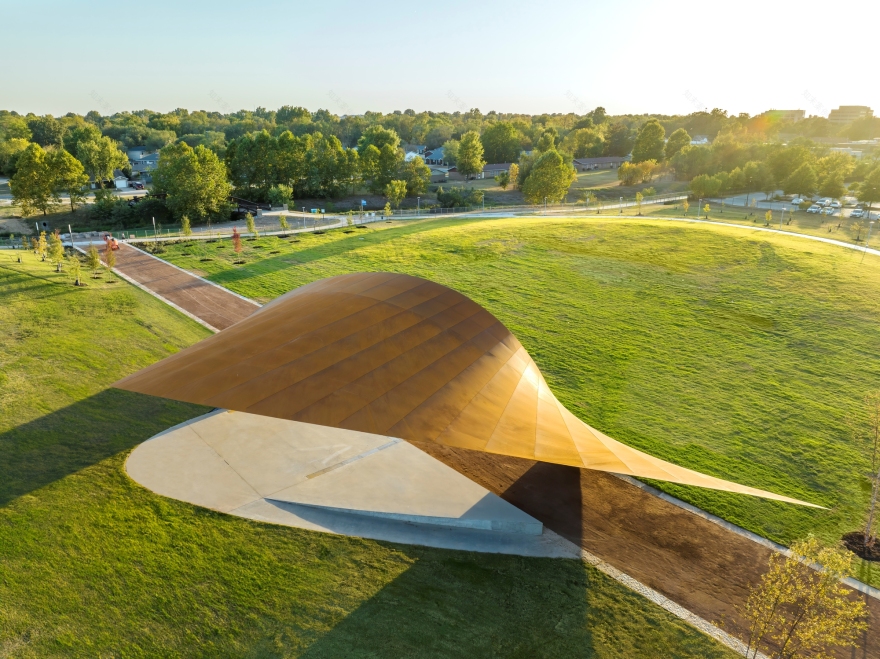
The completed pavilion establishes a civic focus within Springdale, supporting both large public events and informal daily use. By aligning environmental forces, structural logic, and material expression into a single gesture, the project contributes a durable and adaptable public space shaped over time by both design and occupation.
Project gallery
南京喵熊网络科技有限公司 苏ICP备18050492号-4知末 © 2018—2020 . All photos and trademark graphics are copyrighted by their owners.增值电信业务经营许可证(ICP)苏B2-20201444 苏公网安备 32011302321234号
苏公网安备 32011302321234号客服
消息
收藏
下载
最近