

创作上传
VIP
收藏下载
登录 | 注册有礼
查看完整案例

收藏

下载

分享
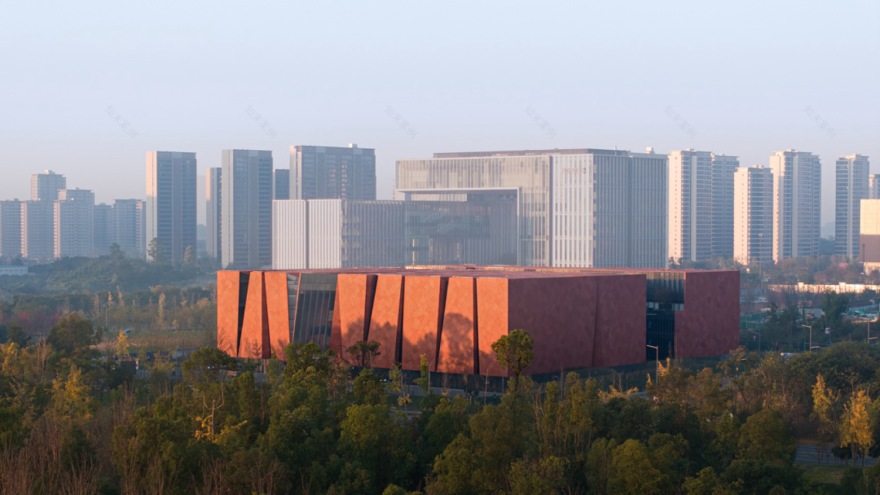
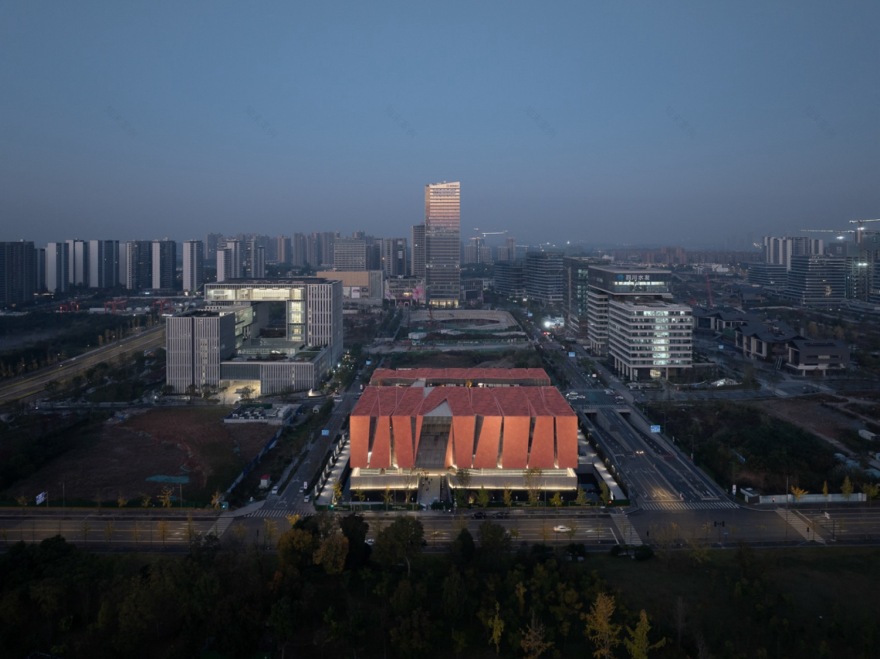
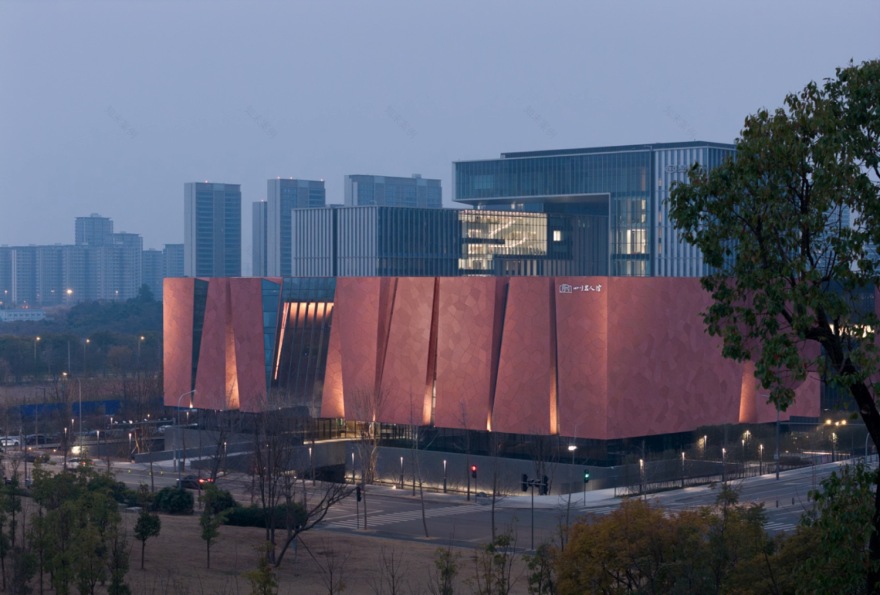
四川名人馆位于四川天府新区,总建筑面积约5.2万平方米,是一个旨在展示四川历史上杰出人物与其文化贡献的博物馆。项目以“地理·人文”为核心理念,将建筑塑造为一处可被行走与体验的文化叙事空间。建筑既需要体现四川深厚的地域文化,也需要延续新城的空间秩序和公共生活场景。
Located in Tianfu New Area, the Sichuan Hall of Historic Figures, with a total floor area of approximately 52000 sqm, dedicates to showcasing the outstanding people in Sichuan history and their cultural contributions. The museum takes “regionalism and humanity” as its core concept, shaping the building into a cultural narrative space that can be penetrated through and experienced. It needs to reflect the profound regional culture of Sichuan while also continuing the spatial order and public life scenes of the new city.
▼四川名人馆,Sichuan Hall of Historic Figures ©404NF STUDIO
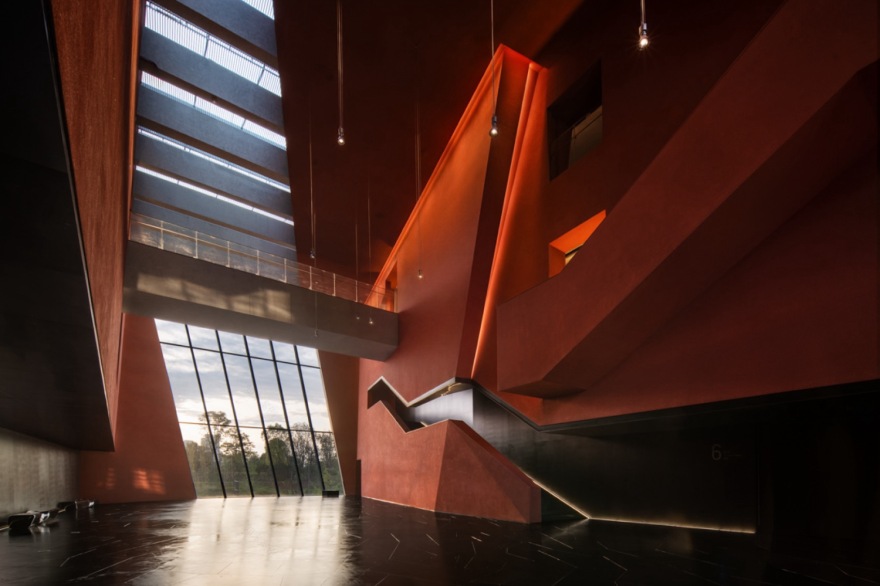
▼蜀道中庭,Shu Paths Atrium ©404NF STUDIO
“四川”的博物馆——地理生成的空间叙事
A Museum Belongs to Sichuan- Spatial Narratives Generated by Local Geography
四川作为中国历史文化的重要发源地之一,其独特的地理环境孕育了丰富的人文精神。四川的自然地理——蜀山、蜀水与蜀道——不仅塑造了四川的地貌特征,更深刻影响了四川的文化传承与历史发展。设计以“蜀山、蜀水、蜀道”为原型,构建了一个从自然到人文的空间叙事体系,通过蜀山的坚韧与肌理、蜀水的流动体验和蜀道的历史动线,打造了一座具有深刻文化隐喻的博物馆。
As one of the important birthplaces of Chinese culture, Sichuan province has nurtured a profound and diverse humanistic spirit by its unique geographical environment. The natural geography of Sichuan — the Shu mountains, rivers and ancient paths — has not only shaped its landforms, but also profoundly influenced the inheritance of local culture and the historical development. Taking the “Shu mountains, rivers and paths” as prototype, the museum constructs a spatial narrative system bridging nature and humanity. Drawing on the tenacity and texture of Shu Mountains, the fluid experience of Shu rivers, and the historical routes of Shu paths, it creates a museum that posses profound cultural metaphors.
▼四川名人馆,Sichuan Hall of Historic Figures ©404NF STUDIO
蜀山——整体形态与精神意象的生成原型
Shu Mountains – Origin Prototype of Overall Morphology and Spiritual Imagery
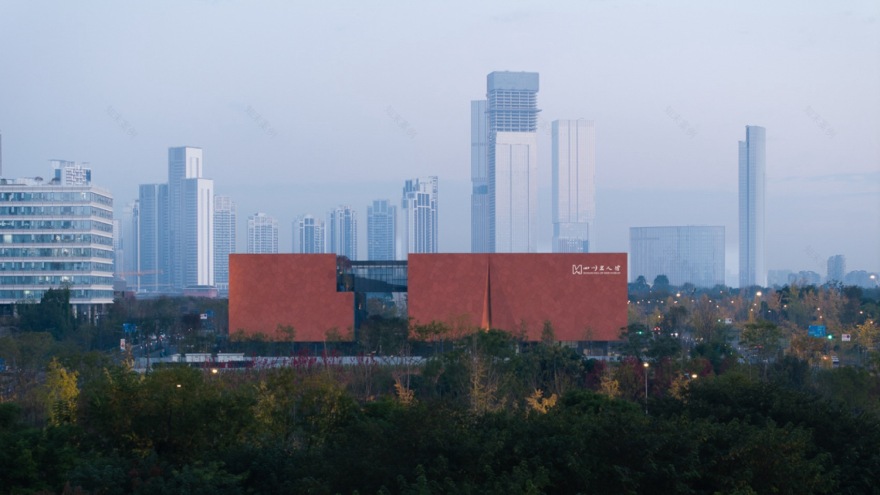
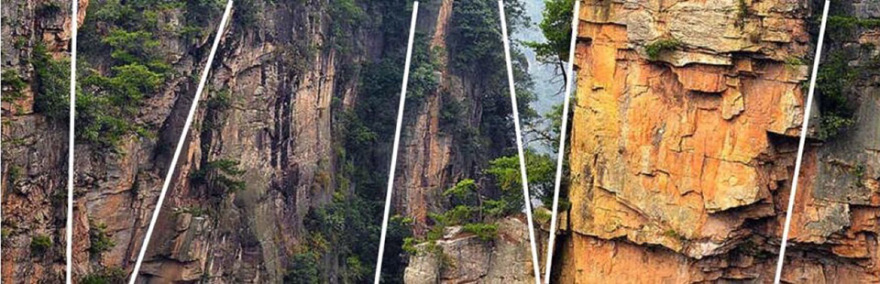
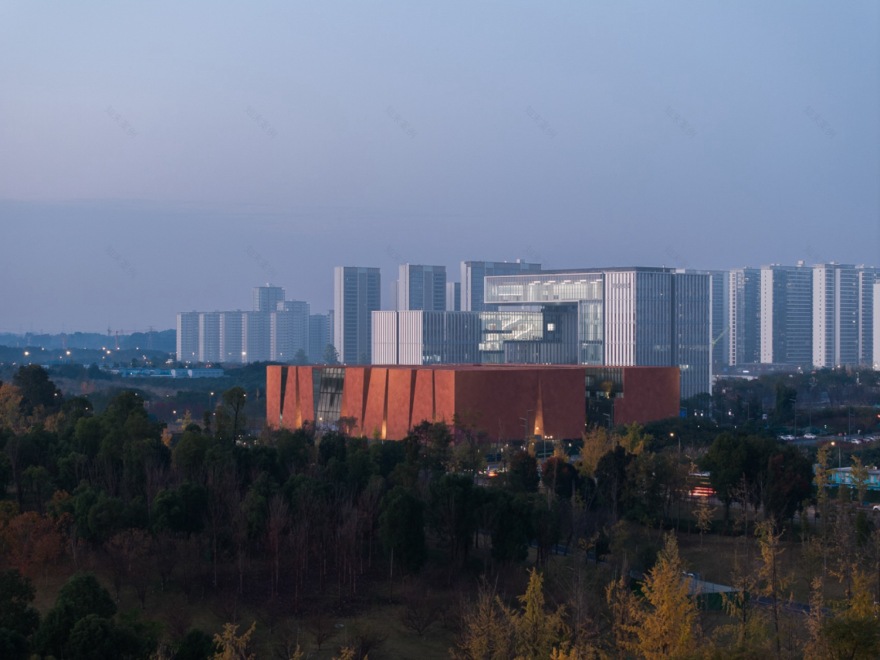
在建筑形体上,我们提取了蜀山坚韧的形态特征,通过切削建筑体量的方式形成抽象的山体轮廓,从而展现出一种稳定、内敛且富有雕塑感的整体形态。这种形态不仅体现了自然山体的力量感,也让建筑犹如一块从大地中自然生长出的基石,带有一种厚重与持久的特质。
In terms of architectural form, we extract the tenacious morphological features of Shu Mountains. By cutting and carving the building massing, an abstract mountain contour is shaped, presenting an overall form that is stable, restrained and highly sculptural. This form not only embodies the sense of power of natural mountains, but also enables the building to stand like a cornerstone growing naturally from the earth, endowing it with a sense of massiveness and permanence.
▼坚韧的蜀山,Resilient Shu Mountains ©CSWADI
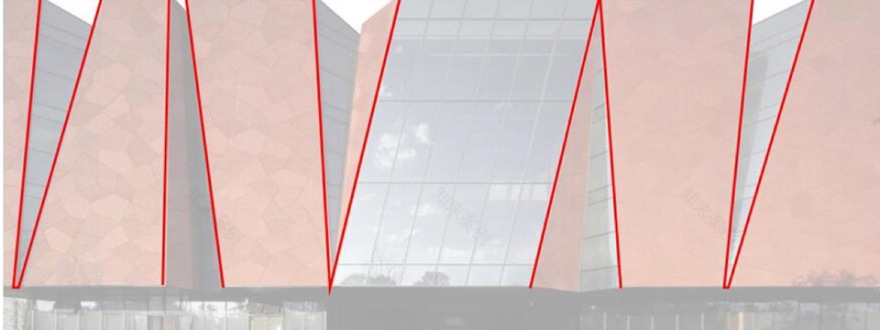
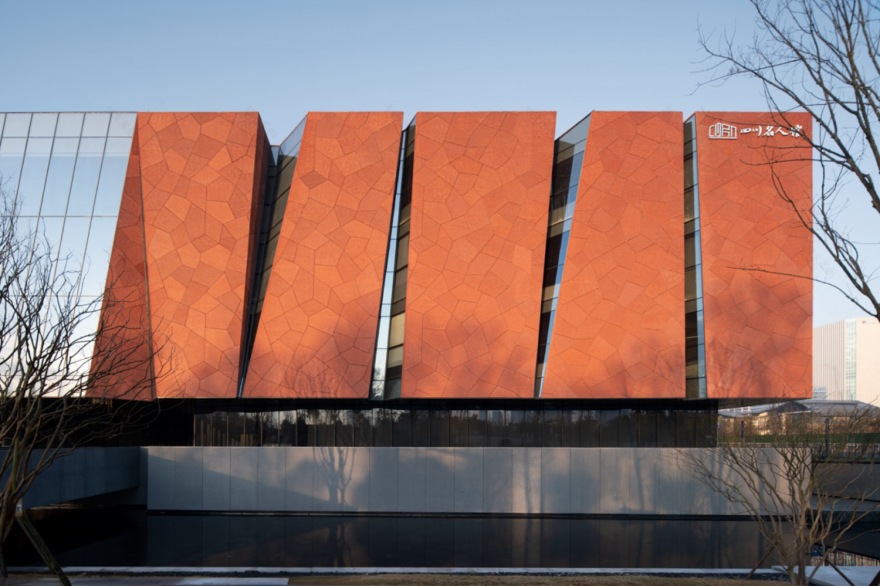
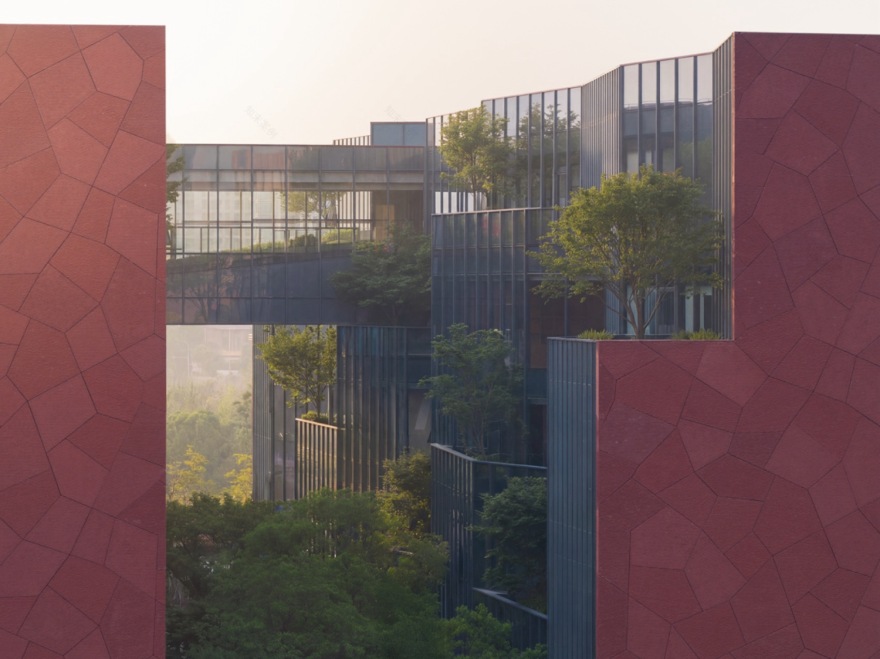
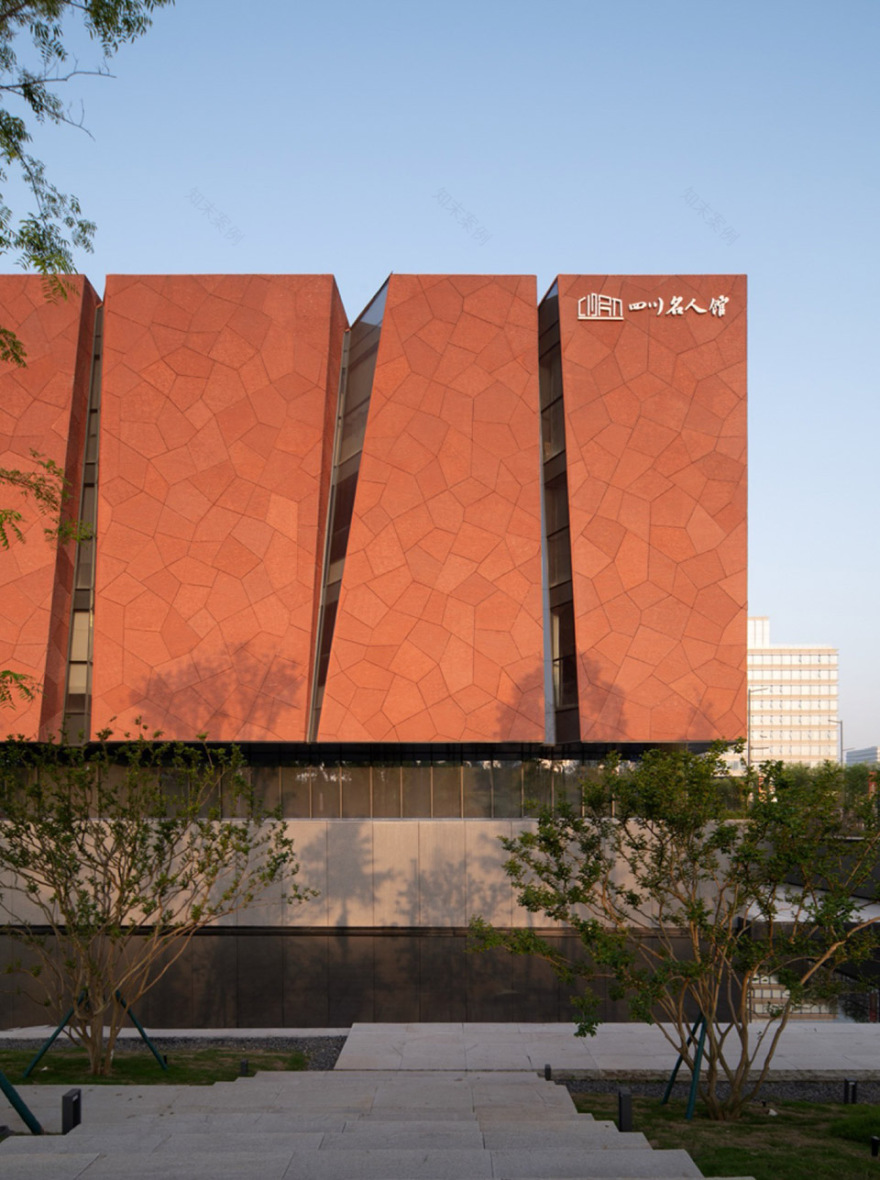
在立面材料的选择上,我们选用了四川红砂岩为骨料的装饰混凝土板,以体现建筑的地域性表达。红砂岩历经风雨,色泽温润、肌理沧桑,恰如其分地呼应了四川的历史积淀与文化底蕴。混凝土板的厚重质感与温润色泽赋予建筑质朴且有力的视觉冲击力,且采用不同的肌理角度,使光影在立面上呈现出层次变化,像崖壁般起伏与纹理,进一步强化建筑与自然的内在联系,传递蜀山的坚韧与永恒。
▼四川红砂岩与建筑,Sichuan Red Sandstone and Architecture ©CSWADI
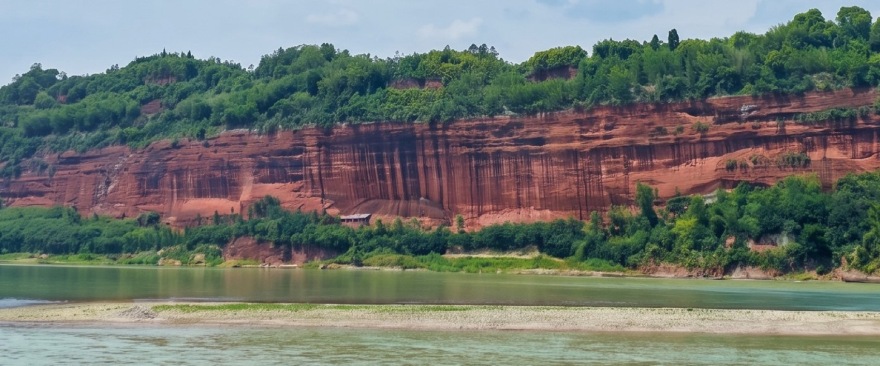
For material selection, decorative concrete panels with Sichuan red sandstone as aggregate are adopted to reflect the regional characteristics of the architecture. Tempered by wind and rain over time, red sandstone features a mild hue and weathered texture, which perfectly echoes the historical accumulation and cultural heritage of Sichuan. The solid texture and mellow tone of concrete panels deliver a simple yet powerful visual impact. Meanwhile, varied texture orientations create layered light and shadow changes on the facade, mimicking the undulations and textures of cliff faces. This further strengthens the intrinsic connection between the building and nature, and conveys the tenacity and eternity of Shu Mountains.
▼四川名人馆,Sichuan Hall of Historic Figures ©404NF STUDIO
蜀水——进入场地的抵达体验
Shu Rivers- Arrival Experience upon Entering the Site
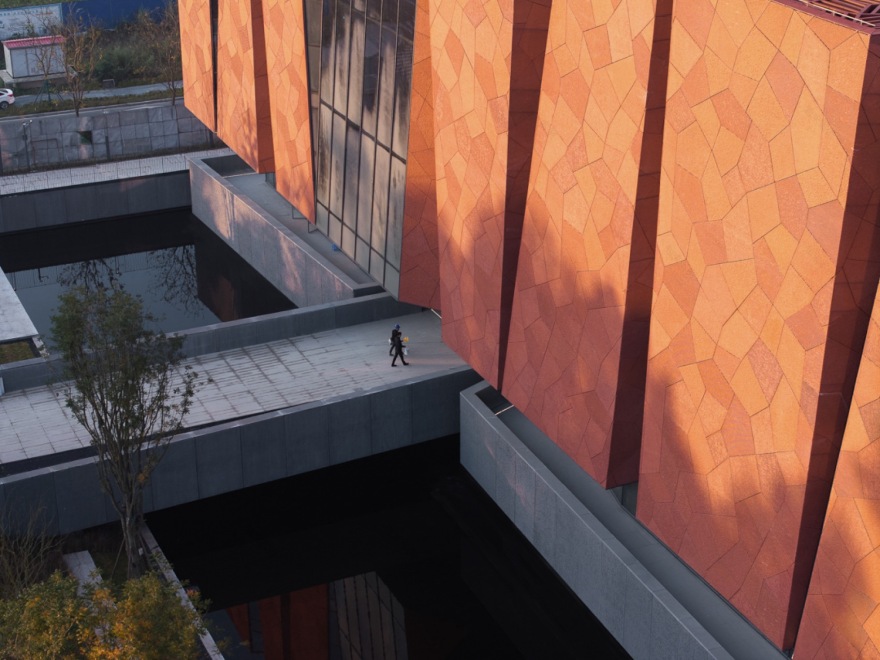
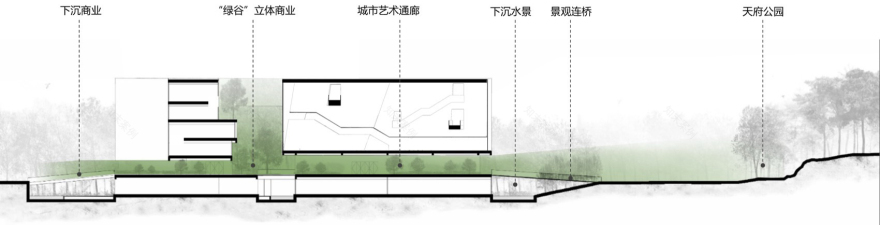
建筑的首层通过架空设计,将天府公园的绿意引入场地,创造了一个开放而流动的自然界面,呼应了蜀水的灵动。访客通过一座景观桥跨越水面进入建筑,水景与绿谷交织,带来了视觉与心灵的双重享受。随着视线逐步抬升,水面和绿植渐渐引领着观众向建筑体量过渡,完成了从城市日常到文化空间的心理过渡。这一设计通过蜀水的引导,让自然与建筑紧密相连,为游客提供了流动的、渐进的入场体验。
With an elevated open-floor design on the ground level, the building introduces the greenery of Tianfu Park into the site, creating an open and fluid natural interface that echoes the agility of Shu rivers. Visitors access the building by crossing the water via a landscape bridge, where waterscapes intertwine with green valleys to deliver dual enjoyment for both vision and mind. As the line of sight gradually rises, water surfaces and green landscapes gently guide visitors toward the building massing, completing the psychological transition from urban daily life to a cultural space. Guided by the imagery of Shu rivers, this design closely integrates nature and building, offering visitors a flowing and progressive arrival experience.
▼蜀水与桥,Shu Rivers and Bridges ©404NF STUDIO
蜀道——组织参观动线的空间叙事
Shu Paths- Organize Spatial Narrative of Visitor Circulation
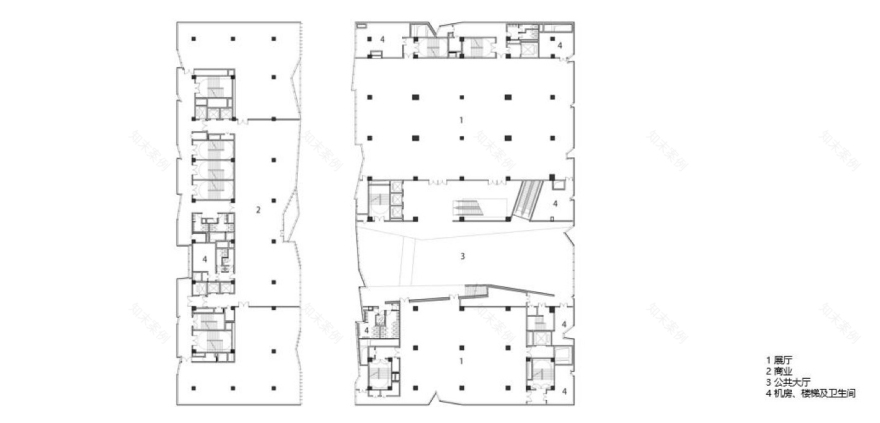
游客经由一层的游客中心和序厅来到博物馆二层的中庭。中庭空间不仅是各展厅的集散空间,也是展览的延伸区域,打破了空间的界限,为展览带来了流动感和开放性。展览空间布置在中庭南北两侧的2 - 4层。为了串联各展厅并增加参观体验感,设计以蜀道为原型组织整体参观动线。连续行进的展陈路径模拟古蜀人穿越山川、进出蜀地的历史体验,使观展过程成为一场具有文化隐喻的空间行旅。动线在空间的收放与转折中形成节奏变化,展陈内容与外部景观相互渗透,使观众在行进中不断获得新的视觉与空间感受。▼蜀道,Shu Paths ©CSWADI
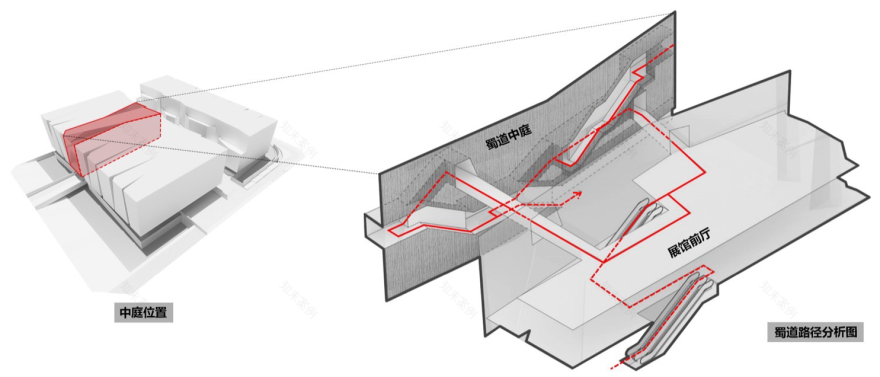
Visitors proceed from the ground-floor visitor center and preface hall to the atrium on the second level. Functioning as both the circulation core for each galleries and an extended exhibition area, the atrium dissolves rigid spatial boundaries and infuses the overall museum layout with fluidity and openness. Gallery spaces are layout on the north and south sides from second to fourth floors around the atrium. To articulate the sequence of exhibition spaces and enrich the immersive visiting experience, the overall circulation framework is curated with the ancient Shu Paths as its conceptual prototype. The uninterrupted gallery itinerary replicates the historical journey of ancient Shu ancestors traversing rugged mountains and water systems across the Shu territory, transforming the museum visit into a culturally metaphorical spatial pilgrimage. Rhythmic spatial variation is shaped through the contraction, expansion and directional shifts of the circulation. Mutual permeability between interior exhibition content and exterior landscape scenery enables visitors to perceive layered visual and spatial sensations throughout the entire touring sequence.
▼四川名人馆,Sichuan Hall of Historic Figures ©404NF STUDIO
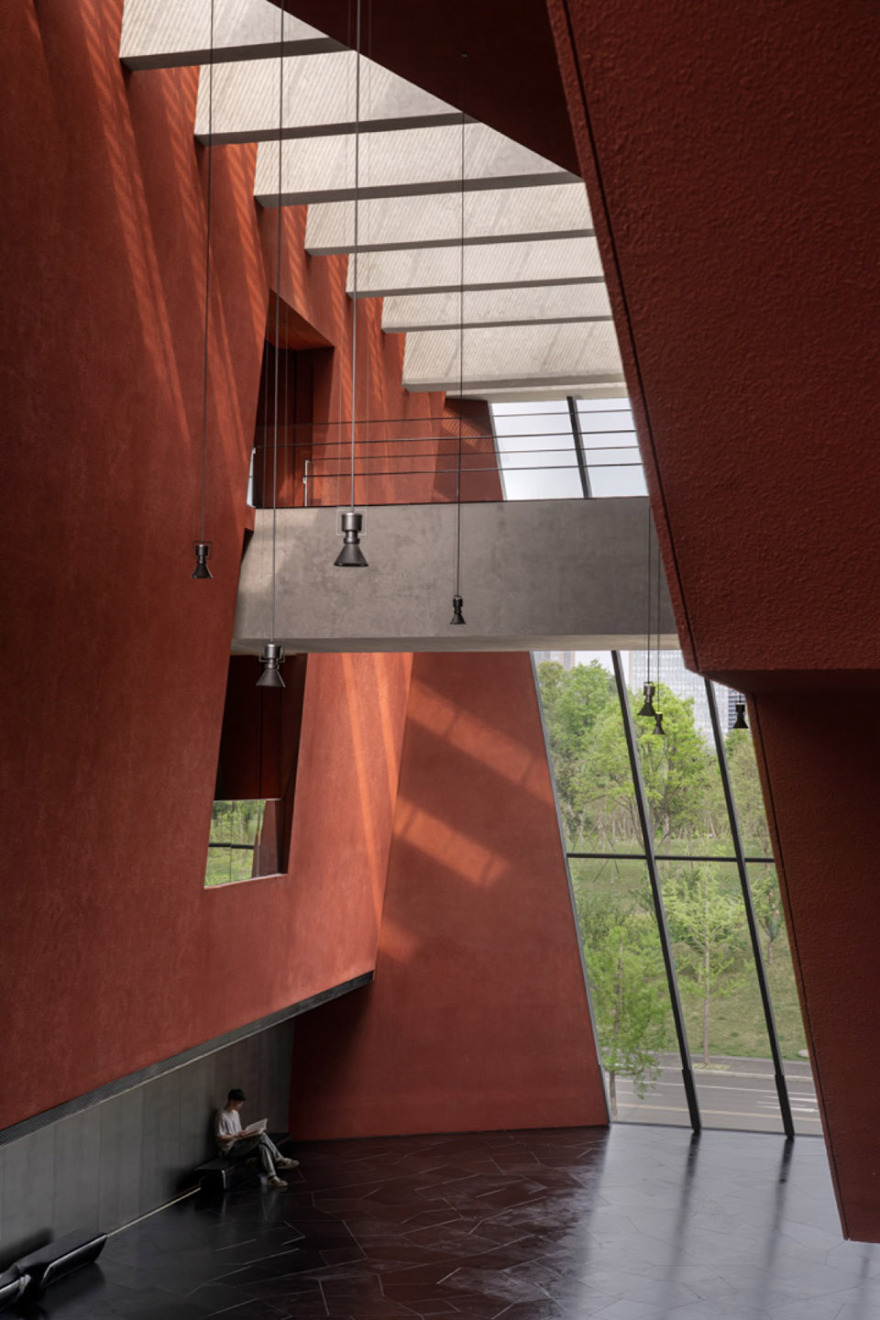
▼蜀道中庭,Shu Paths Atrium ©404NF STUDIO
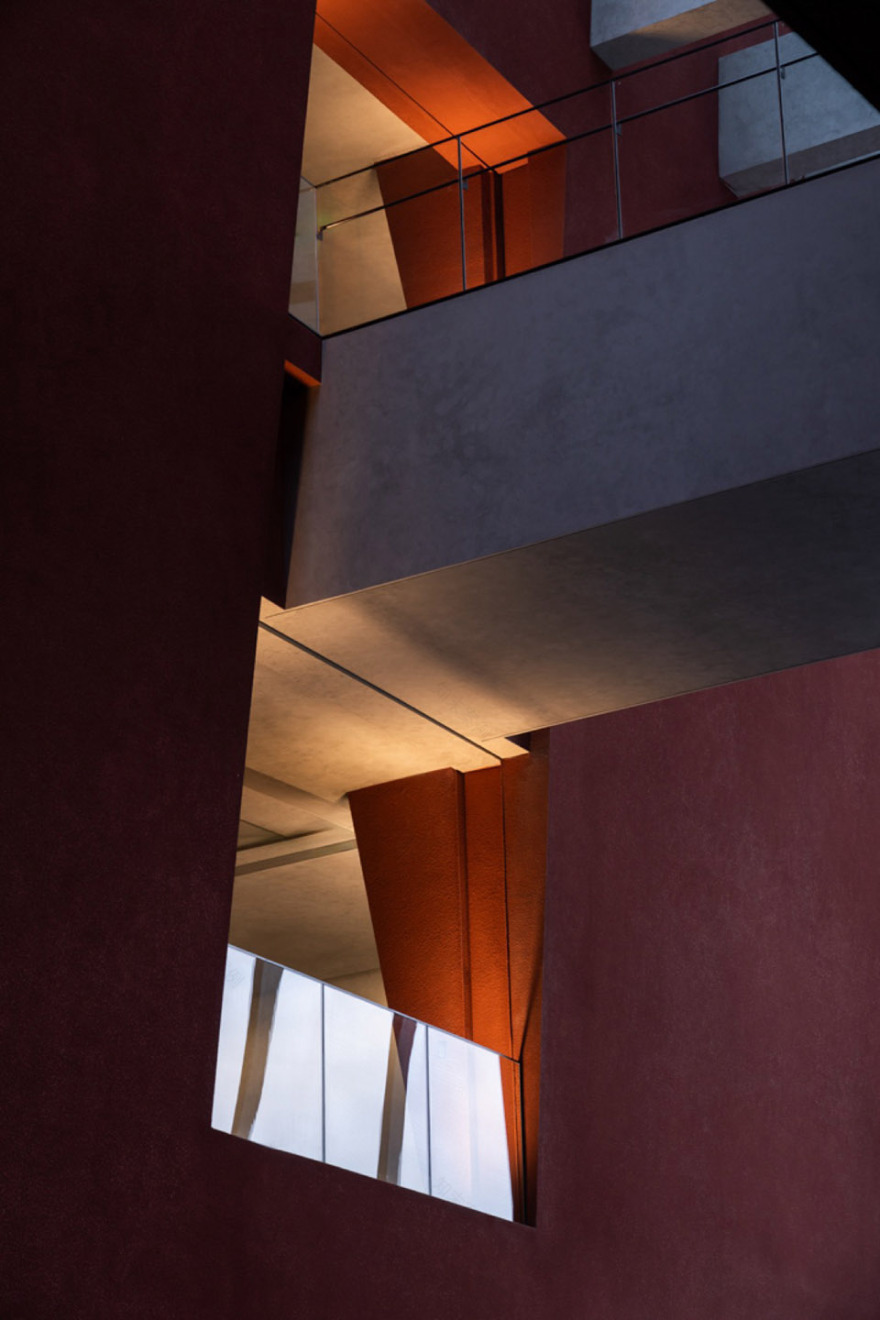
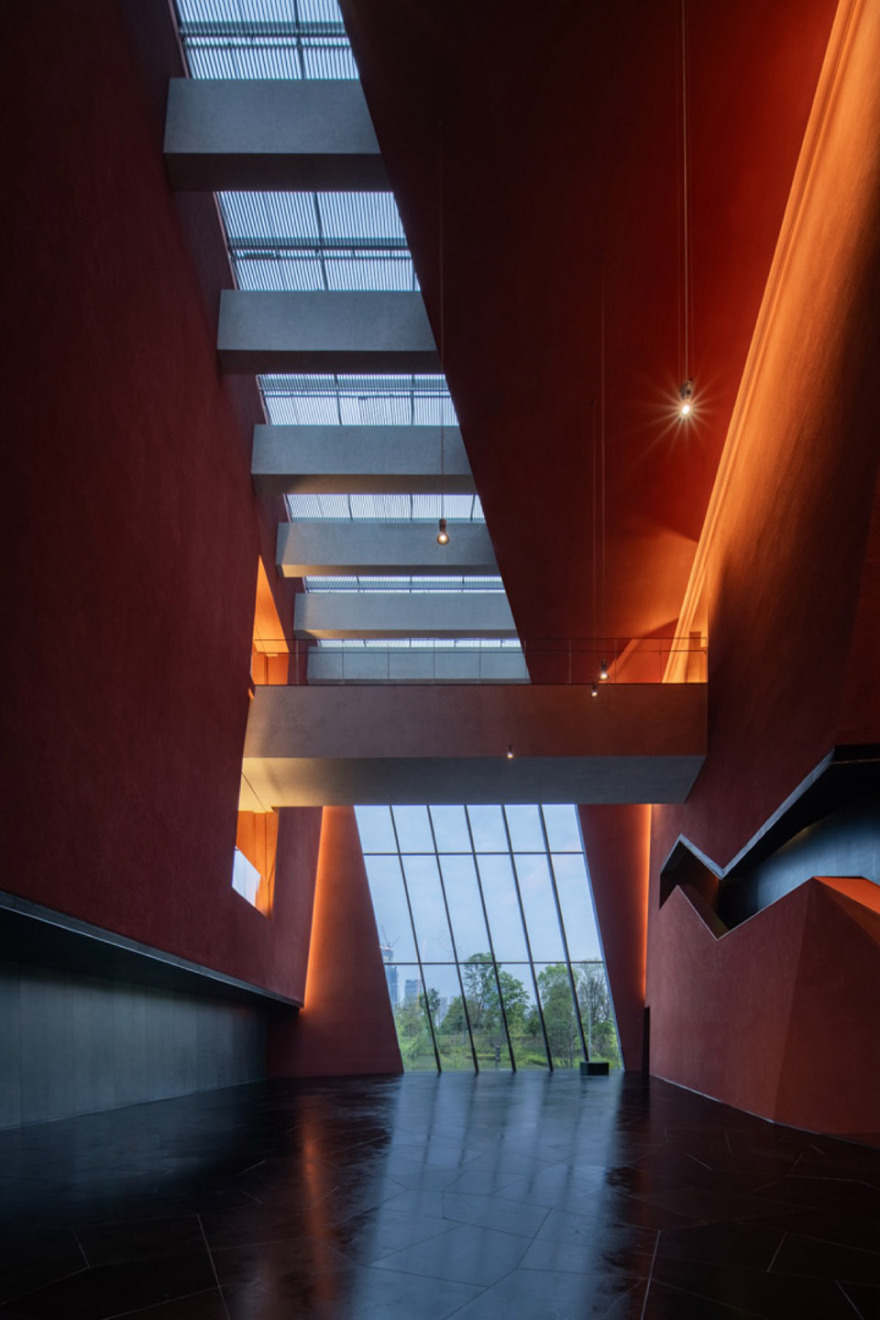
▼展陈布置,Exhibition Layout ©404NF STUDIO
“城市”的博物馆——激活公共文化界面
A Museum Belongs to the City- Activate the Public Cultural Interface
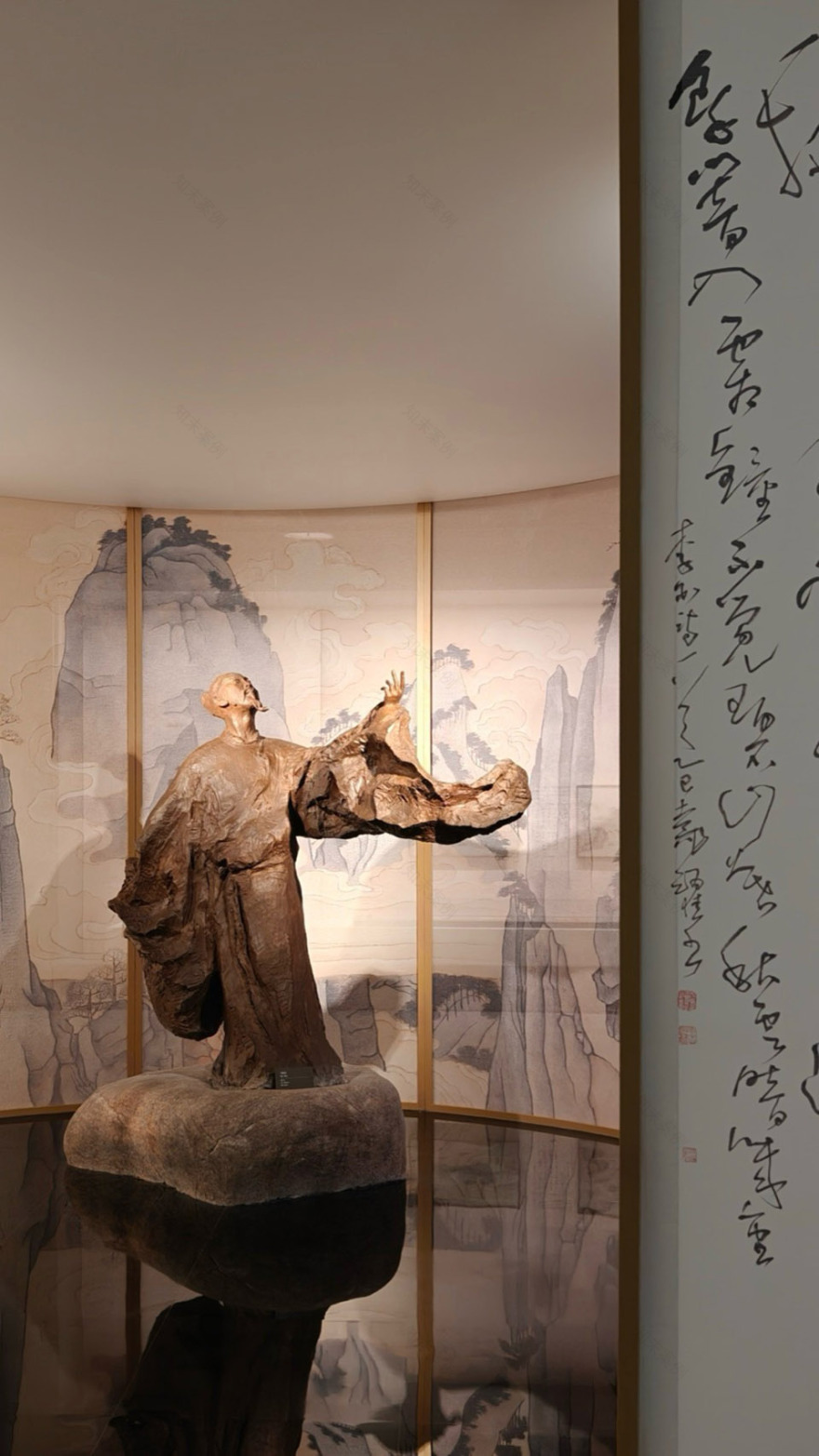
四川名人馆不止于一座文化展示空间,更被置于城市公共生活的语境中加以思考与回应。设计通过开放的空间策略,将城市公共界面自然引入场地内部,使公共活动得以在此延续与展开,建筑不再是孤立的文化容器,而成为城市空间的有机组成。与此同时,室内空间通过复合功能的组织,将展览、交流与公共活动相互叠合,在不同时间维度中激活使用场景,持续为场所注入活力。由此,名人馆既承载文化记忆,也以开放而生长的姿态,参与并丰富着当代城市生活。
The Sichuan Hall of Historic Figures is more than a cultural exhibition space; it is conceived and articulated within the context of urban public life. Through an open spatial strategy, the design seamlessly integrates the urban public realm into the site, allowing public activities to happen within the museum. As a result, the building is no longer an isolated cultural vessel, but an organic component of the urban fabric. Meanwhile, the interior space are organized with hybrid functions, integrating exhibition, communication and public activities. These layered programs activate diverse usage scenarios across different timeframes, continuously infusing the place with vitality. Thus, the museum not only preserves cultural memory but also participates in and enriches contemporary urban life with an open and evolving posture.
▼四川名人馆,Sichuan Hall of Historic Figures ©404NF STUDIO
绿谷——公园城市的空间延续
Green Valley — The Spatial Continuity of Park City
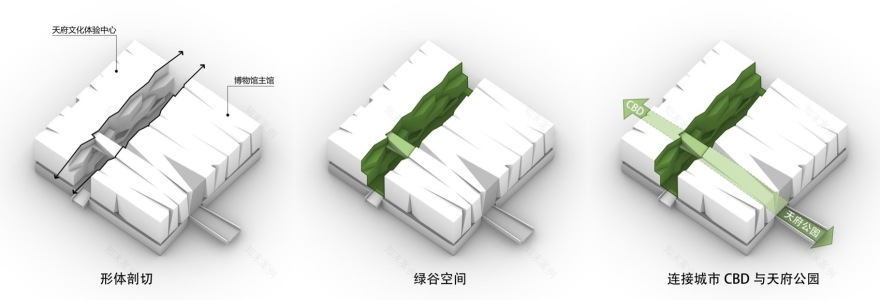
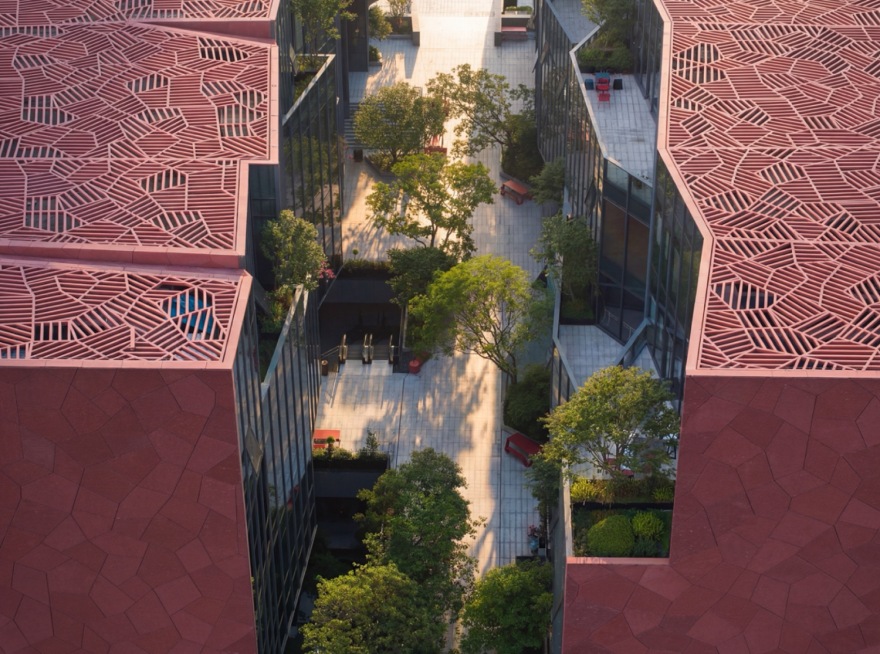
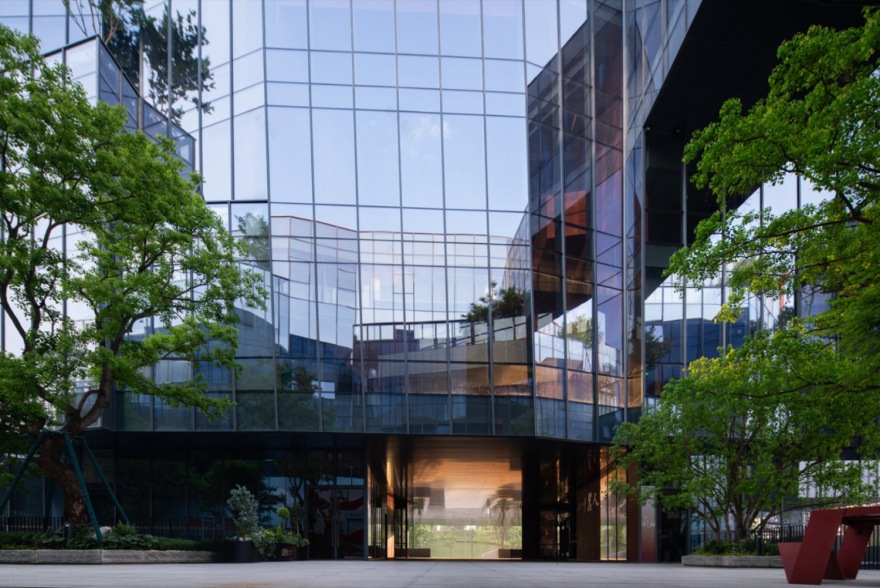
整体项目由名人博物馆主馆与侧馆天府文化体验中心组成,蜀山顺应功能剖开,形成绿谷。空间形态如同被剖开的玉石,晶体层叠、折面交织,在光影变化中呈现丰富而多变的空间表情。绿谷东侧连接朝向天府公园的大尺度架空,将绿意自然引入场地,西侧向城市CBD延展,构建连续开放的公共步行空间,营造如城市客厅般的共享场所,建筑以其开放的姿态完美融入城市公共空间体系。
The entire project consists of the main building of the Celebrity Museum and its auxiliary building – Tianfu Culture Experience Center. The Shu Mountain form is split according to functional needs, forming the Green Valley. Its spatial form is like a split jade, with stacked crystal-like layers and interwoven folded surfaces, presenting rich and varied spatial expressions amid changes in light and shadow. On the east side, the Green Valley connects to a large-scale elevated space facing Tianfu Park, naturally introducing greenery into the site. On the west side, it extends to the urban CBD, constructing a continuous and open public pedestrian space and creating a shared venue like an urban living room. With its open posture, the building is integrated into the urban public space system.
▼绿谷,Green Valley ©CSWADI
▼绿谷,Green Valley ©404NF STUDIO
与此同时,下沉庭院不仅将自然光与景观引入负一层公共空间,还与城市地下环道系统无缝衔接,进一步拓展了城市步行网络,形成了一个多层次、立体化的开放公共活动体系。
At the same time, the sunken courtyard not only introduces natural light and landscapes into the public space on the basement floor but also connects seamlessly with the urban underground ring road system, further expanding the urban pedestrian network and forming a multi-level, three-dimensional open public activity system.
▼绿谷,Green Valley ©CSWADI
▼绿谷,Green Valley ©404NF STUDIO
复合功能激发城市活力
Composite Functions Stimulate Urban Vitality
建筑通过复合功能植入,强化公共文化空间的持续使用。馆内引入散花楼、青少年宫、书店、咖啡、文创及临展空间等多元业态,使场馆在非展览时段仍保持开放活力,形成全天候运行的文化界面。中庭与架空空间提供灵活多变的公共活动场所,可承载讲座、展演、市集等多类型文化活动,使文化内容从展厅内部自然外溢至城市公共生活。
Through the implantation of composite functions, the building strengthens the continuous use of public cultural spaces. A variety of formats such as Sanhua Tower, Children’s Palace, bookstore, coffee shop, cultural and creative spaces and temporary exhibition spaces are introduced into the museum, enabling the venue to remain open and vibrant even during non-exhibition periods and forming an all-day cultural interface. The atrium and elevated space provide flexible and variable public activity venues that can host various types of cultural activities such as lectures, performances and markets, allowing cultural content to naturally overflow from the inside of the exhibition hall to urban public life.
▼四川名人馆,Sichuan Hall of Historic Figures ©404NF STUDIO
▼四川名人馆,Sichuan Hall of Historic Figures ©404NF STUDIO
“高品质”的博物馆——建筑完成度与技术品质全面提升
A “high-quality” museum — Comprehensive Improvement of Building’s Completion and Technical Quality.
高完成度的建筑品质:细节严谨、立面精致可控
High-Completion Architectural Quality: Rigorous Details and Exquisite, Controllable Facades.
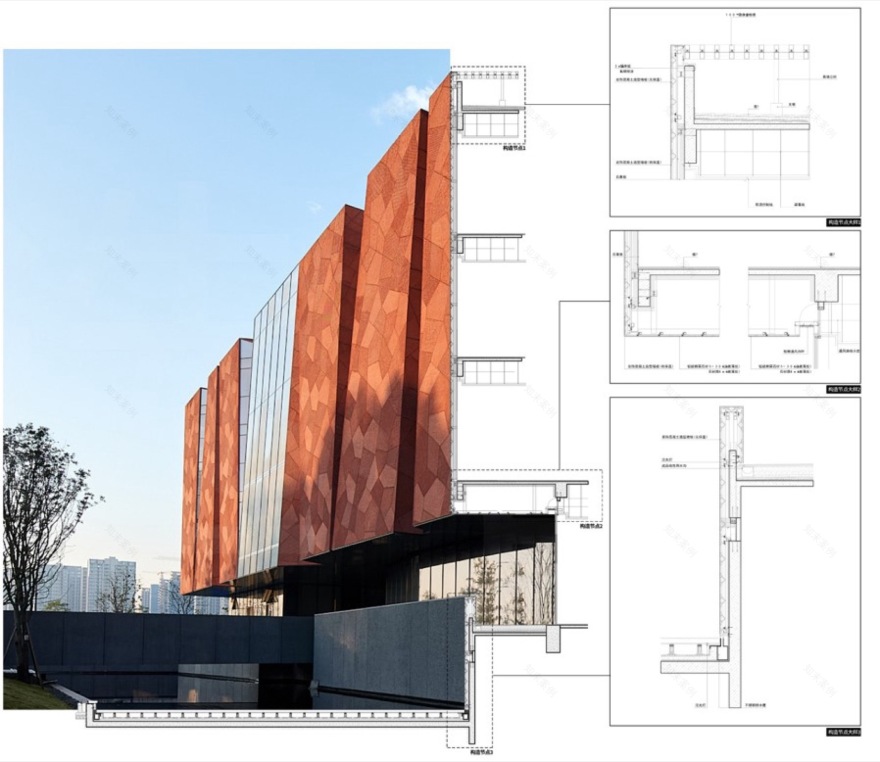
项目在建筑细节收口、材料节点与立面逻辑上追求高完成度。立面设计采用参数化技术,首先由35块异形GRC板组合形成基本单元,然后基本单元进行重复拼接,保证板面标准化率。同时35块GRC板采用±10°的三种拉槽角度,随着光影变化或视角变化产生肌理的变化,建筑的抽象蜀山质感得以高质量呈现。通过精细的节点深化、严格的材料转折处理,以及多轮施工模拟,最终实现建筑外观的纯净度、整体性与标志性形象的高度一致。
▼立面肌理,Facade Texture ©CSWADI
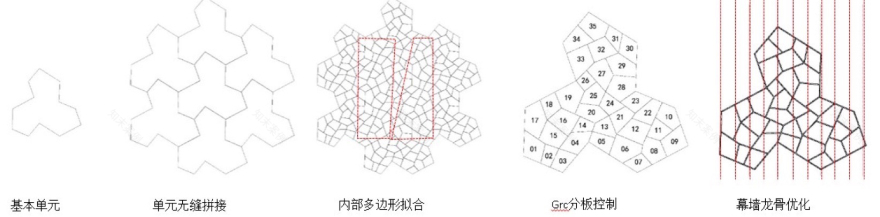
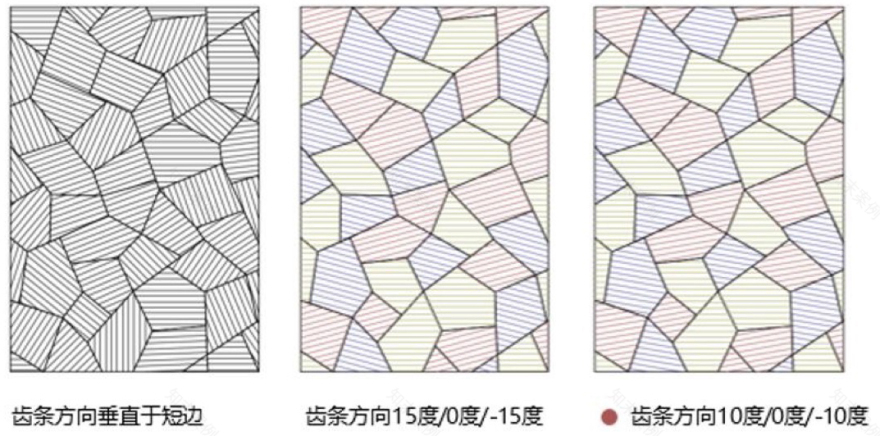
The project pursues high completion in terms of architectural detail joints, material nodes and facade logic. Parametric design is adopted in the facade design: first, 35 special-shaped GRC panels are combined to form the basic unit, which is then repeatedly spliced to ensure the standardization rate of the panels. At the same time, the 35 GRC panels adopt three grooving angles of ±10°, generating changes in texture with changes in light and shadow or viewing angles, so that the abstract Shu mountain texture of the building is presented with high quality. Through refined node detail design, strict material transition processing and multiple rounds of construction simulation, the high consistency of the purity, integrity and iconic image of the building’s appearance is finally achieved.
▼四川名人馆,Sichuan Hall of Historic Figures ©404NF STUDIO
▼建筑细节,Architectural Details ©404NF STUDIO

限高条件下的净空优化:结构策略与BIM协同提升空间价值
Clearance Optimization under Height Restriction: Structural Strategies and BIM Collaboration to Enhance Spatial Value
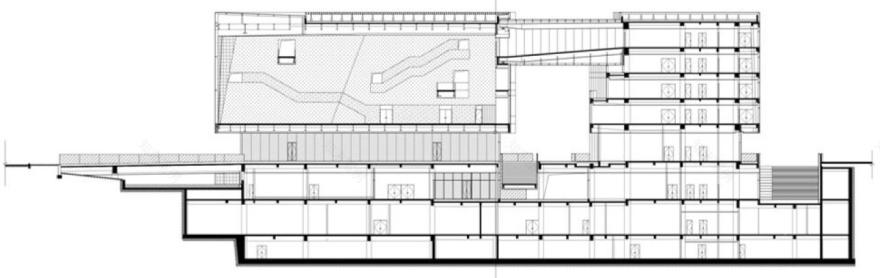
在24米严格的城市限高要求下,展厅部分建筑层高仅5.4米,通过采用结构桁架吊挂等技术手段,最大化室内空间的净空高度达4.2米,使展览空间更具开放性与展示能力。BIM技术贯穿全周期,对结构、机电、设备管线进行综合排布与冲突校核,确保净高可控、空间高效、运行可靠。多系统协同优化在有限高度中创造最佳展示尺度,体现高难度条件下的建筑品质控制能力。
Under the strict urban height restriction of 24 meters, the floor height of the exhibition hall is only 5.4 meters. By adopting technical means such as structural truss suspension, the net height of the indoor space is maximized to 4.2 meters, making the exhibition space more open and capable of display. BIM technology runs through the whole cycle, conducting comprehensive layout and conflict check on structures, electromechanical systems and equipment pipelines to ensure controllable net height, efficient space and reliable operation. The collaborative optimization of multiple systems creates the best display scale in the limited height, reflecting the building quality control ability under high-difficulty conditions.
▼构造细节,Construction Details ©CSWADI
结语:地理不变,人物流转
Conclusion: The Geography Remains Unchanged, While People Flow
四川名人馆以地理作为最稳定的文化基底,将历史人物与时代发展纳入空间叙事之中。建筑不仅承担展示功能,更通过空间体验重构人与土地之间的文化关系,使博物馆成为连接地域记忆、自然环境与当代城市生活的重要文化节点。
Sichuan Hall of Historic Figures takes geography as the most stable cultural foundation, integrating historical figures and the development of the times into the spatial narrative. The building not only undertakes the exhibition function but also reconstructs the cultural relationship between people and the land through spatial experience, making the museum an important cultural node connecting regional memory, natural environment and contemporary urban life.
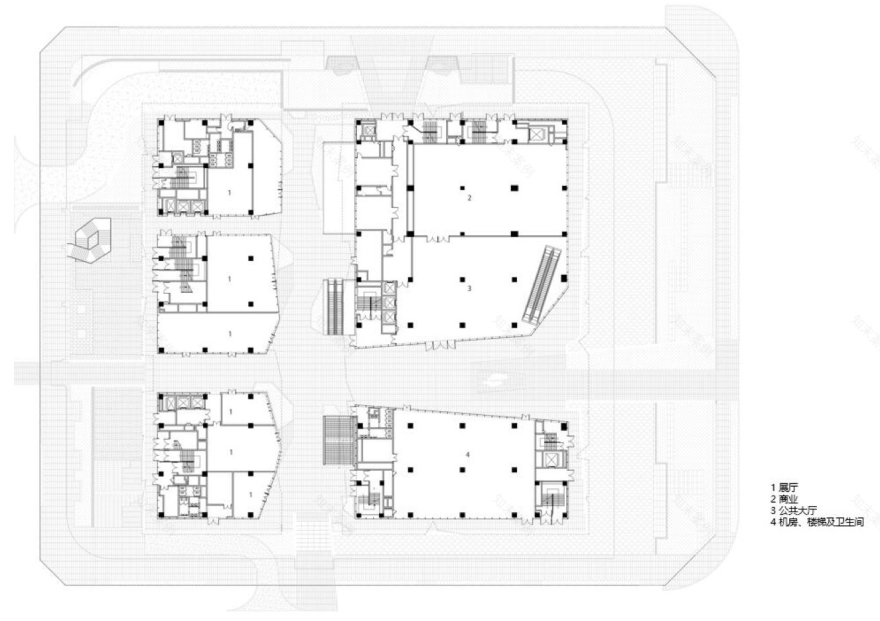
▼一层平面图,First Floor Plan ©CSWADI
▼二层平面图,Second Floor Plan ©CSWADI
▼剖面图-1,Section 1 ©CSWADI
项目完整信息
项目名称:四川名人馆
项目类型:博物馆
项目地点:四川成都
项目业主:四川文投名者名文化传播有限公司
建成状态:建成
设计时间:2022年2月-2023年5月
建成时间:2025年8月
用地面积:12867.97平方米
建筑面积:51816.95平方米
设计单位:中国建筑西南设计研究院有限公司
设计团队:中国建筑西南设计研究院有限公司郑勇工作室、设计十一院
设计总负责人:郑勇、刘运娜、龙静
完整名单:
建筑专业:罗力铭、秦艳玲、陈志强、肖迪佳、畅亚健、古今元、龙丹、代雨彤
结构专业:伍庶、邓开国、殷杰、戚雯、尉建伟、向司、王湖
给排水专业:孙钢、李晖、安斐、徐子岚、杨薄霄、肖月、张建国
暖通专业:方宇、陈岚、陈云东、陈怡宇、张杰、杨勇、范登鑫
建筑电气专业:徐建兵、叶凌、罗培、李瑞俊、黎力、许文文、陈康
建筑智能化专业:吴寰、补翔宇、李江涛
幕墙专业:殷兵利、莫红梅、文靖
景观专业:王平清、周泰林、陈强
建筑技术专业:陈俊
泛光专业:叶东航、胡钰微
室内设计:四川创视达建筑装饰设计有限公司
景观设计:四川景度环境设计有限公司
室内艺术灯光设计:北京光湖普瑞照明设计有限公司
摄影师:404NF STUDIO
Project Details
Project Name: Sichuan Hall of Historic Figures
Category: Museum
Project Location: Chengdu, Sichuan
Project Owner: Sichuan Cultural Industry Investment Group Mingzheming Culture Co., Ltd.
Completion Status: Completed
Design Period: February 2022 – May 2023
Completion Date: August 2025
Land Area: 12867.97 square meters
Building Area: 51816.95 square meters
Architects: China Southwest Architecture Design & Research Institute CORP., LTD.
Design Team: ZAD & 11th Design Institute, CSWADI
Lead Architects: Zheng Yong, Liu Yunna, Long Jing
Full List of Participants:
Architecture: Luo Liming, Qin Yanling, Chen Zhiqiang, Xiao Dijia, Chang Yajian, Gu Jinyuan, Long Dan, Dai Yutong
Structure: Wu Shu, Deng Kaiguo, Yin Jie, Qi Wen, Wei Jianwei, Xiang Si, Wang Hu
Plumbing: Sun Gang, Li Hui, An Fei, Xu Zilan, Yang Boxiao, Xiao Yue, Zhang Jianguo
HVAC: Fang Yu, Chen Lan, Chen Yundong, Chen Yiyu, Zhang Jie, Yang Yong, Feng Dengxin
Electrical: Xu Jianbing, Ye Ling, Luo Pei, Li Ruijun, Li Li, Xu Wenwen, Chen Kang
Building Intelligence: Wu Huan, Bu Xiangyu, Li Jiangtao
Facade: Yin Bingli, Mo Hongmei, Wen Jing
Landscape: Wang Pingqing, Zhou Tailin, Chen Qiang
Architectural Technology: Chen Jun
Lighting: Ye Donghang, Hu Yuwei
Interior Design: CSD·DESIGN
Landscape Design: DU SCAPE DESIGN
Interior Artistic Lighting Design: Puri Lighting Design
Photographer: 404NF STUDIO
南京喵熊网络科技有限公司 苏ICP备18050492号-4知末 © 2018—2020 . All photos and trademark graphics are copyrighted by their owners.增值电信业务经营许可证(ICP)苏B2-20201444 苏公网安备 32011302321234号
苏公网安备 32011302321234号客服
消息
收藏
下载
最近