

创作上传
VIP
收藏下载
登录 | 注册有礼
查看完整案例

收藏

下载

分享
继2016年科特迪瓦新瑞士大使馆落成之后,LOCALARCHITECTURE继续在阿比让为瑞士联邦建筑与物流办公室(OFCL)开展项目设计,即副馆长官邸。本项目同时回应两种功能角色:既作为家庭住宅,也作为服务于瑞士代表团外交事务的接待空间。空间组织体现了这一双重属性。公共与私密功能围绕一处中央庭院展开,该庭院不仅将自然光引入住宅核心,同时有助于实现被动降温。独立的入口分别服务于家庭日常使用与接待流线。这两条动线在主起居空间交汇,并通向一处环绕建筑的遮蔽式廊道,该廊道进一步延伸至种植有多种本地植物的郁郁花园。
Following the completion of the new Swiss Embassy in Ivory Coast in 2016, LOCALARCHITECTURE continues its work in Abidjan for the Federal Office for Buildings and Logistics (OFCL) with the Deputy Chief of Mission’s residence. The project responds to a dual role as it is conceived both as family house and a reception area to serve the diplomatic objectives of the Swiss delegation. The spatial organization reflects this duality. Public and private functions are arranged around central a patio that introduces daylight into the core of the house while contributing to passive cooling. Separate entrances distinguish the family’s daily use from the reception sequence. These two circulations intersect in the main living room, which opens onto a shaded veranda that wraps around the house and extends toward a lush garden planted with a variety of local species.
▼建筑外观与花园,Exterior view and garden © Matthieu Gafsou


阿比让及其现代主义语境
Abidjan and its modernist context
阿比让的城市景观深受20世纪60年代科特迪瓦独立后兴起的现代主义建筑影响。遍布城市的纪念性建筑体现出一种常被称为“非洲现代主义”的建筑运动。这些建筑以清水混凝土与预制混凝土的表现性运用为特征,为瑞士大使馆在科科迪区的扩建提供了重要参照。在2010年社会动荡之后,这种对本土建筑传统的借鉴也具有现实意义:混凝土在当地广泛可得,从而避免了昂贵的欧洲材料进口。在这座新官邸中,LOCALARCHITECTURE根据不断变化的本地语境调整了材料策略。混凝土构成结构体系及标志性的折面屋顶,而夯土则用于室内外墙体。
Abidjan’s urban landscape bears the strong imprint of the modernist architecture that emerged following Ivory Coast’s independence in 1960. Monumental buildings throughout the city exemplify the architectural movement often referred to as “African modernism”. Characterized by the expressive use of raw and precast concrete, these structures provided an important reference for the extension of the Swiss Embassy in the Cocody district. Referencing this architectural heritage was also a pragmatic choice in the years following the unrest of 2010. Concrete was widely available locally, allowing the project to avoid costly imports of European materials. For the new residence, LOCALARCHITECTURE adapted its material strategy to the evolving local context. Concrete forms the structural frame and the distinctive pleated roof, while raw earth is used for both the exterior and interior walls of the house.
▼建筑外观,Exterior view© Matthieu Gafsou


夯土作为生物气候策略及知识与工艺的交流
Earth as a bioclimatic strategy and knowledge and craft exchange
项目所用土壤取自距离阿比让不远的博努阿采石场。这种富含铁质的土壤被称为红土(laterite),以其深沉的锈红色著称。该材料传统上用于夯土或切块建造,本项目则通过开发专用于该别墅的压缩土砖(CEB)进行应用。借助一台进口手动液压压砖机,当地工匠生产了两种尺寸的裸露砖块,用于双层外墙与室内隔墙。为增强砖块稳定性,在配比中加入少量水泥,同时保留材料的天然特性。土墙的热惰性有助于实现被动气候调节。通过缓冲外界湿度与温度变化,该构造显著降低了空调需求,同时维持室内的舒适环境。在阿比让炎热潮湿的气候条件下,这一问题是项目的核心挑战之一。压缩土砖与双层墙体的应用,提高了隔热与防潮性能,减少了对机械制冷的依赖。砖体通过凹缝与留缝的方式砌筑,形成一系列几何图案与类似格栅(claustra)的构件,丰富了立面与开口的表现。这些肌理在过滤光线与通风的同时,也增强了空间的表现力。除建筑层面的作用外,压缩土砖的使用还为当地建筑市场引入了一种新的材料产品。土材料通常被视为与乡村建造相关的朴素材料,而在本项目中,它被置于当代建筑语境下重新诠释。参与项目的工匠在完成培训后,已能够独立继续生产这种砖块,从而延续了建造过程中形成的知识传递。
▼施工现场,Construction site © Matthieu Gafsou

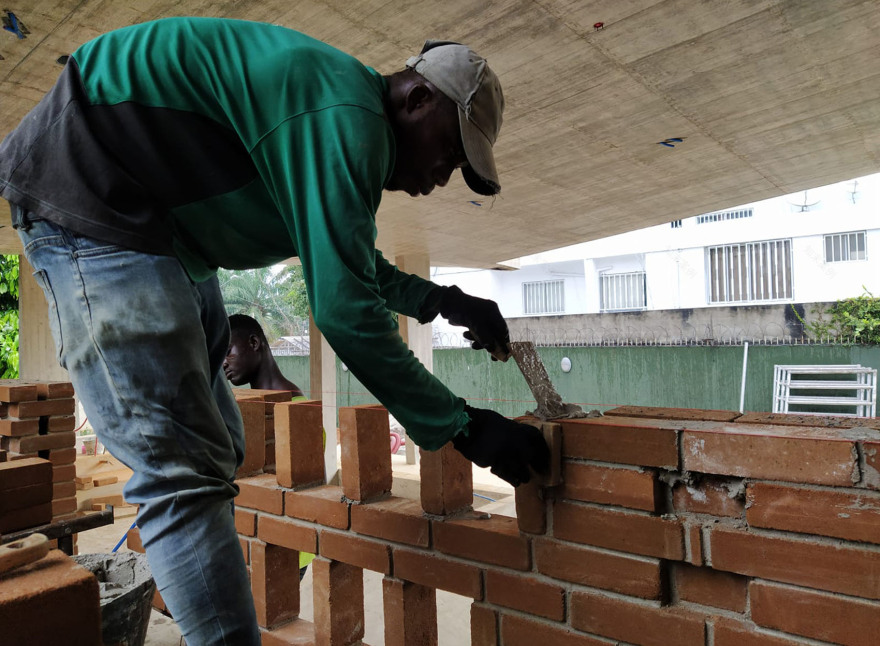
The earth used for the project is sourced from the Bonoua quarry, located not far from Abidjan. Known as laterite, this iron-rich soil is distinguished by its deep rust color. Traditionally used in rammed earth or cut block construction, the material was utilized through the development of compressed earth bricks (CEB) specifically designed for the villa. Using an imported manual hydraulic press, a local craftsman produced two sizes of exposed bricks required for the villa’s double exterior walls and interior partitions. A small percentage of cement was added to stabilize the bricks while preserving the material’s natural qualities. The thermal mass of the earth walls contributes to passive climate regulation. By buffering external humidity and temperature variations, the construction significantly reduces the need for air conditioning while maintaining a comfortable indoor environment. In the warm and humid climate of Abidjan, it was one of the project’s central challenges. The use of compressed earth and doubled walls improves insulation against heat and humidity, limiting reliance on mechanical cooling. The brickwork is arranged with recessed and spaced joints, generating a series of geometric patterns and claustra-like screens that animate the facades and openings. These textures filter light and ventilation while enriching the spatial character of the house. Beyond its architectural role, the use of compressed earth bricks introduced a new material product to the local construction market. Often perceived as a modest material associated with rural construction, earth has here been reinterpreted within a contemporary architectural framework. The craftsman trained for the project has since continued producing the bricks independently, extending the knowledge transfer initiated during construction.
▼建筑外观近景,Exterior close view© Matthieu Gafsou

▼入口与廊下空间,Entrance and veranda © Matthieu Gafsou

▼室内空间,Interior space© Matthieu Gafsou

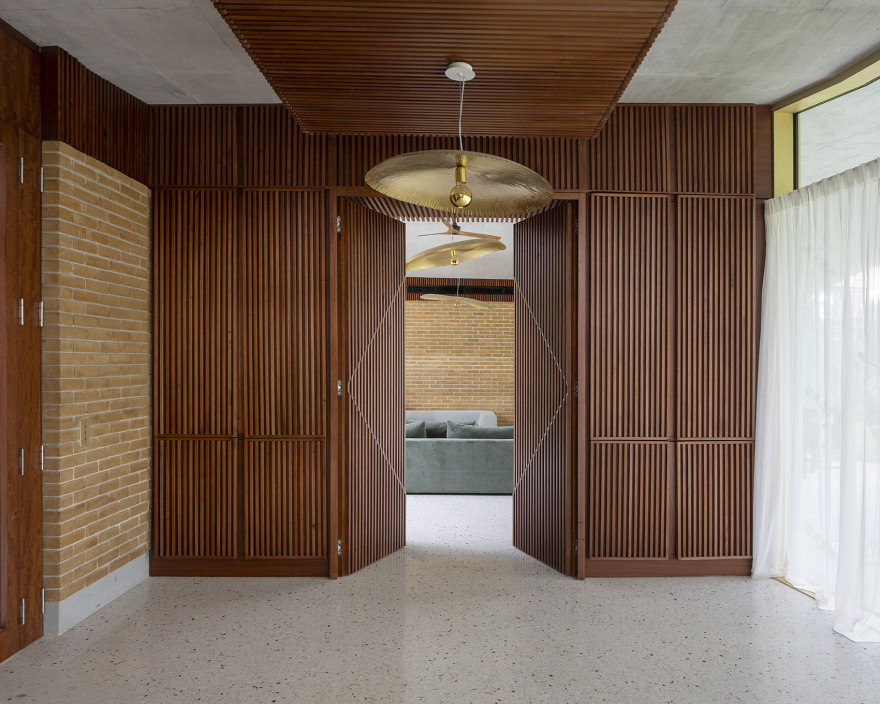
▼走廊空间,Corridor © Matthieu Gafsou

折叠屋顶与雨水口
Folded Roof and Gargoyles
屋顶是建筑最具标志性的构件之一。它既非平屋顶,也非传统坡屋顶,而是采用折面几何形式,以应对雨季强降雨。该折面屋顶将雨水引导至两处雕塑化的混凝土雨水口,其形态为鳄鱼头,将雨水排离建筑。不同朝向的折面同时优化了日照条件,有助于实现建筑的能源自给。场地原有植被丰富,在施工过程中被细致保留。因此,景观策略主要通过补充本地植物种类来完善既有环境。
The roof constitutes one of the building’s defining architectural elements. Neither flat nor conventionally sloped, it adopts a folded geometry that responds to the intensity of rainfall during the rainy season. This folded surface directs water toward two sculptural concrete gargoyles shaped like crocodile heads, which discharge rainwater away from the building. The varying orientations of the folded roof also optimize solar exposure, contributing to the building’s energy autonomy. The site was already home to abundant vegetation, which was carefully preserved during construction. The landscape strategy therefore focused on complementing the existing environment with a selection of native plant species.
▼建筑外观夜景,Exterior view at night © Matthieu Gafsou


景观与文化交流
Landscape and Cultural Exchange
通过这座官邸,LOCALARCHITECTURE回应了外交建筑中固有的微妙平衡:既需体现瑞士的价值观,同时又需融入与其原生环境截然不同的气候、文化与建造语境。设计并未强加既定的建筑身份,而是建立在交流之上——通过观察、学习并与本地知识与资源协作,形成建筑。最终的空间在适应与对话中生成。柔和坡度与斜向边界的几何构成、由细柱点缀的廊道体系,以及清水混凝土、锈红色土砖与木质檐口之间的材料对话,共同构建出一种克制而精致的建筑语言。项目由此成为一种文化交流的体现,在材料、气候与工艺的交汇中形成新的共享身份。
With this residence, LOCALARCHITECTURE addresses the delicate balance inherent in diplomatic architecture. Such projects must represent Swiss values while integrating into a climatic, cultural, and constructive context very different from their origin. Rather than imposing a predefined architectural identity, the approach is based on exchange – observing, learning from, and working with local knowledge and resources. The resulting architecture emerges through adaptation and dialogue. The geometry of gentle slopes and diagonal edges, the composition of the veranda punctuated by slender “dancing” columns, and the interplay between raw concrete, rust-colored earth bricks and wooden friezes together establish a subtle architectural language. The project thus becomes an expression of cultural exchange, where materials, climate, and craftsmanship converge to form a new shared identity.
▼夜晚建筑外观近景,Exterior close view at night© Matthieu Gafsou


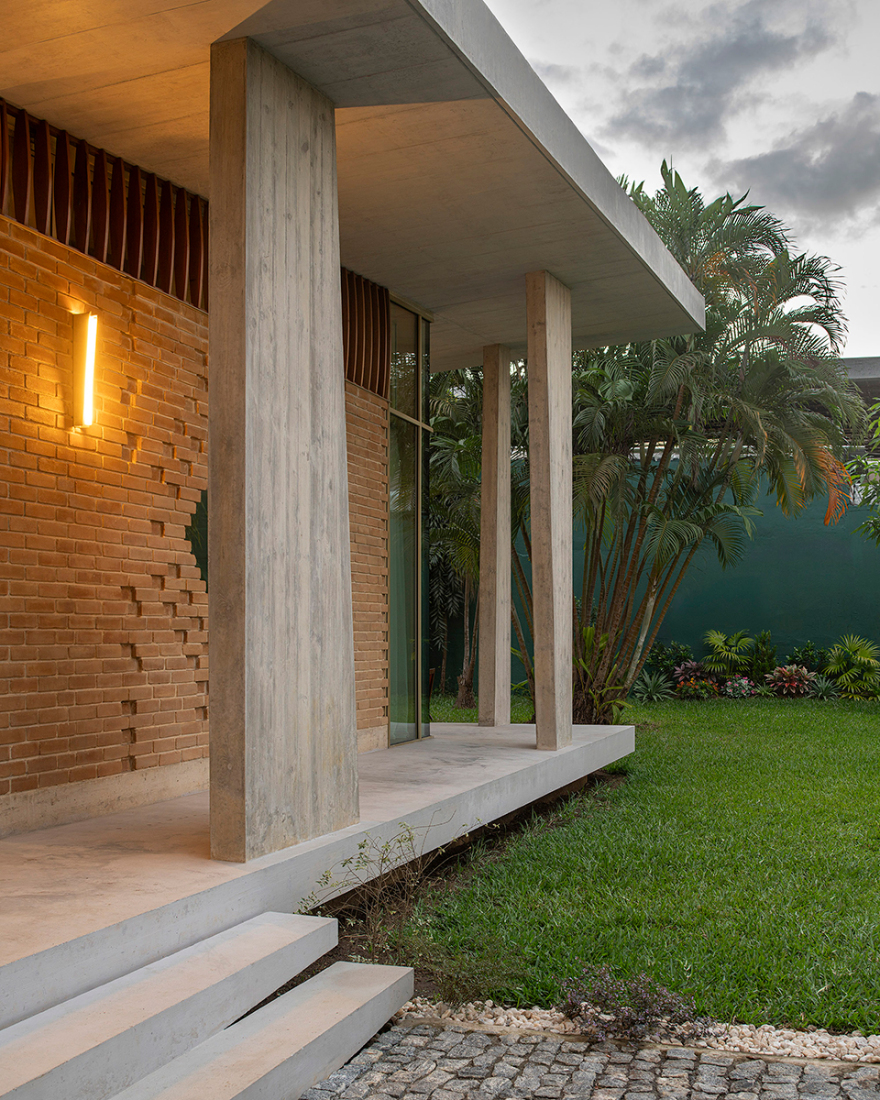
▼夜晚柱廊近景,Colonnade close view at night© Matthieu Gafsou
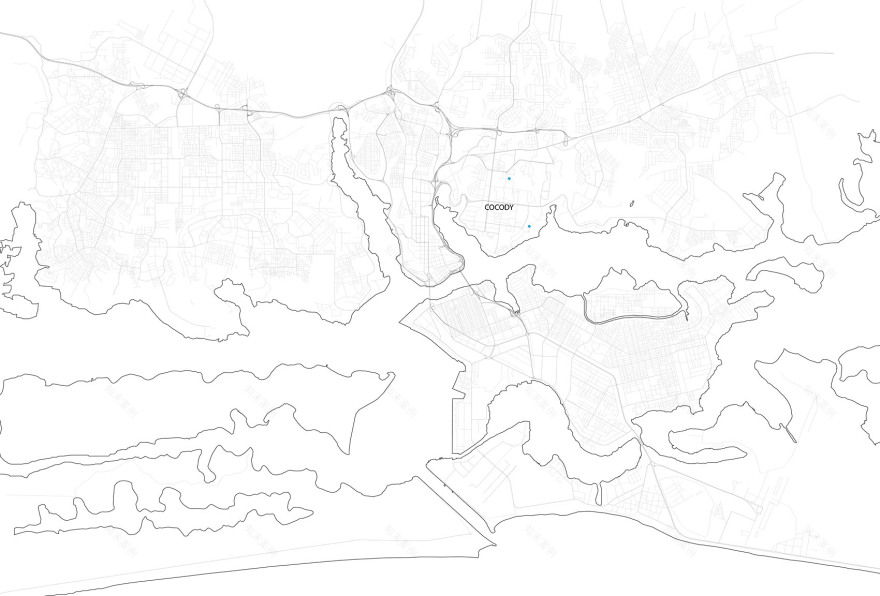
▼区位图,Location map © LOCALARCHITECTURE
▼总平面图,Site plan © LOCALARCHITECTURE


▼平面图,Plan © LOCALARCHITECTURE

▼立面图,Elevations © LOCALARCHITECTURE

▼剖面图,Sections © LOCALARCHITECTURE

ARCHITECTS: Project architects: LOCALARCHITECTURE Antoine Robert-Grandpierre Laurent Saurer Pedro Vieira
LOCALARCHITECTURE: Architectes EPFL FAS SIA +41 21 310 68 98 Côte - de - Montbenon 6 CH–1003 Lausanne
OWNER: Federal Office of Buildings and Logistics (FOBL)
OWNER REPRESENTATIVE: Bautop2001, Brügg
CONSULTANTS: Structural engineer: Thomas Jundt Ingénieurs Civils, Genève Consultants: Architectes Consultants et Associés (ACA), Abidjan Consultants: Terrabloc, Genève Envelope Consultant: XMADE, Basel Thermal engineer: Weinmann Energies, Genève Electrical engineer: Rosol, Pieterlen
CONTRACTORS: General Contractor: Amen SàRL, Abidjan Masonry: De Luca SA, Bienne Roofing: CEG, Abidjan Aluminium Joinery: SOTACI, Abidjan Wood Work: SNCBA SàRL, Abidjan Terrazzo: NKS Afrika, Abidjan
PHOTOGRAPHER: Matthieu Gafsou
INFORMATIONS: Project: Swiss Embassy Deputy Chief of Mission Residence in Abidjan Location: Rue Washington, Cocody, Abidjan, Côte d’Ivoire Conception: 2020 - 2022 Construction: 2022 - 2025 Floor area: 305 m² Built volume: 1’254 m³


南京喵熊网络科技有限公司 苏ICP备18050492号-4知末 © 2018—2020 . All photos and trademark graphics are copyrighted by their owners.增值电信业务经营许可证(ICP)苏B2-20201444 苏公网安备 32011302321234号
苏公网安备 32011302321234号客服
消息
收藏
下载
最近