

创作上传
VIP
收藏下载
登录 | 注册有礼
查看完整案例

收藏

下载

分享
场地与语境:在强建筑中寻找进入的方式
Context and Site: Finding a Way into a Strong Architectural Presence
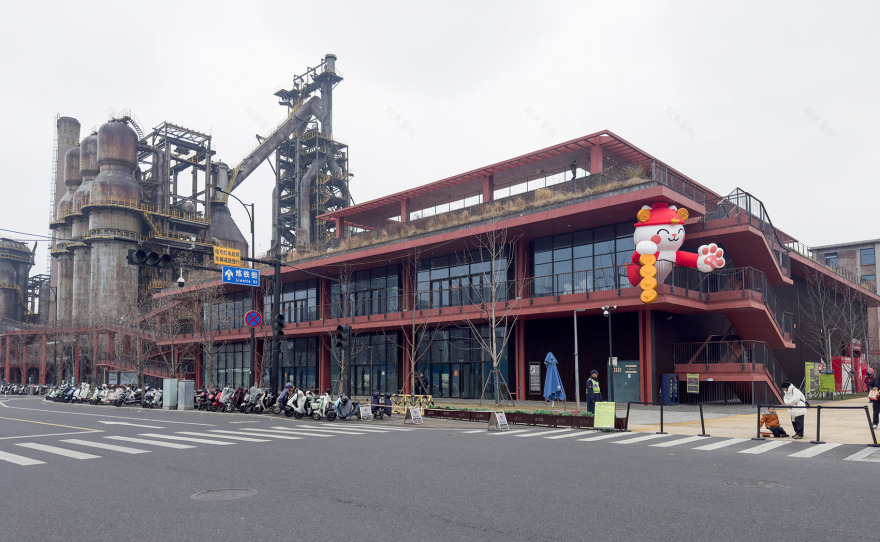
项目位于杭钢遗址公园内,空间所在建筑为普利兹克建筑奖得主刘家琨的作品。建筑以砖红色混凝土确立起鲜明而稳定的整体气质,屋顶管线全部裸露,结构、设备与围护之间的关系被直接呈现出来,形成一种清晰、克制且带有工业质感的建构秩序。© WA VISION
The project is located within Hangzhou Steel Heritage Park, in a building designed by Pritzker Prize–winning architect Liu Jiakun. Defined by red concrete, the building establishes a strong and stable overall character. Exposed rooftop pipelines, together with the direct expression of structure, services, and enclosure, create a constructional order that is clear, restrained, and distinctly industrial in tone.
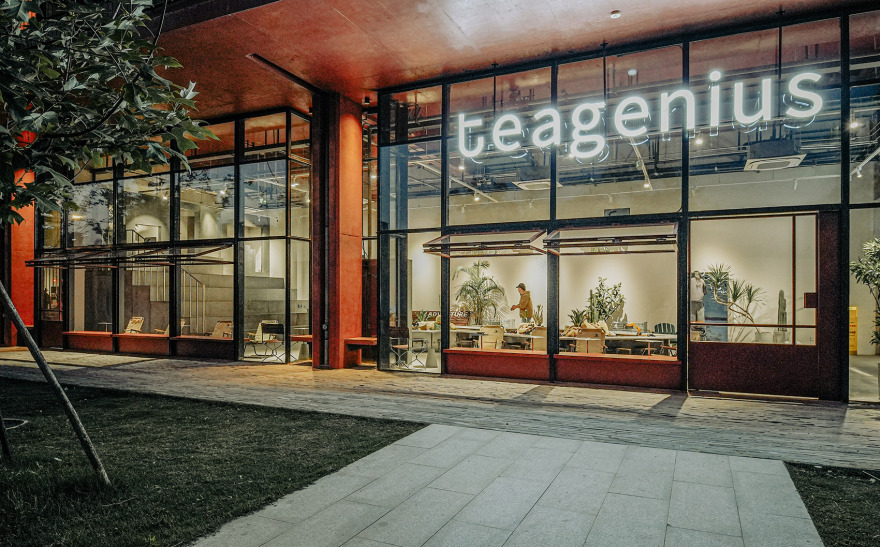
▼主入口正立面,The main entrance facade© WA VISION
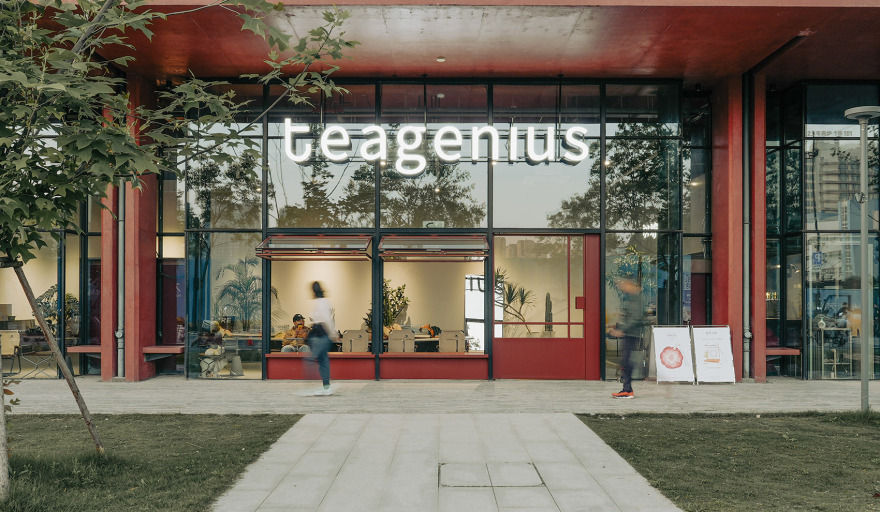
对于室内设计而言,这样的场地既不是一张可以任意书写的白纸,也不是一个仅需被动接受的既定背景,而是一种已经成立的强语境:建筑本体本身拥有足够明确的表达,因此新的介入不应再覆盖一层彼此割裂的语言,而应在尊重原有语境的前提下,寻找一种更节制、更准确的进入方式。与此同时,杭钢遗址公园也并非普通的商业环境。它既承载着工业遗存的历史痕迹,也承载着城市更新之后重新回到公共日常的开放属性。
For interior design, such a site is neither a blank canvas open to arbitrary expression nor a fixed backdrop to be passively accepted. Rather, it is an already-formed and highly charged context: the building itself possesses a sufficiently clear architectural language, and any new intervention should therefore avoid imposing a separate and disconnected layer of expression. Instead, it must seek a more precise and measured way of entering the existing context. At the same time, Hangzhou Steel Heritage Park is not an ordinary commercial setting. It carries both the traces of industrial history and the openness of a site that has re-entered public everyday life through urban renewal.
▼建筑外景,Exterior of the building ©微筑设计
▼原建筑立面,The original building facade©微筑设计
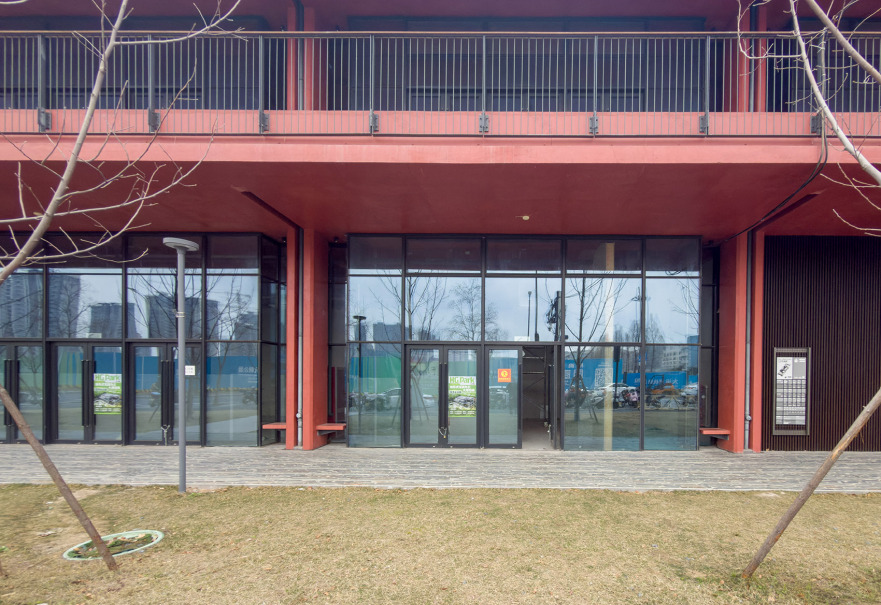
因此,这个项目从一开始所面对的,就不仅是如何完成一个新茶饮空间,而是如何让一种新的商业业态自然嵌入遗址环境之中,使建筑原有的力量得以延续,也使空间获得新的使用内容与停留意义。
From the outset, then, the project was never simply about creating a new tea shop. It was about how a new commercial program could be naturally embedded into the heritage setting, allowing the original architectural force of the building to continue while giving the space new uses and new meanings of pause and occupation.
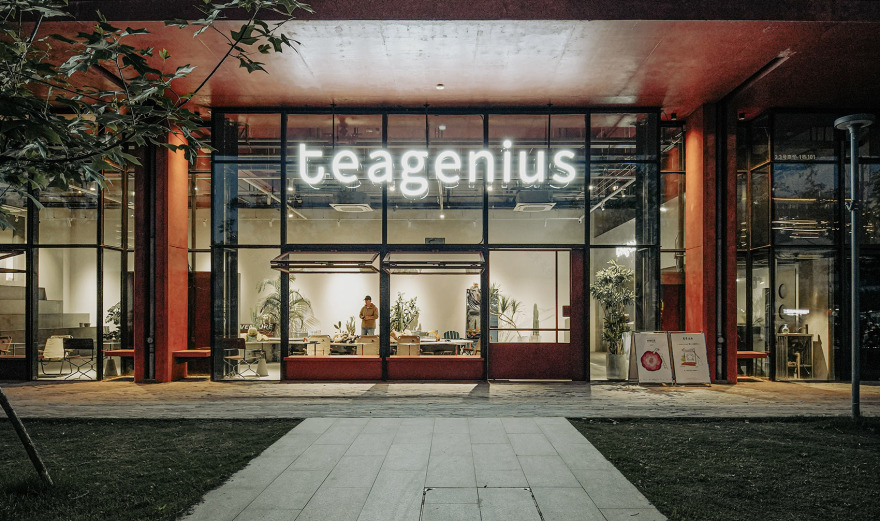
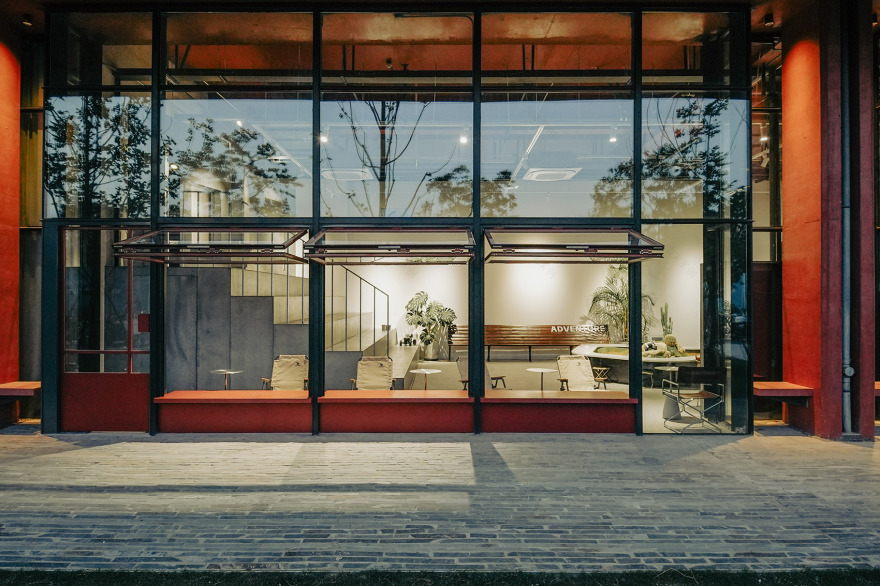
▼主入口夜景透视,Night view perspective of the main entrance© WA VISION
策略:让设计顺着建筑继续生长
Strategy: Letting the Design Continue the Building’s Growth
基于对建筑与场地关系的判断,设计没有选择建立一套脱离语境的“店铺风格”,而是将“延续”作为最核心的工作方法。砖红色混凝土、裸露管线、直接的结构感,这些原本就属于建筑自身的特征,被最大程度保留下来,并成为室内设计继续展开的基础。空间整体延续混凝土工业风格,与杭钢遗址公园的总体气质保持一致,也让所有新介入的部分始终被控制在同一种语言系统之中。
Based on a close reading of the relationship between building and site, the design did not attempt to establish an independent “retail style” detached from its surroundings. Instead, continuity became the central working method. The red concrete, exposed pipelines, and direct structural expression—qualities that already belonged to the building itself—were preserved to the greatest extent possible and became the basis for the interior design to unfold. The space continues the industrial language of concrete, aligning itself with the overall atmosphere of Hangzhou Steel Heritage Park and ensuring that all newly introduced elements remain within the same architectural vocabulary.
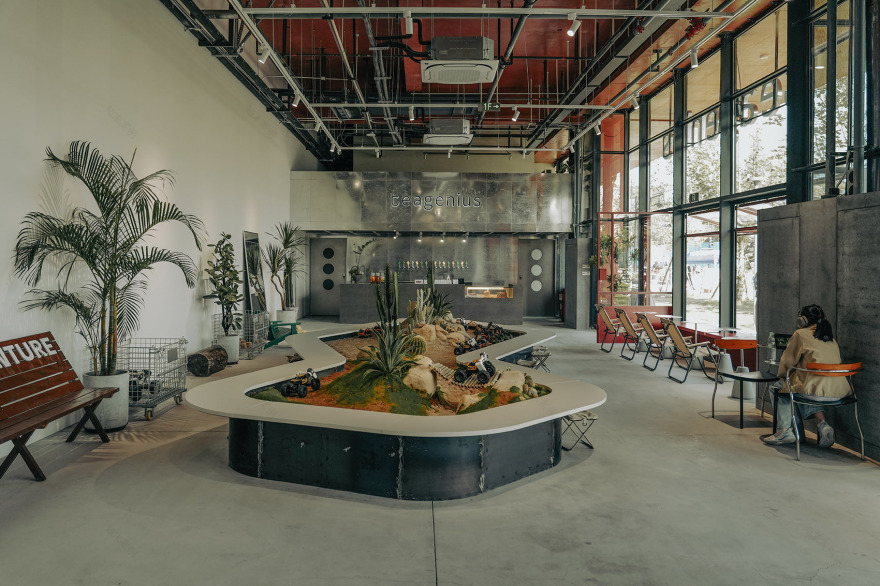
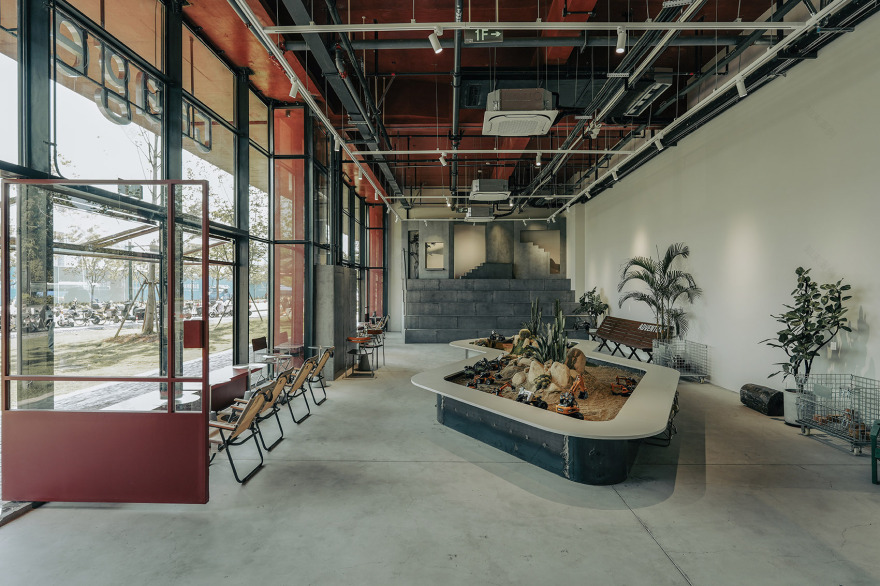
▼看向吧台整体场景,Overall view toward the bar counter © WA VISION
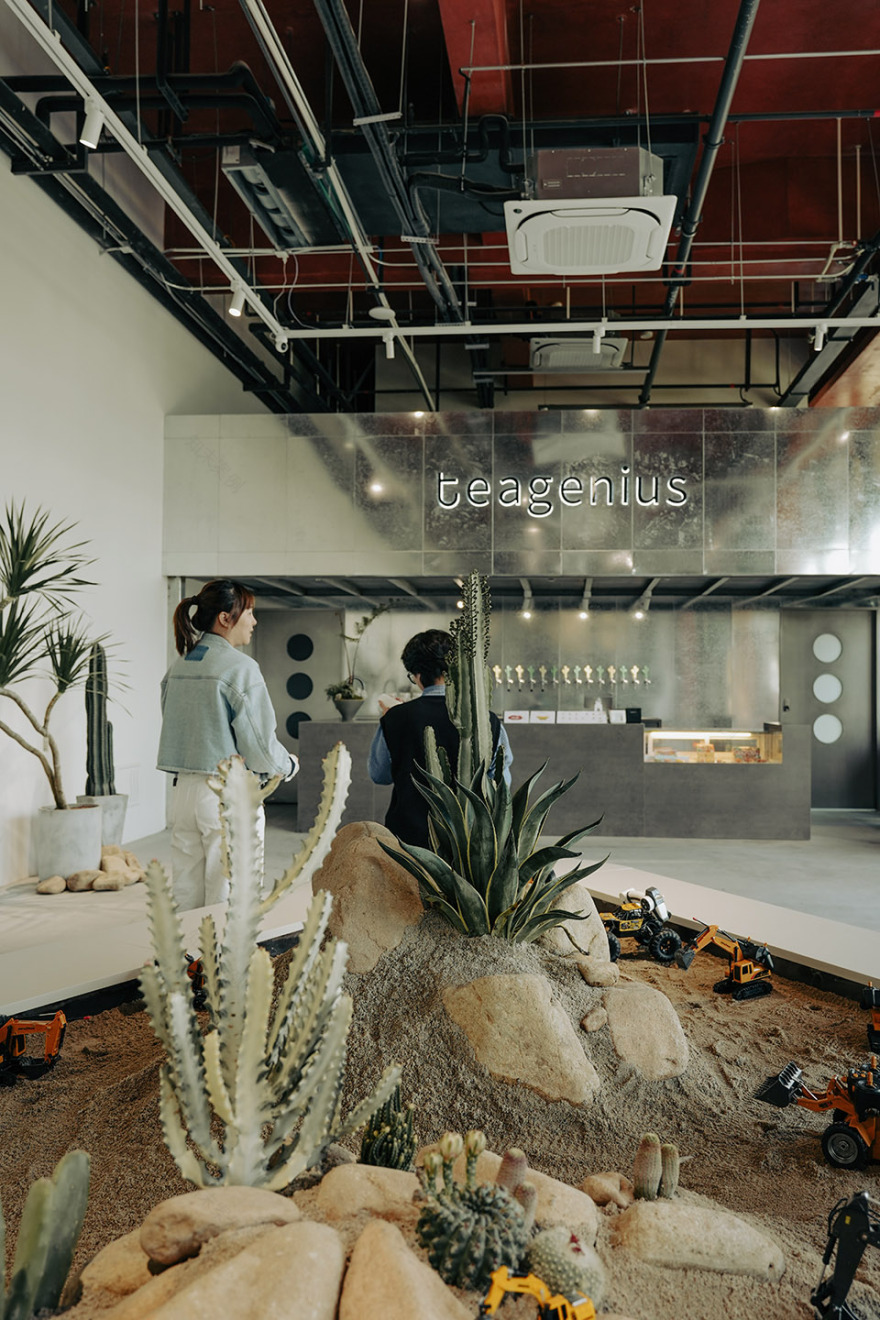
▼沙坑景观与吧台界面的关系,
Relationship between the sandpit landscape and bar counter © WA VISION
对于这个项目而言,设计的重点并不在于动作本身,而在于动作的分寸。它并不试图通过装饰去制造一个新的视觉中心,而是通过保留、转化与增补,让新的使用内容在原有建筑秩序中自然显现出来。于是,室内设计不再是对建筑的覆盖,也不是对建筑的抵抗,而更像是一种顺势而为的续写,让空间沿着既有骨架继续生长。
What matters here is not the quantity of design moves, but their calibration. Rather than creating a new visual center through decoration, the project relies on preservation, transformation, and addition, allowing new forms of use to emerge naturally within the existing architectural order. In this sense, the interior is neither a layer placed over the building nor a gesture of resistance against it; it is closer to a continuation—an extension that allows the space to grow further along its existing structural framework.
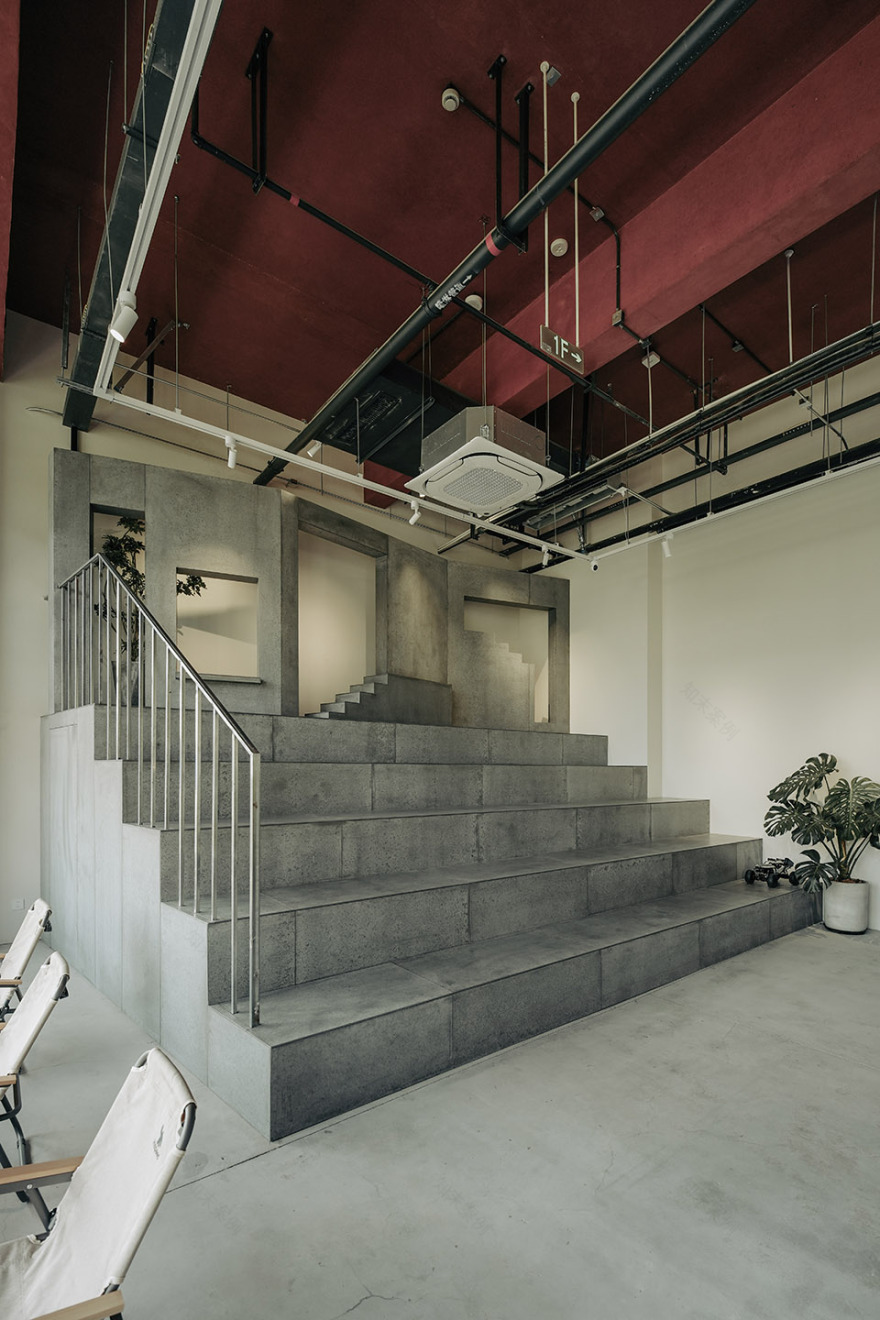
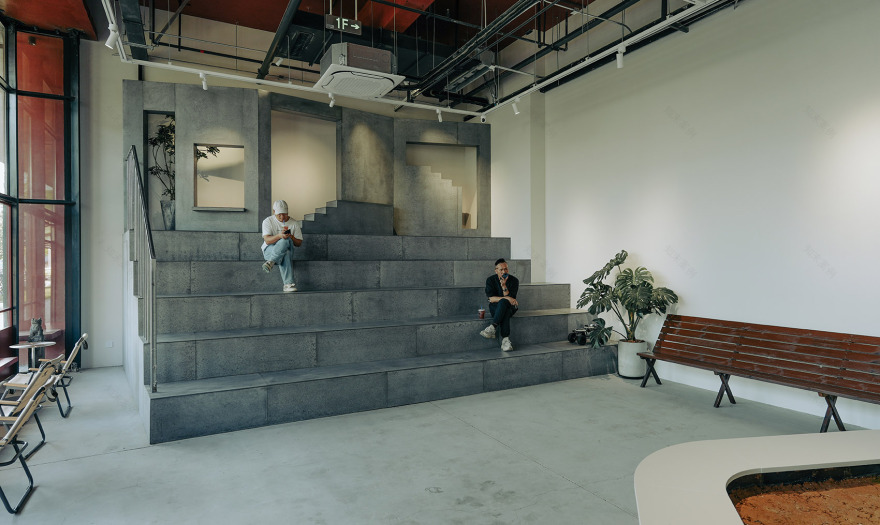
▼休闲台阶,Leisure steps © WA VISION
空间组织:从功能布置到界面重塑
Spatial Organization: From Functional Layout to the Recasting of Boundaries
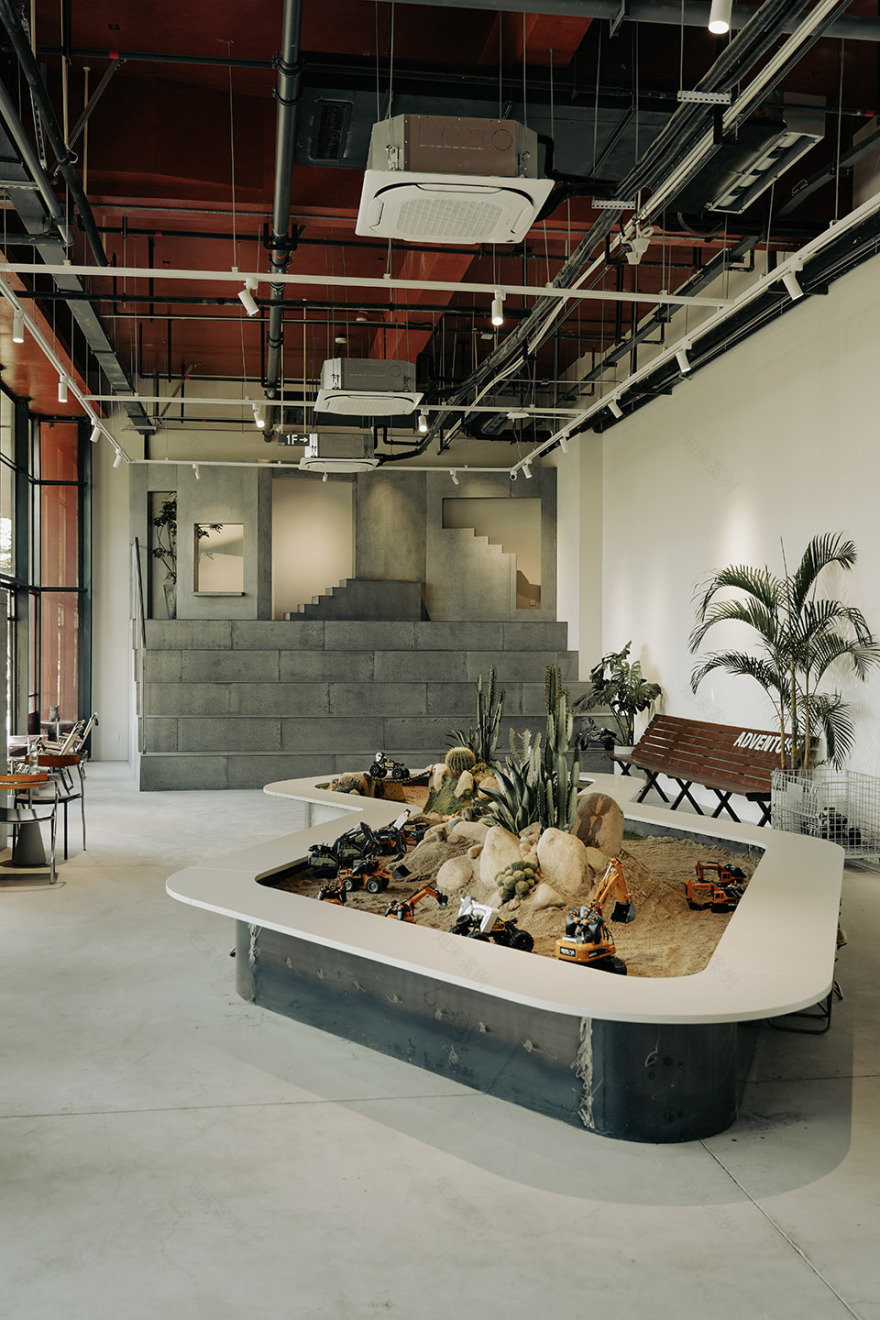
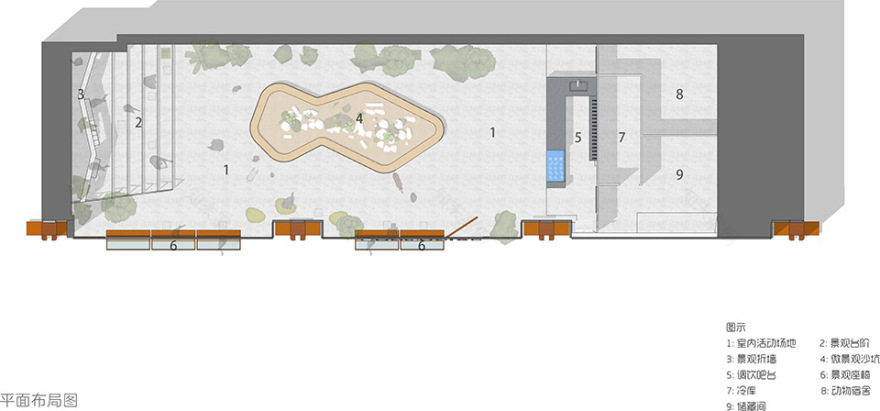
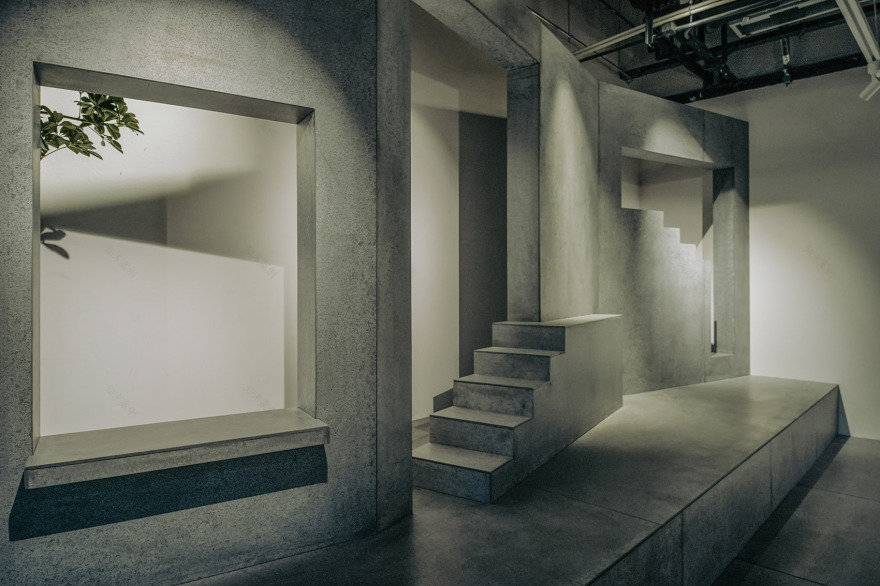
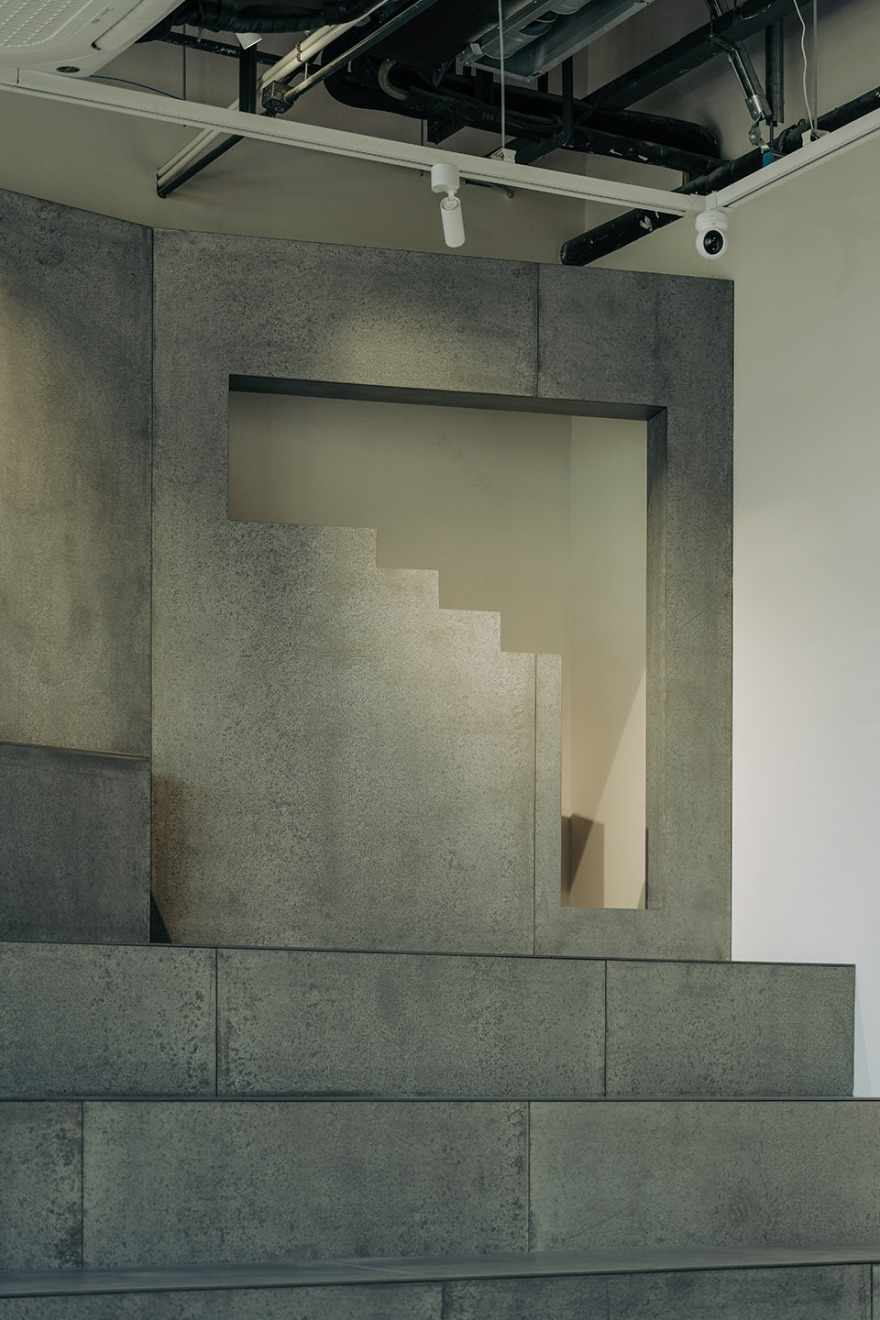
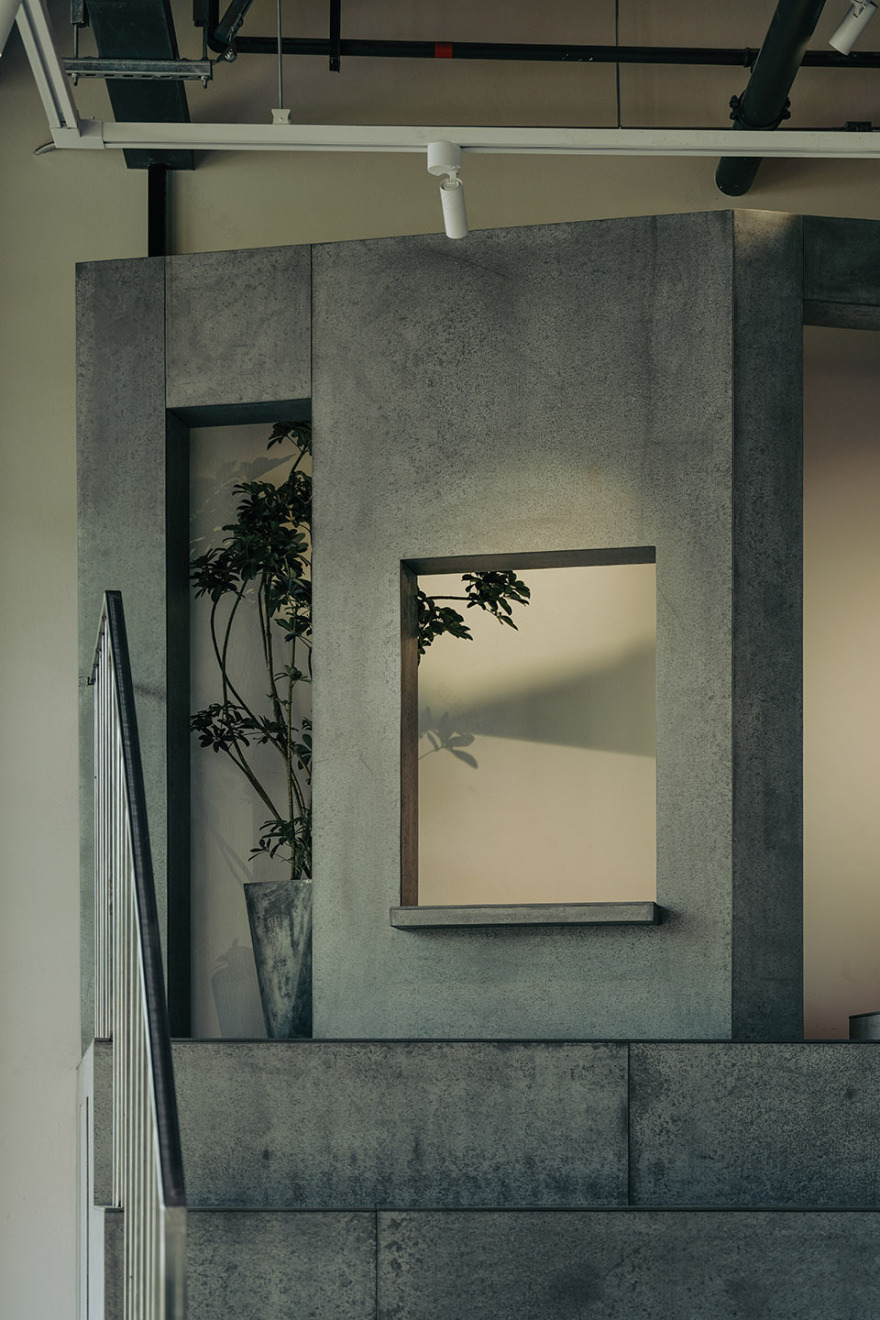
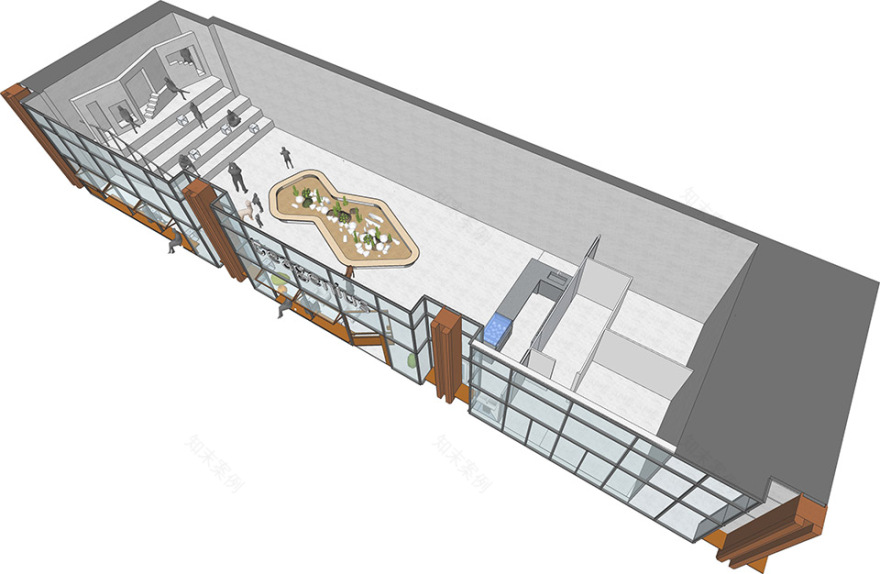
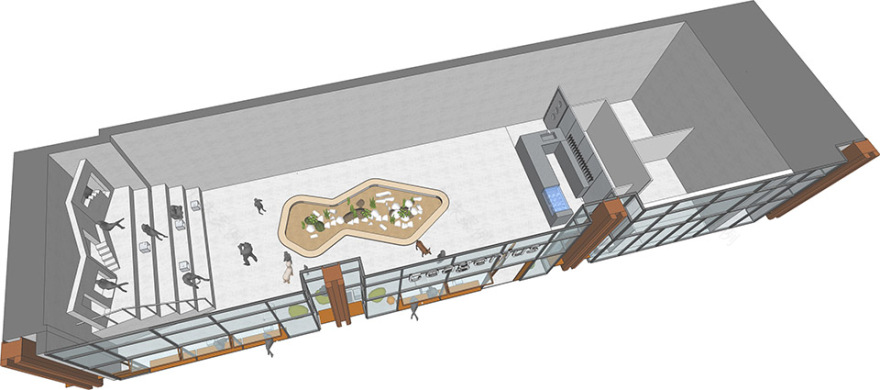
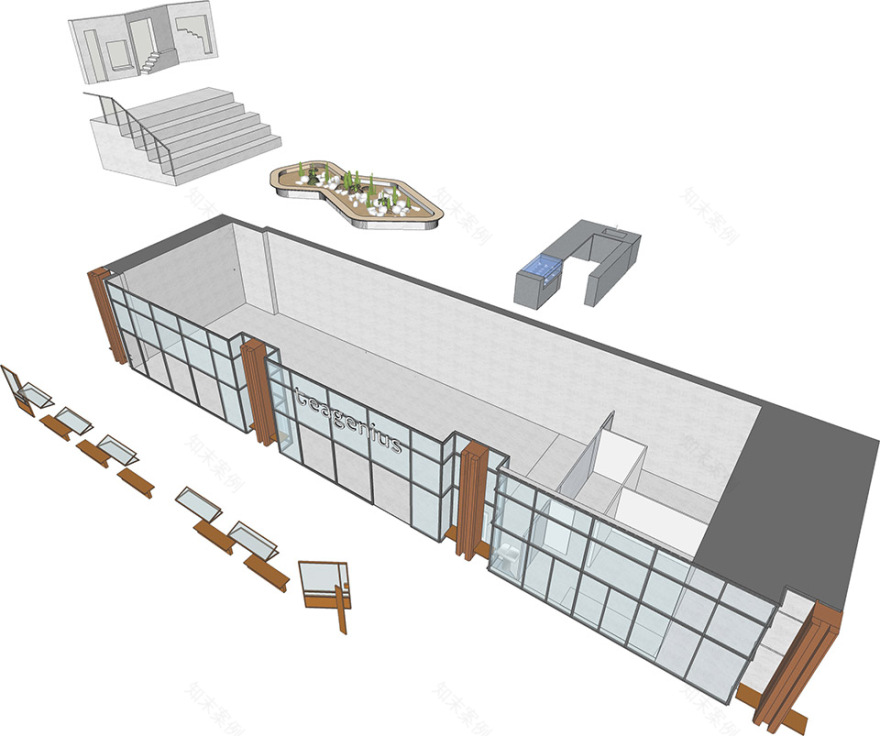
项目主体是一处以自研健康气泡茶为核心的新茶饮空间。与常见的标准化茶饮店不同,设计并未将空间理解为单一的消费容器,而是围绕“消费、停留、互动”三条线索重新组织功能与体验。空间右侧布置吧台,并配套仓储、宠物宿舍等运营区域,以回应日常经营的现实需求;中部植入一处微景观沙坑,内部放入遥控玩具挖掘机和模型越野车,并结合周边座椅布置,使其成为兼具参与性与陪伴感的互动区域;左侧则设置一组混凝土风景观大台阶,既承担休憩与停留的功能,也成为空间内部最重要的视觉装置。大台阶顶部设置一片三折景观片墙,使这一构筑物不仅是座椅的延伸,也进一步形成了空间中的景观界面与精神焦点。
▼平面图,Floor plan ©微筑设计
▼功能生成爆炸轴测图,Exploded axonometric diagram of functional generation © 微筑设计
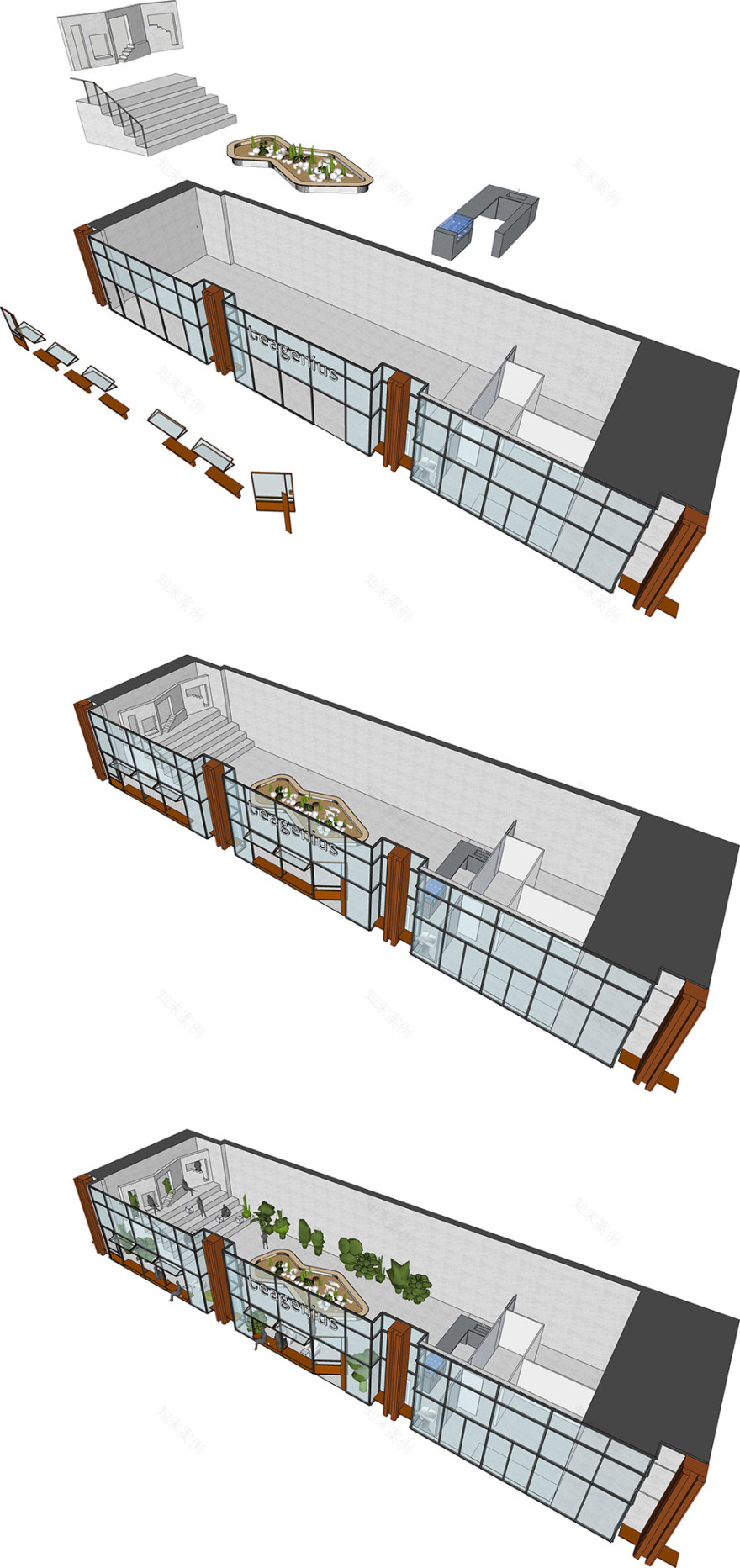
At its core, the project is a new tea beverage space centered on the brand’s self-developed healthy sparkling tea. Unlike the standardized logic of many contemporary tea shops, the design does not treat the space as a singular container for consumption. Instead, it reorganizes both program and experience around three intertwined themes: consumption, staying, and interaction. On the right side, the bar is arranged together with storage and pet accommodation, responding to the practical needs of daily operation. In the center, a miniature landscape sandpit is introduced, containing remote-control toy excavators and model off-road vehicles, with seating integrated around it to form an interactive zone defined by both participation and companionship. On the left, a large concrete stepped landscape installation provides a place for rest and lingering while also acting as the primary visual anchor of the interior. Above the steps, a three-fold landscape screen extends this structure beyond seating, giving it the role of both a spatial interface and a mental focal point within the room.
▼休闲台阶细部,Leisure steps detail © WA VISION


▼景观折墙,Folded landscape wall © WA VISION

比起单纯的功能分区,这一空间组织更重要的意义在于,它重新建立了人与空间的关系:消费不再是唯一目的,停留、观看、陪伴与游玩被同时纳入空间体验之中。
More importantly than simple zoning, this spatial organization redefines the relationship between people and space. Consumption is no longer the only objective; staying, watching, accompanying, and playing are all brought into the spatial experience.
▼景观折叠窗与临窗座位,Landscape folding window and window-side seating © WA VISION
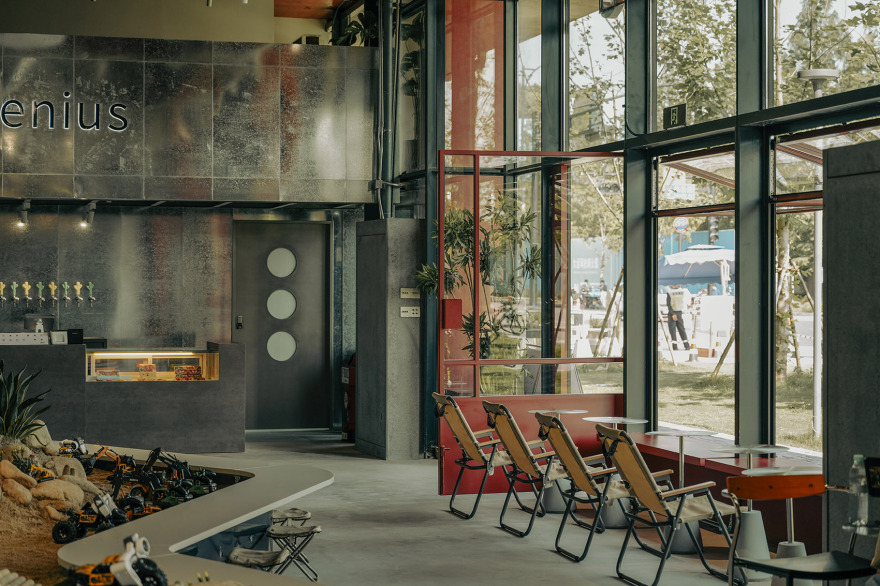

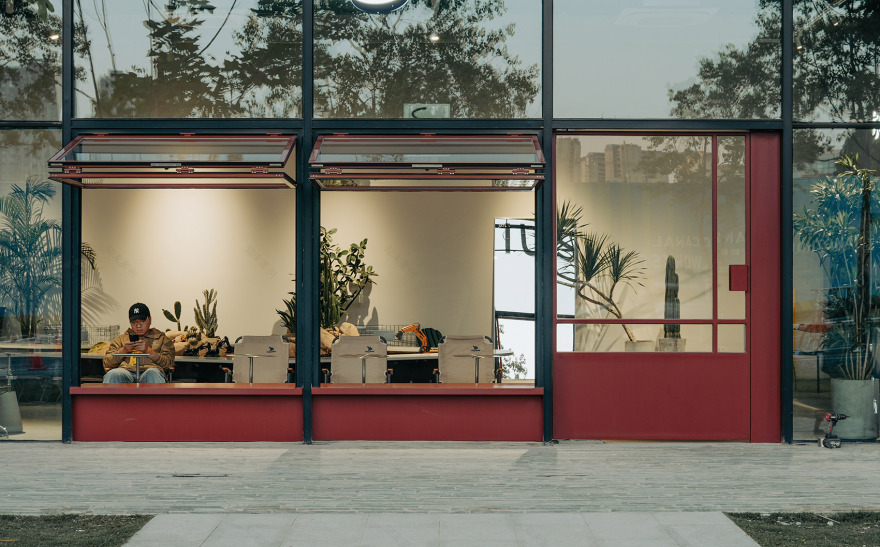
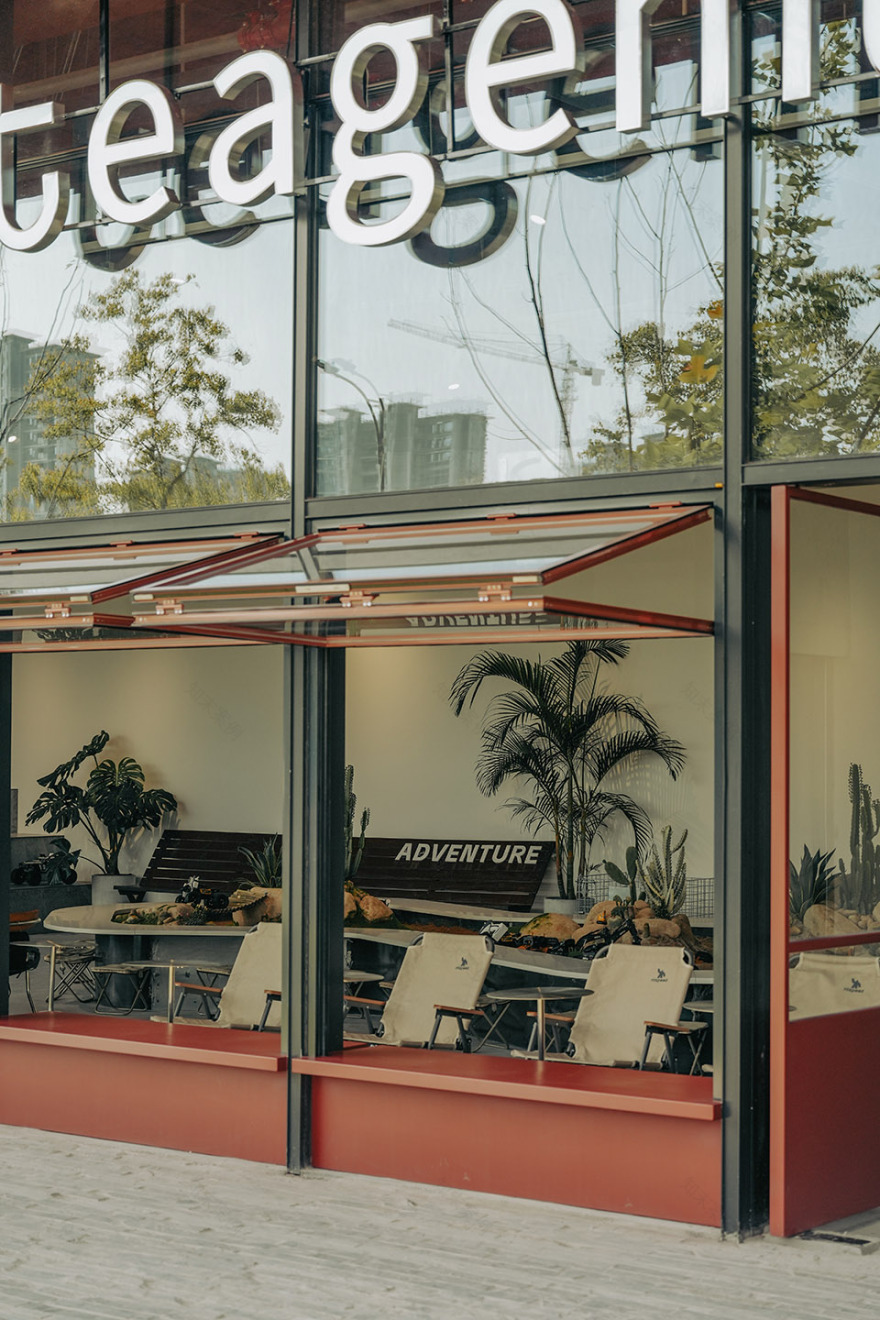
在这一逻辑下,“窗”也被重新理解。设计没有将它仅仅作为采光与通风的构件来处理,而是将原本普通的外墙门窗重新替换为上下开合的景观折叠窗。上半部分向上推开,下半部分则转化为可以停留、坐下的窗边坐凳。打开之后,室内与公园之间原本清晰而确定的边界被进一步软化,空间由此获得了更开放的交流界面。新增窗框与坐凳统一采用砖红色处理,这一颜色并非额外附加的装饰,而是顺着建筑原有色调自然延续下来,使这些新介入的构件仿佛从建筑内部生长而出,始终属于整体的一部分。
Within this logic, the “window” is also reinterpreted. Rather than being treated merely as an element for lighting and ventilation, the original exterior openings were replaced with vertically folding landscape windows. The upper half lifts upward, while the lower half transforms into a window-side bench that invites sitting and pause. Once opened, the once-clear boundary between interior and park is softened, allowing the space to establish a more open and communicative interface with its surroundings. The new window frames and benches are all finished in brick red. This color is not an added decorative gesture, but a direct continuation of the building’s original palette, making these newly introduced elements feel as though they have grown out of the building itself and have always belonged to the whole.
▼景观折叠窗凳细节,Folded landscape window bench detail © WA VISION

此外,空间中还将养两只小鹿,以吸引儿童与家庭客群。小鹿、沙坑、遥控玩具车、景观折叠窗与混凝土大台阶,共同构成了项目最具识别度的体验内容,也使这个新茶饮空间不只是一个完成消费的场所,而成为一个可以停留、玩耍,并在日常记忆中留下印象的空间。
In addition, two small deer will be kept in the space to attract children and family visitors. Together, the deer, the sandpit, the remote-control toy vehicles, the folding landscape windows, and the concrete stepped installation form the project’s most recognizable experiential elements. They allow this tea space to become more than a place of purchase: it becomes a place to stay, to play, and to leave an impression in everyday memory.
▼动物互动场景与微地形装置,
Animal interaction scene and miniature terrain installation © WA VISION

材料与建造:以克制的方式完成空间
Material and Construction: Completing the Space Through Restraint
项目的建造策略同样延续了这种克制而务实的设计态度。考虑到工期与造价控制,墙面采用水泥漆处理,地面直接保留原始混凝土地坪,并在打磨后刷涂地面固化剂,以最大程度利用场地原有条件。吧台背景墙与夹层护栏采用镀锌铁板,以强化整体工业气质的一致性;景观大台阶则通过钢架结合水泥板的方式完成,以回应施工效率与成本控制的现实需求。
The project’s construction strategy continues the same restrained and pragmatic attitude. In consideration of both schedule and budget, the walls are finished with cement paint, while the original concrete floor is retained, polished, and treated with a floor hardener so as to make the fullest possible use of existing site conditions. Galvanized steel sheet is used for the bar backdrop and mezzanine guardrails, reinforcing the consistency of the overall industrial character. The stepped landscape installation is constructed with a steel frame and cement board system, responding directly to the realities of construction speed and cost control.
▼景观沙坑互动区,Interactive landscape sandpit © WA VISION
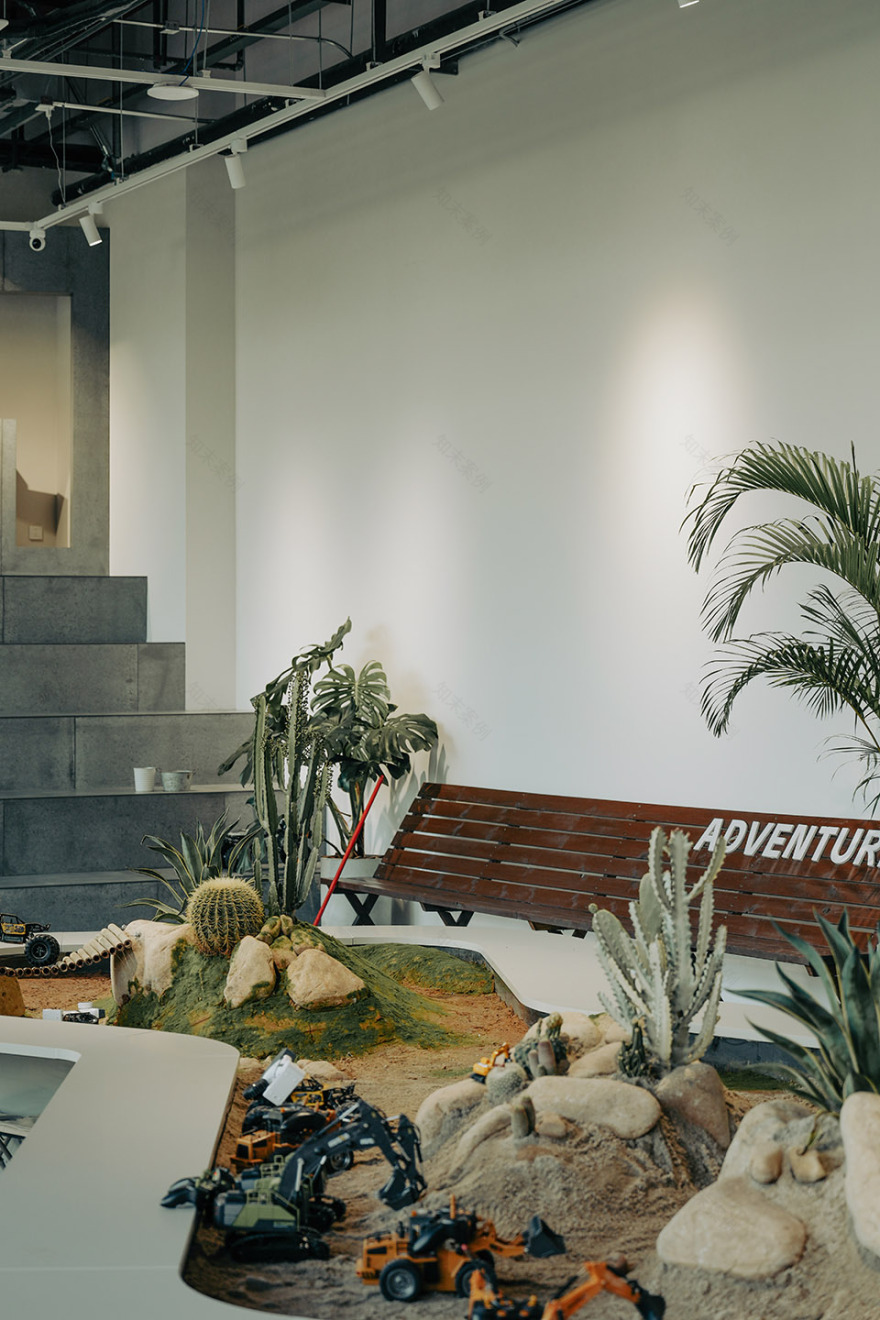
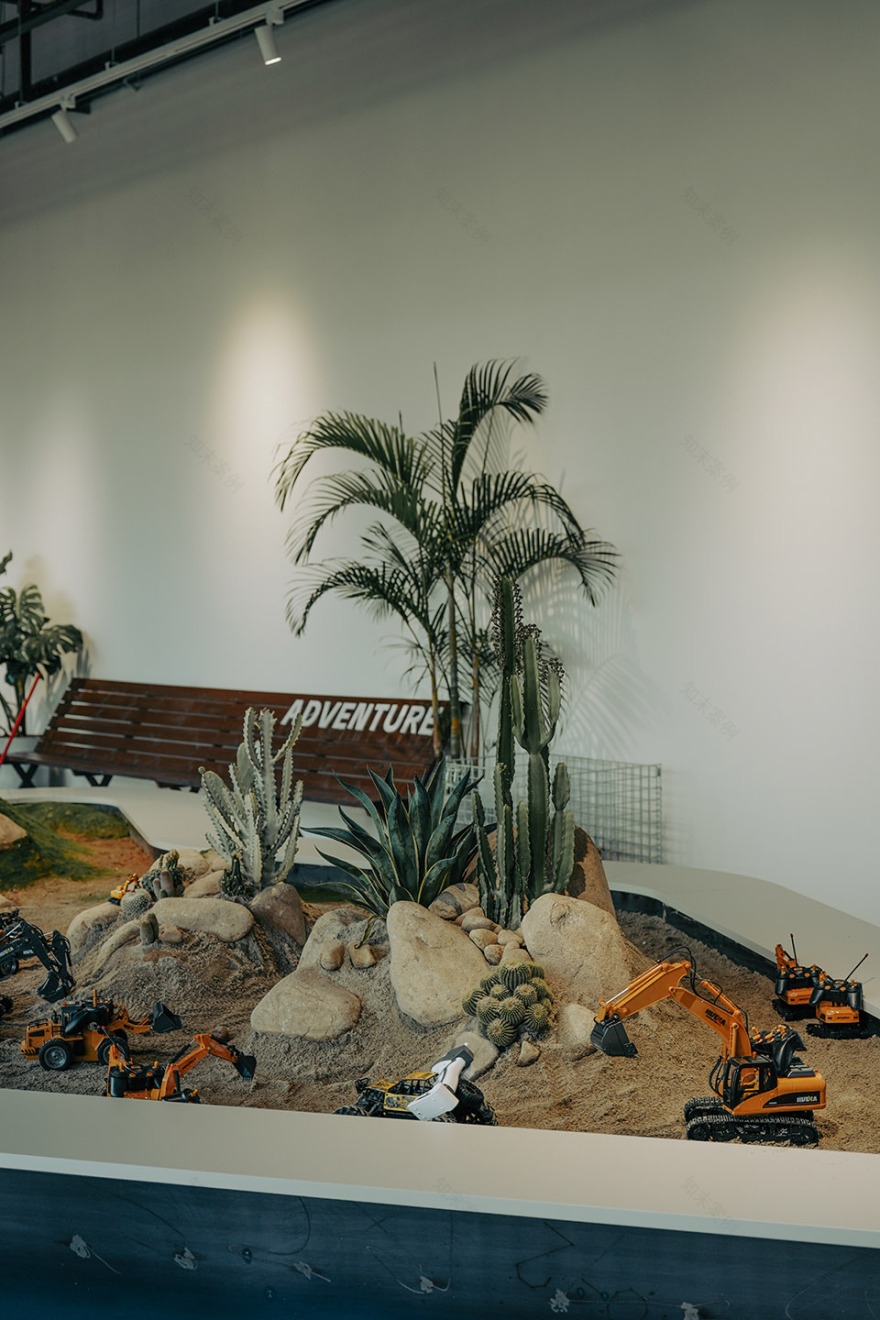
这样的建造方式并不追求表面的复杂,而是将资源集中在真正重要的节点上。低成本并不意味着粗糙,相反,它要求设计更加清楚地判断哪些部分应当保持朴素,哪些位置值得被认真完成。
Such a construction approach does not pursue superficial complexity. Instead, it concentrates resources on the moments that matter most. Low cost does not mean roughness; rather, it requires greater clarity in deciding which parts should remain plain and which deserve to be carefully resolved.
▼景观折墙局部,Folded landscape wall detail © WA VISION
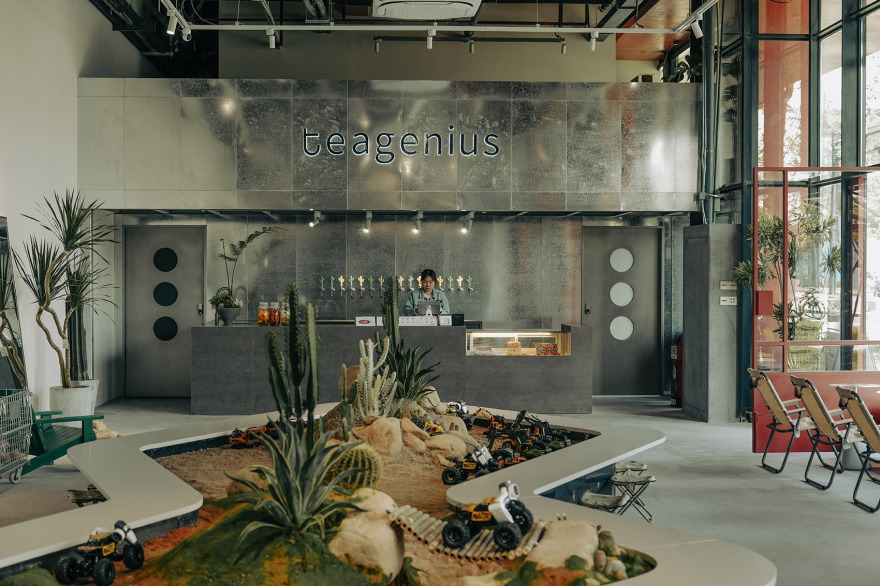
例如吧台背景墙左右两扇精工不锈钢艺术门,以及整体以岩板包裹的吧台,都是在有限预算中被刻意保留下来的精细部分。它们并不试图凌驾于整体之上,而是在朴素的框架中建立起必要的完成度,使空间在快速、低造价的现实条件下,依然具备明确的层次、质感与品牌识别度。
The finely crafted stainless steel art doors flanking the bar backdrop, for instance, as well as the rock-slab-wrapped bar counter, are among the more refined elements deliberately retained within a limited budget. They do not attempt to dominate the whole. Instead, they establish the necessary degree of completion within an otherwise simple framework, allowing the space to retain clear layering, texture, and brand identity even under the practical constraints of speed and economy.
▼吧台与龙头背景墙,Bar counter and feature wall © WA VISION
结语:在既有建筑中容纳新的日常
Conclusion: Accommodating a New Everyday Life Within an Existing Building
这处新茶饮空间的价值,不只在于完成了一次商业室内设计,更在于它回应了一个在城市更新语境下不断出现的问题:当室内设计进入一座本身已具有鲜明表达的建筑时,应当如何与之建立新的关系。
The value of this new tea space lies not only in the completion of a commercial interior, but also in the way it responds to a recurring question within the broader context of urban renewal: how should interior design establish a new relationship when it enters a building that already possesses a strong and clearly articulated expression of its own?
▼人在休闲台阶上的停留场景,People lingering on the leisure steps © WA VISION

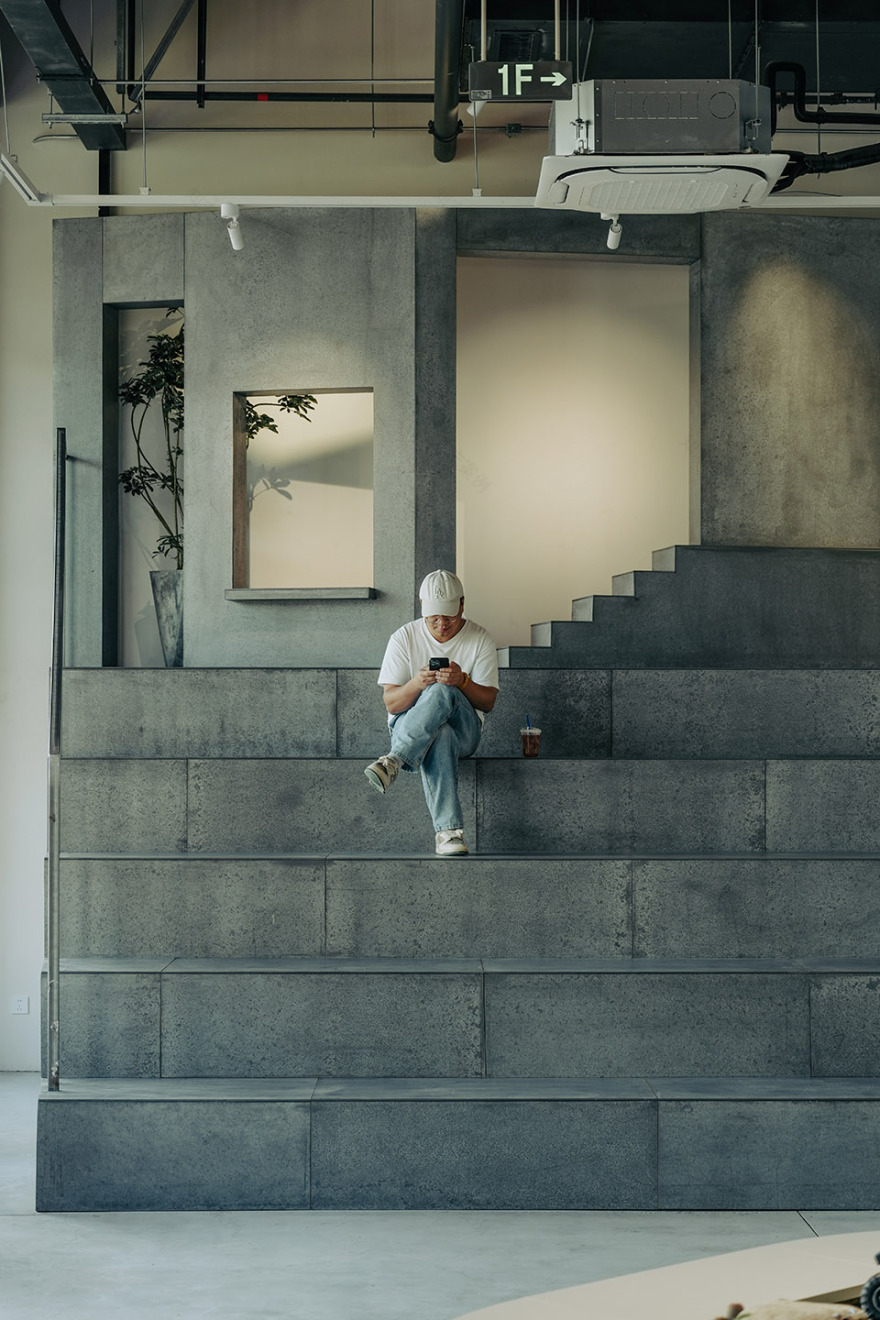
这个项目没有试图以更强烈的形式去覆盖原建筑,也没有刻意回避建筑原有的存在感,而是在保留、延续与增补之间寻找平衡,使新的商业内容与日常体验自然嵌入既有场所之中。
This project does not attempt to overwrite the building with a more forceful formal language, nor does it deliberately avoid the building’s pre-existing presence. Instead, it seeks a balance among preservation, continuation, and addition, allowing new commercial content and everyday experience to be naturally embedded into the existing place.
▼室内外相互渗透的休憩场景,Resting scene with blurred indoor-outdoor boundaries © WA VISION

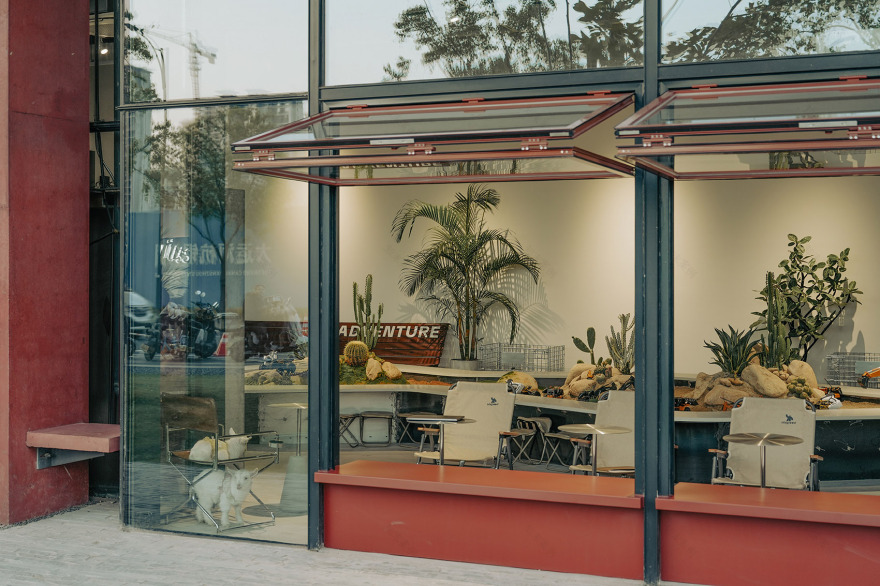
在杭钢遗址公园的工业背景下,空间最终呈现出一种复合而自然的状态:它保留了建筑的原始力量,也容纳了当代消费空间所需要的互动性、停留感与运营效率。某种意义上,这一实践所提供的启发正在于,面对一座已经“成立”的建筑,设计最重要的或许并不是重新定义它,而是让新的生活方式在其中自然发生。
Against the industrial backdrop of Hangzhou Steel Heritage Park, the space ultimately takes on a composite yet natural condition. It retains the building’s original force while accommodating the interaction, lingering, and operational efficiency required of a contemporary consumer space. In this sense, the project suggests that when faced with a building that has already “arrived,” the most important task of design may not be to redefine it, but to allow new ways of everyday life to emerge naturally within it.
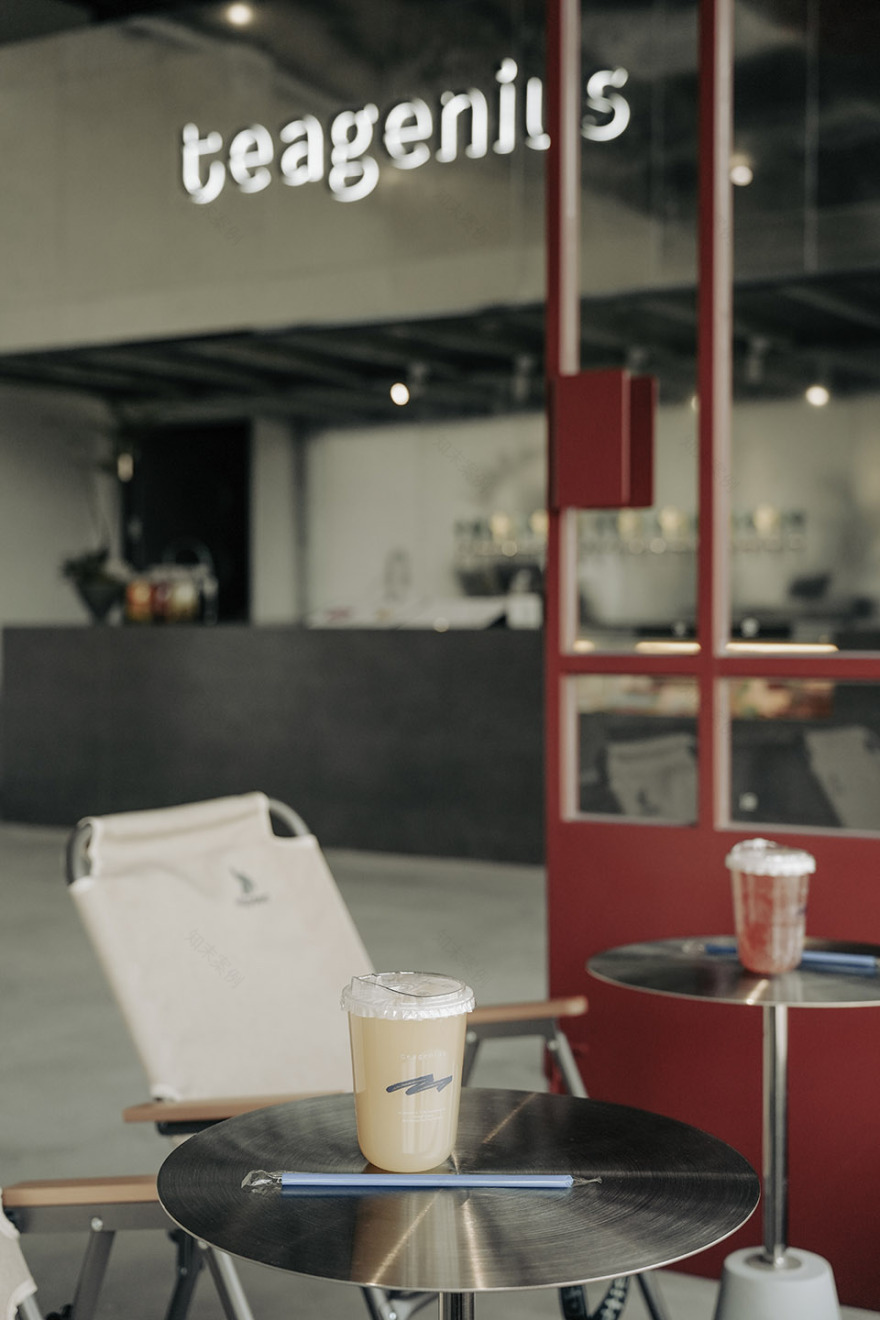
▼饮品与入口界面的局部场景,Detail view of beverages and entrance interface © WA VISION
▼场地轴测图,Site axonometric diagram ©微筑设计
项目名称:Teagenius 新茶饮杭钢遗址公园店
项目类型:室内设计
设计方:微筑设计工作室 (Microcosm_Arc Studio)
主创建筑师:王军
设计人员:王军 王新
完成年份:2026年
项目地址:杭州市拱墅区杭钢遗址公园98号1幢
建筑面积:200㎡
摄影版权:微筑设计工作室
室内设计与施工:杭州吉昌装饰有限公司
客户:题记(杭州)饮料有限公司
材料:FC高密度水泥板 镀锌铁板 不锈钢 岩板

南京喵熊网络科技有限公司 苏ICP备18050492号-4知末 © 2018—2020 . All photos and trademark graphics are copyrighted by their owners.增值电信业务经营许可证(ICP)苏B2-20201444 苏公网安备 32011302321234号
苏公网安备 32011302321234号客服
消息
收藏
下载
最近