

创作上传
VIP
收藏下载
登录 | 注册有礼
查看完整案例

收藏

下载

分享
作为深圳前海“一湾五廊”空间格局中的关键一廊,前海中心河河口段滨水景观的建成,不仅标志着前海环湾的初步贯通,更以景观为媒介,完成了一场跨越场地记忆、生态修复与城市共生的设计实践,让“前海水城”的蓝图真正走进了市民的日常生活。
As a key corridor in the “One Bay and Five Corridors” spatial pattern of Qianhai, Shenzhen, the completion of the waterfront landscape at the estuary section of Qianhai Central River not only marks the initial connection of Qianhai’s circular bay but also completes a design practice spanning site memory, ecological restoration and urban symbiosis through the medium of landscape, making the blueprint of “Qianhai Water City” truly enter the daily life of citizens.
▼项目概览,overall of the project©董博儒
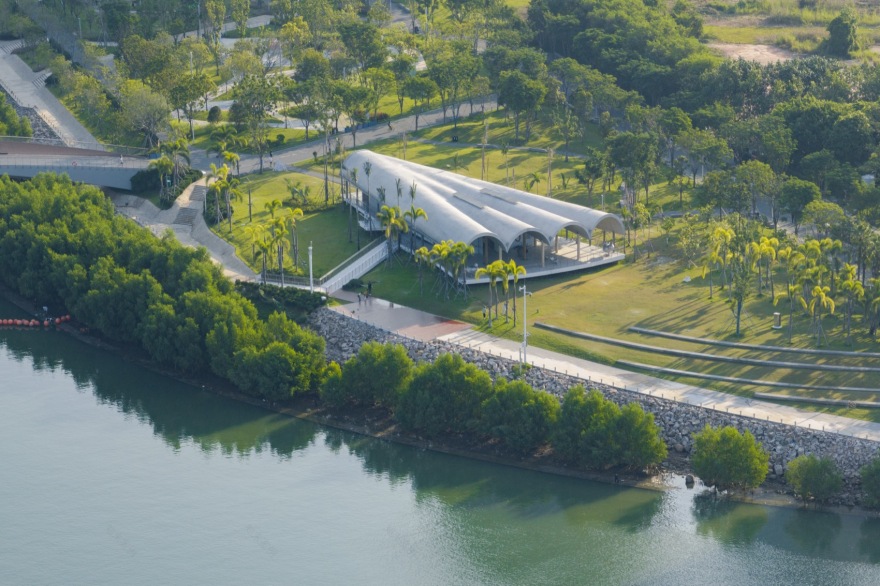
▼鸟瞰,aerial view©董博儒
从边界隔阂到生态共生
From Boundary Barrier to Ecological Symbiosis
前海中心河,原名双界河,其身份的演变本身就是深圳城市发展的生动缩影——它曾是深圳二线关的物理界线,而后成为南山区与宝安区的行政分野,长期以来以“隔阂”的姿态割裂着城市滨水空间。随着前海高起点开发建设的推进,景观都市主义理念逐步落地,通过系统性的水系重构,打破传统滨水设计的桎梏,打造出社交与生态并重的公共场域,构建起“一湾五廊”以滨水公共空间为骨架的城市空间格局,而前海中心河作为“五廊”之一,是整个规划的重要组成部分,本次建成的河口段,更是这一宏大构想的重要板块,承担着激活环湾慢行系统、缝合城市空间的重要使命,是景观都市主义在深圳前海的重要实践载体。
▼分析图,analysis diagram©原作工作室
Qianhai Central River, formerly known as Shuangjie River, its evolution is a vivid microcosm of Shenzhen’s urban development — it was once the physical boundary of Shenzhen’s Second-Line Checkpoint, and then became the administrative dividing line between Nanshan District and Bao’an District, long separating the urban waterfront space in the form of a “barrier”. With the high-start construction and development of Qianhai, the concept of landscape urbanism has been gradually implemented. Through systematic water system reconstruction, the constraints of traditional waterfront design have been broken, creating a public space emphasizing both social interaction and ecology, and constructing the urban spatial pattern with waterfront public space as the framework in the “One Bay and Five Corridors”. As one of the “Five Corridors”, Qianhai Central River is an important part of the entire plan, and the newly completed estuary section is an important part of this grand concept. It undertakes the important mission of activating the circular bay slow-traffic system and stitching urban space, and is an important practice carrier of landscape urbanism in Qianhai, Shenzhen.
▼顶视图,top view©董博儒
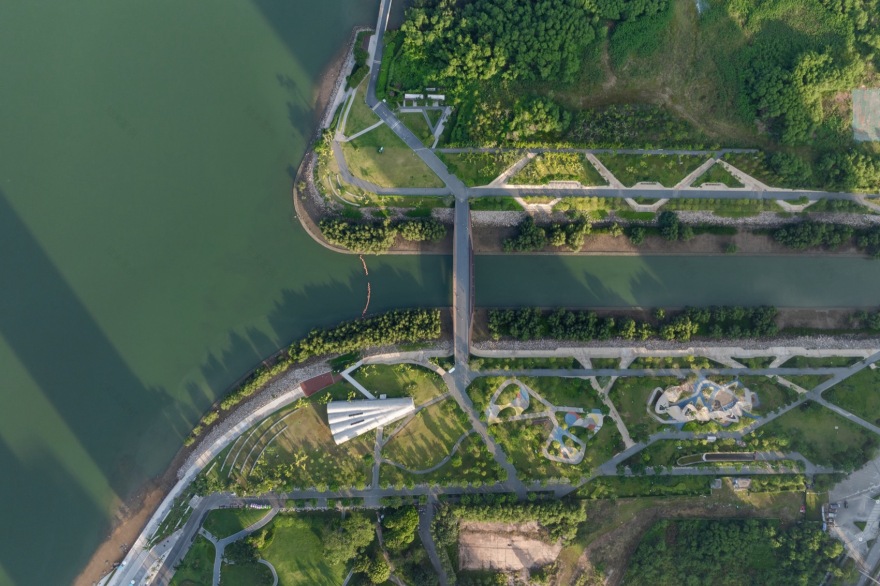
从场地本真到自然营造
From Site Authenticity to Natural Construction
设计的初心,源于对场地本真的敬畏与珍视——第一次抵达场地时,孩子们在石滩上摸螃蟹的鲜活场景,成为贯穿整个设计的情感锚点;而场地内原生的红树林群落,作为滨海生态系统的重要组成部分,更是设计中不可逾越的生态底线。基于此,我们确立了“保留、缝合、共生”的设计原则,拒绝过度设计与形式化表达,让场地本身的特质成为设计的核心语言。
The original intention of the design comes from the awe and cherishment of the site’s authenticity — when first arriving at the site, the vivid scene of children catching crabs on the stony beach became the emotional anchor throughout the entire design; and the native mangrove communities in the site, as an important part of the coastal ecosystem, are the insurmountable ecological bottom line in the design. Based on this, we established the design principles of “preservation, stitching and symbiosis”, rejecting over-design and formalistic expression, and letting the characteristics of the site itself become the core language of the design.
▼场地人视,perspective view of the park©董博儒
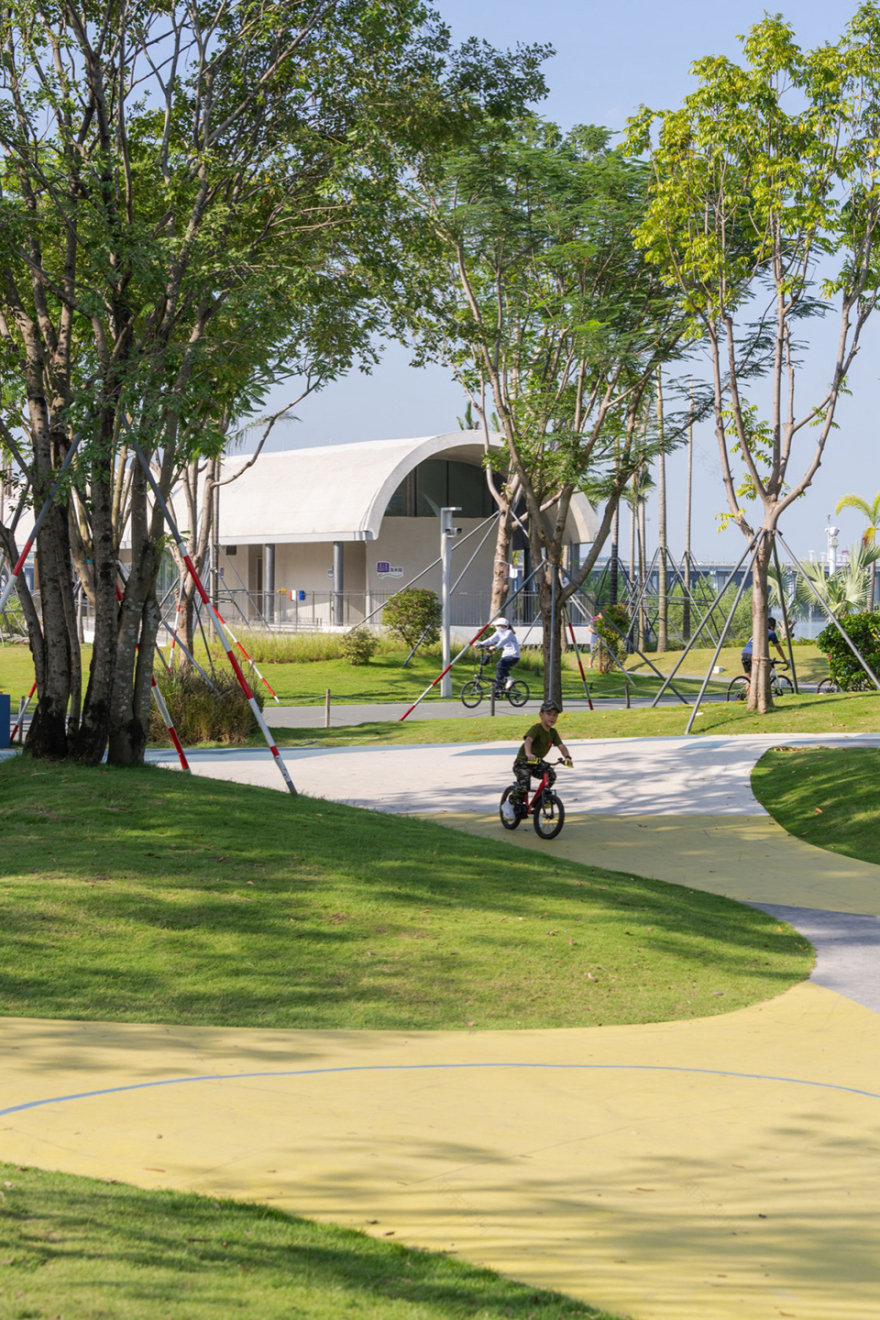
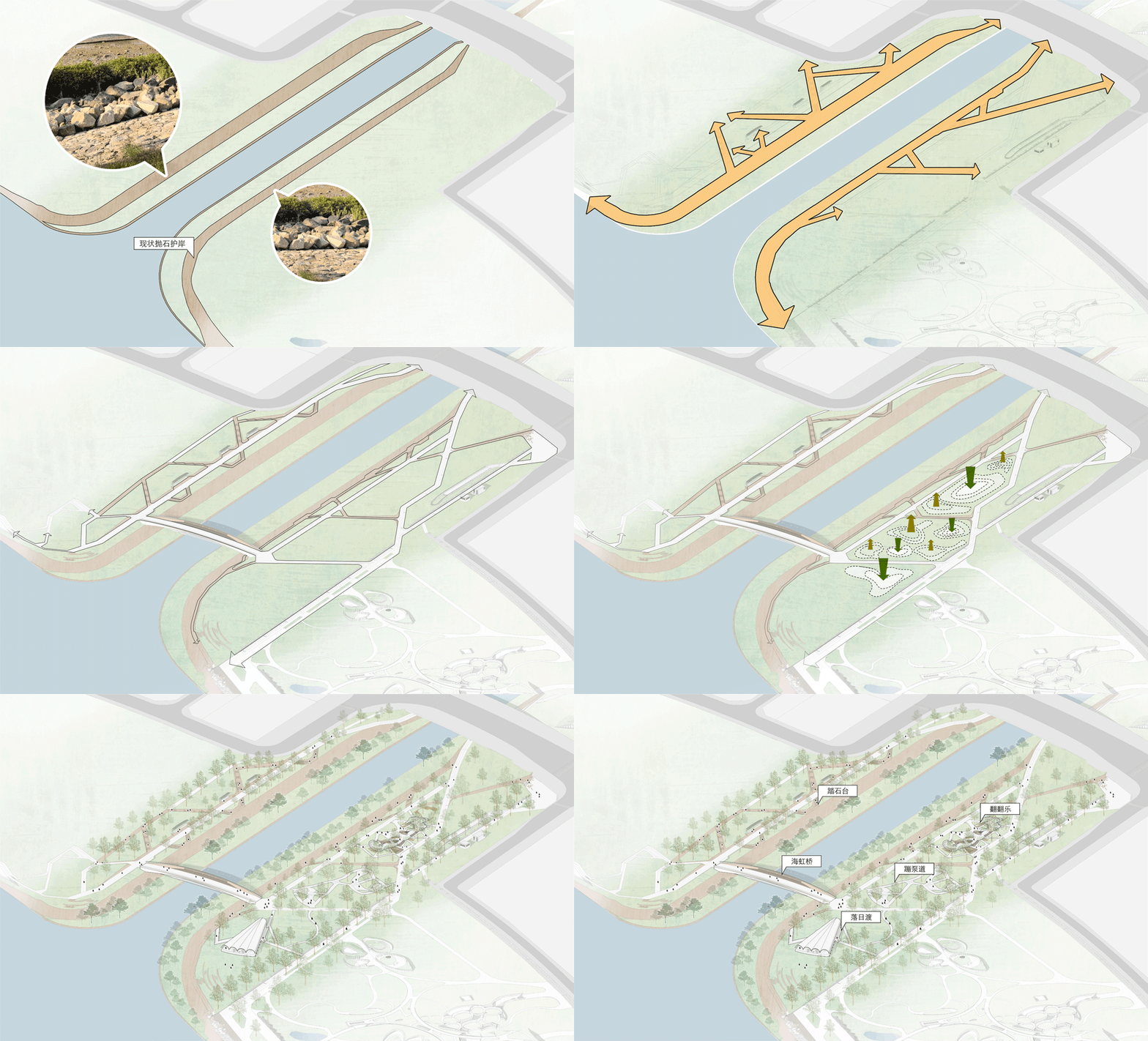
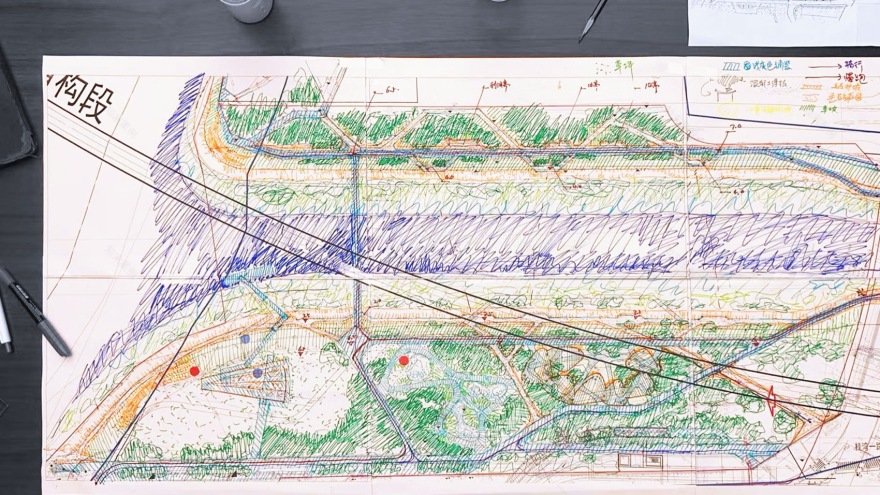
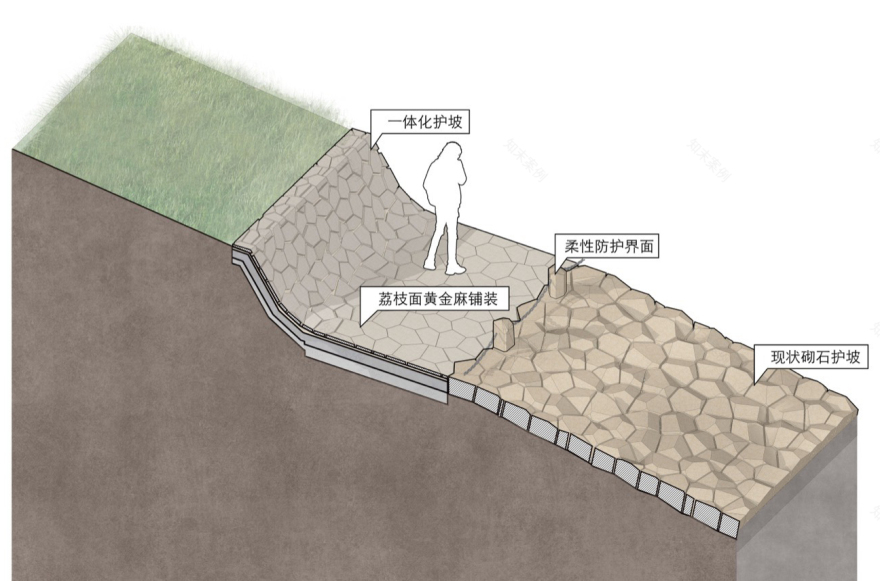
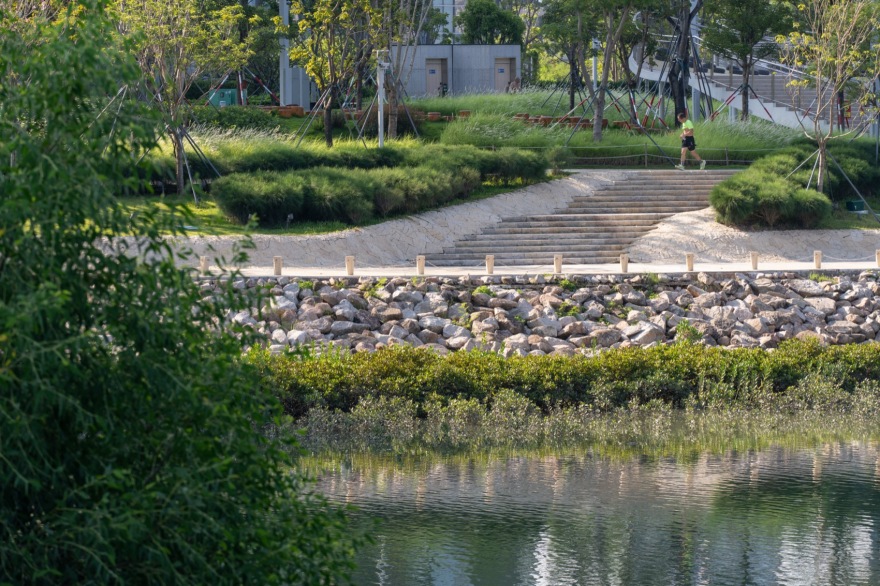
在整体空间肌理营造上,我们最大限度保留了原有红树林生态群落,延续场地的自然基底,守护这片滨海生态屏障;同时强化两岸抛石护岸向用地深处的延伸与一体化设计,让原本割裂的岸线空间形成有机缝合,在消弭边界感的同时,进一步强化场地自身的自然特色,让“石滩、红树林、潮汐”成为场地最鲜明的标识,让市民能够重拾亲近自然、触摸自然的本真体验,实现人与自然的和谐共生。
▼草图,sketch©原作工作室
▼分析图,analysis diagram©原作工作室
In the construction of the overall spatial texture, we maximized the preservation of the original mangrove communities, continued the natural base of the site, and guarded this coastal ecological barrier; at the same time, we strengthened the extension and integrated design of the riprap revetments on both banks to the deep part of the land, forming an organic stitching of the originally separated shoreline space. While eliminating the sense of boundary, it further strengthens the natural characteristics of the site itself, making “stony beaches, mangroves and tides” the most distinctive symbols of the site, allowing citizens to regain the authentic experience of getting close to nature and touching nature, and realizing the harmonious coexistence between humans and nature.
▼生态防护界面,ecological protection interface©董博儒
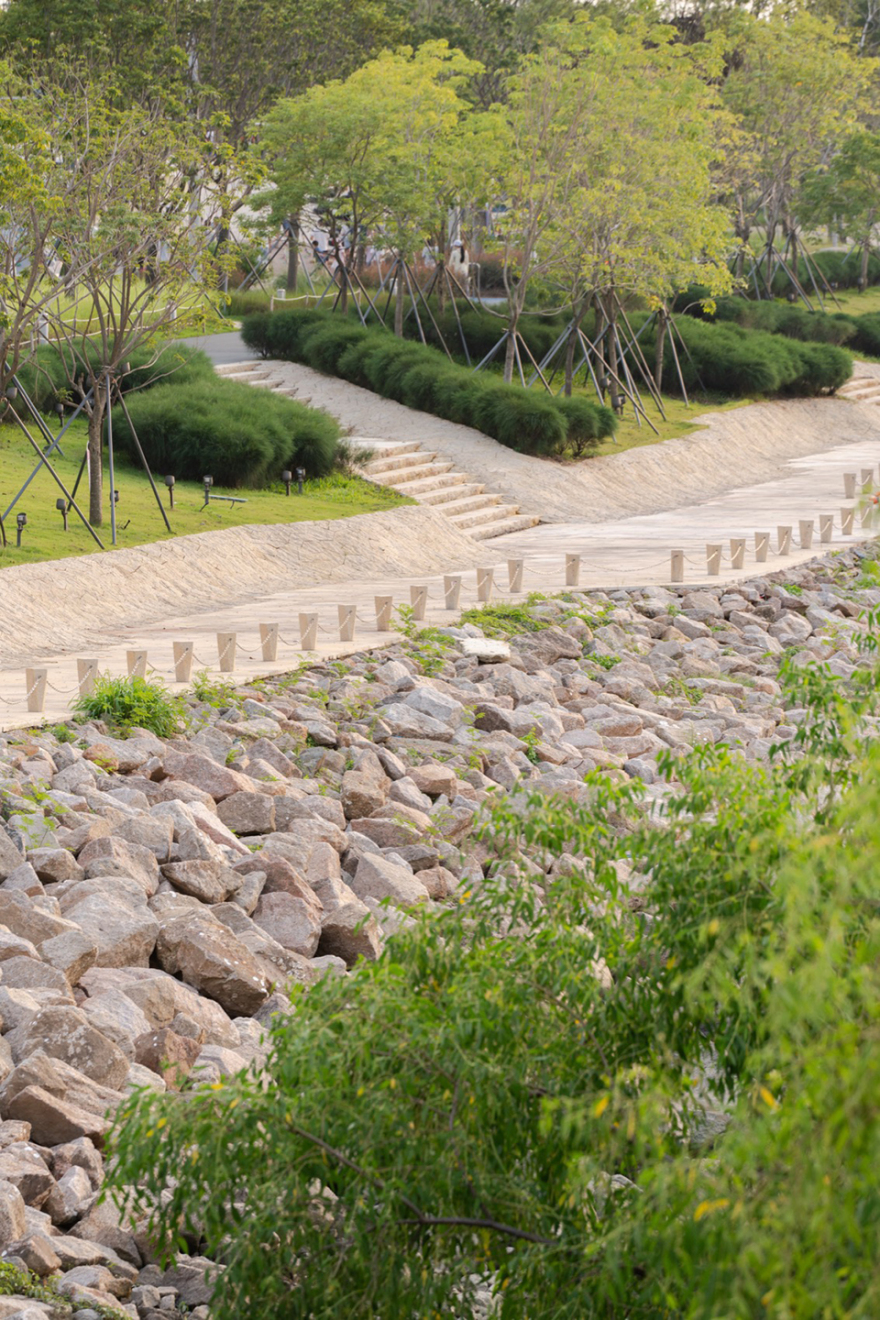
▼河岸,river bank©董博儒
从功能分离到加厚地表
From Functional Separation to Ground Surface Thickening
我们以“加厚地表”为核心设计指引,摒弃“功能与景观割裂”的传统模式,将功能性空间与景观场地深度融合,让每一处节点都成为场地有机的一部分,既满足实用需求,又兼具景观体验感,实现技术、功能与美学的统一。
With “thickening the ground surface” as the core design guideline, we abandoned the traditional model of “separation of functions and landscape”, and deeply integrated functional spaces with landscape sites, making each node an organic part of the site. It not only meets practical needs but also has a landscape experience, realizing the unity of technology, function and aesthetics.
▼驿站远观,viewing the station at distance©董博儒
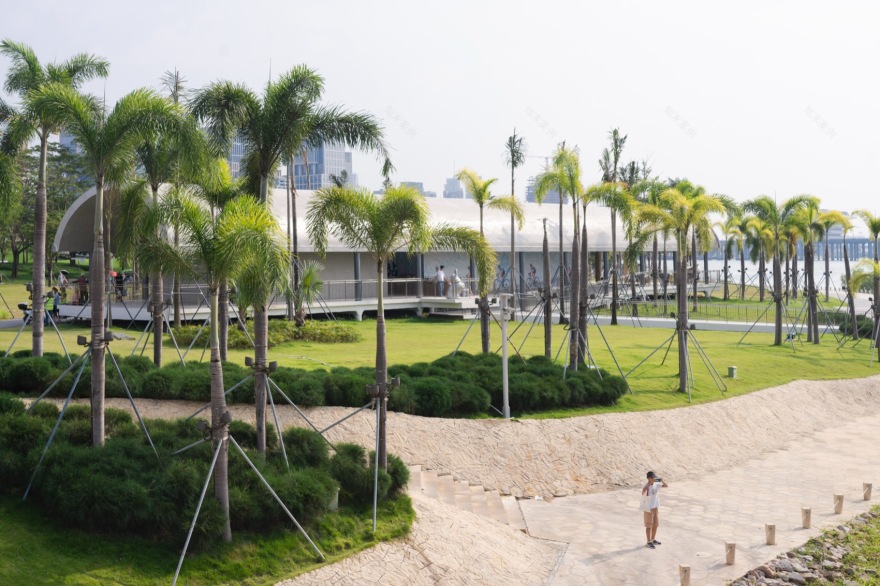
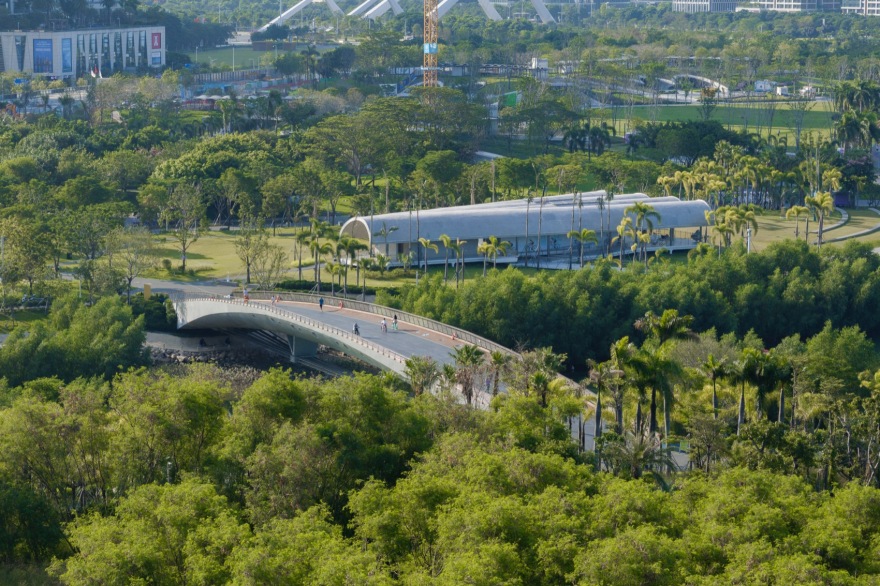
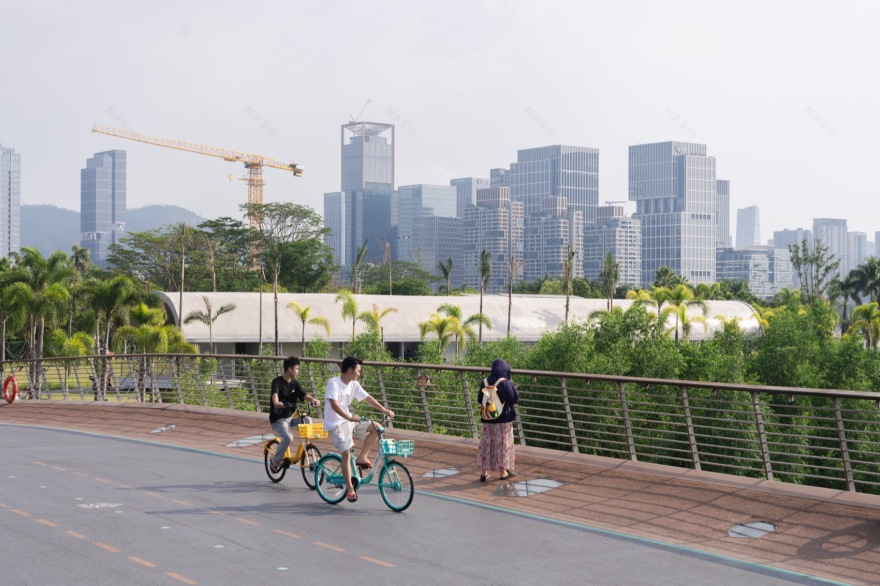
▼由桥看驿站,viewing the station from the bridge©董博儒
1. 跨河桥:作为景观场地的有机组成
1. Cross-River Bridge: An Organic Component of the Landscape Site
前海双界河河口桥的设计,彻底打破了河道其他公路桥梁强化技术表征力的做法,将其定义为“加厚的地表”,而非独立的技术构筑物——在这里,桥首先是景观场地的有机组成部分,其设计始终服务于整个城市的系统性景观思考,而非技术的炫耀性表达。
The design of the estuary bridge of Qianhai Shuangjie River completely breaks the practice of other highway bridges in the river course that emphasize technical representation, defining it as a “thickened ground surface” rather than an independent technical structure — here, the bridge is first an organic component of the landscape site, and its design always serves the systematic landscape thinking of the entire city, rather than the ostentatious expression of technology.
▼跨河桥鸟瞰,aerial view of the cross- river bridge©董博儒
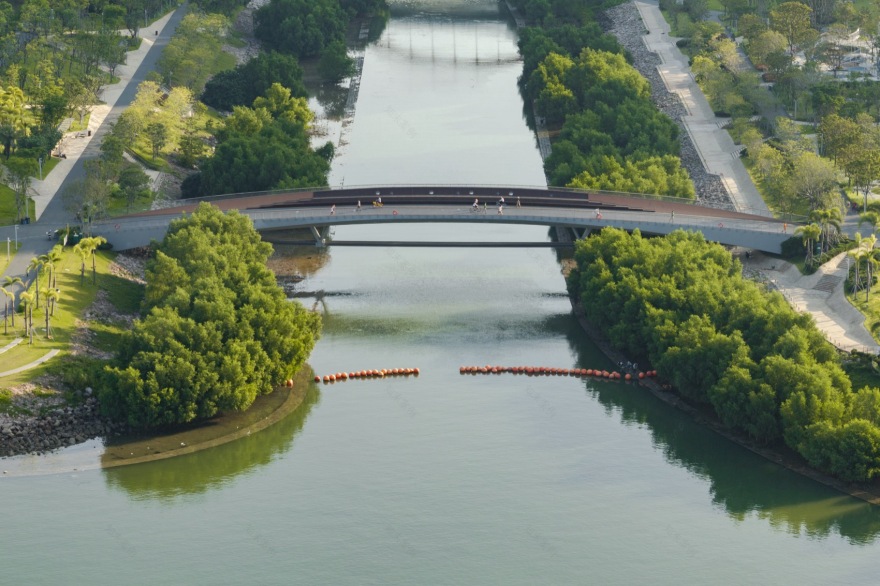
▼跨河桥鸟瞰,aerial view of the cross- river bridge©董博儒
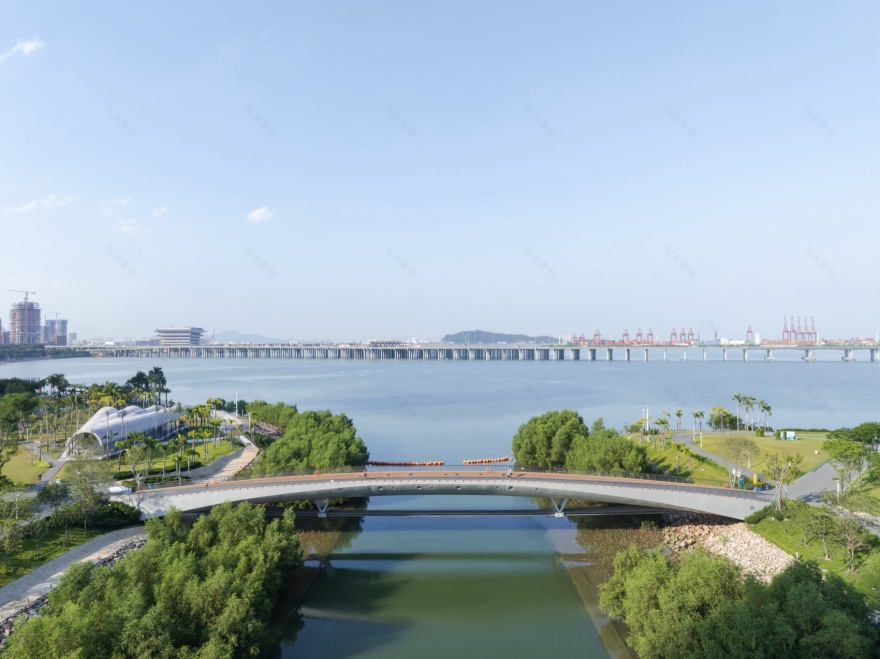
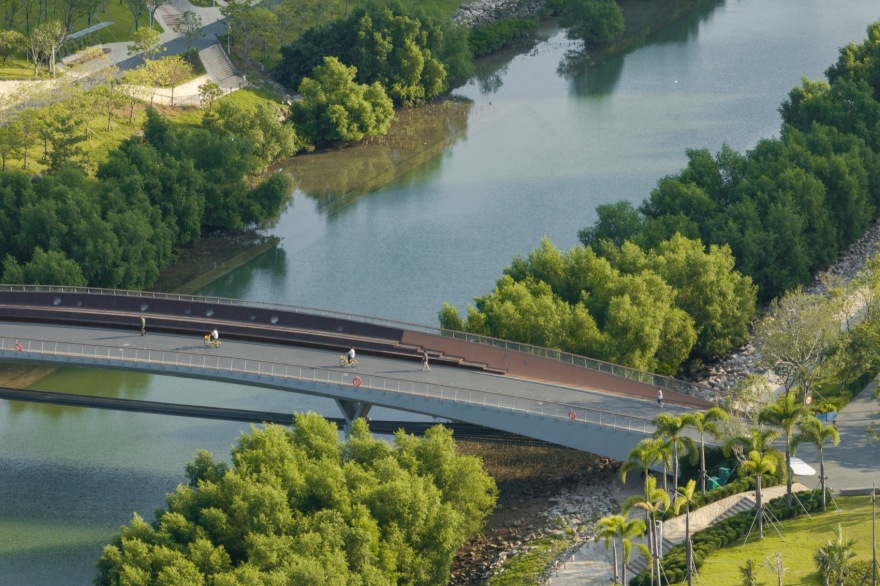
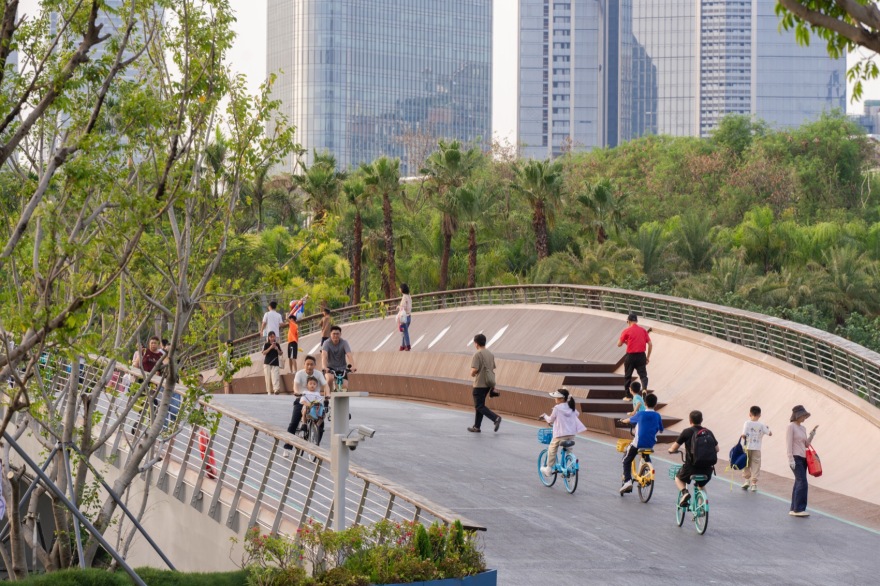
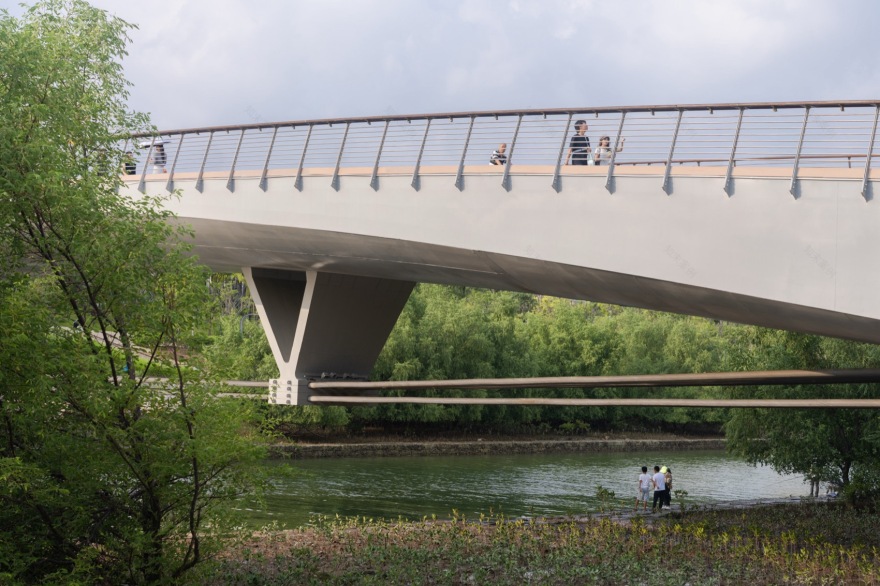
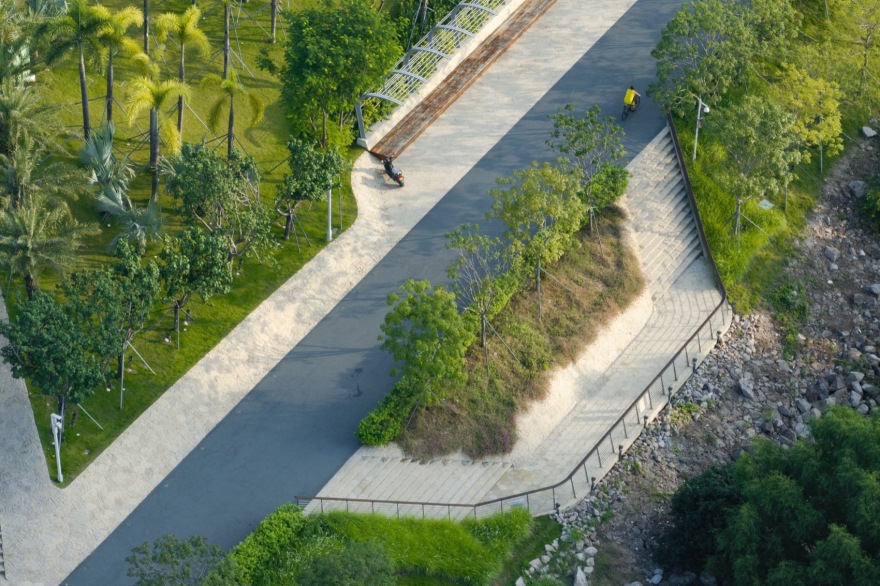
这座弧形断面箱式简支张弦体系坦拱桥梁,全长108米,桥宽8.6~14米,矢高比1:36~1:22.8,采用突破性的张弦梁结构形式,结合弧形变截面与高矾索的技术创新,实现了桥体的轻盈感与视线的通透性,以“一虹飞渡”的姿态连接前海桂湾段与宝安中心区,完善环湾慢行系统。行人漫步桥上,可尽览环湾景色、观海听浪,实现了建筑、技术与景观的完美融合,与欢乐港湾的摩天轮形成良好的视觉导引与空间对话。
This curved section box-type simply supported cable-stayed arch bridge has a total length of 108 meters, a width of 8.6 to 14 meters, and a rise-span ratio of 1:36 to 1:22.8. It adopts an innovative cable-stayed beam structure, combined with the technical innovation of curved variable cross-section and high-alumina cables, realizing the lightness of the bridge body and the transparency of the line of sight. It connects the Guiwan section of Qianhai and Bao’an Central District in the posture of “a rainbow flying across”, improving the circular bay slow-traffic system. Walking on the bridge, pedestrians can enjoy the panoramic view of the circular bay, watch the sea and listen to the waves, realizing the perfect integration of architecture, technology and landscape, and forming a good visual guidance and spatial dialogue with the Ferris wheel of Happy Harbor.
▼弧形断面箱式简支张弦体系坦拱桥梁,the curved section box-type simply supported cable-stayed arch bridge©董博儒
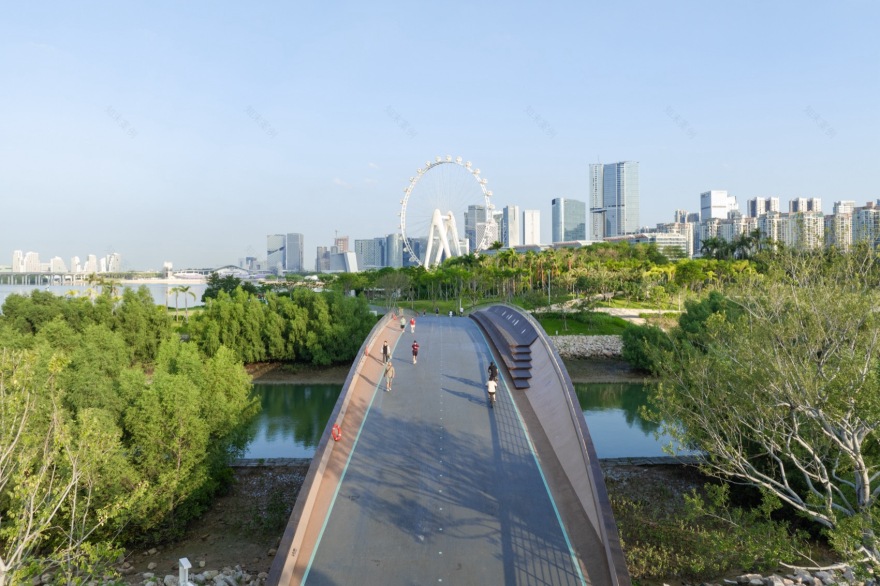
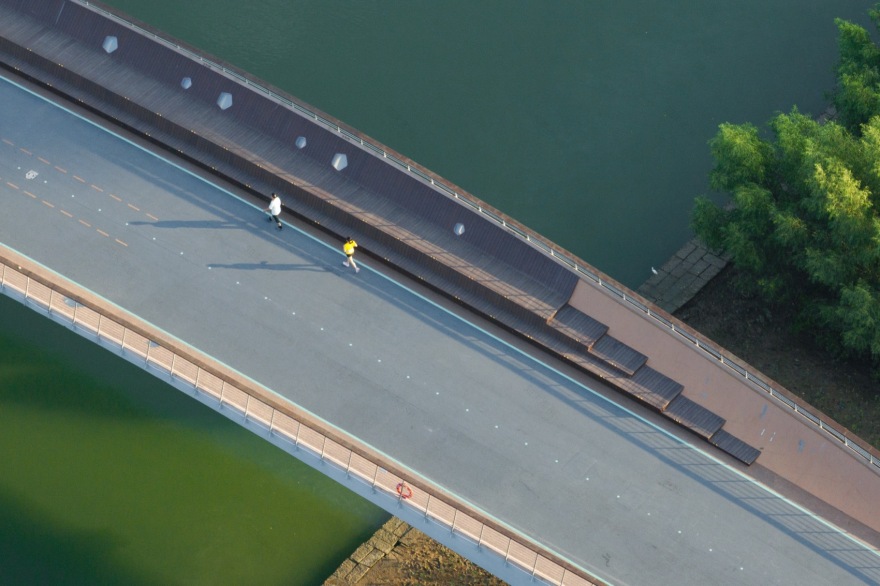
▼跨河桥近景,closer view of the cross-river bridge©董博儒
2. 活动场地:与大地肌理共生的锚固式设计
2. Activity Venues: Anchored Design Symbiotic with the Earth’s Texture
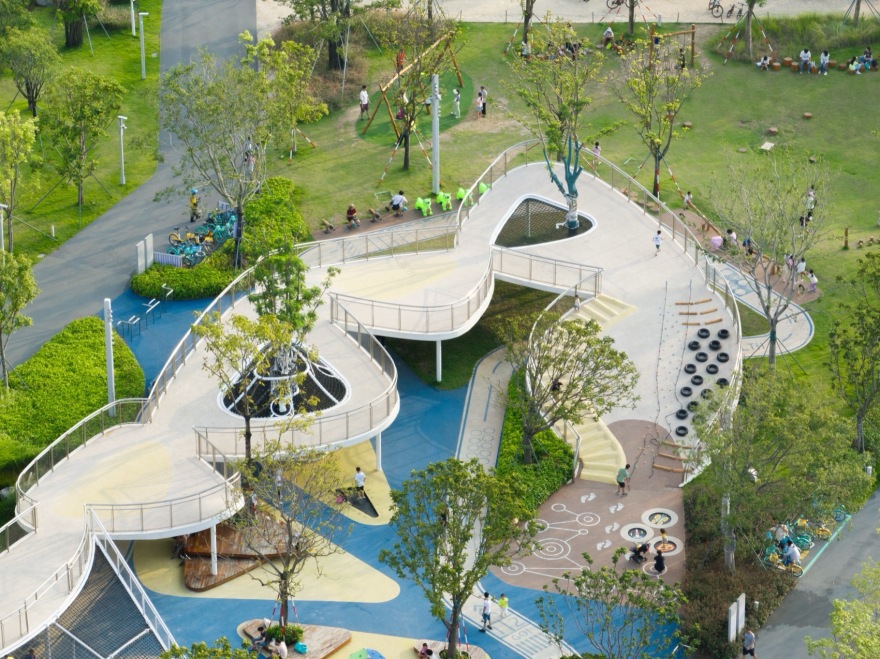
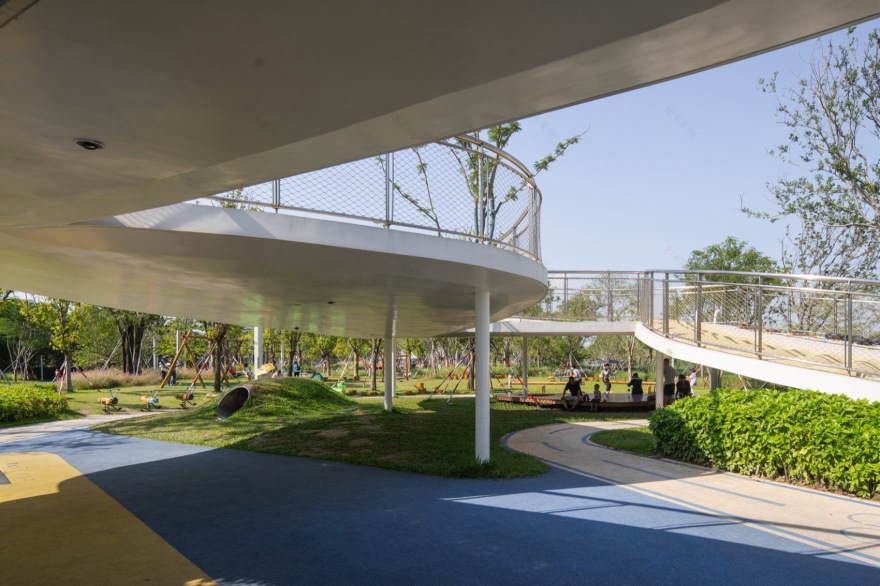
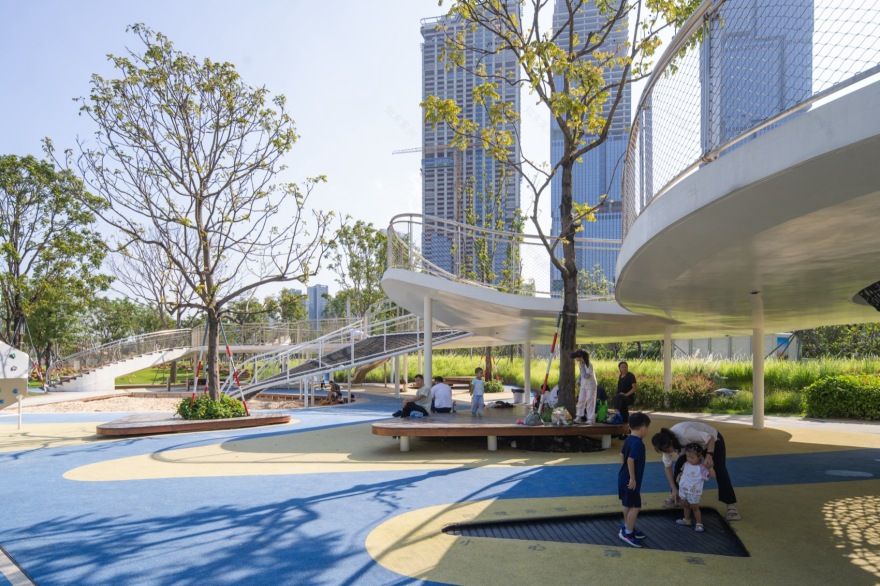
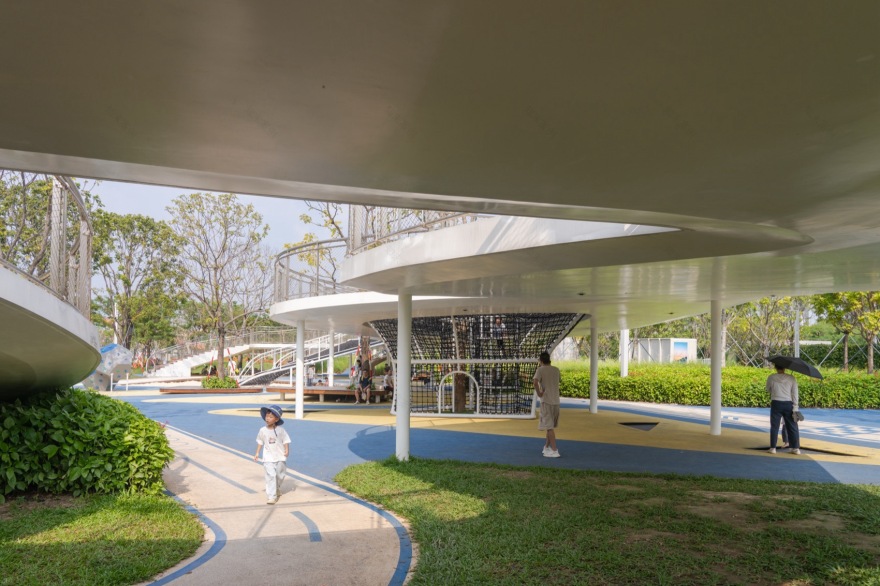
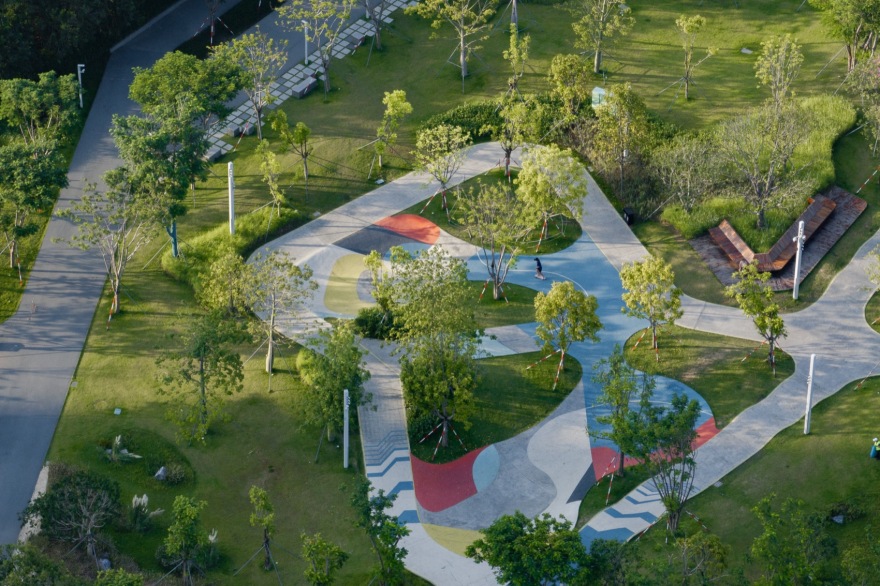
为满足全龄段市民的休闲需求,场地内布局了小轮泵道与儿童游乐设施,但设计并未采用标准化的成品构件,而是坚守“与地形一体化塑型”的重要原则,将活动场地与场地的自然肌理深度融合。无论是小轮泵道的坡度起伏,还是儿童游乐设施的形态营造,都顺应场地原有地形,形成与场地的锚固关系,让设施仿佛是从大地中自然生长而出,既避免了对自然景观的破坏,又让市民在活动中能够更直观地感受场地的地形特质,实现了休闲功能与自然景观的共生。
To meet the leisure needs of citizens of all ages, BMX pump tracks and children’s amusement facilities are arranged in the site. However, the design does not adopt standardized finished components, but adheres to the important principle of “integrated shaping with the terrain”, deeply integrating the activity venues with the natural texture of the site. Both the slope undulation of the BMX pump track and the shape of the children’s amusement facilities conform to the original terrain of the site, forming an anchoring relationship with the site, making the facilities seem to grow naturally from the earth. It not only avoids damage to the natural landscape but also allows citizens to more intuitively feel the topographical characteristics of the site during activities, realizing the symbiosis of leisure functions and natural landscapes.
▼活动场地鸟瞰,aerial view of the activity venues©董博儒
▼设施底部灰空间,grey space under the facility©董博儒
▼活动场地鸟瞰,aerial view of the activity space©董博儒
▼景观设计近景,closer view of the landscape©董博儒
3. 观海驿站:以拱形为母题的松弛性公共空间
3. Seaview Pavilion: A Relaxed Public Space with Arch as the Motif
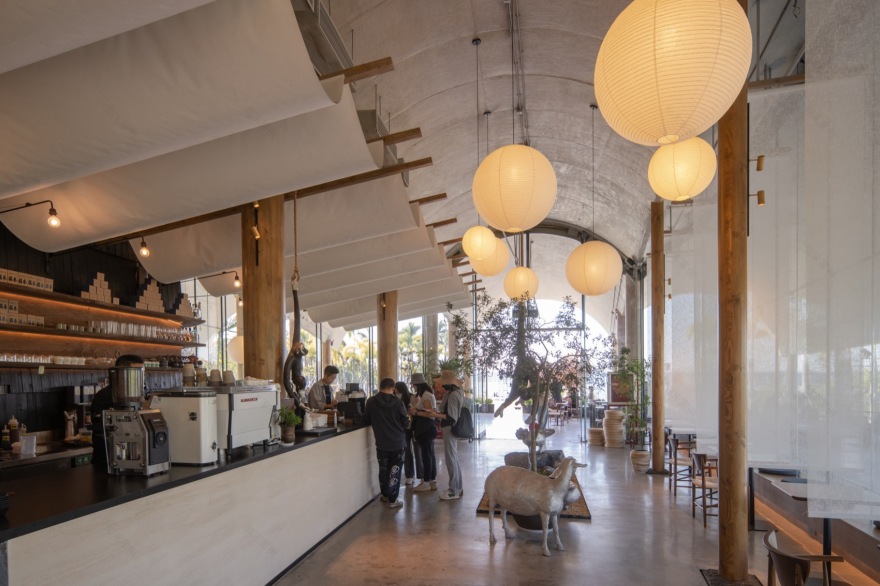
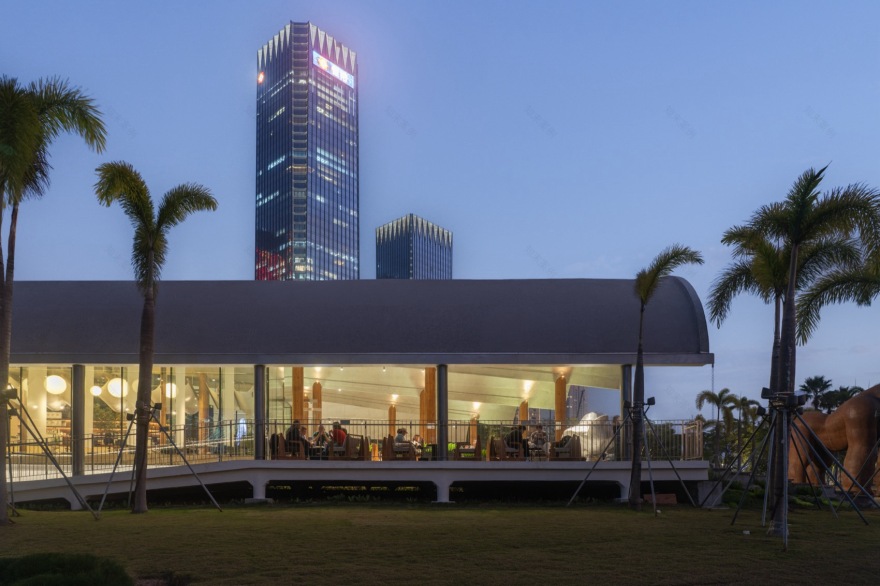
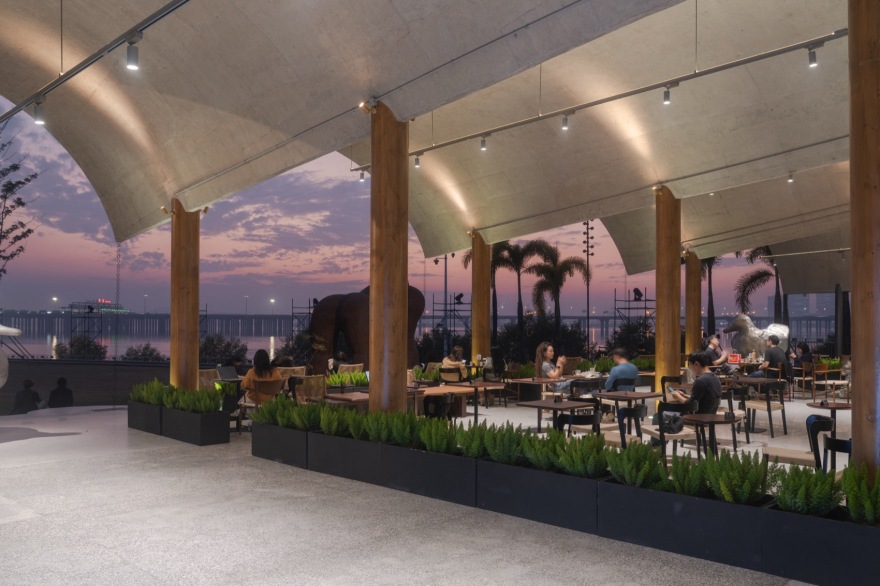
在河口核心位置,我们布局了一处观海驿站,作为市民休憩、观潮、社交的重要场所。驿站以拱形为设计母题,形成由一个拱形舒展至四个拱形的空间特质,秉持“结构即空间”的设计理念,摒弃冗余装饰,打造出干脆简洁的建筑形态。
At the core of the estuary, we have arranged a seaview pavilion as an important place for citizens to rest, watch tides and socialize. With the arch as the design motif, the pavilion forms a spatial characteristic extending from one arch to four arches. Upholding the design concept of “structure is space”, it abandons redundant decorations and creates a simple and concise architectural form.
▼驿站鸟瞰,aerial view of the Seaview pavilion©董博儒
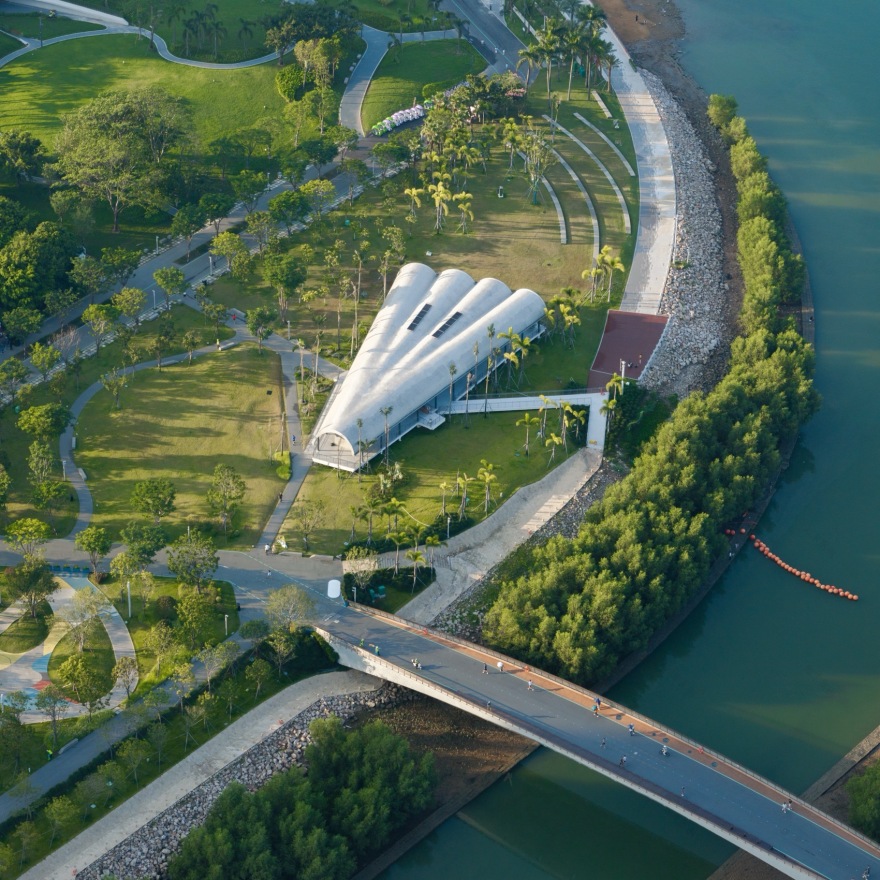
驿站采用面向四周完全打开的设计,模糊了建筑与自然的边界,让海风、潮汐、光影能够自由穿梭其中,营造出松弛、开放的空间氛围。在这里,市民可以静坐观潮,感受河口潮汐的涨落变化;也可以驻足休憩,远眺前海湾区的城市天际线,让建筑成为连接人与自然、城市与海岸的媒介,彰显了公共空间的包容性与亲和力。
The pavilion adopts a fully open design facing all directions, blurring the boundary between architecture and nature, allowing sea breeze, tides and light and shadow to shuttle freely, creating a relaxed and open spatial atmosphere. Here, citizens can sit quietly to watch the tides and feel the ebb and flow of the estuary tides; they can also stop to rest and look at the urban skyline of Qianhai Bay Area in the distance, making the architecture a medium connecting humans and nature, cities and coasts, and highlighting the inclusiveness and affinity of public space.
▼驿站以拱形为设计母题,the arch as the design motif©董博儒
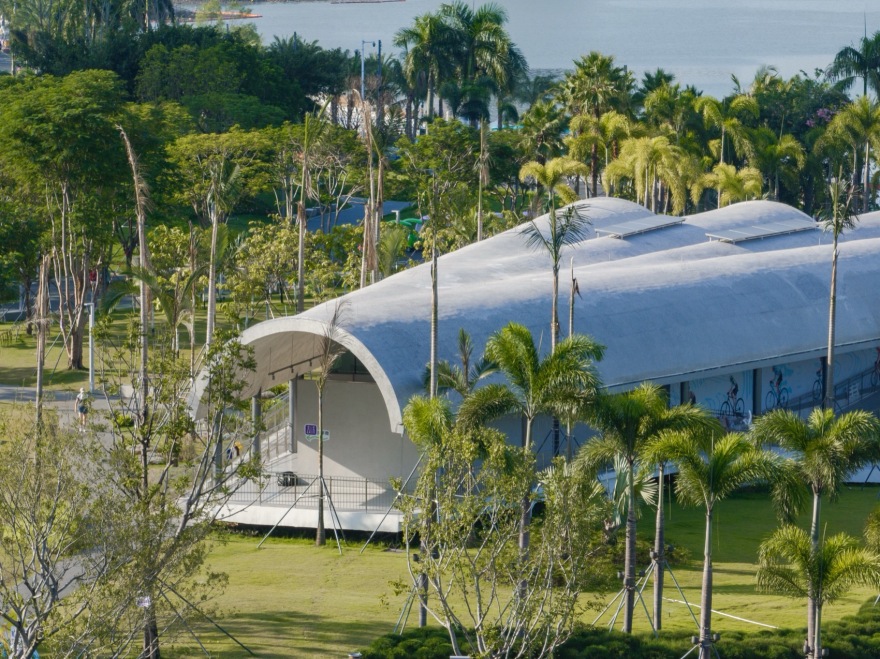
▼拱形屋顶,arch roofs©董博儒
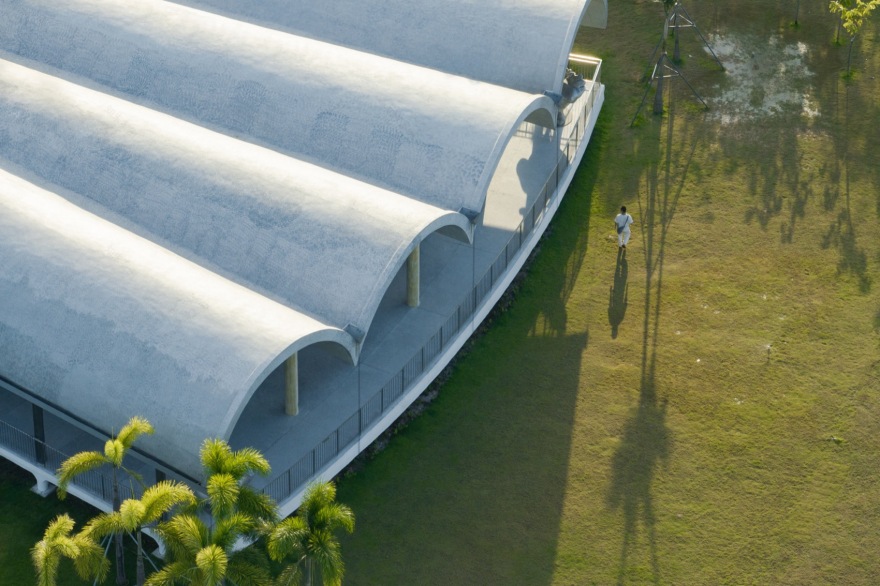
前海中心河河口段滨水景观的建成,是“前海水城”规划理念的一次生动落地。我们没有刻意追求标志性的设计符号,而是以场地记忆为魂、以生态修复为基、以市民需求为本,通过空间缝合、一体化设计,让曾经的城市边界,转变为生态共生、充满活力的公共滨水空间。
The completion of the waterfront landscape at the estuary section of Qianhai Central River is a vivid implementation of the “Qianhai Water City” planning concept. We did not deliberately pursue iconic design symbols, but took site memory as the soul, ecological restoration as the foundation, and citizens’ needs as the orientation. Through spatial stitching and integrated design, the once urban boundary has been transformed into a public waterfront space with ecological symbiosis and vitality.
▼驿站室内外,exterior and interior of the pavilion©董博儒
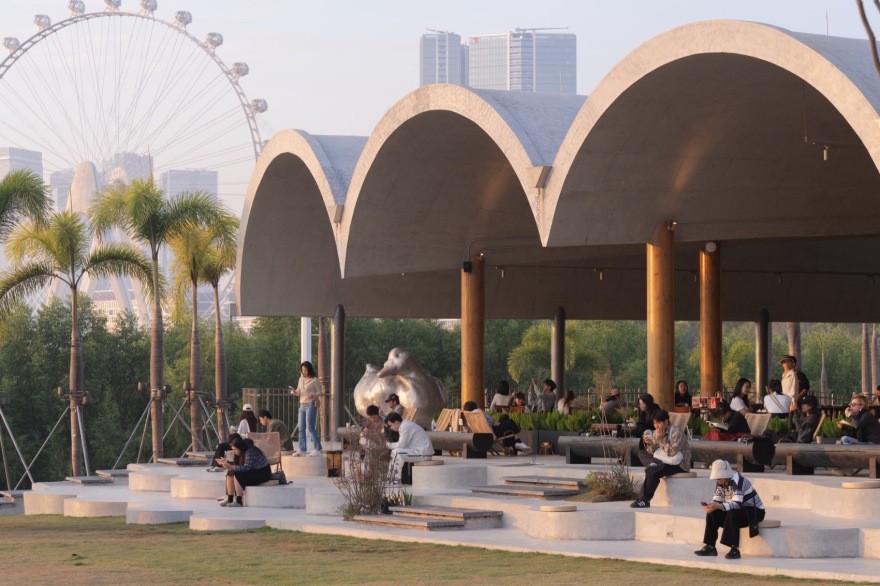
从原生红树林的保留,到孩子们摸螃蟹的场景复刻;从“加厚地表”的跨河桥,到与地形共生的活动场地,再到松弛开放的观海驿站,每一处设计都承载着对场地的敬畏与对生活的热爱。这里不仅是一处滨水景观,更是深圳前海城市精神的缩影——它见证着城市边界的消融,承载着生态修复的初心,也书写着人与自然、城市与海岸共生的新篇章,为前海环湾贯通工程奠定了坚实基础,也为滨海城市滨水景观设计提供了可借鉴的实践样本。
From the preservation of native mangroves to the reproduction of children catching crabs; from the “thickened ground surface” cross-river bridge to the activity venues symbiotic with the terrain, and then to the relaxed and open seaview pavilion, every design carries awe for the site and love for life. This place is not only a waterfront landscape but also a microcosm of the urban spirit of Qianhai, Shenzhen — it witnesses the disappearance of urban boundaries, carries the original intention of ecological restoration, and also writes a new chapter of symbiosis between humans and nature, cities and coasts. It has laid a solid foundation for the Qianhai circular bay connection project and provided a referenceable practical sample for the waterfront landscape design of coastal cities.
▼夜景,night views©董博儒
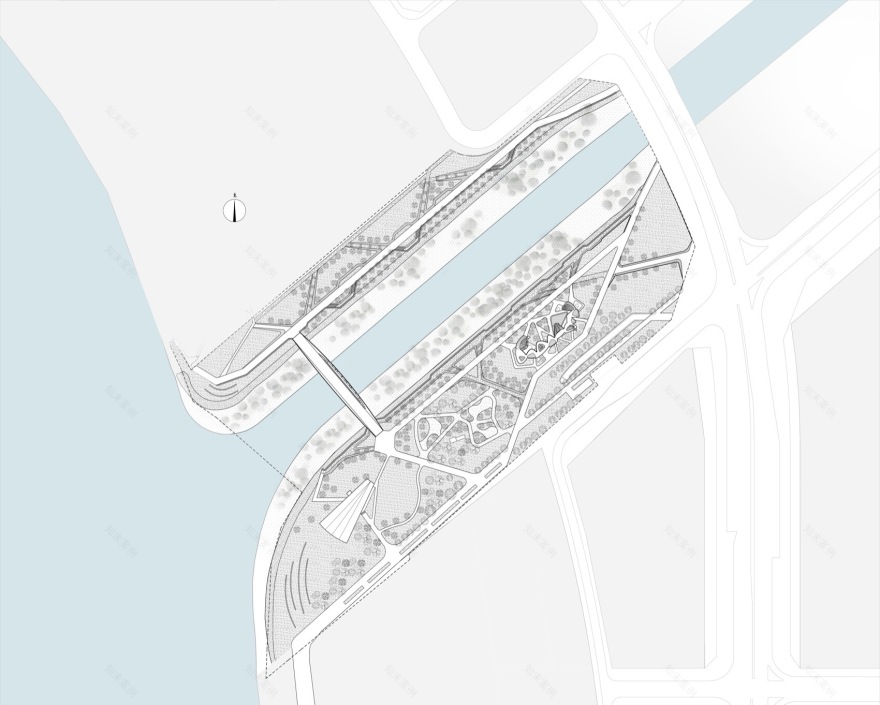
▼总平面图,master plan©原作工作室
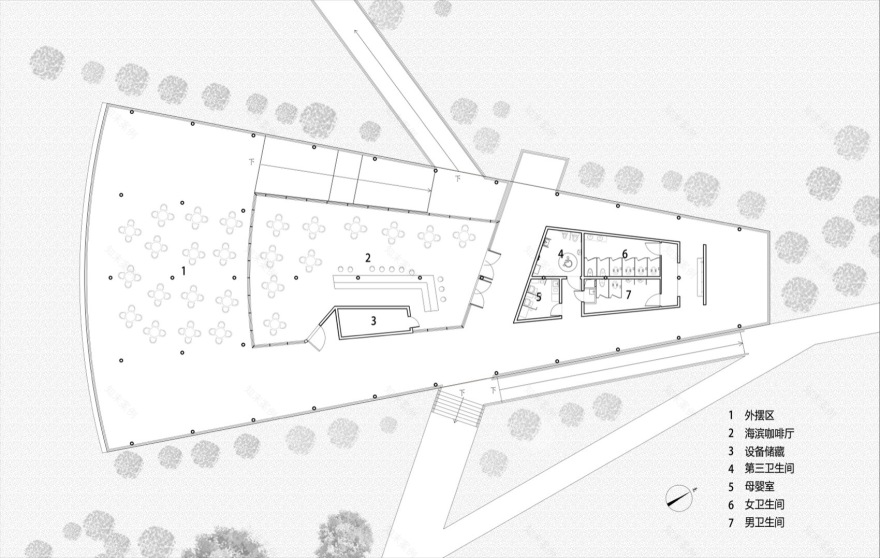
▼驿站平面图,plan of the station©原作工作室
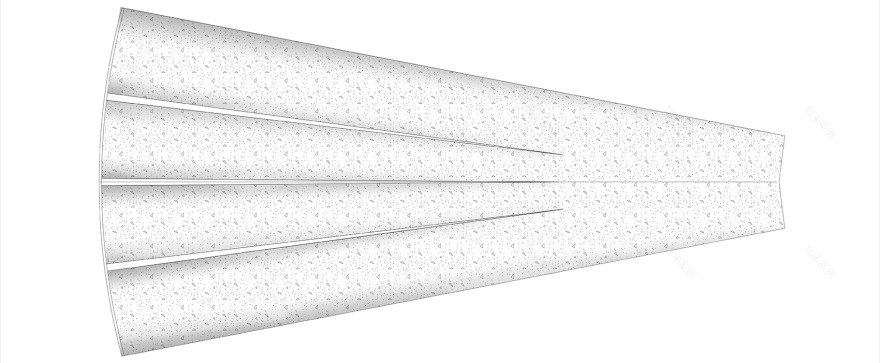
▼驿站屋顶平面图,roof plan of the station©原作工作室
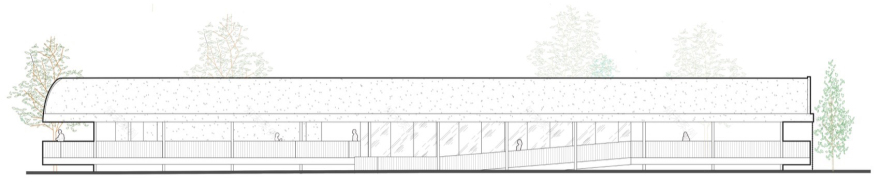
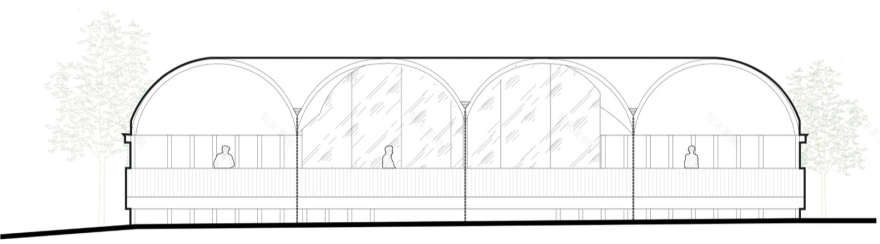
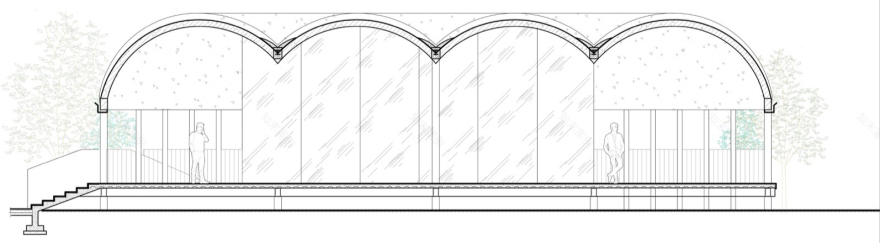
▼驿站立面与剖面图,elevation and section of the station©原作工作室

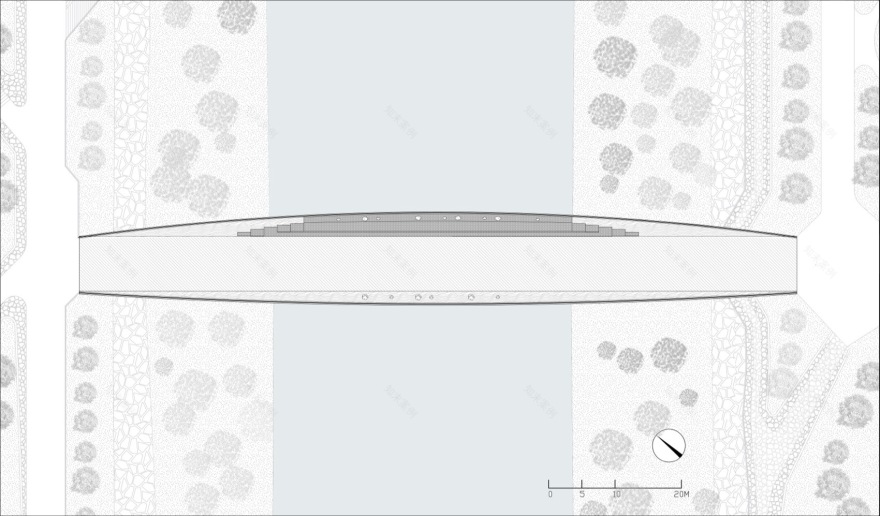
▼跨河桥平面图,plan of the cross-river bridge©原作工作室
▼跨河桥立面图,elevation of the cross-river bridge©原作工作室
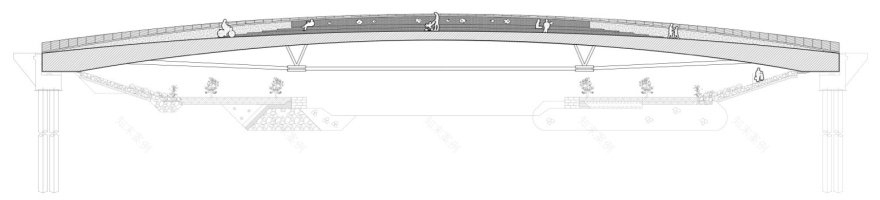
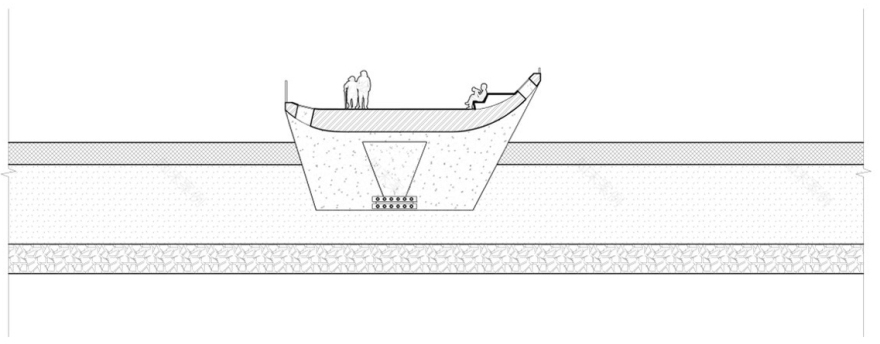
▼跨河桥剖面图,sections of the cross-river bridge©原作工作室
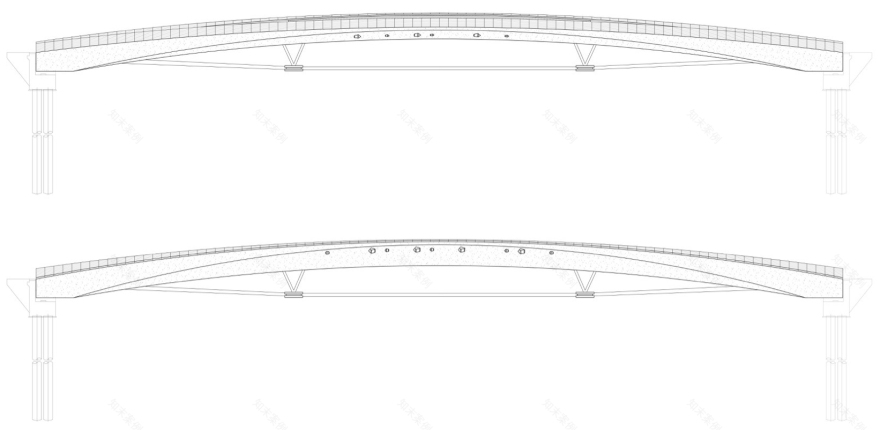
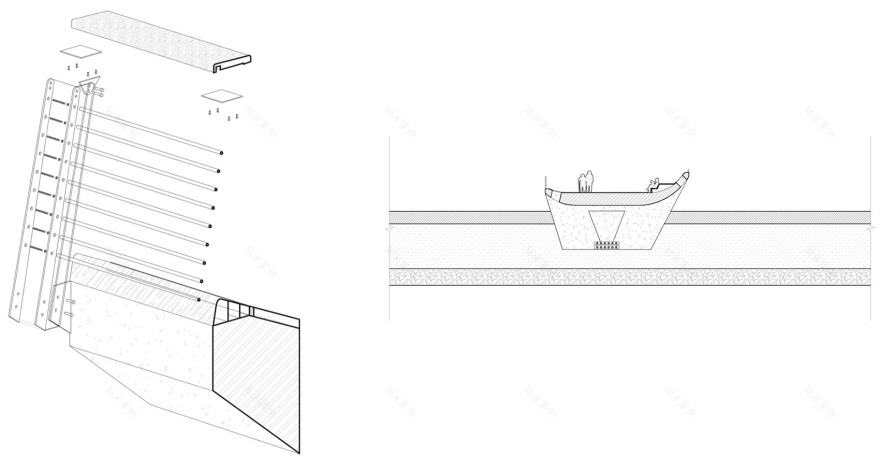
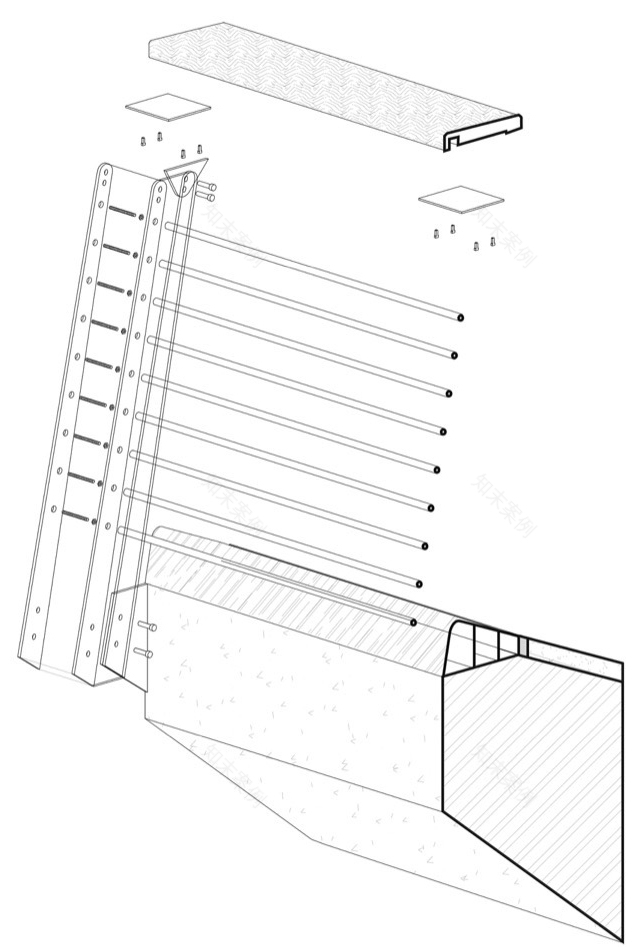
▼跨河桥细部详图,construction details of the cross-river bridge©原作工作室
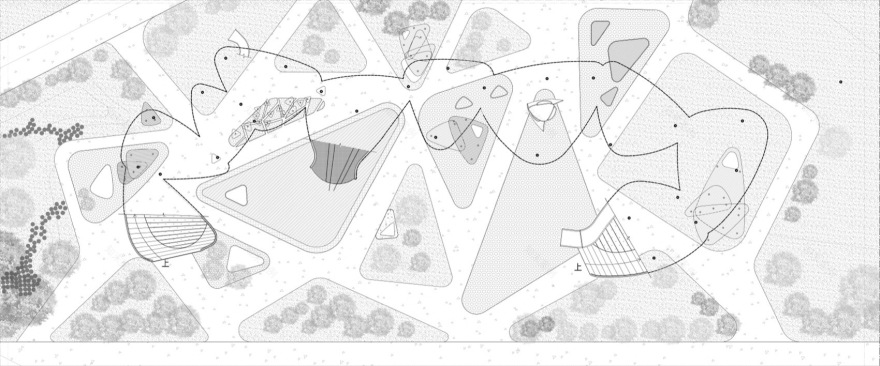
▼儿童廊架总平面图,master plan of the children’s facility©原作工作室
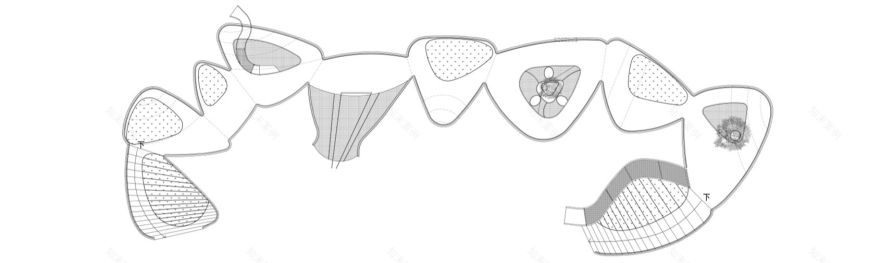
▼儿童廊架平面图,plan of the children’s facility©原作工作室
▼儿童廊架立面图,elevation of the children’s facility©原作工作室

项目名称:深圳市前海石公园前海中心河河口段
项目地点:深圳市桂湾一路领海大道交叉口
建设单位:深圳市前海建设投资控股集团有限公司
代建单位:华侨城集团有限公司
用地面积:117642平方米
建筑物面积:967平方米
设计时间:2020.11~2025.11
方案设计单位:同济大学建筑设计研究院(集团)有限公司原作设计工作室
主创建筑师:章明、张姿、秦曙
方案设计团队:叶佳怡、张奕晨、李雪峰、苏婷、石佳鑫、刘欣彤、刘佳琳(实习)
桥梁设计:万杰龙,赵佳男,贾周寒,孙龙,曹哲,曲慧。
照明设计:杨秀 卞晨 蔡融 王信 魏燕萌 温海兰
初步设计及施工图设计单位:广州山水比德设计股份有限公司:孙虎,蔡盛林,刘典,潘波宇,何靖,宋韧强,颜龙,方昭雅,李槟,黄玉隆,叶远鹏,刘常龙,黄嘉琪,曾颐戎,罗青怡
广州市天作建筑规划设计有限公司:孙晓丽,李述嘉
Project Name: Estuary Section of Qianhai Central River, Qianhai Stone Park, Shenzhen
Project Location: Intersection of Guiwan 1st Road and Linghai Avenue, Shenzhen
Construction Unit: Shenzhen Qianhai Construction Investment Holding Group Co., Ltd.
Agent Construction Unit: Overseas Chinese Town Group Co., Ltd.
Land Area: 117,642 square meters
Building Area: 967 square meters
Design Period: November 2020 ~ November 2025
Scheme Design Unit: Original Design Studio, Tongji University Architectural Design and Research Institute (Group) Co., Ltd.
Chief Architects: Zhang Ming, Zhang Zi, Qin Shu
Scheme Design Team: Ye Jiayi, Zhang Yichen, Li Xuefeng, Su Ting, Shi Jiaxin, Liu Xintong, Liu Jialin (Intern)
Bridge Design: Wan Jielong, Zhao Jianan, Jia Zhouhan, Sun Long, Cao Zhe, Qu Hui
Lighting Design: Yang Xiu, Bian Chen, Cai Rong, Wang Xin, Wei Yanmeng, Wen Hailan
Preliminary Design and Construction Drawing Design Unit: Guangzhou Shanshui Bide Design Co., Ltd.: Sun Hu, Cai Shenglin, Liu Dian, Pan Boyu, He Jing, Song Renqiang, Yan Long, Fang Zhaoya, Li Bin, Huang Yulong, Ye Yuanpeng, Liu Changlong, Huang Jiaqi, Zeng Yirong, Luo Qingyi
Guangzhou Tianzuo Architectural Planning and Design Co., Ltd.: Sun Xiaoli, Li Shujia
南京喵熊网络科技有限公司 苏ICP备18050492号-4知末 © 2018—2020 . All photos and trademark graphics are copyrighted by their owners.增值电信业务经营许可证(ICP)苏B2-20201444 苏公网安备 32011302321234号
苏公网安备 32011302321234号客服
消息
收藏
下载
最近