

创作上传
VIP
收藏下载
登录 | 注册有礼
查看完整案例

收藏

下载

分享

翻译
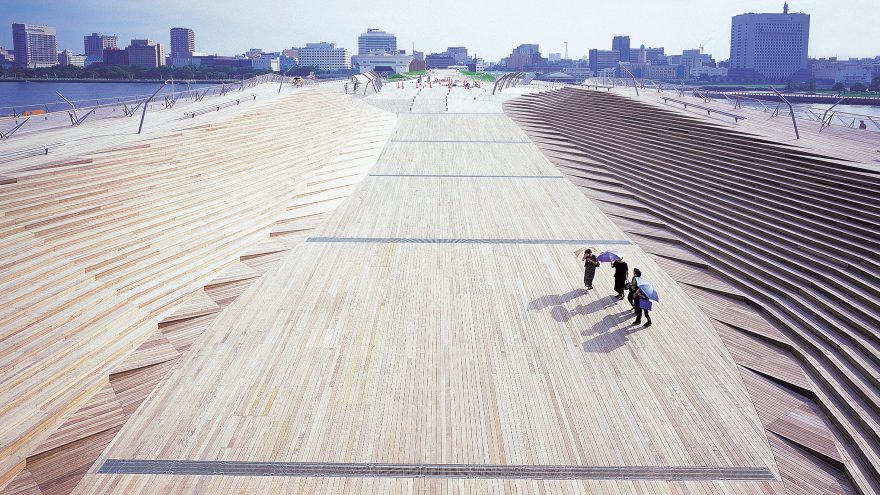
Continuing our parametricism series, we look at the futuristic Yokohama International Port Terminal designed by Foreign Office Architects, which was one of the first high-profile parametric buildings.
Opened in 2002, Yokohama International Port Terminal was designed by Foreign Office Architects (FOA) at a time when computational design was gaining increasing prominence.
Yokohama International Port Terminal was designed by FOA. Photo by Satoru Mishima
The project was the first building designed by FOA, which was led by architects Farshid Moussavi and Alejandro Zaera-Polo.
Speaking to Dezeen, Moussavi described the project as a "manifesto" that combined what they had learned about architecture with how digital tools could be used within the design process.
"[It was a] manifesto of what we believed," she said. "Everything seemed new because we were dealing with things that we hadn't been taught – it's almost like everything we were taught was being redefined."
It was one of the first major buildings designed using digital tools. Photo by Satoru Mishima
The project was one of the first major buildings where computational tools were instrumental to the design process, leading Patrik Schumacher, who coined the term parametricism, to call it the first "mature piece" of parametric architecture.
"The first mature piece, which also got built, was FOA's Yokohama ferry terminal," he told Dezeen. "It was the first major project built in the style."
However, Moussavi distinguishes the parametric thinking that went into the design from the parametricism style that was later defined by Schumacher.
"I think it's about parametric thinking rather than parametricism as a style, even though parametricism has parametric thinking within it," she said.
The building was designed as "a landscape". Photo by Satoru Mishima
Moussavi and Zaera-Polo won the extremely high-profile design contest, which, with 630 entries, was Japan's largest architecture contest to date, while working as tutors at the Architectural Association (AA) in London.
"We were sitting in the bar of the AA and Shin Egashira – another tutor who was from Yokohama – came to us with a poster and said, 'look, you should do this competition?'"
"We thought, we better do it and we are going to do it based on what we want, rather than worry about winning – in our drawings, it didn't really look like a building," she continued.
"And, so we submitted it and were shocked when we got shortlisted to the final three."
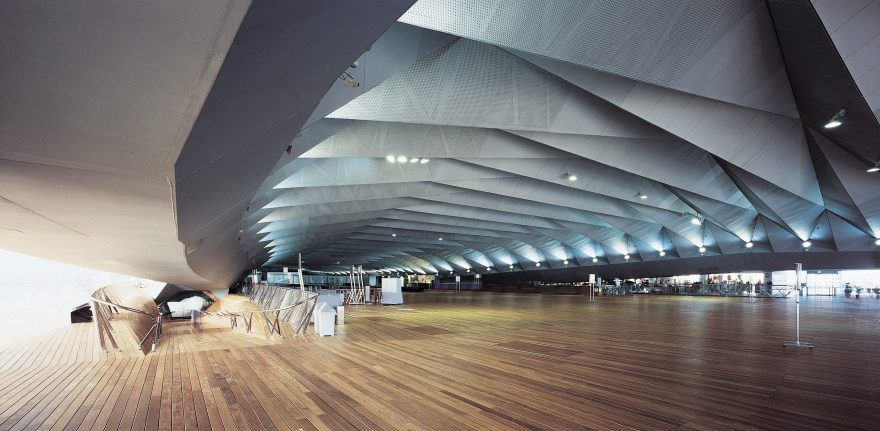
Patrik Schumacher called the building the first "mature piece" of parametric architecture
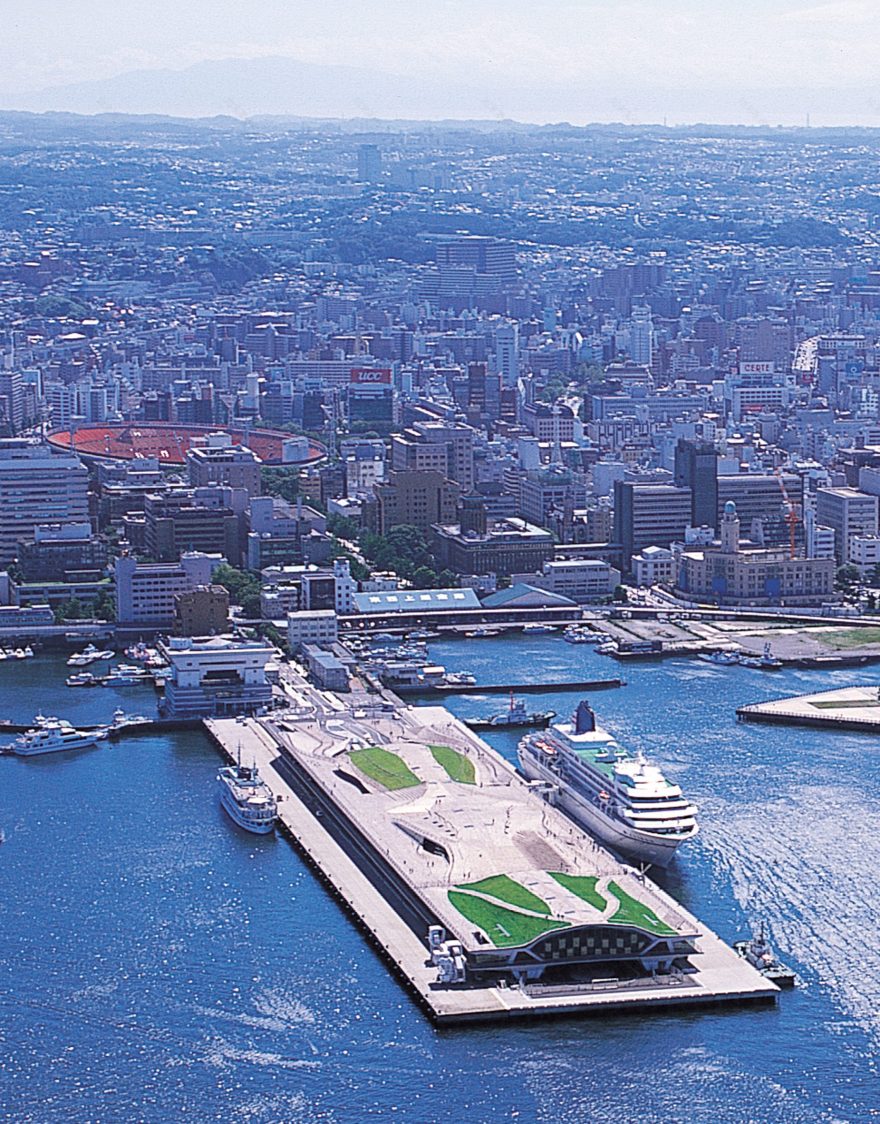
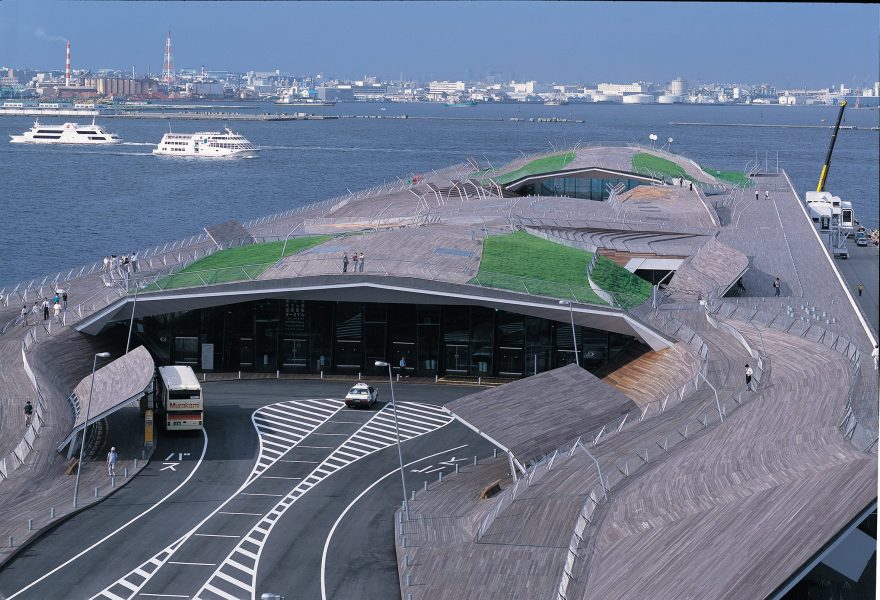
FOA's design envisioned the 430-metre-long terminal building as a landscape, with a publicly accessible rooftop above the terminal facilities.
According to Moussavi, this ideal was the primary driver for the form of building, with digital tools used to achieve it.
"The idea was that the terminal would be designed as a landscape," she explained.
"We wanted it to be an open public space where anyone could access any part – to make a public facility rather than having a ferry terminal where you only go to travel."
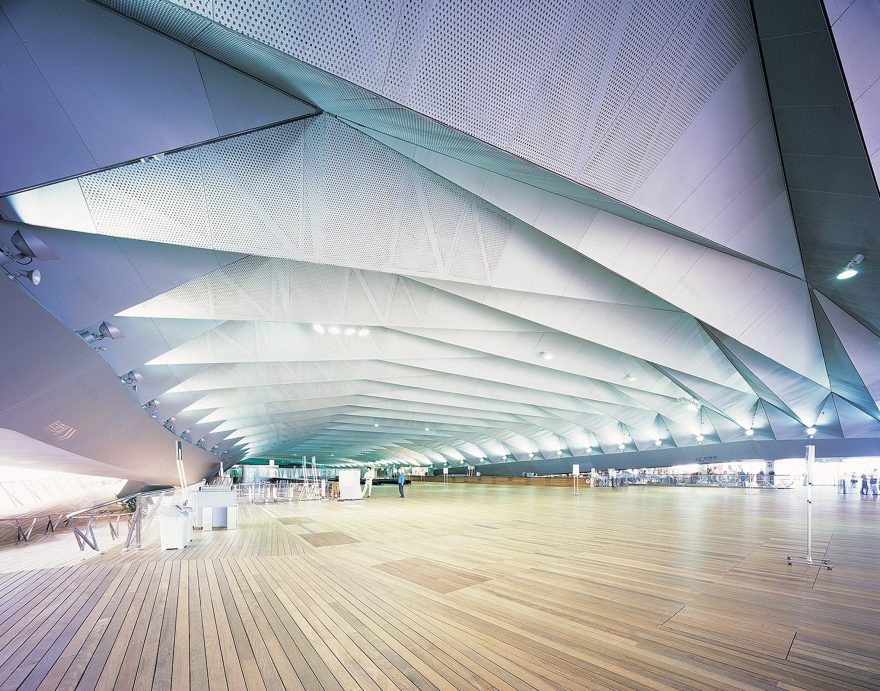
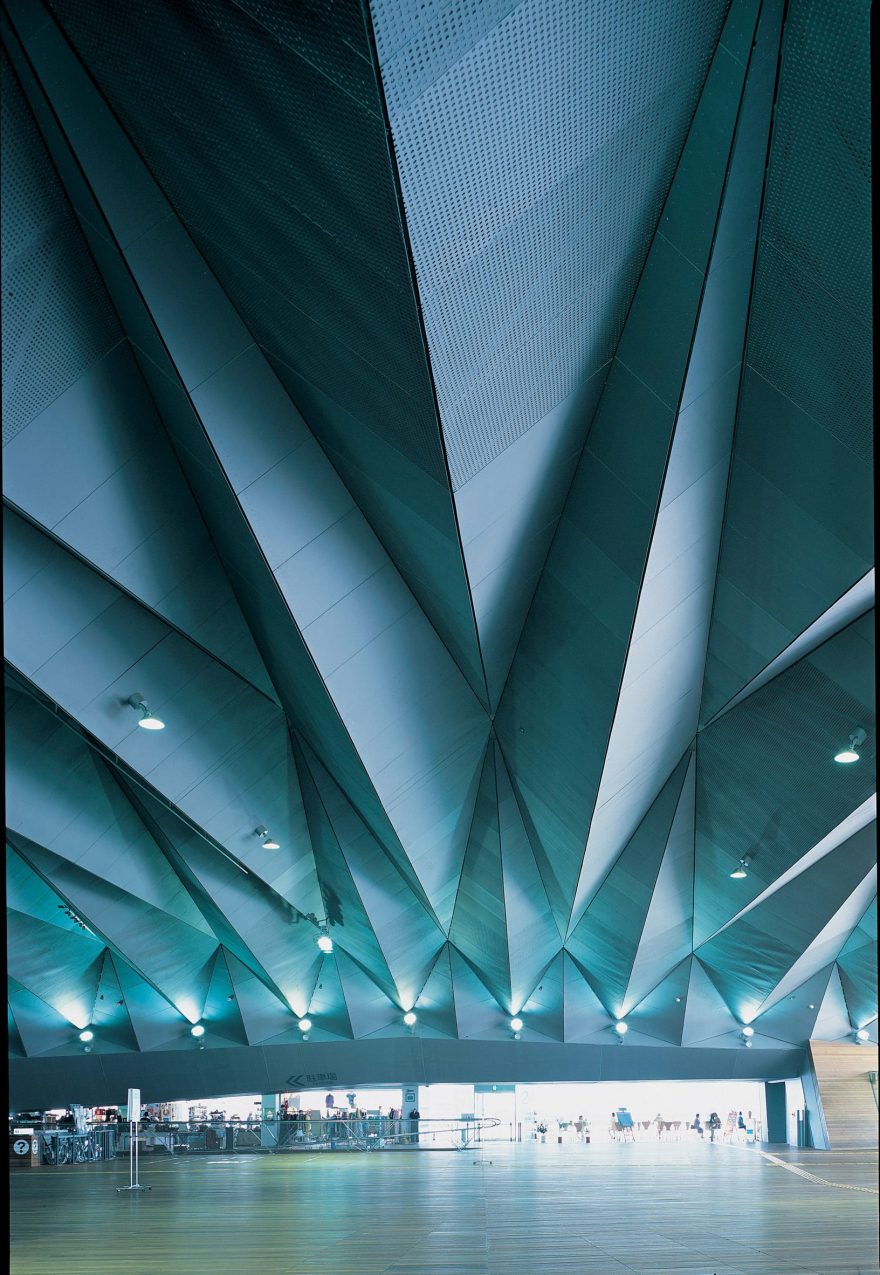
The building has numerous faceted forms
Moussavi explained that the building was designed using digital tools, rather than being designed and then translated into a digital form by a CAD technician.
"Yokohama was actually one of the first projects as part of FOA where we were sitting down designing and thinking in CAD," she said.
"I'm not saying we were the only ones, but it was definitely one where we drew ourselves on the computer. We were not sitting next to a CAD technician."
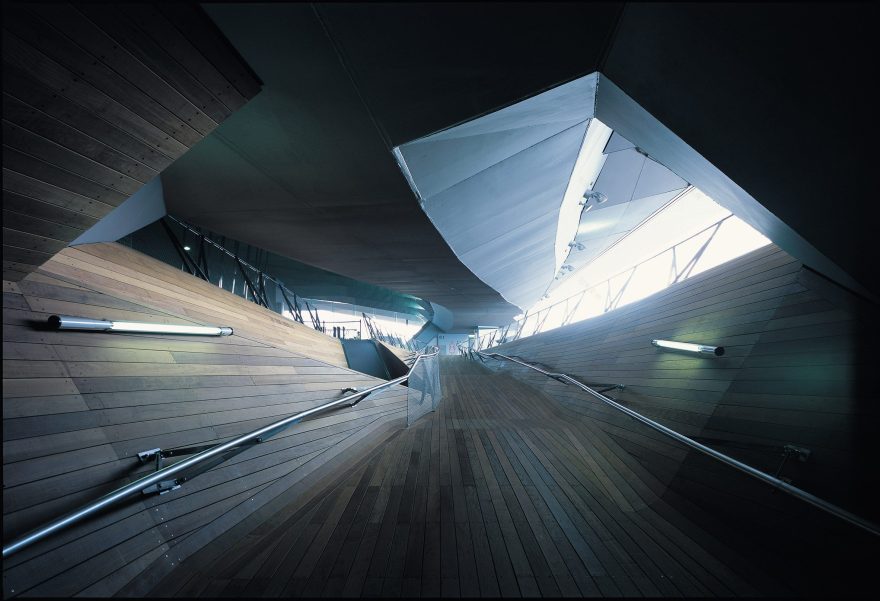
The building was designed with numerous ramps to enable the flow of people. Photo by Satoru Mishima
Along with the use of digital design tools, the building's curved forms and faceted surfaces give it an aesthetic that aligns with parametricism.
However, according to Moussavi, the curved forms were the result of the function of the building, rather than the digital tools that were used to design it.
"It was performance-driven and very much about control, rather than letting the tools generate the form for us," she said.
"Yokohama is an interesting case, because it happens to be curved, but I don't think it's driven by the form – it happened that the form needed was a topography that needed to be smoothed."
She added that FOA saw digital tools as a way of achieving their designs, rather than something that would lead the design process.
"I think there is a difference in terms of how you approach architectural authorship, you know," she said. "We were controlling the form, rather than celebrating emergence in terms of using computers to generate the form."
"I don't think our interest has ever been in the use of digital tools as a start, but more about what digital tools allow us to do that we didn't have before."
After numerous design iterations and eight years of construction, Yokohama International Port Terminal opened to widespread praise and drew attention to new design opportunities of computational design.
The photography is by Ramon Pratt, unless stated.
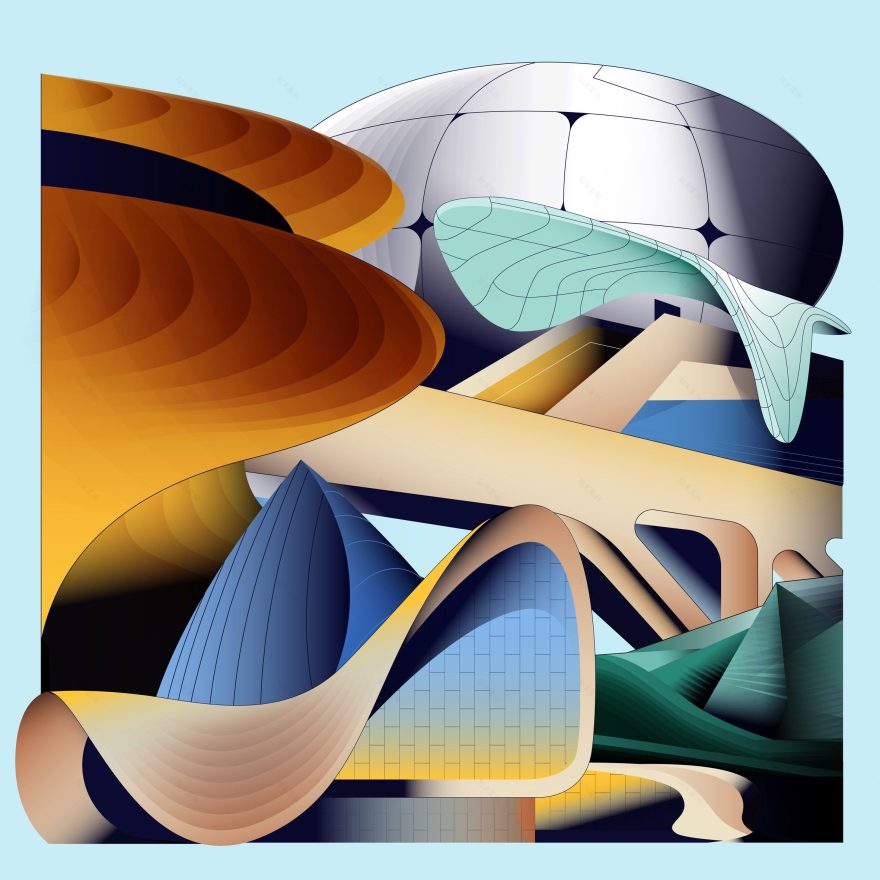
Illustration by Jack Bedford
Parametricism
This article is part of our series on parametricism, the theory of architecture developed by Zaha Hadid Architects principal Patrik Schumacher that lays claim to becoming the 21st century's defining style.
南京喵熊网络科技有限公司 苏ICP备18050492号-4知末 © 2018—2020 . All photos and trademark graphics are copyrighted by their owners.增值电信业务经营许可证(ICP)苏B2-20201444 苏公网安备 32011302321234号
苏公网安备 32011302321234号客服
消息
收藏
下载
最近