

创作上传
VIP
收藏下载
登录 | 注册有礼
查看完整案例

收藏

下载

分享
项目位于惠州市下浪村,罗浮山下,法云寺东南侧。两条溪水自场地东侧与西南侧汇入山谷,周边竹林茂密,地势起伏舒缓。湿热多雨、气候多变,是岭南山地常有的状态。北宋时,苏东坡谪居惠州,曾留下“夏至临溪濯足”的人生乐事;山林与溪水之间,至今仍延续着一种缓慢而清晰的生活节奏。我们将居所轻轻隐入场地一侧,筑成一处自然低调、避世安居的雅致之所。
The project is located in Xialang Village, Huizhou, at the foot of Mount Luofu and to the southeast of Fayun Temple. Two streams converge into the valley from the east and southwest of the site. Surrounded by dense bamboo groves and gently undulating terrain, the site is shaped by the humid, rainy, and changeable climate typical of the Lingnan mountain region. During his exile in Huizhou in the Northern Song dynasty, Su Dongpo once wrote of the simple pleasure of cooling one’s feet by a stream on the summer solstice. Between mountains, forests, and flowing water, the place still preserves a slow and lucid rhythm of life. The design gently sets the dwelling to one side of the site, creating a quiet and understated retreat embedded in nature.
▼场地毗邻 218 最美旅游公路,位于两溪交汇处的一片三角形地块,The venue is adjacent to the 218 Most Beautiful Tourist Road and is located in a triangular plot at the confluence of the two rivers© 刘章悦
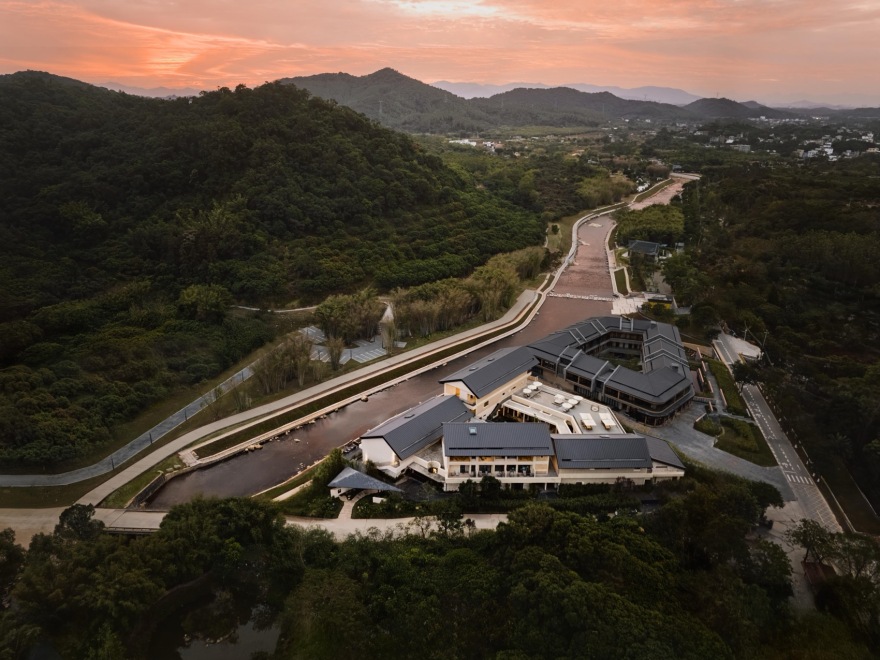
在既有场地框架内,方案以园林式布局回应周边环境,并通过体量错动的开口缝隙和不同朝向的建筑界面营造,使山水、植被、光影与自然气息缓慢渗入建筑内部,在日常起居中形成持续而细致的感知。
Within the existing site framework, the scheme responds to its surroundings through a garden-like spatial arrangement. Openings created by the shifted building volumes and interfaces facing different directions allow mountains, water, vegetation, light, shadow, and the atmosphere of the site to gradually permeate the interior, forming a continuous and delicate perception within daily life.
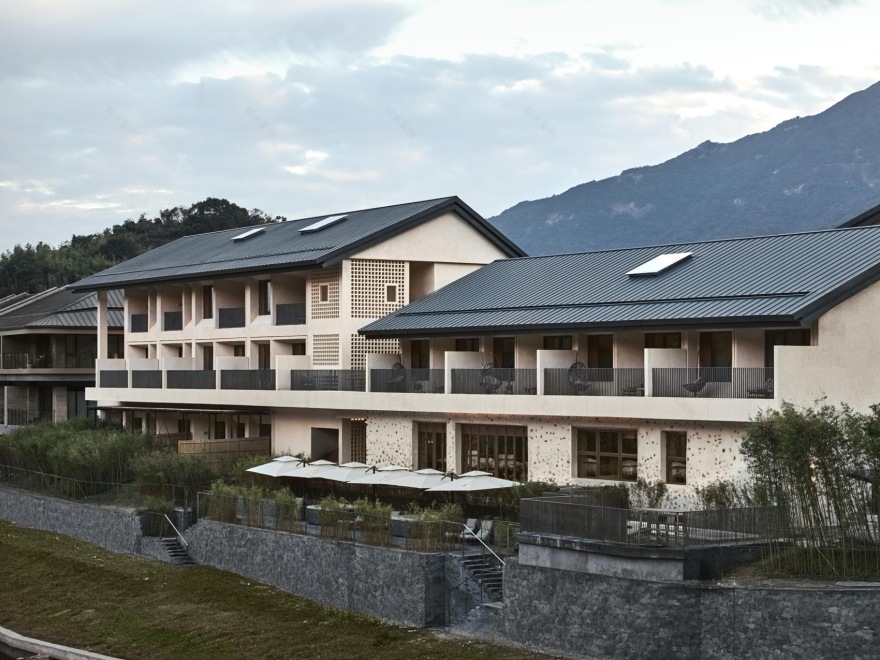
▼坡屋顶与罗浮山山势遥相呼应,The pitched roof echoes the terrain of Luofoshan© 刘章悦
▼面向罗浮山打开的院落,The courtyard facing Luofushan © 刘章悦
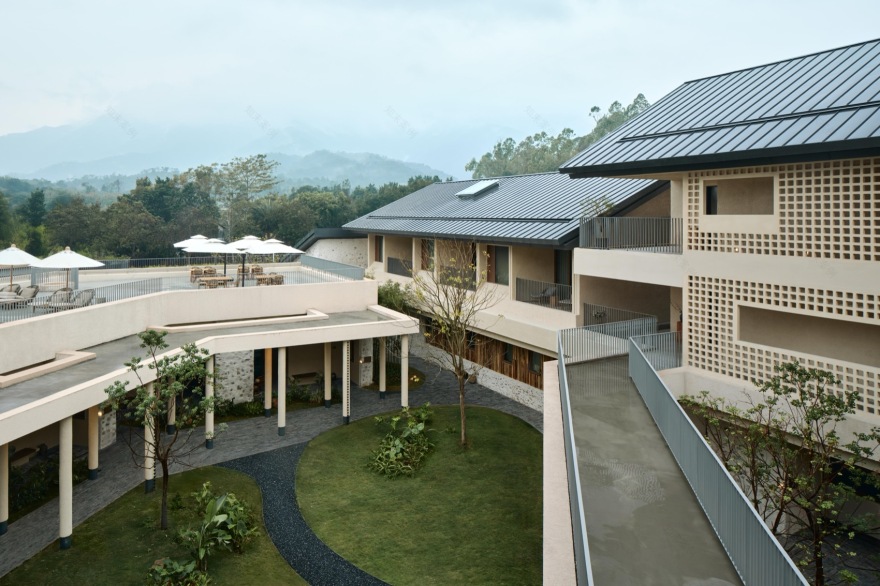
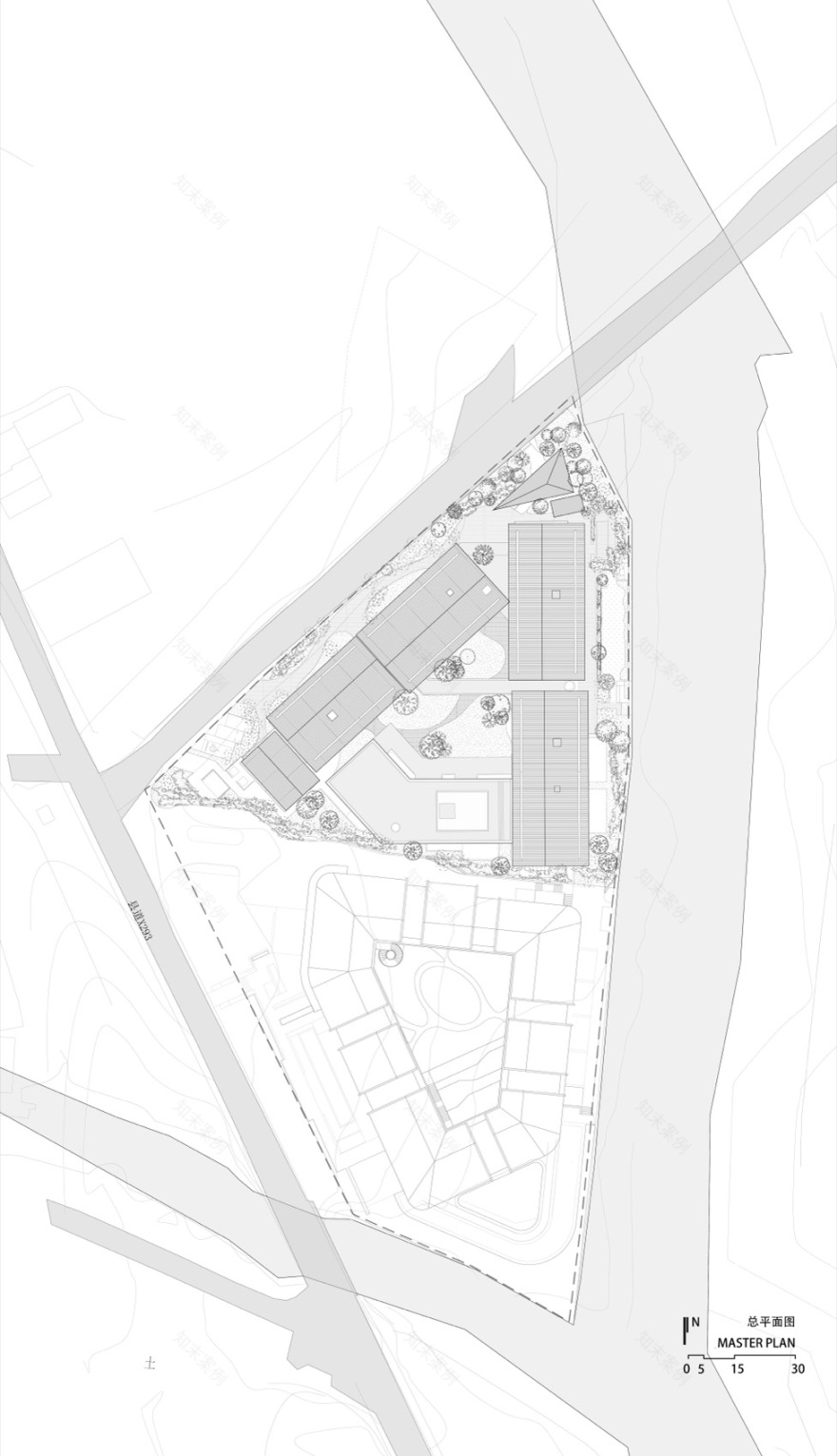
建筑体量沿三个方向围合出核心庭院。两栋较高体量之间留出开口,使庭院朝西南方向展开,并与罗浮山建立起视线上的联系。各体量之间并不完全闭合,而是通过灰空间与连廊相互衔接,形成不同尺度的缝隙与过渡界面,在模糊室内外边界的同时,将植被、光线与自然通风引入建筑内部。坡屋顶则在体量关系上回应周边山势。由此,建筑景观与环境景观不再是单向的主从关系,而是在彼此渗透、有机串联中形成整体构架。
The building volumes enclose a central courtyard from three directions. An opening between the two taller volumes extends the courtyard towards the southwest, establishing a visual connection with Mount Luofu. Rather than closing the volumes completely, the design links them through semi-outdoor spaces and corridors, creating gaps and transitional interfaces at different scales. These spaces blur the boundary between interior and exterior while bringing vegetation, light, and natural ventilation into the building. The pitched roofs further respond to the surrounding mountain profile. As a result, architecture and landscape no longer exist in a hierarchical relationship, but are interwoven into an integrated spatial structure.
▼建筑在自然间展开,以低调的体量融入环境,The building unfolds within nature, integrating into the environment with a low-profile form© 刘章悦
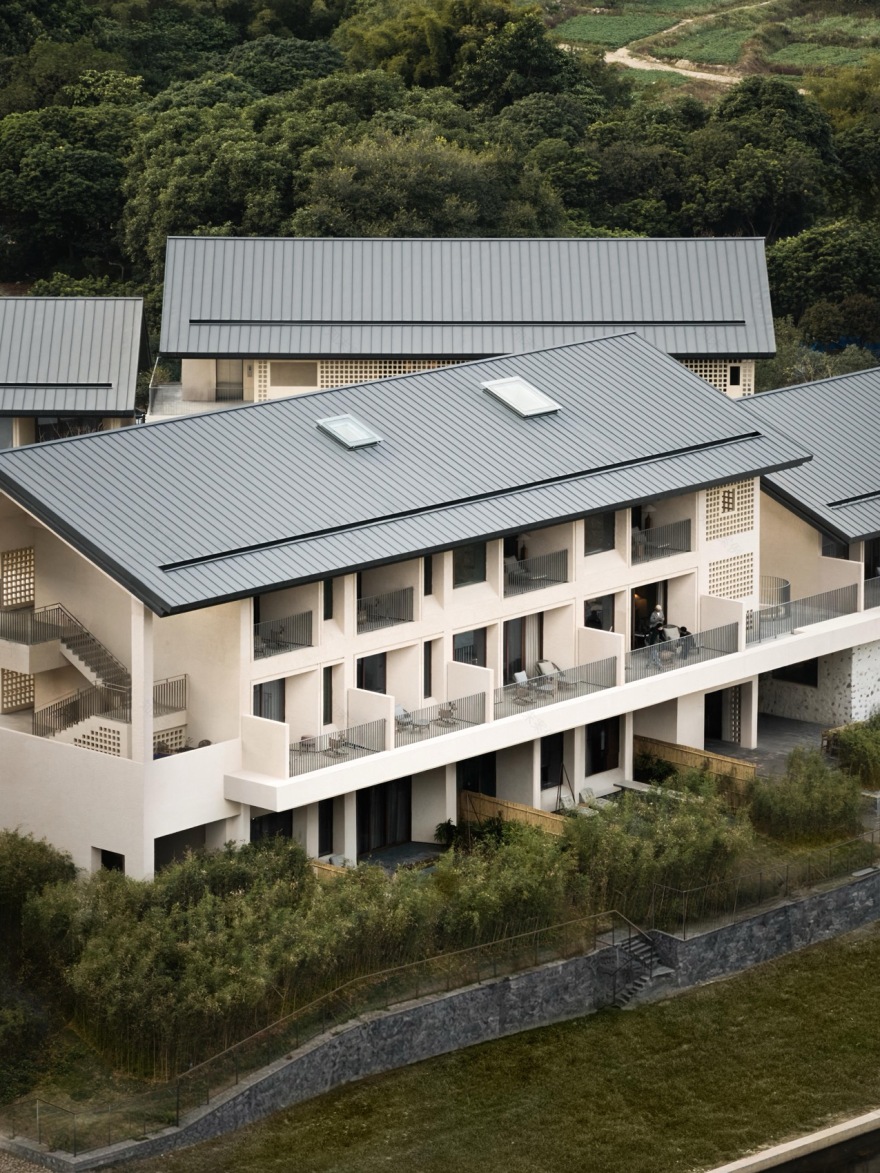
▼建筑体量融入环境绿植,The building volume integrates with the surrounding green plants© 刘章悦
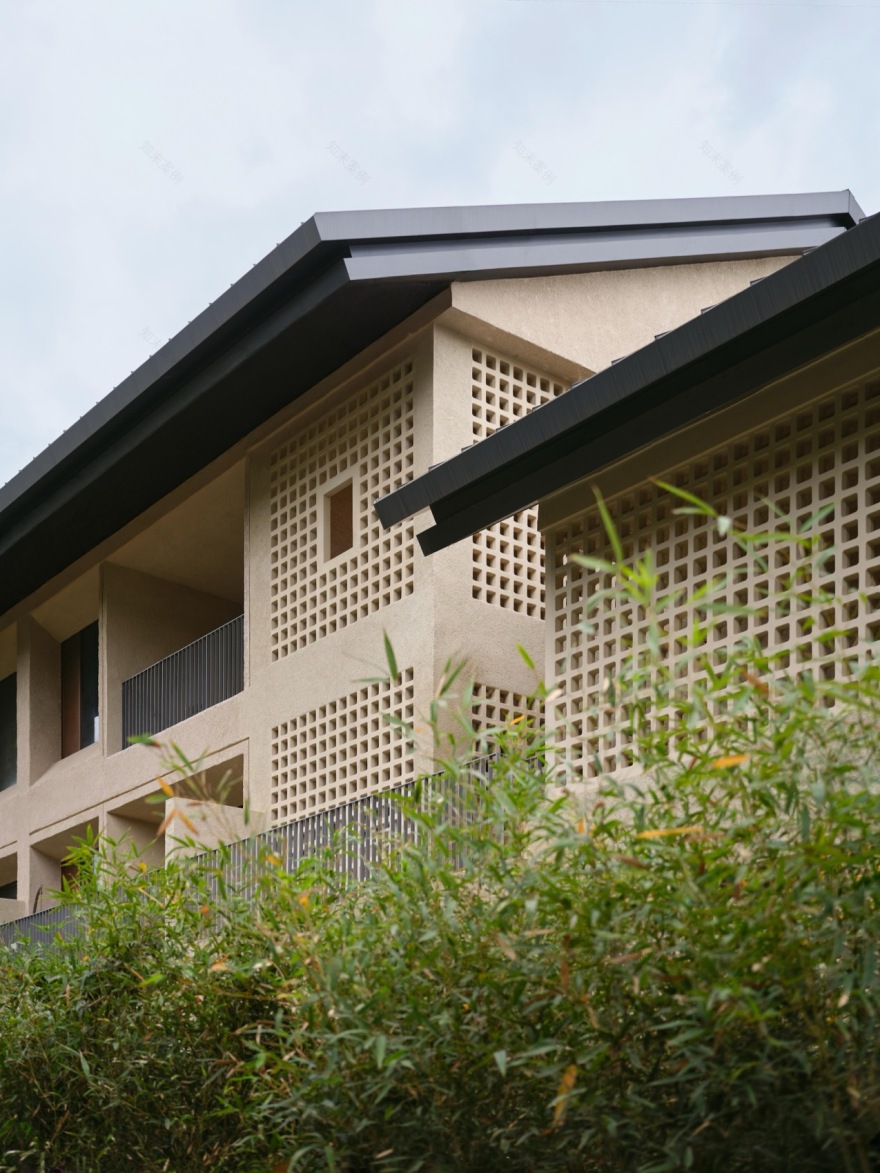
岭南灰空间的转译与回廊叙事
A Lingnan Interpretation of Semi-Outdoor Space
岭南地区的建筑常以开敞流动的空间形态与通透疏朗的界面,应对高温多雨的气候条件。项目延续这一建造逻辑,通过灰空间的转折过渡与回廊的串联,组织起整体空间结构;体量之间的错动,则进一步形成丰富的开口与过渡界面,使建筑与周边环境产生自然呼应。
Architecture in the Lingnan region has often responded to hot, rainy climates through open, fluid spatial forms and light, permeable interfaces. This project continues that construction logic. Through the turns and transitions of semi-outdoor spaces, together with the continuity of the corridors, the overall spatial structure is organised. The shifted volumes further generate a series of openings and transitional interfaces, allowing the building to establish a natural dialogue with its surroundings.
▼建筑生长在场地中,以谦逊的姿态融入自然,The building grows within the site, integrating itself into nature with a humble demeanor© 刘章悦
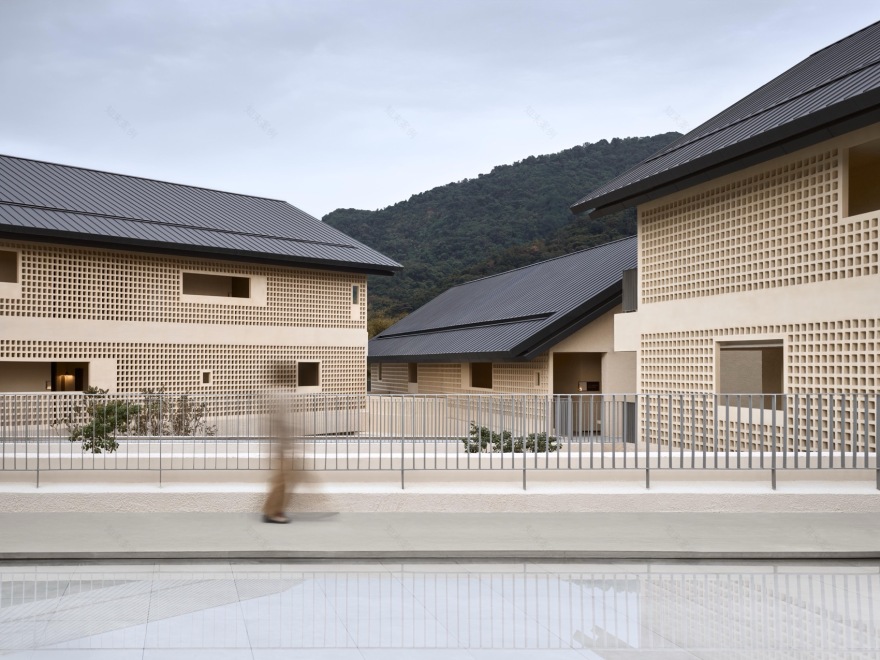
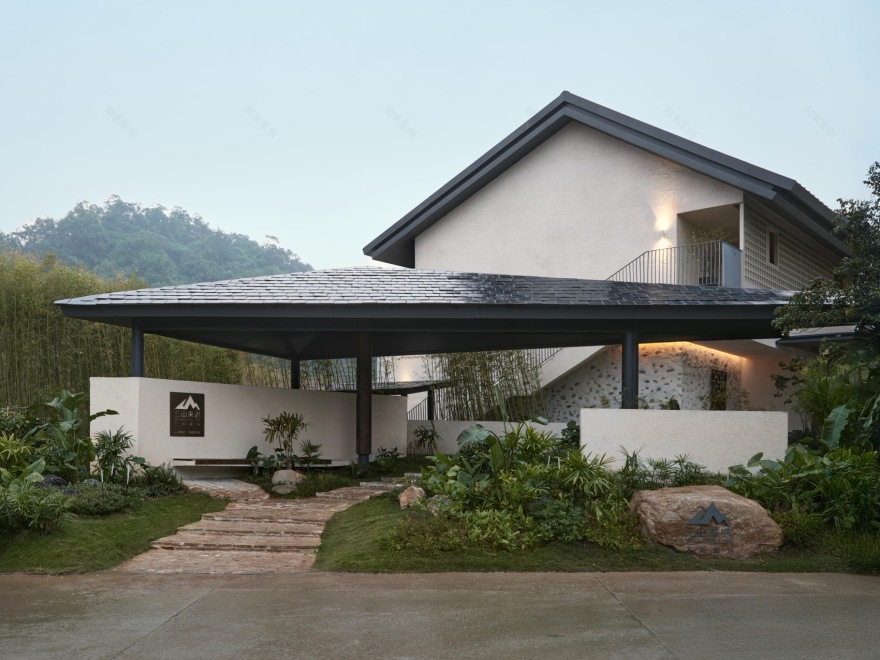
入口远离主路,需穿过一段竹林小径后抵达建筑。路径的延长使到达过程变得更为缓慢,也在建筑与环境之间建立起一层渐进的过渡。对于来访者而言,这不仅是空间上的引导,也是一种心理节奏的调节:随着脚步逐渐靠近入口,日常的喧嚣被慢慢放下,山居的静谧随之展开。穿过入口处的三角檐亭后,门厅位于两处高起体量的连接处,同时也是三角形内院的端点。由此开始,上层体量的出挑在首层形成连续的灰空间,并围绕核心庭院串联起各个功能空间。
The entrance is set away from the main road and is reached through a bamboo path. This extended approach slows the arrival sequence and creates a gradual transition between the building and its environment. For visitors, the transition is not only spatial, but also psychological: as one moves towards the entrance, the noise of everyday life is gradually left behind, and the quietness of mountain living begins to unfold. After passing through the triangular entrance pavilion, the foyer is located at the junction of two raised volumes and also marks the end point of the triangular inner courtyard. From here, the upper volumes project outward, forming a continuous semi-outdoor space at ground level that connects the various functional areas around the central courtyard.
▼入口空间掩映在绿植之间,The entrance space is hidden among the green plants© 刘章悦
从入口三角亭开始,空间以三进院的方式层层展开,并经由门厅在视线上彼此渗透,形成自然流动的室内外交互关系。空间的开放性主要来自体量之间的脱离:三组体量并非紧密咬合,而是在体块间通过转折与错动,留出不同尺度、不同方向的缝隙,形成兼具采光、通风与视线引导作用的过渡空间。通过这些缝隙,周边植被、水面反光与远山景观被引入内部;景色也被裁切为若干竖向片段,如园林中的移步换景一般,随脚步移动而不断重组,使庭院、连廊与室内空间之间形成更连续、流动的整体关系。
Starting from the triangular entrance pavilion, the space unfolds in a sequence of three courtyards. Through the foyer, the courtyards visually permeate one another, forming a fluid relationship between interior and exterior. The openness of the space comes primarily from the separation between the volumes. The three building masses are not tightly interlocked; instead, through shifts and turns between them, gaps of different scales and orientations are created. These gaps function as transitional spaces for daylight, ventilation, and framed views. Through these openings, surrounding vegetation, reflected water, and distant mountain views are drawn into the interior. The scenery is cut into a series of vertical fragments, like shifting views in a garden, continuously reconfigured as one moves through the space. In this way, the courtyards, corridors, and interiors form a more continuous and fluid spatial whole.
▼连廊穿行在相互渗透的院落之间,The corridor runs through the interconnected courtyards© 刘章悦
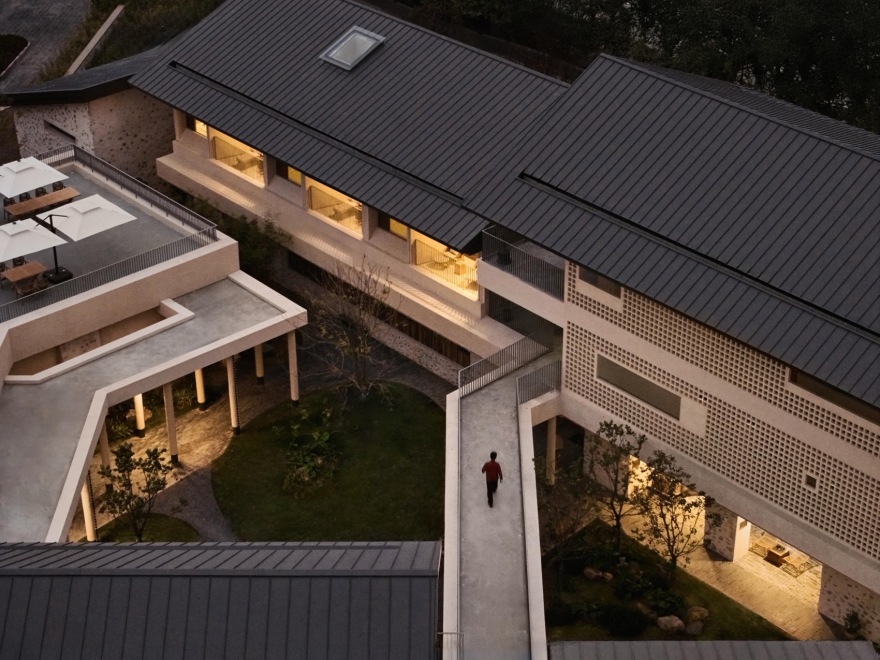
灰空间串联起体量之间的缝隙,形成连续的交通与停留界面。人在其间穿行时,空间尺度、光影与视角不断变化,周边环境也以更动态的方式被引入建筑内部。高低错落的坡屋面在整合体量关系的同时,回应了场地气候与周边环境:既顺应远处罗浮山的山体轮廓,也适应场地高温多雨的气候条件。
Semi-outdoor spaces connect the gaps between the volumes, forming continuous interfaces for circulation and pause. As one moves through them, the scale of space, light and shadow, and viewing angles constantly change, allowing the surrounding environment to enter the building in a more dynamic way. The staggered pitched roofs integrate the volumetric composition while responding to both climate and context: they echo the outline of Mount Luofu in the distance and adapt to the hot, rainy conditions of the site.
▼建筑体量错动与灰空间的设置,将四周景色引入,The displacement of the building volume and the arrangement of the gray space have brought the surrounding scenery inside© 刘章悦
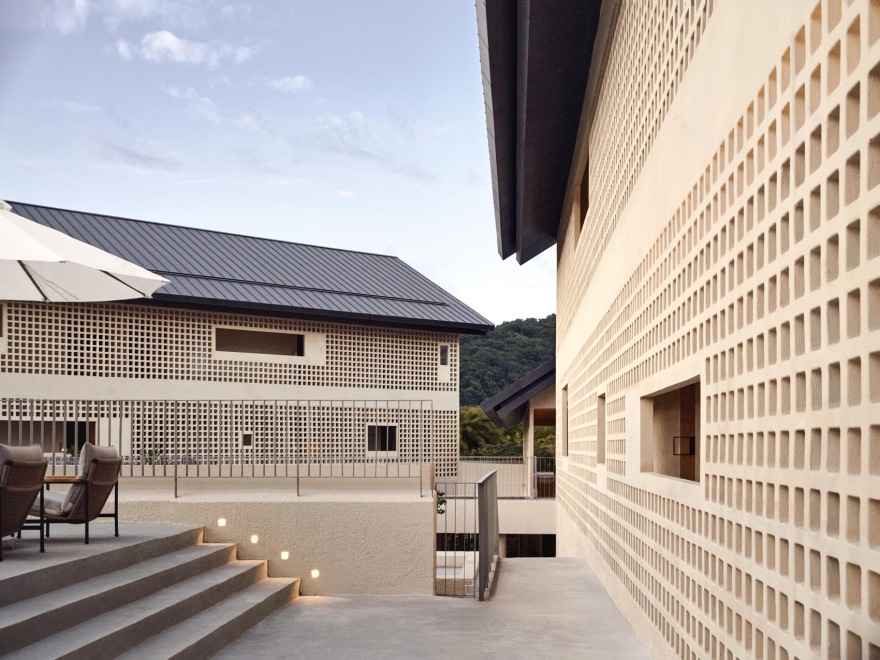
▼利用建筑的缝隙形成灰空间将自然景观引入,Utilizing the gaps in the building to create a “grey space” and introducing the natural landscape into it© 刘章悦
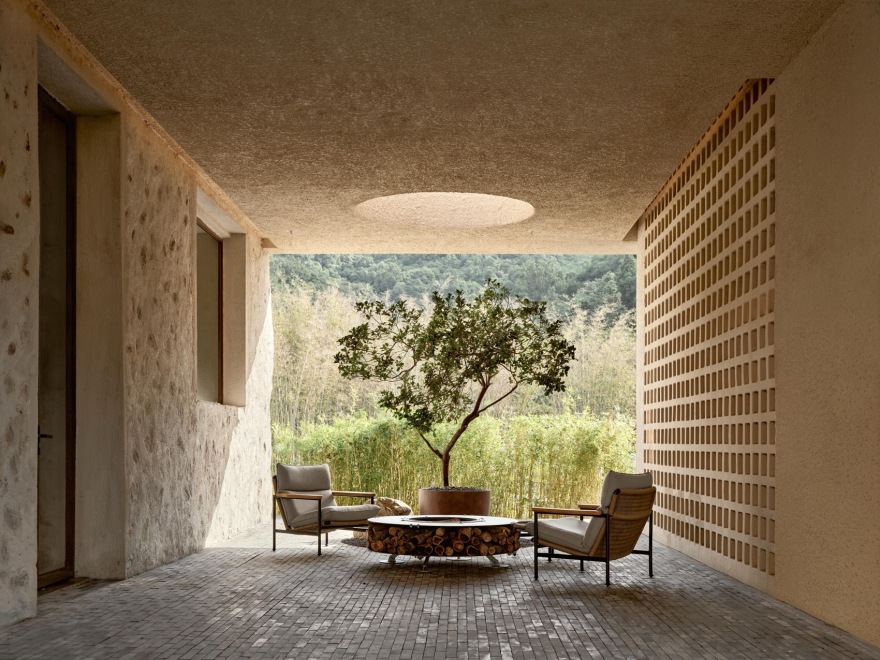
▼利用灰空间,建筑和景观相互渗透,Utilizing the grey space, the architecture and the landscape blend seamlessly with each other© 刘章悦
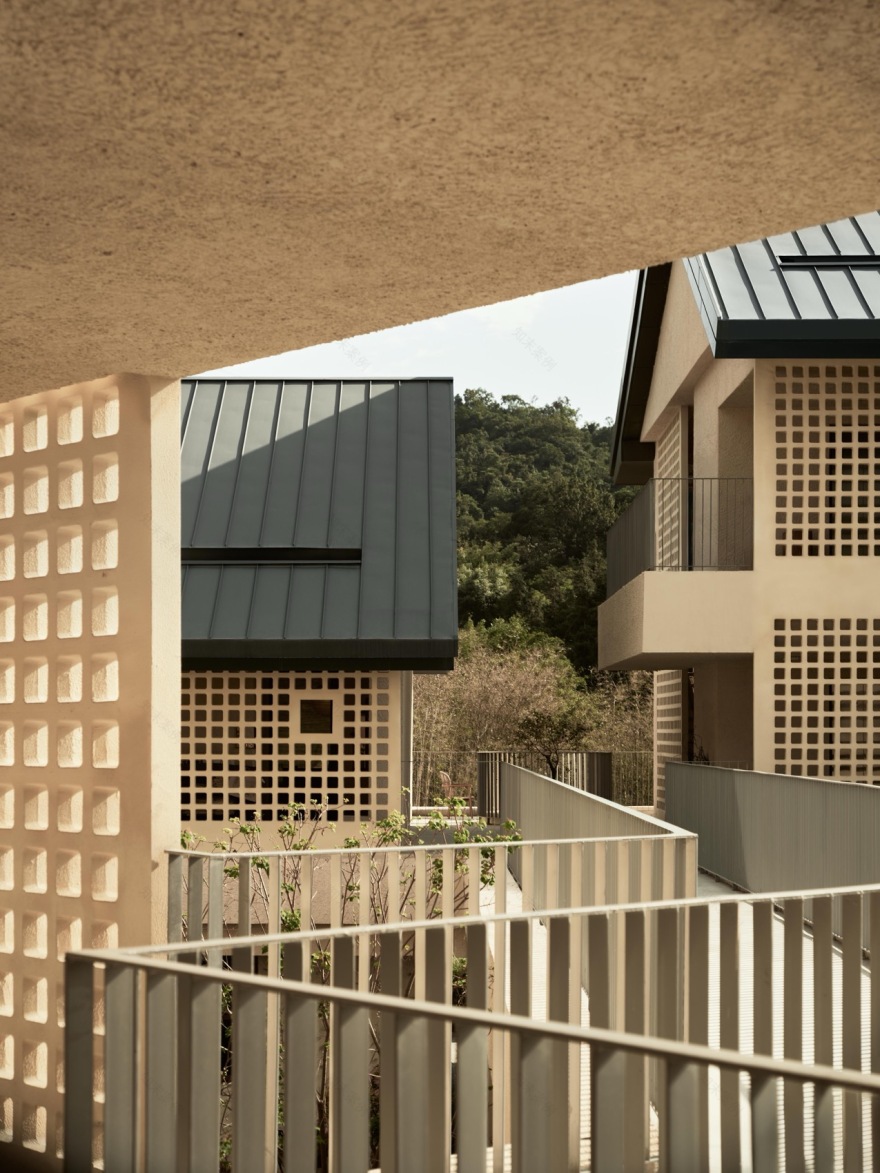
在地建构与光影戏剧
Local Construction and the Drama of Light
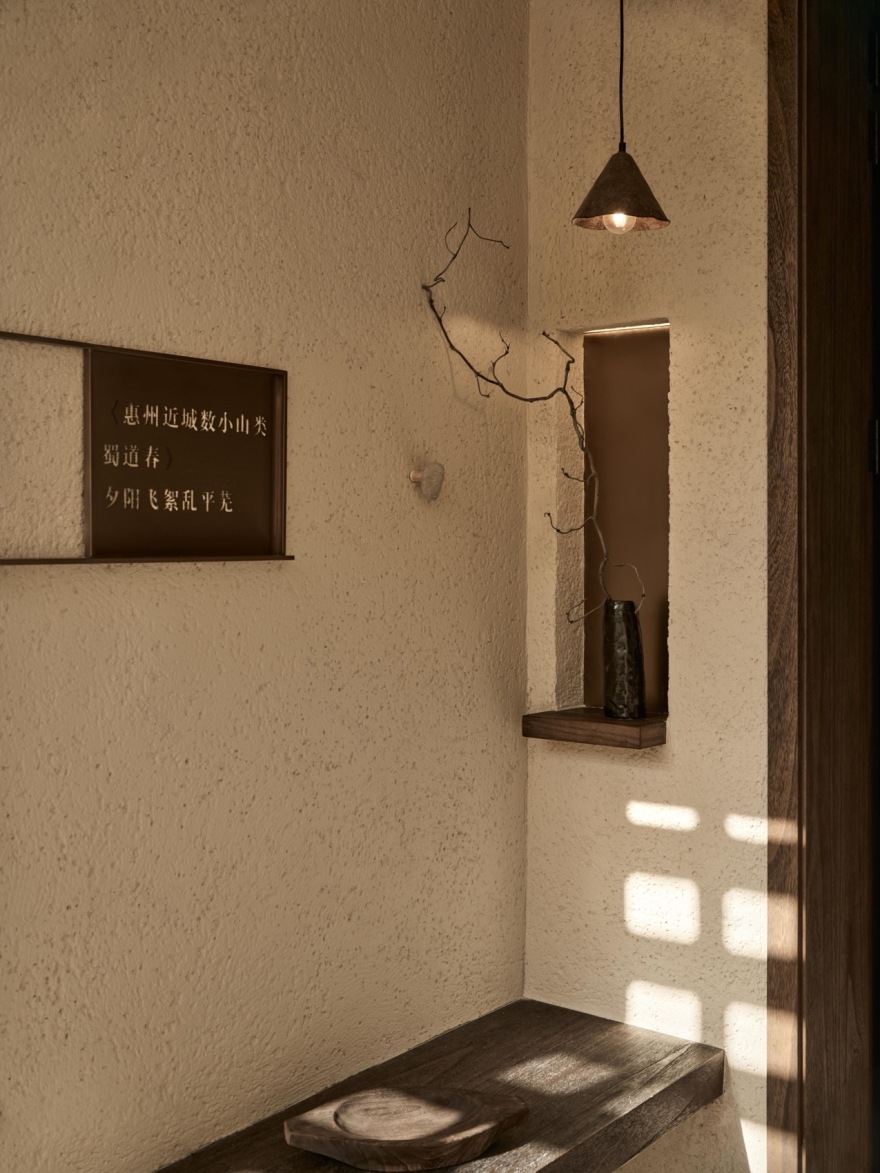
毛石墙体奠定了整体质朴、自然的基底氛围,并从外立面延伸至室内,使材料成为连接不同空间层次的重要媒介。石材叠砌形成的粗粝肌理,在自然光下呈现出随机变化的明暗关系。面向内庭院的一侧则采用镂空砖砌界面,以回应岭南地区高温、强日照的气候条件。这种半通透的处理既能遮阳,又保留了通风与视线的渗透,也让斑驳的光线进入客房外的灰空间,形成随时间推移而变化的光影层次。
Rubble stone walls establish a plain and natural material foundation for the project. Extending from the exterior façade into the interior, the stone becomes an important medium connecting different spatial layers. The rough texture formed by the stacked stone reveals changing patterns of light and shadow under natural light. Facing the inner courtyard, perforated brick walls are used in response to the strong sunlight and hot climate of the Lingnan region. This semi-transparent treatment provides shading while preserving ventilation and visual permeability. It also allows mottled light to enter the semi-outdoor spaces outside the guest rooms, creating layers of light and shadow that change over time.
▼利用灰空间,建筑和景观相互渗透,镂空砖形成开放通透的户外连廊,By making use of the void space, the architecture and the landscape blend together, and hollow bricks are used to create an open and transparent outdoor corridor© 刘章悦
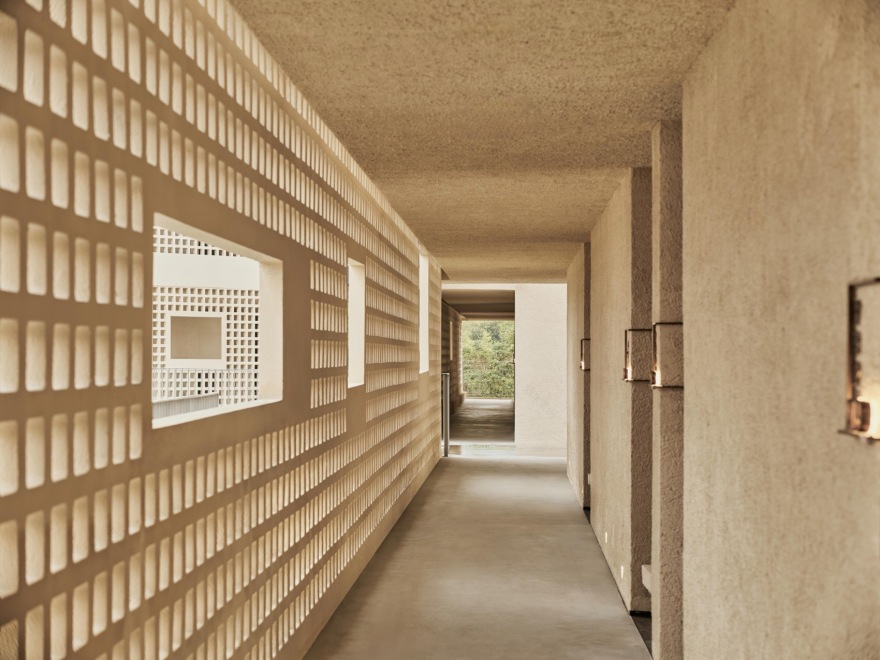
▼开敞的连廊立面形成建筑、景观、光影和人的互动关系,The open corridor facade creates an interactive relationship among the building, the landscape, light and shadow, and people© 刘章悦
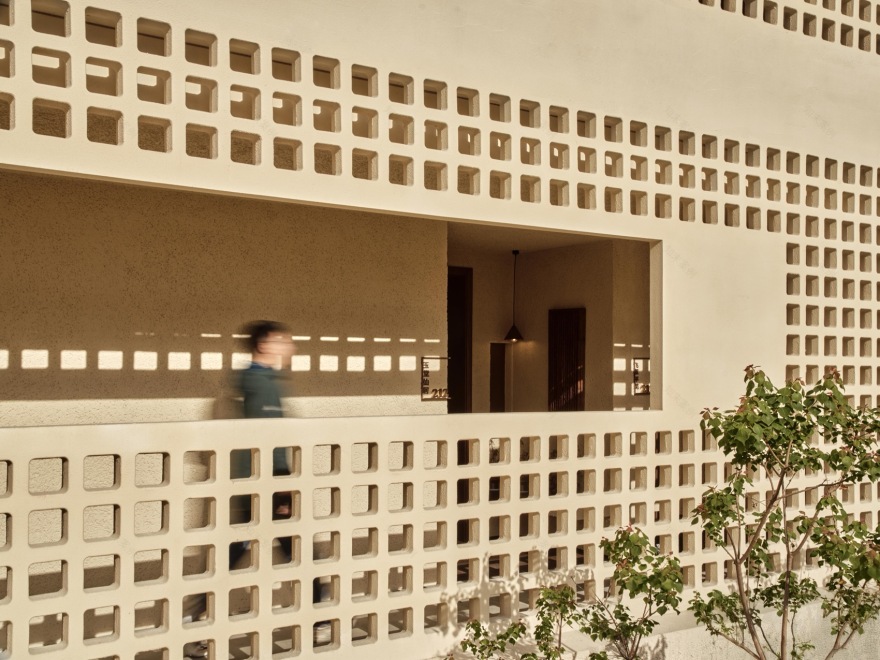
▼阳光透过格栅在墙面与入口形成随时间变化的光影,The sunlight passes through the grilles and creates changing shadows and light on the walls and the entrance over time© 刘章悦
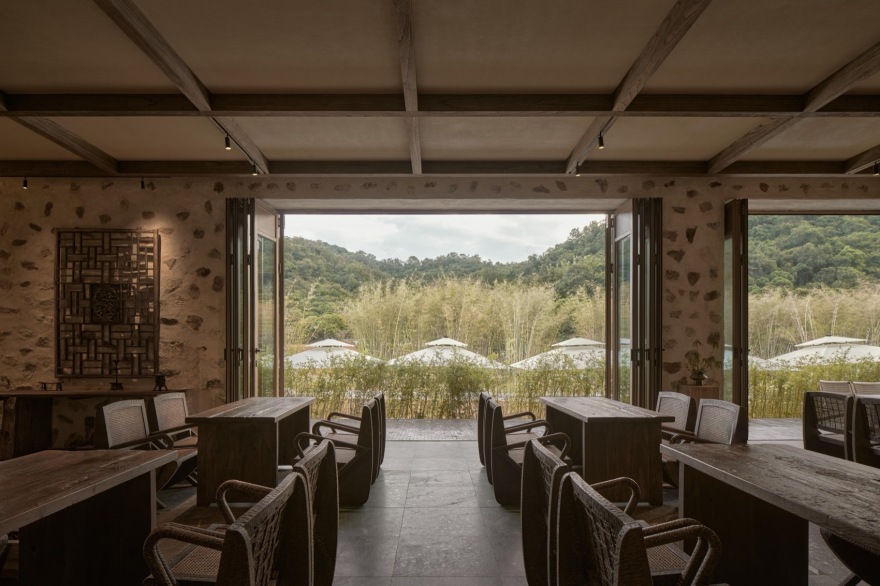
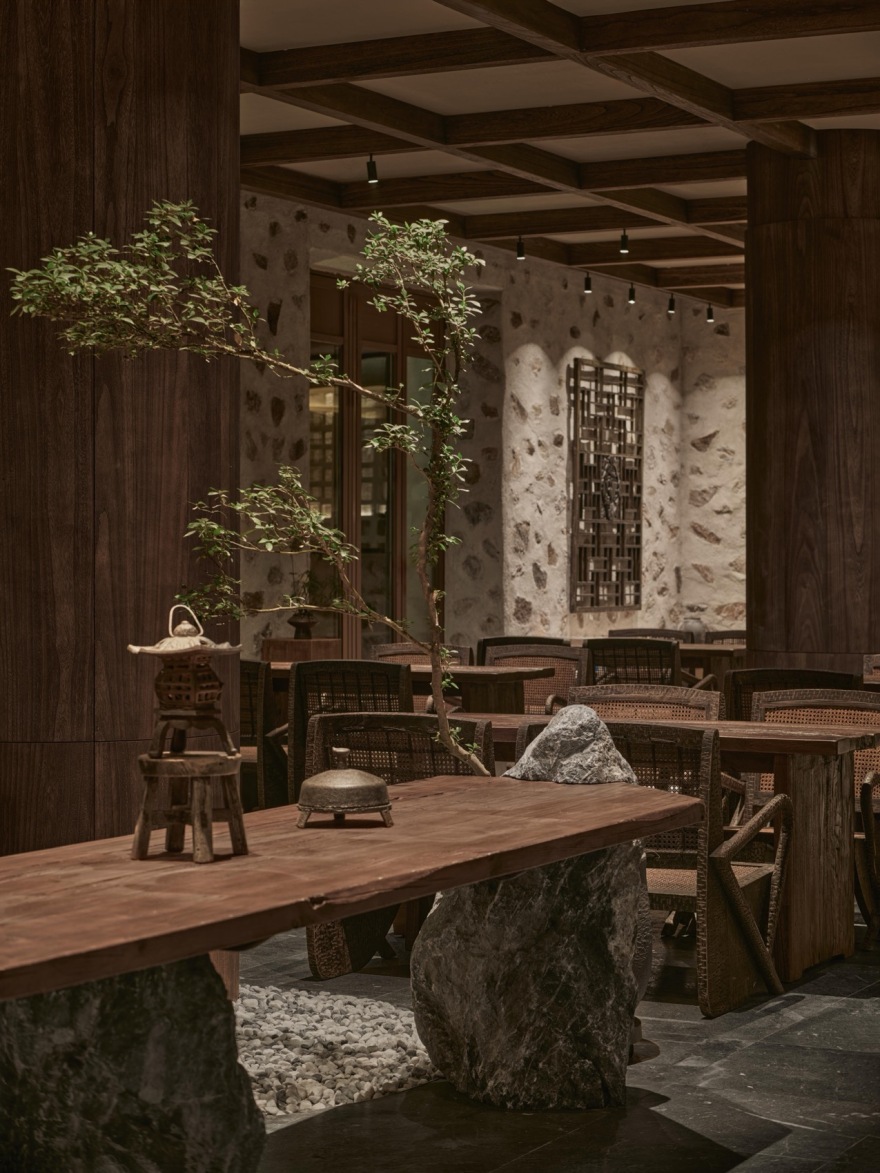
室内设计延续了建筑整体的材料与空间语言,以更克制的方式回应周边自然环境。公区整体布局最大化朝向竹林与溪涧展开,并通过框景、借景的手法,将水岸与竹林景观引入室内。面向河岸打开的界面进一步提升了空间的开敞性,弱化了建筑的物理边界,也强化了居住空间与自然之间的联系。公共区域以毛石墙体奠定质朴基底,并通过实木材料与自然风格家具的置入,在石材粗粝质拙的氛围中加入温润的触感,使空间在沉静之中保有亲近自然的居住感。
The interior design continues the architectural language of material and space, responding to the surrounding natural environment in a restrained manner. The public areas are oriented as much as possible towards the bamboo groves and streams. Through framing and borrowed views, the landscape of water and bamboo is brought into the interior. Interfaces opening towards the river further enhance the openness of the space, weakening the physical boundary of the building and strengthening the connection between living space and nature. In the public areas, rubble stone walls form a rustic base, while solid wood elements and furniture with a natural character add warmth to the rough and grounded material atmosphere. The result is a calm interior that retains a close relationship with nature.
▼大堂面向景观打开,形成野趣开放的氛围,The lobby is open towards the landscape, creating a wild and open atmosphere© 刘章悦
▼门厅、大堂与户外景观形成连贯流动的整体空间,The foyer, lobby and outdoor landscape form a continuous and flowing overall space© 刘章悦
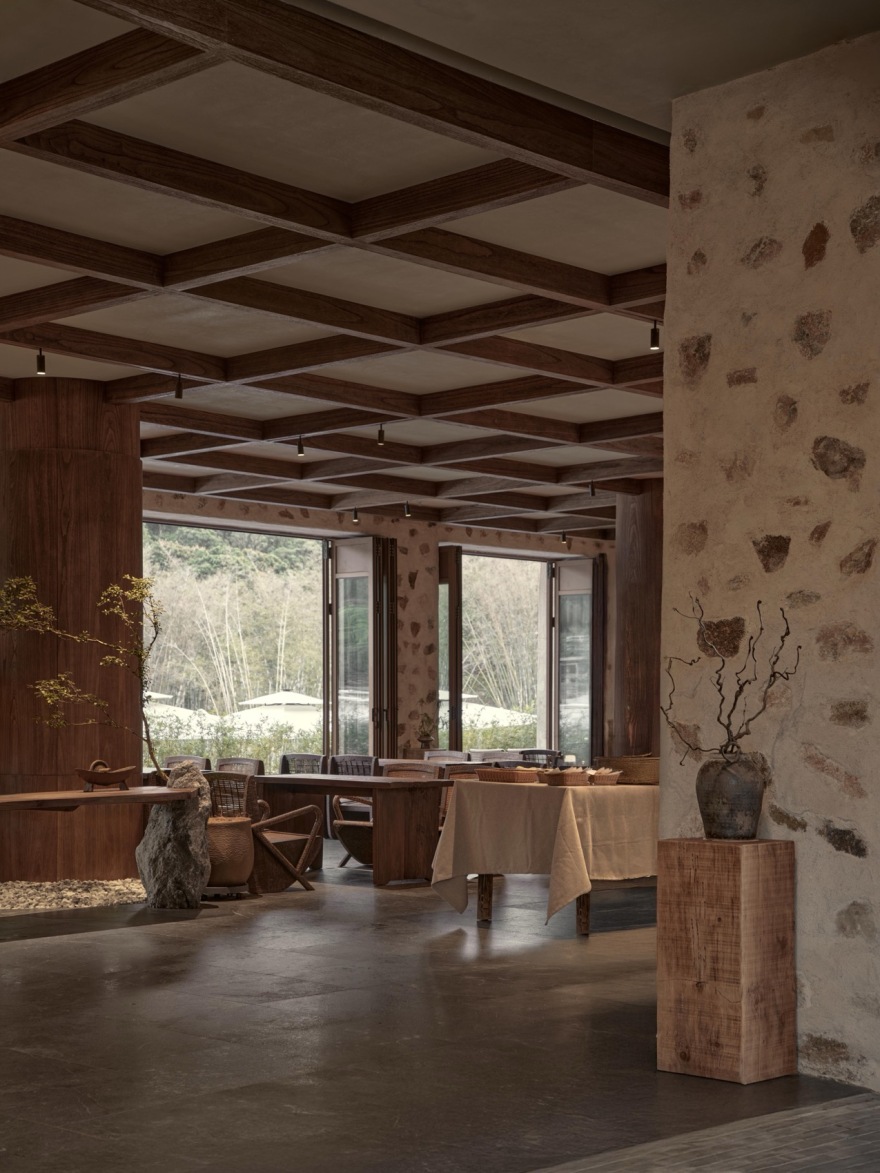
▼室内绿植与实木材料的运用,结合天然石材质感,打造野趣自然的空间氛围,The use of indoor green plants and solid wood materials, combined with the natural texture of stone, creates a wild and natural atmosphere in the space© 刘章悦
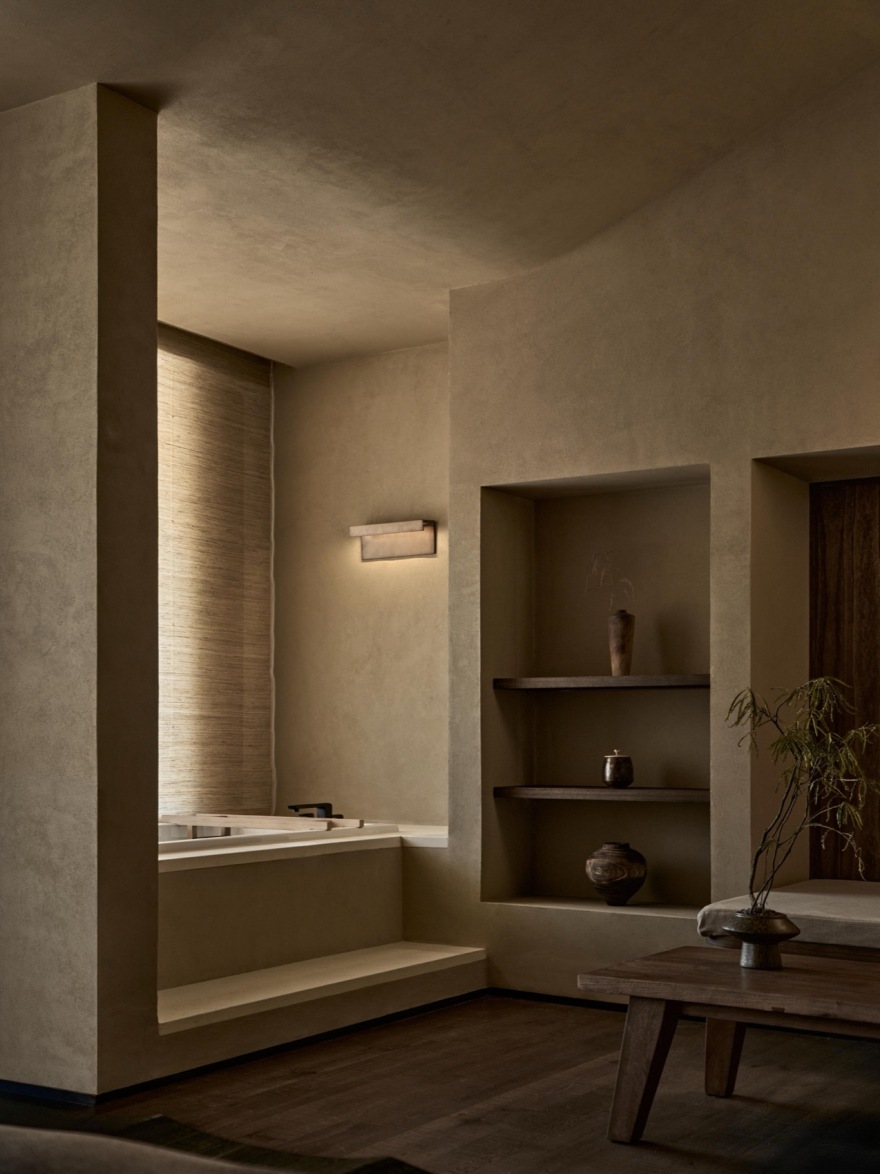
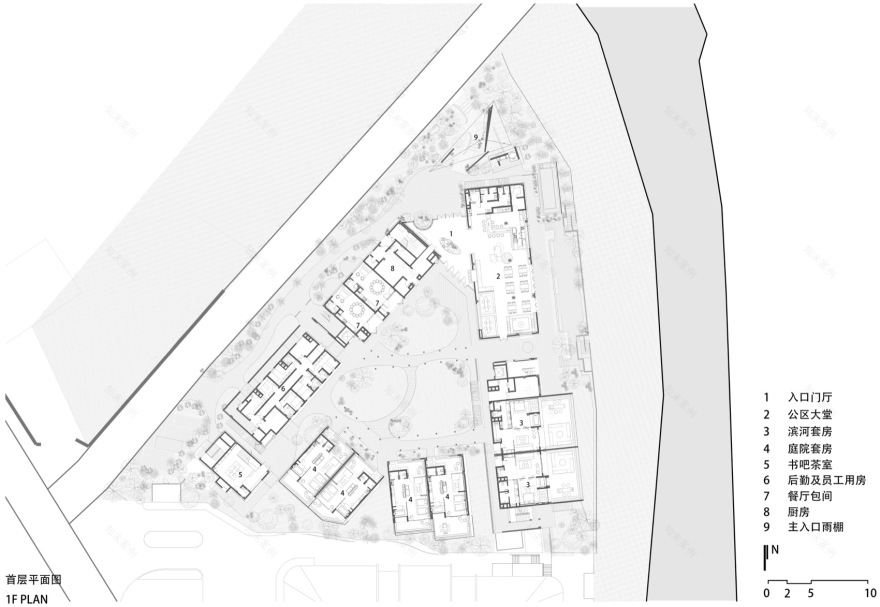
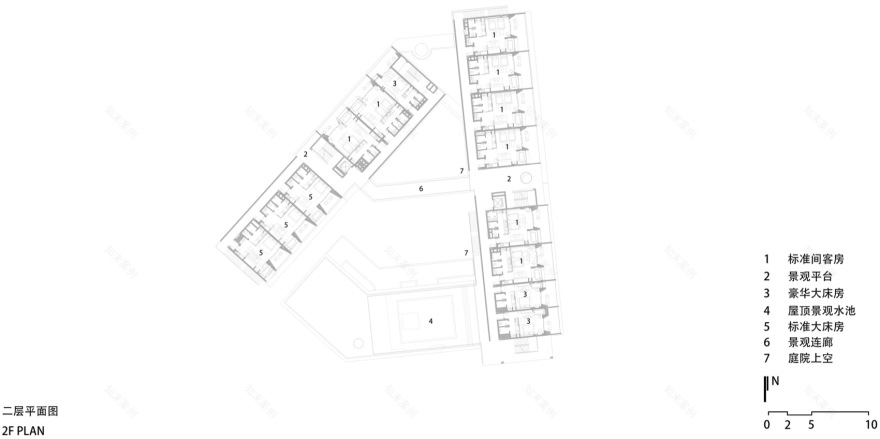
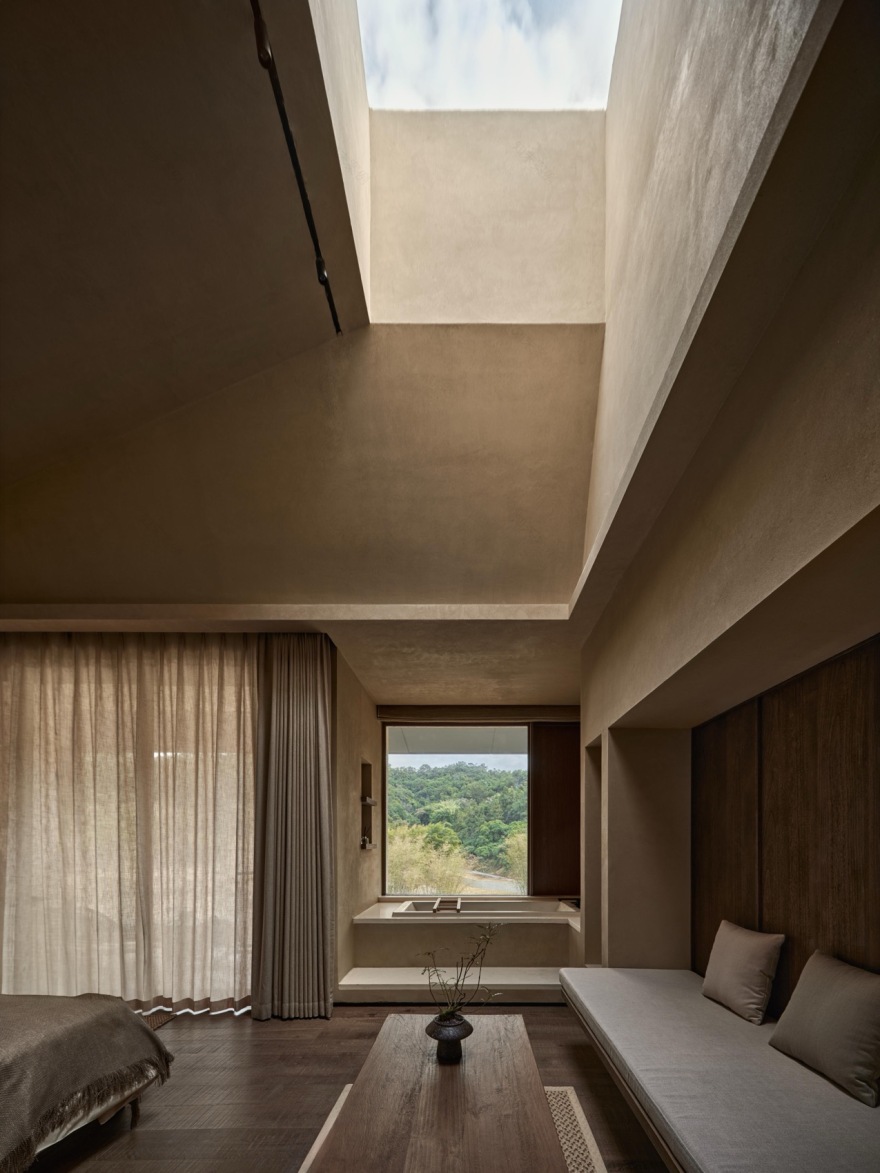
6间套房分为两种房型,布置于建筑首层深处,远离道路并靠近河岸,形成更安静、私密的居住体验。其余21间标准客房分布于二层和三层,面向山景与河岸展开。客房采用大开间、浅进深的平面策略,在充分引入景观的同时,也使自然光更均匀地进入室内。坡屋顶之下,天花曲线顺应屋面走势展开,将光线柔和引入房间;部分客房则通过天窗引入垂直天光,使室内光影随时间流转而变化。居住者也得以在有限的空间尺度中,感受时间、光线与日常起居之间的微妙关系。
The six suites are divided into two room types and are placed deep within the ground floor, away from the road and close to the riverbank, creating a quieter and more private living experience. The remaining twenty-one standard rooms are distributed across the second and third floors, opening towards the mountains and river. The guest rooms adopt a wide-bay, shallow-depth layout. The wider frontage allows views to be brought in more fully, while also enabling natural light to enter the rooms evenly. Beneath the pitched roof, the ceiling curves follow the roofline and softly guide light into the interior. Some rooms introduce vertical daylight through skylights, allowing light and shadow to shift with time. Within a modest spatial scale, residents are invited to experience the subtle relationship between time, light, and daily life.
▼屋面曲线将自然光柔和引入室内,The roof curve gently channels the natural light into the interior© 刘章悦
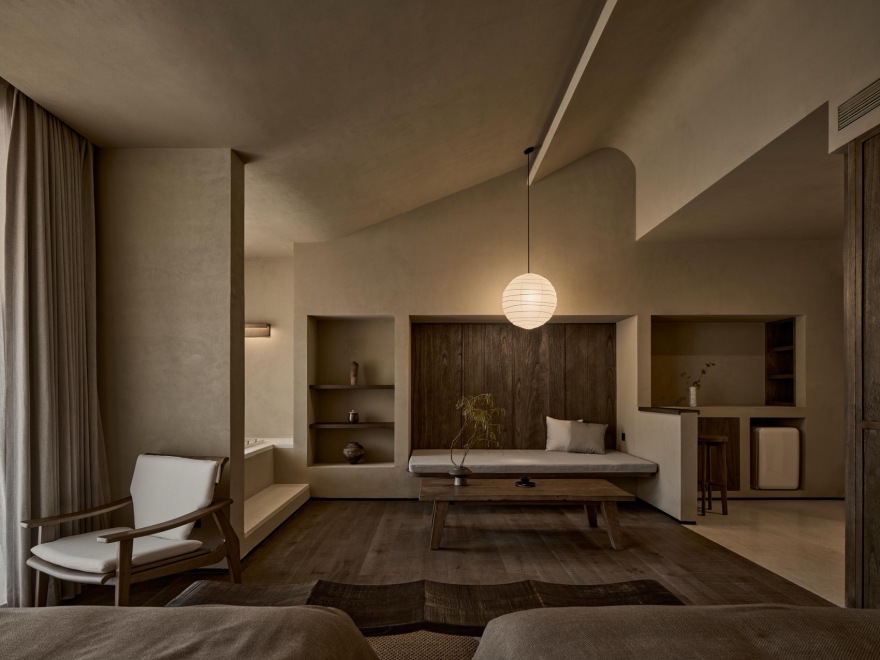
▼天光指向客房公区,引领室内空间划分,The light shines towards the common area of the guest rooms, guiding the division of the interior space© 刘章悦
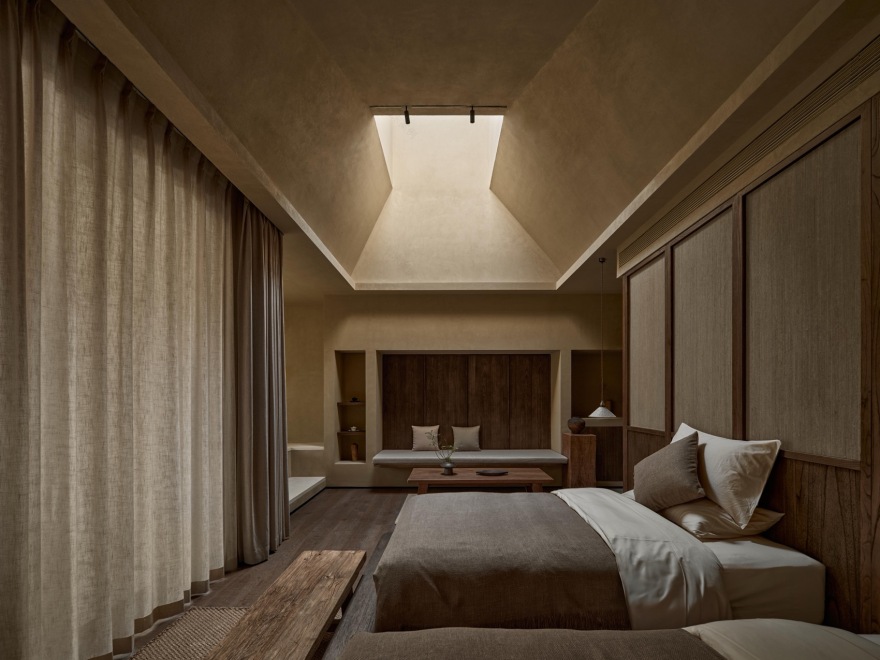
▼室内光线柔和氛围安静舒适,The indoor lighting is soft and the atmosphere is quiet and comfortable© 刘章悦
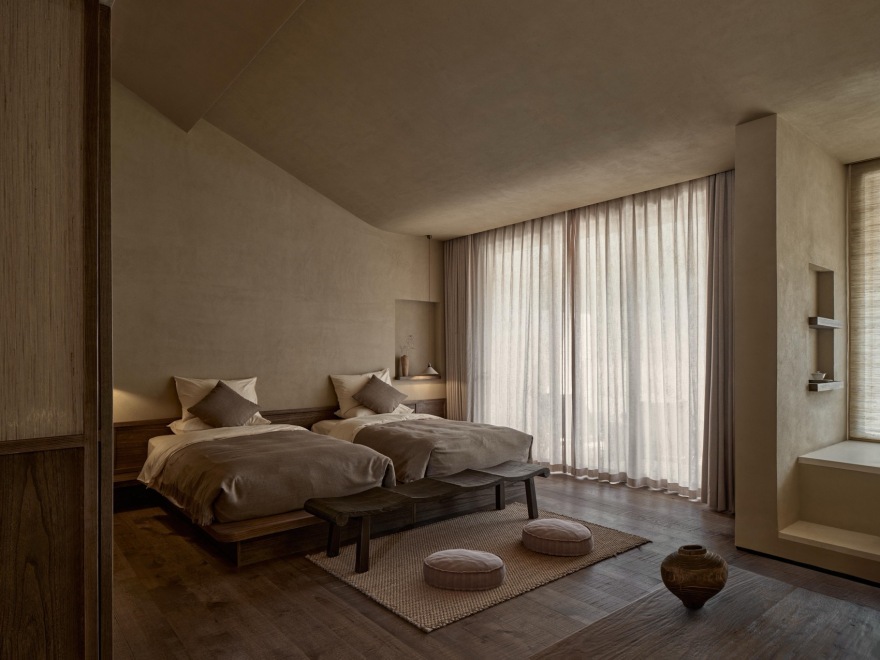
客房内部采用克制的材料组合。暖色肌理漆以哑光表面与细微质感,建立起安静、柔和的空间基调,并与深色实木家具、暖白色石材形成协调的材质关系。隐私界面则以苎麻一类的半透明材料进行分隔,使光线、轮廓与隐约的感知得以穿透,在保持功能独立的同时,也让空间关系更为开放、轻盈。
Inside the guest rooms, a restrained palette of materials is used. Warm-toned textured paint, with its matte surface and fine grain, creates a quiet and gentle spatial tone. It is paired with dark solid wood furniture and warm white stone to form a balanced material relationship. Privacy interfaces are divided by semi-transparent materials such as ramie, allowing light, silhouettes, and partial perception to pass through. While maintaining functional independence, the spatial relationship remains open and light.
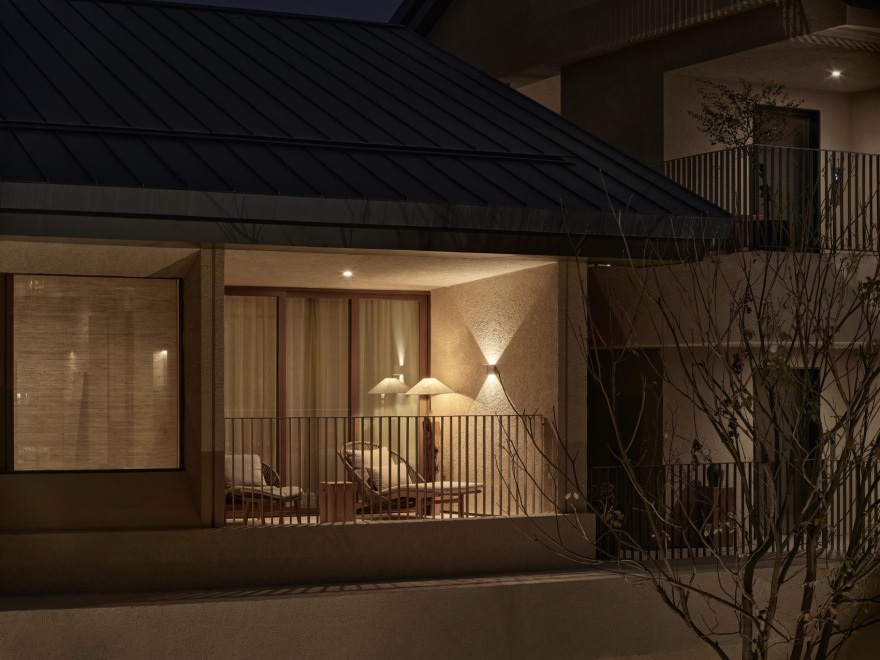
▼阳台灰空间成为室内和自然之间的有机过渡,The balcony’s unused space becomes an organic transition between the interior and nature© 刘章悦
▼半透明的隔断打造文静雅致的空间氛围,The translucent partitions create a quiet and elegant space atmosphere© 刘章悦
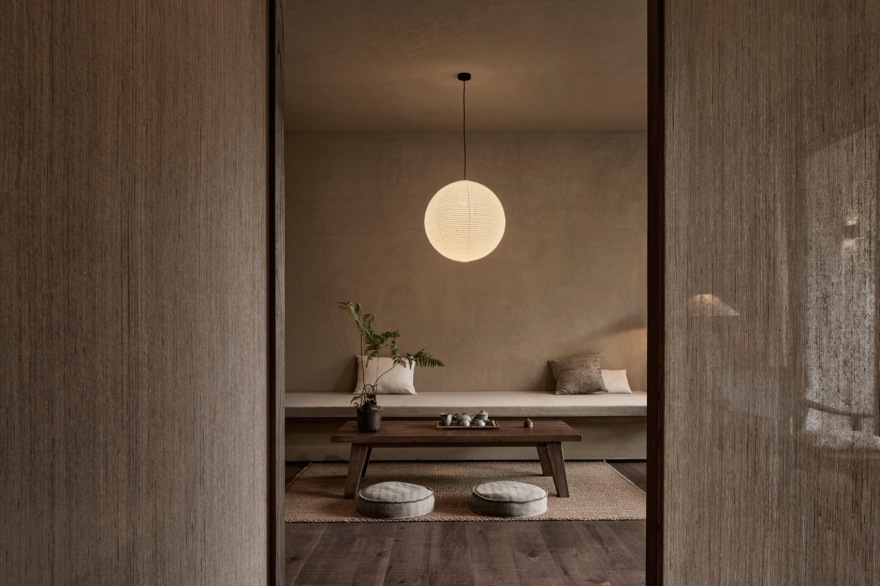
▼半透明和轻盈的材质使室内空间形成随时间变化的光影氛围,The translucent and lightweight materials create an ever-changing light and shadow atmosphere in the interior space over time© 刘章悦
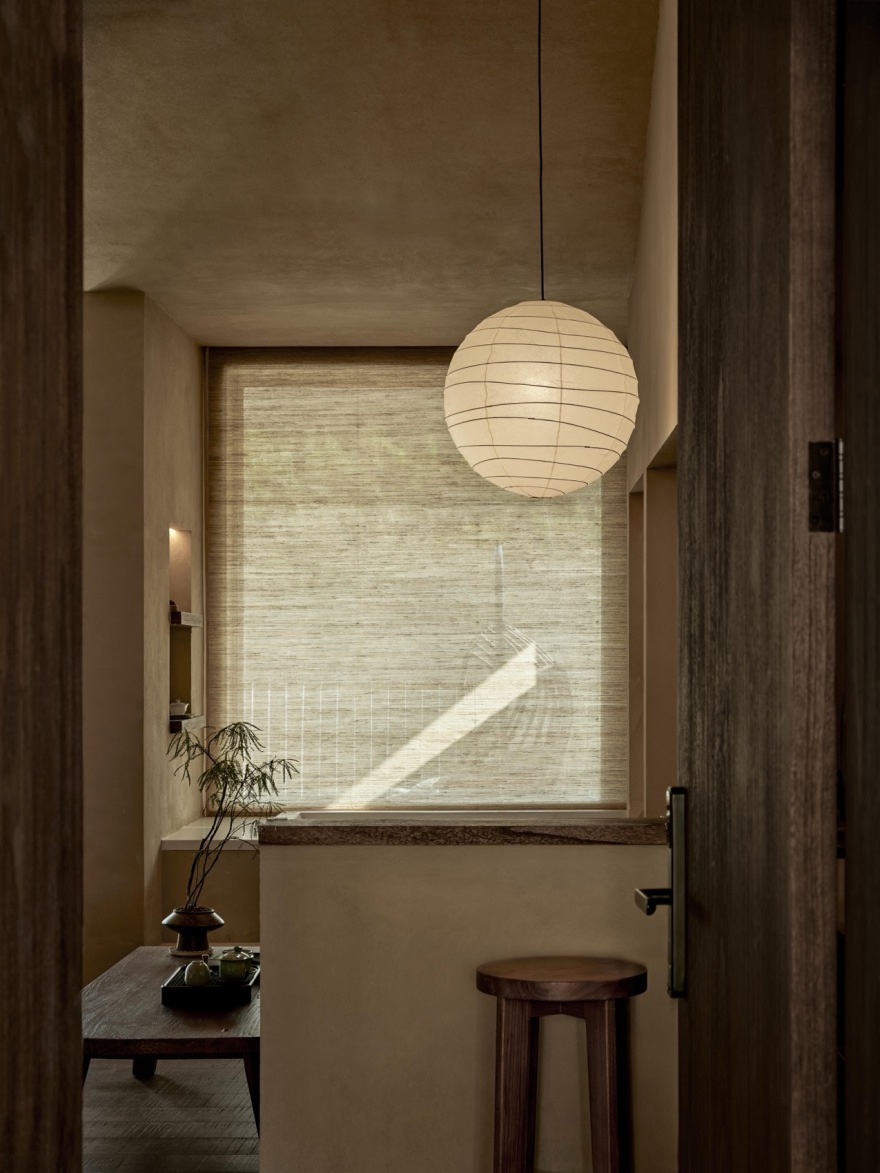
▼室内隔断与主灯呼应形成园林般的室内景观,The interior partitions complement the main lighting, creating an indoor landscape reminiscent of a garden© 刘章悦
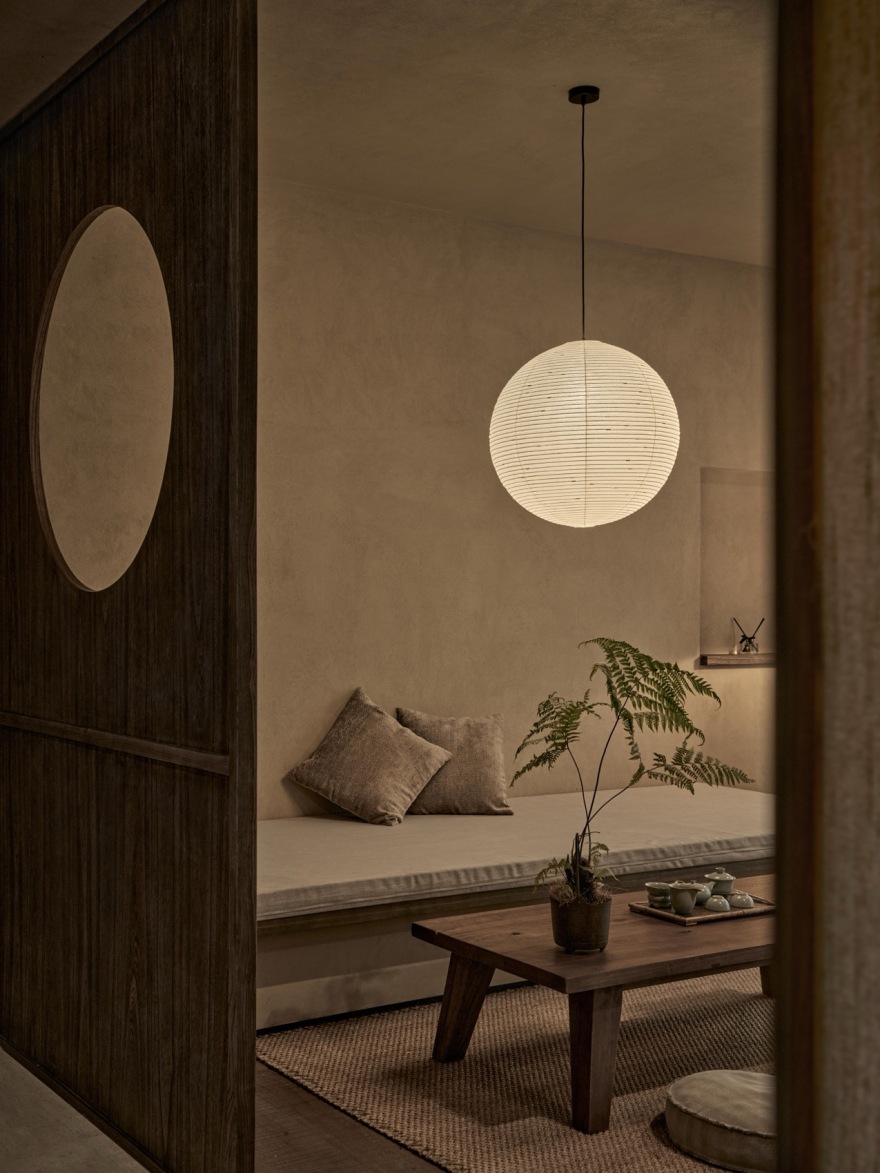
▼自然光和室内材料一同打造宁静安逸的居住氛围,Natural light and interior materials work together to create a peaceful and comfortable living environment© 刘章悦
作为平衡支点的建筑 Architecture as a Point of Balance
在下浪溪谷,设计以低技、在地的建构方式回应场地的气候与环境条件。灰空间、坡屋面与材料共同作用,将场地内的光线与自然通风,以及周边的溪流、竹林与远山,整合进同一套空间逻辑之中。它更象是一次关于“调和”的在地实验:通过灰空间的收放与尺度控制,回应场地既有的自然肌理。建筑的最终形态并非对“隐逸”意象的直接描摹,而是由场地条件、使用需求与建造逻辑共同推导的自然结果。设计以克制的方式嵌入自然,并在建筑与环境之间建立起一种持续而日常的平衡关系。
In Xialang Valley, the design responds to the site’s climate and environmental conditions through low-tech and locally grounded construction methods. Semi-outdoor spaces, pitched roofs, and material interfaces work together to integrate light, natural ventilation, streams, bamboo groves, and distant mountains into a coherent spatial logic. The project is less a direct expression of seclusion than a local experiment in balance. Through the opening, closing, and calibrated scale of semi-outdoor spaces, the building responds to the existing texture of the site. Its final form is not a symbolic depiction of retreat, but the natural result of site conditions, programme requirements, and construction logic. With restraint, the design embeds itself in nature and establishes a continuous, everyday balance between architecture and environment.
▼总平面,master plan © Studio InTo
▼首层平面图,ground floor plan © Studio InTo
▼二层平面图,first floor plan © Studio InTo
▼三层平面图,second floor plan © Studio InTo
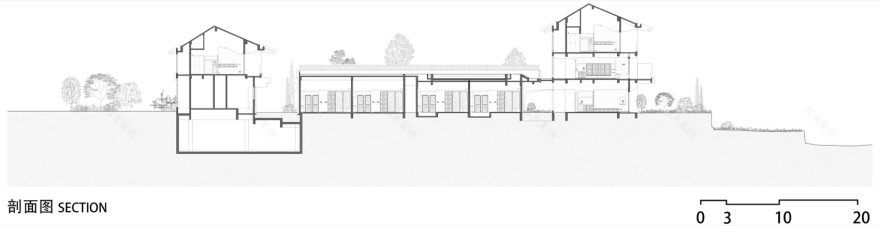
▼剖面,section © Studio InTo
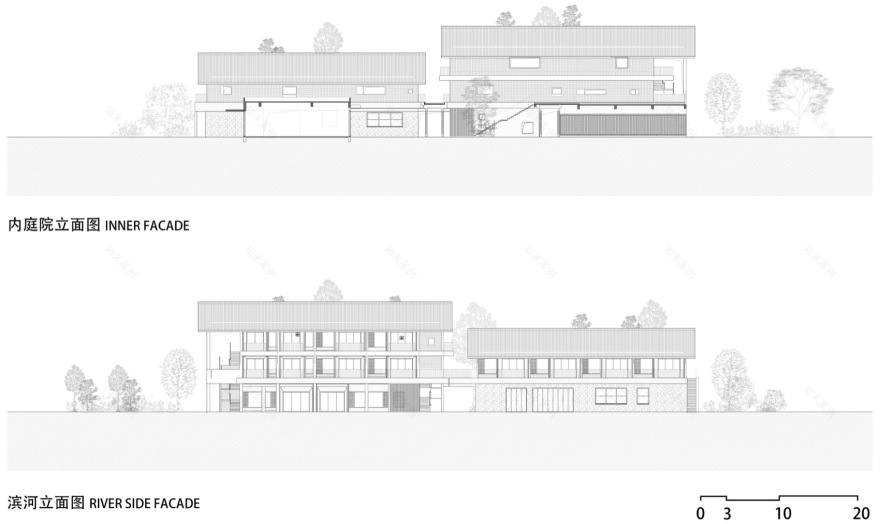
▼立面,elevation © Studio InTo
项目信息
项目名称:三山来迟·下浪溪谷民宿
建筑,室内,景观,软装设计:入舟建筑设计工作室
主持建筑师:尤幸,许万里
业主:惠州市康养产业投资有限公司博罗三山来迟分公司
施工图合作单位:中国建筑上海设计研究院有限公司
建筑:李东辉、孙伟、江娟、王晓椰
结构:宋罕宇、龙天翔
暖通及机电、给排水:郭岩杰、何旭萌、张庆男、王蕊
景观:刘晨晶
精装:赖菲、胡涛
建设单位:惠州市环两山投资开发有限公司
施工单位:中国建筑第四工程局有限公司
项目位置:广东省惠州市博罗县下浪村
建筑面积:3900平方米
设计周期:2024.10—2025.07
建设周期:2025.02—2025.11
结构:混凝土框架结构、钢结构
材料:毛石、肌理漆、青砖、老榆木、石板瓦、铝镁锰板等
摄影:刘章悦
Project Information
Project Name: Sanshan Laichi · Xialang Valley Retreat
Architecture, Interior, Landscape and FF&E Design: Studio InTo
Lead Architects: You Xing, Xu Wanli
Client: Huizhou Health and Wellness Industry Investment Co., Ltd., Boluo Sanshan Laichi Branch
Construction Drawing Collaborator: China Shanghai Architectural Design & Research Institute Co., Ltd.
Architecture: Li Donghui, Sun Wei, Jiang Juan, Wang Xiaoye
Structure: Song Hanyu, Long Tianxiang
HVAC, MEP and Plumbing: Guo Yanjie, He Xumeng, Zhang Qingnan, Wang Rui
Landscape: Liu Chenjing
Interior: Lai Fei, Hu Tao
Developer: Huizhou Huanliangshan Investment Development Co., Ltd.
Contractor: China Construction Fourth Engineering Bureau Corp., Ltd.
Location: Xialang Village, Boluo County, Huizhou, Guangdong Province, China
Gross Floor Area: 3,900 sqm
Design Period: October 2024 – July 2025
Construction Period: February 2025 – November 2025
Structure: Reinforced concrete frame structure and steel structure
Materials: Rubble stone, textured coating, grey-blue brick, reclaimed elm wood, slate roof tiles, Al-Mg-Mn alloy panels, etc.
Photography: Liu Zhangyue
南京喵熊网络科技有限公司 苏ICP备18050492号-4知末 © 2018—2020 . All photos and trademark graphics are copyrighted by their owners.增值电信业务经营许可证(ICP)苏B2-20201444 苏公网安备 32011302321234号
苏公网安备 32011302321234号客服
消息
收藏
下载
最近