

创作上传
VIP
收藏下载
登录 | 注册有礼
查看完整案例

收藏

下载

分享
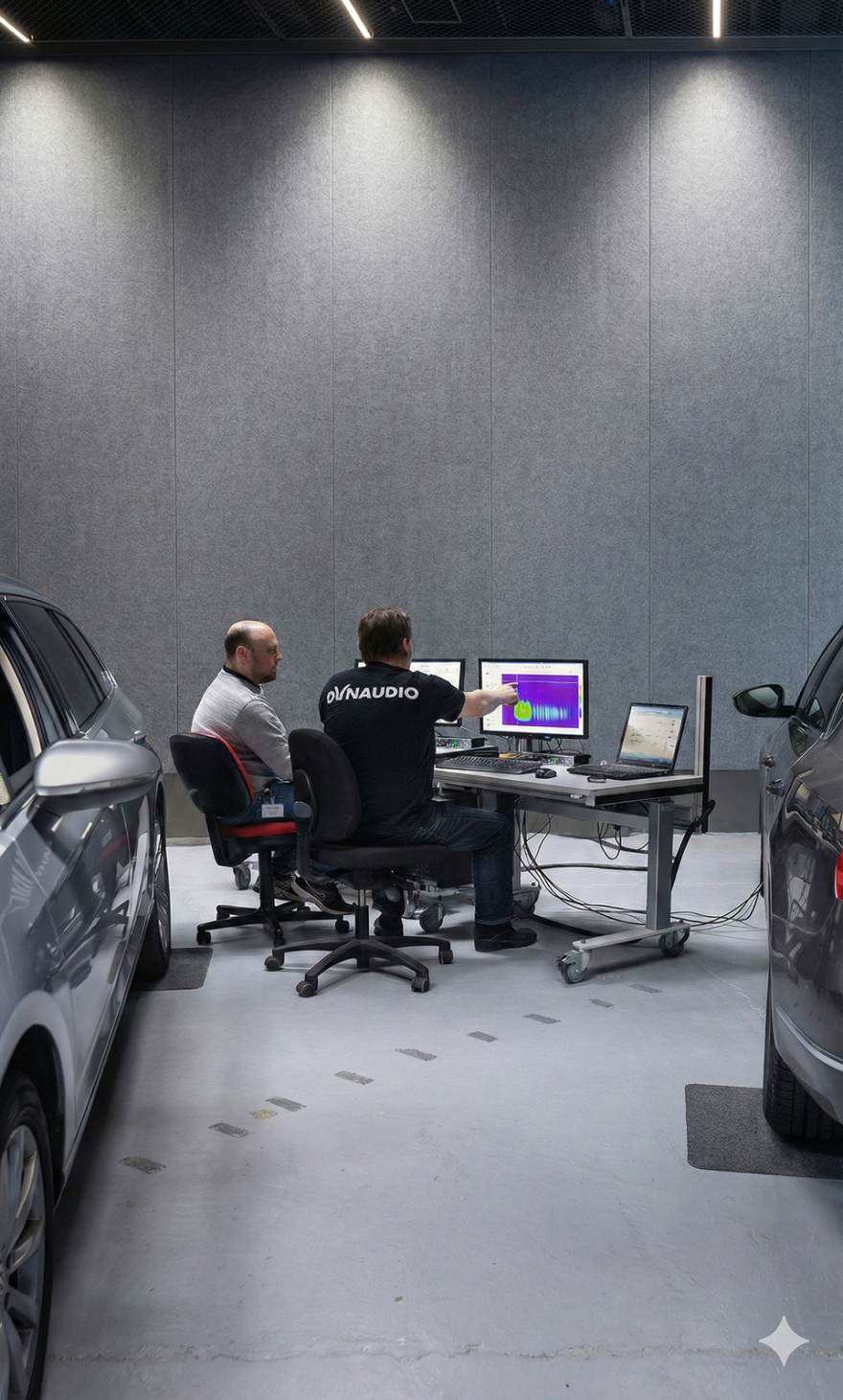
丹拿是全球顶级的音响制造商,创立于1977年,主要产品涵盖Hi-Fi扬声器、专业监听设备、汽车音响等。公司位于丹麦Skanderborg的研发中心—Lab1拥有高度专业的设备和空间,为其产品创新和测试提供最先进的声学技术支持。其中,汽车音响的研发条件较为苛刻,需要将车辆停放在隔音良好的密闭空间中,由技术人员通过设备进行调试。近年来随着国产汽车品牌日益壮大,汽车音响的需求也与日俱增,丹拿愈发需要一座国内的研发实验室,为国产汽车音响提供最直接的技术支持—Lab2应运而生。
Dynaudio is a world-leading audio manufacturer founded in 1977, with core products including Hi-Fi speakers, professional monitoring equipment, and automotive audio systems. Its Research and Development center in Skanderborg, Denmark—Lab1—is equipped with highly specialized facilities and spaces, providing state-of-the-art acoustic technology support for product innovation and testing. Automotive audio development, in particular, demands stringent conditions, requiring vehicles to be placed in soundproof, enclosed spaces where technicians fine-tune the systems. In recent years, as Chinese automotive brands have grown significantly, the demand for in-car audio systems has surged. Consequently, Dynaudio has seen an increasing need for a domestic Research and Development center to offer direct technical support for Chinese automotive audio—hence the creation of Lab2.
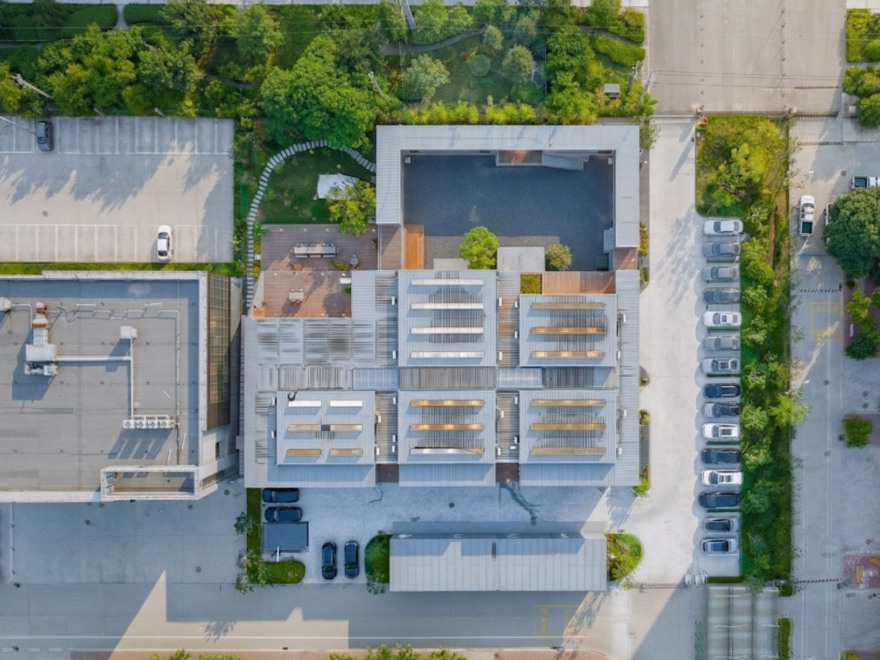
▼建筑航拍,Aerial view of the building © 直译建筑摄影
建造/模块化
Construction / Modularity
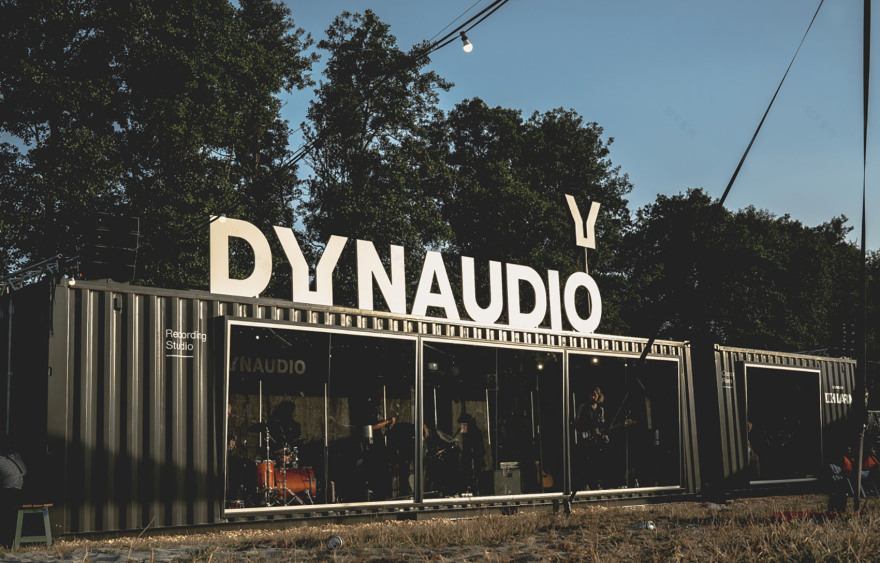
建筑的外形参考集装箱建筑的形式,灵感来自于丹拿在2018年启动的“Unheard”录音室项目—将一大一小两个集装箱改造为专业的录音室,邀请世界各地音乐人前来录制专辑。箱体一侧的墙体改换为通高玻璃窗,外部配备外放音响,面向观众,让原本封闭的录音活动变成一场开放的演唱会。Lab2参考这种形式,在定制的集装箱模块上采用了大量玻璃窗和幕墙,让本应封闭研发实验室也变成一个开放的透明盒子。
▼丹拿“Unheard”录音棚项目参考,
Reference: Dynaudio “Unheard” studio project © Dynaudio
▼汽车调音场景参考,Reference: Automotive tuning scene © Dynaudio
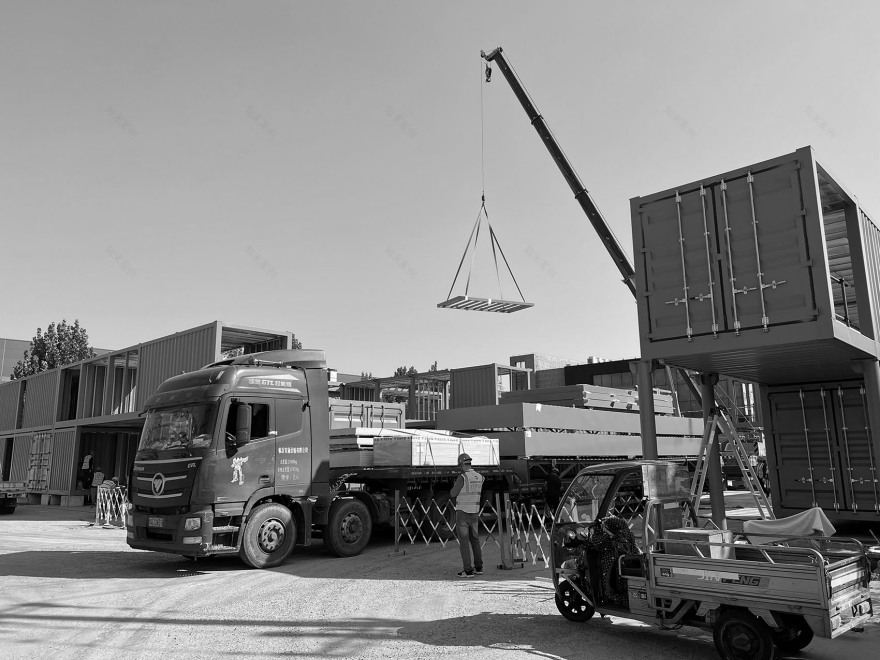
▼施工过程,Construction process © 龙工作室
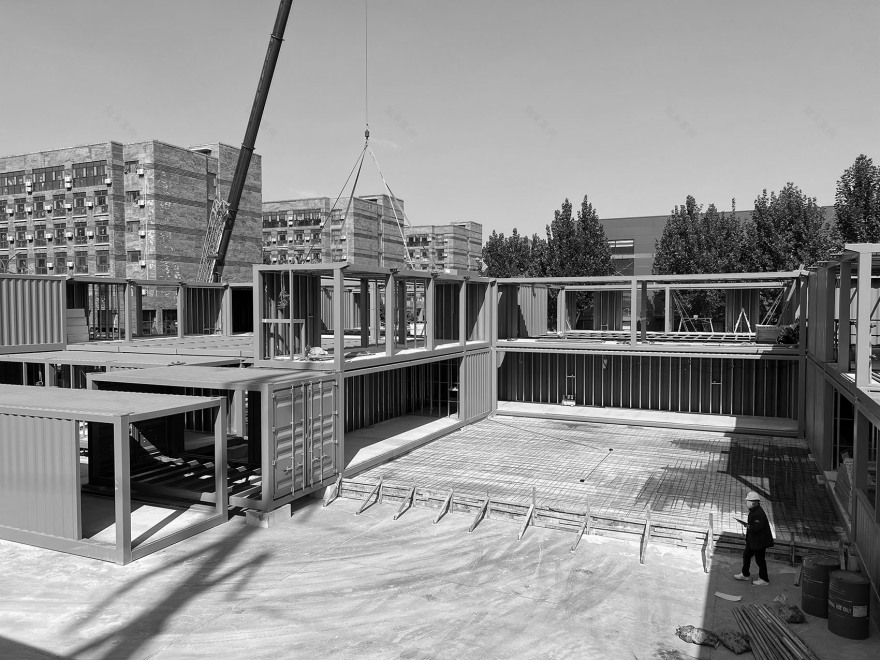
The architectural form draws reference from container architecture, inspired by Dynaudio’s 2018 “Unheard” studio project—two containers transformed into professional recording studios, inviting musicians from around the world to record albums. On one side, the container wall was replaced with full-height glazing, and external speakers were installed facing the audience, turning the typically enclosed recording activity into an open, concert-like experience. Lab2 adopts a similar approach, incorporating extensive glazing and curtain walls on container modules, transforming the usually inaccessible lab into an open and transparent box.
▼建筑外场,Exterior space © 直译建筑摄影
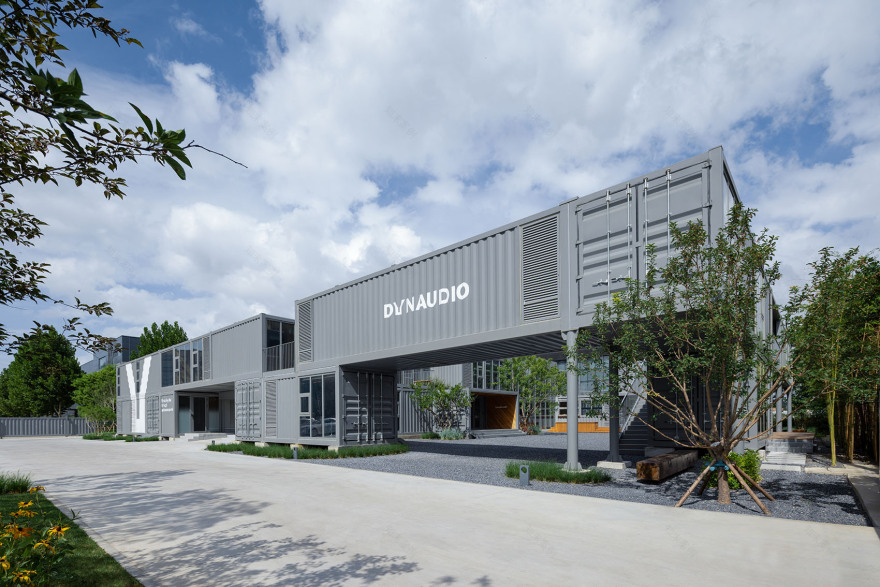
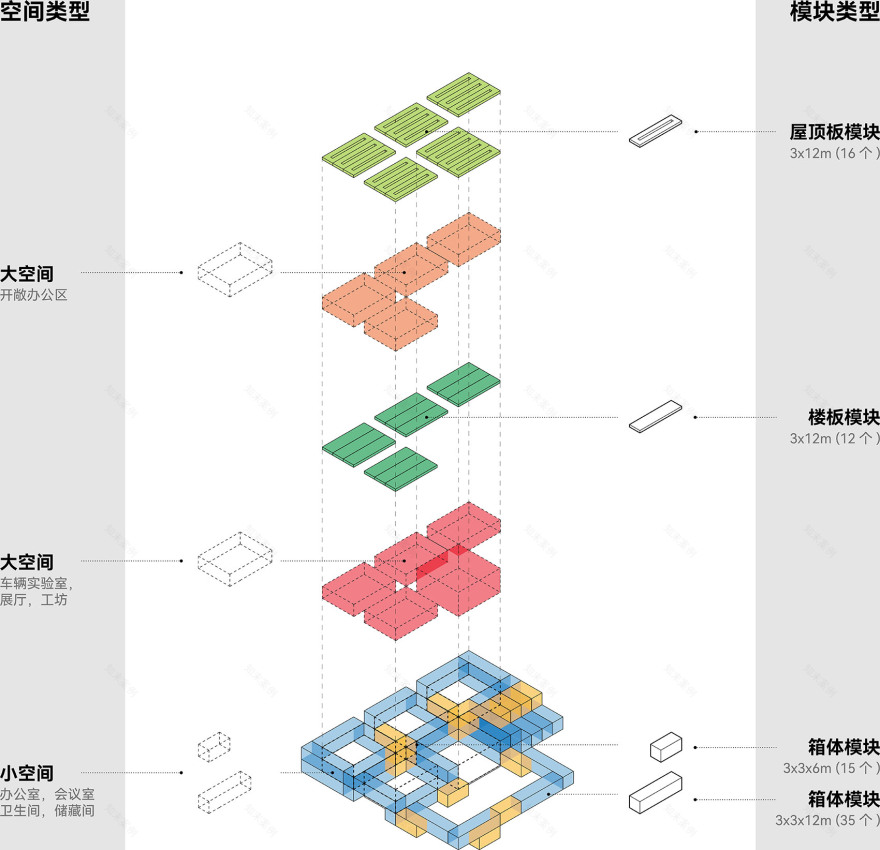
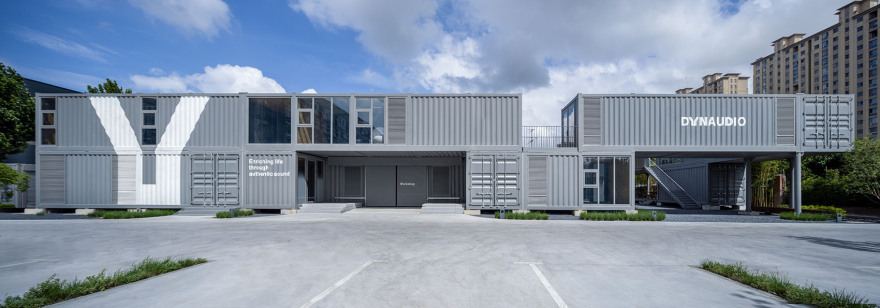
建筑需要同时满足两种尺度相异的功能需求,因此人和车都是这座建筑的使用者。为了实现调试车辆所需的开放式大空间,我们将集装箱模块像积木一样搭接起来,在中央围合形成大空间,全部建筑结构均由预制的钢结构模块构成。为了拥有更宽松的室内空间,箱体尺寸相对于标准集装箱更宽更高。所有模块的边长均为3m或3m的倍数。用来围合的箱体主要采用6m长和12m长的钢结构模块。为实现大空间的楼面和屋面,产生了大跨度的楼板和屋顶模块。所有室外露台也由相应的平板模块构成。
▼模块空间轴测爆炸图,Exploded axonometric of modular spaces © 龙工作室
▼建筑轴测分析,Architectural axonometric analysis © 龙工作室
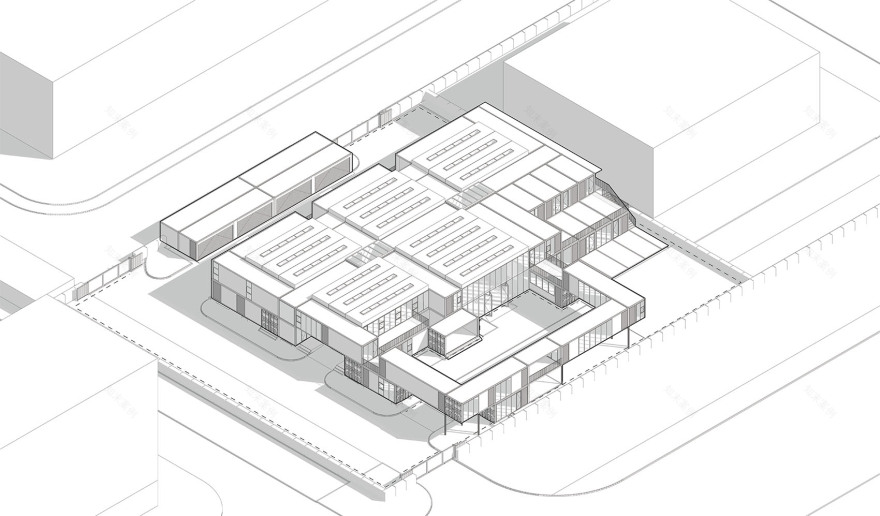
The building must simultaneously satisfy functional demands from two different sets of scales, both people and vehicles are its users. To achieve the open, large-span space required for vehicle tuning, we used the container modules literally as “building blocks” to form large central spaces. The entire structure is composed of prefabricated steel modules. To allow for more generous interior space, the modules are wider and taller than standard containers. All modules have side length of 3m or the multiple of 3m. The modules used as building blocks primarily consist of 6m-long and 12m-long steel containers. To realize the floor and roof of the tuning spaces, slab and roof modules with long-span were developed. All outdoor terraces are also made of corresponding deck modules.
▼建筑西立面,West facade © 直译建筑摄影
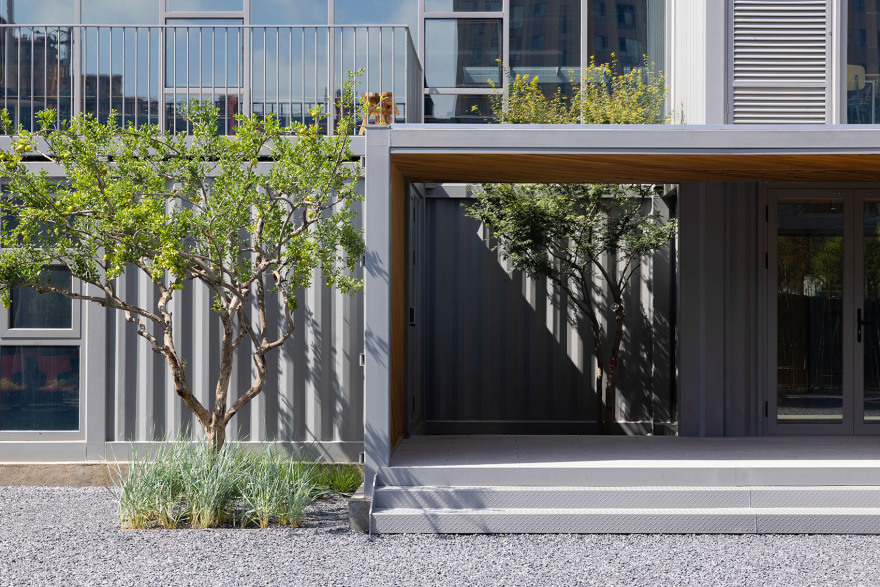
▼主入口近景,Main entrance close view © 直译建筑摄影
功能/空间体验
Function / Experience
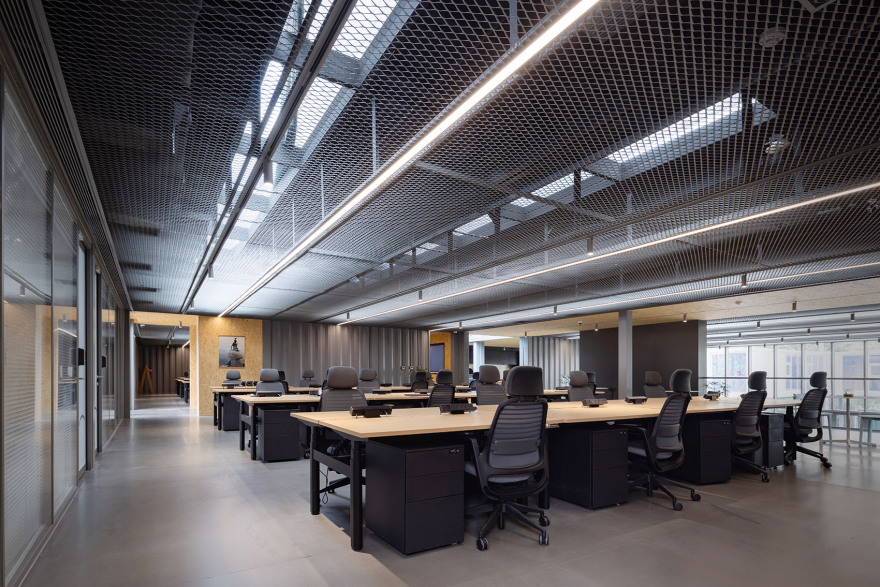
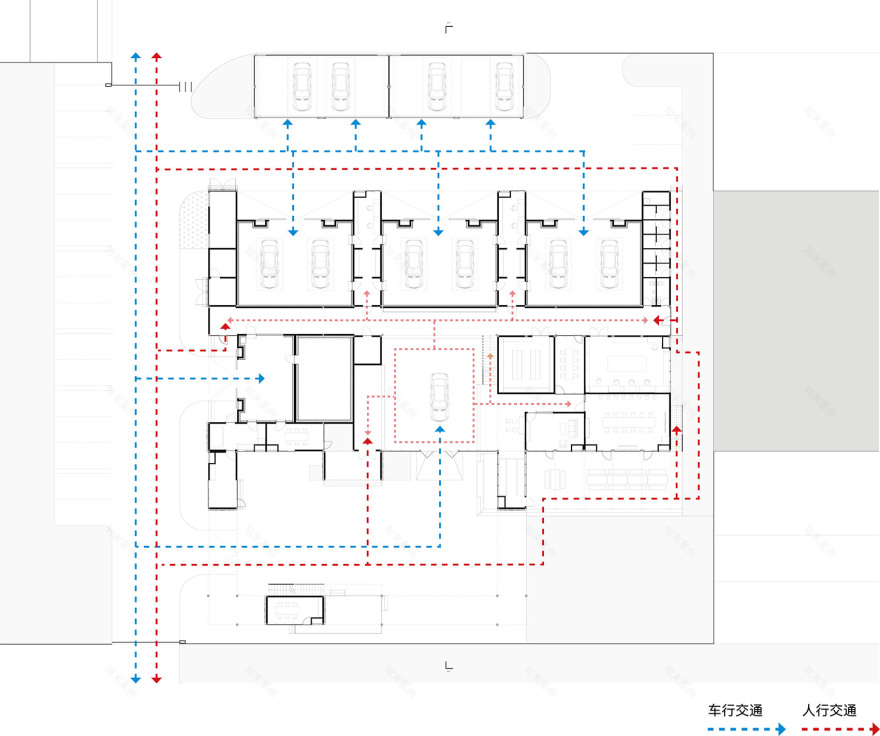
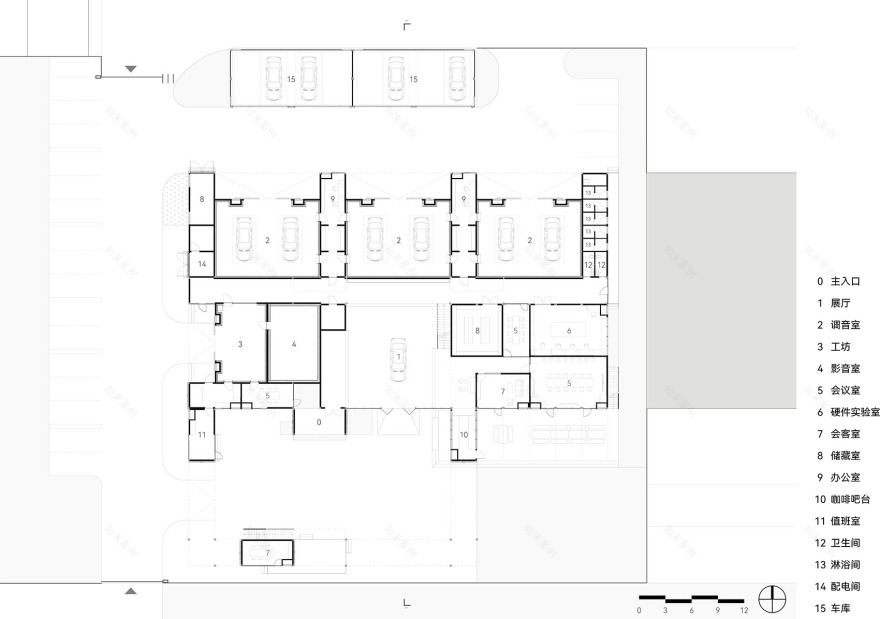
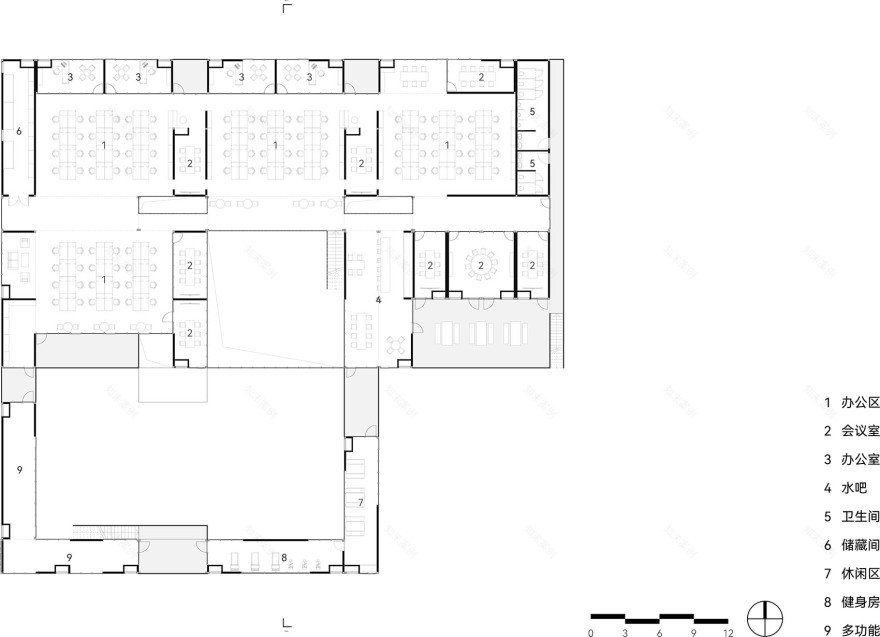
功能布局层面,车辆相关的大空间均放置在首层,三个调音室为了远离南侧城市道路的噪音,均放置在了建筑北侧,这使得它们同时也远离南侧的办公主入口,起到人车分流的作用。办公区主要集中在建筑二层,与下层的汽车调音室相对应,屋顶的天窗给办公空间提供了优越的自然采光。开敞空间四周用于围合的箱体作为会议室、办公室、储藏间等使用。
In terms of functional layout, all vehicle-related spaces are located on the ground floor. To avoid noise coming from the major road on the south side, all three tuning rooms are placed on the north side of the building. This also distant them from the main office entrance in the south, separating pedestrian and vehicular traffic. Office space are located on the second floor, directly above the vehicle tuning rooms. Skylights on the roof provide excellent natural lighting for these spaces. The container modules surrounding the open areas are used as meeting rooms, offices, storage rooms, etc.
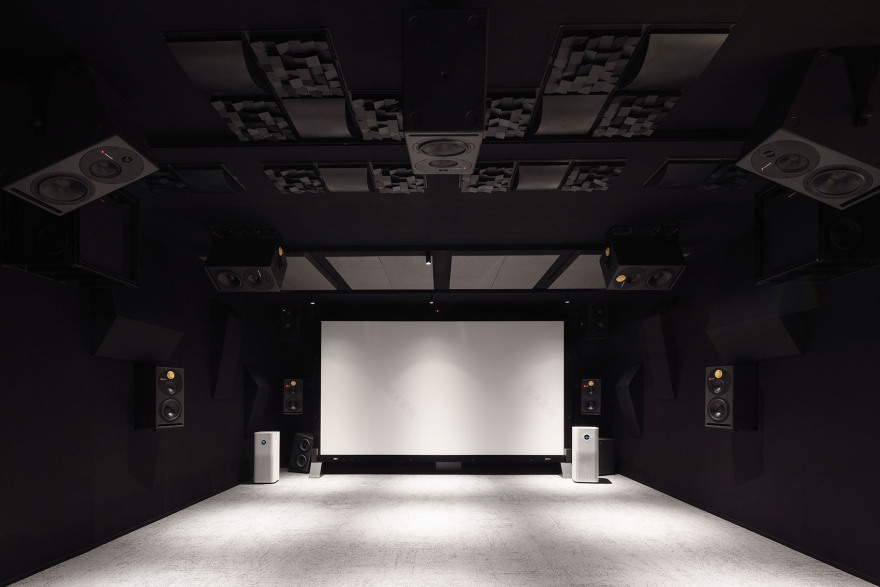
▼一层影音室,Ground floor audio-visual room © 直译建筑摄影
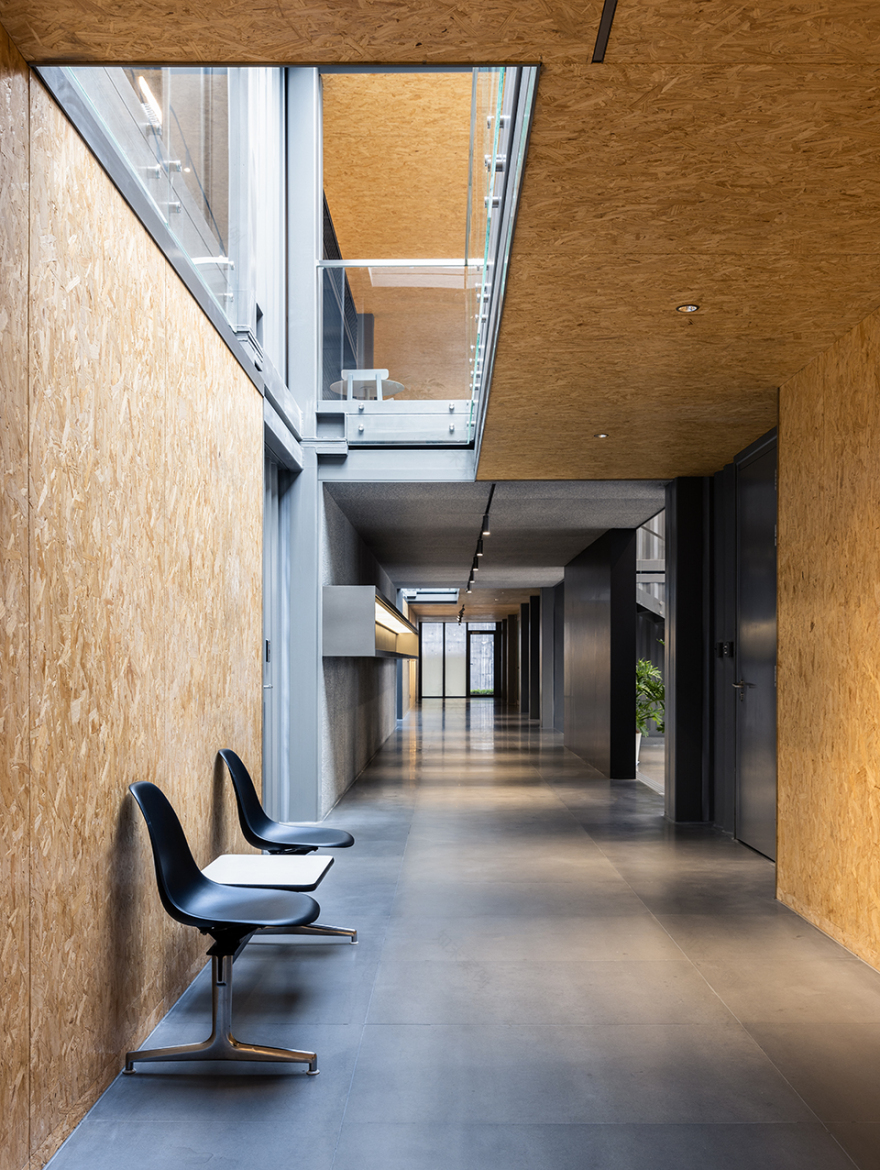
▼一层走廊,First-floor corridor © 直译建筑摄影
▼二层办公区,Second-floor office area © 直译建筑摄影
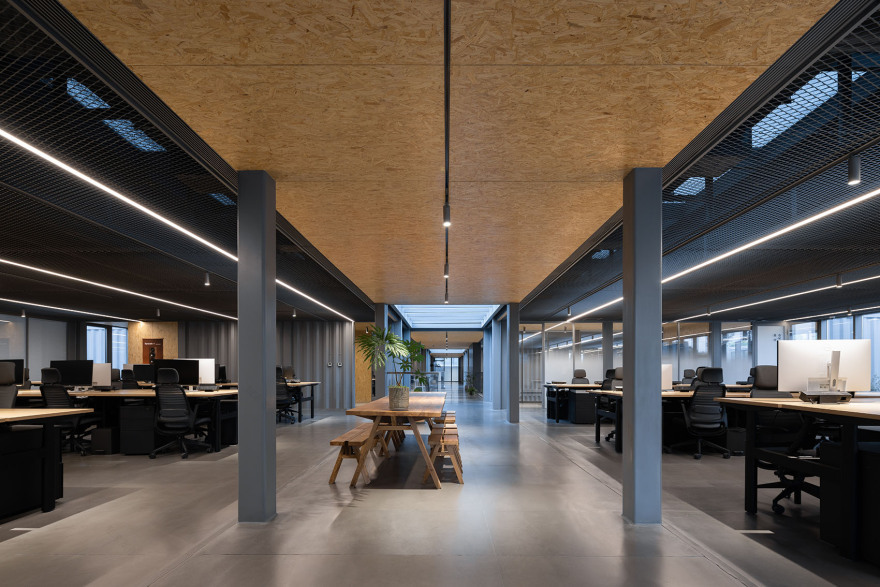
▼二层休闲区,Second-floor lounge area © 直译建筑摄影
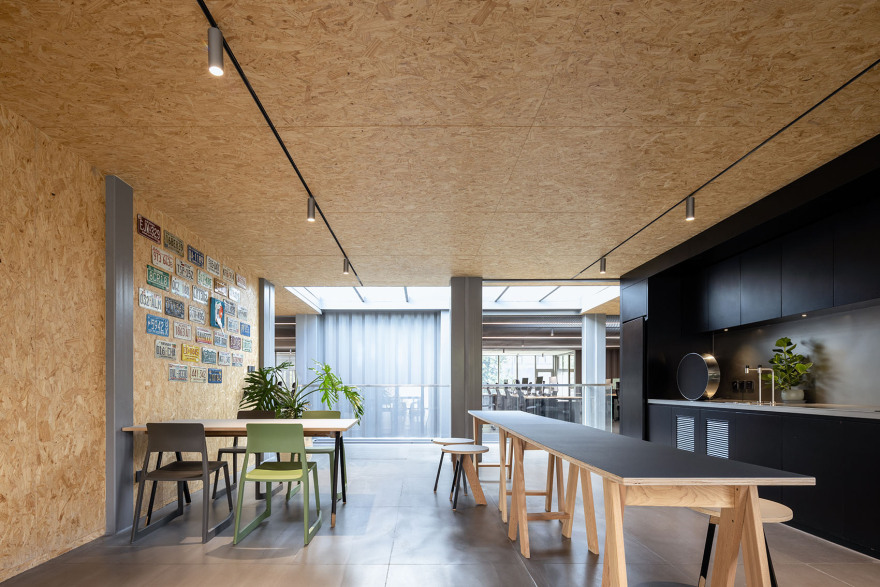
▼会议室,Meeting room © 直译建筑摄影
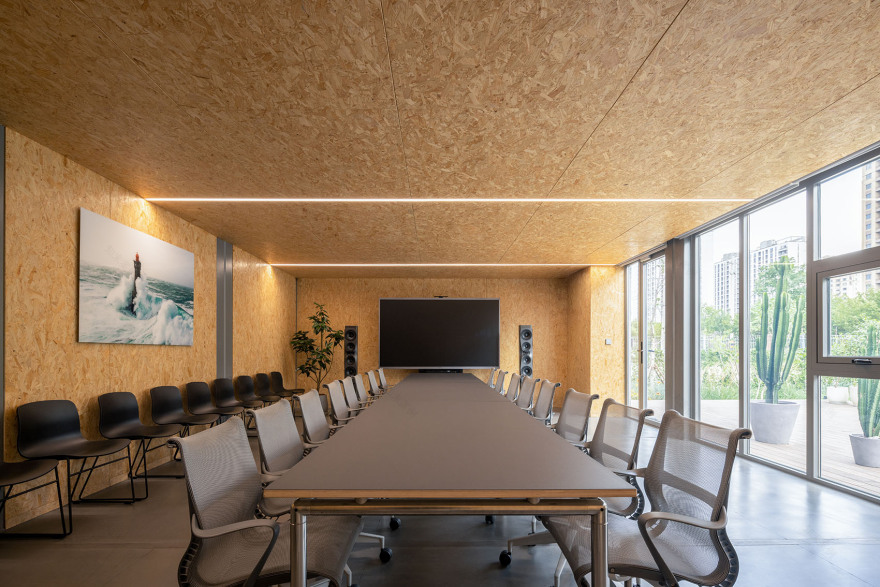
▼小会议室,Small meeting room © 直译建筑摄影
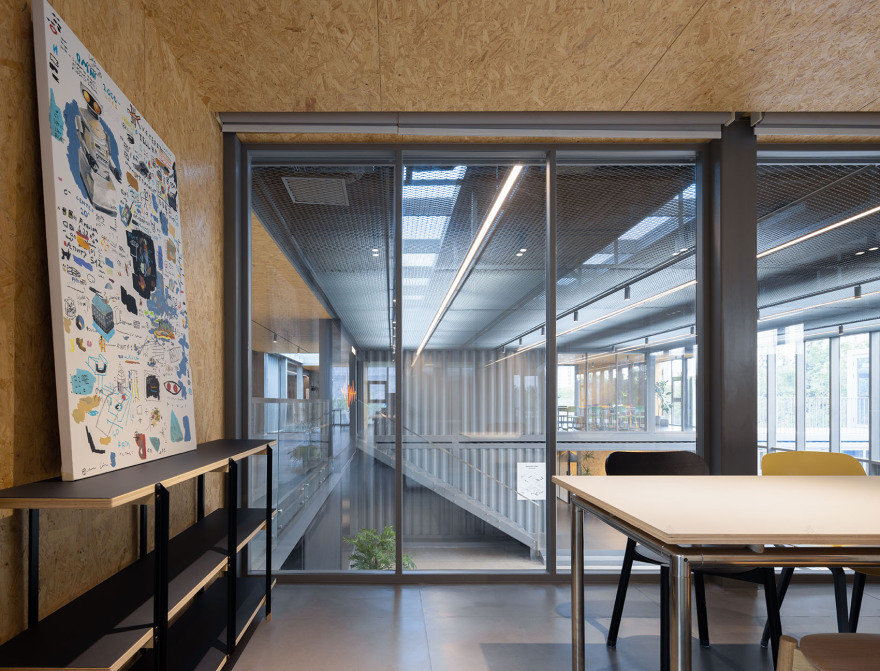
▼二层走廊,Second-floor corridor © 直译建筑摄影
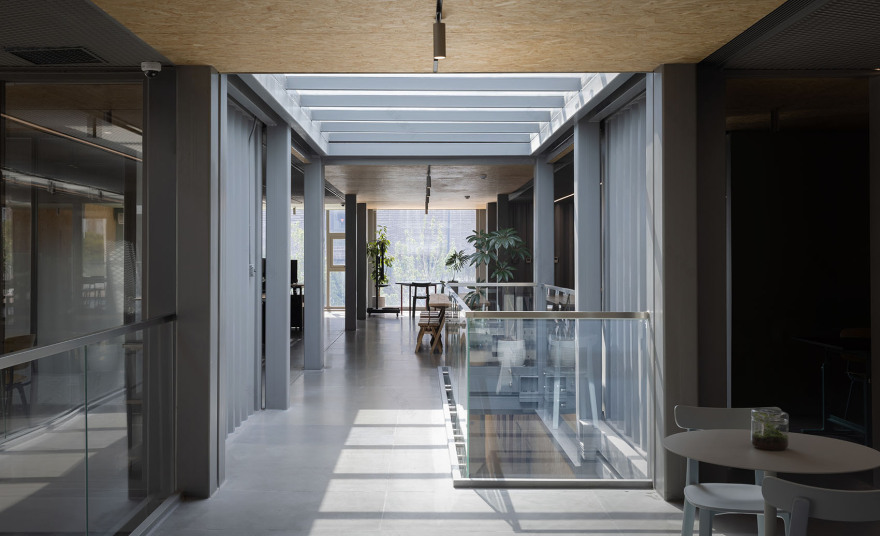
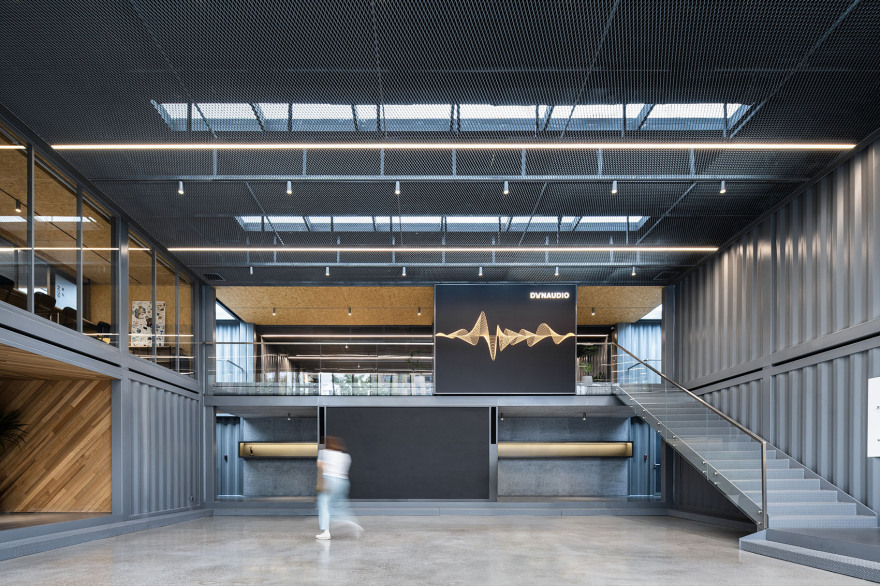
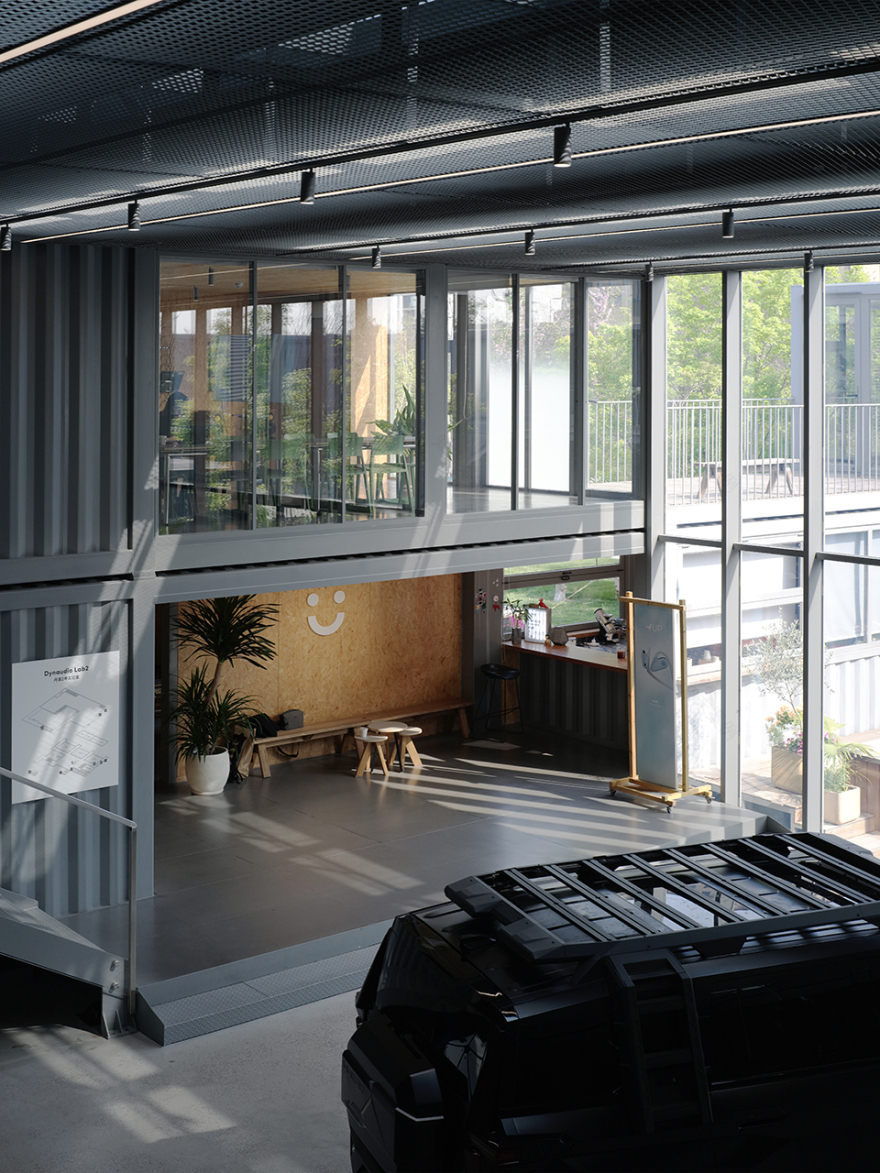
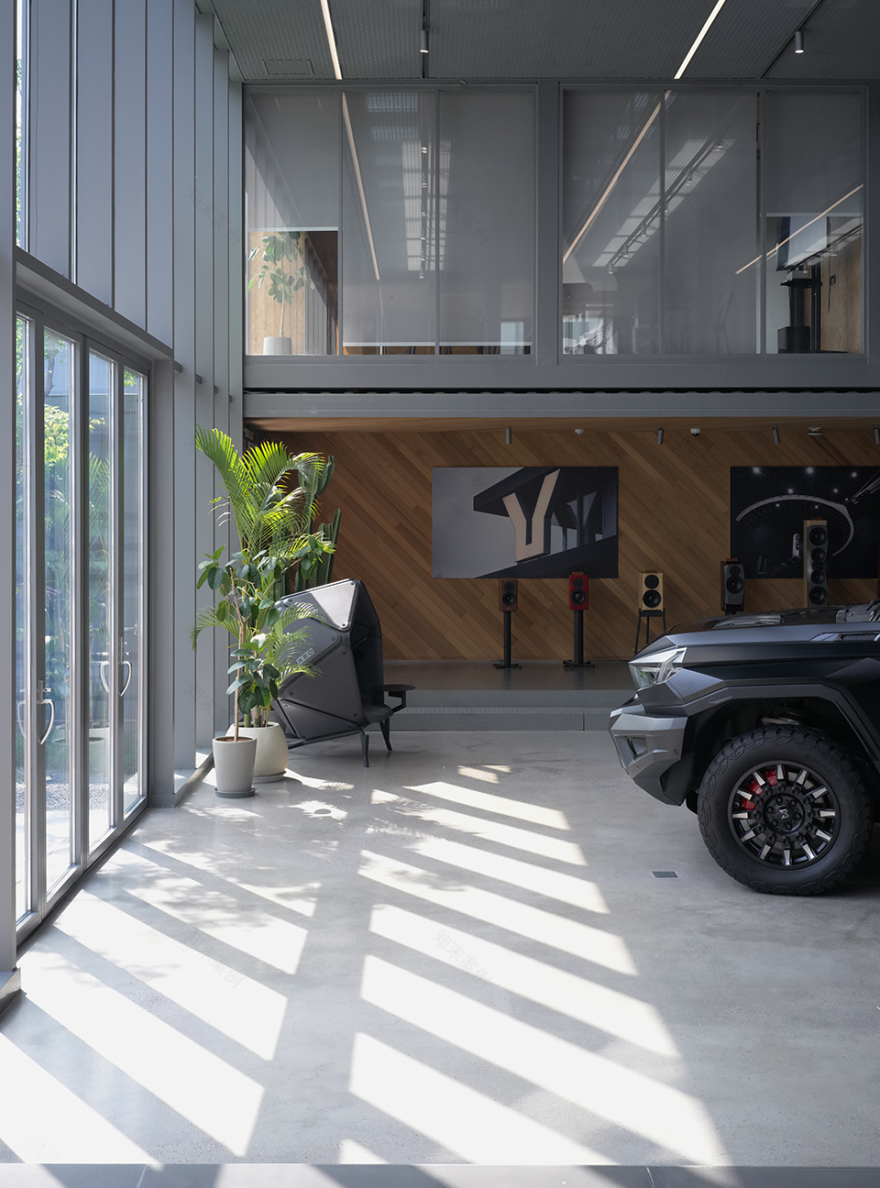
大尺度的开敞空间和小尺度的箱体空间相互穿插,交替出现,由看似单调的建筑模块形成了丰富的空间体验。中央展厅的大挑空和走廊中插入的两处小天井也利用空间高度的变化起到相同的作用。此外通过箱体上下错落的布置方式,建筑的边缘形成了若干灰空间和室外露台,给员工提供室外活动空间的同时,也让建筑体量有了虚实对比,使得室内外空间的联系更加紧密。
▼露台与灰空间分析,Terrace and semi-open space analysis © 龙工作室
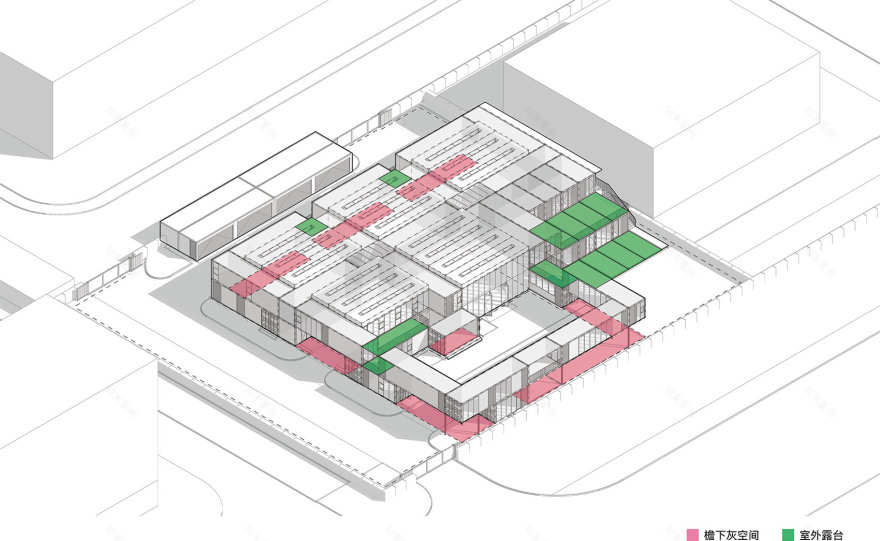
Large-scale open spaces and small-scale containers rooms are mixed together, creating a rich spatial experience using what might seem like monotonous building modules. The large open void of the central exhibition hall and two small light wells inserted into the corridors also animate the spatial experience through their varying scales. Additionally, by staggering the container modules, several semi-enclosed spaces and outdoor terraces are formed along the building’s perimeter, offering outdoor activity areas for employees and at the same time creating a play of solid and void in the building’s massing. Through these transitional spaces the connection between interior and exterior are also strengthened.
▼展厅空间概览,Exhibition hall overview © 直译建筑摄影
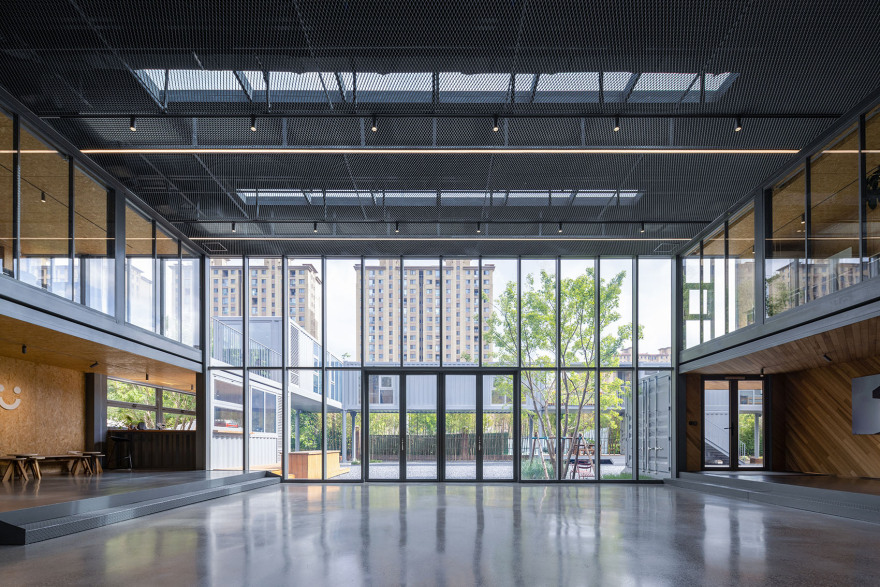
▼鸟瞰展厅中庭,Exhibition atrium aerial view © 龙工作室
▼展厅空间局部,Exhibition hall partial view© 龙工作室
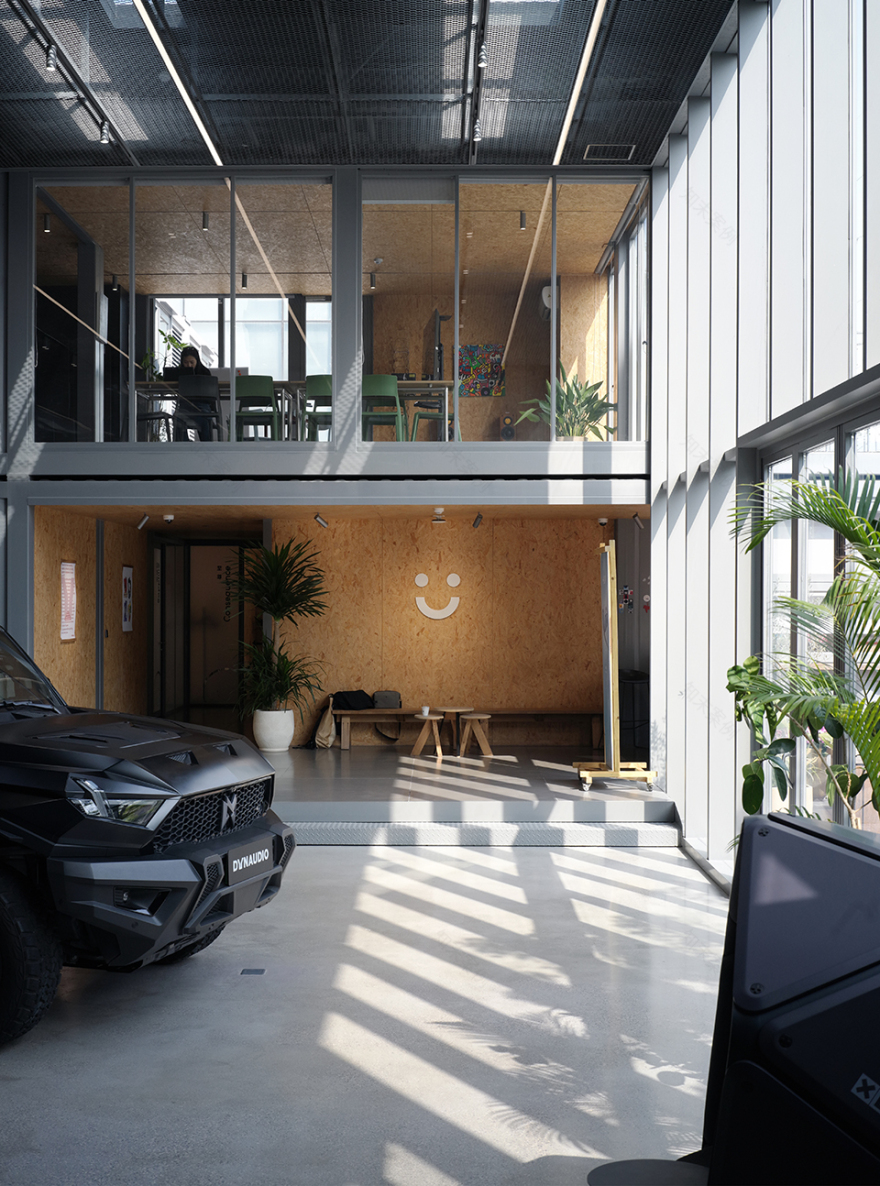
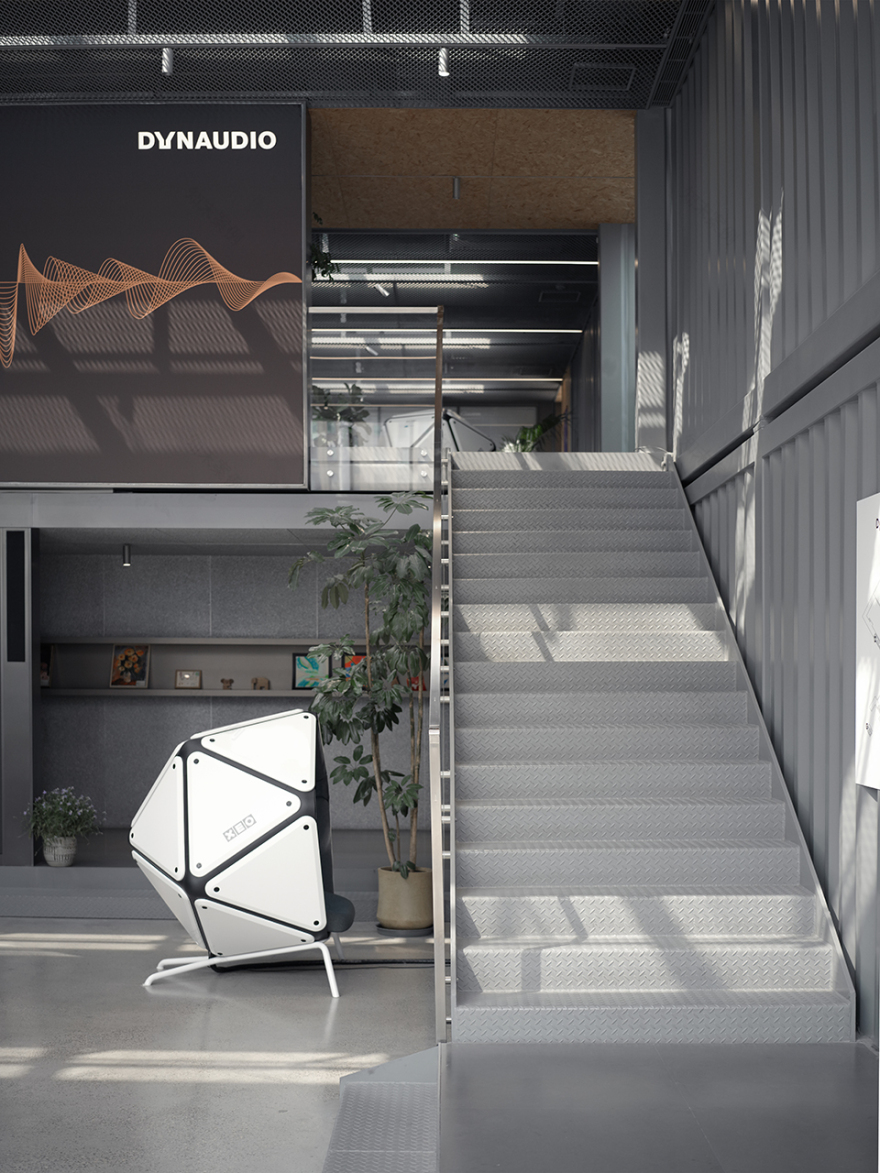
▼展厅楼梯,Exhibition hall staircase© 龙工作室
人车组织/场地利用
Pedestrian & Vehicular Organization / Site Utilization
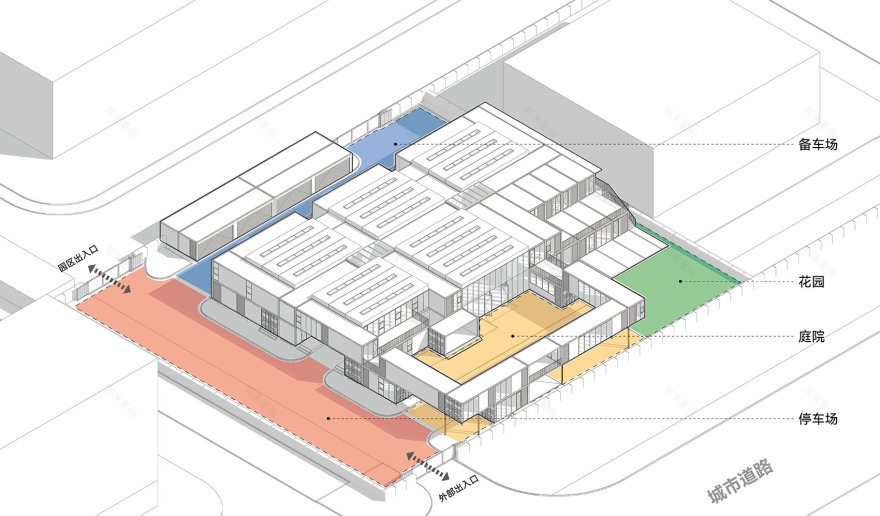
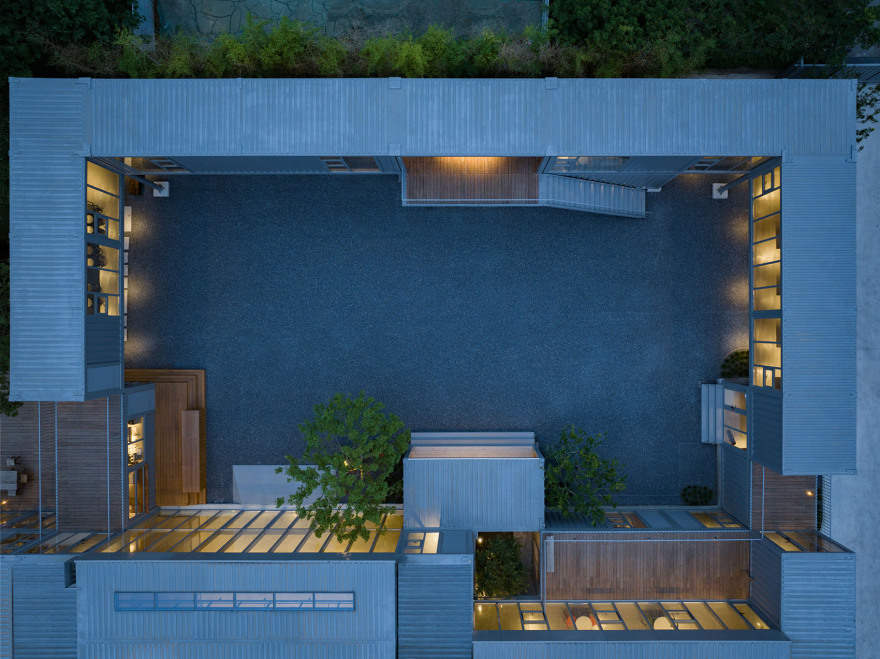
建筑地块临近厂区,南侧是一条主要城市道路,人员和车辆主要由南侧的进出。为了减少日常使用中人车干扰的问题,方案将建筑周围的场地划分为四块:北侧用于周转测试车辆的备车区;西侧的员工停车场;南侧由箱体围合形成的庭院,和东南侧绿植茂密的花园。这样的划分给原本无序的周边场地增加了秩序感,由停车场到庭院再到花园的这条东西向的轴线上,访客可以体验到尺度感和私密性的逐级变化。具有围合感的中央庭院也给举办活动提供了良好的场地,庭院与室内的大展厅相对并可通过折叠门进行连通。
▼场地轴测分析,Site axonometric analysis © 龙工作室
▼交通分析图,Circulation analysis © 龙工作室
The plot is adjacent to a factory area, with a major urban road to the south. Both pedestrian and vehicular primarily access the site from the south. To minimize conflicts between pedestrian and vehicle traffic in daily use, the area surrounding the building is divided into four zones: to the north, a zone for circulating the test vehicles; to the west, an employee parking lot; to the south, a courtyard enclosed by container modules; and to the southeast, a garden. This division brings order to the previously unorganized site. Along the east - west axis—from the parking lot to the courtyard to the garden—visitors experience a gradual shift in scale and privacy. The central courtyard also serves as an excellent venue for events, positioned just outside of the exhibition hall. Open the folding door between them, the indoor and outdoor spaces can merge into one.
▼庭院花园,Courtyard garden © 直译建筑摄影
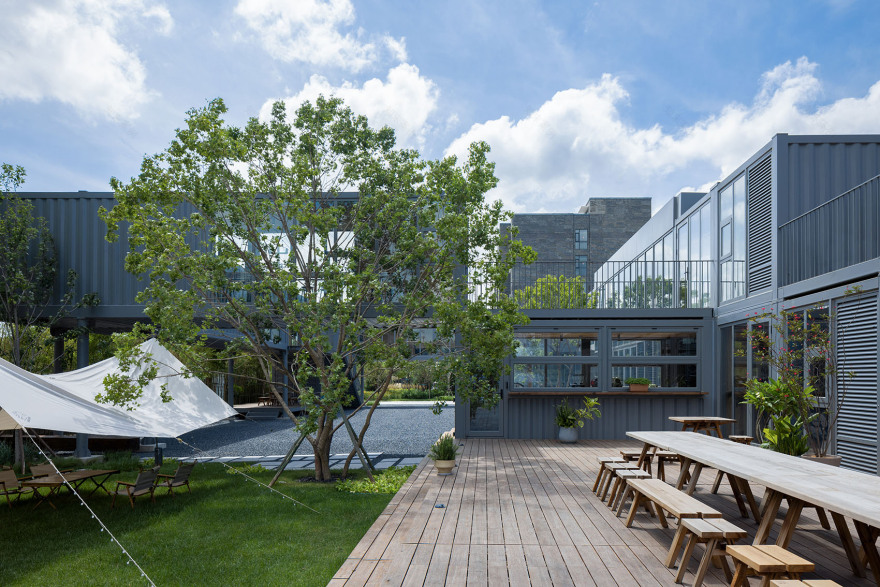
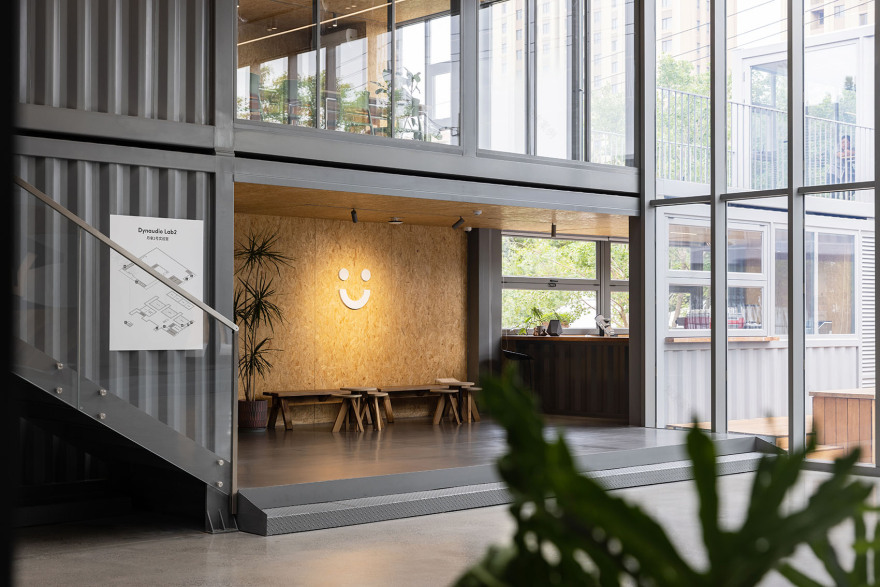
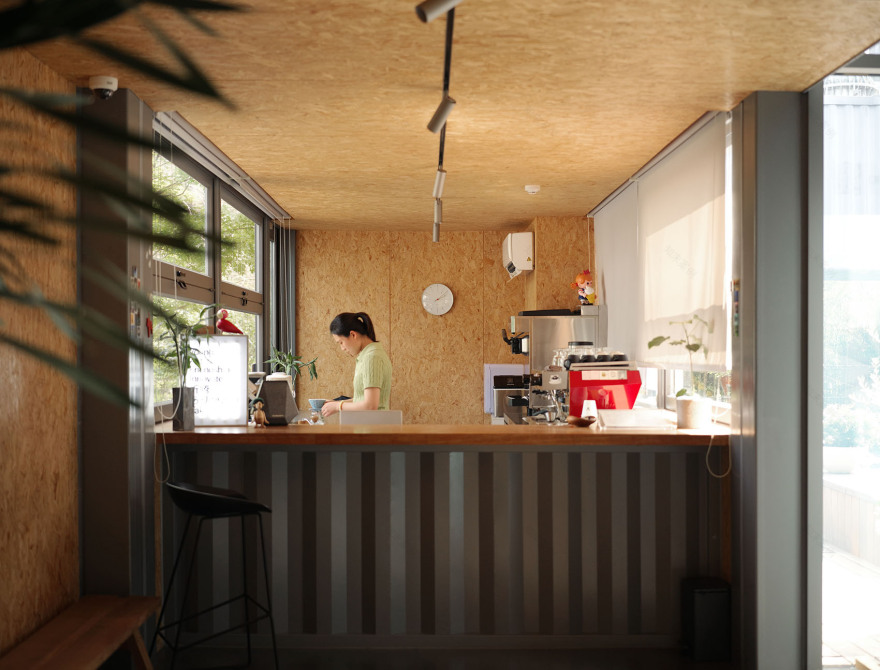
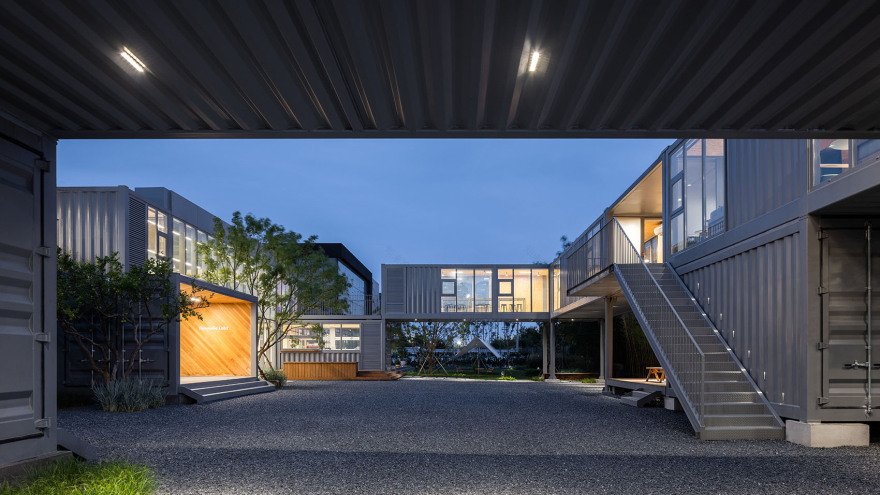
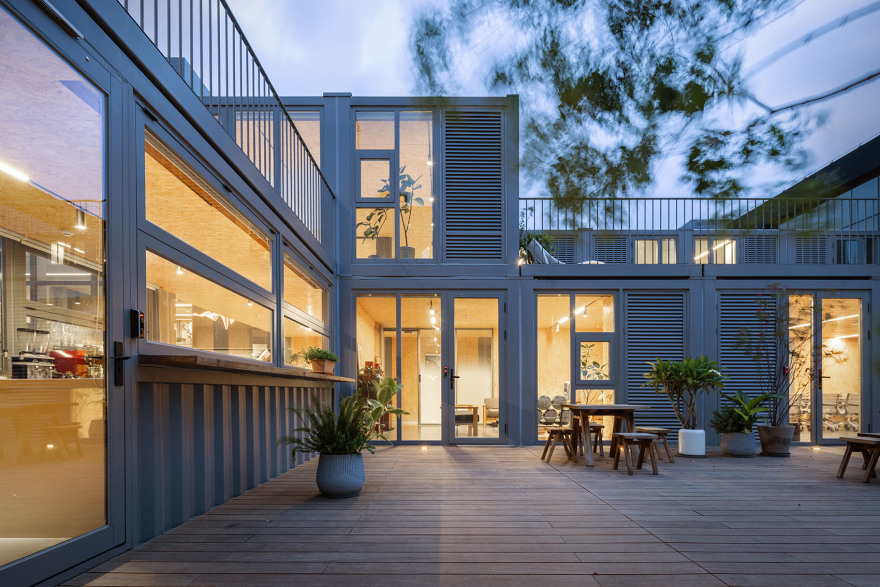
用来围合庭院的箱体在二层形成环线,首层则呈开放状态,围绕庭院仅有四个6m长的箱体落地,分别为值班室,会客室,入口箱和咖啡箱。它们通过各自的特性进一步定义了中央庭院的使用。保安室位于东南侧,临近地块的主入口,视野良好。最南侧的会客室远离主体建筑且贴近外侧竹墙,环境私密雅致。入口箱位于展厅一侧,采用前后通透的箱体,提示入口位置的同时,与背后小天井的绿植也构成了框景。咖啡箱最为特殊,位于展厅、庭院和花园三者的交点,短面向室内开放提供服务,两个长面均配有折叠窗,可同时服务左右两块室外场地,作为备餐间和水吧台在举办活动时提供充足的服务支撑。
Surrounding the central courtyard, a series of the container form a loop on the second level. Only four modules touch the ground: the security room, reception room, entrance module, and coffee module. These modules defines the central courtyard through their own specific character. The security room is located on the southeast, guarding the entrance area. The reception room on the south, set away from the main building and close to the bamboo wall planted along the perimeter, provides a private and elegant environment for meeting. The entrance module, situated beside the exhibition hall, features an open container, hinting the entrance while framing a view of the tree planted in the small light well behind it. The most distinctive is the coffee module, plugged in at the intersection of the exhibition hall, courtyard, and garden. Its short side opens to the interior, while both long sides are equipped with large folding windows, allowing it provide services to both indoor and outdoor areas.
▼咖啡箱,Coffee module© 直译建筑摄影
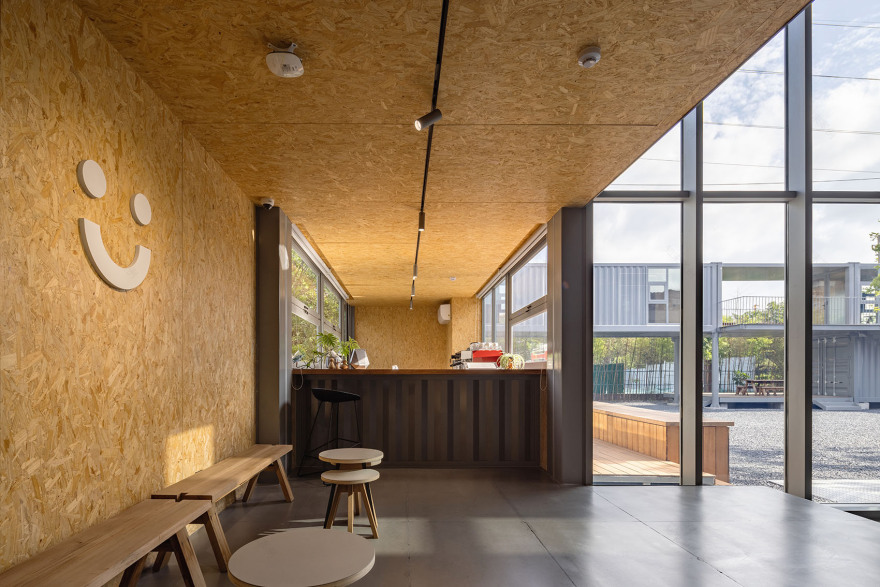
▼咖啡吧台近景,Coffee bar close view© 直译建筑摄影
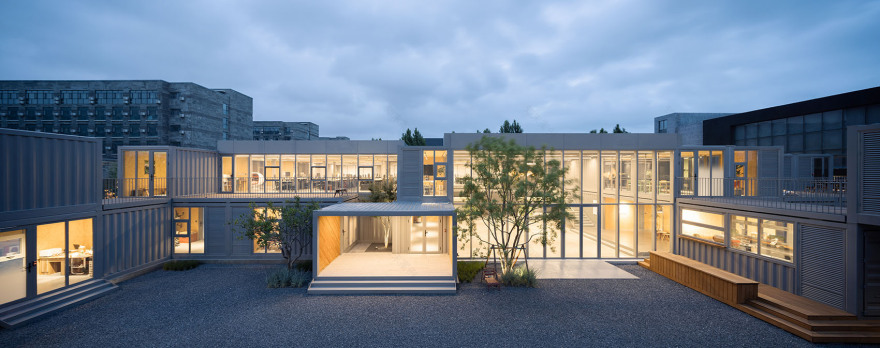
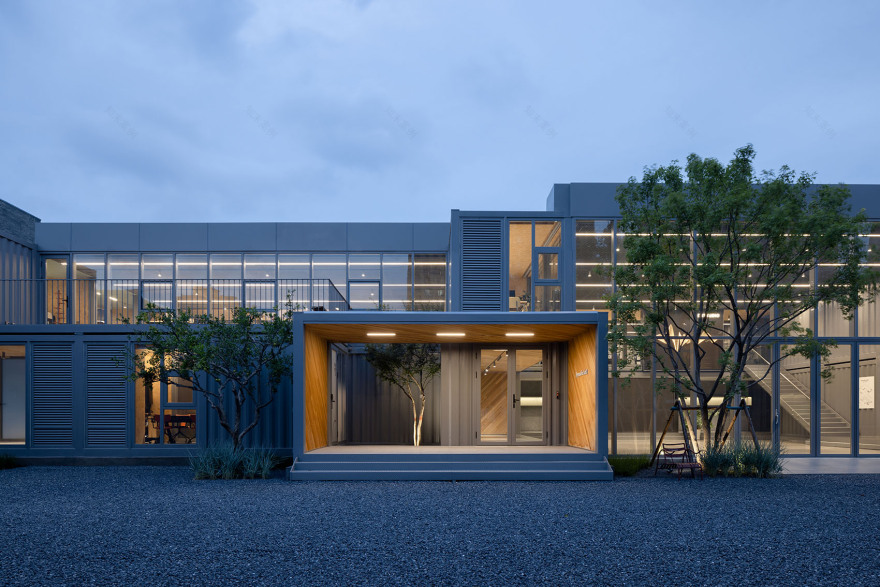
▼建筑夜景,Night view of the building © 直译建筑摄影
▼主入口夜景,Main entrance night view © 直译建筑摄影
▼庭院俯视夜景,Top view of courtyard at night © 直译建筑摄影
▼庭院夜间概览,Courtyard overview at night © 直译建筑摄影
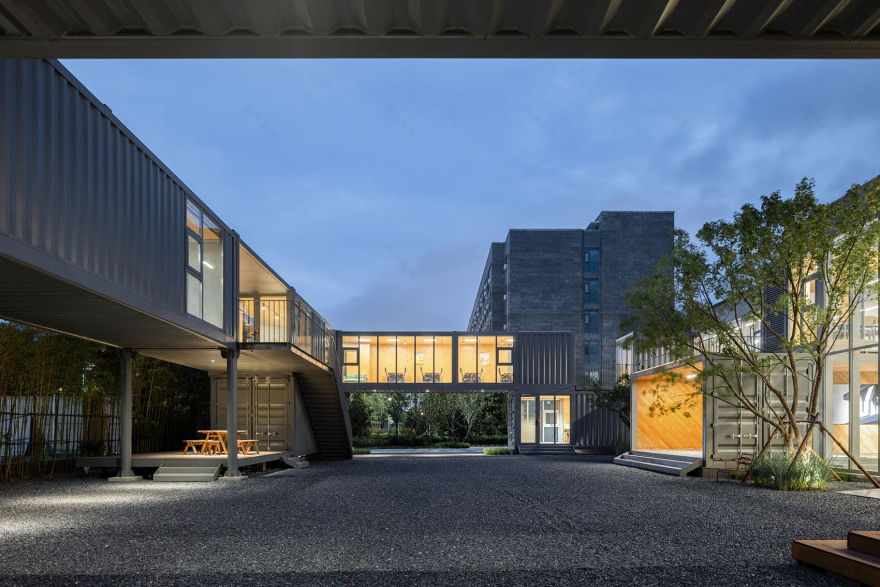
▼车库与调音室夜景,Garage and tuning room night view © 直译建筑摄影
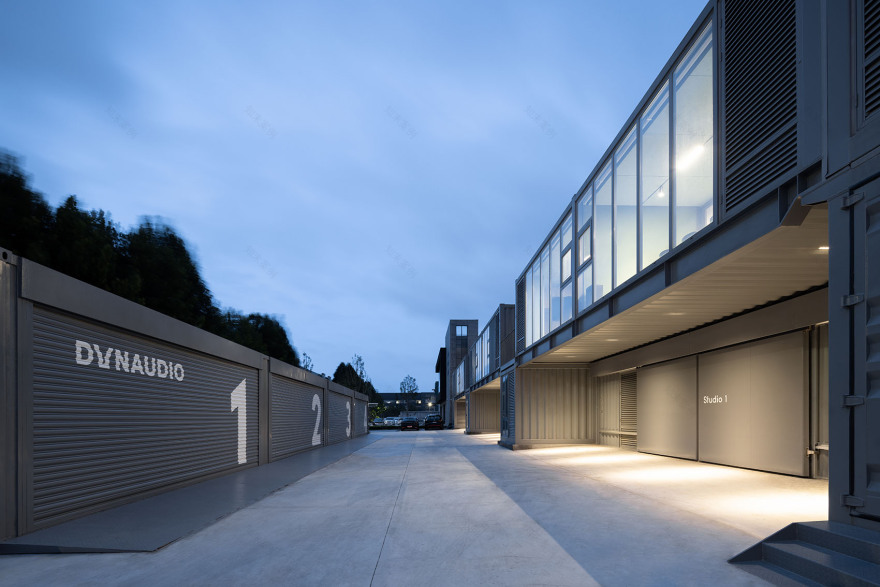
▼室外露台夜景,Outdoor terrace night view © 直译建筑摄影
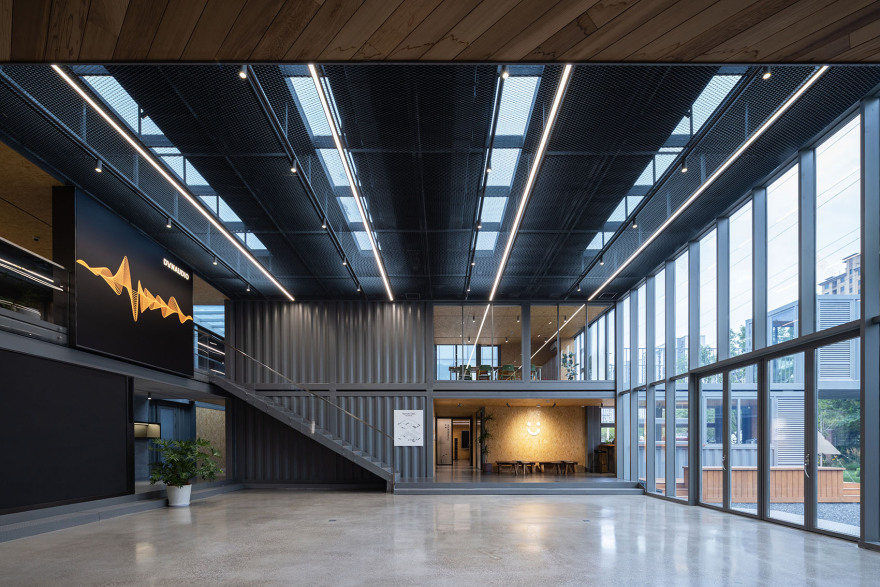
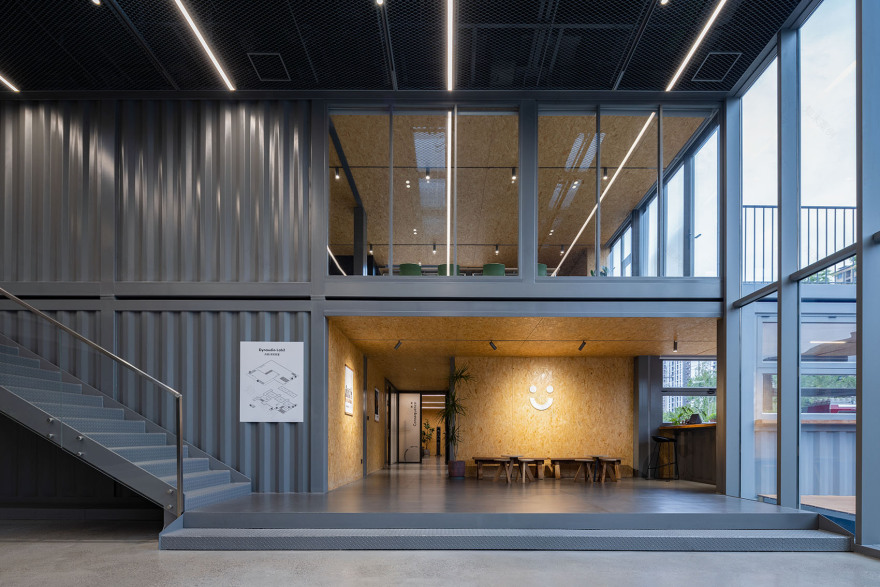
▼展厅夜景,Night view of exhibition hall © 直译建筑摄影
▼一层平面图,Ground floor plan © 龙工作室
▼二层平面图,Second floor plan © 龙工作室
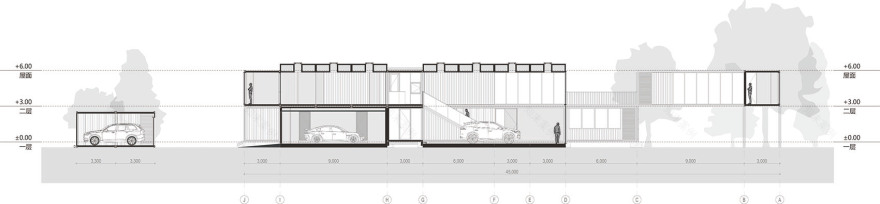
▼剖面图,Section © 龙工作室
项目名称:歌尔丹拿Lab2
项目类型:建筑
设计方:龙工作室
项目设计:2022.4-2022.9
完成年份:2023.2
设计团队:陈龙,谭坦
项目地址:山东,潍坊
建筑面积:2600㎡
摄影版权:直译建筑摄影
客户:歌尔股份有限公司
景观设计:房木生景观设计
土建施工:万华建筑科技有限公司
室内施工:朋明建筑装饰工程有限公司
材料:波纹钢板,欧松板,聚酯纤维吸音板,预制混凝土地砖
Project name:GoerDyna Lab2
Project type:Architecture
Design:Atelier Loong
Design year:2022.4-2022.9
Completion Year:2023.2
Leader designer & Team:Chen Long, Tan Tan
Project location:Shandong, Weifang
Gross built area: 2600㎡
Photo credit: Archi Translator
Clients:Goertek Inc
Landscape Design:Farmerson Architects
Construction(Structural):Wanhua Group
Construction(Interior) :WTLdesign
Materials:corrugated steel,OSB,polyester fiber board,prefabricated concrete floor panel
南京喵熊网络科技有限公司 苏ICP备18050492号-4知末 © 2018—2020 . All photos and trademark graphics are copyrighted by their owners.增值电信业务经营许可证(ICP)苏B2-20201444 苏公网安备 32011302321234号
苏公网安备 32011302321234号客服
消息
收藏
下载
最近