

创作上传
VIP
收藏下载
登录 | 注册有礼
查看完整案例

收藏

下载

分享
沿沙特阿拉伯东部漫长红海海岸线延展的汉志山脉,由陡峭山峰构成一道高耸山墙,其最鲜明的特征是锯齿状岩层与极为深邃的wadi峡谷——这些隐秘河谷孕育着世界其他地方无法复制的原始生态系统。沙漠岩石度假村(Desert Rock Resort)便从这样一处被群山包围的绿洲中缓缓显现。这里距离新建的红海国际机场仅一小时车程,却仿佛远离尘世。占地约3万平方米的度假村,从几乎未被开发的自然地貌中逐步展开。
An ascendant wall of steep peaks lining the extensive Red Sea coastline of eastern Saudi Arabia, the Hejaz Mountains are defined by their serrated rock formations and especially deep wadis: secluded river valleys home to pristine ecosystems not found anywhere else on earth. From one of these dramatically enveloped oases—only an hour’s drive from the new Red Sea International Airport but seemingly worlds away—the sprawling 30-thousand square meter (close to a 100-thousand square-foot) Desert Rock Resort incrementally reveals itself from a decidedly unspoiled landscape.
▼项目概览,overall of the project© Ema Peter
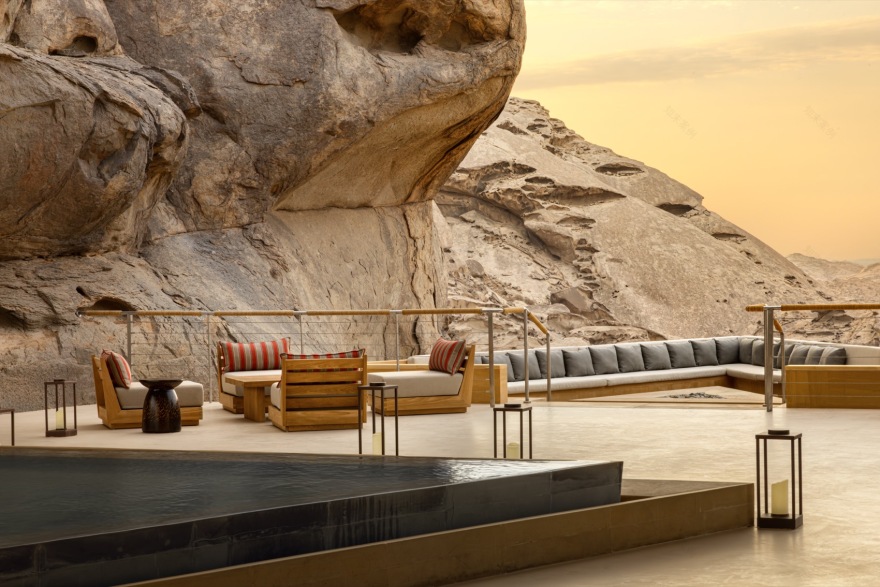
建筑嵌入山体边缘、悬挑于陡峭裂缝之上,并顺应隐秘河谷中流动起伏的沙漠地形展开。宏大的空间体量以近乎原始地貌般的方式浮现,在呈现巨大尺度感的同时,将生态干预降至最低。这座五星级度假目的地在多个层面都具有开创性意义。作为Red Sea Global开发的项目,沙漠岩石度假村也是“Saudi Vision 2030(沙特2030愿景)”的重要先导项目之一。该国家战略旨在推动经济、社会与文化的多元化发展,同时尊重自然环境与历史遗产。项目获得LEED Gold认证,不仅大量使用场地原位开采的材料建造,还配备了创新的水资源储存与分配系统,以及多项先进技术与运营机制。各建筑体量被精细地融入起伏地形之中,其布局与照明经过严格控制,既不遮挡场地辽阔的自然景观,也避免破坏当地格外清晰、繁星密布且月光明亮的夜空环境。
Embedded in the peripheral massifs, cantilevered over steep crevices, and contouring the hidden wadi’s roving desert floor, monumental spaces surface with near-primordial delineation, and colossal scale but with as little ecological impact as possible. The five-star destination is a game changer in many respects. Developed by Red Sea Global, Desert Rock Resort is a forerunner of the Saudi Vision 2030 mandate; a government program which aims to incentivize economic, social, and cultural diversification all while respecting nature and heritage. Achieving LEED Gold status, the destination was not only constructed using material extracted on site but also features an innovative water retention and distribution system, alongside other state-of-the-art technologies and operational procedures. Meticulously integrated into the undulating terrain, the different structures are laid-out and illuminated to not obstruct the setting’s sweeping vistas or taint its especially vivid star-ladened and vibrantly moon-lit night time skies.
▼建筑嵌入山体边缘、悬挑于陡峭裂缝之上,
the hotel embedded in the peripheral massifs, cantilevered over steep crevices© Ema Peter
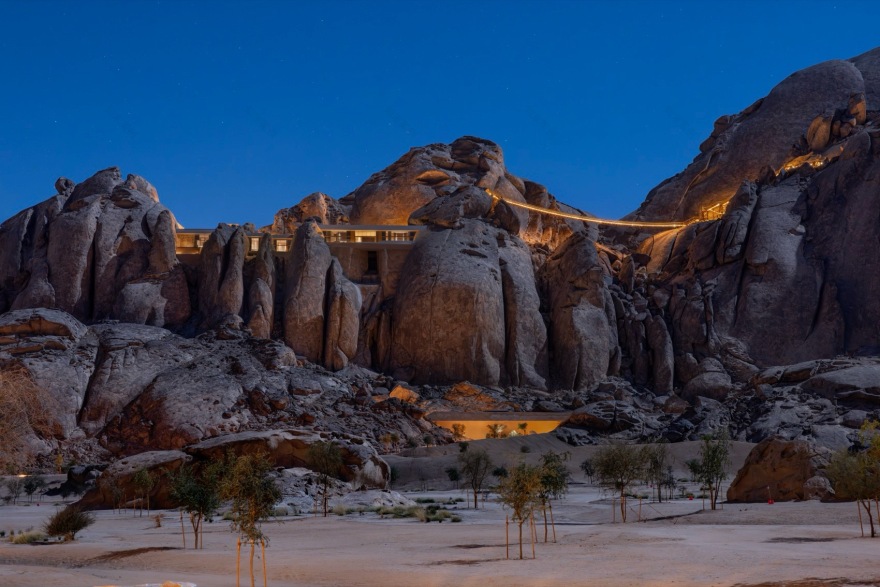
“这里具有一种精神性的、几乎近于形而上的气质,一种在其他地方无法感知到的独特体验。”负责整个度假村室内设计的Paolo Ferrari工作室创始人Paolo Ferrari说道。该项目包括64间宽敞的套房与别墅,以及完整的公共配套空间体系。“在试图建立一种全新的超奢华与再生型旅游模式的同时,我们始终谨慎地以一种大胆却敏感的方式,去尊重并彰显这一无可替代的场地环境。我们观察并回应周边环境中极其原始而本质的自然特征,同时也通过不同尺度的设计介入,将这一地区深厚的历史传统重新转译为当代工艺语言。”
“There’s a spiritual, almost metaphysical, quality here; a perceptible sensation not experienced elsewhere,” says Paolo Ferrari, principal of the eponymously named practice tasked with the comprehensive interior design of the destination: 64 expansive suites and villas as well as a full offering of public amenity spaces. “With the ambition of enacting an entirely new approach to ultra-luxury and regenerative tourism, we were careful to respect and celebrate this immeasurably singular context with a bold yet sensitive approach. We observed and responded to the strikingly elemental characteristics of the immediate environs while also channeling the region’s entrenched history in artifacts reformulated in varying scales of intervention carried out using reinvigorated local craft traditions.”
▼无可替代的场地环境,unreplaceable site environment© Ema Peter
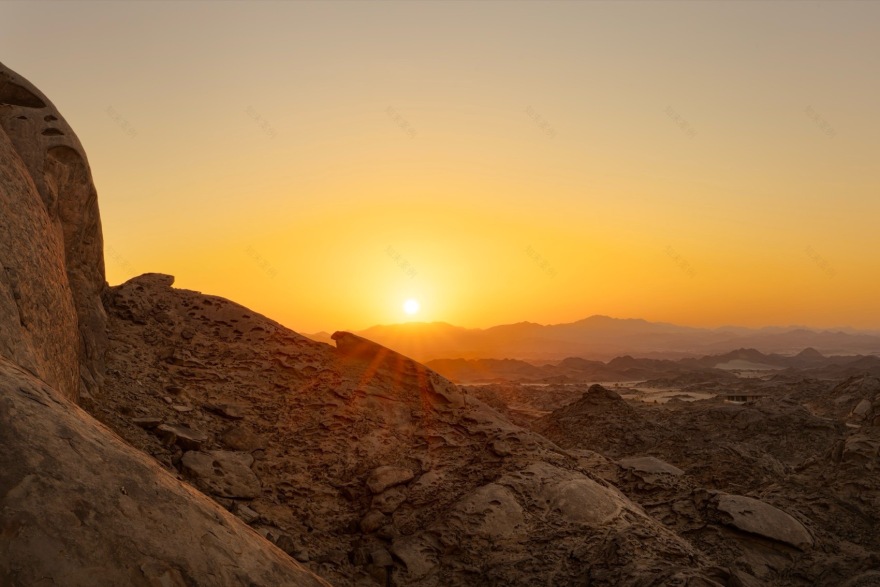
宽阔延展的室内空间——其中许多甚至让天然岩层直接穿透传统意义上的室内外边界——整体上融合了对场地环境的回应、对度假村动态建筑语言的室内延续,以及对沙特本土手工艺传统的强调。这种工艺不仅体现在材料的使用方式中,也体现在对具有文化意义的器物类型进行提炼与再设计的过程中。“我们希望这些空间能够主动退后一步,不去压倒或削弱场地本身的自然之美。”Ferrari解释道,“为此,我们引入了一组适合场地语境的矿物质材料,使空间能够映照周围环境,但并不直接模仿它。”混凝土、灰泥、石灰岩、青铜以及经过炭化或喷砂处理的木材,以彼此不同却相互协调的方式被运用于整个项目之中:从内嵌式下沉沙发、定制灯具,到具有立体感的墙面饰面,以及专门设计的铸砂五金细节,无不体现出材料与工艺的整体性表达。
Sprawling interiors—many with rock formations breaching the conventional delimitations of indoor and outdoor space—are comprehensively imbued in the prescient amalgamation of site responsivity; the nuanced evocation of the resort’s dynamic architecture extended indoors; and the championing of distinctly Saudi artisanal practices in both material application and the careful distillation of culturally-significant object typologies. “We designed these environments to recede so that they never overwhelm or detract from the site’s inherent natural beauty,” Ferrari describes. “We did so, in part, by introducing a select palette of site-appropriate mineral-based materials that allow the spaces to reflect their surroundings but not directly mimic them either.” Concrete, plaster, limestone, bronze, and wood—both charred and sandblasted—are implemented in vastly different yet complementary ways: everything from built-in sunken sofas and bespoke luminaires to three-dimensional wall finishing and custom designed sand-cast hardware.
▼天然岩层直接穿透传统意义上的室内外边界,
natural rock strata directly penetrate the traditional boundaries between indoors and outdoors© Ema Peter
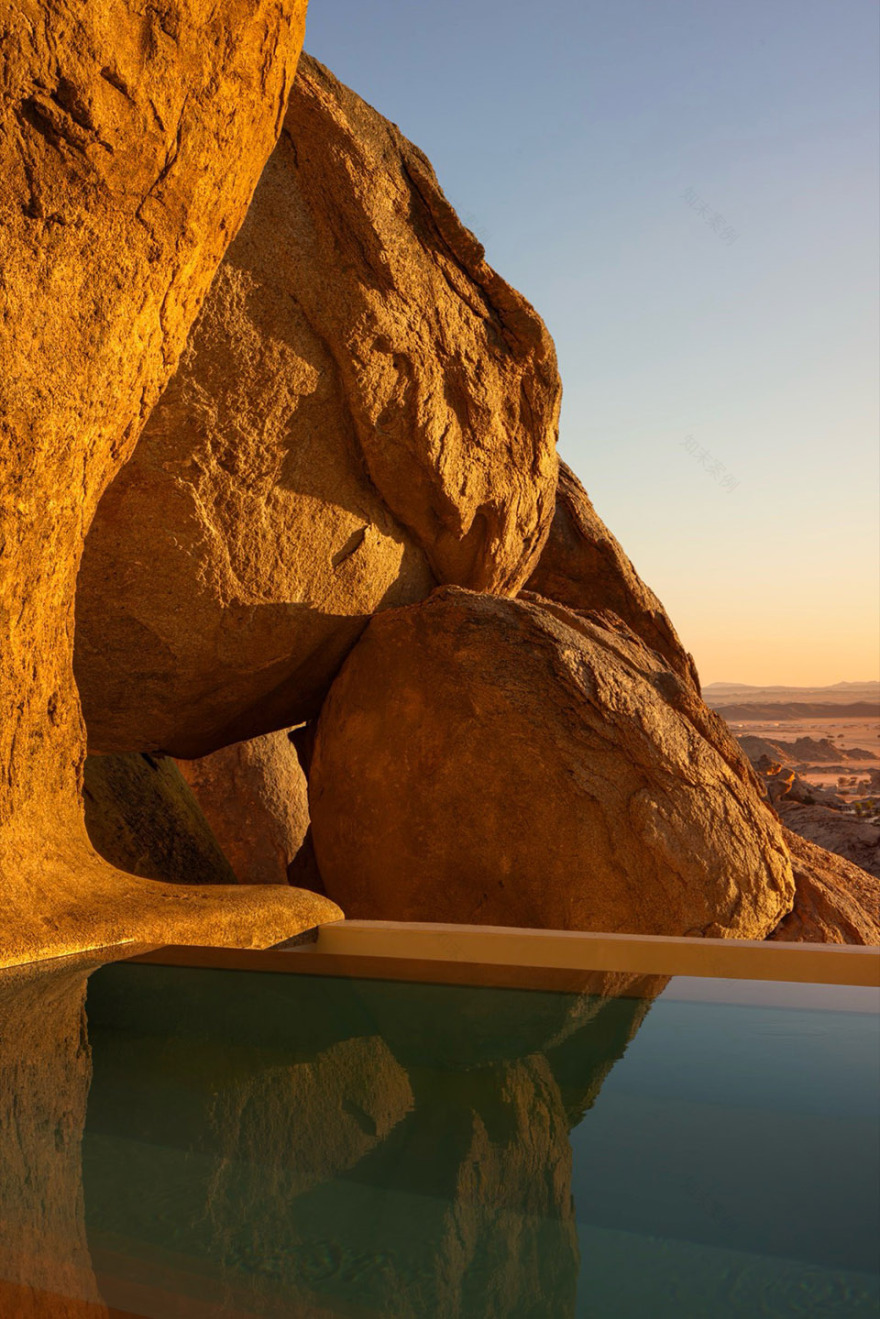
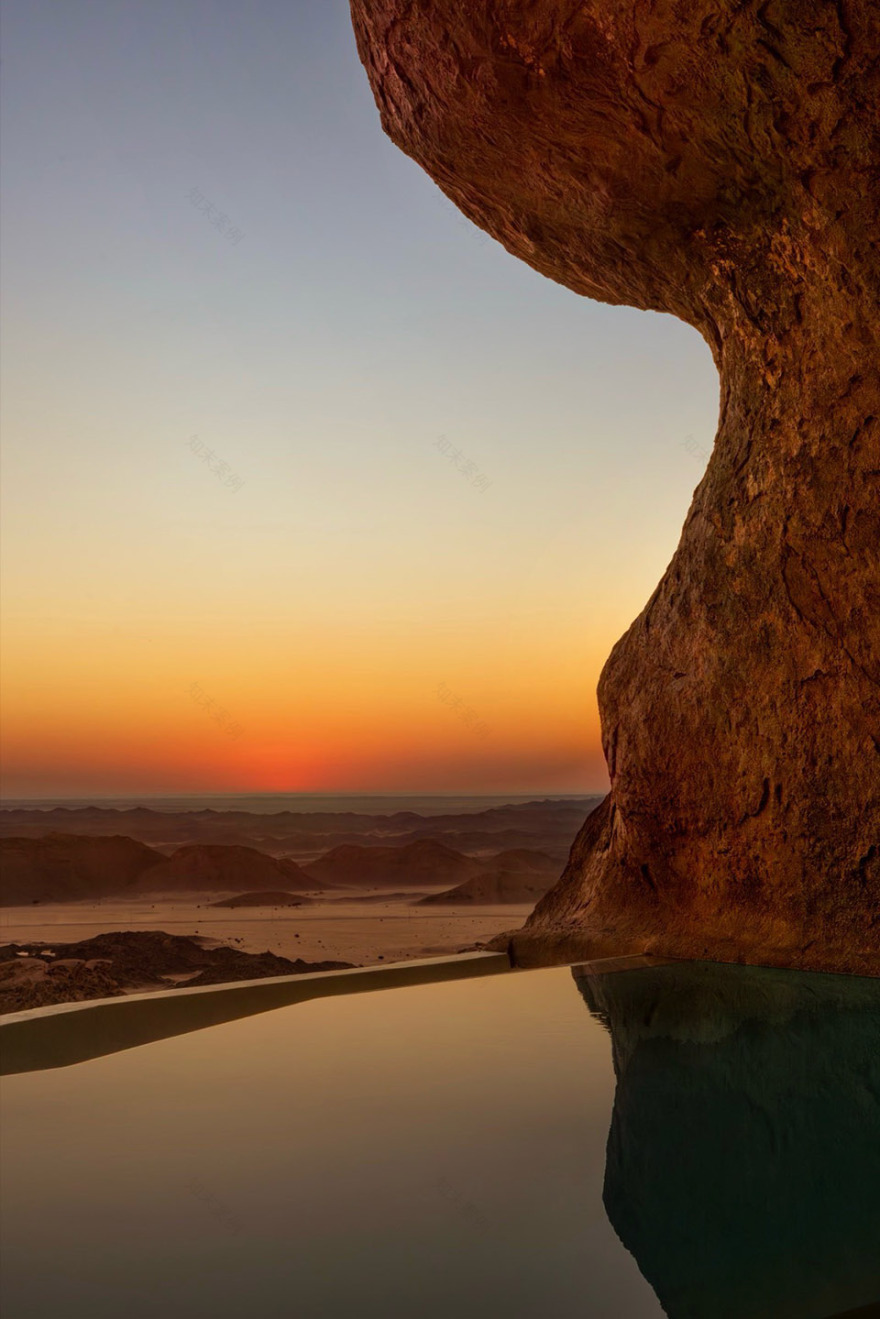
“即便是这些最容易被忽视的细节部件也至关重要,因为它们让客人能够通过身体感知,与这片土地及其历史建立联系。”Ferrari解释道。事务所为整个项目设计了约200件独特的家具与灯具。“除了在不同位置穿入室内的裸露岩壁之外,这些定制元素本身也具有一种‘锚定感’:它们唤起一种沉静而仪式化的体验,让人能够在特定时间与场所的当下之中重新找到平衡,而这里的感受尤为真实且超越日常。”例如,客房门上的砂铸钢门环,以及其他经过砂铸工艺制作的五金细节,都以一种精致方式借鉴了古老器物的形态。这些微妙而富有诗意的设计动作,使宾客得以感知沙漠环境中原始而直接的物质特性。
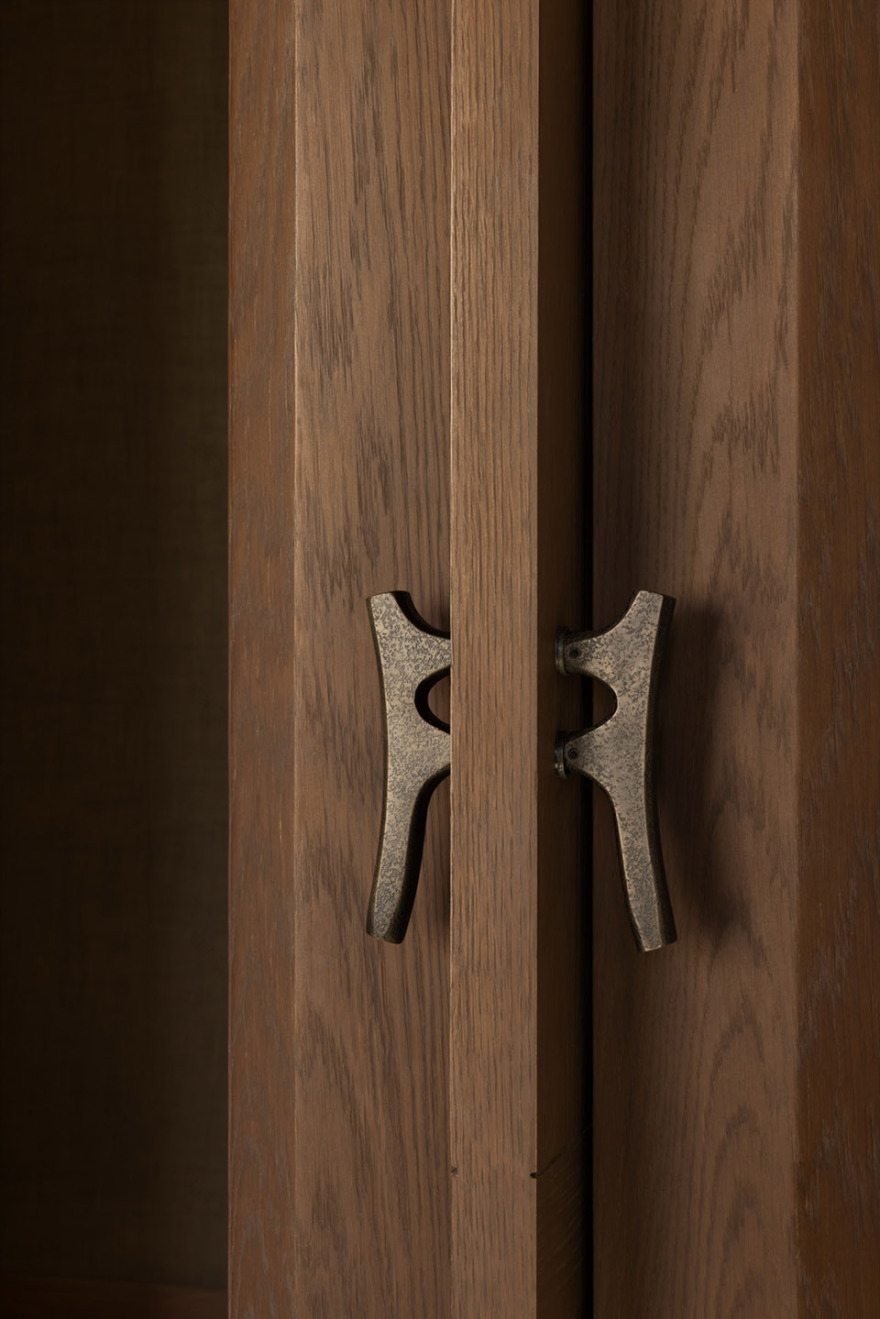
“Even these smallest of often overlooked components are vital as they provide guests with the ability to physically connect with the location and its history,” Ferrari explains. The firm designed roughly 200 unique furnishings and lighting fixtures for the entire project. “Along with the exposed rock face making its way inside at different intervals, the bespoke accents are grounding; eliciting the meditative ritual of finding balance in the immediacy of a given place in time; this one being quite palpable and transcendent.” While sand-cast steel knockers emblazon guest room doors, other sand-cast hardware takes on the refined shape of ancient forms; subtle poetic gestures that connect guests to the visceral qualities of the desert.
▼事务所为整个项目设计了约200件独特的家具与灯具,
the firm designed roughly 200 unique furnishings and lighting fixtures for the entire project © Ema Peter
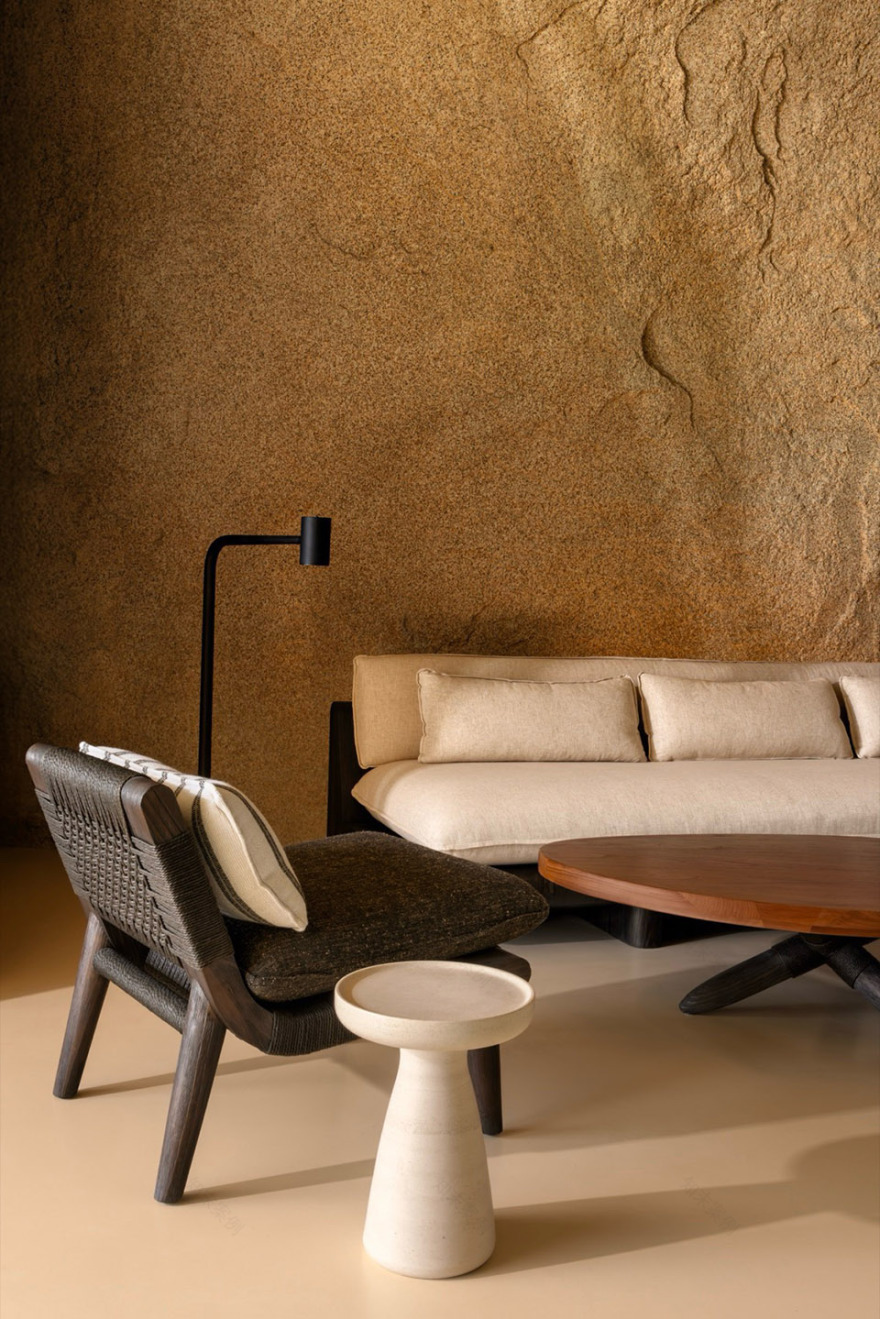
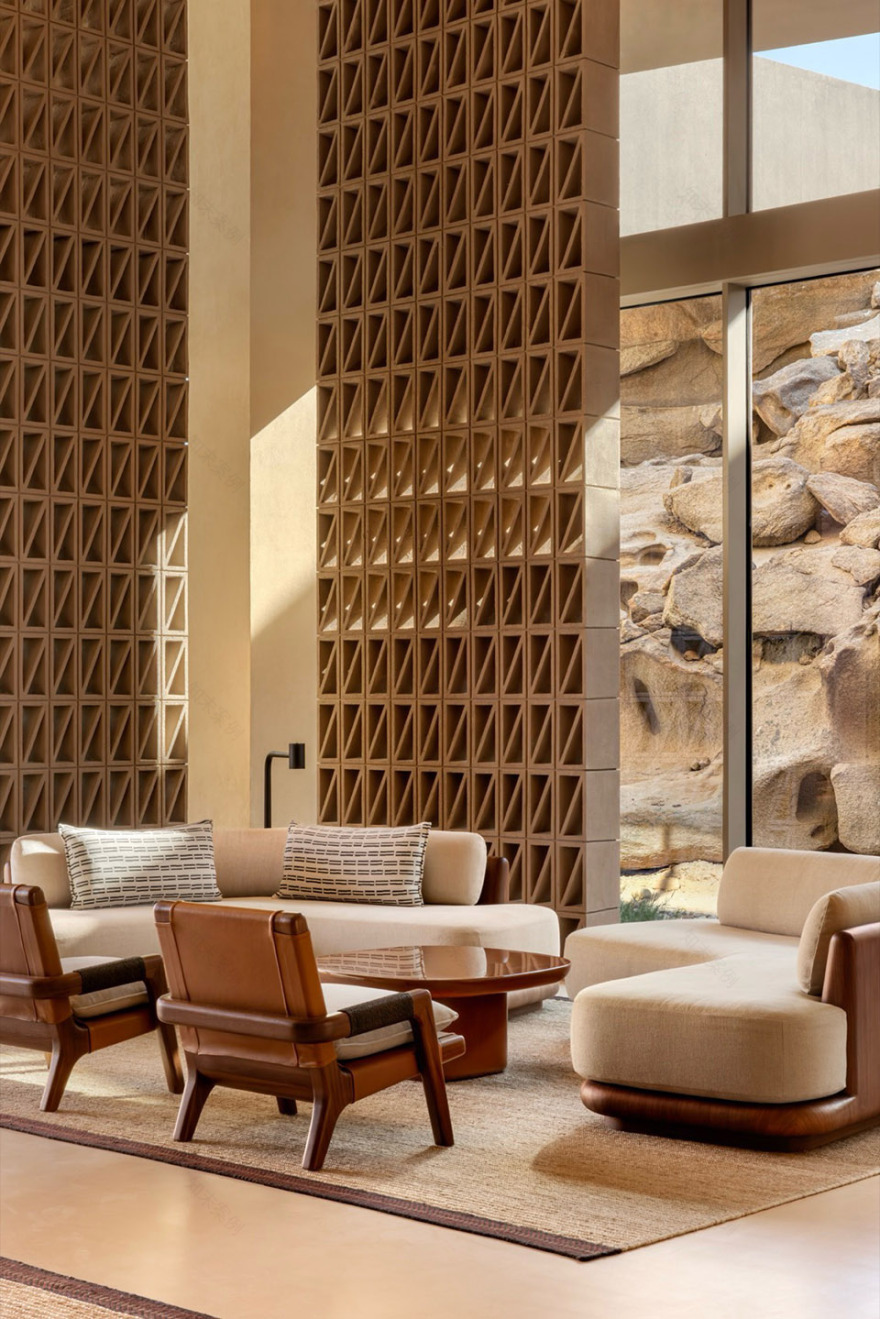
人们第一次接触构成沙漠岩石度假村的一系列彼此独立却相互关联的空间,是从那个悬挑于岩石之上的入口开始。入口下方柔和而克制的灯光,营造出一种戏剧性却并不压迫的氛围。随后抵达的是具有复合功能的Guest Hub,其序列从一个如温室般通透的大堂展开,一侧框景般地呈现出粗粝的天然岩体。这一开场空间已经暗示了贯穿整个项目的核心设计策略:在安静的纪念性与柔和的空间表达之间取得平衡;通过细微线索回应当地文化与历史;并通过少量材料的多样化表达建立整体统一性。分隔三个方向视线的是一系列开放式砖构墙体,它们将外部建筑语言引入室内。这些大胆的开放几何结构——同时呈现出折角与直线两种构成方式——令人联想到阿拉伯传统中的mashrabiya(木格窗)系统:一种通过格栅结构向外延伸建筑立面的凸窗空间。它们既能够过滤自然光与空气,又能阻隔过度热量进入室内。
They first encounter the sequence of perceivably noncontiguous environments that constitute Desert Rock Resort when reaching the sharply cantilevered rock-topped entrance defined by a dramatic but not overpowering illumination from below. The next emplacement they engage with is the multivalent Guest Hub, commencing with a glasshouse-like lobby framing a rugged rock formation on one side. This introductory space hints at much of the cohesive design strategy carried out through the rest of the property: the balancing of quiet monumentality with soft application; suggestions of local culture and history; and varied articulations of only a few materials. Breaking up views in three directions are open brickwork walls that bring the exterior architecture indoors. These bold open-structure geometric elements—forming in both an angular and rectilinear pattern—evoke the arabesque tradition of extending the facade of a building with mashrabiyas, projected oriel window loggias enclosed in latticework carefully filtering in natural light and air while also keeping excessive heat out.
▼开放式砖构墙体令人联想到阿拉伯传统中的mashrabiya(木格窗)系统,
open brickwork walls with bold open-structure geometric elements © Ema Peter
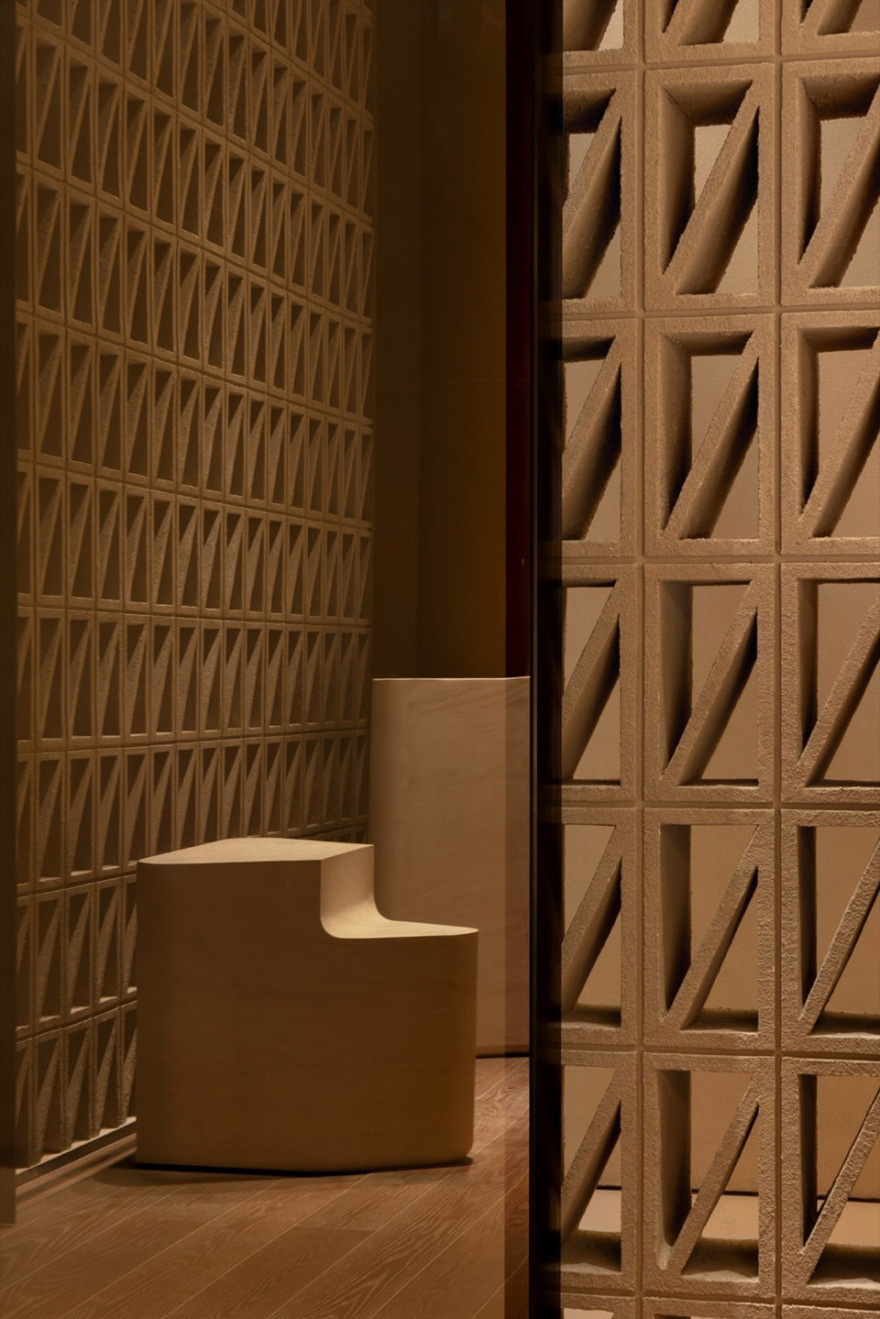
另一个回应文化语境与沙特传统习俗的设计元素,是大型悬挂式钵形香薰装置。与其他文化中更多具有宗教属性的用途不同,在这里,焚香长期以来是一种具有仪式性的迎宾方式:人们以净化与洁净气味迎接来访者进入家中。项目以一种克制而微妙的方式回应这一古老传统——宾客抵达时会点燃香料,以此作为迎接新客人的仪式性动作。前台则由整块雕刻石灰岩制成,以一种提炼而抽象的方式,呼应着室外巨大岩层的存在感。
Another nod to cultural context and long-established Saudi customs is the large hanging bowl-shaped incense diffuser. Unlike in other cultures where these devices have a more religious function, here they’ve been ritualistically used to signify the entering of one’s home, welcoming in visitors with ablutionary and purifying scents. A subtle nod to this ancient custom, the arrival ritual includes the lighting of incense, marking the arrival of a new guest. The carved limestone front desk is a monolithic, yet distilled, translation of the massive rock formations right outside.
▼前台由整块雕刻石灰岩制成,
the carved limestone front desk is a monolithic© Ema Peter
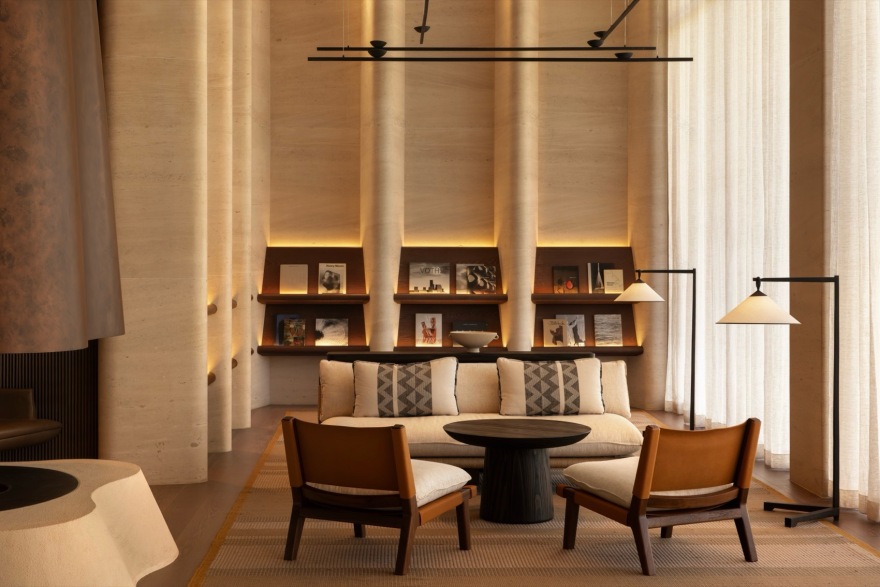
同样的石灰岩也被用于包覆建筑内部图书馆休息室的墙面与突出柱体。这些大胆而富有曲线感的构件,在这种厚重材料中被持续雕琢成型,同时巧妙地嵌入橡木书架与烟熏橡木地板。“在这里,这种柔和雕塑般的材料质感,让人联想到石头在风沙长期侵蚀下被逐渐磨圆,却始终保持其内在强度的状态。”Ferrari解释道。赋予这一相对私密空间以宏大感的,是中央开放式、覆以青铜的变形虫状壁炉。它被置于带有肋纹青铜板包覆的壁龛之中,并与皮革卡座围合形成整体。与整个沙漠岩石度假村中普遍采用的策略一致,这里的家具高度都被有意压低,以强调空间中持续存在的纪念性尺度感,以及不受干扰的开阔视野。
The same limestone was used to clad the walls and protruding columns of the Library Lounge further in the building. These bold and sinuously articulated elements continuously carved in this noble material while ingeniously anchoring oak wood shelving and smoked oak flooring “Here, the softly sculpted material recalls the quality of stone slowly softened by sand and wind over time without losing its integrity,” Ferrari describes. Vitalizing this more intimate space with a sense of grandeur is the open, bronze-clad amoebic-shaped fireplace enveloped in a rib-pattern bronze paneled alcove and leather banquette seating. A strategy prevalent throughout the rest of Desert Rock Resort, furnishings are kept low to emphasize a sense of pervading monumentality and unsubordinated views.
▼图书馆休息室的墙面与突出柱体,
the walls and protruding columns of the Library Loung © Ema Peter
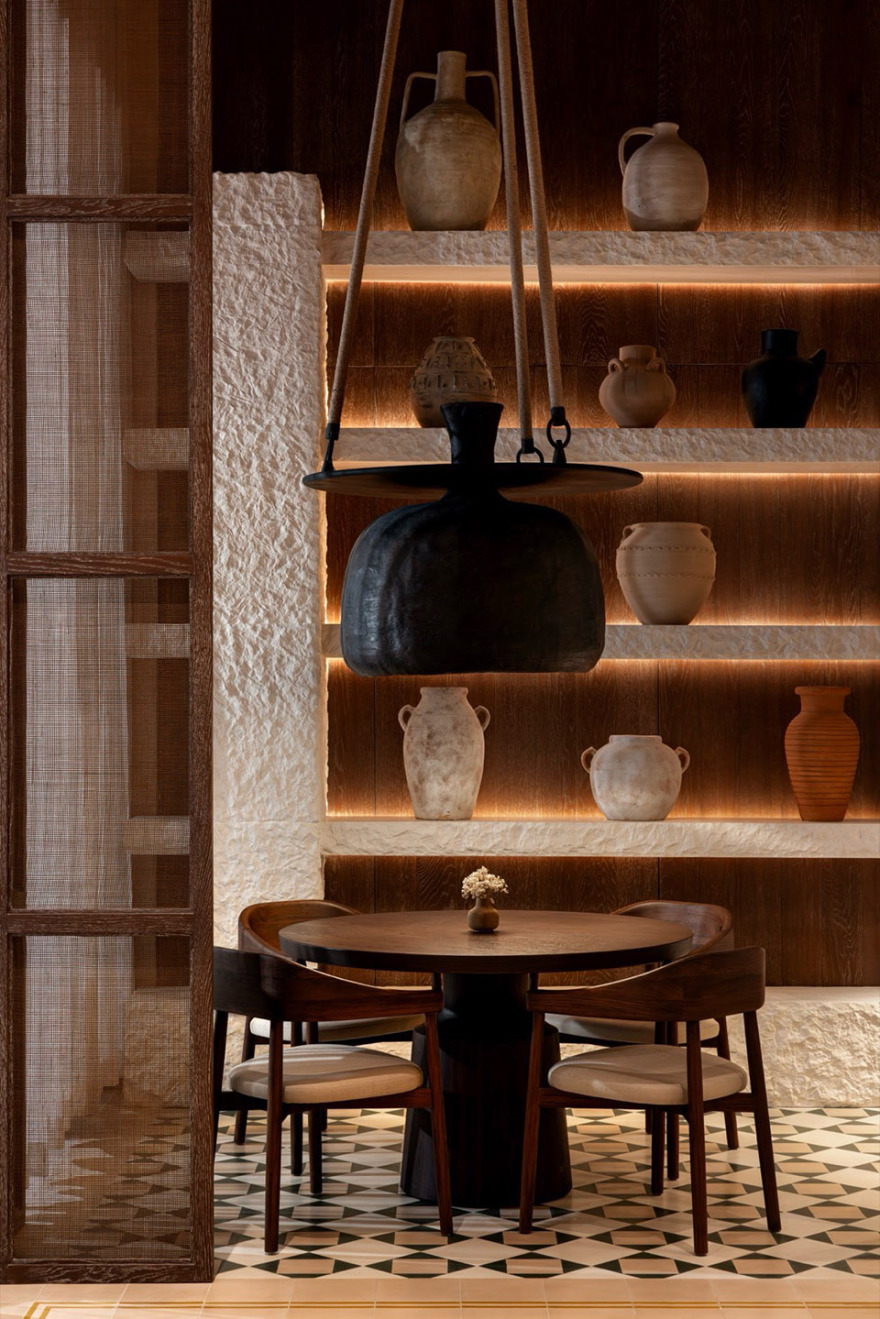
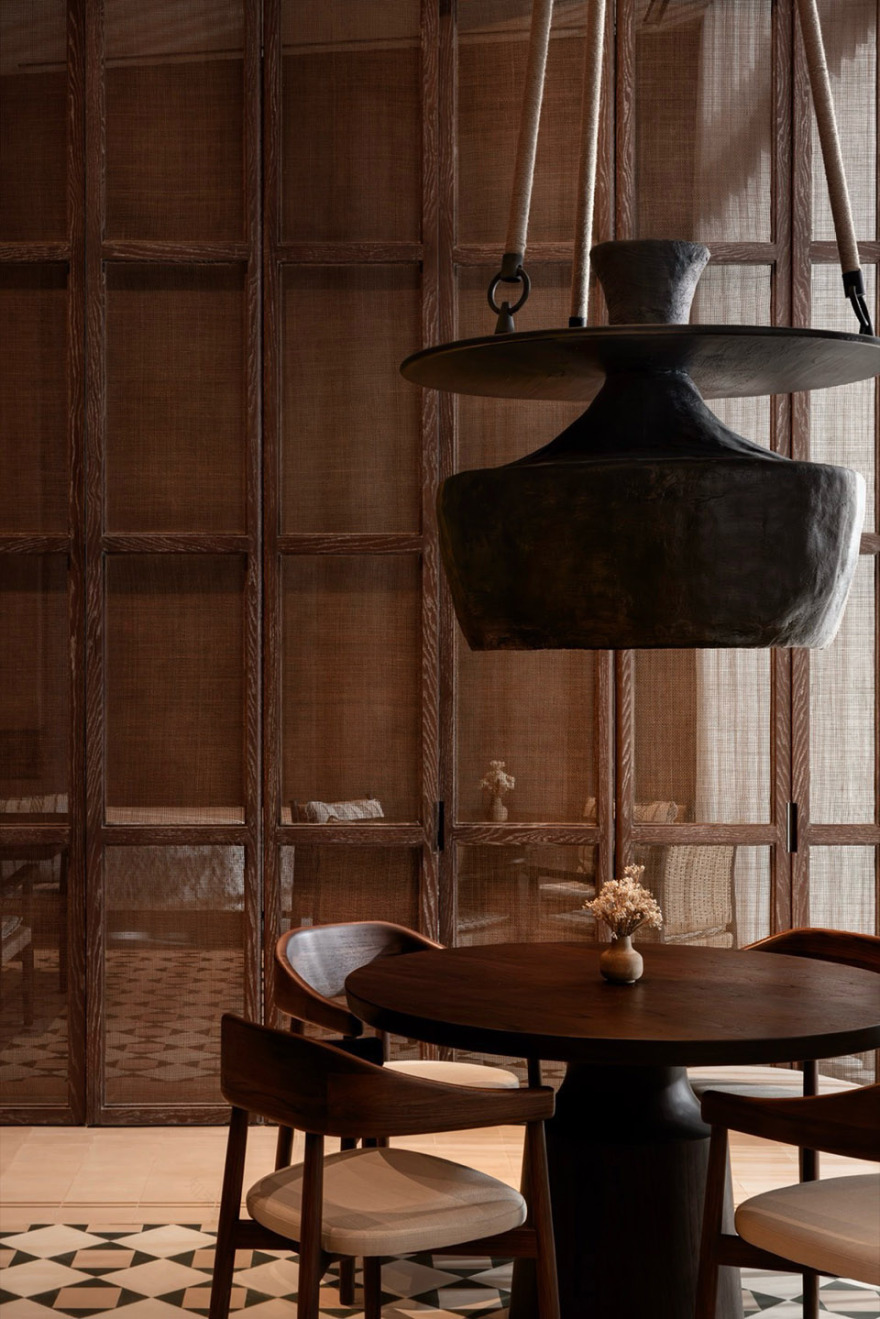
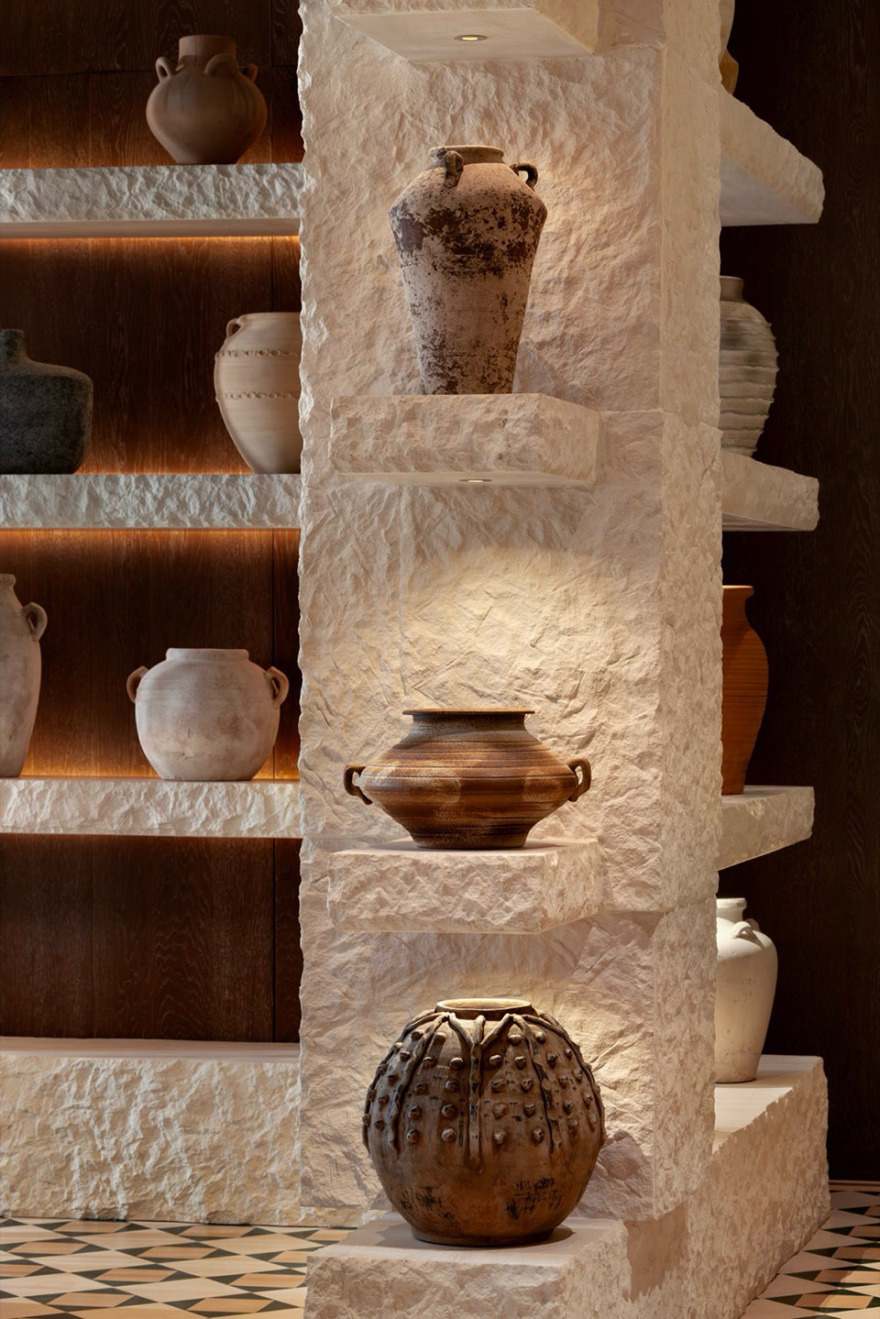
更多关于沙特文化的回应,则出现在位于Guest Hub后部的Basalt餐厅之中。餐厅采用彩绘混凝土砖铺地,其间布置着一系列粗粝而整体感极强的体块元素。其中包括一件定制石灰岩展示架——其具有明显的触感纹理与厚重质感,用于陈列各类器物——以及一盏大型吊灯,其造型令人联想到传统沙漠露天烹饪中使用的铸铁容器。餐厅一侧连接着完全向食客开放的展示式厨房。“在这个空间中,最核心的原始元素是火,以及它所激发出的能量感。自古以来,火便一直是食物制作过程中不可或缺的一部分。”Ferrari说道。
Even more nods to Saudi culture appear in the Basalt restaurant located toward the rear of the Guest Hub. An encaustic concrete tile floor plays host to roughly hewn monolithic features. These include a bespoke haptically textured and weighty limestone shelf—displaying various artifacts—and a sizable pendant lamp reminiscent of a cast iron vessel traditionally utilized in open-air desert cooking. The restaurant is abutted by an open-concept show kitchen fully visible to diners. “In this space, the elemental cue is fire and its rousing of energetic activity, which has been integral to food preparation since ancient times,” Ferrari explains.
▼Basalt餐厅,the Basalt restaurant © Ema Peter
▼定制石灰岩展示架,the bespoke haptically textured and weighty limestone shelf© Ema Peter
位于Guest Hub外部陡峭山坡顶部的餐厅建筑,高高俯瞰着整个度假村场地。Nyra餐厅延续了与Basalt相似却又不同的主题——火焰所具有的转化力量与原始能量。整个空间呈现出一种迷人而幽暗的氛围,深色且略带虹彩感的材料体系,呼应着火这一基本元素短暂而流动的特性,尤其是在餐厅设置了开放式Josper炭火烤炉之后,这种体验更为强烈。火山岩以两种截然不同的方式被组织进空间之中:地面采用天然带有孔洞肌理的粗粝状态,而墙体则由粗糙火山石以垂直交错的方式层层堆叠,形成一种包裹空间的石质屏风。这种构造方式令人联想到一种原始的结构逻辑,但同时又通过精准而当代的处理方式,呈现出鲜明的现代感。
Positioned atop a steep slope that rises from the exterior of the wadi-nestled Guest Hub, the Specialty Dining building perches high above the entire campus. The Nyra restaurant is circumscribed with a similar yet divergent theme to Basalt—fire’s transformative and innate force. This wonderfully tenebrous hunt is imbued in a dark yet somewhat iridescent material palette evoking the ephemerality of this basic element, not in the least as it features an open flame josper grill. Volcanic rock is articulated in two notably different modalities: a naturally pitted state for the flooring and an alternation of rough volcanic stone screen wrapping the walls in a perpendicularly stacked pattern. This scheme elicits a primordial approach to structural configuration but is treated with a shrewd degree of contemporaneity.
▼餐厅,the dining building© Ema Peter
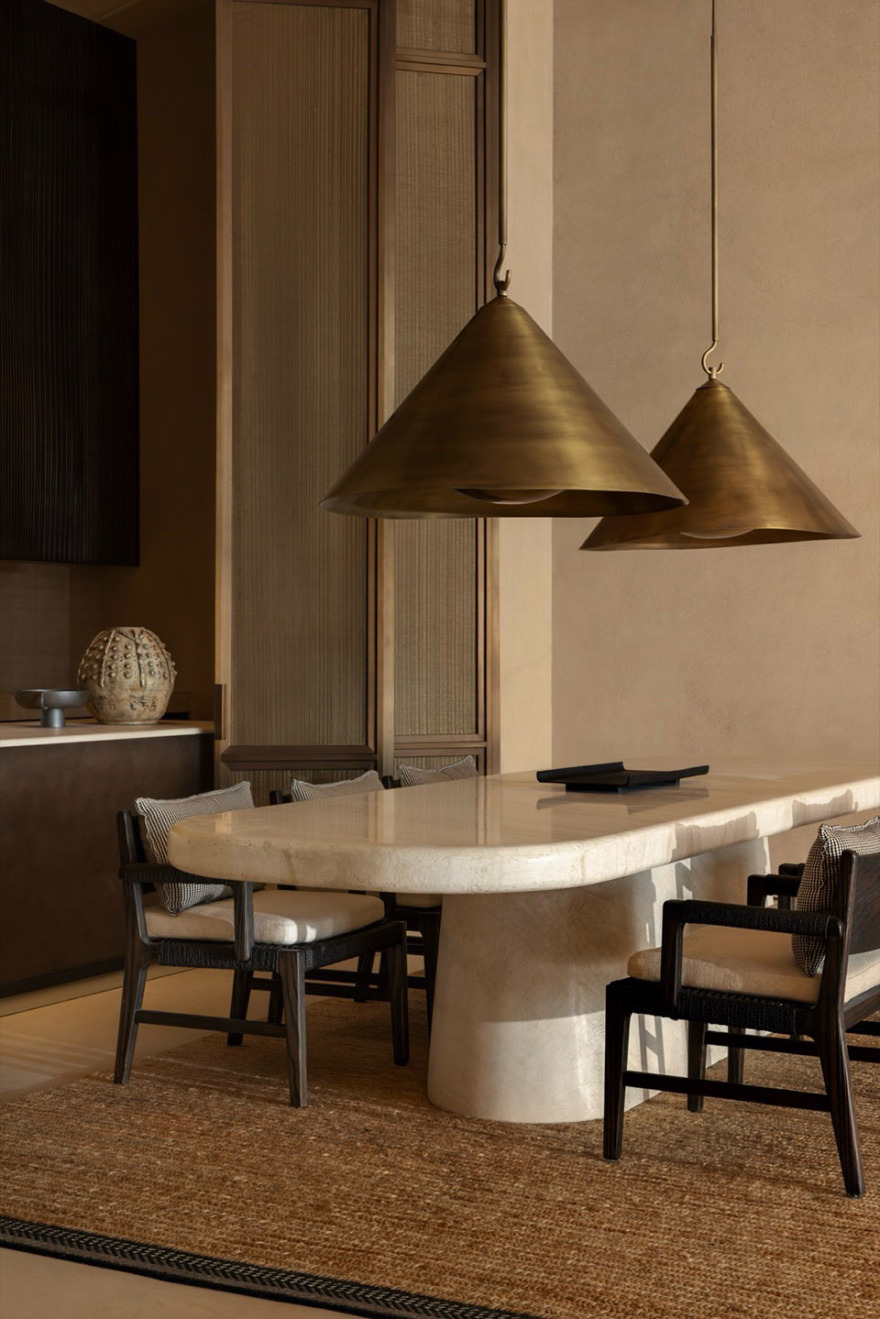
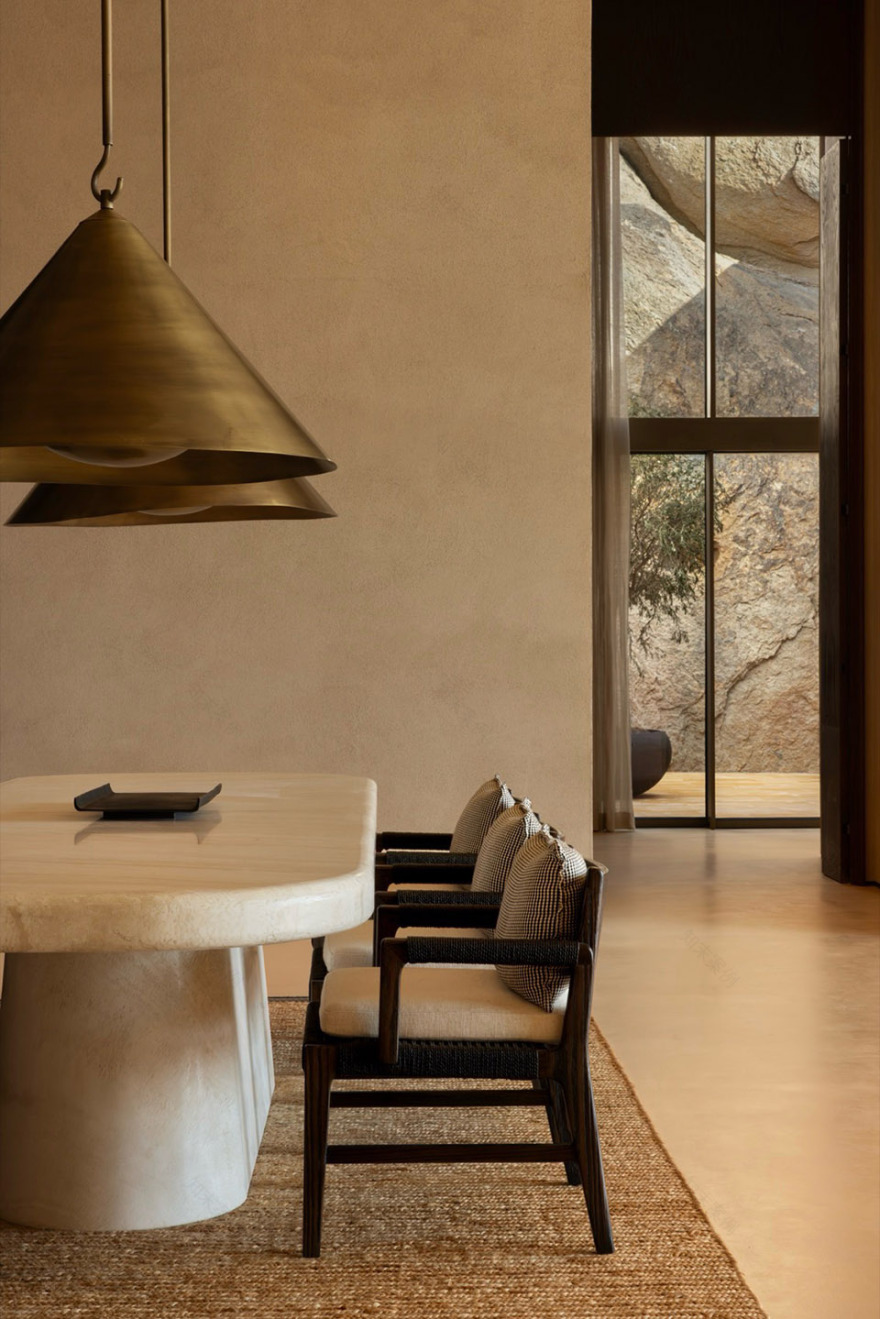
▼灯具与青铜器,the lamps and bronze ware© Ema Peter
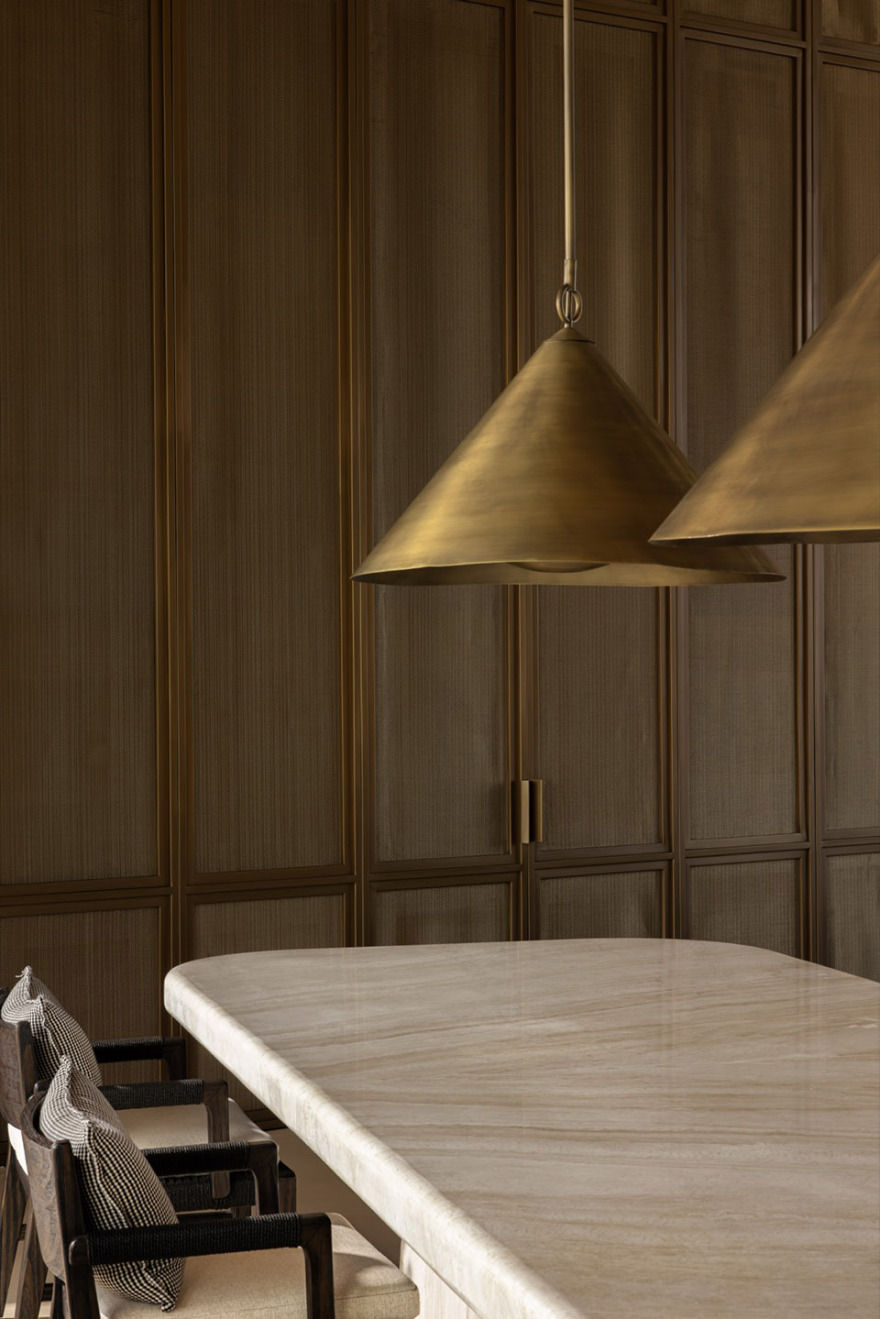
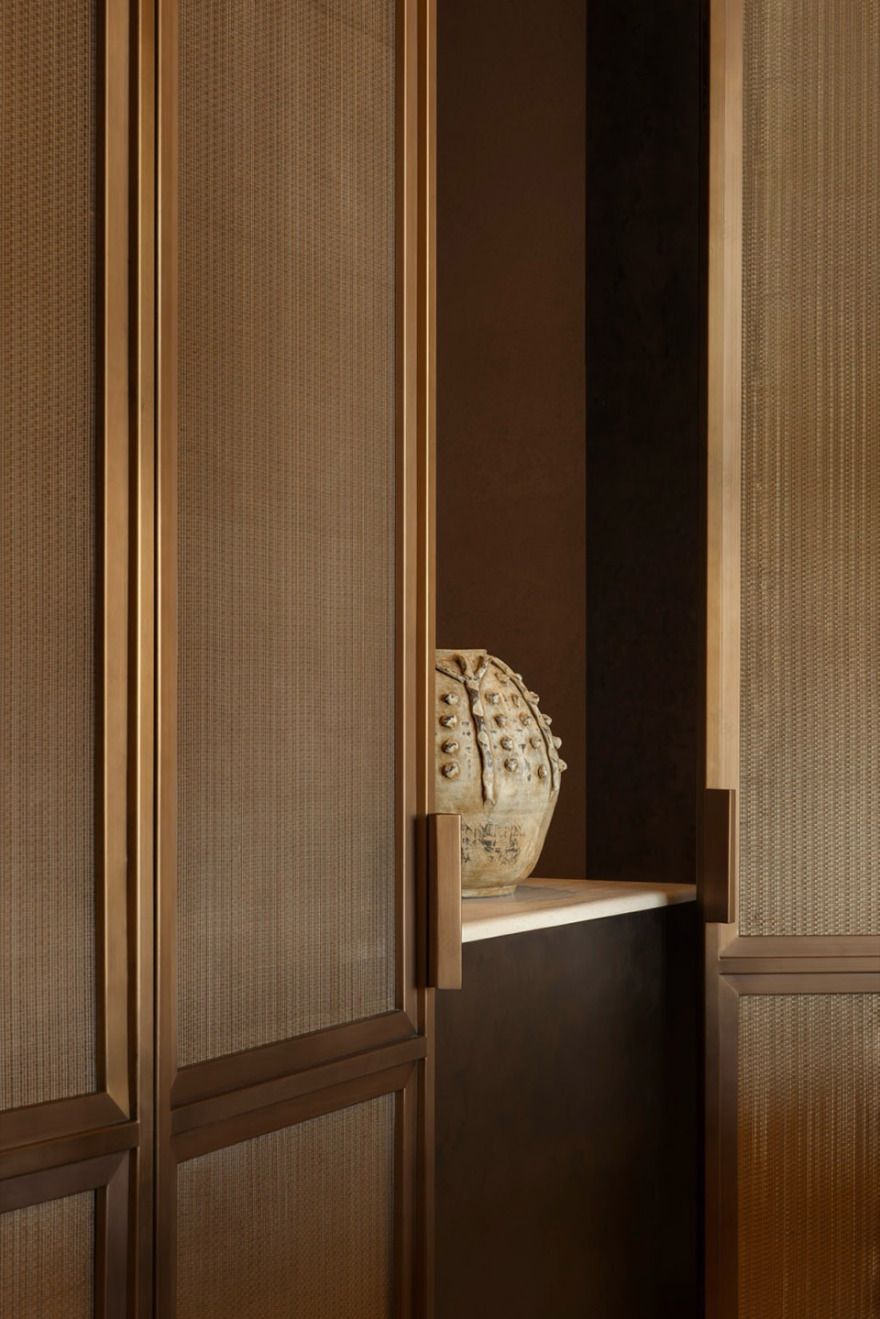
这一场所概念的其他细腻表达,还包括使用炭化木材制作的家具。青铜吊灯与落地灯则令人联想到史前时代的火炬,它们界定着室内餐厅与室外露台之间的过渡关系。当整面的落地玻璃墙完全打开时,空间自然延伸至层层退台式展开的户外平台之中。“这些类似火炬的装置带有一种超越时间的气质,”Ferrari说道,“它们并非简单指向近代历史,而是对更古老时代的一种重新转译与唤起。”古老与现代之间的双重性,始终贯穿于整个项目之中。
Other deft formulations of this venue’s underlying concept include furnishings crafted using charred wood. Bronze pendants and floor-mounted lamps that recall the torches of prehistory demarcate the transition from the indoor dining room to the outdoor terrace seamlessly stepped out onto when floor-to-ceiling glass walls are fully unlatched. “These immolators of sorts reflect a sense of timelessness,” Ferrari reflects, “not necessarily within the scope of the recent past but as reinterpreted evocations of the ancient period.” There’s an inherent duality of the ancient and modern woven throughout the project.
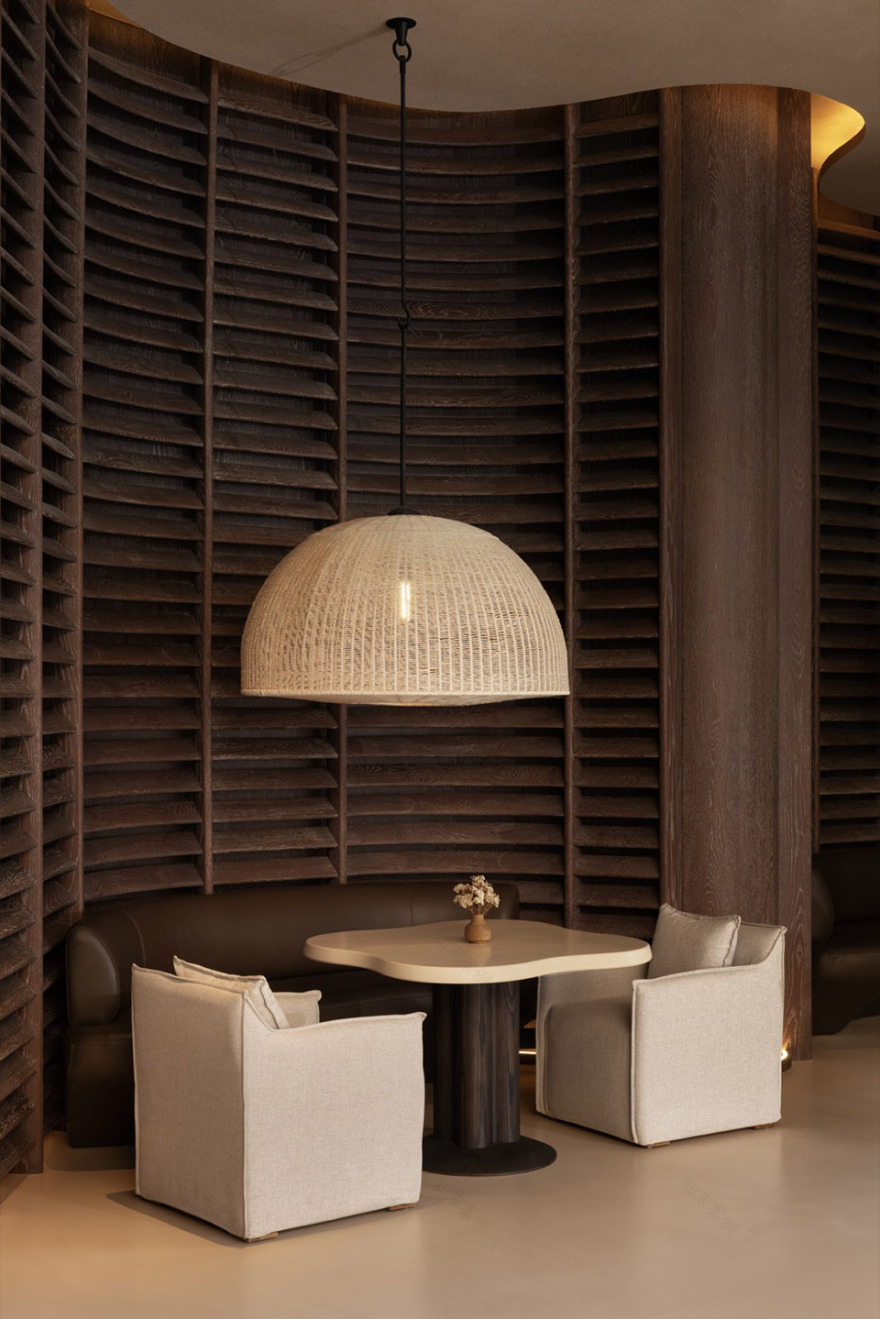
▼藤编吊灯,the wicker chandelier© Ema Peter
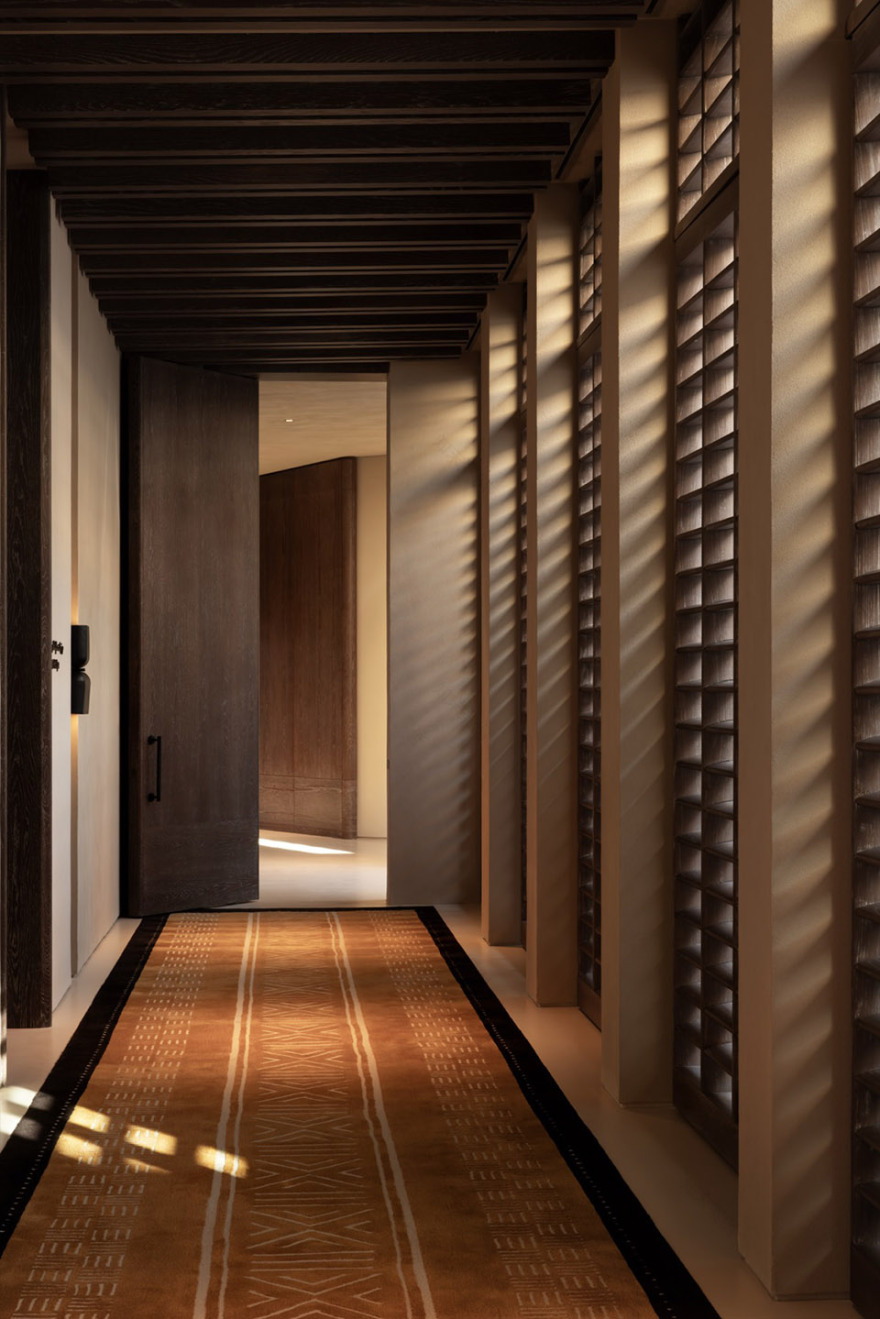
▼走廊,hallway© Ema Peter
在Nyra内部,与这种炽烈氛围形成对比、却同样具有古老意味的,是一组带有铜锈质感的青铜香料展示装置。悬挂的玻璃瓶中盛放着不同香料,暗示着历史上的贸易路线与文化交流。宾客可以从中挑选调味料,用于现场炭烤、并直接在面前完成制作的熟成肉类料理。在另一端长廊尽头的Mica特色酒吧中,同样可以感受到不同形式与材质之间的对比关系。这两个场所都框景般地呈现出周围壮观的岩层景观。后者还拥有一个尺度巨大的三角形露台,内部设置了下沉式座位区,悬挑于整个度假村之上,远望深邃山谷、更远处的沙漠天际线,以及夜晚格外明亮的繁星。
A contrasting but equally ancient component within Nyra is the patinated bronze spice display with suspended glass flasks containing various flavors alluding to historical trade routes. From this display, guests select seasonings for the dry aged meat that is prepared cooked directly in-front of the guest. The interplay of juxtaposing forms and textures can also be experienced in the Mica specialty bar found at the other end of a long corridor. Both locales frame dramatic views of rock formations in their immediate vicinity. The latter also features an expansive triangular terrace—replete with a sunken seating area—suspended over the entire resort and looking out over deep mountain; the desert horizons farther afield and especially bright stars above.
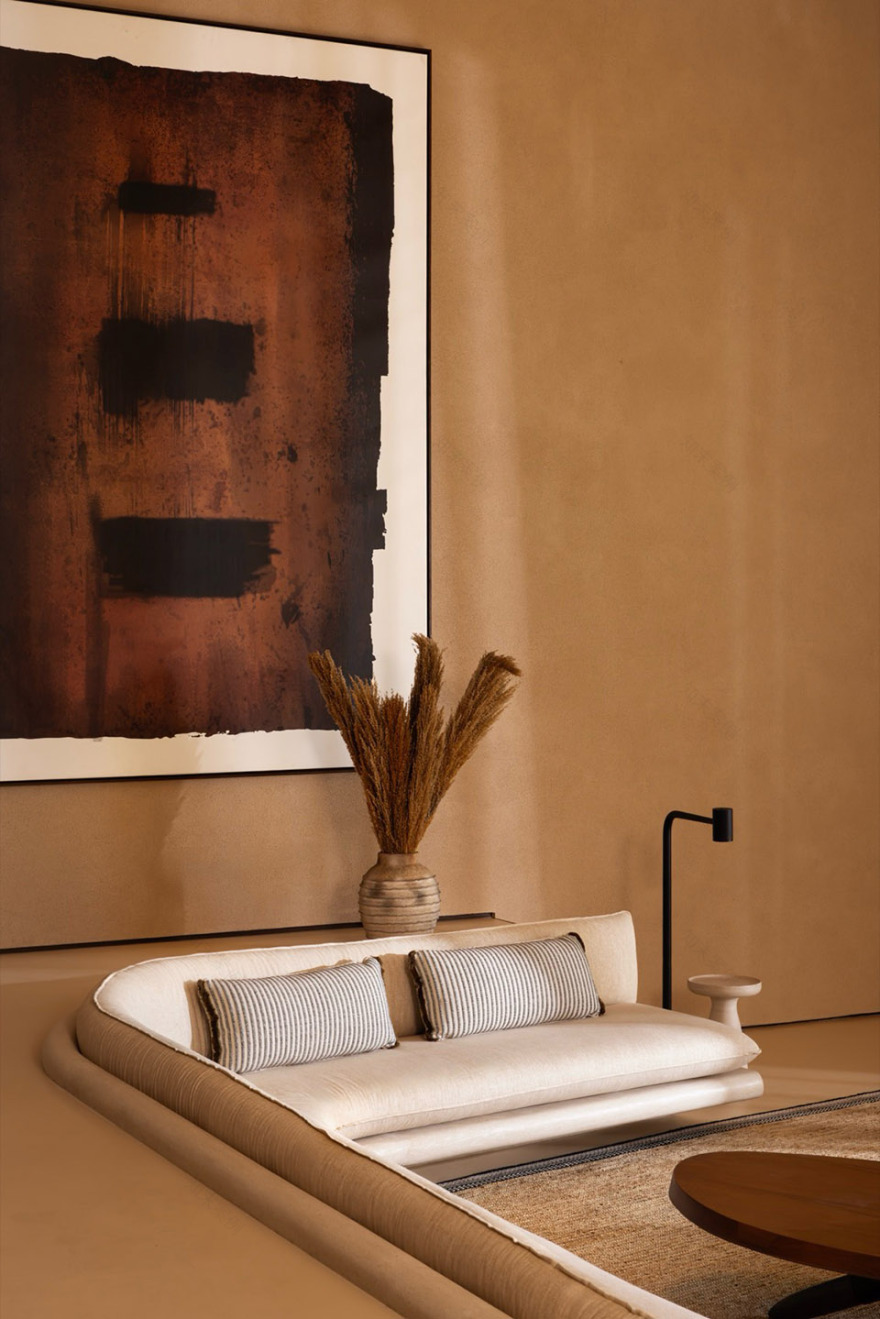
▼下沉式沙发,the sunken sofa© Ema Peter
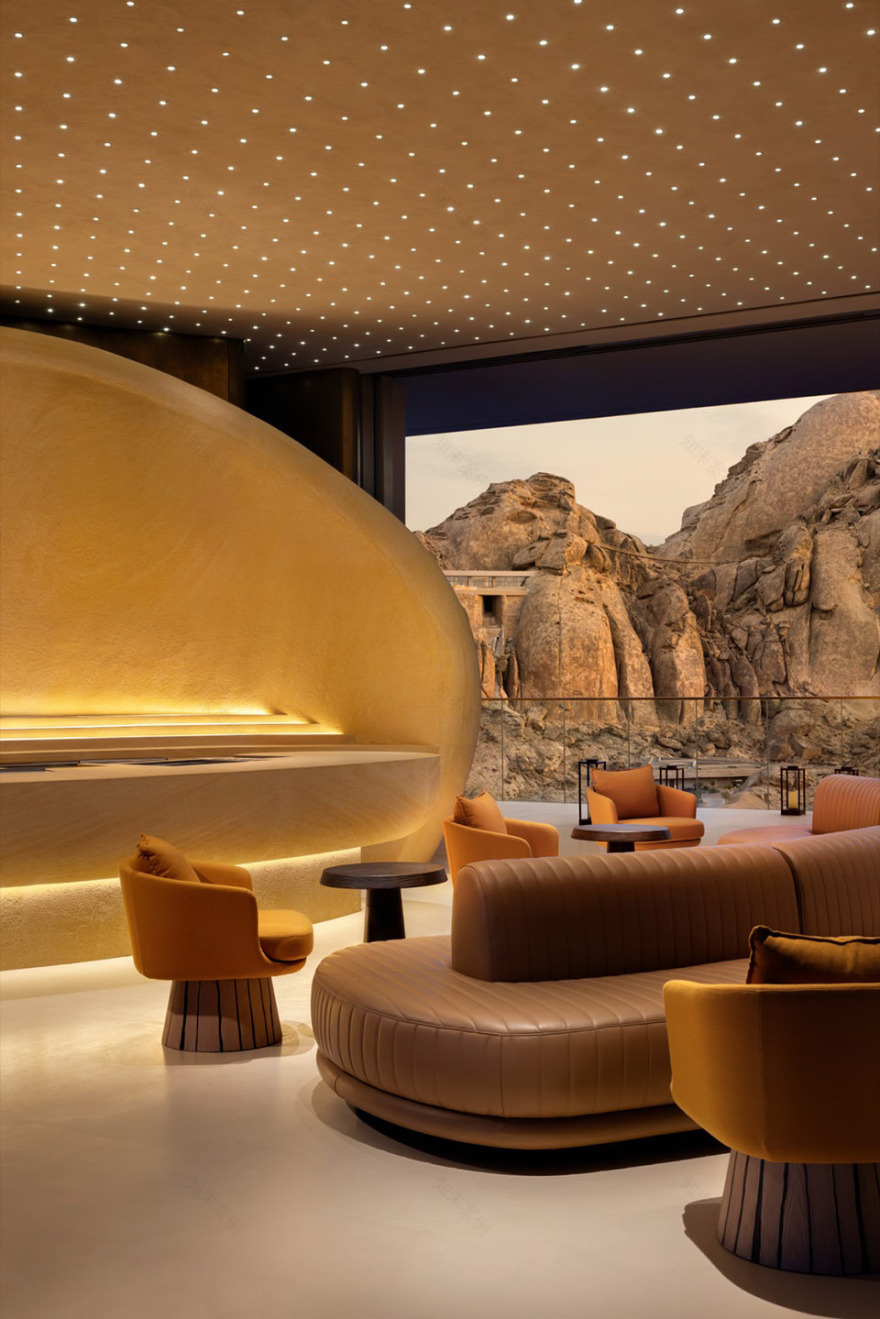
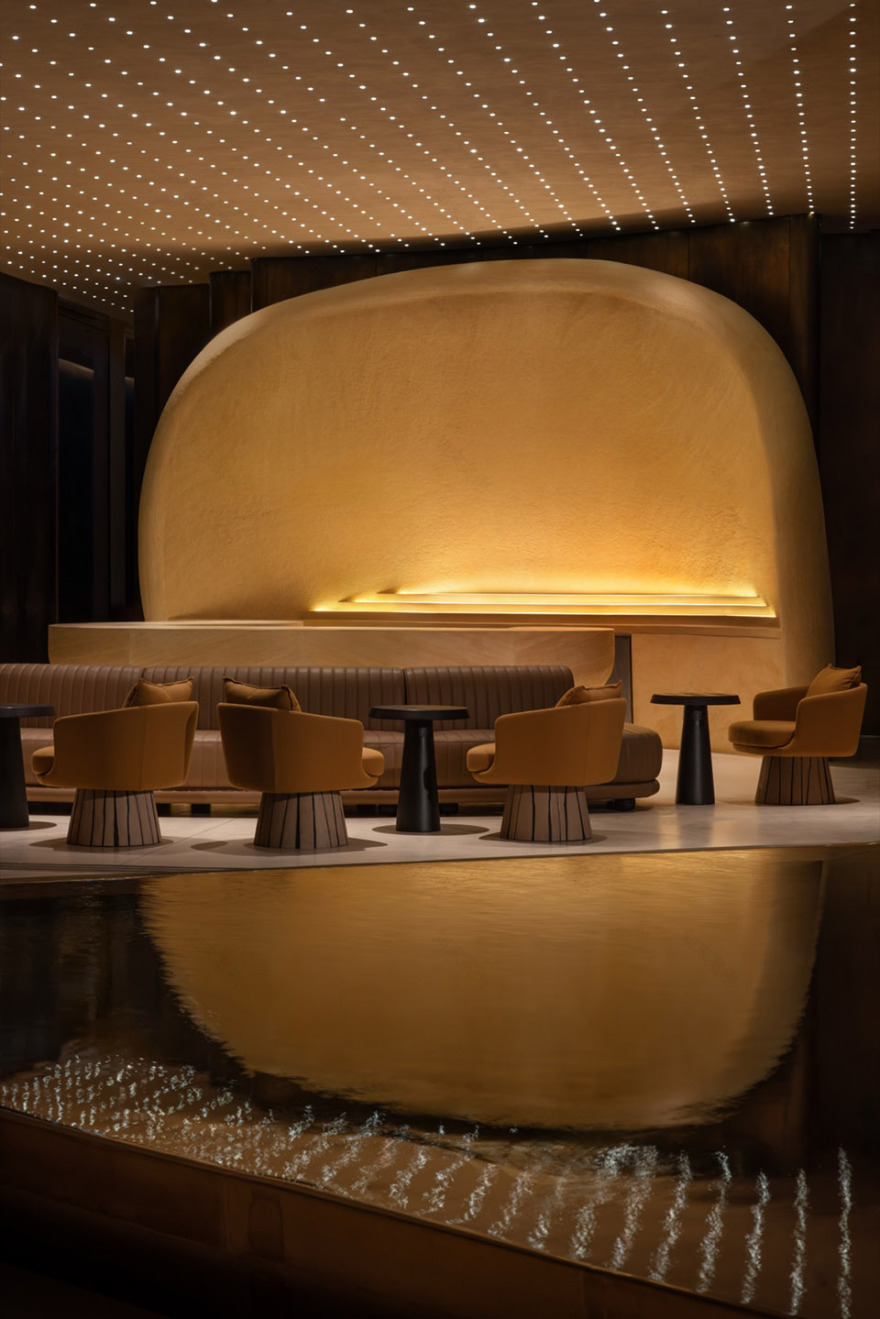
当宾客进入Mica酒吧时,会产生一种仿佛正在穿越度假村中那些岩石裂缝与洞穴空间的体验。他们所环绕而行的,是吧台背后一个由整块黄色利雅得石灰岩雕刻而成、形态柔和且近乎无定形的巨大体量。包覆空间的手工做旧青铜表面,则在完全可开启的玻璃墙外侧三角形水池的映照下,呈现出微妙而流动的反射光影。“Mica具有一种电影般的空间气质,其核心在于一系列被精心编排的空间转换。”Ferrari说道,“它能够随着场景、氛围与时间的变化,在克制与张扬之间自由切换,也能够从沉思性的状态转变为充满能量的空间。”这种变化性,很大程度上通过顶部嵌入式穿孔灯网格系统的明暗渐变得以实现。
When entering the Mica bar, guests feel as though they’re traversing one of the many crevices or caves found elsewhere within the resort. What they’re circumnavigating is the rear of a softly sculpted and amorphously formed bar carved out of a single, massive piece of yellow Riyad limestone. Hand-patinated bronze lining the space refracts in the triangulated waiting pool positioned right outside fully openable glass walls. “With a cinematic quality defined by sequenced spatial transitions, Mica easily changes from being understated to exuberant based on the scene, mood and time of day,” Ferrari expresses. “It shifts from being meditative to energetic.” This transformative quality is largely achieved through the nuanced dimming and brightening of the embedded ceiling grid of perforated lights.
▼Mica酒吧,the Mica bar© Ema Peter
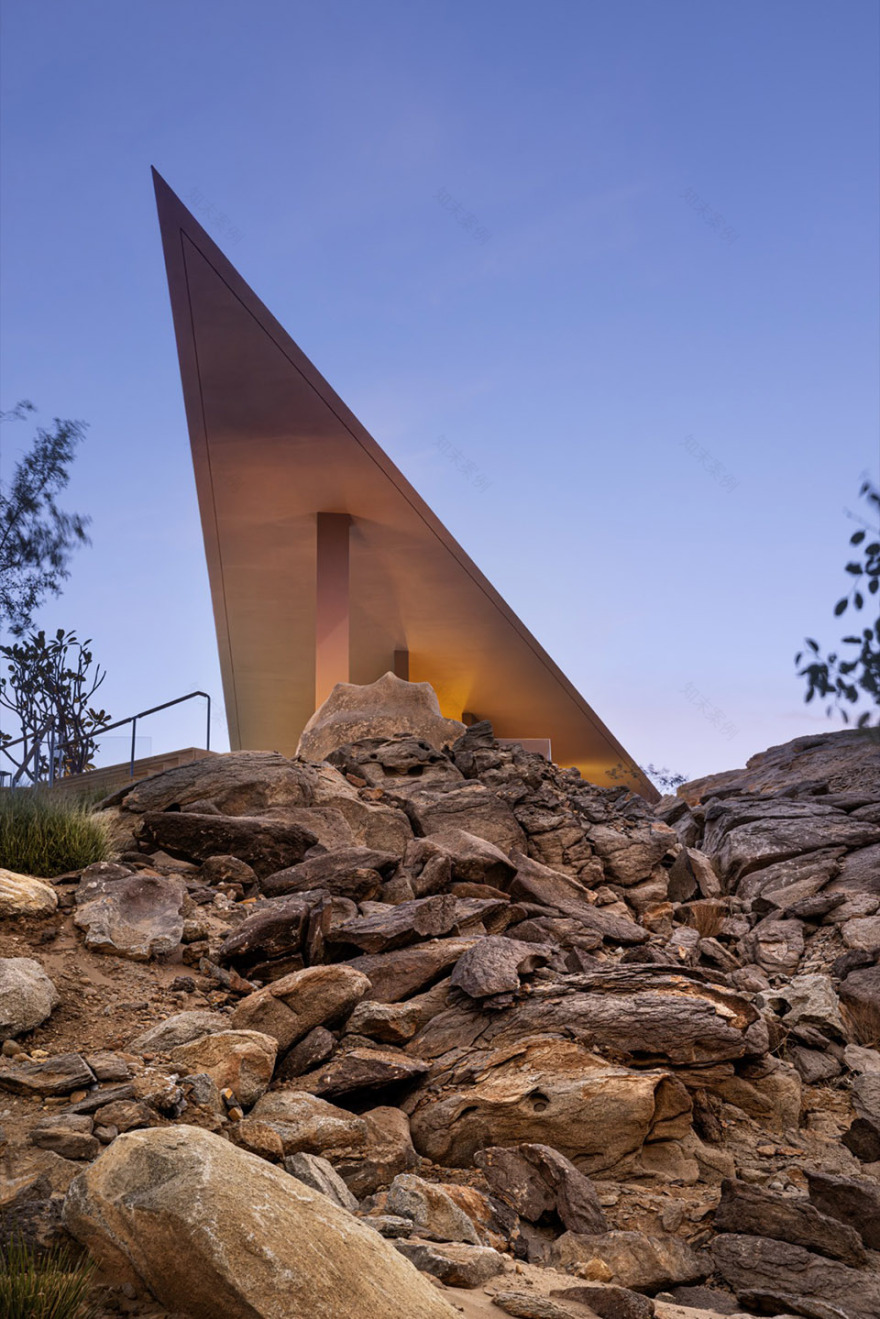
Studio Paolo Ferrari在沙漠岩石度假村中的整体设计,尤其在这种间接而柔和的照明策略中,严格遵循了Dark Sky(暗夜天空)原则。这一源于美国的环保倡议,旨在保护夜空环境,避免人工照明干扰自然星空体验。事务所为项目制定了一整套照明准则,确保场地中的灯光不会削弱月光洒落于极暗夜空之中的自然状态——而这种自然现象,正是在这里最强烈可感知的体验之一。“我们特别注意避免任何室外灯光直接向夜空投射光束,从而让宾客能够毫无干扰地与自然建立联系,自由观星。”Ferrari解释道。在对侧山谷一处山体基座脚下,体量巨大的Spa建筑的三角形屋顶同样清晰可见,尽管整体建筑呈现出某种“隐匿”或“伪装”的特质。沿建筑外围布置的理疗空间实现了无缝的室内外转换,覆盖式外部空间延展至由自然地形形成的一系列环形水池之中。泳池从覆盖屋面的几何形态之下“浮现”出来,这些屋顶开口呈现出类似岩缝般的比例与形态,而更为封闭的土耳其浴(hammam)则位于建筑核心区域。
Best demonstrated in this indirectly diffused scheme, Studio Paolo Ferrari’s comprehensive design of Desert Rock Resort adheres closely to the Dark Sky policy, a US-based environmental organization established to preserve the night skey. The studio administered a set of guidelines in which the illumination of a site doesn’t deter from moonlighting casting over the particularly dark night sky, a natural occurrences that can be experienced to strong effect here. “We were very cognizant that no exterior lights have direct beams shining back into the night sky so that guests could fully engage with nature and stargaze without interference,” Ferrari explains. At the foot of a massif on the opposite side of the valley, the triangulated roof of the oversized Spa is also fully apparent even if the architecture has a certain invisible or camouflaged characteristic. The treatment rooms lining the building’s perimeter have a seamless indoor-outdoor flow with covered exterior space giving way to a circuit of naturally formed lagoons. Pools emerge from below geometric, however crevice-like proportioned, shafts in the massif-anchored roof canopy while a more encapsulated hammam is found toward the center of the structure.
▼Spa建筑的三角形屋顶,
the triangulated roof of the oversized Spa © Ema Peter
▼spa建筑室内,interior of the spa© Ema Peter
▼香薰吧台,the Scented Bar Counter© Ema Peter
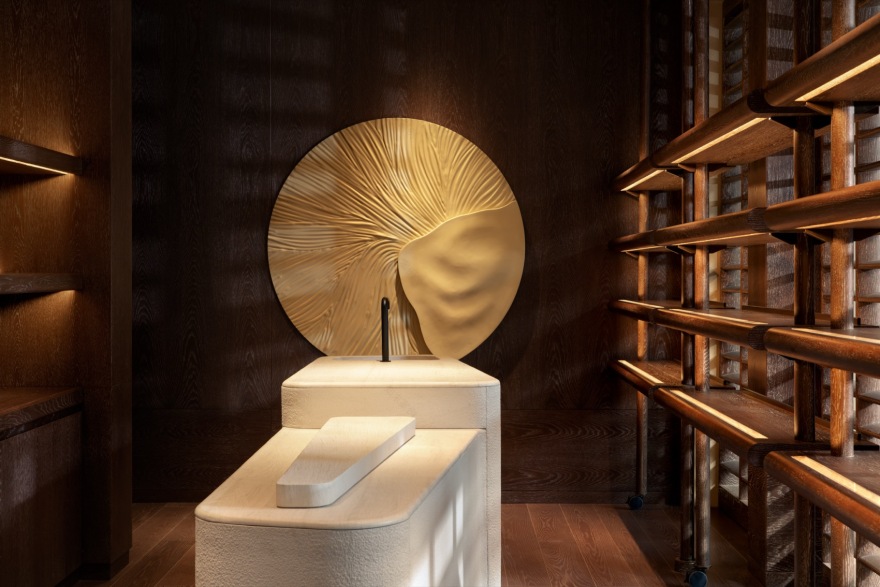
▼细部,details© Ema Peter
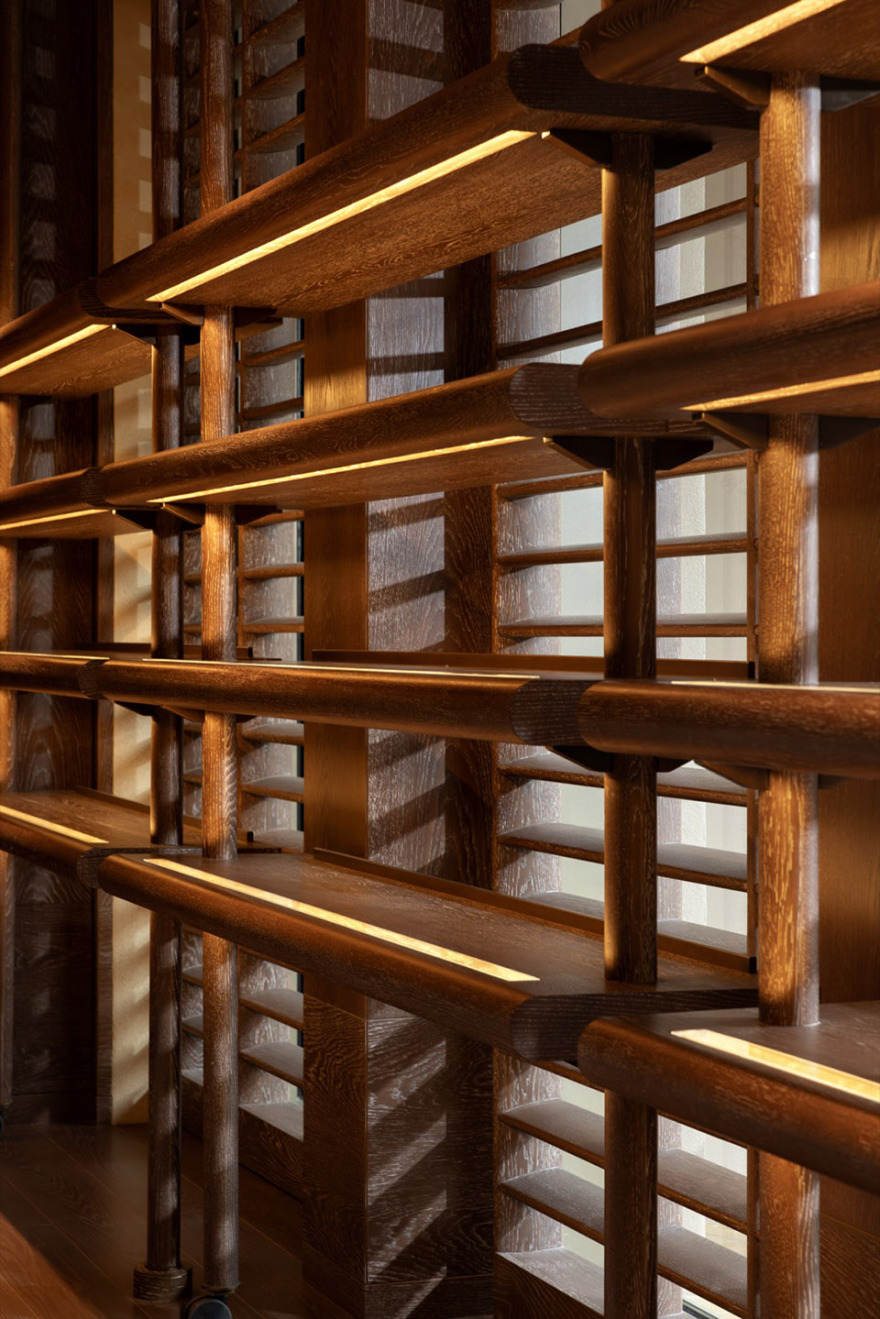
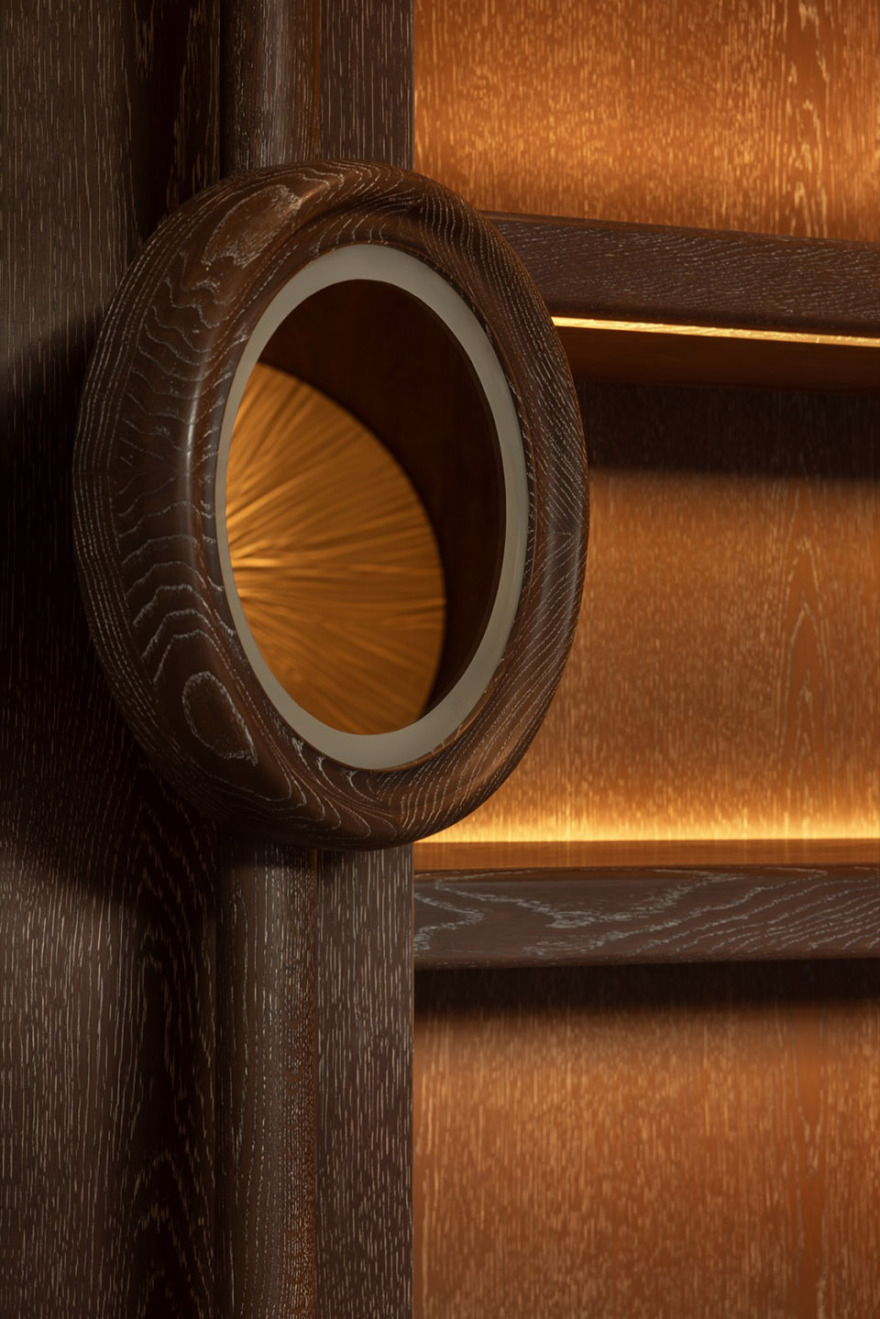
▼展示区,display area© Ema Peter
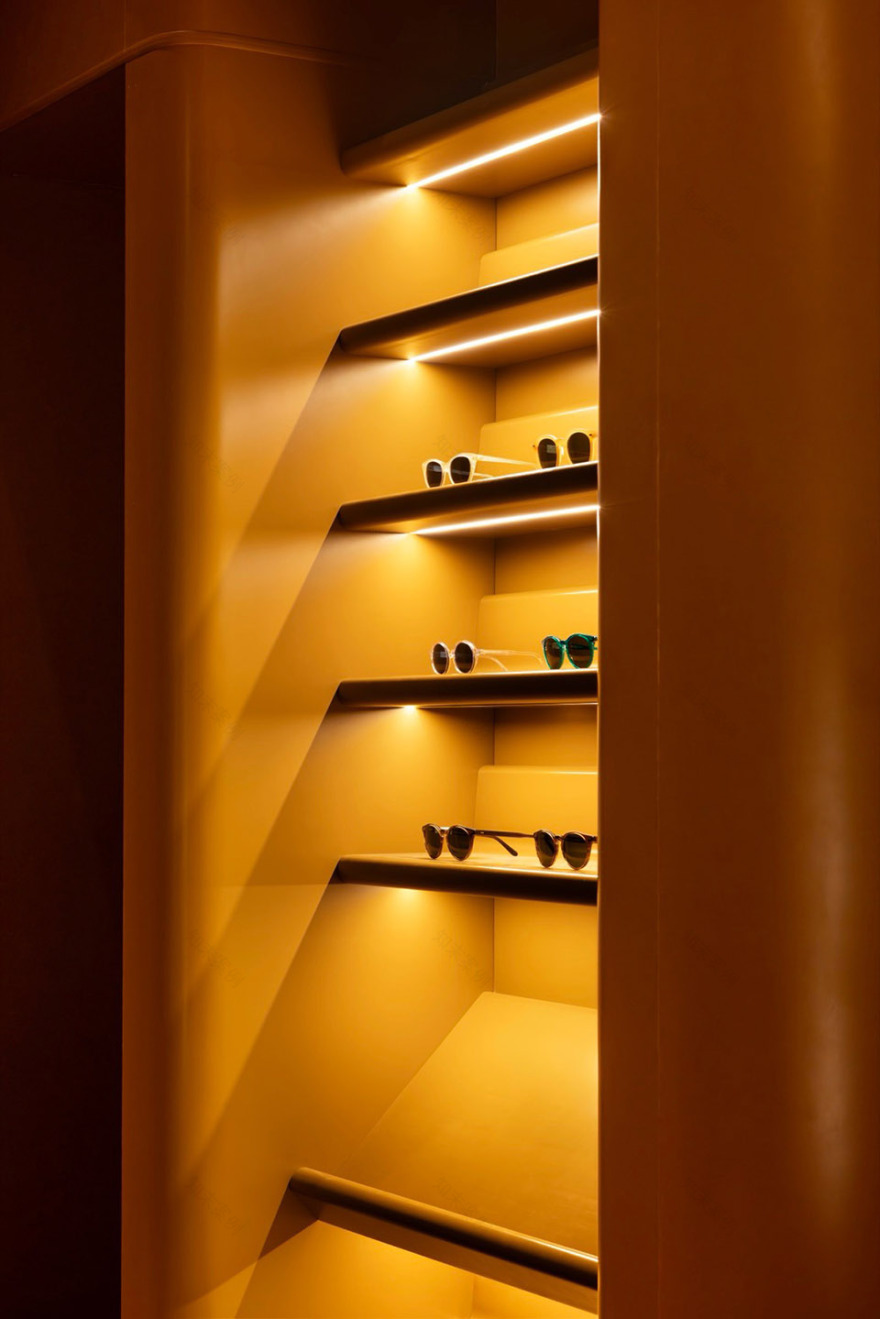
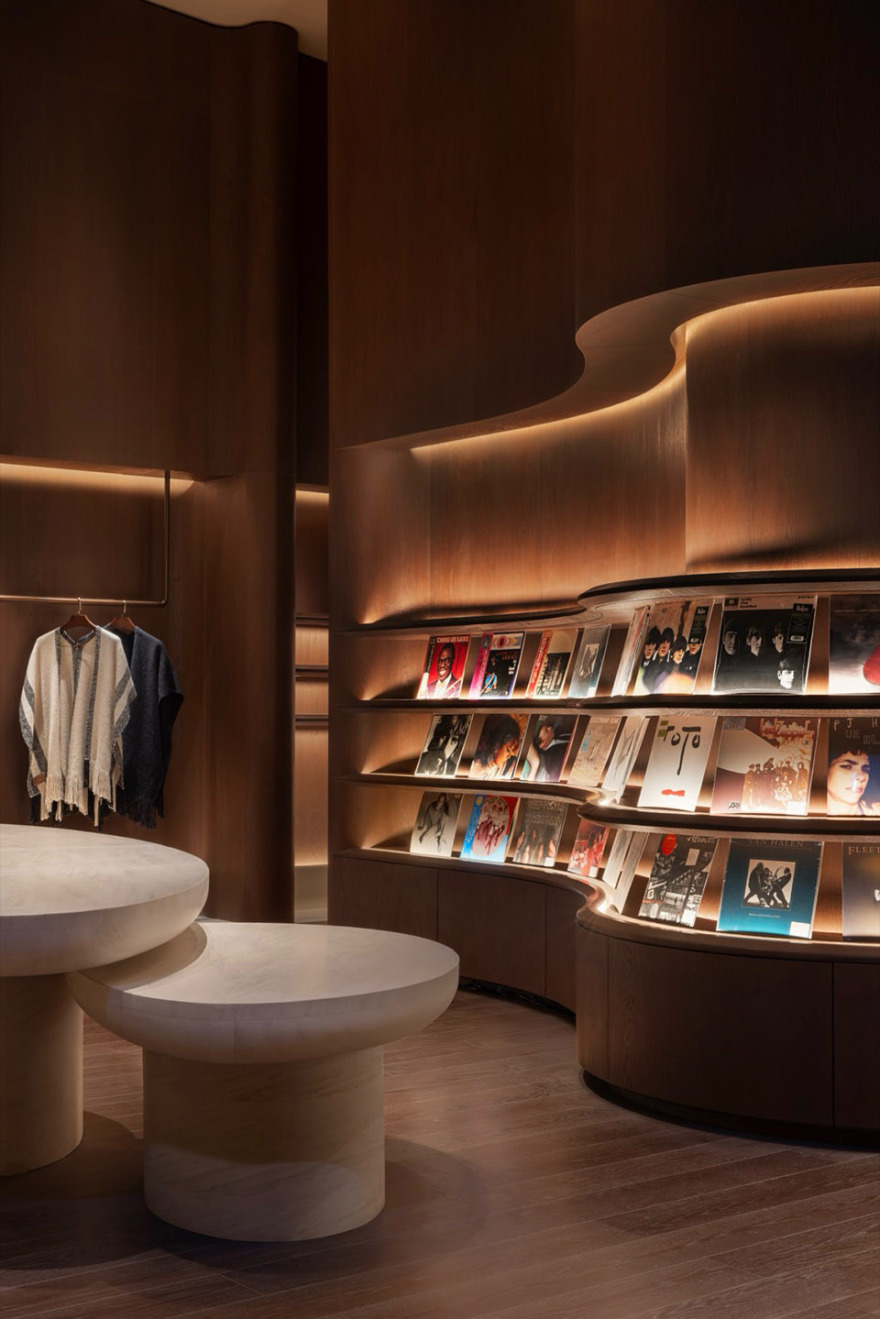
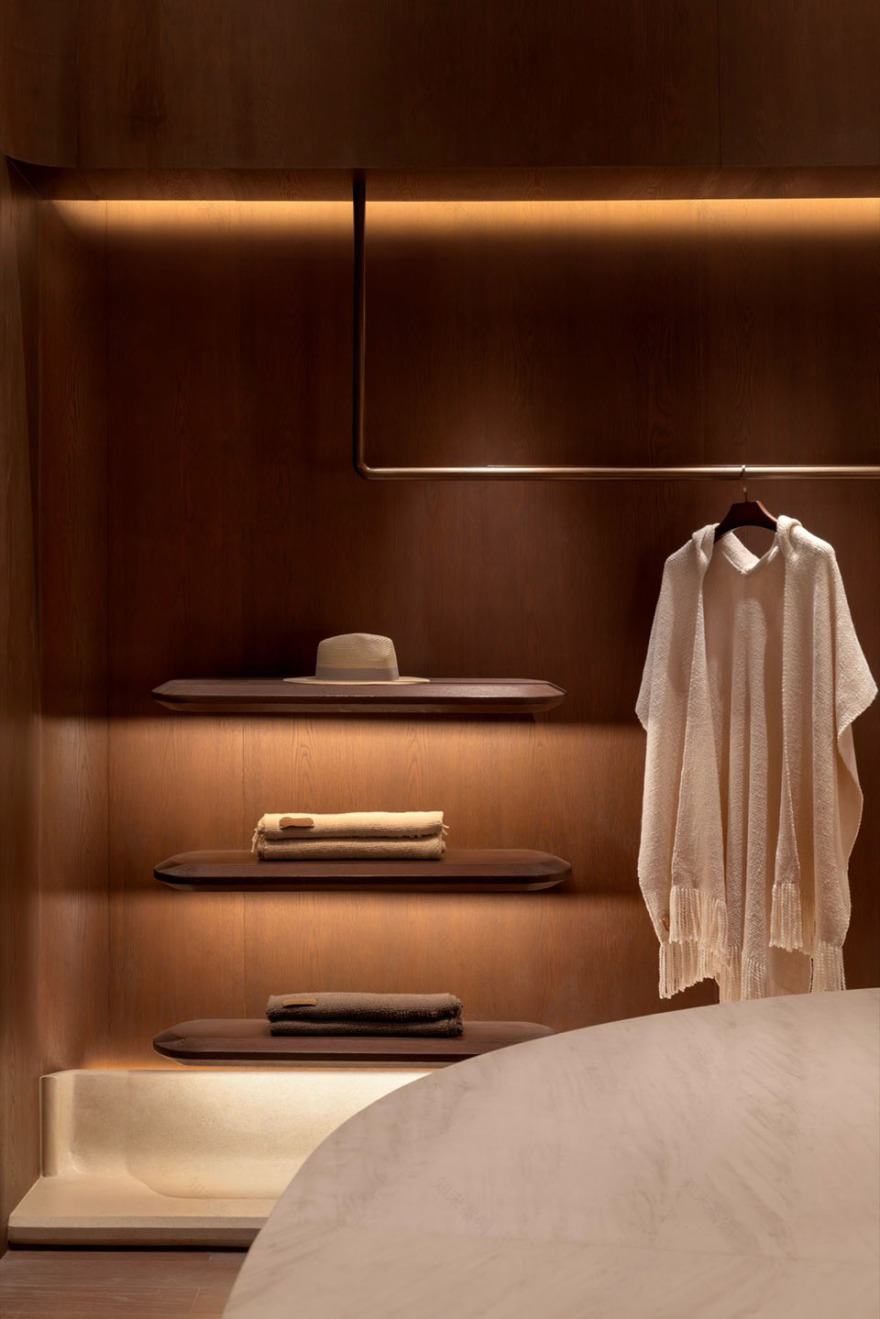
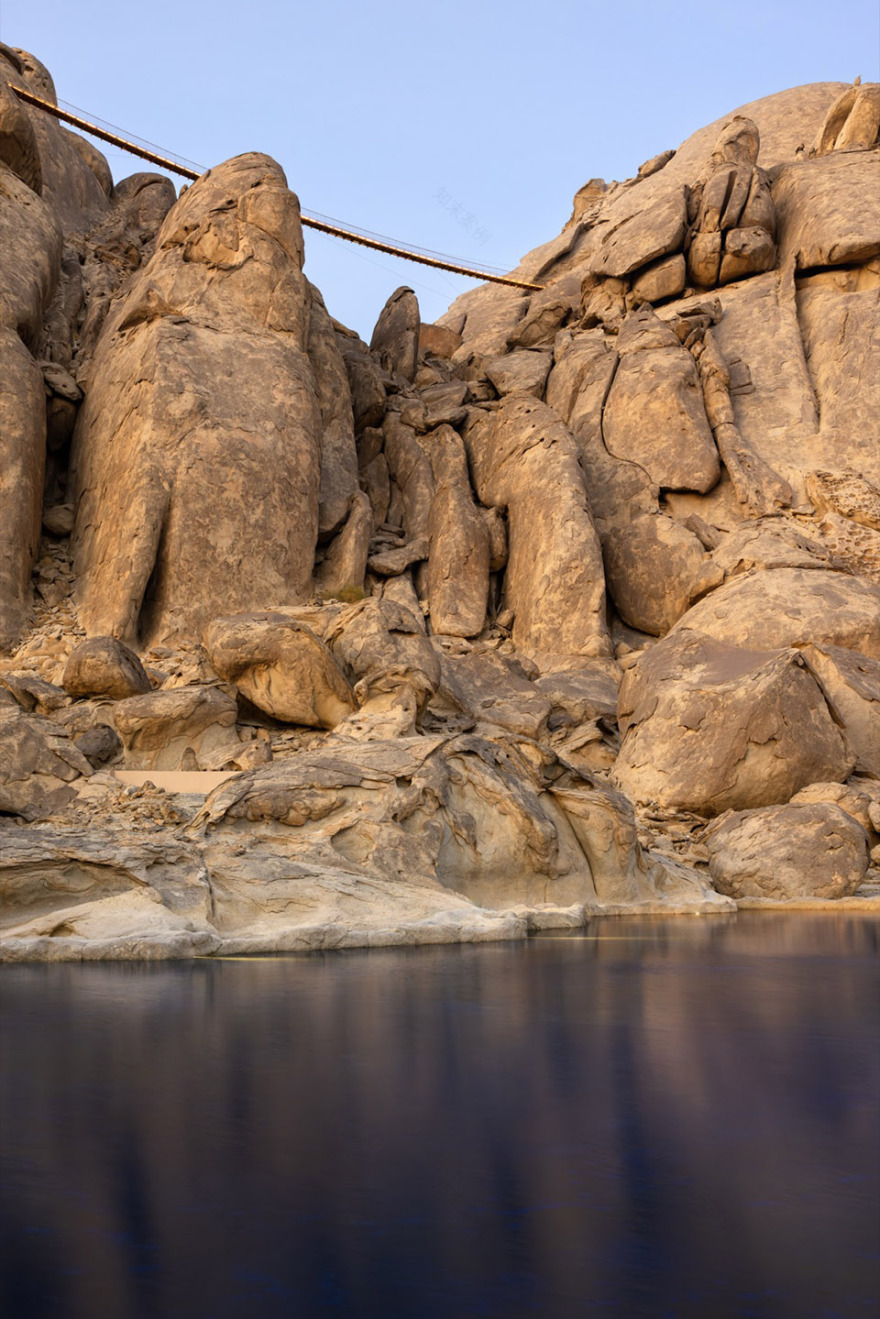
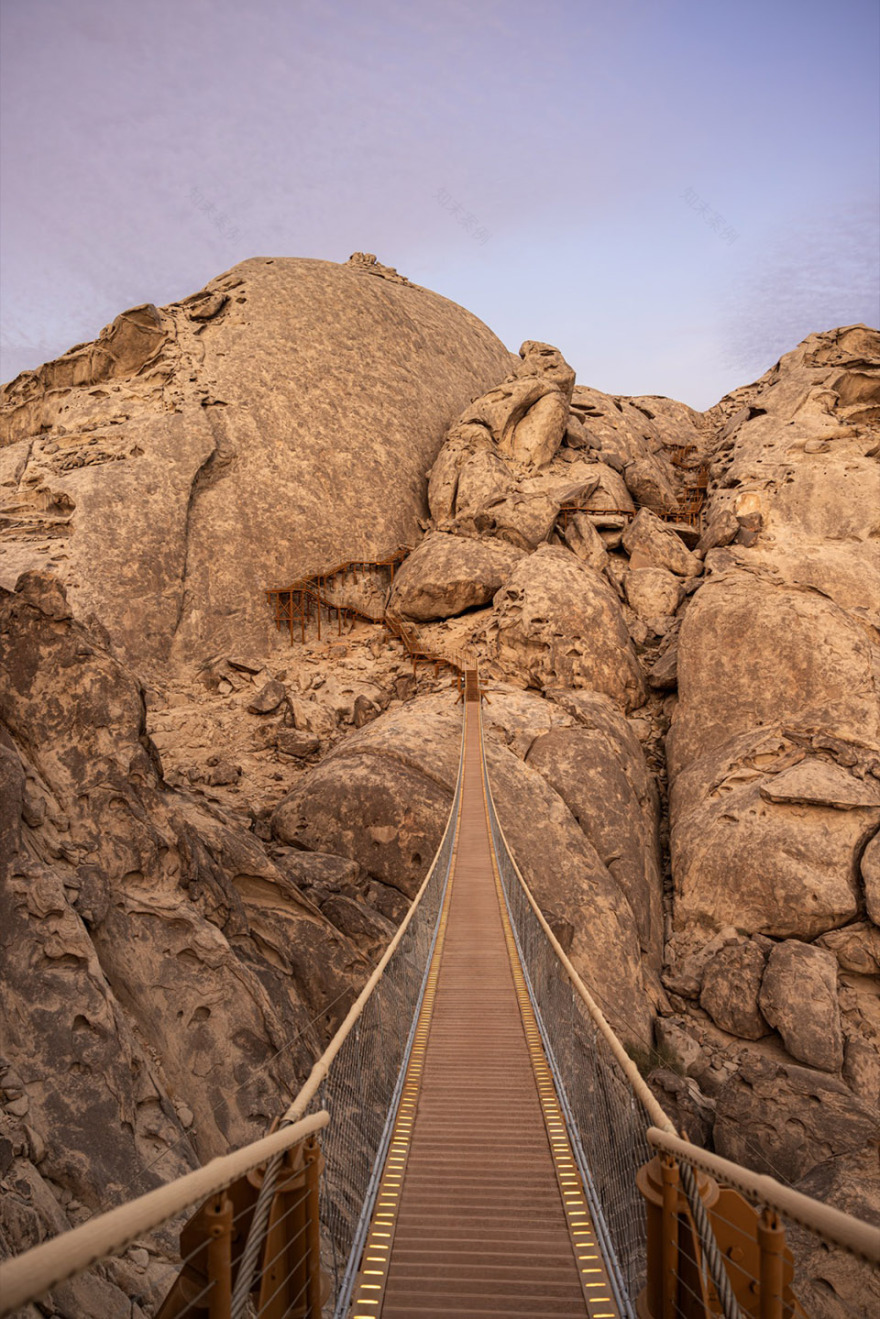
入口附近的零售空间以克制的深色木材体系完成,开放式构架的展架与嵌入式镜面共同构成空间语言。贯穿整个再设计的设施空间,是一套以矿物基材料为核心的统一材料策略。“这里的设计目标,是在延续整体概念的同时,强调宁静与温暖的体验。”Ferrari解释道。横跨沙漠岩石度假村多个制高点的悬空Via ferrata铁索桥,通向一个隐秘的用餐目的地,俯瞰整个场地及其延展的景观尺度。与悬挑于岩缝之上的一至两居室Mountain Crevice Suites,以及如灯笼般在夜间发光的封闭式Mountain Cave Suites一样,这座桥体本身也具有发光般的存在感,但不会干扰夜晚星空与月光所构成的自然光环境。
A retail space right off the entrance is finished with an appropriately subtle palette of dark wood rendered in open-structure shelving and integrated mirrors. A resort-defining palette of mineral-base materials carries across this entirely reimagined amenity space. “The idea here was to enact the same vision but with serenity and warmth in mind,” Ferrari describes. Spanning some of the highest points within Desert Rock Resort, the suspended Via ferrata bridge leads to a secluded dining destination overlooking the endless expanse of the site and its surroundings. Like the one to two-bedroom Mountain Crevice Suites—cantilevering over the crevices—and the encapsulated one-bedroom Mountain Cave Suites that illuminate like lanterns during the evening, it illuminates but without detracting from the star and moon glow apparent later in the night.
▼悬空Via ferrata铁索桥,
the suspended Via ferrata bridge© Ema Peter
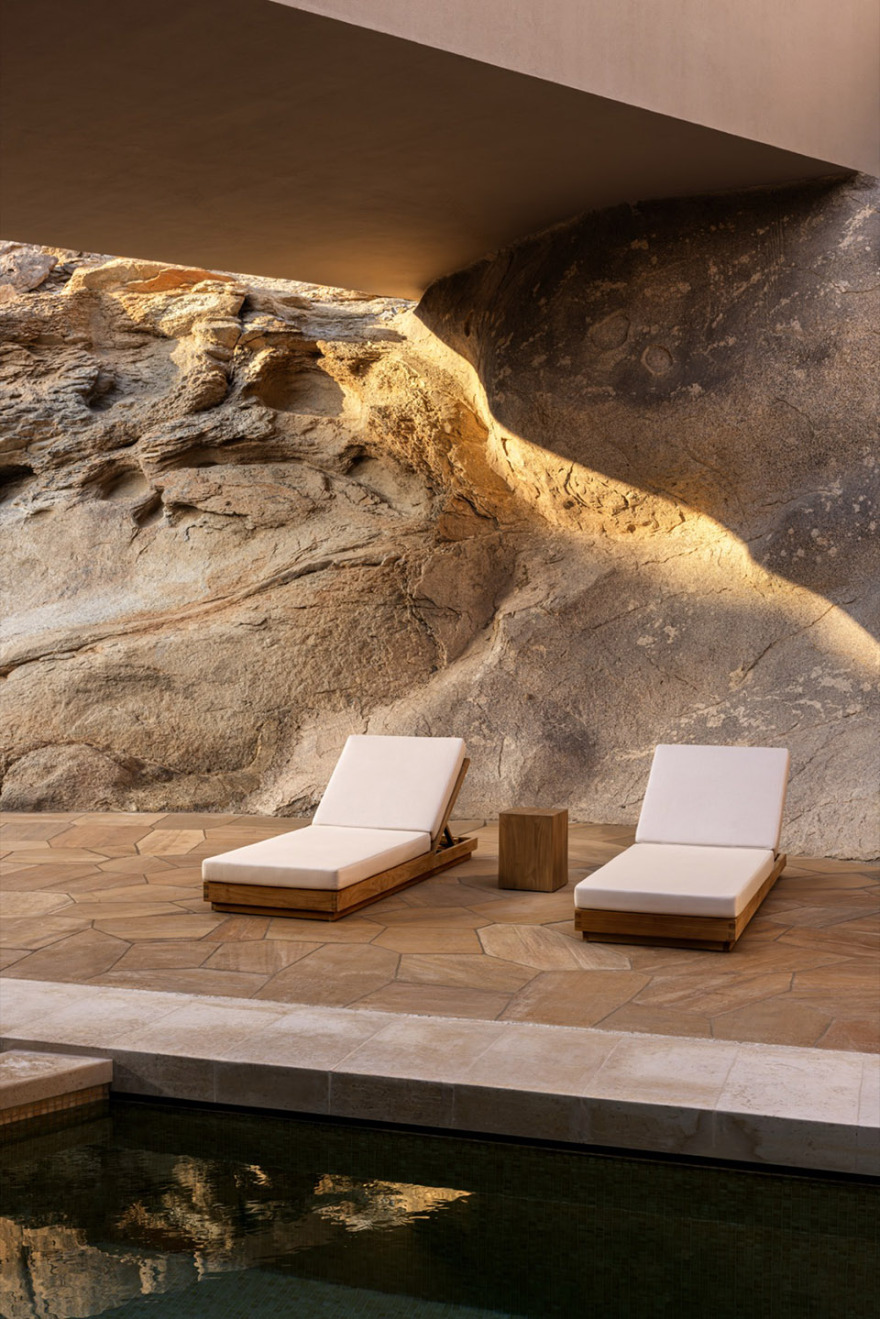
Mountain Crevice Suites被策略性地布置在靠近山体的位置,如同跨越下方空隙般嵌入岩壁之中。其内部空间的组织直接受到各个方向天然岩层起伏形态的影响,使得建筑对自然地形的独特轮廓几乎不产生任何干扰。这些套房进一步“楔入”山体预留的天然凹穴之中,其粗粝开口围合出私密的室外空间,并配置无边泳池,视觉上仿佛一路延伸、倾泻至远处的谷底。这些被包裹的Mountain Cave Suites则直接从密实的花岗岩山体中“雕刻”而出,通过一条长长的内部走廊进入,其空间体验让人联想到卡帕多奇亚(Cappadocia)古代遗址中复杂交错的隧道系统。然而在这里,这条蜿蜒的通道——也是整个度假村中独一无二的设计元素——通过一系列定制的火炬式灯具进行精细照明,并以一条长地毯贯穿其中,呼应沙特传统工艺的文化记忆。
Strategically positioned, the Mountain Crevice Suites in direct proximity to the mountains as they sling across the voids below. Their interior spatial distributions are directly influenced by natural undulations of rock formations in all directions. There’s little to no disruption of the natural setting’s distinctive delineation. The latter wedge into dedicated hollows with their rough edge apertures covering private outdoor spaces with infinity pools that seem to spill into the valley floor far down below. These cocooned Mountain Cave Suites—carved out of the dense granite mountain—are accessed through a long internal corridor recalling the complex matrix of tunnels crisscrossing ancient archeological site Cappadocia. Here, however, this meandering corridor—a feature not found at any other resort—is elaborately lit by a sequence of custom designed, torch-inspired luminaires and delineated by a long carpet harkening back to Saudi craft traditions.
▼岩壁之中的泳池与平台,
the swimming pool and platform within the rock voids © Ema Peter
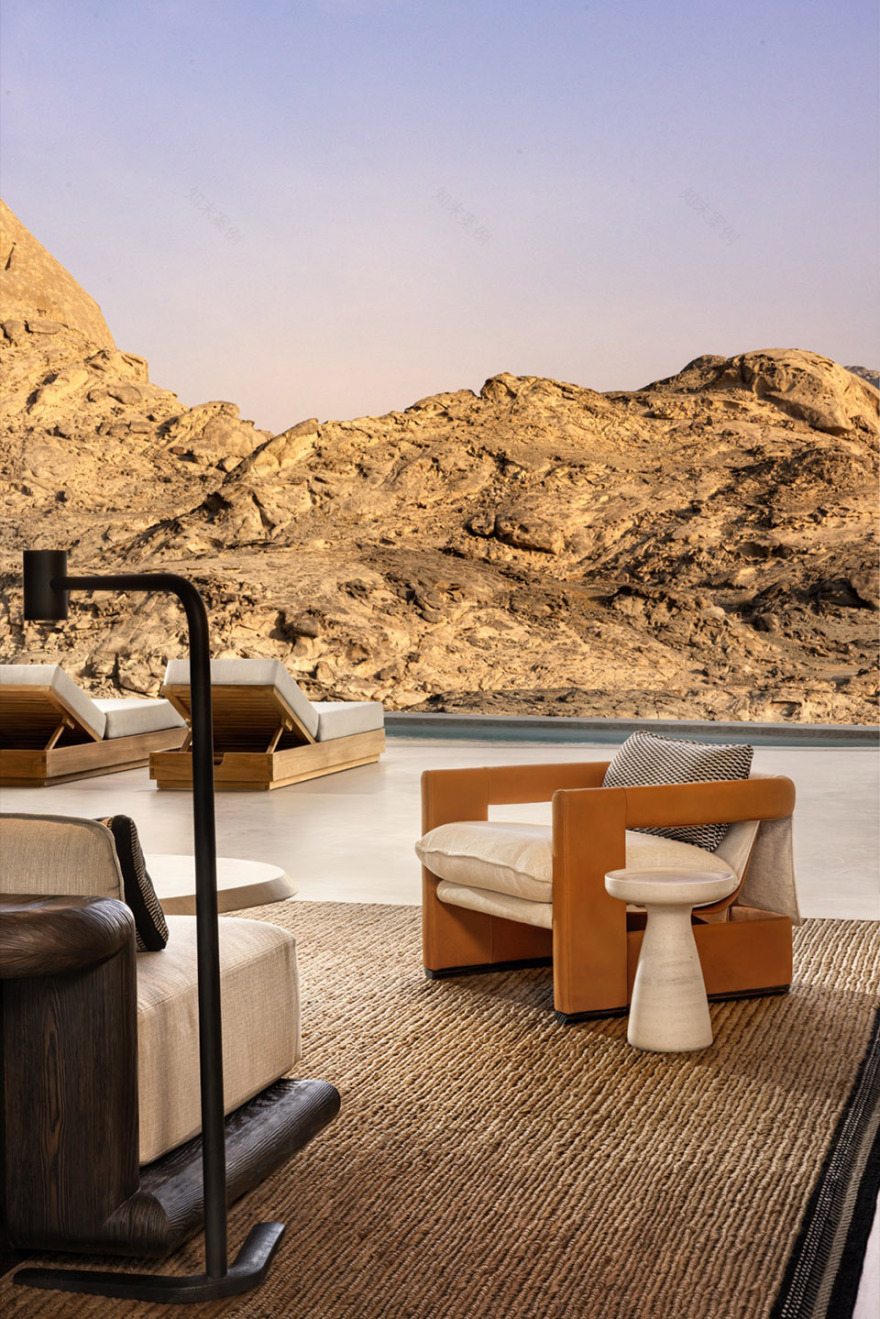
无论是山间缝隙套房(Mountain Crevice Suites)还是山洞套房(Mountain Cave Suites),这10间套房都由一种极具感官张力的空间关系所定义:风化岩壁以近乎“熵变”的方式穿插进入手工抹灰的墙体之中。“这种类型的住宿体验,使宾客能够最直接地感知场地最本质、最原始的特性,并重新与大地建立联系。”Ferrari解释道。相比之下,53间Wadi Villas以及Cliff Hanging Villas(后者位于更高的山体坡面之上)则形成另一种空间序列,而位于最偏远山峰中的Royal Villa则以更为宏大的尺度嵌入山体之中,面向南侧广阔的沙漠与嶙峋山景,构成极具震撼力的私密景观视野。无论类型如何,每一种住宿单元都被统一嵌入同一套设计语言之中:强调近乎精神性的场地回应、柔性纪念性,以及本土工艺的动态整合,只是在尺度与亲密性上略有差异,使整体体验更趋细腻与内敛。
The 10 suites, both Mountain Crevice and Mountain Cave Suites, are defined by an incredibly visceral interplay of complexly weathered rock faces entropically cutting through hand-troweled plaster walls. “These types of accommodations allow guests to experience the most authentic and elemental qualities of the site, reconnecting them with the earth,” Ferrari describes. While the 53 Wadi Villas and Cliff Hanging Villas—the latter of which situate a bit further up the slope of the surrounding massifs—the palatial Royal Villa embeds within a remote peak and frames sweeping private views over expanse desert and jagged mountain landscapes toward the south. Regardless of type, each accommodation is imbued in the same cohesive articulation of emphatic, near spiritual site responsivity; soft monumentality; and the dynamic integration of locally entrenched craft but with a slightly more intimate touch.
▼山间缝隙套房,Mountain Crevice Suites © Ema Peter
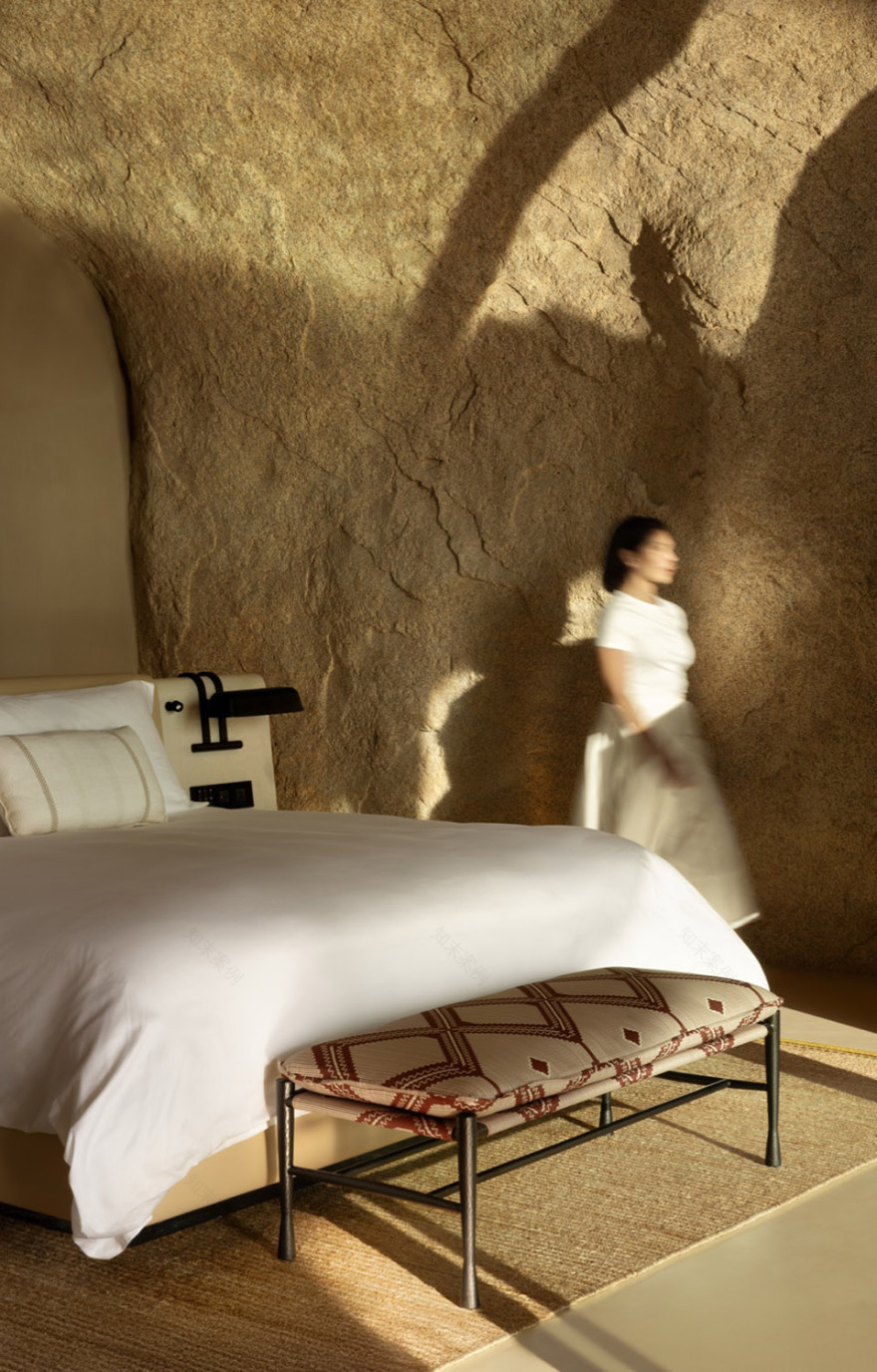
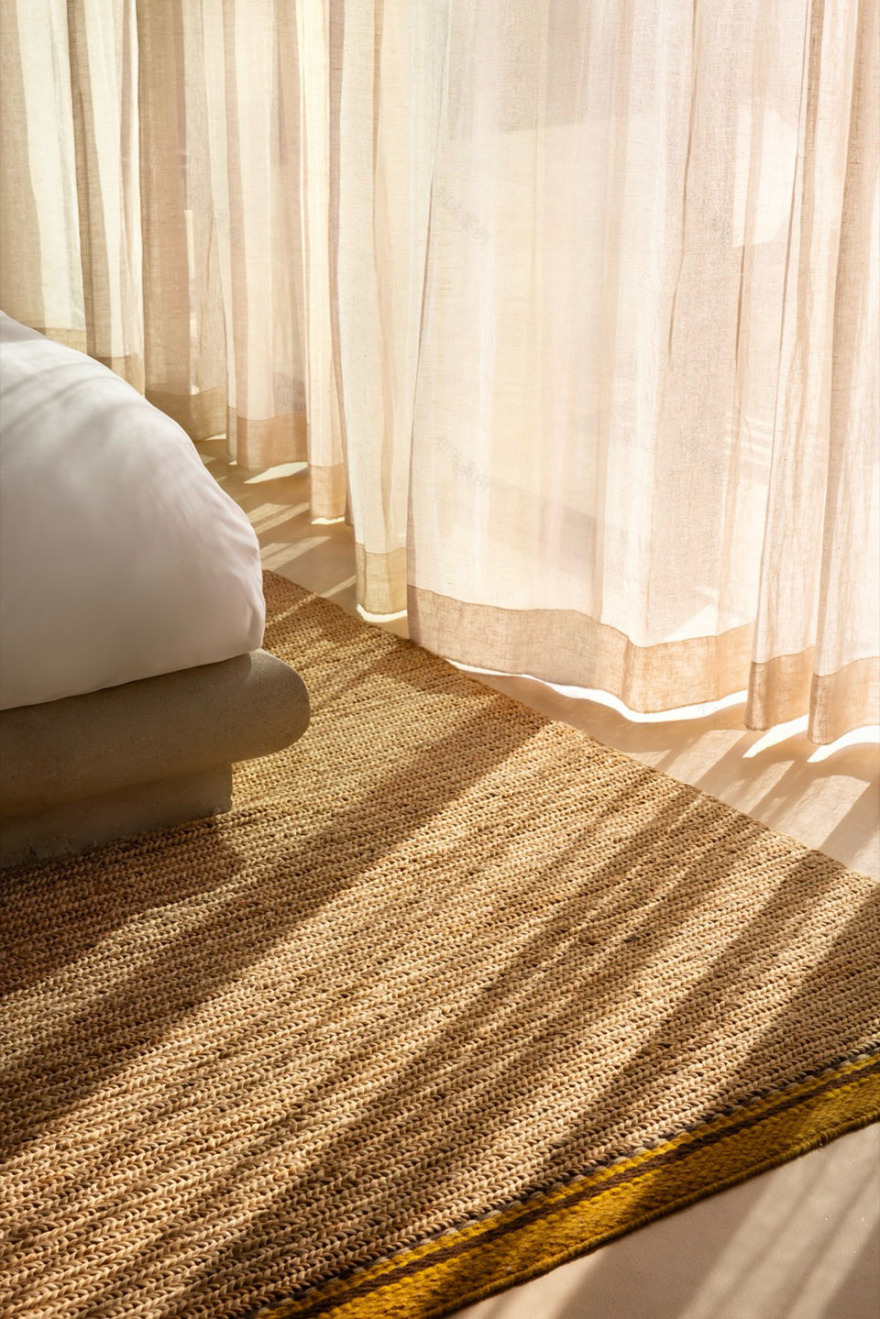
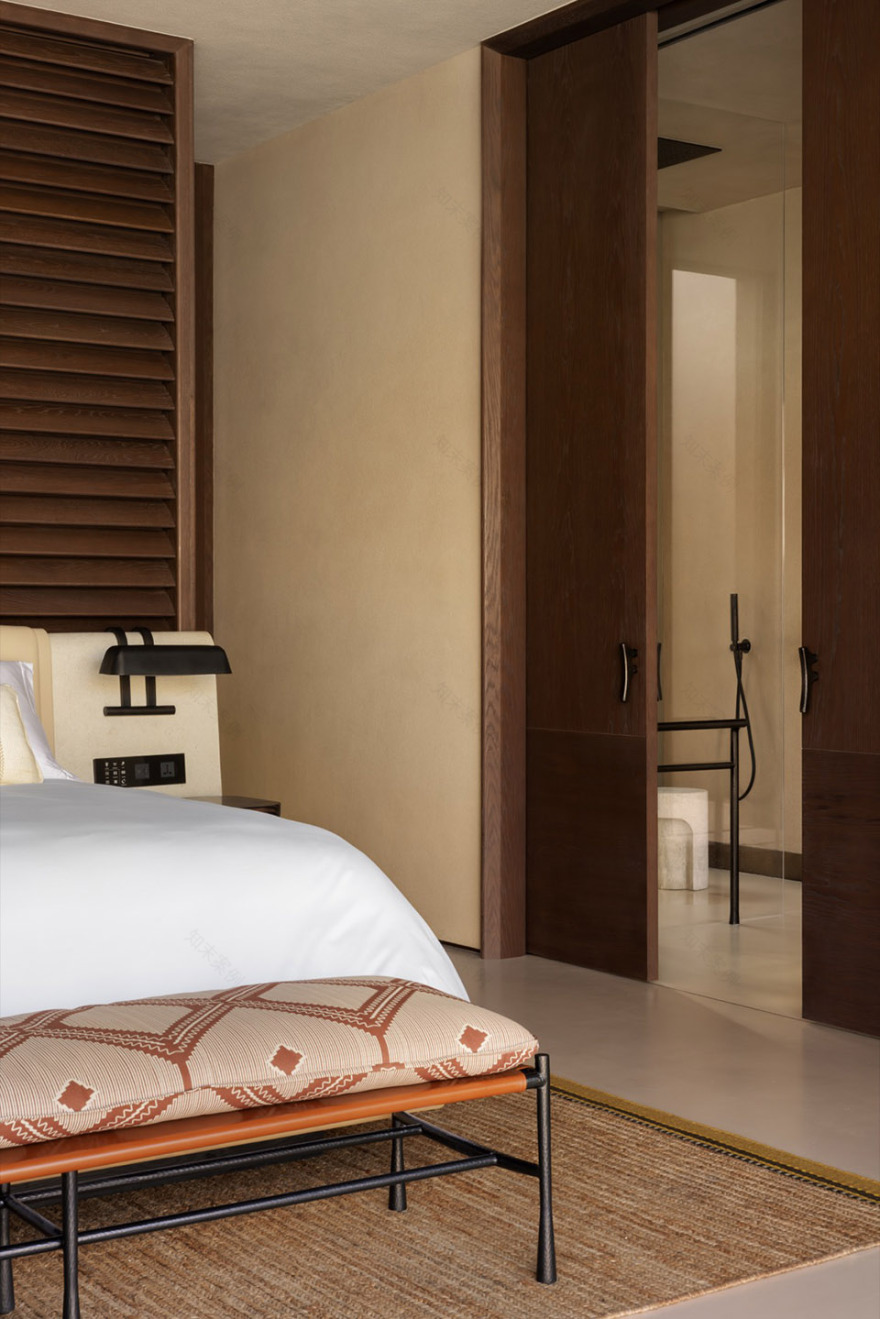
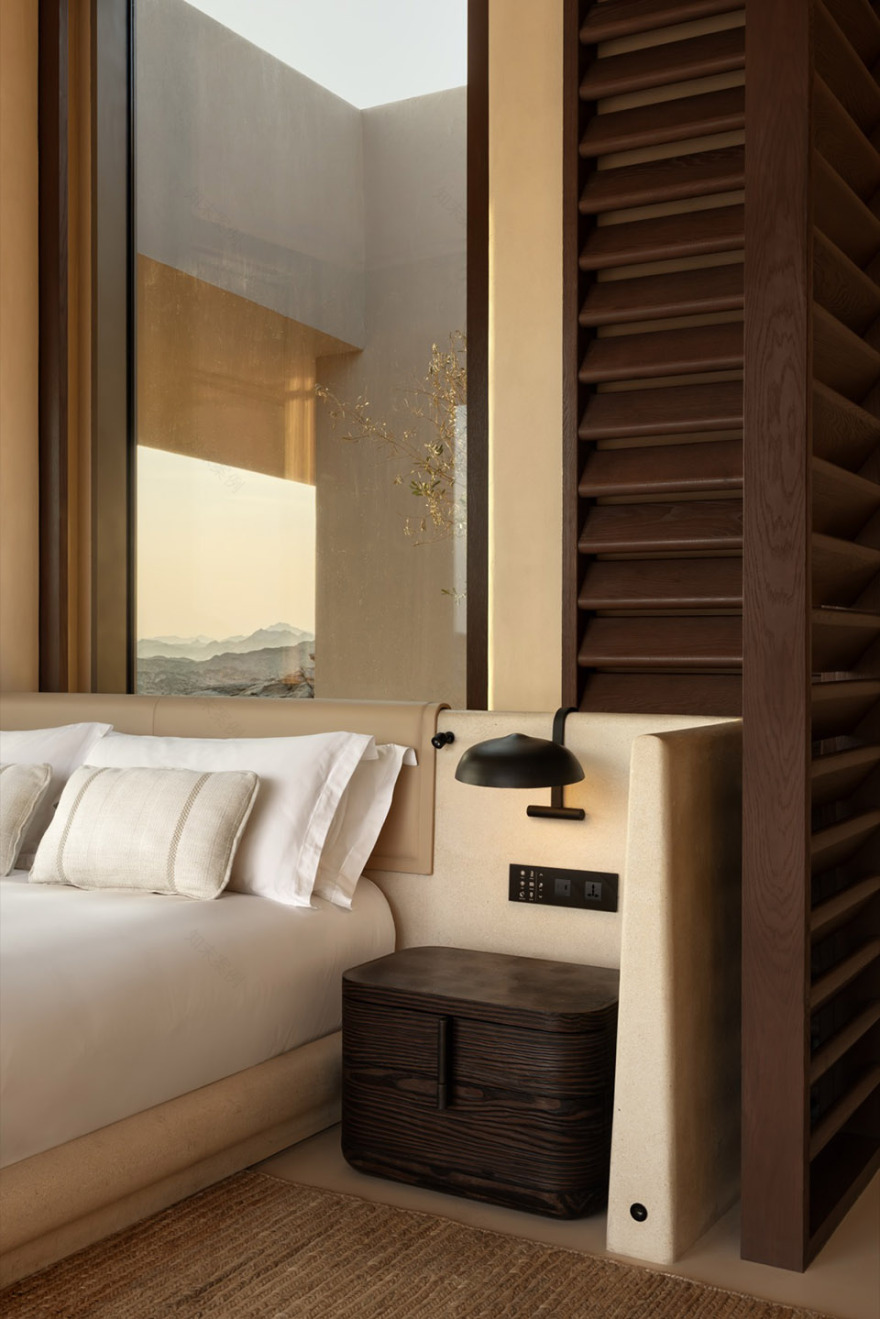
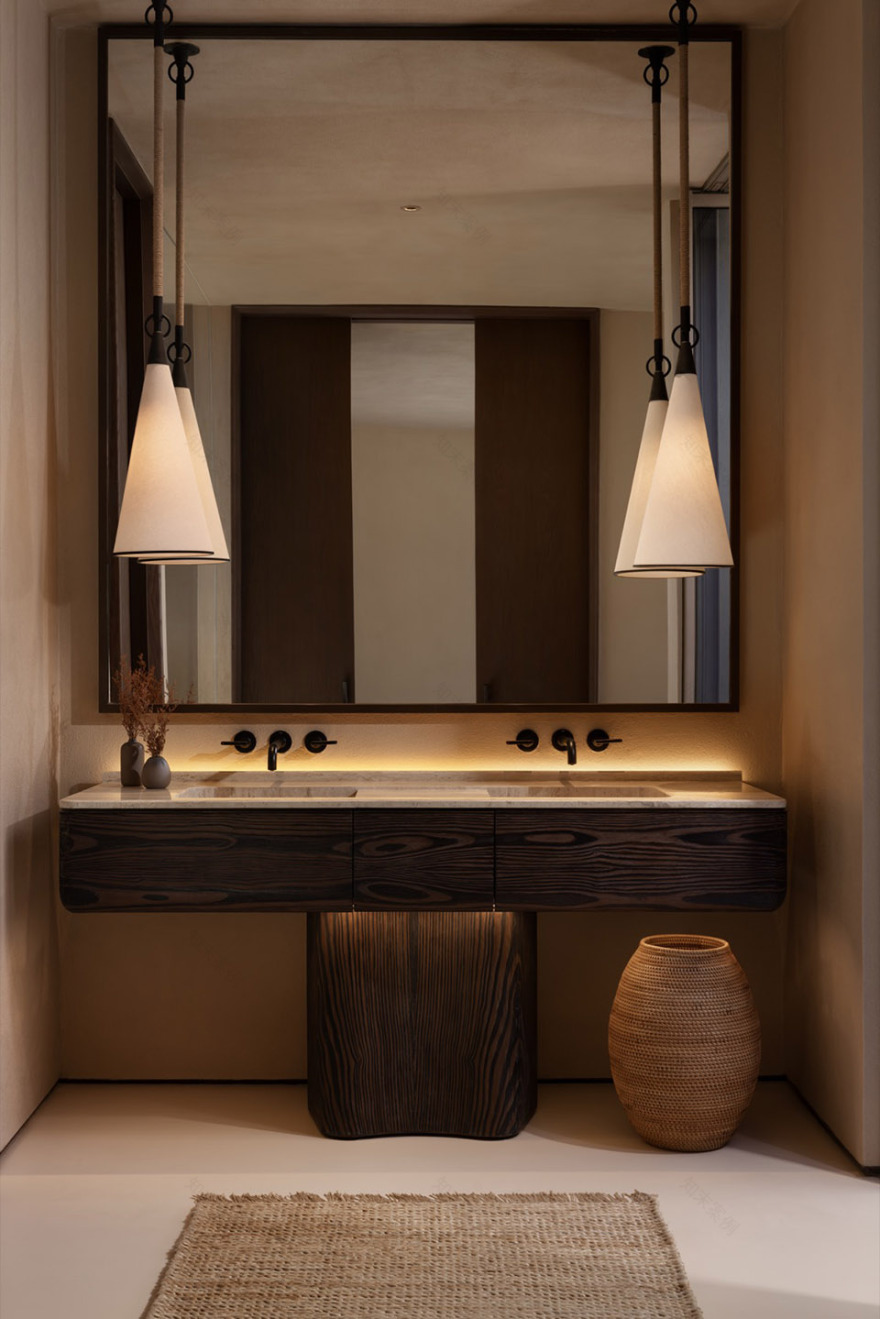
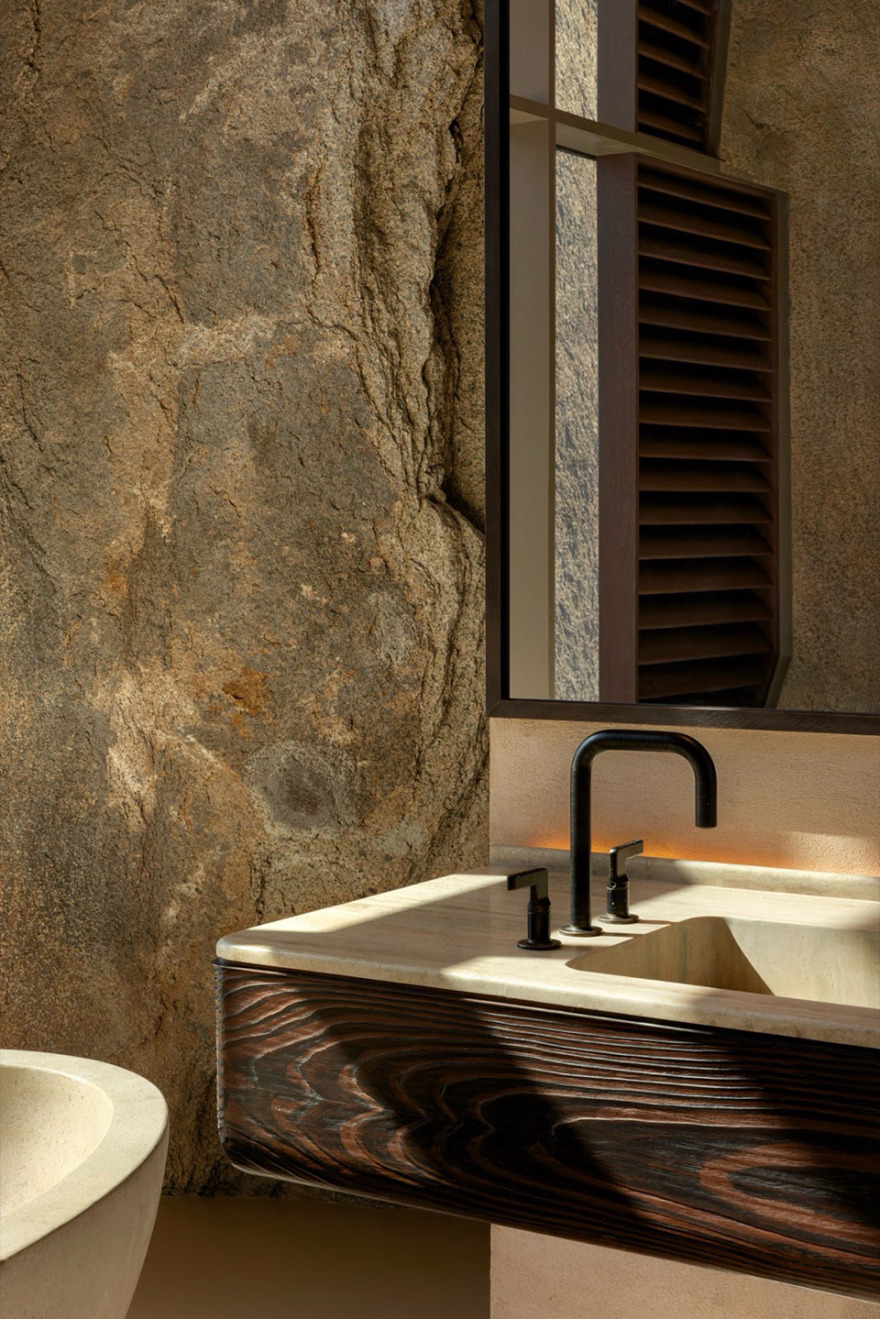
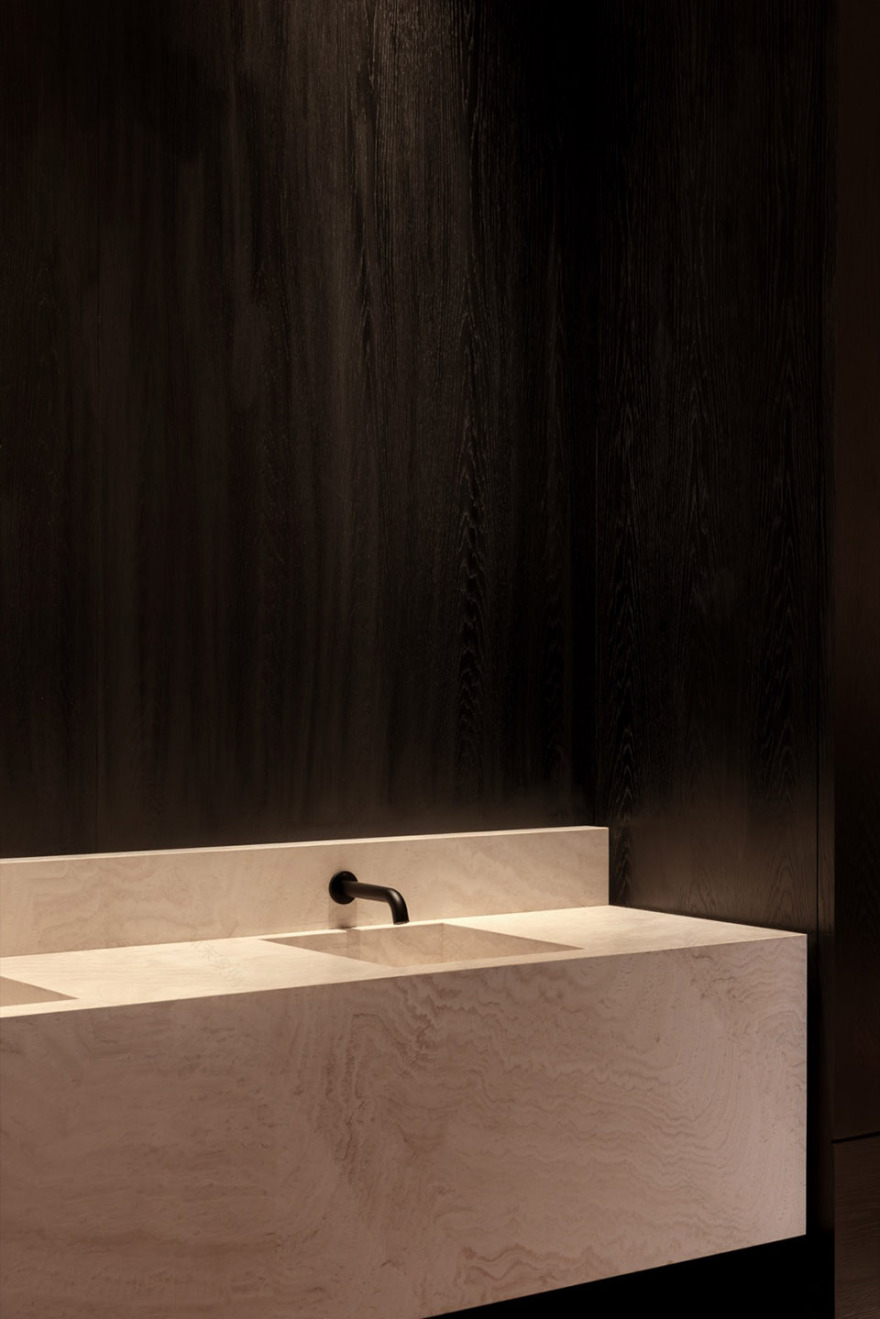
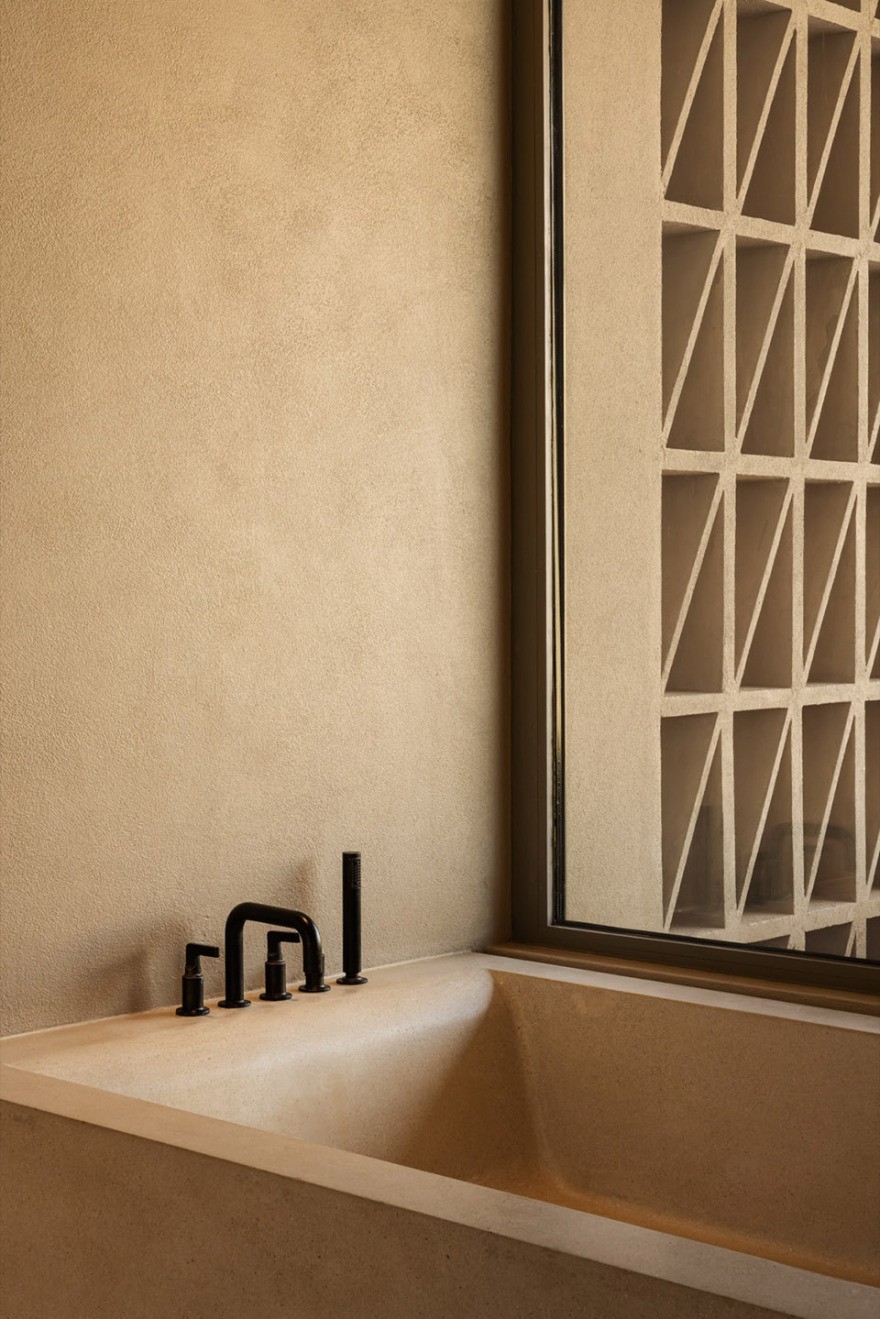
贯穿室内与室外空间延展的地面均采用混凝土完成。在山间缝隙套房中,这些连续的地面进一步过渡为下沉式座席区域,并整合了无缝嵌入的沙发系统。其他低矮尺度的家具则采用喷砂木材、手工编织包覆、皮革与亚麻等材料制作。空间分区则通过天然编织的黄麻地毯进行界定,其边缘细节呼应沙特Al Sadu编织传统——这一传统工艺已被联合国教科文组织认定为该国最重要的文化遗产之一,由贝都因女性世代相传,并至今仍使用传统织机完成。柔和起伏却具有整体纪念性的混凝土床背板具有强烈的建筑性,同时整合了喷砂木质与石材台面的床头柜。在类似的构造逻辑中,一体浇筑的混凝土浴缸与喷砂处理及石材台面的洗手台形成呼应,使宾客在日常使用中能够直接触及来自室外自然环境中丰富矿物结构所具有的原始质感与真实感。
Floors extending across indoor and outdoor space are finished in concrete and in Crevice Suites, give way to step down seating areas with seamlessly integrated sofas. Other low-slung furnishings render in sandblasted wood, hand wrapped weaving, leather, and linen. Delimiting various areas are naturally woven jute rugs with edge detailing harkening back to the Saudi Al Sadu weaving tradition, recently recognized by UNESCO as one of the country’s most valuable cultural assets. The prowess of this ancient craft is handed down through the generations by Bedouin women who still utilize traditional looms. Softly contoured yet monolithic cast-concrete bed headboards have an architectonic quality as they also encapsulate sand-blasted wood and stone-topped nightstands. In analogous configurations, seamlessly integrated cast concrete bathtubs play off of sand-blasted and stone-topped vanities with sinks that, yet again, allow guests to viscerally engage the rawness and honesty of mineral formations abundant in the natural setting right outside.
▼客房与细部,the suits and details© Ema Peter
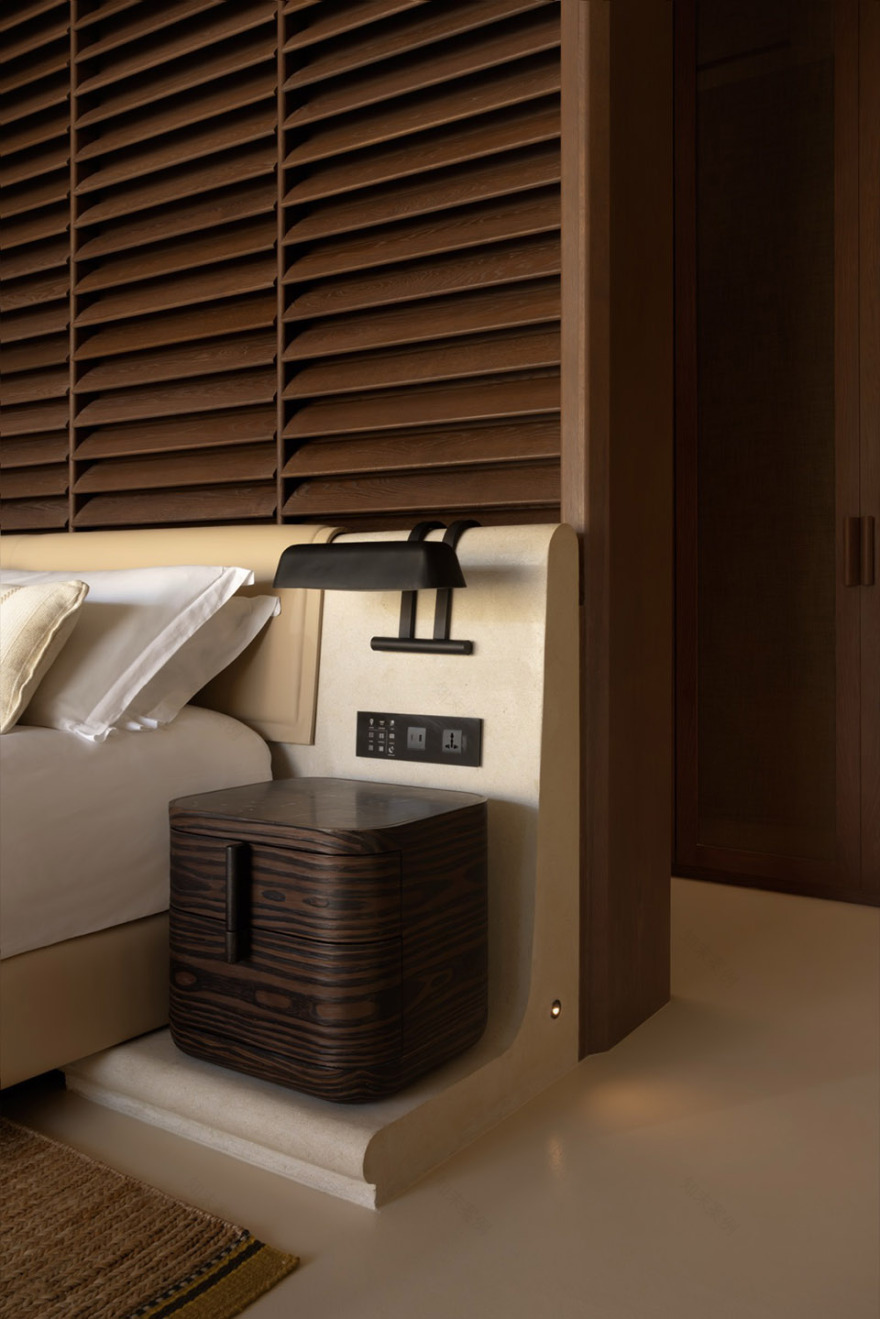
▼浴室与洗手池细部,bathroom and details of the sink© Ema Peter
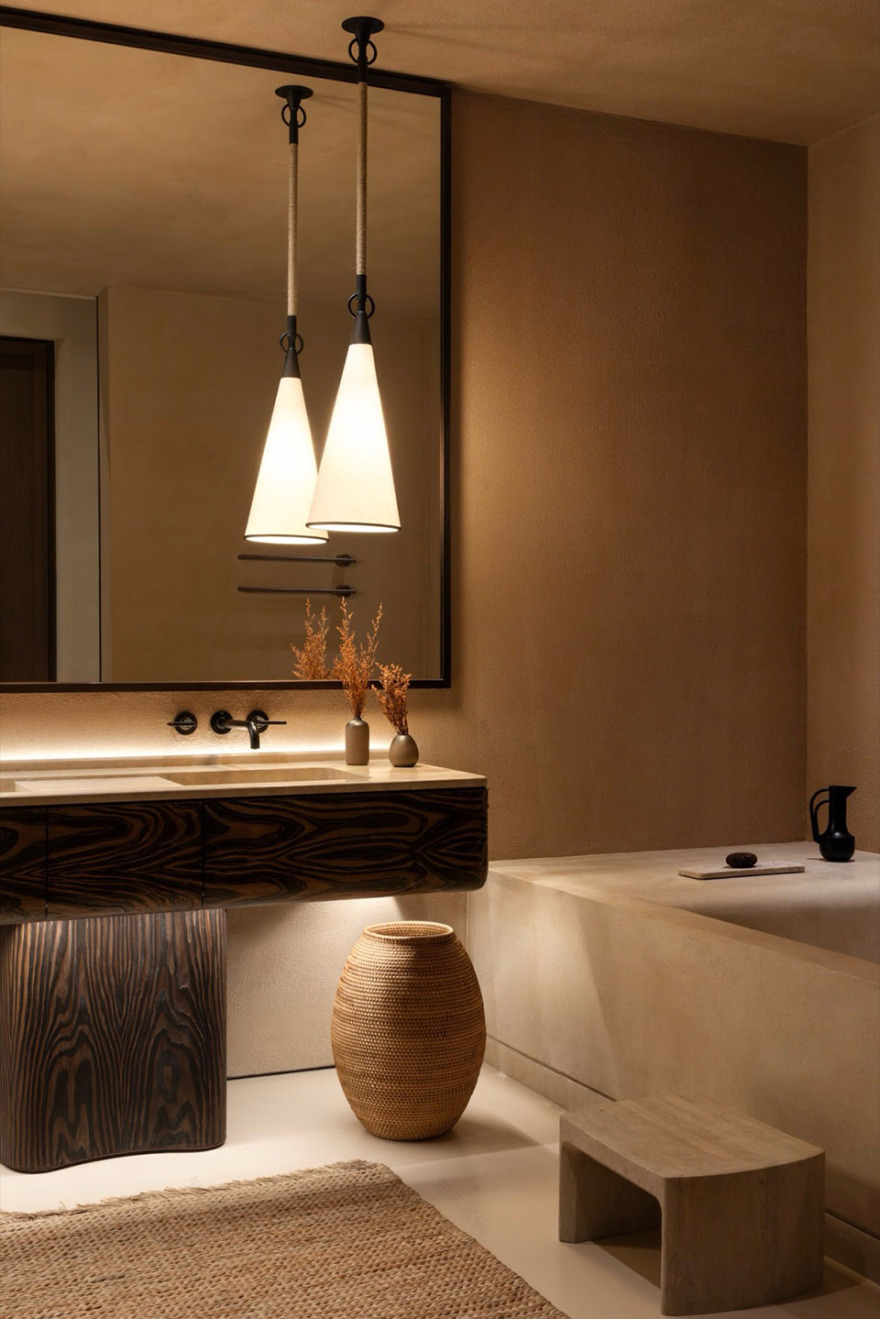
▼浴缸细部,details of the bathtub© Ema Peter
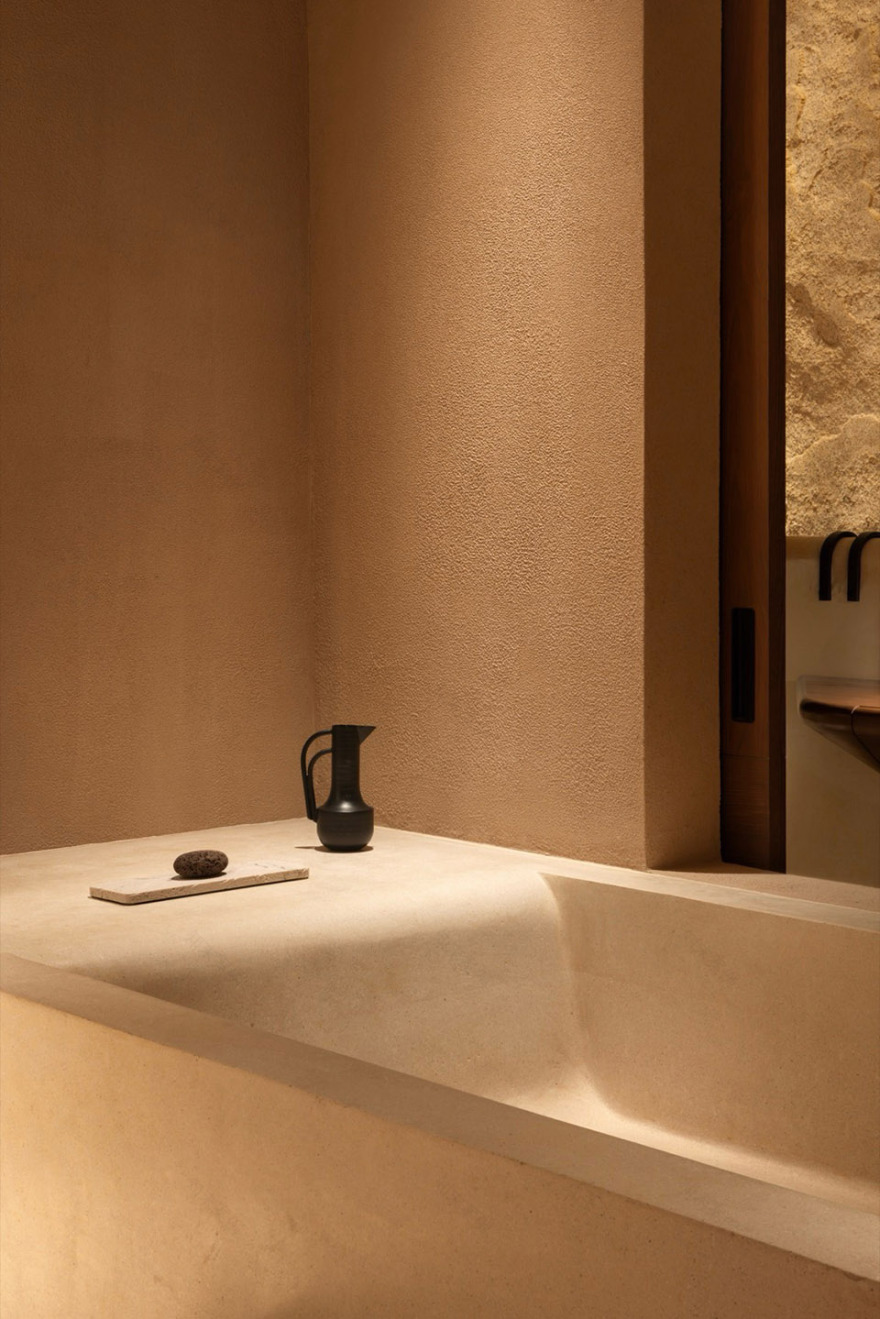
▼浴室,bathroom© Ema Peter
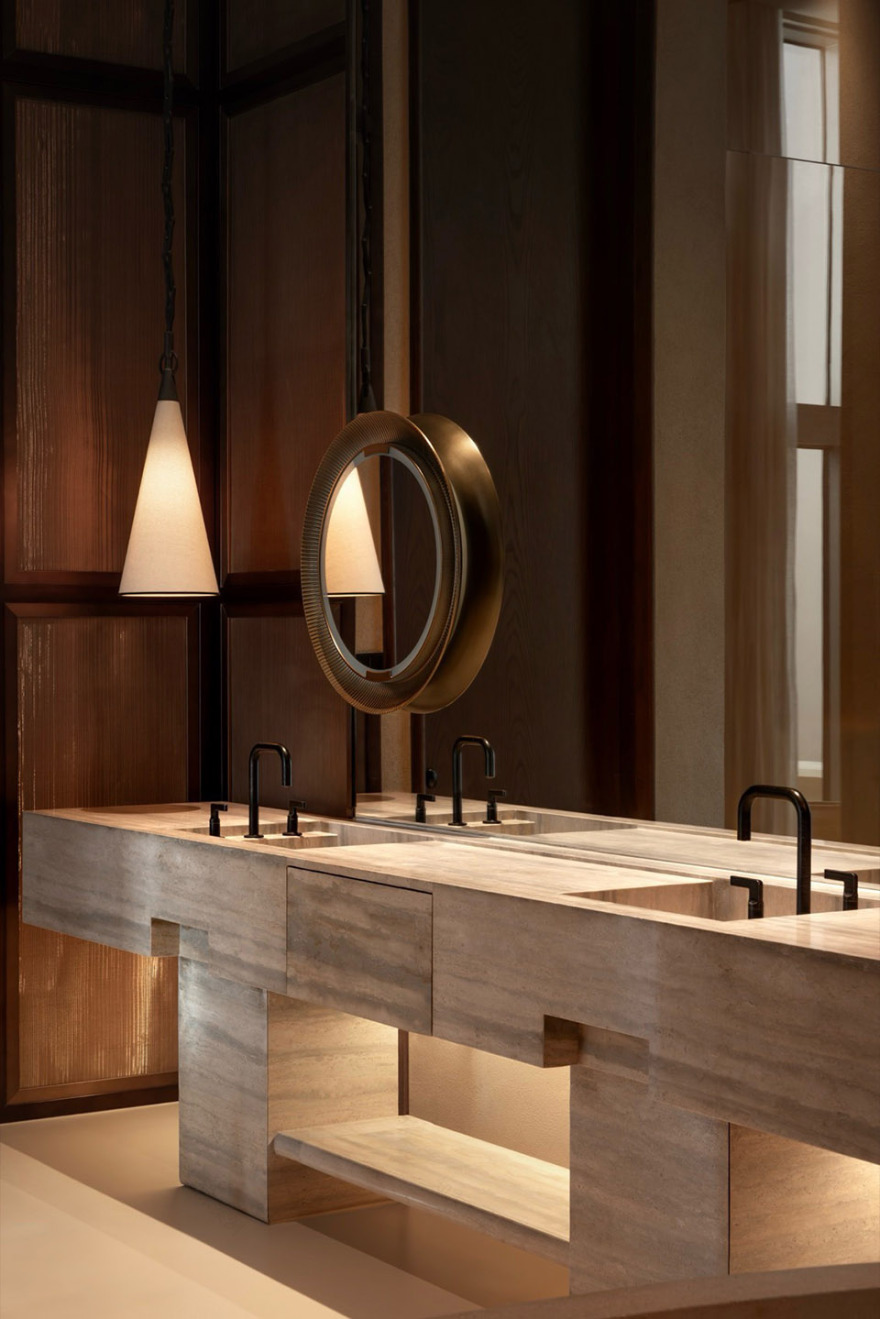
▼洗手池与浴缸细部,details of the sink and bathtub© Ema Peter
▼淋浴室,the shower© Ema Peter
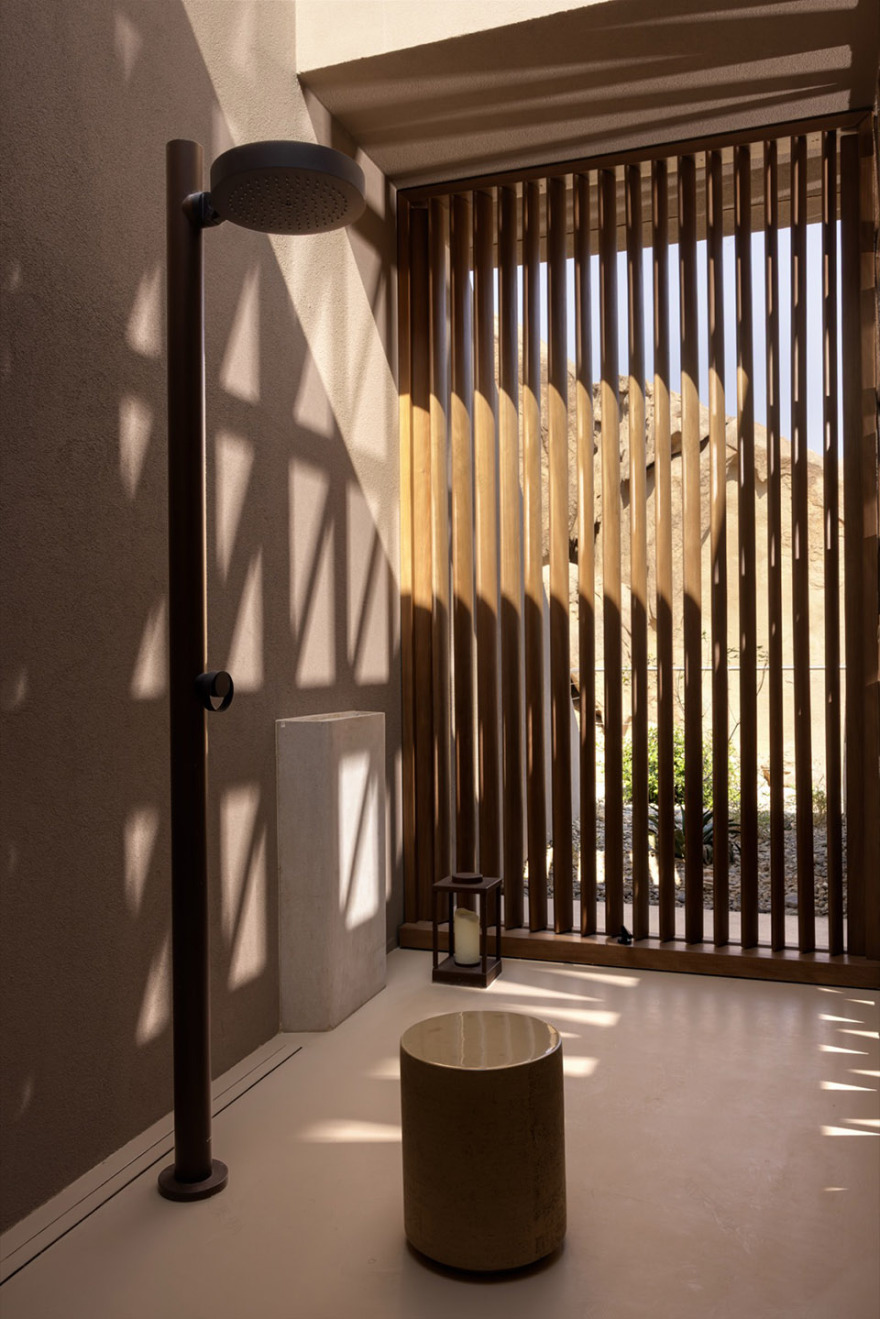
“木材在被我雕刻之前,本身其实更好。”美国极简主义艺术家Carl Andre曾这样说。这一观点贯穿于沙漠岩石度假村的整体室内设计之中:Studio Paolo Ferrari采用大量本就具有自然力量的纪念性构件,仅以人手进行轻微转化,而非彻底改造,从而使材料保持其原始的存在状态,成为宾客沉浸并连接这一独特场所的重要媒介。围绕这一既具触觉性又具形而上意味的场所体验,一系列尺度宏大的空间体系,被一套精心而克制的设计策略所支撑——通过重新诠释的器物与材料语言,将古老时代的文化记忆与当代沙特手工艺传统以细腻方式重新激活。“沙漠岩石度假村关乎工艺、手作、材料的诚实性,以及与场地之间深层的精神连接。”Ferrari总结道,“它关乎矿物性、真实性,以及重新与自然最本质的属性建立联系。”
“The wood was better before I carved it,” seminal American Minimalist Carl Andre once expressed. This sentiment carries through the comprehensive interior design of Desert Rock Resort in which Studio Paolo Ferrari deployed monumental elements gently transformed by the human hand but mostly, already shaped by nature; a tangible means for guests to fully immerse themselves in and connect with this unequalled setting. Rooting this both tactile and metaphysical evocation of place, a diverse raft of grand-proportion spaces, is the shrewd yet nuanced introduction of reinterpreted objects and material applications that harken back to ancient times and champions quintessential Saudi craft traditions with subtle inflection. “Desert Rock Resort is about craft, the handmade, the honesty of materials, and a deep spiritual connection to site,” Ferrari concludes. “It’s about minerality, authenticity, and reconnecting with the most elemental qualities of nature.
▼灯具细部,details of the light© Ema Peter
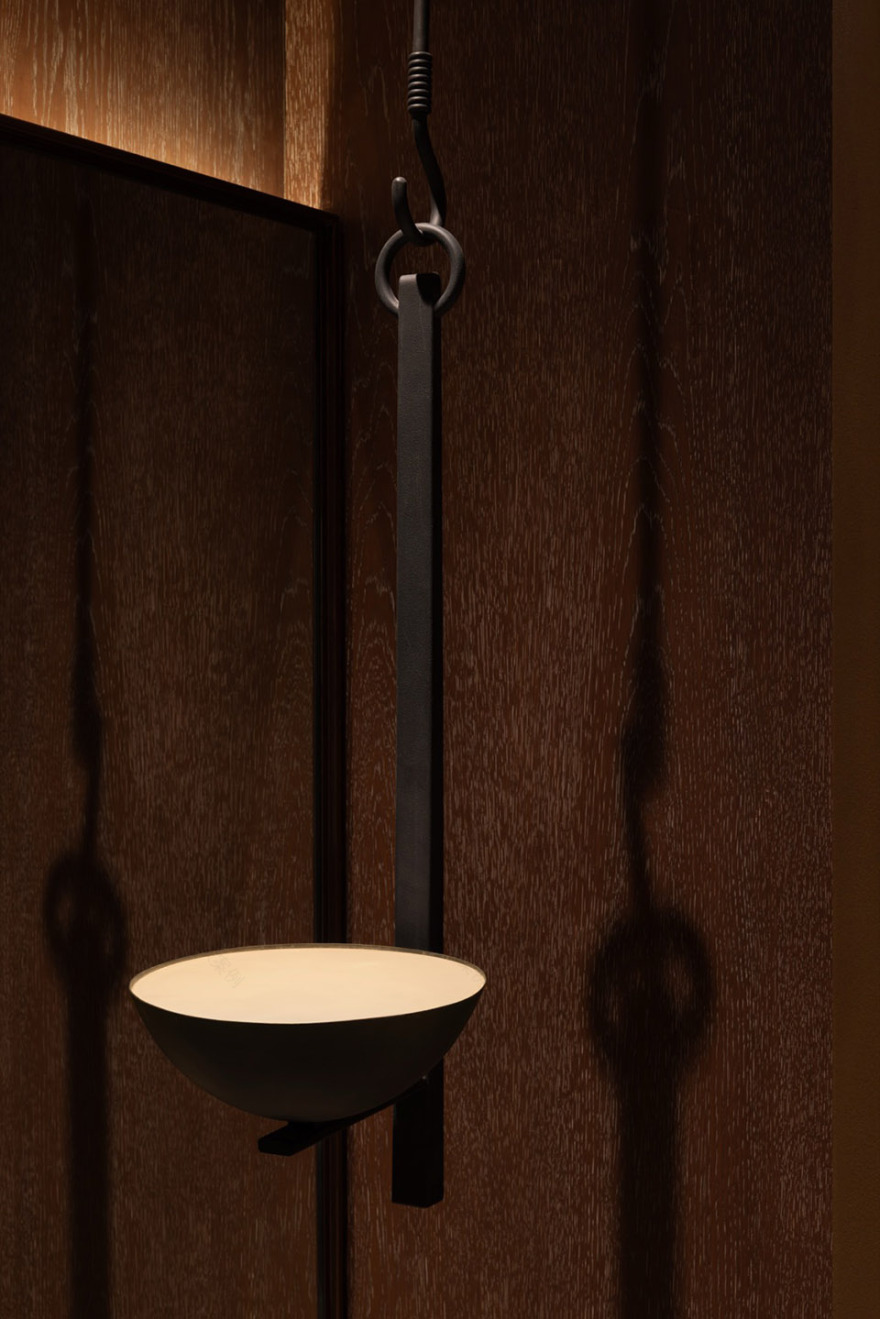
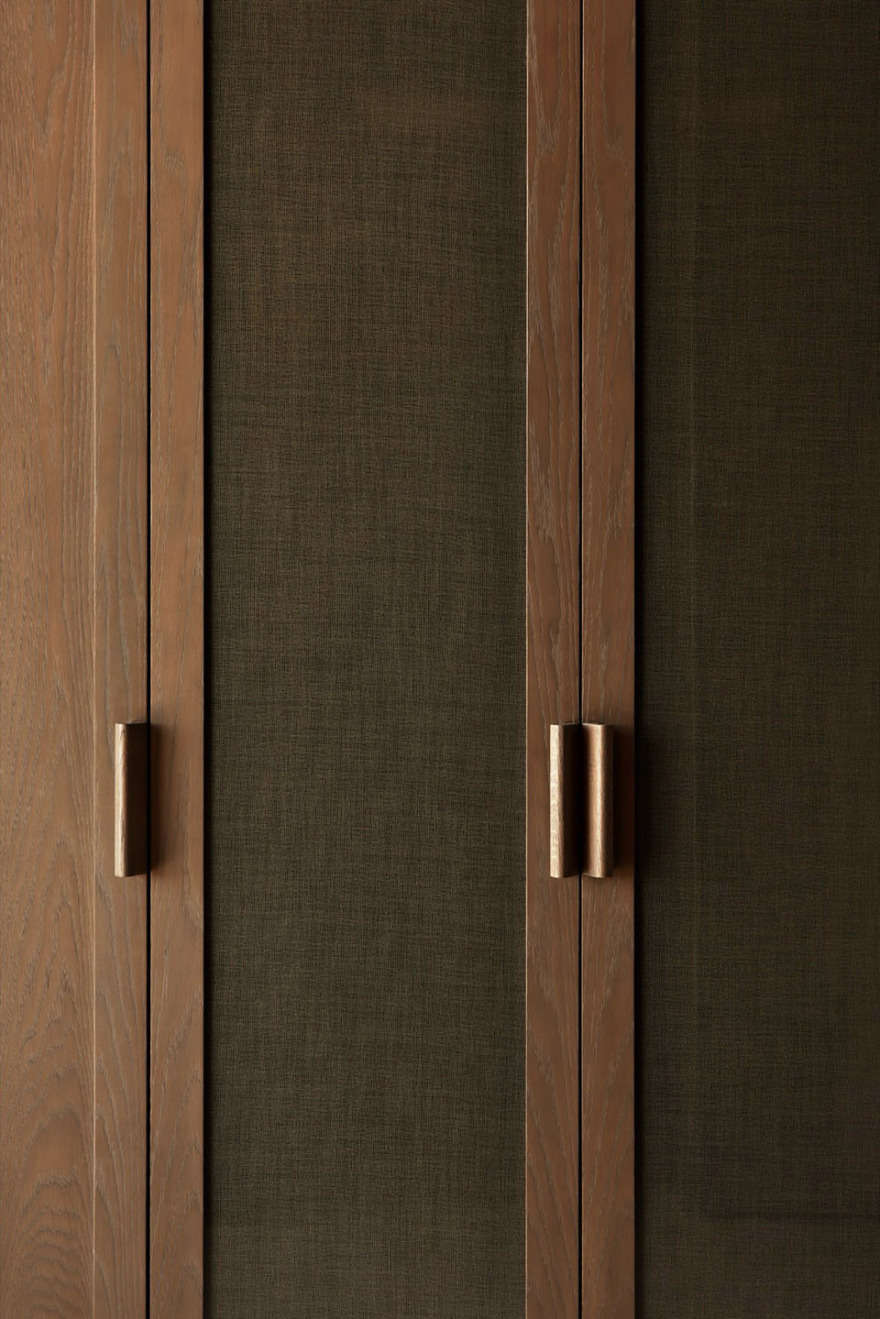
▼家具细部,details of the furniture© Ema Peter
南京喵熊网络科技有限公司 苏ICP备18050492号-4知末 © 2018—2020 . All photos and trademark graphics are copyrighted by their owners.增值电信业务经营许可证(ICP)苏B2-20201444 苏公网安备 32011302321234号
苏公网安备 32011302321234号客服
消息
收藏
下载
最近