

创作上传
VIP
收藏下载
登录 | 注册有礼
查看完整案例

收藏

下载

分享
早在2000年代的统计数据显示,过去五十年间,河内约80%的水面已经消失。大量湖泊、池塘、沟渠与低洼农田被城市开发所取代。这种快速转变成为城市长期雨后内涝的重要原因之一,也让河内被戏称为“河涝”(Hà Lội,意为“被水淹没的河内”)。
In the 2000s, statistics indicated that Hanoi has lost approximately 80% of its water surface area over the past fifty years. A multitude of lakes, ponds, canals, and low-lying fields have been sacrificed for urban development. This rapid transformation is a primary factor contributing to the city’s chronic flooding after rainstorms, leading to its unofficial nickname: “Hà Lội,” which translates to “Flooded Hanoi.”
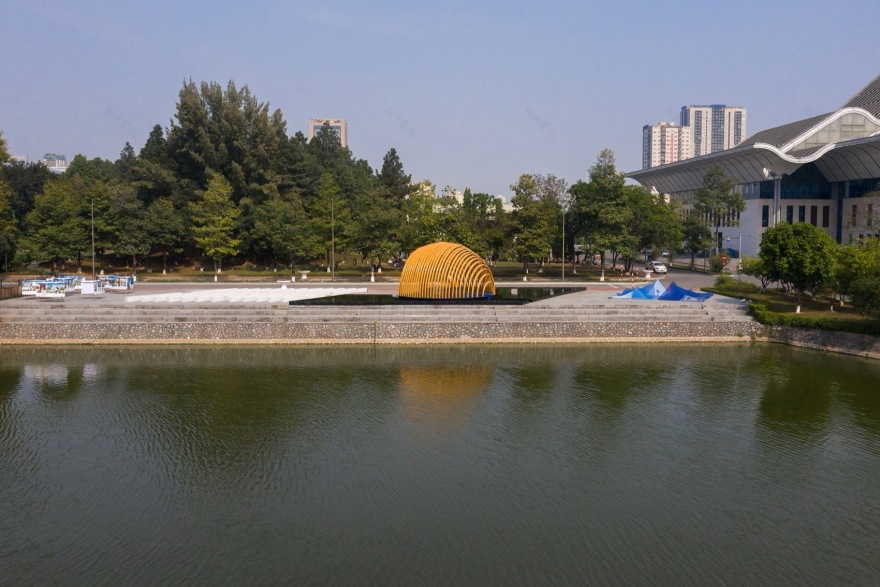
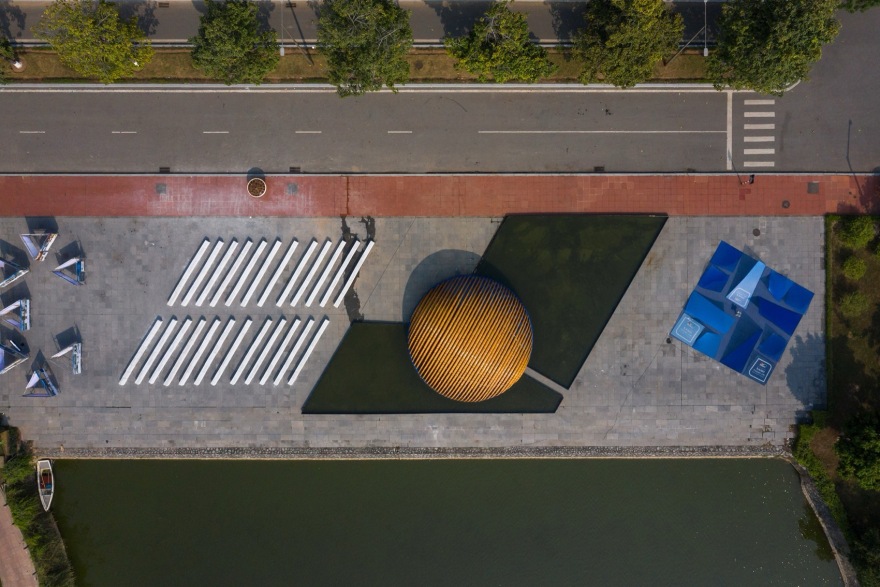
▼场地鸟瞰,aerial view of the site © Le Minh Hoang
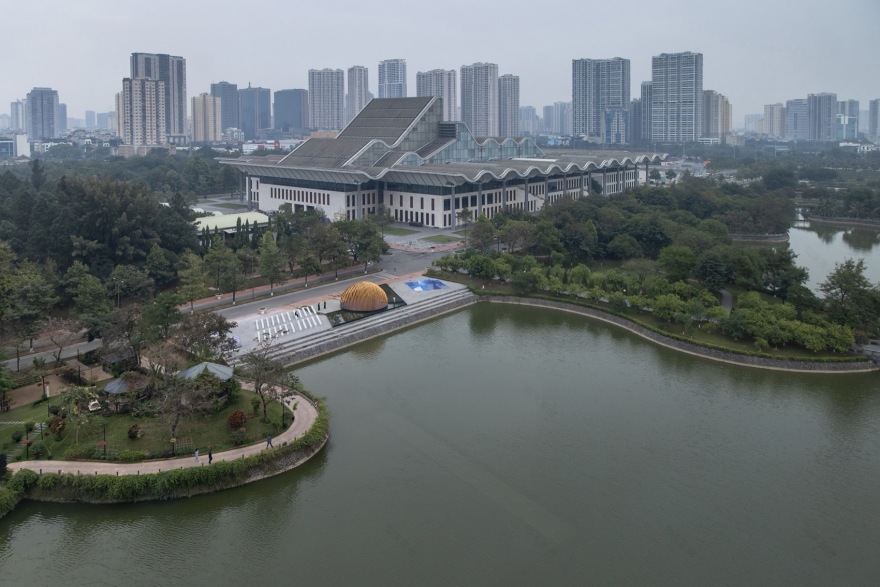
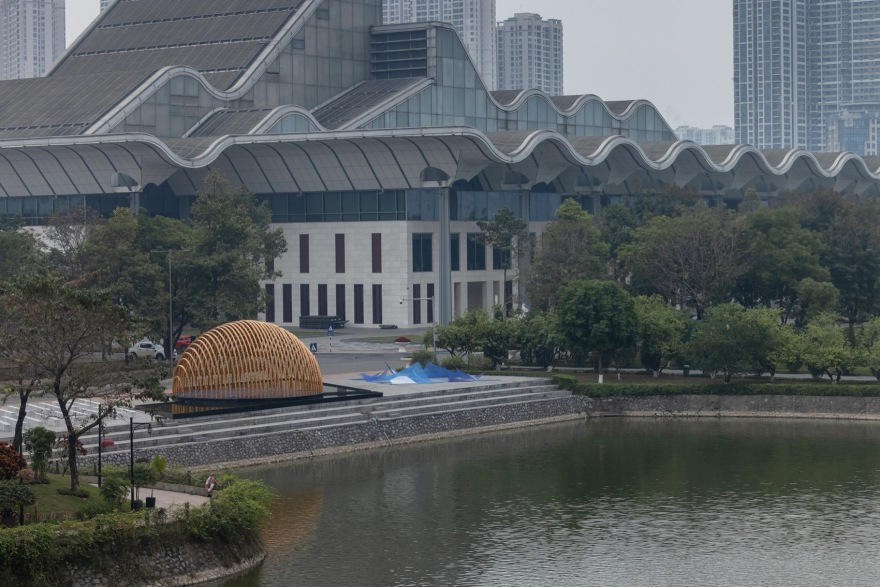
▼鸟瞰,aerial views © Le Minh Hoang
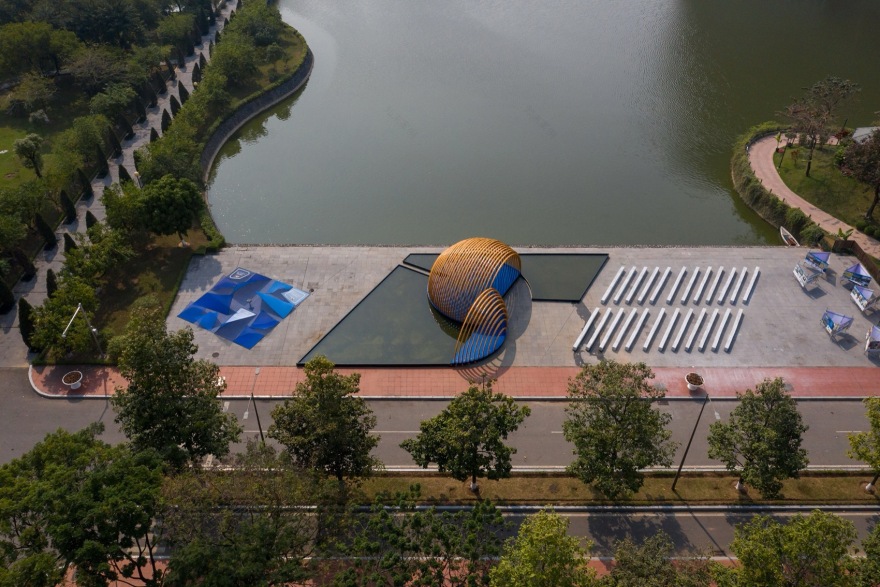

面对持续“混凝土化”的城市发展趋势,ASHUI Pavilion 2026试图倡导一种更广泛的“水化”城市运动。该展亭被设想为一个“源头(Source)”,水流由此向外扩散与延展,以强调水在人类生存中的根本意义。
▼分析图,analysis diagram ©H&P Architects

▼分析图,analysis diagram ©H&P Architects

In response to the prevailing trend of “concretization,” the Ashui Pavilion 2026 aspires to promote a widespread movement towards the “waterization” of urban spaces. This pavilion is envisioned as a “Source,” from which water rays emanate and flow, thereby underscoring the indispensable role of water in human existence.
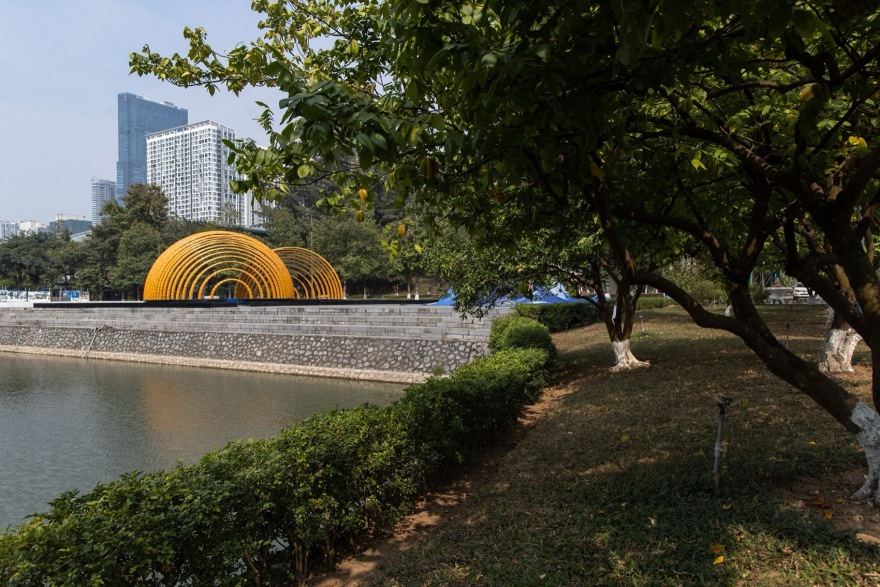
▼远景,views at distance © Le Minh Hoang


▼由座位一侧看项目,viewing the pavilion from the seating area © Le Minh Hoang


▼街景,street views © Le Minh Hoang
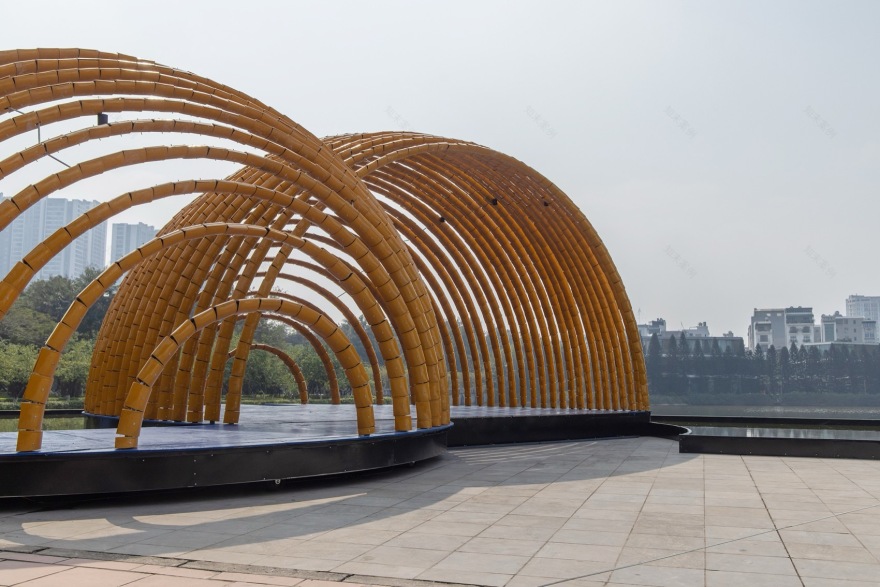

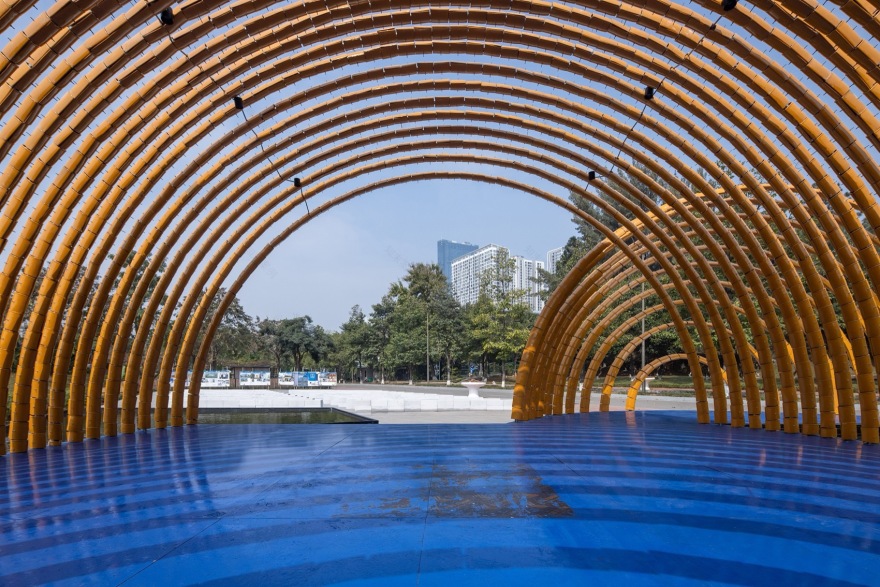
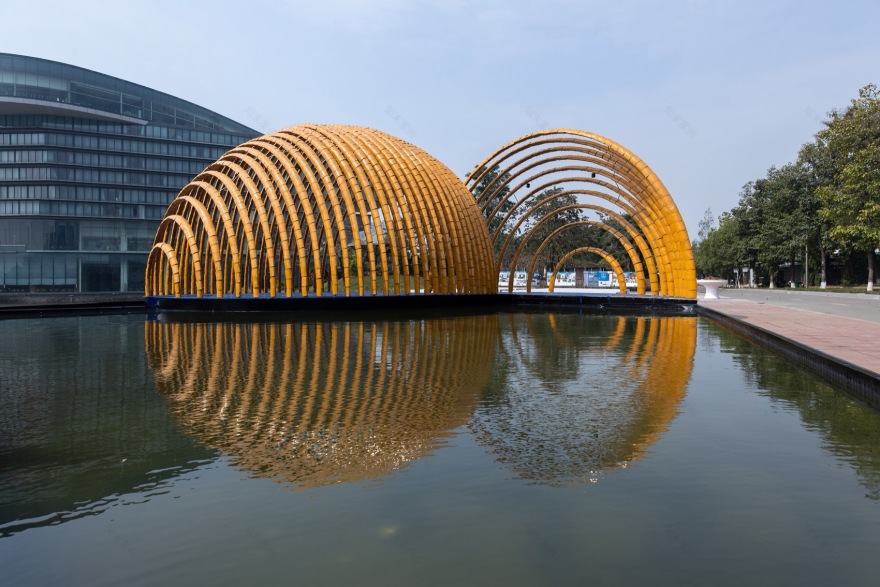
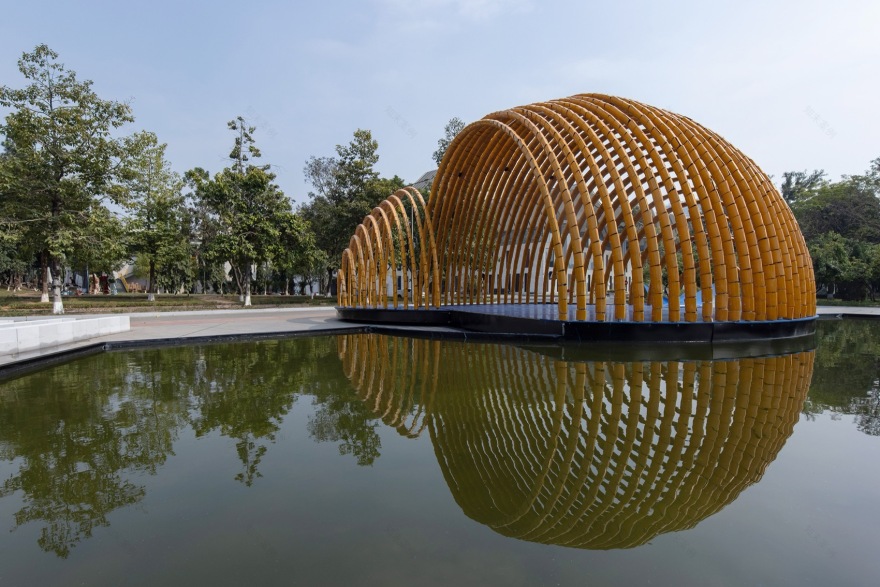
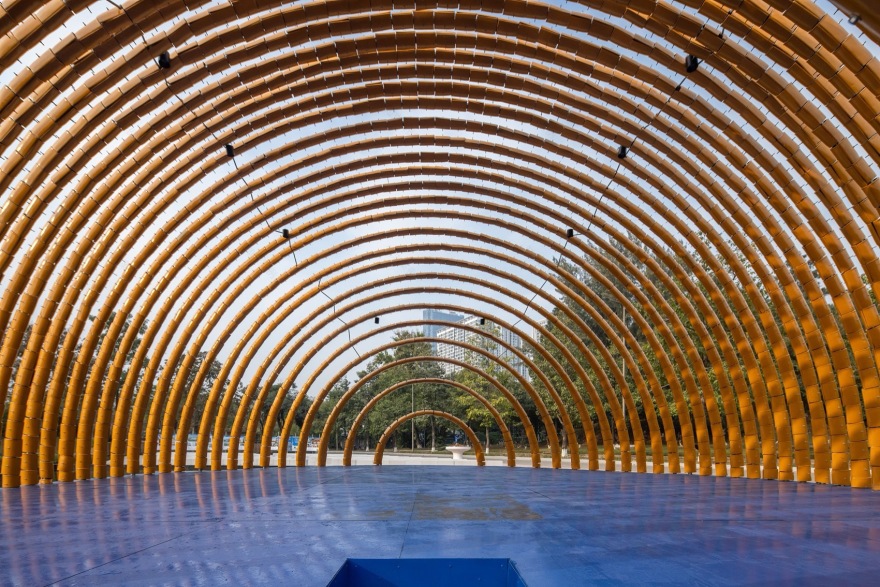
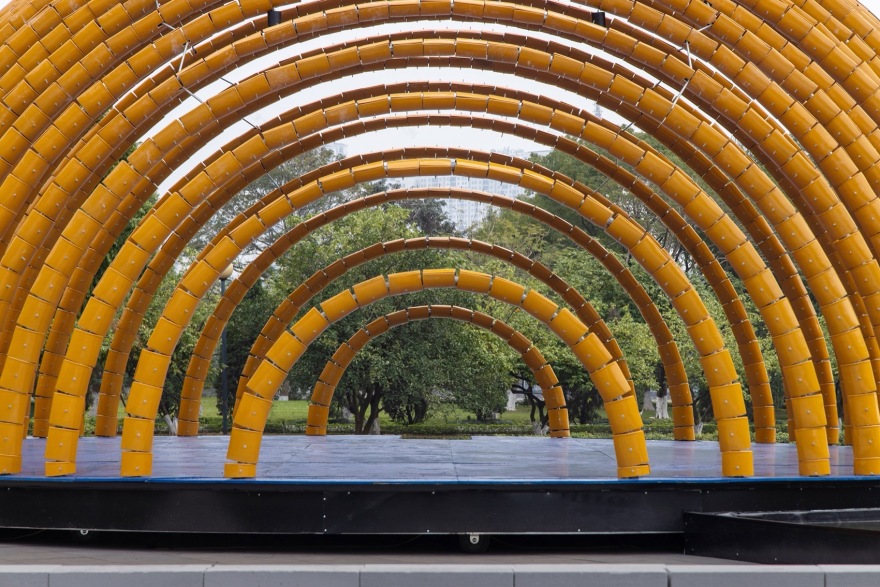
这座半球形结构直径约10米,其形态概念来源于一系列并置排列的曲线。根据不同使用需求,空间既可以展开成为一个充满动态感的舞台,也能够收缩为沉思与感知的体验空间。
▼分析图,analysis diagram ©H&P Architects

The design of this hemispherical structure (10 meters in diameter) is conceptually formed from various curves placed alongside one another. Depending on its intended function, the space can either expand into a dynamic stage or contract into a contemplative experience area.
▼水面一侧外观,exterior view from the water side © Le Minh Hoang
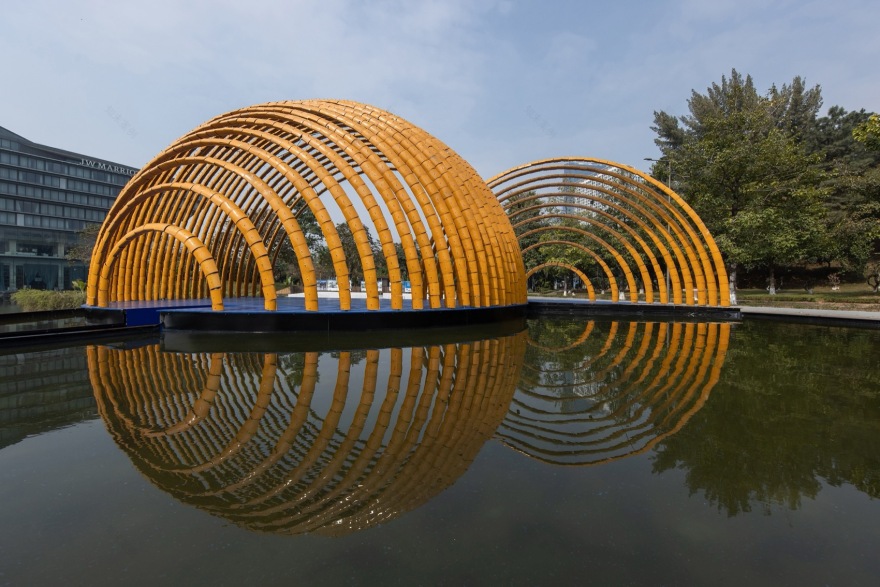

▼桥与亭,bridge and pavilion © Le Minh Hoang

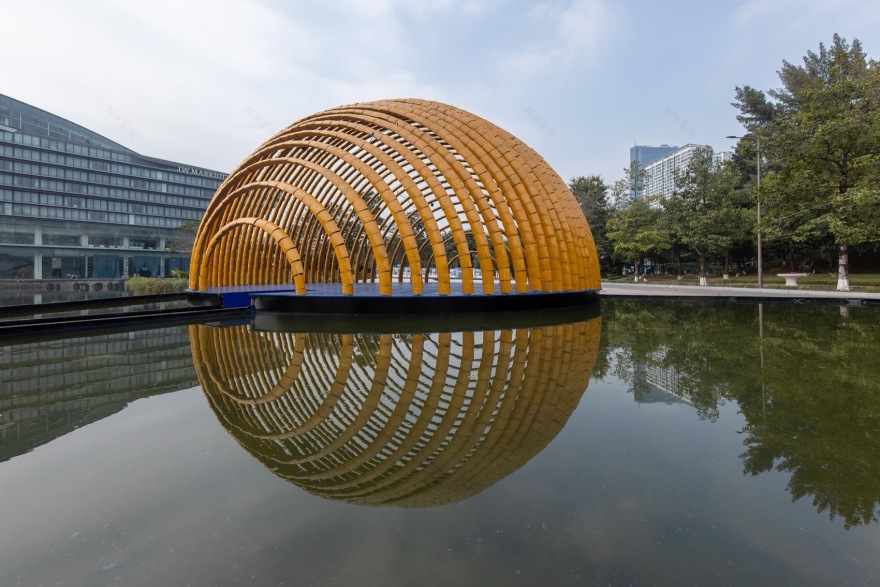
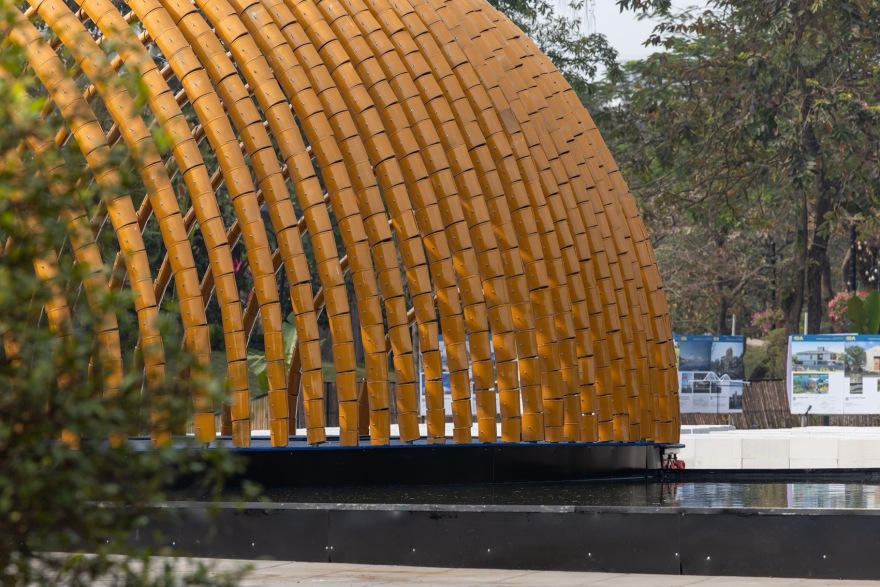
▼近景,closer view © Le Minh Hoang
▼亭内视角,viewing inside the pavilion © Le Minh Hoang
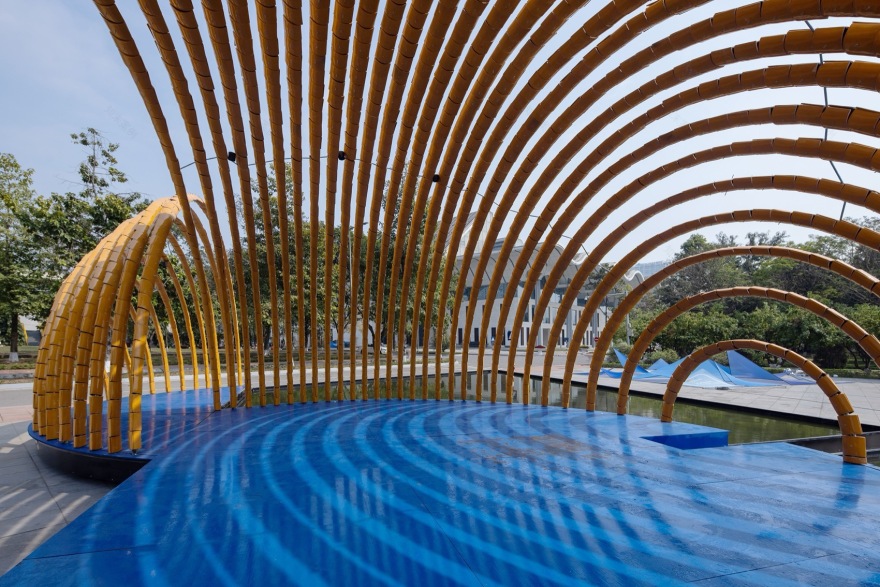
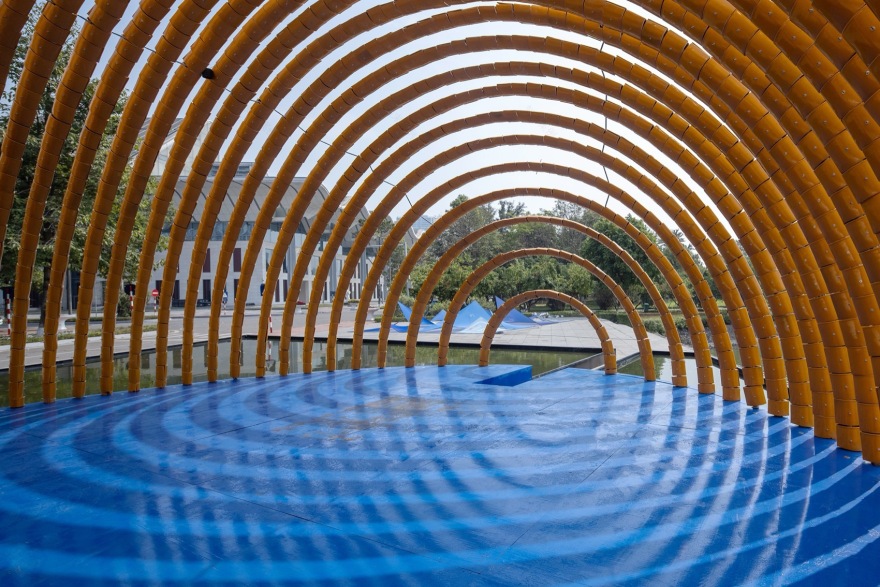
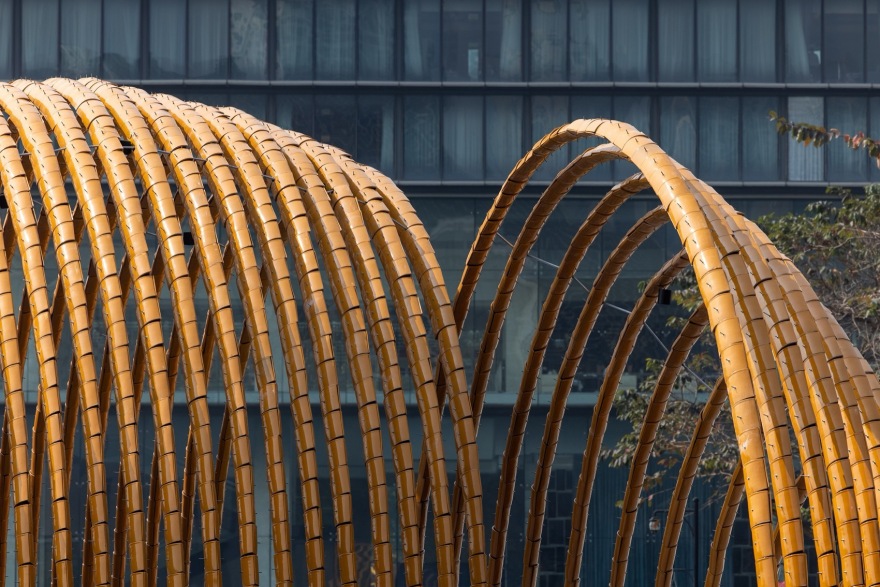
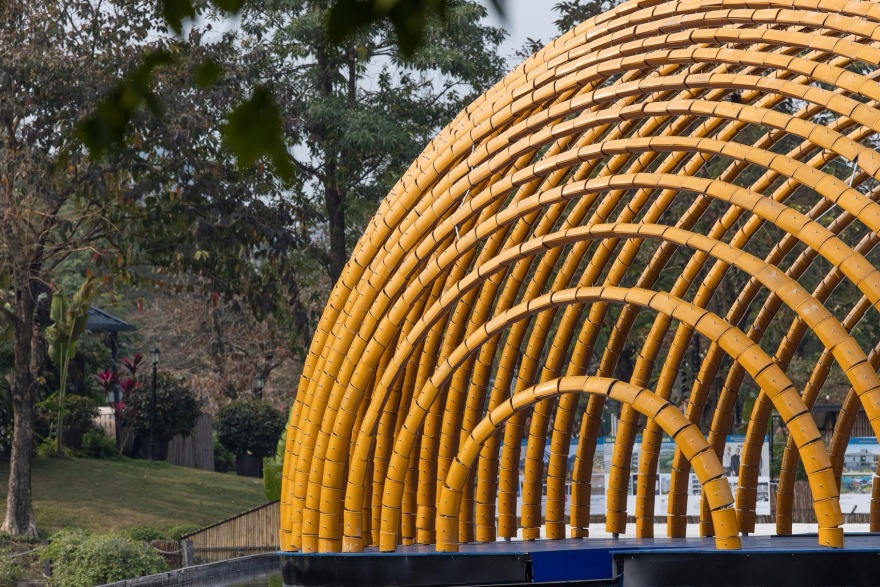
▼细部,details © Le Minh Hoang
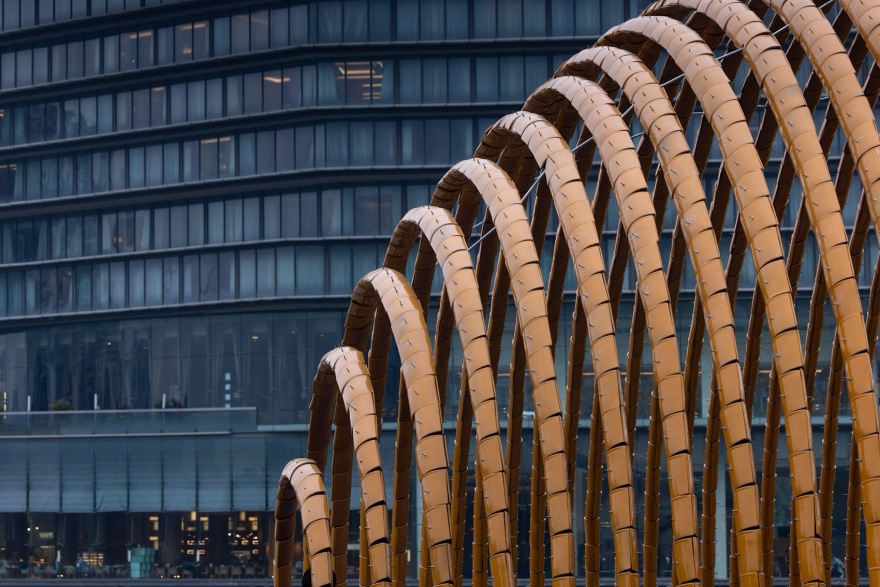
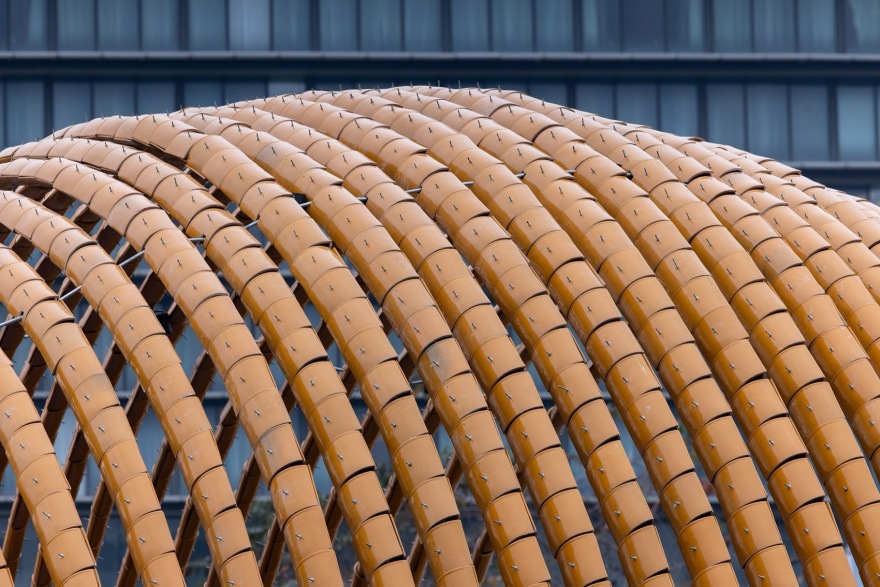

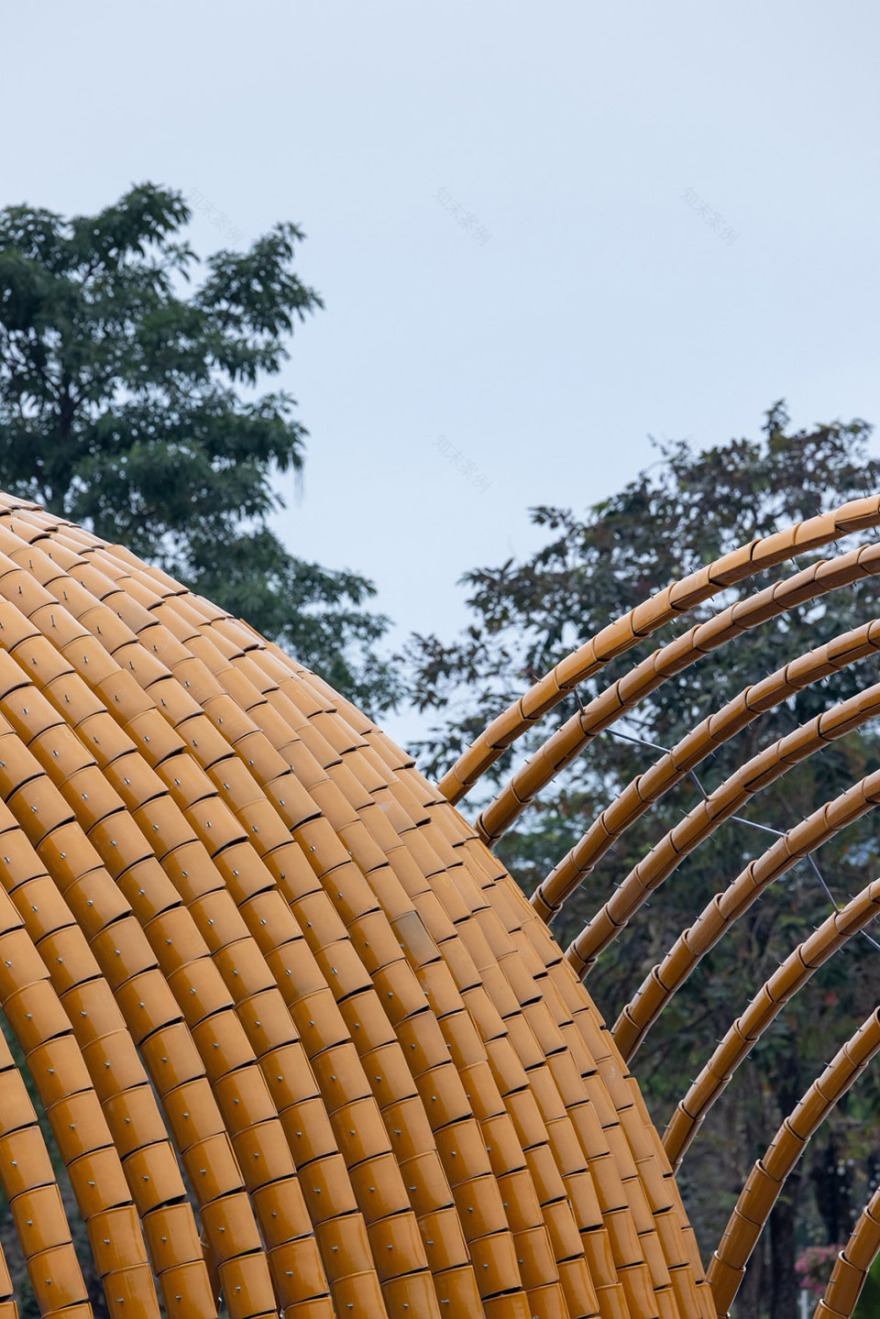
▼竹节般的结构,bamboo-joint-like structure © Le Minh Hoang

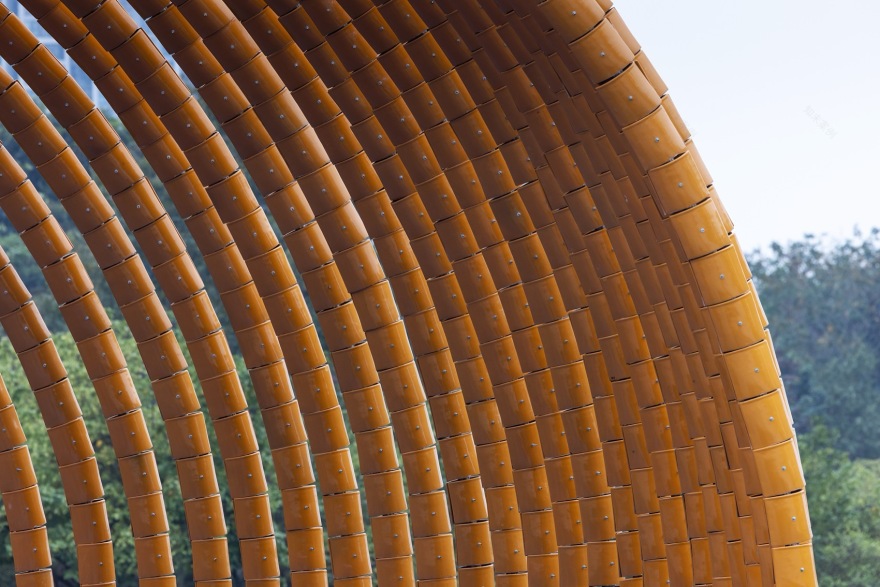
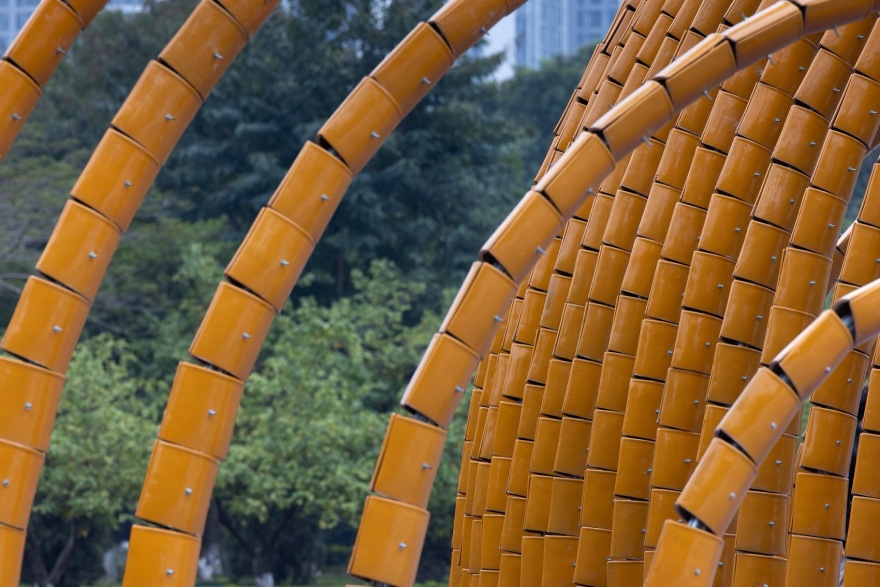
▼传统金黄色釉面凹瓦,the traditional golden glazed concave tiles © Le Minh Hoang

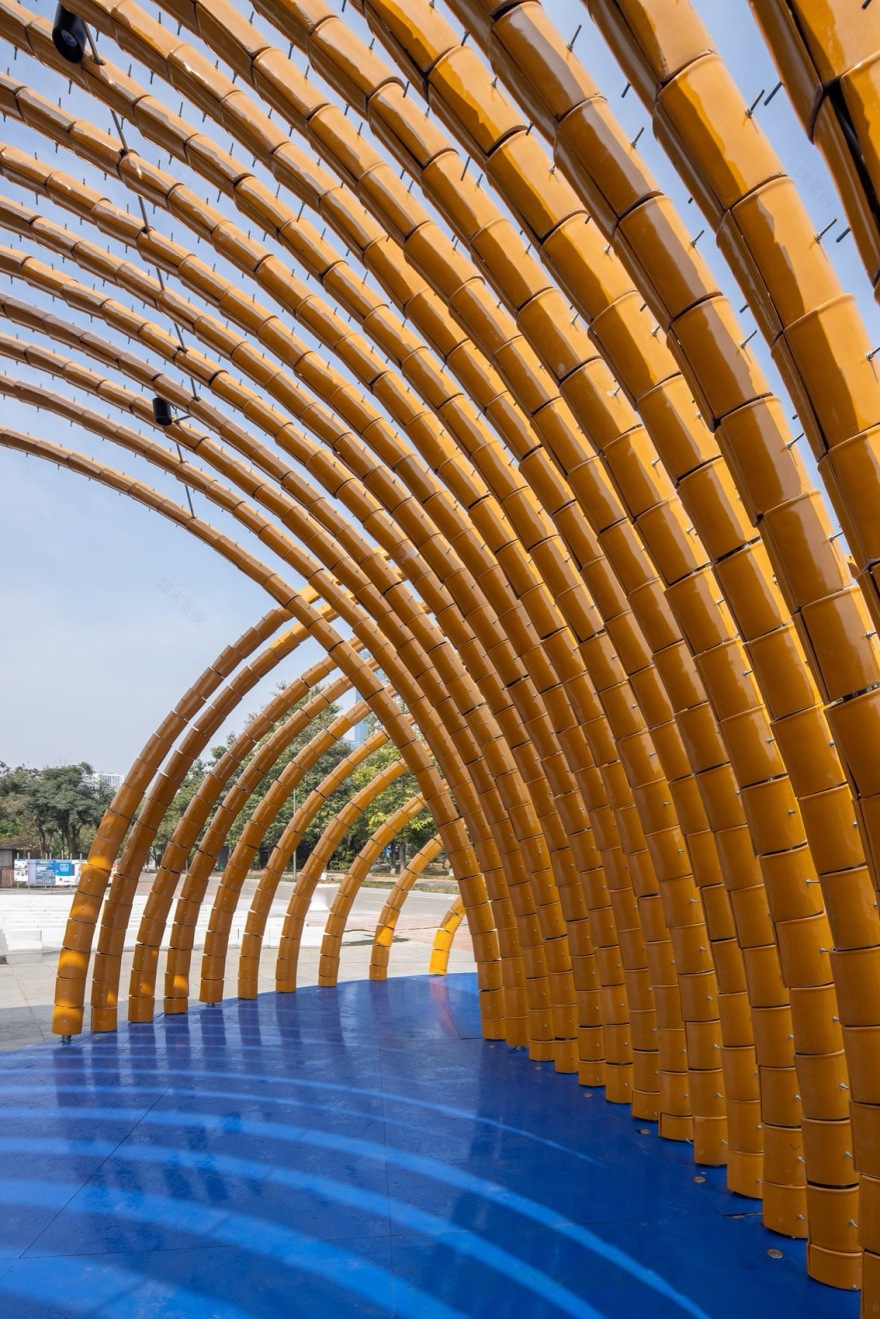

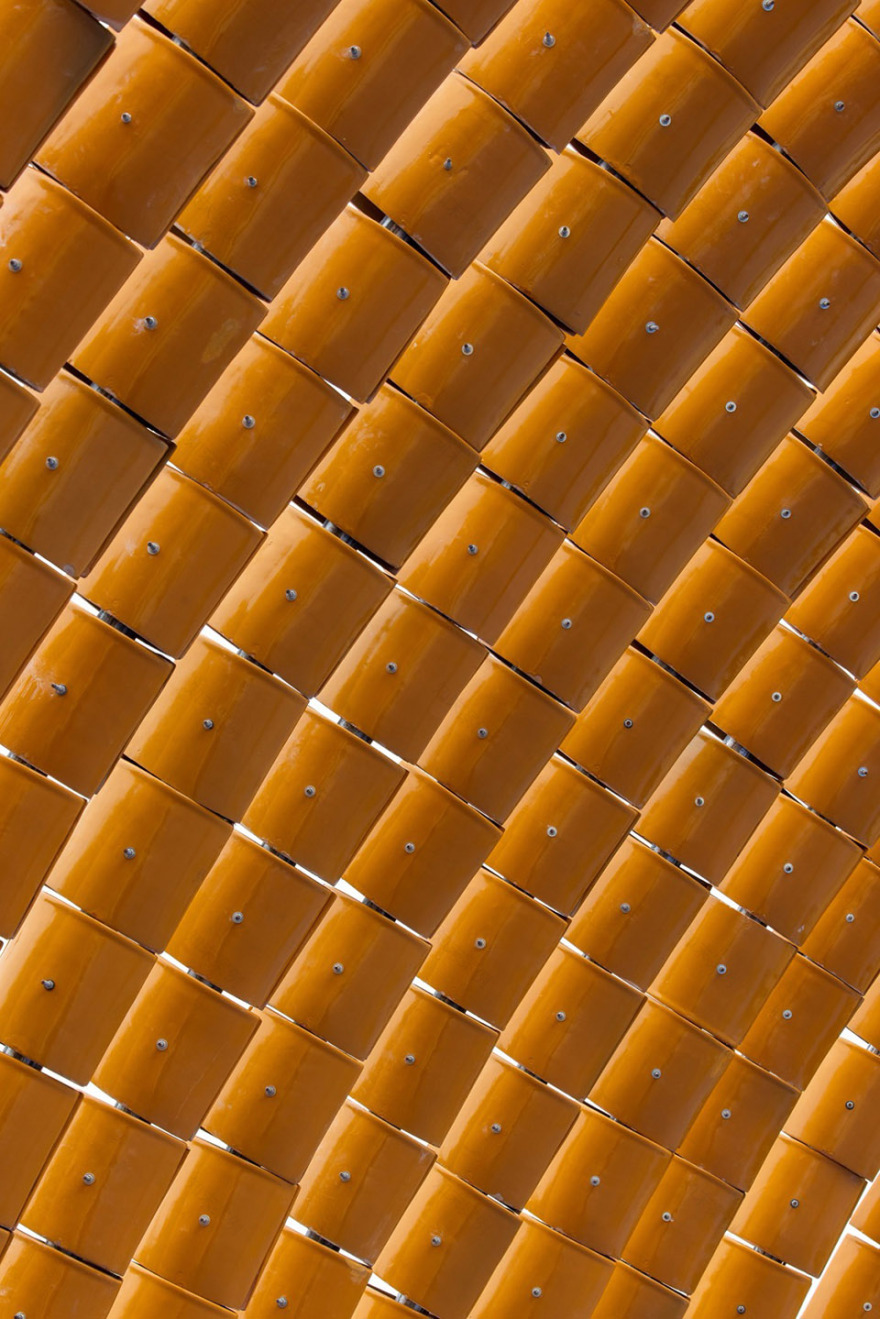
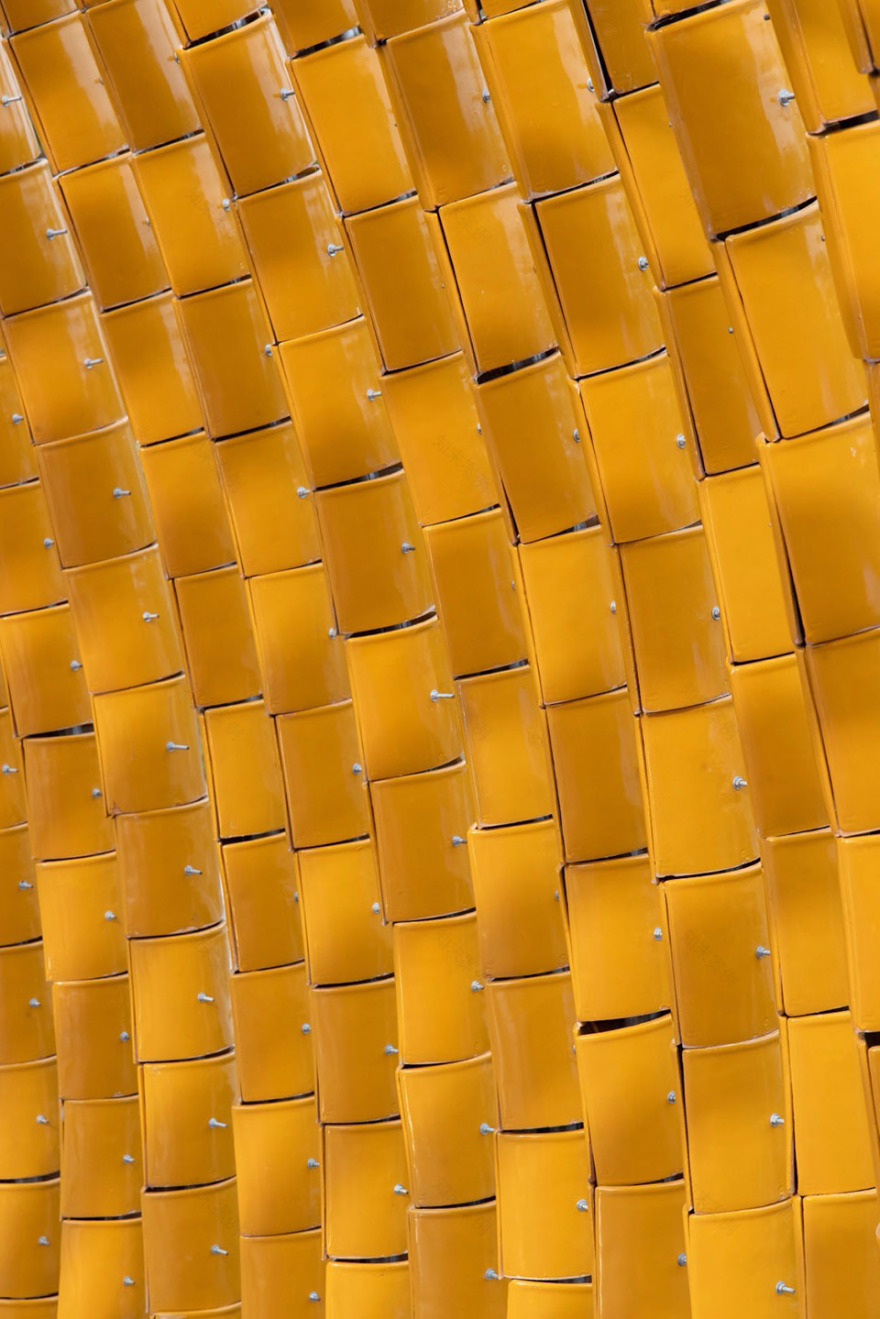
营造展亭氛围的主要材料,是传统金黄色釉面凹瓦。每一片瓦片都被视作一节竹节(象征一滴水),并进一步汇聚成人们熟悉的竹竿形态(闪耀的水流光束),共同构成一个充满生命力与延展感的天空意象。在这种感知联想中,阳光穿透雨幕,形成太阳雨般洒落的金色水滴,滋养万物生长。ASHUI Pavilion = 培育跨学科知识,创造城市流动性的人文与可持续建筑。
The predominant material employed to create the ambiance within the pavilion is traditional golden glazed concave tiles. Each tile symbolizes a bamboo joint (representing a droplet of water) that merges into familiar bamboo stalks (the glistening water rays), collectively forming a vibrant and expansive sky as commonly perceived. In association with this perception, sunlight filters through rain in a sun shower, shedding golden droplets that nurture life. ASHUI Pavilion = Cultivating Interdisciplinary knowledge, creating Urban flow, Humanistic and Sustainable Architecture.
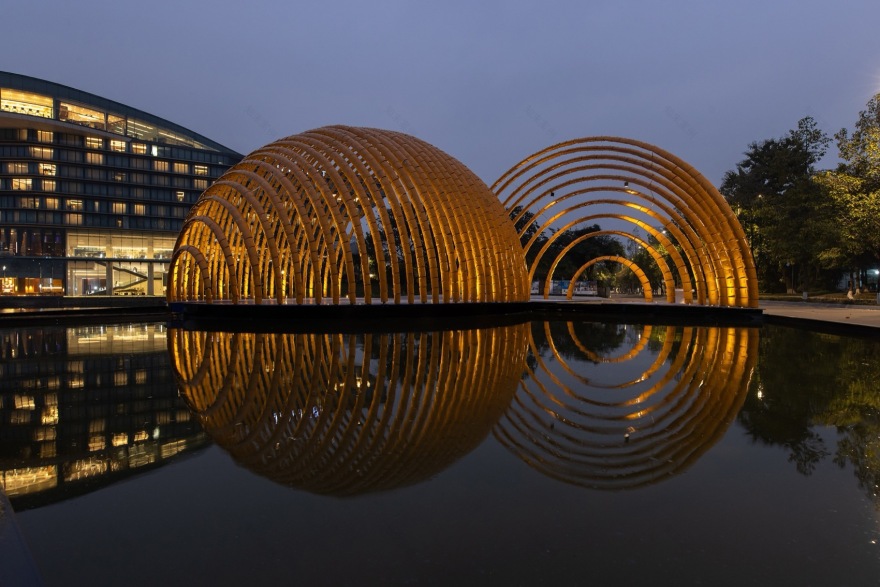
▼夜景,night views © Le Minh Hoang


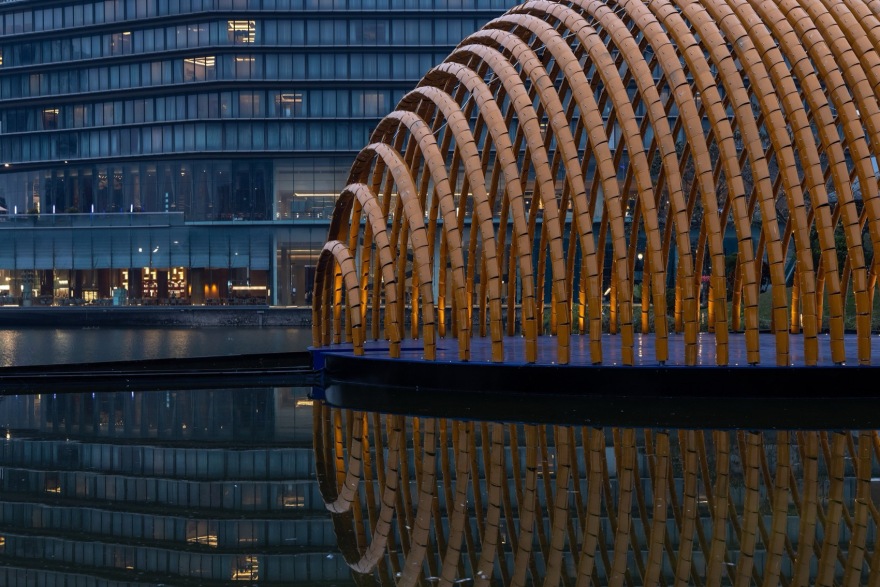
▼夜景细部,details of the night views © Le Minh Hoang


▼施工过程,construction process ©H&P Architects

▼平面图与立面图,plan & elevation ©H&P Architects

▼剖面图,section ©H&P Architects

Architect: H&P Architects
Location: The National Convention Center (Pham Hung Street, Tu Liem Ward, Hanoi)
Team: Doan Thanh Ha, Do Tien Dung, Pham Van Minh, Nguyen Thi Thuy Linh, Ninh Dinh Tu, Dam Cong Thanh + Hoang Tuan Nghia (Structure)
Client: Ashui
Construction: ConsMedia + H&P Architects + Students volunteers: Nguyen Duc Thang, Nguyen Kim Cuong, Do Van Hoan, Ngo Quang Huy, Pham Thi Thuy Trang, Lai Quang Thanh, Tran Phuong Thao, Do Dinh Kieu, Hoang Le An, Luong Minh Vu, Truong Minh Tan, Le Hoang Hai Đang, Hoang Dang Khoa, Nguyen Nguyet Minh, Le Phuong Thao, Dao Thanh Cong, Dao Van Dai, Tran Le Minh Quang, Thao Tran Thanh
Site Area: 1,750 m²
Sphere diameter: 10m
Completion date: January 31, 2026
Main materials: Roof tile, steel
Photographer: Le Minh Hoang




南京喵熊网络科技有限公司 苏ICP备18050492号-4知末 © 2018—2020 . All photos and trademark graphics are copyrighted by their owners.增值电信业务经营许可证(ICP)苏B2-20201444 苏公网安备 32011302321234号
苏公网安备 32011302321234号客服
消息
收藏
下载
最近