

创作上传
VIP
收藏下载
登录 | 注册有礼
查看完整案例

收藏

下载

分享
器(vessel)是承载日常生活的器物,也是承载光与时间的容器。在本项目中,“器”从“物”被转译为空间结构本身,成为连接行为、感知与时间的媒介。
A vessel is an object that carries daily life, as well as a container that holds light and time. In this project, the concept of the “vessel” is translated from “object” into the spatial structure itself, becoming a medium that connects movement, perception, and time.
▼项目鸟瞰,aerial view of the project© 蔡云普

▼五原路街景,street view of the Wuyuan street© 蔡云普
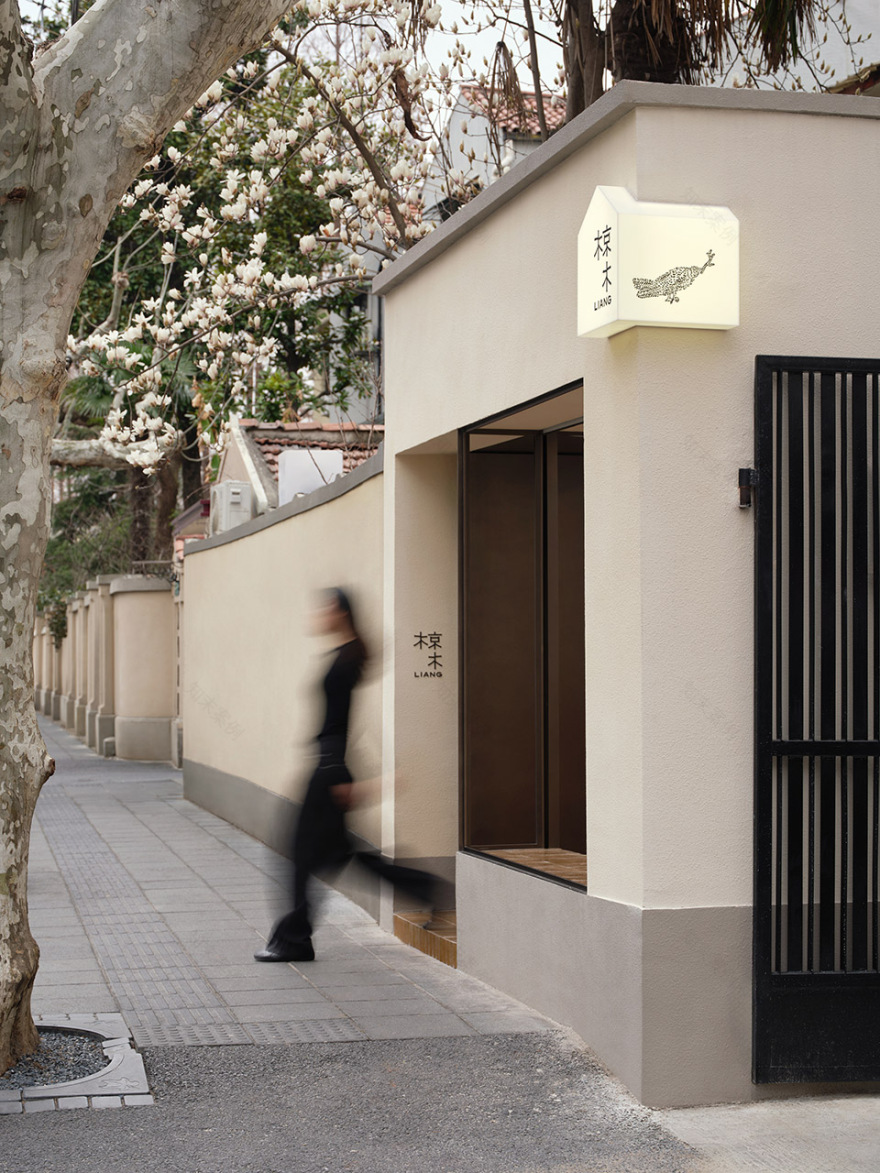
上海梧桐区的早春,墙里的白玉兰刚探出枝头,五原路上,一栋带院子的三层整栋沿街住宅改造后成为了以器物为核心的生活方式品牌椋木的家。在椋木旗舰店的设计中,FLIP studio番番營作视“器”为空间的灵魂——将连结整栋建筑的交通空间艺术化地转译为“容器形结构体”,以其构建动线、视线与空间层级。它生长于天井,将行走、停留、光与时间一并收纳。而“家”,则是器生长的土壤,由七个生活场景(玄关、餐厅、客厅、酒吧、茶室、卧室、阳台)与庭院构成。设计围绕品牌“食、饮、品、赏、憩、享、闻”的产品线,将日常器物置入生活场景中,让展示转化为可被体验的使用体验,在抽象化的语言与材质中,呈现出新的“日常”。
In early spring in Shanghai’s Wutong District, the white magnolias have just begun to peek over the walls. On Wuyuan Road, a three-story standalone residence with a courtyard has been transformed into the home of Liangmu, a lifestyle brand centered on crafted objects. In the design of Liangmu’s flagship store, FLIP Studio regards the “vessel” as the soul of the space — artistically translating the circulation spaces that connect the entire building into a “vessel-like structural form,” using it to construct movement, visual connection, and spatial hierarchy. This structure grows out of the atrium, gathering walking, pausing, light, and time all in one. And the “home” is the soil in which the vessel grows, composed of seven domestic scenarios (entrance, dining room, living room, bar, tearoom, bedroom, and balcony) and the courtyard. Organized around the brand’s product lines — Eat, Drink, Savor, View, Repose, Sip, and Scent — the design places everyday objects into living scenarios, transforming display into tangible, experiential use, and presenting a new kind of “everyday” through abstracted forms and materials.
▼庭院,courtyard© 蔡云普

▼地景展台,display area© 蔡云普

▼玄关场景,lobby© 蔡云普

▼餐厅场景,restaurant© 蔡云普
庭院内外:从街景到序章
Inside and Outside the Courtyard: From Street View to Prologue
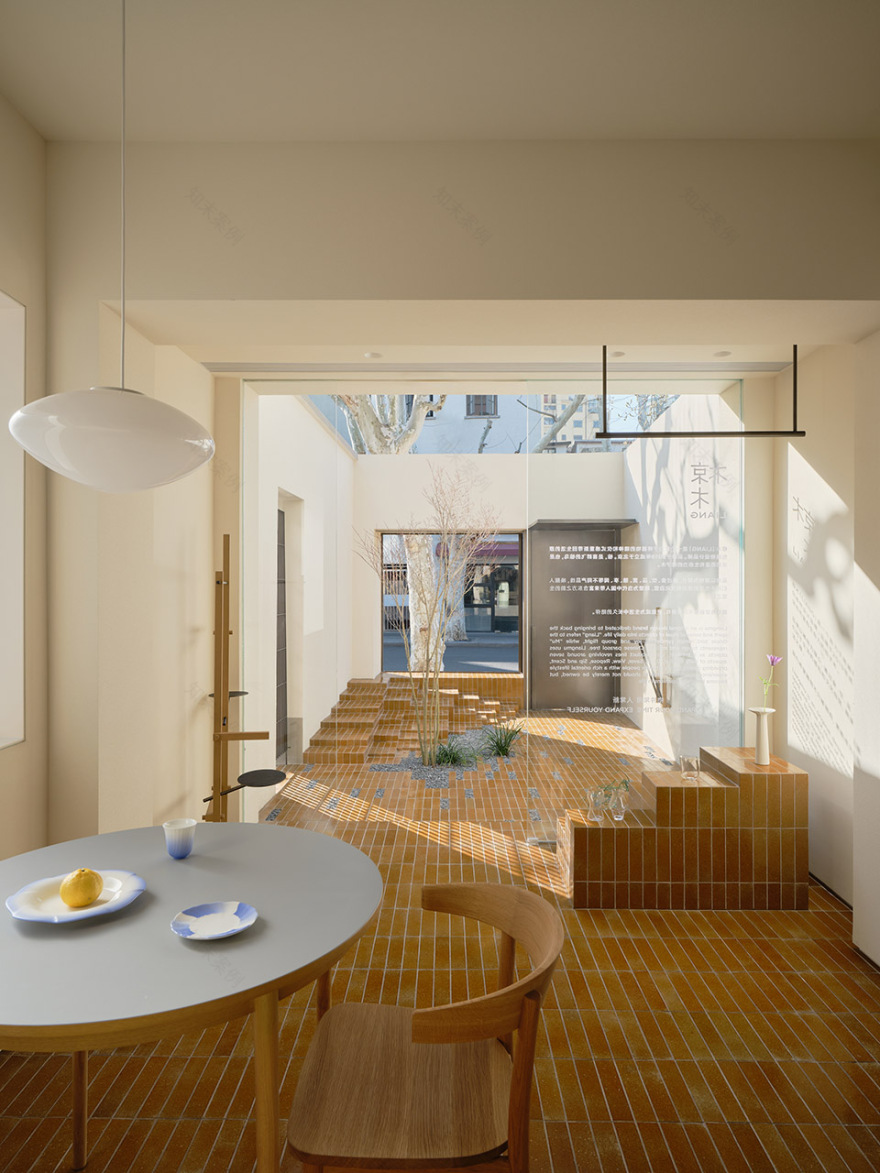
推开古铜色金属的院门,是一个小小的庭院。景德镇回收的陶瓷碎片被做成茶色釉面的瓷砖,堆叠成起伏的地景在阳光下泛着温润的光。庭院并非单一的入口,而是一个介于街道与室内之间的过渡空间,这被定义为空间的序章——在走进“家”之前,过路的人在街边停下来,坐一坐,发会儿呆。有人举着咖啡路过,有人推着婴儿车驻足,空间以开放而非引导的方式与城市建立关系,弱化商业入口的指向性。它也是临时的展场,随着季节与品牌活动变换表情,但始终保留着与五原路对望的默契。
Pushing open the bronze-colored metal courtyard gate, one steps into a small courtyard. Tea-toned glazed ceramic tiles recycled from Jingdezhen are stacked into an undulating landscape that glows with a warm gloss under the sun. The courtyard is not merely an entrance but a transitional space between the street and the interior — defined as the prologue of the space. Before stepping into the “home,” passersby pause by the street, sit down for a while, and let their minds wander. Some walk by with coffee in hand, others stop with strollers. The space engages with the city in an open rather than prescriptive way, downplaying the directedness of a commercial entrance. It also serves as a temporary exhibition space, changing its expression with the seasons and brand events, yet always maintaining the tacit understanding of facing Wuyuan Road.
▼庭院地景,courtyard© 蔡云普


▼庭院,courtyard© FLIP studio
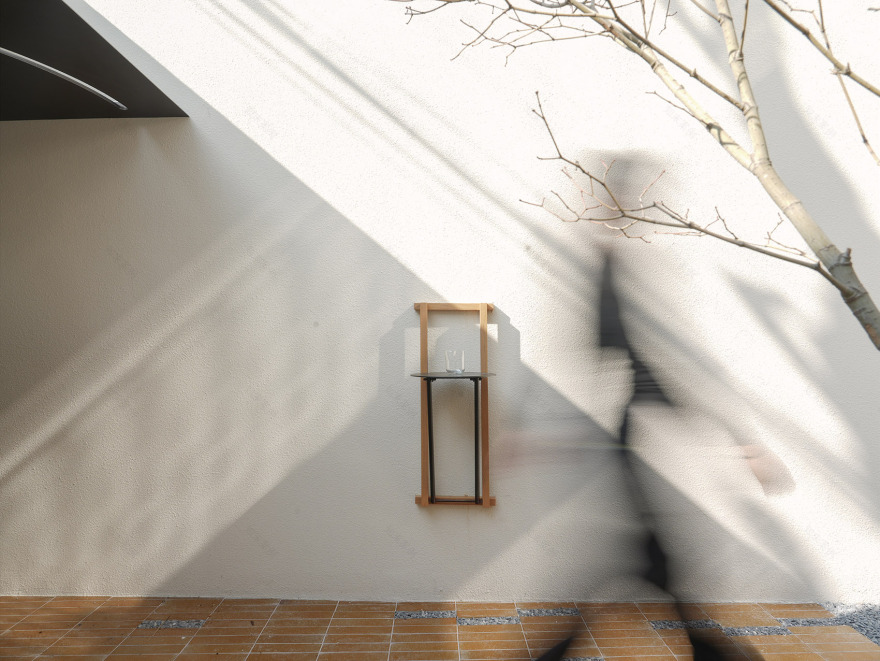
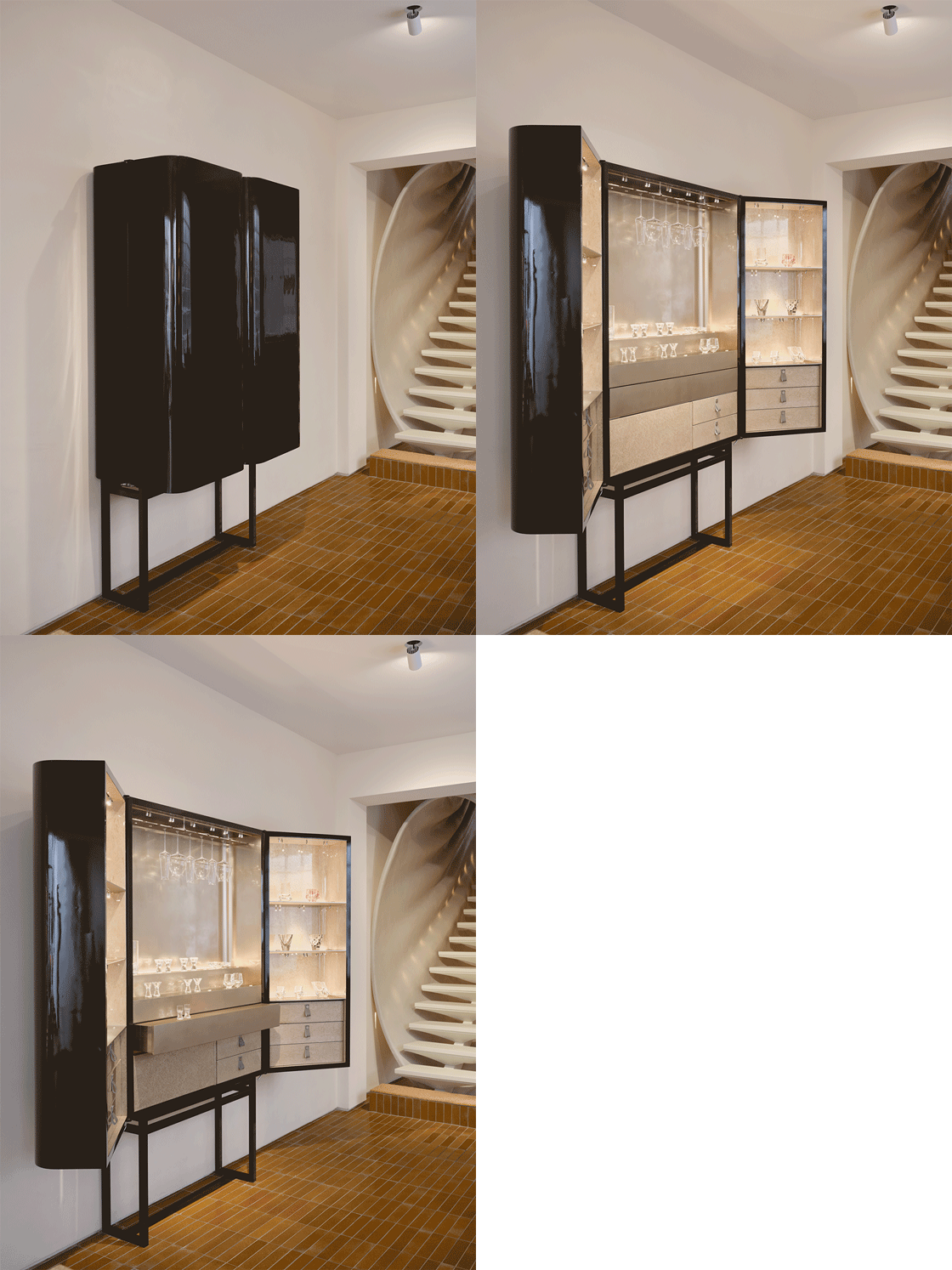
走进室内,七个场景依次展开。一楼是客厅:黑色钢琴烤漆的酒柜与半圆形品酒吧台,构成“初体验”的起点。展开黑色钢琴烤漆的定制酒柜道具,内侧是雾面金属与高光银色雀眼木皮饰面的层层抽屉柜,以“好奇柜”(Cabinets of Curiosities)为灵感的展陈方式,将收藏逻辑转译为一种可被阅读的空间界面,展示着椋木不同系列的玻璃酒器,同时在材质与细节上回应着上海art deco时期的精致。穿过楼梯一侧白酒香型体验的装置,客厅的深处是白橡木实木包裹的Speakeasy酒吧,隐秘而温暖,像家中最私密的角落,在这里你可以点上一杯威士忌,一边把玩手中的酒杯,一边欣赏玻璃与酒碰撞出的光泽。
Stepping inside, the seven scenarios unfold one by one. The first floor is the living room: a black piano-lacquered wine cabinet and a semi-circular tasting bar form the starting point of the “first encounter.” When you open the cabinet, inside are layered drawers finished with matte metal and high-gloss ALPI wood veneer. Inspired by “Cabinets of Curiosities,” this display logic translates the act of collecting into a readable spatial interface, showcasing Liangmu’s glassware collections while echoing the refinement of Shanghai’s Art Deco period through materiality and detail. Passing by a baijiu aroma installation beside the staircase, deeper into the living room lies a speakeasy bar surrounded by white oak panels — hidden and warm, like the most private corner of the home. Here, one can order a glass of whisky, turn the glass in hand, and admire the luster created by the interplay of glass and liquor.
▼一楼展厅,the exhibition hall on the ground floor©蔡云普


▼黑色钢琴漆酒柜,Black piano lacquer wine cabinet©蔡云普
▼酒器初体验岛台,The First Experience of Wine Accessories on the Island Counter©蔡云普

▼容器型楼梯,vessel staircase©蔡云普

▼闻酒装置,Brewing equipment for alcohol©蔡云普

▼Speakeasy酒吧,Speakeasy Bar©蔡云普

沿着与白橡木木构结合的容器形楼梯向上,二层是茶与咖啡的体验区。一张由热熔玻璃整体浇筑的桌面成为空间的主角——其橘皮纹理与气泡被封存在透明的介质里,使光线在表面产生扩散与滞留。光从上方洒下,在桌面漫开一圈圈柔和的晕,像时间凝固的涟漪。在这里,你可以在吧台点一杯手冲,也可以只是静静坐着,观赏着光在桌面缓慢移动。
Ascending the vessel-shaped staircase integrated with the white oak wood structure, the second floor opens into the tea and coffee experience area. A cast glass tabletop becomes the centerpiece of the space — its orange-peel texture and trapped air bubbles are sealed within the transparent medium, causing light to diffuse and linger across its surface. Light pours down from above, spreading soft rings of glow across the tabletop, like ripples frozen in time. Here, one can order a hand-drip coffee at the counter, or simply sit quietly, watching the light move slowly across the table.
▼二楼过厅,corridor on the upper level©蔡云普

▼二楼茶体验,the tea room on the upper level©蔡云普

▼热熔玻璃茶桌,Hot-melt glass tea table©蔡云普

▼过厅一角,corner of the corridor©蔡云普

茶室的另一侧,是憩与闻的卧室展厅:白橡木的壁挂系统沿着墙面展开,手工竹席压模的白色预制水泥大板与白橡木相衬——温润与粗砺,柔软与坚硬,像生活中那些细微的对仗。织物与香氛的器皿安静地陈列其上,像在等待被取用,又像本来就归属在那里。
On the other side of the tearoom lies the “Scent and Repose” exhibition space for textiles and fragrances: a white oak wall-mounted system unfolds along the walls, with the background of white precast concrete panels cast from hand-woven bamboo mats — warmth against roughness, softness against hardness, like the subtle dualities of everyday life. Textiles and fragrances rest quietly on display, as if waiting to be used, or as if they have always belonged there.
▼闻与憩展厅,”Scent and Repose” exhibition space©蔡云普

▼竹席模白色预制混凝土板,
Bamboo mat with prefabricated concrete panels in off-white color© FLIP studio

三楼则是纯粹的留白。米白色的画廊空间为未来的沙龙与艺术展览预留了可能,像家的阁楼,藏着无限想象,玻璃纤维与木构搭接的展桌将展陈的物料承托于阳光之下。
The third floor is a pure, reserved blank space. An off-white gallery space holds possibilities for future salons and art exhibitions — like the attic of a home, concealing boundless imagination. Exhibition tables made of fiberglass interwoven with wooden structure lift the displayed objects into the sunlight.
▼三楼艺廊,the gallery space on the third floor©蔡云普


生长于家的容器:天井为核,楼梯为魂
The Vessel That Grows Within Home: The Atrium as Core, the Staircase as Soul
但真正让这个“家”活起来的,是那个原本不存在的天井。
But what truly brings this “home” to life is the atrium space that didn’t originally exist.
▼容器形玻璃纤维楼梯内部,Interior of the Container-shaped glass fiber staircase©蔡云普


▼木构与闻酒装置,Wooden structure and wine tasting device©蔡云普


改造时,设计选择将内部非结构性的横墙打通,同时在三层屋顶的顶板切开一道条形天窗,让光可以从最高处落下。通过移除原始的混凝土楼梯与局部的楼板,让光线贯穿三层,并在一层通往二层处植入一个被容器形玻璃纤维包裹的纯白色金属楼梯——这一结构既是交通构件,也是空间的核心装置。容器形态的灵感来源于椋木 “流光系列”玻璃杯扭转的造型,它似鸟栖居的巢穴,又似一个巨大的容器,从天井中生长出来。白橡木的木构横杆像树的枝干托住容器,并将不同楼层的功能(嗅觉装置、器物展陈)串联为连续系统。阳光从顶部的天窗倾泻而下,穿过茶色玻璃的楼梯踏步,在金色的光影里慢慢沉淀。那些被橘皮纹理揉碎的光斑,落在墙上,洒在地面,也停留在经过的人身上。▼模型图,model© FLIP studio

During the renovation, the design chose to remove non-structural cross-walls and cut a strip skylight into the third-floor roof slab, allowing light to fall through. By removing the original concrete staircase and parts of the floor slabs, light now penetrates all three floors. Where the first floor meets the second, a pure white metal staircase wrapped in vessel-like fiberglass has been inserted — a structure that is both a circulation element and the central installation of the space. The vessel form is inspired by the twisted shape of Liangmu’s “Flowing Light” glass series. It resembles a bird’s nest, or a giant vessel, growing out of the atrium. White oak horizontal beams act like tree branches supporting the vessel, linking the functions of different floors (scent installations, object displays) into a continuous system. Sunlight pours down from the skylight above, passes through the tea-colored glass stair treads, and slowly settles in pools of golden light. Those light fragments, softened by the orange-peel texture, fall upon the walls, spill across the floor, and rest upon the people who pass through.
▼木构与天井,wood structure and skylight©蔡云普

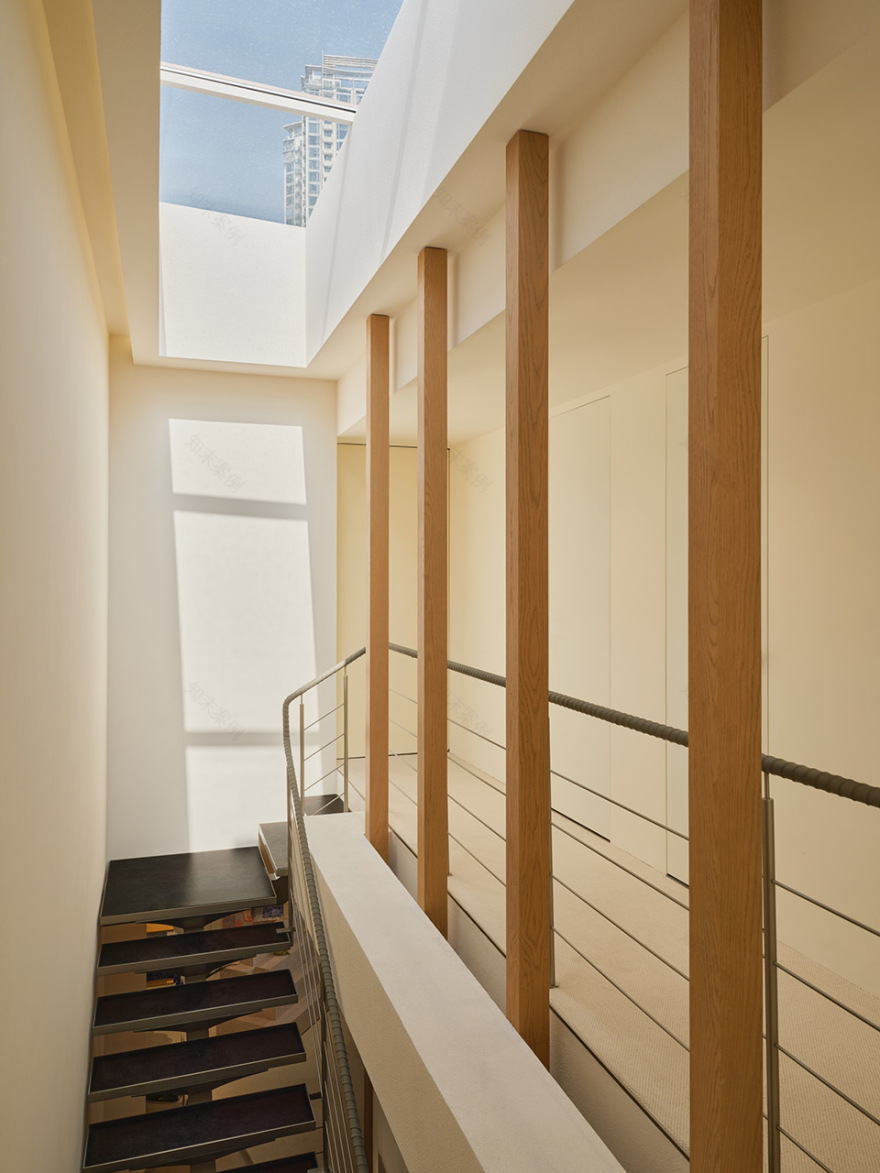
▼木构与玻璃纤维的光影,
The interplay of wood structure and glass fiber light and shadow© FLIP studio
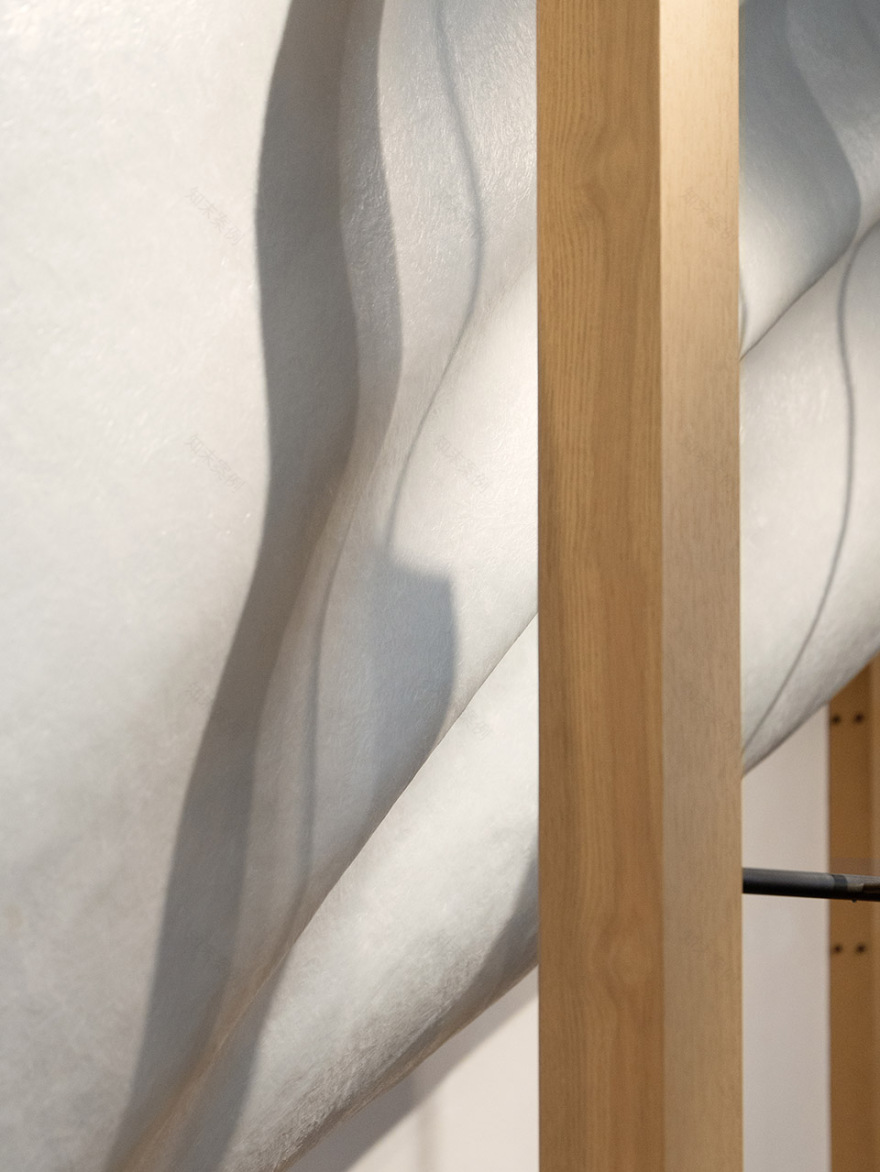
▼扶手细部,railing detail©蔡云普

设计隐喻了椋子木——一种吸引群鸟栖居的树。在“家”的天井里,它向上生长,成为空间的灵魂,也成为品牌的图腾。
The design metaphorically evokes the Liangzi tree — a tree that draws birds to dwell. Within the “home” atrium, it rises upward, becoming at once the soul of the space and the brand’s totem.
▼热熔玻璃与光,Hot-melt glass and light© FLIP studio

透明与光泽:材料的双重叙事
Transparency and Gloss: A Dual Narrative of Materials
整个空间里,有两种材质在悄悄对话:透明与光泽。材料策略被归纳为两种光学属性:透射与反射。透明的那一面,属于玻璃。茶色橘皮玻璃的楼梯踏步、热熔玻璃浇筑的桌面、白色玻璃纤维包裹的容器甬道——它们让光得以穿透、折射、漫游,气泡与肌理在光线中留下时间的印记。
Throughout the space, two types of materials engage in a quiet dialogue: transparency and gloss. The material strategy is distilled into two optical properties: transmission and reflection. The transparent side belongs to glass. The tea-toned textured glass stair treads, the cast glass tabletop, the vessel-like stair passage wrapped in white fiberglass — all allow light to penetrate and refract, with bubbles and textures leaving traces of time within the light.
▼茶色玻璃踏步,Brown glass steps©蔡云普

▼阳光下的茶色玻璃踏步,Brown glass steps under sunlight©蔡云普

▼茶色玻璃踏步与光,Brown glass steps under sunlight© FLIP studio

▼玻璃纤维与光,Glass fiber and light© FLIP studio

光泽的那一面,属于那些经过时间打磨的表面:通过反射与吸收,与透明材料形成互补关系。回收陶瓷的茶色瓷砖带着窑火的气息,黑色钢琴烤漆回应着Art Deco的韵味,意大利ALPI木皮纹理如流沙,古铜色与雾面金属则一深沉一神秘。它们在空间中交替出现,像光的两种表情——一种穿透,一种反射;一种温柔,一种明亮。
The glossy side belongs to surfaces polished by time: through reflection and absorption, they form a complementary relationship with transparent materials. The tea-colored tiles of recycled ceramics carry the breath of the kiln fire; the black piano lacquer echoes the charm of Art Deco; the grain of Italian ALPI wood veneer flows like quicksand; while bronze and matte metal — one deep, one mysterious — stand apart. They appear alternately throughout the space, like two expressions of light: one transmitted, one reflected; one soft, one bright.
▼夜晚酒吧,Bar at night©蔡云普

▼椋木之家夜景,night view©蔡云普

从一楼走到三楼,访客穿过玄关、餐厅、客厅、酒吧、茶室、卧室、阳台。空间通过连续的生活场景构筑体验,而非传统零售动线。椋木五原路店,像一只容器。它不仅承载器物,也承载行为、光与时间。它是一个品牌的家,短暂栖居的巢。
Walking from the first floor to the third, visitors pass through the entrance, dining room, living room, bar, tearoom, bedroom, and balcony. The space constructs an experience through a continuous sequence of living scenarios, rather than a traditional retail circulation. Liangmu Wuyuan Road store is like a vessel. It does not merely contain objects, but also actions, light, and time. It is a home for the brand — a transient nest for dwelling.
▼五原路街景,street view of the Wuyuan street©蔡云普

▼五原路街景,street view of the Wuyuan street©蔡云普

▼模型图,model© FLIP studio

▼基地平面图,site plan© FLIP studio

▼一层平面图,ground floor plan© FLIP studio
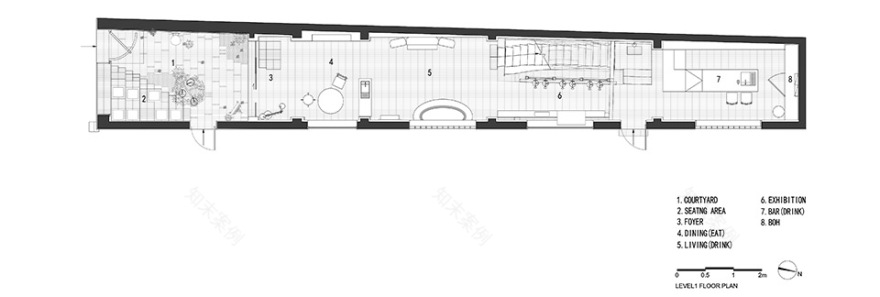
▼二层平面图,first floor plan© FLIP studio

▼三层平面图,third floor plan© FLIP studio

▼改造后立面图,elevation after renovation© FLIP studio
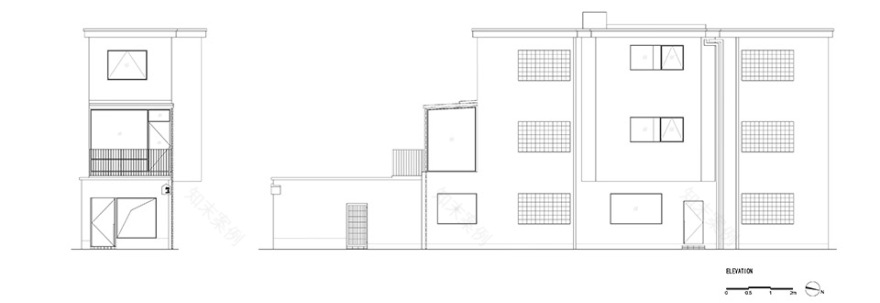
▼改造前剖面图,section before renovation© FLIP studio

▼改造后剖面图,section after renovation© FLIP studio

项目名称:椋木之家
项目地点:上海五原路
业主:椋木
设计单位:FLIP studio 番番營作
主持设计师: 孙凯伦、王志明
空间面积:240㎡
设计团队:陈子玄(项目负责)、郭子萱
施工单位:上海通兴建设集团有限公司
结构咨询:iStructure结构事务所
摄影:蔡云普
材料:回收陶瓷瓷砖,玻璃钢,ALPI雀眼木皮,白橡木,茶色热熔玻璃,白色竹席模预制混凝土板,铜,雾面不锈钢,莱姆石,黑色钢琴烤漆
家具品牌:Viabizzuno (吊灯),& Tradition (吊灯),Carl Hansen MG501(休闲椅)Matiazzi (吧凳),Hay(吧凳),Mountain Living(吧凳),Y Apollo(壁灯)
设计时间:2025.09-2026.02
完工时间:2026.03
Project Name: Liangmu Shanghai Flagship Store
Project Location: Wuyuan Road, Shanghai, China
Client: Liangmu
Design Firm: FLIP studio
Lead Designer: Kailun Sun, Edward Ming
Building Area: 227.4㎡
Interior Area: 167㎡
Design Team: Zixuan Chen (Project Designer), Zixuan Guo
Constructor: Shanghai Tongxing Construction Group Co., Ltd.
Structural Engineering: iStructure
Photo: Yunpu Cai
Material: recycled ceramic tiles (Yi Design), fiberglass, veneer (ALPI), white oak, tea-colored cast glass, precast concrete (Jialanworks), bronze, matte stainless steel, limestone, black piano lacquer
Furniture brands:Viabizzuno (pendant lamp), & Tradition (pendant lamp), Carl Hansen MG501 (lounge chair), Matiazzi (bar stool), Hay (bar stool), Mountain Living (bar stool), Y Apollo (wall lamp)
Design Period: 2025.09-2026.02
Completion: 2026.03


南京喵熊网络科技有限公司 苏ICP备18050492号-4知末 © 2018—2020 . All photos and trademark graphics are copyrighted by their owners.增值电信业务经营许可证(ICP)苏B2-20201444 苏公网安备 32011302321234号
苏公网安备 32011302321234号客服
消息
收藏
下载
最近